Skip to content
  • Home
  • Subscribe / donate
  • Events calendar
  • News
    • Local
    • National
    • Israel
    • World
    • עניין בחדשות
      A roundup of news in Canada and further afield, in Hebrew.
  • Opinion
    • From the JI
    • Op-Ed
  • Arts & Culture
    • Performing Arts
    • Music
    • Books
    • Visual Arts
    • TV & Film
  • Life
    • Celebrating the Holidays
    • Travel
    • The Daily Snooze
      Cartoons by Jacob Samuel
    • Mystery Photo
      Help the JI and JMABC fill in the gaps in our archives.
  • Community Links
    • Organizations, Etc.
    • Other News Sources & Blogs
    • Business Directory
  • FAQ
  • JI Chai Celebration
  • JI@88! video

Recent Posts

  • Story of Israel’s north
  • Sheltering in train stations
  • Teach critical thinking
  • Learning to bridge divides
  • Supporting Iranian community
  • Art dismantles systems
  • Beth Tikvah celebrates 50th
  • What is Jewish music?
  • Celebrate joy of music
  • Women share experiences 
  • Raising funds for Survivors
  • Call for digital literacy
  • The hidden hand of hate
  • Tarot as spiritual ritual
  • Students create fancy meal
  • Encouraging young voices
  • Rose’s Angels delivers
  • Living life to its fullest
  • Drawing on his roots
  • Panama City welcoming
  • Pesach cleaning
  • On the wings of griffon vultures
  • Vast recipe & story collection
  • A word, please …
  • מארק קרני לא ממתין לטראמפ
  • On war and antisemitism
  • Jews shine in Canucks colours
  • Moment of opportunity
  • Shooting response
  • BC budget fails seniors
  • Ritual is what makes life holy
  • Dogs help war veterans live again
  • Remain vital and outspoken
  • An urgent play to see
  • Pop-up exhibit popular
  • An invite to join JWest

Archives

Follow @JewishIndie
image - The CJN - Visit Us Banner - 300x600 - 101625

Byline: Cynthia Ramsay

Deep belief in Courage

Deep belief in Courage

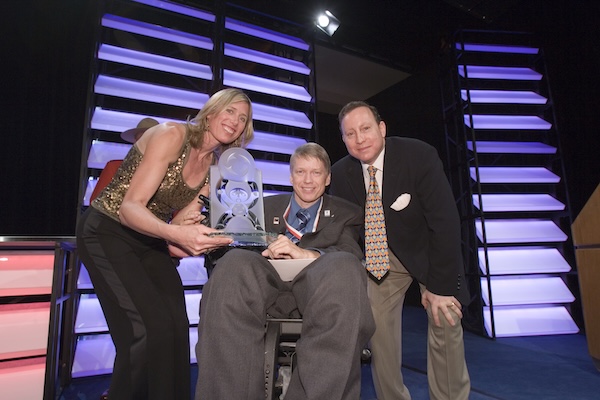
Left to right: Champion rower Silken Laumann, then-Vancouver mayor Sam Sullivan and Courage to Come Back chair Lorne Segal. Sullivan, who broke his neck in a skiing accident when he was 19, has since founded many nonprofits, held various public offices, and more. He received the first-ever Special Courage Award, in 2006. (photo from Coast Mental Health)

This year’s Courage to Come Back Awards, which took place May 7 at the Vancouver Convention Centre, celebrated four people for having overcome great adversity and giving back to their communities. First as an attendee, and then as chair of the awards for 20 years and counting, Lorne Segal knows firsthand the inspiration these award recipients offer.

“I was inspired by the incredible stories of resilience and recovery that define the Courage to Come Back Awards,” Segal told the Independent. “From the beginning, I was moved by the courage it takes to not only face adversity, but to come through it with strength and purpose. The opportunity to support mental health through this powerful platform felt both meaningful and necessary.”

Segal, who is president of Kingswood Properties Ltd., is legacy chair of the annual awards event and co-chair is Eric Carlson, core founder and chief executive officer of Anthem Properties.

Segal took on the role of chair because he “believed deeply in the mission and saw the potential for the awards to grow and reach more people.

“I’ve stayed,” he said, “because of the lives it touches – both those we honour and those who are inspired by them. Each year brings new stories, new hope and a renewed sense of purpose. It’s been one of the greatest privileges of my life.”

This year’s awards were given out in four categories and the recipients were Stanley Price (addiction), David Chalk (mental health), Louisa Bridgman (medical) and Omar Bseiso (young adult).

Price overcame childhood trauma, addiction and gang involvement, and now works in addictions and recovery, as well as being a volunteer with KidsPlay Foundation. Chalk, who hid that he couldn’t read until his 60s, has become an AI expert and entrepreneur – he is currently developing an AI-trained platform that will help others build literacy. Bridgman, a disability rights activist, lives with cerebral palsy, and has faced childhood abuse and systemic discrimination. Bseiso has faced poverty, as well as physical and mental health challenges, and gone from being a struggling student to a University of British Columbia scholarship recipient, with the goal of becoming a doctor.

“The awards shine a spotlight on hope and recovery, challenging stigma and encouraging conversations about mental health and other challenges,” said Segal. “They remind people that they are not alone. By celebrating those who have overcome incredible odds, we inspire others to keep going – and we build a stronger, more compassionate community.”

Segal himself has been changed by his involvement with the awards.

“It’s made me more empathetic, more grateful and more aware of the quiet strength people carry,” he said. “Being surrounded by such resilience has profoundly impacted how I see the world and how I approach adversity in my own life. It has grounded me and continually reminded me of the importance of kindness and perseverance.”

And it’s a family endeavour.

“It began 27 years ago when my parents, Joe and Rosalie Segal, attended the first Courage to Come Back Awards and were inspired to help found the Joseph and Rosalie Segal and Family Health Centre at Vancouver General Hospital,” said Segal. “My wife Melita and our children, Matthew and Chanelle, have supported me every step of the way – attending from a young age and sharing courage stories in their own lives. Their belief in this cause has made my work all the more meaningful.”

photo - Lorne and Melita Segal at the 2018 Courage to Come Back Awards
Lorne and Melita Segal at the 2018 Courage to Come Back Awards. (photo by Alex Law from Coast Mental Health)

The cause is mental health in general, but also Coast Mental Health specifically. The Courage to Come Back Awards raise money for the organization.

“Coast Mental Health is one of the quiet pillars holding up those who often feel unseen,” Segal explained. “In the broad landscape of mental health care, we often think first of hospitals, doctors and medication – the primary care that is essential and often life-saving. But what happens after that first step toward healing? Where does someone go when they leave the hospital but still need support, still need connection, still need hope? That’s where Coast Mental Health steps in. 

“Coast is not just a service – it is a sanctuary,” he said. “It offers that vital second tier of support: stable housing, meaningful training, compassionate community. It provides a roof over someone’s head, but also restores something far less tangible and even more precious – dignity. With job training programs, resource centres and drop-in spaces where a kind word and a warm hand can change the course of someone’s day, Coast wraps its arms around people who are trying, day by day, to come back. 

“Mental health recovery doesn’t happen in isolation, and it doesn’t end at the hospital door. Coast Mental Health understands that healing is holistic. It happens in the safety of a home, in the encouragement of a support network, in the pride of a new job and in the trust of a human connection.

“This is the quiet, essential work of Coast Mental Health – and it is work that changes lives,” Segal said. “It is not just about surviving. It is about returning to life with dignity, with purpose and with courage.”

There have been so many memorable Courage to Come Back moments for Segal over the last two decades. “There are countless,” he said. “Standing ovations for recipients who once struggled to leave their homes, families reunited in tears and the thunderous applause of a community coming together. But perhaps the most memorable moments are the quiet ones: personal notes from recipients saying, ‘You helped me believe in myself again.’”

photo - Lorne Segal has chaired Coast Mental Health Foundation’s Courage to Come Back Awards for 20 years
Lorne Segal has chaired Coast Mental Health Foundation’s Courage to Come Back Awards for 20 years. (photo from Coast Mental Health)

Under Segal’s stewardship, the annual event, which began in 1999, has grown to be Western Canada’s largest gala, with more than 1,700 people attending. It has raised more than $27 million for mental health and celebrated 153 British Columbians. But its success wasn’t guaranteed.

“One of the greatest challenges the Courage to Come Back Awards faced was simply staying alive in its earliest days,” said Segal. “I still remember stumbling across the event 27 years ago – not really knowing where I was going or what to expect. I sat down at a table, noticed a Kleenex box in the centre, and quickly understood why it was there. The stories I heard that evening moved me to tears. These weren’t just stories  – they were everyday miracles. I walked out of that room thinking: everyone needs to hear this. Everyone needs to feel this hope. 

“But, at the time, there were only a few hundred people in the room. The organization was struggling, and the idea of shutting the doors on the awards was very real. There simply wasn’t enough awareness, enough support or enough belief that it could become more. 

“That night lit a fire in me,” he said. “I started telling everyone I knew – sharing the stories, the impact, the emotion. And, slowly, over the years, the event grew.”

As for what keeps him involved, Segal said, “Because it matters. Because it changes lives. Because I’ve seen firsthand the power of sharing stories of resilience, the ripple effect of one person’s courage igniting another’s hope. For two decades, I’ve had the privilege of helping shine a light on individuals who prove, year after year, that no matter the hardship, comebacks are possible. It’s not just about honouring the brave – it’s about showing others what’s possible. And that purpose, that impact, keeps me coming back, too.”

The work gives back more than it takes, he said. “In a world full of noise, the Courage to Come Back Awards are a rare and powerful reminder of what truly matters: resilience, humanity and hope.”

To learn more about the impacts of the awards, which are presented by Wheaton Precious Metals, visit coastmentalhealth.com. 
Format ImagePosted on May 9, 2025May 8, 2025Author Cynthia RamsayCategories LocalTags awareness, Coast Mental Health, Courage to Come Back, fundraising, Lorne Segal, mental health, milestones
Join Jewish culture festival

Join Jewish culture festival

This year’s Festival of Jewish Culture takes place May 25. (photo from JCCGV)

Throughout May, there are numerous events being held at the Jewish Community Centre of Greater Vancouver in celebration of Jewish Heritage Month. They culminate in the Festival of Jewish Culture on May 25, which features music, food, dance, art, a market, workshops and more at the centre, from noon to 4:30 p.m.

While some of the events leading up to May 25 have happened, there are still many activities coming up. Tied into the festival are the Western Canada Jewish Book Awards May 13 (for the list of finalists, visit jccgv.com/jewish-book-festival); an Israeli-style vegetarian potluck Kabbalat Shabbat dinner – Shishi Yisraeli – on May 16; a Jewish Street Art workshop for youth on May 22; a joint presentation on May 22 with the JCC Jewish Book Festival, with Ben Shneiderman talking about Journey Through the Spanish Civil War, an English translation of his father’s book; and a Shabbat picnic breakfast and tiyul (walk) on May 24.

photo - The Festival of Jewish Culture features live music
The Festival of Jewish Culture features live music. (photo from JCCGV)

“The main event and pre-event activities have evolved from previous years and successful ideas that people looked forward to, as well as years of the festival being harikud [about Israeli dance], and many traditions have stayed from then,” said Nomi Zysblat, coordinator of Jewish and Israeli cultural programming at the JCC, about how this year’s events were chosen. She credited Hila Olya, director of programs, for being supportive and encouraging.

“She really is someone who both leads and shines but also gives you freedom for whatever comes to mind,” said Zysblat. “I really have the pleasure of working with some great people here at the J.”

photo - Like last year's festival, this year will have a cooking workshop
Like last year’s festival, this year will have a cooking workshop. (photo from JCCGV)

There will be four workshops offered on May 25: krav maga, where youth, adults and families are invited to train together; Liat Pakes teaches how to make falafel, pita and different styles of tahini; Zohar Hagbi leads an intuitive art session, in which participants will be able to express their inner creativity; and people will have the chance to create their own Havdalah spice bags.

“One of the four blessings of Havdalah is for besamim (fragrant spices),” explained Zysblat. “Creating our own spice bags is fun for children, too, as they get to touch and breathe in a  variety of aromatic spices, and then create their favourite combination.”

There will also be live performances. Award-winning musicians Yonatan Dror and Itamar Erez will play in different Jewish styles with guitar, piano and several types of woodwinds and brass instruments. The JCC choir, led by Shir Barzel, will sing several Hebrew melodies, and Perry Ehrlich’s ShowStoppers will perform. HaOpziot, a band of local Israeli Vancouverites, will entertain with Israeli rock classics.

Food trucks will include Planted and Meet2Eat, and there will be around 12 different stalls of local jewelry, textiles, Judaica and sweets.

Keeping the event safe will be a combination of JCC security, extra paid security, Vancouver Police Department involvement, as well as a team of Bitachon volunteers.

“It’s seriously going to be an amazing day, and I’ll be selling my popsicles, too!” said Zysblat.

For more information on any part of the festival, visit jccgv.com/program-category/israeli-festival. 

Format ImagePosted on May 9, 2025May 9, 2025Author Cynthia RamsayCategories LocalTags Festival of Jewish Culture, Jewish Heritage Month
A funny look at death

A funny look at death

David Bloom, left, and Richard Newman share two different roles in Western Gold Theatre’s production of Caryl Churchill’s Here We Go, which is at PAL Studio Theatre until May 25. (photo by Colleen Bayati)

“I love Caryl Churchill – she is quirky,” actor Rosy Frier-Dryden told the Independent. “She makes you think, makes you work. You can’t just rely on lines! You have to bring her lines to life.”

Frier-Dryden co-stars in Western Gold Theatre’s production of Churchill’s Here We Go, which centres around a funeral. Director Kathryn Bracht describes the work as “a deceptively simple, 45-minute exploration on death and dying that is a surrealist meditation wrapped up in her crafty, clever dialogue.”

For the run at PAL Studio Theatre, which goes to May 25, Frier-Dryden is joined by fellow Jewish community members David Bloom and Richard Newman in the cast, which is rounded out by Bernard Cuffling, Kate Robbins and Peihwen J. Tai.

“Without giving all of the storyline away, the general structure of the play is that it’s in three parts: a funeral scene; a monologue scene, where the deceased speaks; and a final scene without words,” explained Newman.

“We did our first runs today, and it’s quite remarkable how the three scenes build on each other to explore relationships with aging and death,” added Bloom. “It’s startlingly funny and weirdly moving.”  

Bloom and Newman share roles, as do the other actors: Frier-Dryden with Robbins, and Cuffling with Tai.

“In half of the shows, I am on stage in the first third playing one of five people attending a funeral,” said Newman. “In the other half of the shows, I play the subject of the funeral, the guy who died, who has a lengthy monologue – six pages of script, to be precise. This monologue is brilliantly written – emotional, scary and, always, funny. Quite a challenge, but such a great scene to play.

“Because of Churchill’s writing and Kathryn Bracht’s direction, each actor has a lot of leeway to interpret their lines and define their characters. Like me, David will have his own interpretation of both roles, and we’ve agreed not to watch each other, so we’ll not be influenced by the other – we’re developing our characters independently. Each of us rehearses alone in the room with the director.”

Frier-Dryden also spoke enthusiastically about the latitude the actors have in this play.

“The most marvellous thing is, you are allowed to create your own character, based on what Caryl Churchill writes and the freedom she gives you,” said Frier-Dryden. “In the first scene, I am playing a character that is older and a big personality. She is a Londoner, upper class, and lives in Eaton Square with a vast array of friends. She had an affair with the guy whose funeral we are attending. In the final scene, she is ill, has dementia and she is slipping away. She and her husband have come to terms.”

photo - Rosy Frier-Dryden’s character in Here We Go had an affair with the man whose funeral the characters have come to attend
Rosy Frier-Dryden’s character in Here We Go had an affair with the man whose funeral the characters have come to attend. (photo by Colleen Bayati)

“Caryl Churchill is quite simply a remarkable playwright,” said Western Gold Theatre artistic director Tanja Dixon-Warren. “She has an extraordinary command of language and deep understanding of human nature. Her work is very reminiscent of Pinter and Beckett, in that the text is pared down to its absolute essentials. There is nothing extraneous or gratuitous.

“She has a distinctive, truly singular approach to writing,” Dixon-Warren continued. “Very often there is no punctuation, and lines are not assigned to specific characters, thus allowing the director and actors to find multiple stories and characters within the piece – knowing that they will bring their life experience to the work. This requires that the director, actors, designers really dig into the play, to find all the nuances and be very, very specific about what they are saying. Her material is, essentially, just the beginning of the conversation.”

It certainly has the actors thinking beyond the play and about their own lives: Bloom is 65, Newman is 78 and Frier-Dryden is 90.

“I find myself being grateful for being alive and still being able to move around under my own power,” said Bloom, who commented that the monologue “is both a marathon and a sprint” in which he immerses himself every bus journey, so he’s physically and emotionally exhausted at the end of each day.

“I think about my parents a lot,” he added, “because the play reminds me of their last years and the different ways they faced bodily decline and death. There’s a scene I’m not in that brings up heartbreaking memories of my father’s last years. But, mostly, I’m so delighted to be working on such a beautiful piece of writing with a group of wonderful people, many of whom are even older than I am.”

“You start to think about what’s really important, what I want to do with whatever is left of my life,” said Newman, who has lost many friends in the last year-and-a-half or so.

“What strikes me most strongly is that I am enjoying being here and am looking forward to sticking around to enjoy life as best as I can, as long as I can,” he said. “I consider myself fortunate – I run, work at keeping my body as healthy as I can – and believe my mind will follow…. This play kind of dovetails with my life and the issues and experiences that arise, the things I’m doing and how I’m dealing with life at this age. It’s a kind of serendipity to be in this play.

“At the end of the day,” said Newman, “I’m reminded that life is a gift, a miracle. I have my work, friends both young and old, family. I’m blessed.”

Here We Go also resonates with Frier-Dryden, who recently lost a family member.

“I have lived through the deaths of many, especially recently, and I think of this play and its themes … all the time,” she said. “I am not just going to rehearse – I am going with the knowledge that someone dear has died, and I can send them off and honour them. I love that every day I think of the person I loved, and he is gone, but not gone.”

“Here We Go features some of the best actors in Vancouver,” concluded Newman. “This will be unlike anything you’re liable to see in the Vancouver theatre season! I hope people will come to the show to watch our performances.”

For tickets to Here We Go, visit westerngoldtheatre.org. 

Format ImagePosted on May 9, 2025May 8, 2025Author Cynthia RamsayCategories Performing ArtsTags aging, Caryl Churchill, David Bloom, death, dying, Here We Go, mortality, Richard Newman, Rosy Frier-Dryden, theatre, Western Gold Theatre

Mastering menopause

Michelle Biton has released a new book. Written in the same style as The Instant Anxiety Solution: 5 Simple Steps to Quiet the Mind & Achieve Calm, her recently released The Menopause Weight Loss Solution: A Woman’s Guide to Menopause Without Pounds offers six steps to help women live their best lives during menopause. Both books are published by Hatherleigh Press Ltd.

The mnemonic device that anchors this book is SHRINK. After an introductory chapter about what menopause is, some of its symptoms, the role of cortisol (“the body’s primary stress hormone”) and a couple of other topics, each section explores one of the letters. So, chapters 2 through 7 are (italics added): Stimulate Your Metabolism; Harness the Power of Your Vagus Nerve; Reinforce the Eight Nutritional Strategies; Incorporate Daily Pelvic Floor and Core Exercises; Nurture Mindfulness and Mindful Eating; and Know Your Female Powers with Confidence.

“Menopause is a natural process,” writes Biton. “You officially hit menopause when you do not get your period for 12 consecutive months. The ovaries stop making estrogen and progesterone and the period disappears. It signifies the end of the reproductive years and the beginning of the wise ‘goddess’ years.

“But that is the easy version. Menopause, or pre-menopause, can feel like a rollercoaster ride of hormones or a symphony of fireworks.”

Pre-menopause, or perimenopause, can start in one’s 30s or 40s and last up to 10 years, writes Biton. “At least 80% of women will experience menopausal symptoms of varying degrees and severity.” And there are many symptoms or changes, including but not at all limited to: slower metabolism, poor memory or brain fog, weight gain around the middle, thinning hair, increased irritability and moodiness, night sweats, increased sadness, diminished sex drive and itchy skin.

image - The Menopause Weight Loss Solution book coverWeight gain during menopause apparently affects 65-70% of women, who gain an average of five to 10 pounds. One reason for this is that “women’s ability to burn calories gets cut by 30% or more,” says Biton. “By the time she reaches middle age, she will have to work almost twice as hard to burn the same amount of calories as she did in her 20s.”

Biton recommends many different types of exercise to build muscle and kickstart one’s metabolism. “Simple things like lifting your body weight against gravity does the job perfectly,” she writes. “You can do them anywhere; they are easy to do and very effective. This includes exercises like push-ups, triceps dips, lunges and squats.” She gives a description of how to do lunges and planks, and talks about things like ideal intensity levels: “Regular physical activity [like walking], versus doing one intense workout on the weekend, will be more beneficial at increasing your metabolism long-term.” She notes that adding protein to every meal can help boost metabolism, as can eating the “right kind of fat,” such as omega-3 and omega-6.

A moderate approach to exercise and eating is, not surprisingly, the recommended approach and she dedicates Chapter 4 to nutritional strategies. Chapter 5 is about ways to increase core strength (“namely, your corset and girdle muscles”), to combat weight gain around the midsection, and exercises to strengthen the pelvic floor muscles to keep incontinence at bay.

The chapter on the vagus nerve – the “key” to activating the parasympathetic nervous system (PSNS), which helps us “calm down, handle stress better, regulate your mood and feel more relaxed, connected and compassionate” – takes a lot from Biton’s previous book on dealing with anxiety. (See jewishindependent.ca/ways-to-tackle-anxiety.)

“During menopause, it is common to feel stressed and overwhelmed, not to mention disconnected, irritable, worried, anxious, depressed and questioning a lot of things in life,” she writes.

She advises: “If you’re having a hard time regulating your emotions, feeling overwhelmed or overly emotional, it’s a good idea to activate your PSNS right away.” And she offers many ways to do that, from splashing cold water on your face, to running on the spot as long as you can, to deep breathing, to immersing yourself in nature, and more.

The chapter on mindfulness focuses on differentiating between physical and emotional hunger. The former “begins in the stomach” and is “a physiological need,” while the latter is “when you eat in response to feelings…. Emotional foods tend to be high in carbohydrates, as they allow more L-tryptophan, a mood-regulating amino acid, to enter the brain. Carbohydrates (and sugar) help the body to make serotonin, the ‘feel-good’ neurotransmitter, so it makes sense why emotional eaters tend to consume foods that give them a ‘sugar high.’” Biton suggests practices like mindful eating (slowing down, chewing your food well); trying “to eat out of physical hunger 95% of the time,” while allowing yourself occasional treats; and, again, adding protein to meals “to feel full for longer.”

The last chapter of The Menopause Weight Loss Solution is about retraining our minds to think more positively and reduce negative thoughts about ourselves. It also tackles perhaps sensitive topics like changes to the vagina, body odor, breast tenderness, skin and more that happen during menopause.

There’s nothing revolutionary or in-depth in this book, but rather it provides an overview and the basics of what a woman can do to understand and get through menopause more easily.

Biton has a master’s in holistic nutrition, a bachelor’s in psychology, and a certificate in kinesiology and fitness studies. She is a former Vancouverite who now lives in Los Angeles. For more information, visit michellebiton.com. 

Posted on May 9, 2025May 8, 2025Author Cynthia RamsayCategories BooksTags health, menopause, Michelle Biton, women
An almost great movie 

An almost great movie 

Coexistence, My Ass! follows Israeli activist and comedian Noam Shuster Eliassi as she develops her show of the same name. (photo from DOXA)

Coexistence, My Ass!, directed and produced by Amber Fares, is almost a great documentary. But it fails to ask at least two key questions that would have made for a more in-depth portrayal of an interesting and complex human being. 

Coexistence, My Ass!, whose May 4 screening at the DOXA Documentary Film Festival already has sold out, is about comedian Noam Shuster Eliassi, who was born in Wahat Al-Salam / Neve Shalom / Oasis of Peace, a village in which Jewish and Palestinian Israelis have chosen to live together. It has been considered a model of coexistence and  Shuster Eliassi grew up amid the idealism it represented, and speaks Arabic fluently. She and her best friend (to this day), Ranin, a Palestinian Israeli living in Oasis of Peace, were among the kids trotted out as the generation who would bring peace. 

Shuster Eliassi’s mother is Jewish Iranian and her father is Jewish Romanian. The couple met in high school (in what country is not revealed), so basically grew up together. They decided to live in Oasis of Peace and became, says Shuster Eliassi in her act, what most Israelis love to hate most: woke, progressive leftists. “They believe in the radical idea that Israelis and Palestinians deserve the same equal human rights! Crazy. So radical.”

It seems important to know why Shuster Eliassi’s parents left their respective countries to live in Israel, but especially her mother. With Iran as the main funder of Hamas’s – and other terrorists’ – murderous activities, and the fact that tens of thousands of Jews had to flee after the 1979 revolution, it seems that Shuster Eliassi’s mother’s experience is crucial to understanding Shuster Eliassi. But this question, if ever asked, doesn’t make it into the film.

Shuster Eliassi is an intelligent and accomplished person. By age 15, she had graduated, so to speak, from being one of the kids giving flowers to visiting celebrities (who would often mistake her, because of her dark skin, for being Palestinian – and with such good Hebrew!) to speaking around the world about coexistence and the possibilities for peace. At 21, she got a full scholarship at Brandeis University for being a peace activist. She even met the Dalai Lama, who, she quips, didn’t think she was Palestinian –  “He just thought I was Indian.”

At 25, Shuster Eliassi landed a “peace worker’s dream job” – a position at the United Nations. We don’t learn much about what her job entailed, but there are clips of her speaking about the West Bank and Gaza as being the biggest prisons in the world, and how “the occupation” affects Palestinians and Israelis. Career-wise, she was on a wave of success, she says in her show, when she saw Ukrainian President Volodymyr Zelenskyy’s TV program, made before he was elected, about a comedian who becomes president. Zelenskyy, of course, then did become president, so Shuster Eliassi observes that, if she wanted to take her political career seriously, she needed to start writing jokes.

photo - Comedian Noam Shuster Eliassi in performance
Comedian Noam Shuster Eliassi in performance. (photo from DOXA)

This takes us to where the film begins, with her at Harvard in 2019, where she’s been asked to deliver a peace-building project. She tells them that Coexistence, My Ass! will be that project, and she’s accepted.

In the documentary, we see the development of Coexistence, My Ass! and how Shuster Eliassi’s views change as the political situation in Israel deteriorates and the violence increases. Her parents are often her sounding board, as are friends and fellow comedians. We witness the results of a hate crime – the school in Oasis of Peace was set on fire in September 2020. We see moments of happiness, most unexpectedly, perhaps, when Shuster Eliassi returns to Israel from the United States with COVID and must be quarantined in a hotel, where sick Jews and Palestinians are being isolated from the general population.

“And everyone is radically getting along. This is a 5-star oasis of peace. If they continue getting along, my comedy career is over. Just kidding, you’ve read the news, I have material for years. Netanyahu has my back,” says Shuster Eliassi in her act. “Somebody give him a beeper,” she adds sheepishly, referring to Israel’s taking out of Hezbollah with exploding pagers in September 2024.

Months before Oct. 7, 2023, Shuster Eliassi was disillusioned and would get into yelling matches with Jewish Israelis protesting the Netanyahu government and dangers to democracy because their protests didn’t also explicitly call for equal rights for Palestinians. Whereas pre-COVID, she says, “My biggest responsibility is to speak to my people…. The Jewish audience is where we have to work,” the purpose of Shuster Eliassi’s comedy ceases at some point to be a way to encourage peace and becomes a form of resistance.

After Oct. 7, when some of Shuster Eliassi’s family and friends abandon their belief in coexistence because they feel peace with Palestinians isn’t possible, Shuster Eliassi goes the other way, giving up on coexistence because she feels – though doesn’t state explicitly – that peace with Jewish Israelis is not possible. 

Moria, a comedy writer, advises Shuster Eliassi that people need to hear what Shuster Eliassi has to say, but it can’t just be “genocide, genocide!” The role of a comedian, says Moria, is “to bring people together. To unify. We can’t stop the killing, but we can unify people. To get people to see the world through your eyes.”

“No, that’s not what I’m doing,” responds Shuster Eliassi, who explains that her goal isn’t to unify, it’s “to voice resistance to this insane show of force that has swept everyone up blindly.”

Shuster Eliassi’s friend Ranin reluctantly retains hope for coexistence because, otherwise, she tells Shuster Eliassi, there is no place for Palestinians and Arabs within Israel. For Shuster Eliassi, though, by the end of the film, there seems to be no place for Jews in Israel. She only sees fault with Israel, and somehow thinks that Hamas wouldn’t want to kill all Jews if Israel had dealt with “the occupation.”

If memory serves, Hamas is only mentioned once in the documentary, in a clip from Shuster Eliassi’s show, where it is part of a joke, perhaps one told before 2023, it’s not clear. Why Hamas plays little or no role in Shuster Eliassi’s view of the evolving situation is the second of those two key questions that would have made Coexistence, My Ass! a better film. 

While Shuster Eliassi laments that Israelis – even the coexistence crowd – are not able to meet Palestinians where they’re at, she is unable to meet her fellow Jewish Israelis where they are at. While she is comfortable performing at a Palestinian festival where she’s greeted by a man wearing a “Palestine vs the world” T-shirt that, on the back, has a Palestinian flag over all Israel, she isn’t comfortable with Israelis who would fill out that same map with no Palestinian territories. While she is correct that peace is only possible between equals, she only sees one oppressor – Israel. Not Hamas. Not any other international party, like Iran. Just Israel. 

Many of the people at the sold-out screening of Coexistence, My Ass! will think it’s the most amazing film ever because, despite attempting to be fair – and it seems like Fares honestly did try to present multiple sides – it ultimately heralds their anti-Zionist beliefs and justifies them. Others will be disappointed that Coexistence, My Ass! ends up being just another anti-Israel film, which will, no doubt, win more awards than it has already, despite its critical flaws. 

Format ImagePosted on April 25, 2025April 24, 2025Author Cynthia RamsayCategories TV & FilmTags coexistence, comedy, Gaza, identity, Israel, Israeli-Palestinian conflict, Neve Shalom, Noam Shuster Eliassi, Oasis of Peace, Oct. 7, politics, storytelling, Wahat Al-Salam, war
20 years on Willow Street

20 years on Willow Street

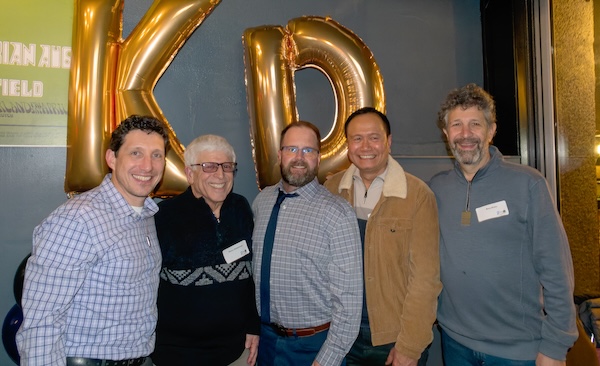
Left to right: Head of school Seth Goldsweig, former head of school Perry Seidelman, deputy head of school Alex Monchamp, head custodian and building manager Jess Sabado and former head of school Russ Klein at a February gathering of alumni to celebrate 20 years of KDHS on Willow Street. (photo from KDHS)

On May 14, with a party at Congregation Beth Israel, King David High School celebrates 20 years since it opened its doors on Willow Street.

“It’s a real blessing,” said KDHS head of school Dr. Seth Goldsweig about having a Jewish high school in the community. 

“Study after study shows that the most effective way to develop and maintain Jewish identity is to go to Jewish day school,” he said. “Our students can continue to develop their Jewish identities and turn into the Jewish leaders of tomorrow.

“We have a high school that stands up to the other amazing independent schools in the area,” he added. “This means that students can have a top-notch Jewish education combined with a rigorous and enriching academic experience. They get the best of both worlds.”

Goldsweig is KDHS’s third head of school, having started the position last fall, after Russ Klein retired. Klein was at the helm from 2008 to 2024.

“In this job, I found a community that I didn’t know I had,” Klein told the Independent last year, as his tenure was winding down. “That was beyond special. I really do think of this job, this position really, as a gift.”

Klein had taken over the position after Perry Seidelman retired. 

In 2001, Seidelman was hired as principal of Vancouver Talmud Torah High School – one of the iterations on the path that led from Maimonides High School, which was started in the 1980s, to KDHS. With 30 years prior experience and his approach to education, he was a key to the successful establishment of King David.

“Without Perry, there would be no school,” Larry Goldstein, president of the Jewish high school during the transition period, says in The Scribe’s Jewish Education in BC issue. “It’s as simple as that. Perry gave the credibility to other parents.”

“With growing interest in the school, a decision was made to build a permanent structure with financing from the Diamond Foundation,” Seidelman writes in The Scribe, which is the journal of the Jewish Museum and Archives of British Columbia. “It was to be built on a property at the southeast corner of 41st Avenue and Willow Street, directly across Willow Street from the Jewish Community Centre. Extensive discussions were held with the JCC administration, as intentions were to use the JCC for some programs, notably the JCC gymnasium for PE classes and the Norman [& Annette] Rothstein Theatre for drama productions.”

As enrolment grew, Alex Monchamp, who had been a teacher at the high school since its Maimonides days, was hired as vice-principal, according to The Scribe. Monchamp now holds the title of deputy head of school.

“I joined King David in July 2001,” Monchamp told the Independent. “I’d only been living in the city for a few months, and I saw a small newspaper ad for a small independent school looking for a half-time English and drama teacher. It was my first teaching job in BC!”

When asked why KDHS has proven successful, while previous versions of the high school struggled, Monchamp said, “I think the main turning point was the year I started, and the school had its biggest Grade 8 class, which I think was 25 or 26 students. Those connected to the school and who were vital in its foundation and ongoing viability made a real concerted effort to engage with the community and make a case for the importance and need for a sustainable Jewish high school. However, the real risk, the real investment, was when those Grade 8 families, and the families that came after, invested their most important resource – their children – in our school.

“When our families started to see that need and started to trust in the school, it allowed the school to grow and become more stable,” said Monchamp. “Stability turned into slow but steady growth, to more students, more teachers, and then our home on Willow Street. However, the building itself did not cement our future – it was also the school’s investment in good leadership and dedicated teachers that secured the future we enjoy today.”

photo - Then-student Nicole Grubner and Gordon Diamond at the 2005 inauguration of the KDHS building on Willow Street
Then-student Nicole Grubner and Gordon Diamond at the 2005 inauguration of the KDHS building on Willow Street. (photo from KDHS)

When Monchamp joined the high school, there were fewer than 70 students, programming was limited and there was no permanent school building, he said. Growth has occurred in multiple areas.

“There are obvious measures, like our student population is over 270 students, we have a vibrant arts program, a strong athletic program and our programming offers our students many ways to explore what they know, what they can do and who they’ll become,” said Monchamp. “All of that happens because we continue to have a team of outstanding teachers and dedicated adults who work extremely hard.

“The ultimate measure is not where our students go to university, the grades they earn or even how many of them are in the building each day,” he added. “There are bigger schools, there’s no shortage of kids going to university and no one is ever going to care what your math mark was in Grade 10. The true measure is that our students discover and develop their capabilities, figure out who they are and what it means for them to be Jewish in this world. In a world of uncertainty and change, our students have the capability to adapt and grow and the values and foundation to be a good person.”

KDHS’s director of development, Esther Mogyoros, who has worked at the school for the past 11 years, echoed Monchamp’s belief that there is more than one component to the school’s growth.

“Over the years,” she said, “King David has grown not only in student enrolment but also in its physical presence, thanks to the expansion of the east campus, made possible by the generosity of the Diamond Foundation and our supportive community. Our reputation has been built on a strong foundation of chesed programs, regular volunteer initiatives, and active participation in celebrations and community events. We take pride in nurturing students who not only excel academically but also continue their educational journeys and give back to the community long after graduation.”

Both Mogyoros and Monchamp said the best part of their jobs is when they connect with others.

“Connecting with students, parents, grandparents and the community at large,” said Mogyoros. “Building relationships and sharing my passion for Jewish education, Israel and the importance/impact of King David in the community.”

“The best part is when I can connect with a student, chat, find out more about them and then, if I can, find ways that I can support them,” said Monchamp. “It doesn’t happen nearly enough in a typical day, but I love it when it does.”

One of Monchamp’s standout moments at the school is when KDHS would take the Grade 9 students to Washington, DC, every spring to visit the US Holocaust Memorial Museum.

“We’d spend a full day at the USHMM, which is a lot, and our students always came away with information or artifacts they hadn’t encountered before and at times it was very emotive,” he said. “The trip also included a day at many of the Smithsonian Institution museums. It was always a treat to watch the kids see real historical items, like the Wright brother’s plane, the ruby shoes from The Wizard of Oz or Prince’s guitars. History is always more relevant to kids if they can get up close to it and connect to their own stories and memories.”

Over the past 20 years, there have been challenges, notably, the pandemic. 

“There was so much unpredictability and an immeasurable amount of learning we had to do on the fly,” said Monchamp of that time. “Despite the numerous challenges, it is moments like that which demonstrate what our school is all about. The overarching goal was what it has always been: putting our students first. And when that was our guiding principle, we figured out the rest…. It was also vital that our families trusted us. Before, during and after COVID, we have consistently demonstrated to our families that we take our role in their children’s growth very seriously and that we always perform in ways that support and benefit their growth.”

“Throughout those difficult years,” said Mogyoros, “our school’s resilience and compassion shone through – not only in maintaining academic standards but also in supporting one another emotionally during a time of unprecedented uncertainty.”

Monchamp hopes the school continues on its current path, becoming “a student-centred learning environment.

“Learning is an active experience and is most successful when students are actively engaged and can apply what they know and can do to their own experiences and contexts,” he said. “We have already seen the tremendous benefit of this shift. It’s what is keeping our school competitive and on par with other Vancouver independent schools and it’s setting up our students for their future successes.”

photo - The King David High School Class of 2019 celebrates graduation
The King David High School Class of 2019 celebrates graduation. (photo from KDHS)

“Our goal,” said Mogyoros, “is to empower students to be confident in their identities, excel in their chosen paths, and take pride in their Jewish heritage, traditions and love for Israel. We strive to inspire them to make a meaningful difference in the world around them.”

JWest is central to the high school’s future. The three-phase development project at 41st Avenue and Oak Street will see the construction of a much-expanded JCC, a new home for KDHS and two residential towers.

“Having a new building where we can continue to develop our programming, where we can engage our students and where we can host real ‘home games’ in our own gym in front of as many students and parents as possible is incredibly important,” said Monchamp. “The school is still very young and a new facility will allow it to continue to shape its identity. Additionally, our community can continue to take pride in the school and all of the many interconnected Jewish organizations in the city. I think the symbolism of one large, proud hub for the Jewish community sends not only a very strong message, but, more importantly, a unified message, one which the community can use as a foundation for its future.”

Mogyoros agrees.

“A larger campus will open doors to more programs, providing students with enhanced opportunities for learning, creativity and personal development,” she said. “We are especially excited about the addition of more space and new sports fields, which will enrich our athletic and extracurricular offerings and foster a vibrant, dynamic environment for our students.”

“We want to see the school continue to grow,” said Goldsweig. “Next year, we will be the biggest we have ever been. So many families have chosen to give their kids a Jewish high school education. We are so appreciative and hope that many more continue to make the same decision.”

The head of school says he has been warmly welcomed into the community, with Friday night dinner invitations every Shabbat, “an amazing staff,” a board that “has been supportive every step of the way,” and parents who “are dedicated to the success of the school and their children. 

“The most impressive group of all has been the students,” Goldsweig said. “They are so inspiring, and I know our future is in good hands.” 

To attend the May 14 gala, participate in the silent auction (which launches April 29), buy raffle tickets or donate to King David High School, visit goldenthreadgala.com.

Format ImagePosted on April 25, 2025April 30, 2025Author Cynthia RamsayCategories LocalTags Alex Monchamp, education, Esther Mogyoros, fundraising, Golden Thread Gala, history, JWest, King David High School, philanthropy, Seth Goldsweig
Beckman gets his third FU

Beckman gets his third FU

The big reveal: Vitaly Beckman fools Penn & Teller a third time with his illusion “Still Life.” (image courtesy Vitaly Beckman)

“It’s a real privilege to be able to share something that was created from just an idea, and see how well it’s received,” Vitaly Beckman told the Independent after winning his third FU (Fool Us) trophy on Penn & Teller: Fool Us last month.

With his characteristic charm and sense of humour, Beckman had the host of the show, Brooke Burke, arrange a pineapple, a pomegranate, a couple of melons and a clock (whose hands she set however she liked) either on a fruit stand or beside it. Beckman even invited her to move any item after her initial placement, which she did not. Then, he turned his attention to a covered painting that had been on stage the whole time. When unveiled, the revealed artwork depicted Burke’s arrangement exactly.

“The concept might have been in my head for years,” said Beckman, a member of the Jewish community who lives in New Westminster. “I think I even had a sketch of the idea in my diary years ago. After I finished my off-Broadway run, I had some time to work on a few ideas, and this is the one I decided to pursue in 2019. I started performing it in Singapore and, right after that, the pandemic started, so only a few years later could I test it out some more on the road. So, while the illusion took a few months to create, it took a few years to polish and work out the kinks.”

Beckman fooled Penn & Teller in 2016 and again in 2021.

“Nothing beats the first time,” Beckman said. “However, this was also very exciting because it is harder and harder to come up and stump them, especially after they know me already, but also the illusion I picked is more difficult to perform this time, and a lot more things can go wrong. So, because of that, the stakes were higher! Definitely exciting to be able to do it with all that in mind.”

For his third attempt, Beckman considered several pieces from his current touring show, An Evening of Wonders, and “Still Life” ticked a lot of boxes, he said.

“The illusion was telling a very simple story, in about five minutes, which is the optimal time for a show like Fool Us. Yet, it was also very visually startling,” he said. “It has inspirational elements, as my goal is not really to trick people but to inspire and uplift them. But then, of course, the mystery elements in it were also very strong. I knew that Penn & Teller would have a real hard time with it!”

Winners of the FU trophy get to perform in Penn & Teller’s live show, and Beckman will join them in Las Vegas on April 26. To watch Beckman fool the duo, go to youtube.com/watch?v=Z3hJA2I-Fig. 

Format ImagePosted on April 25, 2025April 24, 2025Author Cynthia RamsayCategories TV & FilmTags An Evening of Wonders, illusion, Penn & Teller, Vitaly Beckman
Healing from trauma of Oct. 7

Healing from trauma of Oct. 7

Healing Space has treated more than 20,000 people since it began in response to the trauma caused by the Oct. 7 terror attacks and the ensuing war. (photo from Healing Space)

“It’s important to talk about it because there are still hostages who have been living Oct. 7 every day for over a year-and-a-half. It’s important to talk about it because antisemitism around the world is growing stronger, and there are people who deny or justify the horrors we went through that day. This is not a political matter – it’s a matter of humanity. It’s about human lives,” Raz Shifer, a survivor of Hamas’s horrific terror attack on the Nova music festival, told the Independent.

Shifer, who lives in Giv’atayim, Israel, will be joining Vancouver’s community Yom Hazikaron ceremony on April 29 and Yom Ha’atzmaut celebration on April 30. Another Nova survivor, Inbal Binder, from Petah Tikva, will be coming here as well, and she and Shifer will, among other activities, participate in the events, visit several local Jewish schools and address Federation’s Regional Communities Conference.

Also coming to Vancouver is Dr. Ilana Kwartin, chief executive officer of Healing Space Rishpon, where both Shifer and Binder have participated in workshops and treatments. She has some meetings lined up, but the Israel-related events are the main purpose of the visit.

“In addition, I’m happy to meet people one-on-one or book speaking engagements for groups, communities and teams, where we can share the story of our work and, through that, the story of Israel at this time,” she said.

Healing Space Rishpon was created by Dr. Lia Naor in response to the trauma caused by the Oct. 7 attacks and the ensuing war. With Ra’anan Shaked, therapists and volunteers, Naor set up a centre at Ronit Farm in Sharon that operated for just over a month. With Patrizio Paoletti and Rani Oren, a permanent base was then established in Rishpon. Since Healing Space began, more than 140 therapists have given almost 60,000 hours to treating more than 20,000 people in 16 trauma-healing modalities. 

Kwartin became CEO right after Oct. 7. She and her family live in Eliav, a yishuv she helped found, which is in the northern Negev, abutting the separation barrier.

“The Black Shabbat of Oct. 7 upended my life, like it did for so many others, and as we – individuals, families, communities and a nation – mourn, work to pick up the pieces, mend what can be repaired and rebuild where it cannot, I put my personal and professional background to use as the CEO of this one-of-a-kind haven,” she told the Independent.

photo - Dr. Ilana Kwartin, chief executive officer of Healing Space Rishpon, is coming to Vancouver with Nova music festival survivors Raz Shifer and Inbal Binder for Yom Hazikaron and Yom Ha’atzmaut
Dr. Ilana Kwartin, chief executive officer of Healing Space Rishpon, is coming to Vancouver with Nova music festival survivors Raz Shifer and Inbal Binder for Yom Hazikaron and Yom Ha’atzmaut. (photo from Healing Space Rishpon)

Kwartin was born in the former Soviet Union and made aliyah in 1987, growing up in Jerusalem. “As an officer in the IDF, I served as a tatzpitanit [spotter] in Nachal Oz and later as a founding commander of the Netzarim observation post, and the tragedy of the tatzpitaniyot struck me deeply,” she said, referring to the female military unit that warned of a potential terrorist attack and whose soldiers were among the first killed and kidnapped on Oct. 7.

With BAs in law and psychology from Hebrew University of Jerusalem, Kwartin earned an MA in conflict resolution from Ben-Gurion University of the Negev. Her book, Imprisoned, came from her PhD dissertation on honour-based confinement, which she did at Bar-Ilan University. The stories have inspired activist initiatives across Israel and informed legislation, she said.

Kwartin lectured in law at Sapir College, where she built their legal internship placement program and founded a centre of legal activism, A House of their Own. “More recently,” she said, “I spent three years on shlichut in Los Angeles as the director of Jewish Agency operations on the West Coast. With the outbreak of war in Ukraine, I traveled to the Ukrainian border to help rescue Jewish refugees and bring them to Israel.”

Kwartin’s work at Healing Space Rishpon changes every day. “The programs are so varied and cover many groups of the Israeli population,” she said. “But the most meaningful part is the people who work here – very similar to me, they left everything they were doing and started working at Healing Space to repair the emotional damage we all see around us. They work tirelessly, in uncertain conditions, long hours, doing the hardest work imaginable. It is thanks to the team that Healing Space makes such a big difference in people’s lives.”

Binder found out about Healing Space inadvertently.

“I had heard there was a treatment centre you could go to, but I wasn’t in a mental state that allowed me to reach out for it,” she explained. 

“Later on, I was looking for something that could get me out of the house in the mornings and help create a daily routine. By chance, I came across an ad for a new rehabilitative employment program at Healing Space and it sounded amazing – working with my hands, being in a warm and supportive environment, where I could focus on myself and begin a new movement in my life.”

Binder worked as a beautician before Oct. 7 and, while not currently working, she is taking courses, most recently completing one in conscious psychotherapy. She started going to Healing Space early in the war. It “was the first time I realized that another way was possible – that someone was truly listening to me,” she said.

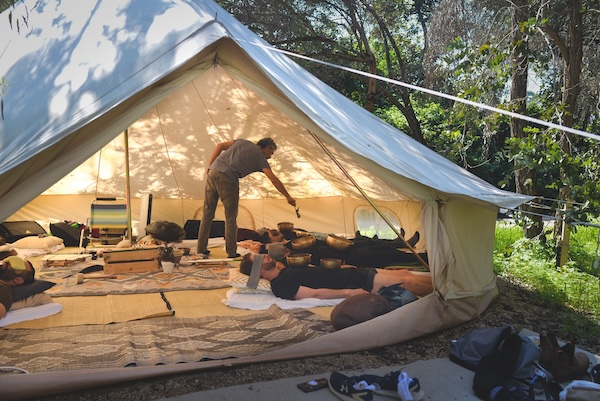
“More than that, I got to experience treatments I never imagined I’d try, like sound healing and yoga therapy. These are treatments I still do to this day, to help maintain my emotional balance and regulate my body.”

At Healing Space, she added, “Even my mom, who was never really drawn to holistic healing, found a deep connection with one of the therapists and opened her heart to her – that really moved me.”

photo - Group gathered outside at Healing Space Rishpon
A group gathered outside at Healing Space Rishpon. (photo from Healing Space)

From a place of not wanting to do anything or face anything, Binder said, “I now want to grow. I want to move forward and live a good life. And none of this would have happened without the process I went through over the past six months.”

Binder’s Vancouver visit will be the first time she is telling her story publicly. 

“Honestly,” she said, “it’s a little overwhelming to come and talk about my healing journey. It also means recognizing my story – and that alone is a challenge for me. I feel both excited and nervous – telling my story for the first time and receiving acknowledgment for it.

“It’s important for people to hear about the massacre because it was a Holocaust repeating itself,” she said. “The Jewish people are once again in danger, and it’s crucial to echo these stories, to make sure people know and remember.

“Beyond that, the connection between Jews in Vancouver and Jews in Israel – to build strong, deep connections across Jewish communities around the world – that connection is what has always kept us strong as a people.”

Binder attended the Nova festival with her sisters.

“It was actually the first evening that my sister’s boyfriend was introduced to our parents,” she said. “From there, the four of us drove to the party in the south.

“In the morning, when the rockets started, I called my mom to let her know and said we were heading home. We got delayed near the party because one of our friends had a panic attack, and we waited with her.

“We made it to the car, but it took time to decide what to do. At 8:30 a.m., the boyfriend took the lead, called his father, picked us up in the car, and we escaped through the fields. His father navigated him over the phone throughout the whole drive, and that’s how we managed to get out safely. Which is crazy in itself – the reality was so different for so many others. It felt like we were in a divine bubble that protected us.”

“It was the scariest day of my life,” said Shifer of Oct. 7. “I didn’t know if I would make it back home or not, and I didn’t know which of my friends would survive. It was a feeling of helplessness, complete loss of control and sheer terror.”

Unlike Binder, who is only now beginning to share her story, Shifer – who is an actor, singer and artist – has been interviewed by media around the world and has spoken at schools, universities and synagogues.

“I also found myself advocating and telling our story through music during performances,” she said. “In addition, I led tours for people who came to the Nova site and shared my personal story with them.”

Initially, Shifer refused to leave her house after Oct. 7.

“Friends told me there was a place where survivors go to heal, but I was too afraid to go outside and couldn’t bring myself to get there,” she said. “Then, one day, a volunteer came to my home and helped me take that first step – to leave the house and arrive at Healing Space. From that day on, something opened up in me, and I began coming every week.”

Healing Space has helped Shifer cope with her trauma in many ways.

“First of all, the location,” she said. “You arrive at a place full of trees and greenery – everything is peaceful and calming.

“There’s something comforting about sitting among people who have been through something similar to me,” she continued. “The therapists at the centre are kind and embracing. The shared music circles helped me find my way back to music. But, more than anything, it’s the feeling that I’m not alone. That I am seen. That there’s a place that can hold me.”

photo - People at Healing Space Rishpon have had similar experiences
People at Healing Space Rishpon have had similar experiences. (photo from Healing Space)

The body treatments have allowed Shifer to release some stress and start letting down her defences.

“The long-term project I joined under Healing Space gave me the tools to return to a routine and become an active human being again,” she said. “Healing Space is a deeply meaningful part of my recovery process – and I honestly don’t know what I would have done without them.”

To register to attend Yom Hazikaron or buy tickets ($18) for Yom Ha’atzmaut, visit jewishvancouver.com. 

Format ImagePosted on April 11, 2025April 10, 2025Author Cynthia RamsayCategories LocalTags healing, Healing Space Rishpon, health, Inbal Binder, Israel, Jewish Federation of Greater Vancouver, Nova music festival, Oct. 7, Raz Shifer, trauma, Yom Ha'atzmaut, Yom Hazikaron

Drama teacher back on stage

People of a certain age will have seen the iconic 1980 comedy 9 to 5, starring Jane Fonda, Dolly Parton, Lily Tomlin and Dabney Coleman. Even more will know the eminently singable title song of the movie, written by Parton, which remains popular today, 45 years later. Those of us who enjoyed the story and like (love!) the song will be happy to know that Royal City Musical Theatre (RCMT) is presenting 9 to 5 The Musical – the score of which Parton wrote – April 25 to May 11 at New Westminster’s Massey Theatre.

“Set in 1979, 9 to 5 The Musical follows three co-workers – Violet, Doralee and Judy – as they endure their mundane and demoralizing office jobs at Consolidated Industries, under the thumb of their sexist and egotistical boss, Franklin Hart Jr.,” reads the press release for the production, which is co-directed by Valerie Easton and Chris Adams. “When the women are suddenly given the chance to turn their wildest revenge fantasies into reality, they hatch a plan to kidnap their nasty boss and step into their full potential – ultimately taking control of the company.”

photo - Keri Smith is in Royal City Musical Theatre’s 9 to 5 The Musical, which runs April 25-May 11 at Massey Theatre
Keri Smith is in Royal City Musical Theatre’s 9 to 5 The Musical, which runs April 25-May 11 at Massey Theatre. (photo from Royal City Musical Theatre)

The RCMT production stars Irene Karas Loeper as Violet, Maia Beresford as Doralee, Madeleine Suddaby as Judy and Dustin Freeland as Franklin Hart Jr. Jewish community member Keri Smith plays Margaret, a secretary in Hart’s office, who drinks a bit, and she is the understudy for Violet.

RCMT’s 9 to 5 The Musical marks a return to the stage for Smith – who trained at the American Musical and Dramatic Academy in New York City – after a long hiatus, during which time she has taught grades 1-7 at Vancouver Talmud Torah.

The Jewish Independent interviewed Smith in advance of the musical’s opening.

JI: Can you tell me a bit about your general background, how you got into education and theatre, when and why you came to Vancouver? Or did you just study in New York?

KS: After completing my studies at theatre school and spending several years working in New York, my visa expired, prompting my return to Vancouver. Upon arriving, I quickly recognized the challenges of pursuing a full-time acting career in the city. As a result, I sought a position that would allow me to continue engaging with theatre while securing a steady income. I found a role as an early childhood educator at Vancouver Talmud Torah, the elementary school I had attended as a child.

Two years into my position, when an opening for a drama instructor became available, I approached the principal and shared my theatrical background … [and] she entrusted me with the role. I quickly developed a deep passion for teaching and decided to pursue a teaching certification to further my commitment to education.

Over the past 19 years at Vancouver Talmud Torah, I’ve had the privilege of helping to establish a vibrant musical theatre program for students aged 10 to 13. I am immensely grateful to be in a position where I can combine my love for theatre with the joy of teaching every day.

JI: What role, if any, does Judaism and/or Jewish community play in your life?

KS: Judaism and the Jewish community hold a deeply cherished place in my life, shaping both my personal journey and my work as an actor and educator. In my daily life, Jewish values of compassion, justice and the importance of education are guiding principles.

In my role as an educator, I am reminded every day of the power of knowledge and the responsibility we bear in passing on these values to future generations. Judaism has a long tradition of asking questions, seeking understanding and fostering growth through learning, which resonates deeply in my approach to teaching.

As an actor, I find that storytelling in the Jewish tradition has influenced my perspective, as narratives in Judaism often revolve around struggles, resilience and the pursuit of justice – ideas that transcend time and place. Whether in a classroom or on stage, I strive to embody the deep sense of connection and responsibility that Judaism fosters, with gratitude for the wisdom that has been passed down through generations.

The Jewish community, with its strength, support and shared commitment to growth, reminds me that we are all part of something much larger than ourselves and that, together, we can bring light into the world.

JI: What attracts you to acting?

KS: What I love most about acting is the profound escape it offers – an opportunity to leave behind my own world and immerse myself fully in someone else’s reality. The process of stepping into a character’s shoes, seeing the world through their eyes, and experiencing their emotions and struggles is not just thrilling; it’s transformative. It’s an addicting experience because each new role is a journey of discovery – of understanding, empathy and expression that goes beyond my own personal experiences.

JI: What’s your favourite part of teaching?

KS: What truly deepens my love for acting is the opportunity to teach it. Teaching drama allows me to share that same transformative experience with others, especially young people. Watching students experience the same magic of stepping into a character’s shoes for the first time is incredibly rewarding. There’s something truly special about guiding them through the process of self-expression, helping them find their voice and watching them take risks on stage. Drama gives students a unique platform to explore their own identities and develop their confidence, creativity and empathy – all essential skills not just for acting, but for life.

JI: What motivated you to audition for 9 to 5 The Musical? What was that process?

KS: I felt it was the perfect time to step out of my comfort zone and challenge myself, so when I saw the opportunity, I didn’t hesitate to audition. The process was incredibly enjoyable! I was given a song and a scene to prepare, and I went in with the goal of giving it my all. Afterward, I felt confident and proud of my performance.

JI: How often do you perform, and approximately for how long have you been a performer?

KS: I first discovered my passion for performing as a Grade 7 student at VTT, where I played Hodel in Fiddler on the Roof. That role was my introduction to acting, and I’ve been hooked ever since. While I “perform” daily in my role as a teacher, engaging with my students, I haven’t had the chance to take the stage in over 10 years. This production marks my return to acting, and it feels incredible to be back!

For tickets to 9 to 5 The Musical, visit royalcitymusicaltheatre.com. 

Posted on April 11, 2025April 10, 2025Author Cynthia RamsayCategories Performing ArtsTags 9 to 5 The Musical, Dolly Parton, drama, Keri Smith, musicals, Royal City Musical Theatre, teaching, Vancouver Talmud Torah, VTT

Carousel stages Stuart Little

“When Mrs. Frederick C. Little’s second son arrived, everybody noticed that he was not much bigger than a mouse. The truth of the matter was, the baby looked very much like a mouse in every way. He was only about two inches high; and he had a mouse’s sharp nose, a mouse’s tail, a mouse’s whiskers, and the pleasant, shy manner of a mouse. Before he was many days old, he was not only looking like a mouse but acting like one, too – wearing a grey hat and carrying a small cane. Mr. and Mrs. Little named him Stuart, and Mr. Little made him a tiny bed out of four clothespins and a cigarette box.”

So begins EB White’s classic children’s story Stuart Little, which was published 75 years ago. To celebrate the anniversary, Carousel Theatre for Young People is presenting the play Stuart Little, which was adapted from White’s book by Joseph Robinette. Jewish community members Advah Soudack and Stephen Aberle are part of the production, directed by Carousel Theatre artistic and managing director Jennica Grienke, at Waterfront Theatre April 23-May 11.

Soudack and Aberle take on multiple roles, including as Stuart’s parents. Castmates Melanie Yeats and Megan Zong also play several parts, while Katrina Teitz plays the title role.

photo - Advah Soudack in a table read of Stuart Little, which will be presented by Carousel Theatre for Young People at Waterfront Theatre April 23-May 11
Advah Soudack in a table read of Stuart Little, which will be presented by Carousel Theatre for Young People at Waterfront Theatre April 23-May 11. (photo by Kezi Jacob)

“I was so excited when Jennica called me to offer me the role of Mrs. Little,” Soudack told the Independent. “I knew being part of Stuart Little would be wonderful and the fact that music was being added to the story made me even more jazzed! I love being part of theatre for young audiences, as I think it is so important for children to get the chance to witness and experience live theatre. I have very fond memories from the theatre productions I saw as a child and I know they were part of what inspired me to be an actor myself.”

“I loved the book when I read it as a child, and the approach taken by this production sounded like fun,” said Aberle of why he wanted to be a part of it. “I have a long history with Carousel, going back to the ’80s and including many years both touring to schools throughout BC and performing at the Waterfront, so it’ll be fulfilling to come back and perform here with the company again. I’ve also had the pleasure of working with director Jennica Grienke in the past, and I’m looking forward to renewing that connection. Finally: it’s work! And I love to work.”

Aberle has performed in Carousel’s Scrooge, Macbeth, Dream Castles, The Taming of the Shrew and other productions over the years. Soudack was in The House at Pooh Corner, directed by Kim Selody, in 2020. “Unfortunately, COVID shut us down, so we didn’t get the chance to finish our run with Carousel, nor did we get to remount with Presentation House,” she said.

In preparation for the play, Soudack re-read Stuart Little, a book she read as a child – “and I remember loving it and putting all this effort into a very detailed title page for a book report I wrote … putting a lot of effort into drawing Stuart Little and trying to get him just right.”

Not only did Aberle read the book – “and Charlotte’s Web, another favourite by the same author” – but he read it “a number of times and loved it.”

“It’s interesting,” he said, “to re-read it now with grown-up eyes and see things I’d forgotten: Stuart’s pluck, and his enduring quest to reconnect with his bird-friend Margalo, for example.”

photo - Stephen Aberle in a table read of Stuart Little
Stephen Aberle in a table read of Stuart Little. (photo by Kezi Jacob)

For Aberle, the enduring messages include: “Don’t give up on your dreams – and don’t pout and sulk when things don’t quite go the way you’d planned! Don’t be a pushover, and don’t be a jerk either. It’s OK to be different. It’s OK to love who you love. Everyone – including animals, both human and non-human – matters, deserves respect and has their part to play.”

“I feel that the relevance of the story in today’s world is to not fear differences in one another and to not judge each other by our appearance or stature,” said Soudack.

“The part of the story that I particularly like is how everyone accepts Stuart without judgment or fear,” she said. “His parents love him for who he is and everyone he encounters takes him at face value, shows him respect and treats him like an equal.”

Aberle’s favourite part is Stuart driving off into the north, searching for his love, Margalo.

Rehearsals hadn’t started when the Independent spoke with Aberle and Soudack, so they couldn’t say exactly what playing more than one part would be like, but they explained their process.

“I usually approach playing different roles by working with different character bodies and vocal placement. I like to work off of a first hit that I get from reading the script and various characters and build from there. Some of the roles we get to play are animals, so that will be fun!” said Soudack.

Aberle said “one of the most interesting things about playing several characters is finding the characteristics that distinguish them so that one can step quickly and surely into their shoes – or, in some cases, paws. Vocal qualities, gestures, mannerisms, all that kind of thing.”

Neither actor approaches a performance for younger audiences differently than they do other shows, though both pointed to some differences.

“Children’s theatre is usually quite playful and energetic and requires a different way of storytelling,” said Soudack, “so I keep that all in mind when I start my prep and enter the rehearsal hall.”

“Younger audiences can sometimes be more upfront in their responses, which can teach everyone – actors, directors, playwrights, everyone – a lot,” said Aberle. “Back in the day, when shoemakers moved from laces to Velcro for young people’s footwear, we used to talk about discovering the ‘Velcro moments’ – when the youngest audience members, sitting cross-legged in the front row on the school gym floor, would start to play with the Velcro on their shoes, peeling and re-fastening it, and the sound would fill the air. Usually, these were ‘author’s message’ moments – when the script stopped being the story of the interplay between the characters and started becoming a moral. Young audiences can smell a moral approaching from a mile away, and they have little patience for it. (That’s probably true for older audiences as well, but they’ve grown better at hiding it.)”

For tickets (from $19) to Stuart Little, visit carouseltheatre.ca. 

Posted on April 11, 2025April 10, 2025Author Cynthia RamsayCategories Performing ArtsTags Advah Soudack, Carousel Theatre for Young People, Stephen Aberle, Stuart Little, theatre

Posts pagination

Previous page Page 1 … Page 7 Page 8 Page 9 … Page 84 Next page
Proudly powered by WordPress