Skip to content
  • Home
  • Subscribe / donate
  • Events calendar
  • News
    • Local
    • National
    • Israel
    • World
    • עניין בחדשות
      A roundup of news in Canada and further afield, in Hebrew.
  • Opinion
    • From the JI
    • Op-Ed
  • Arts & Culture
    • Performing Arts
    • Music
    • Books
    • Visual Arts
    • TV & Film
  • Life
    • Celebrating the Holidays
    • Travel
    • The Daily Snooze
      Cartoons by Jacob Samuel
    • Mystery Photo
      Help the JI and JMABC fill in the gaps in our archives.
  • Community Links
    • Organizations, Etc.
    • Other News Sources & Blogs
    • Business Directory
  • FAQ
  • JI Chai Celebration
  • JI@88! video

Recent Posts

  • Story of Israel’s north
  • Sheltering in train stations
  • Teach critical thinking
  • Learning to bridge divides
  • Supporting Iranian community
  • Art dismantles systems
  • Beth Tikvah celebrates 50th
  • What is Jewish music?
  • Celebrate joy of music
  • Women share experiences 
  • Raising funds for Survivors
  • Call for digital literacy
  • The hidden hand of hate
  • Tarot as spiritual ritual
  • Students create fancy meal
  • Encouraging young voices
  • Rose’s Angels delivers
  • Living life to its fullest
  • Drawing on his roots
  • Panama City welcoming
  • Pesach cleaning
  • On the wings of griffon vultures
  • Vast recipe & story collection
  • A word, please …
  • מארק קרני לא ממתין לטראמפ
  • On war and antisemitism
  • Jews shine in Canucks colours
  • Moment of opportunity
  • Shooting response
  • BC budget fails seniors
  • Ritual is what makes life holy
  • Dogs help war veterans live again
  • Remain vital and outspoken
  • An urgent play to see
  • Pop-up exhibit popular
  • An invite to join JWest

Archives

Follow @JewishIndie
image - The CJN - Visit Us Banner - 300x600 - 101625

Byline: Cynthia Ramsay

Kiki more than a muse

History is fickle. Who becomes known as great in their field, whose work is displayed in museums or taught in schoolbooks? When there is a tangible product – a building, a painting, a book, whatever – the chances seem higher that you’ll be remembered. But what if you were mainly a muse to others, what if you could enthrall audiences with your voice but never recorded an album, if you created works of art that people liked and even bought, but you didn’t create in the popular style of the day, or you were a woman in a man’s world?

image - Kiki Man Ray book coverMost readers will not have heard of Kiki de Montparnasse, born Alice Prin in 1901, in Châtillon-sur-Seine, about 240 kilometres southeast of Paris, to an unwed mother who wasn’t much into mothering. But most would likely recognize her – she modeled for many an artist (Alexander Calder, Tsuguharu Foujita, Amedeo Modigliani, to name a few, as well as Maurice Mendjizky, with whom she fell in love for awhile). And, during her seven-year relationship with surrealist photographer Man Ray (who thought himself more of a painter), she posed for him many a time. In 2022, one of Ray’s most famous images of her, called “Le Violon d’Ingres,” sold for $12.4 million, the most expensive photograph ever sold at auction.

Yet, what of her own work, her talents, her accomplishments?

Cultural historian Mark Braude gives Kiki her overdue due with his latest book, Kiki Man Ray: Art, Love and Rivalry in 1920s Paris, which Braude will discuss with University of British Columbia professor emeritus of history Chris Friedrichs at the JCC Jewish Book Festival on Feb. 24, in an event called Art & History: Paris, Jews and Surrealism.

While Kiki wasn’t Jewish, so many of the artists she hung out with were, including, of course, Ray, who was born Emmanuel “Manny” Radnitzky. If she hadn’t lived among the who’s who of Dada and Surrealist art, perhaps she wouldn’t have been overshadowed, mostly forgotten. She was a commanding performer, she sold at least a few dozen paintings, wrote a memoir, appeared in films. By all accounts, a success. But, as “Queen of Montparnasse,” the early-1900s bohemian paradise in Paris, Kiki lived on the more wild side. Addiction would speed along her end – she died in 1953, only 51 years old. Another reason, perhaps, that her legacy was not as lasting.

As much as Braude’s account is about Kiki, it is about the time in which she lived and the people among whom she lived. Because, “as she experienced her era and channeled that experience into her art, Kiki shared drinks and cigarettes and ideas with many of the people who would shape how their century saw and thought and spoke: Modigliani, Stein, Picasso, Barnes, Matisse, Guggenheim, Calder, Duchamp, Breton, Cocteau, Flanner, Hemingway,” writes Braude. “And Man Ray, whose emergence as a modern artist must be understood as intimately linked to her own.”

While Kiki may not have left much physical evidence behind of her influence, it doesn’t mean she wasn’t influential. Living as she did, with whom she did, Braude writes: “Evolving in concert with them, watching them become who they were, challenging them and joking with them, working with them and through them, Kiki, too, played her role in shaping the cultural history of the past hundred years.”

Braude’s book is not only a fascinating read, but a reminder that none of us is insignificant. Even if our names are lost to history, we matter, we impact others and the world around us.

For the full book festival schedule, visit jccgv.com/jewish-book-festival. 

Posted on January 17, 2025January 15, 2025Author Cynthia RamsayCategories BooksTags art, history, JCC Jewish Book Festival, Kiki de Montparnasse, Man Ray, Mark Braude, painting, Paris 1920s, photography
Writing the human condition

Writing the human condition

Maya Arad and Eshkol Nevo are featured in the JCC Jewish Book Festival prologue event Jan. 19.

The JCC Jewish Book Festival begins its 40th year with a discussion that’s sure to be as intriguing as it is relevant. The two Israeli writers featured in the festival prologue event Jan. 19 – Maya Arad and Eshkol Nevo – are keen observers and talented communicators, even as their characters are not.

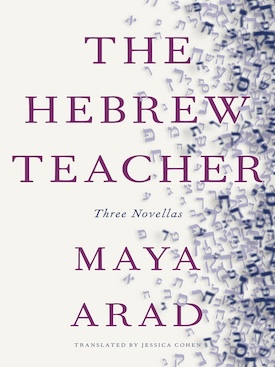
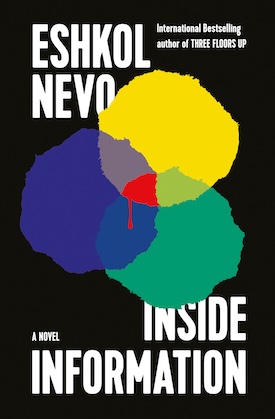
Boundaries, generational differences, family, love, work, politics, social mores, and other themes run through both Arad’s  (New Vessel Press, 2024) and Nevo’s Inside Information (Other Press, 2023). Each book comprises three novellas, though Nevo’s very loosely connects all the narratives, so dubs itself a novel, despite the stories being almost completely unrelated. Melancholic would best describe the mood of both works.

While the English version of Arad’s The Hebrew Teacher was published just this year – translated by Jessica Cohen – the Hebrew version came out in 2018. Its stories retain their immediacy, and readers will be able to relate to some aspect(s) of every one.

image - The Hebrew Teacher book coverThe title story, “The Hebrew Teacher,” is brilliant. When Ilana arrived in the United States from Israel in 1971 and started teaching, her Hebrew classes, both children and adult, at her synagogue and at the university, were packed: “Parents wanted their children to be able to chat in Hebrew, not just recite the prayers…. Everyone wanted to know a little Hebrew before they visited Israel. They wanted to learn the new songs.” Of course, those songs are far from new at this point in Ilana’s career, yet she still holds them and their visions of Israel dear.

But enrolment in the Hebrew-language university courses has been dropping for almost two decades, both because “Israel was a tough sell these days. It wasn’t the fledgling little country of 45 years ago. Nor was Ilana the same beaming young woman who’d arrived, thick copper braid over one shoulder, to regale the riveted students with stories about hiking from the Mediterranean to the Sea of Galilee, working on a kibbutz, and firing an Uzi when she served in the Israel Defence Forces.”

Into Ilana’s tenuous professional world – her husband has just retired from the university and other key allies have moved on – comes a new hire, Yoad Bergman-Harari, who’d been born Yoad Harari but had “added on his father’s original name, Bergman.” When Ilana asks why, he responds, “‘To negate the negation of the diaspora’ … as though it were the most obvious thing in the world.”

The differences in their worldviews – particularly on the Israeli-Palestinian conflict – and approach to collegiality are stark. While Ilana has taught at the university for decades, she holds none of the cards here, as Yoad is the latest newfangled intellectual thing, and a professor, so can pretty much write his own ticket, and does.

In “A Visit (Scenes),” Miriam comes to the States for a three-week visit with her only child, Yoram, his wife Maya and their son Yonatan. Miriam makes the journey because her son rarely returns to Israel and she has yet to meet her grandson in person. In a string of short snippets, mostly from Miriam’s perspective but also from Yoram’s and Maya’s, we are privy to what everyone is feeling – which boils down to a lot of unhappiness. The lack of honest, open communication contributes to the tensions and dissatisfactions, which build as the visit goes on.

The final story, “Make New Friends,” is kind of mystifying at first, as we watch Efrat, an educated, successful woman with a good husband, start to spiral as she tries to protect their unpopular teenaged daughter from being hurt by so-called friends. She gets way too involved, even entering the teen social media universe, and it’s only when Efrat realizes that she herself doesn’t belong to any group or have any real friends that she begins to understand her reactions (and actions) to her daughter’s situation. 

One review of The Hebrew Teacher comments that Arad, in these novellas, “probes the demise of idealism and the generation gap that her heroines must confront.” This is an apt description. And it could be said that Nevo also explores the demise of idealism in Inside Information, which was translated from Hebrew into English by Sondra Silverston.

image - Inside Information book coverThe first two stories of the novel have similar plotlines – men who are led by their sexual desires to act in illegal or inappropriate ways. The main difference between the protagonists is that the “hero” in “Death Road,” Omri, goes mostly willingly towards his potential downfall while Dr. Caro, the main character of “Family History,” tries to convince himself that he did nothing wrong.

In “Death Road,” while on a trip to Bolivia following the recent breakup of his marriage, Omri runs into newlyweds Ronen and Mor. Once back in Israel, he reads in the newspaper about the death of Ronen in a cycling accident in Bolivia. He decides to go to the shiva – as he drives there, his “mind filled with more and more images of Mor’s surprise nocturnal visit to my room two weeks earlier.”

As Omri lays out the story, he proves an unreliable narrator. Nothing ultimately ends up being what it seems at first. More details become known. Questions arise. It’s a thriller of sorts, but one that doesn’t seem all that original or urgent. There are twists but nothing that’ll stop readers in their tracks.

The femme fatale reappears in the next story, “Family History,” this time in the form of a young medical resident who supposedly mistakes the ostensibly paternal gesture of the respected Dr. Caro for sexual harassment and files a complaint that threatens the good doctor’s reputation. Even as Caro tells his story, he’s trying to convince himself as much as us about the purity of his motivations. But he’s a widower who obviously loved his wife, he seems well-liked at work and good at his job. He is a more empathetic character than Omri, and the twist in this story does elicit some surprise, and puts Caro’s actions into an even darker light.

The last part of the novel, “A Man Walks Into An Orchard,” is a direct rift on the talmudic tractate about four Jewish sages who went into pardes, which means both paradise and orchard, and only one came out unharmed. In Nevo’s story, husband and wife Ofer and Chelli go for one of their regular Saturday walks in the orchard. This Saturday, though, Ofer needs to pee, so he gives his phone to Chelli and goes into the trees, while she waits on the road. And waits. He never comes back. He is never found. 

The way in which Chelli and her two children work through their loss is emotionally engaging. She and her son become estranged, while she and her daughter become closer as they search Ofer’s blogs for clues to his potential whereabouts. He had intended to complete 100 stories of 100 words each, and then publish a book. He had posted his 99th story the week before he disappeared.

There is something satisfying in this third tale, though it takes a detour into Chelli’s drug-induced visions to somewhat resolve the mystery of Ofer’s disappearance. It highlights our desire for things to make sense, to know what happened. When that’s impossible, storytelling can fill in the blanks. 

The Maya Arad and Eshkol Nevo event on Jan. 19 takes place at 1 p.m., at the Jewish Community Centre of Greater Vancouver. Olga Campbell gives a talk on her memoir (jewishindependent.ca/a-multidimensional-memoir) and its exhibit on Jan. 23, 7 p.m., at the Zack Gallery. The book festival and the Vancouver Holocaust Education Centre present a talk by Roger Frie on his book Edge of Catastrophe: Erich Fromm, Fascism and the Holocaust on International Holocaust Remembrance Day, Jan. 27, 7 p.m. The festival itself opens Feb. 22 – with Selina Robinson in conversation about her new memoir, Truth Be Told – and runs through Feb. 27. Events will be posted at jccgv.com/jewish-book-festival as they are confirmed.

Format ImagePosted on December 20, 2024December 19, 2024Author Cynthia RamsayCategories BooksTags Eshkol Nevo, fiction, Israel, JCC Jewish Book Festival, Maya Arad, novellas, novels, translation
Touring with Cirque’s ECHO

Touring with Cirque’s ECHO

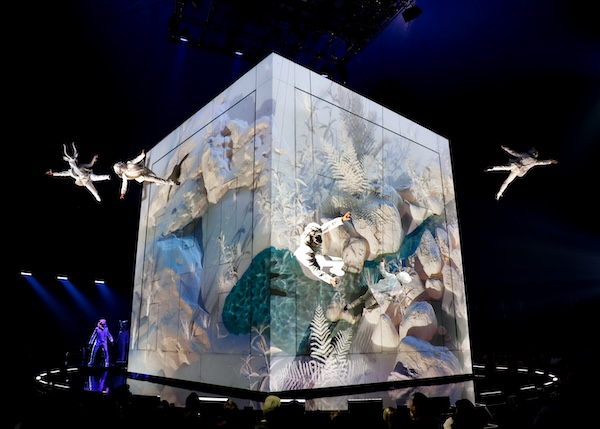
Cirque du Soleil’s ECHO, at Concord Pacific Place until  Jan. 5, is just beautiful. (photo by Jean-François Savaria)

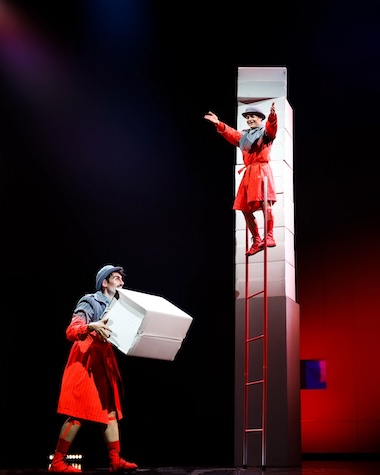
Beautiful. Cirque du Soleil’s ECHO, at Concord Pacific Place until Jan. 5, is just beautiful – the costumes, the movements, the music, the projected images. As with most Cirque productions, there is a minimal storyline. This one follows heroine Future and her dog Ewai as they try to restore balance to the world, between humans, animals and the environment. It is an optimistic, fantastical show, an uplifting break from a reality that sometimes seems hopeless.

photo - "Double Trouble," Cirque du Soleil's ECHO
“Double Trouble,” Cirque du Soleil’s ECHO. (photo by Jean-François Savaria)

The performance the audience sees under the Big Top is, of course, as much the result of many behind-the-scenes and front-of-house workers as it is the performers’ hours of practise and great skill. Every Cirque show is a highly orchestrated experience, international in scope. According to its website, since Cirque du Soleil’s creation in 1984, “more than 400 million people have been inspired on six continents and 86 countries. The Canadian company now employs more than 4,000 employees, including 1,200 artists from more than 80 different nationalities.”

One of those employees is Jewish community member Sarah Sananes, who was born in Florida but grew up in Montreal. She and her siblings attended Hebrew Foundation School for elementary.

“We learned to read, write and speak Hebrew, attended synagogue every Friday morning at Congregation Beth Tikvah, and learned both French and English at the same time,” Sananes told the Independent. “I was young, but I remember loving everything I did and learned during my time there, especially getting to eat TCBY [kosher yogurt]. 

“To this day, my father still uses the menorah I made, which consists of bolts to hold the Hanukkah candles. We celebrated Shabbat every Friday and attended synagogue for the High Holidays. It truly is a beautiful religion to celebrate. As I grew up, I still celebrate the High Holidays and attend Shabbat dinners whenever I can. I continue to educate myself on my religion even as I get older and don’t always have the chance to celebrate like I used to when we were younger.”

photo - Sarah Sananes is a guest experience supervisor with Cirque du Soleil’s ECHO, which is in Vancouver until Jan. 5
Sarah Sananes is a guest experience supervisor with Cirque du Soleil’s ECHO, which is in Vancouver until Jan. 5. (photo from Cirque du Soleil)

Sananes entered the workforce right out of high school.

“I was always more of an active kid than a quiet one who liked to sit in class. This led me straight into the hospitality industry, where I quickly fell in love with the fast pace,” she said. “I worked hard to climb the ladder into assistant manager roles, which led me to managerial positions. I take great pride in my work ethic and leadership skills, even to this day. This is one of the main things that led me to Cirque, and has kept me here. Whether you are presented with a happy guest or an angry guest, the outcome can always be positive, depending on the way you see and handle the situation. One of my favourite quotes is: ‘We can’t control the winds, but we can adjust the sails.’”

Sananes is now a guest experience supervisor with ECHO.

“I first began my journey with Cirque du Soleil in the summer of 2022. I was hired when I started working as the on-site manager on another show, named KOOZA, with the local staffing agency. Once the summer ended, I returned to my job as an entrepreneur,” said Sananes, who owns an employment agency.

“The following summer, I heard Cirque du Soleil was launching a brand new show and, sure enough, I returned once again to manage the local staff. As the Montreal run neared its end, the guest experience position on ECHO became available and, after my interview, I was asked to join the team!”

Sananes had so loved working on KOOZA that, she said, “When ECHO came out, I knew, if it was anything like KOOZA, I would love what I did, everywhere I did it.”

As to what her job entails, it’s a lot.

“The guest experience team is the team that manages everything that has to do with guests in the front of house. Our team is made up of nine supervisors across six departments, which are box office, concierge, merchandise, food and beverage, VIP, and usher,” she explained. “We also have an inventory supervisor and then myself. Each supervisor manages their respective department every day, whereas my role is more like the chameleon of supervisors. Each day, I morph into a different role. Within my time here, I have learned the ins and outs of every single department, being able to cover or assist any of my co-workers whenever and wherever needed. 

“Another part of my role is being the direct link between our partnerships and our visibility departments at Cirque du Soleil’s international headquarters located in Montreal and the tour,” said Sananes. “I make sure all our signage and branding are properly managed and set up. This includes physical signs and all digital assets. Lastly, due to my previous experience as an on-site manager, now being on the other side, I work closely with the local staffing agency and their on-site team to ensure they are able to deliver what we need to successfully operate our show call operations, day in and day out. Some markets are tougher than others when hiring and managing local staff, but it wouldn’t be fun and rewarding if it was always easy!”

Sananes has worked in many markets since ECHO launched in Montreal in April 2023. She has been with the show since the beginning, traveling with it from Montreal to Washington, DC, Atlanta, Ga., and Miami, Fla., before returning to Canada, with performances in Toronto and in Gatineau, Que., among other places.

photo - "Human Cradle," Cirque du Soleil's ECHO
“Human Cradle,” Cirque du Soleil’s ECHO. (photo by Jean-François Savaria)

“After five different cities, we landed here in beautiful British Columbia’s Vancouver,” said Sananes. “My plan is to remain on tour and continue to travel with the show for the foreseeable future. I’ve already got my cowboy boots ready for Houston, so I don’t plan to go anywhere just yet! One of the beautiful perks about being on tour is being able to travel to all these places I’ve never been before, some of which I probably wouldn’t have gotten to see at all.”

When asked if there was anything else she’d like to tell JI readers, Sananes expressed gratitude for her parents.

“My father was born in Jerusalem and my mother was born in Canada. They have both taught me very valuable lessons in life, from when I was little until this very day, and, I pray, for all the days to come,” she said. “Because of my mother, I am tough, courageous and kind. Because of my father, I am resilient, fearless and wise. To my mother and my father, thank you for teaching me the importance of being independent, while still being able to spread love to all those around me.”

For tickets to ECHO, visit cirquedusoleil.com. 

Format ImagePosted on December 13, 2024December 11, 2024Author Cynthia RamsayCategories Performing ArtsTags acrobatic, circus, Cirque du Soleil, Sarah Sananes

A multidimensional memoir

With her latest book, Olga Campbell sets out to leave a legacy, one that encompasses the trauma of the past but also the richness of the present and hope for the future.

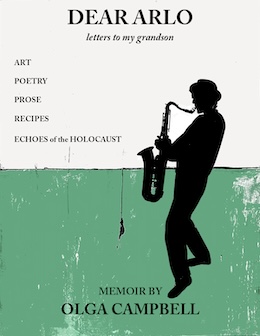
image - Dear Arlo book coverDear Arlo: Letters to My Grandson is Campbell’s third book. Her first, Graffiti Alphabet, comprised photographs of graffiti she found around the Greater Vancouver area. Her second, A Whisper Across Time, was her family’s Holocaust story.

The first essay in Dear Arlo is about Campbell’s parents, Tania and Klimek. They lived in Warsaw. “They were surrounded by family and friends and had much to look forward to,” writes Campbell. “Then, in 1939, everything changed. The Nazis invaded Poland from the west, the Soviets from the east. Life as they had known it stopped.”

Klimek would be arrested by the Soviets first, a pregnant Tania two weeks later. They were sent to different Russian prison camps. They survived, but the baby didn’t, nor did any of Tania’s family, most notably, her twin sister and parents, Campbell’s maternal grandparents. 

“Several months after their release from the prison camps, my parents found themselves in Baghdad, Iraq,” writes Campbell. “By that time, my mother was pregnant with me and could go no further. I was born in Baghdad on February 14, 1943.”

Eventually, after living in both Palestine and the United Kingdom, the family came to Canada. It wasn’t an easy life, learning a new language and new culture, or a long one for Campbell’s mother, who died at 52 of cancer.

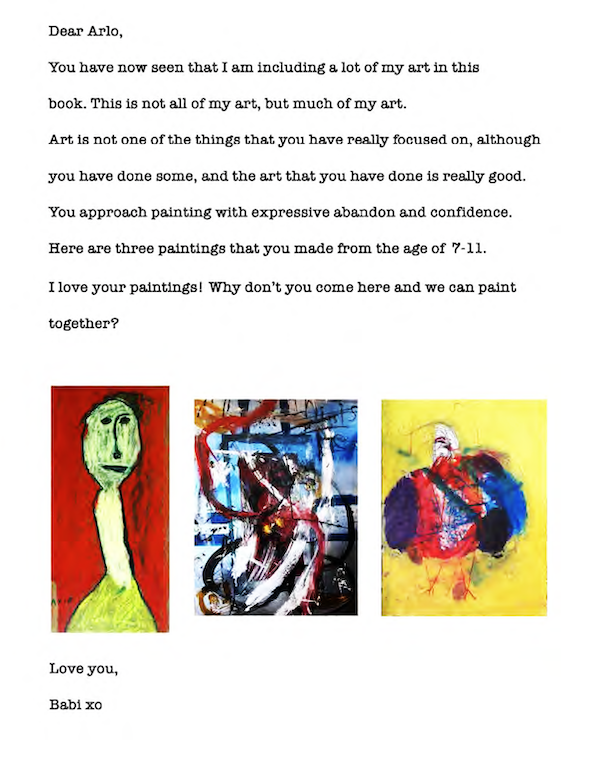
image - A page from Olga Campbell’s memoir Dear Arlo: Letters to My Grandson, which features letters, art, poems, essays and recipes
A page from Olga Campbell’s memoir Dear Arlo: Letters to My Grandson, which features letters, art, poems, essays and recipes.

Campbell shares her stories and wisdom with readers as a grandmother speaking to her only grandson, Arlo, with whom she obviously has a special relationship.

“I am writing this book as a legacy for you,” she writes in the first letter to Arlo. “A multidimensional memoir. A compilation of my writing, my art and a few family recipes. These writings and art are my responses to events in my life. The losses, trauma, grief … and the joy, happiness and love. It’s about the angst and awe of life, which is ever-changing, full of challenges but also magical.”

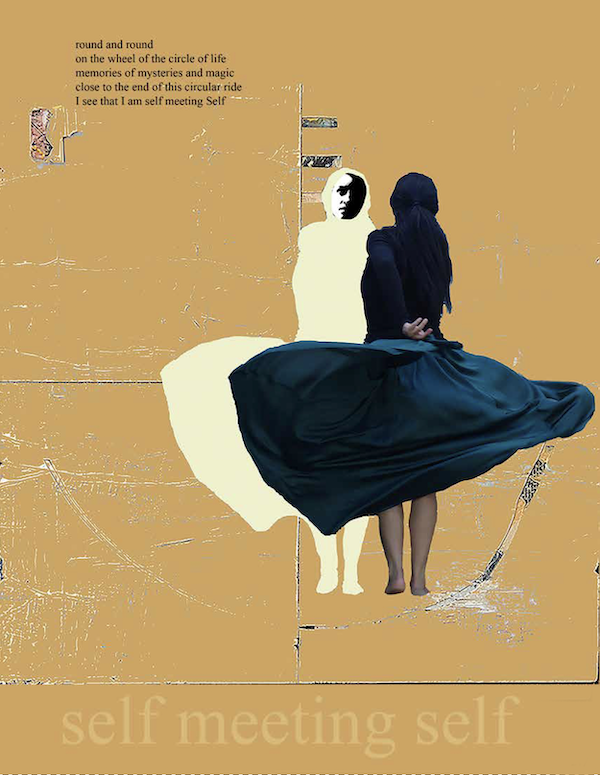
Brief letters to Arlo are spread throughout the memoir, which is gloriously full of Campbell’s artwork – painting, mixed media, sculpture and more, all of it in colour. A graduate of Emily Carr University of Art + Design, she has had many exhibitions since deciding to become an artist in her 40s, having started her professional life as a social worker. She has participated in the Eastside Culture Crawl since its inception almost 30 years ago, and has been a consistent part of the West of Main Art Walk (Artists in Our Midst) as well.

In addition to the art and letters in Dear Arlo, Campbell includes some of her poetry and essays. She shares how she came to write her second book, her experiences dealing with intergenerational trauma, her path to spirituality, how she found courage, and more.

She writes about losing her husband, in 1994. “Along with him, my plans and dreams for the future also died,” she writes. He died of a stroke at 49 years old – the pair had been together for 32 years, married for 26 of those years.

She shares the story of how she came to have her current dog, Nisha. “I was very sick in September 2019 with what my doctor now believes was COVID, before anyone had heard of COVID,” writes Campbell. Struggling many months with breathing difficulties, she turned, in desperation, to Ganesha, a Hindu god. “My wish to him was to remove all obstacles to my physical, emotional and mental well-being.”

A couple of days later, there came a knock at her door. Two work acquaintances were there, asking if she could adopt a rescue dog. Campbell did, and Nisha “was extremely timid, jumping, trembling and shaking at every sound, every movement. I held her all day every day for the first week to calm her down and get her used to me. She is still a little timid but every day she becomes more brave. She is playful, full of fun and great company,” writes Campbell. “She did remove all obstacles to my physical, emotional and mental health.”

Another uplifting essay is the one on how Campbell has “never come of age.” When she paints and creates with friends, she feels like she is 5 years old, she says. When with her teenage grandson, she also feels like a teen, and sees “the wonder of the world.”

image - A page from Olga Campbell’s memoir Dear Arlo: Letters to My Grandson
A page from Olga Campbell’s memoir Dear Arlo: Letters to My Grandson.

Campbell has role models, older friends and neighbours who still have bucket lists and exercise regimes. Having traveled much herself  –  Myanmar, Morocco, Vietnam, India, Cambodia, Laos, Turkey and other places – she now wants “to do inward travel. To get to know myself and others around me. To find the mystery inside. To nourish relationships with the people I know and with new people that I meet.” She wants to have different adventures: “Creative adventures, people adventures, spiritual adventures.”

There are more than a dozen recipes in Dear Arlo – from an apple torte that a 5-year-old Arlo bet Campbell she wouldn’t make (which she did but he never ate); to cabbage pie and Russian salad, recalling when Arlo was teaching himself Russian; to broccoli and cheese soup, vegetarian meatloaf and ginger apple tea, in response to Arlo’s request for some recipes.

Campbell is grateful for many things.

“I have had a good marriage and a wonderful family – my lovely daughter, her loving partner and my wonderful grandson Arlo,” she writes.

“I have dealt with losses and tragedies in my life, including the premature death of my husband, but I survived, and now I am happy. Those intense feelings of sadness that I grew up with no longer plague me. I can be triggered, but on the whole, I am fine.”

The memoir ends as it begins, with a letter to Arlo, who, says Campbell, has been “the best grandson I could ever have imagined.”

She writes, “The past provides us with valuable lessons that we can use to inform our present and future. A sense of connection and continuity with the people who came before us. This adds a depth and richness to our lives. I look forward to having many more adventures with you.”

We get to see Arlo grow up, in photos throughout the book. And the photo placed squarely in the centre of this last letter is perfect: Arlo in the driver’s seat of his new red convertible, toque on, giving a thumbs up, smiling, with Campbell beside him, also bundled up for a cold drive, but also with a big smile.

To purchase Dear Arlo or Campbell’s previous books, visit olgacampbell.com. 

Campbell’s artwork is on display at the Zack Gallery Jan. 8-27, with an artist reception Jan. 9, 6-8 p.m. Campbell speaks as part of the JCC Jewish Book Festival on Jan. 23, 7 p.m., in the gallery.

Posted on December 13, 2024December 15, 2024Author Cynthia RamsayCategories BooksTags art, Dear Arlo, essays, history, Holocaust, letters, memoir, Olga Campbell, painting, poetry, sculpture, second generation

Learn ABCs, Hanukkah-style

The Canadian Medical Association would probably not approve, but Rachel Teichman’s D is for Donut is a sweet way to teach kids their ABCs. (Pun intended … groan.)

image - D is for Donut by Rachel Teichman, with photos by Rebecca Wright, book cover

For this hardcover (or ebook), Teichman again pairs up with Rebecca Wright, Teichman composing the rhyming text and Wright taking the colourful large-as-life photographs. D is for Donut (2023) and their previous collaboration, B is for Bagel (2022), are both published by the Collective Book Studio, grouped as the ABCD-Eats series, implying, perhaps, that there are more books on the way.

The Collective Book Studio describes itself as “an independent publisher dedicated to creating high-quality, beautifully crafted books that celebrate diverse voices and empower storytelling.” On their website, under Collections, one can find Jewish Voices, which, in this time of increased antisemitism, is even more nice to see. The ABCD-Eats books are included here, as are two cookbooks that the Independent has reviewed and enjoyed: 52 Shabbats: Friday Night Dinners Inspired by a Global Jewish Kitchen by Faith Kramer, and NOSH: Plant-Forward Recipes Celebrating Modern Jewish Cuisine by Micah Siva. Collective also published Tali and the Toucan, which the JI reviewed (positively!) in its Nov. 29 issue.

D is for Donut is more proof that the Collective Book Studio really does produce beautiful, high-quality books. Whether or not one agrees with teaching kids their letters by also introducing them to the wide variety of sugary toppings that can be put onto fried dough, D is for Donut makes for a fun and eye-popping read. It begins with a brief summary, poetically written, of how donuts are made, from “First, flour, yeast and milk are mixed together and left to rise” through the frying then the frosting and sprinkles. “Did you know donut holes come from where the donut’s shape is cut?” asks Teichman. (I did not.)

image - D is for Donut by Rachel Teichman, with photos by Rebecca Wright, includes the letter S, for sufganiyah
D is for Donut by Rachel Teichman, with photos by Rebecca Wright, includes the letter S, for sufganiyah.

The bulk of the book is the letters, and a global range of donut types. For example, “A is for apple fritter with fruit and cinnamon inside”; “L is for loukoumades dipped in honey and piled high”; “S is for sufganiyah filled with jam when they’re made” (happy Hanukkah!); and “Z is for zeppole, they’re a real work of art!” 

“Donuts are delish, frosted and fried! So tell me … which ones have you tried?” asks Teichman.

D is for Donut includes two recipes: one for Raised Donuts, which takes more time and requires some tools people may not own (to be exact, a two-quart pot, cooking thermometer and heat-resistant slotted spoon), and one for Quick Baked Donuts. 

Posted on December 13, 2024December 11, 2024Author Cynthia RamsayCategories BooksTags Collective Book Studio, D is for Donut, donuts, Hanukkah, Rachel Teichman, sufganiyot

Inspiring with chutzpah

image - Chutzpah Girls book coverMost of us could benefit from a little more chutzpah, as defined by Julie Esther Silverstein and Tami Schlossberg Pruwer, authors of Chutzpah Girls: 100 Tales of Daring Jewish Women (The Toby Press, 2024). 

According to Silverstein and Pruwer, chutzpah is: “ A Jewish superpower: the daring to speak when silenced, to take action when others won’t, to try when they say it’s impossible, to persevere in times of doubt, to be yourself when it’s easier to conform, to stand tall when made to feel small, to believe when it all feels hopeless, to shine your light in the face of darkness.”

With Chutzpah Girls, Silverstein and Pruwer “hope to power up a generation of knowledgeable and confident Jewish kids by zooming in on Jewish women with extraordinary stories across the diverse Jewish experience.”

Chances are that many of the adults reading these stories will also be inspired, learning about several, if not a dozen or more, Jewish women they’d never heard of before: brave and action-oriented women from all over the world, from ancient Israel (1500-587 BCE) to the 21st century.

image - Prophetess Abigail,  from Ancient Israel, whose portrait was created by Rinat Hadar
Prophetess Abigail,  from Ancient Israel, whose portrait was created by Rinat Hadar.

The 100 are listed alphabetically by first name, rather than chronologically, which gives a timelessness to the feats of each woman. Whether one is a prophetess in ancient Israel, a philanthropist in the early modern era, a trade unionist in the emancipation era, a human rights activist in the 20th century or an intelligence and cybersecurity official in 2024 is mostly irrelevant to the courage one can show.

There is a timeline at the beginning of the book that outlines the eight time periods into which each of the 100 Chutzpah “girls” is placed. Near the end of the book is a map, showing their global and historic presence: Argentina, Bahrain, Ethiopia, Germany, Kurdistan, Mesopotamia, Persia, Russia, Ukraine, the United States, Yemen, and others.

There are three Canadians who made it into Chutzpah Girls: Judy Feld Carr, Lori Palatnik and Rosalie Silberman Abella. And they illustrate how people who are just like us can do impressive things and step up when need be.

Carr was a musicologist, she had a young family. Then, she read an article about Syrian Jews who, after Israel won the Six Day War against its Arab neighbours, were suffering. “Although she was far away, she wanted to help,” write Silverstein and Pruwer. “She reached a rabbi in Syria’s capital city of Damascus by telegram and began sending boxes of needed supplies, including religious books.”

Even after the sudden death of her husband left Carr a single mother, she continued to help, recruiting volunteers from her synagogue. “Using religious terms as coded messages, they started a secret communication system with the Syrian Jewish community. Judy’s home turned into the hub of an underground escape network to help the Syrian Jews flee to safety…. She negotiated ransoms, planned elaborate escapes, and even smuggled people across heavily guarded borders.”

Carr helped save more than 3,000 Jews.

Palatnik is founding director of Momentum, a global organization that connects women to Jewish values and to Israel, and encourages them to take action to promote unity that embraces difference.

“One day, Lori was asked if she’d donate her kidney to a stranger,” write Silverstein and Pruwer. “Hesitant at first, she drew on her sense of achrayut, the responsibility we have for one another. ‘For someone I don’t know?’ she wondered hesitantly. ‘But someone knows her. This is someone’s wife, mother, daughter, friend. Why would I pass up this mitzvah just because I don’t know her?’” (Years earlier, Palatnik had been willing to donate a kidney to a friend, but hadn’t been a match.)

Abella (née Silberman) was the daughter of Holocaust survivors. Born in a displaced persons camp in Germany, she was 4 years old when the family “immigrated to Canada with little more than hope for a better future.” She became “the first Jewish female judge in Canada and the youngest in the country’s history,” never trying to hide that she was Jewish to succeed, write Silverstein and Pruwer.

“In her career, Rosalie worked tirelessly to eliminate the disadvantages faced by people with disabilities, women, people of colour, and the native aboriginal community. After 25 years as a champion of human rights and equality, Justice Rosie became the first Jewish woman to sit on the Supreme Court of Canada.”

Written in a concise, clear manner, there is a lot to learn about some amazing people in Chutzpah Girls. Every entry comprises the name of the woman, her era, when she was born and in what country, her job or title, a writeup about one of her chutzpah aspects, and a quote from the woman that reflects what she did or general words of wisdom. 

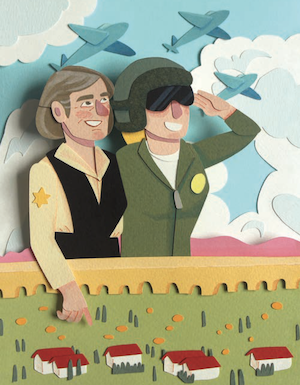
image - Jewish defenders Zivia Lubetkin, who helped command the Warsaw Ghetto Uprising, and her granddaughter, Roni Zuckerman, an Israeli fighter pilot, as envisioned by Shiri Algor
Jewish defenders Zivia Lubetkin, who helped command the Warsaw Ghetto Uprising, and her granddaughter, Roni Zuckerman, an Israeli fighter pilot, as envisioned by Shiri Algor.

Alongside the text for each woman is a beautiful, colourful, expressive portrait created by one of the dozen-plus illustrators and graphic artists that Silverstein and Pruwer enlisted for this book. The styles are so varied, but all are bold and capture the essence of the woman portrayed.

The last story and portrait in the book are left blank for the young (or old) reader to add their tale of chutzpah and a drawing of themselves.

But the book isn’t the end of it. Readers are encouraged to let Silverstein and Pruwer know who you’d like people to know more about – “a favourite figure from the Torah, a changemaker in your local community, or a leading lady in your own family. It’s even possible our next Chutzpah Girl is you!” 

To send your suggestion(s), email [email protected]. To learn more about the writers and the artists, visit chutzpahgirls.com. 

Posted on December 13, 2024December 11, 2024Author Cynthia RamsayCategories BooksTags Chutzpah Girls, education, history, Jewish history, Judy Feld Carr, Julie Esther Silverstein, Lori Palatnik, Rosalie Silberman Abella, Tami Schlossberg Pruwer, women
Jewish Mexican food excites

Jewish Mexican food excites

Paletas can be made in many flavours. Sabor Judío includes a recipe that uses Manischewitz wine. (photo by Ilan Rabchinskey)

The minute I saw the cover, I wanted to try some of the recipes in Sabor Judío: The Jewish Mexican Cookbook by Ilan Stavans and Margaret E. Boyle. Not only did I learn how to make some very tasty food, but I learned a bit about the Jewish community in Mexico and its history.

image - Sabor Judío cookbook coverPublished by the University of North Carolina Press, with hunger-inducing colour photographs by Ilan Rabchinskey, and written by two Jewish Mexican scholars (now living in the United States), Sabor Judío was a cultural experience for me, never having been to Mexico before and only ever having made a basic burrito at home. Of course, I’ve eaten at many Mexican restaurants over the years, but Sabor Judío features recipes you won’t necessarily find in a restaurant here in Vancouver, or even in Canada, though local Jewish community members with Mexican roots might make some of these dishes at home.

There were two very important inspirations for Sabor Judío.

One was Stavans’ grandmother, Bobe Miriam, whose recipe book, written in a mix of Yiddish and Spanish, was started in the 1920s, after she immigrated to Mexico from Poland. It evolved over decades, as she figured out what worked and what didn’t, and as ingredients changed. The notebook “wasn’t just about cooking; it was also a time capsule that chronicled, through dishes, the Jewish family’s process of assimilation into Mexico and the way La Comunidad, as the Jewish Mexican community is known, showcases its personality to the world.”

The other was Boyle’s great-grandmother, Baba Malka, also a Polish immigrant to Mexico: “While Baba Malka was still actively cooking, her children, grandchildren and great-grandchildren took turns observing and documenting her work in the kitchen in Mexico City, filling the notebook’s pages with notes and adaptations in Spanish, Hebrew and English as the family generations expanded across Mexico and into the United States.”

The recipes in Sabor Judío are “dishes collected from grandmothers and other beloved home cooks, professional chefs and bakers, and a variety of historical sources,” writes cookbook author Leah Koenig in the preface. Even she came across ingredients she had never used before. “I learned the hard way that nopales (cactus paddles) should always be handled wearing gloves, lest the prickly spines leave your hands stinging for the rest of the day.”

The recipe for Cactus Tomato Salad does include a note about the proper handling of cactus leaves. But, not sure of where I could buy cactus here, I inadvertently saved myself the trouble of removing the spines, boiling the cactus and cutting it into 1/4-inch pieces by buying a jar of cactus that was already prepared in that way. This substantially eased the process of making this salad, which was very good, though I’m sure fresh cactus would have made it even better.

I chose what to make from Sabor Judío by looking at what the cookbook authors recommended as a festive Hanukkah meal, which includes the Cactus Tomato Salad. I had already singled out the Falafel Taquitos because I liked the idea of mixing Mexican and Middle Eastern flavours. In the end, there was a bit of a disconnect for me between the taste of the falafel centre and that of the corn tortilla shell. In eating leftovers the next day, I greatly enhanced the enjoyment of this dish by adding some fresh-cut tomatoes and cucumber.

I also had already eyed Agua de Horchata because of the first sentence in its description, which says that the rice-milk drink – which is believed to have 11th-century North African origins – “accompanies a good Mexican Jewish meal.” I was very pleased with how it turned out. I will definitely make it again.

The Latkes con Mole were as labour-intensive (grating potatoes and onion) and delicious as other latkes I’ve had, and I would happily swap out my usual apple sauce every so often for mole and crumbled queso fresco, even though it takes a lot of time to make mole.

I tried a second fried item, it being for Hanukkah and all, and the Sor Juana’s Ricotta Buñuelos were so good, if that’s a thing. The anise really made them pop, and I ate way too many.

Lastly, knowing how much I like paletas, I couldn’t resist making the frozen treats using Manischewitz. The wine most definitely tastes better frozen, after being steeped in cinnamon, cloves and orange.

There are other Hanukkah – Janucá – meals, as well as suggested menus for other Jewish holidays. In total, there are about 100 recipes in Sabor Judío, including desserts. One thing you’ll learn from this cookbook is that the Canadian and Mexican concepts of breakfast, lunch and dinner differ somewhat. You’ll learn some Spanish, some history and more. You’ll be introduced to some new-to-you ingredients and ways to combine those ingredients.

As Stavans and Boyle wish readers at the end of their book’s introduction, perfectly capturing the fusions taking place throughout it: “¡Buen provecho! Mit a gutn apetit! Kome kon gana!” Enjoy your meal(s).

FALAFEL TAQUITOS
(serves 6; prep takes 30 minutes plus overnight soaking and a 30-minute chilling time; 20 minutes to bake)

for the taquitos:
1/2 lb dried chickpeas, soaked overnight in water, then rinsed and drained
1/2 medium yellow onion, roughly chopped
2 tbsp fresh parsley, roughly chopped
2 tbsp cilantro, roughly chopped
2 medium garlic cloves, roughly chopped
1 tsp kosher salt, plus more as needed
1 tsp ground cumin
1/2 tsp ground coriander
1/8 tsp cayenne
vegetable oil, for brushing
12 (6-inch) corn tortillas

for the tahini sauce:
1/2 cup well-stirred tahini
1/4 cup fresh lemon juice
1/4 cup cold water

1. Add the chickpeas to a food processor bowl along with the onion, parsley, cilantro, garlic, salt, cumin, coriander and cayenne. Pulse, scraping down the sides of the bowl as needed until a textured paste forms. Taste and add more salt, if needed. Transfer to a bowl and refrigerate the mixture for 30 minutes.

2. Heat the oven to 400˚F and brush a 9-by-13-inch baking dish with about 1 tablespoon of oil. Lay one tortilla on a flat surface and place a scant 1/4 cup of the filling along one edge, nudging it into a line. Roll up the tortilla tightly and place it seam-side down in the prepared backing dish. Repeat the process with the remaining tortillas and filling.

3. Brush the tops of the tortillas with more oil and bake until crispy and golden, 15-20 minutes. Meanwhile, whisk together the tahini, lemon juice and water. Serve the taquitos hot, drizzled with tahini sauce.

AGUA DE HORCHATA
(serves 8-10; prep takes 10 minutes, plus overnight soaking and a 4-hour chilling time)

2 cups long-grain white rice, rinsed well and drained
1 cinnamon stick
6 cups room-temperature water, divided, plus more as needed
3/4 cup granulated sugar
2 cups whole milk
2 tsp vanilla extract
ice, for serving (optional)

1. Place the rice and cinnamon stick in a large glass bowl and add 4 cups of the water. Cover the bowl and let the mixture soak overnight at room temperature (at least 8 hours).

2. Pour the soaked rice mixture into a high-powered blender along with the sugar and blend until smooth. (You can tear the cinnamon stick into smaller pieces to facilitate its blending.) Pour the mixture through a fine mesh sieve into a large wide-mouth pitcher, stirring and pressing the mixture with a spoon, if needed, to help the liquid pass through the sieve. (Discard any remaining solids.)

3. Whisk in the milk, the remaining 2 cups of water, and vanilla. Cover the pitcher and chill the horchata in the refrigerator until cold, at least 4 hours. (The mixture will continue to thicken as it chills.)

4. Just before serving, stir the horchata well and pour into glasses (over ice, if desired). If the horchata gets too thick, you can thin it with a little more water.

SOR JUANA’S RICOTTA BUÑUELOS
(makes 10-15 fritters; prep takes 40 minutes, plus 1-hour resting time; 30 minutes to cook)

1 cup ricotta cheese
6 egg yolks
1/4 cup granulated sugar, plus more for serving
2 1/2 tsp ground anise
3 cups all-purpose flour, plus more for rolling
1 1/2 tsp baking powder
vegetable oil, for frying
jam, for serving

1. Combine the ricotta, egg yolks, sugar and ground anise in the bowl of a stand mixer and beat on low until combined. Whisk together the flour and baking powder in a medium-sized bowl.

2. Add the flour mixture to the ricotta mixture in stages, beating on low and scraping down the sides of the bowl as necessary, until a thick and sticky dough forms. Cover the mixing bowl and let rest at room temperature for 1 hour. 

3. On a large, floured work surface using a floured rolling pin, roll out the dough to a 1/8-inch thickness. Use a sharp knife and a plate or bowl with a 4-to-5-inch diameter to cut out circles. Gather the scraps and repeat the rolling and cutting process, if desired.

4. Heat 1/4 inch of oil in a medium frying pan set over medium heat until it reaches 350˚F on a digital thermometer, and line a large baking sheet with paper towels. Working with one circle of dough at a time, slip it into the hot oil and fry, turning once, until puffed and golden, 30 to 60 seconds per side.

5. Transfer the fritters to the paper towels to drain and cool slightly. Serve warm, sprinkled with more sugar or dolloped with jam.

PALETAS MANISCHEWITZ
(makes 6; prep takes 40 minutes; freeze 5 hours)

1 (750-ml) bottle Manischewitz sweet red wine
3 wide strips orange peel
4 whole cloves
1 cinnamon stick
2 cups water
thinly sliced limes and tangerines (optional)

1. Add the wine, orange peel, cloves and cinnamon stick to a medium saucepan set over medium-high heat. Bring the mixture to a boil, then lower the heat to medium and cook, stirring occasionally, until the liquid reduces to 1 cup, 30-35 minutes. Remove from the heat and let cool, then strain out and discard the spices and orange peel.

2. Stir the water into the strained wine syrup, then divide the mixture evenly among 6 paleta or flat popsicle molds. If desired, add a slice of lime or tangerine into each mold. Freeze until solid, at least 5 hours. 

Posted on December 13, 2024December 11, 2024Author Cynthia RamsayCategories Books, Celebrating the HolidaysTags baking, cookbooks, cooking, falafel, Hanukkah, history, horchata, Jewish Mexican food, paletas, Sabor Judío
Blue Rodeo is thriving at 40

Blue Rodeo is thriving at 40

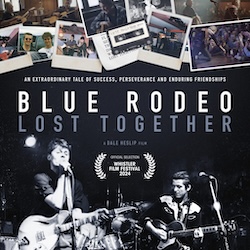
A 1989 PR photo for Blue Rodeo’s Diamond Mine album. Left to right are Bazil Donovan, Bob Wiseman, Jim Cuddy, Greg Keelor and Mark French. The documentary Blue Rodeo: Lost Together (left) has its world premiere at the Whistler Film Festival. (photo by Andrew MacNaughtan / bluerodeo.com)

The world premiere of Blue Rodeo: Lost Together, which gives viewers a glimpse into the rise of this iconic Canadian band, was so anticipated that the first screening of the documentary at the Whistler Film Festival sold out – a second screening has been added.  

The Whistler Film Festival runs Dec. 4-8, offering several programs, including feature-length films, shorts and its “Mountain Culture” series of films, après events and Q&As. The WFF24 Content Summit, which runs Dec. 4-7 in person and Dec. 10-12 online, presents speakers, panel discussions, workshops and other opportunities to learn and connect. 

Looking through the festival lineup, I came across Blue Rodeo: Lost Together and requested the screener for a few reasons. First, I grew up with Blue Rodeo’s music and knew many of their songs. Second, given the challenges of being recording and touring musicians – and Canadian to boot – I find it remarkable that the band is as popular as ever 40 years after high school friends Jim Cuddy and Greg Keelor started it. Lastly, founding members included Bazil Donovan (bass), Cleave Anderson (drums) and, most interestingly from my perspective, Bob Wiseman (keyboards). Wiseman is my second cousin and, though I’ve never met him, I have always been proud to let people know that I had a relative in Blue Rodeo. Wiseman was part of the group from 1984 to 1992.

image - Blue Rodeo: Lost Together posterBlue Rodeo: Lost Together delicately covers the comings and goings of musicians, and the sometimes-difficult friendship and professional collaboration of Cuddy and Keelor. It is frank about the band’s challenges in becoming a commercial success, starting as it did in the era of hard rock, but also dealing with some producers who had a different vision than Cuddy and/or Keelor of what would lead to that success. It is always fascinating to see how creative people balance their very personal drive with taking other people’s feelings and opinions into consideration (or not) and the need to feed and clothe themselves.

Overall, Blue Rodeo seems to have avoided any huge drama, though marriages and partnerships were tested by the rigorous tour schedule once the group broke into the international music scene. Some member partings were clearly amicable, such as when Anderson returned to his postman job after taking a five-year hiatus to play with the band – he had a family to support and wanted to be present for them. Other separations were more fraught: Wiseman wanted to leave a good year at least before he did, his unhappiness seeming to have started – from what I understand from the documentary – with the making of the album Casino, which was released in 1990. To make Blue Rodeo fit a more market-friendly mould, so it could become popular in the United States, Wiseman’s innate energy and expressive performance style was tamped down. “That was really traumatic for me,” he says in the film.

Despite creative differences and some tough times, all the interviewees in the documentary speak of one another and their experiences with great respect and gratitude. It is uplifting to see people treating one another kindly, even as they disagree. Hopefully, it isn’t just for show. Their affection seems genuine. The bonds these musicians have created between themselves and with their listeners seem strong. With all the bad that happens in the world, this is reason enough to watch this documentary – and, if you haven’t already, check out the music of Blue Rodeo.

At press time, there were tickets left for the Dec. 8 screening of Blue Rodeo: Lost Together. Of course, the festival features many other movies during its Dec. 4-8 run, including September 5 on Dec. 5 and 8. The thriller is based on the hostage-taking of Israeli athletes at the 1972 Munich Olympics. The description reads: “At the heart of the story is Geoff, a young producer eager to prove himself to his legendary boss, Roone Arledge. Teaming with Marianne, a German interpreter, Geoff unexpectedly takes the reins of the broadcast. As tensions rise, conflicting reports swirl and the lives of the hostages hang in the balance, Geoff faces difficult decisions that test his skills and moral compass.”

For tickets to the Whistler Film Festival and the full lineup of movies, visit whistlerfilmfestival.com. 

Format ImagePosted on November 29, 2024November 28, 2024Author Cynthia RamsayCategories TV & FilmTags Blue Rodeo, Bob Wiseman, Canada, films, history, movies, Munich 1972, music, Whistler Film Festival
Join Pacific Theatre in Shire

Join Pacific Theatre in Shire

Peter Carlone, left, and Tim Carlson in Pacific Theatre’s production of The Hobbit (photo by Chelsey Stuyt)

Need a break from reality? On now at Pacific Theatre is The Hobbit, based on JRR Tolkien’s book, with all its adventure, wizardry, fantastical creatures, and more. The tale is brought to life by two actors “and a dragon’s hoard of theatre magic.”

A world premiere, Pacific Theatre’s The Hobbit was adapted by Kim Selody, with additional dialogue by Tim Carlson and Peter Carlone, the two actors who play multiple characters in the production. The Jewish Independent spoke with stage manager Julia Lank before the show opened on Nov. 15.

“We’re less than a week into rehearsal and already our performers, Tim and Peter, have made me tear up laughing with their creative solutions,” said Lank when asked what her most fun problem-solving moment had been so far. “Telling a story designed for dozens of characters with just two actors poses obvious challenges, and the entire team – including our designers – have jumped in with both feet,” she said. “The room is incredibly playful (this morning we were testing out rolling beer can ‘barrels’ down the aisles of the theatre) and our director, Laura [McLean] is also keeping the magic and wonder of Middle Earth at the forefront. The show is going to be full of surprises, and it feels great to be a part of creating something new together.”

photo - Julia Lank, stage manager of The Hobbit
Julia Lank, stage manager of The Hobbit. (photo from Pacific Theatre)

Lank is a self-taught stage manager, though she does have a degree in film production and worked as a first assistant director for several years, which, she said, is the film world’s equivalent of a stage manager.

“Stage management is one of those niche jobs that won’t be on a high school career counselor’s radar, but it’s perfect for me – a mix of technical theatre magic, caretaking, and lots of spreadsheets,” she said. “If you’re interested in how the theatrical sausage gets made and you’re unflappable, stage management might be for you.”

Lank’s recent credits include other Pacific Theatre (PT) productions (Gramma and The Cake), as well as Tuck Everlasting (Arts Umbrella), On Behalf (Fringe), L’Elisir d’Amore (Burnaby Lyric Opera), Jasper in Deadland (Awkward Stage) and City of Angels (the PIT Collective), among others.

“I worked as PT’s marketing assistant and later marketing director from 2017 to 2023,” she said. “I left last June to pursue stage management full-time, but I consider Pacific a theatre home and love the work and people there dearly. I’m also a self-taught marketer, but it’s easy to advocate for an artistic space when you genuinely believe in the work they’re doing. Many of my favourite theatre experiences, both behind the scenes and as an audience member, have been at PT.”

How she prepares for a new project differs, but, in general, she said, “I like to familiarize myself with the script and score well before a show begins so I can anticipate areas that may need extra support or take more time to come together. The director will be doing this work, too, and you want to be in the best possible position to help them execute their vision. And you definitely don’t want to be in a position where you didn’t realize there was going to be a live goat onstage until the first read.”

A good follow-up question would have been whether Lank was referring to The Hobbit when talking about an acting goat, but the JI missed that opportunity. Instead, we asked about how The Hobbit fits into Pacific Theatre’s aspiration “to delight, provoke and stimulate dialogue by producing theatre that rigorously explores the spiritual aspects of human existence.”

“Tolkien was famously opposed to religious allegorical readings of his work, but the Pacific Theatre community has a fondness for his work that stems from his personal religious background,” explained Lank. “Regardless, if you’re a person of faith or not, I think the values of compassion, the rejection of greed and needless violence in favour of communal care and quiet contentment and imagination in this interpretation of the story make Hobbit a perfect PT show.”

As for Lank, she was raised in the local Jewish community and attends Or Shalom.

“Judaism honours my curiosity and taught me that questioning a system can only improve it,” she said. “My Jewish identity calls me to care for the vulnerable, stand up for communities whose voices have been suppressed, and honour the natural world. It’s very important to me.”

Turning back to less serious matters, Lank said of The Hobbit: “It’s going to be a marvelous, silly, scary adventure – you’ll be very welcome to join us in the Shire.”

The Hobbit runs to Dec. 21 at Pacific Theatre. Performance times are Wednesday-Thursday, 7:30 p.m.; Friday-Saturday, 8 p.m.; and Saturday-Sunday, 2 p.m. For tickets, which start at $20, visit pacifictheatre.org or call 604-731-5518. 

Format ImagePosted on November 29, 2024November 28, 2024Author Cynthia RamsayCategories Performing ArtsTags careers, Judaism, Julia Lank, Pacific Theatre, The Hobbit, theatre

Looking for everyday heroes

The deadline to nominate someone for the 2025 Courage to Come Back Awards is Jan. 17. The awards, presented by Wheaton Precious Metals, pay tribute to everyday heroes who have overcome immense challenges and now give back to their community. They also raise funds so that Coast Mental Health can continue to provide community-based services for people living with mental illness in British Columbia.

“I really believe that having the opportunity to tell my story was something I had no idea I really needed,” said Rachel Goldman, who received a Courage to Come Back Award in the medical category last year. “It was the first time in my life that I had celebrated the part of myself that I always viewed as my greatest weakness. The ability to overcome challenges is always something to be celebrated. Courage is a superpower. I have no doubt that others would benefit from putting themselves or others forward, too. It is a gift that others should absolutely experience.”

photo - Rachel Goldman received a Courage to Come Back Award in 2023
Rachel Goldman received a Courage to Come Back Award in 2023. (photo from Coast Mental Health)

Goldman was born with CVID, common variable immune deficiency, which causes low levels of the proteins that help fight infections. Initially, she was uncomfortable about being nominated for the honour, as her illness was something she had only ever faced privately.

“That others would view this as both resilient and brave was not something I had really considered – that was just the way I chose to approach life,” she said. “The nomination showed me that resilience and bravery are something to be celebrated and that having the opportunity to shine a light on rare and invisible illnesses like mine is a privilege.”

Winning a Courage to Come Back Award has impacted Goldman’s life in a few ways.

“It opened the door to thoughtful conversation regarding my health and my life and allowed me the ability to really explain to those around me what it is like to live in my shoes,” she said. “It was not easy, but it began a healing journey to better understand my health needs. My hope is still to bring awareness to those that are suffering from diseases like mine and that research worldwide will continue towards helping those like me to live a more fulfilling and healthy life.”

The 2025 Courage to Come Back Awards are granted in four categories: addiction, medical, mental health and youth (ages 19-25). Recipients will be recognized in a celebration at the Vancouver Convention Centre on May 7. 

“As chair of the Courage to Come Back Awards, reading through the hundreds of nominations we receive every year is a moment I look forward to with great anticipation. All of them are true journeys of bravery, resilience and strength in the face of adversity. I am grateful to those that have the courage to share their stories with us,” said Lorne Segal, who is also president of Kingswood Properties Ltd.

To nominate someone and/or find out more about the process, visit couragetocomeback.ca/nominations. 

Posted on November 29, 2024November 28, 2024Author Cynthia RamsayCategories LocalTags Coast Mental Health, Courage to Come Back, fundraising, Lorne Segal, mental health, nominations, Rachel Goldman

Posts pagination

Previous page Page 1 … Page 10 Page 11 Page 12 … Page 84 Next page
Proudly powered by WordPress