Skip to content
  • Home
  • Subscribe / donate
  • Events calendar
  • News
    • Local
    • National
    • Israel
    • World
    • עניין בחדשות
      A roundup of news in Canada and further afield, in Hebrew.
  • Opinion
    • From the JI
    • Op-Ed
  • Arts & Culture
    • Performing Arts
    • Music
    • Books
    • Visual Arts
    • TV & Film
  • Life
    • Celebrating the Holidays
    • Travel
    • The Daily Snooze
      Cartoons by Jacob Samuel
    • Mystery Photo
      Help the JI and JMABC fill in the gaps in our archives.
  • Community Links
    • Organizations, Etc.
    • Other News Sources & Blogs
    • Business Directory
  • FAQ
  • JI Chai Celebration
  • JI@88! video

Recent Posts

  • New rabbi settles into post
  • A light for the nations
  • Killed for being Jewish 
  • The complexities of identity
  • Jews in time of trauma
  • What should governments do?
  • Annie will warm your heart
  • Best of the film fest online
  • Guitar Night at Massey
  • Partners in the telling of stories
  • Four Peretz pillars honoured
  • History as a foundation
  • Music can comfort us
  • New chapter for JFS
  • The value(s) of Jewish camp
  • Chance led to great decision
  • From the JI archives … camp
  • עשרים ואחת שנים להגעתי לונקובר
  • Eby touts government record
  • Keep lighting candles
  • Facing a complex situation
  • Unique interview show a hit
  • See Annie at Gateway
  • Explorations of light
  • Help with the legal aspects
  • Stories create impact
  • Different faiths gather
  • Advocating for girls’ rights
  • An oral song tradition
  • Genealogy tools and tips
  • Jew-hatred is centuries old
  • Aiding medical research
  • Connecting Jews to Judaism
  • Beacon of light in heart of city
  • Drag & Dreidel: A Queer Jewish Hanukkah Celebration
  • An emotional reunion

Archives

Follow @JewishIndie
image - The CJN - Visit Us Banner - 300x600 - 101625

Author: The Editorial Board

The future of democracy

Israel’s President Reuven Rivlin spoke strong words at the opening of the Knesset’s winter session this week. The very survival of democracy, he suggested, is on the line.

“Against a background of political upheavals occurring in the West, the free world, it is no secret that democracy – or Western liberal democracy – is in a state of confusion,” said Rivlin. “Many citizens across the world feel that the existing democratic system is struggling to function and, moreover, is struggling to offer an answer to their needs in light of the current threat of terrorism, the current wave of migration and refugees, or the ongoing economic and employment crises.”

Rivlin was speaking broadly, apparently referencing the various movements springing up in recent years at the fringes of what was once the political mainstream. These include new nativist and often xenophobic movements in Europe. The vote by Britain to leave the European Union is a symptom of a strain of political ideology that rejects open borders – both for trade and for people. While the Brexit vote was supported by people across the political spectrum, its campaign was led by the United Kingdom Independence Party, a movement pushing its way into the mainstream from the far right.

While Europe struggles with the challenges of and reactions to economic meltdowns and waves of refugees and migrants, the presidential election in the United States has been rocked by events that also threaten foundational understandings of democracy.

Donald Trump, the Republican candidate for president, has suggested he may not abide by the results of the election, an outcome he is alleging to be “rigged.” There is no evidence, according to almost all commentators, of any rigging of the electoral system. Indeed, say most, the patchwork nature of the American electoral system makes comprehensive manipulation of a federal election essentially impossible. However, Trump’s assertions seem based less on the idea that the electoral infrastructure is rigged than on his perception that the media and the political establishment are nearly uniformly against him. As paranoid as this may seem, it is not altogether false. The political establishment, even in his own Republican party, is lukewarm at best toward their outsider nominee. And the media is merely reporting the attitudes of some of the public, many of whom are aghast and appalled at the successive emanations from Trump’s mouth.

However, if the establishment and commentators in the media are lined up against him, this should arguably be viewed as a statement about him, not them – which brings us back to the issue of Trump’s threatened refusal to admit defeat. Absolutely crucial to democracy is the legitimacy – and perception of legitimacy – of the electoral process. In the most contested election in modern history, in 2000, Al Gore accepted defeat even though he received more votes in the state of Florida than the declared victor George W. Bush and, therefore, should have been the winner. In the interest of national unity and the preservation of confidence in the system, Gore acceded to the determination of a Florida court.

Now, Trump suggests he may not accept the results even if he is conclusively defeated. Of course, anything is possible with this candidate, so it may be bluster. But the bigger picture in this scenario is the impact Trump’s words have on his followers. Some are already promising “revolution” if Trump is defeated.

Then, of course, there is the other possibility: Trump wins.

Where American democracy – and the country’s role as a model of responsible government – would go from there is an ominous mystery.

Posted on November 4, 2016November 3, 2016Author The Editorial BoardCategories From the JITags Clinton, democracy, Europe, presidential elections, racism, Trump, xenophobia

A fine collection of poems

When I saw the table of contents of The Poems of H. Leivick and Others: Yiddish Poetry in Translation by Leon H. Gildin (Finishing Line Press), a lovely little book of translated Yiddish poems by Leivick and other noted poets, two images came immediately to mind. One was a scene with Leivick, a slight figure with a beautiful etched face and a halo of white hair, sitting alone on a circular stone ledge in front of the Hebrew University library, in Jerusalem, seemingly lost in thought. The other, and this goes back decades, is a gathering of Yiddish poets, including almost all the ones collected in this book, in a meeting hall in New York. What a thrill it was for a college boy to be at such a meeting and seeing face-to-face the famous poets he had known before only by name.

book cover - The Poems of H. Leivick and OthersThe poems of Leivick (1886-1962) range in subject matter: a poem about a very small poem “no longer than an epitaph”; the recollection of a birch rod beating given by his father; a prisoner in a cell at night “swallowing as if it were wine the moon’s bright light”; a man looking for work without success. Leivick was a paperhanger when he came to the United States. He was also a noted playwright; his most famous is The Golem, originally produced by Habima Theatre when it was still in Moscow, and later translated into other languages.

Here, too, admirably rendered into English by Gildin, are the voices of other famous American Yiddish poets – all born in Eastern Europe – singing songs of longing, love and the Sabbath. About half the poems are by Leivick: the rest are by luminaries like Chaim Grade, Yakov Glatstein, Avraham Reisen, Itzik Manger, A. Leyeles, Mani Leib and Avraham Sutzkever. Most of the poems here have a modernist lilt regarding imagery and tone, yet all have traditional rhymes.

My only caveat with this fine ingathering of poems is that too much space is devoted to a relatively minor but good poet, Anna Margolin. Where Grade has only one, why six for Margolin? Additional poems by the other poets would have been welcome.

My favorite poems here are those that have a Jewish core. Hence, Grade’s loving poem “The Sabbath,” recalling his war- and postwar-years wanderings in Russia and Europe, resonates, as does Ephraim Auerbach’s prayer-poem “God of Abraham,” which begins with the opening lines of Havdalah – the prayer for the departing of the Sabbath – and takes wing from there.

In his short introduction, Gildin accents the secular aspects of Yiddish poetry but, by so doing, he puts an artificial divide between religiosity and secularism. He says that, while Yiddish was the street language of the Orthodox, the secular Yiddish created a culture. But Gildin neglects to note that Yiddish was used far beyond the street for Orthodox Jews. Religious Jews also used Yiddish in shul, in studying and in translating Chumash and Talmud, and in creating commentaries and translations of the siddur and the machzor, the daily and the holiday prayer books, respectively. Women created their own prayers in Yiddish, which were collected into separate volumes. This same “street language” was used by the secular poet Yehoash in creating his masterpiece: his magnificent translation of the entire Bible into Yiddish.

In Grade’s “The Sabbath” and Auerbach’s “God of Abraham,” the boundaries between piety and secularity are blurred. The distinctions are not as separate as they appear to be. In a classic photo of Yiddish poets sitting at a long dinner table at a wedding, one can see secular poets like Leivick, Grade, Glatstein, Reisen and noted critic Shmuel Niger, all wearing either fedoras or yarmulkes.

Sholom Aleichem was thoroughly secular. He was not observant and did not keep a kosher home. In fact, he spoke Russian, not Yiddish, to his family. Yet, when his son died in Denmark, he went to shul to say Kaddish every day in New York. And, in his will, he asked those who are willing, to say Kaddish for him, too.

Most significantly, the obviously secular translator of this volume, Gildin, along with his brother, founded a university Yiddish department, not in the secular Hebrew University, Haifa University or Tel Aviv University, but at Bar-Ilan University, the only religious-sponsored university in Israel.

For those who know Yiddish poetry, The Poems of H. Leivick and Others revisits old friends; for newcomers, it is a cogent introduction.

Curt Leviant’s most recent books are the novels King of Yiddish and Kafka’s Son.

Posted on November 4, 2016November 3, 2016Author Curt LeviantCategories BooksTags Leivick, poetry, Yiddish
Gasoi is one class act

Gasoi is one class act

Singer/songwriter Jennifer Gasoi, seen here in a promotional shot for her new book, was back in her hometown last month. (photo by Philove)

Jennifer Gasoi’s new book, Blue and Red Make Purple, is both a hardcover children’s book and a CD collection. It was released to immediate acclaim, winning the 2016 Parents’ Choice Gold Award and a National Parenting Product Award.

CD cover - Jennifer Gasoi’s new book, Blue and Red Make Purple, has already won awards.
Jennifer Gasoi’s new book, Blue and Red Make Purple, has already won awards.

Illustrated by Steve Adams, Gasoi’s songbook has a vintage feel with a touch of Chagall. It is vibrant and surreal, full of movement, as a group of animals get up to all sorts of musical capers. “I love the illustrations for this book,” Gasoi told the Independent. “I feel that Steve accurately depicted the joy, love and depth of my songs. He offers a brilliant visual representation of the music.”

Gasoi has local roots and, 15 years ago, she was performing at Rossini’s jazz bar in Kitsilano. She studied music at Capilano University’s jazz program and took part in community choir events around town before she decided it was time for a change and moved to Montreal. There, she taught music to young children and parents. Her debut album, Songs for You (2004), garnered awards and nominations, as did her second CD, Throw a Penny in the Wishing Well (2012).

Among the honors for her second recording was a 2014 Grammy Award for best children’s recording. An unusual compilation, the CD introduces children to a wide range of genres, including bluegrass, calypso and klezmer.

“Winning a Grammy was a life highlight,” said Gasoi. “It was something I had been dreaming of since I started my music career – and having Cyndi Lauper present the award was pure gold.”

Gasoi’s lyrics are deceptively simple. The song “Happy” from Wishing Well, for example, starts gently in a voice that sounds as natural as exhaling, were it not for the jaunty, syncopated piano accompaniment. This brief “ditty,” as she calls it, is written for children but models a spirit of resilience and self-acceptance that could be a mantra for any age. A chorus of “I feel happy” follows lines such as, “When I jump, when I fly, when I feel, when I cry.” Likewise, this song teaches generosity and compassion: “When I laugh, when I live the life I want to live, when I take a little less than I give. I feel happy….” And, “When I dance the way I want to dance. When I step out of the box and take a chance, I feel happy….”

Gasoi’s voice brims with a mix of confidence, mischief and kindness. Asked if she’s aware of this last quality, she laughed, “I do hear that. I hear that I’m soothing. Even when I was in jazz clubs and I’d be thinking, ‘I’m rocking this, I’m digging it!’ people would come up and say, ‘I’m so relaxed right now!’”

As an artist, Gasoi is working to a plan. Her goal is to reach children deeply, authentically, as both an educator and a musician. This drive has long been apparent, said singer Christie Grace, Gasoi’s contemporary at Capilano. “She was always extremely self-disciplined.”

“I have a soul connection with children,” said Gasoi. “I see their light and their beauty. I pray that, through my music, I can inspire them to tune into what they feel, what they love, what they are good at.”

With an eye to the greater good, the singer wants her music to motivate children to be active and empowered citizens working for “a world that is based on peace, compassion and love.”

Gasoi also recognizes that dialogue is part of any educational experience. The adults may be the ones who have laid out the agenda, but the lesson goes both ways. She speaks of the rich education she gained during the 15 years she honed her voice and performance style “teaching music in daycares and community centres, a lot of mom and baby groups.”

Asked about what keeps her motivated, Gasoi describes a visit to an inner city school in Montreal. “I performed my songs to the most enthusiastic audience I’d ever seen,” she said. “The kids were beaming with excitement. They knew all the songs.”

In a population that doesn’t usually have a chance to attend concerts, the experience was all the more poignant. The singer described the group as “jubilant and receptive.”

“One of the teachers told me that one of her students, a boy with autism, had never sat still for more than five minutes during any other concert,” said Gasoi. “During this show, he was engaged for the full hour. It’s moments like these that keep me going.”

photo - Singer/songwriter Jennifer Gasoi with one of her fans, Joel Harrington, the writer’s youngest son
Singer/songwriter Jennifer Gasoi with one of her fans, Joel Harrington, the writer’s youngest son. (photo by Shula Klinger)

On stage at the Vancouver Writers Fest last month, Gasoi was utterly in her element. She addressed the audience of hundreds as if it were an intimate group of a few children, gathered around her knees. Her experience as an educator was apparent, as she asked questions and engaged the crowd in conversations, responding to the children as they called out answers and praising them for their unexpected gems. In the middle of “Little Blue Car Trip,” she asked the audience for another form of transportation. The first answer fired back, “Camel!” got a laugh from audience and band alike.

Gasoi’s band members – Jody Proznick (double bass), Joel Fountain (percussion/vocals), Chris Gestrin (piano/melodica) and Ralph Shaw (banjo) – are no less engaging. Shaw doubles as the Purple Man from the song of the same name, leaping across the stage to the strains of this energetic, multi-genred song, which culminates in a fiery rendition of “Hava Nagila.”

There’s nothing like a hometown reception for a returning artist and this show was no exception. “This week was absolute magic. Vancouver welcomed me with open arms!” said Gasoi, who continues to deliver songs packed with rhymes, wordplay and colorful imagery.

“I am constantly amazed by kids,” she said. “They are so pure, honest, innocent and in touch with their instincts. I see their potential and I am doing everything in my power to support them.”

Shula Klinger is an author, illustrator and journalist living in North Vancouver. Find out more at niftyscissors.com.

Format ImagePosted on November 4, 2016November 3, 2016Author Shula KlingerCategories Books, MusicTags children's books, children's music
Upcoming geniza exhibit

Upcoming geniza exhibit

A letter of introduction, written and signed by the Rambam (Maimonides) in the 12th century, which is part of the Discarded History exhibition that will be opening in April 2017 at Cambridge University. Visitors will be able to see a small fraction of the more than 300,000 manuscripts and fragments that were originally found in the geniza, or storeroom, of Ben Ezra Synagogue in Fustat, or Old Cairo, in Egypt. Some of the items are more than 1,000 years old and, among them, are accounting records and parts of responsa and observations by some of the greatest Jewish theological minds, such as the Rambam, Isaac Luria and Joseph Caro. (photo by Edgar Asher with permission of the Syndics of Cambridge University Library)


Format ImagePosted on November 4, 2016November 3, 2016Author Edgar AsherCategories WorldTags Egypt, history, Maimonides, Rambam
This week’s cartoon … Nov. 4/16

This week’s cartoon … Nov. 4/16

For more cartoons, visit thedailysnooze.com.

Format ImagePosted on November 4, 2016November 3, 2016Author Jacob FoxCategories The Daily SnoozeTags jazz, thedailysnooze.com
אמנת מס חדשה

אמנת מס חדשה

שר החוץ של קנדה, סטפן דיון, עם שר האוצר של ישראל, משה כחלון. (צילום: Global Affairs Canada)

שר החוץ של קנדה, סטפן דיון, חתם לאחרונה בישראל על אמנת מס חדשה עם שר האוצר של ישראל, משה כחלון. ההסכם נועד למנוע את כפל המס בין שתי המדינות, וכן להסדיר את נושא המיסוי בין קנדה לישראל לגבי יחידים וכן לגבי חברות. מטבע הדברים הסכם זה צפוי לחזק את הקשרים המסחריים בין שתי המדינות. בפגישה בין השניים אמר דיון: “ההסכם הזה יחזק את הקשרים הכלכליים והמסחר בין קנדה לישראל. וכן יעודד חברות קנדיות נוספות להשקיע בישראל”. כחלון הוסיף: “שיתוף הפעולה בין שתי המדינות הוא הכרחי. יש לזכור שקנדה היא מהידידות הגדולות של ישראל בעולם”.

המיזוג אנברידג’-ספקטרה יוצר את גוף האנרגיה הגדול בצפון אמריקה

רכישת חברת האנרגיה האמריקנית ספקטרה אנרג’י קורפ (מיוסטון) על ידי החברה הקנדית אנברידג’ אינק (קלגרי), יוצר את מוביל האנרגיה הגדול ביותר בצפון אמריקה. שווי הרכישה שלושים ושבעה מיליארד דולר ובפועל הוחלפו מניות בין שתי החברות, כאשר אנברידג’ תחזיק בחמישים ושבעה אחוז מהבעלות על החברה המשותפת. המשקיעים כך מסתבר אוהבים את הרכישה ומניות אנברידג’ עלו מאז בבורסת טורונטו, ואילו מניות ספקטרה עלו בבורסת ניו יורק. העיסקה שתיחתם בראשית 2017 כפופה לקבלת לאישורים מהרגולטוריים השונים. המיזוג צפוי ליצור פרוייקטים חדשים בשווי ארבעים ושמונה מיליארד דולר. כך שהדיבידנדים לבעלי המניות יוכפלו בתוך שש עד שבע השנים הבאות.

היתרונות לאנברידג’ מהעיסקה ברורים: החברה הקנדית שמתמקדת בהפצת נפט גולמי חיפשה לגוון את עסקיה ואילו ספקטרה האמריקנית מתמקדת בהפצת גז טבעי. כיום קל יותר לרכוש גוף עם קווי אספקה קיימים, מאשר להשיג רשיונות לבניית קווים חדשים בעיקר לאור החשש לפגיעה באיכות הסביבה, והאישורים הרגולטורים המסובכים. כן קל יותר לפעול בארה”ב מאשר בקנדה והשוק בארה”ב גדול יותר.

הפעם יש ביסוס להערכה: מחקר חדש קובע שהכלב הוא אכן חברו הטוב של האדם

מחקר חדש שפורסם לאחרונה בבריטיש קולומביה מאשר את מה שידענו וחשבנו, כי הכלב הוא אכן החברו הטוב של האדם. חמישים וארבעה אחוז מהמשתתפים במחקר ציינו במפורש, כי הם מעדיפים לטייל בחוף הים או בכל מקום אחר בחוץ, ביחד עם חברם שהולך על ארבע, מאשר עם בן או בת הזוג שכנראה נובח יותר מדי. מומחים הופתעו מהתוצאות ולא תיארו לעצמם, כי כיום מערכות היחסים בין בני זוג הן כל כך מורכבות ומסובכות, כך שרבים מעדיף להירגע בחוץ דווקא עם הכלב.

ועוד נתונים מעניינים לפי תוצאות המחקר: שמונים אחוז מבעלי הכלבים לא מוכנים להכיר, לצאת או אפילו להתחתן עם בן או בת זוג, שלא מסתדר עם כלבם. חמישים ושמונה אחוז מבעלי הכלבים יעמידו אותם במקום הראשון, בסדר העדיפויות היום יומי שלהם, אפילו אם זה יבוא על חשבונם. למשל הם יסכימו לוותר על אירוע בחוץ וישארו בבית ביחד עם כלבם, כדי שלא ישאר לבד. רוב מוחלט של בעלי הכלבים (תשעים ותשעה אחוז) רואים בכלב כבן משפחה לכל דבר ועניין. ומה קורה עם התנהגות בעלי הכלבים בעת הטיול עם הכלבים בחוץ: תשעים וחמישה אחוז מהבעלים טוענים כי הם אכן מנקים אחרי כלבם ואוספים את הצואה שלו, ואילו שבעים וחמישה אחוז מציינים כי יקשרו את חברם הטוב לרצועה בעת הטיול.

בבריטיש קולומביה גרים כיום למעלה מ-4.6 מיליון איש והכלבים ברחבי מחוז נפוצים מאוד. לכשליש מתושבים במחוז יש לפחות כלב אחד, שכאמור הוא חלק משמעותי מחיי מהמשפחה שלהם.

Format ImagePosted on November 2, 2016Author Roni RachmaniCategories עניין בחדשותTags Canada, dogs, energy, Israel, merger, tax treaty, אמנת מס, אנרגיה, המיזוג, ישראל, כלבים, קנדה
Vancouver CHW gala

Vancouver CHW gala

In August, Canadian Young Judaea visited two of CHW’s daycares in Israel, the Sandy Martin Alberta Daycare and the Judy Mandleman Vancouver Daycare. (photo from chwblog.tumblr.com)

Canadian Hadassah-WIZO (CHW) is one of the original feminist philanthropic organizations. Founded in 1917 and on the eve of celebrating its centennial, it remains an organization unique to Canada.

Only in Canada are Hadassah International, which supports medical centres in Israel, and Women’s International Zionist Organization, which has women in the Diaspora working for the welfare of women and children in Israel, combined. They were brought together by CHW founder, philanthropist and activist Lillian Freiman.

While the history is important, CHW continues to evolve, due in part to leaders like Vancouver’s Claudia Goldman and, on Nov. 5 at the Four Seasons Hotel, Vancouver CHW is hosting the national organization’s gala in honor of Goldman, who is the outgoing national president.

CHW leadership from across Canada will gather to celebrate Goldman’s achievements. In addition, World WIZO president Esther Mor will be here as part of her trip to Canada, and other special guests will include Zev Twito, director of the CHW-supported Hadassim Children and Youth Village, which is located east of Netanya and north of Tel Aviv. Twito will share information about some of the initiatives being undertaken at Hadassim.

“In 1947, CHW built Hadassim to provide housing for orphan children who were arriving in Israel after WWII,” explained Goldman. “In 2017, when CHW is celebrating its centennial, Hadassim will be celebrating its 70th birthday. For 70 years, CHW has been continuously saving children.

photo - Claudia Goldman, outgoing national president of CHW, will be honored on Nov. 5
Claudia Goldman, outgoing national president of CHW, will be honored on Nov. 5. (photo from CHW)

“For, me personally, Hadassim has been like a second home. The relatives I am very close with in Israel sent all six of their children to Hadassim and our younger daughter volunteered at Hadassim. When you are at Hadassim, you really feel the impact that CHW has had on the school.”

While Hadassim has developed into an educational centre for all children living in the region, there are also dormitories for children in foster care, a special home for teenaged mothers and their babies, and group homes run by an Israeli family for younger foster children. Recently, there has been an influx of French teenagers, moving to Israel to escape antisemitism in France. Proceeds of the November gala will support Hadassim’s work.

Other visitors from Israel coming to Vancouver for the gala are connected directly to the village. Award-winning musicians Guy and Yahel are graduates of Hadassim, and they will provide the entertainment for the evening with their brand of rock-pop. These young performers, who were Voice of Israel finalists, have received numerous accolades, including a nomination by MTV Europe as the best Israeli act.

“I heard them play in Tel Aviv and I can promise you, they are really something special,” said Goldman. “As the lead volunteer for CHW, I feel that Guy and Yahel coming to Vancouver all the way from Israel to perform pro bono is a great message for CHW members and friends. Our Hadassim graduates are giving back to CHW for the loving support they received during their time at Hadassim.”

The gala will also focus on Goldman’s successes as president.

“I believe that so much more can be accomplished when people reach out and pull together as a team,” explained Goldman, whose presidency’s theme was “partnership.”

She has worked to strengthen the organization based on what she said CHW already does well. “CHW offers the magical mixture of camaraderie, while at the same time offering the opportunity to make positive change in the world,” she said. “It is empowering to help the most vulnerable citizens in our Jewish homeland. Sometimes, the world seems to be coming apart, but when you are able to fight back by helping strengthen Israel, while at the same time making friends with Jewish women and men from around the world, it feels incredibly empowering.”

Goldman has strong feelings about her work with CHW.

“I feel very proud that, over the last two years, I have been able to spread the enthusiasm and commitment I have for CHW,” she said. “With all of the problems in the world today, I am absolutely certain that the work we do is essential and that we are on the right track. CHW is strengthening the health services of Israel, supporting Israeli women and families, and rescuing Jewish children who are living under terrible antisemitism. We are making a huge difference, improving thousands of lives. Being CHW’s national president has been a very powerful experience.”

To attend the CHW gala, call the local CHW office at 604-257-5160, email [email protected] or visit chw.ca.

Michelle Dodek is a freelance writer living in Vancouver.

Format ImagePosted on October 28, 2016October 27, 2016Author Michelle DodekCategories LocalTags CHW, Israel, tikkun olam, women
Festival highlights diversity

Festival highlights diversity

Chef Michael Solomonov samples the wonders of the Levinsky Market in Tel Aviv. (photo from israelicuisinefilm.com)

The 28th Vancouver Jewish Film Festival starts next week. New this year is an all-ages weekend of films at Rothstein Theatre, which follows the Nov. 3-10 festival screenings at Fifth Avenue Cinemas. Not new is the diverse selection of thought-provoking offerings.

With the festival opener, In Search of Israeli Cuisine, foodies will get their fix and then some. Guided by Michael Solomonov, the chef-owner of Philadelphia’s Zahav restaurant, the viewer is taken on a global food tour all within the confines of the tiny state of Israel.

Is there even an Israeli cuisine, the film asks. Yes, says food writer Janna Gur. “It’s perhaps a nascent cuisine, a baby cuisine, but a very precocious baby,” she says.

Israeli cuisine, Solomonov says, is made up of “traditions that were brought here and also that were born here.” He asks one market vendor how long he has had a spice shop. The reply: “Four hundred years.”

The food of Israel mirrors the history of the country, particularly its economy. In the years after independence, cuisine was defined by economical, modest recipes that incorporated the agricultural resources of the new state. In the 1980s, when the economy boomed, Israelis traveled more and wanted at home the kinds of flavors they found abroad.

Philosophically, Israeli food developed alongside the new identity the people were creating for themselves and their country. People were ashamed of the past and embarrassed by the foods of their parents. Israel’s “new Jew” was supposed to leave sad history behind and create a new post-galut civilization.

“In Israel, when you say Polish cooking, it’s another way of saying bland, boring, guilt-ridden kind of food,” says Gur.

Yet, the effort to abandon the past was both successful and, thankfully, unsuccessful. Tradition, in fact, integrates change through adaptive cookery. The centrality of Shabbat has defined Jewish and, therefore, Israeli cuisine, because of the necessity of developing recipes that can cook slowly for up to 16 hours. And, even though most Israelis are not religiously observant, Shabbat can still be a sacred family experience. One person explains that watching American TV, where families gather twice a year for Thanksgiving and Christmas, seems foreign, because every Jewish mother wants her daughters and sons with her every Shabbat.

Also unlike in most of North America, the film illustrates mouth-wateringly that a vegetarian in Israel can eat like royalty with endless options.

Politics also intervenes. During the Oslo peace process, Palestinian restaurants flourished in Israel. “Food makes peace,” says an Arab-Israeli chef. But there are also accusations of cultural appropriation.

“They often accuse us of stealing it,” chef Erez Komarovsky says of Israeli cuisine. But food knows no borders, he contends. “Food is not political. Food is what is grown on this land by the people who are living in it. If they are called Palestinians or Israelis, I don’t care. I don’t think the tomato cares.”

“Israeli salad is actually Arabic salad,” Gur admits. “What makes it Israeli is the way we use it.” That means eating it three meals a day and, for instance, stuffing it in pita with schnitzel.

The evidence about what defines Israeli cuisine is not entirely conclusive. Though Komarovsky claims to know.

“The essence of the Israeli taste is lemon juice, olive oil and the liquids from the vegetables,” he says. “And this is the taste that you miss after two or three days when you go abroad.”

– PJ

Liberation after the Holocaust was not unalloyed joy. It was complex, emotional terrain that involved coming to terms with the reality of the extent of the destruction of European Jewish civilization, individual family members and entire communities. This mix of emotions is clearly shown in Magnus Gertten’s documentary Every Face Has a Name.

photo - Hinda Jakubowicz stepping off the ferry in Malmö on April 28, 1945
Hinda Jakubowicz stepping off the ferry in Malmö on April 28, 1945. (photo from everyfacehasaname.com)

Gertten took a film that was shot of arrivals to Malmo, Sweden, on April 28, 1945, and obtained the list of 1,948 passengers who arrived that day. Then he set out to put names to faces.

Elsie Ragusin was an Italian-American New York girl visiting her grandparents in Italy when the war began and they could not return home. When the Nazis occupied Italy, she and her father were arrested as spies and she became, as she says, the only American girl in Auschwitz.

She looks at her face on the film and says: “There, I’m thinking: ‘Can this be true?’” The smiling people handing out food seemed unreal to her. No one had smiled at them in the camps.

Gertten, a Swede, was moved to make the film when he saw parallels with the faces in footage of refugees arriving in Europe today. “Who are they?” he asks.

Fredzia Marmur, now of Toronto, sees herself on film, at age 9, wearing the same cloth coat she wore when her family left the Lodz ghetto. “There I am again,” she says of a little girl beaming into the camera.

The other women in the screen were together with her in Ravensbruck and, while Marmur admits she didn’t know what was happening, she took a cue from those around her. “I saw that everybody seemed happy, so I decided to be happy too,” she says.

Siblings Bernhard Kempler and Anita Lobel, 8 and 10 in 1995, try to reconstruct their thoughts at the time. Bernhard survived dressed as a girl and the pair stuck together, avoiding all others through their time in hiding and at Ravensbruck.

“It looks to me like I’m somewhere between happy and frightened,” says Bernhard. “A mixture of hope, a mixture of relief, a mixture of ‘Can I trust this?’ and some fear.”

He recalls his reunion with his parents. He was in hospital and the staff gathered around to watch what they expected to be a joyful scene. It wasn’t. His response, he recalls of meeting his parents after years of separation was, “Who are these people?” He suspects his parents wondered, “Who is this child?”

“I didn’t know who I was for a long time after that,” he says.

The film intersperses images from 1945 with those of present-day refugees arriving (some alive, some dead) in Sicily. A small but disturbing 1945 scene is ostensibly happy – women receiving clothes in Sweden – but the camera shows their nakedness, as if, even on liberation, their right to privacy was not granted.

People couldn’t always tell who they were seeing in the film. Judith Popinsky recognized four of the five young women who formed her surrogate family in Auschwitz after their families were murdered on arrival there. Only after some self-convincing did she determine that the fifth woman must be her.

“You encountered so many nameless faces throughout that period in time,” she says. “No one remembers them anymore. They lived anonymously. They were buried anonymously. At least now some of them have their names restored.”

– PJ

In One Rock Three Religions, the rock in question represents the city of Jerusalem. The Temple Mount – which Muslims call Haram al-Sharif – is the literal rock, where the two historical Jewish temples existed and where al-Aqsa Mosque and the Dome of the Rock now stand. The film captures the glory of diversity and the tragedy of division that coexist in the holy city.

photo - Dome of the Rock is indivisible from a human – versus political – perspective
Dome of the Rock is indivisible from a human – versus political – perspective. (photo from facebook.com/onerockthreereligions)

Divisibility in a political sense has been mooted several times. The 1947 Partition Resolution saw a Jerusalem under international governance. The city was divided, from 1948 until 1967, with East Jerusalem under Jordanian occupation and West Jerusalem in Israel. However, Kanan Makiya, author of The Rock, insists that, from a human standpoint, it cannot be separated. “How do you cut a rock?” he asks. “Jerusalem belongs to more than one faith. No one person, no one faith can claim it.”

When the Temple Mount was captured by Israel in the 1967 war, some soldiers raised an Israeli flag over the Dome of the Rock. Gen. Moshe Dayan ordered it taken down and handed the keys to the Wakf, the Muslim religious authority. This was both a symbolic and a practical decision, particularly in contrast with the exclusion experienced from 1948 to 1967, when Jews were forbidden from the holiest Jewish sites.

The documentary focuses on the contending claims and assertions of rights. The founder of the Muslim Public Affairs Council says he has not seen Jerusalem because he will not stop at checkpoints and be searched “by soldiers that I consider occupiers.”

Some religious Jews say that, because the Temple existed where al-Aqsa Mosque now stands, they should be able to pray there as well as at the Western Wall. A Palestinian diplomat calls this a provocation.

Former Israeli diplomat Dore Gold contends that Palestinian and other Arab leaders frequently incite their followers with allegations that Israel is attempting to undermine or destroy the mosque and its environs. And the film features the Palestinian ambassador to the United Nations repeating the incendiary falsehood that the Jews are trying to build the Third Temple in the place of the Dome of the Rock. Some Muslims are quoted denying any Jewish connection to the location.

This sort of denial, recently codified by UNESCO in a resolution that erases Jewish and Christian historical ties to the holy site, is evidence that strength through diversity in a place of such importance is often more wishful thinking than reality.

– PJ

photo - AKA Nadia is far more complex and compelling than you might first assume
AKA Nadia is far more complex and compelling than you might first assume. (photo from 2teamproductions.com)

When you read the sentence-long review of AKA Nadia on some sites – “A happily married mother of two seems to have the perfect life, until her hidden past comes to light” – you make a few assumptions. Namely, that the two-hour film is a fairly fast-moving tale of deception and drama. The opening scenes, in which a host of events happens, back this up: lively protagonist Nadia (Netta Shpigelman), a young Arab girl, graduates school in Jerusalem and secretly marries her lover, a PLO activist; they move to England where, fairly quickly, he’s caught by the authorities and she’s left alone, branded a terrorist and with no easy way of returning to Israel.

It’s not until half an hour in that the movie reveals its style – thoughtful and slow-moving, far more complex and compelling than you might first assume. When we were first introduced to Nadia, it was in East Jerusalem in 1987. We’re now reacquainted with her 20 years later, in the city’s west. Having fled England, thanks to a young Jewish woman’s passport, she’s completely (and secretly) rebuilt her life, as a Jew called Maya. And this is where the movie focuses the bulk of its time, perhaps too much time, on her new roles: successful dance choreographer, mother of two and wife to a Jewish official at the Ministry of Justice.

It’s only to be expected that this pleasant middle-class family life shatters when her past catches up with her. And every aspect of the subsequent relationship breakdown is well-acted and artistically produced. You feel for both husband and wife, and of, course, you’re forced to think of the bigger picture, too – religious identity in Israel and the ramifications of being Jewish versus Arab. Even after the movie ends – which it does a little abruptly – you’ll be left contemplating these issues for days.

– RS

My Home doesn’t shy away from its aim: showing how much minorities in Israel are typecast. It starts by stating that minorities (mostly Muslims, Christians, Bedouins and Druze) make up 20% of the population, but are often viewed by the outside world as all being Arabs who resent the Israeli “occupation” and the Jewish “apartheid state.” To show this is far from the case, the documentary follows the work of four people, one from each of the minority groups listed above.

photo - A scene from My Home, in which Muhamed Kabiya undergoes an ID check in Jerusalem
A scene from My Home, in which Muhamed Kabiya undergoes an ID check in Jerusalem. (photo from ruthfilms.com)

The result is a slightly disjointed, but incredibly interesting portrayal of people who are all different, but united in their bravery. There’s a Greek Orthodox priest and a Lebanese Christian, both promoting integration by “others” into Israeli society. But the two people who really resonate are Wafa Hussein, a Muslim Zionist and school teacher preaching acceptance of all ethnicities, and Mohammad Ka’abiya, an Israeli Bedouin who prepares Bedouin teenagers in his village for Israel Defence Forces service, having served himself.

The latter two have been labeled traitors by their communities because of their activism, but persist in striving for coexistence. And this is an aspect of the documentary that must be applauded – there is no sugar-coating the discrimination minorities face: “as an Arab, you wake up in the morning and tell yourself, ‘I have a lot to deal with today.’” But, the film ultimately is a heartening look at the complexities, both good and bad, of calling Israel “home.”

– RS

For tickets to the festival, visit vjff.org or call 604-266-0245.

Rebecca Shapiro is associate editor of vivalifestyleandtravel.com, a travel blogger at thethoughtfultraveller.com and a freelance journalist published in Elle Canada, the Guardian, the Huffington Post and more.

Format ImagePosted on October 28, 2016October 27, 2016Author Pat Johnson and Rebecca ShapiroCategories TV & FilmTags food, Holocaust, Israel
Young leaders arrive

Young leaders arrive

Left to right are shinshiniot Yael Miller, Dana Salmon, Shahaf Shama and Danielle Favel. (photo by Michelle Dodek)

For the second year in a row, Jewish Federation of Greater Vancouver is providing our community with a burst of ahavat Yisrael, love for Israel. The shinshiniot – who are doing sh’nat sherut, community service, locally – are back. While there were three young women participating last year, this year’s enthusiastic group numbers four.

The shinshiniot program is part of Gesher Chai (Living Bridge), which Jewish federations across North America use to form person-to-person relationships between young Israelis and Diaspora youth. Based on the first run, Lissa Weinberger, manager of Jewish education and identity initiatives and the woman dealing primarily with this program, said, “We have changed a number of things this year based on our observations and experiences. It seems like putting the girls in pairs in their volunteer assignments is a really good idea.”

After a period of adjustment and integration into the community, the shinshiniot were paired off in mid-September. Danielle (Dani) Favel and Shahaf Shama work together during the weekdays in three community organizations: the Jewish Community Centre of Greater Vancouver, King David High School and Richmond Jewish Day School. Vancouver Talmud Torah takes up most of the time of the other two shinshiniot, Dana Salmon and Yael Miller.

On weekends, Beth Tikvah Congregation will have Shama, Salmon will help at Congregation Beth Israel and Miller and Favel will team up at Temple Sholom. Last summer, the shinshiniot divided between the region’s summer camps and the JCC’s Camp Shalom. Where they will be placed this summer has not yet been determined.

The shinshiniot bring with them experiences from their diverse family backgrounds and the different parts of Israel in which they live.

Salmon is from Ma’ale Adumim, a suburb of Jerusalem and has a family from Iran, Syria and Iraq. Shama’s family is also Mizrahi, with a little North African added; she grew up with her three siblings on Kibbutz HaZore’a near Haifa.

Miller and Favel are both of Ashkenazi descent, but with very different roots. Miller, who hails from Modi’in – the historical base of the Maccabees in the Chanukah story – was raised attending a Reform synagogue, a rarity in Israel. Favel’s parents both made aliyah because of their devotion to the Habonim Dror youth movement, one parent from Scotland and the other from Australia; she grew up on a small kibbutz called Kadarim with a view of the Kinneret.

The creativity and energy this group brings to their tasks are palpable. Although they are stationed in certain locations for the bulk of their volunteer work here, there will be community-wide events on which they will collaborate. Most notably, events around Lag b’Omer, Yom Hazikaron and Yom Ha’atzmaut. They also have individual passions they hope to be able to share with young people here.

“I would like to start some musical bands,” said Salmon. “I play the guitar and sing and would love to share Israeli music with people in Vancouver.”

Favel has musical aspirations as well. “I’ve been singing in a choir since I was 9,” she said. “I’d love to start a choir here that would sing Israeli songs.”

Miller has hopes of starting a teen pen-pal program, replacing the pens with computers, of course, while Shama hopes to marry her love of cooking and dressing up with her North African roots. “I want to bring [my experience of] the tradition of Mimuna to Vancouver,” said Shama. “The food, the traditional dress, the incredible celebration is something I would like to share.”

Not only do the shinshiniot share with the students and young people with whom they are volunteering, but also with the host families who welcome them into their homes. Shama started sharing her enthusiasm and talent for cooking immediately, said her “host mother,” Jennifer Shecter-Balin.

“This is our second time hosting a shinshinit and we really like it,” said Jackson Balin, 10. “You get a nice fun person from Israel living with you for three months. I like the culture and they teach you, you teach them.”

Balin said Shama makes Israeli salad for the family every evening and has made other delicious Israeli dishes as well.

Other ways in which the shinshiniot are contributing to our community are by providing Israeli dancing and cooking classes, and conversational Hebrew for youths who usually only get to speak Hebrew at home with their parents. The fact that they are recent high school graduates is a bonus for their ability to connect with local teens.

“Shinshiniot coming here enhances our experience, builds relationships and understanding for our kids, and it has an impact in our community and theirs back in Israel when they return,” said Federation chief executive officer Ezra Shanken.

Federation is still looking to fill some of the host family spots: if interested, contact Weinberger at [email protected] or 604-257-5104. For more information on the program or to contribute to Federation’s annual campaign, visit jewishvancouver.com.

Michelle Dodek is a Vancouver-based freelance writer whose 10-year-old son Max helped interview the shinshiniot. Having hosted one last year, he very much looks forward to hosting one soon.

Format ImagePosted on October 28, 2016October 27, 2016Author Michelle DodekCategories LocalTags Federation, Israel, shinshiniot, tikkun olam
The process of integration

The process of integration

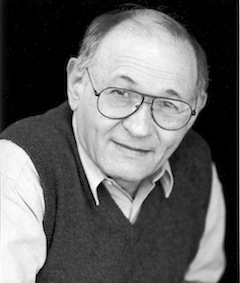
Dr. Solly Dreman (photo by Rebeca Kuropatwa)

With the large numbers of refugees and immigrants making their way to Winnipeg and elsewhere in Canada, Winnipeg Friends of Israel invited Dr. Solly Dreman, a Winnipegger who moved to Israel in 1964, to speak on the topic.

In the Sept. 19 lecture at the Asper Jewish Community Campus, Dreman drew from his own experience and expertise, using the work he did, along with colleague Dr. Ava Shinar, on immigration in the 1990s to illustrate an optimal way of integrating immigrants into Israeli society, which could be applied to other countries.

“I did the workshop with her over a decade ago, but the implications are certainly relevant to the contemporary problems occurring in the world today, and to immigrant and refugee populations all over the world,” said Dreman.

“Immigration is widely recognized as a stressful event which increases psychological vulnerability,” he explained. “Researchers have noted that adolescent immigrants … we know that many terrorists are in that age group … constitute an extremely high-risk population. In adolescence and late adolescence, there’s a need to cope with profound physical, psychological and social transformations. And, in those adolescents who have become immigrants and [are] in a strange and often unwelcoming environment, the uprootedness and difficulties in establishing a solid base of identity and meaning could have disastrous results. Indeed, the violence evident today in such places like Paris, Nice, Brussels, Orlando, San Bernardino, as well as Tel Aviv and Jerusalem, testifies to this. Youth confronted with a strange environment and difficult economic conditions, as well as lack of purposefulness in their lives, often latch onto causes and groups that implement terrorism and violence in the international community.”

Dreman also discussed other issues.

“In the 1990s,” he said, “with the collapse of the Soviet Union, there was a mass exodus of over a million Soviet Jews to Israel. Soviet students comprised about 10% of the student body at Ben-Gurion University. They were competing for limited resources, such as dormitory space, scholarships and, eventually, opportunities for employment.

“There were many negative stereotypes and attitudes prevailing between the native Sabra students, who were born in Israel, and their Soviet counterparts. As far as the stereotypes that Israelis had toward the Russians, well, they often viewed them as manipulative, clannish and corrupt … while the Russian students perceived the Israelis as loud, aggressive and uncouth.

“The Russians, in that first year of the workshop, we also heard some terrible things they had to say about the Ethiopians, referring to them as subhuman, subspecies, monkey-like, etc.”

With the extreme alienation between Sabras and the immigrant students – to the point of outright violence and fist fights – Dreman needed to find ways of reducing tensions and bringing understanding, cooperation and solidarity between the groups.

He said it was important to create an atmosphere where each group could participate in an evolving melting-pot culture, where each side would begin to listen to and understand the other. As such, he and Shinar created a two-credit academic course that eventually became a four-credit, year-long course because of its popularity.

“So, students were given an award for their participation and for completing course assignments,” said Dreman.

He explained, “The syllabus described it as being designed to help students learn about their family and individual transitions in the face of such phenomena as birth, adolescence, illness in the family, divorce and death … but with a particular emphasis on aliyah immigration.”

Normative aspects of immigration and transition were discussed in an academic context, so participants could then discuss their own experiences in a non-threatening atmosphere and place those experiences in an appropriate context, in an effort toward understanding what they themselves were going through.

At first, due to the Israelis’ fluency in Hebrew and the Russians’ more reserved manner, the Sabras monopolized the class. But, after a few sessions and with a little prompting, the Russians became much more comfortable and vocal.

“What we wanted to do was create an evolving identity,” said Dreman. “Emphasis was placed on joining the new culture, but space should be provided for the immigrant representatives to give expression to their culture of origin, needs and expectations. On the educational level, awareness workshops should be introduced in citizenship classes in elementary schools, high schools and colleges. It is also critical that government and volunteer groups work together to help promote immigrant absorption.”

Dreman recognizes that the work they did in Israel had many atypical factors working in its favor, but said the attitude of creating a type of melting pot should yield a good result in most cases. As well, while the workshops had some factors going for them, like participants with a common Jewish identity, working with young adults (18-to-24-year-olds) posed challenges that are less common with older immigrants, such as extremism and radicalization.

Dreman wanted to be very clear in differentiating between immigrant and refugee populations, noting the difference “between immigrants who want to immigrate and refugees who are exiled and may not necessarily want to.

“The purpose of our workshop was to make the hosts and the new immigrants understand where the other person is coming from, to create a merging of cultures and understanding in order to ease the process of assimilation,” he said. “I think the beautiful thing is that it was based on reciprocity. It was very successful. In the workshop, at the beginning, people hated each other. At the end, almost all had befriended people from the other group.

“If people knew that the immigrants had a real desire to be part of the hosts’ community, I think there’s a lot of opportunity for mutual understanding,” he added.

According to Dreman, the setting also plays a significant role. “In one of the projects we did, we sent kids out in one of the groups to interview Israelis – native Israelis – concerning their attitudes towards Russians. We sent them to a marketplace, a competitive marketplace with pedlars. And, another group, we sent to interview Israelis in Dizengoff Centre, which is upper-class…. How did the native Israelis describe the Russians in the marketplace? ‘Swindlers, crooks, gamblers, prostitutes, bastards.’ What about in the centre? They described them as ‘wonderful, contributing to the nation,’ and so on.

“In Europe and North America, if somehow they could take select groups of people who host immigrants and let them have that encounter and spread the gospel – ‘Hey, they aren’t that bad,’ that sort of thing – there is no reason it would not be successful.”

Rebeca Kuropatwa is a Winnipeg freelance writer.
Format ImagePosted on October 28, 2016October 27, 2016Author Rebeca KuropatwaCategories NationalTags immigration, Israel, refugees

Posts pagination

Previous page Page 1 … Page 468 Page 469 Page 470 … Page 650 Next page
Proudly powered by WordPress