Skip to content
  • Home
  • Subscribe / donate
  • Events calendar
  • News
    • Local
    • National
    • Israel
    • World
    • עניין בחדשות
      A roundup of news in Canada and further afield, in Hebrew.
  • Opinion
    • From the JI
    • Op-Ed
  • Arts & Culture
    • Performing Arts
    • Music
    • Books
    • Visual Arts
    • TV & Film
  • Life
    • Celebrating the Holidays
    • Travel
    • The Daily Snooze
      Cartoons by Jacob Samuel
    • Mystery Photo
      Help the JI and JMABC fill in the gaps in our archives.
  • Community Links
    • Organizations, Etc.
    • Other News Sources & Blogs
    • Business Directory
  • FAQ
  • JI Chai Celebration
  • JI@88! video

Recent Posts

  • New rabbi settles into post
  • A light for the nations
  • Killed for being Jewish 
  • The complexities of identity
  • Jews in time of trauma
  • What should governments do?
  • Annie will warm your heart
  • Best of the film fest online
  • Guitar Night at Massey
  • Partners in the telling of stories
  • Four Peretz pillars honoured
  • History as a foundation
  • Music can comfort us
  • New chapter for JFS
  • The value(s) of Jewish camp
  • Chance led to great decision
  • From the JI archives … camp
  • עשרים ואחת שנים להגעתי לונקובר
  • Eby touts government record
  • Keep lighting candles
  • Facing a complex situation
  • Unique interview show a hit
  • See Annie at Gateway
  • Explorations of light
  • Help with the legal aspects
  • Stories create impact
  • Different faiths gather
  • Advocating for girls’ rights
  • An oral song tradition
  • Genealogy tools and tips
  • Jew-hatred is centuries old
  • Aiding medical research
  • Connecting Jews to Judaism
  • Beacon of light in heart of city
  • Drag & Dreidel: A Queer Jewish Hanukkah Celebration
  • An emotional reunion

Archives

Follow @JewishIndie
image - The CJN - Visit Us Banner - 300x600 - 101625

Author: Rebeca Kuropatwa

Genetic testing and privacy

Genetic testing can save lives. So, why isn’t everyone getting it done? It turns out that companies are using the information from the tests to discriminate against applicants.

While this is by no means a Jewish-specific issue, the National Council of Jewish Women of Canada (NCJWC) and the Centre for Israel and Jewish Affairs (CIJA) are taking the lead in urging the federal government to legislate against this discriminatory practice.

“At NCJWC, our goals are for education, service and social action,” said Sharon Allentuck, the organization’s national president. “Social action includes writing to MPs, senators and the prime minister … [about] genetic testing and insurance denial.”

Genetic testing has been high on NCJWC’s list of priorities for the past 25 to 30 years and it continues to be – not just with respect to concerns over insurance companies’ actions, but also to increase public awareness of the importance of genetic testing.

In Winnipeg, for example, a clinic is held every three to four years in conjunction with Health Sciences Centre geneticist Dr. Cheryl Greenberg. While, in the past, the main focus was on Tay-Sachs, the list keeps getting larger, as geneticists like Greenberg discover new gene connections. At the moment, the list stands at seven to eight different Jewish genetic diseases being studied.

By getting a test done, one can be aware of a possible genetic problem that might affect oneself or one’s children, if a person has children with another carrier of the same disease. This knowledge can provide people with peace of mind when choosing a partner.

So far, though, this knowledge has come with a cost. When people apply for insurance, they are asked to disclose the results of their genetic testing.

“It came to our attention that insurance companies said to some people, ‘You’ve been tested, genetically. You have certain predispositions. Sorry, but we’re going to deny you insurance,’” said Allentuck. “It’s against human rights, it’s discriminatory. Canada is the only G7 country that allows this to happen. And so, legislation [Bill S-201] preventing that discrimination was passed through the Senate and now it’s in the House of Commons. We are asking our members and are working with CIJA to encourage [Jewish community] members to contact their members of Parliament to ensure the legislation passes.”

CIJA adds on its website, “We encourage provincial legislatures to pass complementary legislation, with a specific focus on employment and insurance.”

For more information, visit NCJWC’s website or Facebook page. Allentuck encouraged readers to become NCJWC Facebook friends in order to stay regularly updated on this and other important topics.

“This isn’t a Jewish issue,” she said. “But that doesn’t mean that Jewish people can’t have a say in it.”

Rebeca Kuropatwa is a Winnipeg freelance writer.

Posted on October 28, 2016October 27, 2016Author Rebeca KuropatwaCategories NationalTags Bill S-201, genetic testing, privacy

Whose holy site?

When organizers of the Vancouver Jewish Film Festival select the films they will screen, timeliness is probably among the considerations. They could hardly have known they would hit the nail on the head so perfectly with One Rock Three Religions. The film explores the contending claims for the world’s most in-demand religious real estate: that which Jews call the Temple Mount.

The site of the First and Second Temples, the latter destroyed by the Romans after 70 CE, is also the location of al-Aqsa Mosque and the Dome of the Rock, holy sites for Muslims. The Western Wall, adjacent to the Temple Mount, known to Muslims as Haram al-Sharif, is the holiest site on earth for the Jewish people. The Temple Mount also holds significance for Christians. This is not breaking news.

But the 58-member executive board of UNESCO, the United Nations Educational, Scientific and Cultural Organization, earlier this month passed a resolution – with 24 countries in favor, 32 against or abstaining and two absent – that uses language that exclusively recognizes the Muslim history of the area, implicitly erasing Jewish and Christian claims to the space. (Canada is not part of the board.)

Denying Jewish claims to the Temple Mount is not breaking news, either. This form of historical erasure has been going on for decades.

In the film, Rabbi Marvin Hier, founder of the Simon Wiesenthal Centre in Los Angeles and a rabbi emeritus of Vancouver’s Schara Tzedeck, notes that the supreme Muslim authority in Jerusalem published for decades a visitor’s guide to the site. From 1924 until 1953, the guidebook made clear that the location was indisputably the site of Jewish temples. The 1954 iteration of the guide omitted the Jewish connection to the holy place for the first time. Some Arab and Palestinian figures, including Yasser Arafat and Mahmoud Abbas, have made it their business to deny the historical and archeological truth ever since. The denial of a Jewish connection to Jerusalem has come to coexist with the denial of Jews to a right to self-determination in our unceded ancestral territory, as part of a global phenomenon of denying Jewish history.

It may be naïve to get on our high horses and pretend that UNESCO’s appalling denial of Jewish (and Christian) connections to the Temple Mount is some new low in global attitudes toward Israel. This is nonsense, certainly, but only on a continuum of nonsense that defines the anti-Israel movement globally.

We can take some solace in the fact that the vote was not passed by a majority. As well, on the positive side, this “theatre of the absurd,” as Israeli Prime Minister Binyamin Netanyahu called it, at least forced the hands of a few leaders, including Italian Prime Minister Matteo Renzi, who promised to find out why his country’s representative abstained from the vote. Even UNESCO’s own director-general, Irina Bokova, said: “Jerusalem is the sacred city of the three monotheistic religions – Judaism, Christianity and Islam.… To deny, conceal or erase any of the Jewish, Christian or Muslim traditions undermines the integrity of the site, and runs counter to the reasons that justified its inscription on the UNESCO World Heritage list.”

In the end, it all amounts to bubkes for Israel. Israel will continue to provide, as the VJFF film demonstrated, access to all religious sites for all peoples, to say nothing of continuing to be the educational, scientific and cultural exemplar it is. If only UNESCO contributed as much.

Posted on October 28, 2016October 27, 2016Author The Editorial BoardCategories From the JITags anti-Israel, antisemitism, Haram al-Sharif, Israel, Temple Mount, UN, United Nations

K-12 teachers learn coding

On Oct. 22, 200 teachers from across British Columbia and Ontario participated in Code Class, a one-day coding and computational thinking crash course.

The inaugural class was hosted by coding education experts Lighthouse Labs, which partnered with Kids Code Jeunesse, a nonprofit dedicated to empowering kids and teachers through code, and Computer Using Educators of British Columbia (CUEBC).

Code Class is a free, full-day workshop designed specifically for K-12 educators that aims to introduce educators to computational thinking and inspire them to bring code into the classroom. It supports teachers by removing barriers and fostering an understanding of computational thinking, technology and basic code.

Computational thinking is problem solving; it’s understanding larger structures with both human and technological systems. It could be as simple as following a recipe, or as advanced as coding a website. Computational thinking is to computers as astronomy is to telescopes; it’s about how people conceptualize information, and how they put those concepts into practise.

With the introduction of code into the new ADST (Applied Design, Skills and Technologies) curriculum across British Columbia, Code Class organizers believe that it is more important than ever to invest in teachers and to give them the tools and resources needed to bring code into the classroom.

“Lighthouse Labs is proud to support teachers across Canada,” said Jewish community member Jeremy Shaki, co-founder of Lighthouse Labs. “We believe that great education starts with great teachers and grows from there. The best solution for incorporating technology into the classroom is to provide teachers with the tools and resources they need to inspire their students.”

“By educating children with the tools needed to create and communicate within the 21st century, we are providing them with the skills needed to build their own future success,” said Kate Arthur, founder and co-director of Kids Code Jeunesse, which is based on the belief that coding is a basic literacy as important as reading, writing or math.

K-12 teachers of all subjects who attended the 2016 CUEBC conference could participate in the free-of-charge one-day workshop held at School District 43’s École Riverside Secondary School in Port Coquitlam. More than two dozen software developers from local technology companies mentored participants during the workshop, and no previous coding experience was required to attend.

Computational thinking already exists within some key aspects of teachers’ classrooms, said Jon Hamlin, president of CUEBC, an organization of volunteer teachers in the province dedicated to promoting the educational uses of technology in schools. “We hope to reframe their understanding of the subject, see how it connects in cross-curricular ways, and see computers and coding from a new perspective. Together with Lighthouse Labs, we aim to support all K-12 teachers in their adoption of the new ADST provincial curriculum.”

For more information about Lighthouse Labs, its approach to teaching web and mobile software development, and the courses it offers, visit lighthouselabs.ca.

Posted on October 28, 2016October 27, 2016Author Lighthouse LabsCategories LocalTags computers, education, technology

Determination key to continuity

“The power above is set in motion by the impulse from below, even as vapor ascends to form the cloud. If the community of Israel did not first give the impulse, the One above would not move to meet her, for yearning below makes completion above.” – Zohar, Genesis 35a

I have always believed the secret of Jewish survival is exemplified in the life of my grandmother, of blessed memory, who I never met. She died when my mother – the second youngest of 11 children – was only 7 years old. Young as she was, my mother, Sarah Rebecca Opas, never forgot her mother, or the spirit of Yiddishkeit she left behind.

My grandmother’s name was Mila and she was betrothed to my grandfather David from the age of 3, when her parents in Plotsk, Poland, called her in from playing to tell her that, when she grew up, she was to marry the little boy next door. This was back in the early 1800s when betrothals were arranged by parents as a matter of course.

It was the time of pogroms in Europe and, when he reached the age of 17, David informed his parents he was leaving for the New World and had secured a job on a ship. “What about Mila?” he was asked. “I will send for her when I get settled,” he assured them. “No you won’t, you’ll take her with you.” So, Mila, then 16, and David were married by the rabbi before sailing to the New World, which David believed to be America, but was in fact Australia.

The ship took six months to reach Port Adelaide in Australia. David was hired to be a handy man on the vessel, and his first job was to look after the food. As there was no refrigeration then, the whole supply of meat was lowered on cables into the ocean, where the salt water would preserve it. However, he failed to secure it properly, and it all sank to the bottom of the sea – no meat for the crew for the entire trip. His next job on board was to sew any sails that had been torn in the strong winds. He had no idea how to sew, so his young wife did it for him, as well as keeping the captain and crew’s clothing repaired.

Before they reached Australian shores, Mila was already expecting her first child.

Both having come from Orthodox homes, it was a terrible shock to them when they landed. No synagogues, no kosher butchers, no established Jewish communities. They settled in a little country town, Bombala, near the border between Victoria and New South Wales. David opened a store to provide fodder and dry goods to the farmers in the surrounding districts and, gradually, as they learned English, the business prospered enough to give the family a comfortable lifestyle.

But Mila’s heart was always sad, because she did not know how to keep her family Jewish, as there were no other Jews for them to meet and marry. So, she made a plan.

Mila had heard that there was a small Jewish community in the city of Sydney. As each of her older children turned 18, she would travel to Sydney and stay there until she found a Jewish boy or girl willing to go back with her to Bombala and marry one of her children, sight unseen. Her love of her Jewish heritage was such that achieving this became the most important part of her life, and she was amazingly successful. Of the 11 children, only one of them married a non-Jew; there were no divorces. Sadly, Mila died of scarlet fever still relatively young, before the penicillin was invented that would have saved her life.

My mother and her little brother were raised by their older sisters, who by then were all married. They never let her forget her mother and the importance of remaining Jewish even in near-impossible situations where Jewish rituals are almost nonexistent.

In retelling my grandmother’s story to me so many years later, my mother always stressed that the Jewish soul is unquenchable. No matter how far one strays from observance, the spark remains and it is something precious that must be cherished and passed on from generation to generation. By making my home in Israel, becoming an observant Jewish woman, and being blessed with 18 Israeli grandchildren and 16 great-grandchildren here, I hope my mother and grandmother can be at rest.

Dvora Waysman is a Jerusalem-based author. She can be contacted at [email protected] or through her blog dvorawaysman.com.

Posted on October 28, 2016October 27, 2016Author Dvora WaysmanCategories Op-EdTags continuity, Israel, Judaism
Women mentoring women

Women mentoring women

Woman2Woman co-founders, from left, Efrat Dayagi, Keren Herscovici and Noya Lempert. (photo from Woman2Woman via israel21c.org)

Israeli actress Gal Gadot may be Wonder Woman on the big screen but Keren Herscovici, Noya Lempert and Efrat Dayagi – the initiators of a program for advancing women in prominent positions in their careers – are the true wonder women of Israel. They started Woman2Woman to help young women in top decision-making positions advance in their careers (in all fields) with some guidance from mentors who have already been there and succeeded.

“A number of times in my life, I’ve felt that I’m really in need of a mentor, and that’s what our initiative is geared toward, answering this need,” said Dayagi, a lawyer. “You can’t just cold-call someone and say, ‘So-and-so told me to call you for advice.’ I’ve sought something like this program and I would have loved a connection like this with a mentor.”

Herscovici, Lempert and Dayagi say theirs is different from other female empowerment initiatives because they don’t see women as underdogs.

“We’re not coming from the stereotypical place where women need help because they are in a lower place,” said Lempert, a doctoral student in clinical psychology. “We’re coming from a place where women have a ton of potential and we want to help them take that potential as far as possible; not from weakness but from a place of strength.”

“Ideally, there shouldn’t be a glass ceiling but, in reality, there is. The ceiling still exists. So, as long as it is there, we need to talk about it,” the women said, finishing off one another’s sentences.

Herscovici, Lempert and Dayagi are graduates of Unit 8200, the Israel Defence Forces’ signal intelligence division, known for producing an unprecedented number of startup entrepreneurs, as well as alumni with problem-solving, leadership and top managerial skills. They saw that, although women comprise half the soldiers in the unit, as 8200 alumni progress in their civilian careers, fewer women are staying in the lead. Since each member of the trio is moving full steam ahead on her individual career path, they wanted to know why other women – including those who were officers in the army – were stalling before reaching their destination.

They said they found that even the most talented woman can stumble on self-planted obstacles.

“There are many factors that can hold a woman back – family, society, discrimination – but we found one of the main reasons is they don’t believe in themselves,” said Dayagi. “There are many women who have amazing potential but feel their womanhood is stopping them from reaching the top of their game. If we know that we have the potential to succeed – and not belittle ourselves with, ‘But I’m a mom’ or ‘I’m a woman,’ or compare ourselves to men by saying, ‘Well, I’m a woman, I won’t get that position’ – then there’s no reason not to succeed.”

“We want to take the young women who are just setting out and to make sure that they continue on the path of leadership and success. We connect them with women who have already progressed a long way,” added Herscovici, a master’s student in operations research.

The program matches a young woman at the beginning of her career with a mentor in a senior position in her chosen field of expertise and sets up one-on-one sessions and group meetings.

The first four-month mentorship program, which concluded in August, accepted 20 of the 80 23-to-33-year-old applicants coming out of Unit 8200. Among the many volunteer mentors were former Treasury director-general Yael Andorn, manager of Kodak Israel Einav Aharoni-Yones and global head of human resources at Amdocs Karmit Shilo. The second program will be open to all success-minded women, not just those who have served in Unit 8200.

“We’re not aiming to change the world – we want to change how women see themselves and their worth,” said Dayagi. “We want women to embrace the idea that they can succeed in any industry.”

Herscovici said the programs are part of a bigger overall goal. “Our mission is to have an influence on the future,” she said. “We are among the few to offer personal, woman-to-woman mentors. We also have a variety of careers, not just high-tech and not just entrepreneurship, but different fields such as financing, law, science and others. We want to create a professional network of women mentors.”

Israel21C is a nonprofit educational foundation with a mission to focus media and public attention on the 21st-century Israel that exists beyond the conflict. For more, or to donate, visit israel21c.org.

Format ImagePosted on October 28, 2016October 27, 2016Author Viva Sarah Press ISRAEL21CCategories IsraelTags business, Israel, women
Mayor visits the Bayit

Mayor visits the Bayit

On Oct. 19, Richmond Mayor Malcolm Brodie, second from the right, joined the Bayit’s celebration of Sukkot. He is pictured here with, from the left, Michael Sachs, Bayit president; Miki Fadida, sponsor of the Fadida Family Sukkah; Rabbi Levi Varnai, spiritual leader of the Bayit; and Moshe Fadida. The mayor discussed the local Jewish community, as well as some of the challenges facing young families. (photo from the Bayit)

Format ImagePosted on October 28, 2016October 27, 2016Author The BayitCategories Celebrating the HolidaysTags Sukkot, synagogue
A precious space in Ireland

A precious space in Ireland

Machzikei Hadas can be found on Rathmore Villas in Dublin. (photo from jewishgen.org)

When my bride and I lived in Dublin, we were strangers in a foreign land. Our refuges were the synagogues of the tiny Jewish community. It was there we found instant acceptance. We were in Dublin, escapees from the harsh extremes of temperature in the places where we used to live. Original products of Winnipeg, we had left Ottawa to pursue a life of retirement in Ireland. Recently married, we were getting to know each other again after leading separate lives since acquaintance in our teen years.

In Ireland, we benefited from the welcoming embrace of the country’s cradle-to-the grave social system, in spite of being alien residents. Seeking community associations, we joined a synagogue, the Dublin Jewish Progressive Congregation. It had the merit of permitting men and women to sit together, important to us at the time. However, we found that environment less fulfilling, and I began to attend another, more orthodox, establishment. Although it was in the main synagogue in Dublin where we had our Orthodox marriage – we were married previously by a justice in Canada and a progressive rabbi in Jerusalem – in the end, we found it, as well, less welcoming than we liked. Finally, we became firmly attached to a shtiebel, which is the subject of this memoir.

When I attended, Machzikei Hadas had maximum capacity of about 50 male worshippers. It was located in the annex of a house. Among the benches for seating were tables, which were used, after the services, for food and drink. About a third of the space was devoted to seating for women, behind a barrier with a curtained screen. Alcoves at the back had a small kitchen and a children’s playroom, with a door providing a separate entrance for women. A pulpit stood in the centre of the main room on the traditional raised area, used for reading from the Torah. The cantor, a volunteer from the group, led the services. The room was bare. The only adornments were a decorated cover for the cubicle where the scrolls were kept in the front of the room, and an embellished covering on the pulpit where the Torah was read.

The synagogue is managed by a group of about 10 men, with the assistance of some of their wives. The total membership is small. Aside from holidays, the congregation convenes once weekly, every Saturday morning. Ritual (Ashkenazi) is strictly observed. Men and women sit separately except for the Kiddush. When the time comes to eat and drink, men and women are seated cheek by jowl. One of the abiding attractions of this place is the generous table that is set after services each week, complete with bottles of Irish whiskey. Rarely are these returned to the cupboard with any contents. The participants look to salvation in their spirits and I have many times departed this place elevated in spirit, but somewhat the worse for wear.

The men in this congregation are of an independent-minded cast. They have resisted the blandishments of the main congregation in Dublin for decades, to maintain their independence. Every Saturday involves a struggle to ensure that the necessary 10 men are assembled for a formal service. Each attendee is precious, and his arrival is greeted with appreciation for his presence, as a member of a select group. Each regular has his appointed place to sit.

A unique feature of services is that they are often unruly, as the members exchange news and discuss notable occurrences during the past week. All join in the service at the appropriate places, but otherwise the exchange of news and views continues, nearly unabated, during their time in this place. I gloried in the down-to-earth atmosphere.

Members are chosen each week to mount the central platform, to have their name, and their father’s name, celebrated, in reading portions from designated chapter in the Torah. I was always thrilled to be called up, to have my father’s name announced. To me, it was as if my father could hear his name called out and he could witness that I was keeping his memory alive. Each time I had the opportunity, I loudly exclaimed the requisite prayer, to awaken my father from his slumbers.

Each of the principals in the synagogue I grew to know was in some way markedly distinct from my experience with any other group to which I have belonged. Each, in his way, was key to the successful operation of the synagogue. Attendance, management, security, accumulation of food and drink supplies, almost everyone played a role, often supplementing needs from their own pockets.

David, the secretary, a young man, seemed to be a prime mover. He carried the concerns of the synagogue in his mind at all times. Inhabiting the rough-and-tumble world of classic car sales, he was nonetheless devout in his observance.

Michael, the president, seemed to perform his role under David’s prompting, taking everything with collegial grace. More “laissez-faire,” he was an enthusiastic participant in the consumption of Irish whiskey. He often brought his beautiful, wilful, but adorable 5-year-old son with him to synagogue.

The triumvirate was rounded out by Terry, the inveterate cantor. A convert to Judaism, he progressed through the prayer agenda, in spite of the babble behind him, and would cheerfully give up his place to visiting presenters. With his American wife, Karen, he was a mainstay of the synagogue, and a fierce defender of all elements of ritual observance. We looked over our shoulders to see if he was watching when we transgressed. We are hoping and prayerfully expecting the Deity to be more lenient in His judgments of us than was Terry.

Melvin, my seatmate, took care that I did not blunder in my observance, using the right book, reading the right page. Richard, an Irish convert who spent time on kibbutz in Israel, sat behind us. A civil servant, he has shared with me the mysteries and intricacies of Irish bureaucracy and politics. Sturdy participants in the demolition of many a whisky container, I would gladly have them by my side, anywhere, whatever I had to face.

Joe, a truly lovable mensch, sat across the aisle. He and his brother Robbie, many years in Ireland, still bear the accents they brought with them from Slovakia. Purveyors of parchment, they are the synagogue Cohens, necessary for the reading of the scrolls. Robbie is the synagogue treasurer, openly eager for a tip on the stock market.

Alec sits at the back. He is a retired person of the legal profession and the real brains of our outfit. He was usually at the centre of discussions, dispensing wisdom and wit.

Monty was my real favorite, and we had a meeting of the minds. With him, I shared my deepest secrets and my tendency to violent extremism in defence of Israel. He sat far forward in splendid isolation, focused on his worship. He did occasionally join us for a bite and a wee dram. I am regularly in contact with him to this day, years after I have departed the Emerald Isle.

Eddie was a more recent returnee, coming from some other Irish place. A Levi, he played a ritual role. He was our mellifluous cantor on many occasions, generous with his time and effort. Enthusiastic of voice and social commentary, he disapproved of our unruly behavior in the back of the room. He appeared to be discomfited by too much public attention to the Jewish fact and the attention garnered by Israel’s struggle to survive. We have different views as to Jewish public policy, but he was often a cheerful addition to our services.

There are too many others to enter into detail. What a pleasure it was to have been to be a part of all this! How can I express fully the depth of my feeling of kinship, the strength of my appreciation for having been made so welcome within this community? The participants may have seemed at times cavalier in observance, but they cling fiercely to their synagogue and its perpetuation. I have been moved to tears there by my readings in the scrolls, and filled with joy, my enthusiasm raucous, in singing some of the prayers together with my fellow Jews. When we sang out together, my voice roared – I wished to sing louder and louder so the Divine would hear – and my heart soared to be there with my brothers in that place.

A stranger, I was embraced and made to feel a part of this tribal fellowship. There, I felt free to worship in my own way. There, one’s foibles might be the subject of critical humor, but they were accepted. Some of my best times in Ireland were spent in that place. I am grateful and thankful for all those who made that precious corner of Jewish life what it was. It remains with me always as something I seek in other congregations. I celebrate it and its members. Am Yisroel chai!

Max Roytenberg is a Vancouver-based poet, writer and blogger. His new book, Hero In My Own Eyes, is forthcoming.

Format ImagePosted on October 28, 2016October 27, 2016Author Max RoytenbergCategories Op-EdTags Ireland, synagogue, travel
Mystery photo … Oct. 28/16

Mystery photo … Oct. 28/16

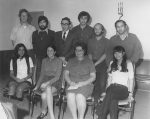
Louis Brier Home, 1965. (photo from JWB fonds, JMABC L.12338)

photo - B’nai B’rith, woman receiving an award, 1971
B’nai B’rith, woman receiving an award, 1971. (photo from JWB fonds, JMABC L.12175)

If you know someone in these photos, please help the JI fill the gaps of its predecessor’s (the Jewish Western Bulletin’s) collection at the Jewish Museum and Archives of B.C. by contacting [email protected] or 604-257-5199. To find out who has been identified in the photos, visit jewishmuseum.ca/blog.

Format ImagePosted on October 28, 2016October 27, 2016Author JI and JMABCCategories Mystery PhotoTags B'nai B'rith, JMABC, Louis Brier, seniors
New Safdie-designed campus

New Safdie-designed campus

Israel Antiquities Authority’s new 36,000-square-metre, three-level National Campus for Archeology of Israel, designed by architect Moshe Safdie to descend like excavation strata, is still under construction. (photo by Ardon Bar Hama, Israel Antiquities Authority, via Ashernet)

Located on Museum Hill in Giv’at Ram between the Israel Museum and the Bible Lands Museum in Jerusalem, the facility will allow the public to see some of the tens of thousands of archeological items presently being held in store rooms and to watch, through windows, conservation being carried out on a variety of national treasures. Twenty-six donors, together with a significant contribution from the state, made it possible to go ahead with the $105 million project, which is expected to be complete in about a year’s time.


Format ImagePosted on October 28, 2016October 27, 2016Author Edgar AsherCategories IsraelTags archeology, architecture, history, Israel
בחירות בארצות הברית בלוטו

בחירות בארצות הברית בלוטו

מתברר שהתנהלותו של דולנד טראמפ בקמפיין הבחירות שלו גורמת נזק וכאב ראש, למערך יחסי הציבור שנערך לפתיחת מלון הדירות טראמפ, ברחוב ווסט ג’ורג’יה בדאון טאון ונקובר. (צילום: Roni Rachmani)

לפי תושבי בריטיש קולומביה קלינטון תזכה בנשיאות לבחירות בארה”ב: כך לפחות מצביעים ההימורים באתר של הלוטו קורפורשיין

הקנדים היו מאוד רוצים להצביע בבחירות לנשיאות ארצות הברית שיערכו בשמונה בנובמבר. זאת כיוון שהם יודעים שהתוצאות יכולות להשפיע משמעותית על היחסים עם השכנה מדרום. אך למעט אלה שמחזיקים בדרכון כפול (קנדי ואמריקני) ולכן כן ויוכלו להצביע, הרוב הדומם בקנדה יצפה בתוצאות הבחירות מול מסך הטלוויזיה.

אך מתברר שהתושבים המקומיים יכולים לשחק בנדמה לי ולהמר על מי שלדעתם המועמד שיזכה בנשיאות. זה עולה כמובן כסף וזה אף חוקי בקנדה (לגילאי 19+). ההימורים על הבחירות בארה”ב מתבצעים באתר הלוטו קורפורשיין של בריטיש קולומביה. לעומת זאת יצויין אין אפשרות לקנדים להמר על תוצאות הבחירות המקומיות או הפדרליות בקנדה. בלוטו קורפורשיין אומרים כי רבים רבים מהמרים על הבחירות בארה”ב, שעולות כיום על כל ההימורים האחרים של התאגיד. אגב גם במחוזות מניטובה ונובה סקוטיה ניתן להמר על הבחירות בארצות הברית.

לפי מצב ההימורים הנוכחי בבריטיש קולומביה מועמדת המפלגה הדמוקרטית, הילרי קלינטון, תזכה בבחירות מול מועמד המפלגה הרפובליקנית, דולנד טראמפ, ביחס שעומד על 1.18. כך שמי שכמעט הולך על בטוח ומהמר על קלינטון נניח בסכום של מאה דולר יזכה במאה ועשרים דולר, עם אכן היא תזכה בבחירות. ואילו ההימורים לטובת טראמפ עומדים ביחס הרבה יותר גרוע שעומד על 5.20. כך שמי שמסתכן ומהמר על טראמפ נניח בסכום של מאה דולר יקבל לא פחות מחמש מאות ועשרים דולר, אם דווקא הוא ינצח בבחירות.

photo - The hotel was scheduled to open in August this year. Then the opening was postponed for the fall but this did not happen
המלון היה אמור להיפתח בחודש אוגוסט השנה. לאחר מכן הפתיחה נדחתה לסתיו אך גם זה לא קרה. (צילום: Roni Rachmani)

לדברי הלוטו קורפורשיין של בריטיש קולומביה לפחות כארבעים אחוז מהמהמרים תומכים בקלינטון ואילו פחות מעשרים וחמישה תומכים בטראמפ. כל ידיעה שמגיעה מטעם מחנות שני המועמדים מורגשת היטב בזירת המהמרים. וכידוע כל הזמן מגיעות חדשות מקלינטון ומטראמפ, שגרמו למערכת בחירות לנשיאות ארה”ב להיות לחסרת תקדים בשערוריות ובלכלוכים שלה.

בינתיים מתברר שהתנהלותו של טראמפ בקמפיין הבחירות שלו גורמת נזק וכאב ראש, למערך יחסי הציבור שנערך לפתיחת מלון הדירות טראמפ, ברחוב ווסט ג’ורג’יה בדאון טאון ונקובר. המלון היה אמור להיפתח בחודש אוגוסט השנה. לאחר מכן הפתיחה נדחתה לסתיו אך גם זה לא קרה. מסיבות לא ידועות הפתיחה של המלון נדחתה שוב והפעם לראשית שנה הבאה. לדעת מומחים בעלי הפרוייקט הולבורן גרופ מעדיפים להמתין עד לסיום הבחירות והקמפיין הנוראי של טראמפ שיורה לכל עבר, ורק אז לקיים מסיבת פתיחה של המלון. הולבורן גרופ מפרסמים באמצעי המדיה מזה זמן תחרות להשתתף באירוע הפתיחה הרשמי של המלון. הזוכה בתחרות יובא ברכב מפואר למלון, יקבל לינת חינם ללילה, ישא אישור וי.איי.פי וכן יפגוש אישית את משפחת טראמפ. לאור התנהלותו השערורייתית של טראמפ, מתברר שלא רבים קופצים על המציאה להשתתף בהליך התחרות.

במקביל לקמפיין הבחירות של טראמפ כמה עשרות תושבים מקומיים השתתפו לאחרונה בהפגנה ליד מלון הדירות, תוך שהם מניפים כרזות בגנותו ומבקשים לעודד את הציבור האמריקני להביס אותו בבחירות.

כזכור ראש עיריית ונקובר, גרגור רוברטסון, ניסה ללא הצלחה להפעיל לחץ על הולבורן גרופ, להוריד השם טראמפ ממלון הדירות. סקר אחרון שנערך בקנדה מצביע על כך שכשישים ושניים אחוז מהאזרחים רוצים שהשם טראמפ יורד מבתי המלון והדירות בטורונטו וונקובר.

הפרמייר של מחוז בריטיש קולומביה, כריסטי קלארק, קוראת לכולם גנות את עמדותיו הסקסיסטיות של טראמפ כלפי נשים. לדברי קלארק יש לדאוג לכך ששיחות מסוג כזה ומחשבות מסוג כזה לא יהפכו לנורמליזציה.

Format ImagePosted on October 26, 2016Author Roni RachmaniCategories עניין בחדשותTags Clinton, lotto, presidential elections, Trump, בחירות לנשיאות, טראמפ, לוטו, קלינטון

Posts pagination

Previous page Page 1 … Page 469 Page 470 Page 471 … Page 650 Next page
Proudly powered by WordPress