

Month: March 2019
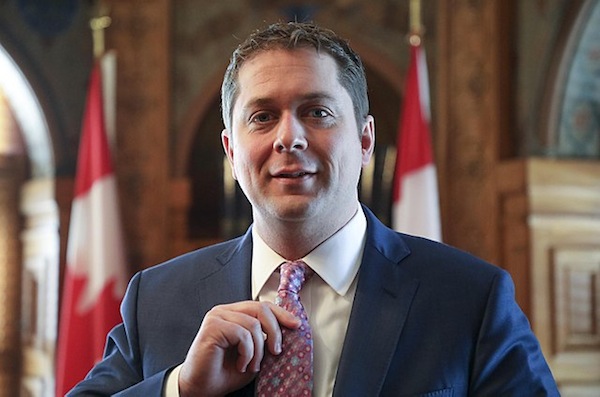
אנדרו שייר קורא לג’סטין טרודו להתפטר
(Andre Forget/OLO) ראש האופוזיציה, אנדרו שייר
ראש ממשלת קנדה, ג’סטין טרודו, הסתבך ולא ברור כלל אם יצליח להיבחר שוב בבחירות הכלליות שיערכו בחודש אוקטובר. זאת לאור טענת שרת המשפטים והיועצת המשפטית לשעבר, ג’ודי ווילסון-רייבולד, כי הוא, אנשי לשכתו ושר האוצר, ביל מורנאו, הפעילו עליה לחץ להתערב הליך המשפטי נגד חברת הבנייה וההנדסה אס.אן.סי לאוולין החשודה בשחיתות, ולמנוע את העמדתה לדין. החברה נחשבת למהגדולות בעולם והמטה שלה ממוקם בקוויבק.
ראש האופוזיציה, אנדרו שייר, מהמפלגה השמרנית קרא לטרודו להתפטר לאלתר בטענה “שאיבד את סמכותו המוסרית לשלוט”. שייר ביקש גם מהמשטרה הפדרלית לחקור את הפרשה. שייר שכנראה אין לו מה למכור לבוחריו השמרנים לקראת הבחירות הקרובות, ממשיך לטעון בכל הזדמנות כי על ראש ממשלה להתפטר. מרבית הפרשנים בתחום לא קונים את הטענות של שייר.
טרודו מצידו ממשיך להסביר: “אני והצוות שלי פעלנו בצורה הולמת ומקצועית. לחלוטין אינני מסכים עם תיאור האירועים האלה מצד היועצת המשפטית לשעבר”. טרודו הוסיף כי הוא ואנשיו לא עברו על החוק ואין מקום להמשיך ולדון בנושא. בכל מקרה הבוחר יאמר את דברו בבחירות שיערכו בקרוב.
ווילסון-רייבולד הופיעה לפני כשבועיים בפני ועדת המשפטים של הפרלמנט, שטחה את טענותיה וענתה לשאלות במשך שעות, כשהאירוע הועבר בשידור ישיר בטלוויזיה. שרת המשפטים והיועצת המשפטית של טרודו לשעבר, טענה כי הוא, אנשי לשכתו ושר האוצר, הפעילו עליה לחץ בלתי פוסק במשך כארבעה חודשים שנבע ממניעים פוליטיים, להתערב בהליך המשפטי נגד אס.אן.סי לאוולין החשודה בשיחוד אנשי ממשל בלוב, כדי לזכות בחוזים ממשלתיים. הניסיונות להשפיעה על דעתה כיועצת משפטית ועל התביעה העצמאית בקנדה, נועדו למנוע את העמדת החברה וראשיה לדין ולבקש לפטור אותה בקנס כספי בלבד. זאת כדי למנוע את החלטת הנהלת החברה להעביר את משרדיה למחוץ לקנדה, דבר שיגרום לפיטורי אלפי עובדים. טרודו שחושש שמהלך כזה יעיב על ההצלחה הכלכלית של ממשלתו הזכיר לווילסון-רייבולד לטענתה, כי גם אזור הבחירה שלו נמצא בקוויבק. עם זאת ווילסון-רייבולד טענה מפורשות כי טרודו ואנשיו לא עברו על החוק. אך למפתיע בסוגיה זו האופוזיציה שמאמינה לכל מילה שלה, ממשיכה לטעון כי טרודו עבר על החוק? שרת המשפטית לשעבר בשלה אך את האופוזיציה זה לא מעניין.
לאור התנגדותה להתערב בהליך המשפטי בעניין חברת הבנייה, טוענת עוד ווילסון-רייבולד, כי בינואר טרודו העביר אותה במתפקידה לתיק זוטר (השרה לענייני יוצאי הצבא), ולבסוף היא התפטרה מהממשלה במהלך פברואר.
טרודו דוחה גם את הטענה הזו של שרת המשפטי לשעבר שלו ומציין, כי היא הועברה לתפקיד אחר רק בגלל שהשר לענייני יוצא הצבא פרש מהממשלה. אחרת היא הייתה נשארת בתפקידה עד היום עד כמה שזה היה תלוי בו.
מעניין שווילסון-רייבולד טענה בחקירתה כי אולי יש מקום להפריד בין התפקידים שר המשפטים בממשלת קנדה והיועץ המשפטי לממשלה, כיוון שכפל התפקידים יוצר בעייה כמו זו של סוגיית אס.אן.סי לאוולין. אך מדוע היא לא חשבה על כך בטרם מונתה לתפקיד הכפול? או בזמן שהחלה למלא אותו?
יועצו הבכיר של טרודו לשעבר, ג’רלד באטס, שהתפטר מתפקידו לאור הפרשה, נחקר אף הוא בוועדת המשפטים של הפרלמנט. הוא דחה את טענותיה של שרת המשפטים לשעבר. לדבריו שתי פגישות או שתי שיחות טלפון בחודש בנושא אס.אן.סי לאוולין, לא היווו שום לחץ על ווילסון-רייבולד.

Using absurdity to illuminate
Left to right are GOLDRAUSCH actors Tebo Nzeku, Gray Clark, Karthik Kadam, Matthew Rhodes and Hannah Everett. (photo by Javier Sotres)
GOLDRAUSCH is described as “a comedy with music that journeys through film director Oskar’s efforts to make a film about the man who started the Gold Rush Fever of 1848: the ‘Emperor of California.’ Mixed with classic country and Mexican banda songs, GOLDRAUSCH is the story of rampant jealousy, greed and ambition run amok, as dueling actors fight for their close-ups in Oskar’s magnum opus.”
The University of British Columbia’s theatre and film department presents GOLDRAUSCH at Frederic Wood Theatre March 14-30.
“GOLDRAUSCH follows the story of director Oskar, creating a film on Johann Augustus Sutter, based on the book Gold by Blaise Cendrars,” explained Hannah Everett, who plays the role of Marlene in the UBC production. “Sutter was a German-born colonizer who came to America, set up a farm for himself and became rich – until the gold rush of the 1850s, which destroyed the land he had taken.
“The playwright, Guillermo Calderón, is commenting on how Blaise Cendrar’s Gold is an exaggerated and fictionalized version of Sutter’s life that glosses over his problematic character, and the history surrounding the land and people during this time,” she said. “The play begins months into the shoot when Oskar realizes his film has become boring, and lacking ‘soul.’ He decides to bring in two new actors and shoot a porn scene, much to the other actors’ surprise.”
Marlene is one of the new actors.
“Marlene has been hired by Oskar to perform a porn scene and body double the leading lady, Greta, on set,” said Everett. “Marlene represents Oskar’s ‘fresh start’ to the film, in order to make it more interesting. Throughout the play, we learn she contracted hepatitis from the porn industry and is incredibly poor. She needs this job to make money and survive, which sends Greta into a panic as she learns Marlene is her replacement.”
Appropriately for a play about a film, GOLDRAUSCH is a multimedia work.
“GOLDRAUSCH features real cameras and sound equipment that will project film scenes onto the stage,” said Everett. “We are calling it a ‘meta-theatrical comedy with music’ and, in a way that is somewhat Brechtian, the play often breaks into song and dance, with karaoke tracks projected onto screens. In a final scene, where Oskar and the four actors interview about their film, it becomes clear that these songs are included in the film soundtrack. The multimedia layers to this piece create an effect that continues to take the audiences out of these different worlds of the past and the present, and remind them that they are watching a performance – and that not everything is always as it seems.”
Calderón, a Chilean playwright, wrote GOLDRAUSCH in 2017, “in a continuing time of political upheaval and uncertainty, particularly in United States,” said Everett. “Johannes Augustus Sutter came to America in the 1800s, stole land and enslaved indigenous peoples. His story, Calderón highlights, is unfortunately still incredibly relevant.
“Calderón asks us to think about land ownership, freedom and immigration. He shows us how history repeats itself,” she said. “The play satirizes Cendrar’s book, Gold, demonstrating how we become numb and alienate ourselves from people and politics that attempt to take away basic human rights. This is seen in Oskar’s film, and the ego and greed between the four actors, all struggling for the spotlight…. Calderón has decided to illuminate these issues in a way that is absurd and entertaining, as a way to get audiences to think more actively than perhaps watching or reading a news story.”
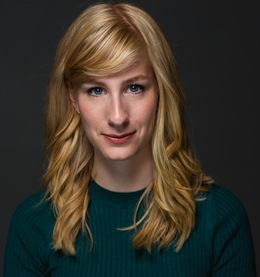
Born in White Rock, Everett grew up in Tsawwassen. She got into acting through various avenues, including Gateway Theatre and high school productions. During a three-year internship with the Riotous Youth program at Bard on the Beach, she helped create A Shakesperience and Shakespeare Unhinged. She also participated in the InTune Young Company Intensive with Touchstone Theatre and with the Stratford Theatre Performance Intensive.
In the course of her university studies, Everett has performed in many theatre and some film productions at UBC, as well as in other theatre productions. In her fourth and final year of UBC’s bachelor of fine arts acting program, Everett graduates in May.
“I’m hoping to get a film agent and, ideally, work in both film and theatre,” she said of what comes next. “I am keen to explore more devised performance, Shakespeare and the contemporary Canadian theatre scene. What I love about this line of work is that it scares me and challenges me to always keep learning, whatever the future may hold.”
Everett’s love of theatre came from her maternal grandmother, Irene N. Watts, who most recently has published Seeking Refuge (2016), a graphic novel, with Kathryn E. Shoemaker, which is a sequel to the graphic novel version of Goodbye Marianne. (See jewishindependent.ca/meet-award-winning-artists.)
“Her most well-known trilogy includes the novel (adapted from the play) Goodbye Marianne, which draws from her experience as a child Holocaust survivor, arriving in England via the Kindertransport from Germany,” said Everett of her grandmother. “In England, she became a teacher and worked in drama education before coming over to Canada in 1968, where she continued working in children’s theatre, acting and directing.
“Her love for theatre trickled down to me, and I was incredibly fortunate to be taken to numerous productions over the years, and given seemingly endless supplies of plays and books. Our shared passion has created such a cherished and close relationship and, as Judaism has had such a deep effect on her life and storytelling, I am always eager to share and learn her stories. Coming from both Jewish and non-Jewish heritage on my father’s side, I have learned to appreciate and be open to different views of the world, especially when it comes to making art.”
Tickets for GOLDRAUSCH – which contains adult themes and language – can be purchased from ubctheatretickets.com or 604-822-2678.

Audiences share own stories
Brian Linds reminisces about his bar mitzvah in Reverberations, which is at Presentation House Theatre until March 17. (photo from Courtesy PHT)
“There are so many wonderful, heartfelt moments in the stories that are told,” Brian Linds told the Independent about Reverberations. “Some are sad. Some are funny. But these same moments have been shared by us all.”
Reverberations opened March 7 at Presentation House Theatre. Created by Linds, a sound designer and an actor, it is co-produced by the theatre and Reverberations Collective with Mortal Coil Performance. Based on Linds’ life, some of the moments he shares with the audience are “his parents’ love story, a childhood act of betrayal, his bar mitzvah, his mother’s Alzheimer’s diagnosis and a moment of lucidity his mother experienced while in the late stages of the disease.”
“The idea for Reverberations came to me after I had created a couple of 10-minute sound performance pieces for pre-events during the SPARK Festival at the Belfry Theatre in Victoria where I live,” said Linds. “I created stories using only sound. These sound performances would play in unusual spaces in and around the theatre.
“I was so pleased with the results that I created three more mini shows and I came up with the concept of Reverberations as a full 90-minute show, using five spaces and four actors who interact with the soundscapes. The production premièred in 2017 as a main stage production of the SPARK Festival.”
The audience, divided into smaller groups of 20, also moves through the five performance spaces. About the première, which took place at Belfry Theatre, Lind remarks in the Vancouver show’s press material that “audiences enjoyed the novelty of moving from space to space and loved the idea that each group’s journey was a unique unfolding of the story told. They were also inspired to share with the performers and audience members their own experiences of loss, betrayal and love. It was deeply touching for our team to experience.”

It was the “immersive, personal and celebratory” experience that attracted Presentation House artistic director Kim Selody to Reverberations. “His creation honours the life of his mother, and what it feels like to lose someone to Alzheimer’s disease,” notes Selody. “Having lost my own mother in the same way, I was deeply touched by how Brian approached his experiences. His choice to end with a celebration is a touch of genius.”
During the writing process, Linds himself had revelations about aspects of his life.
“While I was creating a segment for Reverberations about my bar mitzvah,” he shared, “I found myself thinking about what it means for me to be Jewish. I discovered that who I am was formed and shaped because I was born Jewish. I like being Jewish. I’m a part of something pretty special. Come see the play and you will see.”
Some people will also want to come to the show for a touch of nostalgia, as Reverberations features a range of sound technology, from digital recordings to LPs and cassettes, reel-to-reel and 8-track tapes.
Linds came into sound design kind of by accident.
“I had been working as a professional actor for 25 years but, one day during a show, I was backstage with an actor who knew of my love of music and he asked me to design the sound for his play. It came very naturally to me and I haven’t stopped for 15 years,” he said.
“My favourite part of working on sound is that it gives me a chance to be on the other side of the footlights and work with directors in a completely different way. I love working with directors who collaborate and show me new ways to use my talent.”
The production at Presentation House Theatre is directed by Mindy Parfitt and is performed by Linds, Nicola Lipman, Victor Mariano and Jan Wood. Set and costume designer is Catherine Hahn, lighting designer John Webber and stage manager Heidi Quick.
Reverberations runs until March 17 and tickets start at $15. For more information, visit phtheatre.org/event/reverberations or call 604-990-3474.

Self-inflicted troubles
There are few political leaders who can rest easy these days. Movements are sweeping the world, upending existing assumptions and bringing or threatening major change.
In Venezuela, the leadership is still contested between the far-left incumbent President Nicolás Maduro and the Western-backed opposition leader Juan Guaidó, who claims the presidency. In Brazil, a new rightist regime is making nice with U.S. President Donald Trump and Israeli Prime Minister Binyamin Netanyahu. Far-right parties continue to make gains in European elections, including last weekend’s vote in Estonia, while a movement in Spain is exhuming the fascist past of the Franco era.
In Canada, we appear to be in the midst of the most dramatic political scandal in recent memory. Former justice minister and attorney general Jody Wilson-Raybould’s testimony last week to the Commons’ Justice Committee blew the lid off what she called inappropriate, excessive political interference and veiled threats from the prime minister and other top government officials, who allegedly attempted to influence her decision around a criminal case involving the Quebec corporation SNC-Lavalin. Wilson-Raybould’s testimony painted a picture of a leadership that couldn’t differentiate between the partisan interests of the Liberal party and the judicious operations of the affairs of the government of Canada. The prime minister’s recently resigned former chief of staff, Gerald Butts, was to address the same committee this week, presumably to voice the narrative of the Prime Minister’s Office. But, before he had time to utter his first word, another cabinet minister, Treasury Board president Jane Philpott, abruptly quit cabinet Monday.
“I must abide by my core values, my ethical responsibilities and constitutional obligations,” Philpott declared in a written statement. “There can be a cost to acting on one’s principles, but there is a bigger cost to abandoning them.” Yikes! What does she know that we don’t know? And when do we find out?
The parallels and differences were stark on the same day last week between American and Canadian politics. While Wilson-Raybould was having her say, Trump’s former personal lawyer, Michael Cohen, was unloading a decade’s worth of pent-up hostility at his former boss in front of members of the U.S. Congress. While Wilson-Raybould was handled with figurative kid gloves by fellow Liberals on the committee (whose job, in some ways, was to defend the prime minister and his government on the issue), the reaction from Republicans toward their former ally was anything but cordial. Trump-allied congresspeople went at Cohen hammer and tong, accusing him of being a serial liar, the irony of the scene seemingly lost in their moral indignation.
While both Trudeau and Trump had a very bad week, impeaching Trump seems like a nearly impossible dream given the loyalty of most Republicans to defend his every action. But Trudeau, whose party is now facing almost certainly more challenging conditions in October’s election, may have an internal revolt on his hands if he does not somehow square the circle of the SNC-Lavalin catastrophe and its associated circus side-shows and, not secondarily, reassure his caucus that they’re not all going to get the boot because their leader interfered with a fundamental tenet governing the proper proceedings of justice and rule of law. This is probably far from over.
In Britain, Prime Minister Theresa May flounders about trying to find some resolution to the impending exit from the European Union, which is scheduled to happen in three weeks. The terms of that breakup – and whether it will take place as planned, be delayed or somehow permanently put on hold – remain entirely uncertain. The governing Conservatives and the opposition Labour party have all acted like amateurs through this process, stumbling from one failure to another. Last week, Labour announced they would support a second referendum on the issue, which could provide an escape hatch. If only the deadline for Brexit were not now being counted in hours.
In Israel, King Bibi faces the most serious threat to his leadership in years. Netanyahu was notified last week that he will almost certainly face indictment for bribery, fraud and breach of trust based on allegations that he has provided benefits to allies and friends in return for gifts like pink champagne and cigars, as well as allegedly bartering favours for positive media coverage. With an election now a month away, and facing a new opposition coalition headed by Benny Gantz, the former chief of general staff of the Israel Defence Forces, Netanyahu is not only fighting against the imminent criminal charges. He now faces, in Gantz, someone who neutralizes Bibi’s perpetual advantage over his political rivals – his reputation as a leader who is tough on security. While Netanyahu has tried to paint the apparently centrist Gantz as a “leftist,” most Israeli voters seem mainly concerned with the cost of living, inflation and other pocketbook issues. While the jockeying for coalitions after the vote is often as significant as the election results themselves, sober commentators are speculating that the Netanyahu era may not last much longer.
While political turmoil can have many sources, much of it in democracies comes straight from the highest levels of leadership – from the malfeasance or misfeasance of top elected officials themselves. Whatever the future has in store for Trudeau, Trump, May and Netanyahu, in each case, much of the damage they individually face is self-inflicted.
Can only live in the now
It’s sunny today as I write this, and there is a lovely breeze fluttering the leaves on a tree outside my window. I am reacquainting myself with myself, pleasuring in the solitude. Writing this story for you (and myself) is a minor distraction.
Knowing ourselves can be scary, but we can get over that. We are not so bad after all. Look at all those good things we have done (rah! rah!) despite the weaknesses we know we have, and how they compare to the aspirations we have had for ourselves. It doesn’t mean we don’t have to try to be better, to achieve more, but facing our failings can make us be kinder to others.
My bride feels that I am amazing in my capacity to forgive myself for my errors and weaknesses. But I know, and I have told her, that she, and most people, are too hard on themselves. I believe it has something to do with the constructs we build up in our minds as to what we believe is success, the goals we set. Then, given the unpredictability of life, we are disappointed when we don’t realize all of them.
But these things we dream of are not real. They are something way out in a potential future. Only the now is real, only the now is what we can change. Often, when we get to the anticipated future, we no longer want what we aspired to. We have changed our mind as a consequence of our life experiences. Our pleasures may really arise from the incidentals we realize on our path, what we encounter in our nows. They may turn out to be what we treasure above all.
So, I forgive my errors as lessons learned, and aim for my goals as a spectrum rather than a single point. And I forgive my blunders as an excess of enthusiasm. I know my enthusiasms can be fierce, as I believe that we really have to want what we want to have some chance of getting there.
We all know that people are watching what we do. A lot of what we think about ourselves is motivated by what we believe other people think about us. And we worry about that at times. It can seriously affect our behaviour. As I have gotten older, however, I find that I am not so much worried about that. The person I am more concerned about is me – that’s the guy I have to come to terms with.
We cannot fail to develop in ourselves, unless we are sociopaths, some ideas about what are the right things to do in life. We absorb it from our parents, what we read or see, what our friends have said or done, and the “inner us” watches and measures everything we do, and passes judgment.
We know when we have violated what our inner judge has said is the right action. Nonetheless, we sometimes, thinking or unthinking, follow our own selfish self-interest. But, often, we are motivated to act in opposition to our short-term interests and according to the larger values we have absorbed.
When we do the wrong thing it stays with us. Our judge is difficult to escape. He or she is there every time we encounter ourselves in our thoughts. We have many ways to distract ourselves from what it is telling us, and that escape may tempt us powerfully, but we cannot know ourselves if we are not in touch, fully acquainted, with that inner self. We cannot be at peace if we are not in harmony with that inner self or judge.
We all know people who publicly espouse the public good and privately pursue the private good. We see examples of that every day on our television and internet screens, our newspapers and magazines, our trips to the grocery store or the community centre. Could we live with ourselves if we were that kind of person? Does it take self-delusion?
Most of us aspire to being the kind of people our children could respect, and we have taught them the lessons we believed would help them on their way. We all have had our aspirations to achieve positions and places, situations in life that we feel are appropriate for the kind of people we truly are. Hopefully, we are happy with the portion that we have earned and been given (as no one makes it on their own, or without some luck).
It is only in our solitudes that we truly confront the people we are, without pretension. Some people are able to be more like their real selves in public, but most of us present to others the person they believe others want or expect to see in us. How fortunate we are if we have those in our circle with whom we feel free to be the person we really are.
Deep in our heart of hearts, we know of all the compromises we have made with the principles we truly believe in. They weigh on us. We have corrected where we could along the way. For what remains undone, which cannot be fixed, we have to find in ourselves the generosity to forgive ourselves, and others.
This moment is the “there” we have arrived at, even if it is the life we did not necessarily aim for. This incidental is the real thing. We are really alive only in the now in which we find ourselves.
Max Roytenberg is a Vancouver-based poet, writer and blogger. His book Hero in My Own Eyes: Tripping a Life Fantastic is available from Amazon and other online booksellers.
Accountant in Seattle
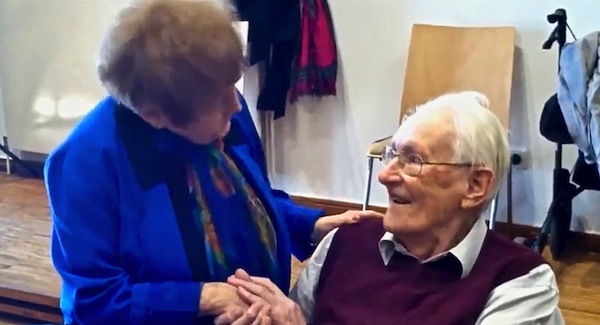
Auschwitz survivor Eva Kor forgives former SS officer Oskar Gröning. (photo from TLNT Productions)
The Accountant of Auschwitz is more than the latest documentary to successfully convey the horrors of antisemitic genocide to an audience 75 years removed from those events. It exemplifies the emergence of a coterie of young filmmakers eager to tell the stories of the Holocaust to their peers and to future generations.
For Toronto director Matthew Shoychet and producer Ricki Gurwitz, the trial of nonagenarian SS officer Oskar Gröning in his Lower Saxony hometown in 2015 provided the entry point to explore an ambitious array of historical, legal and moral concerns. The approach they chose for their debut feature documentary, however, was as important as the facts and the message.
“The way we put it together with the editors, we knew we didn’t want to play it chronologically,” the 32-year-old Shoychet explained. “The film opens with fast-paced, happy music with animation, then right into the trial, then back. You’re challenging the audience, but in a fresh, exciting way. You don’t see many Holocaust films that are told that way.”
The Accountant of Auschwitz screened at the Vancouver Jewish Film Festival last fall and is part of the Seattle Jewish Film Festival, which opens March 23.
Shoychet’s path to The Accountant of Auschwitz was unusual in that his family was not directly affected by the Holocaust. He was interested in films about the Holocaust, but he wasn’t instilled with the kind of painful personal history that was (and still is) the catalyst for many filmmakers.
In 2013, Shoychet went on the March of the Living to Poland and Israel, where he received his first close-up exposure to the Final Solution and Holocaust education. A friend he made on that trip went to work for the Neuberger Holocaust Education Centre in Toronto, and that contact led to Shoychet directing the short film Anne Frank: 70 Years Later (2015), which screened at Auschwitz-Birkenau and the University of Warsaw.
Shoychet joined that year’s March of the Living as a chaperone, where he met Bill Glied, a Serbian native who’d been deported from Hungary to Auschwitz in 1944. When Glied remarked that he was going to Germany to testify at Gröning’s trial, Shoychet and Gurwitz put a pitch together to the Government of Ontario, the Rogers Documentary Fund, CBC’s Documentary Channel and a couple of private investors.
“It came together fast,” said Shoychet, who arrived on the scene in Lüneburg, Germany, in the midst of the trial.
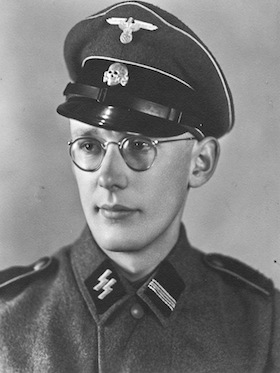
Gröning’s job, as The Accountant of Auschwitz makes clear, wasn’t loading Zyklon B into the gas chambers or machine-gunning Jews. Thanks to a change in German law, it is no longer necessary to prove that a Nazi pulled the trigger. His presence at the scene and involvement in crimes is sufficient to decide guilt.
“Oskar was on the ramp [when the trains arrived and where selections occurred], taking suitcases and calming chaos,” Shoychet said. “But it was all part of the mass murder operation.”
Among the issues that The Accountant of Auschwitz takes on is the purpose and value of trying a 94-year-old man for war crimes. The film makes a convincing argument on multiple grounds, beginning with the extent of the cover-up that took place in Germany after the war.
“Ninety-nine percent of the judges in West Germany from 1945 to 1967 were members of the Nazi party,” Shoychet noted. “Hardcore believers. Of the 800,000 SS officers, 100,000 were investigated between 1945 and today, just over 6,000 were brought to trial and 124 received life sentences.”
That paltry number minimizes the scale of the crimes and serves to bury the past. The film asserts that Gröning’s confirmation under oath of his work at Auschwitz was a public and irrefutable rebuttal to Holocaust deniers and other antisemites.
“Even if you say he’s too old – and even the survivors say they don’t care if he goes to prison – for history’s purposes, the fact that a Nazi perpetrator is sitting in a German courtroom with German judges, saying, ‘Yes, these things happened, I was there,’ that makes the trial worthwhile,” Shoychet said.
A loquacious interview subject, even on the phone from Israel, where he had presented The Accountant of Auschwitz at the Jerusalem Jewish Film Festival a few months ago and was presently working on a project of the One Family Fund (he’s a board member), Shoychet confided that the process of making his feature doc debut was one of learning as he went. For example, until he went to Germany, he had never heard of John Demjanjuk, a Ukrainian who had been convicted of crimes at Sobibor yet consistently denied any involvement. Demjanjuk’s tangled tale, which, among other things, raises the subject of putting an elderly man on trial, ended up being a 20-minute segment in the film.
The Accountant of Auschwitz is rife with revelations and messages, but one gets the sense in talking with Shoychet that his main goal was conveying his own experiences of discovery, discussion, inspiration and outrage – with respect to Nazis and survivors, as well as contemporary justice-seekers and neo-Nazis – to viewers his own age.
“There may not be an ISIS fighter who will be deterred by a 94-year-old Nazi being prosecuted,” Shoychet allowed. “It’s making the connection of the past to the present. Trying to take a younger person and put them in the shoes of the survivors.”
Shoychet’s affinity for provoking questions and debate among the audience bodes well for his next efforts behind the camera.
“I never actually thought I would make a documentary,” he said with a trace of bemusement. “My passion is scripted narratives.”
For tickets to The Accountant of Auschwitz and the film festival schedule, visit seattlejewishfilmfestival.org. For another perspective on the impact of Gröning’s trial, see jewishindependent.ca/witnessing-her-history.
Michael Fox is a writer and film critic living in San Francisco.

Architect of bestselling book
Daniel Libeskind designed the Jewish Museum in Berlin. (photo ©Hufton+Crow)
A gifted musician turned world-renowned architect, Daniel Libeskind can now add bestselling author to his list of accomplishments, with his unique book Edge of Order (Clarkson Potter, 2018), written with Tim McKeough.
Libeskind was born in Poland to Holocaust survivor parents. He spent his first 11 years in a communist, totalitarian state.
“I was born in a homeless shelter right after the war, and we were then lucky to be able to leave the first time the Iron Curtain opened,” Libeskind told the Independent. “We were able to go to my first paradise, which was Israel. Israel was only 8 years old at that time. It was amazing to go from black-and-white to full colour and the beauty of liberty.”
Of Libeskind’s father’s large family, his only surviving sister, who survived Auschwitz, was living in New York. So, after only two-and-a half years in Israel, the Libeskinds made their way to the United States.
But, before leaving Israel, Libeskind was an accordion virtuoso, at only 13 years old. Winning a competition with Itzhak Perlman, he had the opportunity to play for Isaac Stern. After hearing him, Stern suggested that Libeskind transition into playing piano, but Libeskind found the adjustment too difficult.
“Maybe that’s why I became an architect,” he said. “If I hadn’t played the accordion, I would have never been an architect, I would have become a famous pianist. I have to say that Isaac Stern, who I knew subsequently, told me I was the only person that they ever gave this [honour] to that didn’t become famous in music.”
In the United States, Libeskind’s family settled in the Bronx. When it came time for him to choose a career path, he didn’t know what to do, as he excelled in math, science and art.
“I really wasn’t sure because, in my life, I had never met an architect, an engineer, a doctor…. I had little idea of so-called professions that existed in a world somewhere beyond the Bronx,” he said. “I discovered that architecture combined all my interests – painting, drawing, mathematics, science … all the things I loved to do.”
Libeskind tried working for some well-known architects, but felt uninspired. So, for many years, he worked as a professor of architecture at various universities around the world and then as head of a school of architecture.
 “I really invented a path of architecture through my drawings,” he said. “My drawings were not figurative drawings of imaginary buildings. I drew the internal structure of architecture, what architecture is when you don’t have a client. I drew these drawings almost like musical scores.
“For many years, I did that and I was considered, like some others, as a paper architect … somebody who’s just on paper. But, then I won the competition for what later became the Jewish Museum in Berlin…. It was not originally called the Jewish Museum, it was called the Berlin Museum with a Jewish department, but I negated that, as I never believed Jews should be a department….”
It took more than 10 years to build the Jewish Museum in Berlin. It was scheduled to open the fall of 2001, but then 9-11 happened, so the opening was delayed.
Libeskind felt the need to go to New York. When construction on the World Trade Centre site was being considered, Libeskind was asked to be a judge of the entries. He could not make it to the judging on time, so instead entered his own design idea. He won the competition and became the master planner of the project.
In writing Edge of Order, Libeskind wanted to share his creative process and how he approaches architecture.
“I believe every member of the public is capable … of not only appreciating design and architecture but of participating in it, hands-on,” he said. “I always say, ‘Every human being can pick up a brush and start painting. Anybody can sit down and write a poem. Anybody can take their iPhone and make a film. Anybody can sit down and write a melody. But, when it comes to architecture, they think it’s a world of the impossible.”

In Edge of Order, Libeskind shows how architecture is just another artistic field that anyone can do, explaining how buildings are not made by some abstract hieroglyphic methodology, but are part of culture, just like music and geometry. The book encourages people to participate and engage with architecture directly where they live.
“Most people think … everything is irreversible, that you’re born with it and that’s that. People don’t realize that they can change,” said Libeskind. “They can make the world a better place, a more meaningful place.
“Architecture is such an important aspect of the world,” he continued. “We take it for granted, but it’s what the world looks like to us, the window we have to the world.”
Libeskind wrote Edge of Order with the hope of inspiring people to think about how they can do things, instead of feeling like they don’t have the credentials or know-how to design their dreams. He thinks that everyone is an architect and he wants to help people realize that they, too, can build.
“My ideal reader could be a young person who doesn’t know what they want to do, or it can be an older person who had always wished to be an architect,” said Libeskind. “My point is that everybody can be, and that everybody already knows so much more about architecture than about anything else … because we all live somewhere … even if you’re homeless.”
He said his idea is about freedom – “freedom to build, to really direct the world to a better way.”
In Edge of Order, Libeskind also talks about the importance of embracing democracy and that we need to be vigilant against forces that would impoverish the human potential.
“When I see what is happening in the world … of course, we see the evils around us and we have to fight against them … and have the sense that the world is a better place than we see on television or on the news,” he said.
Currently, Libeskind is working on dozens of museums around the world, spanning all the continents.
“I’m such a lucky architect on every continent,” he said, adding, “I’m a very fortunate person.”
Rebeca Kuropatwa is a Winnipeg freelance writer.
Raising Jews with Israel literacy
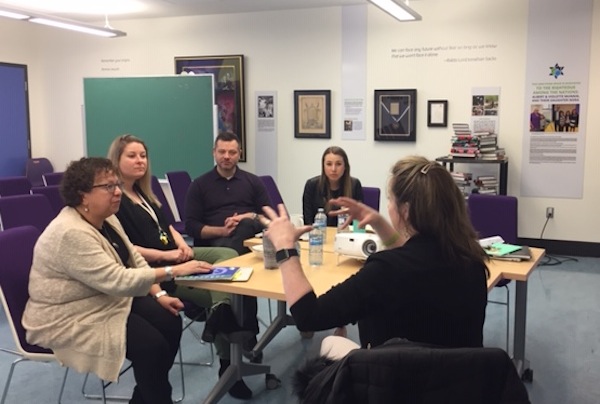
Tal Grinfas-David of the Centre for Israel Education speaks with educators at Vancouver Talmud Torah last month. (photo from VTT)
Educators at Lower Mainland Jewish day schools had the opportunity to consider the relevance of Israel literacy last month, when Tal Grinfas-David, the Centre for Israel Education’s day school specialist, was in town the week of Feb. 18 to deliver a talk on the subject and work with local teachers and administrators. Her keynote speech, titled Teaching Modern Israel – Challenges and Opportunities, was part of a community professional development day.
The CIE, which is based in Atlanta, Ga., received a grant for a three-year initiative to work with nine Jewish day schools across North America and help them enhance their Israel education efforts. Vancouver Talmud Torah and King David High School are two of the nine schools and Grinfas-David spent a day coaching educators at each of them. She will return for the next two years to reinforce the changes CIE is promoting.
The issue, she said, is that, across North America, many graduates of Jewish day school education don’t have enough Israel literacy to grapple with the world, to justify a strong connection to Israel and to inform their Jewish identity.
“The concept we’re promoting is to turn Israel education into something all teachers can support, not just Jewish studies faculty,” she told the Independent. The desire is there, she added. “The Vancouver community is very supportive and wants to see Israel education boosted and incorporated into different subject areas. But it’s going to be a long-term process.”
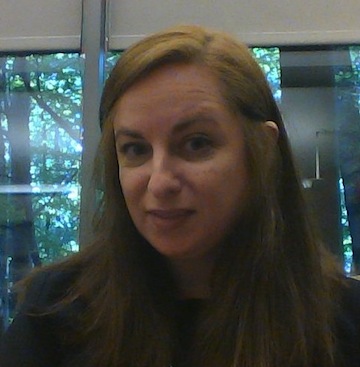
No stranger to education, Grinfas-David comes to her role with a PhD in curriculum and instruction and 25 years as an educator in Israel and the United States. Over the next three years, she will move between Jewish day schools in Denver, Los Angeles, Detroit, New Jersey and Vancouver, coaching their educational teams.
“We’re thrilled to have this grant to visit the individual sites and get to know the different schools’ cultures,” she said. “Each school is different and unique, with strengths and challenges, and this grant allows us to customize and tailor our offerings to specific communities.”
The goal of Israel literacy is to graduate Jewish students who understand the relevance of Israel in their lives and feel confident in their knowledge. They need this, she said, because understanding Judaism means understanding it’s not solely a religion.
“It’s also a belonging to a peoplehood, a nation with a Jewish homeland,” she said. “To understand modern Israel today, we have to see it as a continuation of our Jewish history.”
Grinfas-David said she would need three days to address all the ways that Israel literacy counts significantly in the life of a Jew.
“Israel impacts how Jews live in other countries, like the U.S. and Canada, where we are free. Students at our Jewish day schools have never experienced powerlessness or persecution, as they have the good fortune of being born here and now, with many freedoms. But that’s all the more reason to have them understand it was not always like this for Jews.
“Being part of a nation means there is an obligation to support your people, because of your fortune,” she continued. “There’s a calling to engage and to reflect on what Israel means for these students in their lives. Israel literacy is about having a repertoire of primary sources under your belt, so that when students leave the school setting and hear different narratives, they’ll be critical consumers of information, and they’ll know the facts they need. At CEI, our goal is to give them the ability and the opportunity to have the confidence to be critical consumers.”
Lauren Kramer, an award-winning writer and editor, lives in Richmond. To read her work online, visit laurenkramer.net.

Helping Rose’s Angels
Some of the 70 volunteers who helped out at Rose’s Angels Feb. 17. Event founder Courtney Cohen is holding the bags and Kehila Society executive director Lynne Fader is standing in the front, with the long sweater. (photo by Lianne Cohen Photography)
For most people, getting out of the house and being somewhere by 9 a.m. might be no big deal. For me, especially on a weekend morning, it’s a challenge. But, at least once a year, it’s a challenge I enjoy.
As the owner and editor of the Jewish Independent, I’ve known of Rose’s Angels since it launched six years ago, but only first participated last year in the packing of the more than 1,000 care packages for Metro Vancouverites in need. Courtney Cohen, who created the annual event in honour of her grandmothers, Rose Lewin and Babs Cohen, with longtime friend Lynne Fader, was among the 18 Jewish community members under the age of 36 who were honoured by the Jewish Independent with a JI Chai Award in December 2017 for doing good. Having made the personal connection, I headed out to Richmond Jewish Day School a couple of months after the JI Chai Celebration to help out. It was such a fun experience that I went again this year.
The atmosphere at RJDS is like “Old Home Week.” This time around, I drove there with a friend – she brought the muffins and I made the coffee. As before, I ran into several people that I don’t see often. A well-organized venture, Rose’s Angels, which is run under the auspices of the Kehila Society of Richmond, provides coffee and pastry for those who can wait till they get to the school for their fix. Lists taped onto the wall tell volunteers at which station they’ll be working.
I must have done an OK job last year because I was once again assigned to putting together glove and sock bundles, wrapped in ribbon, colour-coded to indicate whether the bundle was for men, women or children. So absorbed was I in the work and conversation that I can’t say what others were doing, but there was much bustling about and, by noon, a big truck and several cars were stuffed with boxes to be delivered.

This year, said Cohen, 70 volunteers put together 1,200 packages, filled with necessities from toiletries to books to food to warm clothing, thanks to donations of items and money. The packages were distributed by a couple dozen organizations, including Turning Point Recovery Society, Heart of Richmond AIDS Society, Light of Shabbat program, Jewish Food Bank, Richmond Food Bank, United Way, Tikva Housing, Richmond Centre for Disability, Touchstone Family Services, St. Alban’s Drop-In Centre, Richmond Mental Health Society and Richmond Food Aid.
Scheduled to happen around Valentine’s Day, this year’s Rose’s Angels took place Feb. 17.
“Watching firsthand our community come together to give back on a long weekend, with family and friends is quite amazing,” Cohen told me when I asked her what was the most fun aspect of the day for her. “Seeing people of all ages working together to help package the care packages in such an organized manner is really something to behold.”
Fader, who is co-executive director of the Kehila Society, also enjoys the communal feel, as well as the diversity of the group that gathers to help. “It is always a fun, well-spirited, well-oiled machine that puts months of hard work gathering all the items together to produce a beautiful bundle of items,” she said.
In looking to the future, Fader would like to see the annual event become “bigger, better,” serving “more recipients in our community,” referring to Richmond as a whole, not only its Jewish community. “Although Rose’s Angels is an annual project,” she added, “the Kehila Society is daily working with our community agencies and partners to assist on a daily basis.”
“I see the success of Rose’s Angels growing from year to year with the involvement of the community partners and individuals,” said Cohen. “Personally, I already see the success and fulfilment that Rose’s Angels has given our community at large. Receiving thank you phone calls, emails and messages from the recipient agencies reminds me of the impact that Rose’s Angels is making to so many individuals.”