Local CTeens join Shabbaton

A contingent from Richmond Chabad CTeen joined the 11th annual CTeen International Shabbaton that took place in New York last month. (photo from Chabad Richmond)

Teens from around the world celebrated Jewish unity, heritage and pride at the 11th annual CTeen (Chabad Teen Network) International Shabbaton. The convention, which took place Feb. 22-24, drew more than 2,600 participants. From world-class speakers to a closing ceremony with a surprise appearance by WeWork founder Adam Neumann, the Shabbaton left the teens exhilarated and ready to share their Jewish pride with others.

The weekend included a traditional Shabbat experience in the heart of Crown Heights, the Chassidic neighbourhood of Brooklyn, hands-on workshops and lectures about Judaism, and the Times Square takeover, featuring Jewish pop star Yaakov Shwekey.

photo - The 11th annual CTeen International Shabbaton took place in New York last month
(photo from Chabad Richmond)

The theme of the Shabbaton was I-Matter. The theme was meant to empower teens to recognize and use their inherent, true value, which is not dependent on achievements or status. It’s a message that has resonated with many teens, who have found their voices and personal missions through their involvement in CTeen.

“The highlight of the CTeen International Shabbaton was getting to know fellow Jewish teens from around the world, and learning about their Jewish communities and what it’s like to be a Jew in their area. It was an experience of a lifetime and I can’t wait until next year,” shared Richmond teen Sarah Aginsky, Grade 10.

“The most meaningful part of my experience at the Shabbaton would be when we spent Saturday night in Times Square,” said fellow Richmond teen Aidan Wessels, also in Grade 10. “It really makes you feel at home, being surrounded by Jewish people, and you don’t have to be ashamed or anything to be who you really are. It really touched my heart when we were introduced, via video, to Rabbi Yitzy Horowitz, who has been diagnosed with ALS and chose to live with such a disease and still try to look on the bright side of everything.”

“The CTeen International Shabbaton was so meaningful to me,” added Jordan Wessels, Grade 12. “This is because we all have such a great Jewish experience, and meeting Jewish teens from all over the world. The amount of energy of so many people like you is truly amazing.”

photo - A contingent from Richmond Chabad CTeen joined the 11th annual CTeen International Shabbaton
(photo from Chabad Richmond)

Over the weekend, 15 teen speakers shared personal stories of struggle, triumph and strength in the face of adversity. The stories ranged from students who fought for Jewish rights at school, to those who dealt with alopecia (spot baldness) and subsequent bullying, to teens who lost family members to drug addiction.

Priest-turned-rabbi Yaakov Parisi shared his inspiration for living a Jewish life with teens in an animated story during Shabbat dinner. Prof. Binyamin Abrams, who lectures on chemistry at Boston University, answered questions about Torah and science, and ecouraged teens to seek knowledge while living Jewishly.

“The secret of my life and success is keeping Shabbat,” declared Neumann during the closing. “Disconnecting from the world for 25 hours and connecting to something greater than myself makes me who I am. There has never been a more relevant time in history to celebrate being Jewish. If you come away with one thing today, I hope it’s that you disconnect to connect.”

“You may find yourself alone, the only Jew in your public school, or you may feel like a minority, but remember: there is no such thing as a small Jew,” said Rabbi Moshe Kotlarsky, chair of CTeen. “I hope you take the energy you gained this weekend and carry it into every aspect of your lives back at home.”

“Our intrinsic worth is not based on achievements,” said Chabad Richmond’s Rabbi Yechiel Baitelman. “Every individual can connect to G-d, no matter the circumstances. It is because of this connection that every individual, in any situation, can make a significant difference. That is what CTeen is all about.”

With more than 500 chapters in 23 countries, CTeen Network’s mission is to empower tomorrow’s generation of leaders through Jewish education and by providing a strong Jewish network across the globe. Teens develop awareness and confidence, while connecting with individuals who share similar experiences and beliefs. They become an integral part of a group that focuses on building core values and stresses positive character development. CTeen is open to Jewish teens regardless of affiliation.

For more information, visit chabadrichmond.com/cteen or contact Baitelman at 604-277-6427 or rabbi@chabadrichmond.com.
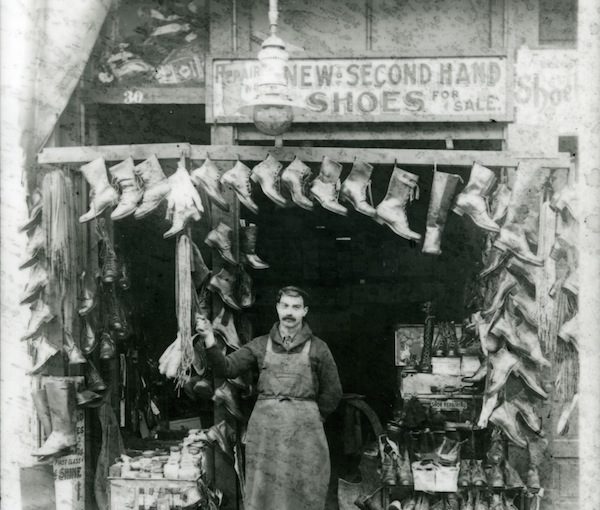

A visit to Jewish Portland

Nessim Menashe, born on the Isle of Rhodes in 1887, came to Portland in 1909. By 1914, he had established a shoe repair shop in northwest Portland, which he operated until 1921. (photo from Oregon Jewish Museum and Centre for Holocaust Education, OJM 03274)

Reading the history of the Oregon Jewish community can feel like reading B.C. Jewish history in a carnival mirror. Everything is familiar but just a little out of place.

Since the sister communities of Vancouver and Portland share both common history and common concerns about the future, there is much we can learn from each other. This is one reason why the Jewish Museum and Archives of British Columbia is excited to be hosting a trip to Portland in late May.

The three-day, two-night trip will take participants to historic sites and Jewish restaurants, and introduce them to engaging locals. Travelers will eat at Aviv, Lefty’s Café, Katchka, and Kenny & Zuke’s Deli. They will visit the Oregon Holocaust Memorial, Oregon Jewish Museum, Powell’s Bookstore, Beth Israel Historic Synagogue, Portland Art Museum, Oregon Historical Society Museum, Portland Rose Garden and Portland’s South End Jewish neighbourhood. They will also enjoy a curator-guided tour of the Oregon Jewish Museum.

As in British Columbia, it was the gold rush that attracted the first Jews to Oregon. German-born Jacob Goldsmith and Lewis May opened a general store in Portland in 1849 and helped found the Masonic Temple the following year. The community’s growth kept pace with the rapidly growing city and, in 1858, the Reform congregation Beth Israel was established. Jews had a disproportionate presence among the merchant class, with one-third of the 146 merchants on record in 1860 being Jewish. They worked in the industries of clothing, tobacco, furniture and wholesale.

Just 328 kilometres north, the Jewish population of Victoria followed a similar trajectory. The earliest arrivals stepped off boats arriving from San Francisco in 1858. They, too, established careers primarily as merchants and, in 1863, opened Congregation Emanu-El, which continues to operate today. In the 1870s, Jewish merchants began placing their bets on the future of a small encampment on the Fraser River, going by the name of Granville. These bets paid off when Granville became Vancouver in 1886, the terminus of the intercontinental railway.

The Jewish populations of Portland and Vancouver have grown dramatically over the decades since, with new arrivals from all corners of the world making their contributions. In both locations, community organizations blossomed early on, providing essential social and cultural services. Today, the Jewish population of Portland, at 50,000, is roughly double that of Metro Vancouver, thanks largely to a wave of young American Jews who were drawn to Portland in the wake of the 2008 market crash.

To learn more about the Oregon Jewish community and to experience it firsthand, join the JMABC-led trip, which departs by chartered bus on Monday, May 27, and returns Wednesday, May 29. For more information and registration, visit jewishmuseum.ca/program/portland-jewish-history-tour. The deadline to register is March 31.

Helsinki’s many places to see

Helsinki Synagogue, in the heart of the city, was built in 1906. (photo by Dave Gordon)

Helsinki’s a city where you can experience high adventure, or simply chill, by taking in the sites on an easygoing walking tour. Elements of bustling metropolis meld with the laxity of a rural town, depending on which turn you take.

Home to some 1,400 Jews of Finland’s approximately 1,800-strong Jewish community, it is not a particularly large city, enabling a tourist to take in much of the core in a very short period of time. And it’s a treat for the eyes – modernity meets medieval, where whole city blocks are infused with colonial Swedish or Russian architecture, rich with history and stunning detail.

photo - Preserves and juices in the market in Helsinki
Preserves and juices in the market in Helsinki. (photo by Dave Gordon)

So, take it slowly. Walk along Norra Esplanade from the waterfront for a couple of kilometres and enjoy a wide array of boutique shops, dining options, cafés and the general feel of the city.

Stroll along Market Square, next to city hall, to get snapshot of local crafts and fare. It’s brimming with booths and kiosks – merchants peddling their wares. Drink fresh squeezed cloudberry or sea buckthorn juice (high in protein, vitamins C and E, and organic acids). Bring home an array of tchotchkes, like handmade knitted slippers, hats and sweaters. Nosh on reindeer jerky. Check out the bookmarks made with reindeer hide, and keychains made with reindeer antlers.

For investors and business, Helsinki is the latest start-up hub.

The city leapt from 43rd place in 2017 to 28th in 2018 in high-tech start-up successes among European and Scandinavian nations. The mega-conference for tech start-ups, Slush, takes place here, gathering 20,000 people. And, one of Europe’s biggest start-up campuses is about to be built, at 70,000 square metres.

Among the disruptors attracting global attention are Leadfeeder (analytics), ContractZen (one-click-cloud contracts), Smarp (shareable content hub), Utopia Analytics (artificial-intelligence monitoring of online discussion) and Hoxhunt (corporate security).

***

Finland is home to three Jewish institutions. Helsinki Synagogue, in the heart of the city, was built in 1906, and now serves about 1,200 congregants. Turku Synagogue was built in Turku in 1912, and has a few hundred members between the city and its surrounding areas. Both shuls are Ashkenazi Orthodox.

Helsinki Synagogue, with its bronze-coloured Byzantine-style dome, also houses a mikvah, a Talmud Torah and a playground. The congregation uses, not surprisingly, bilingual prayer books, in Hebrew and Finnish.

Meanwhile, Chabad Lubavitch of Finland is building a centre next to the city’s Presidential Palace, where they will offer classes, a daycare, a summer day camp and other services. Kosher meals are available through a handful of stores and organizations. Fazer, a local company that makes chocolate and cheeses, doesn’t have a hechsher (kosher certification), but is accepted by the community’s rabbinical authorities as kosher to consume.

The first Jew to officially plant roots in the country is recorded as Jacob Weikman, in 1782, despite the government ban on Jewish residence at that time. By the 1830s, there were enough Jewish soldiers to fill a makeshift chapel at the military base Suomenlinna Fortress, reports Hadassah magazine.

Many of today’s Finnish Jews are believed to be descendents of Russian infantrymen stationed there about 150 years ago.

During the Second World War, it was a complicated relationship for the Jews, many of whom fought with the Finnish army against the Soviets and, later, against the Nazis.

Finland openly defied the Nazi order to deport its 2,300 Jews, according to Yad Vashem. There was, however, a small exception: officials in 1942 allowed the Nazis to apprehend eight Jewish refugees. In 2000, a stone monument to memorialize the seven who died was erected by the government, at the park on Tähtitorninmäki (Observatory Hill).

But new evidence suggests that at least six soldiers of Finland’s army partook in the Final Solution. In January 2018, it was reported by JTA that an investigation had been launched by the Finnish government after the Finnish Society of Church History apparently found written testimony from one of the soldiers of his complicity. More than a year later, it seems that no results from the probe have been announced.

***

photo - Helsinki’s train station
Helsinki’s train station. (photo by Dave Gordon)

More history and culture can be found at the National Museum of Finland. Until Sept. 1, the temporary exhibition Inherit the Dust – Photographs by Nick Brandt is on display, offering an idea of the damage human beings are doing to the environment. Permanent exhibitions at the museum include Prehistory, a multisensory experience that allows visitors to “[t]ouch a genuine reindeer axe, bring a cave painting to life and see a mammoth move. The digital exhibits bring history to the present day.”

The museum of contemporary art, Kiasma, at just 20 years old, has some 8,000 works in its collection, and about 100 are added annually. Here, you can get a great feel for Finnish architecture from the building itself and, with renovations starting this year, the fence blocking off the area under repair has been covered with poster art.

***

There are many other places to visit, of course.

Allas Sea Pool, next to Market Square, is where locals go after work to exercise or relax. The Olympic-size outdoor pool is heated, having a calming effect on the body, while visually, the mist hovers at eye level as it collides with the cool air. Meanwhile, the “sea water pool” – filtered and treated with UV rays – is water straight from the ocean, chilly and punchy. Think of it like the famed “polar dive.”

Want to tap the inner child in you? The grown-up playground (the name of which is too difficult to spell, let alone pronounce) is a “sports acrobatics” centre with trampolines, bouncy airtrack, foam pits, sprung floor and more.

Arkadia International bookshop is a cultural icon in the city, featuring nightly concerts of every kind of music, as well as a venue simply to enjoy a cuppa joe, play a board game or shmooze with friends.

Takeoff Simulation is where you can “fly” a commercial airliner in a flight simulator the size of a real Airbus A320. It includes high-definition visual screens, real sounds and a highly detailed cockpit.

Dave Gordon is a Toronto-based freelance writer whose work has appeared in more than 100 publications around the world.

Jewelry that’s easier to wear

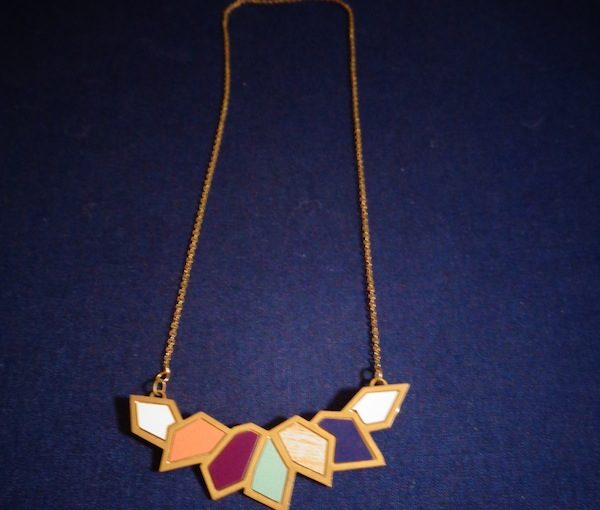
This necklace uses snap fasteners instead of clasps [see below]. (photo from Deborah Rubin Fields)

Diane von Furstenberg is attributed with saying: “Jewelry is like the perfect spice – it always complements what’s already there.” Some of us would say that’s all well and good, until you have to ask for help in closing a necklace.

Maybe you can release the spring, which opens the lobster clasp’s arm, but you can’t hold it long enough to actually close the clasp. Or perhaps your hands just can’t negotiate the T into a toggle clasp’s circle. Whatever your exact manoeuvrability problem, one thing is sure, putting on jewelry can be a frustrating experience. And the frustration seems to increase with age.

In The Journals of Gerontology, academics Eli Carmeli, associate professor at Haifa University, the late Hagar Patish and Prof. Raymond Coleman of the Technion state, “Hand function decreases with age in both men and women, especially after the age of 65 years. Deterioration in hand function … is, to a large degree, secondary to age-related degenerative changes in the musculoskeletal, vascular and nervous systems.

photo - The necklace's snap fasteners
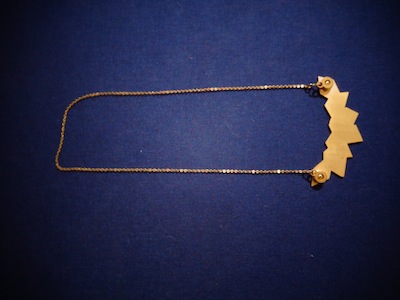
The necklace above’s snap fasteners. (photo from Deborah Rubin Fields)

“Prehension is defined as the act of seizing or grasping. Aging hands and fingers are especially prone to osteoarthritis and rheumatoid arthritis. It is clear that common tasks involving precision dexterity, two-hand coordination, such as are needed to thread needles, open buttons on clothing or fine-grip tasks, as in holding a pen or cutlery, become increasingly difficult with aging. This is also true with regard to simple handgrip tasks requiring strength, such as opening bottles. The difficulty of performing such tasks may be in part due to declining vision.”

So what are the different kinds of jewelry clasps or closures and how easy are they to use? Today, eight clasps are usually added to necklaces.

The lobster clasp and spring ring clasp have a spring-loaded mechanism. Both operate by fitting one end into the opened spring side, then releasing the spring mechanism to shut.

The fishhook clasp is so named because part of the closure resembles the hook used in fishing: one end is a metal hook, while the other is an oval-shaped case. The hook slides into and locks inside the case.

Somewhat similar in shape to the fishhook, the S hook works by sliding the S-shaped hook onto a ring at the other end.

In a toggle bar clasp, one end is a long bar or T shape and the other is an open shape, usually a circle. The bar slips through the centre of the shape and locks in place.

The barrel clasp is so named because, when closed, it looks like a barrel. This clasp consists of two metal pieces, one on each end of the necklace, which close by screwing together. Likewise, in the slide-lock clasp, one tube slides inside the other and locks in place.

Finally, both ends of a magnet clasp contain magnets, which attract each another and snap together, locking the piece of jewelry in place. While not always particularly attractive, the newer magnet closures can actually look quite pleasing.

Clips designed to be easy to put on. (photo from Deborah Rubin Fields)

While all these clasps are relatively secure, if you have dexterity issues, six of the eight might be difficult to manipulate. So, if you’d like to continue wearing certain pieces of jewelry, to what clasps should you switch? For people with handgrip problems, two necklace closures are usually recommended: the slide-lock and the magnet clasps.

Israeli Keren Doron, who has designed and produced gold necklaces, however, is skeptical about a magnet clasp staying closed when the necklace is really heavy. She also warns that it is possible to damage a necklace when switching its existing clasp. There are many ways to do so, although it depends on the different kinds of jewelry. For example, Doron said not all necklaces with stones can withstand the heat of burner re-soldering.

Occupational therapists at Jerusalem’s Shaare Tzedek Hospital suggest that people with dexterity problems switch to necklaces that are long enough to simply slip over the head.

If you enjoy wearing costume jewelry, a new Israeli company offers another solution. Snaps (snaps.co.il) makes attractive necklaces and earrings that completely do away with clasps. Instead, designers Lilach Bar Noy and Inbar Ariav glue snap fasteners to the back of their pendants (using either a single or double set of snaps) and to each end of the necklace chain. Without having to apply much pressure, the male and female parts of the snap attach.

Wearing pierced earrings may also be a problem for people with hand issues. One solution is to wear omega-back earrings with a hinged back that simply flips closed; there are no tiny posts or backs to manipulate.

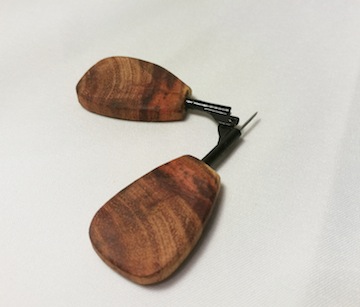
Neta ben Bassatt’s fashion jewelry addresses the problem of closures in a different manner. As a student at Bezalel Academy of Arts and Design, she won a prize for her coat pins designed especially for people who have visual impairments. Her wood and brass pins may be used with heavier clothes, such as cotton, wool, linen, etc. Two of her pins have a kind of clasp that can fasten best to a shirt collar or the lapel of a suit, where it is easier to get to the other side of the fabric. Her other designs feature a long, open needle pin, which can be attached anywhere on the fabric. Importantly, the wearer does not need to touch the pin itself, thus eliminating the chance of sticking oneself.

Is jewelry important? The answer depends on whom you ask. One thing is clear: jewelry has been around a long time. As early as Chapter 24 of the Book of Genesis, Abraham’s chief servant (Eliezer) is giving jewelry to Rebecca’s family. And, with people living longer, more and more adaptability and accessibility issues will arise, so we are likely to be talking about jewelry for a long time to come.

Deborah Rubin Fields is an Israel-based features writer. She is also the author of Take a Peek Inside: A Child’s Guide to Radiology Exams, published in English, Hebrew and Arabic.

Quality, affordability

Gaby Aghion started the fashion line Chloé in 1952. (photo from Chloé Archive)

Antisemitism was increasing in Egypt in 1945. Among the 80,000 Jews forced to leave their homes was Gabrielle (Gaby) Hanoka. Her birth name may not be recognizable to most, but the fashion house she created – Chloé – unquestionably is.

The youngest of seven children, born in 1921 in Alexandria, Egypt, Hanoka derived her distinct combination of business and creative style from her parents. Her father was an affluent cigarette manufacturer and her mother’s passion for fashion resulted in demanding copies sewn of all the latest Parisian couture. Hanoka was given a French education and, with that, embraced an ample affection for everything French.

Fittingly, Hanoka, together with Raymond Aghion, her elementary school sweetheart and subsequent husband, moved to Paris, making it home, with their son Philippe, until her passing at 93 in 2014. Befriending the upper stratum of European artists, such as Picasso and French poet Paul Éluard, earned them popularity within the art scene. Coming from a prosperous family enabled Aghion the luxury of opening a modern art gallery. The couple evolved into avid art collectors over the years.

Living a comfortable lifestyle was not enough for Gabrielle Aghion. In 1952, she resolved to flourish. “I’ve got to work … it’s not enough to eat lunch,” she is said to have informed her husband. Fashion was her choice.

She named Chloé after a friend who believed she lacked allure. Turning an extra room in her apartment into an atelier, she created six dresses, which set her success in motion. The styles corresponded with her socialist and free-spirited values, embodying youth and femininity using the finest fabrics. She wanted her designs to be accessible to regular people, without compromising on quality, coining the term prêt-à-porter, ready-to-wear.

Wanting to focus strictly on design, she partnered with Jacques Lenoir, who steered Chloé into a label. From 1956, Chloé’s fashion collection was shown twice a year at the grand Café de Flor on the Boulevard Saint Germain. These events became a fashion highlight for Parisian women. Aghion not only demonstrated an eye for fashion, but she also had a great sense for talent. In 1966, she hired the aspiring Karl Lagerfeld, who remained head designer until the mid-1980s. (Lagerfeld passed away just last month, at age 85.)

Chloé became the choice of some of the world’s most fashionable and beautiful women – Brigitte Bardot, Grace Kelly and Jackie Kennedy, to name a few. The first flagship boutique opened in 1971, followed by hundreds more worldwide. In 1975, Chloé perfume was launched, and also became an ongoing success.

In 1985, Aghion sold her company to the Richemont group. She remained active throughout the years, never missing a fashion show. The spirited Aghion continued to express her opinions before each collection and head designers took her insights into consideration.

A year before her passing, Aghion was awarded the highest merit in France, the Legion of Honour, for her contribution to the country’s fashion industry. Recollecting her starting point, she said, “The world was opening up before my eyes and I believed I could do anything. I felt I had wings.”

Her flight continues to shape the next generations of fashion enthusiasts.

Ariella Stein is a mother, wife and fashion maven. A Vancouverite, she has lived in both Turkey and Israel for the past 25 years.

Revisit the Jewish fabric arts

When I was very young, I learned to embroider. My mother was a fabulous seamstress, but sewing was not my thing. Later, around middle school, an aunt taught me how to knit. I picked up crocheting but never really liked it or excelled at it. However, I took knitting to all levels, including a dress for myself, and, later, I returned to various kinds of needlepoint, coming to love them.

On my and my husband’s bedroom wall, there are framed embroidery pieces, each with its history, which I collected in the 1970s. I would have liked to have in my collection some work from Jewish women, who had done embroidery before immigrating to Israel from various countries, but they had stopped doing such work, and all the pieces I have were made by Arab women, who continued the craft.

It was with this background that I thoroughly enjoyed perusing the new-to-me pages of Jewish Threads: A Hands-on Guide to Stitching Spiritual Intention into Jewish Fabric Crafts by Diana Drew with Robert Grayson (Jewish Lights Publishing, 2011). The author explains her journey from sewing to fabric crafts, from editing for the division of Random House that published books on handicrafts to being awakened spiritually while editing for spiritual book publisher SkyLight Paths.

In Jewish Threads, there are 30 projects and 30 interesting stories (written by the author’s husband) about each artist and their project. The contributors come from the United States – Alabama, California, Kentucky, Massachusetts, Minnesota, New Jersey, New York, Pennsylvania, Vermont, Washington – and Israel.

The book has four parts: at home, in the synagogue, celebrating holidays and through the Jewish lifecycle. For the home, there are wall hangings, a needlepoint and a purse. For the synagogue, there is a runner, a Shulchan Aruch cover, placekeepers and Torah mantles. The holiday section includes challah covers, a quilt, a vest, puppets, a matzah cover, an afikomen holder and a seder plate. And, lastly, the Jewish lifecycle section includes quilts, a challah cover, a tallit and tallit bags. Another five “inspirations” include several chuppahs, a tallit bag, a wall hanging and a bimah cloth.

The techniques include quilting, appliqué, embroidery, needlepoint, cross-stitch, crochet, knitting, felting and needle felting.

Although decidedly not for beginners, each project lists details for getting started, what you’ll need and step-by-step instructions, sketches and how to finish. The “final threads” chapter offers how-to’s for quilt-making, lettering, a stitch guide, resources and projects for sewing circles, parents and children and holidays.

Sybil Kaplan is a journalist, lecturer, book reviewer and food writer in Jerusalem. She created and leads the weekly English-language Shuk Walks in Machane Yehuda, she has compiled and edited nine kosher cookbooks, and is the author of Witness to History: Ten Years as a Woman Journalist in Israel.

Personal robots help at home

Can’t be home for bedtime? Temi lets you read a story to your child remotely. (photo from Temi)

In the fourth season of the sitcom The Big Bang Theory, theoretical physicist and all-around nerd Sheldon decides that he no longer wants to physically interact with his friends and colleagues. He cobbles together a telepresence robot with his face on its screen, which navigates around his home and office and turns toward whomever Sheldon is speaking. This fictionalized glimpse of a future filled with personal robots is simultaneously hilarious and creepy.

“We took the creepy factor into account when we designed our robot,” said Danny Isserles, chief executive officer of the U.S. division of Temi, an Israeli robotics firm that is building an almost functionally identical (but a whole lot spiffier) version of Sheldon’s telepresence unit.

Temi has a sleek, semi-rounded body – it looks a bit like a high-tech vacuum cleaner with a subtle human presence – and stands three-feet tall on its four wheels. Inside Temi are two main computers. The first comprises Temi’s “face,” made from a customized version of an Android tablet.

“It’s nothing special,” Isserles conceded in an anything but robotic conversation with Israel21c. As with most Android-based mobile devices today, the Temi tablet can display video, play music or call up the internet by voice command.

“We’ve done a demo of Temi controlling a smart home. It can turn the lights on and off,” Isserles said. Any Android developer could add other apps; for example, to make Temi control a smart home thermostat.

Temi’s “body” has a full Linux-based computer inside plus an array of sensors – LiDAR, 2D and 3D cameras, encoders measuring the wheel’s movements – that help Temi navigate smoothly.

“In order to get from one side of the room to the other, we humans instinctively choose the easiest path to follow with no effort, passing over small obstacles and around bigger ones,” explained cofounder and Temi Israel CEO Yossi Wolf. But this is a complex task for robots and the shortest way is not necessarily the fastest.

“For example, when you move from the kitchen to the living room, you can pass through sofas and slalom through all the kitchen chairs or you can bypass them the long way, which will be the fast and natural way.”

Temi’s sensors ensure it won’t fall down the stairs or run over your small dog. “We had a live case study in our office – my dog,” said Isserles. “I said, the first time this robot touches my dog, the robot is going out the window.”

Temi’s designers “built an algorithm to connect all the sensors together and enable Temi to construct a path through a space,” said Isserles. “Because of the navigation, we have a platform with abilities no one else has yet achieved.”

That may not last for long. Amazon reportedly is developing a robot known as Vesta, which follows users around like a mobile Alexa. Other home robots in the works include LG’s Hub bot, Mayfield Robotics’ Kuri, and Jibo out of technology powerhouse MIT.

Isserles said competition is good “because this will build the market, take the robot out of the niche and bring it into the mainstream.”

Temi formally launched sales at CES 2019 in January and expects first deliveries to be made this month. The robot can be ordered now on Temi’s website and through select retail outlets in the United States.

A half-dozen immediate applications for Temi come to mind.

In the office, a staffer on the controlling side of the robot can make like Sheldon and attend a business meeting without actually being there. A manager can stroll around chatting with colleagues and, unlike video conferencing, there’s no need to interrupt anyone’s workday to assemble in a meeting room.

Temi can serve as the host at a restaurant (“Hello, I’m Temi. Welcome to Applebees”), a hotel concierge, a sales clerk, an airport check-in agent, a museum docent, a remote yoga teacher, a playmate for the kids (imagine hide-and-seek with a robot), an aid for home-bound seniors and a remote-care physician. But the main idea is to provide a telepresence in the home.

“It’s not the same as being there, of course, but think of a deployed soldier in Afghanistan who can hop into a robot and hang out with his family for a couple of hours.”

“If you’re stuck at work, you can hop into your Temi, press ‘Bobby’s room,’ and Temi will go there so you can read Bobby a bedtime story,” Isserles said. “It’s not the same as being there, of course, but think of a deployed soldier in Afghanistan who can hop into a robot and hang out with his family for a couple of hours.”

But why do you need a robot for that? Couldn’t you just Skype from the computer or an iPad?

“This is a much better experience,” contended Isserles. “It’s more like hanging out. If I’m on a Skype call with my nephews, they say hi, then run away and my sister has to chase them to come back. The robot can hang out, explore, wander around, talk to different people.”

You can also ask Temi to initiate the video by tapping Temi on its head or saying, “Hey, Temi, call Mom.” Temi will lock on your position, plan an efficient path to get to you wherever you are in the house, initiate the call and then follow you around while you talk.

Isserles said Temi’s aim is to appeal to busy families where the parents work long hours, travel a lot and love technology.

It still sounds a bit creepy – would you want your robot father sitting at the dinner table with you, turning its Android head from side to side to keep the conversation flowing?

“My experience is that everyone who came in thinking it’s creepy, after a minute or two of demonstrating how it works, they ask, ‘How much is it?’” said Isserles.

The price is cheap by robot standards – just $1,500 US. That’s partly because Temi was not built, like most other robots, for defence purposes, where a single robot could run up to $200,000.

That said, Temi got its start from the defence industry. CEO Wolf previously cofounded Roboteam to build tactical robotic systems for reconnaissance, intelligence gathering, search-and-rescue and delivering payloads to soldiers in the field. Temi was originally part of Roboteam, but the companies decided to split, with Wolf going full-time to Temi and cofounder Elad Levy remaining at the helm of Roboteam.

Temi employs 65 people, most in the Tel Aviv research-and-development centre plus 10 people in New York and 20 in China, where the robots are manufactured. The company has raised $82 million, including $21 million in December 2018 from former Alibaba chief technology officer John Wu, Italy’s Generali Investments and Hong Kong-based internet-of-things company Ogawa. Temi and Ogawa have established a strategic partnership with an emphasis on selling in China.

“We could build a mechanical arm with an accurate and gentle grip, no problem, but then it would be a $20,000 product, not a $1,500 one.”

While Temi is being initially positioned as a roaming telepresence device, the robot can work without someone on the other side. Ask it to play a song and Temi will call it up using its built-in wi-fi connection, then blast out the tunes via 20-watt Harman Kardon speakers. Temi’s 10-inch touchscreen is great for playing YouTube videos, too.

Temi gets eight hours of continuous use per charge and has a docking station for repowering.

Temi has one more unique selling point: a tray. Tell Temi to fetch some tea from the kitchen and the robot will return with the chai, although a human has to load and unload the teacups.

“We could build a mechanical arm with an accurate and gentle grip, no problem,” said Isserles, “but then it would be a $20,000 product, not a $1,500 one.”

The tea tray turns out to have been the genesis for what would evolve into Temi. Wolf was visiting his grandmother and she offered him some tea.

“But her hands were shaking and he was worried,” Isserles recalled. Wolf asked her if she’d like a walking cane. “She said, ‘No, I’m not old.’ So he asked her, ‘Would you like a robot?’ That, she would go for. She wanted something cool.”

Every Jewish start-up “starts from the grandmother,” Isserles quipped. Even those building personal robots.

For more information, visit robotemi.com.

Israel21c is a nonprofit educational foundation with a mission to focus media and public attention on the 21st-century Israel that exists beyond the conflict. For more, or to donate, visit israel21c.org.

Samaritan neighbourhood found

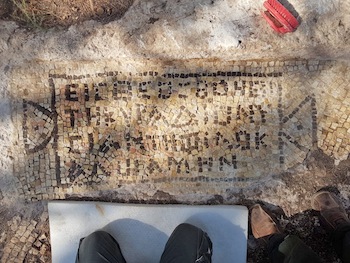
An inscription (top of above photo and below), written in Greek, was translated by Prof. Leah Di Segni of the Hebrew University of Jerusalem. Dated to the early fifth century CE, it says, “Only God helps the beautiful property of Master Adios, amen.” (photos from IAA courtesy Ashernet)

photo - Close-up of the inscription found
Close-up of the inscription found. (photo from IAA courtesy Ashernet)

New neighbourhood construction in the southern part of the Sharon Plain of central Israel has revealed an estate, some 1,600 years old, which was determined by Israel Antiquities Authority (IAA) archaeologists to have been the property of a wealthy Samaritan. The discovery reinforced evidence that, at one time, the area was extensively populated by the Samaritans, who claim they are Israelite descendants of the northern Israelite tribes of Ephraim and Manasseh. An inscription, written in Greek, was translated by Prof. Leah Di Segni of the Hebrew University of Jerusalem. Dated to the early fifth century CE, it says, “Only God helps the beautiful property of Master Adios, amen.” According to Dr. Hagit Torge, director of the excavation on behalf of the IAA, “The inscription was discovered in an impressive winepress [near the top of Tel Zur Natan, where remains of a Samaritan synagogue were found] that was apparently part of the agricultural estate of a wealthy individual named Adios. This is only the second such winepress discovered in Israel with a blessing inscription associated with the Samaritans. The first winepress was discovered a few years ago in Apollonia near Herzliya.” The Samaritans were originally brought to the region as part of Assyrian policy, and first settled on and around Mount Gerizim.

פרשת וואווי

מאנג וואנז’ו

סין יוצאת בחריפות נגד ארה”ב וקנדה לאור החלטת משרד המשפטים הקנדי, לפתוח בהליכי הסגרתה של סמנכ”ל הכספים וסגן יו”ר מועצת המנהלים של ענקית התקשורת הסינית וואווי, מאנג וואנז’ו, לארה”ב. הסינים טוענים כי ארה”ב פועלת נגד וואנז’ו וואווי משיקולים פוליטיים כיוון שהנשיא, דונלד טראמפ, ציין במספר הזדמנויות כי אם יראה שיש התקדמות במשא ומתן בין ארה”ב לסין להשגת הסכם סחר חדש, הוא יפעל לשחרורה של וואנז’ו. במקביל יביא לביטול האשמות נגדה ונגד החברה. בנוסף הסינים כועסים על ראש ממשלת קנדה, ג’סטין טרודו, שלדבריהם יש לו כנראה סטנדרטים כפולים. זאת כיוון שלטענתם בסוגיית וואנז’ו הוא טוען כי אין מקום להתערבות הדרג הפוליטי, ורק לבית המשפט יש סמכות לפעול בנושא. בעוד שבפרשת העמדה לדין של “מנהליה המושחתים” של ענקית הקנדית אס.אן.סי לאוולין, הוא ניסה להתערב משיקולים פוליטיים, ולמנוע את המשך הליך המשפטי נגד החברה. לפיכך כפי שפורסם לאחרונה ראש האופוזיציה, אנדרו שייר, דורש מיידית את פיטורי טרודו. כצפוי רבים מתנגדים לדעתו בנושא.

בסוף חודש ינואר ארה”ב הגישה בקשה רשמית לקנדה להסגרתה של וואנז’ו. ובית המשפט העליון של מחוז בריטיש קולומביה יקיים במאי דיון ראשון בנושא, אחד מתוך רבים שצפויים עוד לפנינו. כידוע הליך ההסגרה בין שתי המדינות יכול להימשך שנים רבות. וואנז’ו שוקלת לנצל את הזמן הרחב שיעמוד לרשותה כאן בוונקובר, ואף ללמוד באוניברסיטה של בריטיש קולומביה במסלול לתואר שני.

וואנז’ו נעצרה בשדה התעופה הבינלאומי של ונקובר בסוף חודש דצמבר. זאת בזמן שעצרה לחניית ביניים בטיסה שבין קונג קונג למקסיקו. שלטונות האכיפה של ארה”ב שקיבלו מידע על דבר הנחיתה של וואנז’ו בוונקובר, ביקשו ממשטרת הגבולות הקנדית לעצרה לאלתר. לאחר כשבועיים במעצר היא שוחררה בתנאים מגבילים על ידי בית המשפט העליון של המחוז. כתב האישום הפלילי של משרד המשפטים האמריקני כנגד וואווי, וואנז’ו ובכירים נוספים בחברה כולל עשרים ושלוש עבירות. ובהן: הונאת בנקים להסוות קשרים עם מסחריים עם איראן תוך כדי הפרת האמברגו עליה, גניבת סודות מסחריים וטכנולוגיות, זיופים, הלבנת הון, ניסיונות לשיבוש חקירה והשמדת ראיות.

בינתיים וואנז’ו היזדרזה להגיש תביעה נגד את קנדה על המעצר שלה לבקשת ארה”ב. וואנז’ו (בתו של מייסד וואווי) הגישה לפני מספר ימים תביעה אזרחית בבית המשפט העליון של מחוז קולומביה הבריטית נגד ממשלת קנדה, רשות

משטרת הגבולות הקנדית והמשטרה הפדרלית (האר.סי.אם.פי) – בשל טענתה “להפרות חמורות” של זכויות האזרח שלה. היא תובעת פיצויים כיוון “שהמעצר שלה שאינו חוקי הוא שרירותי, והחוקרים שלה לא עידכנו אותה בכוונה על הסיבה האמיתית של מעצרה, על זכותה לשמור על השתיקה ועל זכותה לקבל ייעוץ משפטי בהקדם”. עוד נכתב בתביעה של סמנכ”ל הכספים של וואווי, כי במקום לעצור אותה באופן מיידי, היא נחקרה שעות על ידי רשות הגבולות, תחת מסווה של בדיקת מכס שגרתית בשדה התעופה. וואנז’ו מציינת עוד כי שוטרי משטרת הגבולות החרימו את המחשב האישי שלה ואת הטלפון הסלולרי שלה, השיגו את הססיסמאות שלהם ובניגוד לחוק בדקו את התכנים שלהם.

יצויין כי וואווי הגישה בשבוע שעבר תביעה נגד השלטונות האמריקניים, בעקבות האיסור של הממשל על פקידיו ועל חברות אמריקניות להשתמש במכשירי החברה. התביעה תטען כי הממשל הפדרלי חרג מסמכותו ועליו לחשוף לבית המשפט, מדוע בישנתיים האחרונות הוא אסר על הפקידים והחברות האמריקניות להשתמש בציוד של וואווי.

Mizrahi to perform here

Isaac Mizrahi’s cabaret show, which is at the Rio Theatre on March 18, is a preview of his new book I.M.: A Memoir. (photo by Britt Kubat)

Celebrated fashion icon Isaac Mizrahi is bringing his multiple talents to Vancouver. On March 18 at the Rio Theatre, he will be performing his cabaret show I & Me, accompanied by the Ben Waltzer Jazz Quartet.

Mizrahi’s North American tour is timed with the release of his new book, I.M.: A Memoir (Flatiron Books). The show, which includes poignant stories and fun songs, covers anecdotes about his life, his mother, what it was like growing up in an Orthodox Jewish Syrian community in Brooklyn, the challenge of being gay, and rising to the top of the fashion world. “It’s done with a lot of humour,” he told the Independent. “I hope it’s compelling, amusing and resonates with the audience.”

The songs, he explained, go along with the story. “I chose songs that can dramatize the story,” said Mizrahi, who has performed with Waltzer in clubs for more than 20 years. “My opening number is ‘I feel Pretty’ and, believe it or not, I am not singing it with irony.”

Mizrahi also delivers his own rendition of Cole Porter’s “You’re the Top.”

The first time Mizrahi showed off his talents in front of a crowd was in elementary school, when he started doing impressions for his peers.

“When I was about 7 years old, I went to see Funny Girl with my family and was so inspired by [Barbra] Streisand I started imitating her. Then I impersonated Judy Garland and Liza Minnelli,” recalled Mizrahi, who attended yeshivah from kindergarten through eighth grade. “I would do these female impressions inappropriately in places like the lobby of shul!”

But it was designing clothes for the rich and famous that made Mizrahi a household name. When he entered High School of Performing Arts in New York City, he had planned on going into show business. However, by the time he was a junior, he switched gears and found a better way to express himself. “I realized all my friends were gorgeous, thin, blond and movie-star types, and I was fat and I didn’t have that self-image,” he said. “So, I re-thought my career and decided to work in the fashion industry. It enriched me so much, and gave my life a different kind of story and platform.”

His interest in the world of fashion didn’t come from out of the blue. His father was a children’s clothing manufacturer and Mizrahi, who was obsessed with reading fashion magazines, had sewing machines at his disposal. “I started to make puppets and sew clothes for them,” said Mizrahi, who added that he liked doodling sketches of outfits in the margins of his Hebrew books. “By the time I was 10, I had this big puppet theatre in the garage and I made their clothes. My father had sewing machines everywhere and he taught me how to sew. By the time I was 13, I was a really good sewer and I started making clothes for my mom and myself. It became this fun, compelling thing. My mom, who is now 91 years old, was really into fashion and encouraged my interest.”

After high school, Mizrahi attended Parson’s School of Design in New York City. His first fashion job was working at Perry Ellis, then with designer Jeffrey Banks, and then Calvin Klein. Along the way, he honed his skills, in such areas as selecting fabric, sketching clothes and participating in design meetings. By the time he was 26, he went out on his own.

In 1989, he presented his first show, which catapulted him into fame and his couture soon dominated the fashion mags. He dressed celebs for red carpets, and his clients included Michelle Obama, Meryl Streep, Hillary Clinton and Oprah Winfrey.

“Designing for Michelle Obama was such a thrill,” he said. “And Barbra Streisand was so lovely. I tailored a suit for her and Women’s Wear Daily erroneously attributed it to Donna Karan. Barbra wrote me a note saying, ‘We know who really made this suit!’”

But Mizrahi’s successful journey has had its lows. While he made countless guest appearances on television and in movies, earned an Emmy nomination for best costume design for his work in Liza Minnelli Live and was the subject of the acclaimed documentary film Unzipped, which chronicled his 1994 collection, his company was losing money and closed after his fall 1998 collection.

He returned to fashion in 2002, teaming up with Target and becoming one of the first high-end designers to create affordable clothes for the general public. In 2009, he launched his lifestyle brand Isaac Mizrahi Live!, sold exclusively on QVC. In 2011, he sold his trademark to Xcel Brands. Among his many credits, he hosted his own television talk show, The Isaac Mizrahi Show, for seven years; he wrote two books; and he narrated his production of the children’s classic Peter and the Wolf at the Guggenheim Museum. In 2016, he had an exhibition of his designs at the Jewish Museum in New York. Currently, he sells on QVC and via Lord & Taylor, and serves as a judge on Project Runway: All Stars.

Throughout all of his fashion endeavours, he has found time to be on stage. Mizrahi, who is a charming storyteller, said he loves doing live cabaret. “I hope the audience will really enjoy themselves when they see my show, and laugh and enjoy the music,” he said. “I want them to get the idea who I am and how I got there – and I want them to know the story of my life.”

When asked what he’d like his legacy to be, the designer, entertainer and showman referred to his Judaism. “My name is Isaac, which means laughter in Hebrew,” said Mizrahi, who considers himself a cultural Jew. “I think, most importantly, I want my legacy to be about humour.”

Tickets to I & Me at the Rio Theatre are $58 in advance and $60 at the door. They can be purchased at riotheatre.ca/event/isaac-mizrahi-i-me. The March 18 show starts at 8 p.m.

Alice Burdick Schweiger is a New York City-based freelance writer who has written for many national magazines, including Good Housekeeping, Family Circle, Woman’s Day and The Grand Magazine. She specializes in writing about Broadway, entertainment, travel and health, and covers Broadway for the Jewish News. She is co-author of the 2004 book Secrets of the Sexually Satisfied Woman, with Jennifer Berman and Laura Berman.