Skip to content
  • Home
  • Subscribe / donate
  • Events calendar
  • News
    • Local
    • National
    • Israel
    • World
    • עניין בחדשות
      A roundup of news in Canada and further afield, in Hebrew.
  • Opinion
    • From the JI
    • Op-Ed
  • Arts & Culture
    • Performing Arts
    • Music
    • Books
    • Visual Arts
    • TV & Film
  • Life
    • Celebrating the Holidays
    • Travel
    • The Daily Snooze
      Cartoons by Jacob Samuel
    • Mystery Photo
      Help the JI and JMABC fill in the gaps in our archives.
  • Community Links
    • Organizations, Etc.
    • Other News Sources & Blogs
    • Business Directory
  • FAQ
  • JI Chai Celebration
  • JI@88! video

Recent Posts

  • Sharing her testimony
  • Fall fight takes leap forward
  • The balancing of rights
  • Multiple Tony n’ Tina roles
  • Stories of trauma, resilience
  • Celebrate our culture
  • A responsibility to help
  • What wellness means at JCC
  • Together in mourning
  • Downhill after Trump?
  • Birth control even easier now
  • Eco-Sisters mentorship
  • Unexpected discoveries
  • Study’s results hopeful
  • Bad behaviour affects us all
  • Thankful for the police
  • UBC needs a wake-up call
  • Recalling a shining star
  • Sleep well …
  • BGU fosters startup culture
  • Photography and glass
  • Is it the end of an era?
  • Taking life a step at a time
  • Nakba exhibit biased
  • Film festival starts next week
  • Musical with heart and soul
  • Rabbi marks 13 years
  • Keeper of VTT’s history
  • Gala fêtes Infeld’s 20th
  • Building JWest together
  • Challah Mom comes to Vancouver
  • What to do about media bias
  • Education offers hope
  • Remembrance – a moral act
  • What makes us human
  • המלחמות של נתניהו וטראמפ

Archives

Follow @JewishIndie
image - The CJN - Visit Us Banner - 300x600 - 101625

Tag: seniors

Live music at JSA party

Live music at JSA party

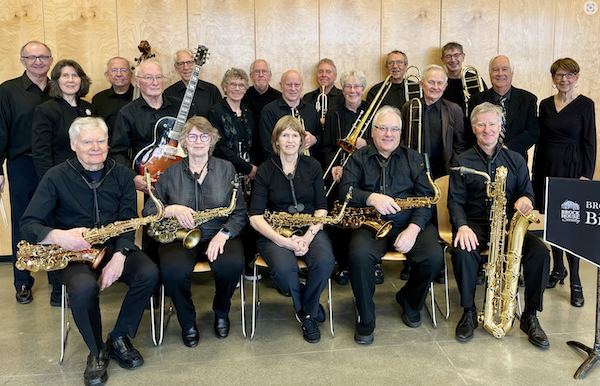
The Brock House Society Big Band performs after the Jewish Seniors Alliance AGM Oct. 26. (photo from JSA)

The Brock House Society Big Band will take part in the festivities that follow the Jewish Seniors Alliance’s annual general meeting Oct. 26, 2 p.m., at Beth Israel Synagogue.

JSA is celebrating its 20th anniversary. For the last 20 years, the organization, founded by Serge Haber, has served the Jewish and general communities through its education, advocacy and peer support programs.

The Oct. 26 AGM will consist of committee reports and the election of board members, and the birthday party/reception that follows at 3 p.m. will feature live music by the Brock House Society Big Band, balloons and loot bags. There will be a late, light lunch catered by Nava, at the cost of $36/person.

The Brock House band is an 18-piece ensemble that plays a wide variety of jazz and popular music. Their repertoire includes classic tunes from Count Basie, Duke Ellington and others, Latin and jazz standards and big band arrangements of contemporary popular music.

To register, call 604-732-1555 or email [email protected].

– Courtesy Jewish Seniors Alliance

Posted on October 12, 2023October 12, 2023Author Jewish Seniors AllianceCategories Local, MusicTags Brock House Society Big Band, Jewish Seniors Alliance, JSA, seniors
Train as peer support

Train as peer support

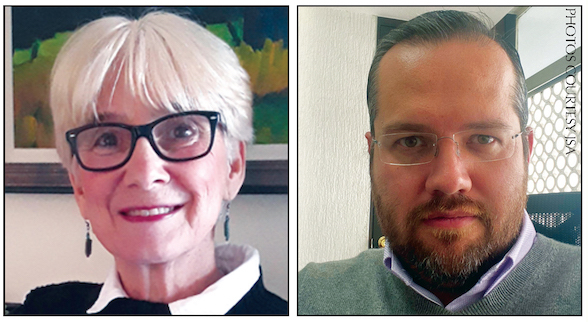
Grace Hann, Jewish Seniors Alliance senior peer support services trainer and supervisor, and co-trainer Miguel Méndez. (photos from JSA)

For a senior experiencing loss, isolation, health challenges, a change in housing or other stressors, knowing that someone cares can make a world of difference. Jewish Seniors Alliance’s Peer Support Services trains people aged 55+ to be that someone – seniors helping seniors.

JSA offers at least two peer support training sessions a year, and the next one begins Sept. 20. The training, conducted over Zoom, is free. It comprises 11 sessions, or 44 hours. Participants will learn active listening and other communication skills, how to set boundaries, about aging and the health issues that can accompany it, about available community resources, and more. Upon successfully completing the course, volunteers (who are required to pass a criminal records check) will receive a certificate from Senior Peer Counseling of B.C. and be matched with a senior in the community.

The Jewish Independent spoke with Grace Hann, JSA senior peer support services trainer and supervisor, and co-trainer Miguel Méndez about the program.

JI: When did the peer support program start, and how has its effectiveness been measured?

JSA: The peer support program started in 2011, inspired by [JSA president emeritus] Serge Haber’s vision to support vulnerable seniors in the community. We gauge the program’s effectiveness through detailed statistical analysis. This includes client satisfaction surveys administered after six months, then again after one year, and annually thereafter.

JI: What qualities do your most successful volunteers possess?

JSA: Key qualities for a thriving volunteer-client relationship are empathy, patience and compassion. It’s also crucial for volunteers to be receptive to new ideas during training, which enhances their understanding of the challenges many seniors face.

JI: What is the biggest challenge you face while training volunteers?

JSA: Most volunteers join our training eager to learn and contribute. The training refines their listening skills, helps them establish healthy boundaries, and fosters an understanding of underlying issues many seniors confront, such as grief, loss, and the challenges of connecting with new communities.

JI: What surprises you most about your day-to-day work?

JSA: We’re continually surprised by the deficiencies in our medical and social support system. Many case managers from various health units emphasize their shortage of time and personnel to provide adequate emotional support for seniors. Heart-wrenching sentiments from vulnerable seniors, like “I no longer matter in society” or “My friends have all died,” often resonate with us.

JI: What are the most significant changes you have noticed in the needs of seniors over the last five years?

JSA: There’s a growing mental health support gap for seniors. Many are grappling with conditions like anxiety and depression. At JSA, we receive increased requests from professionals seeking support for such individuals.

However, our volunteers are not mental health experts. While we acknowledge the need, we must be cognizant of our role and limits as volunteers. Additionally, many seniors are anxious due to rising housing and grocery costs, severely affecting those with limited incomes.

JI: How has your training program adapted post-COVID?

JSA: During the pandemic, we transitioned our training to a digital platform, Zoom, allowing many seniors to engage without leaving their homes. We’ve maintained this digital approach, which now attracts participants from a broader geographical range.

JI: Is there a piece of advice or aspect of training that you consider most impactful to your volunteers?

JSA: Role-playing is an exceptionally effective tool. It elicits profound feelings and introspection, heightening volunteers’ empathy and allowing them to better understand others’ experiences. Since our training is experiential, volunteers gain by sharing their own wisdom and experiences.

JI: Anything else you’d like to add?

JSA: Conducting initial client intakes can be deeply emotional. For instance, a recent case involved a 91-year-old woman, previously independent, whose life altered drastically after a spine fracture from a fall. With no family and deceased friends, she faced a significant emotional void. While we can’t mend her physical injuries, we can offer invaluable emotional support, offering hope and the comfort of knowing someone cares. This not only benefits her but also gives our volunteers a sense of purpose and the gratifying feeling that comes from assisting others.

If you’re interested in joining JSA’s peer support team, call 604-267-1555 or email [email protected] or [email protected]. More information at jsalliance.org.

Alisa Dressler is a fourth-year student at Queen’s University in Kingston, Ont. She is an avid reader and writer, and the online director of the arts and culture publication MUSE Magazine. Bressler is a member of the Vancouver Jewish community, and the inaugural Baila Lazarus Jewish Journalism Intern.

Format ImagePosted on September 1, 2023August 31, 2023Author Alisa Bressler and Cynthia RamsayCategories LocalTags Grace Hann, Jewish Seniors Alliance, JSA, Miguel Mendez, peer counseling, peer support training, seniors, volunteering
Prevention is ultimate goal

Prevention is ultimate goal

World Elder Abuse Awareness Day will be marked with a community-wide event hosted by Jewish Family Services, in partnership with many other agencies. (photo from nvrc.ca)

According to a World Health Organization study, half the world’s population bears a prejudice against the elderly. Jewish Family Services in Vancouver, which shares that statistic on its website, notes that roughly 17% of people over the age of 60 worldwide are victims of elder abuse. The agency also notes that about 20% of Canadians believe older people are a burden on society, and that approximately 80% of Canadian seniors report discrimination in health care.

On June 15, at 10 a.m., JFS will host a free community-wide event in recognition of World Elder Abuse Awareness Day (WEAAD) in the Jewish Community Centre of Greater Vancouver’s Wosk Auditorium. Rights Don’t Get Old: Let’s Unite Against Elder Abuse will cover what can be done to prevent – what many recent studies have shown to be – a growing problem. Featured speakers include Michael Lee, MLA for Vancouver-Langara and shadow minister for Indigenous relations and reconciliation; Isobel McKenzie, British Columbia’s seniors advocate; and Linda Youk of Seniors First BC.

“A very important element of elder abuse is that it can happen to anyone,” said Cindy McMillan, director of programs and community partnerships at JFS. “We shouldn’t make assumptions about who is at risk and who is not. Awareness that it exists, and that there are supports out there … is what June 15 is all about.”

For JFS, “a nonprofit that supports up to 1,200 seniors annually to live at home safely and with dignity, elder abuse prevention, detection and response is an essential part of support,” she said. “This year, following several years of COVID, and subsequent isolation of many older adults, I felt it was very timely to bring the community together to create more awareness around this issue.”

Elder abuse comprises varying forms of mistreatment, the most commonly reported being neglect, followed by emotional and financial abuse. Physical abuse is also prevalent, with 8.8% of abused seniors experiencing physical violence, according to data provided by JFS. Elder abuse can occur in numerous settings, including within the home, at care facilities and in the community. Most reported cases involve family members, with adult children and spouses being the most common perpetrators.

A Statistics Canada report released in 2019 stated that nearly one in five seniors had experienced some form of abuse. A report from the Office of the Seniors Advocate in British Columbia, using data from 2017 to 2021, found a 49% increase in neglect and self-neglect, an 87% increase in reported physical abuse and a 49% increase in financial abuse over that five-year period.

Neglect is often underreported, both because of a lack of awareness as to what constitutes neglect and the potential stigma associated with the admission of neglect, explained McMillan. Neglect can manifest in different ways, such as providing insufficient food and water, failing to administer medication, leaving an older adult in dirty and unsafe living conditions, and not seeking medical attention for the elderly person when it is needed.

Financial abuse, or the exploitation of older adults for monetary gain, can have serious ramifications. Despite numerous laws in place to prevent it, B.C. seniors lose an estimated $50 million annually because of financial abuse, with only one in five cases reported.

WEAAD was launched in 2006 by the International Network for the Prevention of Elder Abuse and the World Health Organization at the United Nations.

“JFS has always been involved in WEAAD, primarily through our Better at Home program, where we have partnered with different community organizations to have smaller events that promote awareness,” said McMillan. “Our involvement stems from our connection with the Marpole Community Response Network, who is at the forefront of providing information and education on elder abuse.”

Better at Home is a JFS-coordinated program, administered by the United Way, which helps seniors in Kerrisdale, Oakridge, Marpole, Southlands and Dunbar with non-medical, day-to-day tasks such as housekeeping, transportation, grocery shopping, visits and handyperson repairs. The program’s objective is to assist seniors so that they can continue to live independently in their own homes and remain connected to their communities.

This year’s June 15 event will have numerous resource tables located in the atrium of the JCC. Among the groups presenting are the Alzheimer Society of British Columbia, JQT Vancouver, Kerrisdale Oakridge Marpole Community Policing Centre, L’Chaim Adult Day Centre, ASK Friendship Society and ReAct Adult Protection Program of Vancouver Coastal Health.

In a statement to the Independent, JFS said it “was very grateful to have partners like the Jewish Federation, the JCC, the Better at Home Program and Seniors First BC coming together to put on such an important event.”

To register for Rights Don’t Get Old: Let’s Unite Against Elder Abuse, visit jfsvancouver.ca. Refreshments will be provided.

Sam Margolis has written for the Globe and Mail, the National Post, UPI and MSNBC.

Format ImagePosted on June 9, 2023June 8, 2023Author Sam MargolisCategories LocalTags abuse, awareness, Cindy McMillan, education, elder abuse, JCC, Jewish Community Centre of Greater Vancouver, Jewish Family Services, JFS, seniors, WEAAD
Playfulness & laughter

Playfulness & laughter

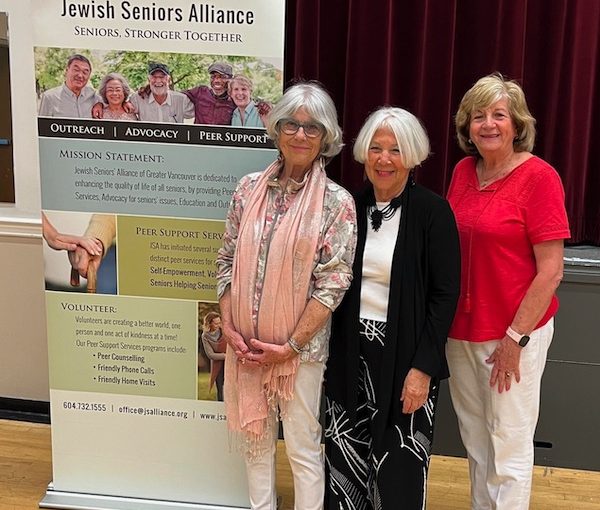
Left to right: Gyda Chud, Carol Ann Fried and Tammi Belfer at Jewish Seniors Alliance’s Spring Forum May 28. (photo from JSA)

The first in-person Jewish Seniors Alliance Spring Forum after a pandemic-imposed hiatus was held at the Peretz Centre for Secular Jewish Culture on May 28. It got people out of their seats, moving about, meeting others – and laughing.

Laughing Matters was presented by Carol Ann Fried, an energetic and inspirational speaker and consultant. She was introduced by Fran Goldberg. Tammi Belfer, president of JSA, welcomed the 40-plus people in the audience. Belfer spoke about JSA’s partnerships with other organizations, but especially with every person in the room and all its members.

Most of us who attended Laughing Matters did not expect to have to change tables, to speak to strangers, to scream at others, and then tell them they are awesome. But this is exactly what happened! The session was a whirlwind of movement, playfulness and laughter. Meeting new people is cause for celebration – to do so in the form of a game involves even more fun.

So, we played games. In one, we each took the lead and, while introducing ourselves, made announcements at our respective tables. How else would we learn that Gyda Chud’s mother would turn 100 next Saturday? Or that Naava Soudack’s daughter would be acting in Henry V at Bard on the Beach this summer?

We also imagined holding a cellphone with a photo of an important event in our lives and described it to the group. We learned about mother-of-the-bride/groom wedding dresses, about grandchildren and about trekking trips. All these exchanges were accompanied by laughter and delight.

We then switched tables and initiated a conversation with a total stranger, with the objective of finding commonalities. Some of us discovered that their tablemates grew up in the same city, same neighbourhood and went to the same school, but they had never met – how wonderful to finally do so!

At my new table, we were asked to complain. About what? My partner, whom I had only just met, complained about American politics, but then found a silver lining about the States. In turn, I complained about Israeli politics, but then described the beautiful country I grew up in. Yes, there are always two sides to each coin. We ended our encounter with a high five, exclaiming: “You are awesome!” It was a nice way to make a new acquaintance.

Throughout the entire session, Fried delighted us with her good humour and charm, her creativity of mind and spirit. Gyda Chud, past president of JSA, thanked Fried for introducing us to new people, new friends and new activities.

Tamara Frankel is a member of the board of Jewish Seniors Alliance.

Format ImagePosted on June 9, 2023June 8, 2023Author Tamara FrankelCategories LocalTags Carol Ann Fried, comedy, health, Jewish Seniors Alliance, JSA, seniors
New LGBTQ+ resource guide

New LGBTQ+ resource guide

A screenshot of Jeff Kushner’s July 2, 2020, interview with Carmel Tanaka for the B.C. Jewish Queer & Trans Oral History Project, which can be found on YouTube.

JQT (Jewish Queer and Trans) Vancouver has compiled a resource guide in an effort to address the needs and concerns of older LGBTQ+ Jews.

With the financial support of the B.C. Community Response Network, the Province of British Columbia and Jeff Kushner of Victoria, JQT produced the B.C. Jewish Queer and Trans Seniors Resource Guide, which was launched in April. The guide can be accessed at jqtvancouver.ca, along with a series of eight videos that cover the main points in each of its chapters. The guide is conceived as a “living document based on info collected in 2023,” and visitors to the website are asked to “help keep it relevant by completing the short 4-min survey at the end of this resource guide.”

“This resource guide is meant for older Jewish queer and/or trans people over the age of 55, as well as for those who are caring for them,” it states in the introduction. “We recognize the stigma associated with the term ‘senior’ and define it as ‘persons over the age of 55.’ We do not want to isolate anyone, as a lot of content collected in this resource guide may be relevant for Jewish queer and/or trans people of all ages.”

In explaining why the guide was created, the introduction says: “You may be worried or trying to figure out how to manage changing care needs, now or in the future, for yourself or for someone else. Many of you will likely choose to stay in your home well after you require healthcare support. In addition to what you don’t know, you may have come across misinformation that can get in your way. This guide has been developed to reduce fears by providing reliable, useful and current knowledge that can help to protect you from potential discrimination and abuse, allowing you to live out your days with dignity.”

The publication and videos are part of the JQT Seniors Initiative, which is described on the website as “a community response network of Jewish, LGBTQ+ and seniors healthcare organizations,” and many people contributed to the resource guide.

The story of the JQT Seniors Initiative can be traced to the early days of the pandemic, when JQT began conducting the B.C. Jewish Queer & Trans Oral History Project, which primarily interviewed older adults across the province. Elders in the community discussed their fears of having to go back into the closet and/or hide their identity upon becoming more dependent on the healthcare system, such as through assisted living and long-term care.

“This feedback from interviewees birthed the JQT Seniors Initiative,” said Carmel Tanaka, the founder and executive director of JQT Vancouver.

According to Tanaka, the oral history project further revealed that Jewish Family Services (Jewish Family Services Agency at the time) had directed a Jewish LGBT community needs assessment, called Twice Blessed, in 2004. The report, which had been in the possession of former JFSA counselor Jacqueline Walters on Salt Spring Island, had not been released.

“Following her interview for the project, Jacqueline mailed me the envelope, which thankfully arrived, and this birthed Twice Blessed 2.0: The Jewish LGBTQ2SIA+ Initiative in partnership with JFS – a 2022 community needs assessment that compared needs to the 2004 assessment,” said Tanaka.

Included in the recent survey were questions on seniors care, which continues to help identify needs. While the assessment was intended to focus on Metro Vancouver residents, JFS’s geographical mandate, people from across the province participated.

After its homepage, the seniors initiative page is the next most visited page on the JQT website, and its resource guide has the highest views across JQT’s social media platforms: Facebook, Instagram and YouTube.

“This was definitely, without a doubt, exactly what our community needed, for people of all ages, because dying can happen at any age,” Tanaka said. “Navigating friction between civic and Jewish law is also at the forefront of this resource guide, particularly around intermarriage, MAiD [medical assistance in dying] and LGBTQ+ inclusion of trans and non-binary bodies in Jewish burial practices.”

An example of the preparations that should be made in advance is appointing a trusted person to ensure that final wishes, such as not being “misgendered” by healthcare professionals or the chevra kadisha (Jewish burial society), take place.

“This resource guide is also helping to build a stronger JQT community, connecting pockets of folx on the periphery who are working on elements touched on in this guide, such as ‘queering’ chevra kadisha, so that we are not doing the work in silos,” Tanaka said.

Tanaka lauded the positive response from numerous organizations and community groups. “Older Jewish queer and trans folx are feeling seen and grateful that such a guide has been resourced and put together,” she said.

As for her personal involvement in the initiative, Tanaka explained, “My mom is a gerontologist and, from a young age, I knew the limitations of seniors homes. So, in a way, it’s not surprising that I would end up working towards more inclusion. Also, my background is in public health, emergency and disaster management, and the lack of support for older queer and trans seniors is an emergency.”

JQT Vancouver was started in 2018, becoming a nonprofit – incorporated as the Jewish Queer Trans Folx of Vancouver Society (dba “JQT Vancouver”) – in 2023. A current objective for JQT is to obtain charitable status to secure core funding for its operations. Since it began, it has been an all-volunteer organization that operates solely on donations and grants.

JQT offers inclusion training to local Jewish community organizations, as well as partners with organizations on various projects. “We’re already in partnership with JFS, and will be offering a staff training session to the JCC [Jewish Community Centre of Greater Vancouver] later this month,” said Tanaka by way of example.

For more information on the JQT Seniors Initiative, visit jqtvancouver.ca/jqt-seniors-initiative.

JQT will unveil the B.C. Jewish Queer & Trans Oral History Project in a hybrid celebration at the Zack Gallery on May 28, 1 p.m. The following day, the exhibit will be available online.

Sam Margolis has written for the Globe and Mail, the National Post, UPI and MSNBC. Jewish Independenteditor and publisher Cynthia Ramsay is on the JQT Vancouver board.

Format ImagePosted on May 26, 2023May 26, 2023Author Sam Margolis and Cynthia RamsayCategories LocalTags B.C. Jewish Queer and Trans Resource Guide, Carmel Tanaka, Jeff Kushner, JQT Seniors Initiative, JQT Vancouver, LGBTQ+, seniors
Get ready to laugh it up

Get ready to laugh it up

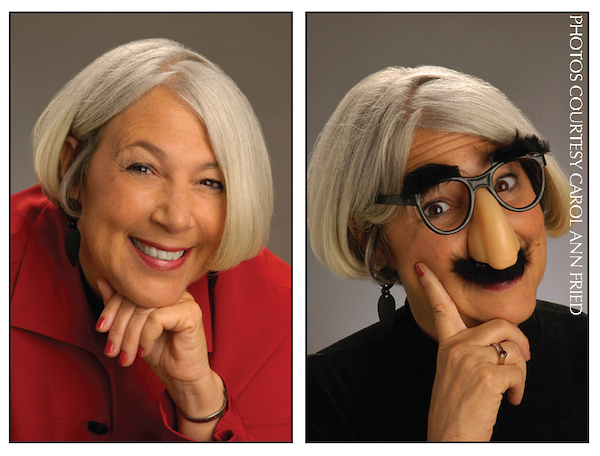
Carol Ann Fried as herself, and as Groucho Marx. Fried presents the program Laughing Matters at the May 28 Jewish Seniors Alliance Spring Forum. (photos from Carol Ann Fried)

Carol Ann Fried helps people find their “joy spot.” When she brings her interactive presentation to the Jewish Seniors Alliance Spring Forum May 28, she promises: “My goal is it’s going to be the most fun meeting they’ve ever attended.”

Fried is a Halifax-raised, Montreal-educated, Vancouver woman whose Friedom Training and Coaching Services include keynote speeches, workshops and meeting facilitation. She is also chief executive officer of Playfair Canada, which offers noncompetitive adult play experiences, especially to first-year students on Canadian campuses.

The joy spot is found in many ways, but it always involves connecting people with one another, she told the Independent.

“I do it by getting people to interact in creative and fun ways, toward some kind of end, if it’s a theme or team-building or fun at work or fun at home,” she said. “This can happen in various ways, but the way I do it is to get people up moving, usually, interacting with each other, talking with each other, doing some kind of activity.”

Typically, she does this with businesses, organizations and teams. In her program with the Jewish Seniors Alliance, laughter will be a core objective.

While members of the JSA may be longtime friends or acquaintances, Fried promises that, by attending her program, “They are going to get to know each other in new ways. They are going to make new connections, they are going to laugh. There will be laughter.”

After growing up in Halifax and studying at Dalhousie University, Fried got a master’s degree in counseling at McGill University in Montreal and eventually made her way west. She has served on the board of Or Shalom synagogue and is currently the chair of the membership committee.

If she has one piece of advice for people – attending her program or not – it is “Be courageous.”

That can mean something as simple as being willing to play.

“In our world, people somehow have the idea that play is for children and that we have to get serious when we get taller,” Fried said. “The idea of it is pooh-poohed by a lot of people. But my work is about getting them to do it before I tell them what they’re going to do.”

In corporate settings, she calls this “Managing to have fun.”

“I love jazzing up meetings,” she said.

Fried also has an affinity for doing programs with food.

“You can do a lot of things around food – Jewish people and food,” she said. “You can have a bag and in the bag are a variety of implements that are anything but cutlery. One of them could be the egg beater, the carrot peeler, a salt spoon, the things that you find in that drawer where you throw everything. People pull a ribbon and they have to eat their whole meal with that one thing. There are no forks, knives or spoons in there. It’s super-fun and it would be great for one of these family meals where you’re worried about how people are going to get along.”

Another idea is a “backwards meal” – spoiler alert: it’s eating dessert first.

“I really believe that shared laughter and play are essential to a healthy lifestyle,” said Fried. “When we are playful, all sorts of good things happen in our body, all those horrible hormones decrease and all the good ones increase. It affects morale, it affects creativity, all very positively. They’re going to experience each other in different ways than they otherwise would or that they are used to or that they have at other times.”

JSA’s Spring Forum takes place May 28, 2 p.m., at the Peretz Centre. Fried’s program is titled Laughing Matters. Call 604-732-1555 or email [email protected] for more information.

Format ImagePosted on May 12, 2023May 11, 2023Author Pat JohnsonCategories Performing ArtsTags Carol Ann Fried, healthcare, Jewish Seniors Alliance, JSA, mental health, seniors, wellness

Positives of being older

While some seniors see growing old as a negative, it really is an adventure, said clinical psychologist Miguel Mendez, a facilitator for the Jewish Seniors Alliance of Greater Vancouver’s Peer Support Services program.

Mendez was the featured speaker at the March 28 JSA-Snider Foundation Empowerment Series lecture, which took place over Zoom. His theme? The “Positive Adventures of Being an Older Adult.”

The program was cosponsored by JSA, Jewish Family Services and the Peretz Centre for Secular Jewish Culture. It was opened by Gyda Chud, coordinator of the JSA’s program committee, and concluded with a Q&A facilitated by Tamar Stein, coordinator of the seniors group at JFS.

Mendez shared how he was close to his grandmother and how well she had organized the last 10 years of her life: she volunteered at a stationery shop, loved to dance with her grandchildren and to travel and visit family; she was passionate about talking with people.

How should we feel about growing older? he asked. Should we be afraid, uncertain, reluctant or should we interpret the changes in a positive way? To get to the answers of these questions, he asked another: What is the difference between an emotion and a feeling? The difference is in the interpretation, he said.

The cultural value placed on beauty and youth contrasts with the wisdom and guidance that comes with aging, Mendez argued. All of us will die eventually and ageism ignores this fact, he said. In his view, we need to regard aging as a gift and an opportunity to age with vitality. Seniors definitely experience loss of energy and of physical abilities, he admitted, but they can maintain vitality with friends and family.

Purpose is the most important part of aging (and life overall), said Mendez. If we lose purpose, we can lose our sense of well-being. Currently, there is an epidemic of loneliness among seniors that can lead to physical and cognitive decline. To try and avoid this decline, Mendez suggested “the three Gs”: grow friendships, good relationships and get along well. We should continue making new friends and developing worthwhile relationships, he said. We need to laugh, have fun and enjoy life – take risks. These efforts will give purpose to life, he said, and attitude follows purpose in making life enjoyable.

In the Q&A, Grace Hann, JSA senior peer support services trainer and supervisor, asked about combating ageism. Mendez said that ageism is learned behaviour and that we should listen to our own values and not societal ones.

Tammi Belfer, JSA board president, asked about strategies to keep a person engaged and participating. While Mendez suggested that people should make an effort to participate in activities, because it is, generally, good for them, people should also make sure to give themselves breaks from taking part, ie. take some days off.

Larry Shapiro, an immediate past president of JSA, stressed that there should be purpose in people’s activities and that people shouldn’t do things just to keep busy. We need to feel fulfilment, he said.

Stein wrapped up the event, thanking the speaker and the 60 participants. She noted that the talk had been recorded and would be on JSA’s website in May.

Shanie Levin is a Jewish Seniors Alliance Life Governor. She is also on the editorial committee of Senior Line magazine.

Posted on April 28, 2023April 26, 2023Author Shanie LevinCategories LocalTags aging, education, health, Miguel Mendez, peer support, seniors

Community milestones … Louis Brier Jewish Aged Foundation, Chabad Richmond

The Louis Brier Jewish Aged Foundation announces David Zacks, KC, as chair of the 2023/24 The Brier, Their Home campaign.

photo - David Zacks
David Zacks (photo from Louis Brier Jewish Aged Foundation)

Born and raised in Vancouver, Zacks has been an active member of the Jewish community for more than five decades. He practised banking and finance law and was recognized globally for his professional achievements. He is a Life Bencher of the Law Society of British Columbia and was appointed King’s Counsel in 2002. In his retirement, Zacks is devoting time and energy to a variety of charitable causes, including the Louis Brier Jewish Aged Foundation. He is most proud of his two sons and their spouses and his five grandchildren.

The Louis Brier Home and Hospital is the home of 32 Holocaust survivors. The Brier understands the depth of the complexity of care to be delivered in providing clinical, spiritual and psychological attention to this sector of our community. Most residents come to Louis Brier older, frailer and with more complex health needs than ever before. Holocaust survivors are an especially fragile group because of their cumulative trauma. Aging, for them, can often be a time of severe crisis, and presents the risk of retraumatization.

The Brier is one of the most important and resource-demanding establishments in the Vancouver Jewish community. For more than 60 years, 24/7, 365 days a year, the home and hospital cares for the most susceptible and often extremely ill members of our community with both clinical and emotional support. They are carefully guided through their most vulnerable and difficult times by the staff, who know that caring for this generation means not only providing critical clinical care, but equally providing opportunities for enjoyment and engagement – the Brier strives to be a joyous place for elders to live.

The Brier campaign takes place every two years. It is the main source of funding, and the Brier Foundation’s main fundraising endeavour. The funds raised cover the basic annual needs of the home that are not funded by government. The needs of a Jewish home extend far beyond the basic human requirements provided – every Jewish component of the Louis Brier Home and Hospital is completely reliant on community donors. Examples include having a chaplain/chazzan, a fully kosher facility, a shul, Holocaust education for staff, and the celebration of all Jewish holidays. The Brier Foundation also supports extras that most other long-term care facilities cannot, such as full-time infection control, quality-and-risk practitioners, security, medical equipment, music, art, physio, rehabilitation, and occupational therapy.

It is thanks to the commitment and consistency of community donors that Louis Brier Jewish Aged Foundation provides the Brier with stability of funding that provides the best possible quality of life for residents, one of dignity and happiness. The board members and executive director of the Louis Brier Foundation, Ayelet Cohen, are acutely aware of the immense responsibility they hold, and thank everyone for sharing this responsibility with them over the years.

May 1 marks the start of this year’s campaign – The Brier, Their Home – which runs until June 16. The Brier Foundation, together with the leadership of Zacks, hopes to raise $1.8 million to keep up with the home and hospital’s needs. This amount will just allow the Jewish home to cover expenses through 2023/24. Over the last six years, the Brier Foundation’s funding responsibility has more than tripled in an evolving healthcare environment. It takes immense resources to manage such an operation. The needs are great and ever increasing.

The Brier Foundation works to fulfil these essential needs, but cannot do this without the community’s help. If it is not done as a community, there is the risk of losing the ability to provide a dignified and gratifying end-of-life process for Jewish seniors. It is our collective duty to care for our elders, those who built our community for us.

* * *

Chabad Richmond depends on a devoted team of volunteers. From delivering Light of Shabbat meals to assisting with programs, assembling Pesach packages, and so much more, Chabad’s cohort contributes not only their time but their enthusiasm. Leading the charge, along with Chabad Richmond co-directors Rabbi Yechiel and Chanie Baitelman, is the new board of directors, comprised of lay leaders who bring a multitude of talents to the table and have an ambitious vision for the future of Chabad.

New president Ed Lewin takes over from past president Steve Whiteside, and welcomes Phil Levinson as first vice-president and Jeff Wachtel as second vice-president and secretary. New recruits Gayle Morris and Brent Davis join existing board members Sheldon Kuchinsky, Shelley Civkin, Shaun Samuel (treasurer), Louise Wright and Yael Segal.

Lewin was born and raised in Vancouver, the middle child of Holocaust survivors. An avid sportsman and community worker, he has served on many nonprofit boards in the Jewish community and is past president of the Vancouver Holocaust Education Centre. He is proud to have represented Canada in basketball three times at the Maccabi Games in Israel, winning two bronze medals. He recently sold his business law practice in Vancouver and is currently associate counsel with Arora Zbar LLP. He moved to Richmond in 1987, and has been married to Debbie for almost 42 years. The Lewins have two children, both married, and a 1-year-old grandson, all of whom call Richmond home.

The board of directors supports Rabbi Baitelman’s dream of an expanded Chabad Centre in Richmond, recognizing the potential for growth in a community whose Jewish population is close to 4,000.

“The vision of a larger Chabad centre with increased capacity and a variety of amenities for all ages is on the horizon. With board and community support, it will become a reality,” said Lewin.

Chabad Richmond recently launched a young professionals group for 19-32-year-olds, and is expanding several of its programs.

“Education, community outreach and gathering as a community to celebrate Jewish holidays and lifecycle events are only part of what we currently do,” said Rabbi Baitelman. “We want to expand our reach and nurture every Jew in every way we can. We have much work ahead of us, but we’re blessed to have a steadfast and conscientious board who works to help us grow. Each one of them brings their unique talents to assist us in realizing our mission.”

Posted on March 24, 2023March 22, 2023Author Community members/organizationsCategories LocalTags Chabad Richmond, David Zacks, Ed Lewin, fundraising, healthcare, philanthropy, seniors

Helping people stay at home

People are living longer and, ideally, they’d be living longer at home. Pragmatically, this means that they and their primary caretaker(s) would need support not just for medical care, but for errands and companionship, as well. Enter Rona Goodman and her small business, Bubbymobile.com.

“Bubbymobile.com is a senior concierge service that offers a multitude of non-medical services to families. They include companionship, lunch, errand running, grocery shopping, accompanying to medical appointments and check-ups, transportation, walks and more,” Goodman told the Jewish Independent.

photo - Rona Goodman
Rona Goodman (photo from Bubbymobile.com)

Goodman thought of the concept for Bubbymobile.com a few years ago but waited until the pandemic subsided and it was safe to launch.

“I would say it’s been around a year since I started, and it is going very well,” she said. “It’s growing organically and that’s the way I wanted it. Mostly word of mouth and recommendations, and that’s the best advertising you can get. I would love to meet more families in the community.

“The concept came to fruition when I was visiting my friend’s mom who was in a seniors home. I would take her for walks and be her companion. I met several people in the facility who didn’t have anyone visit them or assist with their non-medical needs. After researching, I thought this service would be a great resource to complement what is already out there.”

Goodman named her business after her maternal grandmother.

“My bubby was the best and the matriarch of our family,” said Goodman. “I’m from Montreal and grew up with a close family because of my bubby and zadie. Every Friday night since I can remember, we would have dinner at their house with my family, aunts, uncles and cousins. We all grew up together and I wanted to honour my bubby with the name.”

Goodman said she had two wonderful grandmothers, but “my dad’s was my grandmother…. Both were lovely but I did spend more time with my bubby cause of Friday night dinners. But we (me, my brother and sister) did visit my grandmother and would take her out for drives and lunches/dinners and had lovely visits. She made the best coleslaw…. Both of my grandfathers passed when I was pretty young. Everyone has had a bubby or grandmother or grandfather, so it’s really in honour of them all!”

For Goodman, two of the best things about being Jewish are family and giving back. “You take care of the ones you love and give back to others who may not be as fortunate,” she said. “There was always an extra plate for dinner at Bubby’s house for drop-ins and friends. You also must be compassionate, patient, a good listener, understanding, kind and giving to do this kind of work. That’s how I walk through this world and this service is a natural fit for me. I also do volunteer work for VCDS (Vancouver Cancer Drivers Society), a wonderful organization that involves transportation.”

In addition to Bubbymobile.com, Goodman is a musician and a public-relations professional.

“My professional life has always been about passion, creativity and being of service,” she said about the common threads that tie her diverse endeavours together. “I’ve worked in the music industry for over 25 years in many areas of the business. From record labels, musician, songwriter to sales, marketing and publicity. As a PR person, I’ve learned a lot about communication, understanding people’s needs, listening to their stories and reaching out and engaging community – I think it brings out the kid in me and keeps me vibrant and young. These qualities are important when working with seniors, as it’s parallel in many ways.

“As a composer, songwriter and producer, I tell stories through music, lyrics and composition,” she added. “Music is a healer and there is nothing better to lift the soul. To be a composer, you need to write about life’s experiences and adventures. That’s why I love hearing the stories shared by my seniors. What a gift to be in their presence really. I would happily pick up my guitar and sit and play some music for someone that I’m working with. It’s fun and I’m grateful that I can give that little extra service to my clients. There is nothing better than to share the love of music.”

Ultimately, Goodman would like to be able to offer Bubbymobile’s services in every community in the province.

“In the long term,” she said, “I would like to build the business so it can develop into a franchise opportunity across Canada. The more I talk with people, the more excited they are that I’m doing this and how much it is needed. As we grow older, we are living longer, and I find it does provide some relief for families looking for that extra support. I’ve talked with families who may not be living in Vancouver who need extra assistance for their loved ones. Many are also too busy with work and raising families to visit during the week. That’s why I’m here – for that extra support.”

Posted on March 10, 2023March 9, 2023Author Cynthia RamsayCategories LocalTags Bubbymobile.com, companionship, healthcare, Rona Goodman, seniors

Avoid being scammed

Millions of dollars have been lost through the schemes of fraudsters who take advantage of trusting, isolated and vulnerable senior citizens, said guest speaker Patrick Harkness at the latest Jewish Seniors Alliance – Phyliss and Irving Snider Foundation Empowerment Series talk.

On Feb. 16, JSA, in partnership with Council of Senior Citizens Organizations of B.C. (COSCO) and L’Chaim Adult Day Centre, sponsored the program Frauds and Scams, which took place at the JSA offices at Mount Pleasant Community Centre. The program was accessible both in person and online, and about 50 people participated, the majority remotely. Its purpose was to investigate the ways in which fraudsters deceive people, especially seniors, in order to rob them of their money and possessions. The question was: what are the main types of scams, and how can people protect themselves?

Gyda Chud, coordinator of the JSA program committee, welcomed participants and introduced Barb Mikulec of COSCO, who introduced Harkness. Before he retired in 1999, Harkness worked for the provincial government in the department of safety and emergency preparedness. Now, he is a volunteer, one of many, who present workshops on topics important to the senior community through COSCO’s Seniors’ Health and Wellness Institute.

In his Empowerment Series talk, Harkness outlined some of the many types of scams perpetrated on seniors. The approaches can be made by phone, email, post and even in person, depending on the type of scam, he said. He warned that one should not respond to unfamiliar phone calls or email requests and one should not open any attachments included with these requests. He also advised people to never give out personal information or send money. If the information provided sounds too good to be true, he said, then, very likely, it is not true.

According to Harkness, here are some of the most common scams, and how to avoid them:

  1. Stealing photos from dating sites and engaging in a trusting relationship. Do not send money or photos, as the photos can be used to blackmail you.
  2. Emails or calls from the federal government indicating that you owe money and should forward it right away. Do not respond to the caller or emailer, and report the call/email to the police and to the Canadian Anti-Fraud Centre.
  3. Purchases online are fake, unless you have ordered the item(s).
  4. Calls from people claiming they are Canada Revenue Agency (CRA) agents. Do not respond – call the CRA yourself (and not on the number you received the call from) to confirm if they really called you.
  5. Prize scams. Ignore them, as you cannot win a prize for a contest that you have not entered.
  6. Do not buy lottery tickets by phone.
  7. Don’t meet with people claiming to be bank investigators, who ask you to meet in a neutral place to give them money.
  8. Grandparent or nephew scam – claiming you must pay bail money to free the relative. They often have the person’s name. But still, don’t believe them. Check with the relative in question. You will likely find that they are fine.
  9. Offers to fix your computer. Don’t accept. Chances are, it is not broken. If it is, call an authorized repair person.
  10. Scams involving cheap prescription drugs. Never give those offering the items your credit card number.
  11. Charity scams. They may say it is, for example, for Ukrainian relief, but check whether this or any other charity that’s calling is a legitimate, reputable charity, and then donate directly.
  12. Home repair people may come to your door offering their services. Be sure to check with Better Business Bureau to make sure they are licensed and legitimate.
  13. Identity theft is very common and dangerous. Thieves may try to get your social insurance number (SIN) and other identifying information from old mail that you have thrown out. Shred all items that have such information on them before putting them into the recycling bin.

As well, do not carry around a lot of personal information with you or leave your purse or wallet unattended. Choose personal identification numbers (PINs) wisely, so they are not obvious: for example, do not use birthdates or family names.

If you do fall victim to a scam, report it immediately to the police and also to the Canadian Anti-Fraud Centre (CAFC) at 1-888-495-8501. COSCO’s Seniors’ Health and Wellness Institute’s website has several resources on various topics, including frauds and scams: seniorshelpingseniors.ca.

Shanie Levin is a Jewish Seniors Alliance Life Governor. She is also on the editorial committee of Senior Linemagazine.

Posted on March 10, 2023March 9, 2023Author Shanie LevinCategories LocalTags COSCO, Empowerment Series, fraud, Jewish Seniors Alliance, JSA, Patrick Harkness, scams, seniors, Seniors’ Health and Wellness Institute, Snider Foundation

Posts pagination

Previous page Page 1 Page 2 Page 3 Page 4 … Page 12 Next page
Proudly powered by WordPress