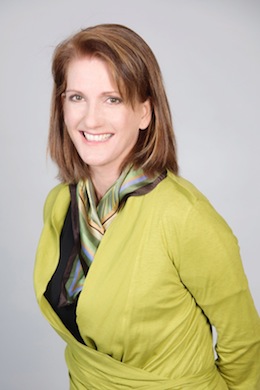
Mishelle Cuttler has the challenge of supervising the musical elements of The Events, which features a different community choir every show. (photo from Pi Theatre)
In 2011, while he was out with his son, who was then 12 years old, writer David Greig read the news that Anders Breivik had killed 77 people in Norway – eight using a car bomb in Oslo, which also injured more than 200 other people, and then traveling to the island of Utøya to a summer camp for teens, where he shot and killed another 69 and injured more than 100.
“My son saw I was very affected and, because he was wondering why, I began to try and tell him what the news was and its implications,” said Greif in an interview with BBC Writersroom. “He just kept repeating the question why? why? why? and I found the discussion quickly became very profound, about the nature of evil and whether it is ever possible to understand someone who shoots children for a political reason. I found trying to answer these questions became a compulsion I had to try and understand.”
The result was The Events, which came into being when Greig met producer Ramin Gray at the Edinburgh Fringe. Gray had been having similar thoughts, said Greig. “That meeting made me know it had to be a play.”
It’s a play that has been staged around the world, and presenting it in Vancouver are Pi Theatre and the PuSh International Performing Arts Festival. After every performance, there will be a post-show discussion and, after the Jan. 17 preview, Rabbi Laura Duhan Kaplan, director of inter-religious studies at Vancouver School of Theology, will speak about various aspects of the play.
While its initial questions came from the terrorist attack in Norway, The Events centres on Claire, a priest who works and lives in her community, including leading a community choir. When The Boy attacks that choir, Claire survives the shooting, setting her on a quest similar to Greig’s – and that of most of us, when such a horrific act is committed. She needs to know, why?
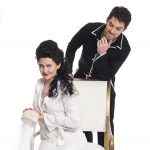
There are only two actors in the production. In Vancouver, Luisa Jojic will play Claire, while Douglas Ennenberg will play six characters opposite her, including The Boy, a grief counselor, the shooter’s father, a school friend of the shooter, Claire’s lover, and various others to whom Claire speaks in her effort to find understanding. A unique aspect of this play is that the choir is “played by” real community choirs, who have practised the music (score by John Browne), sing some songs from their own repertoire, and have some lines to read, but are not given the script.
Jewish community member Mishelle Cuttler has the challenge of being the musical supervisor and accompanist for the local show, which is directed by Richard Wolfe.
“The great thing about The Events is that the choirs are given ownership of the music,” Cuttler told the Independent. “We’ve provided each choir director with the material they need to learn, and my job is to facilitate their integration into the show each night…. I’ll be visiting each choir during their regular rehearsals and hearing how they’ve interpreted the music. I’ll talk them through how they will fit into the play, but they don’t ever see the full script. There will certainly be a lot of variables onstage each night, and that’s what makes this piece so exciting. The singers will be witnessing the show for the first time along with the audience.”
And the focus will be on the dialogue and music, without many other distractions.
“There will be a very small amount of recorded sound in the show,” said Cuttler, “but the majority of the aural experience will come from the singers, the actors and one upright piano.”
Pi Theatre has spent several months planning the logistics. “Essentially,” notes the press material, “more than 220 community members from 12 different choirs will participate over the show’s run.”
It also notes that, while Claire “struggles to understand the event that changed her life, we are asked to decide whether love and hope can survive in the wake of an inexplicable act of violence.”
The Events previews Jan. 17 and runs Tuesdays to Sundays until Jan. 28, with evening and matinée performances, at the Russian Hall, 600 Campbell Ave. Tickets ($31/$26) are available from pitheatre.com/the-events.
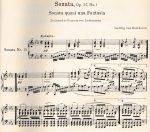
On classical favourite is Beethoven. (image from Schirmer’s Library of Musical Classics)
Music, my love! Where can one start with this subject? For many, it is a highly emotional issue. Watching young people at a rave or rock concert, we can see how totally they are consumed by the sounds, the words and the experience. Though it may leave profound traces in what they become, in the person they are, other priorities will ultimately dictate their behaviour. Nevertheless, don’t so many of us retain some place in our being where the music of our youth, once recalled, takes us back to those times with immediacy, carrying with it all its emotional weight? All the good and all the bad!
Carried away by a political consciousness early in my growing up years, I missed all that. Busy, busy, busy. My attitude was coloured somewhat by having had music thrust down my throat by a mother who felt that no education was complete without a person having the capacity to play a musical instrument. To my distress, the violin was her instrument of choice – weren’t there all those famous virtuosos Jewish? But, my output was in continuous dissonance with the beautiful music I heard in my head, no matter how hard I practised. I struggled with it for a number of years, while my sister achieved some facility, until my teacher suggested I could more productively focus my efforts on attaining celebrity in basketball, where I, as a short person, also had unreasonable expectations. I did, however, gain an appreciation of how beautiful music could be when offered by those with talent.
It was the folk music of the ’60s, the music of protest and rebellion, that most marked my consciousness in those early years. I trafficked in other forms, but it was the emotional appeal of that particular material that captured me. Some of it can still bring me to tears. Over time, though, a few favourite classical works were accumulated as top of mind: Beethoven, Tchaikovsky, Ravel, Dvorak, mainly their stuff stirred my emotions. Gershwin, some Joni Mitchell and Dylan, Joplin and Leonard Cohen round out the picture of less formal music. Do we begin to see a pattern?
I am not an addict. I can go for long periods of time without insisting on being surrounded by melodious strains. But, when the occasion arises, and the stars are aligned, I am totally captured by the music that is available – preferably one of my favourites, but no matter. I become enraptured by the immersion. I know I am an inconstant lover, but a lover I am, nevertheless.
The right sort of music can transport me to places where I feel I could remain forever, a nirvana that wipes away all the stuff that is usually filling my head. There is so much in there, catalogues and timetables, agendas and orders of priority; for the time that I am in a place of music, these things do not exist. In some ways, music becomes for me a refuge. I do not want to imagine life without it. The need for that escape accumulates within me over time until, unconsciously, I am forced to find the occasion for relief.
I know I do music an injustice. Those involved in music-making in all its forms devote the essence of their lives to it; it is their lives. I can only imagine the sacrifices that are made, the years that are spent, by those who have had music take them by throat and totally seize their souls, so driven are they. How insulting that it should descend to being merely a palliative to one like myself!
Many of the things we need in life have their devotees. Fortunately for us, what musicians/composers are offering to us is central to their lives, so they lead a life of service to others, in many ways, without their necessary volition. For us, their raison d’etre may be only incidental, but insofar as they are consumed in making music, in all its various forms, we are blessed by their commitment to finding their joy in their métier.
As a failed musician who knows how much devotion and hard work meaningful music-making takes, I can only express my gratitude. Some of the best moments of my life – and, undoubtedly, for many others – have come from their creativity.
Can we fully express our love for another person without turning at some point to music? Can we fully express our love of country without music? Would we be willing to surrender all that music brings to our lives?
Music came into being because humanity needed this medium to express those feelings that cannot be put into words. The oldest known instrument ever found – thought to be 3,500 years old – is a five-hole flute made from a vulture’s wing bone. Anthropologists estimate, according to Wikipedia, that music is 55,000 years old and originated in Africa. It has been said that humankind fundamentally changed its nature about that long ago. Maybe music played a crucial part in that.
Regardless, I have a love affair with music. I truly believe that music was invented all those eons ago so that I could get to dance with my Bride. Care to join me on the dance floor?
Max Roytenberg is a Vancouver-based poet, writer and blogger. His book Hero in My Own Eyes: Tripping a Life Fantastic is available from Amazon and other online booksellers.
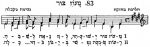
“Maoz Tzur,” recording by Abraham Tzevi Idelsohn. (photo from Music in the Jewish Community of Palestine 1880-1948 by Yehoash Hirschberg)
What do we have every year at Chanukah but rarely think about in terms of their origins? The songs. In a Hadassah Magazine article of some years ago, Melanie Mitzman quotes Velvel Pasternak on this subject. He said Chanukah songs are no more than a century old because Chanukah is a post-biblical holiday.
Pasternak is a musicologist, conductor, arranger, producer and publisher specializing in Jewish music. He has been described as “an expert on the music of the Chassidic sect and probably the largest publisher of Jewish music anywhere, although he is quick to note that publishing Jewish music is a business that attracts few rivals.”
The founder of Tara Publications, Pasternak has been responsible for the publication of 26 recordings and more than 150 books of Jewish music since 1971, spanning the gamut of Israeli, Yiddish, Ladino, cantorial, Chassidic and Holocaust music.
Most Chanukah songs, he told Mitzman, have been adapted from old folk melodies, have more than one set of lyrics and/or have been translated from language to language.
“Maoz Tzur,” for example, is called “Rock of Ages” in English. As Ariela Pelaia explains on thoughtco.com, it was written sometime in the 13th century by someone named Mordechai, and is a Jewish liturgical poem or piyyut, written in Hebrew originally, about “Jewish deliverance from four ancient enemies, Pharaoh, Nebuchadnezzar, Haman and Antiochus.” It is usually sung after lighting the chanukiyah. Its six stanzas correspond to five events of Jewish history and a hope for the future. Of its six stanzas, often only the first stanza is sung (or the first and fifth), as this is what directly pertains to Chanukah.
The authorship of the Yiddish song “Oy Chanukah,” or “Chanukah, Oh Chanukah,” in English, is unknown. According to the Freedman Jewish Music Archive at the University of Pennsylvania Library, alternate names of the Yiddish version of song have been recorded as “Khanike Days,” “Khanike Khag Yafe,” “Khanike Li Yesh,” “Latke Song (Khanike, Oy Khanike),” “Yemi Khanike” and “Chanike, Oy Chanike.” The standard transliteration of Chanukah in Yiddish, according to the YIVO system, is Khanike.
The Society for Jewish Folk Music in St. Petersburg published two classical compositions that make extensive use of this tune: “Freylekhs” for solo piano by Hirsch Kopyt, published in 1912 but performed as early as 1909; and “Dance Improvisation” for violin and piano by Joseph Achron, published in 1914 (composed in December 1914 in Kharkov, Ukraine).
The lyrics of the Hebrew version, which has the same melody, were penned by Avraham Avronin. The words correspond roughly to the original (more so than the English version), with slight variations for rhyme and rhythm’s sake. Thus, the first line names the holiday; the second calls for joy and happiness (using two synonyms); in the third, the speakers say they’ll spin dreidels all night; in the fourth, they will eat latkes; in the fifth, the speaker calls everyone to light the Chanukah candles; the sixth mentions the prayer Al Hanissim (On the Miracles).
The only big change is in the last line. Whereas the original calls us to praise God for the miracles He performed, the Hebrew one praises the miracles and wonders performed by the Maccabees. This reflects the anti-religious attitude of early Zionism, evident in many other Israeli Chanukah songs. In Israel, it’s still a very popular song, but, since the country has a rich inventory of Chanukah repertoire, it is not as popular as the English or Yiddish versions in North America.
“I Have a Little Dreydl,” also known as the “Dreidel Song,” is very famous in the English-speaking world. It also has a Yiddish version. The Yiddish version is “Ich Bin a Kleyner Dreydl,” “I Am a Little Dreidel.” The lyrics are simple and are, not surprisingly, given its title, about making a dreidel and playing with it.
The writer of the English lyrics is Samuel S. Grossman and the composer is listed as Samuel E. Goldfarb. The Yiddish version apparently was both written and composed by Mikhl Gelbart, known as Ben Arn, the Son of Aaron. Therefore, there is a question about who composed this music, as the melody for both the Yiddish and the English versions are precisely the same and the meaning of the lyrics in both versions is largely the same. However, in English, the song is about a dreidel made out of clay, which would be hard to spin, whereas in the Yiddish, the four-sided spinning top is made out of blay, which is lead.
Another popular dreidel song is “Sevivon,” with sevivon, sivivon or s’vivon being Hebrew for dreidel, which is the Yiddish word for a spinning top. “Sevivon” is very popular in Israel and with others familiar with Hebrew.
“Al Hanasim” is another popular Hebrew song for Chanukah. It is taken from the liturgy, but it is also an Israeli folk dance. The song is about thanking God for saving the Jewish people. The most popular tune, however, is relatively recent, having been composed by Dov Frimer in 1975.
The Chanukah song “Mi Y’malel” opens with the line, “Who can retell the mighty feats of Israel,” which is a secular rewording of Psalms 106:2, which reads “Who can retell the mighty feats of God.”
“Ner Li” translates as “I Have a Candle.” This is a simple Hebrew Chanukah song that is more popular in Israel than in the Diaspora. The words are by Levin Kipnis and the music is by Daniel Samburski.
Kipnis also wrote the words for “Chanukah, Chanukah,” which is a traditional folk song originating in Israel. In a completely different vein, “Judas Maccabaeus” is an oratorio by George Frideric Handel. During Chanukah, the melody for the oratorio’s “See, the Conqu’ring Hero Comes” is used by Spanish and Portuguese Jewish communities for the hymn Ein Keloheinu.
Last for this article, but certainly not the only remaining Chanukah song, is “Ocho Kandelikas.” This Ladino (Judeo-Spanish) song was written by Jewish-American composer Flory Jagodain in 1983, explains Pelaia. She adds that its lyrics describe “a child joyfully lighting the menorah candles,” saying that “beautiful Chanukah is here,” and describing all the wonderful things that will happen this time of year. The song counts out the eight candles for the eight days of Chanukah.
Sybil Kaplan is a journalist, lecturer, book reviewer and food writer in Jerusalem. She created and leads the weekly English-language Shuk Walks in Machane Yehuda, she has compiled and edited nine kosher cookbooks, and is the author of Witness to History: Ten Years as a Woman Journalist in Israel.
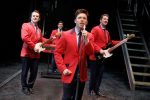
The Four Seasons of Jersey Boys sings “Sherry.” (photo from Broadway Across Canada)
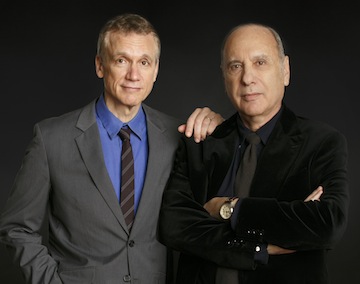
The multiple-award-winning Jersey Boys comes to Queen Elizabeth Theatre Nov. 14-19. The musical about Frankie Valli and the Four Seasons was written by Jewish community members Marshall Brickman and Rick Elice.
Elice spoke to the Jewish Independent by phone from New York. He and Brickman were friends well before they became writing partners on the musical and other projects.
“We became friends somewhere in the ’90s, 1997-’98, around there, and Jersey Boys didn’t present itself as an opportunity until 2002, although we didn’t really do anything about it until the very end of 2003,” said Elice, noting that the day prior to our interview, Oct. 17, marked the 13th anniversary of the very first production of Jersey Boys, which opened at the La Jolla Playhouse in 2004.
When Elice was asked to write the musical, he asked Brickman to collaborate with him.
“I had spent a couple of decades in advertising and I was no longer doing that,” he explained. “I was working at a movie studio in California and a former client called – this was right after Mamma Mia! had opened on Broadway – and he said, ‘Hey, I have the rights to the Four Seasons’ music.’”
Initially, Elice thought he meant Vivaldi’s “Four Seasons.” After setting him straight, the former client asked, “‘Well, would you be interested in doing the Mamma Mia! [concept] with the music of the Four Seasons?’ And I said, ‘No, somebody already did that, somebody already did Mamma Mia!’”
But Elice agreed to have lunch with Valli and Bob Gaudio, principal songwriter of the Four Seasons, and he called Brickman.
He and his friend “had been flirting with the idea of maybe writing something together,” said Elice, “which we assumed would be a screenplay because I was working at a studio and Marshall is, of course, an Oscar-winning screenwriter of some renown; I mean, he’s a legend. And I said, ‘Suppose we were to write a Broadway musical?’ And he said, ‘I’ve never written a Broadway musical.’ ‘Well, neither have I! But no one’s going to pay us anything, so we’ll just be wasting our own time and maybe we’ll have some fun. Let’s go to lunch and see what these guys are like.’”
During lunch, they asked Valli and Gaudio what it was like growing up in New Jersey, said Elice. “They started to tell us these jokes and anecdotes that were so, by turn, hilarious, tragic, stunning, but all of them engaging and compelling. We found ourselves leaning forward like anyone would when being told a really good story. And we said, ‘Hey guys, if you wanted to do this, if you wanted to do your warts-and-all life story, life of the group, that would be something that would be interesting because, look at us, we’re on the end of our seats. Other people would probably respond similarly, too.’… And they said, ‘OK, go ahead, knock yourself out. If we like what you do, then we’ll give you the gig.’”
Valli and Gaudio liked the first few scenes that Elice and Brickman wrote, so the writers began shopping the musical around. “The stars were in alignment,” said Elice, “as we wrote in the show.” The perfect producers, a director and venue were all lined up. “The only thing we didn’t have was the show,” he said. But, within a couple of months, he and Brickman had completed a script and, by August 2004, the production was in rehearsal in Southern California.
“And audiences loved the show from the very first performance,” said Elice. “We were always there in the back with our pads, ready to edit and make changes and do all the things in previews you’re supposed to do, but the show was really solid. Fundamentally, the show didn’t change. We improved certain things about it but there was no big surgery to be done on anything.”
He attributed the success to the music, which “underpins all our lives,” and to the fact that the group’s story is “a compelling one.”
“That’s always the secret to good theatre,” he said. “Tell a good story with characters the audience cares about.”
He also credited director Des McAnuff with being “a great visionary and a great field marshal for the project. He created this rocket ship that we all got on. It was a super-happy experience that could have amounted to nothing, and it ended up changing all of our lives.”
Rick Elice, left, and Marshall Brickman, co-book writers of Jersey Boys. (photo by Joan Marcus)
Part of the happy experience was writing with his friend.
“Writing for the theatre is like talking something into existence,” said Elice. It’s much harder to talk something into existence when you’re talking mainly to yourself, working as the sole writer, he said. “What I love about working with Marshall is that he taught me that, before you do anything, you take very long walks together and talk and talk and talk and talk, until you know how the characters sound, you know how to voice them, you know what happens, you’ve argued about plot and story and then, at some point, you have nothing left to do but sit down and actually write it. But the writing itself, the act of writing, is a product of extensive thinking and arguing and talking.”
There were no rules or a specific format for how the collaboration worked, said Elice. “If he wanted to write a scene, he would; if I wanted to, I would; then we would swap. And then, eventually, we were together combing through it.”
Elice said that he and Brickman weren’t involved in the making of the film version of Jersey Boys, which was directed by Clint Eastwood. “Generally, what the theatre offers that the film doesn’t offer is the live event,” said Elice.
He explained, “The existence of theatre ought to have ended by now – there are many, many other things to do. The theatre is expensive, it only happens in certain places at certain times of the day, it’s not convenient, it’s not particularly user-friendly as a medium, and yet it still exists. It’s actually doing better now than it did last year and, the year before that, it did better than the year before that, etc. So, why is that the case? Because, I think, we’re hardwired as a species – you and I and everyone around us – back to the days when cave-dwellers sat around fires and told each other stories. We like the idea of sitting in the dark and being told stories and experiencing them with other people sitting in the dark at the same time, experiencing the same story that will never be told in exactly the same way because it’s never the same. While the material may be the same, the performing of it is different, the audience is different, the chemistry in the room is different – everything changes.
“Each performance of a live event is a unique performance … and somewhere in there, somewhere in that unique experience, is something that’s thrilling for us,” he continued. “And what Des does specifically with Jersey Boys is to create a variety of roles for the audience because you’re not just sitting watching a show – you’re also the audience in the saloon, you’re the audience in the recording studio, you’re the audience at the concert, you’re the audience at the stadium. And there’s alchemy that happens with Jersey Boys on stage, where the audience, I think, really forgets that they’re watching actors playing these four guys and begins to believe that they are the Four Seasons and we are the people watching them. And so, the audience responds like they would at a rock concert, and not like they would do politely at a Broadway musical.”
He added, “It also happens to be a feel-good show and, as the world winds its way, a feel-good experience doesn’t feel out of sorts, because the rest of our days, we’re constantly facing greater challenges individually and collectively…. There are problems, there are bad things, so, you go to the theatre and feel good, it feels like a nice gift to give people.”
On Oct. 17, Jersey Boys’ 13th anniversary, a new company started rehearsals for another run of the show, said Elice. He dropped in to say hello to everyone and let them know of the significance of the day. “It’s a little like teaching,” he said. “If you’re a teacher, every year, the students stay the same age and you keep getting older … and I feel a little bit that way about Jersey Boys companies. I show up on the first day of rehearsals and, at the first production [in 2004], I was the same age as everybody in the show, and now I’m this old guy, because so many years have gone by but, of course, we’re still telling the story of a boy band, so you’ve got a cast in their 20s, and that’s a misty distant memory for me now.”
For tickets to Jersey Boys in Vancouver, visit ticketmaster.ca or call 1-855-985-5000.
“I am very proud to be its founding artistic director,” said Moshe Denburg of the Vancouver Inter-Cultural Orchestra. “It’s like watching one’s child succeed in the world!”
But success is not something VICO takes for granted and Denburg said the orchestra team “is doing its best to keep the VICO relevant and vibrant.”
“We are a growing cultural force in B.C. and in Canada today and, in some circles, we are gaining recognition worldwide as well,” he said. “We are still one of a very few orchestral entities in the world dedicated to intercultural work. We do see our work as a window on the future, a future where there may be many intercultural orchestras in many cities…. The project is still quite young, and we need to care for it, materially and artistically, but, if we can continue to garner the support of the community in which we reside, there is every expectation that the VICO will do well for the foreseeable future.”
While Denburg “handed over the artistic reins” of VICO to co-director Mark Armanini in 2014, he still contributes compositions for performance. As well, he said, “I have acted in several capacities: artistic advisor, financial manager, diplomat without portfolio and also project manager in several areas, the main one being the Mystics & Lovers recording project.”
Released in 2016, Mystics & Lovers is a recording of two compositions that were performed by VICO and the chamber choir Laudate Singers the previous year – Ani Ma-amin (I Believe) by Denburg and Asheghaneh (Monologues Aglow) by Iranian-born Farshid Samandari.
Moshe Denburg (photo from Vancouver Inter-Cultural Orchestra)
“These two works were the main pieces in the concert in May 2015, and it was decided ahead of time that we would be recording these two and making a CD from them,” explained Denburg. “The full concert program included two a capella choir pieces followed by Asheghaneh in the first half, and then two small ensemble Kurdish pieces (featuring guest soloist Jamal Kurdistani) followed by Ani Ma-amin in the second half.”
Armanini suggested that Ani Ma-amin and Asheghaneh be recorded. “The two works complement each other, and utilize vocal forces to include our collaborating choir, Laudate Singers,” said Denburg. Together, they create a recording that is about 48 minutes in length.
The collaboration between VICO and Laudate goes back to 2002, when Denburg was looking for a choir to sing one of his works. “It was suggested to me by several colleagues to get in touch with Laudate Singers and their director, Lars Kaario,” said Denburg. “This is how our first collaboration came about – in February 2003, we actually featured the world première of Ani Ma-amin.”
Since then, he said, “Laudate Singers have really felt a connection to what we are doing. The intercultural element is very striking, and gives the singers an opportunity to see and hear non-Western instruments and musicians up close and personal. For the VICO, working with choir gives us an opportunity to expand the 25-member (approximately) orchestra with 25 voices, creating a very impressive sonic and visual experience. It also helps to combine our audiences, a great synergy in the arts, where fans are often hard to find, and harder to hold onto.
“The present realization of Ani Ma-amin differs a little from the original, not musically but rather in the instrumentation,” he added. “Certain instruments that were available in 2003 were not available in 2015, so some substitutions had to be made. This is part of the intercultural process today – for example, if we want an oud (short-necked Middle Eastern lute) player, we have maybe two to choose from; if someone moves away and another is unavailable, we simply do not have that instrument at hand; this is unlike a violinist, let’s say, where you can have several hundred professional players in Vancouver.
“Also of note is that one year after the première in 2003, Laudate and VICO, with a contingent of players from the VSO [Vancouver Symphony Orchestra], performed Ani Ma-amin at the Orpheum Theatre in a tribute concert of peace for the Dalai Lama, who was visiting (April 2004). In the audience were other dignitaries as well – the late Rabbi Zalman Schachter-Shalomi, Iranian peace laureate Shirin Ebadi and Archbishop Desmond Tutu.”
The press release for Mystics & Lovers highlights the common themes of Ani Ma-amin and Asheghaneh, which Laudate Singers also premièred, in 2006.
“Both draw on the poetic best of many cultures in order to build bridges between them,” says the release. “Both strive for unity in diversity, expressing a longing for peace and understanding, and seeking connection between personal love and spiritual devotion. Both make use of the human voice and instruments from many countries, both ancient and contemporary, to highlight both the commonality and contrasting expressions of these deeply human sentiments, and both draw on centuries-old texts (by the 12th-century rabbi/philosopher Maimonides in Ani Ma-amin and the 11th-century Persian poet/philosopher Baba Tahir in Asheghaneh) that still resonate today.”
Farshid Samandari (photo from Vancouver Inter-Cultural Orchestra)
“While Moshe’s approach is more ‘orchestral’ in the sense of blending the colours to create new shades, I tend to focus on individual colours and the transformation of timbre,” says Samandari in the release. “Also, while Moshe, in creating his polyphony, draws upon the accepted Western chordal system, I explore species counterpoint, combining different musical styles and sonorities to create harmonies. Finally, Ani Ma-amin is a statement of belief in an ideal (Messiah); Asheghaneh describes a journey through trials and tribulations, reaching for the ideal (Beloved, by whatever name you call Him/Her).”
“Two aspects of our human expression are directly represented and expressed by the two works on the recording,” Denburg told the Independent. “My work is an expression of devotion to the ‘messiah idea,’ a time of peace and of goodwill, whereas the Samandari work takes as its starting point the yearning of the lover. However, both works cross over into the other’s realm: the messianic time yearned for in Ani Ma-amin will ultimately be crowned by the embrace of lovers; and the beloved who is yearned for in Asheghaneh is readily understood as the divine presence. This is the connection: the realms of the mystic and the lover come together.
“Musically speaking, Farshid and I draw upon different musical experiences – in my view, he is concerned with transformations of his experience with Persian musical ideas and modes, whereas I am coming from a Jewish modal perspective. I am also informed by my experiences in India, and this can be heard in the third movement, with the kind of melismatic singing which emulates Indian vocal technique. I would say that what unifies us is the use of modes in our works, and thus a certain melodic lyricism. To my mind, Farshid also draws upon the spirit of chanting in the Iranian Bahá’í tradition. So really, two strong sacred traditions are represented here.”
Since its founding in 2001 as a society, VICO has commissioned and performed almost 100 pieces (small- and large-scale), said Denburg, noting that there are several ways a piece gets commissioned. One way is to apply to the Canada Council “to raise funds to commission a significant new work from a particular composer.”
As well, he said, VICO holds workshops for established composers wanting to learn about writing for non-Western instruments and workshops and classes for young student composers. The established composers will create pieces using “smaller forces, perhaps one non-Western instrument with a string quartet,” while the students “are encouraged to write for small combinations of instruments, and have their pieces premièred as part of a recital; such was the case recently at our inaugural Summer Academy (June 26-July 1),” said Denburg. “Finally, directors of the VICO, in collaboration with interested composers, decide to commission a new work directly.
“The decision to commission a particular composer, in a particular style, is made once the main theme of a concert or a festival project is established. For example, we recently held a festival called Hands On (June 6-11), a series of concerts featuring percussion and drums from all over the world. It included many melodic instruments as well, and composers were sought out to write for the combinations of instruments at our disposal. When we include both large and small commissions, our recent festival, Hands On, and the Summer Academy brought about the creation of 12 to 15 new works.”
Mystics & Lovers is available for purchase on the VICO website (vi-co.org), at iTunes and at other digital music stores.
Caviar and Lace entertain the audience at the final Empowerment Series session of the season. (photo by Stan Shear)
The fourth and final session of this season’s Jewish Seniors Alliance Snider Foundation Empowerment Series was held in partnership with Kehila Society in Richmond and the Jewish Museum and Archives of British Columbia on June 26. About 150 people came out to Beth Tikvah Synagogue for what was called A Day in the Life of Israel.
The theme of the season was “Eating Our Way Through Jewish History: Food, the Doorway to Our Culture” and the lunch, catered by Stacey Kettleman consisted of hummus, falafel, pita, Israeli salad, couscous, and cake for dessert.
After lunch, everyone moved to the sanctuary, where JSA president Ken Levitt welcomed everyone, reiterating the new JSA motto, “Seniors, stronger together.”
Michael Schwartz of the Jewish Museum reflected on the JSA-JMABC partnership for this season’s series featuring Jewish food, and introduced the guest artists.
Caviar and Lace, featuring Saul Berson and Michele Carlisle, were superb. Carlisle on keyboard and Berson on clarinet, saxophone and flute, got everyone moving, clapping and singing to Hebrew and Yiddish melodies. There were renditions of “Hinei Ma Tov” in two parts and “Heiveinu Shalom Aleichem.” The concert ended with a medley of wedding songs.
Toby Rubin of Kehila Society thanked the guest musicians and everyone for coming. It was a fitting end to a great season, which started in November 2016 with Sholom Aleichem Seniors of the Peretz Centre for Secular Culture, and was followed by the second session in January with JCC Seniors and the third at the Unitarian Centre in April.
Shanie Levinis a member of the Jewish Seniors Alliance board.
Bob Bossin as Davy in Davy and the Punk. (photo by Derek Kilbourn)
For legendary Canadian folksinger Bob Bossin, who has called Gabriola Island home since 1991, it all started with “The King.”
“It was Elvis,” he told the Independent about his start in music. Bossin is among the performers featured at this July’s Vancouver Folk Music Festival. “I loved the early rock ’n’ rollers, and asked my parents for a guitar when I was 9. They bought the cheapest one – ‘he’ll never stick with it’ – and I only stuck with it because they said I wouldn’t.
“That would have been 1955,” he said. “It only took a few years for the music industry to take over rock ’n’ roll and turn it mushy. Then, one night in 1958, I was listening to the radio and they played a spare, strange song about a man who was about to be hanged for murdering a woman, a particular woman named Laura Foster. His name was Tom Dooley. It was the damndest song I’d ever heard. I was hooked by folk music and have stayed hooked for 60-plus years.”
For Bossin, “Folk music is just the musical expression of what you might otherwise talk about or write about or argue about or read about.
“I suppose I like performing because I like the attention. I also like that you can get ideas across, sometimes profoundly, once you’ve learned the skills to do that. When I was performing Davy the Punk, my show about my dad’s life in the 1930s gambling business, I loved to show an audience that you could spark their interest and pull them into a world they knew little about, and do it with just a bare stage, a beat-up acoustic guitar and 50-odd years of learning how to tell a story.
“At this late date in my performing career,” he said, “I also realize there is a part of the history of folk music that we old fogies can share, those of us who saw or hung out with Rev. Gary Davis, Jean Carignan, Dave Van Ronk, the Seegers and so on.”
It was in 1971 that Bossin and Marie-Lynn Hammond formed Stringband. Their first album was Canadian Sunset and, with various other band members, they toured for some 15 years and recorded seven albums. They went from one end of the country to other, and back again, more than once.
Writes Bossin on his website, “We played, over the years, in the U.S., U.K., U.S.S.R., Europe, Japan, Mexico and Newfoundland. The list of musicians who sat in or recorded with us is too long to recite, though it includes Nancy Ahern, Daniel Lanois, Stan Rogers, Kieran Overs and Jane Fair. The songs we made (sort of) famous include ‘Dief Will be the Chief Again,’ ‘The Maple Leaf Dog,’ ‘I Don’t Sleep with Strangers Anymore,’ ‘La jeune mariee,’ ‘Tugboats,’ ‘Daddy was a Ballplayer,’ ‘All the Horses Running,’ ‘Lunenburg Concerto’ and ‘Show Us the Length.’”
The music industry has changed in so many ways since he began his career, said Bossin. “When we started Stringband in 1971, there was no indie music scene, virtually no indie recording. Some credit us with starting that whole movement in Canada, and there is some truth to that.
“They say it is harder to earn a living as a musician now, but it is also easier to get your music out there. There are so many more ways to reach specialized audiences like folkies. So, while it probably is harder to be a professional musician, that has never been what folk music is about at its core. I think the internet, the social networks and all that high-tech stuff have been a great boon to folk music, to people making and sharing music about what they and their communities care about.”
Bossin has certainly used technology to inform, educate and influence people on environmental issues. As examples, the video Sulphur Passage was an integral part of the campaign that saved Clayoquot Sound from clear-cut logging, and his 10-minute video laying out the potential consequences of Kinder Morgan’s Burnaby plans has more than 12,000 views since it was posted at the end of April.
“I remember thinking, when I decided to join the fight against turning Vancouver into an oil port, that I probably had one more good fight in me. And it has been a great experience, I’ve met lovely people, been learning a lot,” said Bossin. “On the other side of the ledger, my YouTube video Only One Bear in a Hundred Bites but They Don’t Come in Order, has gone positively viral. It may have even changed a few votes in the provincial election. If it helped get rid of those heartless bastards that have been in power here for far too long, hooray!”
Bossin is quite comfortable mixing music and politics. About the role of art in a society, he said it should be “to make people’s lives better, by the beauty of the sound or the freshness of the vision. Or by contributing to the struggle for a better and more just world. Or, these days, just to there being a habitable world at all.”
Born and raised in Toronto, Bossin lived in Vancouver from 1980 until he moved to Gabriola. His mother, Marcia, was an artist and his dad was “Davy the Punk” – Bossin wrote both the book Davy the Punk: A Story of Bookies, Toronto the Good, the Mob and My Dad (The Porcupine’s Quill, 2014) and the musical version. His music credits also include the records The Roses on Annie’s Table (2005) and Gabriola V0R1X0 (1994); in the late 1980s, he created the musical play Bossin’s Home Remedy for Nuclear War, which he performed some 200 times. He has written essays, articles and poetry that have been published by various outlets over the years, and his book Settling Clayoquot (1981) was part of the Province of British Columbia’s Sound Heritage Series. In 2007, he published the short story Latkes, which was illustrated by fabric artist and fellow Jewish community member Sima Elizabeth Shefrin – the two met in 2005 and were married in 2012.
When asked by the JI if he’d like to add anything else, he said, “I’m the oldest softball player on Gabriola Island. Possibly ever.”
For more on Bossin, visit bossin.com. For the full Vancouver Folk Music Festival schedule, visit thefestival.bc.ca – the festival starts with a Thursday night concert this year, running July 13-16 at Jericho Beach.
Caitlin Wood and Alex Lawrence star in Vancouver Opera’s The Marriage of Figaro. Jewish community member Leah Giselle Field performs the role of Marcellina in the production. (Emily Cooper Photography)
I am thrilled and honoured to have been chosen to lead Vancouver Opera into a new era,” said Jewish community member Kim Gaynor when her appointment as general director was announced prior to the start of this season. “Vancouver Opera already has a long history of excellent productions and a well-deserved reputation for innovation under Jim Wright’s exemplary leadership.”
As part of its vision for the future, Vancouver Opera is holding an inaugural opera festival April 28 to May 13. The event features a variety of vocal offerings for audiences, as well as workshops and other activities.
“Opera seasons are planned years in advance, so this festival was planned long before I joined VO,” Gaynor told the Independent. “However, I have brought 10 years’ experience managing the Verbier Festival in Switzerland and I am using this experience to shape the festival-going experience here. For example, we will have lots of opportunities to follow the development of young singers, and for audience participation, two things which were very popular in Verbier.”
Her resumé prior to managing the Verbier Festival includes managing director and co-founder of Austria’s Festival Retz, administrator of London, England’s Yehudi Menuhin International Violin Competition and head of marketing administration at London’s Royal Opera House. She has worked at Les Grands Ballets Canadiens de Montréal, the National Arts Centre Orchestra in Ottawa, L’Opéra de Montréal and Canada Council for the Arts.
Vancouver Opera general director Kim Gaynor. (photo from VO)
Gaynor, who was born and raised in Ontario, returned to Canada from Switzerland last year, arriving in Vancouver in September. She was here in time for another recent Vancouver Opera innovation – the smaller-venue, family-friendly production of Hansel and Gretel in November.
“Hansel and Gretel was a huge success with people of all ages,” said Gaynor. “The whimsical, enthusiastic performances from our young artists and the wonderful puppets charmed everyone who came. I heard so many stories about young people being literally on the edge of their seats throughout the whole performance, and this could lead to a lifelong love of opera. One thing I learned was that the intimacy of the smaller Playhouse theatre really appeals to audiences. They want to be nose-to-nose with the performers – up close to the action.”
The upcoming festival will offer more opportunities to get up close to the action, including a performance at Vancouver Public Library – called Opera Tales – featuring singers from VO’s Yulanda M. Faris Young Artists Program, who the audience will have a chance to meet after the show. One of these singers is Jewish community member Leah Giselle Field, who also will be performing the role of Marcellina in The Marriage of Figaro. (For more on Field, see jewishindependent.ca/fairy-tale-reimagined.)
Among the other festival offerings are a video installation by artist Paul Wong, performances by vocal stylist Ute Lemper and Inuit throat singer Tanya Tagaq, an evening sing-along with the Vancouver Bach Choir, a film night, master classes for young singers, forums and discussions, preview talks and happy hours.
“We believe that the festival format will attract a new and younger audience who likes fast and furious action, because there will be something going on all the time during the 16 days of the festival,” said Gaynor. “At the same time, we are convinced that our main-stage operas, Otello, Dead Man Walking and The Marriage of Figaro, will appeal to our traditional audiences, who may only want to attend for an evening or two. In our next season, 2017/2018, which has just been announced, we are offering a season and a festival, starting with the ever-popular Turandot in the fall and closing the season with a spring festival.”
Further explaining why the festival concept is being embraced by VO, she said, “Festivals are, by definition, a celebration and people, in general, love to celebrate. We will not only be celebrating opera, but the human voice and all of its expression, from throat singing to choral. Festivals offer the chance to mingle and meet lots of other people who share the same passion. This chance to come together with like-minded people creates an atmosphere which is hard to create in a normal season. But I don’t think festivals are a more attractive model, just a different model, and VO is in the mood for change.”
One of the attractions of moving back to Canada was that Gaynor would be closer to her mom, who lives in Oakville, Ont. One of the appeals of moving to Vancouver was the opportunity to be outside. While circumstances have made that difficult so far, she has found other fun things to do around town.
“Honestly,” she said, “it seems like it has either rained or snowed every day since I arrived (until about two days ago)! I am normally a person who loves the outdoors, so my highlights have been discovering the North Shore mountains and walks along the Seawall with my dog (a 3-year-old border collie). That was before I broke my leg badly at the end of January falling off my horse! I am also finding some great spots for brunch in my neighbourhood around Main and 12th, and have been discovering all of the fantastic cultural organizations in town.”
Gaynor was born in Hamilton, Ont., but the family moved to nearby Burlington when she was six months old.
“We lived almost in the country in Burlington, in a house with a big yard with a small forest behind. More importantly, we were less than a kilometre from a horse farm, where I discovered my passion for riding. My father was a passionate amateur pianist and we had a baby grand piano at home. I got my love of classical music from him.”
Gaynor’s father was a Holocaust survivor.
“My father was one of the 10,000 Jewish children who escaped from Western Europe to England on the Kindertransport,” she said. “He lived in London from 1938 until 1954, when he emigrated to Canada and met my mother, who is not Jewish. He even changed his family name, which was Geier, but sounded too German in postwar Canada and that, combined with his accent, was a handicap. So, he took the last name of his movie star idol – Mitzi Gaynor. Unfortunately, he died quite young, only 53 years of age.
“I know my father’s life was in every way coloured by having lost his family in this way but, like many Kindertransport children, he spoke very little about it to his children. I learned much later, after his death, that a part of his family escaped Austria and made it to Palestine. I was able to find them and went to meet them in 1996. I have often wondered how life would have been different if I had been born and raised in a Jewish family in Austria, or in London. But I have close ties still to the family who adopted my father in London, and to his relatives in Israel and this has enriched my life immensely.”
While she doesn’t “practise any religious traditions in a formal way,” Gaynor said, “I feel quite close to Jewish culture and traditions because of my family and friends, but also I have participated many times in Jewish celebrations, weddings, a few bar mitzvahs and even a bat mitzvah. I also remember some very poignant things from my childhood, such as my father criticizing my mother for not being able to make good matzah ball soup. Clearly, he had some things he missed from home!”
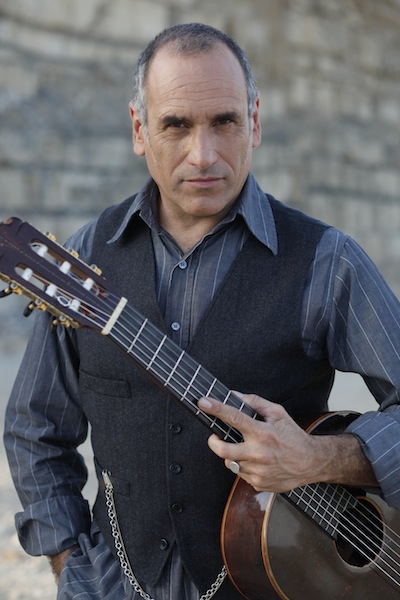
David Broza (below) will be joined by Mira Awad in concert on Feb. 28, as part of this year’s Chutzpah! Festival. (photo by Nahum Leder)
Israeli singer-songwriter David Broza is returning to Vancouver – and he’ll be joined by friend and fellow Israeli, musician (and actor) Mira Awad. The two will perform in concert on Feb. 28 as part of the Chutzpah! Festival, which runs Feb. 16-March 13.
“I have known Mira Awad for about six years,” Broza told the Independent. “First time I saw her perform was at the Tel Aviv Cameri Theatre, which is one of the most important theatres in Israel. I was very impressed and started following her work. When I was ready to go into the studio to record the album East Jerusalem/West Jerusalem, I asked her to come and sing a couple of duets with me.”
While Awad and Broza may have met only a handful of years ago, Awad told the Independent, “I grew up on Broza’s music and persona, and admired what he did.”
The two crossed paths on more than one occasion after their first meeting, said Awad. “Later on, we met several times on stages and in life, until he called me and asked that I collaborate with him on his album and movie East Jerusalem/West Jerusalem. I was proud to join him on that brave project, and we’ve been performing together since.”
East Jerusalem/West Jerusalem, which features mainly Israeli and Palestinian musicians, was recorded over the space of eight days and nights in Sabreen Studio in East Jerusalem in 2013 and released the following year. Co-produced by musician (and actor) Steve Earle and music producer Steve Greenberg, the creative journey was filmed and made into a documentary by the same name, which also came out in 2014 – and is currently available on Netflix.
“(What’s So Funny ’Bout) Peace, Love and Understanding?” is among the songs featured on the album and in the film. As is clear from human history – and current events – peace, love and understanding are downright scary to some people. Nonetheless, Broza and Awad have dedicated their lives not only to music, but to peace and other social issues.
“I am a human being and I feel kinship with all other human beings. It is beyond my grasp how people can hurt other people like what is happening in the world,” said Awad. “I just cannot understand how one man can think that another is less than him, or deserves less. So, inequality and injustice, no matter where, are total obscenities in my opinion, and I feel obligated to do anything in my power to banish them.”
David Broza (photo by Ilan Besor)
“I have always been involved in social activities, ever since I was a young boy,” said Broza, giving as an example his continuing work with people with disabilities and, in particular, with the Israel Sports Centre for the Disabled in Ramat Gan, which his father helped found when Broza was about 6 years old. “He would then take me along and ask me to help around,” said Broza of his father.
Broza also brings music to Shuafat refugee camp in East Jerusalem, which he discusses in the documentary East Jerusalem/West Jerusalem.
“The coexistence initiatives I have been involved with since I was 19,” he said, “are much due to my grandfather, Wellesley Aron, who, amongst many other initiatives, was one of the founders of the Israeli Arab village Neve Shalom/Wahat al-Salam, where the essential curriculum for peace studies and conflict resolution is developed. So, when I recorded my first written song ‘Yihye Tov’ (‘Things Will Be Better’) and it became a big success, I joined in all activities … in support of the peace process which had just started, [in] 1977.”
On the peace front, both Broza and Awad – and many others advocating for peace – face strong and even dangerous opposition.
“I would think that Mira probably has more of an issue since she is very committed to finding a way and is ahead of the pack,” said Broza. “I have been at it for so many years that it has become part of my being. I also believe in working with everyone when it comes to coexistence and conflict resolution, so I don’t exclude either the Palestinian side or the settler side. Of course, I am not immune to controversial and sometimes harsh commentary and opposition.”
In an interview last year with British online media outlet Jewish News, Awad – who was born in Rameh, in the Galilee, in northern Israel, and whose father is Palestinian and mother is Bulgarian – describes her situation.
“You call me Israeli Arab – but I call myself Israeli Palestinian and even that causes controversy,” she told the paper. “If I say that I am Israeli Arab, then my fellow Palestinians think that I am trying to disown my Palestinian roots and if I call myself an Israeli Palestinian, then the Israelis feel offended. They say: ‘If you are so Palestinian, go live in Gaza.’
“So, I identify myself only as an Israeli and not Palestinian. It mixes things up when you say both. The mere fact there is controversy around the definition might show you just a little bit of the situation faced by Israeli Palestinians in Israel. We are walking a very thin line all the time.”
In the song “Bahlawan” (“Acrobat”) and in a TEDx Talk, Awad describes how she maintains her balance in life, using the metaphor of an acrobat, who, she explains, must keep looking forward, both in order to not fall, but also to potentially “fly” (again, metaphorically).
“When you believe in something, when your vision is clear, you are like a good acrobat, you look onto the horizon and keep your balance,” she told the Independent. “If you start looking down, and calculate your risks, you will certainly fall and be eaten by the wolves waiting for you to trip. I think both David and I have a clear vision for what we believe in and, therefore, we keep our balance.”
“Empathy is the key,” said Broza. “You cannot think of yourself as the one who knows better than the other. Must learn to listen, always. I learn all the time from being exposed to such diverse people. With music, there is only one way, and that is to harmonize, so we keep eyes and ears open and stay in tune together.”
“The evidence is there, everywhere, that people just want to live, go to work, raise their children safely and take them on the occasional holiday,” added Awad. “We just need to encourage these silent masses to participate in the change process, to push their leaders towards resolution that is good for humans on both sides of the fence.”
One of the ways in which Broza attempts to do this is through music, giving benefit concerts, performing in hospitals and in crisis areas, offering workshops, and participating in or leading other social-minded projects and collaborations. “It is the backbone of my world,” he said of music.
“Music is my personal therapy,” said Awad. “As a musician, I deal with my thoughts, pains, joys, through music. Nothing stays cooped up inside, it is all put out into the fresh air, where everyone can see and hear it. But, in addition, I really feel that music has an advantage, it aims straight to subconscious levels, where people have fewer defences and borders, therefore, we as musicians can penetrate where other change-makers cannot.”
Broza is “very much looking forward to returning to perform in Vancouver and finally to take part in the Chutzpah! Festival.” He said his show will cover songs from his 40-year career, including some of his biggest hits, such as “HaIsha Sheiti” (“The Woman by My Side”) and “Yihye Tov.”
“It also covers my Spanish albums and some of the American albums,” he added. “The highlight is my having Mira join me on our songs from the album and film East Jerusalem/West Jerusalem, and she will be performing a couple of her own songs.”
For her part, Awad said she is “looking forward to arriving in Vancouver with this powerful collaboration. I cherish the friendship with David and the magic that happens when we are on stage together. I hope we convince all the people present how stupid and foolish all these disputes are, and that the things we have in common are way deeper than the stuff that divides us.”
David Broza and Mira Awad in concert takes place Feb. 28, 8 p.m., at Rothstein Theatre. For tickets ($43.75/$31.35), call 604-257-5145 or visit chutzpahfestival.com. Other music offerings include the Klezmatics 30th Anniversary Tour (Feb. 23), Marbin with the band MNGWA opening (March 3), Maya Avraham Band (March 7), Lyla Canté (March 9), Shalom Hanoch with Moshe Levi (March 8) and Landon Braverman and Friends (April 2). The festival also features dance, theatre and comedy.
David Broza, left, and Ali Paris will perform in concert. (photo from Chutzpah! Festival)
Tickets are now on sale for the 17th annual Chutzpah! Lisa Nemetz International Jewish Performing Arts Festival, which will run from Feb. 16 to March 13, at venues including Rothstein Theatre, York Theatre, Scotiabank Dance Centre and the Biltmore Cabaret.
“We are all excited for another year of presenting an electrifying array of internationally acclaimed dancers, musicians, comedians and theatrical artists to our audiences in Canadian, Western Canadian and world premières. We’re headed for an energizing and thrilling journey from stand-up comedy to theatrical drama to rich global music to explosive and elegant dance!” said Mary-Louise Albert, Chutzpah!’s artistic and managing director.
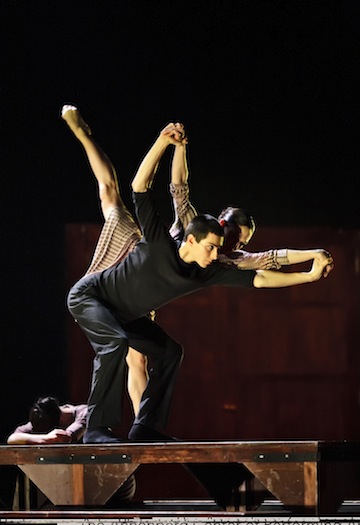
Italy’s Spellbound Contemporary Ballet returns to Vancouver, bringing with them Carmina Burana. (photo by Mariano Bevilacqua)
As it does every year, the 2017 Chutzpah! Festival dance series presents some of the most sought-after contemporary choreographers in the world. This year’s performances include the return of Italy’s Spellbound Contemporary Ballet with their full-length Carmina Burana; Israel’s Yossi Berg and Oded Graf Dance Theatre with their acclaimed 4Men, Alice, Bach and the Deer; and Kyle Abraham/Abraham.In.Motion (United States) brings a mixed repertoire of some of Kyle Abraham’s most popular works in their Western Canadian première. Vancouver’s Shay Kuebler/Radical System Art première their completed and full-length version of Telemetry, while local choreographer and performer Tara Cheyenne Friedenberg and Italy’s award-winning Silvia Gribaudi navigate the role of comedy as a catalyst to questions of gender, culture and language and understanding – this is world première presented with the Dance Centre. As well, in Chutzpah! Plus (May 13-14), there is Birds Sing a Pretty Song (Canada/United States/Israel/Argentina), an exploration through dance, film, interactive media and live music created by Rebecca Margolick and Maxx Berkowitz during a yearlong fellowship in New York City with LABA: A Laboratory for New Jewish Culture.
Among the Chutzpah! Festival 2017 musical highlights is Grammy-winners the Klezmatics 30th Anniversary Tour (United States). In concert together will be David Broza, whose music reflects the three different countries in which he was raised (Israel, Spain and England), and Ali Paris, who fuses Middle Eastern and Western music styles, and plays the qanun, a rare 76-string zither that dates back to the 14th century. Also in concert together will be Shalom Hanoch – touted as “the King of Israeli Rock” and compared to musicians such as Neil Young and Mick Jagger – who will be joined on stage by his longtime music producer, partner and keyboard player Moshe Levi.
Now based out of Chicago, Marbin, founded by Israeli guitarist Dani Rabin and Israeli saxophonist Danny Markovitch, is a progressive jazz-rock band, and MNGWA [ming-wah] opens their performance, mixing elements of psychedelic rock, dub, African rhythms, and vocals in four languages. Israeli singer Maya Avraham, who is known by Chutzpah! audiences from her performances with the Idan Raichel Project, comes to Vancouver with her band of Israeli and American musicians, and Lyla Canté (United States/Israel/Japan/Argentina) also joins the festival – exploring the intersection of Sephardi, flamenco and Ashkenazi music. For Chutzpah! Plus (April 2), composer Landon Braverman and Friends put on an evening of musical theatre – while currently based in New York, Braverman is originally from Vancouver.
With respect to theatre, one of this year’s Chutzpah! highlights is Wrestling Jerusalem, created and performed by Aaron Davidman. Set in America, Israel and Palestine, the play follows one man’s journey to help understand the Israeli-Palestinian conflict. Davidman’s solo performance is a personal story that grapples with the complexities of identity, history and social justice.
Another theatre draw is Folk Lordz, high-speed and multicultural improv featuring two members of Edmonton-based Rapid Fire Theatre, which was co-created by Todd Houseman and Ben Gorodetsky and brings together the unlikely combination of Cree storytelling, Chekhovian character drama and spontaneous comedy.
Comedy highlights include Mark Schiff (United States), who has headlined major casinos and clubs and has appeared many times on both The Tonight Show with Jay Leno and Late Night with David Letterman. He has had HBO and Showtime specials, was a featured act at the Montreal Comedy Festival and regularly opens for Jerry Seinfeld.
Also on the comedy front, there is a double bill: Ali Hassan and Judy Gold. Canada’s Hassan appears in his one-man show Muslim Interrupted; Hassan is a stand-up comedian, actor, chef and radio and television celebrity, and is the host of Laugh Out Loud on CBC Radio and SIRIUSXM. Gold’s (United States) most recent TV appearances include guest-starring roles on Louie, Broad City, The Unbreakable Kimmy Schmidt and Inside Amy Schumer, and she has a recurring role on the upcoming series on TBS Search Party. Gold has had stand-up specials on HBO (Cable Ace Award), Comedy Central and LOGO and was twice nominated for the American Comedy Award for funniest female comedian.
After the success of Chutzpah’s first literary event in 2016, this year’s Chutzpah! features author Christopher Noxon in Hollywood Stories, a special pre-festival event. Noxon is an author, journalist and illustrator and his humorous and unflinching Plus One is a novel about an interfaith family set in contemporary Los Angeles. Noxon is married to television writer and producer Jenji Kohan, creator of Orange is the New Black. This event is presented with the Cherie Smith JCC Jewish Book Festival and will take place on Feb. 5.
Single tickets for Chutzpah! range from $23 to $50 and are on sale now from chutzpahfestival.com, the festival box office, 604-257-5145, or Tickets Tonight, 604-684-2787. Chutzi Packs are also available – see four different shows for $94 – and new this year is a special five-show dance pack for $115.
Tickets will be available in-person starting Jan. 30 at the on-site festival box office at the Jewish Community Centre of Greater Vancouver. For hours and other information, visit chutzpahfestival.com.