Skip to content
  • Home
  • Subscribe / donate
  • Events calendar
  • News
    • Local
    • National
    • Israel
    • World
    • עניין בחדשות
      A roundup of news in Canada and further afield, in Hebrew.
  • Opinion
    • From the JI
    • Op-Ed
  • Arts & Culture
    • Performing Arts
    • Music
    • Books
    • Visual Arts
    • TV & Film
  • Life
    • Celebrating the Holidays
    • Travel
    • The Daily Snooze
      Cartoons by Jacob Samuel
    • Mystery Photo
      Help the JI and JMABC fill in the gaps in our archives.
  • Community Links
    • Organizations, Etc.
    • Other News Sources & Blogs
    • Business Directory
  • FAQ
  • JI Chai Celebration
  • JI@88! video

Recent Posts

  • Sharing her testimony
  • Fall fight takes leap forward
  • The balancing of rights
  • Multiple Tony n’ Tina roles
  • Stories of trauma, resilience
  • Celebrate our culture
  • A responsibility to help
  • What wellness means at JCC
  • Together in mourning
  • Downhill after Trump?
  • Birth control even easier now
  • Eco-Sisters mentorship
  • Unexpected discoveries
  • Study’s results hopeful
  • Bad behaviour affects us all
  • Thankful for the police
  • UBC needs a wake-up call
  • Recalling a shining star
  • Sleep well …
  • BGU fosters startup culture
  • Photography and glass
  • Is it the end of an era?
  • Taking life a step at a time
  • Nakba exhibit biased
  • Film festival starts next week
  • Musical with heart and soul
  • Rabbi marks 13 years
  • Keeper of VTT’s history
  • Gala fêtes Infeld’s 20th
  • Building JWest together
  • Challah Mom comes to Vancouver
  • What to do about media bias
  • Education offers hope
  • Remembrance – a moral act
  • What makes us human
  • המלחמות של נתניהו וטראמפ

Archives

Follow @JewishIndie
image - The CJN - Visit Us Banner - 300x600 - 101625

Tag: music

Improvisation on the edge

Improvisation on the edge

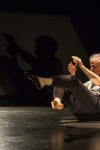
Martin Gotfrit co-created Real Time Composition Study, which is part of this year’s Dancing on the Edge. (photo by Paula Viitanen)

To celebrate its 30th year, this July’s Dancing on the Edge festival will feature more than 30 performances, including Real Time Composition Study by Rob Kitsos, Yves Candau and Jewish community member Martin Gotfrit.

“We are three artists with varying interests in dance, sound-making and music, etc., who are exploring creating abstract work spontaneously within the confines of a set space and time,” Gotfrit told the Independent in an email interview. “The work is entirely improvised but, since we’ve been rehearsing (i.e. meeting and exploring movement, sound and light) for 10 months, we have been building an awareness of each other in the space and of our collective efforts. We also work with large conceptual ideas, as well as simple structures, to make it all a little more coherent. The work is not intentionally narrative but words and themes can occasionally emerge.”

Gotfrit not only performs in Real Time, but is its composer. He has numerous recordings to his credit, and has received much recognition, via awards and grants, for his work. Among his affiliations, he is associate composer, Canadian Music Centre; founding member, Canadian Electronic Community; and member, Guild of Canadian Film Composers. He has served two terms as director of the School for the Contemporary Arts at Simon Fraser University and been associate dean and dean of SFU’s faculty of communication, art and technology.

“I’ve just retired after 37 years at SFU as a professor in music and administrator,” he said. “I’ve been performing for a very long time in a variety of ensembles and in many different contexts. As a composer, I’ve created music for film, as well as for new media, theatre and dance performances. I’ve also had the opportunity to move on stage occasionally in those contexts as well. If I had to summarize what I do, I’d say I’m an improviser who has worked in many different forms.”

Gotfrit is part of the Vancouver band Sulam (which means ladder in Hebrew), where he contributes his guitar, mandolin and vocal talents.

“I’m quite active in my synagogue (Or Shalom) and, for more than a decade, I’ve been a part of the band of the monthly Hebrew chanting event Chanting and Chocolate,” he said about his other community involvements. “I returned to be more actively involved in Jewish life as my kids approached bar mitzvah age. I found many like-minded souls at Or Shalom.”

Gotfrit met Kitsos when he started working at SFU, and Candau when he joined the school as a graduate student. About how and when Real Time Composition Study came into being, Gotifrit said, “Rob and I had worked together in the past and we share a love of improvisation and a similar esthetic. We both find Yves’ work very interesting and compatible with our interests. We three started meeting weekly in September of 2017. The work has evolved in many surprising ways since then. For example, when we began, I was sitting off stage playing the music live. As time went on, I began to move more into the centre of the movement space as Yves and Rob (a professional drummer himself) began to take on other roles as well.”

As to what he plans on doing now that he is retired, Gotfrit said, “In addition to playing a wide variety of music with a number of groups (and practising of course), I’m studying to be a pilates instructor. I’ve been a practitioner for almost 40 years. I’m currently interning at the Vancouver Pilates Centre.”

Real Time Composition Study is part of EDGE Seven, July 13, 7 p.m., and July 14, 9 p.m., at Firehall Arts Centre, as is Pathways, by Jewish community member Noam Gagnon (Vision Impure). Other community members involved in Dancing on the Edge this year include Amber Funk Barton (the response.), Gail Lotenberg (LINK Dance Foundation) and Vanessa Goodman (in MascallDance’s OW!). The festival runs July 5-14. For tickets and the full schedule, visit dancingontheedge.org.

Format ImagePosted on June 22, 2018June 19, 2018Author Cynthia RamsayCategories Performing ArtsTags dance, DOTE, film, Firehall Arts Centre, Martin Gotfrit, music
Music helps body and mind

Music helps body and mind

Perla Barabak gave a music workshop on April 17 as part of Jewish Seniors Alliance’s Snider Foundation Empowerment Series. (photo from JSA)

The fourth session of this season’s Jewish Seniors Alliance Snider Foundation Empowerment Series was held with the co-sponsorship of Congregation Beth Israel on April 17. The theme of “Laughter and Music: Feeding the Soul” continued with a program entitled Perla’s Music Workshop.

About 65 seniors were present to enjoy the afternoon event, which began with the regular Tuesday seniors lunch provided by Jewish Family Services. Queenie Hamovich of JFS welcomed everyone and introduced Ken Levitt, president of JSA.

Levitt reviewed some of the JSA programs, including the peer support services. He asked audience members to consider joining JSA and encouraged them to think of volunteering for some of the peer support initiaves. He then introduced the speaker for the afternoon, Perla Barabak.

Barabak believes that music helps the body and mind to relax. It also touches the heart and soul, she said, making it easier for feelings to surface. Thus, music can provide multiple benefits.

Barabak began with some exercises, asking the audience to sound out their names musically. She began with her own name and many people joined in. She talked about active and passive listening; for example, listening at a concert as opposed to hearing background music in an elevator.

Throughout history, she noted, music has been used in communication, movement and at social events (weddings, b’nai mitzvah, banquets).

Songs represent a culture, she said. In this way, music is the song the heart sings. Songs remain with us into our senior years, when other memories may fade. Songs and singing can create pleasure and empowerment.

Barabak then did a guided meditation, getting everyone to close their eyes, listen to the music and imagine a colour. Barabak – who has used music in her work as a psychologist – pointed out how relaxing this is and how music balances our thoughts and feelings. She said she feels that, where there is life, there is music.

As the event ended, many in the audience got up and danced to the music being played.

The next Empowerment Series event – Music for Our Hearts and Songs We Love – will take place on June 25 at Beth Tikvah Synagogue. Caviar and Lace, with Michelle Carlisle and Saul Berson, will perform a mix of classic, jazz and folk songs.

Shanie Levin, MSW, worked for many years in the field of child welfare. During that time, she was active in the union. As well, she participated in amateur dramatics. She has served on the board of the Jewish Federation of Greater Vancouver and is presently on the executive of Jewish Seniors Alliance and a member of the editorial committee.

Format ImagePosted on May 25, 2018May 24, 2018Author Shanie LevinCategories LocalTags Empowerment, healthcare, JSA, music, seniors
The power of music and love

The power of music and love

Ted Littlemore, in Orfeo ed Euridice, the research for which will be presented by Idan Cohen and Ne. Sans on May 13 at the Dance Centre. (photo by Ted Littlemore)

A relatively recent arrival in Vancouver, Israeli choreographer and opera director Idan Cohen is already making his mark. On May 13 – with the support of the Dance Centre, Arts Umbrella and Vancouver Academy of Music – Cohen and Ne. Sans will present Orfeo ed Euridice, a glimpse into Cohen’s reenvisioning of Christoph Willibald Gluck’s opera.

The myth of Orpheus is a story of love. Poet and musician Orfeo mourns the death of his wife, Euridice, and he determines to get her back from Hades. With the intervention of Amor (Cupid), the god of love, Orfeo heads into the Underworld, gaining entry by winning over the Furies with his music, and he is reunited with his wife. However, Amor has set a condition – Orfeo must not look at Euridice, or explain why he is not doing so, until the two are back on earth. It’s a condition Orfeo breaks when Euridice begins to doubt his love and begs for a glance to assure her. When he gives in, Euridice dies again and Orfeo, grief-stricken, resolves to kill himself so that he can be with her. In the face of such love, Amor intervenes once more, to save both Euridice and Orfeo, and return them to earth.

“This opera was created in 1762 and, for me, a significant part of directing a classic opera is the studying of the values that originally inspired the music and the performance,” Cohen told the Independent. “Looking at concepts of novelty and tradition and respecting those as the DNA of this creation was quite valuable in my creative process. At the same time, those are values that are violent, discriminative and often quite outdated. One clear example that I personally find fascinating is the fact that Orfeo ed Euridice was originally written to be performed by a male castrato. Nowadays, it is often performed by a female mezzo-soprano or a male singer singing in a falsetto technique, but, for me, the history of the castrato and the violence that history entails against the human body is an example of difficult questions and issues that are a part of the time this opera was created in.

“It is even more fascinating and relevant,” Cohen added, “since the mythological story of Orpheus presents to us a musician and a poet who had the ability to enchant all living creatures through his musical gift. Orpheus’s strength was art and, hence, he is the ultimate representation of art and the artist. So, in Orfeo, these values can be represented in the most honest, vulnerable way, exposing their inner human truth and the limits through which we define and accept artistic beauty.”

Cohen grew up in Kibbutz Mizra in the north of Israel, but lived in Tel Aviv for 10 years before coming to Vancouver with his partner about a year ago. “When we got here, I completely fell in love with the city, the nature, the people,” said Cohen.

“Besides the personal reasons that brought me here,” he said, “I’m finding Vancouver’s arts scene most inspiring, and the city was very welcoming to me. I’ve received this wonderful DanceLab residency at the Dance Centre, I have been creating for Arts Umbrella’s pre-professional program, led by Lesley Telford, and with Modus Operandi, directed by David Raymond and Tiffany Tregarthen. These great artists invited me to teach and create when I just got here, and I immediately felt at home.

“Also, for the past years, I have been interested in directing opera through dance and movement … [and] there is so much going on in the city both in opera and in dance – I feel I have something to contribute to this city’s rich arts scene by fusing the two. Historically, they do belong together.”

As well, said Cohen, “living in Vancouver makes traveling so much easier and, when you travel often, this can be very convenient and helpful. This June, I will present at the Seattle International Dance Festival with Ne. Sans, my new Vancouver-based society, and, on the following day, will catch a flight to go to Sydney to present work in Sydney and Newcastle.”

According to Cohen’s website, Ne. Sans “is a home for the research and creation of work that seeks to deepen and reconnect opera and dance.” And this melding “opens a whole new world of collaborative opportunities: a space that involves working with singers, dancers, musicians, visual artists and designers.”

“Directing an opera like Orfeo ed Euridice through dance is a huge task that requires a tremendous amount of preparation,” said Cohen. “This opera was created 256 years ago, but has kept its immortality through its beautiful music and a story so rich, layered and full of depth.”

As he enjoys exploring operas with dancers in the studio – “It’s a great way to get intimate with the music, through the body” – Cohen said, “I’ve started this process by creating a 20-minute duet that was inspired by Orfeo ed Euridice, using parts of Gluck’s music and the main ideas behind the story, and translating those to pure dance. The dramaturgy of that dance piece was inspired by the opera and its libretto [by Ranieri De’ Calzabigi]…. But, looking at it closely and breaking it apart in the studio presented an opportunity to create a more abstract version of the story, in dance form. Fortunately, it was very well-received and won an award from the Be’er Sheva Fringe Festival, in Israel’s Negev.”

The presentation at the Dance Centre “will be performed by 18 singers from VAM [Vancouver Academy of Music] Schola Cantorum chorus, conducted by Kathleen Allan; six dancers from Arts Umbrella’s pre-professional program; two amazing dancers/musicians, Ted Littlemore and Jeremy O’Neil; and mezzo Debi Wong [director of re:Naissance opera company]. It’s a rather big cast for what I’m hoping will be an honest, pretty direct sharing of the research and ideas that will then be transformed into the ‘real deal,’ the full opera production.”

The Orfeo ed Euridice presentation is open to the public and is free of charge. It takes place in the Dance Centre’s Faris Family Studio May 13, 3 p.m. RSVP to [email protected] to reserve a seat.

Format ImagePosted on May 4, 2018May 2, 2018Author Cynthia RamsayCategories Performing ArtsTags dance, Idan Cohen, music, opera, Orfeo ed Euridice
Zwicker’s one-stop

Zwicker’s one-stop

Jordan Zwicker (photo from JZE)

If there’s one Jewish personality in Vancouver that almost everyone knows, it’s Jordan Zwicker. The man behind many of the city’s Jewish celebrations, Zwicker, 42, has been enlivening Vancouver parties since 2003, when he first arrived here from Toronto, seeking a change of pace. Recently, he rebranded his company as Jordan Zwicker Entertainment and is now exclusively offering interactive parties that promise to get everyone excited, and onto the dance floor.

Previously, Zwicker’s roster of services included DJ-driven events with music but no interactivity with guests. He has changed up the format, with positive results.

“The kids we’re entertaining at most Jewish events are age 12 and they need motivation to create atmosphere and have a great time,” he explained. “In a personality-driven show like ours we bring a motivator who creates an experience that engages everyone. By comparison, a purely DJ-driven event doesn’t lend itself to a great, engaging environment because, without anyone running the show, the kids don’t know what to do.”

Zwicker and his team – five DJs, two dancers and a party planner – have relaunched the company’s crew with a group of dancers from Dance Play who will lead the parties. “We’re coming up with the newest songs and creating our own choreographed moves to teach to kids at parties,” he said. “Every event will have at least one new flavour to distinguish it and we’re constantly coming up with new ideas for games and including them in our shows.”

Thanks to 25 years in the business, a passion for parties and a deep understanding of how they work, Zwicker knows how to engage kids and adults at a party.

“We look at an event as a produced show with lots of elements and coordination required,” he reflected. “There’s dinner, kids’ games, interactive dance sets, slide shows, speeches, dessert and more dancing. We’re always doing something because we’re running the party. We also offer other entertainment options, like photo booths with a magic mirror, a graffiti wall, an airbrush artist and a magician. Basically, we’re a one-stop shop where you can take care of everything with one call.”

Today, bar and bat mitzvahs constitute up to 60% of business, with weddings, corporate events, schools and private events comprising the remaining 40%. Zwicker works in Metro Vancouver, Victoria, Calgary and Winnipeg but says he loves the parties so much, he feels like he’s never worked a day in his life. Getting to know families in the Jewish community is an essential part of his work and one he thoroughly enjoys.

“As an entertainment company, we are friends with the parents and the kids, because the kids are our business. We take the time and effort to get to know them and learn their preferences because, when we do a party, we’re all in this together,” he said. “The kids appreciate the fact that we’re on their level and we ensure that they and their friends enjoy their event and that we don’t lose their attention. We charge what we charge for that very reason: there’s a value behind it – the experience and expertise that’s kept us as the entertainment leader in Vancouver.”

For more information, visit jzentertainment.ca.

Lauren Kramer, an award-winning writer and editor, lives in Richmond. To read her work online, visit laurenkramer.net.

Format ImagePosted on April 27, 2018April 25, 2018Author Lauren KramerCategories LocalTags entertainment, Jordan Zwicker, music, simchot
A few Pesach songs’ origins

A few Pesach songs’ origins

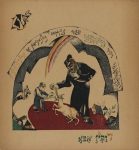
An illustration by Russian artist El Lissitzky in the book Had Gadya, 1919. (photo from getty.edu)

We sing them every year, but from where did Passover songs such as “Chad Gadya” originate?

“Chad Gadya” or “One Little Goat” is a playful cumulative song in Aramaic and Hebrew, sung at the end of the seder. According to Wikipedia, the melody may have its roots in medieval German folk music. It first appeared in a Haggadah printed in Prague in 1590, which makes it the most recent inclusion to the traditional Passover seder liturgy.

The Haggadah was a project that was initiated by the anshei Knesset Hagedola, the members of the Great Assembly, the supreme council of sages that ruled during Temple times in Jerusalem. They were the first to compile and canonize many of the texts that we have today. The Haggadah, however, was only started during that era – it was not completed until much later.

“Chad Gadya” also only found its way into the Haggadah at a much later date. This is because the song was written in Aramaic, which was the vernacular of the Jews of Babylon, and not in Hebrew – at least not in Hebrew for the most part. The slaughterer, angel of death and Holy One Blessed Be He in the song are referred to in Hebrew.

Some suggest that “Chad Gadya” was written by Rabbi Eliezer Rokeach in the 12th century.

According to some modern Jewish commentators, the song may be symbolic. One interpretation is that “Chad Gadya” is about the different nations that have conquered the Land of Israel: the kid (goat) symbolizes the Jewish people; the cat, Assyria; the dog, Babylon; the stick, Persia; the fire, Macedonia; the water, the Roman Empire; the ox, the Saracens; the slaughterer, the Crusaders; the angel of death, the Turks. At the end, God returns to send the Jews back to Israel. The recurring refrain of two zuzim is a reference to the two stone tablets given to Moses on Mount Sinai, or refer to Moses and Aaron.

Versions of the song exist in Ladino, Judeo-Italian and Judeo-Arabic.

***

We know that the “Avadim Hayinu” (“We Were Slaves”) section was written by Rabbi Eliezer Hagadol in the second century). It is an introduction to the formal narration of the Exodus from Egypt, based on the views of Samuel. Passages of unknown origin supplement the narration, stressing its importance.

***

“Echad Mi Yodea” (“Who Knows One”) is another cumulative riddle with versions in Hebrew and Yiddish. The song relates the 13 basics of Judaism. After relating God’s wonders and kindness and the events of the Exodus, it demonstrates how everything can and should relate to God.

According to Encyclopedia Judaica, this song is first found in Ashkenazi Haggadot of the 16th century. It is believed to have originated in Germany in the 15th century, possibly based on the German folk song “Guter freund ich frage dich,” which means “Good friend, I ask you.”

***

“Dayenu” is a Hebrew song, traditionally sung during Passover. The word itself essentially means, “It would have been enough for us.” Day is the Hebrew word for “enough” and the suffix enu means “our.”

This traditional up-beat Passover song is more than 1,000 years old. The earliest full text of the song occurs in the first medieval Haggadah, which is part of the ninth-century Seder Rav Amram.

The song goes through a series of gifts believed granted by God to the Israelites, such as Torah and Shabbat, proclaiming that any of them alone would have been sufficient. It is 15 verses long, sequentially recounting each divine intervention in the story of the Exodus. After each divine act, the chorus “[If God had done only this,] it would have been enough for us” is sung.

Canadian journalist, author and social activist Michele Landsberg wrote “The Women’s Dayenu”:

“If Eve had been created in the image of God and not as a helper to Adam, dayenu.

“If she had been created as Adam’s equal and not been considered a temptress, dayenu.

“If Lot’s wife had been honoured for compassion for looking back at the fate of her family in Sodom, and had not been punished for it, dayenu.

“If our mothers had been honoured for their daughters as well as for their sons, dayenu.

“If our fathers had not pitted our mothers against each other, like Abraham with Sarah and Hagar, or Jacob with Leah and Rachel, dayenu.

“If the just women in Egypt who caused our redemption had been given sufficient recognition, dayenu.

“If Miriam were given her seat with Moses and Aaron in our legacy, dayenu.

“If women had written the Haggadah and placed our mothers where they belong in history, dayenu.

“If every generation of women together with every generation of men would continue to go out of Egypt, dayenu.”

***

“Adir Hu” (“Mighty is He”) is a hymn naming the virtues of God in the order of the Hebrew alphabet, expressing hope that God will rebuild the Holy Temple speedily.

The tune of “Adir Hu” has undergone several variations over the years, but the origin is from the German minnesinger period. The earliest extant music for the song is from the 1644 Rittangel Haggadah, the second form was in the 1677 Haggadah Zevach Pesach, and the third version can be found in the 1769 Selig Haggadah. In the Selig Haggadah, “Adir Hu” is also referred to, in German, as “Baugesang” (the song of the rebuilding of the Temple).

There are 24 short, simple lines, each beginning with an attribute of God. Most of the virtues of God are adjectives – for instance, holy (kadosh) – however, a few are nouns, “Lord is He.”

There is also a feminist variant of the song by Rabbi Jill Hammer of the Academy for Jewish Religion in Yonkers, New York. In it, God is feminine (She) and, quoting Hammer, the song “emphasizes God’s sharing in human joys and griefs, and God’s ability to renew life through the strength of the earth.”

Sybil Kaplan is a journalist, lecturer, book reviewer and food writer in Jerusalem. She created and leads the weekly English-language Shuk Walks in Machane Yehuda, she has compiled and edited nine kosher cookbooks, and is the author of Witness to History: Ten Years as a Woman Journalist in Israel.

Format ImagePosted on March 23, 2018March 23, 2018Author Sybil KaplanCategories Celebrating the HolidaysTags Judaism, music, Passover
Salomé’s rightful place

Salomé’s rightful place

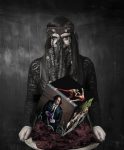
Salomé: Woman of Valor will have its world première at the Chutzpah! Festival March 8-10. (image by Anya Ross, graphics by John Greenaway)

There have been many interpretations of Salomé – thought to be the woman whose alluring dance persuaded King Herod to honour her request that he have John the Baptist beheaded – but none quite like that of Salomé: Woman of Valor, which has its world première at Chutzpah! March 8-10.

The creation of this complex, multilayered work that combines poetry, music, dance and film was led by composer and trumpeter Frank London and poet and performer Adeena Karasick. It features live music by London, percussionist Deep Singh and keyboard player Shai Bachar. The poetry is written and performed by Karasick, the dance choreographed and performed by Rebecca Margolick and Jessie Zaritt, and the video analyzing Charles Bryant’s 1923 silent film Salomé was made by Elizabeth Mak. The whole production is directed by Alex Aron.

“Frank was intrigued by the Salomé story due to the visual cornucopia of the Bryant film, and because it is a story where dance was at the centre, motivating the complex chain of events, and thus ripe for reinvention as a contemporary dance-theatre piece incorporating Bryant’s imagery,” Karasick told the Independent about why the work focuses on Salomé and not another Jewish historical or literary woman. “However, he was only aware of the [Oscar] Wilde retelling of the Salomé story and thus not really interested in her narrative. He came to me to see if I could reenvision her story in a more compelling way.”

It has always bothered her, said Karasick, how, within Christian mythology and entrenched in history by writers like Wilde, Gustave Flaubert and Stéphane Mallarmé and artists such as Gustav Klimt, Gustave Moreau and Aubrey Beardsley, “Salomé was seen as yet another Jewish temptress/Christian killer – but, in fact, there isn’t any evidence to substantiate this claim. According to apocrypha and Josephus’s Antiquities, she came from Jewish royalty and there is no evidence she murdered John the Baptist or even danced for Herod,” said Karasick.

“The only historical reference that [Herod’s wife] Herodias’s daughter’s name was Salomé is from Flavius Josephus, who makes no other claims about her – not that she danced for Herod, not that she demanded John’s head, but only that she went on to marry twice and live peacefully. The other apocryphal reference is that a daughter danced for Herod, which caused him to lose his mind and kill John the Baptist. Thus, the conflagrated Salomé that appears in the Wilde play, [Richard] Strauss opera and all subsequent productions, is an amalgamated construct, so we felt it was our duty to set the record straight.”

In fact, added Karasick, there are three women named Salomé in Jewish history: Salomé, daughter of Herodias and Herod II (circa 14-71 CE); Queen Salomé, her great-aunt (65 BCE-10 CE); and Salomé Alexandra (139-67 BCE).

“Her great-aunt, Salomé I, was the powerful sister and force behind Herod the Great, king of Judea and Second Temple rebuilder,” said Karasick, while Salomé Alexandra (also known as Shelomtzion) was one of only two women who reigned over Judea.

“I wanted my Salomé, Salomé of Valor, to carry the weight of both her genetic lineage and the cultural heredity of her name, embodying the legacy and power of the women that came before her,” said Karasick.

Karasick, who was born in Winnipeg, grew up in Vancouver, earning her bachelor’s from the University of British Columbia. She did her master’s at York University and her PhD at Concordia University. Among other things, she teaches literature and critical theory at Pratt Institute in New York, is co-founding artistic director of KlezKanada and performs her work around the world. The author of nine books – with a 10th, Checking In, published by Talonbooks, on the way – she has been awarded for her contributions to feminist thinking and, last year, the Adeena Karasick Archive was established at Special Collections, Simon Fraser University.

London – a member of the Klezmatics and the group Hasidic New Wave, who has performed with countless musicians and made numerous recordings of his own – saw Karasick perform in New York in 2011. He then hired her, she said, “along with Jake Marmer to design and lead the poetry retreat at KlezKanada…. We hadn’t yet collaborated before this, but I was always compelled by his music and the breadth of all he created as a masterful revolutionary himself, not only as a spectacularly fierce trumpet player but virtuosic composer, reinvigorating klezmer music, transcendentally intermixing it with aspects of world music, jazz, Chassidic new wave, punk – and always felt it would be a thrilling and highly symbiotic artistic match.”

When Frank approached her about the Salomé project, said Karasick, they both “fell in love with the Bryant film but were so perplexed” about Salomé’s “reputation in cultural history.”

So, Karasick started researching, “poring through the multiple and conflict[ing] narratives – through Josephus and the apocrypha, locating the many discrepancies between Christian and Jewish mythologies, speaking with specialists in the field, and became fascinated with how there are so many ‘truths,’ stories, misreadings, and how imperative it is to question these grand narratives, problematize traditional cultural, moral and religious perspectives.

“For millennia,” she said, “Jews have been portrayed as the murderers of gods and prophets in other people’s mythologies, so Salomé: Woman of Valor deconstructs this mythology, exposing how she was not a demonic murderess, and opens up the possibilities for infinite retelling and how truth itself is always a construct of veiling and unveiling.”

About the magnitude of the project, Karasick said, “As the author of nine books invested in issues of ethnicity, gender and ways to construct meaning, as professor of poetry and critical theory, gender images in the media, and poetics and performance, Salomé: Woman of Valor is a logical progression in my 30-year career, and has allowed me to integrate my experiences in one work – something that I have never done before.

“Due to the scope of this show,” she said, “I’m able to weave together the multiple styles of writing that I’ve experimented with over the years – sound poetry, homophonic translations, post-language conceptualism, kabbalistic and feminist revisionist practices, all syntactically playful, polyphonic, ironic and rhythmically complex – a fusion of my esthetic passions and expertise; opening a space of female empowerment.”

While London has been involved in many projects, Karasick said Salomé might be the first for him with performance poetry at the centre.

“We created Salomé: Woman of Valor as an integration of performance poetry, dance, music and video exploring the dialectic between narrative and abstraction – it is a quantum leap forward in collaborative artistic development, challenging my conceptual processes of making an artwork,” she said. “I couldn’t be more excited.”

Salomé: Woman of Valor is already being presented in an array of venues and contexts, said Karasick. “Its form and content make it appropriate to be presented at jazz, dance, poetry, new theatre, literary and electronic literature festivals; in performing arts centres, universities, avant garde text-based multimedia events, as well as events focusing on new media and cross arts,” she said.

“With its feminist and mystical kabbalistic take on Jewish historical subject matter and a live score which draws from East European Jewish music (klezmer) with jazz, Arabic and Indian musics, our Salomé is especially attractive to Jewish culture festivals and to presenters of Jewish music, language, dance and art.”

The libretto has been published in Italian and in English, and selections of it have been published in Bengali, Arabic, Yiddish and German. It is “being taught in universities worldwide in departments of global literature, Jewish studies and humanities and media studies,” she said.

The artists bringing Salomé: Woman of Valor to Vancouver are all “at the forefront of their respective fields,” said Karasick, “and so I feel so fortunate to be working with such powerful creators, all revolutionaries in their own ways. Frank works with Shai Bachar and Deep Singh on a number of musical projects – Deep and Frank started the internationally acclaimed bhangra-klezmer fusion band Sharabi; and [Frank] co-developed Night in the Old Marketplace with Alex Aron, so bringing her on board as a director seemed a natural fit.

“Over the five years of envisioning the piece, we tried on a number of dance styles, ranging from tribal belly dance to sword dance/swallowers, and, with the advice of (Merce Cunningham protégé) Gus Solomons, Jr., settled on the avant garde modern dance of Israeli superstar Jesse Zarrit and the stunningly poetic Rebecca Margolick, with a shout-out to the Dadaist Loïe Fuller stylings by Jodi Sperling.”

Mak’s video on Bryant’s silent film, notes the project’s promotional material, is “punctuated with Jim Andrews’ stunning vispo [visual poetry], with special video appearances by … Tony Torn as Herod, lit by Nicole Lang.”

“Together,” said Karasick, “we’re expanding our work in ways only dreamed possible; have created an intellectually provocative, audio-visual sensorium, informed by our (Frank’s and my) ongoing obsession with excess, desire and pushing boundaries.”

And it’s an interest, if not obsession, with many others, as well. The Kickstarter campaign for Salomé surpassed its goal of $20,000, about half of the project’s budget.

“The show has been garnering a lot of love and support from colleagues and patrons,” said Karasick, “perhaps due to ways that it addresses the social and political necessity to speak the unspoken, resist stereotypes, misrepresentation and outdated myths, and fosters a thinking that leads to a hybridized syncretic culture, one that honours the intermixing of blood, belief, rhythm, texture and being. Content-wise, it addresses outdated notions of identity and ethnicity, and carves out a space where difference and otherness can be celebrated. We feel incredibly grateful, and hope that we can keep growing it. Broadway, here we come!”

But, first, the Chutzpah! Festival. They have also been invited to Toronto’s Ashkenaz Festival and the Boston Jewish Music Festival, said Karasick, who will continue to tour with the Salomé books. “Frank,” she said, “will record and release the music as a CD. We hope to see it at major festivals and venues worldwide.”

The presentations of Salomé at Chutzpah! are presented in association with the Dance Centre, where the performances will take place. For tickets and the full festival lineup, visit chutzpahfestival.com.


Format ImagePosted on February 16, 2018February 14, 2018Author Cynthia RamsayCategories Performing ArtsTags Adeena Karasick, Charles Bryant, Chutzpah! Festival, dance, film, Frank London, music, Oscar Wilde, poetry, Salomé, spoken word, vispo, women
Musical tribute to dear friend

Musical tribute to dear friend

Perla Batalla brings the music of Leonard Cohen to the Rothstein Theatre March 11. (photo from Chutzpah!)

I didn’t choose singing. It chose me,” Perla Batalla told the Independent in an email interview. Batalla brings her personal and moving tribute to her good friend, Leonard Cohen, to the Chutzpah! Festival March 11.

“He was not only a mentor and a friend, but also a very great inspiration. Being as I was young when I worked with Leonard – I was in my 20s – I watched him like I was watching a master and learning as much as I possibly could,” she said. “His need to always seek the comfort of his audience was truly generous – and all too rare. We began working together in the 1980s and we never lost touch, even after I was touring on my own.

“In Leonard’s earlier tours,” she said, “he would tell stories before every song – very funny, honest stories about his life. Each night he’d tell similar stories, but they always seemed fresh – like I’d never heard them before – I think that was because of his honesty, and his ability to show up and always be authentic, be authentically Leonard Cohen.

“He had a huge impact on what I do and how I perform. If I approach a song with unconditional honesty, the meaning is not static – it can ebb and flow as I relate the words to my own life and experiences.”

In Vancouver, Batalla – who lives in Ojai, Calif. – will be joined by pianist Michael Sobie.

“He recently returned after touring as assistant conductor and pianist with the Game of Thrones Concert Stadium Tour,” Batalla said. “Michael also performs as the principal pops pianist with the Grand Rapids Symphony and has toured internationally as pianist/conductor with Broadway musicals like Les Misérables, Wicked, Aïda and tons more. He is a dream to work with.”

Perla Batalla in the House of Cohen features songs and personal stories that “reveal Cohen’s lighter side,” notes Batalla’s website. It also shows “her sincere respect and deep love for the music, the poetry and, most of all, for her dear friend, Leonard Cohen.” Cohen passed away Nov. 7, 2016.

Batalla released her first recording in 1994, an eponymous CD on the Warner/Discovery label, and has since produced six CDs on her own label, Mechuda Music, one of which, Bird on the Wire, was a tribute to Cohen. Internationally known, Batalla composes and performs in both English and Spanish. The names of two of her CDs, Discoteca Batalla and Mestiza, more than hint at how important her heritage is to her.

“I grew up in Venice, Calif.,” she said. “Our family owned a Mexican record shop called Discoteca Batalla, which served as an important hub for Latino culture in West L.A. I constantly feel the push and pull of the Afro-Mexican influence from my father and the Euro-Argentine-Jewish elements from my mom. This is my own mestiza, mix – I wouldn’t trade it for the world. From all sides, theatricality is in my bones, my roots. I don’t only use my voice to sing a song. To completely engage, I have to use my entire body. And it has to be sincere. It has to come from within.”

She said she comes from a long line of musicians on her father’s side in Mexico and theatre people on her mother’s side in Argentina. “My father was a singer and my uncle, Cipriano Silva, was a trumpet player with the world-famous Mariachi Vargas de Tecalitlán,” she added. “My desire to sing came early – when my family took a camping trip, I can remember sitting by myself among the redwoods singing to them. I made up a song and it felt strange, but good. Trees are a very attentive audience.

“When I was a little older,” she continued, “I remember watching my uncles and my father (who were usually pretty scary) singing traditional songs after dinner and openly weeping as they sang – and it occurred to me at the time that music seemed to have a unique power. By the time I was in my teens, I was studying opera privately and singing in clubs at night; I have never wanted to do anything else.”

When asked about her creative process, how a song comes to her, she said, “Research and serendipity. My current Frida Kahlo project, Blue House, is an example. I wanted this song cycle to be a love letter to the creative spirit. My songwriting partner, David Batteau, and I began by reading everything we could get our hands on; we spent a lot of time in museums; I even started to paint and do art pieces. Through research and discussion, ideas begin to appear like ghosts. It starts as a thread, and then we follow the thread to wherever it leads; destinations we had no idea were even there when we embarked.

“I am also inspired by stories. When I keep my ears open, I can hear stories everywhere. Sometimes there can be a great story hidden within a painting, a black-and-white photograph, or a symphony.”

Not only has Batalla been recognized for her work in music, but she also has been awarded for trying to heal the world in other ways, as well.

“I am most grateful for having the opportunity to do educational outreach with at-risk youth in underserved communities around the U.S.,” she said. “I take a lot of time to talk with the students about how being creative can give you power. Sometimes young people just need to be given permission to explore the artistic horizon.

“Passing on love and appreciation for music, poetry and the beauty of the Spanish language to the next generation of artists is paramount. I want young people to discover the magic of song. When words and music collide with honesty and humanity, the result is the foundation on which everything of life is built. At a time when art and music are marginalized in the education of youth, I am now more than ever committed to educational outreach as I travel throughout the world. Exposing young audiences to the beauty of art, music and poetry through music and live theatre may be our best defence against the current onslaught of cynicism.”

As for her love of Cohen’s music?

“For me, it is his imagery, use of metaphor and painful honesty, which gives Leonard’s lyrics such depth of meaning,” she said. “His poems and songs are also intrinsically personal. When I sing his songs, Leonard’s lyrics help sustain me – I reinterpret them with each performance. Plus, his lifetime dedication to his craft at the expense of all else is the epitome of devotion to beauty.”

She added, “For an artist, reading reviews or caring what everyone thinks is the kiss of death. Since I’m human, I do care what some people think, but, in the end, I do what will satisfy my creative goals and desires. I am grateful every day that I have the freedom to take chances and continue my own journey.”

Perla Batalla in the House of Cohen is at the Rothstein Theatre for one performance only, on March 11, 7:30 p.m.

For all of the Chutzpah! music offerings and the full festival schedule, visit chutzpahfestival.com.

Format ImagePosted on February 9, 2018February 7, 2018Author Cynthia RamsayCategories Performing ArtsTags Chutzpah! Festival, Leonard Cohen, music, Perla Batalla, storytelling
Leading Canadians in environment, music, mental health

Leading Canadians in environment, music, mental health

Liliana Segal with Green Chair Recycling’s 2017 Canada’s Volunteer Award.

Green Chair Recycling, founded by Liliana Segal, was recognized in 2017 as a business leader in British Columbia and the north by Canada’s Volunteer Awards. The awards, given by the Government of Canada, were presented in a ceremony held in Ottawa on Dec. 5, International Volunteer Day, to individuals and businesses across the country who contribute to and strengthen their communities.

The awards booklet noted, “Vancouver-based Green Chair Recycling is helping to keep waste of out landfills one event at a time. They work with their clients to create zero waste events, where 95% of event waste is recycled. They work with over 3,000 volunteers who are green ambassadors to track waste at their events, provide education outreach and give free presentations to any interested group. Their volunteers also run free educational field trips to landfill and recycling facilities to show students the reality of landfills and to learn how recycling happens in their communities.”

* * *

The Centre for Addiction and Mental Health (CAMH) is Canada’s largest mental health and addiction teaching hospital, as well as one of the world’s leading research centres in its field. CAMH Difference Makers – 150 Leading Canadians for Mental Health was a national movement that started in 2017. Its purpose is to encourage people to speak freely about mental illness because CAMH sees how these conversations help break down the stigma that prevents people from getting the care they need.

In April of last year, guided by a national committee of leading experts and advocates, CAMH launched a cross-Canada call for nominations of people influencing change in the area of mental health and giving us new reasons for hope. It invited Canadians to nominate a person with lived experience, a caregiver or family member, a health professional, a researcher, an advocate, a philanthropist – anyone making a difference in small or big ways; in local or international circles; in public or private lives. Nominations were open until July 1, and more than 3,700 names put forward.

Among the 150 selected as Leading Canadians for Mental Health were members of the B.C. Jewish community. In alphabetical order, they were David Granirer, Dr. Gabor Maté and Lorne Segal.

David Granirer

It’s hard to laugh when it seems the entire world is crumbling around you. That is what makes Granirer’s approach to dealing with depression so noteworthy. When he experienced depression as a teenager, Granirer saw his condition as something shameful. Today, he realizes shame is as bad as the illness itself.

As a staff member at the Vancouver Crisis Centre, Granirer began to use humour at work to help trainees get through stressful days. This led to a growing passion for stand-up comedy and to eventually founding Stand Up for Mental Health. The program teaches stand-up comedy to people living with mental illness to help them build confidence and break down stigma. Through Stand Up’s 500 shows so far – performed to mental health organizations, government, corporations, the military, schools and correctional facilities – Granirer has helped thousands see mental health in a different light. Through his unique program, Granirer helps people understand not only do we need to shed shame, but that a smile, a laugh and happiness can exist alongside the challenges of mental illness.

Dr. Gabor Maté

When Maté retired from medicine, he turned from using his insights on addiction, early childhood development and trauma to support society’s most marginalized, to inviting growing audiences in Canada and around the world into new dialogues on compassion. He is internationally known for his work on the mind/body unity in health and illness, on attention deficit disorder and other childhood developmental issues, and his breakthrough analysis of addiction as a psychophysiological response to childhood trauma and emotional loss. He is the author of four best-selling books published in 20 languages on five continents, including When the Body Says No: Exploring the Stress-Disease Connection and the award-winning In the Realm of Hungry Ghosts: Close Encounters With Addiction. His TED talks, YouTube videos and international speeches have helped focus attention on the mental health and trauma issues that underlie addiction. Maté shows humility and compassion, giving a sense of hope that, in a world where many people are shut down, defensive and fearful, there is a guiding light ahead and a new world of possibility.

Lorne Segal

Segal, a business leader and philanthropist, has been involved with Coast Mental Health’s Courage to Come Back Awards since their inception in 1998. At that time, the stigma surrounding mental illness was even more of a barrier to public engagement than it is today. During his almost two decades with the awards, including serving as chair for the past 12 years, he has helped transform the event into one of British Columbia’s premier mental health campaigns. Under Segal’s tenure, the number of guests has tripled to 1,500, with the awards also reaching more than a million people through television, print and other media. Segal has been instrumental in inspiring more than $15 million in support for mental health programs such as housing, employment and other support services to more than 4,000 people annually living with mental illness. His decision to start supporting the event at a time when mental health wasn’t popular was quite simple. He saw an issue that affected many and wanted to do something about it. Not only has he been successful in this, he has helped spread greater awareness and support for mental health in British Columbia.

* * *

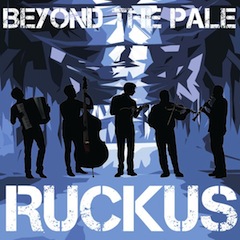
image - Ruckus CD coverToronto-based band Beyond the Pale’s latest CD, Ruckus, reviewed in the Jewish Independent Sept. 15, 2017, was nominated for two Canadian Folk Music Awards last year, for World Music Group of the Year and Instrumental Group of the Year. While the band didn’t win a 2017 award, it has been nominated now for eight CFMA honours, and won four.

“Six of the 12 songs on Ruckus are originals, while the others are arrangements of traditional melodies,” noted the JI’s review (jewishindependent.ca/the-complexities-of-ruckus). “All of the musicians either composed an original piece or participated in the arranging. They are a tight ensemble who play around with tempo and style with such ease that the complexity of what they’ve created isn’t what you’ll first notice. And that’s what makes their music so good.”

Format ImagePosted on January 26, 2018January 24, 2018Author Community members/organizationsCategories NationalTags Beyond the Pale, David Granirer, Gabor Maté, Green Chair Recycling, Liliana Segal, Lorne Segal, mental health, music
Healing after tragedy

Healing after tragedy

Mishelle Cuttler has the challenge of supervising the musical elements of The Events, which features a different community choir every show. (photo from Pi Theatre)

In 2011, while he was out with his son, who was then 12 years old, writer David Greig read the news that Anders Breivik had killed 77 people in Norway – eight using a car bomb in Oslo, which also injured more than 200 other people, and then traveling to the island of Utøya to a summer camp for teens, where he shot and killed another 69 and injured more than 100.

“My son saw I was very affected and, because he was wondering why, I began to try and tell him what the news was and its implications,” said Greif in an interview with BBC Writersroom. “He just kept repeating the question why? why? why? and I found the discussion quickly became very profound, about the nature of evil and whether it is ever possible to understand someone who shoots children for a political reason. I found trying to answer these questions became a compulsion I had to try and understand.”

The result was The Events, which came into being when Greig met producer Ramin Gray at the Edinburgh Fringe. Gray had been having similar thoughts, said Greig. “That meeting made me know it had to be a play.”

It’s a play that has been staged around the world, and presenting it in Vancouver are Pi Theatre and the PuSh International Performing Arts Festival. After every performance, there will be a post-show discussion and, after the Jan. 17 preview, Rabbi Laura Duhan Kaplan, director of inter-religious studies at Vancouver School of Theology, will speak about various aspects of the play.

While its initial questions came from the terrorist attack in Norway, The Events centres on Claire, a priest who works and lives in her community, including leading a community choir. When The Boy attacks that choir, Claire survives the shooting, setting her on a quest similar to Greig’s – and that of most of us, when such a horrific act is committed. She needs to know, why?

There are only two actors in the production. In Vancouver, Luisa Jojic will play Claire, while Douglas Ennenberg will play six characters opposite her, including The Boy, a grief counselor, the shooter’s father, a school friend of the shooter, Claire’s lover, and various others to whom Claire speaks in her effort to find understanding. A unique aspect of this play is that the choir is “played by” real community choirs, who have practised the music (score by John Browne), sing some songs from their own repertoire, and have some lines to read, but are not given the script.

Jewish community member Mishelle Cuttler has the challenge of being the musical supervisor and accompanist for the local show, which is directed by Richard Wolfe.

“The great thing about The Events is that the choirs are given ownership of the music,” Cuttler told the Independent. “We’ve provided each choir director with the material they need to learn, and my job is to facilitate their integration into the show each night…. I’ll be visiting each choir during their regular rehearsals and hearing how they’ve interpreted the music. I’ll talk them through how they will fit into the play, but they don’t ever see the full script. There will certainly be a lot of variables onstage each night, and that’s what makes this piece so exciting. The singers will be witnessing the show for the first time along with the audience.”

And the focus will be on the dialogue and music, without many other distractions.

“There will be a very small amount of recorded sound in the show,” said Cuttler, “but the majority of the aural experience will come from the singers, the actors and one upright piano.”

Pi Theatre has spent several months planning the logistics. “Essentially,” notes the press material, “more than 220 community members from 12 different choirs will participate over the show’s run.”

It also notes that, while Claire “struggles to understand the event that changed her life, we are asked to decide whether love and hope can survive in the wake of an inexplicable act of violence.”

The Events previews Jan. 17 and runs Tuesdays to Sundays until Jan. 28, with evening and matinée performances, at the Russian Hall, 600 Campbell Ave. Tickets ($31/$26) are available from pitheatre.com/the-events.

Format ImagePosted on January 12, 2018January 10, 2018Author Cynthia RamsayCategories Performing ArtsTags hope, music, religion, terrorism
The power, beauty of music

The power, beauty of music

On classical favourite is Beethoven. (image from Schirmer’s Library of Musical Classics)

Music, my love! Where can one start with this subject? For many, it is a highly emotional issue. Watching young people at a rave or rock concert, we can see how totally they are consumed by the sounds, the words and the experience. Though it may leave profound traces in what they become, in the person they are, other priorities will ultimately dictate their behaviour. Nevertheless, don’t so many of us retain some place in our being where the music of our youth, once recalled, takes us back to those times with immediacy, carrying with it all its emotional weight? All the good and all the bad!

Carried away by a political consciousness early in my growing up years, I missed all that. Busy, busy, busy. My attitude was coloured somewhat by having had music thrust down my throat by a mother who felt that no education was complete without a person having the capacity to play a musical instrument. To my distress, the violin was her instrument of choice – weren’t there all those famous virtuosos Jewish? But, my output was in continuous dissonance with the beautiful music I heard in my head, no matter how hard I practised. I struggled with it for a number of years, while my sister achieved some facility, until my teacher suggested I could more productively focus my efforts on attaining celebrity in basketball, where I, as a short person, also had unreasonable expectations. I did, however, gain an appreciation of how beautiful music could be when offered by those with talent.

It was the folk music of the ’60s, the music of protest and rebellion, that most marked my consciousness in those early years. I trafficked in other forms, but it was the emotional appeal of that particular material that captured me. Some of it can still bring me to tears. Over time, though, a few favourite classical works were accumulated as top of mind: Beethoven, Tchaikovsky, Ravel, Dvorak, mainly their stuff stirred my emotions. Gershwin, some Joni Mitchell and Dylan, Joplin and Leonard Cohen round out the picture of less formal music. Do we begin to see a pattern?

I am not an addict. I can go for long periods of time without insisting on being surrounded by melodious strains. But, when the occasion arises, and the stars are aligned, I am totally captured by the music that is available – preferably one of my favourites, but no matter. I become enraptured by the immersion. I know I am an inconstant lover, but a lover I am, nevertheless.

The right sort of music can transport me to places where I feel I could remain forever, a nirvana that wipes away all the stuff that is usually filling my head. There is so much in there, catalogues and timetables, agendas and orders of priority; for the time that I am in a place of music, these things do not exist. In some ways, music becomes for me a refuge. I do not want to imagine life without it. The need for that escape accumulates within me over time until, unconsciously, I am forced to find the occasion for relief.

I know I do music an injustice. Those involved in music-making in all its forms devote the essence of their lives to it; it is their lives. I can only imagine the sacrifices that are made, the years that are spent, by those who have had music take them by throat and totally seize their souls, so driven are they. How insulting that it should descend to being merely a palliative to one like myself!

Many of the things we need in life have their devotees. Fortunately for us, what musicians/composers are offering to us is central to their lives, so they lead a life of service to others, in many ways, without their necessary volition. For us, their raison d’etre may be only incidental, but insofar as they are consumed in making music, in all its various forms, we are blessed by their commitment to finding their joy in their métier.

As a failed musician who knows how much devotion and hard work meaningful music-making takes, I can only express my gratitude. Some of the best moments of my life – and, undoubtedly, for many others – have come from their creativity.

Can we fully express our love for another person without turning at some point to music? Can we fully express our love of country without music? Would we be willing to surrender all that music brings to our lives?

Music came into being because humanity needed this medium to express those feelings that cannot be put into words. The oldest known instrument ever found – thought to be 3,500 years old – is a five-hole flute made from a vulture’s wing bone. Anthropologists estimate, according to Wikipedia, that music is 55,000 years old and originated in Africa. It has been said that humankind fundamentally changed its nature about that long ago. Maybe music played a crucial part in that.

Regardless, I have a love affair with music. I truly believe that music was invented all those eons ago so that I could get to dance with my Bride. Care to join me on the dance floor?

Max Roytenberg is a Vancouver-based poet, writer and blogger. His book Hero in My Own Eyes: Tripping a Life Fantastic is available from Amazon and other online booksellers.

Format ImagePosted on December 1, 2017November 29, 2017Author Max RoytenbergCategories MusicTags music

Posts pagination

Previous page Page 1 … Page 10 Page 11 Page 12 Page 13 Next page
Proudly powered by WordPress