Skip to content
  • Home
  • Subscribe / donate
  • Events calendar
  • News
    • Local
    • National
    • Israel
    • World
    • עניין בחדשות
      A roundup of news in Canada and further afield, in Hebrew.
  • Opinion
    • From the JI
    • Op-Ed
  • Arts & Culture
    • Performing Arts
    • Music
    • Books
    • Visual Arts
    • TV & Film
  • Life
    • Celebrating the Holidays
    • Travel
    • The Daily Snooze
      Cartoons by Jacob Samuel
    • Mystery Photo
      Help the JI and JMABC fill in the gaps in our archives.
  • Community Links
    • Organizations, Etc.
    • Other News Sources & Blogs
    • Business Directory
  • FAQ
  • JI Chai Celebration
  • JI@88! video

Recent Posts

  • Legal help for students
  • Revisiting myth of Lilith
  • Wrong person rebuked
  • Canada’s mixed messages
  • Questions for museum
  • Symposium on antizionism
  • Making soccer political
  • CJPAC lauds Pulver’s impact
  • City recognizes Vrba’s legacy  
  • Organ donation saves lives
  • Theodore’s March premiere
  • A healing Shabbaton
  • Supplying healthy food
  • A chime of metal tags
  • Yellowknife seder a first
  • Ishai energizes, unifies
  • A Lag b’Omer to remember
  • Expanding the healing
  • Hannah Senesh – a unique hero
  • Community milestones … May 2026
  • Sharing her testimony
  • Fall fight takes leap forward
  • The balancing of rights
  • Multiple Tony n’ Tina roles
  • Stories of trauma, resilience
  • Celebrate our culture
  • A responsibility to help
  • What wellness means at JCC
  • Together in mourning
  • Downhill after Trump?
  • Birth control even easier now
  • Eco-Sisters mentorship
  • Unexpected discoveries
  • Study’s results hopeful
  • Bad behaviour affects us all
  • Thankful for the police

Archives

Follow @JewishIndie
image - The CJN - Visit Us Banner - 300x600 - 101625

Tag: immigration

A loving tribute to her father

A loving tribute to her father

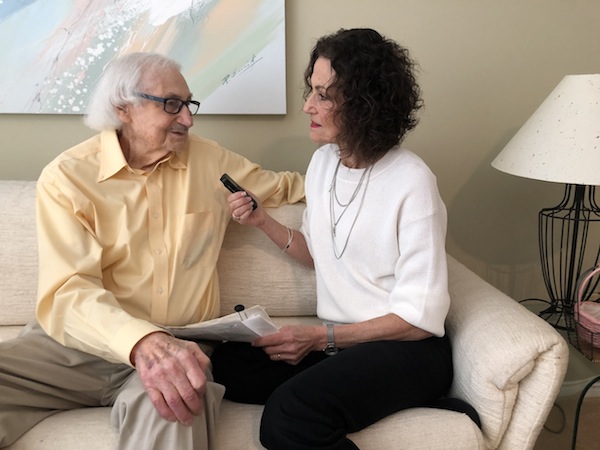
Lou Segal being interviewed by his daughter, Ramona Josephson, 2019. (photo from Ramona Josephson)

A few years ago, the Jewish Museum and Archives of British Columbia contacted my dad, Lou Segal, to interview him, as part of their mission to record the history of South African Jews living in Vancouver. It planted a seed in my mind. Why don’t I interview my dad, and record his voice for my family? So, with tape recorder in hand, we began. My dad (Lou) loves to tell a story and soon I had literally hours of tape.

It wasn’t my intention to write a book. But how would future generations know Lou’s story, and the lessons he has to share? And so the book Who’s Lou? A Loving Tribute to Lou Segal was born.

This is a story of a deeply spiritual man who governs his life with love and integrity; a self-made man who wanted to help others and, in so doing, became a pharmacist and entrepreneur; a man who is a role model and mentor to his four kids, 11 grandkids and five great-grandkids; a man who remains in constant gratitude for all his blessings; a 94-year-old man still in love with my 92-year-old mom!

Born in 1925 Yanishki, Lithuania, home to some 900 Jews, he set sail as a young boy on the Adolf Woermann with his mother and younger brother to join his father in South Africa. His father had left earlier to create a better life for them, after being attacked selling wares from his horse and cart. After a turbulent journey, they arrived in Cape Town, but there was no one to meet them. His father had mistaken the date.
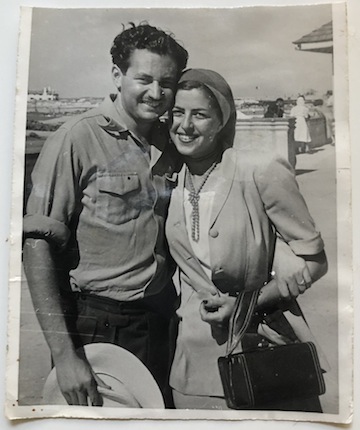
photo - Lou and Friedah Segal on their honeymoon, 1951
Lou and Friedah Segal on their honeymoon, 1951. (photo from Ramona Josephson)

“I remember my mother holding our hands, wailing in Yiddish: ‘Where’s my husband?’” said Lou. “We were told we’d have to sail back to Berlin if no one came. Just as the ship’s horn blasted, an angel came on board. She said she was my mother’s sister and we were able to leave the ship. She belonged to a Jewish agency that provided assistance for Lithuanian immigrants.” If not for her, how different this story would have been.

Lou’s childhood was difficult. “My first days of school were traumatic. I arrived late in the school year, wearing my tzitzit. I could only speak Yiddish and, even though I was 7, I was put into the equivalent of preschool. I was so embarrassed. Antisemitism was rife and I was ridiculed and beaten up often. I had no one to turn to.”

The family originally lived in a poor neighbourhood and many of Lou’s friends were black kids and they played soccer together. He learned to speak Zulu and, later, this would save his life.

As the years went by, his father’s business prospered, and the family moved to nicer homes. Their last home in Pretoria is today the residence of the consulate of Madagascar.

When Lou was 16, he first laid eyes on my mom, Friedah, at Muizenberg, a popular beach resort and meeting place for young Jewish people. Lou’s eyes always tear up when he talks about my mom.” To this day,” he said, “I am still so in love with your mother. The minute I saw her, she mesmerized me. But it wasn’t mutual. Mom would joke that, as the years went by, I was always looking at her, but she was looking the other way.”

One of Lou’s brothers, Charles Segal, recently received the Guinness World Record for most recorded pianist. Lou can’t claim the same, but he finally won my mom’s heart after she saw him playing the piano as a guest entertainer at a party one night. The next day, she called him … and the rest is history. They were married some years later in Cape Town, after Lou graduated as a pharmacist. They had four children, Basil, Ramona (me), Darryl and Janine.

But tragedy nearly struck when Lou had a fire in his pharmacy. His delivery boy lit a cigarette in the dispensary and a bottle of benzene erupted into flames. Lou tried to stomp out the fire with his foot. His pants went up in flames and his skin was burnt to the bone. A customer rushed him to the hospital. He needed skin grafts on both legs. A teaching professor came into his hospital room one day and told his students in Afrikaans, thinking my dad couldn’t understand, that he would likely never walk again.

“My heart dropped,” Lou recalled. “I asked Mom to bring my tefillin to the hospital, and I put it on every morning and prayed to G-d. Miraculously, over time, the grafts started taking. After six months, I was discharged, and was gradually able to go back to my usual activities. To this day, I lay tefillin every single day. I believe it is one of the most important of the 613 mitzvot in the Torah.”
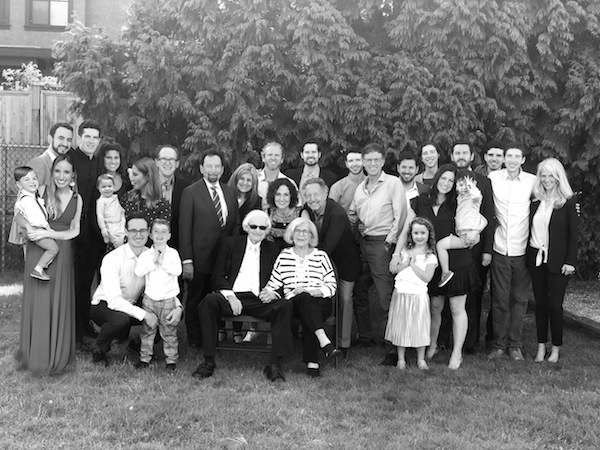
photo - Lou’s family at the launch of Who’s Lou?
Lou’s family at the launch of Who’s Lou? (photo from Ramona Josephson)

Lou was a pharmacist but became a successful and respected entrepreneur. He was a branding whiz, was coined the ‘Man with Ideas’ and was so well known that the newspaper created a caricature of him.

“I always wanted to make a difference in people’s lives. I had a deep knowledge of pharmacognosy and could formulate products from scratch using plants and natural ingredients. As time went by, I realized I could manufacture most products and so I started to create my own brand lines.” His products became household names.

In 1948, apartheid was introduced in South Africa and black people were forced to carry passbooks to restrict their freedom of movement. In 1960, they took to the streets in protest; stores were burglarized and cars overturned. The police opened fire and the bloodshed that followed is called the Sharpeville massacre.

“Demonstrations in Cape Town passed my drugstore,” said Lou. “Several blacks entered and were about to jump over my counter to attack me when a black man shouted in Zulu that I was his ‘doctor’ and they must stop. Over the years, I had tended to many black people who had come to my drugstore bleeding from fights. They’d promise to pay me later but I knew they never would. I had grown up with them and just wanted to help. I believe this man saved my life.”

Our family considered leaving the country but, after Nelson Mandela’s arrest, there was a false sense of security and life went on.

By that time, we, like so many white South Africans, were enjoying a wonderful lifestyle in Cape Town. We went to shul as a family every Friday night, played tennis or lounged on the beach on weekends. Lou kept fit, swimming lengths in our pool, going to the gym, playing tennis. He was a Toastmaster and he and my mom had a large network of friends. They loved to party and took ballroom dancing lessons in our home.

But there was always an underlying level of tension and the turning point came in 1976, after the Soweto Uprising. Black schoolchildren took to the streets in the thousands, protesting the government’s insistence that Afrikaans be the official language in schools. It became bloody.

My older brother, Basil, and I felt there was no future for us in South Africa and we both independently immigrated to Vancouver. I recall, when Basil phoned to say he had arrived in Vancouver, Mom asked: “Vancouver? Where’s that?” Basil replied: “Look at the map. It’s as far north and as far west as you can go!”
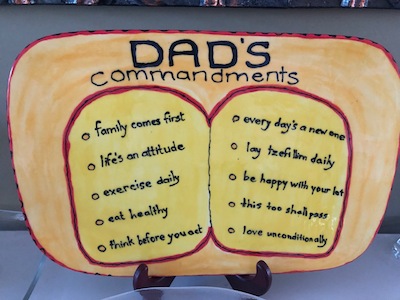
photo - Plaque representing Lou Segal’s top 10 “commandments”
Plaque representing Lou Segal’s top 10 “commandments.” (photo from Ramona Josephson)

My parents learned that they could bring our younger siblings on their passport if they immigrated before either of them turned 21.

“I was just 54 years old and at the prime of my career,” said Lou. “I had a business partner, and we were under negotiations to merge with two other companies to be listed on the Johannesburg stock exchange. I owned several large property holdings, both residential and commercial. There were strict regulations as to how much money you could take out the country. If you violated the law you could lose everything. But we had this deadline to move to Vancouver and be together again with our four kids, and that is what we decided to do. Family first!”

Our home in Cape Town later became the residence of the consulate of Lithuania.

Lou came as a retired man but he never retired. He still goes into the office, where he works with my younger brother, Darryl, manufacturing the HerbalGlo line of hair and skin products. Darryl wants to retire, but he can’t, because Lou still goes to the office.

Lou is a man who never raised his voice, but his life lessons and strong moral values are heard loud and clear by all who know him.

Who’s Lou? is filled with loving tributes from family and four rabbis who have officiated over the years at Congregation Beth Tikvah. We are so grateful to Barbi Braude for the hours she put into the concept and design of the book, which was launched in honour of Lou on Sept. 7 at a Kiddush luncheon at the synagogue. It is available at the synagogue library, the Jewish Museum and Archives of British Columbia and the Isaac Waldman Jewish Public Library.

Ramona Josephson is one of Lou Segal’s four children and is married to Ken Karasick. Her two children, Jaclyn and Marc, have brought Lou and Friedah four great-grandchildren. She is a happily retired dietitian and nutritionist and author of HeartSmart Nutrition: Shopping on the Run.
Format ImagePosted on December 13, 2019December 12, 2019Author Ramona JosephsonCategories LocalTags entrepreneur, HerbalGlo, immigration, Lou Segal, pharmacognosy, South Africa
Dominican Republic a haven

Dominican Republic a haven

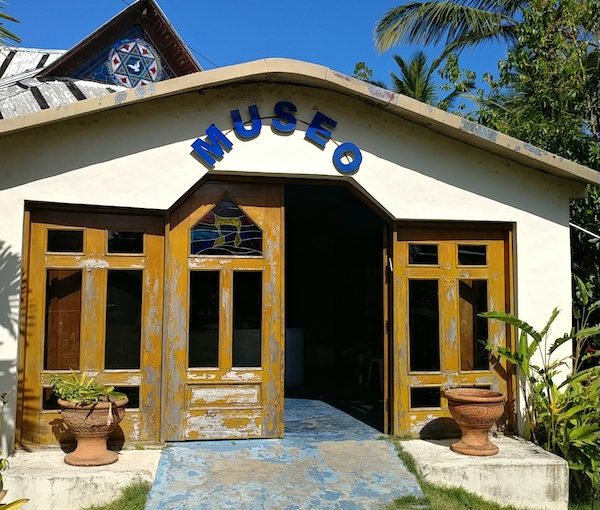
The Museum of Jewish History in Sosua is located right next to the city’s synagogue. (photo by Dave Gordon)

Famous for its rum, cigars, resorts, beaches and rich history, the all-season holiday destination of the Dominican Republic attracts 800,000 Canadians each year. Moreover, the country has a relatively unknown past – few people realize, or know, that the country opened its doors wide to Jewish refugees fleeing Nazi persecution.

This era is chronicled at the Museum of Jewish History, in Sosua, which is in the northern section of the country. Located right next to the city’s synagogue, the museum preserves the memory of those Jewish refugees who sought a safe haven on Dominican soil, and left their mark on the region. It houses photographs of early-to-mid-20th-century Jewish immigrants, along with diary entries, ritual items and copies of letters from Jewish agencies during the war.

Before the Second World War, in 1938, U.S. President Franklin D. Roosevelt summoned the Allies to Evian, France, for a conference about how to handle the massive exodus of Jews who desperately sought to flee Nazi persecution. Though most of the participants at the conference expressed their sympathy, no resolution was formulated. Paraphrasing Chaim Weizmann (who would later become the first president of Israel), Central and Eastern European Jews perceived the world as consisting of just two camps: one that hounded and hunted them, and another that closed its gates.

There was, however, one notable exception.

Of the 32 countries that sent delegations to the conference, only the Dominican Republic, led by President Rafael Trujillo, agreed to receive 100,000 refugees, offering land resettlement under generous conditions. A group of experts on refugee affairs, under the leadership of James Rosenberg, was mobilized by the American Jewish Joint Distribution Committee to capitalize on the offer. This was the birth of the Dominican Republican Settlement Association (DORSA).

photo - Inside Sosua’s synagogue
Inside Sosua’s synagogue. (photo by Dave Gordon)

Between 1940 and 1945, the Dominican Republic government issued 5,000 visas for displaced Jewish refugees. Tragically, however, the actual number of immigrant arrivals never reached anywhere near this figure, due to the escalation of the war, and also to what some believe to be mishandling by the Jewish Agency, which resulted in delays. Of the nearly 1,000 Jews who settled in the Dominican Republic, most were from Austria and Germany, although some came from as far away as China, and some from as close as the Caribbean islands.

Little by little, the jungle-like territory was divided into residential lots and communal barracks for arriving refugees. Each refugee was furnished with, as a repayable loan, 80 acres of land, 10 cows, one mule, one horse, and a living wage for a month. They were assisted with training in agriculture and farming techniques, of which most had little previous knowledge.

Jews took to food manufacturing, becoming successful in the production and sale of sausage, milk, cheese, tomato sauce, mashed carrots, stuffed peppers and mashed spinach. Many of these industries continue to this day. The refugees’ earnings enabled them to pay their debts and establish other small industries.

By the 1990s, however, just 36 Jewish families remained in Sosua, as most of the population either died, intermarried or moved to larger Jewish communities.

Interestingly enough, well before the arrival of these refugees, in 1916, the Dominican Republic briefly had a Jewish head of state, President Francisco Henríquez y Carvajal.

Visiting the country

Virtually every major supermarket has plenty of items with kosher certification, including imported canned goods, breads, fish and spreads. A Puerto Plata resort named Lifestyle has an on-site kosher restaurant, though only for guests staying there. Alternately, in Punta Cana, the local Chabad offers à la carte food orders upon request.

If this trip is a do-it-yourself getaway, as opposed to an all-inclusive, here are two suggestions for luxury stays that will offer the feel of home:

Villas Agua Dulce is a jaw-droppingly elegant and spacious facility. Each villa has a fully furnished living room, dining room and a washer/dryer. Three-bedroom villas are available to accommodate a family of seven. Toss in for good measure an outdoor patio, outdoor private pool, a spa centre, tennis and basketball courts, and Bauhaus interior design.

With the beach just a few hundred feet away, Cabarete Palm Beach Condos is centrally located in the Cabarete area. Each condo has a fully equipped kitchen, living room (with big TV), dining area and outdoor patio.

As for suggested adventures in the Puerto Plata area, I have several.

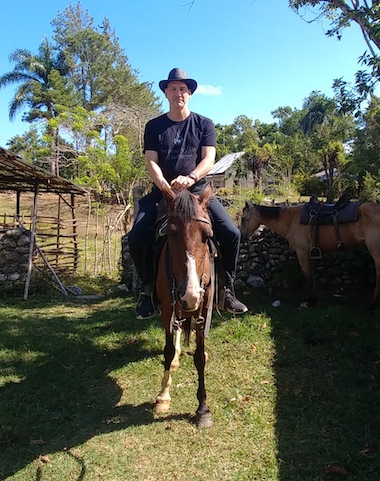
photo - Horsebacking riding is one of the many outdoor adventures one can take in the Puerto Plata area
Horsebacking riding is one of the many outdoor adventures one can take in the Puerto Plata area. 

Monkey Jungle: After enjoying the 4,500-foot, seven-station zip lines overlooking the trees, visit the adjacent capuchin monkey reserve. Scores of these adorable creatures bounce around from tree to tree, hopping on your shoulders and nibbling straight from the fruit plate in your hand.

Ocean World: This is where you can swim with sharks and dolphins and kiss the sea lions.

Tip Top Catamaran: Take a ride on the 75-feet-long and 33-feet-wide catamaran. Tourists are offered the chance to experience the vibrant underwater world through snorkeling Sosua Bay (equipment is provided). Immerse yourself in schools of fish, peer at the coral, get face-time with a puffer fish and play with the sea urchins.

Twenty-seven waterfalls of Rio Damajagua are tucked away in the hills of the Northern Corridor mountain range, behind tall stalks of sugar cane. In addition to the mélange of outdoor activities – such as cliff jumping into natural waters and climbing through caves – you are surrounded by forest. And, depending on the season, fruit will be growing from coconut, avocado, coffee bean and mango trees.

Kiteboarding: Think of yourself hovering over the ocean on a surfboard, propelled by a giant inflatable kite, and you have kiteboarding. Dare2Fly provides kiteboarding packages, lessons and rentals.

Rancho Luisa y Tommy: Try a morning horseback ride. Run by 30-year-old Tommy Bernard, a Quebec expat, he’s an affable fellow who’ll treat you to engaging conversation on topics including animals, his adopted country, and most anything in life.

Dave Gordon is a Toronto-based freelance writer whose work has appeared in more than 100 publications around the world.

Format ImagePosted on December 13, 2019December 12, 2019Author Dave GordonCategories TravelTags Dominican Republic, history, Holocaust, immigration, museums, synagogues, tourism
A book about Operation Ezra

A book about Operation Ezra

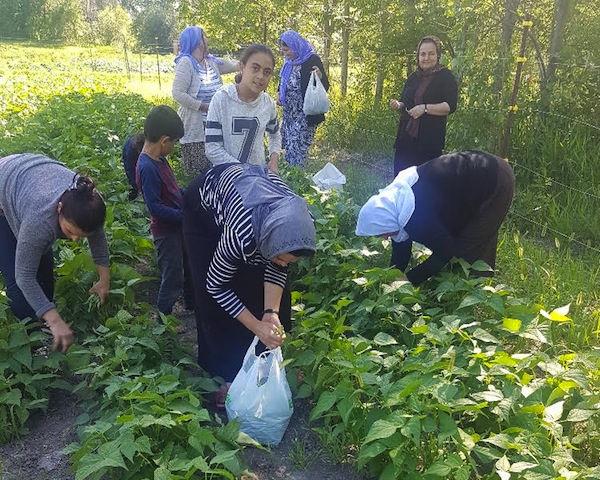
Operation Ezra in Winnipeg has expanded to include farming and selling local produce. (photo from Operation Ezra)

When the Operation Ezra committee in Winnipeg decided to produce a book about the efforts of Yazidi-Winnipegger Nafiya Naso and Operation Ezra, the local Yazidi community was very excited about the idea, about passing down their story in writing to future generations, as their tradition is largely oral.

Operation Ezra: Winnipeg’s Jewish Community-Led Interfaith Response to Survivors of the Yazidi Genocide was launched on Sept. 24 at the JCC Berney Theatre. The event included a few words from the author, Chana Thau, as well as from Operation Ezra (OE) leaders, and a panel discussion. The 71-page paperback includes photographs, interviews and various facts about the Yazidis and how OE came to be, among other things.

“When I first held the book in my hands,” said Naso, “it felt really special and I felt really proud of everything we had accomplished. Having it all in one text to give to people in the community and outside the community, to show what a small group of individuals was able to accomplish in the span of four-odd years, I’m very proud of it.”

Belle Jarniewski, director of the Jewish Heritage Centre of Western Canada (JHCWC), who has been involved in OE since its inception, said it was a grant from the Jewish Foundation of Manitoba that allowed the book to be published.

“By the time the book was written, there was so much more that we had done, but we thought it would be a nice way to let more people know about this wonderful multifaith initiative,” said Jarniewski.

Each of the families that OE brought to Winnipeg was given a book, including the most recent new-to-Canada family of 10, who had arrived just before the book launch.

Apart from OE’s ongoing efforts to bring more refugees to safety in Winnipeg, the endeavour has been helpful in settling the families already there. Both Nafiya and her sister, Jamileh, were invited to separate events in Europe over the summer to share the story of OE and some insight as to why it is so successful.

“We don’t really know if Operation Ezra can really be done anywhere else,” said Nafiya Naso. “Just because the community here is so welcoming and open, and it would be ideal if every city and every country in the world was like this … realistically, it’s not. Within the larger spectrum of the refugee crisis, a lot of people have very negative perceptions of refugees, without knowing the different types and layers of what refugees are, who they are, and things like that. So, even for us, education was a huge piece – letting people know who the Yazidis are and what’s happening.”

A group of individuals in Germany has been eager to incorporate some of the OE approaches. Naso said one of the main things that has made a huge difference is that OE is multifaith. She suggested that people wanting to undertake similar initiatives start by reaching out to faith-based communities and local businesses to find out who might want to become involved.

One of the more recent aspects of OE that has caught the attention of other communities around the world has been the farming project that started up two summers ago on a small plot of land.

“We had one of our volunteers whose father was a farmer with a lot of land, a potato farm, so some of the community went and helped out and got huge bags of potatoes after, and we had media coverage of it,” said Naso.

“The pastor from Charleswood United Church connected us to the owner of Shelmerdine Garden Centre,” she added. “He donated about five acres of land this summer and the community was harvesting it and they were able to sell some of the leftover produce and make money, and that money then came back into the community.

“This is not only a way for them to work and be involved in the community, but it’s also very therapeutic, especially for the women who have gone through the brunt of what ISIS committed and is continuing to commit.”

The land is located just outside of Winnipeg’s city limits. The families worked together and carpooled there to grow and harvest the produce and sell the excess at Shelmerdine, the Rady Jewish Community Centre and Charleswood United.

“Almost all of our families have vehicles, so everyone will go pick up a couple people, and that’s how we transport everyone,” said Naso. “A couple of times, too, we’ve used a bus, bringing the whole community out there – the kids and everyone – renting a bus or two to get everyone out there.”

“This has been just such a wonderful experience for them,” Jarniewski said, “because this is what most of them already knew, what most of them did in Iraq. Not only have they grown food for themselves, but they have been selling the produce. So, this has been a very positive project and we hope to expand it more next year. They will be able to feed the Yazidi community all winter with the kinds of vegetables you can put into cold storage, like beets and potatoes.

“Now, it’s an exponential growth. They really grew all kinds of things. I would see them here, at the Rady, when they were selling celery, beets, onions, zucchini, you name it … even mint and basil.”

Operation Ezra: Winnipeg’s Jewish Community-Led Interfaith Response to Survivors of the Yazidi Genocide explains the background of the Yazidis, a monotheistic religious minority in northern Iraq that was displaced and persecuted by the Islamic State group in 2014. It also goes into the efforts of the Jewish community to lobby the federal government to bring Yazidis to Canada and to resettle families in Winnipeg via private sponsorship. Sales of the book ($10 each) support the ongoing Operation Ezra efforts – it can be ordered from Jewish Child and Family Service Winnipeg by calling 204-477-7430.

Rebeca Kuropatwa is a Winnipeg freelance writer.

Format ImagePosted on December 6, 2019December 3, 2019Author Rebeca KuropatwaCategories NationalTags Belle Jarniewski, Chana Thau, genocide, immigration, Nafiya Naso, Operation Ezra, Winnipeg, Yazidi
פרידה מחבר יקר

פרידה מחבר יקר

.שכונת הווסט אנד בוונקובר (Francisco Anzola)

ביום רביעי בבוקר אחרי ארוחת הבוקר ישבתי למספר דקות על הספה בסלון הגדול שלי בוונקובר, כדי לתכנן בקפידות את יום העבודה שלי. צריך להכניס תיקונים בסיפור על דני וילדותו מירושלים, להמשיך בהכנות ליריד הספרים הקרב וממשמש וכמובן בעיקר – לכתוב סוף סוף את הסיפור הזוי על ישראלי שהכיר לטינית בת”א, שכעובדת זרה טיפלה בקשישים. השניים התאהבו, עקרו ליבשת הצפון אמריקנית ומאז הם חיים באושר ואושר.

הסתכלתי על כתמי הרטיבות בסלוני כתוצאה מהדליפות הבלתי פוסקות. כידוע יורד הרבה גם בוונקובר וזה המחיר של החיים הרטובים כאן. אני עוד אתן בראש לבעל הבית שעד לרגע זה לא תיקן את הדרוש. מתי אוכל להינות מדירתי החדשה ללא מפריע שאלתי את עצמי ביאוש מה? לא רוצה ביורוקרטיות, לא רוצה רעש מהשכנים, לא רוצה מים בסלון. לא רוצה ולא רוצה.

בעודי מסיים את פרק המחשבות המייאש על צרותי, נכנסת פתאם לסלון במהירות של פרארי חדישה בת זוגתי שתחייה. בוודאי תבקש משהו ממני לשם שינוי מילמתי לעצמי. “רונימו יקירי”, אמרה בקול החיבתי שלה. “האם תוכל ללת לי כסף לרכישת פירות בשוק? אתה הרי כל כך אוהב לאכול את הפירות העסיסיים כאן. זה עושה לך כל כך טוב בבטן החמודה והרגישה שלך. ואני כל כך אוהבת לראות אותך מאושר כל כך יקירי אהובי”. הבנתי שלא אוכל להימלט שוב מהדרישה לתת לה כסף. זהו! הפעם שום תירוץ לא יעבוד כאשר מדובר בפירות שאני אוכל כל היום, כל יום. היא נגעה בנקודה מאוד רגישה בחיי – פירות חיי. הכנסתי את ידי לכיס שזו הפעולה הכי שנואה עלי בחיים. חשבתי לא פעם לתפור את הכיס ולסגור אותו לתמיד, כך שארנקי שהוא קודש הקודשים שלי, ינוח לו לעולמים ללא מטרד. הוצאתי את הארנק המקופל שהרהרתי שעתה הגיע הזמן להכניס בו קיפולים נוספים. שלפתי ממנו באיטיות ובעצבות שטר של חמישה דולר כחולים חדשים. הסתכלתי בצער רב על הפרידה הבלתי נמענת מחברי היקר והרגשתי שכל עולמי קורס בבת אחת. הפרידות האלה גומרות אותי והורסות את בריאותי. ביקשתי עוד דקה להחזיק בשטרי היקר וקירבתי אותו לליבי שפעם כתחנת כוח שעומדת לקרוס מהעומס. מהלב שלי החלש משהו העברתי את השטר לפי כדי שאוכל להעניק לו נשיקת פרידה אחרונה. פתאם אני שומע את בת זוגתי צווחת ליד הדלת הפתוחה: “יקירי! אינני יכולה להמתין כל היום בשביל הפירות שלך. בניגוד אליך יש לי גם עסק לנהל. מדוע שלא תקנה את הפירות בעצמך?” הבנתי שהפרידה זו היא סופית ומוחלטת והעברתי לה בצער רב את שטר חמשת הדולרים המסכן שלי. זו ממש התעללות חסרת רחמים בי ובו. עם סיום טקס העברת השטר מיד ליד שדאגתי שיהיה איטי ככל הניתן, אמרתי לה בתקיפות מהולה בכעס ותסכול: “אני מצפה לקבל בחזרה עודף והרבה. את קולטת?!” בעוד היא סוגרת את הדלת ואני שומע את צעדיה המהירים במדרגות התלולות מטה, מילמתי לעצמי “שעדיף שתחזיר לי מספר מטבעות מצלצלים זכר לשטר האבוד שלי”.

הרמתי ידיים: אאלץ להתמודד עם הרטיבות כיאה לוונקובר ועם אובדן חמשת הדולרים שלי, כיאה לדן פזרן. התיישבתי מול המחשב וניסיתי להירגע ולארגן את מחשבותי מחדש. כיצד אתחיל את הסיפור על העובדת הזרה שהכירה בישראל גבר והשניים במסגרת אהבתם עקרו לוונקובר הקרה והרחוקה? אולי אתחיל דווקא בדירה עם הסלון הגדול שהם שכרו בשכונת הווסט אנד?

Format ImagePosted on November 27, 2019November 26, 2019Author Roni RachmaniCategories עניין בחדשותTags immigration, lifestyle, relationships, Vancouver, ונקובר, מערכות יחסים, סגנון חיים, עלייה

Canada is not immune

Maxime Bernier’s performance at the federal leaders debate Monday night may have been unimpressive, and at times badgering, but no doubt some ears pricked up at his assertion that he is the only party leader whose position on immigration stands apart. True enough. He calls for about 150,000 immigrants annually, half the number now admitted.

The People’s Party leader was challenged at the get-go by a debate moderator who raised Bernier’s past comments about “extreme multiculturalism” and his use of the words “ghettos” and “tribes” to describe new Canadians.

Bernier will be lucky to win his own seat in Quebec and his actions in the debate probably didn’t win him a groundswell of supporters anywhere else. But the emphasis on immigration was notable. Slashing immigration in half, which could have detrimental impacts on the economy and growth of the country, would represent a huge number of people refused entry to Canada. But it’s not really about the numbers. It was the underlying message. Bernier was signaling to potential supporters that immigration is generally undesirable, with all the attendant impulses that message is intended to convey.

Hours before the debate, an Angus Reid Institute poll indicated that Canadians are split on the issue – and leaning in the direction of less immigration and tougher treatment for asylum-seekers. Forty percent of respondents said Canada takes in too many refugees, while 13% said we accept too few.

Bernier may not be the best messenger for the anti-immigration idea, but it is clear that there is a constituency in Canada for a politics that is exclusionary and plays on discriminatory tropes. All the main political parties are admirably standing firm against this impulse, for now. But it is worth keeping a close eye on this trend and reminding ourselves regularly that Canada is not immune from xenophobia.

Posted on October 11, 2019October 10, 2019Author The Editorial BoardCategories From the JITags Canada, democracy, federal election, immigration, Maxime Bernier, racism

Roll out welcome mat

Bill 21, Quebec’s law that forbids most public employees from displaying any religious symbols like a turban, a Magen David or a hijab, may become an issue in the federal election. On CBC Radio’s political program The House last weekend, MPs representing the Liberal, Conservative and New Democratic parties all took effectively the same position: the law is discriminatory but provinces have the right to proclaim their own laws and, what’s more, the Constitution’s notwithstanding clause means Quebec can pretty much do whatever it wants.

There is a political calculation in all this, of course. Many Quebeckers support this law and any federal party needs to appeal to a chunk of these voters in order to succeed in the province during next month’s vote. As a result, party leaders are mostly making the right noises about this discriminatory law, while hoping to move on to the next topic ASAP.

With federal leaders basically throwing up their hands on the issue, which calls into question the most fundamental rights of Canadians of all religions, what can be done?

One individual interviewed on the program is a teacher who is Sikh. Her choice was to move from Quebec to British Columbia, where she could continue her chosen profession without diminishing her religious beliefs, which include wearing a turban.

If federal leaders will not act forcefully, perhaps leaders in the provinces outside Quebec can do something. Throughout history, Canada has been enriched by refugees and immigrants who sought freedom and opportunity – our gains roughly equating the loss to their places of origin. Why not apply the same principle to inter-provincial relations?

Perhaps provinces like British Columbia should roll out the welcome mat for teachers, school administrators, wildlife officers, Crown prosecutors and other civil servants from Quebec who no longer feel welcome there. Actively recruiting these experienced professional people of different cultures and religions would strengthen our communities and send a message to Quebec that cultural difference is an asset, not a liability.

In the absence of forceful federal leadership on this front, it would be encouraging to see provincial governments stepping up where they can.

Posted on September 13, 2019September 10, 2019Author The Editorial BoardCategories From the JITags Canada, diversity, economics, employment, immigration, politics, Quebec, racism
Refugees 40 years on

Refugees 40 years on

Sui Khuu and her husband Dar, with their two children. (photo from Shirley Barnett)

In the last couple of years, Jewish congregations and groups in Vancouver have sponsored refugees from Syria, acts of humanitarianism that are inspired in part from ancient and recent history in which Jewish people were strangers in a new land. But this generosity is not new. Forty years ago, in 1979, a similar phenomenon occurred with Vietnamese refugees fleeing conflict in Southeast Asia.

The so-called “boat people” – about two million Vietnamese – fled their homeland in the years following the war there, which ended in 1975. Across Canada, churches, synagogues, service clubs and other groups came together to sponsor refugees. Among these were several B.C. Jewish groups.

Forty years later, one of the refugees sponsored by a group of Jewish friends reflected on the experience.

Sui Khuu was 5 years old when she arrived in Vancouver with her 4-year-old sister Ngoc Lien (informally called Ileen), her father Vinh and grandparents Namson Khuu and Kim Thi Kiu.

“My mom passed away in [a refugee camp in] Thailand,” Khuu told the Independent recently. “She was five months pregnant. She had malaria and she passed away.”

Khuu has no recollections of her life before Canada, but deeply embedded in her memory is the warm welcome she and her family received from the Jewish sponsors as soon as they arrived here.

Four couples joined together to guarantee to the government of Canada that they would ensure the sponsored family got a secure start in their new country: Peter and Shirley Barnett, Abe and Esther Nobleman, Buddy and Cherie Smith and Paul and Edwina Heller.

With the support of Canadian Jewish Congress and Jean Gerber, who worked there at the time, numerous groups banded together to sponsor Vietnamese immigrants, including Beth Israel, Temple Sholom, the Jewish Community Centre of Greater Vancouver and Emanu-El in Victoria, among others.

“Each group had a name and our group chose the name ‘Hope,’” Shirley Barnett recalled. She has kept in close touch with the family across the decades and remembers how Sui was just 7 or 8 years old when she served as translator for her father and grandparents at government meetings and with doctors, teachers and such.

“By the time she was 9, she was the head of the family, because the grandparents never learned to speak English,” Barnett said. The father worked for the Barnetts at their Elephant and Castle restaurant for years. He is now semi-retired. The grandparents have both passed away.

“They were incredibly resourceful, successful,” said Barnett about the family. The girls finished high school and Ileen became an accountant, while Sui is coming up on 29 years as a pharmacy assistant at London Drugs.

“How did they get the strength to turn out so great?” Barnett asked. “The answer came from their grandmother. I remember one day, as a little one, Sui forgot to take her lunch to school and Grandma packed her lunch and found her way to school without speaking English and Sui told me later she found her grandmother wandering in the hallway just trying to find out what classroom she was in to bring her lunch.”

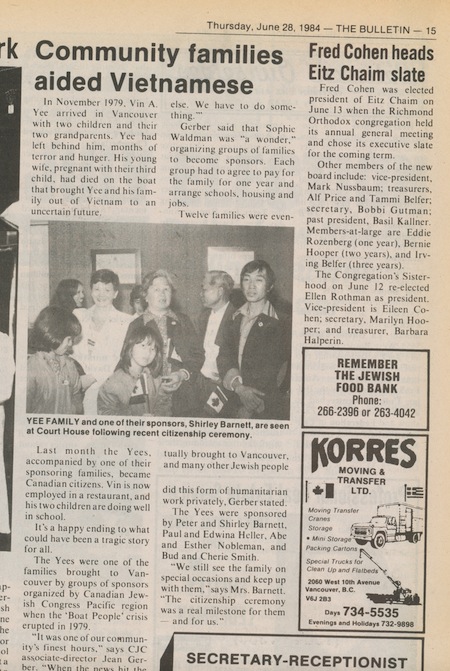
image - An article in the Jewish Independent’s predecessor about Sui Khuu and her family’s citizenship ceremony in 1984
An article in the Jewish Independent’s predecessor about Sui Khuu and her family’s citizenship ceremony in 1984.

While the grandparents never learned English, they found ways to communicate.

“In those years, my ex-husband, Peter, was still fluent in French and he was able to talk to Grandpa a bit in French,” said Barnett.

Khuu recalls something beyond verbal between her grandmother and Shirley Barnett.

“I can’t imagine how she and Shirley communicated at that time but they totally understood each other,” the daughter said. “That was a great memory. My grandmother was trying to tell Shirley [something] and Shirley totally understood what she wanted her to do.”

She also remembers the Barnetts and Nobelmans picking the family up to take them to dinner, delivering Christmas gifts and taking family members to doctors’ and dentists’ appointments.

“Cherie Smith was in charge of finding them clothes,” Barnett said. “I was in charge of getting them enrolled in a preschool.”

“Shirley got a house for us on East 12th Avenue in Vancouver,” Khuu said. Both girls, now in their 40s, are married and each has a son and a daughter of their own.

Seeing Syrians coming to Canada now evokes memories for Khuu.

“It’s hard when they have young families like what my grandparents and my dad went through,” she said. She is saddened when she hears comments that are unwelcoming toward new Canadians and sees the circle of life in the next generation of refugees finding a home here.

Barnett is effusive about how Sui and Ileen have turned out: “By luck or determination or resilience or whatever they had, they turned out really well. They are just lovely, responsible, charming, caring people.”

Format ImagePosted on June 28, 2019June 26, 2019Author Pat JohnsonCategories LocalTags CJC, immigration, Shirley Barnett, Sui Khuu, Vietnam

The will of “the people”

The deed is finally done. For years, Quebec politicians have been talking about secularism, or laïcité, proposing a range of actions to ban the presence of visible religious symbols among government employees. On Sunday, following a weekend of almost round-the-clock debate, the Coalition Avenir Québec majority in the National Assembly passed Bill 21. The law bans symbols such as the crucifix, turban, hijab and kippah for provincial employees in positions of authority, such as judges, police, prosecutors, court clerks and schoolteachers.

The bill was met with lamentations and anger from the opposition. Catherine Dorion, a member of the National Assembly representing the left-wing party Québec solidaire spoke powerfully in favour of individual liberty and the right to exhibit religious identity.

“Each person in this room who will vote for Bill 21 will bear the responsibility for this first great breach in the dike we had proudly erected to protect the fundamental rights of all Quebecers,” she said.

The vote came a day after a similarly contentious debate on another bill, which addresses the province’s agreement with the federal government over immigration to Quebec. On the one hand, the bill aims to ensure that immigration reflects the province’s labour requirements, which is justifiable. On the other hand, the bill also permits the creation of a “values test” that new Quebecers would have to pass before admission to permanent residency. A test of this nature is one thing in theory – extreme examples like female genital mutilation are raised as justifications – but it is something else in practice.

Government measures to adjudicate an individual’s beliefs is a recipe for disaster. Certainly we would like to see people with hateful or violent attitudes toward particular cultural groups prevented from entering the country, or rehabilitated if they are already here. There are programs and policies in Canada to address this problem and they should be strengthened. But applying what amounts to a form of prior restraint on the ideas and beliefs of new Canadians by a government with limited respect for civil liberties crosses a perilous line.

The religious symbols law parallels the immigration law in its flouting of civil liberties, but diverges importantly in a number of ways. It applies to people who are already Canadian (for the most part, at least), which is a more grievous affront than putting up barriers for non-citizens.

In responding to criticism, Quebec Premier François Legault declared: “Someone once said, beware of those who say they like the people but do not listen to what the people want.”

This language reflects a populism we have seen in Europe as well as North America, but which has been thankfully rare in this country. The idea that governments should do whatever “the people” want invites a tyranny of the majority that is almost destined to trample on individual rights, especially the rights of members of minority communities. It bears stating that, in Quebec, in order to deliver the will of the people, the assembly had to clip the wings of democracy not once but twice, invoking closure on debate on both bills and, in the case of Bill 21, promising to use the Canadian Constitution’s Notwithstanding Clause to override what even the government of Quebec acknowledges is a unconstitutional infringement on individual rights.

We are seeing flare-ups elsewhere in Canada of how some of “the people” would like to see public policy progress. On the same busy weekend, a rally in downtown Vancouver against transgender rights and opposing the province’s progressive sexual education agenda turned nasty (if the mission of the event wasn’t nasty enough) when counter-protesters showed up to confront them. At the rally were the Soldiers of Odin, a far-right group, people wearing yellow vests, the symbol of an amorphous movement that began in France and has attracted extremists, and at least one leading member of the People’s Party of Canada, a new populist party that seems determined to stoke a range of fears and prejudices in the lead-up to the federal election this fall.

Violence also erupted last weekend at a pride parade in Hamilton, Ont., when protesters showed up at the celebration. A local politician laid blame for the violence, which included punching and choking, on “far-right evangelicals” who he said were “just there to sucker-punch people.”

All of this is to say that Canada is not immune to extremism or even politically motivated violence. There is, of course, an important line between the violence in Hamilton and the laws that were rammed through Quebec’s legislature. Violence deserves universal condemnation while passionate disagreements over politics – even laws we see as repressive and excessive – are justifiable and welcome. Still, these incidents all reflect different approaches to “othering” – the idea that “we” are under threat from “them.”

What is encouraging is hearing the voices of those forced to defend the values of inclusion and respect for diversity. There was eloquence on the opposition side of Quebec’s National Assembly last weekend and, in response to the altercations in Hamilton and Vancouver, admirable recommitment by many to the values that we genuinely hope will represent the Canada we hope to create. This is also a reminder to speak up, so that when politicians say they are doing what “the people” want, what they mean is the will of people who pursue inclusion, acceptance and diversity.

Posted on June 21, 2019June 20, 2019Author The Editorial BoardCategories From the JITags discrimination, diversity, human rights, immigration, inclusion, law, politics, Quebec, racism, religion
קנדה רוצה מהגרים נוספים

קנדה רוצה מהגרים נוספים

קנדה רוצה מיליון מהגרים נוספים בשלוש השנים הקרובות

קנדה מונה למעלה משלושים ושמונה תושבים החיים בשטח ענקי המשתרע על פני כעשרה מיליון קמ”ר. מדובר בשטח אף גדול מזה של ארצות הברית (רק רוסיה מחזיקה בשטח הגדול מזה של קנדה). קנדה מבקשת להכניס לשטחה מיליון מהגרים עד סוף שנת אלפים עשרים ואחד.

“במידה רבה, הודות לאזרחים חדשים שקיבלנו בברכה במהלך ההיסטוריה שלנו, קנדה התפתחה לכדי מדינה חזקה ותוססת שכולנו נהנים ממנה”, אומר שר ההגירה, הפליטים והאזרחות, אחמד חוסיין. זאת במסגרת דין וחשבון שנתי על ההגירה לקנדה, שהוגש בראשית השנה לפרלמנט. במדד הפיתוח האנושי (האיץ’. די.איי) קנדה מדורגת במקום השניים עשר והמכובד בעולם, מתוך מאה שמונים ותשעה מדינות.

הדו”ח השנתי בנושאי הגירה מבליט שלא במקרה את הצלחת המהגרים המגיעים לקנדה. כיום כעשרים אחוז מתושבי קנדה נחשבים למהגרים (נולדו בארץ אחרת המחוצה לה). זאת לעומת פחות מארבעה עשר אחוז של מהגרים בארה”ב השכנה. בשני העשורים האחרונים הגיעו לקנדה כשישה מיליון מהגרים. לדברי שר ההגירה, הפליטים והאזרחות הקנדי, המדינה אינה מפלה מהגרים על בסיס גזע, לאום, מוצא אתני, דת או כל מגדר אחר. הוא מציין כי קנדה כיום היא המדינה המובילה בעולם בניהול מהלך ההגירה המורכב. השר חוסיין אומר כי קנדה בהצלחה מרובה בוחרת את המהגרים שתורמים לה ביותר, לעומת אלה שלא יתרמו לה.

מערך ההגירה הקנדי מבוסס על שיטת ניקוד (הנקראת סי.אר.אס) לפי מספר קריטוריונים. בהם: גיל, השכלה, שפה, ניסיון בעבודה וקשרים בקנדה (בתחומי משפחה, עבודה או לימודים). בשל הביקוש הגדול להגר לקנדה הדירוג המינימלי של שיטת הניקוד עלה בראשית השנה מרמה של ארבע מאות ארבעים ותשעה לרמה של ארבע מאות ושבעים. בכל מקרה הניקוד המקסימלי למגישי הבקשה להגר מגיע לאלף ומאתיים.

מנסיוני האישי בהגירה מישראל לקנדה

עזבתי את תל אביב ועברתי לוונקובר לפני כארבע עשרה שנים. תמיד חלמתי לגור בחו”ל. במהלך השנים הבנתי שיהיה קל יותר להגר לקנדה. מה גם שחבר טוב שלי מישראל עבר לוונקובר כארבע שנים לפני.

בדקתי באתר רשות ההגירה הקנדי באם יש לי מספיק נקודות להתחיל בהליך ההגירה. בעזרת ההשכלה הגבוהה שרכשתי בישראל, ניסיוני הממושך בעבודה בעיתונות ושליטה בשפה האנגלית – התברר לי שאני עומד במכסת הנקודות הרצויה להגירה.

הגשתי את מסמכי ההגירה לקונסוליה הקנדית בתל אביב והמתנתי לבאות. לא שיערתי בנפשי כי אאלץ להמתין זמן רב עד קבלת האישור להגר. מתברר שבאותם ימים החליטה מחלקת ההגירה הקנדית להקשיח את תנאי ההגירה. לכן שונתה שיטת הניקוד והתווספו תנאים חדשים. אך כאן נוצרה בעייה קשה באשמת מחלקת ההגירה הקנדית: היא החליטה להטיל את התנאים החדשים גם על אלה שכבר פתחו בהליכי ההגירה. זה כלל כמובן גם אותי. בפועל מדובר בהחלטה שמנוגדת לחוק כיוון שאי אפשר להחיל תנאים חדשים על מי שכבר פועל לפי תנאים קודמים. אמר לי בזמנו עורך דין קנדי שאני יכול לתבוע את ממשלת קנדה בנושא. אני וויתרתי אך נדמה לי שיש אחרים שאכן תבעו את הממשלה.

מכל מקום בעקבות שינוי שיטת הניקוד נוצר בלגאן גדול במערכת ההגירה. אפילו בקונסוליה הקנדית בתל אביב לא ידעו מה להגיד בנושא. לבסוף לאור התנאים החדשים נאלצתי לעבור מבחן באנגלית, ברמה של מי שמתעד ללמוד באחת ממוסדות הלימוד בחו”ל. הליך ההגירה התעקב ונמשך בסופו של דבר כשלוש שנים, עד ליום המיוחל שבו קיבלתי את האישור להגר לכאן.

Format ImagePosted on June 19, 2019June 12, 2019Author Roni RachmaniCategories עניין בחדשותTags Canada, immigration, Israel, הגירה, ישראל, קנדה
בהגירה לקנדה

בהגירה לקנדה

(facebook.com/ProICC)

ישראלים המבקשים לברר פרטים על הליך קבלת תושבות קנדית, נתקלו בנציגי חברת פרו איי.סי.סי שניסו להונות אותם. כך נטען בכתבה במדור הכלכלי של עיתון הארץ – דה מארקר. עוד נטען בכתבה כי נציגי החברה טוענים שהם עוזרים בבקשות לתושבות מטעם שגרירות קנדה, ומוכנים לעזור לישראלים אם ישלמו חמש מאות ושמונים דולר, ויעבירו להם את פרטי כרטיס האשראי שלהם. משגרירות קנדה בתל אביב נמסר בתגובה כי לחברת פרו איי.סי. סי אין קשר למשרד ההגירה, פליטים ואזרחות, וממשלת קנדה רואה בחומרה כל ניסיון להונות בתחום האזרחות או ההגירה. אם מישהו מציג עצמו כנציג השגרירות או משרד ההגירה ומציע מעמד הגירה או אזרחות בטלפון זו הונאה. מחברת פרו איי.סי.סי לא נמסרה תגובה לעיתון הישראלי.

בשבועות האחרונים מופיעה מודעה בפייסבוק מטעם פרו איי.סי.סי ובה ההצעה לבדוק זכאות לאזרחות קנדית. ישראלים שנכנסים ללינק מקבלים לאחר זמן קצר שיחה טלפונית, המוצגת באפליקציות לזיהוי שיחה כשיחה משגרירות קנדה, ובה אדם המציג עצמו כעובד שם ומסביר את המשמעות של הגשת בקשה לתושבות. עיתונאית דה מארקר השאירה את פרטיה באתר החברה ונציגה התקשר אליה. הוא הציג עצמו בשם וויליאם סאנלי עובד פרו איי.סי.סי, מבלי לציין שהחברה אינה שייכת לשגרירות קנדה. סאנלי פירט את ההיתרונות בהגירה לקנדה, מערכת הבריאות המתקדמת, לימודים בחינם, עזרה בפתיחת עסק ועוד.

לשאלת הכתבת מדוע נוקטת השגרירות הקנדית בגישה פרו-אקטיבית ומגייסת אנשים ממדינות אחרות לעבור אליה, טען סאנלי, כי קנדה מבקשת להגדיל את האוכלוסייה במדינה ומקבלת בכל חודש שבעה עשר אלף תושבים חדשים, העונים על דרישות מסוימות. בהן: גיל, רמת השכלה, ניסיון תעסוקתי ואנגלית ברמה גבוהה. לאחר שהכתבת ענתה על מספר שאלות סאנלי הודיע לה כי היא עומדת בדרישות, ועליה למלא טופס שישלח אליה דרך האימייל, ולשלם מייד חמש מאות ושמונים דולר. סאנלי הפעיל לחץ על הכתבת והודיע לה כי התחיל כבר בהליך הרישום שלה, ואם היא תעצור אותו, היא תאלץ להמתין כשנה, עד שתוכל להגיש בקשה חדשה. לדברי סאנלי אם הכתבת לא תפעל מייד להגשת הבקשה להגירה היא תסומן על ידי השגרירות, ולכן תאלץ להמתין שנה תמימה להגשת בקשה חדשה.

בשגרירות קנדה בתל אביב מסרו כי הם פתחו בבדיקה בנושא פעילות חברת פרו איי. סי.סי. בשגרירות ביקשו לציין כי אלה המבקשים להגר למדינה נוטים לעתים קרובות להסתמך על יועצי הגירה, שיעזרו להם לטפל בנושא. עם זאת הם עלולים ליפול לידי נוכלים. ממשלת קנדה החליטה להשקיע השנה מיליוני דולרים, כדי להגן על האזרחים והמועמדים להגירה, כדי שלא יפלו במלכודות של הנוכלים. עוד נמסר כי משרד ההגירה לא מעניק יחס מיוחד למי שפועל להגר באמצעות יועץ, וזה לא מבטיח להם דבר. כל הטפסים הנחוצים להגירה נמצאים באתר משרד ההגירה ואפשר להוריד אותם ללא תשלום. גם רשימת יועצי ההגירה החוקיים נמצאים באתר. אגב חברת פרו איי.סי.סי לא נמצאת ברשימת היועצים המוסמכים לטפל בהגירה לקנדה.

בדקתי את האתר של פרו איי.סי.סי ומצאתי שמשרדי החברה ממקומים ברחוב הייסטינג 1021 בוונקובר. פרו איי.סי.סי מציגה עצמה כחברה מובילה עם רקורד מוכח בתחום ההגירה, והבאת מהגרים לקנדה מכל העולם. מהגרים שהם אנשי מקצוע מיומנים, אנשי עסקים, סטודנטים וחברי משפחה. בחברה מציינים עוד כי הם ליוו כבר אלפים שהגרו לקנדה. בדף החברה בפייסבוק מפורסם כי יש לה כששת אלפים וחמש מאות “לייקס”.

Format ImagePosted on May 29, 2019May 23, 2019Author Roni RachmaniCategories עניין בחדשותTags Canada, Haaretz, immigration, investigation, Israel, ProICC, בדיקה, הארץ, הגירה, ישראל, פרו איי.סי.סי, קנדה

Posts pagination

Previous page Page 1 … Page 5 Page 6 Page 7 … Page 10 Next page
Proudly powered by WordPress