Skip to content
  • Home
  • Subscribe / donate
  • Events calendar
  • News
    • Local
    • National
    • Israel
    • World
    • עניין בחדשות
      A roundup of news in Canada and further afield, in Hebrew.
  • Opinion
    • From the JI
    • Op-Ed
  • Arts & Culture
    • Performing Arts
    • Music
    • Books
    • Visual Arts
    • TV & Film
  • Life
    • Celebrating the Holidays
    • Travel
    • The Daily Snooze
      Cartoons by Jacob Samuel
    • Mystery Photo
      Help the JI and JMABC fill in the gaps in our archives.
  • Community Links
    • Organizations, Etc.
    • Other News Sources & Blogs
    • Business Directory
  • FAQ
  • JI Chai Celebration
  • JI@88! video

Recent Posts

  • Sharing her testimony
  • Fall fight takes leap forward
  • The balancing of rights
  • Multiple Tony n’ Tina roles
  • Stories of trauma, resilience
  • Celebrate our culture
  • A responsibility to help
  • What wellness means at JCC
  • Together in mourning
  • Downhill after Trump?
  • Birth control even easier now
  • Eco-Sisters mentorship
  • Unexpected discoveries
  • Study’s results hopeful
  • Bad behaviour affects us all
  • Thankful for the police
  • UBC needs a wake-up call
  • Recalling a shining star
  • Sleep well …
  • BGU fosters startup culture
  • Photography and glass
  • Is it the end of an era?
  • Taking life a step at a time
  • Nakba exhibit biased
  • Film festival starts next week
  • Musical with heart and soul
  • Rabbi marks 13 years
  • Keeper of VTT’s history
  • Gala fêtes Infeld’s 20th
  • Building JWest together
  • Challah Mom comes to Vancouver
  • What to do about media bias
  • Education offers hope
  • Remembrance – a moral act
  • What makes us human
  • המלחמות של נתניהו וטראמפ

Archives

Follow @JewishIndie
image - The CJN - Visit Us Banner - 300x600 - 101625

Tag: immigration

Immigration challenges

Immigration challenges

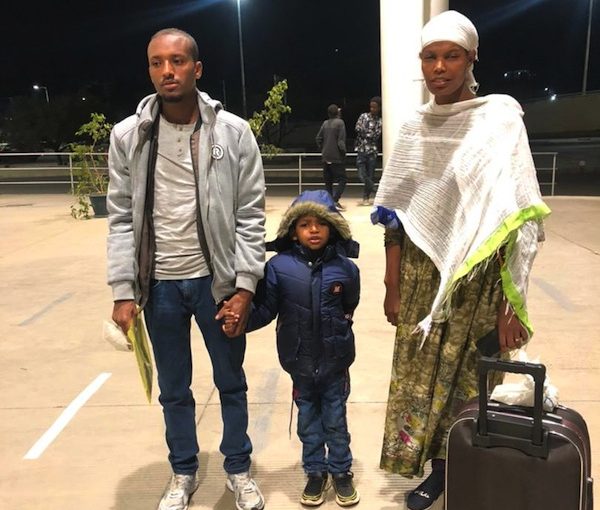
Six-year-old Biniyam Tesfahun with his family shortly before being transported to Israel for heart surgery. (photo by Basleel Tadesse)

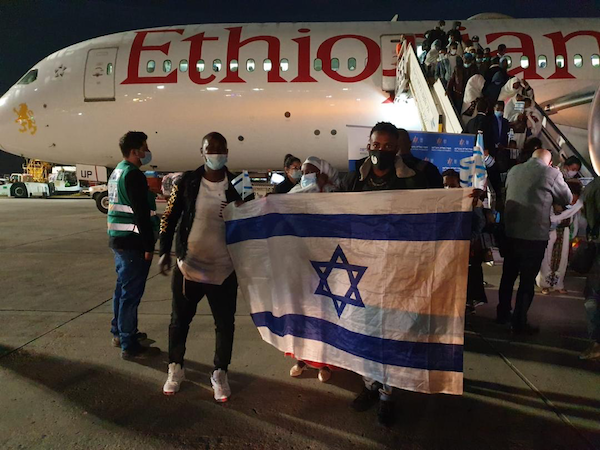
Last month, while Israel was still in lockdown, an urgent flight from Ethiopia arrived at Ben-Gurion Airport. The airport was closed and incoming commercial flights had been banned in an effort to contain coronavirus infection rates. The privately chartered plane, sponsored by the International Christian Embassy Jerusalem, taxied onto the tarmac in the early hours of Friday, Feb. 12, carrying some 296 Ethiopian Jewish olim and six children in need of heart surgery.

One of those children was Biniyam Tesfahun, a 6-year-old Ethiopian-Jewish descendant who had not been granted aliyah by Israel. Doctors had discovered a rare congenital defect a month earlier that had produced a hole in his heart. The Israeli nonprofit Save a Child’s Heart had secured seats on the plane for five Ethiopian children and there was room for one more. But about a week before the flight was to depart, the family received word that the Ministry of the Interior had denied a visa.

Word spread quickly within the Ethiopian community in Israel.

Israelis began posting the news on Facebook sites, anguished that the child could die without treatment. Readers in the United States, Britain and Ethiopia stepped in to write articles and post pictures calling for the government to grant aliyah for the little boy and his family.

In no time, the news reached the office of the minister of immigration and absorption, Pnina Tamano-Shata, who insisted the surgery was an emergency and urged the Ministry of Interior to reconsider its position. A day before the flight was to take off, Biniyam’s parents were told the request was approved. The boy and his family would be issued a 10-day permit for medical treatment in Israel.

“It was all very dramatic,” said Avi Bram, who works for the Gondar, Ethiopia-based aid organization Meketa and helped coordinate the family’s transport to the airport. “None of the family is on the aliyah list, and they have not been given any permission to stay,” but the airlift was finally allowed.

Biniyam’s story, which has now traveled around the globe and been published in multiple languages, is a testament to the bond between the 150,000 members of Israel’s Ethiopian community, the Beta Israel, and the roughly 7,000 descendants still living in Ethiopia. It’s a connection, said Uri Perednik, that dominates the consciousness of many Ethiopian-Israelis on a daily basis and impacts their lives. Perednik serves as the chair for the Struggle for Aliyah for Ethiopian Jewry (SAEJ), a nonprofit organization based in Jerusalem that advocates for the repatriation of the Beta Israel to the Jewish homeland.

Perednik said what happens to the family members in Ethiopia economically and socially continues to have a direct impact on the community in Israel. He added that some of the Beta Israel have been waiting decades to be reunited with their family members. “They are torn between Ethiopia and Israel,” he said. “They send half of their salaries to Ethiopia for their families there.”

The coronavirus pandemic shutdown last year and the growing civil unrest in Ethiopia have only exacerbated concerns. “Now people also have smaller salaries or no salaries because of the COVID economic situation in Israel. So it is very tough on the families,” he added.

Ethiopian-Israelis continue to be among the lowest-paid workers in the country. A study by a media outlet (2018) found that almost 70% of Ethiopian-Israelis work junior positions to cover their household expenses, in a country that has the seventh-highest cost of living in the world (2019). For new arrivals from Ethiopia, that economic disparity can be a Catch-22, as they find they are now the major breadwinners for two entirely separate households.

Absorption challenges

Tamano-Shata, who was appointed in 2020 to direct the country’s immigration and absorption programs, says improving economic opportunities for immigrants starts with equipping them with better tools. Tamano-Shata, who arrived in Israel at the age of 3 during the 1980s Operation Solomon airlift, is the first Ethiopian-born woman to hold a Knesset seat. She understands well the challenges that Ethiopian Jews face as new citizens.

Over the past year, her ministry has restructured several core services of the country’s immigration program. She has expanded Hebrew language study for immigrants from one-and-a-half years to 10 years to help new citizens gain competency in Hebrew. Language barriers, said Tamano-Shata, are “shared [by] all olim from all over the world – those who speak English, Amharic, French, Russian, Portuguese and more.” Studies in Israel have shown that language fluency often affects employment opportunities.

Tamano-Shata has also drafted a five-year plan for “optimal integration” of new olim and targeted benefits, tax breaks and housing assistance that can help new immigrants get started when they begin looking for a new home.
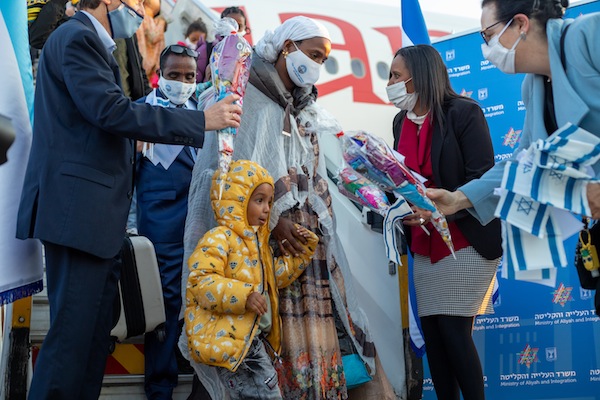
photo - Minister of Immigration and Absorption Pnina Tamano-Shata, second from the right, greets Ethiopian olim as they arrive in Israel. In November 2020, Tamano-Shata announced the planned aliyah of 2,000 olim from Ethiopia, and her ministry recently reached that target
Minister of Immigration and Absorption Pnina Tamano-Shata, second from the right, greets Ethiopian olim as they arrive in Israel. In November 2020, Tamano-Shata announced the planned aliyah of 2,000 olim from Ethiopia, and her ministry recently reached that target. (photo by Naga Malasa/Ministry of Aliyah and Integration)

Perednik said the government has been trying for years to address immigrant housing shortages, which are exacerbated by a national housing crisis. “There have been a few housing programs by the government that were supposed to help young Ethiopian families move to better houses,” Perednik said, but “nothing has really changed.” There is hope that Tamano-Shata’s efforts will finally help the situation.

In 2016, Tamano-Shata gained notoriety as a junior Knesset member for calling attention to discrimination against Ethiopian-Israelis. Her calls led to changes to the way racial discrimination is addressed within the halls of the Israeli government. They helped open a national dialogue about racial profiling and discrimination, problems that Perednik said still continue today.

Jewish identity in Israel

Israeli author Rabbi Menachem Waldman agrees that racism is a problem in Israel. In his opinion, the greatest obstacle that the Beta Israel face is how they are perceived by other Israelis. Waldman is the author of 10 books on Ethiopian Jewry. At present, he serves jointly as the manager of Israel’s absorption program and rabbi for the Jewish communities in Ethiopia.

Waldman said the main obstacle that Ethiopian-Israelis continue to face is “their Jewish identity and their colour.” He said, even though rabbis ruled decades ago that the Beta Israel were Jewish and should be allowed to immigrate as Jews, Ethiopian-Israeli citizens continue to face scrutiny and disbelief that they are “100% Jewish.”

The more recent immigrants were required to undergo conversion as a condition of aliyah and are frequently subjected to additional scrutiny when they apply for marriage. Waldman said he believes this type of stereotyping is harmful to new immigrants. “It [leads] to racism,” he said.

Ethiopian-Israelis face economic challenges, he added, but, still, in his view, it is the constant questions about the authenticity of their Jewish identity that pose the greatest risk. “If he is a strong Jew, like other Israelis, he can overcome the difficulties,” said Waldman. “But, if he [is led to believe] that because he is Black he isn’t like other [Israelis] … it [can sow doubt] in his life in Israel.”

Tamano-Shata’s proposed changes to the immigration and absorption programs take some of these concerns into consideration. She said the government continues to make amendments to the ulpan program, which aids in the successful integration of new immigrants. She also advocates that “education, [innovation] and role models are undoubtedly significant and important tools” when it comes to overcoming prejudice.

There have been recent advances when it comes to a broader acceptance of Beta Israel traditions and customs, which generally date back to pre-talmudic times and are not widely understood by many Israelis. In 2008, the Sigd festival was formally recognized as a national holiday. While the festival has changed dramatically since its early days in Ethiopia, there are signs of a growing appreciation of the holiday in Israel, which occurs 50 days after Yom Kippur. According to Beta Israel beliefs, it is the date when God was first revealed to Moses.

In 2020, then-deputy minister Gadi Yevarkan proposed that Sigd should become an integral part of Israeli Rosh Hashanah celebrations, and celebrated by all Jews. The yearly attendance of the festival by the prime minister and other dignitaries has helped publicize the significance of the holiday and, in turn, encourage better acceptance of the Beta Israel and their traditions in the Jewish homeland.

Jan Lee’s articles, op-eds and blog posts have been published in B’nai B’rith Magazine, Voices of Conservative and Masorti Judaism, Times of Israel and Baltimore Jewish Times, as well as a number of business, environmental and travel publications. Her blog can be found at multiculturaljew.polestarpassages.com.
Format ImagePosted on March 19, 2021March 23, 2021Author Jan LeeCategories WorldTags Avi Bram, Beta Israel, Biniyam Tesfahun, equality, Ethiopia, governance, identity, immigration, Meketa, Menachem Waldman, Pnina Tamano-Shata, politics, SAEJ, Struggle for Aliyah for Ethiopian Jewry, Uri Perednik
Welcome, newcomers

Welcome, newcomers

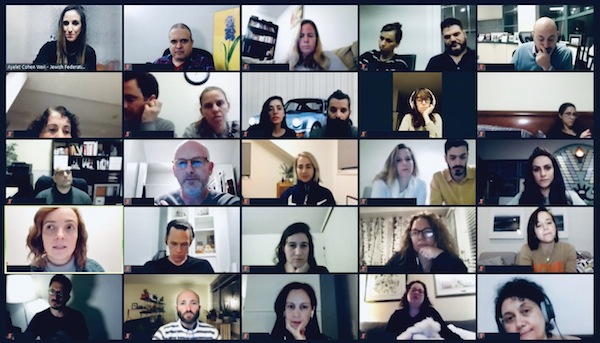
A screenshot of the recent BeyachadBC welcome event’s main room.

The types of immigration that Vancouver’s Jewish community is experiencing right now differ from those of 10 or 20 years ago. Community leaders recognized that these different demographics call for changed approaches in the way the community welcomes and integrates newcomers.

On Jan. 20, a virtual event took place, representing the launch of a new community partnership called BeyachadBC – beyachad means “together” in Hebrew. No fewer than 80 devices tuned in to join the event, many with more than one participant.

BeyachadBC is really an evolution of Shalom BC, Gesher Welcoming Services and other initiatives over the years meeting the needs of new community members, said Ayelet Cohen Weil, who, as associate director, community engagement, at the Jewish Federation of Greater Vancouver, spearheaded development of the group. (On Feb. 1, Cohen Weil began a new role, as executive director at the Louis Brier Jewish Aged Foundation.) Operating under the auspices of Federation, BeyachadBC was created with the Jewish Community Centre of Greater Vancouver, Jewish Family Services (JFS), Aleph in the Tri-Cities, Mamatefet and Women’s Empowerment (WE). The latter two groups are organizations primarily of Israeli-Canadian women, WE to network for career opportunities and Mamatefet to support mothers, especially of newborns.

Cohen Weil undertook consultations, including roundtables with community professionals who work with newcomers and with people who have experienced what newcomers face.

For many years, Vancouver has been one of North America’s fastest-growing Jewish communities. Breakout rooms at the virtual event included sessions in Spanish, Portuguese, Hebrew and English. The largest group was of Israelis, followed by those from Spanish-speaking Latin America. About equal numbers of participants joined the English and Portuguese breakout rooms. A couple of decades ago saw waves of immigrants from the former Soviet Union and, while there are still a number of new Canadians who originated in the FSU, almost all of those are now arriving via Israel, having spent years there. They communicate primarily in Hebrew, making Russian-language services less necessary than they were a few years ago.

Another noticeable change from the past is that many of the newcomers are arriving with work at the ready, not landing here in hopes of finding a career path. A sizeable number of immigrants from Israel and elsewhere have been drawn here by jobs at Amazon’s Vancouver hub, for example.

The different character of newcomers means that, rather than requiring some of the basic needs that earlier migrants required – housing assistance, social services – many are now seeking professional networking and connections for their families. (New arrivals who do require those additional services are, of course, served by various organizations, including Federation and JFS.)

When the pandemic is over, in-person social gatherings will take place with opportunities for mingling in each participant’s preferred language. Meanwhile, those who want it can be paired with a longer-established family based on criteria they determine, such as the ages of kids in the family or the professional track of the parents.

Of course, there is no one at the airport directing Jewish newcomers to BeyachadBC. Identifying Jewish immigrants is a matter mostly of word-of-mouth. This was aided by the fact that Cohen Weil’s portfolio at Federation also included regional community development. Given the cost of housing in Vancouver, many Jews are settling in the Tri-Cities or other suburban areas of Metro Vancouver. While geographic diffusion is a challenge long addressed by Federation, BeyachadBC plays an added role in reducing isolation and encouraging inclusion by explicitly targeting newcomer families outside the traditional “Jewish neighbourhoods” of the city.

BeyachadBC is envisioned as a service for those who have arrived in the past three years. “But I can tell from the faces that I saw, they were from the last year mostly,” Cohen Weil said. “They had to be newcomers during COVID, which created another layer of difficulty and challenges.”

Another fact struck Cohen Weil – there were young couples, families with kids, single young adults, seniors and middle-aged participants on the Zoom event.

She knows herself what it is like to live in different places. Cohen Weil arrived in 2005 as a student at the University of Victoria, having grown up in Mexico and having served as a volunteer in the Israel Defence Forces. She worked at Hillel in Victoria beginning in 2008 and returned to Israel in 2012 to continue her education before returning to Vancouver in 2017. Returning with a husband and a 10-month-old daughter was an entirely different experience that came with many challenges, even though she had connections and friendships from the past.

A more typical experience might be that of Yael Mayer, an individual and family therapist and a postdoctoral research fellow in the faculty of medicine at the University of British Columbia. She came to Vancouver five years ago, after her husband, an engineer, took a job here. Having left an established counseling career in Israel, Mayer was in a new country, at home, with two kids, including a 6-month-old baby.

“It’s very lonely and very hard to start everything again, to build a career again, to find a network,” she said. She set about cofounding Mamatefet and then founding WE because she realized that many women were in a similar boat. “Like me, there were many, many Israeli women who come here with academic backgrounds, with a lot of experience, and they struggle to rebuild their life here.”

If BeyachadBC had existed just five years ago, she said, her landing here might have been softer. “I think it could have been really different because BeyachadBC will provide a platform to easily connect and find information about different topics, about education, about synagogues, about activities, about social life,” she said. “It is all centred in one place, in one resource.”

Mayer was inspired by the initial BeyachadBC event, an enthusiasm she believes was shared by many based on the fact that everyone who signed up to attend actually showed up – and then stayed for the entire event. Registrations were coming in even after the event began.

“The beautiful thing about it is it really answers a need in our community and I think it is a very special project,” she said. “It identifies the common needs of the Jewish community but, at the same time, it also allows people to maintain some of their culture and their language so, in this way, it connects but it also makes everybody feel like they belong there. That’s the beautiful way that this project is built.”

The central clearinghouse for resources is beyachadbc.com and, Mayer added, while the site is intended for newcomers, longtime residents are also encouraged to explore it because assistance and social connections are welcome among the entire community, new arrivals and B.C.-born alike.

Format ImagePosted on February 12, 2021February 11, 2021Author Pat JohnsonCategories LocalTags Ayelet Cohen Weil, Beyachad, immigration, Jewish Federation, newcomers, Yael Mayer
Ethiopians’ long road home

Ethiopians’ long road home

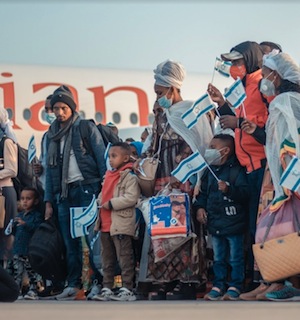
Israel’s Operation Tzur Israel, bringing olim from Ethiopia to Israel, began Dec. 3. (photo by Kassaw Molla)

It’s been almost 40 years since Israel coordinated the first airlift of Ethiopian Jews to Israel in 1984. The Beta Israel people, a citizenry of more than 100,000 at the time, were facing starvation in the midst of Ethiopia’s civil war. By the end of Operation Moses, some seven weeks and 30 clandestine flights later, more than 8,000 men, women and children had been airlifted to Israel. Since that time, Israel has rescued more than 30,000 Beta Israel from northern and central Ethiopia.

The impetus for saving Ethiopia’s fractured and often-persecuted Jewish populations goes back to 1921. Rabbi Abraham Isaac Kook, the then-Ashkenazi chief rabbi of British Mandatory Palestine, made an appeal for Jews to rescue the “holy souls of the House of Israel” from “extinction and contamination” in Ethiopia. His urging would be repeated by numerous other rabbis, including a former Sephardi chief rabbi, the late Ovadia Yosef, who, five decades later, declared the population eligible for aliyah to Israel. Nonetheless, there are thousands of Ethiopian families still waiting for their turn to move to the Jewish homeland.

Descendants of Beta Israel

The Jewish enclaves of Gondar City and the Ethiopian capital of Addis Ababa are home to the descendants of those first refugees of the 1980s and 1990s: grandchildren and great-grandchildren, fathers, mothers and children who were born while their parents waited for Israel to fulfil its stated promise to provide a new home. Their primitive living conditions, say aid workers, are often the product of circumstance. In a 2014 interview, Rabbi Sybil Sheridan (now Romain), a co-founder of the aid organization Meketa, told me that the Beta Israel moved to Gondar City from their ancestral farmlands decades ago due to persecution, with the implicit understanding that their next home would be in Israel.

“They gave up their things, they gave up their jobs, they left thinking they would actually be on the next plane,” Sheridan said. For many, those years of waiting for the next plane have resulted in a week-to-week existence, hinged on the assurances of a future that will reunite them with their now-Israeli families.

In 2003, the Israeli government announced that 20,000 Jews would be allowed to move to Israel, but that plan was later dropped when the Ethiopian government objected to the mass emigration. In 2015, when it became evident that Jewish populations were still at risk from persecution, the Knesset declared it would rescue 9,000 Ethiopian Jews, and would complete the airlifts by 2020. Fewer than 1,000 individuals have been admitted during that time.

In October 2020, Prime Minister Binyamin Netanyahu announced that 2,000 olim would be airlifted to Israel by the end of 2020. The deadline for Operation Tzur Israel (Rock of Israel) has been extended to the end of January 2021, and is gradually being fulfilled. Last month, roughly 700 olim arrived from Gondar and Addis Ababa. Another two airlifts this month have brought the total to roughly 1,500.

photo - Israel’s Operation Tzur Israel has brought approximately 1,500 Ethiopians to Israel so far
Israel’s Operation Tzur Israel has brought approximately 1,500 Ethiopians to Israel so far. (photo by Noga Melsa/Ministry of Absorption and Immigration)

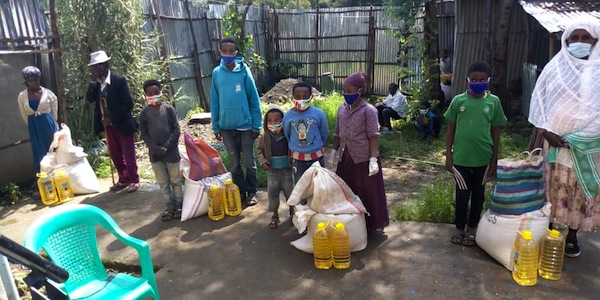
Family members and aid groups in both countries say the 2,000-person limit is not enough. Those waiting in Israel to see their relatives say they are worried for their families’ safety with the risk of civil war and the coronavirus pandemic. Aid organizations argue that the country’s economic shutdown in March is still causing widespread unemployment. While Meketa and Struggle to Save Ethiopian Jewry (SSEJ), two aid groups that work to support the communities, have been shipping in food to the community synagogues, they warn that families are still at risk from famine.

Avi Bram, a trustee for Meketa, said conditions in Gondar are worrisome. “The community is in a very bad situation. Many, not all, but many are in a very, very poor and unsettled standard of living, especially now because of the pandemic.”

Bram said the original mandate of Meketa, which was established in 2013, was to reinforce independence for the community through training, conversational Hebrew classes and small business micro-loans. It was never designed to be a supplemental food program. But the aid is critical at this time. “It fills a humanitarian need,” he said.

SSEJ representative Jeremy Feit said the organization does what it can to support impoverished members of the Addis Ababa community. It arranges medical assistance for children under 5 and seniors, and hot meals for malnourished children and pregnant and nursing mothers.

“The end goal of the work is to limit needless suffering and deaths, while urging Israel to evaluate their claims and allow those eligible to make aliyah as soon as possible,” said Feit.

photo - Aid groups Meketa and Struggle to Save Ethiopian Jewry provide emergency food to Ethiopian Jewish communities waiting for aliyah
Aid groups Meketa and Struggle to Save Ethiopian Jewry provide emergency food to Ethiopian Jewish communities waiting for aliyah. (photo from Meketa)

Mengistu (no last name given), who lives in Ethiopia and has relatives in Israel from a previous aliyah, said the communities are facing increasing danger. “On one side, there’s coronavirus,” said Mengistu. On [another] side there’s the war,” coupled with endemic unemployment and famine.

According to Mengistu, the changing criteria for airlifts are only inciting more stress at home.

“[They] said they would bring 2,000 people at the end of this year,” Mengistu said. “We don’t know if they applied their decision [because] every time they decide [on a quota], they change it.

“So, who are they going to bring? Are they going to bring children? Are they going to [separate] brothers and sisters and leave [some] with their parents? Two thousand people, it’s nothing,” Mengistu said, “compared to the [actual number of] the people still in Ethiopia.”

A stalwart proponent

In May of last year, Pnina Tamano-Shata was appointed minister of absorption and immigration by the Likud-Blue and White coalition. The 38-year-old Ethiopian-born Israeli came with life experiences that made her an ideal candidate for the position. She and her family had immigrated during the 1980s rescue Operation Moses, during which an estimated 4,000 refugees died en route. She knows firsthand the conditions that today’s Ethiopian Jewish communities are forced to endure while they wait for aliyah.

She also isn’t bashful in her support for immigrant rights or services. In October, she negotiated an agreement with the Israeli nonprofit Shavei Israel to airlift approximately 700 Bnei Menashe Jews from North India. As part of the agreement, Shavei Israel would cover all transportation costs. The new immigrants will quarantine at a moshav before settling into their new homes and reuniting with their families.

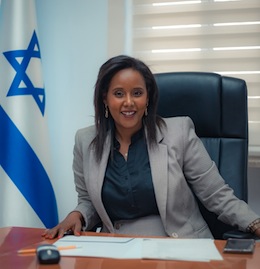
photo - Israel’s Minister of Absorption and Immigration Pnina Tamano-Shata
Israel’s Minister of Absorption and Immigration Pnina Tamano-Shata is the first Ethiopian-born woman to hold a Knesset seat. (photo from Ministry of Absorption and Immigration)

As well, she has put forth a vision and a budget for how to finally resolve the humanitarian crisis in Ethiopia.

In August, Tamano-Shata proposed a plan that would allow, in her words, for Israel to “close the camps” in Gondar and Addis Ababa. Approximately 4,000 of 8,000 olim would be airlifted to Israel by year-end and the rest would follow by 2023. The NIS 1.3 billion ($380 million US at the time) proposal received support from all sides but was never adopted. The Netanyahu government later endorsed a limit of 2,000 by Dec. 31, with assurances of more immigrants at a later date.

Still, Tamano-Shata says she is committed to seeing the aliyah to its end. “[To] my dismay, we were unable to approve the national budget which was supposed to include the outline for the aliyah of those remaining in Ethiopia,” Tamano-Shata told the Jewish Independent in a recent email interview. “However, this does not prevent me from continuing to push for a comprehensive solution for this issue.”

To Mengistu, like many in Ethiopia’s Jewish enclaves, Tamano-Shata’s words are a hopeful sign. “Because now the help for the aliyah is Pnina,” said Mengistu. “She’s one of us. So maybe she will understand the situation and the [reason for] the protests [in Israel.] Maybe things will change.”

With Israel now set to face a fourth election in just two years, Tamano-Shata’s future as the next minister of absorption and immigration is yet to be determined, but her motivation to see the end of what is arguably Israel’s greatest humanitarian crisis remains firm. In 2016, the then-new minister was recognized by humanitarian activist Martin Luther King III for her efforts to establish better protections for Ethiopian immigrants in Israel. Last year, she toured the Addis Ababa enclave and handed out baskets of food to residents. She said she is committed to the rights of Israel’s olim, “despite the policies of lockdowns, shutting of flights and closing of the skies that exists in many countries due to COVID-19.”

At this point, all eyes are on Tamano-Shata. Few doubt that she will meet her stated commitment of 2,000 olim by Jan. 31. But can she, as well, engender better trust between Israel and those waiting for aliyah?

In a recent interview for the podcast One Jewish Family, Ambanesh Biru, former chair of the Gondar Jewish community, summarized the views of a hopeful community that knows its safety may rest in the Israeli government’s understanding of their predicament.

Don’t forget about the Ethiopian Jewish community, said Biru, “especially those [anticipating] aliyah. Because all of the Jews in Gondar and Addis Ababa came from villages expecting they would be going to Israel right away, not to live in Gondar [for the rest of their lives]. So, if anybody comes and talks about aliyah from Israel, please do your best [to follow through].”

Readers can learn more about the Gondar and Addis Ababa communities at meketa.org.uk, ssej.org and jewishagency.org/ethiopian-aliyah-explained.

Jan Lee’s articles and blog posts have been published in B’nai B’rith Magazine, Voices of Conservative and Masorti Judaism, Times of Israel, as well as a number of business, environmental and travel publications. Her blog can be found at multiculturaljew.polestarpassages.com.
Format ImagePosted on January 15, 2021January 18, 2021Author Jan LeeCategories WorldTags aliyah, Ambanesh Biru, Avi Bram, Beta Israel, emigration, Ethiopia, immigration, Israel, Jeremy Feit, Meketa, Pnina Tamano-Shata, SSEJ, Struggle to Save Ethiopian Jewry, Sybil Sheridan
Aliyah despite COVID

Aliyah despite COVID

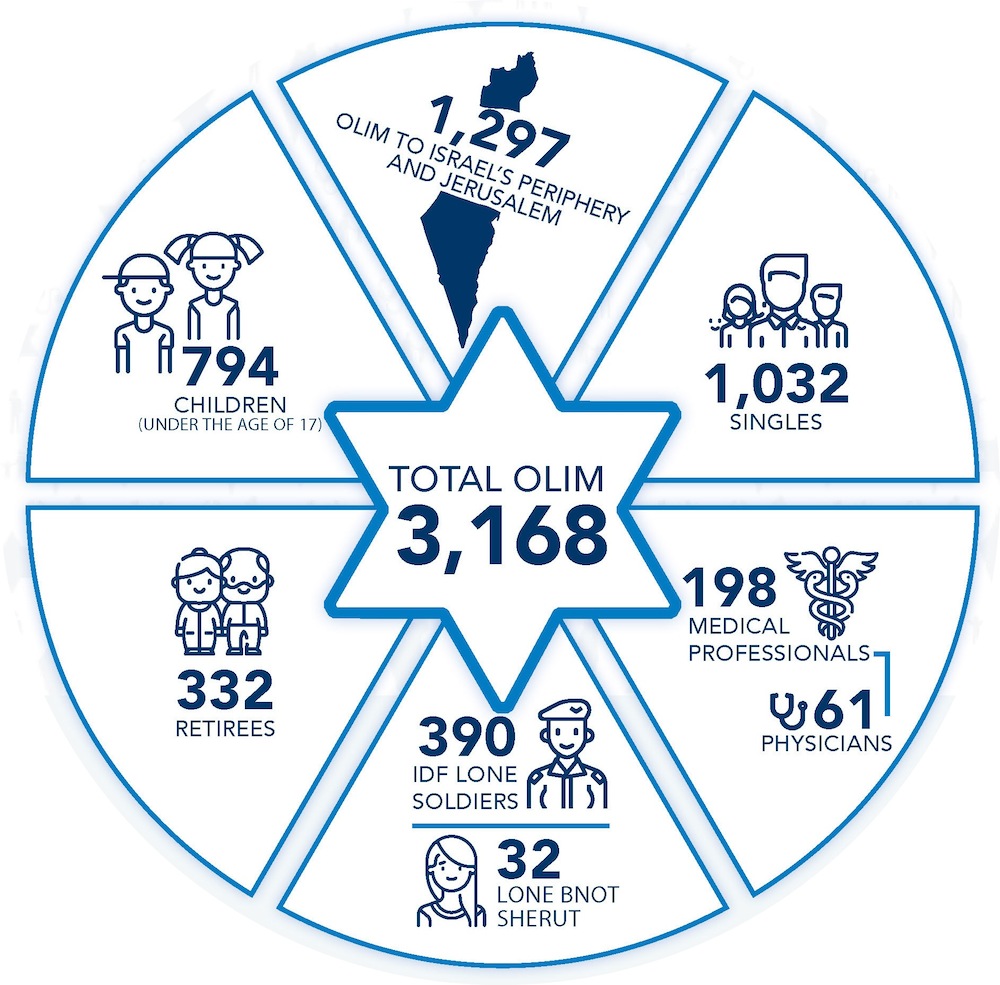
The breakdown of Nefesh B’Nefesh 2020 aliyah. (image from Nefesh B’Nefesh)

Despite a challenging and tumultuous 2020, 291 individuals from Canada decided to make aliyah and move to Israel with Nefesh B’Nefesh (NBN) over the past year. The Canadians were among the 3,168 individuals who moved to Israel from North America in 2020 – 2,625 since the COVID-19 pandemic hit.

Founded in 2002, Nefesh B’Nefesh, in partnership with Israel’s Ministry of Aliyah and Integration, the Jewish Agency for Israel, Keren Kayemeth LeIsrael and Jewish National Fund-USA, has assisted in easing the aliyah process for more than 65,000 olim since its inception. With the help of its partners, NBN assisted nearly 90% of the total number of olim that arrived in 2019.

Since January of 2020, Nefesh B’Nefesh olim have most often hailed from New York, New Jersey, California, Florida, Ontario, Illinois, Massachusetts, Maryland, Pennsylvania and Texas. Altogether in the past year, 811 families chose to move their lives to Israel, along with 1,032 singles and 332 retirees. There were 61 physicians among a total of 198 medical professionals who arrived in Israel in the last year, most of whom joined the frontlines in Israel’s fight against the coronavirus. And 390 young men and women stepped off the plane with the desire to serve Israel as lone soldiers.

In addition to the olim who arrived throughout 2020, Nefesh B’Nefesh received 6,704 aliyah applications, in contrast to 3,035 in 2019 – marking a 126% increase in interest in aliyah.

image - The breakdown of Nefesh B’Nefesh 2020 aliyah
The breakdown of Nefesh B’Nefesh 2020 aliyah. (image from Nefesh B’Nefesh)

“From the earliest days of the Jewish state, no matter how trying or difficult the circumstances, aliyah has always continued in order to preserve what was once a distant dream for our parents and grandparents,” said Rabbi Yehoshua Fass, NBN co-founder and executive director. “As we look back at the challenges everyone faced in 2020, we are extremely proud of what we have accomplished together. We look forward to watching each oleh grow and build their new lives in Israel, and eagerly look ahead to 2021, a year with the potential to exceed all expectations in aliyah.”

“I welcome the dozens of new olim who chose to leave everything, especially during the time of a global epidemic, and fulfil their dreams of building new homes for themselves in Israel,” said Minister of Aliyah and Integration Pnina Tamano-Shata. “Many will surely remember 2020 as a challenging and complex year, but the olim who arrived [recently] from across the U.S. and are part of the last group of olim this year, are enabling it to be shaded in more encouraging and optimistic colours.

“Despite COVID-19, the Jewish nation is thriving and aliyah is continuing,” Tamano-Shata continued. “In the past year, more than 20,000 olim from 80 countries around the world made aliyah.”

“The thousands of new olim from North America and around the world, during a year of a global pandemic, lockdowns and almost complete paralysis of international air travel, emphasizes how much the longing for Zion is deeply ingrained in the hearts of the Jewish people around the world,” said Isaac Herzog, chair of the Jewish Agency.

The top 10 cities in Israel that new olim chose as their homes this year were Jerusalem, Tel Aviv, Beit Shemesh, Ra’anana, Haifa, Herzliya, Netanya, Modiin and Be’er Sheva. The olim most commonly worked as educators, physicians, nurses, social workers and lawyers, as well as in the fields of marketing, sales and business. The average age of an oleh this year is 30, with the oldest being a 97-year-old and the youngest being only 35 days old.

When the pandemic began in earnest in March 2020, Nefesh B’Nefesh adapted its various programming and transitioned into holding virtual meetings, webinars and informational sessions. The online seminars have allowed the organization to reach a much wider audience and have included a wide range of subjects, from choosing communities and special webinars for medical professionals, to how to pack and ship for aliyah.

The ongoing support after aliyah provided by NBN has meant that 90% of its olim have remained in Israel, leading to tens of thousands of new Israelis who go on to make significant contributions to the country.

Format ImagePosted on January 15, 2021January 13, 2021Author Nefesh b’NefeshCategories IsraelTags aliyah, Canada, coronavirus, COVID-19, emigration, immigration, Israel, olim
Panel on shared legacy

Panel on shared legacy

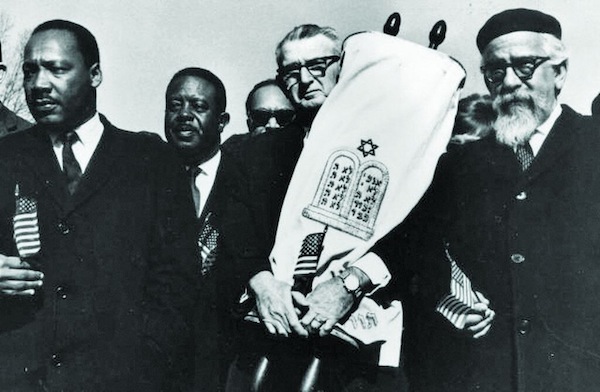
A still from the documentary Shared Legacies: From the left are Martin Luther King Jr., Ralph Abernathy, Maurice Eisendrath and Abraham Joshua Heschel during the march from Selma to Montgomery, 1965.

The Victoria Shoah Project held a panel discussion on Oct. 20, following an online showing of the documentary Shared Legacies: The African American-Jewish Civil Rights Alliance.

The 2020 film, part of the sixth annual Victoria International Jewish Film Festival, chronicles the common history of prejudice and hardships each group has faced, and features footage of the relationships of such luminaries as Dr. Martin Luther King and Rabbi Abraham Joshua Heschel. Included are interviews with many prominent civil rights leaders of the time, such as Andrew Young, John Lewis, Rabbi Alvin Sugarman and Rabbi Peter S. Berg.

After the screening, there was a Vancouver Island-based panel discussion with Adrienne and Barrie Carter, Paul Winn and the Victoria Shoah Project’s Robert Oppenheimer. From their own experiences, they each spoke about African-Canadian and Jewish-Canadian relations. They also talked about the film, and the events from 1960s America that it depicts, from personal, historical, present-day and Canadian perspectives. Rick Kool, also of the Shoah Project, served as moderator.

Adrienne Carter was born in Hungary in 1944, as the Nazis marched into the country and were increasing their campaign to exterminate the Jews. Many in her extended family died in Auschwitz. She and her family moved to Canada in 1956, following the Hungarian Revolution. “The whole stateless experience is very well known to me,” she recalled. “I married Barrie in 1965, at a time when Blacks and whites rarely ever connected, let alone married, and at a time when many Southern states had laws against interracial marriages.”

A co-founder and the director of services at the Vancouver Island Counseling Centre for Immigrants and Refugees, she has spent much of her working life helping immigrants by providing therapy to those who have experienced trauma, including intergenerational trauma.

Barrie Carter, who was a special needs education assistant until his retirement, told the audience of his early years. Born in Jacksonville, Fla., he moved to the northeastern part of the country where, in his teens, he volunteered with the NAACP in Bridgeport, Conn., and in New York and picketed Walgreens to challenge their segregationist luncheonette policies in the South. He immigrated to Canada on a bicycle in 1963. “While I was riding north, people were taking the bus south to the March on Washington. But I just had to get away,” he said.

Both Barrie and Adrienne Carter have traveled around the world, providing services to victims of torture and genocide.

Winn, whose work experience includes having been the executive director of the Canadian Race Relations Foundation, followed by recounting his experiences growing up in Toronto’s diverse Kensington Market neighbourhood.

“When I was 10 or 11, I was a Shabbos goy. I would do some things for the neighbours on Saturdays because they were unable to perform those tasks for religious reasons,” Winn recalled. “I got invited to bar and bat mitzvahs.”

He said, “It was natural for the Black and Jewish communities to support each other when there were struggles with such things as immigration. When I watched the film, I remembered how the connection between the religious Black and Jewish communities helped bring about a lot of activities in Canada, as well.”

Oppenheimer, a clinical psychologist with a focus on traumatized children and youth, a human rights activist and a staunch promoter of Holocaust education, also shared some information about his career. Reflecting on the 28 years he spent working in Detroit, he said, “It was an interesting experience for me. I was the only non-African-American on the staff and I was impressed with how welcoming the community was to me.

He added, “One of the things that impressed me about the movie was when Heschel said ‘not to be a bystander to history.’ I think that is central to my idea of human rights, that we cannot just stand by.”

“One of the things that really hit me in the film,” said Kool, “was a pastor standing in a church with a rabbi who said, ‘Reverend King isn’t here anymore, Rabbi Heschel isn’t here anymore, but are their children here now?’”

Barrie Carter observed that the youth in activist groups today “have the same dynamism as we did. They have an energy and a knowledge of concepts. It isn’t just a blind following. It is a positive morality.”

“They seem to believe it is part of their responsibility to make things better,” added Winn about today’s activists. “They want to make things better.”

Sam Margolis has written for the Globe and Mail, the National Post, UPI and MSNBC.

***

Note: This article has been amended to reflect the correct name of the film festival. It is the Victoria International Jewish Film Festival.

Format ImagePosted on November 27, 2020December 7, 2020Author Sam MargolisCategories TV & FilmTags Abraham Joshua Heschel, activism, Adrienne Carter, African-American, Barrie Carter, civil rights, immigration, Jewish-Canadian, Martin Luther King, Paul Winn, racism, Rick Kool, Robert Oppenheimer, Vancouver Island Jewish Film Festival, Victoria Shoah Project, VIJFF
Beth Tikvah welcomes rabbi

Beth Tikvah welcomes rabbi

Rabbi Susan Tendler, her husband Ross Sadoff and their daughters Sofia and Daniella moved from Chattanooga, Tenn., to Richmond, where Tendler is the new spiritual leader of Beth Tikvah Congregation. (photo from Rabbi Susan Tendler)

Moving to a new city and starting a demanding and highly visible new job would be a challenge in the best of times. For Rabbi Susan Tendler, the recently arrived spiritual leader at Richmond’s Beth Tikvah Congregation, and her family of four, it was a little more complicated.

Not only has the COVID pandemic added complexity to every detail, the family was moving from the United States. This meant that, once they made it to British Columbia after a long, though enjoyable, drive across the continent, during which they took in some national parks and historical sites, they had to go into two weeks of quarantine in their new home.

The lemons of COVID were turned to lemonade by the reaction of the Beth Tikvah community. Tendler calls their reception “extraordinarily unbelievable.”

They arrived at the house, which had been equipped with bedding, toiletries, kitchenware and small appliances, a stocked pantry and refrigerator, and almost everything the new arrivals could want.

“People would from a distance greet us and somebody brought us dinner every single night that week. And people checked on us and would just drop off some milk or whatever we needed for the next week,” she said. While her husband, Ross Sadoff, returned to the States to collect their other vehicle, the rabbi and her daughters, 10-year-old Hannah Sofia and Daniella, who is 8, settled into quarantine.

“My girls and I sat in kind of a tent in our driveway,” she said, while congregants brought socially distanced greetings. “They drove by, honked at us and welcomed us. They had signs and balloons to make us feel welcome. The community, honestly, has gone above and beyond and really demonstrates what a caring community could be and just really made us feel welcome.”

The family moved from Chattanooga, Tenn., where Tendler had been rabbi for eight years at the Conservative B’nai Zion Congregation. She also served on the faculty of Camp Ramah Darom, in the foothills of Georgia’s Blue Ridge Mountains.

She grew up in Virginia and previously held positions in congregations there and in North Carolina. Her undergraduate degree from the University of Virginia is in religious studies with concentrations on Islam and Judaism. At the Jewish Theological Seminary of America, she received her rabbinical ordination and her master’s of education in informal Jewish education. She also completed a two-year rabbinic track at the Institute for Jewish Spirituality. She describes herself as “an ardent Zionist.”

Coming to Canada generally and Beth Tikvah specifically seems bashert. Tendler and Sadoff met at a wedding at the Richmond shul. In fact, that was one of three coincidental meetings that happened before Tendler decided maybe she should consider them an omen.

“I started thinking, wow, maybe I should pay attention to this,” she said. “Why do I keep running into him?”

She had first met Sadoff in New York, when she was en route to Israel and he was rooming with a friend of hers. On a different trip to Israel, for a cousin’s bar mitzvah, the pair met again. The Beth Tikvah meetup was third time lucky.

Relocating to Canada was not in the cards until recently, but it was something like a long-held dream.

“My husband used to say to me years ago, hey, do you think we can move to Canada?” Tendler recalled. “I’d say, Ross, I’m a female rabbi. The chance of that, at this point in time, is very slight. A decade ago, there were many fewer female rabbis in Canada.”

In fact, Tendler is the first female pulpit rabbi in a Conservative shul in British Columbia.

A few factors account for the family’s attraction to Metro Vancouver. For one thing, they wanted a Jewish day school, which Chattanooga has not had for a number of years.

“We are very excited about RJDS [Richmond Jewish Day School] because we think it will offer the flexibility that our kids will greatly benefit from,” she said.

The family loved Chattanooga, but even at one of the most diverse public schools in town, not being Christian was sometimes an issue.

“In some ways, we felt like we were undermining our family values,” said Tendler in the context of raising their kids. “We just wanted them to fully embrace and love who we were raising them to be and the values we were raising them to honour and realizing that, in some ways, we were undermining them constantly.”

A lockdown that took place after false alarms of a threat at the kids’ school made Tendler and her husband ponder school security and the prevalence of gun violence in their country.

“We say things are going to be different but nothing changes,” she said. “I went to Washington, D.C., after the shooting in [Parkland] Florida and we say things are going to change but nothing changes. At some point, you have to do something different. The lobbies are too strong and we can’t even talk in the States about gun safety. It’s all like, you’re taking away my rights. Well, what about public safety?”

Possibly above all, the family just thought that British Columbia would feel like home.

“I think that, in many ways, my family moved here for holistic health reasons,” she said. “We just wanted a place that felt healthier and was more aligned with our values.”

Even comparatively small things like an efficient recycling program make Tendler feel kinship with her new hometown. “It’s a small thing but, in general, I just feel that our values and what we want to teach our children are more in line with Canada, at least with British Columbia and Vancouver, with open-mindedness and, I would say, respect for other people.”

While the transition to their new hometown was complicated, they made the best of it. During the transcontinental road trip, they stopped at sites like the St. Louis Arch, the Badlands, Yellowstone and Mount Rushmore.

“We took some little hikes and saw bison and prairie dogs,” said Tendler. “It was fun.”

Format ImagePosted on September 11, 2020September 10, 2020Author Pat JohnsonCategories LocalTags Beth Tikvah, coronavirus, COVID-19, immigration, Judaism, Susan Tendler, synagogue
New MK has Canadian roots

New MK has Canadian roots

Both MK Michal Cotler-Wunsh, left, and her political aide, Becca Wertman, have Canadian roots. (photo from Becca Wertman)

A new, dynamic force has hit the Knesset, with a political aide just as passionate, and both are rooted in Canada.

Michal Cotler-Wunsh, who once held Canadian citizenship, became a Member of the Knesset for the Blue and White Party this past June. She is among those who have endorsed a proposed bill that, if passed, would change the requirement that Knesset members who hold citizenship in another country must give up that citizenship.

Recently sworn in, Cotler-Wunsh heads a staff of four – a political aide, a parliamentary aide, a spokesperson and an aide who works with her on her portfolio as chair of the Drug and Alcohol Use Committee. In a recent interview, she told the Independent that the issues that concern her are “unity, mamlachliut (often translated statesmanship) and responsibility…. You can’t politicize or personalize issues,” she stressed. Two other issues about which she is passionate are “the ability to combat antisemitism and a commitment to olim [immigrants] and prospective olim.”

Cotler-Wunsh also emphasized her commitment to Israel as a Jewish and democratic state. As a lawyer and international law expert, she added that the international community and Israel must always uphold international law and not allow terror groups to exist in a culture of impunity. She specifically highlighted the importance of this in the context of Hamas not returning the four Israelis currently being held captive in Gaza, in a six-year standing violation of international law.

Jerusalem-born, Cotler-Wunsh spent her first seven years in Israel. When her mother, Ariela (née Ze’evi), married Canadian Irwin Cotler, the family moved to Montreal, where her three siblings were born. Most JI readers will be familiar with Cotler-Wunsh’s father, a former minister of justice of Canada, an international human rights lawyer, emeritus professor of law at McGill University, and founder and chair of the Raoul Wallenberg Centre for Human Rights, among other things.

Cotler-Wunsh returned to Israel for a one-year program after high school and stayed to serve in the Israel Defence Forces as a lone soldier. She then received her law degree from the Hebrew University and did her internship.

In 2000, she and her husband returned to Canada with their son but returned to Israel 10 years later, by which time they had three more children. In 2010, she became associated with the Interdisciplinary Centre in Herzliya and was a research fellow at the International Institute for Counter-Terrorism.

Cotler-Wunsh’s political aide is Vancouver-born and -raised Becca Wertman. The two met at a conference of nongovernmental organizations. “I read Becca, I heard her voice in what she writes,” said Cotler-Wunsh.

Wertman, who is the daughter of Charles and Carla Wertman of Vancouver, has a bachelor degree from the University of Southern California in international relations and a master’s from Columbia University in political science. She was managing editor and responsible for the Canada portfolio at the Jerusalem-based research institute NGO Monitor, authoring articles for a wide variety of publications.

“My messages are very nuanced; it was important to find somebody that can make my nuanced messages accessible to the public and be able to represent me,” explained Cotler-Wunsh. “Having read some of what Becca published, I saw that the values that drive me also drive Becca as well, particularly in the areas of human rights, international law, Zionism and democracy.”

Wertman manages Cotler-Wunsh’s schedule, handles all things that come in English, including media and social media, and reaches out to NGOs that fight antisemitism or are concerned with olim; she also assists Cotler-Wunsh in her foreign endeavours. Like her boss, she is passionate about issues concerning olim chadashim (new immigrants) and working with Diaspora communities.

Wertman made aliyah in 2016 and went to an ulpan to learn Hebrew; she is engaged to an oleh from Chicago. She sees her role as a perfect fit because of the values she shares with Cotler-Wunsh and their shared Canadian backgrounds. In addition, she admires Cotler-Wunsh’s father.

“As a Canadian who is interested in human rights, Prof. Irwin Cotler has been someone I looked up to for many years,” said Wertman.

In June, when Cotler-Wunsh received word that she would be a member of the Knesset, she reached out to Wertman and offered her the position.

“I’m 100% dedicated to MK Michal Cutler-Wunsh, to help her accomplish what she wants to accomplish,” said Wertman. “I fully believe in her goals. Her issues are those I care about. I feel so lucky to work for a member of the Knesset who is furthering issues that I so deeply believe in.” She added, “her background in human rights and international law, these are unique and important skills, experiences and values that can and will add to the Knesset.”

Sybil Kaplan is a journalist, lecturer, book reviewer and food writer in Jerusalem. She created and leads the weekly English-language Shuk Walks in Machane Yehuda, she has compiled and edited nine kosher cookbooks, and is the author of Witness to History: Ten Years as a Woman Journalist in Israel.

Format ImagePosted on August 21, 2020August 20, 2020Author Sybil KaplanCategories IsraelTags Becca Wertman, Diaspora, immigration, Israel, Knesset, law, Michal Cutler-Wunsh, politics
Canadian refugee law study

Canadian refugee law study

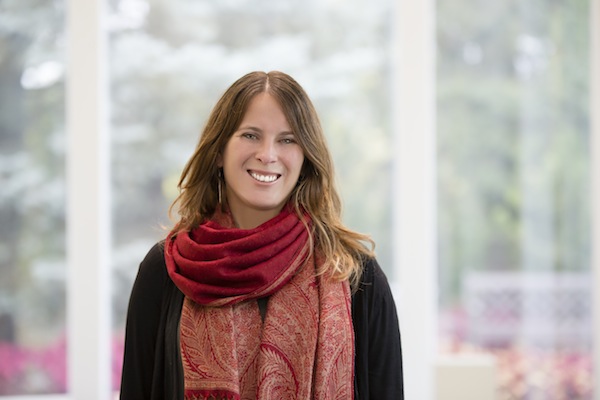
Shauna Labman (photo from Shauna Labman)

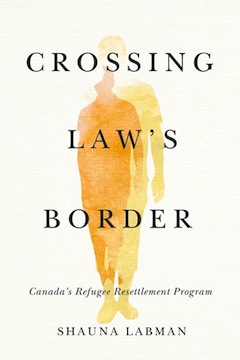
Amid the world’s largest refugee crisis since the Second World War, Winnipeg-based legal scholar Shauna Labman has come out with the book Crossing Law’s Border: Canada’s Refugee Resettlement Program, an in-depth look at how national and international law and policies have shaped Canada’s resettlement programs.

After growing up in Winnipeg, Labman did her undergraduate degree in English and religion at the University of British Columbia, then went into law school at the University of Victoria.

“At the end of law school, I was called to the bar in Ontario, and then I got a contract with the United Nations High Commissioner for Refugees in New Delhi, India,” said Labman. “I went to India, knowing about refugee laws that I’d studied in law school … which meant I knew about the Canadian context of refugees – how refugee claims are made in Canada, how the Immigration and Refugee Board works. I didn’t know anything about how refugees receive protection in a country like India, which has not signed the [United Nations] Refugee Convention or anything.”

After returning to Canada, Labman accepted a consultancy with the Canadian embassy in Beijing. Realizing that the life of a diplomat was not for her, she returned to UBC in 2007 for a master of laws, which was followed by a PhD. Her graduate supervisor was the current dean of the university’s Allard School of Law, Prof. Catherine Dauvergne.

Of her master’s thesis – “The Invisibles: An Examination of Refugee Resettlement” – Labman said, “It’s about the fact that refugees waiting for resettlement don’t get seen. We only see them when they are resettled … but the program is very ad hoc and there was very little attention given to it at the time.”

As Labman was starting her PhD, the ships Sun Sea and Ocean Lady arrived off the coast of British Columbia, carrying several hundred Tamil migrants seeking asylum from civil war in Sri Lanka. She recalled how resettlement was being discussed then. “The relationship between law and refugee protection and what I call ‘the layer legality of it all,’ how different laws work to position different refugees differently, became the basis of my doctoral work and this book,” she said.

After moving back to Winnipeg 10 years ago, she worked as a law professor at the University of Manitoba. Last July, she joined the University of Winnipeg and its Global College. As a human rights professor, she teaches courses on refugees, resilience, and concepts and conventions of human rights.

“I find this really rewarding work,” she told the Independent. “I sit on the board of the Immigrant and Refugee Community Organization of Manitoba and, in that program, I meet a lot of incredible people who spend a lot of time committed to creating a place of welcome for newcomers in our community.”

Labman’s book looks at Canada’s refugee resettlement program from the 1970s, when there were large numbers of people fleeing Vietnam, Cambodia and Laos, up to the Syrian resettlement that’s been happening in the past decade. It covers the different ways that Canada resettles refugees – the government’s resettlement program and the private sponsorship program, including the newly created Blended Visa Office-Referred program, which works with refugee referral organizations to screen refugees before connecting them with private sponsors.

“One way you can think of it is that resettlement itself is a complement to Canada’s inland refugee protection program,” she explained. “Because not that many refugees are able to come to Canada to claim protection, we have a resettlement program. Within that resettlement program, the government is doing resettlement, but the private sponsorship program allows the broader Canada population, individual citizens, to complement the government resettlement program by resettling refugees as well.

“We need only to look south at the U.S. to see how a change in government can affect refugee resettlement,” she said. “We have a legal obligation to asylum-seekers, but a lot of conversation about the border-crossers right now is about whether they are illegally entering the country and whether they are coming in violation of the law when they cross a border. I would say they’re not. I’d say that part of our recognition in the Refugee Convention is that they cannot be penalized for their entry and that, even within our Immigration and Refugee Protection Act, we recognize that refugees may need to cross in a different way or manner to make their claims of asylum.

“In the same way,” she added, “refugee resettlement isn’t a legal obligation, but law still plays out … in how these refugees are selected for resettlement before they enter our borders, which means that, when they are entering our borders, they are entering with a legal document permitting their entrance. They have a legally valid means of entering the country, even though they didn’t have a legal right to enter the country until they were selected for resettlement. So, the book looks at different ways the law operates within these two programs.”

image - Crossing Law’s Border book coverOne area in which the book does not delve, but that Labman said is important, is that the required forms are becoming more complicated to fill out, forcing applicants to seek help from lawyers. “It was too complicated for me to fill out when my family did a private sponsorship application,” she said.

While Labman’s book is academic, it is accessible to a broader readership. “It’s not going to be a page-turner if you’re not interested in refugee resettlement,” she said. “But, if you’ve, say, sponsored refugees and want to understand the program in more detail, it might be of interest. If you’ve worked with refugees, whether in a medical or educational context, in a settlement context … individuals working with refugees, there’s so much history and contextual details to the program. When I was writing this book, that information didn’t exist anywhere particularly clearly. So, if you want a comprehensive understanding of what resettlement in Canada is, this book has that.”

Also, for the main target audience – academics and graduate students in history, philosophy, political science, social work, sociology, law and others – Crossing Law’s Border provides a starting point for their own research on refugee resettlement and sponsorship.

“And, as Canada in the past few years has been promoting the expansion of private sponsorship to other countries, and other countries are taking up private sponsorship models, there’s lots of international interest by governments and policy makers and NGOs in those countries, in what Canada’s resettlement program is about,” said Labman.

The Winnipeg launch of her book took place on Jan. 16, and Labman is planning a launch at the Allard School of Law sometime in May.

Rebeca Kuropatwa is a Winnipeg freelance writer.

Format ImagePosted on February 14, 2020February 12, 2020Author Rebeca KuropatwaCategories BooksTags government, immigration, law, refugees, resettlement, Shauna Labman
Artistic visions of hope

Artistic visions of hope

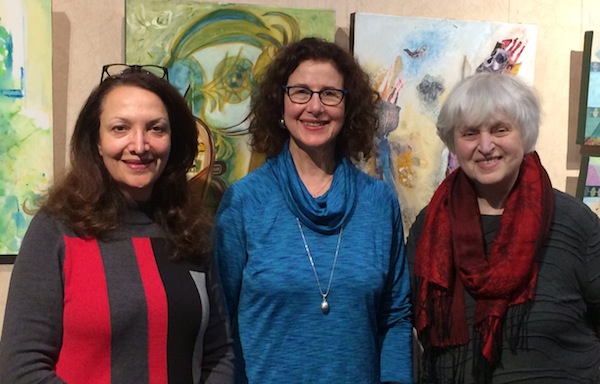
Left to right, Three Echoes artists Sorour Abdollahi, Devora and Sidi Schaffer. Their exhibit, Hope and Transformation, is at Amelia Douglas Gallery until Feb. 29. (photo from Three Echoes)

Connected by similar values and inspirations in their creative work and in their lives more generally, Sidi Schaffer, Sorour Abdollahi and Devora are longtime friends. Their fifth exhibit together – as the informal collective Three Echoes – is called Hope and Transformation. It is at the Amelia Douglas Gallery at Douglas College in New Westminster until Feb. 29.

“Art transcends the limitations of time, space, language and cultural background,” said Devora in her written remarks, prepared for the exhibit’s opening Jan. 16, which was postponed because of the snow, and given Jan. 21. “The echoes from within spill over onto the canvases,” she said. “Together, our works create a dialogue of hope and transformation.”

Devora told the Independent that the name for the exhibit came “through talk and discussion between the three of us in reflecting on our individual and collective journeys and where we found ourselves, and the world, at that moment.”

“Today, there is a lot of anxiety about globalization and migration,” Abdollahi said. “As an immigrant artist, my art deals with connections between cultures and hybridity. Therefore, my works might help serve as a bridge and tell the immigrant story.”

Abdollahi was born and raised in Iran, where she graduated with a diploma in Persian literature from Yazd University and a bachelor’s in fine arts from the University of Art in Tehran. In Vancouver, where she settled 20 years ago, she studied at Emily Carr University of Art and Design. She writes in the exhibit catalogue that her Iranian heritage and Canadian experience “have had a tremendous influence on my works’ subject matter, dealing with the mediation between the modern and the ancient, the old and the new, the West and the East.”

The artist uses collage, a multi-layering technique and mixed media. “My works show the relationship between culture and environment and migration,” Abdollahi explained to the Independent. “Our environments are changing both internally in our mind and externally, and my works illustrate this change. My works create negotiation between different cultures and societies.”

Schaffer also started her fine arts education in her birth country, Romania. In Israel, she received a degree in art education and taught in the school system for more than a decade. When she came to Canada in 1975, she studied at the University of Alberta, where she majored in printmaking and painting. Initially focused on abstraction, her work has become “more integrated, combining abstract and figurative forms,” she writes in the catalogue. “Now I am continually exploring new possibilities with mixed media, a combination of print, drawing, painting and collage. Important for me is the visual poetry, the relationship of form, space, colour and light. Some of my works in this show are a combination of collages of different things from nature and painting; others are collages of my own imagination.”

“I am an optimist and also I am amazed about the continuous transformation in nature around me,” Schaffer told the Independent. “I combined my love and respect for the beauty of flowers and leaves, surrounding them with hope, and new imaginary landscapes. In a way, I give the dry flowers a new life, bringing them out from the pages of old books.”

As for Devora, she told the JI, “What gives me hope is my relationship with the Divine – that there is no separation, that we are all connected and made of stardust, that we are all on an unfolding journey of being together. I attempt to express that emotion onto the canvas.”

For Devora, art has the power to transform the viewer when the viewer can hear her work speak to them from their own experience. “At the opening,” she said, “the Douglas College students from two classes – one poetry class and one art history class – gathered around and engaged with all three of our works, asking questions, wanting to understand the process, the intention and how they could relate from their own lives to what they were seeing.”

Normally, only the art history students attend each artist talk. However, after Devora shared that the Zack Gallery at the Jewish Community Centre of Greater Vancouver hosts Pandora’s Collective poetry nights, where members of the collective create works inspired by the art, the Amelia Douglas Gallery invited the poetry class, as well.

Growing up in Berkeley, Calif., where she earned a master’s at California School of Professional Psychology, Deborah Ross does all of her creative work under her maternal grandmother’s name, Devora, in honour of her grandmother, who was murdered in the Holocaust. “Her spirit gives me the strength and confidence to create,” said the artist in her remarks for the exhibit.

Devora, who now lives both in Vancouver and on Salt Spring Island, came to Canada in 1993. She has studied art at Emily Carr, Langara College and elsewhere. “My artwork reflects the love I have for the creative process and exploration,” she writes in the exhibit catalogue. “I am fascinated by the inner world of emotion, dream, metaphor and story and strive to illuminate both the universal and personal by bringing them onto the canvas.

“My latest works explore the interplay and continuum between abstract and representational images of landscapes and figure, and a fascination with the surreal, in mixed media combining acrylic and collage.”

In her remarks for the exhibit opening, Devora explained, “My art reflects a search for understanding and clarity about my personal and ancestral history and the world. My experiences inform my work as I go inside and bring them onto the canvas. I endeavour to transform darkness into the light of hope. I am interested in what is hidden and how it informs what is revealed.”

She noted that she, Abdollahi and Schaffer “turned to esthetics as a way to focus and navigate our journey.” And she expanded on this concept. “Through the lens of esthetics combined with the common immigrant experience and effects of war and displacement,” she said, “the three of us have managed to bridge all other divides: language, ethnicity, culture, religion and country of origin. Our childhood environments and experiences could not have been more different on the surface and yet the foundations of connection and similarity were already being laid down, established through the development of the lens of sensitivity to beauty in the world and compassion for the human experience.

“Our ideal, of different cultures living in harmony, is reflected in our own personal experiences, in which intimate exposure to the world of ‘the other,’ unearths commonalities and gives rise to a greater depth of understanding about our own lives.”

She concluded, “In closing, I would like to quote Sorour, as Sidi and I feel that her words speak for all three of us: ‘In my friendship and collaboration with Sidi and Deborah, I see an opportunity to explore and express my own culture, but also to relate these themes to other cultural experiences – recognizing the echoes of each other in our works and our lives. My works side by side those of my friends’ works create a dialogue and negotiation which hopefully provides the viewer with a different vision of the world – one which is borderless, free and peaceful.’”

Format ImagePosted on January 31, 2020January 28, 2020Author Cynthia RamsayCategories Visual ArtsTags art, Devora, immigration, Sidi Schaffer, social commentary, Sorour Abdollahi, Three Echoes
Searching for a safe harbour

Searching for a safe harbour

Ben Caplan is narrator and co-creator of Old Stock: A Refugee Love Story, which runs Jan. 24-30 at Frederic Wood Theatre, as part of the PuSh festival. (photo by Stoo Metz Photography)

The 2020 PuSh International Performing Arts Festival opens next week. Among the highlights is Old Stock: A Refugee Love Story, which follows Chaim and Chaya from the pogroms in Romania they are fleeing, to Halifax’s Pier 21, where they meet in 1908, to Montreal, where they end up living. The show, which runs Jan. 24-30 at Frederic Wood Theatre, is narrated and co-created by Halifax-based musician and performer Ben Caplan, with whom the Jewish Independent recently spoke.

JI: How and when did you become involved in the production?

BC: It all started with a phone call from 2b Theatre Company’s artistic co-director Christian Barry in mid-2015. Christian was familiar with my work as a songwriter and performer in the music world and he wondered if I would be interested in collaborating on creating a theatrical production featuring new songs that we would write together.

To be honest, I was skeptical at first. I tend to be a very solitary writer and, though I had a lot of experience in theatre many years ago, it had been a decade since I had performed in theatre. The first few writing sessions were pleasant enough and Christian and I got along great, but we were struggling to find the story that we wanted to tell. As we were searching and exploring to find the substance of what the work would consist of, a confluence of events conspired to show us the story that would become Old Stock.

The first thing was our growing consciousness of the scale of the human tragedy emerging in Syria as a growing number of refugees started trying to find their way out of the violence. Next came Prime Minister Stephen Harper’s comments about “Old Stock Canadians” during the 2015 leadership debate. This othering of “non-Old Stock Canadians” seemed to be vile and absurd. At what point does one get to call themselves “Old Stock”? I am the great-grandson of Jewish immigrants who came to Canada fleeing violence in their own home countries. Was I supposed to think of myself as “Old Stock” or did I fit into some other category in our [then] prime minister’s logic.

Around this time, Christian’s wife, who happens to be the celebrated playwright Hannah Moscovitch, gave birth to their first child, Elijah, and came across the immigration records of her own great-grandparents who immigrated to Canada in 1908 through Pier 2 in Halifax. She realized that, if her great-grandparents hadn’t made the journey to Canada, she would not exist, let alone her infant child. It was then that Hannah asked if she could write the scenes for the show we were trying to create.

With Christian’s vision of the artistic whole, my work as composer and lyricist, and Hannah’s work as playwright, we were off to the races and we worked together to create the show. We thought that the Jewish story from 110 years ago had a striking and tragic resonance with the tragedy unfolding in our own time. I should mention that, of course, the originating cast, musical director Graham Scott, our production manager and designer Louisa Adamson, and many others played a huge role in realizing the vision and bringing the music and the play into the world.

JI: In broad strokes, could you describe how the co-writing process worked?

BC: Christian Barry created the structures and conditions that made it possible for any of these songs to be written. I was probably not always the easiest artist to work with – I tend to desire quiet and solitude when I am writing.

The way it usually worked is that Christian would book a time and a space in whatever city we were able to meet up in (we did writing in Halifax, Montreal, Stratford and Banff) and the day would start with conversations and questions. We would talk, share ideas, listen to music, read texts, Google things, etc.

Out of our conversations and questions, the idea for a song would emerge. The first one we wrote was something for their arrival at Pier 2. We didn’t have a scene or a broader context to work with but, after awhile, Christian would say something like, “We know they are going to come through Pier 2, let’s start there.” I sat at the piano and started mashing out some chords and throwing words into the air. Christian had a wonderfully delicate touch after I got rolling, and would provide helpful comments, critiques, and throw ideas into the room.

JI: What is it about the production that drew you back to performing?

BC: I had stopped performing in the theatre after I became somewhat disillusioned of the possibilities of making a career in theatre. In 2005, the year I did my last theatre performance, I was working on academic pursuits, theatre and my hobby as a singer-songwriter. My life was over-full and something had to give. My logic was something like, in theatre, you need to rely on finding a lot of talented people who are willing to work on a project that takes a lot of time and resources to complete. As a singer-songwriter, there is more room to work solo and bring other people into the project as interest and resources permit. So, that’s the path I chose to express my artistic impulses. I gave up the dream of becoming an actor to focus on the more reasonable and safe path of becoming a songwriter. Ha!

When Christian called me to ask me to make a piece of theatre with him, it was a no-brainer. Being a part of this show has been one of the great privileges of my life. Not only did I get to collaborate with a crazy good team on writing the thing, but I had the opportunity to perform on stages that I wouldn’t have dared to dream of stepping onto when I was making theatre 10 years ago. It’s been an amazing learning experience and one that is sure to influence my work as a performer for the rest of my career.

JI: In what ways does the story and/or themes of Old Stock speak to you as a Canadian in 2020?

BC: What is most meaningful for me about the story and themes of the show is the humanization of the character of the refugee. It has been disturbing to see the ways in which migrants have been portrayed by so many politicians and media outlets around the world. They are often spoken of as hordes, masses and statistics. What is lost are the individual human lives – people with hopes, dreams, fears and trauma searching for a safe harbour.

In Old Stock, we tell the story of Hannah Moscovitch’s great-grandparents coming to Canada. We see their struggles to overcome their past and to generate new and complicated identities. I think that we all, as human beings, have complicated and multi-layered identities. I think that, among other things, this show is about demonstrating layered and sometimes tragic identities with compassion and a healthy dose of humour. That’s basically the most Canadian thing I can think of.

For tickets to Old Stock: A Refugee Love Story and other PuSh shows, visit pushfestival.ca. The soundtrack to Old Stock is available on Spotify, YouTube and elsewhere.

Format ImagePosted on January 17, 2020January 15, 2020Author Cynthia RamsayCategories Performing ArtsTags Ben Caplan, Christian Barry, Hannah Moscovitch, immigration, music, Old Stock, PuSh International Performing Arts Festival, refugees, theatre

Posts pagination

Previous page Page 1 … Page 4 Page 5 Page 6 … Page 10 Next page
Proudly powered by WordPress