What’s up in gerontology?

At the second program of the season in the Jewish Seniors Alliance Snider Foundation Empowerment Series, a few Simon Fraser University graduate students shared their research interests with the 70-plus participants who tuned in via Zoom on Jan. 15.

Jointly sponsored by the JSA and Sholem Aleichem Seniors of the Peretz Centre for Secular Jewish Studies, the Gerontology Research Panel: Eager to Share our Interests and Help our Community – What’s Up With Seniors event featured master’s students Lindsay Grasso and Kishore Seetharaman, and PhD student in gerontology Eireann O’Dea.

Grasso became interested in exploring the impacts of separating couples in long-term care settings when her own family experienced it. She said this problem of separation will become more severe as more couples age together. Current long-term care settings separate couples, depending on each partner’s individual needs.

The effects of dementia on couples is profound and, often, one partner ends up as the caregiver for the other, she said. When the point is reached that institutional care is required, being together would alleviate a lot of the pain, believes Grasso, who has received a grant to look into the long-term effects of separating couples, as well as the effects on visiting spouses, when only one partner is in care. In both scenarios, there is the loss of a shared life, shared memories and the beginning of mourning. It is important to continue the relationship through visiting, sharing activities and eating together, she said. The healthier spouse would need to monitor care and advocate for their partner. For her research, Grasso will be conducting in-person interviews with couples, and will also meet with staff to review their understanding of the issues surrounding separation.

The second presenter, Seetharaman, has a background in architecture and is interested in planning and designing dementia-friendly neighbourhoods, especially in Metro Vancouver.

Worldwide, 70% of dementia-affected adults live at home, so dementia is more than an individual health issue, it is a community issue. Communities must be more inclusive, he said. He would like them to focus on eliminating stigma, raising awareness, social engagement, accessibility to services, improving planning and design of public spaces and support given to caregivers.

In terms of design, he said, familiarity and easy recognition are important. Signs should be clearly visible and easy to read. Distinctive landmarks are helpful for finding the way, he added. There is some work being done in Vancouver in this area but it is not clear as yet how it will be implemented. Seetharaman would like to create a body of knowledge for designers. He is hoping to interview both dementia patients and public servants.

O’Dea is looking into volunteerism and cultural generativity. She became interested in these topics as an undergraduate, when she was volunteering at the Jewish Community Centre of Greater Vancouver and its L’Chaim Adult Day Centre. There, she encountered seniors who were volunteering with other seniors, and she is looking into the benefits on health and sense of purpose in life, as they move away from former roles. The strengths and capabilities of these older adults motivated other seniors to become involved, she noted, adding that each person’s aging process is unique.

O’Dea already has interviewed a number of senior volunteers regarding their motivation. She said many spoke of being motivated by the values of tzedakah (charity) and tikkun olam (repairing the world), and the passing on of Jewish culture. These responses led her to the exploration of cultural generativity, i.e., the desire or need to keep cultural identity alive and pass it down to future generations. This is especially relevant to ethno-cultural minorities, she said, and O’Dea will be researching four minorities: Jewish, Chinese, South Asian and Iranian. She will be studying the effects on both the volunteers and the members of the communities.

During the Q&A session, there were queries about dementia villages; the design and cost of facilities for couples in long-term care; and retention and recruitment of volunteers. The City of Vancouver is apparently looking into an age-friendly action plan that could include persons with dementia.

JSA co-president Gyda Chud reminded everyone about the evaluation questionnaire, then Shanie Levin, program coordinator for JSA, thanked the presenters. The entire program, including the PowerPoint images, is available via the JSA website, jsalliance.org.

Shanie Levin is program coordinator for Jewish Seniors Alliance and on the editorial board of Senior Line magazine.
Protecting children’s rights

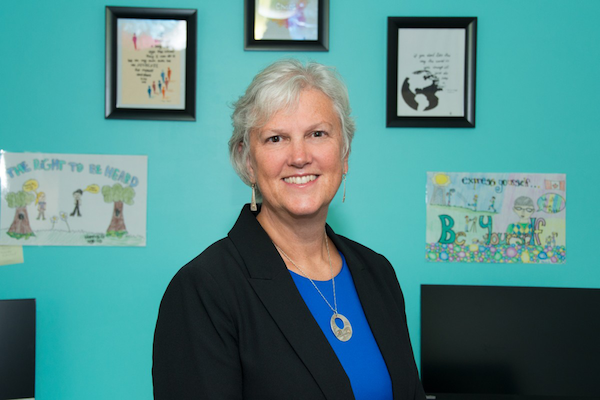
Dr. Jennifer Charlesworth, British Columbia’s representative for children and youth, presented the Dean’s Distinguished Lecture and the Janusz Korczak Medal for Children’s Rights Advocacy on Jan. 27. (photo from the Office of the Representative for Children and Youth)

The University of British Columbia’s faculty of education presented the Dean’s Distinguished Lecture and the Janusz Korczak Medal for Children’s Rights Advocacy on Jan. 27, International Holocaust Remembrance Day. Dr. Jennifer Charlesworth, British Columbia’s special representative for children and youth, gave the talk and the medal was awarded to Dr. Kimberly Schonert-Reichl, an applied development psychologist at the University of Illinois, Chicago.

Born Henryk Goldszmidt, Janusz Korczak (1878-1942) was a Polish-Jewish pediatrician, journalist and educator. His advocacy for children is still recognized today through his writings, which served as a basis of the United Nations Convention on the Rights of the Child.

Prior to the Second World War, Korczak was the director of an orphanage in Warsaw. Although he was offered freedom during the Holocaust, he chose to stay with his orphans when they were forced to board a train to the Treblinka extermination camp in 1942. He, members of his staff and more than 200 children were murdered.

Korczak considered children as partners, equal to adults, insisting that there are no human rights without children’s rights. His pioneering work and enduring legacy were felt throughout the recent event. In the words of B.C. Lt.-Gov. Janet Austen, who introduced the main speaker, “Korczak was an extraordinary man who reimagined the relationship between children and adults. A man of great personal courage and a revolutionary thinker, he understood, whoever saves one child, saves the whole world.”

Charlesworth began her talk on Korczak’s connection to the contemporary era by encouraging the Zoom audience to “think of how far ahead of his times Korczak was in suggesting that each child must be respected. He was rejecting the ideas of his time. His commitment to children is awe-inspiring.”

According to Charlesworth, the first indisputable right of a child is to articulate their own thoughts. Those working with children need to nurture the capacity to listen and understand, to be curious and receptive. Further, practitioners have “to place child’s rights at the centre of their practice, to have both ears open to a child’s voice.” Too often, she said, the individual voices of children can be lost in operational systems.

Charlesworth spoke about advocacy and highlighted the fact that those who work with children will have a significant impact on their lives. Korczak’s advocacy for children, she said, “set the bar very high.”

Adults should want to help children realize their potential, and the relationship between adults and children should never result in the appearance of a struggle for rights. Charlesworth emphasized that, without prioritizing youth voices, there would be no Greta Thunberg, the Swedish environmental activist, or Katherine McParland, co-founder of the B.C. Coalition to End Youth Homelessness.

“We are living in a time of great change and uncertainty. Children and youth sense this, too, and we stand to learn a lot from them as well,” Charlesworth said.

Writer and child survivor Lillian Boraks-Nemetz, a board member of the Janusz Korczak Association of Canada (JKAC), which partnered on the event, drew further on the prescience of Korczak’s work and its continued importance. “Today’s children do not have the same sense of normalcy and routine as before COVID-19,” she said. “At times like these, my thoughts turn to Korczak and a child’s right to education, respect and love.”

Afterwards, JKAC president Jerry Nussbaum and Charlesworth presented this year’s award to Schonert-Reichl, an expert on social and emotional learning, whose nearly four-decade career has been dedicated to children’s rights and well-being. Formerly an educator in British Columbia, she was at the forefront of the province’s revitalized education curriculum, which is often heralded internationally for its advancements in social and emotional learning.

“I am so honoured,” she said upon receiving the award. “And to be in a group where so many are advocating for children’s rights.”

The evening also saw the giving of the Janusz Korczak Graduate Scholarship in Children’s Rights and Indigenous Education to Cayley Burton, a third-year master of arts student in early childhood education at UBC and an instructor in the Indigenous Early Childhood Education Program at Native Education College. Her thesis delves into gender-inclusive teaching practices for preschool children through LGBTQ+ picture books.

“It’s an inspiring, overwhelming honour to have Dr. Korczak’s name associated with the advocacy work that I do alongside and on behalf of young children who are marginalized in Canada,” Burton said.

Sam Margolis has written for the Globe and Mail, the National Post, UPI and MSNBC.

Journey of the Soul

Starting in February, a few B.C. Chabads are offering Journey of the Soul: A Fresh Look at Life, Death and the Rest – In Peace, a six-session online Zoom course from the Rohr Jewish Learning Institute (JLI) that answers the question, What happens when we die?

“Participants will embark on a journey that will enlighten them and put them at ease with the topics of life and the afterlife. Practical and powerful, thoughtful and relatable, Journey of the Soul teaches a Jewish perspective on life, that begins before birth and lasts well after a person’s passing,” said Rabbi Yechiel Baitelman, director of Chabad Richmond and a local JLI instructor.

“Death is both mysterious and inevitable,” added Baitelman. “Understanding death as a continuation of life reveals the holiness of life, while putting everything in a dramatically new context. The soul is on one long journey that is greater than each particular chapter.”

According to Baitelman, Journey of the Soul considers what happens to the soul at birth and again at death. It ponders whether there is a better place after this one; whether our loved ones continue to connect with us; the Jewish understanding of reincarnation; and how to relate to an afterlife even if we’re not spiritual. Journey of the Soul is designed to appeal to people at all levels of knowledge, including those without any prior experience or background in Jewish learning. It is open to the public.

Doctors and most mental health professionals can earn CME or continuing education credit by attending the course – visit myjli.com/continuingeducation for more information and a complete accreditation statement.

“The discounted cost of $40 per person takes into account COVID-19, and the fact that so many people have faced illness, job loss, reduced incomes and other challenges. While this is far below the regular price of the course, we ask you to please consider adding a donation of any size to help defray the course costs, if you are able to,” added Baitelman about the fees to attend the Chabad Richmond series. “And feel free to try the first class for free with no commitment.”

Chabad Richmond offers Journey of the Soul starting either Feb. 3 or 4, 7:30 p.m., and running weekly until March 10 or 11, respectively (chabadrichmond.com or 604-277-6427). The course is also being offered by Lubavitch BC Feb. 2-March 9, 7:30 p.m., with Rabbi Dovid Rosenfeld (lubavitchbc.com or 604-266-1313); and Feb. 3-March 10, 7 p.m., with Rabbi Meir Kaplan (chabadvi.org or 250-744-2770). The series cost varies.

CABGU online series

As the winter blues threaten to sink in, and COVID continues to be a part of life, Canadian Associates of Ben-Gurion University of the Negev (CABGU) has been looking for ways to keep people engaged through a series of virtual events. Each event seeks to offer insights, share research and encourage discussion about varied topics.

For the art lover, A Virtual Art Tour, scheduled for Feb. 7, 8:30 a.m., offers participants a guided stroll through one of the few public art collections in Israel’s Negev Desert. “Ben-Gurion University is home to one of southern Israel’s most dynamic and innovative fine arts collections,” said Maayan Amir, the collection’s curator and senior lecturer in the department of art. “Many of the pieces featured in the collection can be found scattered throughout the Be’er Sheva campus, enlivening the landscape while complementing it as well.”

On the medical front, questions have been raised during the pandemic about ethical decision-making. How do medical personnel make life and death decisions? What type of protocol is followed and how should the vaccine be distributed? Three top doctors from Israel and Canada will participate in a moderated discussion on Feb. 10, 4:30 p.m., sponsored by the Dr. Edward Feldman Memorial Fund. The event is a collaborative initiative between CABGU and the Israel Medical Association. Among the speakers are Dr. Yoram Singer, director of the Negev Home Palliative Care Unit at Ben-Gurion University; Dr. Sandy Buchman, medical director of the Freeman Centre for Advancement of Palliative Care at North York General Hospital; and Dr. Elliott Malamet, lecturer on Jewish ethics and philosophy at Hebrew University.

CABGU also offers monthly lunchtime webinars on STEM-related topics called Webinar Wednesdays. Coming up on Feb. 3, 9 a.m., BGU professor and president Daniel Chamovitz will be joined by Sigal Abramovich from the university’s department of earth and environmental sciences for a discussion about the impact that climate change is having on the environment. Research from BGU that looks at the role cannabis can play in supporting people with autism will be the focal point of a webinar on March 3, 9 a.m.

Register for any of these webinars at bengurion.ca.

Israeli ventilation invention

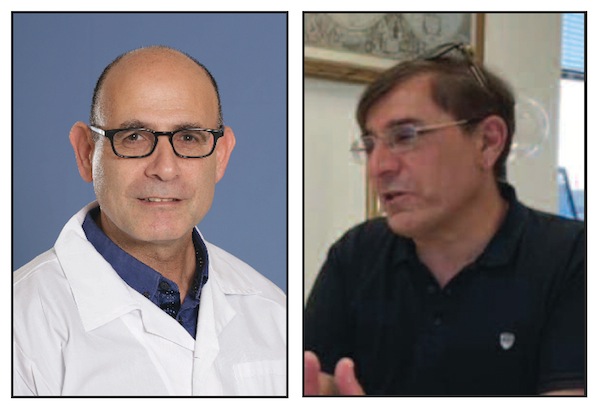
Prof. Ori Efrati, left, and Dr. Michael Cohen. (photos from IMP)

With the arrival of the coronavirus vaccine, there has also been a spike in morbidity, clearly indicating that we’re not out of the woods yet. In fact, hospitals in Israel have warned that they are steadily approaching maximum capacity, as the numbers of severely ill COVID patients breaks all records.

When COVID-19 first erupted in March 2020, health authorities warned that a surfeit in severely ill coronavirus patients would overwhelm the system due, in large part, to a lack of ventilation machines – the standard of care for coronavirus patients whose condition deteriorates to pneumonia. In the ensuing months, Prof. Eyal Leshem, director of the Centre for Travel Medicine and Tropical Diseases at Sheba Medical Centre, explained that, in addition to the shortage of ventilators, one of the most pressing issues is the lack of highly trained intensive-care-unit staff to monitor patients attached to those devices.

An innovation by Yehonatan Medical addresses both of these issues.

Yehonatan Medical, in collaboration with Prof. Ori Efrati, director of the pediatric pulmonary unit at Sheba Medical Centre, devised a first-of-its-kind ventilation system that can treat multiple patients.

“Conventional ventilators, aside from being very costly, are limited in that they can only be used with one patient at a time,” explained Efrati. “Their capacity factor and programming functions were designed for single-patient use, and there is also the danger of cross-contamination.”

The new ventilation system resolves issues that corona ICU wards have been grappling with as the number of severely ill patients rises.

“We were able to use the relatively simple and inexpensive BipaP non-invasive ventilation machine as the basis for the advanced ventilation technology,” said Efrati. “Thanks to the high-power output and built-in disinfecting mechanism, the new system can safely treat three to five patients simultaneously.”

Moreover, a system that can treat multiple patients at one time necessitates fewer ICU-trained staff. Thanks to the remote interface, the medical team can monitor patients from a safe distance.

“This tremendous breakthrough is nothing less than a game-changer when it comes to caring for large numbers of corona patients,” Efrati added.

Dr. Michael Cohen, an engineer and scientist and the founder of Yehonatan Medical, said, “All in all, we’re talking about a system that delivers personalized care in a multi-user format.”

Additional features based on artificial-intelligence technology include the ability to have a hierarchy and classification of alerts; the ability for automatic parameter correction according to set criteria; respiratory rehabilitation for the patient by adjusting to changes in the patient responsiveness; and more. The streamlined, relatively low-cost system can be implemented in makeshift clinical settings, such as field hospitals, as well as in step-down units within the hospital, in the internal and other wards.

Yehonatan Medical is the medical department of Mofet Etzion, a company that for more than two decades has developed various security and military innovations for the Israel Defence Forces and foreign armies. Cohen has developed dozens of life-saving innovations, including in the area of cardiology, in collaboration with cardiologists and cardiothoracic surgeons from Israel, the United States and Canada.

“Some of the insights for the development of this revolutionary ventilation system were provided by cardiologists who helped us to devise the various accoutrements and sensors,” Cohen said, making specific mention of Dr. David Adams, professor and system chair of the cardiovascular surgery department at Mount Sinai Hospital in New York; Dr. David Tirone, chief of cardiac surgery at Toronto General Hospital; and Dr. Gideon Cohen, cardiothoracic surgeon at Sunnybrook Health Sciences Centre in Toronto. The development of the system itself took place in Israel, marking the first time that an invasive ventilation machine has been built in Israel.

The advanced ventilation technology is currently in advanced phase trials at the MSR Medical Simulation Centre at Sheba, where it is being tested on artificial lungs, and is expected to be ready for mass marketing in the coming months.

– Courtesy International Marketing and Promotion (IMP)

Cookin’ old school meatloaf

As if the pandemic weren’t enough, I’m supposed to think of something tantalizing and healthy to cook every night? Right. Roger that. My motto is: go with the tried and true. Or, given the times we’re in: go with the tired and true. Translation: something my mom used to make in the 1960s and ’70s. Something delicious but notoriously unhealthy.

Let’s face it, back then, the general public didn’t know bupkas about heart-healthy diets, Keto or low cholesterol. Not even doctors’ families. Nobody measured their BMI (body mass index) at the gym, because no one went to the gym. No one had their goal weight etched in their brain. It was a kinder, gentler time. Albeit with lots more spontaneous and fatal heart attacks and strokes. But still.

Back to the task at hand. It was a dark and stormy afternoon. I was tired. Really tired. Of cooking. But we have to eat. So, I did what any self-respecting accidental balabusta would do: I pulled out my mother’s old National Council of Jewish Women Cookbook. It’s a miracle that it isn’t falling apart after all these decades doing yeoman service. As I was searching for something simple and doable within 30 minutes, I happened upon a dog-eared page. One my mother had probably marked for good reason. Which is ironic, since the standing joke in my family was this – as soon as my mom cooked anything that my dad loved, she never made it again. We’ve speculated on the rationale for years. Was it intentional? Happenstance? Payback for something? Maybe it had to do with the electric can opener my dad gave mom for her birthday one year; or was it their anniversary?

The dog-eared recipe, thankfully, was – drum roll, please – Meatloaf. Yes, Virginia, you heard correctly, Meatloaf. I capitalize it because, well, it deserves the recognition. There is no problem in this world that can’t be solved by a good meatloaf. (Alright, maybe athlete’s foot and world wars, but, otherwise….)

In sync with the majority of the recipes in that cookbook, it called for an envelope of onion soup mix, undoubtedly a staple in those days. Chip dip – sour cream and onion soup mix. Spinach delight – onion soup mix. Apricot chicken – onion soup mix. Being a culinary rebel (ha!), I decided to go rogue and omit the onion soup mix. I had to draw my own line in the sand. And I swapped Panko for breadcrumbs. This recipe makes a moist, dream-of-a-1960s dinner. Once again, you’re welcome. You may be excused from the table.

MEATLOAF

2 lbs ground beef (extra lean)
1 1/2 cup soft breadcrumbs (or Panko)
2 eggs
1/2 to 3/4 cup water
1/3 cup ketchup (or, as they called it in the ’60s, catsup)

Preheat the oven to 350°F. In a large bowl, combine all the ingredients and place the mix into a greased loaf pan. (I covered the top with more ketchup – I know, very radical). Bake for approximately one hour.

It doesn’t get much easier than this. Seriously. Both Harvey and I kept cutting little pieces off, to even out the end. We were insatiable! We easily ate half of this two-pound loaf in one sitting, and polished off the rest the next day in sandwiches. What can I say? We’re dyed-in-the-wool carnivores.

To switch it up a little, and marry old school to multicultural, I also made Greek lemon potatoes. While I could eat meat and potatoes every night of the week, I don’t. And don’t go getting all judgy on me, either – there was broccoli in attendance.

The Greek lemon potatoes were a new thing for me (the making part), and I only made the Greek kind because I had a bunch of fresh rosemary leftover from baking focaccia the day before. (It was delicious!) Plus, we had a truckload of lemons in the fridge getting overripe from neglect (scurvy in our future?). I have to say, the potatoes were simple and simply delicious. Again, Harvey declared them “guest-worthy.”

GREEK LEMON POTATOES
(from recipetineats.com)

2.5 lbs potatoes (about 4 large russets)
1 1/2 cups chicken broth
1/2 cup olive oil
1/3 cup fresh lemon juice
5 cloves garlic, minced (I used 4)
2 tsp salt (I used 1 tsp)
dash of pepper
1 tbsp dried oregano (I used 2 tbsp fresh rosemary instead)

Preheat oven to 400°F. Peel the potatoes and cut into semi-thick wedges. Place in a roasting pan with all the other ingredients; toss well. Roast covered with foil for 40 minutes. Remove foil and turn the potatoes. Roast for another 25 to 30 minutes until the liquid is mostly absorbed by the potatoes. If you like your potatoes a bit crispy, leave them in for another five minutes or so.

They end up super-moist, soft, lemony and fabulous. Oh yeah, and garlicky. Harvey said they were even better than the ones at Apollonia, our favourite Greek restaurant. It was hard to refrain from eating the whole darn batch, but we showed the teensiest bit of restraint. After all, we wanted some left over for the next day. They’re like potato candy, if you will. Except better.

Sometimes, the most obvious recipes are the best. I often consult that Council cookbook. Who better to advise on such Jewish delicacies as honey-glazed cocktail franks, deviled tongue canapes and fruited rice salad? I rest my case.

There’s no question that the NCJW of Canada does many admirable things to enhance the community through education, social action, furthering human welfare and more. Far be it from me to make it sound like all they did was produce a cookbook. But, thank you, NCJWC for having done so – the meatloaf alone is worth the price of admission. And, of course, kol hakavod for all the great work you do.

Shelley Civkin, aka the Accidental Balabusta, is a happily retired librarian and communications officer. For 17 years, she wrote a weekly book review column for the Richmond Review. She’s currently a freelance writer and volunteer.

That glitter gets everywhere

I’ve been thinking about Caillou, a TV show for toddlers and preschoolers. It’s been on television since 1997. Caillou is a little bald French-Canadian kid. He’s broadcast in both French and English, and offers gentle lessons to kids everywhere. My twins watched a lot of Caillou.

The episode I’ve been remembering offers something basic that we should all know. The summary: Caillou’s doing art at preschool with glitter. When he finishes, he doesn’t clean up or wash his hands. The rest of the episode shows off exactly where the glitter ends up, from light switches to friends’ bodies to snack and the table and chairs. That’s why it’s so important to wash your hands after playing with glitter.

The glitter message sticks with kids. It’s also a remarkably easy way to explain germ theory – useful during a pandemic. Glitter, like germs, gets everywhere.

As an early glitter fan, I found this lesson powerful. As a kid, I had several surgeries for birth defects by the time I was 5. I was in the hospital a lot. During one recovery period, I was brought to a big sunny room in the pediatrics ward to do arts and crafts, including glitter, which I loved. My mother still jokes about this more than 40 years later – remembering the day the surgeon came to check my incisions. My mom likely hovered, anxious, as he checked my abdomen and sides. He looked up and grinned when she asked how things were healing. He said things were coming along nicely and were “very colourful!”

What does this have to do with Judaism? I’ve been studying Tractate Pesachim as part of my pursuit of Daf Yomi (a page of Talmud a day). Pesachim’s topic is Passover. In Pesachim 15, the issue is how to burn all the chametz (leavened bread) that we get rid of right before the holiday. It’s considered “impure.”

Impurity here is often defined as something “in the wrong place at the wrong time.” There are many reasons why something is considered impure. The questions the rabbis are weighing are interesting. They wonder, “Is it OK to burn two different kinds of impure things together?” They imagine the Temple priests having to get rid of all this and finish cleaning by the start of the holiday.

The other impure things brought up – and this rabbinic impurity topic is complex – are pigul and nottar, two categories of sacrificial meats that have gone wrong. Jane Shapiro, in introducing this issue on the My Jewish Learning website, explains that pigul is something sacrificed “with improper thought.” That is, something sacrificed in error; that is, the priest thought it was to be burnt or eaten at the wrong time. Nottar was an offering made at the right time and not eaten – basically, leftovers, which are then considered impure. There’s common sense in this. Sometimes we cook things incorrectly (pigul) or, lacking refrigeration, we might just have to get rid of leftovers (nottar) to avoid food poisoning. In these cases, the impurity’s a mess-up. It’s not an unclean animal, another source of impurity, but, rather, a human mistake that leads to the disposing of something.

As the rabbis sort through what can be burned together, they examine how one kind of impurity causes a first-degree impurity, which, if it touches something else, becomes a second or a third degree of impurity. Something in this discussion reminded me of glitter and, then, germ theory.

Even the most careful person can be surprised by a sneeze, or get too close to someone when they are supposed to be social distancing. In fact, keeping oneself safe from invisible germs, like the coronavirus, can be difficult. Even healthcare workers, swathed in protective equipment, can slip up. In a sense, this rabbinic concept of impurity is a lot like catching germs. If we accidently mix items or people inappropriately, we pass along impurity, or germs.

If we visualize germs like Caillou’s glitter or my preschooler hospital craft project, we better understand how tricky a time we’re in. We’re still facing a long haul.

Yes, we hear a vaccine is on its way, but we don’t yet know how long it will take for enough Canadians to be vaccinated. We don’t know how effective the vaccine will be, or if enough people will be willing to take it. Meanwhile, COVID-19 is spreading just like that glitter. It’s everywhere that we are, and it’s scary. There’s every chance that we might encounter the virus through an inadvertent slip up (like the rabbinic impurity of pigul or nottar) but, since it’s germs and not glitter, we won’t know until later. We must act as if we are impure because the virus isn’t visible.

The most poignant part of this whole complicated impurity narrative is that the rabbis just can’t figure it all out. They say more than once that we’ll just have to wait for the prophet Elijah to return to give us the right answers. Reading it, you can imagine their shoulders shrugging as they struggle with what they don’t know and can’t figure out.

Scientists and doctors everywhere are also figuring things out as they go. They have to learn to live with the mystery. We don’t know everything – about the pandemic, how it works, when it will end and about those germs that spread like glitter.

For most, 2020 has been a rocky year. As we turn towards the secular year 2021, it’s important to remember that a vaccine might not be an instant fix. We face the future much as the rabbis faced some of these difficult questions about impurity long ago, and the researchers do today. We don’t know all the answers. We must do our best, square our shoulders, and keep on keeping on.

Yet, every week, as we end Shabbat, we sing about Eliyahu (Elijah) and we welcome him to every Passover and every bris. It’s in yearning for Elijah that we find the faith to keep trying.

Wishing you a happy and healthy 2021! I hope your home celebrations are great – and without glitter!

Joanne Seiff has written regularly for CBC Manitoba and various Jewish publications. She is the author of three books, including From the Outside In: Jewish Post Columns 2015-2016, a collection of essays available for digital download or as a paperback from Amazon. Check her out on Instagram @yrnspinner or at joanneseiff.blogspot.com.

Our rights in the age of AI

Dr. Rumman Chowdhury, chief executive officer and founder of Parity, gave the keynote address at the Simces & Rabkin Family Dialogue on Human Rights. (photo from rummanchowdhury.com)

Data and social scientist Dr. Rumman Chowdhury provided a wide-ranging analysis on the state of artificial intelligence and the implications it has on human rights in a Nov. 19 talk. The virtual event was organized by the Canadian Museum for Human Rights in Winnipeg and Vancouver’s Zena Simces and Dr. Simon Rabkin for the second annual Simces & Rabkin Family Dialogue on Human Rights.

“We still need human beings thinking even if AI systems – no matter how sophisticated they are – are telling us things and giving us input,” said Chowdhury, who is the chief executive officer and founder of Parity, a company that strives to help businesses maintain high ethical standards in their use of AI.

A common misperception of AI is that it looks like futuristic humanoids or robots, like, for example, the ones in Björk’s 1999 video for her song “All is Full of Love.” But, said Chowdhury, artificial intelligence is instead computer code, algorithms or programming language – and it has limitations.

“Cars do not drive us. We drive cars. We should not look at AI as though we are not part of the discussion,” she said.

screenshot - In her presentation Nov. 19 at the Simces & Rabkin Family Dialogue on Human Rights, Dr. Rumman Chowdhury highlighted the 2006 Montreal Declaration of Human Rights.
In her presentation Nov. 19 at the Simces & Rabkin Family Dialogue on Human Rights, Dr. Rumman Chowdhury highlighted the 2006 Montreal Declaration of Human Rights.

The 2006 Montreal Declaration of Human Rights has served as an important framework in the age of artificial intelligence. The central tenets of that declaration include well-being, respect for autonomy and democratic participation. Around those concepts, Chowdhury addressed human rights in the realms of health, education and privacy.

Pre-existing biases have permeated healthcare AI, she said, citing the example of a complicated algorithm from care provider Optum that prioritized less sick white patients over more sick African-American patients.

“Historically, doctors have ignored or downplayed symptoms in Black patients and given preferential treatment to white patients – this is literally in the data,” explained Chowdhury. “Taking that data and putting it into an algorithm simply trains it to repeat the same actions that are baked into the historical record.”

Other reports have shown that an algorithm used in one region kept Black patients from getting kidney transplants, leading to patient deaths, and that COVID-19 relief allocations based on AI were disproportionately underfunding minority communities.

“All algorithms have bias because there is no perfect way to predict the future. The problem occurs when the biases become systematic, when there is a pattern to them,” she said.

Chowdhury suggested that citizens have the right to know when algorithms are being used, so that the programs can be examined critically and beneficial outcomes to all people can be ensured, with potential harms being identified and corrected responsibly.

With respect to the increased use of technology in education, she asked, “Has AI ‘disrupted’ education or has it simply created a police state?” Here, too, she offered ample evidence of how technology has sometimes gone off course. For instance, she shared a news report from this spring from the United Kingdom, where an algorithm was used by the exam regulator Ofqual to determine the grades of students. For no apparent reason, the AI system downgraded the results of 40% of the students, mostly those in vulnerable economic situations.

Closer to home, a University of British Columbia professor, Ian Linkletter, was sued this year by the tech firm Proctorio for a series of tweets critical of its remote testing software, which the university was using. Linkletter shared his concerns that this kind of technology does not, in his mind, foster a love of learning in the way it monitors students and he called attention to the fact that a private company is collecting and storing data on individuals.

To combat the pernicious aspects of ed tech from bringing damaging consequences to schooling, Chowdhury thinks some fundamental questions should be asked. Namely, what is the purpose of educational technology in terms of the well-being of the student? How are students’ rights protected? How can the need to prevent the possibility that some students may cheat on exams be balanced with the rights of the majority of students?

“We are choosing technology that punishes rather than that which enables and nurtures,” she said.

Next came the issue of privacy, which, Chowdhury asserted, “is fascinating because we are seeing this happen in real-time. Increasingly, we have a blurred line between public and private.”

She distinguished between choices that a member of the public may have as a consumer in submitting personal data to a company like Amazon versus a government organization. While a person can decide not to purchase from a particular company, they cannot necessarily opt out of public services, which also gather personal information and use technology – and this is a “critical distinction.”

Chowdhury showed the audience a series of disturbing news stories from over the past couple of years. In 2018, the New Orleans Police Department, after years of denial, admitted to using AI that sifted through data from social media and criminal history to predict when a person would commit a crime. Another report came from the King’s Cross district of London, which has one of the highest concentrations of facial-recognition cameras of any region in the world outside of China, according to Chowdhury. The preponderance of surveillance technology in our daily lives, she warned, can bring about what has been deemed a “chilling effect,” or a reluctance to engage in legitimate protest or free speech, due to the fear of potential legal repercussions.

Then there are the types of surveillance used in workplaces. “More and more companies are introducing monitoring tech in order to ensure that their employees are not ‘cheating’ on the job,” she said. These technologies can intrude by secretly taking screenshots of a person’s computer while they are at work, and mapping the efficiency of employees through algorithms to determine who might need to be laid off.

“All this is happening at a time of a pandemic, when things are not normal. Instead of being treated as a useful contributor, these technologies make employees seem like they are the enemy,” said Chowdhury.

How do we enable the rights of both white- and blue-collar workers? she asked. How can we protect our right to peaceful and legitimate protest? How can AI be used in the future in a way that allows humans to reach their full potential?

In her closing remarks, Chowdhury asked, “What should AI learn from human rights?” She introduced the term “human centric” – “How can designers, developers and programmers appreciate the role of the human rights narrative in developing AI systems equitably?”

She concluded, “Human rights frameworks are the only ones that place humans first.”

Award-winning technology journalist and author Amber Mac moderated the lecture, which was opened by Angeliki Bogiatji, the interpretive program developer for the museum. Isha Khan, the museum’s new chief executive officer, welcomed viewers, while Simces gave opening remarks and Rabkin closed the broadcast.

Sam Margolis has written for the Globe and Mail, the National Post, UPI and MSNBC.

***

Note: This article has been corrected to reflect that it was technology journalist and author Amber Mac who moderated the lecture.

The man behind the curtain

It was a beautiful Wednesday morning. I awoke in a tangle of bed sheets and to an IV stuck in my left arm. I had been in a road biking accident in the city the night before, breaking my now throbbing right leg in three places. The night had been a blur of ambulances, narcotics and doctors bustling around the noisy emergency room. It was quiet now. I had been moved to a shared room on the seventh floor. Long beige curtains had been pulled around my hospital bed, shielding me from the other patients. I could see the sunlight splashing through the window on my left, as I looked out to the surrounding city buildings. It was still summer, but mine was over.

A tired nurse interrupted my thoughts, rushing in with an awkward blood pressure machine and a temperature wand. I wondered if the frequent checks were to ensure I was clear of infection and, perhaps, COVID-19. The ward was eerily empty of visitors. Strict regulations were now in place because of the pandemic, and the impact was evident. Suddenly, with fewer family members visiting, there was more for the staff to do. The nursing station seemed to be a never-ending symphony of ringing, as patients buzzed for attention.

On the other side of my bed curtain, I heard a patient cheerfully chatting to a nurse who had arrived to assist with his medication. The nurse’s smile was audible as she told him about her coming birthday plans at the beach, physically distanced, of course. I eavesdropped that day and I realized that my roommate knew the name of every care aide and nurse who came to his side. He greeted them with enthusiasm as they entered the room, as if welcoming each into his home. He called them by name and asked with sincerity about their families and futures. I never once heard this man whisper a word about his own pain.

That night I wept, overwhelmed by self-pity and my coming trip to the operating theatre, where they would screw my splintered bones back together. I lay still and stared at the ceiling, listening to the hum of the machines around me. I thought about how I was going to get the kids to school, how my work would be affected and all the things I could, temporarily, no longer do. This year was not getting any easier. And then, as I attempted to use my bedpan, it spilled.

I awoke the next day to the sunshine dappling on my starchy bed sheets and the scattered magazines on my bedside table. It was agonizingly early, and the birds were chirping loudly as if to flaunt the beauty of the day. I was disheartened by my bedridden state, my swollen leg wrapped in plaster and the unsightly road rash that covered my body. I sat up in bed and dreaded the lonely hours that lay ahead.

The silence of the room was soon broken by a quiet voice from behind the curtain.

“Good morning,” the voice said calmly, clearly directed at me. “Are you doing OK?”

The patient next to me must have heard my sobs the night before. Hesitantly, I responded. From there, he drew me into a conversation and brought me into his world, spinning my despair on its head.

For days, we talked endlessly through the hanging fabric to pass the time, without seeing each other. Each morning he would greet me with unwavering cheer, found somewhere in the depths of his own being, despite his medical challenges.

“Good morning, Caroline,” he would beam. “You are going to get through this.”

He was almost 80 years old, he proudly told me. He had a wonderful life filled with a loving family, amazing friends and memories. His heart was full. And come hell or high water, he was going to get better and get out of this joint.

This stranger became my unrelenting cheerleader, as if it was his personal mission to lift me up from my melancholy. As I told him about my family, he reminded me to enjoy these precious years with my young children and how fortunate I was to have a partner who was by my side, when the hospital allowed. As we talked through the curtain, he encouraged me to find the best in all difficult circumstances, including this one, and to remember that the glass is always half full. Life is not always easy, he would say, but you have to carry on and look for the positive. His optimism radiated throughout our hospital room.

After our hours of conversation, we asked the nurse if we could see each other. Bedridden, connected to IV poles and draped in matching hospital gowns, we waited in anticipation as the curtain was drawn. As his eyes sparkled, he smiled knowingly and told me that I had so much to look forward to. I felt a sense of exhilaration, seeing him for the first time, after all that had been shared in our intimate room.

Despite his own ill health, he continued to coach me from his hospital bed in the days that followed, gracefully placing my injury in perspective. It was left unsaid that I was one of the lucky ones. I only needed to look over to the third patient in our room, who had been in a motorcycle accident, to count my blessings.

My roommate was wise and unrelenting with his words of encouragement. He was infectiously optimistic and didn’t complain, except about the food, assigning a score out of 10 to each meal. We joked about this often, that and the dismal TV options. My discharge papers were finally signed on the fifth day and I waited eagerly to get home to my family. As I was wheeled out of the room, our eyes met and we said our final goodbyes. I felt emotional, as I knew that I would likely never see him again.

I think of my exceptional roommate often and of what a gift he was to me. The impact he made during those difficult days on the hospital ward still resonates. Everything will be okay and there are brighter days ahead, for all of us. Thank you, Sanford, for being my silver lining, my ray of sunshine. I am grateful.

Caroline Dickson lives in Vancouver. This story was originally published in the Globe & Mail and a Jewish community member shared it with the JI. In recognition of Sanford Cohen’s kindness towards everyone he meets, Dickson is collecting Chanukah gifts from the community for him this year. If you would like to contribute a gift or send a card, please email kindnessforsanford@gmail.com. Drop-off locations are available in Richmond and Vancouver.

Video on healing, light

Loolwa Khazzoom in Iraqis in Pajamas’ video for their song “Cancer Is My Engine,” to be released on Chanukah. (photo by Ailisa Newhall)

With shared themes of finding light in the darkness, Seattle-area band Iraqis in Pajamas is releasing the video for their song “Cancer Is My Engine” on Chanukah.

Amid the global pandemic, volunteer cast and crew drove in from across Washington state, donning masks and practising social distancing, to film the music video against the backdrop of the Olympic Peninsula forest.

The video tells the story of front woman Loolwa Khazzoom’s choice to reject the conventional thyroidectomy treatment for thyroid cancer, despite medical and financial pressure. Khazzoom instead chose to approach the diagnosis as an opportunity for radically transforming her life, such as by going vegan and practising numerous forms of mind-body medicine. (See jewishindependent.ca/healing-powers-of-song.)

After cold-stopping the growth of the nodules for years, through these measures, Khazzoom moved to Washington state from California, returned to her lost love of music, and launched her band, which combines ancient Iraqi Jewish prayers with original alternative rock. Immediately following, the thyroid nodules began shrinking. Through magical realism and metaphor, the music video reveals how, by listening to her inner voice, Khazzoom self-healed through her actual voice, by singing – the ability to do which may have been destroyed by a thyroidectomy, given the proximity of the thyroid gland and vocal chords.

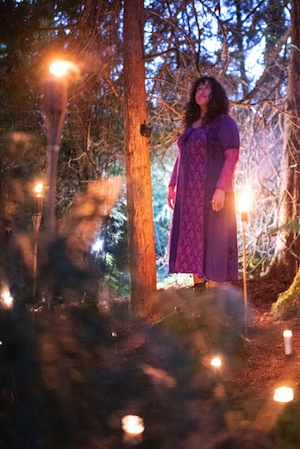
The video begins with Khazzoom standing at the edge of a cliff, singing the opening line of the song, “Cancer is my engine.” As she sings, a candle is lit by her voice. She is transported to a forest, where she is searching in the dark with the light of that candle. She comes across a stuffed bear – representing Khazzoom’s mother – and picks it up, then continues on her quest.

An insurance agent and doctor appear and begin chasing Khazzoom. As she runs from them, she comes to a fork in the road – with the doctor on one side and the insurance agent on the other. She pauses, then runs forward, where there is no path, heading toward the light. She keeps running until she comes to a cliff and jumps off it.

photo - Loolwa Khazzoom in the “Cancer Is My Engine” video
Loolwa Khazzoom in the “Cancer Is My Engine” video. (photo by Ailisa Newhall)

She lands in the middle of a drumming circle and starts dancing wildly. A few scenes later, she is drumming in the middle of the circle, and everyone else is dancing around her. Both circles represent the pivotal importance of music and dance in Khazzoom’s healing. The video then shifts from magical realism and metaphor to real-life shots, with the band playing music in a vegetable patch in Khazzoom’s garden, representing Khazzoom’s regimen of juicing daily and eating a whole-foods, plant-based diet. The video ends with Khazzoom standing on the edge of the cliff and singing the last words of the song, in the original a cappella Iraqi Jewish prayer that exalts the power of the Divine.

The video was sponsored by nonprofit Healing Journeys and funded by the Lloyd Symington Foundation, both of which offer programs for people living with and healing from cancer.

Studies on the healing possibilities of music are documented in books like The Power of Music by Elena Mannes and The Healing Power of Sound by oncologist Dr. Mitchell Gaynor, and the National Institutes of Health has launched a series of studies on the healing powers of music. Whether singing lullabies or sacred chants, mothers and religious leaders have known for millennia what scientists are only beginning to understand. Singing bypasses our mental process, both awakening and soothing us at the core. Among other benefits, we are able to access, release and heal from the experience of trauma, without having to recount and risk getting triggered by painful memories.

Khazzoom has had a career as an educator, activist, journalist, health coach, and more, all with the central organizing principle of individual and collective healing. Her work has been featured in media including the New York Times and Rolling Stone; she has presented at venues including Harvard University and the Simon Wiesenthal Centre; and she has published two books, which are taught at universities nationwide.

Iraqis in Pajamas comprises Khazzoom on both vocals and bass, Sean Sebastian on guitar and Robbie Morsehead on drums. The trio opens up audiences to contemplation about trauma, healing and transformation, whether addressing domestic violence, cancer, racism, mental illness, street harassment, family caregiving or national exile.