Beth Israel hails Dr. Henry

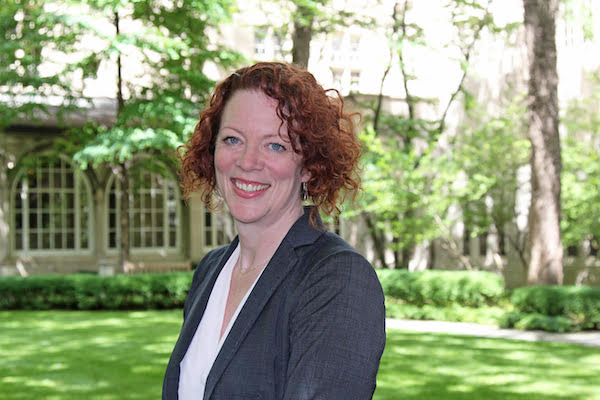
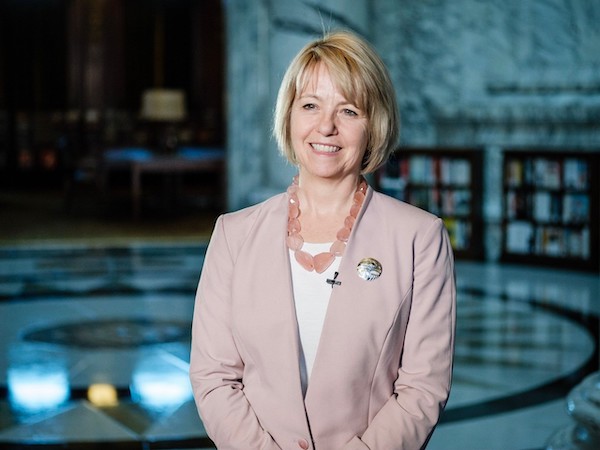
Dr. Bonnie Henry will be honoured at Beth Israel’s gala event May 30. (photo from BI)

Dr. Bonnie Henry will be honoured at the 2021 Congregation Beth Israel gala May 30. The provincial health officer for British Columbia will be given the Keter Ha’bri’ut Award at the virtual celebration.

The term keter ha’bri’ut translates to Crown of Health, and the award has been created “to honour those in the community who have worked diligently, relentlessly and with humility for the betterment of their fellow citizens.”

“The truth is that we couldn’t think of anyone better than Bonnie Henry because, the fact is that she’s literally been a keter ha’bri’ut, a crown of health, for our province in helping to keep us healthy,” said Rabbi Jonathan Infeld, senior rabbi at Beth Israel. “She embodies one of the single most important concepts of Jewish tradition, spreading the word of chesed, of kindness. It’s not only that she cares about the physical health of our province, but I think one of the reasons that she has become famous across the country and the world is because she cares about the humanity of our province as well.”

When the synagogue’s gala committee asked Henry if she would be willing to be honoured by the gala and receive an award, about nine months ago, organizers hoped that the event might be in person or, at least, a hybrid event with some people present and others tuning in virtually.

Instead, the main portion of the event will feature words from Henry, Infeld and others, all virtually, with musical entertainment by Maya Rae. At certain ticket levels, food delivery is included and, for major donors, a pre-event will feature a mixology session, with cocktail kits delivered to the homes of virtual attendees. Henry will share a favourite cocktail recipe of her own.

Henry’s commitment to inclusion and her respect for Jewish traditions impressed Infeld from the moment Henry held her first group conference call with clergy from around the province, about the time the pandemic began.

“One of the things that really touched me,” he said, “was in her very first address to the clergy of British Columbia – I’m not talking about the rabbis, but for the clergy of British Columbia – many, many months ago, as we were entering into the COVID era, she said, we are going to have to have fewer faces and bigger spaces and one of the things that that means is we won’t be able to do in-person shivas for awhile.”

Infeld believes that Henry’s time as associate medical officer of health for Toronto Public Health during H1N1 and SARS outbreaks in that metropolis put her in close contact with the Jewish community there.

Henry’s work is serious, as is the award she will receive from Beth Israel, said the rabbi, but parts of the evening’s program will be lighthearted.

The gala is to be emceed by Dr. Isaac Elias, a young member of the synagogue and a medical doctor who helped guide the synagogue’s response to COVID from the beginning.

The event will be relatively short – about an hour – and partial proceeds will be donated to the B.C. Centre for Disease Control.

Infeld said, “It’s an opportunity for us as a community to say thank you to someone who has done so much for the province and for the residents of the province and embodies some of the most important messages of Jewish thought, being that of the importance of saving lives and of the importance of being kind to others.”

While the virtual gala will be an unusual event, Infeld stresses that the shul is no stranger to Zooming. Since the week the pandemic began, he said, the decision was made “to ramp up our programming, not ramp down.”

“We actually have more programming than we have ever had before,” he said. “In the early days of COVID, when everyone was literally shut in, we had teams of volunteers calling and assisting our seniors, we engaged all of our young adults and they were helping deliver food to seniors, helping them with whatever needs they had, technological, food and beyond.

“We also increased our programming. We never had a daily learning [before COVID]. Now, we have a daily mussar class. What used to be a monthly Lunch & Learn became the weekly Zoom & Learn and now is becoming the weekly evening program known as Prime Time BI. A Zoom Scholars series was funded in part by Harley Rothstein and Eleanor Boyle. One of the things that we’ve seen is participation rates in our services online and our online programs are up anywhere from 30 to 100%, and we’ve been able to maintain that.”

Presenting sponsor for the gala event is the Shay (Shy) Keil Group.

“I am thrilled to be the presenting sponsor for this event, both in support of the Beth Israel Congregation and also Dr. Bonnie Henry,” said Keil. “It is an honour to present this award to Dr. Henry for all that she has done during the pandemic, making extraordinarily difficult protocol decisions and becoming the public face of this pandemic. It is a thankless task that she has assumed since March 2020 and I am so happy that Beth Israel has decided to recognize her.”

For tickets to the event, visit bethisrael.ca.

Louis Brier campaign starts

(photo from thelouisbrierfoundation.com)

This spring saw the launch of the This Year Like No Other, This Year More Than Ever 2021-2022 Louis Brier Jewish Aged Foundation campaign, which is raising funds to enhance care and innovate the program and service offerings for residents of the Louis Brier Home and Hospital.

Early in 2020, the foundation stepped up to assist the Louis Brier leadership in its exemplary response to the COVID-19 pandemic. By doubling the home’s funding, the foundation was able to support the home in keeping its seniors safe and engaged during one of the most challenging years of their life.

The biennial campaign, which started April 19, will run to May 28. With the community’s help, the goal is to raise $2.4 million. Campaign chairs are Harry Lipetz (board president) and Lee Simpson (immediate past president).

The $2.4 million amount is needed to keep up with the home and hospital’s funding needs, which doubled with the onset of COVID-19. While the foundation is well aware of the many challenges of the present time, we believe this year, like no other, and more than ever, we must collectively come together to care for, and give a well-deserved kavod, to the people who built our community for us in the first place. To contribute and create impact where it’s most needed after the extraordinary challenges of the year 2020. To be part of ensuring that the physical, mental and spiritual needs of the home’s Jewish seniors are met.

Louis Brier’s background

In 1945, 14 friends known as the Hebrew Men’s Cultural Club shared a vision to create a home for Jewish seniors in Vancouver. That home, initially built to accommodate 13 residents, was established in 1946. Over time, that modest facility grew, changed locations and expanded its services, eventually becoming the Louis Brier Home and Hospital, which has progressed in step with Vancouver’s Jewish community.

Today, Louis Brier is part of a continuum of care known as the Snider Campus, which also includes the Weinberg Residence, a boutique assisted living and multi-level care residence adjacent to Louis Brier.

The Louis Brier Jewish Aged Foundation provides and distributes funds to the Snider Campus towards maintaining and fostering the well-being of the Jewish aged of British Columbia, while supporting the enhancement of their quality of life based on Jewish traditions.

Some quick facts

  • The Louis Brier is a 215-bed long-term residential care home serving Vancouver’s Jewish community.
  • The home and hospital provide three levels of residency (intermediate care, extended care and special care).
  • Thirty-five residents of the current population at Louis Brier are Holocaust survivors.
  • Eighty percent of Louis Brier Home and Hospital’s residents are diagnosed with varying levels of dementia.
  • The Louis Brier has 436 employees – 195 full-time, 101 part-time and 140 casual.
  • The home and hospital residents range in age from 50 to 103, with the average age being 84.
  • The Louis Brier is an accredited institution with exemplary standing (2018). The Accreditation Canada survey team spent four days at the facility and reviewed a total of 19 required organizational practices (ROPs), 216 high priority criteria and 295 other criteria, for a total of 551 criteria. The surveyors determined that Louis Brier successfully met 100% of the 551 criteria evaluated.
  • The Louis Brier was awarded the 2020 Canadian Non-profit Employer of Choice Award.
  • The Louis Brier is the only facility in British Columbia with a companion program and has the largest recreation team in Western Canada.
  • The Louis Brier had a single COVID case among residents.

To donate to the campaign, click here. For more information, call 604-261-5550.

– Courtesy Louis Brier Jewish Aged Foundation

The magic behind kaytana

While Camp Miriam won’t be able to offer overnight camping sessions, it will once again be offering day camp experiences this summer. (photo from Camp Miriam)

I will never forget waking up in a puddle in the middle of the night, feeling water slowly dripping into my sleeping bag as I shivered and clenched my muscles, trying to maintain the tiniest shred of heat.

It was 2011, I was 14, and my kvutza (cabin group) was on a three-day hike that would take us through steep inclines and 30 kilometres of terrain. It poured every day and night, leaving us without a dry item of clothing by the first morning. We were wet, cold, blistered and exhausted. It was a miserable trip.

And we loved it.

On the final day, we emerged from the forest chanting a marching song and smiling with glee at what we had accomplished. To this day, I reminisce about this trip with that same giddy excitement.

And yet, I’ve always wondered, what allowed us to not only persevere, but to create a lifelong positive memory. Anyone who has spent time at Machaneh Miriam – the overnight Jewish summer camp on Gabriola Island – can attest to the magic each new summer conjures. The thing about magic is that we may not know how it works, but we know what it does. It’s what drove us forward, step by step through the mud with smiles and songs that summer. Everywhere you go at Miriam, you can feel the magic – from the building walls decorated with generations of camper art and poetry, to the dining hall filled with chanting and singing voices every lunch.

It’s the same magic that, last summer, propelled Miriam’s youth leadership to accomplish the seemingly impossible.

When the pandemic hit, these young leaders were several months into planning a six-week overnight summer camp on Gabriola. Not only did the pandemic erase months of hard work and preparation, it also posed a serious question: could camp’s magic exist outside of the island?

To most campers and staff, Miriam and Gabriola are inseparable. As the rosh (camp director), Marina Levy, said, “At Camp Miriam, we are connected to our community, to Gabriola and to our traditions.”

Envisioning a summer away from Gabriola was a daunting task. But, the tzevet (staff) rose to the occasion, creating not one, but three kaytanot (day camps) – one each in Vancouver, Victoria and Portland. By summer’s end, more than 200 campers, 60 staff and a whole bunch of parents resoundingly affirmed that camp’s magic can exist off of Gabriola.

To understand the importance of the kaytana, it is necessary to consider the context. At a time when campers had been confined to their homes and separated from their friends for months, the news that overnight camp was not happening came as a severe blow.

The immediate effect of the pandemic on kids’ mental health was profound. Research by SickKids hospital in Toronto showed that, in just the first three months of the lockdown, a majority of children showed a serious deterioration in their mental health.

According to Camp Miriam parents, the kaytana helped their kids overcome some of that stress. One parent said, “Last June, our daughter was really struggling with the impact of COVID on her life, it was significant. Camp Miriam’s summer camp in Vancouver brought her back to herself again. A combination of the social component, the programming and empowerment she felt, and the sense of purpose in her life helped her rediscover herself and revive herself.”

Another parent observed a change in her son after just one day. “I  almost cried hearing him talk about it,” she said. “I think it wouldn’t be too much of a stretch to say it was a transformative experience.”

Counselor Rakeea Gordis said that, during the weekly Shabbat tradition where campers sit together and reflect on their week, “At least one, but usually up to five kids would say that they were devastated that today, Friday, was the last day of the kaytana for the week.”

So, how did the staff manifest the magic of overnight camp in day camps far from the quiet comfort of Gabriola? A huge amount of credit goes to the youth leadership who worked long days and then late into the night throughout the summer creating kishutim (decorations) for special days, planning peulot (educational activities) and even burying items for a treasure hunt the following day.

Financially, none of this would have been possible without the support of the camp’s community and the Jewish Federation of Greater Vancouver, who stepped up at a time of extreme need, as well as the Grinspoon Foundation and the Heller Memorial Fund, who provided matching grants. It cost nearly three times as much to run the kaytana as to run the overnight camp.

So, perhaps, camp’s magic is not a complete mystery after all. As technical director Inbar Avrahami Saraf said, “[The kaytana] was an experiment, a proof of concept of the magic of machaneh, and how the magic is not in the physical space but in the chanichm [campers] and the tzevet and just the community that makes it so incredible.”

So, credit must be given to the force of will that the youth leaders and the wider Jewish community bring – the relentless push to build and dream; to create community and unforgettable experiences, whether they be on Gabriola Island, on a three-day hike in the pouring rain or in the midst of a pandemic.

“The magic of machaneh doesn’t just exist far away on an island, it exists where we choose to create it,” said Levy.

Unfortunately, once again Camp Miriam has had to cancel its overnight camp due to COVID-19, but, once again, the young staff are ready to create amazing kaytana experiences. To register for Miriam’s 2021 summer programs or to support the camp as it faces another challenging season, go to campmiriam.org.

Sasa Popovich is a writer and former Camp Miriam camper, counselor and technical director.

Where I’ve been this year

After listening to Dr. Betsy Stone during a community workshop called A Year of Upheaval: What has Trauma Done to our Bodies and our Brains?, I decided to take her advice and tell my story. According to Stone, “Healing requires storytelling … we tell our stories so we’ll understand our experience differently.”

The past 15 months have been a journey for all of us. Some more than others, but no one has not “traveled” during the pandemic. And, by travel, I mean change. Whether we’re brave enough (honest enough?) to admit it or not, we have all been transformed. Call it trauma, call it what you like. It’s all a matter of semantics. Not everyone is as vocal as I am, or as filled with anxiety about COVID, but no one comes out of this horrible shindig unscathed.

Whether your resilience lies in emotional strength or a feeling of invincibility, or whether you’re firmly entrenched in that big river in Egypt (denial), we all cope in our own ways. There is no one right way through this. You can’t go over it, you can’t go under it – you can only go through it. Putting our experience into words brings new life to it, new insights. Speaking it makes it even more real and, maybe, just maybe, easier to cope with.

So, where have I been this year? I wish I could answer that with geographic precision. What comes to mind is: home. And, occasionally, the pharmacy and grocery store, as well as walks close to home. While I hate to say that the pandemic has been my world, it’s hard to escape the reality of that pronouncement. I fully admit my obsession with the pandemic, my fear and my single-minded focus on how to stay healthy. I won’t apologize for it, or feel less-than. It is what it is.

That doesn’t mean to say that my fear has prevented me from seeing silver linings during this unparalleled time. There has definitely been more than one “there-must-be-a-pony” moment. The most important one being that my nephew and his wife had a baby boy near the start of the pandemic. It doesn’t get any better than that. In random order after that, I have thrown myself into the deep end of the pool with Torah classes and other religious learning. Next on my list is that I started on a life-changing medical treatment that makes my life much easier. I have made new friends and acquaintances through the numerous Zoom classes I attend nearly every day. I am exercising 100% more than I did pre-pandemic. I might sleep less, but my brain has expanded. In the good way. And that’s just the beginning.

All this is by way of saying that, while I wouldn’t award COVID first place in a popularity contest, it has had its bright spots. It has impacted my perspective on all things, in a way that nothing else has, to that degree. When I think about what’s important now, my pre-COVID list is almost laughable. I, like many others, have embraced the basics: health and safety, family, faith and trust.

When I think of the trajectory of this past 15 months, it’s hard to articulate. Or, more to the point, what our reactions have been. Have I learned to be more trusting, or more suspicious? Have I expanded my capacity for compassion, or have I become more selfish? Have I anchored my experiences in religious belief, or have I trusted in science? Have I given in to my fears, or have I conquered them? While I’ve always tended to lean towards the black and white, there really are no absolutes right now. There are, however, firm yeses and hard no’s. I am reconsidering everything I once was certain about. The $64,000 question is whether I will be able to integrate what I’ve learned and turn it into something positive when all this is over. Or, better yet, before all this is over. The jury is still out. But I’m hopeful.

I have become exponentially more grateful for the simple things: my devoted husband who is my perfect companion in life; that I have a loving and lovely family; that I have never had to worry about where my next meal will come from; that I live in a part of the world that has great doctors, easy access to medical care and all the outdoor green spaces you could ever ask for; and that I have mentors and friends. I could go on ad infinitum.

Too often, I see the clouds instead of the blue sky that’s right behind it. I see impediments where there don’t have to be any. Positivity is a steep learning curve for me. It’s funny that I used to consider myself an optimist. Since the pandemic, I’ve come to see how maybe-not-true that is. Not that I’m proud of it, it’s just the current reality. But I’m trying pointedly to turn that around. There are days where I see hope staring me in the face everywhere. Literally everywhere. Other days, it’s just fog and darkness. I know I’m hardly unique in this.

So, in truth, I have been lots of places this year. Mostly in my head. But some real places, too. Like a certain street in Shaughnessy that’s filled with huge trees, beautiful homes and no people walking about. A place where it’s safe for me to take off my face mask for a block or two. Until I see someone. I have also been to a place of sheer, unnamable joy, seeing my tiny great-nephew on WhatsApp video. I have discovered flowers I never knew existed, in areas I’d never walked before (despite being a native Vancouverite). I have traveled via Zoom to other countries, for learning and sometimes for pleasure. But pleasures that don’t involve a beach or a buffet. And I travel constantly in my dreams.

Every day of this pandemic, I have learned something. About myself, about others, about faith. That’s got to count for something, right? When we all heal from what Stone calls this “trauma,” we’re definitely going to come out of it changed. Whether that change is positive or negative, or a combination of both, is up to us entirely. My commitment to myself is that I’m going to try and lay the groundwork for an improved Shelley. A less anxious, more trusting, deliberately positive Shelley.

I guarantee you’ll still recognize me, though. I’ll be the one still wearing a facemask a year from now. Or maybe not.

Shelley Civkin is a happily retired librarian and communications officer. For 17 years, she wrote a weekly book review column for the Richmond Review. She’s currently a freelance writer and volunteer.

Working through emotions

The experiential feeling of shame is defined as a painful emotion caused by feeling like you have done something wrong or disgraceful. Shame is a popular trope and is associated with the concept of “Jewish guilt.” However, on the ground and in my practice with tweens, adolescents and adult women, shame carries with it strong painful emotions and regret(s). Shame is a common reaction to anxiety, depression and mental and emotional stress.

For the therapeutic clients who work with me, shame is expressed as all-consuming. In the context of emotional and mental stresses that are relational or situational, common expressions of shame arise of feeling broken, defective and disconnected. My general aim is to acknowledge the power of shame and their particular relationship to it by also normalizing the emotion and experiences with it. As a therapist, I use various creative-, expressive-, psychosocial-, embodied-, feminist-, narrative- and mindfulness-based psychotherapies to work a way inside, through and outside of the burdens my clients are holding. For the purpose of this article, I will focus on mindfulness psychotherapy.

Experiences of anxiety, depression, grief, relationship and family struggles often result in individuals being programmed and aware of the value of, or favouring of, one part of their experience over another – for some, it is intellectual or cognitive abilities; others are guided by emotions; others by physical signals. More and more we are realizing the importance of recognizing and listening to all of our responses as a way to heal and grow. A mindful approach to psychotherapy helps you identify and integrate all of these parts of yourself. Brain science validates this notion and suggests that, by attending to your thought patterns, emotional reactions and sensory experiences, you can change patterns of thinking, feeling and moving in the world. Even complicated mental and emotional health experiences paired with the weight of shame can be tackled using mindfulness as a key component in therapy and applying it in day-to-day life.

Mindfulness practice offers hope for changing unwanted or destructive reactions, belief systems and behaviours that seem fixed or difficult to mobilize. For example, if you have a negative self-view, by noticing the story you tell yourself and considering it a pattern of thinking versus a truth, there is room to reevaluate and create a more accurate description of yourself. And, when you have a more accurate and accepting view of yourself, you are more likely to trust yourself and live more freely. This work is not easy and it is important to proceed gently and in the care of a trusted mental health professional.

I will share a short mindfulness practice that you can do at home. Mindfulness connects one’s mind to one’s body and one’s breath. I like carrying out this mindfulness exercise with my individual therapeutic clients and in group therapy because it serves as a reminder to connect to one’s body and to breathe through it. Through this mindfulness practice, that I call “body scan,” one can gain both emotional and physical clarity and start a naming and eventual cleansing of emotions that do not serve including shame.

Body scan

Find a place you can sit comfortably, quietly and undisturbed and set a gentle timer for five to 10 minutes. Be kind with yourself and start slowly, with five minutes. The more you practise, the easier a longer mindfulness practice will be.

During the body scan exercise, you will pay close attention to the physical sensations throughout your body. The goal is not to change or relax your body and mind, but instead to notice and become more aware of your body, your mind and your breath.

Begin by paying attention to the sensations in your feet. Notice any sensations such as warmth, coolness, pressure, pain or a breeze moving over your skin. Slowly move up your body – to your calves, thighs, pelvis, stomach, chest, back, shoulders, arms, hands, fingers, neck and, finally, your head. Spend some time on each of these body parts, just noticing the sensations. Remember to breathe as fully as you can, in through your mouth, exhaling through your nose. Your breaths are like gentle and ongoing waves.

After you travel your body, begin to move back down, through each part, until you reach your feet again. Remember to move slowly, and just pay attention, breathing and noticing.

Dr. Abby Wener Herlin holds a doctorate degree from the University of British Columbia. She is the founder of Threads Education and Counselling and works with tweens, adolescents and adults. She carries out themed social justice and creative arts and writing workshops for students, teachers and schools. She is available for therapeutic sessions and contemplative writing workshops. She can be reached at abbyherlin@threadseducation.com or via threadseducation.com.

COVID and other challenges

Dr. Judith Moskowitz (photo from Judith Moskowitz)

Anxiety and stress can be debilitating even in the most normal of times, but, with COVID-19 and all that it encompasses, we have all been presented with a whole other level of challenges.

In this context, the Jewish Independent connected with Dr. Judith Moskowitz, a professor of medical social sciences at Northwestern University Feinberg School of Medicine, in Chicago. She is also the director of research for Northwestern’s Osher Centre for Integrative Medicine. Trained as a social psychologist, with expertise in stress and coping with emotions, Moskowitz started her career in the early 1990s, helping men caring for their partners suffering from AIDS.

“Before there were more effective treatments available, it was essentially a terminal illness,” she said. “Caring for a loved one with AIDS was really one of the most stressful events a human could experience.”

Initially, she said, “We’d ask them, ‘What is stressful about this?’ Then, we’d help them cope with it, really focusing in on the negative part the whole experience and, shortly after the start of the study, the participants started saying, ‘You’re not asking us about the good things in our lives’ … which surprised us, because we’re coming at it from a very much stress and coping way.

“So, we listened to them and started then asking, ‘OK, tell us something positive that happened in the last week.’ And, almost in every single interview, even if their partner had just died, they could talk about something positive … often something small … having to do with something else going on in their lives not necessarily directly related to their care-giving.”

This new perspective helped direct Moskowitz onto a path looking at the positive things within stressful life events, allowing positive emotions to be expressed along with the negative.

“This isn’t about pretending things aren’t happening,” she stressed. “Rather, it’s about knowing that, even when times are really dark and you may be experiencing a lot of negative emotions and a lot of stress – maybe even depression or anxiety – you also have the ability to experience positive emotions as well. So, if you can experience the positive alongside those negative emotions, you’ll be able to cope better.”

Moskowitz and her team put together a program that includes eight to 10 skills, depending on the target group, toward helping participants increase their daily experience of positive emotions – stopping to notice, savour and capitalize on those good aspects.

“When things are stressful, it can be hard to see the positive things going on,” said Moskowitz. “We help people realize there’s usually something positive happening … you just have to be able to notice it.

“Things might be really horrific, but your dog is sitting next to you, really loves you, and it’s very sweet. So, just taking a moment and petting your dog, and then maybe telling someone about it – that would be noticing something positive in your life and savouring or capitalizing on it,” she explained. “We’ve been able to show that people who learn these skills and then practise them have better emotional well-being. They’re less likely to be depressed. In some samples, we were seeing some physical health effects. So, through clinical trials, we showed that the program seems to be helpful.”

When COVID first hit, Moskowitz was inundated with questions about how to cope better with stresses associated with the pandemic. The bottom line is that these skills transcend any particular stressor and can help no matter what the situation.

“For COVID, my advice is the same as it is for coping with breast cancer, diabetes, depression, or being a high school student,” said Moskowitz. “Learn these skills, try them out, see which work for you and, then, keep doing them. It’s like a physical activity, something you need to keep on doing. You can’t just do it once … similar to gratitude, noticing the good things, being thankful … it doesn’t work for you to just be grateful once and then be done with it. You need to take it up as a habit, and that can help you cope with COVID-19 or adapt with whatever kind of life stress you’re facing.”

Moskowitz also teaches the importance of doing acts of kindness. The idea is that, when you do something nice for someone else, it helps you feel better, too. Such an act can be as simple as paying for the coffee of the person in line behind you. Or looking someone in the eye and thanking them, making them feel appreciated and seen. And there are many types of acts that can be done without the receiver knowing the kindness came from you, if you’d rather remain anonymous.

“Doing these acts helps you feel better in a situation where you might think, I’m suffering here, I’m having a really hard time … but, knowing you can do something to help someone else can help your own well-being,” said Moskowitz.

Another skill she pointed to is “positive reappraisal.” When something stressful happens, take a moment to reframe it or think about it in a way that makes it seem not so bad or even like it’s positive thing – find the good in it.

“Sometimes, it takes the form of actually learning something about yourself – like you find that you are stronger than you’d thought you were,” said Moskowitz. “My favourite positive reappraisal is, ‘Well, that could have been worse! It’s bad, but it could have been worse.’

“An extreme example of this happened when we were doing some work with a gun-violence prevention group here in Chicago, teaching them these skills. They work with young men who are at high risk of either being victims or perpetrators of gun violence. The people they work with often are involved in a shooting. [The group members] will talk about it and will say, ‘One of our clients was shot and is in the hospital, but he’s alive.’ Having one of your clients shot is pretty bad and very stressful, but they’re able to say, ‘You know what? It could have been worse. He could have died, but he’s still alive.’ So, that’s a very vivid example of positive reappraisal.”

Moskowitz stressed that there is no one technique that works better than all others. She said, with regard to various anxiety- and stress-reducing methods, it is very much a matter of what fits best for each individual in a particular circumstance.

For more information visit moskowitzlab.com.

Rebeca Kuropatwa is a Winnipeg freelance writer.

Evaluating info online

Dr. Noah Alexander was the keynote speaker at the Jewish Seniors Alliance Spring Forum on March 21. (photo from medicalmentorcommunity.com)

Can I Trust That? Evaluating Health Information Online was the topic of the Jewish Seniors Alliance Spring Forum, held virtually on Sunday, March 21.

Gyda Chud, co-president of JSA, welcomed about 100 people to the afternoon event. She reminded attendees of the four foundational elements of JSA: outreach, education, advocacy and peer support. She then turned the mic over to Tamara Frankel, a member of the program committee, to introduce the guest speaker, Dr. Noah Alexander.

Alexander is a practising emergency physician at Vancouver General Hospital. Although he usually works on the front line, he also works to empower patients. He does this through his role as the associate director of digital health literacy at the InterCultural Online Health Network. This organization helps members of many different communities understand and manage their chronic health conditions.

Alexander began his talk by stating that his goal was to provide a systemic approach to health education. He highlighted many elements, beginning with the question, How do you know who to trust in this information age?

When using a search engine (he likes to use Google Chrome), use key words or short sentences to find information. When looking at the search results, consider whose website it is, their credibility and the value of the content. Credibility and content are key to the whole process. For example, who wrote the article or blog, and are they known and respected? How old is the entry? Is it relevant to the question you’re asking? Is it peer-reviewed or is the writer or organization accredited? Check the site’s URL: for example, .com entities are usually commercial and profit-based, whereas URLs ending in .org, .gov and .edu are not-for-profit.

Check both the credentials of the authors and whether they are being paid and, if so, by whom. If the entry has advertisements, there is likely to be a bias involved, Alexander warned. He said people should not trust a Wikipedia entry for important information, as anyone can add their own comments to the post. Rather, use a credible health website such as the BC Centre for Disease Control, HealthLink BC, Vancouver Coastal Health, or any other government agency.

If an article’s page contains links to other websites, there could be a conflict in that they may be selling merchandise. Red flags should be raised when cures are being offered and sold online, said Alexander. Do not trust simple, non-medically proven solutions, or advice contained in group chats. Make sure that there is a privacy policy.

Alexander then presented an interactive quiz based on his presentation, after which Chud thanked him for clarifying the elements involved in seeking accurate health information online. She also summarized the questions attendees posted in the chat and Alexander answered a number of them.

The answer to the question posed about health information online – “Can I Trust That?” – is yes … if you follow Alexander’s suggestions.

Shanie Levin is program coordinator for Jewish Seniors Alliance and on the editorial board of Senior Line magazine.

Judaism and addiction

When we think of Pesach, the theme that emerges is: “We were slaves of Pharaoh in Egypt, but the Lord brought us out of Egypt with a mighty hand.” As slaves, we endured years of torture and hardship, with no choice but to obey the edicts of the Pharaoh. In essence, we were powerless. Those addicted to either drugs, alcohol or a behaviour (think gaming, gambling) are slaves as well. They are chained to a disease that has control over their lives – their brain has been kidnapped into thinking “this is what I need to live, to survive.” They no longer have freedom. Often, the notion that they can break free is beyond what they can envision.

When the Jews left Egypt, their days in the desert were a struggle. Some wondered why they left what they knew for the unknown. Yet, here they were. With manna for food, a cloud for protection, they wandered for 40 years: a long, hard journey to learn how to live with their new-found freedom.

When someone initially breaks the chains of addiction, the struggles they face are no less daunting. There is fear, a sense of loss; a feeling of, will this work? Can I be successful? Will I be better off? In essence, they can feel like they are in a desert.

To assist individuals in the precarious time of new-found freedom, JACS Vancouver has launched the Sustaining Recovery program: a wrap-around service that supports clients with individual counseling, assessment and program planning.

Working with our client, we together build and implement a personalized set of supports and tools that focus on where they are in their journey, and what specific supports they need. When the opportunity arises, we help them focus on identifying the forces, triggers and/or messages that are beneath the surface of their addiction. They learn how to make different choices, where to go for help and how to recognize that life is better, health is possible.

The path to freedom, as our ancestors found out, was not easy – nor is it for those wanting to sustain recovery from addiction. With personal willingness and commitment, and solid and constant support, success and a purposeful life is within reach.

Shelley Karrel is a registered clinical counselor, and is manager of counseling and community education at JACS Vancouver. For more information about JACS, contact shelley@jacsvancouver.com.

Community milestones … Rosenblatt, Klein, Cohen Weil

Dr. Cirelle Rosenblatt (photo from pesachonthemountain.com)

The Stroke and Brain Injury Assistance Organization (BINA), based in New York, awarded Dr. Cirelle Rosenblatt their Brain Injury Leadership Award on Jan. 24.

Created in 2003, BINA provides guidance and support to thousands of stroke and brain injury survivors and their families. Dr. Rosenblatt has been involved with BINA since its early days.

Dr. Rosenblatt has worked as a neuropsychologist for more than 25 five years in a wide range of rehabilitation medicine settings. She is a sought-after expert in neuropsychological evaluation and therapy.

Dr. Rosenblatt trained and worked at leading facilities in the United States prior to moving to Vancouver with her family in 2003.

She founded and is currently the clinical director of Advance Concussion Clinic (ACC). Located in Vancouver and Surrey, ACC is British Columbia’s only dedicated concussion clinic. She also serves as a consultant to national and Olympic snow athletes and teams, and other professional and competitive athletes.

Mazal tov to Dr. Cirelle Rosenblatt!

* * *

photo - Alison Klein
Alison Klein

Alison Klein was selected to participate in the CBC Hot Docs Podcast Career Accelerator, which took place during the CBC Hot Docs Podcast Festival (Jan. 27-29). She was one of 70 emerging Canadian audio creators chosen for their innovative Canadian podcasts. Alison’s show, The Self Advocate, was created to provide a forum to talk to people with cognitive disabilities who advocate for themselves. It can be heard on Co-op Radio 100.5 FM or coopradio.org, and is available on Spotify and other podcast providers.

* * *

photo - Ayelet Cohen Weil
Ayelet Cohen Weil (photo from Louis Brier Foundation)

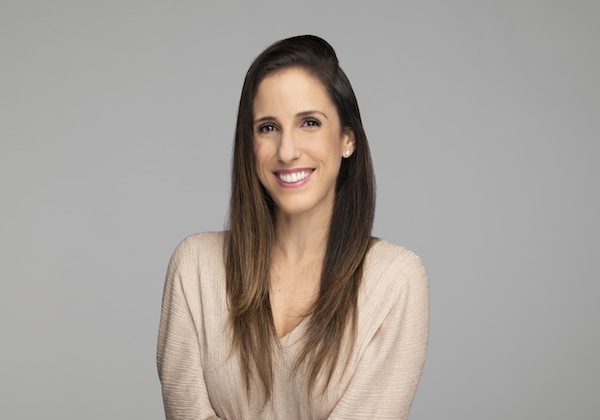
The board of directors of the Louis Brier Foundation recently announced the appointment of Ayelet Cohen Weil as the new executive director of the foundation. With more than 12 years of experience working in Jewish community organizations, both in British Columbia and in Israel, Cohen Weil brings an impressive background in nonprofit management, fundraising, strategic planning, community relations and development.

Prior to joining the foundation on Feb. 1, Cohen Weil held the position of associate director of community engagement at the Jewish Federation of Greater Vancouver, as well as manager of women’s philanthropy and manager of major gifts for Jewish Federation’s annual campaign. Her previous experience includes working in academia at the Interdisciplinary Centre Herzliya, as well as serving as managing director of Hillel BC. She holds a master’s degree in public policy, conflict resolution and mediation, with international mediation certification and distinction from Tel Aviv University.

The Louis Brier Foundation has a broad perspective and commitment in fulfilling its mission statement, and raising funds to maintain and foster the well-being, care and happiness of the seniors of the Snider Campus, site of the Louis Brier Home and Hospital and the Weinberg Residence.

“This year, one like no other, and after more than 12 years of working in Jewish communal life and being exposed to the many facets of the fabric of our community, I have been pondering upon the vitality in embracing, more than ever, the value of caring warmly and worthily for our seniors, the ones who built our community for us in the first place,” said Cohen Weil. “They are the living examples of our aspirations: the builders, the thinkers, the visionaries, the creators.

“I started working with the young generation in my years in Hillel and then at Federation across the community…. I truly wish to impress upon the younger generation how important this is for immediate family members and for the kavod we owe to our elderly. I would love to raise even more the profile of the centrality of this foundation in our community across all generations. This, for me, is thinking of the fabric of our Jewish community … in its full cycle and in its entirety. This is what excites me the most – to hopefully be able to contribute and create a large impact where it’s mostly needed after what we have experienced in 2020 with the COVID-19 pandemic…. To now be part, as well, of ensuring that the physical, mental and spiritual needs of our Jewish seniors are met so that they have a life of dignity, fulfilment and happiness, which they so much deserve…. Anything that would bring an extra smile, a feeling of comfort and warmth to Jewish seniors in our community is never too much, and I am incredibly excited and humbled for this opportunity.”

Youth during the pandemic

Eleven months into the global COVID-19 pandemic and the statement, “we are living in unprecedented times,” has become commonplace and cliché. But, truth is at the root of this clichéd phrase. Finding and feeling our way through this new reality has been fraught with stark and opposing responses; from being immobilized and stuck, to being re-inspired and productive. As an educator and counselor who has been working with tweens, adolescents and adults in the community, I have witnessed both responses, or states of being, which are completely understandable and interchangeable as minutes turn into hours, as hours turn into days, as days turn over into weeks, and weeks turn into months.

For the purpose of this article, I want to focus on how the tweens and adolescents I work with have acknowledged that, while living life through COVID-19 is extremely tough, they have found, as the late Maya Angelou phrased it, “rainbows in the clouds” during this period. It is important to acknowledge the challenges youth face, such as experiencing restrictions to peer group interactions and experiencing the change of their schooling to remote learning. Further, an important yet more general challenge youth have faced is that the developmental stage these tweens and adolescents are in is typically punctuated by healthy detachment from their families and, in turn, usually is a period where more independence is fostered. This has been halted, interrupted and/or confused, as COVID-19 has demanded that youth are at home with their parents and families.

My overarching teaching and therapeutic philosophy is to meet the individual where they are. I try to listen to their spoken and unspoken language without handing out a quick fix. I am interested in how individuals, especially tweens and adolescents, connect with themselves as their lives have slowed down, as they have retreated to bedrooms, and in-person interactions and experiences have reverted to screens and the virtual world.

To facilitate a way into the interiority of my clients, I use the modalities of expressive arts therapies, contemplative writing and mindfulness practices. In the sessions I hold with them, they commiserate on how life is for them; grieving the smaller and larger losses and disappointments they have experienced; they freely use the session to rant and complain, and share their fears and anxieties. I then work with them in various creative and expressive modalities, which has enabled them to clarify, settle, discover and deepen a connection to their mind, body and heart.

Conducting expressive art exercises on secured video has been a poignant and immediate process. Using the shared-screen option, tweens and adolescents have been able to create and present their creations in real time. Expressive art therapies have encouraged self-discovery and enabled youth to access a range of emotions and insights that many of them did not even know they were experiencing. Engaging in exercises such as “what is in my heart?,” “draw a place,” “shape of me” (for which they can attach photos) have lowered stresses and anxieties, assisted in attention span and focus, and created an emotional uplift and emotional awareness. In these stressful, highly anxious times, expressive arts therapies have assisted greatly in calming, centring and linking youth to both their interior selves and the larger landscape of their lives, despite the uneasy and ongoing pandemic landscape.

Contemplative writing is a compassion practice that encourages one to write whatever the mind has to offer. It is a modality that helps to access who we are, what we need and what we want. It is an embodied practice that allows connection of one’s head, heart, body, breath and the page. Individual contemplative writing sessions have enabled youth to listen fully to themselves and the stories they need to tell and share. It has enabled youth to be listened to and, furthermore, to understand their own insights and often non-realized thoughts. I often tell my clients: tell your stories, I will hold your words and the spaces between them. The modality of contemplative writing has allowed youth to gain confidence and feel empowered, as they accessed and used their own voices, and overall experienced a sense of agency through their writing, telling and sharing of stories.

Throughout my sessions, in conjunction with expressive arts therapies and contemplative writing, I often employ various mindfulness practices. The general aim of mindfulness is also to connect with oneself. For tweens and adolescents, who are used to, even in COVID-19, a fast-paced, pop-up, manic existence with multiple devices in reach of their hands and gazes, mindfulness offers a sharp departure. The frenzied pace of day-to-day life often increases anxiety and depression in young people. It needs to be said that, often, the anxiety and depression is more of a low-grade malaise that we are unaware of until we begin to practise mindfulness.

Generally, mindfulness involves slowing down, delving into a deeper breath, noticing and following through into various practices to relax the mind and body. With tweens and adolescents, I also invoke the senses, encouraging them by carrying out exercises that use guided imagery and engagement of the five senses. This sensory engagement includes holding and touching various objects and taking time to peel and eat (taste) an orange. In the slowing down, in the distillation to being in the moment, in the focus of breath awareness and sensory awareness, I have found youth to become more relaxed, receptive and connected. Once they have practised mindfulness, it serves as a useful and cushioning tool whereby youth are able to calm and centre themselves as they navigate their day-to-day lives.

Dr. Abby Wener Herlin holds a doctorate degree from the University of British Columbia. She is the founder of Threads Education and Counselling and works with tweens, adolescents and adults. She carries out themed social justice and creative arts and writing workshops for students, teachers and schools. She is available for therapeutic sessions and contemplative writing workshops. She can be reached at abbyherlin@threadseducation.com or via threadseducation.com. This article was originally published on health-local.com.