Skip to content
  • Home
  • Subscribe / donate
  • Events calendar
  • Business Directory
  • FAQ
  • News
    • Local
    • National
    • Israel
    • World
    • עניין בחדשות
      A roundup of news in Canada and further afield, in Hebrew.
  • Opinion
    • From the JI
    • Op-Ed
  • Arts & Culture
    • Performing Arts
    • Music
    • Books
    • Visual Arts
    • TV & Film
  • Life
    • Celebrating the Holidays
    • Travel
    • The Daily Snooze
      Cartoons by Jacob Samuel
    • Mystery Photo
      Help the JI and JMABC fill in the gaps in our archives.
  • Community Links
    • Organizations, Etc.
    • Other News Sources & Blogs
  • JI Chai Celebration
  • JI@88! video

Recent Posts

  • Or Shalom reopens its doors
  • JFS from past to future
  • Need holistic approach
  • Sharing stories, advice
  • Journalist shares fears
  • Skills to live together
  • Road to independence
  • Cutting grass with scissors
  • Zionism as a solution
  • Deceit, desire & the divine
  • Reclaiming sacredness
  • Creative project ideas
  • Summer squares and cobbler
  • Thou shalt … summer commandments
  • Legal help for students
  • Revisiting myth of Lilith
  • Wrong person rebuked
  • Canada’s mixed messages
  • Questions for museum
  • Symposium on antizionism
  • Making soccer political
  • CJPAC lauds Pulver’s impact
  • City recognizes Vrba’s legacy  
  • Organ donation saves lives
  • Theodore’s March premiere
  • A healing Shabbaton
  • Supplying healthy food
  • A chime of metal tags
  • Yellowknife seder a first
  • Ishai energizes, unifies
  • A Lag b’Omer to remember
  • Expanding the healing
  • Hannah Senesh – a unique hero
  • Community milestones … May 2026
  • Sharing her testimony
  • Fall fight takes leap forward

Archives

Follow @JewishIndie
image - The CJN - Visit Us Banner - 300x600 - 101625

Tag: health

Jewish women in West

Jewish women in West

When Jeanne Abrams told a friend she was planning to do her doctorate dissertation on an aspect of Colorado Jewish history, her friend replied, “What a wonderful idea! You’ll hardly have any work to do.” She proved wrong.

“While I was researching my dissertation and finishing up my PhD, I visited the Beck Archives of Rocky Mountain Jewish History at the University of Denver,” Abrams told the Independent. “The director, when she retired, asked me to interview for the job. The rest is history. As director of the Beck Archives, one of my tasks was to become an expert on Western American Jews, and that’s how the book came about,” she said, referring to Jewish Women Pioneering the Frontier Trail: A History in the American West (New York University Press, 2006).

“I’ve always had an interest in American Jewish women, and found there were some differences that I wanted to point out, and that Jewish women played a very important part in settling and developing Jewish communities in the American West,” she said.

Abrams herself was born to Holocaust survivor parents in Stockholm, Sweden. Sheltered there after the war by the Swedish Red Cross, her family moved to the United States when Abrams was less than a year old.

Through her research, she has learned that, in the United States, while Jewish men were very involved in city and organization building, it was often left to the women to develop religious continuity and community.

She said Jewish women “were in the forefront of founding synagogues, keeping Jewish tradition alive in the home, and they also branched out in many areas – particularly strong in philanthropy and charitable enterprises. At the same time, because of a combination of factors, including the more open environment in the West and that kind of spirit of adventure, Jewish women also really ventured into professions, into higher education.

“I think this environment in the West made this area of the country different for Jews in general. I certainly don’t want to suggest that there was no antisemitism in the West but … [Jews] were more prominently accepted into general society, so American Western Jews, men and women … were often leaders in both the general community and the Jewish community simultaneously.”

Throughout Denver’s history, there have been many endeavours that have involved people of different faiths. As an example, Abrams cited the Denver Charity Organization Society, which was organized in 1887 by a Jewish woman, a rabbi, a Catholic priest and a Protestant minister. The society evolved into what is now known as the United Way.
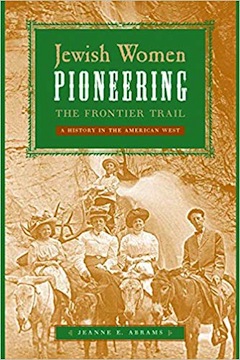
image - Jewish Women Pioneering the Frontier Trail book cover“Jewish women were also in the forefront of political life here in many ways, and I don’t think that most people realize that women voted in the West long before they did on the East Coast…. We’re coming up to the 100th anniversary of the amendment that allowed women to vote in the U.S.,” said Abrams. “In 1893, women were already voting in Denver. It was the largest city in the U.S. in which women could vote. I think people often think of women’s suffrage with the East Coast, New York, and minimize the amount of influence that early suffragettes had in California, here in Colorado, and in many other cities.”

In 1899, the National Jewish Hospital was founded as a place for people with tuberculosis. It drew patients and staff from all over the country, and was funded by people all over the country. According to Abrams, this was likely one of the first national Jewish organizations to hire a Jewish woman in the role of executive director, in 1911.

While Abrams’ research has primarily focused on Denver’s Jewish population, she also has come across parallels in Canada.

“We know Jews have a very long tradition of philanthropy and social justice. I found that across the border as well,” said Abrams. “But, in terms of the hospitals, when I studied them, I’d say, in Denver, the two Jewish sanatoriums actually had more interaction by women than I saw in Montreal.”

With her book, Abrams wanted to impart a sense of appreciation for women in the American West – of them having been leaders.

“They’ve often been overlooked, because historians tend to be very East Coast-centric,” she said. “I think that people generally seem to be surprised that there are Jews living out in the West. If they thought of anyone, they had the stereotype of cowboys living there.”

While more people associate Denver with the gold rush, Abrams noted that more people actually came to Colorado in search of health than wealth, specifically referring to the tuberculosis treatments available.

These days, Abrams has mainly been studying early American history. Her most recent book was, she said, “on America’s first three ladies. It’s called First Ladies of the Republic: Martha Washington, Abigail Adams, Dolley Madison and the Creation of an Iconic American Role. I’ve moved back and forth, but I’ve enjoyed the different topics I’ve covered.”

Rebeca Kuropatwa is a Winnipeg freelance writer.

Format ImagePosted on July 19, 2019July 18, 2019Author Rebeca KuropatwaCategories BooksTags Colorado, health, history, Jeanne Abrams, tuberculosis, United States, women
Using AI in health care

Using AI in health care

Prof. Yuval Shahar, left, and David Berson with Dr. Rachael Ritchie of Vancouver Coastal Health. (photo by Shula Klinger)

The use of artificial intelligence is intended “to harness the power of computers with math and statistics theory to improve the diagnosis and care of patients,” according to Dr. Yuval Shahar, professor of Ben-Gurion University of the Negev’s software and information systems engineering department.

Between May 23 and 30, Canadian Associates of BGU, B.C. and Alberta Region, hosted a visit from Shahar, whose research explores how information technologies can be used to improve numerous aspects of healthcare.

Shahar has spent 30 years working in digital medicine, gained his bachelor and medical degrees from the Hebrew University, and a master’s in computer science from Yale University. He did his doctorate at Stanford University, where he also spent 10 years as a faculty member in the computer science and medicine department. He founded BGU’s Medical Informatics Research Centre in 2000 and, in 2017, was elected as a founding member of the International Academy of Health Sciences Informatics.

During his time in Vancouver, Shahar presented his work to full lecture halls across town, including at Simon Fraser University, University of British Columbia, various government offices, Vancouver General Hospital, Pacific Blue Cross and some start-ups.

The program with which Shahar works requires patients to wear an ECG (echocardiographic) belt around their chest to monitor their heart, as well as a blood pressure cuff. This allows a patient to receive care 24 hours a day. Using Bluetooth, the data collected from these devices are sent to the patient’s cellphone and then to the program’s server in Israel.

MobiGuide was developed with 13 partners in Europe, including Italy, Spain, the Netherlands and Austria. Even with 63 other projects competing for funding – including teams at Oxford and Cambridge universities – the MobiGuide team received seven million euros. “Ben-Gurion already had the necessary technology working,” said Shahar.

The program is led by an Israeli team in the main technology centre at BGU, with the partners from across Europe. Shahar explained how the system works, using the analogy of today’s mapping software. “It’s like a medical version of GPS,” he said. Right now, the program’s focus is on diabetes and hypertension.

One advantage of MobiGuide is the way the server handles massive amounts of clinical research, explained Shahar. For instance, when international guidelines for treating hypertension change, you can update that information in one place and it will be reflected throughout the entire system. That information is then immediately available to all patients and their physicians on the MobiGuide system.

“There are millions of patients on the system now,” said Shahar. “Each cellphone has a customized version of the guidelines in the program so the phone alerts the ‘mothership’ and the server examines the data for anomalies. The mothership knows the full patient history and clinical guidelines.”

The server in Israel also reminds patients to make adjustments, such as to their diet. A phone can contact the mothership to ask for advice, and recommendations are customized for each individual. Personal preferences can be adjusted depending on the patient – for example, when they prefer to be alerted to take their medications. If they are on vacation, they can ask the system not to alert them as frequently.

The system can also be notified to anticipate spikes in blood glucose. For instance, if a patient is attending a wedding and expects to eat rich food, she can tell the system first that it need not be concerned about this. Likewise, if a patient lives alone and has nobody to rely on for support with their health, the system can issue different instructions than for someone with a companion.

Humans are, however, still essential to the smooth running of the system. Shahar relies on “medical-knowledge engineers, graduate students,” who digitize clinical knowledge so that it can be applied on the system. But, he said, “It’s a sign of the future. Chronic patients won’t need to be in clinics all of the time. You want to be there only if there’s no other way.” It is cheaper to offer care in the community, especially in remote areas, even while offering round-the-clock observation.

To date, feedback from patients and the professional community has been consistently good. Compliance with clinical guidelines by physicians has improved, preventing a great deal of human error and possibly fatal mistakes, said Shahar. Likewise, he said, “Compliance was very high, we saw real patient empowerment.”

Patients “said that their quality of life had improved, they felt more secure and safe,” said Shahar. This is important, he explained, because AI in healthcare is not just about technology – human psychology has a huge impact on both patient treatment and outcomes.

As an example of the program’s success, Shahar said, in Barcelona, pregnant women with gestational diabetes were studied. The blood pressure of the research patients was significantly lower than in the control group, who attended in-person clinics. Shahar explained that these data were accompanied by a sense that a “benevolent big brother was monitoring them, and someone was sending alerts and recommendations every few days.”

After a four-year evaluation hosted by a veterans hospital in Palo Alto, Calif., there is evidence that the software developed by Shahar’s team has helped physicians manage oncology data better than before. With only seven to 10 minutes to give to each patient, physicians simply do not have the time to review all the material they need to, while considering its application and significance to individual patients.

In his talk at the Eye Care Centre at VGH, Shahar recalled asking a patient if she minded getting numerous texts from MobiGuide every day. “She laughed, I get 50 texts from my friends, what’s another 20?” he said. But, in reality, she clarified, “How could I mind? This is about the health of my baby.” Shahar added, “They feel that someone knows them deeply.”

According to David Berson, regional executive director of CABGU, Shahar’s visit was a success. He said BGU will examine how Shahar’s research in medical informatics can dovetail with local efforts to revolutionize healthcare, exploring the potential for “patient empowerment, remote monitoring, decision-making support and beyond.”

BGU board member and innovation expert Jonathan Miodowski said there was a need to balance between “blue-sky research and practical solutions” to real-world problems. “Multidisciplinary approach is a hot topic for universities these days – it is critical to bring different perspectives to the research,” he said.

Miodowski described Israel as a world leader in innovation. Last year, Canada raised $4.7 billion in start-up capital, he said, noting that Israeli start-ups, by contrast, raised $10 billion. “For a country that is two-thirds the size of Vancouver Island, that’s pretty significant,” he said. “In a sense, the size of the territory is very convenient. Cross-pollination of ideas is inevitable.”

Miodowski also spoke well of the Vancouver visit. “We planted some seeds on both sides,” he said. “It was very positive. There was real interest in Yuval’s research, real appreciation for what Israel has done in terms of its innovation ecosystem.”

Shula Klinger is an author and journalist living in North Vancouver. Find out more at shulaklinger.com.

Format ImagePosted on June 21, 2019June 20, 2019Author Shula KlingerCategories LocalTags Ben-Gurion University, BGU, CABGU, David Berson, health, Israel, Jonathan Miodowski, MobiGuide, technology, Yuval Shahar
Masks, stories and dance

Masks, stories and dance

George and Tamara Frankel at Masks, Revelations and Selfhood, the spring forum of Jewish Seniors Alliance, in partnership with the Louis Brier Home and Hospital, which was held May 26 at the Peretz Centre. (photo from JSA)

Since August 2018, Louis Brier Home and Hospital residents have explored themes of personhood and creative expression, crafting masks, narratives and original dances with expressive arts therapist Calla Power and choreographer Lee Kwidzinski. The whole process was filmed by Jay Fox for a documentary.

Power, Kwidzinski and Fox, as well as Louis Brier resident Jennifer Young, who participated in the project, shared their experiences with guests at Masks, Revelations and Selfhood, the spring forum of Jewish Seniors Alliance, in partnership with the Louis Brier. The forum was held May 26 at the Peretz Centre for Secular Jewish Culture.

The four presenters brought with them many of the masks that were made by the Louis Brier residents, which they placed on tables near the audience. Everyone could examine them up close and try them on. This allowed people to experience the changes one feels when masked, hidden from others.

JSA president Ken Levitt welcomed everyone and spoke about JSA’s motto, “Seniors Stronger Together,” noting that JSA’s free peer support programs – which require the financial support of the community to continue – exemplify the power of older adults assisting other older adults. He then introduced Power, who has been working with residents at the Louis Brier for about five years.

The Masks Project lasted seven months, culminating in a program that includes masks, stories, poems, drama and dance. In her summary of the history of masks, Power said the oldest masks, dating from the Neolithic period, were found near Jerusalem several years ago. She explained that masks are used in many cultures as part of religious and/or spiritual ceremonies. In a slide presentation, she showcased masks from different cultures, including African, Indian and local indigenous cultures. Frequently, she said, those wearing the masks would represent “the gods” and be a conduit for messages from above.

Ginger Lerner, Louis Brier recreation therapist, had approached Power about making masks for Purim, obtaining a donation from the estate of Frank and Rosie Nelson that facilitated the project. Power did some research on Purim and discovered that many of the characters were masked; for example, Esther, who masked her origins, and Vashti, who refused to be unmasked. As residents engaged with the project, they discussed such topics as what parts of ourselves do we keep hidden behind a mask.

Kwidzinski, who specializes in dance movement, has 30 years of experience working with older adults, mainly those with dementia and those who are in wheelchairs. She has a dance company in Mission, and the dancers worked with the mask makers to create movements related to the masks and the residents’ ideas. The dancers became the bodies of the mask makers, who chose the movements and the music. The mask makers came on stage with the dancers for the performance.

Young, one of the mask makers, expressed how moving the entire experience had been. She said the group became close, even though they hadn’t known each other well before.

Young said she had been reluctant about the dance aspect but felt that the dancers were extremely supportive and, at the end, she said she found the movements liberating, as if she were also dancing. She said she gained energy and willpower from the experience, and thanked Power, Kwidzinski and Fox for giving her the ability and opportunity to “get up and keep going.”

Fox has produced award-winning films, documentaries, music videos and public service announcements. He was involved in the Masks Project from the beginning. He felt that the journey was as important as the film and the art produced. The film was screened at the forum, and can be viewed at youtube.com/watch?v=YspYE6juiy0.

Gyda Chud, JSA first vice-president, led the question-and-answer session. Members of the audience expressed their appreciation for the information and the beauty of the project. It was suggested that advocacy was needed to have this type of project adopted by other care homes and adult day-care centres.

I wrapped up the afternoon event with a thank you to the presenters, which was followed by snacks provided by Gala Catering.

Shanie Levin is an executive board member of Jewish Seniors Alliance and on the editorial board of Senior Line magazine.

Format ImagePosted on June 21, 2019June 20, 2019Author Shanie LevinCategories Arts & Culture, LocalTags Calla Power, dance, film, Ginger Lerner, Gyda Chud, health, identity, Jay Fox, JSA, Ken Levitt, Lee Kwidzinski, Louis Brier, Purim, seniors
Wonders of asparagus

Wonders of asparagus

(photo from pixnio.com)

In Israel, asparagus is not widely seen in the outdoor markets but, when it is, I am always happy to buy it. There are at least 10 reasons why we should eat more asparagus.

  1. It contains lots of fibre, making it a good choice if you’re trying to lose weight, because your body digests fibre slowly, which keeps you feeling full in between meals. (It is also low in fat and calories: one cup is a mere 32 calories.)
  2. It contains high levels of the amino acid asparagine, making it a natural diuretic. In other words, eating more of the spears can help flush excess fluid and salt from your body, which may help prevent urinary tract infections.
  3. It is full of antioxidants that could help your body fight free radicals.
  4. It contains vitamin E, another important antioxidant, which helps strengthen your immune system and protects cells from the harmful effects of free radicals.
  5. It is a natural aphrodisiac, thanks to vitamin B6 and folate.
  6. The minerals and amino acids in asparagus extract may help ease hangovers and protect liver cells from the toxins in alcohol.
  7. It beats bloating by promoting overall digestive health – another benefit of all that fibre. And, thanks to prebiotics, which encourage a healthy balance of good bacteria, or probiotics, in your digestive tract, it can also reduce gas. Relatedly, since asparagus is a diuretic, it helps flush excess liquid, combating belly bulge.
  8. It’s a rich source of folic acid, providing 22% of the recommended daily allowance of folic acid.
  9. It’s filled with vitamin K, crucial for coagulation, which helps your body stop bleeding after a cut, as well as bone health.
  10. It boosts your mood because it is full of folate, a B vitamin that could lift your spirits and help ward off irritability. Asparagus also contains high levels of tryptophan, an amino acid that has been similarly linked to improved mood.

Need I say more? Buy asparagus with straight stalks, closed compact tips and good green colour. Keep refrigerated and use within one or two days. Bend the stalk near the bottom to snap off the part that is too tough to eat. Cook in one inch of boiling salt water. Let the water boil again and cover. Cook whole stalks about five minutes and cut-up pieces about three minutes. Here are some ways to use asparagus.

VINAIGRETTE

1/4 cup olive oil or canola oil
1 tbsp red wine vinegar
1 tbsp Dijon mustard
1/2 tsp sugar
salt and pepper to taste

Combine all ingredients in a blender and mix for one minute. Pour over cooked asparagus.

MICROWAVED IN LEMON BUTTER DIJON SAUCE
(3-4 servings)

2 1/2 tbsp canola or olive oil
1 tbsp lemon juice
2 tsp Dijon mustard
1/2 tsp low-sodium soy sauce
1/2 tsp minced garlic
2 tbsp minced white onion
salt and pepper to taste
1/2 pound asparagus
chives or green onions for garnish

Arrange asparagus in a microwave steaming bag. Add oil, lemon juice, mustard, soy sauce, garlic, onion, salt and pepper. Microwave four to five minutes; let stand one minute. Place in serving bowl and garnish with chives or green onion.

FLAMANDE SAUCE
6 servings

4 mashed hard-boiled egg yolks
1/4 cup + 2 tbsp olive or canola oil or 1/2 cup melted margarine or butter
1/4 cup minced fresh parsley

Whisk oil or butter or margarine into egg yolks in a saucepan. Add parsley and heat sauce. Pour over cooked asparagus.

STEAMED WITH TARRAGON SAUCE
(6 servings)

1 1/2 pounds trimmed asparagus
2 tsp olive oil
6 thinly sliced scallions
1 1/2 tbsp chopped fresh tarragon or 3/4 tsp dry tarragon
3 tbsp lemon juice or cider vinegar
dash sea salt
3 tbsp water

Steam asparagus two to five minutes, rinse, drain and place in serving bowl. Heat oil in a pan and sauté scallions one to two minutes. Add tarragon, lemon juice or vinegar, salt and water; cook one to two minutes. Pour over asparagus.

Sybil Kaplan is a journalist, lecturer, book reviewer and food writer in Jerusalem. She created and leads the weekly English-language Shuk Walks in Machane Yehuda, she has compiled and edited nine kosher cookbooks, and is the author of Witness to History: Ten Years as a Woman Journalist in Israel.

Format ImagePosted on June 14, 2019June 12, 2019Author Sybil KaplanCategories LifeTags asparagus, cooking, health

How we can live after death

It is the instinct of all living things to try to stay alive, humans among them. Most religious doctrines pay a great deal of attention to this issue. And many people, whether part of an organized religion or not, believe that a spirit leaves the body after death. Where viewpoints vary mainly is what happens then.

In many belief systems, we stay alive in some form or another even after death. Hindus, like Buddhists, believe that a departing spirit is reincarnated into some other life form. Buddhists believe there is no guarantee that the life form will be human; they believe that liberation from the cycle of life is the only desirable objective, a state they call nirvana.

The monotheistic religions all have some concept of an afterlife, with outcomes based on our behaviour during our life on earth. Indeed, both Christianity and Islam see the afterlife as the most desirable state, at least for the righteous, compared with our life on earth, the current one being a “a vale of tears.” Judaism also sees a reward for the righteous, with a resurrection when the Messiah arrives to usher in the “End of Days” and heaven on earth. But Jews, in contrast, are urged to live the fullest possible life while alive, every life being precious.

Without entering into discussions on this issue as to the merits of one position or another, I have drawn some conclusions as to their relevance on the question of staying alive. Empirical evidence from religious enthusiasts is meagre, relying on faith rather than hard facts, or reports of a life, or lives, after death from thousands of years ago. These form the basis for the promise underlying the religious thesis.

The realization of a positive outcome in the religious sphere depends on an unblemished life experience. I cannot count on being among those judged as sufficiently righteous and deserving. That leaves me with the task of doing the best I can to extend the life I know about, the one I am living now. Having past the four-score mark is evidence that I have done some things right, having already survived many of “the slings and arrows of outrageous fortune.” I must have good DNA.

Chance has favoured me in my encounters with accident, disease and body-systems breakdowns. I have survived my encounter with “the big C” up to this time. I have diabetes under apparent control, but one never knows, as it works its damage asymptomatically.

I take pills in abundance to ward off the evils of sugar, high blood pressure and stroke. I quit smoking in my early forties and drink alcohol sparingly. My food habits are not outrageous, without denying myself the favourites that make life worth living. I exercise religiously when not on holiday. I have given up driving on the promise it will increase my life expectancy. Best of all, I pass my life with the woman of my dreams. Life is grand.

The other night, I spent some time with family. We found ourselves talking about our experiences with forbearers who had gone before us. For a short while, it appeared to me almost as if those ancestors were there with us, alive and sharing our good times. Like a lightning bolt, it struck me that that was truly another way of staying alive. The people in our lives who are important to us, those who have marked us in our life experience, they continue to be alive for us as long as they remain in our memories. They never disappear for us as long as we live; they go on being a part of our lives.

So, that’s the secret. We must continue to be important in the lives of the people who surround us. As long as we do that, we will stay alive even after we are physically gone. We have to cherish those we care for while we have them, in part so they will continue to cherish us.

But this does not apply to family only. It is true for all the people in our lives to whom we reach out, to all those we touch and those who touch us. If we want to stay alive, we have to do the reaching out.

Moses and Jeremiah and Isaiah and Jesus can thus be alive for us as well, if they have touched us and touched our lives. Shakespeare and da Vinci are alive for me. Spinoza is alive for me. Danny Kaye and Sid Caesar are alive for me, as is Beethoven.

They are all alive for me because they are a part of who I am. All the people who have made me what I am are alive for me every day of my life. I am surrounded by a crowd. Sometimes, they speak through me. You can’t spend much time with me without getting to meet some of them.

If I write something and it touches another soul, then I may still be alive for them whether I am physically there or not. Even for the people who no longer remember my name, I may still be alive for them in some cranny of their consciousness. That’s not so bad. If we can believe in that, in our own minds we have a future beyond our temporal experience of life.

So, now you know the secret. Go out there and talk to the people around you. Phone them. Write an email. Hug or kiss them if you can get away with it. You may get to live forever if they tell their children about you. If you know what you have done, if you have faith in it, as I do, regardless of your other beliefs, this can be your “promised land.”

Max Roytenberg is a Vancouver-based poet, writer and blogger. His book Hero in My Own Eyes: Tripping a Life Fantastic is available from Amazon and other online booksellers.

Posted on May 17, 2019May 16, 2019Author Max RoytenbergCategories Op-EdTags health, lifestyle, philosophy, religion
ED is a complex condition

ED is a complex condition

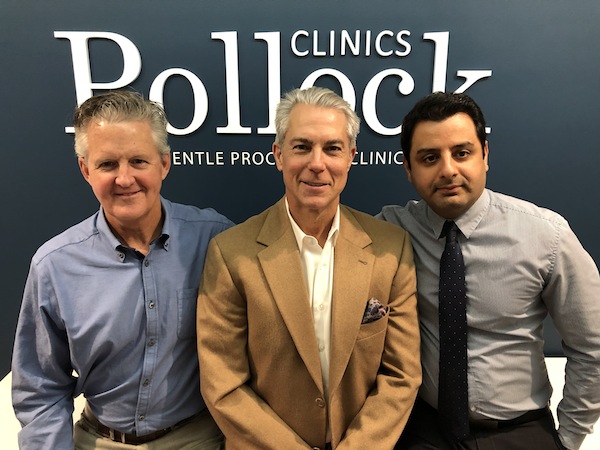
Left to right: Pollock Clinics sex therapist Tom Foster and physicians Neil Pollock and Roozbeh Ahmadi. (photo from Pollock Clinics)

While there may be any number of reasons why the frequency of a couple’s intimate sexual contact may wane, it is a critical cornerstone supporting the continuation of a healthy relationship. Often, when a couple is having sex infrequently, or not at all, their relationship becomes vulnerable to anger, detachment, infidelity and divorce. One factor that can come into play regarding a couple and their sex life is erectile dysfunction.

“ED is a medical condition where a man is consistently unable to achieve and maintain an erection that allows for satisfactory sexual function. ED is also referred to as impotence,” explained Drs. Neil Pollock and Roozbeh Ahmadi of Pollock Clinics in an email interview with the Independent. “The Canadian Study of Erectile Dysfunction identified 49.4% of men over the age of 40 with ED (Canadian Urological Association erectile dysfunction guideline 2015). By the time men reach the age of 70, almost 70% of them will experience some form of erectile dysfunction.”

Conventional treatment for ED generally involves blocking the symptoms, with medications like Viagra and Cialis. “If pills are not working, the next step is the injection or suppository forms of medications that patients can inject into the penis or infuse into the urethra prior to having intercourse,” said the doctors. “If these medications are not satisfactory, then there is the option of a vacuum erection device that a patient will need to apply to the penis and get an erection through the vacuum created within the tube. If none of the options is satisfactory, then there is the option of surgery, such as penile implant surgery.

“The issue with pills, injection and pump is the fact that all need prior timing and preparation and, in the case of pills, they can cause significant side effects, such as headaches, flushing, upset stomach and visual changes, which a lot of patients cannot tolerate.”

There are many factors that can cause ED. “These include neurological disorders, hormonal imbalance, structural abnormalities, side effects of medications or surgeries, mood disorders,” said the doctors, but “the most important and prevalent one is vascular disease.

“When a man becomes aroused, the brain releases a neurochemical substance to increase the size of blood vessels carrying blood to the penis and reduce the size of the vessels that carry it out,” they explained. “Twin compartments that run the length of the penis, called corpora cavernosa, become flush with blood that is trapped in the shaft. This causes the penis to stiffen and become erect. If blood flow to the penis is inhibited or the blood vessels are clogged or constricted, erection cannot be achieved or maintained.”

High cholesterol and the buildup of arterial plaque, over time, cause blood vessels to narrow, lessening their capability to carry blood. One of the first places men will notice this reduced flow is with ED, which is why ED has been dubbed “the canary in the coal mine” – it can serve as a distress signal three to five years prior to a major heart attack.

Lifestyle choices and health conditions that can also contribute to ED include smoking, obesity, a sedentary lifestyle and chronic alcoholism and/or substance abuse.

“Sexual wellness is essential to men’s health and happiness,” said Pollock and Ahmadi. “It is an integral part of men’s overall wellness as they age. A great number of scientific studies have shown the many benefits of a healthy and active love life, which include living longer, greater well-being and a happier and longer lasting relationship with your partner.”

Pollock Clinics provides a few treatments for ED.

“In the last few years, there are innovative regenerative treatment options to deal with the root cause of the problem, and not just the symptom,” said the doctors. “These new modalities include low-intensity shockwave therapy and platelet-rich plasma therapy [also known as the PRP shot], and are currently used in many countries around the world.”

PRP is created from a patient’s own blood and is commonly used in orthopedics, plastic surgery and sports medicine. “Studies have shown that this penile injection contains several different growth factors that can stimulate the healing of erectile tissue and is a safe and effective option for penile rejuvenation and improvement of erectile function … by enhancing and increasing the blood flow to the erectile tissue, offering a longer lasting desired outcome.

“ED shockwave therapy,” the doctors explained, “also promotes the regeneration of blood vessels in the penile shaft. That, like PRP, leads to longer and more satisfying erections and is accomplished by directing painless energy waves into the shaft of the penis.”

In addition to these two treatments, Pollock Clinics offers therapy, since ED has both physiological and psychological causes.

“Pollock Clinics also has a certified sex therapist to deal with psychogenic issues that might be affecting a man’s sexual health,” said the doctors. The goal of therapy is to provide “strategies to get a patient’s mind working with him instead of against him in a sexual encounter.”

Pollock and Ahmadi strongly encourage men to talk to their own doctor about any health issues they may have and the treatment options available.

Rebeca Kuropatwa is a Winnipeg freelance writer.
Format ImagePosted on May 17, 2019May 16, 2019Author Rebeca KuropatwaCategories LocalTags erectile dysfunction, health, men, Neil Pollock, Roozbeh Ahmadi
Documentary breaks silence

Documentary breaks silence

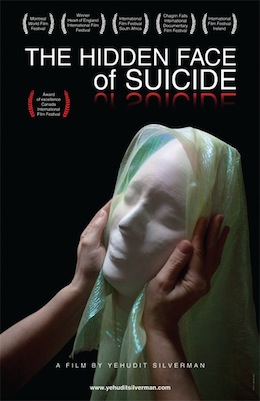
Prof. Yehudit Silverman’s The Hidden Face of Suicide is helping people talk about a topic still surrounded by stigma. (photo from yehuditsilverman.com)

Concordia University professor Yehudit Silverman’s award-winning documentary The Hidden Face of Suicide focuses on the world of survivors – those who have lost loved ones to suicide – and reveals their remarkable stories.

Wanting to learn the story behind the silence in her own family, Silverman offered suicide survivors a creative way to express themselves – using masks. In the documentary, she highlights the danger of secrets and the cost of silence.

Produced and directed by Silverman, The Hidden Face of Suicide features the Montreal group Family Survivors of Suicide. It has screened at Cinema du Parc in Montreal, Curzon Theatre in London, England, on PBS television in the United States, and at various international festivals and theatres. It was also shown at the Montreal Museum of Fine Arts, as part of the Seeds of Hope project, and is being used in diverse locations in Montreal as an education tool around the issue of suicide.

At Concordia, Silverman leads a graduate program that trains therapists in three different programs – art, drama and music therapies – with the goal of soon adding dance therapy.

The Hidden Face of Suicide, which was released in 2010, came out of a five-year research project about suicide.

“I was interested in the stigma that surrounds it and the fact that it’s not talked about or mentioned,” Silverman told the Independent. “I did a lot of reading about it. Then, I found the Montreal group Family Survivors of Suicide and I met the woman who was the facilitator, named Caroline, and then she invited me to the group.

“I started attending the group and hearing the stories. They all lost family to suicide. I listened and, after I got to know them … I was there for about six months and I wrote down some of the themes that came up, kind of field research – identifying common themes … and a lot of it was having to hide, having people turn away, having to wear a mask.

“And so, out of that, I asked if they would be part of a film. Then, we started working on the film and part of it was them creating masks, since that had come up for them. So, they created masks, wore them and worked with them. And that became a very powerful tool and also a metaphor for those who are left behind.”

image - The Hidden Face of Suicide facilitates difficult conversations
The Hidden Face of Suicide facilitates difficult conversations.

Doing this research also spurred Silverman to ask her parents about her uncle’s suicide for the first time. She did so on camera. “I was intrigued with the fact that I had never known about this,” she said. “And, why was that … why was there shame and stigma?”

As well, during high school, Silverman knew fellow students who had taken their own lives – and these suicides, too, were never talked about. She felt compelled to learn more about why that was and to create a film to help break the silence.

While the release of the film and its being so well received was a high point, Silverman also noted an article she wrote reflecting on the whole process – called “Choosing to Enter the Darkness – A Researcher’s Reflection on Working with Suicide Survivors: A Collage of Words and Images” – which was published in Qualitative Research and Psychology.

“I wanted the audience to hear the experience of survivors – what it’s like to be left behind – and to also break the stigma and shame around it. And, it has. People in the audience often stand up and share their own stories for the first time,” she said. “I had a woman in one of my screenings and she said, ‘I’m 84. When I was 24, my mother took her own life and I’ve never talked about it until now. I was too ashamed.’ So, for 60 years she held that in.

“So, that was the goal. I feel like it has been helpful in terms of … breaking the silence. It’s also been used a lot to encourage discussion for people to talk about it, and it’s in universities, libraries and all the suicide organizations.”

Silverman contends that using art to broach such taboo topics allows people to confront issues without feeling overwhelmed. This approach fits with her therapy practice in general, as she uses art as a gateway for patients to share emotions they likely would not share otherwise.

“Talking can often just go around and around in circles, where nothing new is actually being discovered,” she explained. “I’m not saying that always happens. But, I think that using art as another tool can be incredibly powerful.”

Silverman has received positive feedback about the film, including from people who said they were feeling suicidal and that the film helped, as it talked about suicide openly and showed the pain of those left behind.

“I think it can be used to initiate a discussion in a safe way,” said Silverman. “It would be great if someone would use it to create an educational kit…. For me, the emphasis is that, if suicide is still surrounded by shame and stigma, it’s harmful for those who are suicidal. If they feel like people are so ashamed that they can’t even mention it, then how can they reach out for help? So, that’s my message. It feels very sad to me that I made the film in 2010 and I still feel like there’s a lot of stigma around suicide.”

On the other hand, Silverman said she thinks some things are slowly getting better; for example, that clergy are discussing the topic more with their congregations.

“Some rabbis, priests and ministers now mention the word ‘suicide,’” she said. “I’ve been to a few funerals where it’s mentioned very sensitively, but honestly, with, of course, the family’s permission. I think that’s helpful for everyone there, because everyone knows.

“I feel like schools are trying to deal with it in a better way, too. We recently had a suicide at Concordia. I was called in to help with the response. And so, I feel like there is a real desire now to be more honest about it and to try and find the best way, because college kids are very susceptible.”

According to Silverman, suicide is the biggest killer of adolescents and people in their early 20s in Canada, though different cultures and populations experience different rates. The elderly are also vulnerable, due mainly to loneliness.

“With the Inuit population, First Nations, there’s a really high incidence of suicide,” added Silverman. “I’ve gone out north and it’s really sad. They’re also doing some wonderful grassroots stuff to address that.”

Silverman’s film can be rented or purchased online. Visit reelhouse.org/yehuditsilverman/the-hidden-face-of-suicide for more information.

Rebeca Kuropatwa is a Winnipeg freelance writer.

Format ImagePosted on May 17, 2019May 16, 2019Author Rebeca KuropatwaCategories TV & FilmTags health, suicide, Yehudit Silverman
Diversity in retirement

Diversity in retirement

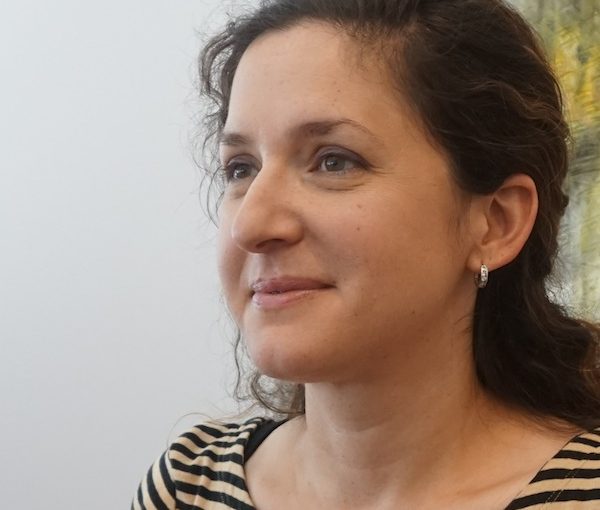
For Prof. Michelle Pannor Silver, author of Retirement and Its Discontents, an individual should be the one to decide when they start to work less. (photo from sociology.utoronto.ca)

Not long ago, it was a given that, when you reached the age of 65 or so, you would retire. But, that is no longer the case.

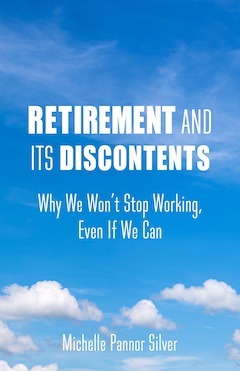
Michelle Pannor Silver, an assistant professor in the University of Toronto’s sociology department and its Interdisciplinary Centre for Health and Society, explores some of the reasons for this, as well as the difference between planning for retirement and the experience of it, in Retirement and Its Discontents: Why We Won’t Stop Working, Even If We Can (Columbia University Press, 2018).

Pannor Silver’s interest in the topic started when she was tasked with helping wind down her father’s office.

“My real initial motivation for studying retirement at all, and really for the book, was my dad’s experience,” Pannor Silver told the Independent. “I wrote about this in the book, that, when I was in my 20s, my dad developed dementia. It became really clear that he was not able to continue seeing his patients. And he was quite active in Jewish Big Brothers. That was something that was a big part of his work as a social worker. That’s the way he identified, as a social worker. He was a psychotherapist.”

This experience led Pannor Silver to the U.S. Health and Retirement Study, and she spent many hours and years examining people’s retirement trajectories. In her dissertation, she focused on, among other things, the relationship between the type of work people did and several different health measures, before and after they retired.

“After spending a lot of time looking at data points, I became really interested in talking to real people about what their retirement was like and, really, to discuss what retirement meant,” she said. In quantitative analysis, you make certain assumptions, she explained, “like how this person works this many hours and, therefore, they are fully employed, versus this person who works that many hours and then stopped … and, so, I’m going to code that one as retired.”

To verify or refute such assumptions, Pannor Silver interviewed people.

“I started really basic – just asking people what it means to them to be retired,” she said. “That helped me realize that, boy, this is a loaded term. It seems so simple, so straightforward, and the media gives us these clues about what it’s supposed to mean – you’ll see these commercials with these people who are retired, but are running on the beach, so retirement must mean running on the beach holding hands. Or, there are other ones that are about saving for retirement, so it must mean that it’s something you do when you stop working.”

A focus of Retirement and Its Discontents is ageism, and what it means to be told by society that it is time for you to stop doing the thing you have probably spent most of your adult life doing. The people she features found that life without work wasn’t all it was cracked up to be.

image - Retirement and Its Discontents book cover

“The people I interviewed, many talked about being pushed into retirement – being told it was time to make room for the next generation,” she said. “Some of them did it of their own volition. They weren’t really forced into it, but they assumed it was time for them to move over. They looked at how old their fathers had been when they retired, and decided that a certain age was going to be their benchmark. It’s really about the fathers who they looked at, and some of them saw their fathers retiring and dying the next year, or very shortly thereafter. And they thought they’d better retire then, too, so they could live a little before the end comes for them.”

The idea of when to retire is influenced by media messaging. Some of Pannor Silver’s Canadian study participants talked about “freedom 55,” the advertisements for it and how that has always been in their mind as the magic number at which to retire.

Pannor Silver’s study included international participants. And, while the magic age may differ, “the thing they shared – whether they were forced by existential pressures or because of their own internal ideas about when they ought to retire – first of all, they ended up living longer than their parents. All the [financial planning] models people generally have are wrong,” she said, “and that has, of course, implications for the public pension systems that are out of whack, too.

“But, my book really speaks to the experience of people facing the norms on a sort of anachronistic or out-of-date understanding of what retirement is and are disappointed by their experiences because of that – because of the expectations … that it should happen at this certain time and should be a certain way that would lighten and free them. Yet, they felt kind of burdened with life without work.”

Pannor Silver hopes that readers of her book will discard the idea that retirement should be associated with a chronological age. She would like to see them open themselves up to the idea that there are many different ways people can experience retirement.

“I think that, for many people, retirement is a bad word they don’t even want to use,” said Pannor Silver. “My point is to share the experiences of varied, different types of people who, for various reasons, retired in traditional ways … and had to find their own way around it … to sort of rewrite and create their own retirement experiences.

“For them, it was very surprising and, hopefully, others take some comfort in recognizing it’s a really challenging transition, a really important time of life. There’s so much attention paid to the early stages in life – finishing high school, getting into university or that initial career transition, and career mobility and trajectory, but very little attention is paid to later career transitioning. And that was my goal – to be able to say, ‘Here’s a set of people’s experiences.’ And, people tell me that these experiences have really resonated with them…. We can’t just assume that, because an employee is reaching a certain age, it means he or she should be passed up for promotion, cast aside or ignored. It ought to be up to the individual to say, ‘I have other things I want to do,’ or whatever the reason is – to make the decision on their own, that, now, they choose to make a transition to working less.”

While Pannor Silver’s target market is people approaching retirement, she is hoping that the book will also influence the employers, managers and others who are deciding – on the basis of incorrect assumptions or ignorance – to overlook certain parts of their workforce.

“I have Olympic athletes who I interviewed for the book, homemakers, doctors and CEOs … it’s a varied group of individuals,” said Pannor Silver. “But, their experiences are all people who were incredibly dedicated to their work. Their work was their life’s work, and the point is to contribute to an ongoing discussion about what retirement is now … what we can assume about it and what we should not assume.”

Pannor Silver’s next book will examine the importance of physical movement in the later stages of life.

Rebeca Kuropatwa is a Winnipeg freelance writer.
Format ImagePosted on May 17, 2019May 16, 2019Author Rebeca KuropatwaCategories BooksTags health, lifestyle, Michelle Pannor Silver, retirement
Don’t sit in your chair all day

Don’t sit in your chair all day

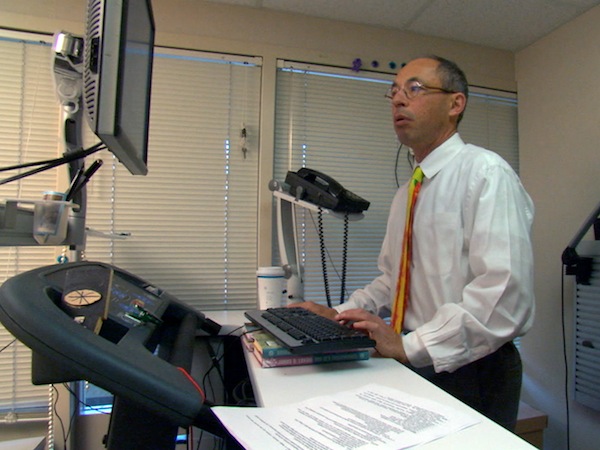
Dr. James A. Levine studies the health benefits of adding more movement to our lives. (photo from James Levine)

We are sitting too much – both at work and in our off hours. And all this sitting is doing us damage. But it’s not only about our health. It’s about how much we could be getting done, both professionally and personally.

When people read health-related articles or listen to health news, they “mentally categorize this information as health information. I think that is a mistake,” said Dr. James A. Levine, president of Fondation Ipsen, which, under the auspices of the philanthropy network Fondation de France, tries to promote scientific knowledge. “This isn’t about health. In the workplace, it’s about productivity: data suggests productivity – widgets produced per hour – improves by about 10 to 15%. In school, academic performance improves by about 10%, compared to kids who don’t engage in these activities and trials. Thinking about this as a health issue underserves the reader. Really, it’s about having a vital, exuberant, productive, happy life.”

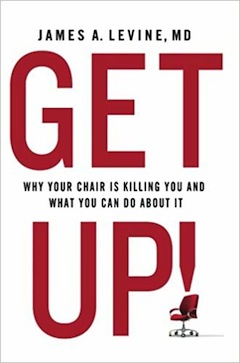
While Levine – author of the 2014 book Get Up! Why Your Chair is Killing You and What You Can Do About It (St. Martin’s Press) – is a proponent of movement, he said sitting occasionally is not a bad thing. What is contributing to ill health, he said, is our culture of rolling out of bed, getting into our cars, sitting at an office desk and then driving back home to sit some more. Many of us shop online, order in meals, watch TV, play video games, check texts, email, use social media and go to sleep. Many of us are spending well over half the day, every day, seated.

“I think approximately 28 different chronic diseases and conditions are associated with excess sitting,” Levine told the Independent. “They range from excess body weight and obesity to metabolic conditions, such as diabetes, high blood pressure and cardiovascular disease, to certain types of cancer, such as breast cancer … to mental health issues, such as low mood and depression, to mechanical problems in the body, such as back and joint pain, and all the way through to quite interesting and quite subtle conditions, such as impaired productivity, lower innovativeness, and so forth.”

There is no simple solution. “It’s easy to conjecture that a few simple tricks can solve problems like this,” said Levine. “But, if you think about it logically, if it’s taken society 50 years to get us down onto our bottoms, there can’t just be a few simple tricks to get us up. The modern workplace is actually designed to keep people seated, because it was felt, incorrectly at the time, in the ’50s and ’60s, that, if you kept a person at their desk, they’d be more productive. But, in fact, that’s been proven to not be the case.”

image - Get Up! book coverFor some, like Levine, getting movement back into our lives means getting a walking desk. For others, it may involve having meetings with colleagues while we walk.

“Our brain neuros are continuously changing through neuroplasticity,” said Levine. “So, in other words, you can take a person with the brain structure of sedentary and convert them, through intervention, into a person who moves more. The reason this occurs is through neuroplastic factors that change the brain’s structure and biochemistry in response to, in this case, intervention.”

The younger a person is, the more neuroplastic their brain is and, hence, more adaptable, he said. The opportunity for an intervention to have the greatest impact is in childhood. As we age, it is harder for us to change.

“We did studies in primary schoolchildren which were fascinating,” said Levine. “We gave them five-minute motion stimuli or games during their lesson and we found that there was a disproportionate response in the children. In other words, if you give children a little nudge, they’ll move a great deal. You just have to give them permission to move. We found that, in slightly older children, ages 11-14, if you give them the same lesson, the children will double their daily activity. If, at the highest level, you alter the structure of the classroom, whereby movement is permitted … children will double their daily physical activity merely by changing their environment.”

For children, he said, the freedom to move will result in a 50% increase in activity; for adults, it will result in a 25 to 30% increase.

A first step to getting on a healthier track includes reading up on the topic, alerting your mind to the need to activate your body. When it comes to action steps, Levine advised people to start small and build on that.

“Look for two activities a day that you did seated, but that you can also do walking – things like weekly meetings with your manager, walk and talk,” he said. “Every lunch time, I won’t sit for half an hour. I’ll eat and sit for a quarter of an hour and walk for the other 15 minutes. I do it every single day. Every week, I’ve watched my kid go play hockey in the arena. Yeah, I’ll be there in the beginning, but I’m going to do a half an hour walk. We’re not talking about adding exercise. We’re talking about transferring sedentary time into moving time.

“My meetings are walk and talk. When I go out with my kids, we always walk and talk. When I go for an evening out with my wife, we walk to the opera or movie, or before dinner. If your evening out is too far to walk from home to, find a place to park your car that is walking distance to the venue. Park there and walk. While standing desks are good, moving while standing is even better. If not possible, consider placing your phone away from you, so you’ll need to get up to answer it and walk around your desk while you talk.

“Then, commit to your plan,” he said. “Yes, you’ve found five opportunities during the week to get up and move. You’ve built environmental cues to remind you to do it – on the fridge, the desk – and check it off on a weekly basis when you’ve met your goal.

“The last and final step might surprise you, because it may seem counter-intuitive, but it’s equally important to the other steps – get a good night’s sleep.”

Rebeca Kuropatwa is a Winnipeg freelance writer.
Format ImagePosted on May 17, 2019May 16, 2019Author Rebeca KuropatwaCategories BooksTags exercise, health, James A. Levine, office life
Intern a student and teacher

Intern a student and teacher

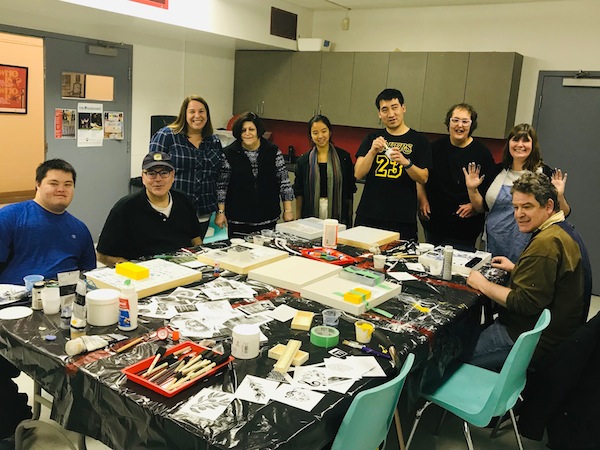
Xianzhi (Paul) Chen, in the Lakers T-shirt, not only led programming at the Jewish Community Centre of Greater Vancouver, but participated in it. (photo from JCC)

Xianzhi (Paul) Chen came to Canada from China in 2011 with his family. He loves outdoor sports, especially basketball, and has always been community-oriented, including providing care for Chinese seniors at a nursing home. But how did he find his way to the Jewish Community Centre of Greater Vancouver?

Paul is pursuing a recreation and leadership diploma at Langara College. Last year, he approached six organizations for an internship, to apply the training and skills of this program to a real-world environment, but was turned away by all the organizations he approached. When he initially interviewed for a position at the JCC with Lisa Cohen Quay, Adult 55+ program coordinator, she also said no. However, the issue was not whether he could do the work required, but rather that the requirements and expectations of the Langara internship were too much for her department to oversee.

Paul is blind in one eye and has limited vision in the other. He requires accommodations. But accommodations were not the issue either. Lisa’s mom lives with extremely low vision. She knew that, with slight adjustments to the work environment and access to a CCTV machine and specialized software like ZoomText, Paul would be able to meet and even exceed expectations. His disability, as so often is the case, was not the barrier.

Fortunately for the JCC, Paul would not take no for an answer. Without an internship, he would have had to delay the completion of his education. So, he wrote Lisa after that first meeting and asked her for a chance to show his skills. Paul – bright, friendly and tenacious – left a powerful impression. Lisa could not stop thinking about his abilities and the challenges he had faced. Determined to provide him with a meaningful and useful internship, she reached out to me, the coordinator of the JCC’s inclusion department, to see if we could create one between our two departments.

We did just that, agreeing to co-supervise Paul’s internship. We decided to provide him with program planning experience and program support experience, while also allowing him to actively participate in some of the JCC’s inclusion programming. Lisa then reached out to the Langara internship coordinator to negotiate a modified internship for Paul. The school agreed to Paul interning between the two departments at a reduced load over a longer, five-month period.

Paul was very nervous at first. He did not know how to set up for events like mah jongg, poker or bridge, how to manage a budget or how to plan programs. But, he took instruction well, was eager to learn and did his best. He demonstrated care in all his interactions with community members and poured his heart into every project in which he participated.

“I oversaw Dumpling Night at the Community Kitchen to share the Chinese New Year with community members,” said Paul by way of an example of how he incorporated his previous experience into his internship at the JCC, and learned more about leading programming.

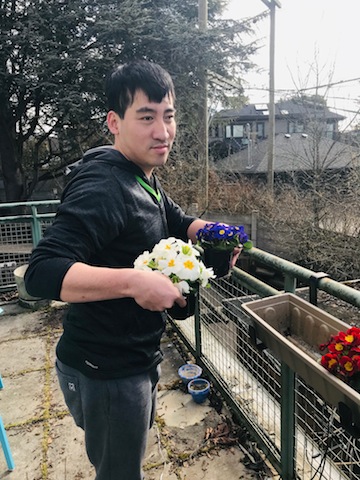
“I oversaw all aspects of a balcony beautification project, including [doing] the budget by myself,” he added. “I learned how to use my hands to make art during the Art Hive program.”

photo - Xianzhi (Paul) Chen
Paul Chen (photo from JCC)

Paul tried many new activities during his internship and, as a result, made a lot of friends. He learned quickly that friendships are forged through recreation.

Paul said the highlights of his internship were “making three excellent art pieces,” the beautification project and the “terrific relationships with people that I met in this community.”

“Paul has demonstrated a passion for community development through his internship at the JCC, with a focus on diversity and inclusion,” said Erin Wilkins, department chair, recreation studies, at Langara College. “He has also demonstrated how to provide engaging recreation experiences that support diverse community members and build resilience through empowerment.”

She said the department is “so proud of Paul’s accomplishments at the JCC, and thankful for the support he received throughout his internship, which is the final semester of the recreation leadership diploma.”

The JCC is proud to have been part of Paul’s training and professional development. We are happy to have provided him with a meaningful and diverse introduction to recreational programming, to community building and to leadership development. We are equally grateful for what he has given back to our community and us as professionals, and hope that he will continue to participate in our community and lead programming in the future.

Access to opportunity, we are reminded, requires adjustments and flexibility and is always worth the effort.

Leamore Cohen is inclusion services coordinator at the Jewish Community Centre of Greater Vancouver.

Format ImagePosted on April 19, 2019April 17, 2019Author Leamore CohenCategories LocalTags disability, education, health, inclusion, JCC, Langara College, Paul Chen

Posts pagination

Previous page Page 1 … Page 14 Page 15 Page 16 … Page 24 Next page
Proudly powered by WordPress