Skip to content
  • Home
  • Subscribe / donate
  • Events calendar
  • Business Directory
  • FAQ
  • News
    • Local
    • National
    • Israel
    • World
    • עניין בחדשות
      A roundup of news in Canada and further afield, in Hebrew.
  • Opinion
    • From the JI
    • Op-Ed
  • Arts & Culture
    • Performing Arts
    • Music
    • Books
    • Visual Arts
    • TV & Film
  • Life
    • Celebrating the Holidays
    • Travel
    • The Daily Snooze
      Cartoons by Jacob Samuel
    • Mystery Photo
      Help the JI and JMABC fill in the gaps in our archives.
  • Community Links
    • Organizations, Etc.
    • Other News Sources & Blogs
  • JI Chai Celebration
  • JI@88! video

Recent Posts

  • Or Shalom reopens its doors
  • JFS from past to future
  • Need holistic approach
  • Sharing stories, advice
  • Journalist shares fears
  • Skills to live together
  • Road to independence
  • Cutting grass with scissors
  • Zionism as a solution
  • Deceit, desire & the divine
  • Reclaiming sacredness
  • Creative project ideas
  • Summer squares and cobbler
  • Thou shalt … summer commandments
  • Legal help for students
  • Revisiting myth of Lilith
  • Wrong person rebuked
  • Canada’s mixed messages
  • Questions for museum
  • Symposium on antizionism
  • Making soccer political
  • CJPAC lauds Pulver’s impact
  • City recognizes Vrba’s legacy  
  • Organ donation saves lives
  • Theodore’s March premiere
  • A healing Shabbaton
  • Supplying healthy food
  • A chime of metal tags
  • Yellowknife seder a first
  • Ishai energizes, unifies
  • A Lag b’Omer to remember
  • Expanding the healing
  • Hannah Senesh – a unique hero
  • Community milestones … May 2026
  • Sharing her testimony
  • Fall fight takes leap forward

Archives

Follow @JewishIndie
image - The CJN - Visit Us Banner - 300x600 - 101625

Tag: health

Trying to make access equal

Trying to make access equal

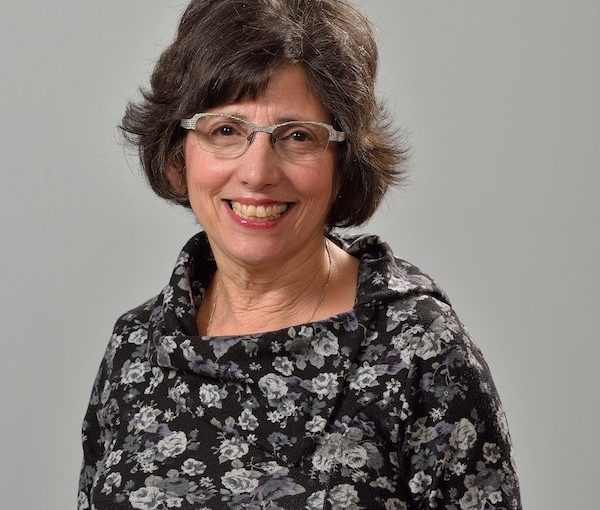
Dr. Cheryl Rockman-Greenberg (photo from Rockman-Greenberg)

In the 1970s, when Dr. Cheryl Rockman-Greenberg was eyeing the budding field of genetics as a career, she had to become a pediatric doctor first. Now, Rockman-Greenberg counts her clinical background as a blessing, one that, today, geneticists no longer require.

“Having a strong background in clinical medicine certainly always helped me in my career, because the kind of genetics I was always interested in was in rare metabolic diseases,” said Rockman-Greenberg. “These are diseases often caused by enzyme deficiencies that go by very elaborate names. Having a good foundation in clinical medicine through pediatrics certainly helped me.”

Rockman-Greenberg, who lives in Winnipeg, was invited to speak at the city’s Congregation Shaarey Zedek Sisterhood Interfaith Luncheon on April 30.

“I learned that the luncheon was spearheaded through the sisterhood in many ways to promote information sharing between the faiths,” she said, noting that a purpose of the event is education and “to look at how we can build bridges between people of different faiths and not build walls.”

“From a global perspective,” she said, “I think it fits the themes of the interfaith luncheon. And, from a Jewish perspective, I’ve certainly been involved over the years, particularly with the National Council of Jewish Women, of increasing awareness of the importance of genes for health, and bringing together some of the advocacy groups in rare genetic disorders.

“I helped the National Council put out a brochure on carrier testing on new genetic disorders in the Ashkenazi Jewish population that has been extremely well-received worldwide. This information is always evolving.”

At the luncheon, Rockman-Greenberg was planning to discuss, among other things, Bill S-201, also known as the Genetic Non-Discrimination Act, which passed into law in Canada in 2017, though it is still being challenged by insurance companies in Quebec.

“This is a remarkable act in the sense that it does protect Canadians from the use of genetic test results outside of medical care and medical research,” Rockman-Greenberg told the Independent. “In other words, genetic test results do not have to be disclosed to insurance companies or employers. We’re one of many countries who have such legislation in place, and many people here have worked for years and years lobbying for similar legislation for Canada.”

Methods of genetic testing continue to advance, said Rockman-Greenberg. Tests that were nonexistent or very complicated to administer as recently as two decades ago can now be done quickly and inexpensively.

“The evolution has dramatically changed over the past 10 years, particularly in the sense that the techniques we use to diagnose genetic disease have dramatically changed – from studying one gene at a time, to being able to sequence the entire genome of an individual,” she explained.

When Rockman-Greenberg refers to “new genetics,” she is referring to the ability to offer state-of-the-art, revolutionary genetic testing that was not possible just 10 years ago. It is this access that Rockman-Greenberg is lobbying for now.

“Everybody doesn’t have the same access to the testing in Canada,” she said. “It’s certainly not uniform from province to province or within provinces. So, many people are very committed to ensuring there are strategies in place to promote fairness.

“Notwithstanding that, the legislation is going to protect people against disclosing information that is already in place. I think we are ahead of the game because we have this in place. But, we are not ahead of the game in making sure people are going to have access to new diagnostic testing and new therapeutics in a way that’s going to be equal across the board.”

Rockman-Greenberg’s focus on rare metabolic diseases means that she has witnessed firsthand the struggles to get specialty drugs approved through a system focused on the big diseases, such as diabetes and cancer.

“You may get a new drug for diabetes that will be approved and available for patients very quickly, whereas some of the new drugs for other diseases I treat can take years and years before they go through the approval process,” she said.

Rockman-Greenberg thought that the topic was an appropriate one for an interfaith gathering, “as everybody having the same chance to be successful is very important to me. I work with families and patient support groups to help remove barriers and help people feel empowered.”

She said, “There are many challenges in dealing with rare diseases and I try to work both sides: the patient side, as well as advocate for changes at the government level, to make sure there is fairness in access to new therapies.”

Rebeca Kuropatwa is a Winnipeg freelance writer.
Format ImagePosted on April 19, 2019April 17, 2019Author Rebeca KuropatwaCategories NationalTags Cheryl Rockman-Greenberg, equality, genetics, health, human rights, interfaith, law, NCJW, Shaarey Zedek, Winnipeg
Volunteering’s benefits

Volunteering’s benefits

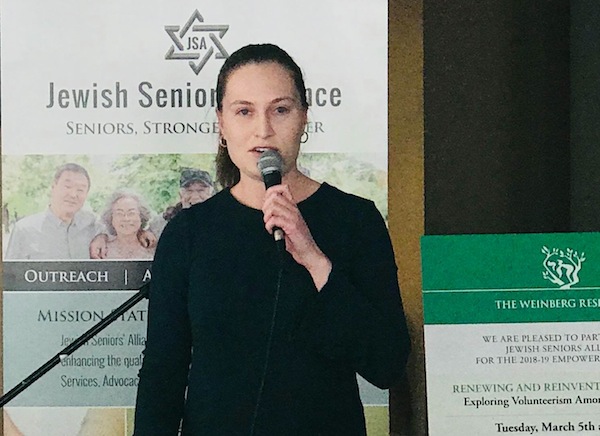
Eireann O’Dea speaks at the March 5 session of the Jewish Seniors Alliance Empowerment Series. (photo from JSA)

The following talk was delivered March 5 at the third session of the 2018/19 Jewish Seniors Alliance Empowerment Series, which took place at the Weinberg Residence. Speakers also included Larry Shapiro, JSA’s second vice-president; Jessica Bruce, volunteer coordinator for the Weinberg and the Louis Brier Home and Hospital; and Vanessa Trester, manager of the Weinberg.

It is relatively common knowledge that volunteering provides tremendous benefits to individuals and to the community at large. Volunteers have the opportunity to bring an increased sense of meaning and purpose to their lives, expand their social network, exercise unique skills and hobbies and, of course, help others in need. The presence of volunteers within a community increases social cohesion, builds trust and creates a “social infrastructure” of support, reciprocity and concern for others.

But what do volunteer roles really mean to those who participate in them? How does one start volunteering, and why do they continue? The Jewish community is exemplary in its provision of services and volunteer opportunities for children, youth, adults in mid- to late life, and the elderly. Yet the personal experiences of those who volunteer in the community, from a research standpoint, are largely unknown. This fact, along with my own experiences of working and volunteering within the community, inspired my master’s thesis, titled, An Exploration of Pathways, Motivations and Experiences Among Older Jewish Volunteers in Vancouver. The findings reflect interviews with 21 volunteers.

The majority of participants have volunteered for most of their lives. They described having parents who were community-minded, as well as adolescent experiences of being a part of Jewish youth organizations or women’s groups dedicated to community service. The expectation from others to volunteer was also discussed. Often, participants were asked to volunteer by their peers, rather than having sought out opportunities themselves. Over the years, this allowed them to experience multiple volunteer roles, as they would often be exposed to another role as a result of their status as a volunteer in the community.

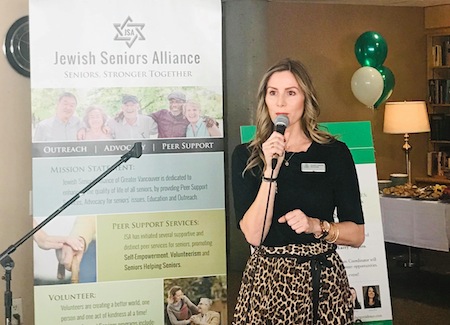
photo - Vanessa Trester, manager of the Weinberg Residence. The Weinberg hosted the March 5 JSA Empowerment event
Vanessa Trester, manager of the Weinberg Residence. The Weinberg hosted the March 5 JSA Empowerment event. (photo from JSA)

Participants found volunteering to be personally rewarding, describing how their roles made them feel better about themselves, kept them busy and productive, as well as mentally fit. Participants were also motivated to volunteer for generative reasons; that is, to help the next generation and the community at large. The desire to pass on Jewish culture was evident, with many describing their efforts and desire to serve organizations that preserved historical documents, worked to support Jewish infrastructure and educate children in the community. They felt that volunteering represented an important part of Jewish life and cited the importance of helping others within Jewish culture and religion. Tzedakah, a Hebrew phrase meaning justice or righteousness, was frequently referenced.

Participants described the connections formed with their fellow volunteers and to the community. Friendships were maintained both within and outside of the context of the volunteer role. Caring for seniors was another common experience among participants. Many took on roles that involved working with older adults, whether it was making home visits to isolated older adults, or assisting with recreational programs. It was also found that participants gravitated towards leadership roles within volunteer organizations and, in some cases, had founded their own initiatives. Participants also found their volunteer roles to be an opportunity to engage in personal interests and hobbies, as well as a chance to use skills they learned during their professional careers.

Volunteering is a highly productive way for older adults to increase their level of activity, foster their interests, help others and continue to be social and connected to their communities. As Canada continues to diversify in terms of ethnic composition, it is essential that volunteer opportunities be made accessible to and inclusive of older adults from all backgrounds. To achieve this, it is imperative that future research in this area encompasses the experiences and stories of older adults themselves.

Eireann O’Dea is a PhD student in gerontology at Simon Fraser University. Her research interests are related to community engagement among older adults, ethno-gerontology and environmental accessibility. She wrote her master’s thesis on senior volunteers in the Jewish community and has recently joined the board of Jewish Seniors Alliance.

Format ImagePosted on April 12, 2019April 10, 2019Author Eireann O’DeaCategories LocalTags Empowerment, health, JSA, seniors, volunteering, Weinberg Residence
The runway to healing

The runway to healing

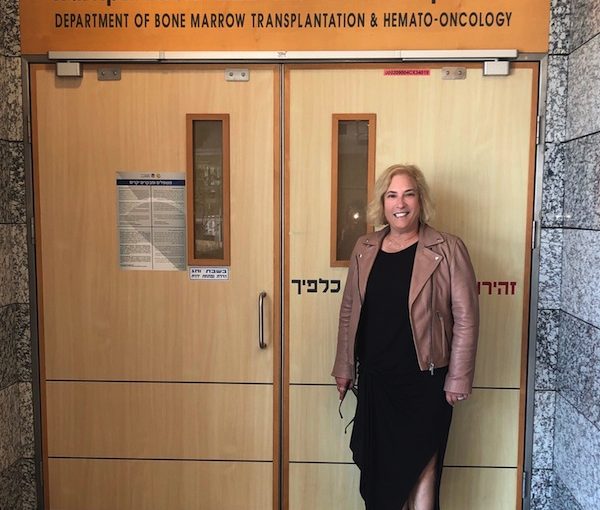
The writer at the bone marrow transplant ward at Ichilov Hospital in Israel. (photo from Ariella Stein)

Fashion is one of my many passions, as regular readers of the Jewish Independent will know by now. So, when I turned 50 this year, a milestone birthday, I decided to pursue a longtime dream – to create a fashion tract for bone marrow transplant survivors.

When I was 17 years old, I was diagnosed with Hodgkin’s lymphoma. At the time, I was in Grade 12, studying in Israel. My parents’ first reaction was for me to return to Vancouver, where they felt I should start my treatments. There was no time to waste, as it was at an aggressive stage. However, after much persuasion, I convinced my parents that I should stay in Israel. As part of the deal I made with them, I was to head back to Vancouver upon graduation and resume the next cycle of treatments.

I started chemotherapy. I had the most loving care from the staff at Tel Hashomer Hospital. I was on the road to recovery when I returned home.

After a few more bouts with chemo and some courses in radiation, however, we were given the devastating news that I had to undergo an autologous bone marrow transplant. The procedure had to start immediately. I lost the little hair I had left in just one day, couldn’t hold down any food or drink, and was separated from any ounce of humanity because I had no immunity. But I was getting better, thanks to the staff and doctors at the British Columbia Cancer Agency.

During the horrifying three-month stay in my isolated hospital room I was, paradoxically, injected with the poisonous chemo cocktail expected to cure me and the benevolent rays of light and love of my family. The support made me stronger and gave me courage. I had so much to look forward to. My two older sisters had countless discussions on having children for me if I couldn’t conceive, my father tried to grant me not just one star but the whole galaxy, my mother never left my side and my then-boyfriend-now-husband showered me with tenderness. The love in my room spread throughout the ward. Through the tears, we remembered to laugh and dream.

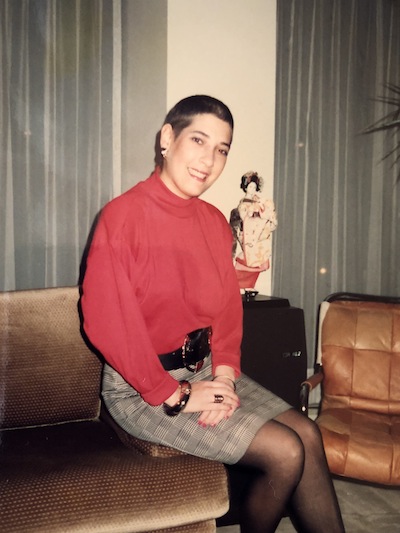
photo - The writer, at 18 years old, two months after being released from the hospital for treatment of Hodgkin’s lymphoma
The writer, at 18 years old, two months after being released from the hospital for treatment of Hodgkin’s lymphoma. (photo from Ariella Stein)

When it was time to go home, I was nervous about leaving my protected environment but full of excitement to start my new life. All I wanted was to feel and look healthy again. I bade farewell to my dull uniform of pajamas and welcomed my new outfit, especially chosen for me. On the door, it was waiting for me, as if knowing how I was craving to look like a girl again. I fondly remember stepping out in my blue leather mini skirt, black cashmere sweater and black knee-high boots, handpicked with care by my mom, a true fashionista. I looked fabulous and felt euphoric on the 10-minute ride home, the only place I was headed for the time being.

Fast forward some 30 years, and I am the mother of two miraculous children, Daniel and Natalie, who bring me the greatest happiness and naches, spoken like a true Yiddishe Mame. I am grateful every day for my blessed life. There have been bumps along my journey, of course. I have often wondered if other women had the transformational experience I did leaving the ward. I knew the day would come for me to help other survivors in my own way. Splitting my time between Israel and Canada, I chose to initiate a fashion project in Israel.

I reached out to the head of the bone marrow transplant unit in Ichilov Hospital (Tel Aviv Sourasky Medical Centre) and, to my astonishment, within minutes was told they were on board. My dream was becoming a reality.

My mission is to offer patients, upon their release, an outfit of their wishes to raise their spirit, as my mother’s fashion choices had raised mine. I wrote letters to as many clothing stores as I could, looking to find sponsors, hoping they would donate new outfits to recipients. I received a few replies saying nice idea, good luck; some never replied. But some did reply with open hearts, willing to contribute to the project.

Getting started has been challenging, one step forward and a few back. Frustrating as it is, I understand that it will take time but, among the obstacles, I will not give up. As the writer Paulo Coelho said, “When you want something, all the universe conspires in helping you achieve it.” I have named my project Lalas Wings. Lala is a nickname, dubbed by my niece and nephew 35 years ago.

I was taught to dream big by my mentor, my father, Karl Stein. Hopefully, by sharing my dream, I can make a significant contribution to many bone marrow transplant patients, starting in Israel and eventually reaching hospitals in more and more places. My experience leads me to believe that the seemingly externally focused gift of clothing is part of a perfect beginning to the complex healing process.

If anyone has any questions about Lalas Wings, I can be reached by email at [email protected].

Ariella Stein is a mother, wife and fashion maven. A Vancouverite, she has lived in both Turkey and Israel for the past 25 years.

Format ImagePosted on April 12, 2019April 10, 2019Author Ariella SteinCategories IsraelTags Ariella Stein, cancer, fashion, health, Israel, Lalas Wings, philanthropy, tikkun olam
Couch potatoes, fitness nuts

Couch potatoes, fitness nuts

Most people know there is AIDS in Africa but few people comprehend the scope of the pandemic. In the past 30 years, 30 million people have died and 17 million children have been orphaned. Grandmothers have buried their own beloved children and are parenting again, with few resources. Vancouver’s Tikun Olam Gogos, together with other supporters of the Grandmothers to Grandmothers Campaign of the Stephen Lewis Foundation, are hosting two pledge events for African grandmothers caring for children orphaned by AIDS.

The first pledge event is For the Love of Grandmothers Fitness Challenge. Here’s how it works: you design a fitness challenge for yourself. The event period began March 8, International Women’s Day, and you must complete your self-challenge by Sept. 8, Grandparents’ Day. Choose something you enjoy and do it harder, faster or more often. Your commitment will help you reach your fitness goals.

You can do it once in a big event or work on it day by day. Then, dedicate your challenge to a grandmother you love. Examples of fitness challenges include the Sun Run, Tough Mudder, spinning 100 kilometres in a day or a month, walking or running three times a week for six months, etc. Whatever you imagine, you can do as part of this challenge – register at fortheloveofgrandmothers.weebly.com.

The second fitness challenge, back for the third year, is Solidarity Cycle, on Sept. 8. This ride is open to people of all ages. It has three track options: the Classic is a 100-kilometre cycle from White Rock to Yarrow. The Easy 50 kilometres goes from the lunch stop in Aldergrove over mostly flat, rural roads to Yarrow, and the 100-kilometre loop starts and ends in Yarrow. Stops along the way are hosted by cheering grandmothers offering refreshments and moral support. There is a celebration at the end of the ride with chili and a corn roast in Yarrow for all participants. Registration for Solidarity Cycle opens on May 1, with training and team-building rides offered throughout the summer. For more information, see solidaritycycle.weebly.com.

For both events, participants set up a secure fundraising page and ask their friends and families for contributions. Funds raised will support vital services and programs, from grief counseling to training for income-generation to support for school fees and uniforms

Format ImagePosted on April 12, 2019April 10, 2019Author Tikun Olam GogosCategories Local, WorldTags Africa, AIDS, grandmothers, health, Solidarity Cycle
Effects of crystal meth

Effects of crystal meth

Winnipeg Mayor Brian Bowman speaks at the Nov. 22 forum Wide Awake. According to Ivy Kopstein of Jewish Child and Family Service of Winnipeg, he “is advocating to all levels of government for resources to deal with this health crisis.” (photo by Nik Rave)

“It is a significant issue in both Winnipeg and Vancouver,” Dr. Ruth Simkin told the Independent. “In Vancouver, it has been overshadowed by the opioid crisis, but is a significant problem there, too. It is seen in the Winnipeg Jewish community. I don’t have stats on its prevalence in this particular group, but it is likely similar to other populations.”

Simkin is a family physician working at a community health clinic in Winnipeg and part-time with the addictions unit/addictions consult service at the Health Sciences Centre (HSC) and Rapid Access Addictions Medicine (RAAM). The JI recently interviewed her about addiction; in particular, to methamphetamine, in light of a Nov. 22 forum in Winnipeg on the topic.

Wide Awake – An Eye-Opening Look at Methamphetamine in Winnipeg was held at the Asper Jewish Community Campus. It was co-presented by Jewish Child and Family Service (JCFS) of Winnipeg, Gray Academy of Jewish Education and the Rady Jewish Community Centre.

Amphetamines were developed in the late 1900s and used commercially from about 1930 for various reasons, including nasal congestion and to keep soldiers awake. Because of their adverse effects and addictive properties, however, their use became legally restricted in the 1970s.

Methamphetamine (crystal meth) belongs to the amphetamine class of drugs – stimulants that speed up the body’s central nervous system. Although not legally available in Canada, crystal meth has been used recreationally for a very long time.

“The initial effects of methamphetamine on the user are a sense of well-being or euphoria, increased energy and alertness, increased confidence and little need for food or sleep,” said Simkin. “Unwanted potential side effects include racing heart, dry mouth, nausea and vomiting, anxiety and restlessness. It can also produce paranoia, delusions and aggressive and violent behaviour.”

“Methamphetamine comes as a powder that can be used by ingesting, snorting, smoking or injecting,” explained Dr. Erin Knight, medical director of the HSC’s addictions program, who was a Wide Awake panelist. “It also comes in a crystal form (crystal meth). It is produced in illegal labs with fairly inexpensive and sometimes toxic ingredients. It may be made with ingredients from antifreeze, batteries and cleaning fluid.”

It is estimated that one percent of students in Manitoba from grades 7 to 12 have tried methamphetamine over the last year. It is easily accessible and inexpensive. Its price has dropped significantly in the last few years, from approximately $30 per gram to $10 per gram.

In her work at the HSC, it is common for Simkin to see patients who use meth, usually along with other drugs.

“It is a growing problem,” said Simkin about the use of the drug. “It is very accessible, cheap, has a prolonged effect on the user – six to eight hours if injected and 10 to 12 hours if smoked – and it is very reinforcing (addictive).

“As well, its effects are more unpredictable than other drugs. The number of users has doubled over the last few years. And, we’re also seeing a shift from individuals smoking meth to them injecting meth.”

According to Sheri Fandrey of the Addictions Foundation of Manitoba – who also was a Wide Awake panelist – drug mixing increases the potential for challenging behaviours and the possibility of a serious overdose. That meth is bought and sold in an unregulated market increases the risk that it may contain adulterants and contaminants that can cause further harm.

“There is no specific treatment in terms of medication,” said Simkin regarding addiction to meth. “There is some evidence for the use of motivational interviewing (MI) and rewards-based treatment.”

A recent Winnipeg Regional Health Authority (WRHA) report stated that, in the 2014-2015 fiscal year, 682 people who sought treatment at the Addictions Foundation  had used meth over the prior 12 months. A year later, that number had increased to 1,198. Meth was no longer being reported to be an occasional drug, and women were using more than in the past.

“As far as we know, meth use crosses all lines: rural/urban, high/low income and male/female,” said Simkin. “However, as with other substances, there are higher risk groups. These higher risk groups are students, low-income, rural, homeless, disenfranchised groups and people with co-occurring mental health disorders.”

Last year’s theme for Addictions Awareness Week, chosen by the Canadian Centre for Substance Use and Addiction, was “All Walks of Life.” Substance use issues and addiction do not discriminate by age, gender, class or religion.

Simkin said this is a complex and difficult issue, but suggested that having education programs in schools would be helpful, as are forums such as Wide Awake.

As a community, Simkin said there are several things that can be done to improve the situation:

1. Reduce the stigma around substance use in general, so people who need help aren’t afraid to seek it.

2. In terms of government, increase funding for detox beds and addiction treatment, including harm-reduction services.

3. Work on other determinants of health, like poverty, housing and education, as well as mental health, to try to prevent addiction in the first place.

photo - Ivy Kopstein, coordinator of the substance use and addictions program at Jewish Child and Family Service of Winnipeg, answers a question from CityTV at the forum Wide Awake
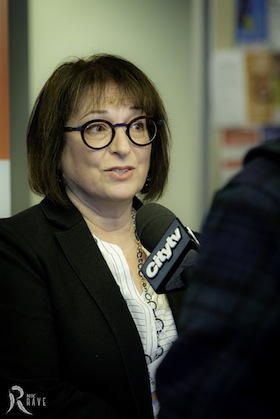
Ivy Kopstein, coordinator of the substance use and addictions program at Jewish Child and Family Service of Winnipeg, answers a question from CityTV at the forum Wide Awake. (photo by Nik Rave)

Another resource now available in Winnipeg are the RAAM clinics that have been instituted recently by the WRHA to provide low-barrier access to resources for individuals needing help with substances abuse issues, including crystal meth.

“The City of Winnipeg and law enforcement are responding to the crisis on the streets and have included public education programs in all areas of the city,” said Ivy Kopstein, coordinator of the substance use and addictions program at JCFS Winnipeg. “Our mayor is advocating to all levels of government for resources to deal with this health crisis.”

“Emergency Medical Services (EMS) has now been given the authority to give meth users the antipsychotic drug Olanzapine,” Simkin offered by way of an example.

When a loved one has a substance abuse issue, it impacts the whole family, she said. Family members may feel stressed and anxious and it’s important for them to also seek support.

In British Columbia, the B.C. Centre on Substance Use (bccsu.ca) “is a provincially networked organization with a mandate to develop, help implement and evaluate evidence-based approaches to substance use and addiction.” Other resources include Crystal Meth Anonymous (crystalmeth.org), which is similar to Alcoholics Anonymous and lists a meeting place on Hornby Street in Vancouver, and Jewish Addiction Community Services (778-882-2994 or [email protected]).

Rebeca Kuropatwa is a Winnipeg freelance writer.
Format ImagePosted on January 18, 2019January 16, 2019Author Rebeca KuropatwaCategories NationalTags addiction, drugs, health, meth
Camp for those with aphasia

Camp for those with aphasia

Sea to Sky Aphasia Camp provides a three-day retreat to 30 campers and their family members at Zajac Ranch in Mission, B.C. (photo from Sea to Sky)

Aphasia is a communication impairment most often caused by stroke, but it can also be due to any brain injury. It impacts a person’s ability to speak, understand spoken language, and the ability to read and to write.

“It’s important to understand that, while communication is impaired, a person’s cognitive function is not,” said Eavan Sinden, a speech-language pathologist at the University of British Columbia, about the condition. “This is something Sea to Sky [Aphasia] Camp focuses on – that we can create a communicably accessible and supportive environment, while acknowledging the inherent competence.

“But, there are some prominent researchers in the world of aphasia now who are looking at expanding on [the] definition … so that it would include the impact of aphasia on a person’s life – the impact it has on a person’s identity, on a person’s ability to participate in social events, their ability to work, their ability to be in the role that we assume … mom, dad, daughter, whatever … changing the definition a little bit to include that impact.”

Out of the 100,000 people in Canada who will suffer a stroke this year, 35% of stroke survivors will live with some form of aphasia. Further to that, 62% of these survivors will experience depression after the stroke.

Sinden teaches and does research at UBC’s School of Audiology and Speech Sciences. One of her primary roles within the school is to coordinate the Sea to Sky camp every September. This fall, it will run Sept. 20-22.

The camp, which is entering its 10th year, provides a three-day retreat to 30 campers and their family members at Zajac Ranch in Mission, B.C., in a facility specifically designed for people with unique abilities and challenges.

To make the camp a reality, Sinden and UBC partner with Douglas College’s therapeutic recreation program, and March of Dimes Canada. “There’s a lot of support for this camp,” Sinden told the Independent. “In addition to being a camp for people with aphasia, those 30 campers come with family or friends, if they choose.

“We also have 36 healthcare-professional students who come for the weekend to learn a little bit more about what it’s like to live with a chronic impairment, such as aphasia. They are speech-language pathology students, audiology students, therapeutic-recreation students, nursing, pharmacy, dental hygiene and physiotherapy – a whole range of care students who opt, every year, to do this. Without them, we wouldn’t have enough support. It’s really great to have these layers of partnerships in the community. They really help create that communicably accessible environment.”

There is also a group of clinical leads, healthcare professionals in the community, who have been working with aphasia and who volunteer the weekend of the camp to work with the students.

A disturbing trend, according to Sinden, is that aphasia is affecting younger and younger people. “This is the frightening part,” she said. “We have people anywhere from 30 or 31 to their late 70s or early 80s, a real range, but the majority are in their 50s and 60s. It’s no longer something you’d think just happens to older people. The Heart and Stroke Foundation has written quite a few reports on that.”

At Sea to Sky, participants can do yoga, horseback riding, cooking, singing, dancing, campfires, basketball, swimming, arts and woodwork.

“A lot of our activities are run by people with aphasia, as well, who have come to the camp for many years and are now leaders in that way,” said Sinden. “The students also take a role in working on some of those activities.”

All accommodations and meals are included in the $250 cost for the weekend.

“It’s a really terrific way for people with aphasia in the community to come together, socialize and be with people who’ve been on similar journeys,” said Sinden. “Aphasia can be very isolating, so it can be incredibly powerful to meet people with whom you have a shared experience, who you can see that idea of, ‘OK, I can do this.’ Maybe, if I’m a little earlier on in my recovery and I see someone 10 years post doing something that I didn’t think would be possible … that can open up opportunities.

“We have a great core group who come year after year,” she added. “But, I have to say, especially this year, we had quite a number of newcomers, which is exciting. We’re always trying to extend our reach and support the community of people with aphasia.”

While the number of people suffering from aphasia has increased, the camp has been able to accommodate the demand – but just barely, due to space and funding.

“We’re fortunate in that March of Dimes, UBC and Douglas College support us with grants, but every year we hope to still get the funds,” said Sinden. “It’s never a sure thing. There’s a huge need for more community support. If we could take more campers or run more camps, we would also be happy to do that and it’s something on our wish list.”

This year, Sinden is starting a campaign called Sponsor a Camper, asking donors to give $250 so someone can attend the camp. Other support is raised via the Stroke Recovery Association of British Columbia and Fraser Health.

For more information, visit srabc.ca or aphasia.ca.

Rebeca Kuropatwa is a Winnipeg freelance writer.
Format ImagePosted on January 18, 2019January 16, 2019Author Rebeca KuropatwaCategories LocalTags aphasia, British Columbia, camp, Eavan Sinden, health
Action plan for your health

Action plan for your health

(photo from libreshot.com)

Most people are super-excited about starting some sort of a nutrition and wellness plan, especially leading up to a celebration such as a new year, and after all of the holiday indulgences many of us enjoy over Chanukah. But, no matter the strength of our intentions, soon after we start and a few months into the new year, our commitment tapers off.

The Talmud teaches, “the blind eat but are not satisfied.” What does it mean to be blind when it comes to eating?

We should start with asking ourselves, why do we place such importance on food and why should we be planning for healthier nutrition, and better wellness habits?

Are we conscious that nourishment is for spiritual, mental and moral clarity, purity and holiness, as well as to physically strengthen the body?

Choosing nutrient-rich foods is the first step to providing our body – and mind – with the nutrients it needs. And the way our foods are prepared and eaten can influence how well those nutrients are absorbed and used by our body.

The average human brain contains 10 billion nerve cells. And there are many studies showing how our choices of food affect our moods and brain function.

People often say they need to lose weight but then quickly forget what they said if they have travel plans or holiday celebrations. The reality is that eating healthier is a habit that has to be taken seriously and one that has to be a habit all year round regardless of season, travel plans or celebrations. Eating consciously is vital to our health and longevity.

We also shouldn’t remain blind to the supernatural dimension of eating. There are many blessings the practice of Judaism provides, and this kind of daily gratitude can help us derive greater satisfaction from life, including from our food.

There are two dimensions to a person’s eating – sustenance for our body and sustenance for our soul. Our body seeks nutrients, as does our soul. Most people live out their lives without ever really grasping the idea of eating or balancing their nutrition, suffering physically from overindulging and missing the most important lessons from and a spiritual relationship with G-d.

When it comes to food, people bounce between extremes. We go all in for stuffings, creamy dressing salads and huge cuts of meat, but then cut out entire food groups to compensate. People all of a sudden start talking about gluten-free, dairy-free, sugar-free diets and, of course, the ever-so-popular detox. Our bodies are made up to be a perfect system so, unless some of these foods are causing you real health issues, there’s no evidence that eliminating foods completely is better for you.

What makes sense is an action plan.

With so many fad diets, it’s not always easy to differentiate between truths. There are many diets we hear about from friends or friends of friends, that such-and-such has worked for them. But adherence to most of these diets is short-lived because they aren’t based in knowledge and aren’t sustainable or convenient for the individual. In many cases, diets eliminate highly nutritious, essential foods from your meals. As well, if you follow a very restrictive diet and then change your eating habits when you reach your ideal weight, you might find yourself starting to overeat, as you crave the foods you had eliminated, and now satisfy even some of those cravings.

Although no two people are alike and everyone’s nutrition needs vary, when it comes down to it, weight loss is fairly straightforward. Making better food choices, cutting out bad high-fat foods, empty-calorie refined foods, cutting back on calories in general, and getting more exercise pretty much sums it up.

If your goal is to maintain your weight, lose weight or, in some instances, gain weight, calorie quantities need to be adjusted. These varied options will mean different amounts of proteins and overall calorie intake, which, when coupled with an appropriate exercise program, will help you attain your healthy weight – and, in the process, learn how to eat healthily as a lifestyle instead of as a fad or resolution that lasts only a few months.

In general, it’s important to eat protein for every meal, and to keep a pattern of three meals and at least two snacks per day together with eight to 10 cups of water. It’s not recommended to skip meals and then double up at the next one. More evenly spaced meals will help keep your energy level up, and protein at each meal, as well as afternoon snacks, will help keep you from getting hungry.

Remember that the right food is medicine for body and soul, and a balanced diet is one of the simplest ways to better health, and exercise is the least expensive antidepressant.

Marat Dreyshner has more than 25 years of culinary experience and a passion for health, wellness and nutrition. He joined Herbalife Nutrition in 2016, and he and his wife Ella work together as nutrition and wellness coaches.

Format ImagePosted on November 30, 2018November 29, 2018Author Marat DreyshnerCategories LifeTags dieting, health, lifestyle
Keeping clean then and now

Keeping clean then and now

The mikvah at Herodian, which was apparently built during the Second Temple period (530 BCE and 70 CE). (photo by Deborah Rubin Fields)

The Dark Ages weren’t given their name for nothing. After the collapse of the Roman Empire, sanitation virtually disappeared. During the Dark Ages – also referred to as the Middle Ages or the medieval period – few people bathed regularly. What did they do? Those who could, or were so inclined, covered up body odour with perfume.

Progress does not always move in a forward direction – the older, classical civilizations bathed far more than did medieval Europe. In the non-Jewish ancient world, the earliest unearthed bathing and plumbing systems date back nearly 6,000 years to the Indus River Valley, in today’s Pakistan. There, archeologists excavated copper water pipes from the ruins of a palace, as well as the remains of what appears to be a superbly constructed ritual bathing pool at Mohenjo-daro. And, in a find dating 3,000 years later, archeologists found a pottery pedestal tub on the island of Crete that measured five feet long.

By instituting a practice of daily bathing, the Romans improved the general level of sanitation. Baths, moreover, functioned not just to raise the level of hygiene, but also provided opportunities to socialize, to exercise, to read and, importantly, to conduct business. From 500 BCE until 455 CE, Roman public baths were common. Moreover, privately owned Roman baths were quite luxurious, often taking up a whole room. The comprehensive sewage system of the baths consisted of lead and bronze pipes and marble fixtures.

Now, note this contrast: until the 1800s, most water pipes in the United States consisted of no more than hollowed-out trees, and the first cast-iron pipes in the United States were imported from England. Only in 1848 was a U.S. plumbing code enacted, with the passage of the National Public Health Act. In 1883, both the Standard Sanitary Manufacturing Co. (now the American Standard Co.) and the Kohler Co. began adding enamel to cast-iron bathtubs to create a smooth interior surface. Kohler advertised its first claw foot tub as a “horse trough/hog scalder [which] when furnished with four legs will serve as a bathtub.” Kohler began mass-producing these tubs, as they were recognized as having a surface that was easy to clean, thus preventing the spread of bacteria and disease.

To give additional perspective, consider this finding: after the First World War, the United States experienced a construction boom, and bathrooms were fitted with a toilet, sink and bathtub – but, even in 1921, only one percent of American homes had indoor plumbing.

Since antiquity, Jews have maintained a relatively high level of sanitation, due in part to the prescribed hand-washing ritual before eating and to the religious practice surrounding the mikvah, or ritual bath. In Israel, the oldest discovered mikvah dates back to the Second Temple period, more than 2,000 years ago. In recent years, archeologists discovered Europe’s oldest mikvah – in Sicily’s ancient Syracuse, it goes back to the Byzantine period, or the fifth-century CE.

But two important questions need answering: how do we know bathing was so important and what is a mikvah? The Babylonian Talmud, Tractate Berakhot 57b, provides this insight: though anointing (oil) and bath (water) do not enter the body, the body benefits from them. Moreover, in Tractate Sanhedrin 17b, we learn that scholars were forbidden from residing in cities that did not have public baths.

Historically, municipalities often barred Jews from bathing in their rivers, and Christians blocked Jews from using public baths. Moreover, there was a fear that Jewish women might be molested in a general public bath. So, there was a need to construct separate facilities, and Jews built bathhouses, many with mikvot close by. Thus, Jews began to link the concept of the mikvah with physical hygiene.

Significantly, the mikvah was never a monthly substitute for a bath or shower. In fact, Jewish law calls for immersion only after one has bathed or showered. Oceans, rivers, wells and lakes, which get their water from springs, can usually serve as a mikvah. The common thread between these bodies of water is that they are natural sources. To traditional Jews, they are derived from G-d. As such, they have the ability to ritually purify.

A human-made mikvah must be built into the ground or built as an essential part of a building. There are two pools: one that contains collected rainwater and the other, the actual immersion pool, is drained and refilled regularly with tap water. The pools, however, share a common wall with a hole that permits the free flow of the water, so the immersion pool also receives rainwater.

When the Temples stood, the high priest immersed in the mikvah at prescribed times. But, today, when there is no Temple, for the Orthodox, the mikvah serves the following four functions: a woman uses the mikvah after menstruating and after giving birth; immersion in a mikvah marks the final step in converting to Judaism; before beginning to cook and eat from them, Jews use the mikvah to immerse new pots, dishes and utensils; and the mikvah is also used to prepare a Jew’s body before his or her burial. Men go to the mikvah before their wedding and before Yom Kippur, and many Chassidic men use the mikvah before each Shabbat and holiday.

photo - Giovanni Boccaccio’s “The plague of Florence in 1348”
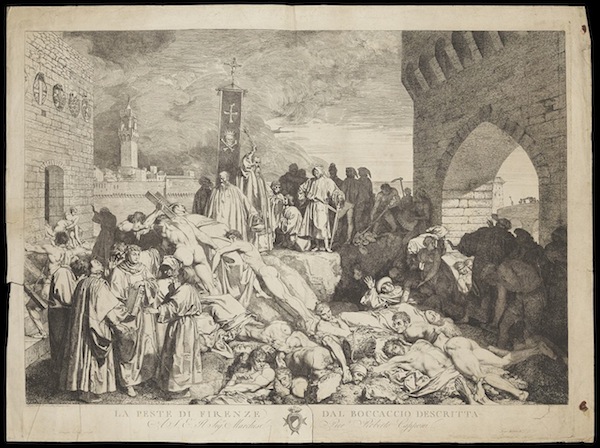
Giovanni Boccaccio’s “The plague of Florence in 1348.” (photo from wellcomecollection.org)

It is speculated that up to 60% of the general European population died of the Black Death. There are no statistics as to how many Jews died of the plague, so it is hard to actually say that Jewish bathhouses or the Jewish practice of hand washing or other sanitation prescribed by Jewish law kept Jews safer than the general medieval public. Two points, however, may be stated with certainty:

  1. In a number of instances, European Jews were blamed for the Black Death. As a consequence, beginning in November 1348 in Germany, Jews were massacred and expelled from their homes. In February 1349, 2,000 Strasbourg Jews were murdered. Six months later, Christians wiped out the Jews of Mainz and Cologne. By 1351, 60 major and 150 smaller Jewish communities had been eliminated.
  2. Even today, comments on the subject need to be scrutinized for possible antisemitic motives.

As for today, in the Western world, there seems to be an obsessive amount of soap bars, soap liquids, no-soap cleaners, hand wipes and wet wipes. Can one over-clean? Yes.

In an interview with Global News earlier this year, Dr. Anatoli Freiman of the Toronto Dermatology Centre explained the negative consequences of excessive showering or bathing. “The skin can dry out,” he said. “But the message is, after the shower or bath, you need to pat yourself dry and moisturize to seal it.”

Prof. David Leffell, chief of dermatological surgery at Yale School of Medicine, gives these guidelines about keeping clean. “You don’t want to do the Lady Macbeth thing, where you’re scrubbing and scrubbing,” he told businessinsider.com. “The purpose of showering is to eliminate dirt.” This can be done, he explained, in less than a few minutes by focusing on the grimier parts of the body (armpits and groin) and not overdoing it with soap elsewhere. He advised using warm, not hot, water; aiming for a three-minute shower; and moisturizing while the skin is still damp.

Deborah Rubin Fields is an Israel-based features writer. She is also the author of Take a Peek Inside: A Child’s Guide to Radiology Exams, published in English, Hebrew and Arabic.

Format ImagePosted on November 30, 2018November 30, 2018Author Deborah Rubin FieldsCategories WorldTags bathing, health, history, Israel, Judaism, mikvah
Understanding dyslexia

Understanding dyslexia

Bennett and Sally Shaywitz co-founded the Yale Centre for Dyslexia and Creativity. (photo from the Shaywitzes)

One out of five people has dyslexia. Yet, even with this many people affected, not every school tests for it. This can lead to feelings of self-doubt and frustration for the child who has dyslexia but doesn’t know it. Parents and teachers may also become frustrated and the result can be children losing confidence in themselves.

Sally and Bennett Shaywitz, both academic physicians, say there is a simple test available for anyone to use to see if they have dyslexia.

Bennett Shaywitz was chief of child neurology at Yale for approximately 40 years, before stepping down a couple of years ago to devote all of his energy to dyslexia. “I’m the Charles and Helen Schwab Professor in Dyslexia at Yale,” he said. “Charles Schwab is very philanthropic and very dyslexic, so I’m very fortunate that I’m his name share.”

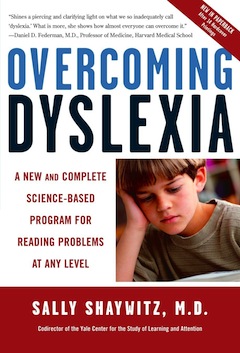
“Together, Bennett and I founded the Yale Centre for Dyslexia and Creativity,” Sally Shaywitz told the Independent. “I also wrote the bestselling book on dyslexia, called Overcoming Dyslexia.”

It all began when she was asked by Yale to work with children with learning disabilities, as none of the other faculty wanted to do it. “They thought it was beneath them,” she said. “I said, ‘Sure, I’ll do it part-time.’ And then I became intrigued with these children I saw who weren’t reading and whose parents were beside themselves and very worried. So, I began looking into it. Bennett was studying more basic science in attention. He got intrigued, so we worked together.”

As the research progressed, she discovered that there were many children who had problems with their reading yet seemed bright.

image - Overcoming Dyslexia book cover“Also, when I looked into it, they were studying children in schools and things, but there wasn’t a general study of a large population,” she said. “So, I started with the Connecticut Longitudinal Study. What differentiates that study is that it’s of a population, we work with a population statistician. We selected children from all over Connecticut and broke it into 14 towns. We invited all the children in kindergarten and, lo and behold, 95% of the ones we invited actually participated. That study is still going on. We are seeing those same people, about 375 of them, as adults, as 40-year-olds.”

The study started with 455 kids and 20% turned out to have dyslexia, while the schools had been under the impression that hardly any students were dyslexic.

“It taught me a lesson that I testified to the U.S. House of Representatives and the U.S. Senate,” she said. “It was that, to be counted, you had to be identified. Schools are not identifying kids, so they didn’t think they had any. Our data is very strong, and it goes along with data from the federal government that they’ve collected over the years. Dyslexia involves one out of five people – and we also discovered that it affects girls as well as boys.

“People used to say that it was just boys. What happens when people say that is that they only study boys. What we were able to do in the longitudinal study is we made up different instruments and validated them. One was a teacher instrument…. What we found was that, when boys and girls were tested, there were virtually equal numbers. But, when you ask the teacher about the child’s behaviour in class, they would say, oh, the boys were rowdy, pulling the girls’ hair, playing across the room, etc. And, the girls, they are so well behaved, but they never read a word. So, it was the boys that were sent for evaluation, because the teachers wanted to get them out of the room.

“We were able to show that dyslexia affects not only boys, but girls as well,” she said. “And, also, that it is persistent. It doesn’t go away. This study has made many major advancements.”

The Shaywitzes also found that, while, with non-dyslexics, reading and IQ are connected, with dyslexics, that correlation does not exist. This was in line with the very first description of dyslexia, in 1896, when a British physician referred to a young man who would have been the smartest in the class, if not for reading.

“People at the turn of the century really got it. They understood it,” said Sally Shaywitz. “But, over time, people stopped understanding it – deciding that, if you’re really smart, you can’t be dyslexic. So, what we were able to demonstrate is that, in fact, you can be very smart as well as dyslexic. The definition incorporates that dyslexia is an unexpected difficulty – unexpected, in that you can be very bright and yet read at a much lower level.”

The Shaywitzes said, due to such misconceptions, testing should be done as early as possible, around Grade 1.

“We developed a screener, called the Shaywitz Dyslexia Screen,” said Sally Shaywitz. “We gave it to Pearson Publishers, who I’ve worked with, wanting to involve teachers, as they know the child best and have mostly been ignored in a lot of these processes.

“There’s a kindergarten, Grade 1, Grade 2 or Grade 3 screening that has about 10 lead questions that the teacher responds to on a tablet. It takes five to seven minutes to get an answer as to whether or not the child is at-risk or not at-risk. You don’t have to test a kid and pull him out of his class or anything like that.

“So, the boys and girls start school and the parents say, ‘Oh, you’re gonna love it. You’ll learn to read. It’s going to be so much fun.’ Then, children enter school, waiting for this magical moment, and it doesn’t come. And, when they are called on to read aloud in class, the other kids giggle and make fun of them … and the teacher says, ‘How can you not know that?’ The kids lose confidence in themselves and begin to believe they are not very smart. That’s why children need to be screened and identified as at-risk very early on.”

Schools are way behind, she said. “Not every school identifies children with dyslexia.”

While the symptoms might improve, the person will always be dyslexic, she said. But, by identifying kids who have dyslexia early, parents and teachers can help the kids overcome their dyslexia in various ways.

The Shaywitzes have developed one tool, called the Key of Strength Model: Dyslexia and Creativity.

“They have almost an isolated island of weakness surrounded by a sea of a higher level of cognitive functions like reasoning, problem solving and critical thinking,” said Sally Shaywitz. “So, you want to identify the weakness and intervene. And, you want to identify the strengths and make sure kids can connect them.

“If they are not identified, they don’t know how smart they are and teachers mistakenly say, ‘Why don’t you try harder? Why didn’t you do that? Why didn’t you do your homework?’… things like that.

“In the case of dyslexia,” she said, “we have enough knowledge to do better. So, rather than a knowledge gap, we have an action gap. They have to implement the knowledge we have. It’s amazing that, in the 21st century, there is still so much misunderstanding of dyslexia that is harming so many.”

For more information on universal screening, dyslexia and more, visit dyslexia.yale.edu.

Rebeca Kuropatwa is a Winnipeg freelance writer.
Format ImagePosted on November 16, 2018November 15, 2018Author Rebeca KuropatwaCategories WorldTags dyslexia, health, Shaywitz
Four volunteers fêted

Four volunteers fêted

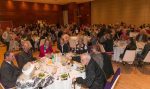
Jewish Seniors Alliance’s AGM was held on Oct. 11 at Congregation Beth Israel. (photo from JSA)

The annual general meeting of the Jewish Seniors Alliance was held on Oct. 11 at Congregation Beth Israel. As is customary, the AGM was followed by a gala dinner during which JSA honoured dedicated volunteers from three community organizations for their service to seniors in Vancouver.

The meeting was called to order by JSA president Ken Levitt. He introduced Rabbi Jonathan Infeld of Beth Israel, who gave a short d’var torah on the importance of community actions and involvement with seniors.

Levitt then asked everyone to rise in acknowledgement of JSA members who had passed away over the last year.

Several speakers offered greetings to JSA: Isobel MacKenzie, seniors advocate of British Columbia; Michael Lee, MLA for Vancouver-Langara; Ezra Shanken, chief executive officer of the Jewish Federation of Greater Vancouver; and Gudrun Langolf, president of the Council of Senior Citizens’ Organization of British Columbia (COSCO).

Reports were presented by JSA treasurer Larry Meyer; on peer support services by Gyda Chud for Pam Ottem; on membership by Binny Goldman; from Levitt, as president; and from the nomination committee by Marilyn Berger, who was especially emphatic, urging people who receive Senior Line magazine and are not JSA members to sign up.

In his report, Levitt emphasized JSA’s advocacy role and outlined five issues in particular for which JSA is advocating:

  1. For the B.C. Ministry of Health to provide the 25% more effective flu vaccine free of charge. It presently costs $75 for the high-dose flu shot.
  2. The implementation of a federal pharmacare program.
  3. For the City of Vancouver to allow applications for the provincial homeowners grant to be done in person, without use of a computer, as many seniors have difficulty using computers or do not have access to the internet.
  4. For the B.C. government to initiate a poverty reduction program similar to those that exist in other provinces.
  5. To reduce the need for food banks – JSA had made a presentation to Federation concerning the Food Security Program.

After the reports were completed, Levitt adjourned the meeting and invited everyone to be seated at the festively decorated tables. About 170 supporters of JSA enjoyed a glass of wine and a salmon or vegetarian lasagna dinner that was followed by the presentation of the awards.

This part of the evening was presented by emcee Ed Gavsie, who called upon Langolf to make the presentation to Sheila Pither. Pither has been active with COSCO for 18 years. For the past 10 years, she has coordinated the organization’s Health and Wellness Institute, promoting its expansion from one workshop topic to more than 40. Pither said she was honoured to have been chosen and was grateful to be at the ceremony with friends and family, at age 86, to accept the award.

The next awards went to Muriel Morris and Gary Zumar of JCC Showtime. Maurice Moses presented to Morris and Arnold Selwyn to Zumar.

Morris has been a volunteer piano accompanist since high school. She has accompanied more than 210 concerts since joining Showtime in 2013 and she noted the pleasure she gets when they perform at seniors facilities and she sees the people come alive to the music and the dancing.

Selwyn recounted how Zumar, with his wide experience in audio-visual technologies, has volunteered his services to many Jewish organizations. Zumar started with Jewish Heritage Players more than 40 years ago and has continued for more than 12 years with Showtime. Selwyn called him a volunteer’s volunteer. Zumar responded by thanking everyone at Showtime for this honour.

Toby Rubin of the Kehila Society then presented the final award to Pat Hoffman. Hoffman became involved with Kehila’s Monday Seniors Luncheon at Beth Tikvah 15 years ago. She has been involved in the working committee as the program has expanded to include activities such as English-as-a-second-language, fitness and entertainment. Rubin described Hoffman as the lifeline of the program, the first to arrive and the last to leave. Hoffman expressed her appreciation for the recognition and said she gets much satisfaction from being a volunteer.

While dessert was served, attendees were entertained by jazz singer Jill Samycia, the door prizes and 50/50 tickets were drawn and, after much shmoozing with old friends and dinner, everyone went home having spent the evening honouring four active seniors and again proving the JSA adage “seniors stronger together.”

Shanie Levin is an executive board member of Jewish Seniors Alliance and on the editorial board of Senior Line magazine.

Format ImagePosted on November 9, 2018November 7, 2018Author Shanie LevinCategories LocalTags health, Jewish Seniors Alliance, JSA, seniors, volunteers

Posts pagination

Previous page Page 1 … Page 15 Page 16 Page 17 … Page 24 Next page
Proudly powered by WordPress