Inaugural study project

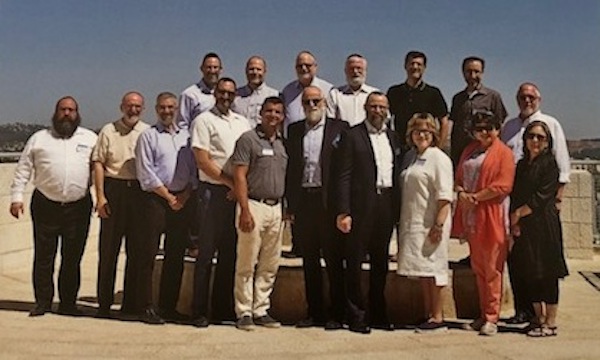
Chabad Richmond’s Rabbi Yechiel Baitelman, far left, was the only Canadian spiritual leader to participate in first-ever rabbinic seminar on Holocaust studies at Yad Vashem, the World Holocaust Remembrance Centre, this past July. (photo from Chabad Richmond)

For one week this past July, 15 pulpit rabbis gathered together to take part in the first-ever rabbinic seminar on Holocaust studies at Yad Vashem, the World Holocaust Remembrance Centre, in Jerusalem.

Yad Vashem is the foremost resource for Shoah educators, both Jewish and non-Jewish. Fourteen rabbis and rebbetzins from North America and one rabbi from Israel, all of whom are engaged in adult education, were invited to participate in the week-long pilot immersion program, which was sponsored by David and Ellie Werber and Martin and Bracha Werber. The diverse group of spiritual leaders spanned the religious spectrum.

Rabbi Yechiel Baitelman, director of Chabad Richmond, was the only Canadian rabbi to participate in the seminar, with the Jewish Federation of Greater Vancouver being a partial sponsor of his travels. He described the week of learning at Yad Vashem as “transformational, uncomfortable, overwhelming, extremely challenging, very enlightening and at times very inspiring. It’s going to take awhile to unpack all this information.”

Entitled Teaching the Shoah and Antisemitism: Opportunities, Challenges and Techniques, the seminar consisted of 65 hours of lectures by scholars and experts, plus testimonials from Holocaust survivors. Covering an array of topics, the point of the program was to help rabbis cultivate the skills necessary to create an educational curriculum and content for Holocaust studies in their schools, adult education classes and congregations at home. Yad Vashem’s challenge was to find unique approaches to teaching people about history, theology, antisemitism and Jewish values relating to the Holocaust, as well as to expand the breadth and scope of emissaries who will ensure the continuity of the stories and pass along the lessons learned from the Shoah.

The Yad Vashem seminar incorporated a multidisciplinary approach to Holocaust education and used various methodologies to help participants comprehend the complexity of the Shoah as a whole, never forgetting the personal stories of individuals. The curriculum included studying prewar Jewish life in Europe; the rise of Nazism; life in the ghettos; concentration camps and the attempted “Final Solution”; liberation from concentration camps; survivors returning to life in the “new world”; the ongoing pursuit of Nazi war criminals; the new antisemitism and anti-Israel rhetoric; physical and spiritual resistance; the role rabbis played during the Shoah; survivor testimony; and theological responses to the Holocaust.

Speakers included international researchers, professors and historians; a world expert on antisemitism; the head of Holocaust studies at Yad Vashem; a Nazi hunter; and several Holocaust survivors, including former chief rabbi of Israel, Rabbi Yisrael Meir Lau, and Rabbi Judge David Frenkel.

As the survivor population gets smaller, others need to ensure that the lessons of the Holocaust are never forgotten. Yad Vashem understands that rabbis have a special role to play in teaching about the rabbinic, theological and spiritual meanings and implications of the Holocaust. For his part, Baitelman will be looking for ways to collaborate with the Vancouver Holocaust Education Centre to create a curriculum for Jews and non-Jews alike.

“The challenge is how to talk to teens, 20-somethings, 30-somethings and 40-somethings about the Holocaust,” said Baitelman. “What should the message be?… We’re a people who have always told stories. Even though we are so many generations removed, in a sense, it is still my story, our story. The message is not only about where we come from, but also about where we are going.” He stressed that, with growing global antisemitism, we need to strengthen the Jewish people worldwide – Jewish education, Jewish values and Torah observance.

“Although we might struggle with faith,” said Baitelman, “we still need to look for G-d amidst the rubble and the hatred. It’s imperative that we find inspiration from those who survived the Holocaust, and find ways to teach tolerance, empathy and understanding.”

Baitelman believes it’s essential to address not only the theological question of “Where was G-d?” during the Holocaust, but also, “Where was man in all of this?”

“If, as a result of the Holocaust, one does not believe in G-d, then we have to believe in humanity,” he said. “The question is: ‘Where was the humanity of the people that perpetrated these crimes?’”

For the rabbi, a meaningful Jewish education involves people living Jewishly. “We need highly educated, well-informed Jewish kids living fully engaged Jewish lives,” he said. “We need children who are living proudly Jewish.”

Baitelman has taught several courses on the Holocaust through the Jewish Learning Institute, and has talked to teachers, school classes and new immigrants about antisemitism and the Holocaust. He said education needs also to address the important question of “Now what? What are we here for?”

Shelley Civkin is a happily retired librarian and communications officer. For 17 years, she wrote a weekly book review column for the Richmond Review, and currently writes a bi-weekly column about retirement for the Richmond News. She is a volunteer with Chabad Richmond.
Coping with life’s challenges

Starting Nov. 20, Rabbi Yechiel Baitelman of Chabad Richmond will be leading Worrier to Warrior, a new six-session course offered by the Rohr Jewish Learning Institute (JLI), to help people deal with life’s challenges by accepting themselves and finding meaning in adversity.

Participants will examine factors that prevent us from achieving a more positive outlook – guilt, shame and fear of inauthenticity – in light of the notion that a purposeful life provides the key to well-being. Like all JLI programs, this course is designed for people at all levels of knowledge, including those without any prior experience or background in Jewish learning. All JLI courses are open to the public.

“Everyone faces personal challenges in life, whether physical, emotional, professional, familial, social or otherwise,” said Baitelman. “How we deal with these issues is crucial for our ability to achieve lasting satisfaction in life. By finding meaning in personal challenges – that is, seeing them as opportunities – we come to accept ourselves and are emboldened to move forward.”

Worrier to Warrior combines positive psychology with Jewish wisdom to explore questions such as, Is there a meaning to life that makes even our difficulties purposeful? Am I just what happens to me or do I have a deeper core? How can I get off the “hedonism treadmill” and the sense that even life’s successes ring hollow?

“All too often people are thrown off their path in life by hardships that sink them into negative emotions or anxiety,” explained Rabbi Naftali Silberberg of JLI’s Brooklyn headquarters. “In this course, we learn to face our challenges by understanding our lives in a deeper context.”

Prof. Steven M. Southwick, MD, of the department of psychiatry at the Yale University School of Medicine has endorsed this course, saying, “It is well known that positive emotions rest at the heart of overall well-being and happiness, but how to effectively enhance positive emotion remains challenging. Worrier to Warrior approaches this challenge from an insightful perspective grounded in contemporary psychology and Jewish literature.” Worrier to Warrior is accredited in British Columbia for mental health professionals seeking to fulfil their continuing education requirements.

The course starts Wednesday, Nov. 20, 7:30 p.m., at Chabad Richmond. To register and for more information, call 604-277-6427. The cost is $95/person or $160/couple and includes textbook. Classes are 1.5 hours long.

Worrier to Warrior course is also being offered at the Lubavitch Centre (604-266-1313) in Vancouver, beginning Nov. 13, 7:30 p.m., and at Chabad of Nanaimo (250-797-7877), starting Nov. 12, 7 p.m.

Registration for all of these courses is possible at myjli.com.


Critical, short look at Nazism

Oxford University Press launched the first of its “Very Short Introductions” in 1995. Since then, the series has reached more than 600 volumes, which have been translated into 45 languages. To write the most recent in this series, Nazi Germany: A Very Short Introduction (2019), OUP made the happy choice of venerated Oxford historian Dr. Jane Caplan.

In what seems like an almost insurmountable challenge, Caplan succeeds in describing the details of the “horrifying” main events of this historical catastrophe, and identifying its main criminals, without simplifying. And she writes with an “edge” that is missing in many history narratives: thus, she speaks of the “insolence” of the Nazis’ manipulation of language into “sickening euphemisms”; of the “fraudulent artifice” of Nazi political and social institutions; and of the “ultimate disgrace” Nazism proved to be, to the Germans and their country.

image - Nazi Germany coverIn describing how ordinary citizens lived through “the horror of Nazism,” Caplan offers many quotations from speeches, newspapers, memoirs, journals and diaries to demonstrate the reich’s totality of control over German culture and communications. This total control led to “a redefinition of automatic habits of thought and behaviour,” from clothes to be worn, to facial expressions to be shown, to the demands for “Hitlerschnitt” (forced sterilization), and even to the details of the “Hitlergrusse” (that is, “Heil Hitler”) and what happened to those who didn’t raise their arms in the prescribed way and time.

More than 20% of this compact volume is given over to details of the Holocaust, which Caplan describes with both insight and anger, although rightly insisting that a study of Nazism must not be “confined” to this “ultimate horror.” For there are other lessons to be learned from Nazi Germany, especially for citizens of the 21st century, with its alarming return to populist beliefs and behaviours. Nazism reminds us, she says, of the dangers of “the exploitation of popular fears and resentments, the retreat of confidence in public institutions, the structural power of economic and political elites, the weaponization of prejudice, and the eternal temptation to turn a blind eye.”

In brief, anyone who likes history served at the traditional historian’s arm’s-length would be well-advised to avoid this caustic, openly judgmental, short, but long-remembered volume.

Graham Forst, PhD, taught literature and philosophy at Capilano University until his retirement and now teaches in the continuing education department at Simon Fraser University. From 1975 to 2010, he co-chaired the symposium committee of the Vancouver Holocaust Education Centre.

Scammer awareness

On Nov. 3, the Jewish Seniors Alliance, with COSCO Health and Wellness Institute, presents Privacy and Security in the Internet Age. The JSA annual fall symposium has a different topic of particular relevance to seniors every year and this year’s topic aims to educate seniors on using the internet safely and securely.

There are numerous phone and internet scams that target seniors and separate them from their hard-earned dollars. The scammers often impersonate long-lost relatives or offer excellent returns on investment. One must also be wary of viruses and people trying to overtake emails.

COSCO provides workshops led by trained facilitators to seniors groups throughout British Columbia. In the case of the symposium, the presenter will be Floyd Smith. He will focus on personal privacy and the benefits and risks of technology. He will also explore mobile technology versus a desktop environment and provide an overview of home device systems.

The JSA motto is “Seniors Stronger Together,” while that of COSCO is “Seniors Helping Seniors.” Combining forces, it is hoped that the two organizations can both help and give strength to seniors in the Jewish community.

The symposium workshop takes place Nov. 3 at the Peretz Centre, with registration at 1:30 p.m. and the event beginning 2 p.m,; the cost to attend is $5. Refreshments will be served. Because of construction in the area, access to the Peretz’s underground parking is through the lane from 49th Avenue, the first alley west of Cambie Street. A parking attendant will be at the entrance of the lane at 49th Avenue to direct traffic to the lot, to which there is no access from 45th Avenue.

For more information or to register, contact the JSA office at 604-732-1555 or office@jsalliance.org.

Gotta Sing! marks 25

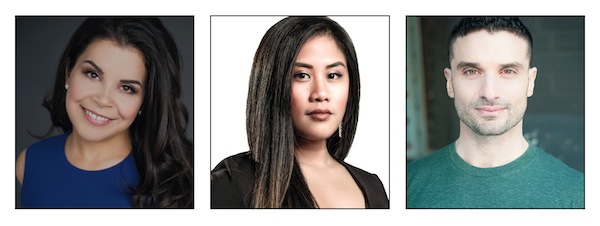
Simone Osborne, left, Tiffany Rivera and Matthew Rossoff are just three of the alumni who will help Gotta Sing! Gotta Dance! celebrate on Nov. 10 at the Rothstein Theatre. (photos from the artists)

“I never thought that Gotta Sing! Gotta Dance! would be so popular and I certainly didn’t think that I would still be involved 25 years later. I love these kids and being involved!” Perry Ehrlich told the Independent.

Ehrlich created the musical theatre summer camp at the Jewish Community Centre of Greater Vancouver in 1995. Its first quarter-century will be celebrated at the Rothstein Theatre Nov. 10, with 3:30 p.m. and 7:30 p.m. shows, as part of this year’s Chutzpah! Festival.

“The two shows,” said Ehrlich, “feature opera sensation Simone Osborne, currently living in Germany, who was the youngest winner of the Metropolitan Opera theatre auditions; Matthew Rossoff, from New York and Toronto, who was dance captain for Jesus Christ Superstar on Broadway; Tiffany Rivera, a pop, jazz and soul singer; faculty members Advah Soudack, who just toured Canada in the hit play Glory, and Meghan Anderssen, star of Annie Get Your Gun and Thoroughly Modern Millie at Theatre Under the Stars); my daughter, Lisa Ehrlich Kesselman, winner of the PNE Star Discovery and National Youth Talent Search; Erik Ioannidis, star of Joseph and the Amazing Technicolor Dreamcoat [at Theatre Under the Stars]; vocalist Andrew Robb; singer and bassist Benjamin Millman; and, of course, my ShowStoppers troupe, who performed with Eric Church and Barry Manilow at Rogers Arena, with the legendary troupe Foreigner at Hard Rock Casino Theatre, [on] Canada Day at Canada Place, [and] singing the anthems for the Canucks and at the PNE.

“Everyone – and I mean everyone, including the kids who will narrate the shows – participated in Gotta Sing! Gotta Dance! in the past. And Wendy Bross Stuart will be on stage with them!”

Since Gotta Sing! Gotta Dance! began, Erhlich said “four things have changed.

“One, the kids are now older. In year one, we accepted 6-year-olds. Now, the youngest are 9 or 10 and over 70% are in high school.

“Two, the curriculum for Gotta Sing! Gotta Dance! has become more intensive each year; the levels of singing, dancing and acting is at an all-time high.

“Three, there has been a great social dynamic among the kids that has increased over the years. I hear over and over again that kids have met lifelong friends at Gotta Sing! Gotta Dance!

“And, four, I am thrilled by the number of non-Jewish kids who participate in the program and love being at the JCC. In early years, I had to explain security and what it means to be Jewish. No more.”

For tickets to the 25th anniversary tribute and other Chutzpah! shows, visit chutzpahfestival.com.

Ever consider a ghostwriter?

Judi Majewski can help you express what you’d like to say in writing. (photo by Pat Johnson)

Want to write your thoughts down but you’re not so good with words? Need to write a difficult letter? Want to record some memories? If you need a ghostwriter to help you express what you need to say – no matter what it is – a volunteer is ready and willing.

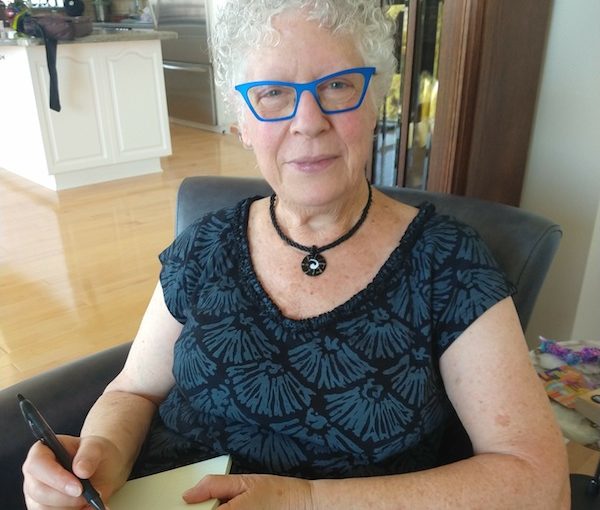
Judi Majewski has been offering the free service at the Isaac Waldman Jewish Public Library since the summer. She hopes readers of the Independent might know someone who can use her help.

“I thought, I know people struggle with this, so I would love to help people,” said the former public school teacher. Writing comes easy for her, she said, something she knows is not the case for everyone.

People for whom English is not a first language might benefit from her help, Majewski said, but she’s excited to help anyone.

“I think anybody, really, who wants to tell a story, who wants to record a memory, record their family history, write a eulogy. And anybody who struggles with putting things down on paper – I think there are a lot of people like that,” she said.

Publishing has never been a desire for her, she said, she just enjoys writing as a way of communicating feelings and thoughts.

“I have written the occasional difficult letter,” she said. “Sometimes your emotions are so involved and sometimes I think people can use help.”

She knows her challenge is to capture the voice of the person for whom she is writing.

“I want it to be in their voice. I think that’s going to be the interesting challenge for me, to see if I can do that, to see if it speaks for them,” she said. “That’s very important.”

Her husband told her she could make a business out of it, but she doesn’t want to go into business. She’s just happy to help, she said.

He offered some other advice, too.

“My husband says I express myself much better in the written word,” she said laughing. “Sometimes we think maybe we should just write to each other.”

To contact Majewski, visit her at the Waldman Library, in the Jewish Community Centre of Greater Vancouver, until Dec. 11, where she will be every other Wednesday, at 1:30 p.m., or email her directly at judimajewski@gmail.com.

Help out Israeli teens

Want to make a difference in the lives of Israeli teens? Consider joining Israel Connect, a program where local volunteers connect online, one-on-one, via Zoom (a video conferencing app), with Israeli high school students who want to improve their English conversation and reading skills. The program starts at the end of October and is sponsored by Chabad Richmond. It entails a half-hour per week commitment.

“We’re looking for volunteer retirees, seniors or adults with flexible schedules. No previous tutoring experience is necessary and the curriculum is provided,” said Shelley Civkin, local coordinator of the program.

“We’re looking for Jewish adults who are fluent English speakers, have basic computer skills and own a computer with a camera,” said Civkin. Volunteers can do this from home and technical support is available if needed. Time preferences of volunteers will be coordinated beforehand and sessions take place in the morning between 7 and 11 a.m. any day from Sunday to Thursday. Volunteers will be trained in how to download and use Zoom.

“It’s a very meaningful, practical way for community members to support Israel,” said Rabbi Yechiel Baitelman of Chabad Richmond. “You’ll be doing a mitzvah, while investing in Israel and its young people. Plus, good English skills will give them an advantage in accessing post-secondary education and getting better jobs.

“English proficiency is crucial to Israeli students, since it accounts for a third of their entrance exam marks for university,” he added. “Partnering with the Israeli Ministry of Education, the Israel Connect program targets teens from disadvantaged neighbourhoods in Israel. The tutoring sessions are vital to students’ upward mobility in terms of education and jobs, which is why this program is so vital.”

“Most volunteers really enjoy helping their Israeli students and make great connections with them. It often goes beyond simply tutoring the curriculum and turns into friendship and mentorship,” said Civkin. “This kind of one-on-one tutoring makes a significant difference in their lives, both educationally and personally. It’s hard to estimate the impact of this tutoring on Israeli youth, but we know it’s significant. And it’s incredibly satisfying to know that you’re doing something concrete to help Israeli students improve their lives. Several tutors have visited their students on trips to Israel, and keep in touch beyond just the school year. Building relationships is an integral and highly satisfying part of this program.”

For more information, contact Civkin at 604-789-5806 or civie1956@gmail.com.


Stories about the Holocaust

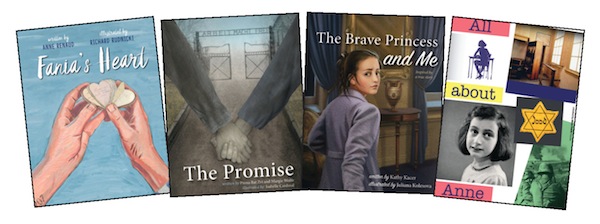
On the Jewish Independent’s bookshelf are four books recently published by Second Story Press. All are inspired by real women and girls, and all share lessons of bravery, solidarity and compassion, as well as of the Holocaust.

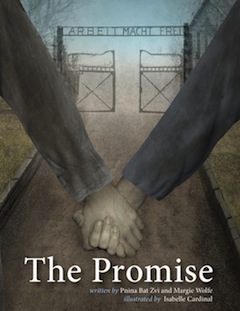
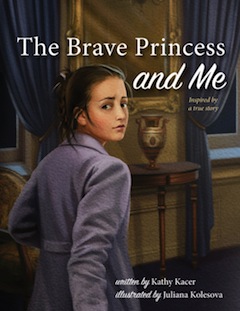
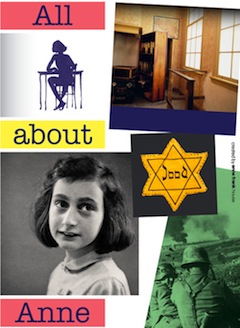
Fania’s Heart by Anne Renaud and illustrated by Richard Rudnicki, The Promise by Pnina Bat Zvi and Margie Wolfe and illustrated by Isabelle Cardinal, and The Brave Princess and Me by Kathy Kacer and illustrated by Juliana Kolesova are hard-covered picture books for readers ages 7-11. All About Anne, by Anne Frank House and illustrated by Huck Scarry (son of children’s authors Patricia Scarry and Richard Scarry), is a soft-cover encyclopedia of sorts for readers ages 9-13.

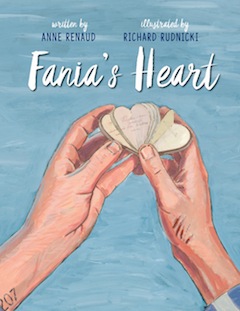
image - Fania’s Heart book coverFania’s Heart is based on the story of Fania Landau Fainer, from Bialystok, Poland, who survived Auschwitz. In the book, her daughter, Sorale (Sandy), who is “almost 10,” finds a heart-shaped book in her mother’s dresser, where she “was not supposed to rummage.” She takes it to her mom, who tells Sorale about the book’s origin – a 20th birthday present of unimaginable meaning, made by fellow prisoners, at great risk, with breadcrumbs and stolen or bartered thread, pencil, paper and other materials. It is a story told with minimal sentimentality and with illustrations in the 1950s-style of the time in which it would have taken place in real life. An author’s note explains the Holocaust very briefly and how the card, which unfolds “like an origami flower,” ended up at the Montreal Holocaust Museum.

image - The Promise book coverIn The Promise, cousins Bat Zvi and Wolfe tell the story of their mothers, Rachel and Toby, who survived Auschwitz. It starts two years after the sisters were separated forever from their parents, who gave Toby three gold coins to use “only if you have to” and advised, “above all, stay together.” When Rachel becomes ill and is taken from the barracks, the coins play a crucial part in Toby’s rescue attempt. In a four-sentence epilogue are photos of the real sisters, but no context other than that in the story itself, which mentions Nazis and Auschwitz but not the Holocaust. The artwork for the book is somewhat creepy – the disproportionally large heads are photo-like, and placed on more traditionally illustrated bodies.

image - The Brave Princess and Me book coverLess emotionally powerful – in part because there is too much text – is The Brave Princess and Me, which relates how Princess Alice hid Jewish mother and daughter Rachel and Alice Cohen in her home. The Nazis invaded Greece in 1941, and The Brave Princess and Me starts in 1943. Princess Alice, the mother of Prince Philip, was born deaf and she uses her impairment to protect the Cohens. More about the princess, who was honoured as one of the Righteous Among Nations, is included after the story.

image - All About Anne book coverRounding out the publications is All About Anne, a relatively comprehensive telling of Anne Frank’s story, which uses drawings, photographs and text from the Anne Frank House museum in Amsterdam. Its content is based on the questions most frequently asked by visitors to the museum. While it centres around Anne, her life and her diary, it includes broader information about the Second World War and the Holocaust. It is an excellent resource.

For more information on these and other books from Second Story Press, visit secondstorypress.ca.

Zohar expert’s Selichot talks

Dr. Daniel Matt will speak in Vancouver at Or Shalom over Selichot, Sept. 20-21. (photo from Or Shalom)

Even one of the world’s leading authorities on kabbalah has felt lost in the study of Jewish mysticism.

Dr. Daniel Matt began studying the Zohar, the central text of kabbalah, on a one-year exchange at the Hebrew University in Jerusalem. “Knowing that I had just one year there, I decided to take both Beginning Zohar and Advanced Zohar simultaneously,” he recalled. “I felt somewhat lost in Advanced Zohar, but that didn’t really matter, because I also felt somewhat lost in Beginning Zohar!”

His first book, his PhD dissertation, was a scholarly edition of the first translation of the Zohar: The Book of Mirrors by Rabbi David ben Yehudah he-Hasid, composed in the 14th century. He then taught at the Graduate Theological Union in Berkeley, Calif., for two decades and spent as many years translating the most authoritative English translation of the Zohar. Matt, who will be in Vancouver Sept. 19-21, has become a preeminent scholar of the text.

In the mid-1990s, Matt was approached by Margot Pritzker – of the family who owns the Hyatt hotel chain – to produce a comprehensive English translation of the 700-year-old Zohar from the original Aramaic manuscripts.

Knowing the importance of the project, Matt agreed. “The Zohar was the only Jewish classic that had never been adequately translated,” he said.

The Zohar: Pritzker Edition was published in its completion in 2018. The 12-volume set, of which Matt translated and annotated the first nine, took 18 years to complete. For the feat, he received the National Jewish Book Award and the Koret Jewish Book Award, the latter calling his translation “a monumental contribution to the history of Jewish thought.”

The honour “was thrilling,” Matt said. The actual process of completing the translation, however, was at times grueling. “I basically restructured my life so that I could stay focused on this immense project without burning out,” he explained. “I started each day with a walk in the Berkeley Hills, then worked for five hours, then went for a swim, then rested and did some prep for the next day’s adventure.”

A major challenge was that, over the centuries, scribes who copied out Zohar manuscripts made changes to the text, meaning that an accurate version of the original was hard to find. “They added explanations, simplified the unruly Aramaic, deleted erotic descriptions or difficult – or invented – words and phrases,” Matt said.

Previous English translations of the Zohar were based on printed versions that, in Matt’s view, did not reflect the original writings. But, early in his process, he came upon manuscripts from the 14th to 16th centuries that he considered superior to the printed ones. To produce a “more authentic and poetic version,” he first reconstructed an Aramaic text from those manuscripts so he could build his English translation with it and, ultimately, share that artistry with a new audience.

“It is a treasure not just of Jewish literature, but of world literature, hidden away in an Aramaic vault for 700 years,” he said.

For the past year, Matt has taught an online Zohar course and has had more than 500 students, both Jewish and otherwise, from all over the world. He has found it gratifying to see “how eager people are to find personal meaning within Judaism, to explore and challenge the traditional understanding of God and Torah.

“I find that many folks are amazed to see that what they believe most deeply has been expressed by the mystics hundreds of years ago, or what they have stumbled across in Buddhism or other spiritual teachings is right there in our own tradition, hidden for too long.”

What Matt impresses on his students, both beginner and advanced, about the Zohar is how it goes beyond the literal meaning of the Torah. “It challenges our normal ways of making sense and reveals a radically new conception of God,” he said. “God is not a bearded man up in heaven who runs the show. God is infinity. At the same time, God is equally female and male, and the feminine half of God (Shekhinah) is perhaps the greatest contribution of the Zohar.

“All of Western religion is dominated by the masculine description of God, which has influenced our culture tremendously and left us with an imbalanced view of our own human nature.” Shekhinah, he said, “helps us realize that God embraces both the feminine and the masculine realms, though ultimately God is beyond gender.”

Matt’s Vancouver visit will include a vegetarian potluck at Or Shalom on Sept. 20, after which he will talk on Shekhinah. On Sept. 21, he will present the talk How Kabbalah Can Stimulate Us to Renew Our Lives, which will include songs on the theme of yearning to join with the One and meditation led by the synagogue’s Rabbi Hannah Dresner. Program details and registration are available via orshalom.ca/selichot.

Shelley Stein-Wotten is a freelance journalist and comedy writer. She has won awards for her creative non-fiction and screenwriting and enjoys writing about the arts and environmental issues. She is based on Vancouver Island.

Community milestones – Silber Theatre, RJDS-Pawer tzedakah, Rudolph wedding, Pawer and Baitelman grads

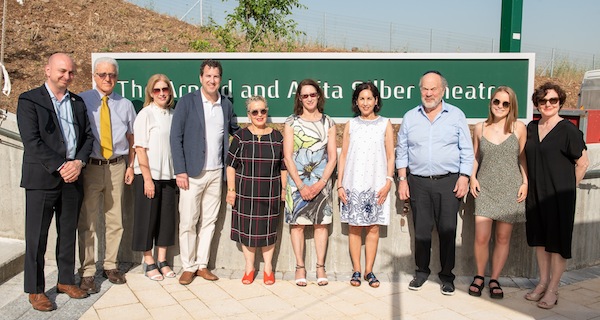
The Arnold and Anita Silber Theatre at Tel-Hai College officially opened last month. (photo from Jewish Federation of Greater Vancouver)

Last month, Jewish Federation of Greater Vancouver chief executive officer Ezra Shanken, as well as board members Karen James, Alex Cristall and Candace Kwinter, and Jewish Community Foundation executive director Marcie Flom were in Israel for the official opening of the Arnold and Anita Silber Theatre at Tel-Hai College. This new 1,200-seat outdoor theatre will be a hub of activity for the university and surrounding area. The theatre is located at the centre of the Tel-Hai campus, and is a key component in the college’s long-term development plan.

The Silbers have long supported Federation’s partnership region of the Galilee Panhandle, and its work there. They have supported a number of projects and established the Friends of Beit Vancouver, a donor-recognition program for supporters of Beit Vancouver. Anita Silber serves on Federation’s Israel and overseas affairs committee, and has for several years. Recognizing that Tel-Hai is a significant economic driver in the region led the Silbers to fund this legacy project and lend their name to it.

The official opening of the theatre began with a welcome reception with Tel-Hai’s board of trustees, followed by a ribbon cutting. The Silbers were joined by their granddaughter, Samantha Addison, and family members from Israel. In reply to the address honouring them that was delivered by Tel-Hai’s president, Prof. Yossi Mekori, Arnold Silber stressed that the students were the primary motivation for this investment. They are the ones to whom the future of the region is entrusted, and it is they who will take it to the next level.

A number of families and individuals from our community agree, and they are funding scholarships, which were awarded to students at the ceremony by James and Cristall: the Coleman Family Scholarships, the Krell Family Scholarships, the Evelynne Loomer z”l Scholarships, the Bernard Lotzkar Scholarships and the Zalkow Family Scholarships.

* * *

photo - Left to right are Lola Pawer, RJDS students Maya Bernal and Penina Berger, and Leslie Diamond
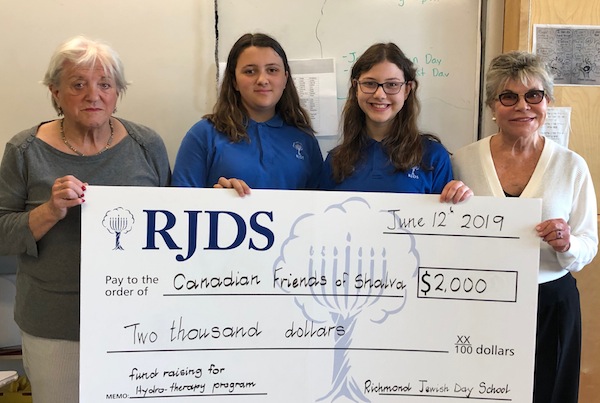
Left to right are Lola Pawer, RJDS students Maya Bernal and Penina Berger, and Leslie Diamond.

Over the course of the 2018/2019 school year, the Student Council Committee of Richmond Jewish Day School took it upon themselves to raise money for the Shalva Centre Hydrotherapy Program in Israel.

With the support of families, the school raised $1,000, which was generously matched by Lola Pawer. Pawer and Leslie Diamond, who is a board member of the Shalva Centre, came to RJDS to teach students about the work Shalva provides for children with disabilities.

The students presented a cheque to Diamond in the amount of $2,000. For anyone wanting to learn more about Shalva or make a donation, visit shalva.org.

* * *

photo - Brett and Caro Rudolph
Brett and Caro Rudolph

Brett and Caro Rudolph have fun at their wedding in Syracuse, Sicily. Brett is the son of Les and Anita Rudolph of Vancouver (previously from South Africa) and Caro is the daughter of André and Svetli Wanne of Vienna. The wedding was officiated by Rabbi Paul Chaim Eisenberg of Vienna and was thoroughly enjoyed by family and friends. Brett and Caro live in Israel.

* * *

photo - Samantha Pawer
Samantha Pawer

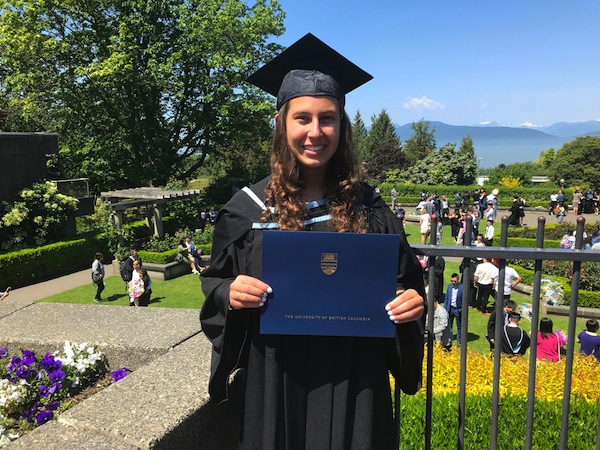
On May 25, 2019, Samantha Pawer was conferred the degree of bachelor of science honours in integrated sciences with distinction from the University of British Columbia. Samantha is an alumna of Richmond Jewish Day School and Hugh Boyd Secondary School. Proud are parents Jeff Pawer and Beverly Pawer and big brother Brayden Pawer.

* * *

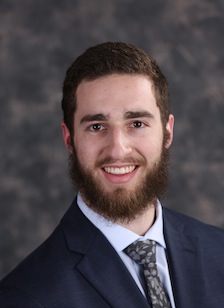
Moshe Baitelman decided to become a doctor when he took his first biology class in high school. On May 26, 2019, the Vancouverite graduated as valedictorian at Touro’s Lander College of Arts and Sciences in Flatbush, Brooklyn, N.Y. He will begin medical school in the fall.

photo - Moshe Baitelman
Moshe Baitelman

Baitelman chose Touro because it offered a strong Jewish environment as well as academic rigour. He majored in honours biology and minored in computer science. Along the way, he built strong relationships with his professors. “They all pushed me to be my best,” he said.

Living in Brooklyn, Baitelman found support for his career goals via the Gedaliah Society, a local network of Chabad men and women in the healthcare profession who offered advice and shared their own experiences in preparing for medical school. He also served as executive editor of Touro’s science journal and president of the Touro Science Society.

“Moshe has distinguished himself as a gifted, multitalented student with outstanding leadership skills. We are confident that he will become a respected physician, who will create a Kiddush Hashem in all his patient and professional interactions,” said Dr. Robert Goldschmidt, vice-president and executive dean of the Lander College.

Prior to Touro, Baitelman attended Vancouver Hebrew Academy for elementary and then the Pacific Torah Institute. Both schools imparted a strong Torah education with Jewish morals and values, and a first-class education. Baitelman’s education in Vancouver was the solid foundation for a life of strong Jewish identity and commitment to Jewish observance and learning, as well as enabling him to pursue further career education.

Baitelman credits his parents for his drive; they instilled a strong work ethic and have continued to encourage him. He offers similar advice to students getting ready to start college: “Be proactive. It will be the difference between just passing through and actually gaining from college. Find activities that will be conducive to your professional and educational growth – use your network of professors, advisors and other students.”