BRCAinBC’s inaugural event

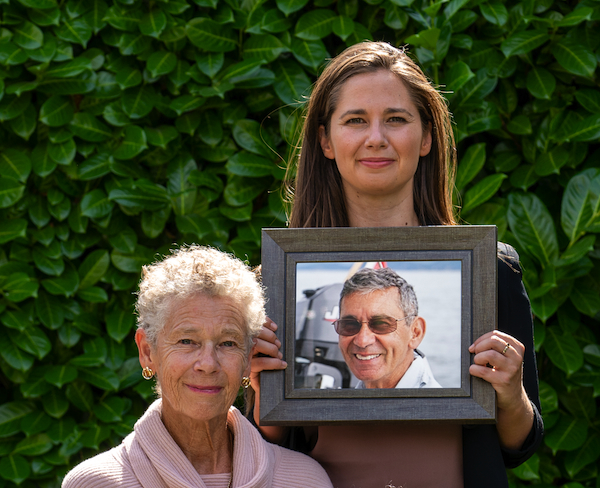
Jane Remocker and her daughter, Catriona, holding a photo of Geoff Remocker, who passed away in 2016 from pancreatic cancer. (photo from BRCAinBC Committee)

Education is a key goal of the upcoming One in 40: From Awareness to Empowerment event being held at Congregation Beth Israel on Jan. 8.

“BRCA 1 and 2 is the code for variant mutations of two genes known to increase the lifetime risk of several serious cancers, including breast and ovarian cancers and other cancers linked to reproduction in women and prostate cancers in men, as well as pancreatic cancers and melanoma in all genders,” explains the BRCAinBC Committee’s project primer. One in 40 is the probability of carrying the genes among Ashkenazi Jews – compared to a risk of 1/500 to 1/1000 in the general population.

The BRCAinBC Committee, organizer of the One in 40 event, describes itself as “a group of concerned members of the Jewish community in British Columbia, many of whom have been affected personally or in our families by the BRCA 1 or BRCA 2 genes and genetically linked cancers.”

The committee’s work is supported by Beth Israel, which is its home, as well as many other community members, organizations and institutions, including the B.C. Cancer Agency, the Centre for Israel and Jewish Affairs, the Jewish Federation of Greater Vancouver and the Diamond Family Philanthropic Fund.

“There are currently no efforts being made in British Columbia to create awareness or cover general genetic testing for people of Ashkenazi Jewish heritage – in the past, this was due to the prohibitive expense of testing,” notes the primer.

“There have been significant recent gains in the medical community around improving the affordability of testing for genetic mutations,” it continues, “however, awareness of risk is still low amongst members of the Jewish community and, currently, holding a risk profile of being of Ashkenazi Jewish descent is not sufficient to be covered for genetic testing under B.C.’s Medical Services Plan (MSP).”

The impetus for the committee and the One in 40 event was the death of Geoff Remocker of aggressive prostate cancer in 2016. After he died, his wife, Jane Remocker, and the family met with Beth Israel’s Rabbi Jonathan Infeld. She explained to the Jewish Independent in a phone interview that, as members of the congregation, there were donations being made to the synagogue in her husband’s honour, and the rabbi wanted to know where the family wanted to direct the funds. The couple’s youngest daughter, Catriona, who works in the healthcare field, suggested they do something with respect to BRCA genes. Since they weren’t quite sure what they wanted to do on the topic, the donations were held in a discretionary fund until Jane Remocker scheduled a meeting with the rabbi and her daughter two years later, in June 2018.

“By then, she and I had ideas and came up with our three basic goals,” Jane Remocker told the Independent. The three short-term goals of the committee were education and awareness within the Jewish community, and easier access to information about the BRCA genes; advocacy, which involves providing information about and access to screening options, both private and public; and fundraising to cover what has become the One in 40 community-wide education event and the BRCAinBC.ca website, which will be launched in January.

Since Geoff Remocker didn’t meet the criteria for B.C. Cancer Agency’s Hereditary Cancer Program, which offers genetic counseling and testing for “residents who may have inherited an increased risk for specific types of cancer,” he signed up for a B.C. Cancer study of drugs that treat prostate cancer, which included gene testing.

Remocker said he signed up for the study because, “as he said to me, ‘I don’t think the drugs will help me, I think it’s too late. But, if there’s a gene that’s driving this cancer to be aggressive and resistant to treatment needed, that knowledge will help other people.’” It was discovered that he was indeed a BRCA carrier.

Part of the issue, said Remocker about why her husband wasn’t eligible for the Hereditary Cancer Program, was that, while they knew some of her mother-in-law’s medical history, they knew nothing about her father-in-law’s side of the family, who came from Poland and Russia.

“And this is not uncommon,” she said. In addition to this generation not talking about health issues, in general, there wasn’t so much knowledge about health back then.

While a lack of family medical history can be one obstacle in getting genetic testing, she said, another is that many people don’t realize that men can be carriers of the BRCA mutant genes.

“They thought it was only a gene that affected women as breast cancer,” said Remocker. It is important, therefore, and a goal of the committee’s educational program, to make sure that Jewish men – especially if they have roots in Europe – know that they are possible carriers and, therefore, consider getting screening.
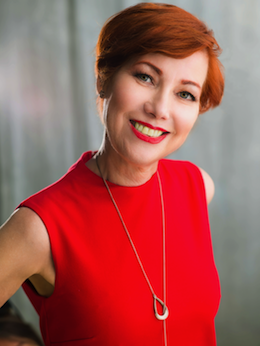
photo - Libby Znaimer, national spokesperson for Pancreatic Cancer Canada, will be the keynote speaker at One in 40: From Awareness to Empowerment, which takes place Jan. 8 at Congregation Beth Israel
Libby Znaimer, national spokesperson for Pancreatic Cancer Canada, will be the keynote speaker at One in 40: From Awareness to Empowerment, which takes place Jan. 8 at Congregation Beth Israel. (photo from BRCAinBC Committee)

Confirmed panelists for the One in 40 event are Dr. Rona Cheifetz, medical lead of the Hereditary High Risk Clinic, B.C. Cancer Agency; and Dr. Intan Shrader, who, along with Dr. Sophie Sun, is co-medical director of the B.C. Cancer Hereditary Cancer Program. The panel will also feature medical oncologist Dr. Daniel Khalaf of the B.C. Cancer Agency and Jewish community member Tovah Carr, a BRCA carrier. There will be a chance for audience members to ask questions.

Keynote speaker Libby Znaimer of Zoom Media is national spokesperson for Pancreatic Cancer Canada; she is a cancer survivor and a BRCA gene carrier. Her personal fight against breast and pancreatic cancer is the subject of the 60-minute documentary Cancer Saved My Life, which discusses “the BRCA 1 and BRCA 2 gene mutations that predispose people to pancreatic cancer, and the connection between BRCA and breast and ovarian cancer,” as well as the “groundbreaking research going on in Canada and Israel, where there is a BRCA-rich population.”

The BRCAinBC.ca website will be “a one-stop place for people to go to get information about the genes and the mutations that indicate the cancer risk and where they can go for private screening if they don’t meet Hereditary Cancer’s criteria or they don’t want to wait,” said Remocker.

Hereditary Cancer has a long wait list, she said, so the website will have some options for private screening. “We’ve researched and found a number of accredited medical genetic labs that do specific inherited Jewish genes screening and we know that, [for] at least two of them, the results are accept[ed] by the Hereditary Cancer Program.”

Currently, the cost for private testing is about $250 US, said Remocker. This alternative means that, “instead of waiting six to 12 months to get your first interview with the Hereditary Cancer Program, you get a saliva test, you apply. They send the package to you, you send it back and you get your results anywhere from two to six weeks.”

A person can then take those results to their family doctor, she said, as a referral is needed for the HCP.

The website will also feature personal stories of those who have been affected by the BRCA 1 and BRCA 2 genes, as well as links to current research and resources.

Michelle Capobianco, the executive director of Pancreatic Cancer Canada, will be in attendance at One in 40, Catriona Remocker told the Independent. “[T]hey are considering working with us to roll out similar events to Jewish communities across Canada to improve awareness,” she said.

To register for the event, which runs 7-9 p.m., visit bethisraelvan.ca/ event/one-in-forty.
Funds for Jewish studies

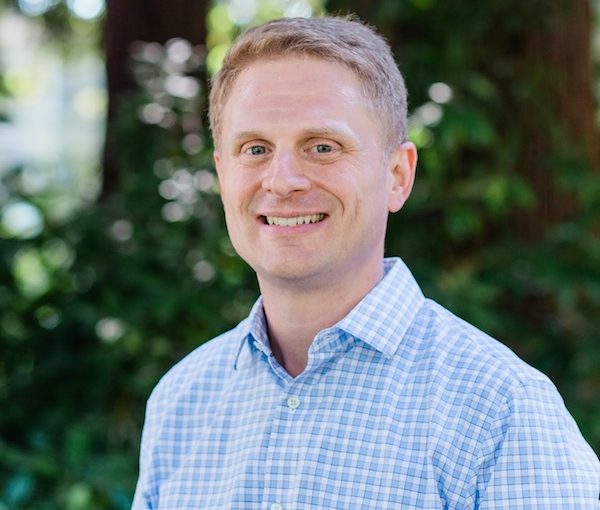
Prof. Gregg Gardner has held the Diamond Chair in Jewish Law and Ethics at the University of British Columbia since 2011. (photo from UBC Media Relations)

Gregg Gardner conveys an infectious exuberance when speaking of the $1 million donation from the Diamond Foundation to the University of British Columbia this September.

“None of this would have been possible in terms of Jewish studies at UBC without the Diamond family,” Gardner, an associate UBC professor, told the Independent. “Their sense of giving is felt not just here but throughout the broader community.”

The Diamond Foundation’s most recent gift to the school will build on achievements of the Diamond Chair in Jewish Law and Ethics at UBC to date, with a particular focus on the expansion of Jewish studies programming both in the classroom and beyond the UBC campus.

“The gift is part of a larger initiative which will really go a long way in helping to create and augment programming, assist in having students travel to Israel, bring in new speakers and assist in new research,” said Gardner, current holder of the Diamond Chair.

He plans to invite an array of speakers during the 2020 and 2021 academic years.

“The money from the Diamonds can be used to bring in authorities in various aspects of Jewish research to Vancouver. Once here, they can speak at the university as well as at synagogues, retirement homes or cultural centres in town,” he said.

Gardner also hopes the new funds can serve as a stepping stone towards such things as creating a centre for Jewish studies at UBC and, ultimately, bringing the field of Jewish research at the institution to a level commensurate with that of other universities in North America.

Students at UBC, he said, have shown a widespread interest in Jewish studies, and this interest extends well beyond their own personal background.

The Diamond Chair in Jewish Law and Ethics was established in 2001. Gardner has held the position since 2011, with his research concentrating largely on the history of Jewish thought. At UBC, his classes focus on the history of religions, together with exploring Jewish history, texts and traditions.

In 2018, he teamed up with the Hebrew University of Jerusalem to lead a group of UBC students in an archeological field school at Horvat Midras in Israel, a site that may have been developed by King Herod. There, they helped excavate a pyramid that marked a tomb from the first century and an elaborate underground system of tunnels and caves that served as hideouts for Jewish rebels against Rome in the second century.

The Diamond gift will additionally allow Gardner himself to present more lectures locally and internationally. Heretofore, he has given has public talks at Hillel BC (UBC) and academic lectures at Oxford, Cambridge and Yale universities.

Gardner has authored several academic papers and books, including The Origins of Organized Charity in Rabbinic Judaism (Cambridge University Press, 2015), which examines foundational rabbinic texts and places their discourses on giving within their historical – second- and third-century – contexts.

The Diamonds are equally enthusiastic about the results their donations have brought and will bring.

“We wanted to enhance the current chair and enable Dr. Gardner to play a pivotal role in generating sophisticated research and understanding of Jews and Judaism,” said Leslie Diamond. “He has inspired students and the community by enriching their knowledge of Judaism through his courses, public talks and events with visiting scholars.”

She added, “I am very proud with what our funding of the Jewish Chair in Ethics and Jewish Law has accomplished.”

The Diamond Foundation has long played a pivotal and prominent role in Vancouver philanthropy. Created by Jack, z’l, and Gordon Diamond in 1984, its mission is to improve the quality of life for people in the communities in which the Diamonds live and do business. It donates to organizations throughout the Greater Vancouver area, including schools, hospitals and numerous Jewish organizations. The foundation seeks investments in organizations and issues that strengthen Jewish community life throughout the city and its environs. At age 25, family members are invited to become directors of the foundation.

Jack Diamond arrived in British Columbia as a near-penniless refugee from Poland in 1927 and went on to create the province’s largest meat-packing firm, Pacific Meats. He is credited with setting up Vancouver’s first kosher butcher shop and was instrumental in building the Schara Tzedeck Synagogue, among countless other endeavours.

Sam Margolis has written for the Globe and Mail, the National Post, UPI and MSNBC.

Classes on being a DJ

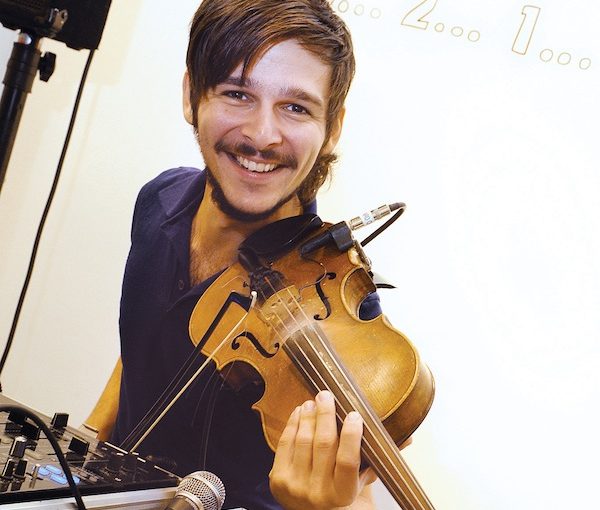
Michael Fraser teaches group electronic music and DJ classes at the Jewish Community Centre of Greater Vancouver. (photo from Michael Fraser)

As a violinist, music producer and DJ, Michael Fraser’s musical talents traverse many realms. Yet, despite the proficiency and versatility he has to create his art, Fraser believes that “personal connection to music transcends skill.”

It is that personal musical connection that the 30-year-old, born-and-raised Vancouverite hopes to instil in the next generations – be they performers or devotees – in the group electronic music and DJ classes he is teaching at the Jewish Community Centre of Greater Vancouver through spring 2020.

The early stages of Fraser’s musical trajectory began in grade school as a Suzuki violin player, though numerous other styles – from classical to hip-hop – seeped into his sphere of artistic influences through various musical mentors. Among them was Vancouver-based saxophonist and flautist Tom Keenlyside, who had a tremendous impact and helped Fraser “connect with music in an abstract, rather than a theoretical, way.”

Marrying and starting a family with his partner Camille, though, has brought about a shift in Fraser’s musical focus in recent years. The sense of wonder possessed by children, and the simple way it is often expressed, led him to view things from a different perspective and to feel a sense of responsibility to teach.

Fraser began playing music for his son before his son was even born. When Isaac turned three, Fraser observed him connecting to the process of making music himself.

“After Isaac was born, I started to see that my purpose as a musician is to help young artists develop their innate creativity and coach artists to deeper levels of emotional intelligence,” said Fraser. “When my son asks to hear my music, I want to help him cultivate a relationship to music and life that goes beyond what words can express.”

Fraser’s professional musical career began in 2007, while in his late teens. Since then, he has collaborated with numerous recording artists, including the Ault Sisters, a Toronto-based vocal jazz trio; performed at the Shambhala Music Festival and the Montreal Jazz Festival, among many other venues; and opened for internationally known acts, such as Michael Bublé, Caravan Palace and Arrested Development.

His success as a live performer led him to working with Ben Affleck on the original score for Ben Affleck on the Meaning of Life, an animated short film about the actor and director’s Eastern Congo Initiative, which premièred at the 2012 Toronto International Film Festival. Fraser also appeared as a violin player in a scene of The Revenant, an Academy Award nominee for best picture in 2016 and for which Leonardo DiCaprio won the prize for best actor.

Currently, Fraser is devoting his expertise to artist development (on both the career and creative sides), as well as working with Black Octopus Sound, a company that produces samples and musical production tools.

Fraser said he has always felt “a visceral connection to Jewish music that can only be explained as being deeply embedded in my DNA. It is the main access point for a depth of emotion that can only be expressed through tones and rhythms.”

On Oct. 29, he began facilitating his first DJ course at the JCCGV for youth aged 10-16, showing them the basics of how music is composed electronically, and the ins and outs of being a DJ. This session ran until Dec. 17.

He could feel how the group connected with the music, and foresaw many new up-and-coming DJs in the Vancouver Jewish community.

“When I am in the class with students, we are focused on how the beat feels. Are there styles of music that feel good? Knowing your tastes is going to differentiate yourself from other DJs,” Fraser explained. “I will sit with a class and play various drums and figure out which one speaks to a particular student. Having that distinction brings us closer to the music – which chords carry tension and which carry release in chord progression? What does that connection to music feel like? How is it one can play the same series of notes in different order and have a different outcome feeling?”

His students take what was done in class and make musical experiments when they get home. Fraser finds that, when they open up GarageBand or Caustic, two of the more popular DJing apps, they don’t feel as though they are doing homework.

Often, he noted, students have used DJing apps before. He also pointed out that, unlike kids from earlier times, kids today don’t differentiate between DJs and music creators. Those barriers are completely gone, he said.

The courses – $180 for JCCGV members and $225 for non-members – comprise 10 lessons, run Tuesday evenings and are open to kids 10-16. Students should bring a pen and paper, a mobile device (laptop, tablet, cellphone) and headphones. For more information, visit jccgv.com/performing-arts/school-of-music.

Sam Margolis has written for the Globe and Mail, the National Post, UPI and MSNBC.

Camp should be “wow!”

Hanging out around a campfire with friends is one of the things many kids love about summer camp. (image from pxhere.com)

Every year when I was a child, the first day back at school after the summer break, we’d be expected to write an essay on “What I did during my summer holidays.” Back then, my family were so poor I rarely did anything much, but I was blessed with a fertile imagination so I concocted an amazing list of activities. After all, the first rule for a writer, which was my ambition even then, is never to let the truth interfere with a good story. Oh, how I would have loved to go to a summer sleepaway camp.

Fortunately, times have changed and my kids and various grandchildren have had that opportunity. So, I’ve rounded up relatives, kids, their friends and my friends, to ask what they loved and hated about summer camp.

These are some of the reactions I got in the “hate” department. “The toilets and showers – ugh!” “The mosquitoes, which feasted on my blood every day.” “My girlfriend, who was prettier than I was, got all the boys interested in her, especially the one I liked.” “The others were better at sports than I was, and I couldn’t swim. They laughed at me.”

None of those I quizzed however, failed to have lots of reasons to list under “things I loved.” “We put on a musical at the end of camp, and we did everything, including painting the scenery. It was great!” “Parents Day, when they would visit the camp and bring us wonderful things to eat, that they rarely bought for us at home. The chocolates were divine.” “I learnt all kinds of crafts, that I still do sometimes. We were taught basketry, jewelry-making, ceramics and how to press flowers.” “One day, we had a Backwards Day – it was terrific fun. We even wore our clothes inside out.” “I loved the campfires, under the stars. We’d sing together, roast potatoes and onions, it was heaven. I can still remember the feeling of being among friends under a sky filled with stars, and the wind in the treetops. I think that was true happiness.”

Whether or not a camp will be a positive experience for a child largely depends on the parents’ preparation. Don’t send them to a camp you once attended and enjoyed without considering how the camp may have changed or the difference between your needs and desires and those of your child.

Think about what your child needs – to learn new skills, develop more self-confidence and independence, maybe to improve proficiency in certain areas. For the latter, there are lots of specialty camps such as tennis, horse-riding, hiking, adventure, backpacking or gymnastics.

The camp you choose will depend on the age and level of independence of the child. The first sleepaway camp can be very frightening for a young child and sometimes the best way to prepare them is to take them beforehand to the campsite and explain all the activities that will take place there.

Teenagers usually welcome escaping home and discipline for awhile and spreading their wings. No matter what the age, you need to consider and investigate the accessibility of the camp, its medical facilities and security arrangements. You also need to consider any fears your child might have, such as if a below-average athlete will feel comfortable trying new skills and be allowed to work on them at their own pace. Often it helps if they have a friend or two among the campers and, of course, try to meet the counselors to assess that they are competent and sympathetic.

A camp has the potential to offer a child many positive and rewarding experiences. They can be fun, healthy and relaxing. Many of the programs provide an opportunity to develop new skills, and become more responsible and independent. The main reaction I got from kids who’d been to a good camp was: “Wow! It was great. I want to go again this year!”

Dvora Waysman is a Jerusalem-based author. She has written 14 books, including The Pomegranate Pendant, which was made into a movie, and her latest novella, Searching for Sarah. She can be contacted at dwaysman@gmail.com or through her blog dvorawaysman.com.

Tips for choosing right camp

No matter your observance level, prioritizing a Jewish camp will boost your kids’ enrichment and ownership in the Jewish community. (photo by Joe Goldberg / flickr)

Day camp or sleepaway camp? Single sex or co-ed? Traditionally Jewish or liberal? Shabbat observant? Kosher? STEM or sports camp? The choices are endless. No matter your observance level, prioritizing a Jewish camp will boost your kids’ enrichment and ownership in the Jewish community.

As a parent, I often feel overwhelmed by the options available. Many say, “You’re the expert!” when it comes to your own kids. Yet, it can be hard to get inside kids’ brains to know what is right for them – and summer camp is one of those big decisions. It’s a time for childcare, enrichment and fun. But it must be decided in advance, it’s sometimes expensive and it can feel like a risky guess. Here are some tips to get started.

What do you need?

If you must get kids to camp before work, let’s be honest. Camp serves as childcare. It needs to be something you can pull off each morning. Make a list of what you need to make it through the summer. Early morning or afternoon care, a way to purchase healthy snacks and lunches, or a bus that picks the kids up? These may be essentials for some parents.

Some need much more. Kosher food? Stricter Sabbath observance? These may limit your choices. If your kid has special needs, your work schedule is unpredictable or you live far from Jewish camping options, things become complicated. Some parents start with geography. For many, it’s unrealistic to try to drive an hour to camp each morning with small kids before getting to work.

Plan ahead

If your list of possible Jewish camping options is short, find out when sign-up opens and get your kids’ names on the list. Sign-up often happens in January or February – long before we’re ready!

What do your kids want?

I started my research by asking my twins what they liked to do most in the summer. To my surprise, playing outdoors with Mommy and the dogs ranked top on their list. When I prioritized the other “wants,” it became clear that taking swim lessons at a lake (with a half-hour drive on each end) and just getting a chance for free play in the sunshine were key elements of their summer. For that summer, we had only a month of camp and a long but inexpensive “staycation,” with trips to a lake with a parent. We fit in making challah, doing Jewish art projects and reading PJ Library books, too.

Other requests might include attending camp with a close friend or trying out a new skill (music, acting, soccer, coding) – and these could all happen at a Jewish camp.

Be realistic

Maybe your kids know what they want, but, sometimes, they don’t. That’s OK. A general day camp, with lots of activities and choices every day, may be just the ticket.

One summer, I was sent to a co-ed sleepaway camp far from home for a month. I didn’t know anyone. The daily activities included a large dose of sports, which I hated. Worse yet, there was an outbreak of head lice. It was awful. By contrast, I also spent two years attending an overnight girls’ camp for two weeks each summer with a friend. I loved the library and the arts and crafts stations and have vague but good memories.

A kid’s maturity level matters, too. I was an independent oldest sibling, ready for overnight camps at 8, but, at that age, it was clear my twins were not ready to go anywhere overnight. I did ask them though. Did they want to go to sleepaway camp with some of their friends? I got a resounding no. Your kids often know what they’re ready for and what they wouldn’t enjoy. Give them a choice.

Feel confident in safety

Camp is a lot more flexible than life during the school year. There’s swimming, group sports and many other ways to have fun – and get hurt. Many camps are staffed by well-meaning teenagers and university students, with only a few adults supervising. Be sure things are safe and the activities are a right fit for your kids. Even one bad interaction with a bully or an unsafe situation could make camp hard for your kid.

There’s also a feeling of confidence when you know that the people in charge are knowledgeable and making good decisions that you can trust.

Ensure communication

Make sure the camp gives parents and campers lots of information from the beginning about what they will be doing each day, what they need to bring and how to have a successful experience. A camp that doesn’t remind you to bring towels or bag lunches may also be disorganized in other ways, too. See if the counselors offer you information when you drop off or pick up your kid so you can know more about what goes on. Tell those in charge that you expect to know about any injuries or tussles during the day.

Compromise is key

Sometimes, when you’ve gotten through your list of Jewish camps and kids’ desires, you find that the best camp for one kid might not work for the other. Or, the only horseback riding camp is single sex, and the kid’s best friend is not the same gender.

Sometimes, we need to choose out of our comfort zones to make things work. My kids attended a Chabad travel camp for years. It didn’t jive with my egalitarian sensibilities. Some of the theology concerned me. However, they definitely learned about Judaism and had fun. I trusted one of the directors, my kids’ former preschool teacher, completely.

It’s important to optimize things as best you can, and then compromise, too. There are a limited number of Jewish camps out there. Your kids have only a few summers to have fun outdoors with friends. Put aside some of the details you can’t change so you can make the most of their fun – and Jewish – times in the sun. They may remember their camp experience forever.

Joanne Seiff has written regularly for CBC Manitoba and various Jewish publications. She is the author of three books, including From the Outside In: Jewish Post Columns 2015-2016, a collection of essays available for digital download or as a paperback from Amazon. Check her out on Instagram @yrnspinner or at joanneseiff.blogspot.com.

Young learners, big mission

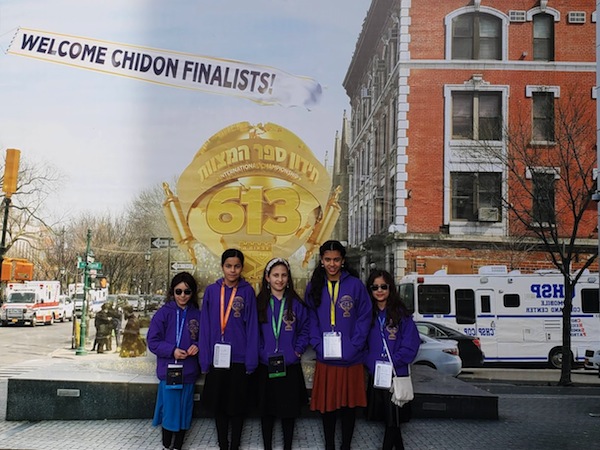
Left to right: Chana Rivka Bitton, Miriam Feigelstock, Baila Shapiro, Shira Oirechman and Ora Yeshayahu. The biggest event of the Tzivos Hashem year is a Shabbaton in New York, the highlight of which is an international competition called Chidon Sefer Hamitzvos, where kids from around the world compete in their knowledge and understanding of the 613 mitzvot of the Torah, as codified by Maimonides. (photo from Tzivos Hashem)

Walking into the Lubavitch Centre at 41st and Oak Street a couple of months ago, I witnessed a hub of activity so vibrant with excitement it was practically humming. Every available space was brimming with excited children, from little ones to newly minted teenagers. Engaged in drawing, listening intently, and engrossed in a whole variety of activities, I knew these kids had to be connected to Chayolei Tzivos Hashem.

Make no mistake – Chayolei Tzivos Hashem (CTH or Tzivos Hashem, for short) is serious business. According to Tzivos Hashem Vancouver coordinator Riki Oirechman, it’s an educational program for Jewish children ages 3-13, founded in 1980 in New York by the Lubavitcher Rebbe, Menachem Mendel Schneerson. Tzivos Hashem focuses on teaching about kindness, good deeds and refining our character to become better people and more effective influencers in our community. The program aims to increase Jewish identity and provide children with Chassidic Jewish learning through informal activities and songs.

Tzivos Hashem Vancouver was established several years ago by Rabbi Shmulik Yeshayahu, Rabbi Dovid Rosenfeld and Rabbi Schneur Wineberg and, since then, it has grown in size. Today, they count 50 children registered in the local program, and have plans to expand its hours. Currently, it is being held every Sunday at the Lubavitch Centre, from 10:30 a.m. to noon, in groups divided by age.

“It’s incredible to see how much the kids learn every week, and how much they enjoy coming,” said Oirechman. Parents even relate that their kids consider it the “highlight of their week.”

The Vancouver chapter of Tzivos Hashem was able to run the first two years thanks to a grant from the Phyliss and Irving Snider Foundation. This helped lay the foundation for the program. Since then, it is partially self-funded and relies on tuition fees for each student.

“The program is designed to give young children a sense of pride and belonging, a feeling of connectedness to other Jews,” said the Lubavitch Centre’s Rosenfeld. “It’s meant to instil in them an appreciation for what they do and inspire them to do even more.”

When asked what they learn, Rosenfeld said the curriculum includes things like a deeper insight into the Jewish holidays and following examples of role models from our ancient and recent history. The older kids learn Mishnah and Talmud. All of the learning is illustrated according to Chassidic theory, as taught by the Lubavitcher Rebbe.

“We encourage the children to advance their knowledge, not just maintain it,” said Rosenfeld. “Constant review and reinforcement of the different concepts allows the kids to build on the knowledge they gain each week. Moreover, we try to channel the kids’ studies into the practical realm, having them translate their knowledge into action. Whether through class activities, such as visiting the Louis Brier Home with cards and hamantashen before Purim, or with doughnuts before Chanukah, the kids can keep track of their mitzvot (good deeds) through an online logging system.”

“The Sunday program,” added Oirechman, “teaches kids in a fun, highly interactive and hands-on way. Our lessons incorporate creative team challenges, unique arts and crafts, educational games, Tanya (the foundational work of the Chabad movement) and mishnayot (the oldest authoritative post-biblical collection and codification of Jewish oral laws), memorization, weekly missions, songs and much more. In the short time we have each Sunday, we instil and teach the kids important values.”

photo - A group of Tzivos Hashem learners
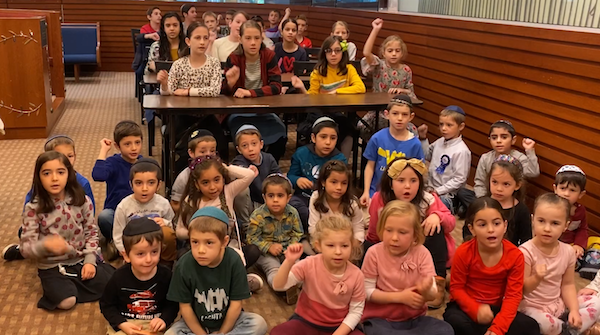
A group of Tzivos Hashem learners. (photo from Tzivos Hashem)

Tzivos Hashem is based on the Rebbe’s style of teaching, and offers children badges for missions based on things they accomplish in their daily Jewish lives – for instance, saying Modei Ani every morning, washing their hands before meals, giving tzedakah, saying Tehillim (Psalms), etc. Using the army and its ranks as a metaphor for how Tzivos Hashem is structured, the program enables children to learn at their own pace and get rewarded for it. Each student starts out as a private, but, as they do more good deeds and complete missions, they earn mitzvah badges. After collecting enough badges, they are awarded medals. When they get enough medals, they are promoted in rank. Think of it like a Chassidic Airmiles loyalty program; when the children complete missions every week and behave during the Sunday programs, they’re rewarded with mileage points.

A few times throughout the year, there is a prize store, where the students can use the points they earned to buy prizes online. The global headquarters of Chayolei Tzivos Hashem hosts monthly raffles, where children who have completed missions can have a chance to earn more prizes. There are monthly international webcast rallies, where recognition and honour are given to students who have gone up in rank. The physical prizes act as incentives to learn and do more but, in reality, the incentives are inherent, or self-generated: love of Hashem and commitment to Torah values and Yiddishkeit.

The biggest event of the year is a Shabbaton in New York, the highlight of which is an international competition called Chidon Sefer Hamitzvos, where kids from around the world compete, on stage, in their knowledge and understanding of the 613 mitzvot of the Torah, as codified by Maimonides. The competition motivates the children to review the mitzvot and commit them to memory.

Oirechman said the Tzivos Hashem program is adding to both to the quality and quantity of learning opportunities and resources available in Vancouver for Jewish children. For more information about the Vancouver Tzivos Hashem program, email tzivoshashemvancouver@gmail.com or visit their website, thvancouver.ca.

With the goal of living Torah-observant lives, kids in the program are steered to become “lamplighters” – igniting and spreading light wherever they go, through good deeds, acts of kindness and Torah study. Light is something that can be shared infinitely and it only takes a bit of light to extinguish darkness. And while, from my outsider’s point of view, the army metaphor sounds rather harsh, it actually reflects a message that couldn’t be gentler and more caring: to love and help your fellow Jew.

Shelley Civkin is a happily retired librarian and communications officer. For 17 years, she wrote a weekly book review column for the Richmond Review. She’s currently a freelance writer and volunteer, including with Chabad Richmond.

Teaching in new ways

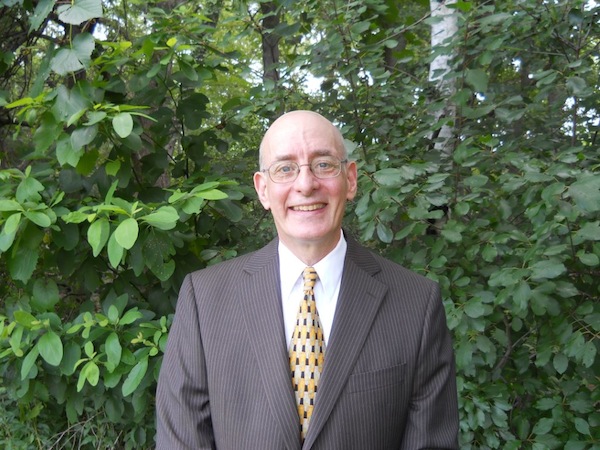
Prof. Ira Robinson of Concordia University’s Institute for Canadian Jewish Studies teaches a wide range of students about the Holocaust and antisemitism. (photo from Ira Robinson)

Ira Robinson is the director of Concordia University’s Institute for Canadian Jewish Studies and a professor of Judaic studies in the department of religions and cultures. A strong believer that an educator shouldn’t teach the same course in the same way year after year, he is always looking for new ways to reach students of all ages.

Born in Boston, Mass., Robinson moved to Montreal with his wife, Sandra, 40 years ago.

“I came to Canada because Concordia offered me a job, and I landed in the right place at the right time,” he told the Independent. “Academics don’t always have a complete choice of where they are going to settle. I came to Montreal and Montreal has a large and interesting Jewish community and a tremendously interesting bilingual culture.”

Though Robinson had never envisioned writing a book about antisemitism or the Holocaust, he did so, publishing A History of Antisemitism in Canada in 2015.

Robinson was trained by students of the late Salo Baron, a Polish-American historian, who once said, “If you want to understand the totality of Jewish history, you have to take into consideration that the pogroms and the massacres take only an infinitesimal amount of time, even though they wreak great havoc.”

According to Robinson, “Ninety-nine percent of the time, we’re dealing with normal life…. Baron and his students decided to look at the Jews as they had lived and not as they had died. That was the lesson that I took.”

For Robinson, this meant he would have to determine his own take on the history of antisemitism in Canada and, hence, “I came out with the book.”

Robinson starts many of his courses by telling students that there is nothing he is going to teach them that is not completely denied by somebody, somewhere. With this message, he is stressing that what he is about to teach is his perspective on what took place.

In looking at the history of antisemitism in Canada, for example, Robinson tried to contextualize the reasons Jews were looked at as guests in the 1920 and 1930s in Canada.

“What I did in this book is create a continuous narrative on antisemitism in Canada from the 18th century through to the present,” he explained. “There have been many very good studies on various aspects of antisemitism in Canada, the most famous of which is [Irving] Abella’s and [Harold] Troper’s None is Too Many. This academic book uniquely made a difference in the political discourse of Canada. Now, whenever anyone debates a refugee issue in Canada, the phrase, ‘None is too many,’ is sure to come into the discourse or debate at some point. That was a great success, but the book only concentrates on the 1920s to the 1940s, and mainly focuses on the Canadian federal government.”

Since the research for Robinson’s book was completed in 2014, antisemitism has increased, he said. For that reason, he decided to find ways to teach about the problem to younger children, kids in grades 4 to 6.

“It presents a challenge, because I have to begin with who they [antisemites] are and where they are,” said Robinson. “And so, I started by talking with them [the kids] about bullying, because bullying, as you understand, is something that kids know about and people talk to them about it.

“If you see somebody bullying somebody else, what are you supposed to do? If you can intervene, you should intervene. If you need to call somebody in a position of authority, you call somebody…. So, I said, ‘imagine that there are kids and you can bully them and nobody is going to stop you. And imagine that, if somebody goes to a person of authority, they will just say, ‘Good for you!’”

Robinson took it a step further, creating a PowerPoint presentation focusing on the wearing of the yellow Jewish star that was imposed upon Jews.

“I showed first a picture of a girl’s dress with the yellow star shown on it – just the dress, nobody in it,” he said. “Then, the next thing I showed was a little girl in a dress with the yellow star. When I changed the slide from just the girl’s dress with the yellow star to the little girl in the dress with a yellow star, I could hear a slight gasp among the students. So, there are ways – you have to talk to the people you have in front of you.”

Robinson gave this presentation in a public school and, as far he knows, there were no Jewish students in the classroom. “I am used to talking to a wide range of people,” he said. “And, in my university classes, for instance, I do expect Jews to enrol, and they do. But, I also expect Muslims and Christians to enrol, and they do, and everybody else, too.”

In Robinson’s view, the challenge of finding ways to disseminate the information effectively is always a worthwhile exercise.

“There are lots of people involved in Holocaust education and I think a lot of them are spending a lot of effort introducing and assisting in educating about the Holocaust in public school systems. The problem, as always, is not lack of good will,” he said, “but that the schools are under great pressure from a whole bunch of different directions. What should our children study? And the mega trend, not merely in public schools, but also in universities, is moving away from the social sciences and humanities, and focusing on other subjects.”

As far as teaching methods regarding the Holocaust and antisemitism, Robinson said, “I think I am able to speak with more depth, because you can’t teach the same course in the same way for decades. You have to develop a scholarly understanding as the field develops and, so, my teaching is informed by my reading and my reading continues to inform me.

“And my power is that I am able to direct students to certain books, certain articles and certain films that I think will help them develop their sense of things. But, before I can even do that, before I can guide anybody, I have to find the things myself, first and foremost.”

Rebeca Kuropatwa is a Winnipeg freelance writer.

Women and education

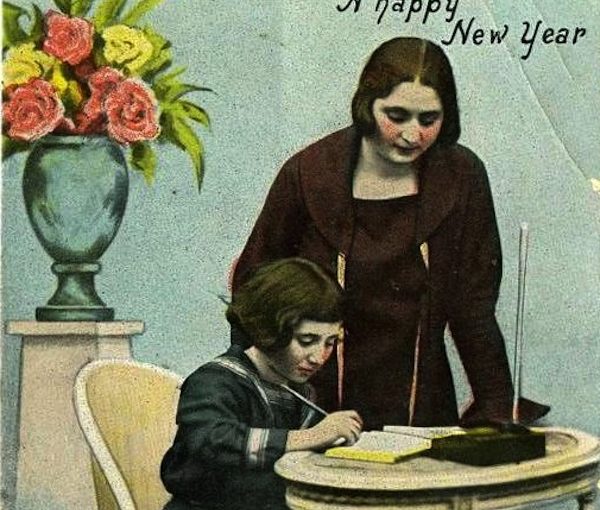
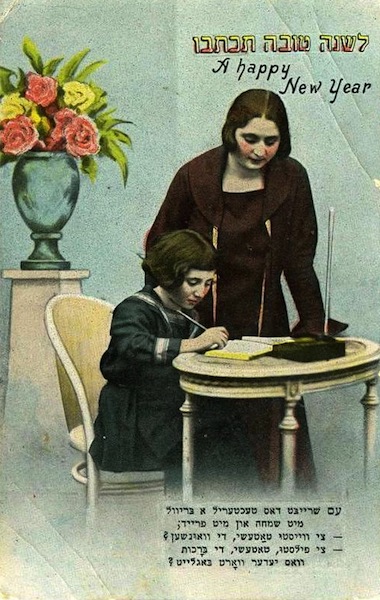
One of the family cards, produced 100 years ago, that is currently on long-term loan in the folklore department of the Hebrew University of Jerusalem, on Mt. Scopus. It is from the Chaya and Chana Gitelman Collection.

Not too long ago, I was flipping through a collection of old family cards, all of which were produced 100 years ago in Eastern Europe. On the cover of one card, a young girl sits at a table writing in a notebook. Her mother stands over her, looking on. From a modern perspective, there is nothing unusual about a woman knowing how to read and write. But less than 200 years ago, this would have been considered somewhat revolutionary.

Just how revolutionary? In the article, “The History of Jewish Women in Early Modern Poland: An Assessment,” Prof. Moshe Rosman reported that, at the end of the 19th century, more than half of all Jewish girls could not read, not even in Yiddish. Rosman noted that not only was limited attention given to educating Jewish women, but that those who first wrote the history of this period, deemed it hardly worth dealing with the subject.

In early modern Poland, education for Jewish girls and women was largely designed to make them into faithful Jews who would keep female rituals. For the most part, their education was informal and conducted in Yiddish. Brenda Socachevsky Bacon states that a learned woman was an aberration and considered outside the norm. In analyzing Shmuel Yosef Agnon’s story “Hakhmot Nashim” (“The Wisdom of Women”), which was published in 1943, Socachevsky Bacon says a woman’s very presence in the beit midrash causes the men to be uncomfortable. “They view the realm of Torah study as their own, even as their own hypocritical behaviour belies their dedication to it,” she writes. “The men will not allow this discomfort to continue, even if it involves transgressing the Torah’s commandment not to embarrass another person publicly.”

Fortunately, this was not the whole story of this period. Rosman explains there were secularized school settings in which Jewish girls learned both Yiddish and European languages. The objective of these schools was modernization and general knowledge. Girls read classic European literature. In this instance, the scorn was sometimes transferred, with traditional Jewish literature viewed contemptuously.

According to Prof. Eliyana Adler (“Rediscovering Schools for Jewish Girls in Tsarist Russia”), private schools for Jewish girls were a crucial ingredient in transitioning Russian Jewry into modernity. She reports that, from 1844 to the early 1880s, well over 100 private schools for Jewish girls opened in cities, towns and shtetlach throughout the Pale of Jewish Settlement.

The educators who opened and ran private schools for Jewish girls pragmatically balanced their ideological motivations with very real concerns about funding and retaining communal goodwill. Thus, those who ran private schools offered a variety of student tracks. Rich Jews (like their wealthy Christian neighbours did elsewhere) could pay to board their children. Many schools offered weekly instruction in both music and French as paid electives.

Adler goes on to say, “at the same time, families of modest means were offered tuition payments on a sliding scale. Noteworthy, poor students were actively recruited for scholarship positions. Other schools offered less sophisticated fee scales, but clearly worked within the same framework. The rewards for having a robust student body became clear as both the government and certain private and communal bodies began to award subsidies to successful private schools.”

These private schools for Jewish girls designed Jewish studies curricula to meet the expectations of the Russian Jewish communities from which they drew their students. The curricula had to be modern and useful without being radical. Thus, efforts were made to introduce training in practical crafts; that is, crafts that could be put to use in the marketplace. In 1881, the first trade school for poor Jewish girls opened in Odessa. Thereafter, both trade schools and sections within other schools that offered more in-depth training in such skills as sewing opened with increasing frequency.

image - One of the family cards, produced 100 years ago, that is currently on long-term loan in the folklore department of the Hebrew University of Jerusalem, on Mt. Scopus. It is from the Chaya and Chana Gitelman Collection
One of the family cards, produced 100 years ago, that is currently on long-term loan in the folklore department of the Hebrew University of Jerusalem, on Mt. Scopus. It is from the Chaya and Chana Gitelman Collection.

By the end of the 1890s, in Odessa alone, more than 500 girls studied in four communally funded vocational schools for Jewish girls. Jewish educators responded to the growing interest in interaction with the surrounding society by opening their private girls schools to Christian girls and by offering to teach courses in the Jewish religion in Russian schools. Prayer served as the common denominator of religious courses – the major focus of religious education was on prayer.

The teaching of Jewish history rather than simply the Torah allowed for an unprecedented degree of interpretation and even mild biblical criticism. Hebrew reading was also offered in many of the schools. Almost all Jewish girls schools offered penmanship and arithmetic.

Every private school for Jewish girls in the Russian Empire required extensive instruction in the Russian language. It was not uncommon for all general studies subjects to be taught in Russian.

Examples of the above educational transformation may be found in the bigger cities of Eastern Europe. In Plonsk (located some 60 kilometres from Warsaw), for example, toward the end of the 19th century, organizations such as Kahal Katan (literally, Small Community), educated the poorer strata of society. Also during this period, the city (which had a Jewish majority) opened a primary school for Jewish children, where some 80 pupils, mostly girls, studied in Russian. (See yadvashem.org/yv/en/exhibitions/communities/plonsk/jewish_education.asp.)

Vilna is another example. In 1915, the Association to Disseminate Education established three schools – one for boys, one for girls and one mixed – whose language of instruction was Yiddish. Also in 1915, Dr. Yosef Epstein established the Vilna Hebrew Gymnasium (high school), which was later renamed after him. The informal educational system included literature, drama, music, industrial arts and other courses. (See yadvashem.org/yv/en/exhibitions/vilna/background/20century.asp.)

According to Dr. Ruth Dudgeon (“The Forgotten Minority: Women Students in Imperial Russia, 1872-1917”), Russian women, aided by sympathetic professors, created educational institutions that evolved into universities and medical, pedagogical, agricultural and polytechnical institutes for women. Moreover, in 1916, the Ministry of Education overcame its bias against preparing women for public activity, rather than the home, and mandated the equalization of the curricula in the boys’ and girls’ gymnasia.

In the 1870s and 1880s, Jewish-Russian enrolment in the courses for women was between 16% and 21%. The imposition of quotas in the 1880s, however, reduced the number of Jewish students. But, in places where the quota was lifted, the number of Jewish women in the courses soared.

In the restricted Pale of Settlement, young Jewish women wanting to study did everything to establish residency elsewhere. The “everything” included registering as a prostitute. According to Dudgeon, one brother found out about his sister’s actions and then drowned himself in the Neva; the grieving sister, in turn, ended her life by taking poison.

As circumstances for Jews in the Russian Empire deteriorated in the 1880s, those Jews who stayed in that part of the world came to embrace new ideological solutions to the situation. In an atmosphere of violence, deprivation and brutally strict quotas in education and professions, Russian-Jewish parents wanted their children enrolled in schools where the course of study offered some hope for the future.

By the turn-of-the-century period, educators were no longer opening private schools for Jewish girls based on the old model. The schools they opened – whether they were trade schools where Zionism was taught, religiously mixed schools devoted to full acculturation, or Yiddishist schools committed to inculcating socialism – promised more than basic literacy.

In Poland, Gershon Bacon writes, “the education of Polish Jews in the interwar period was characterized … [as] the ‘victory of schooling.’ The compulsory education law of the reborn Polish republic had brought about in one generation what had eluded generations of prodding by tsarist officialdom and preaching by Jewish maskilim (people versed in Hebrew or Yiddish literature). Whether in the public schools or in the various Jewish school networks, Jewish children in Poland were educated according to curricula that deviated in almost every respect from that of traditional Jewish education. [Notably,] religious families had no objections to sending daughters to secondary schools, even though they objected to exposing sons to secular education.

“What is most striking,” continues Bacon, “are the differences in enrolment figures in institutions of higher learning. There was a much larger proportion of Jewish women students among female students as a whole (36% in 1923/1924), as distinct from the percentage of Jewish men among male students (22% in 1923/1924). It would seem that we have here but another example of a phenomenon observed in other countries, where Jewish women entered institutions of higher learning earlier and in greater proportion than their non-Jewish counterparts.” (See jwa.org/encyclopedia/article/ poland-interwar.)

So many factors about these educational statistics still need to be explored. Nevertheless, one can observe that an outcome seems to have been the creation of a modern Jewish Eastern European woman who “opened her mouth with wisdom.” (Proverbs 31:26)

Deborah Rubin Fields is an Israel-based features writer. She is also the author of Take a Peek Inside: A Child’s Guide to Radiology Exams, published in English, Hebrew and Arabic.

Doing work he believes holy

Irwin Keller will share some of his eclectic interests at Limmud Vancouver in March. (photo from Limmud Vancouver)

Irwin Keller is the kind of person most of us would like to be: curious about everything, smart, creative, always learning, always teaching. As one of the invited presenters for Limmud Vancouver ’20, he’ll be sharing some of his interests with the local community.

Keller’s first career was a long stint as a human rights lawyer specializing in AIDS and HIV-related discrimination. But, as a lifelong amateur musician, he also co-created the drag group the Kinsey Sicks. In 2006, he ended up serving as a lay leader for his congregation, which finally pushed him to go to rabbinical school, where he is now finishing up his training.

“I had always wanted to be a rabbi. When I had finished my undergraduate and was looking at applying to rabbinical school, in those days, there were no seminaries that accepted openly gay students,” Keller said. “I couldn’t do it unless I was willing to go back in the closet that I had just come out of – the closet was still warm – and I wasn’t willing to. It felt wrong. It was important for me to be in the rabbinate as who I was.”

Within just a year of deciding he couldn’t be a closeted rabbi, the AIDS epidemic began to tear through the gay community, and Keller began working on civil rights cases.

“Things can happen to people whether they’re legal or not. Often through some sort of ruse, or subterfuge,” he said. “As long as people didn’t want people with AIDS renting from them or working for them, they were going to find some way to get rid of them. That was our work.”

This work, which Keller describes as both holy and harrowing, led to the creation of the Kinsey Sicks. “Our community needed to laugh, needed to be delighted out of what we were experiencing every day.”

Momentum built and, after a few years, the group had an offer to produce their show off-Broadway.

“That was the point when we all quit our jobs. That was the last I ever practised law,” he said.

In all, Keller performed with the group for 21 years. Along the way, he taught himself enough Yiddish to be able to bring Yiddish music into the show, to both hilarious and touching effect. He had a recording of his great-grandmother singing the heart-tugging “Papirosn,” about an orphan boy trying to get by selling cigarettes on a street corner. Usually sung by women performers to mimic a child’s voice, Keller performed it in his drag persona Winnie, channeling the spirit of his great-grandmother and Yiddish theatre divas of a bygone era. You can watch it on YouTube: Keller playing a much older Jewish woman playing a young boy – gender collapses à la Victor/Victoria.

“Over the course of the maybe 18 years that I performed it, it was the most commented-on piece of music that we performed,” he said. “People were so moved – including non-Jews – that they were getting a window into Jewish culture that they were not getting from modern American culture.”

Keller’s U-turn into the rabbinate is perhaps long in coming, but not surprising. He describes both his civil rights law career and his drag performing career as holy work: the yin and yang of what a gay community needed at a devastating moment in its history. Moving onto the pulpit only took that energy to a different place.

“I moved to Sonoma County and joined a synagogue whose rabbi was in the process of leaving and there was a lot of turmoil. I volunteered to do some of the rabbinical work while they were searching,” he said. “But what came out of me was a lifetime of longing.”

And the congregation needed his brand of leadership, too. “I think my being the singing drag queen rabbi gave people a different kind of welcome,” he said.

At Limmud Vancouver, Keller will be sharing two more of his interests: Yiddish poetry, and queer readings of Torah. In a session on the Yiddish poet Itsik Manger, Keller will lead discussion on the playful Bible-inspired poem cycle known as the “Khumesh lider.”

“The way he plays with the looping of time, the anachronisms, in a way that is also invited by rabbinic tradition – there is no before or after Torah, everything can take place in any order,” explained Keller. “So you can get the Turkish sultan visiting Hagar, you can get Ruth and Polish peasants, and it’s still Torah.”

Keller’s other Limmud seminar will examine the story of Joseph.

“I try to identify where there are queer currents running through Torah,” he said. “I don’t specifically mean exclusively gay-themed moments, but moments that seem to suggest a certain kind of outsiderness and outsider outlook and alternative biography from what you’ve come to expect from ancient tales.”

Joseph falls into this category because of his distance from the normative family. Joseph spends most of his life at odds with a family that made him unsafe. His power comes when he is able to be away from this family and incognito, and his unmasking is both dangerous and liberating.

“What’s interesting to me here,” said Keller, “is that the rabbinic tradition finds him to be problematic. They have a tendency to locate his problematicity in his gender and sexuality. So, it’s not like we as modern people are for the first time noticing that there might be a queer angle to this story. For 1,000 years he’s been alarming the rabbis.”

Keller speaks of human rights, Jewish drag, Yiddish poetry and queer Torah with unflagging energy. But this isn’t even all. Get Keller talking about angels in the Jewish imagination, and it’s off to the races again: “There is a tradition around angels who densely populate all our mystical texts, as well as running rampant through Torah,” he said. “It’s interesting to me the worldview that holds angels as present in every space and every function. Every natural force is controlled by an angel, every period of time. Every hour of the day has an angel that oversees it.”

Perhaps another year, Keller will share more at Limmud about angels. In the meanwhile, his joyous brand of learning and thinking will be available in two presentations on March 1 at Limmud Vancouver, held at Congregation Beth Israel. Registration is now open at limmudvancouver.ca.

Faith Jones is a librarian and Yiddish translator in Vancouver. She is a regular teacher and attendee at Limmud Vancouver.

Lichtmann interns with StandWithUs

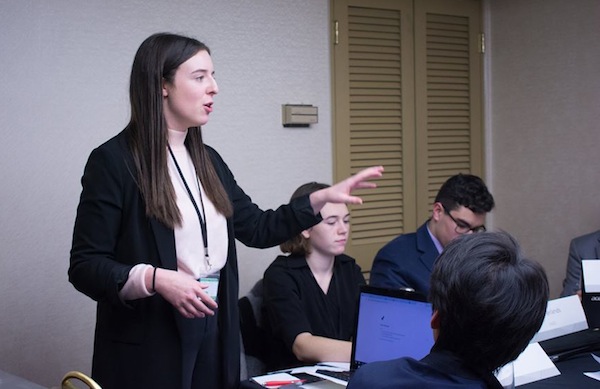
Maya Lichtmann (photo from Connect Model United Nations Vancouver)

Maya Lichtmann was selected in May as a Canadian high school intern for StandWithUs, an international organization that educates about Israel and fights antisemitism. She was chosen for the program after participating in a StandWithUs event at King David High School.

Lichtmann, a Grade 12 student at J.N. Burnett Secondary School in Richmond, attended a conference in August at the American Jewish University in Los Angeles with about 100 other high school interns, including about a dozen Canadians. She will join all high school and college interns in January at the same location.

As part of the internship, she recently delivered an educational program to two History 12 classes at her school. She covered the history of the Jewish people, how they came to Europe, the rise of Nazism, the Holocaust, the creation of the state of Israel and the rise of anti-Zionism. While she uses resources offered by StandWithUs, her presentations are developed independently.

“A lot of the presentations that StandWithUs have are catered toward Jewish audiences, because a lot of the kids who are doing the internship go to private Jewish schools,” she said. Because she goes to a public school, and one where a majority of students are of Asian heritage, she developed the presentations for audiences with limited knowledge of the topic. She received entirely positive feedback from a “100% non-Jewish audience,” she said.

Lichtmann plans to make a presentation about LGBTQ+ rights in Israel to her school’s gay-straight alliance, and one about Israel’s role in the international community at her Model United Nations Club, which she led as president last year. She will also be delivering a presentation at a student-run TEDx event.

“I’m very passionate about Israel,” she said. “It’s one of the key factors in fighting international antisemitism because I believe that unity and acceptance of Jewish people has been a struggle for the past 1,900 years, as the Jewish people were throughout the Diaspora, and I hope to continue to help Jewish people feel more accepted within society.”

She added: “My grandfather was in a concentration camp, Bergen-Belsen. We were forced to relocate after the Holocaust, so my family moved to Israel and my father was born in Israel and then immigrated to Canada. But my ties and connection to Israel are obviously still very strong.”

Lichtmann also is on her school’s student council, president of the school’s Women in Leadership Club, youth representative on the board of directors at the Thompson Community Centre in Richmond, and premier-elect of the Richmond-Delta Youth Parliament. She coaches cheerleading and tutors international students in English.

Lichtmann is a daughter of Mandy and Eyal Lichtmann and big sister to Noa and Liel.