Skip to content
  • Home
  • Subscribe / donate
  • Events calendar
  • News
    • Local
    • National
    • Israel
    • World
    • עניין בחדשות
      A roundup of news in Canada and further afield, in Hebrew.
  • Opinion
    • From the JI
    • Op-Ed
  • Arts & Culture
    • Performing Arts
    • Music
    • Books
    • Visual Arts
    • TV & Film
  • Life
    • Celebrating the Holidays
    • Travel
    • The Daily Snooze
      Cartoons by Jacob Samuel
    • Mystery Photo
      Help the JI and JMABC fill in the gaps in our archives.
  • Community Links
    • Organizations, Etc.
    • Other News Sources & Blogs
    • Business Directory
  • FAQ
  • JI Chai Celebration
  • JI@88! video

Recent Posts

  • Zionism wins big in Vegas
  • Different but connected
  • Survival not passive
  • Musical celebration of Israel
  • Shoppe celebrates 25 years
  • Human “book” event
  • Reclaiming Jewish stories
  • Bema presents Perseverance
  • CSS honours Bellas z”l
  • Sheba Promise here May 7
  • Reflections from Be’eri
  • New law a desecration
  • Resilient joy in tough times
  • Rescue dog brings joy
  • Art chosen for new museum
  • Reminder of hope, resilience
  • The national food of Israel?
  • Story of Israel’s north
  • Sheltering in train stations
  • Teach critical thinking
  • Learning to bridge divides
  • Supporting Iranian community
  • Art dismantles systems
  • Beth Tikvah celebrates 50th
  • What is Jewish music?
  • Celebrate joy of music
  • Women share experiences 
  • Raising funds for Survivors
  • Call for digital literacy
  • The hidden hand of hate
  • Tarot as spiritual ritual
  • Students create fancy meal
  • Encouraging young voices
  • Rose’s Angels delivers
  • Living life to its fullest
  • Drawing on his roots

Archives

Follow @JewishIndie
image - The CJN - Visit Us Banner - 300x600 - 101625

We need to act earlier

We need to act earlier

Drs. David Fisman, left, and Jacob Moran-Gilad discuss climate change and future pandemics. (screenshots)

The Jewish National Fund of Canada recently brought together Toronto-based epidemiologist Dr. David Fisman and Israeli clinical microbiologist Dr. Jacob Moran-Gilad to discuss the relationship between climate change and potential future pandemics.

“It is important to remember that there are a lot of linkages,” said Fisman, a professor of epidemiology at the University of Toronto’s Dalla Lana School of Public Health and a physician at Michael Garron Hospital. Both climate change and viruses like COVID-19 share similar drivers, such as human population growth, environmental degradation and the need for expanded food production, he explained.

Rising temperatures around the globe create a more fertile breeding ground for infectious diseases and accelerate their evolution, he said. Furthermore, climate change is exacerbated by the tearing down of natural environments, which then brings humans in closer proximity to animal habitats – increasing the chances of diseases being passed on to humans from other species.

“We do have a lot of mouths to feed on the planet. Intensive factory farming has been a driver of some really important challenges in infectious diseases,” said Fisman.

It is crucial to act early, Fisman argued. “With climate change, there are different time scales than with the pandemic. You want to shut down the carbon increase way early. If we wait until we are in the soup, it comes with great cost,” he cautioned.

Trade and travel have been around throughout history, he acknowledged. The difference now, he said, is “turning the dial up on temperature, which makes everything worse.”

Moran-Gilad, chair of Israel’s national advisory committee for microbiology and member of the country’s epidemic management team, went through some of the possible ways to prevent the next pandemic.

“We are now all experts in flattening curves – as compared to four months ago – which shows how effectively we can disseminate information,” Moran-Gilad observed.

While not discounting the severity of COVID-19, he said it has not been the pandemic that people who study infectious diseases have been preparing for, one known in the scientific community as Disease X, which would cause a mortality rate of 10 to 30%.

“COVID-19, in this sense, can be viewed cautiously as a drill to the real thing,” Moran-Gilad said, adding that a pandemic of much greater magnitude “could occur in one year, 10 years or 100 years from now.”

About COVID-19, he admitted, “The dynamics of the disease are still not clear. Without a vaccine, we are going to see coronavirus with us for a couple of years.”

Moran-Gilad advocated for investments in scientific research in the area of pathogen discovery, to understand the viruses in animal hosts better, which, he said, could help prevent the global economy from experiencing the losses encountered this year. He recommended, as well, that further studies could examine whether human exposure had taken place before the outbreak emerged.

He warned, though, of the propensity of academic research in high-quality journals to stop printing papers on diseases once they recede from public consciousness. He said this happened with SARS and Ebola, and expressed hope that the legacy of COVID-19 would be a continuation of studies on the virus “or we will find ourselves unprepared for the next pandemic.”

Returning to the proverbial pachyderm in the room – climate change – the doctors did offer a glimmer of hope: action on the environment would bring with it a health dividend. Riding a bike instead of driving a car, for example, has health benefits and reduces emissions.

Extreme weather events also have a deleterious impact on health, and thus we would be acting in our own self-interest to address climate change, the scientists said. They noted that, in the Canadian response to COVID-19, all governments had to do was ask people to maintain a two-metre distance from one another and wear a mask in public, and people mostly did as instructed. The desire, then, would be that similar policy guidelines could be used to ward off environmental disasters.

In his closing remarks, Fisman praised the Japanese approach to fighting the pandemic by avoiding closed and crowded spaces. He also called into question the opening of bars in certain regions of Canada before opening schools. And he stood for an aggressive testing approach.

“There are vaccine candidates that look amazingly promising,” said Fisman. “It’s very hard to fly and land an airplane while we are building it. A positive outcome of the current pandemic would be if vaccine development could be done proactively.

“Our ultimate challenge as scientists,” he concluded, “is to show people what an alternative universe looks like and why it is important to take early and immediate action.”

Sam Margolis has written for the Globe and Mail, the National Post, UPI and MSNBC.
Format ImagePosted on July 24, 2020July 22, 2020Author Sam MargolisCategories NationalTags climate change, coronavirus, COVID-19, David Fisman, Jacob Moran-Gilad, Jewish National Fund, JNF Canada, pandemic, science
Ancient artwork found

Ancient artwork found

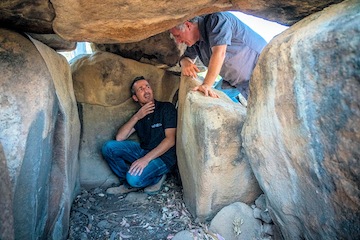
photo - Uri Berger of the Israel Antiquities Authority, left, and Prof. Gonen Sharon of Tel Hai Academic College inside a dolmen where a wall engraving was unexpectedly discovered
Uri Berger of the Israel Antiquities Authority, left, and Prof. Gonen Sharon of Tel Hai Academic College inside a dolmen where a wall engraving was unexpectedly discovered. (photo by Yaniv Berman/IAA via Ashernet)

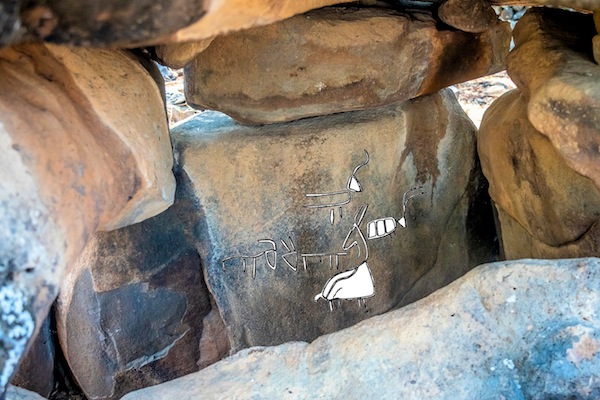
The interior of a dolmen (ancient burial chamber built of rocks) with symbols overlaid on the image for clarity. (photo by Yaniv Berman/IAA via Ashernet)

There are many such dolmens in the Galilee and the Golan, all of which date back more than 4,000 years. An inspector of the Israel Nature and Parks Authority has identified engravings of horned animals, leaves, fertilizers and wild cows in one dolmen; a human face in another; and a panel with geometric shapes in yet another.

Format ImagePosted on July 24, 2020July 22, 2020Author Edgar AsherCategories IsraelTags archeology, art, Gonen Sharon, history, IAA, Israel Antiquities Authority, Tel Hai Academic College, Uri Berger

Thank you to all who contributed to the July 24/20 issue!!!

image - Thank you to all who contributed to the July 24/20 issue ad from paper

Format ImagePosted on July 24, 2020July 22, 2020Author The Editorial BoardCategories From the JITags JI, journalism, philanthropy
טרודו שוב מסתבך

טרודו שוב מסתבך

ראש ממשלת קנדה ג’סטין טרודו

ראש ממשלת קנדה, ג’סטין טרודו, שוב הסתבך בשערוריה גדולה שיכולה לאיים על עתידו הפוליטי. זאת דווקא כאשר מניותיו עלו לאחרונה בשל הטיפול הנאות של ממשלתו הליברלית במגפת הקורונה. רבים רבים בקנדה ומחוצה לה מוכירים לו הערכה רבה על מה שעשה עבור אזרחי קנדה בימים קשים אלה.

ממשלת טרודו העניקה תשעה מאות מיליון דולר לעומת הצדקה ווי שמטפלת בסטודנטים, במסגרת חוזה חדש בתקופת הקורונה. העמותה נותנת מענקים לסטודנטים שלא יכולים לעבוד בעת הזו עבור פעיליות התנדבויות שונות. בו בזמן מתברר בימים אלה שהעמותה שילמה כספים רבים למשפחת טרודו. אם כן זו השערוריה השלישית בה מעורב טרודו בשתי הקנדציות שלו בזמן שהוא מכהן ראש ממשלה. הפעם מדובר באירוע החמור ביותר שעדיין לא ברורים ממדיו הקשים. משרד האתיקה מתחיל לחקור את הפרשה המסובכת וזו בעצם כאמור זו הפעם השלישית שמעשי טרודו מגיעים לחקירות כאלה.

מפלגת האופוזיציה השמרנית דורשת מהמשטרה הפדרלית לפתוח בחקירה כדי לגלות אם מדובר בפעילות מושחתת של טרודו, עת העניקה ממשלתו חוזה ממשלתי נחשק בשווי של כתשעה מאות מיליון דולר לעומת הצדקה ווי, בזמן שהאחרונה שילמה לאורך השנים סכומי כסף גדולים לבני משפחתו של טרודו.

עומתת הצדקה ווי זכתה בחודש יוני בחוזה לניהול תוכנית פדרלית לחלק מענקים בגובה של עד חמשת אלפים דולר לסטודנטים, עבור התנדבות בארגונים שפועלים ללא מטרות רווח, במהלך משבר הקורונה. טרודו עצמו היה שותף למו”מ עם העמותה להעברת התקציב הגדול. לאור הביקורת הקשה עמותת ווי הודיעה כי לא תממש את החוזה ותוותר על התקציב הממשלתי.

עמות ווי שילמה בשנים האחרונות כמאתיים וחמישים אלף דולר לאמו של ראש הממשלה, מרגרט טרודו, עבור עשרים ושמונה נאומים שנשאה באירועים שונים. אחיו של ראש הממשלה, אלכסנדר טרודו, קיבל שלושים ושתיים אלף דולר עבור שמונה נאומים באירועים שונים. ואילו אשתו של ראש הממשלה, סופי טרודו, קיבלה אלף וחמש מאות דולר עבור נסיעה מטעם העמותה.

עוד מתברר שבתו של שר האוצר בממשלת טרודו, ביל מורנו, הועסקה בעמותת ווי. מורנו כמו טרודו השתתף בדיונים להעברת התקציב לעמותה.

משרד המבקר של קנדה כבר פתח כאמור בבדיקה בנוגע להתנהלות ראש הממשלה טרודו, בנושא העמותה. חבר הפרלמנט מטעם המפלגה השמרנית, מייקל בארט, טוען כי ידוע שמשפחתו של טרודו הפיקה תועלת כספית משמעותית מהארגון. ולכן ברור לגמרי שיש ראיות מספיקות כדי שהמשטרה תחקור את הפרשה. מפלגת בוק קוויבק קראה לטרודו לפנות את כיסאו עד לסיום החקירה, לטובת סגניתו, כריסטיה פרילנד. זאת בשל האפשרות שתיפתח גם חקירה פלילית.

משרד האתיקה של קנדה פרסם בשנים האחרונות שני דוחות שבהם קבע כי טרודו הפר תקנות הנוגעות לניגוד אינטרסים. הראשון מייד לאחר שטרודו מונה לראש הממשלה בקנדציה הראשונה שלו (באלפיים ושבע עשרה). טרודו יצא לחופשה באי הפרטי של הפילנטרופ וידיד המשפחה שלו אגא חאן, באיי בהאמה. זאת בזמן ששחאן ניהל משא ומתן על מימון פרויקטים ממשלתיים שונים. הדוח השני פורסם לפני כשנה לאחר שטרודו הואשם בניסיון להשפיע על ההליך המשפטי בעניין חברת התשתיות הגדולה מקוויבק אס.אן.סי לוולין. אז דובר כי טרודו ניסה להשפיע על התובעת הכללית ששימשה גם שרת המשפטים שלו, כדי שלא תעמיד לדין את החברה שהואשמה בתקופת ראש הממשלה הקודם, סטיבן הרפר, כי שיחדה בכירים בלוב כדי לזכות בחוזים ממשלתיים גדולים.

Format ImagePosted on July 16, 2020Author Roni RachmaniCategories עניין בחדשותTags Aga Khan, charity, coronavirus, COVID-19, ethics, politics, SNC-Lavalin, Trudeau, WE, אס.אן.סי לוולין, אתיקה, ג'סטין טרודו, מגפת הקורונה, עמות ווי, צדקה
Providing comfort and hope

Providing comfort and hope

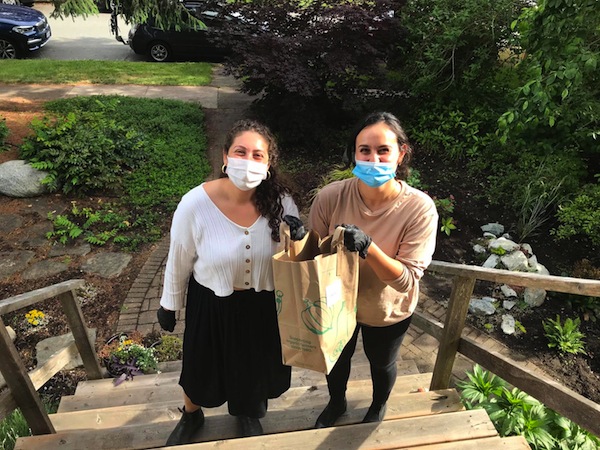
Shiva Delivers organizers Madison Slobin, left, and Becca Schwenk. (photo from Shiva Delivers)

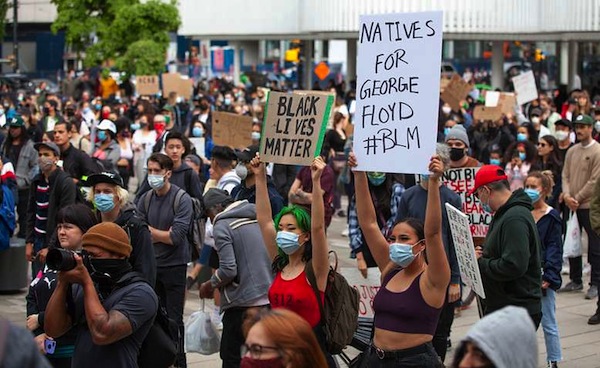
When 25-year-old Vancouverite Becca Schwenk considered how she could make a small impact to reflect Jewish compassion, care and kindness for local Black families during the Black Lives Matter protests, the Jewish ritual of shivah came to mind. She knew the power of shivah meals to soothe people in times of grief, so she and her longtime friend Madison Slobin, 26, decided to coordinate Shiva Delivers, a collective effort whereby Jews would cook a dinner meal for a Black household in Vancouver.

“We hoped it would lighten their load and bring a bit of joy,” Schwenk said. In emails, Facebook and Instagram posts sent to members of the Jewish community, the pair noted that “this past week has been one of grieving for Black folks. Not only have Black lives been disproportionately impacted and lost due to COVID-19, but we have witnessed police officers murder Black people in broad daylight, as well as in their own homes. As Jews, we know what it feels like to experience a collective tragedy, especially in the past two years, as antisemitic violence has been on the rise. We also know how much it has meant to us when other communities have demonstrated their solidarity.”

They encouraged volunteers to “cook with your loved ones, and have critical conversations about unlearning anti-Blackness and racism. It’s a beautiful thing when we can hold one another accountable, free of judgment, and keep our hands busy in some challah dough,” they wrote.

Their message spread quickly through social media and, within 24 hours, they had volunteers signing up to cook meals. Ultimately, they received 90 meals that they were able to deliver to 48 Black families in the Lower Mainland, from Surrey to East Vancouver and the University of British Columbia.

“People made beautiful, multiple course dinners including salmon with dessert, brisket and matzah ball soup, roast chicken with vegetables and delicious cakes,” Schwenk said. “It was really clear that considerable effort went into each dish and we felt really proud to drop these meals off.”

Those preparing the meals represented the diversity of the Vancouver Jewish community and deliveries came from Orthodox Jews, mixed families, rabbis and people from all political spectrums.

“We didn’t explain much about our initiative when we sent out the notification, but people just got it,” Slobin said. “We were unified by the instinct to do tzedakah through our collective love language of delicious food. I found it beautiful that our community is so united about the idea that Black lives matter, and that they really wanted to provide comfort to Black families during this time.”

The two friends are both professionally involved in human rights work. Slobin works for Vancouver Aboriginal Child and Family Services, while Schwenk is a diversity and inclusion consultant for Cicely Blain Consulting. Even though they’re not planning to organize a second Shiva Delivers event immediately, they hope it will inspire members of the Jewish community to do more.

“This was a way for us as a community to say, ‘We know how valuable comfort and nourishment are in moments like these, and we’ve got your back,’” Slobin said. “I want to see how folks draw inspiration from this and tap into the potential for solidarity beyond the Jewish community.” She noted that other Shiva Delivers initiatives were held in other parts of Canada and in the United States.

Feedback from recipients of the meals was overwhelmingly positive and grateful. “Thank you so much for doing this,” one recipient wrote. “We are grieving such a tremendous loss of life in the middle of this pandemic, where we are isolated from our wider community and loved ones. This helps a lot.” Another recipient said the display of kindness and generosity towards the Black community at this time was especially meaningful: “It means so much to be seen in our grief, and held and cared for in this way. Such community-to-community support is so deeply valuable and I truly believe it is our way forward into a collectively liberated world. Thank you for looking out for us and sending us love in my personal favourite love language – good food!”

Reflecting on the power of their event, Schwenk and Slobin said it provided “a glimpse into a hopeful future of what solidarity can look like. It allowed us to imagine a world where traditions are not only respected, but provide cross-cultural comfort.”

Lauren Kramer, an award-winning writer and editor, lives in Richmond. To read her work online, visit laurenkramer.net.

Format ImagePosted on July 10, 2020July 9, 2020Author Lauren KramerCategories LocalTags Becca Schwenk, Black Lives Matter, COVID-19, food, human rights, intercultural, Judaism, Madison Slobin, Shiva Delivers, tikkun olam
Searching for a COVID cure

Searching for a COVID cure

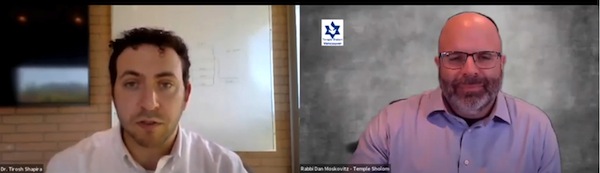
University of British Columbia’s Dr. Tirosh Shapira, left, spoke at a June 18 Temple Sholom-hosted webinar emceed by Rabbi Dan Moskovitz. (screenshot)

“COVID-19 or SARS-CoV-2 has a different type of genetic material than we have. It is an excellent saboteur … and can mutate easily. Thus, if we develop a drug against it, we will likely, over time, begin to see some resistance,” University of British Columbia microbiologist Tirosh Shapira told a Zoom audience in a June 18 webinar.

“In my research,” he said, “instead of looking for one drug, I am looking for four. I am trying to create a cocktail similar to what is applied with treating HIV. We are looking for drug combinations.”

There is an added level of complexity involved in seeking such combinations, he noted, as certain drugs can negate the effects of others.

Shapira is among a select group of Canadian scientists hunting for a cure to COVID-19. He earned his PhD from Australia’s University of Queensland, where he specialized in molecular toxicology for global food security. Before devoting his efforts to COVID-19, his research at UBC led to a novel treatment against tuberculosis and the development of methods to improve drug discovery.

To the web audience hosted by Temple Sholom, Shapira spoke on the topic of drug development in British Columbia, particularly as it pertains to the new coronavirus. He also provided an overview of modern drug discovery and a look at the advanced facility for virology research at UBC.

“Viruses are a large array of different agents,” explained Shapira, “each with unique characteristics, and depend on their hosts in order to replicate and create more copies of themselves … they vary greatly. However, some share similar properties.”

Knowing, for example, the similarities of the common cold and SARS, scientists can gain a better understanding of how the biology of COVID-19 might play out. This type of application led to the discovery of the effectiveness of the drug Remdesivir against the MERS virus, for instance.

Citing the history of combating viruses through treatments, Shapira showed a graph of the downward trend of infections from tuberculosis, starting in the late 19th century. He used this to elucidate the factors needed beyond drugs to control an epidemic, such as economics, sanitation and education.

“On a global scale, sanitation and containment are extremely important for an immediate response to an immediate threat,” he said. “Understanding SARS-CoV-2 is based on understanding similar viruses. The best way to defeat new viruses is through social adjustments.”

Shapira distinguished between the classical and modern approach to drug discovery. The classical approach, he said, is to look under a microscope and examine what is there, while the modern approach considers all possible compounds and is less concerned about the biology.

According to Shapira, the modern approach essentially throws everything at a problem. This, in turn, reduces the research bias on the part of the scientist, has fewer developmental pitfalls and is more “statistically robust,” thereby making it more likely for discoveries to pass clinical trials.

Biology, he hastened to add, is still important – the quality of the test model will determine the quality of the outcome. “Good, sound biology brings good, sound compounds that are good pharmaceuticals,” he said.

When considering how to target a virus, Shapira told the online group that a researcher will look at known antivirals, U.S. Food and Drug Administration-approved drugs, drugs in clinical trials and natural products, the source of most new antibiotics and antivirals.

Drug development is a complex, multi-stage process which has greatly advanced in the past 20 years, he said. In the United States, for example, it begins with pre-clinical trials in labs and with animal testing. Next come clinical trials focusing on safety and efficacy, before moving to randomized testing. Afterwards, there are FDA trials and ultimately production.

UBC’s FINDER (Facility for Infectious Diseases and Epidemic Research), where Shapira conducts his research, has an automated workstation and screening microscopes that handle the large workload of sorting through tens of thousands of compounds without introducing human error.

Due to restricted access to the highly infectious coronavirus, research in Canada can only be performed at a limited number of contamination-free facilities, which also include the University of Toronto and the National Microbiology Laboratory in Winnipeg.

In their studies, UBC’s researchers use lab-grown organs in a dish and a live virus, explained Shapira. FINDER has previous experience with this model from the outbreak of the Zika virus. At FINDER, the UBC team screens the thousands of compounds with collaborators around the world.

Shapira, the only microbiologist conducting research on the COVID-19 virus in British Columbia, estimated that there are 200 biologists and another 2,000 people working on various studies, including in economic areas, related to COVID-19 in Canada.

“SARS-CoV-2, despite being a present threat, will pass,” said Shapira. “But other infectious diseases will emerge in this age of easy travel. Preparedness is key. We will gradually reopen as we are better able to monitor the spread of the virus. We will find a treatment.”

Sam Margolis has written for the Globe and Mail, the National Post, UPI and MSNBC.
Format ImagePosted on July 10, 2020July 9, 2020Author Sam MargolisCategories LocalTags coronavirus, COVID-19, Dan Moskovitz, health, SARS-CoV-2, science, Temple Sholom, Tirosh Shapira, UBC, vaccine

We cannot walk away

George Floyd’s name may be the best known, but police in the United States (and Canada and elsewhere) have assaulted and killed too many racialized individuals to recount here. While we might hope that the current focus on these needless and unlawful deaths will bring a sea-change in police training and behaviours, the truth is we have seen uprisings of outrage multiple times this century resulting in apparently minimal structural correction. Will this time be different? We can hope so – and act in ways that advance positive outcomes – but one trend is absolutely not helping.

Amid the weeks of protests and riots, the ceaseless attention on this issue has brought to light some factors that are less than encouraging. A backlash to the protests and their sometimes-violent flare-ups unsurprisingly take racist overtones. The mantra “all lives matter,” for example, is a tone deaf and offensive rejoinder to the Black Lives Matter movement. Acts of antisemitism – the spray-painting of a Los Angeles synagogue and a litany of other acts and statements from members of or those supporting a disparate movement – may give perceived consent to some Jews to turn away from the campaign for human equality. But BLM is not an organization; it is a movement. It is made up of scores or hundreds of independent groups and millions of supporters. Some of those individuals are Jews, Black and non-Black. We should be grown-up enough (and sufficiently world-weary) to know that, among any such agglomeration of people, some will express antisemitic ideas. If we are so troubled by this that we throw the baby of racial equality out with the bathwater of fringe extremism, we would be wise to look inward. If we refuse to stand with BLM because of a proportion of bigots in its ranks, take a good hard look at the company we keep by standing with its opponents.

The upshot is that BLM and the larger fight for equality – indeed, the fight to simply keep police from killing African-American and individuals from other identifiable minority communities – is too important to step away from even if we ourselves are targeted by some in the ranks. This should not be about Jews – though, while this should be a given, the world does not work this way. One element that has the potential to strain this alliance is those who have tried to make the relationship between police brutality and racial injustice about Jews: Israelis, specifically.

A tactic has been to focus on training that a comparatively small number of American law enforcement officials have received in Israel. Some voices have made direct parallels between these law enforcement exchanges and police violence in the United States. Some even falsely claim that the knee-on-the-neck move that killed George Floyd is an Israeli invention.

Steven L. Pomerantz, a former assistant director of the FBI and now director of the Homeland Security Program at the Jewish Institute for National Security of America, is an architect of one of the earliest such exchanges, which emerged shortly after the 9/11 terror attacks.

“Despite suggestions to the contrary, there is no field training involved in either the conferences or trips, and no training on holds or arrest mechanics,” he wrote recently. “Participants learn how Israeli law enforcement deters, disrupts and responds to terrorist attacks. They explore the ideology of suicide bombers and other attackers, ways to de-escalate an ongoing incident, and the intelligence-gathering and -sharing process.… Trip participants have discussed efforts to build trust with minority communities, visited hospital trauma units and crime scenes, and spoken with terrorists serving life sentences for murder. One year, JINSA organized a specialized trip for American bomb squad commanders, which focused on topics such as post-blast forensics and the materials used in explosive devices.”

There is a probably no democratic country in the world more experienced in counterterrorism operations than Israel. In today’s world, it would be foolish not to learn from this tragically hard-earned understanding. Like Canada and the United States, Israeli police and military personnel operate with civilian oversight. As Pomerantz writes, it is deceptive to pin on Israel the actions of rogue bad cops in the United States. And, even Jewish Voice for Peace, in their campaign against these law enforcement exchanges, explicitly calls out those who would strip the American context of repressive policing and shift the blame to Israel, as that could be reasonably interpreted as antisemitism and, therefore, harm the movement for solidarity.

It may be that these law enforcement exchanges worldwide – not just those concerning Israel – contribute to the militarization of policing, a trend that is worrying, to say the least. As part of a larger network of exchanges of security forces across the world, it may be that they need to be reassessed. However, to misplace responsibility for police violence – and to choose that scapegoat of ages, Jews – undermines the credibility and the effectiveness of the anti-racist enterprise, and it is disadvantageous to the larger movement for equality.

Good people in the anti-racism movement have and must condemn the targeting of Israel and Jews. Likewise, Jewish people who care about human equality must not step away from this fight, but rather fight on two fronts: against racism and antisemitism. For a better future for ourselves and for other minorities and marginalized peoples, we cannot walk away.

Posted on July 10, 2020July 9, 2020Author The Editorial BoardCategories From the JITags anti-racism, antisemitism, Black Lives Matter, George Floyd, Israel, police
No Silence on Race

No Silence on Race

An open letter from Black Jews, non-Black Jews of colour and our allies to Jewish congregations, federations, foundations, organizations, nonprofits and initiatives, dated June 30, 2020.

We write this letter as proud members of the Canadian Jewish community. We are Black Jews and non-Black Jews of colour. We are Jewish community board members, educators and leaders. We write from a place of love for our Jewish identities and community, while also grappling with the cultural erasure, exclusion and structural racism that we experience in Jewish spaces. Nevertheless, we are compelled to be in Jewish community because it is who we are.

Over the past month, we have witnessed a racial reckoning within Canadian institutions. Police violence against Black and Indigenous people has continued unabated, with numerous deaths, including that of D’Andre Campbell, Eishia Hudson, Jason Collins, Regis Korchinski Paquet, Everett Patrick, Chantel Moore, Rodney Levi, Ejaz Ahmed Choudry and countless others. In the United States, the tragic murders of Ahmaud Arbery, Tony McDade, Breonna Taylor, Sean Reed, George Floyd, David McAtee and Rayshard Brooks have gripped the collective consciousness and have been the catalyst for a global call to action. We have witnessed and participated in protests and in conversations for structural change across all sectors and our Jewish community is not exempt from this dialogue.

No Silence on Race is born out of the necessity for inclusivity and racial equity in Jewish spaces. We acknowledge and are grateful for the longstanding work that Jews of colour and Jewish allies in Canada and the United States have dedicated themselves to in addressing structural racism within the Jewish community.

In this letter, we call on our Jewish community to uphold the tenets of justice and equality and to commit to the creation of a truly anti-racist, inclusive and equitable Jewish community.

The work that needs to be done to achieve this vision must happen collectively and systematically. To guide its implementation, we have devised nine pillars outlined below. These pillars are intended to support Jewish congregations, federations, foundations, organizations, nonprofits and initiatives in their transformation towards greater inclusivity and equity.

If you are aligned with the creation of an anti-racist, inclusive and equitable Jewish community, we ask that you sign this letter in support [at nosilenceonrace.ca]. If you are an organization, we ask that, in addition to signing your name, you write a public statement expressing your commitment to achieving this vision.

The nine pillars are:

1) Allyship: creating anti-racist, inclusive and equitable Jewish spaces begins with each individual. We call on everyone within their organizations to make a personal pledge to the work of allyship and to devise a personal plan of 10-15 comprehensive ways they will work towards becoming strong allies and leaders in the creation of more inclusive and equitable Jewish spaces.

2) Education: engage external facilitators for organization-wide anti-racism and anti-oppression education and training led by Black Jews, Jews of colour or people of colour consultants or consulting organizations.

3) Indigenous education and relationship building: engage in education about Indigenous peoples in Canada and cultural competency training. Build meaningful relationships with local Indigenous communities.

4) Equity consultancy: work with an equity consultant with a specialization in anti-racist work to formulate a multi-year strategic plan for your organization to create a roadmap towards inclusion, equity and anti-racist practices. This includes implementing non-discrimination policies, equitable hiring policies, anti-racist frameworks for organizational decision-making and a procedure to report and investigate any breaches of this policy.

5) Employment and recruitment: implement strategies to ensure equitable representation in your staffing, as well as development and retention planning to ensure these practices are adequately conducted.

6) Equity, inclusion, anti-racism advisory: accountability is essential. Create an advisory group to ensure that the equity-and-inclusion policy and strategies implemented are upheld at all levels of the organization. Create metrics to track ongoing anti-racism work.

7) Jews of colour leadership strategy: invest in a leadership strategy to ensure that Jews of colour are poised to be adequately represented in leadership roles in the community. This can include mentorships, educational scholarships and project grants.

8) Programming/events/partnerships: commit to more programming and partnerships with cultural institutions, with the goal of engaging in and elevating a diverse range of Jewish diasporas and histories.

9) Amplify the voices of Jews of colour in Canada: demonstrate explicit support for Jews of colour community groups and active initiatives. Engage in substantial outreach efforts.

We acknowledge that change takes time and recommend Jewish organizations create their own timelines for achieving the nine proposed pillars. We have designed these pillars as a guideline and we encourage all organizations to be intentional and creative in their implementation. While organizational priorities may have shifted amidst the realities of COVID-19, it is imperative that our community does not remain silent about how racial inequity plagues Jewish spaces. We look to the entire Jewish community in Canada to challenge ourselves to do more and to envision the path forward.

Jewish scholars as far back as Rabbeinu Bachya ben Asher, a significant rabbi and scholar from 13th-century Spain, call us to seek “Justice whether to your profit or loss, whether in word or action, whether to Jew or non-Jew.” So, we set our sights on July 9, which this year mark[ed] the fast of the 17th of Tammuz, where we begin the three-week period of mourning leading up to Tisha b’Av.

Tisha b’Av commemorates the destruction of the Temple. It is a time where we reflect on the divisions within our community. But, more importantly, it is a time to reflect on the cost of allowing those divisions to persist. During this holiday, we recognize the importance of taking a more active role in challenging each other and of doing more to make amends. It is in this spirit that we invite Jewish organizations across the country to engage in listening, introspection and action.

Creating anti-racist, inclusive and equitable Jewish spaces will require deep self-reflection, difficult conversations and an ongoing commitment to reimagining what the Jewish community can look like. Above all, it must be guided by the celebration of Jewish culture and a love for one another.

For individuals and organizations who believe in this movement, we invite you to join us in action by adding your name to this letter. We call on organizations to sign their name with the intention to issue a public statement by July 29, outlining your commitment to the vision of creating a more inclusive Jewish community.

The ground is shifting beneath us in ways that are undeniable and it is incumbent on each of us to play a role in shaping our collective future. When we honour our commitment to each other as Jews, our communities will reflect the beauty and diversity that truly exists within our culture.

Sara Yacobi-Harris, Akilah Allen-Silverstein and Daisy Moriyama

Format ImagePosted on July 10, 2020July 9, 2020Author No Silence on RaceCategories Op-EdTags Akilah Allen-Silverstein, anti-racism, Daisy Moriyama, education, equality, inclusion, Judaism, Sara Yacobi-Harris, tikkun olam
Misappropriation of Israeli flag

Misappropriation of Israeli flag

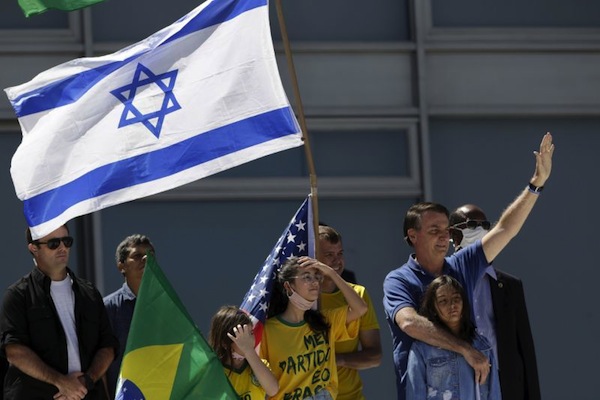
According to the Associação Scholem Aleichem, in Rio de Janeiro, right-wing religious groups are misappropriating the Israeli flag in their show of support for Brazilian President Jair Bolsonaro. (photo from ASA)

This article is a response to the continuing misappropriation of the Israeli flag by right-wing religious groups, followers of a certain Christian belief known as “progressive dispensationalism” (no political connotation), whose adherents support Brazilian President Jair Bolsonaro.

Bolsonaro and his stalwarts have consistently raised the Israeli flag while promoting their reactionary views and hate-mongering. Most recently, several Israeli flags were displayed at a public rally in support of Bolsonaro and his policies regarding COVID-19, including his stance against preventive measures such as social distancing and stay-at-home orders, and the championing of hydroxychloroquine as a sufficient means of treatment and prevention.

Within any nation, there may be contention over its symbols. Two Brazilians may wield the same flag in favour of two different ideals. Such a case is restricted to members of the same country. Likewise, as the state of Israel was created to take in and represent Jews, the only non-Israelis who may claim its flag are Jews from other countries. If non-Jews raise an Israeli flag, for whatever reason, they appropriate a symbol that is not theirs. This is all the more serious in a prejudice-filled world in which various peoples have been losing the right to tell their own story.

It is only natural – indeed, healthy – that Jews, in Israel or elsewhere, should discuss the meaning of a Jewish state. Debate has always been part of our culture, and we have never felt the need to agree on everything. But the spokesperson of another people, by seizing another nation’s symbol, makes it the hostage of their own political agenda. It is one thing to raise the Soviet flag, conceived by a party as an emblem of an international revolution. It is not so much an appropriation of a national symbol as it is an endorsement of Bolshevik ideology. The Israeli flag, by contrast, was meant to rally a people in the Diaspora. Jews outside Israel may brandish it; a non-Jew would be overrunning someone else’s realm.

Throughout history, we Jews have constantly encountered non-Jews ready to ascertain if we are a religion, a race or a nation. The consequences have always been tragic. Yet, just as it is for every people to define itself, it is a Jew’s prerogative to determine the depths of his or her Jewishness and, likewise, to determine his or her relationship with Israel. Nowadays, many Christian groups believe that the Second Coming of Jesus will be ushered in by the regrouping of all Jews in the “Holy Land.” It is no gesture of goodwill toward Jews, just another of the many ways of inserting us into a foreign narrative.

Strains of thought within dispensationalism grant Israel an importance peculiar to their religious aspirations, but the country was not established for this reason. Christian dispensationalism sees history as a series of specific stages (“dispensations”) of the “administration” of the “divine plan.” In this scheme, the prevalent trend has imputed a particular role to “the ethnic nation of Israel” – “Israel,” the people chosen for Jesus’s divine revelation. Its fulfilment entails “the end of disobedience,” namely, the embracing of Jesus as our saviour. This entails a kind of eschatological glorification of the Israeli state. Let it be said that this is no favour for Jews. Indeed, were that “dispensation” to come to pass, it would be the effective end of Judaism. Not a single architect of the state of Israel could have entertained such a notion.

But that is not all. To blur the purpose of the Jewish state with the myth of “Israel’s salvation” is to cloud public opinion and impair its perception of what Israel can – and should – represent. Far more troubling, however, is that these very same groups that preach the aforementioned Christian theory and misappropriate the Israeli flag also polarize the political climate wherever they live. In Brazil, they hold considerable sway, and their conduct is extremely controversial, to say the least. The improper use of Israeli symbols links us Jews to these controversies in a wholly detrimental fashion. And regardless of the collaboration between the current Brazilian and Israeli governments – the current Brazilian government has a strong ideological identity with the Netanyahu government, and its members seek to establish profitable commercial relations with Israeli companies – flags symbolize states, not governments.

Brazilian Jews may and should oppose “bolsonarism,” but a delusion under which Bolsonaro links his policies to a universe as complex and diverse as Israel’s will always be harmful. For starters, there is a cultural element to the issue: Bolsonaro is Brazil’s representative, and a disgraceful one at that, but he does not represent Israel in any shape or form, disgracefully or otherwise. It requires immense ignorance on his part to equate the Israeli experience with his political project.

And there is another level, of a more political note. Israelis have their own problems and, regardless of the kind of society they wish to make, it would be detrimental to link it to Bolsonaro’s administration, with all the dire misfortunes the latter casts upon Brazil.

Finally, there is a matter of principle. By parading his submissiveness towards the United States, saluting its flag and playing the lackey to its president, Bolsonaro undermines the sovereignty of his country and degrades his own authority. By juxtaposing Israel’s flag with those of Brazil and the United States, he seizes someone else’s authority and, above all, affronts the sovereignty of someone else’s country. He transgresses the complexities of Israel’s society to subject it to the same submissiveness he expects for Brazil. The United States has a long history of interference in Brazilian affairs and in those of Latin America in general. This – and the specific perversity of the current U.S. president – adds further weight to Bolsonaro’s folly.

The misappropriation of the Israeli flag effectively represents a transgression of the meaning of Israel, regardless of its government, a disdain for the liberty of the Israelis, regardless of their religious tradition and ethnic identity, and a hindrance to the personal choices of Jews, regardless of our country. As Brazilians, we assert that Bolsonaro lacks standing to uphold national sovereignty. As Jews, we maintain that he lacks legitimacy to wield the Israeli flag – and that he is both fraudulent and destructive when he does.

Esther Kuperman submitted this article, which was written by the Associação Scholem Aleichem, in Rio de Janeiro ([email protected]). ASA is a century-old institution founded in Brazil by Jews who came from Europe in search of security and survival, fleeing persecution and wars. Its main mission is the cultivation of Jewish culture, without losing sight of Brazilian cultural manifestations and the defence of human rights.

Format ImagePosted on July 10, 2020July 9, 2020Author Esther Kuperman ASACategories Op-EdTags Associação Scholem Aleichem, Brazil, culture, Israel, Jair Bolsonaro, politics, religion
Helping people help

Helping people help

Help Each Other Today’s Ilya Goldman, left, and Carlos Taylhardat. (photo from Help Each Other Today)

Ilya Goldman and Carlos Taylhardat have created Help Each Other Today, a messaging platform that connects people who need help with those who want to help.

Goldman, a computer programmer and software engineer, was born in the former Soviet Union and made his way to Israel in 1990. He and his family moved to Vancouver in 1994.

“Eventually, I started my own marketing company (internet-exposure.com) in 2001,” said Goldman. “Recently, because of COVID-19, business did slow down, basically because not as many clients are working right now – a lot of my clients were local businesses.”

In light of the new situation, one of Goldman’s clients, Carlos Taylhardat of artofheadshots.com, started creating coronaSOS.com. While putting the site together, Taylhardat contacted Goldman and Goldman saw in it the potential to help many more people. So, together, they created helpeachothertoday.com.

“I wanted to move beyond just helping people during the coronavirus,” said Goldman. “I wanted to make it available for people when they need help, even after the pandemic is over. Also, I wanted to automate how people are being matched.”

People wanting help and people offering help first need to sign up for to the service, which they can do at no cost. Then, they can post an offer of or request for help that falls within the site’s categories of Delivery, Financial Support, Peer Emotional Support, or Any.

When posting, people need to submit a location, as the platform matches helpers and people needing help based on location, with people able to access posts in their area.

“Helpers will see help requests in their area and can decide if they want to help that particular person,” said Goldman. “Once they decide to help, they essentially offer this help, and they can chat on the website and arrange how.”

Taylhardat and Goldman have been volunteering their time and resources to help people during the pandemic. They considered incorporating ads into the platform, but decided not to, as they felt it would distract from the core concept of the website.

While no one monitors conversations, if ever an abuse of the system comes up, Goldman will step in and block users as needed. So far, no abuse has been reported.

Requests have ranged from a need for groceries or diapers to help with the cost of a wheelchair or in finding public housing.

image - Note of thanks to Help Each Other Today
A note of thanks to Help Each Other Today.

“Unfortunately, not all help requests can be answered,” said Goldman. “And, unfortunately, not every place has helpers available to help with every request. That’s why we’re trying to get more attention to the website, so all people who need help can register there … and, also, so people who can help can be there for those in need.”

Right now, help and helper posts are only shared within a city, but Goldman is working on a system that will let users choose a post radius.

“Currently, I think we’re helping in 1,091 cities around the world,” he said. “As we move further, we probably will be doing it one country at a time – starting with the U.S. and Canada, and then expanding it further.”

A recent Help Each Other Today media release noted, “The COVID-19 pandemic has made huge changes in all our lives and, often, those who were most vulnerable at the onset were also disproportionally affected by the virus – both by the disease itself and by its huge economic impact. On the other hand, this crisis also shows the great willingness of people to help each other, as many people donate their time and money to help those in need.”

“Social distancing is not social indifference,” Goldman told the Independent. “So, spread the word, post it on your social media, and help more people help each other.”

For more information, visit helpeachothertoday.com.

Rebeca Kuropatwa is a Winnipeg freelance writer.

Format ImagePosted on July 10, 2020July 9, 2020Author Rebeca KuropatwaCategories LocalTags Carlos Taylhardat, coronavirus, COVID-19, Ilya Goldman, internet, tikkun olam

Posts pagination

Previous page Page 1 … Page 256 Page 257 Page 258 … Page 664 Next page
Proudly powered by WordPress