Skip to content
  • Home
  • Subscribe / donate
  • Events calendar
  • News
    • Local
    • National
    • Israel
    • World
    • עניין בחדשות
      A roundup of news in Canada and further afield, in Hebrew.
  • Opinion
    • From the JI
    • Op-Ed
  • Arts & Culture
    • Performing Arts
    • Music
    • Books
    • Visual Arts
    • TV & Film
  • Life
    • Celebrating the Holidays
    • Travel
    • The Daily Snooze
      Cartoons by Jacob Samuel
    • Mystery Photo
      Help the JI and JMABC fill in the gaps in our archives.
  • Community Links
    • Organizations, Etc.
    • Other News Sources & Blogs
    • Business Directory
  • FAQ
  • JI Chai Celebration
  • JI@88! video

Recent Posts

  • Story of Israel’s north
  • Sheltering in train stations
  • Teach critical thinking
  • Learning to bridge divides
  • Supporting Iranian community
  • Art dismantles systems
  • Beth Tikvah celebrates 50th
  • What is Jewish music?
  • Celebrate joy of music
  • Women share experiences 
  • Raising funds for Survivors
  • Call for digital literacy
  • The hidden hand of hate
  • Tarot as spiritual ritual
  • Students create fancy meal
  • Encouraging young voices
  • Rose’s Angels delivers
  • Living life to its fullest
  • Drawing on his roots
  • Panama City welcoming
  • Pesach cleaning
  • On the wings of griffon vultures
  • Vast recipe & story collection
  • A word, please …
  • מארק קרני לא ממתין לטראמפ
  • On war and antisemitism
  • Jews shine in Canucks colours
  • Moment of opportunity
  • Shooting response
  • BC budget fails seniors
  • Ritual is what makes life holy
  • Dogs help war veterans live again
  • Remain vital and outspoken
  • An urgent play to see
  • Pop-up exhibit popular
  • An invite to join JWest

Archives

Follow @JewishIndie
image - The CJN - Visit Us Banner - 300x600 - 101625

Hoping sanctions work

The world’s economies have never been more integrated or interdependent. This is most immediately evident in the fact that a war halfway around the world sends gasoline prices skyrocketing in Metro Vancouver.

But that interdependence has also permitted the most dramatic, swift and merciless sanctions ever seen – as a response to that very war. Within days of Russia’s invasion of Ukraine, a jaw-dropping catalogue of economic penalties was slammed against the Russian regime. Not only that, but the sanctions have taken aim at individual millionaires and billionaires who exist in a symbiotic, mafia-like relationship with the Russian dictator, Vladimir Putin. Every day, the news is filled with one company after another cutting ties with Russian businesses, stopping trade with Russian producers and withdrawing their products and services from Russian consumers.

Cultural boycotts have also been swift. The Vancouver Recital Society canceled a scheduled event with the Russian piano wunderkind Alexander Malofeev and scores or hundreds of similar cancellations have taken place in the classical music arena and other cultural sectors. International sporting competitions have barred Russian participation.

The combined effects of these thousands of individual actions are intended to put pressure on Russian citizens who will then, the plan goes, turn on their leader who will then, perhaps, alter his murderous invasion and withdraw or, better still, be ousted in favour of a return to the nascent democracy Russia was nurturing before Putin put his boot heel on its neck.

If these sanctions work, it could be a turning point in human history – nonviolent economic retribution outmanoeuvring brute force. (In addition to economic sanctions, Western countries have also supplied Ukraine with military equipment and other supports, while stopping short of meeting the entreaties of Ukraine’s President Volodymyr Zelensky that the West get more directly involved, including by implementing a no-fly zone over his country, which would equate to a direct military conflict between Russia and the West.)

Events are unfolding by the minute, with more than two million refugees flooding neighbouring countries in the course of just 10 days and horrific images of destruction and death flowing out to the world. Amid all this, a few observations stand out.

Israel’s Prime Minister Naftali Bennett traveled to Moscow after Zelensky implored him to act as an intermediary. Israel has fraught, complex and deep historical and contemporary connections with both countries, including a massive chunk of Israel’s population that came from Russia and Ukraine in the past 30 years and another large proportion with older roots in the region. Bennett and Zelensky are, it has been noted, the only two Jewish heads of government in the world. Zelensky’s steadfastness during these weeks of war has inspired the world, perhaps especially Jews worldwide, who now see him as a David defending both his homeland and democracy itself from the Goliath of Putin’s military. It would be remarkable if the prime minister of Israel were able to play a part in brokering the end to war and restoring national integrity to Ukraine.

In this space, we have been critical of cultural boycotts that target Israeli performers, athletes and others. Cultural interactions between citizens of diverse countries are the lifeblood of global civilization. In the case of real or proposed sanctions against Israel, the end-goal is ambiguous. Depending on the proponent, movements to boycott Israel aim to variously sanction particular policies, end the occupation or end Israel (as the term “anti-Zionist” implies). They are, for all intents, a punishment without end, given that the end-goal is vague. In the case of Russia, the hope is that the short, sharp shock of sanctions will lead to a satisfactory resolution and then we will ideally again soon welcome Russian performers and athletes, to say nothing of a return to trade with one of the world’s largest economies. The clarity of the call – leave Ukraine alone! – is critical to success. Unlike the undefined or obscured goals of BDS, the campaign against Russia is clear. If Russia retreats, sanctions will be peeled back.

There is another issue worth considering. It is notable that countries guilty of egregious crimes, such as the Chinese government’s imprisonment of hundreds of thousands of its Uyghur Muslim citizens and others, have not brought down the near-unanimous wrath of the West. Perhaps this is proof of the dictum that white lives elicit greater global concern than lives of people of colour. It may also be that the world understands that the invasion of Ukraine might be a precursor to greater territorial ambitions. It is also unavoidable that, for the Western collective memory, war in Europe evokes the gravest ghosts of the 20th century.

We will soon know whether the most comprehensive sanctions ever imposed (undergirded by materiel support) can end this conflict without the worst case scenario – direct conflagration between nuclear powers, Russia and the West – coming to pass. If they are successful, it would signal a new age in which concerted economic influence, rather than boots on the ground, can turn the tide of history.
Posted on March 11, 2022March 10, 2022Author The Editorial BoardCategories From the JITags conflict, Russia, sanctions, Ukraine, war

Talking neurodiversity

A Feb. 28 webinar explored the topic of neurodiversity, a term that encompasses a wide range of conditions, including autism, ADHD, dyslexia and Tourette Syndrome.

The talk, organized by PJ Library, Jewish National Fund of Canada Pacific Region, the Jewish Federation of Greater Vancouver, the Jewish Community Centre of Greater Vancouver and JCC inclusion services, was part of this year’s recognition of Jewish Disability Awareness and Inclusion Month (JDAIM).

“So often there is a grand stigma that a child has to fit the mold of what society wants of them. Our differences are what make us so valuable and so integral to creating positive change. I am thankful for my differences,” said Margaux Wosk, an autistic artist and entrepreneur, who provided introductory remarks.

The panelists for the evening were Dr. Janet Mah, a registered psychologist; Suzanne Ferera, a family counselor and registered occupational therapist; and Michele Shilvock, a certified behaviour analyst. Lisa Romalis, a teacher who is also a parent of a neurodiverse child, was the moderator.

Mah began by discussing common misconceptions regarding ADHD, or attentive deficit hyperactivity disorder. ADHD, she noted, is the broad term applied to capture three manifestations of the disorder: inattention, impulsivity and hyperactivity. She explained that ADD (attention deficit disorder) is an outdated term that would fall into the ADHD umbrella.

Children with ADHD might not be easy for educators to spot. “Often they are the quiet daydreamers that don’t disrupt the classroom, or the highly intelligent kids who are underachieving in relation to their own potential,” said Mah, an associate at the Cornerstone Child and Family Psychology Clinic, a clinical assistant professor in the faculty of medicine at the University of British Columbia and an expert in behavioural parent training and cognitive behavioural therapy.

Another misconception stems from the word “deficit” in ADHD. Frequently, a child’s attention will show signs of inconsistency, rather than a deficit, she explained. That is, a child with ADHD may be able to focus on subjects that are of interest to them. The difference lies within the executive functions in the brain, i.e., the ability to make transitions to a less-preferred task, time management, peer relationships, flexible thinking and emotional regulation.

There is, as well, a misconception centring around the use of medication, Mah pointed out. Many fear that those who take medication for ADHD will suffer a “zombie effect” or be susceptible to an increased risk of substance use. Proper treatment, she said, helps increase a positive trajectory for a person. Grades and behaviours may improve, bringing about more self-confidence and better friendships.

Mah emphasized the importance of external supports or adjusting the environment for those with ADHD. “ADHD is not a knowledge deficit,” she said. “It is more of a performance deficit. Most kids with ADHD know what the right thing to do is; they just have difficulty doing it in the moment.”

Ferera shared with the audience some of the parenting strategies she employs.  A practitioner of the “calmer, easier, happier” method, founded by British learning and behaviour specialist Noël Janis-Norton, Ferera works as a school counselor and goes into family homes to help children who have behavioural difficulties.

One of the strategies Ferera uses with parents and teachers is descriptive praise. Rather than correcting behaviour or using vague or over-the-top praise to bring about improvement, descriptive praise recognizes the positive behaviours of a child, such as honesty, hard work and kindness.

“When we say ‘good job’ to a child, we are not giving them any useful information about what they did right so that they can do it again. Also, words like ‘awesome’ are not particularly believable to a child who knows they haven’t done anything awesome,” she said.

Descriptive praise is more specific. For example, if a child is being cooperative, a parent might say to them, “I asked you to put your toys away and, look, you’re putting your toys away.”

“The reason it is so important is that we all, as human beings, want to be appreciated, so, if we can use descriptive praise, it helps children understand that they can do the right thing and that they can do it again,” said Ferera, who believes this strategy can bring about a positive attachment in the parent-child relationship.

Shilvock, who has worked in the field of autism and neurodiversity for more than 23 years, supporting children and families through direct intervention design, supervision and parent coaching, described her approach as a behaviour analyst as follows: “Good therapy should be reflective about how learners learn. I am not about turning children into anything other than into the amazing individuals they already are.”

She, too, underscored the importance of environment and celebrating the diversity in neurodiverse children. Further, she stressed understanding a child’s social skills by gathering information and knowing where the “landmines” or potential triggers are. For example, if a child is attending a birthday party, a parent should find out what the plan for the party is ahead of time. This way, they can ascertain if there are any potential issues and decide if it is best for their child to go there without them or if they should accompany the child.

In concluding remarks, Michael Sachs, executive director of JNF Pacific Region, thanked the participants and recognized the wide range of topics covered in the webinar, as well as the need for more conversations on the topic in the future.

Sam Margolis has written for the Globe and Mail, the National Post, UPI and MSNBC.

Posted on March 11, 2022April 5, 2022Author Sam MargolisCategories LocalTags children, disability awareness, health, inclusion, Janet Mah, JCC, JDAIM, Jewish Federation, JNF Pacific Region, Michele Shilvock, neurodiversity, parenting, PJ Library, Suzanne Ferera

A best home for Jews?

Despite its flaws, most Canadians are proud to call this country home. And most of us would leave it at that, and not delve too much into why we feel that way. But a recently published book asks 20 scholars to consider the question, “Has there ever been a better home for the Jews than Canada?” The result is a compelling read that raises many more questions than answers.

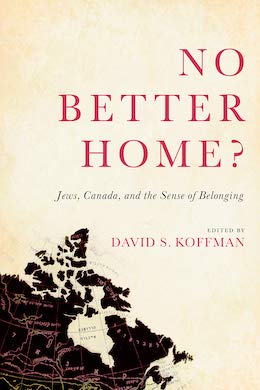
No Better Home? Jews, Canada and the Sense of Belonging, edited by David S. Koffman of York University, was published by University of Toronto Press last year. While many of us may not rush to pick up an academic publication, for fear of its denseness and potential incomprehensibility for laypeople, this one is surprisingly readable. Not every essay will be of as much interest, as the book is Eastern Canada-centric, but many of its ideas will help us in determining for ourselves what we mean when we say Canada is one of the best places in the world to live. And some of its discussion will prod humility – for example, the reality that many immigrants to Canada would rather have been able to stay where they were, but had to flee persecution, war or other circumstances, is a sobering reminder. As is the fact that the situation in Canada has not always been good for Jews or other minorities.

An exact measurement of “best” is elusive and subjective, of course. As editor Koffman notes in his introduction, “Canada may now very well be the safest, most socially welcoming, economically secure, and possibly most religiously tolerant home for the Jews than any other diaspora country, past or present. Jews in Canada today enjoy (1) high rates of voluntary religious participation at all denominational in-points; (2) relatively low rates of nonviolent forms of antisemitism; (3) high degrees of Jewish literacy; (4) the capacity to exercise political power unfettered by antisemitism; (5) institutional completeness for Jewish communal needs; (6) thoroughgoing social acceptance; (7) significant cultural production; (8) public recognition; (9) comparatively low intermarriage rates; and (10) economic opportunities unrestricted by their Jewishness.”

image - No Better Home? book coverThat said, the matter is not so easily determined, as the other contributors to the volume delve into Canada’s past, into other countries that offer good homes for Jews, into the accessibility and affordability of Jewish education, into Canada as a point of arrival for Holocaust survivors, into Yiddish not only as a language but as a link to family, heritage or tradition, and into many other topics.

The situation in Ukraine makes Jeffrey Veidlinger’s essay particularly interesting for anyone wanting to know more about that country and the influence of its history and its emigrants on Canada. For instance, Canada’s multiculturalism policy was a concept introduced in the 1960s by Ukrainian Canadians, “who, in turn, adapted it from the notion of ‘national autonomy’ that Jews had introduced to early 20th-century Ukraine, where Jews were conscious of securing rights as a minority group within a largely binational (Russian and Ukrainian) state,” writes Veidlinger, who is at the University of Michigan. “Ironically, when multiculturalism made it to Canada in its new form, it was met with skepticism and even outright rejection by the organized Canadian Jewish community.” Some of that rejection had to do with this vision of multiculturalism being “premised on a common Christianity,” he says. As well, the Jewish community had learned to navigate between the so-called “two founding races” (French and English powers) and there was concern that diffusion of power would make it harder to do so.

More than one writer touches on the French-English dichotomy, as well as where Indigenous peoples fit in those narratives. In his essay, Koffman considers the question, “What have Jewish-Indigenous peoples’ interactions looked like? How might we think about Jews’ home in Canada refracted through the prism of the interactions between the placed and the displaced?”

The only local contributor to No Better Home is Richard Menkis, a professor at the University of British Columbia. The way in which his essay on museums fits into the collection is encapsulated in the two questions he poses: “What kind of home would it be if the narrative of the Jewish community were not considered ‘Canadian’ and included in the national experiences depicted in state-sponsored exhibitions? And the corollary question is: How comfortable are Jews, in this home, telling their stories, including the stories of the marginalized (the poor) and the ostracized (the criminals)?”

Menkis looks at three exhibits on Canadian Jewry – Journey Into Our Heritage (1970s), A Coat of Many Colours (late 1980s) and narratives at the Canadian Museum of Immigration at Pier 21 in Halifax since it opened in 1999. He concludes that, in the two exhibits, as groundbreaking as they were, Canadian Jews were comfortable only in sharing their achievements and contributions (ie. worth) to Canadian society at large. These exhibits omitted people and activities that could be more controversial, such as Jews involved in the union movement or in radical politics.

At the Canadian Museum of Immigration, the historical summations eventually became more nuanced about Canada’s immigrant communities, and recognized them as having “enriched the cultural mosaic.” This is a grand improvement from the attitude in 1945 of the Historic Sites and Monuments Board of Canada when it was asked to recognize the country’s first synagogue. Menkis begins his essay with this point, citing a member of the board, who said “he was not particularly interested in the commemoration of Jewish activities.” The board member had a similarly dismissive response to the suggestion “that there be a commemorative marker for 400 African Canadians who lived on Vancouver Island before 1858,” notes Menkis.

Every contributor to No Better Home? offers a different perspective. One that seems sadly true is that of Jack Kugelmass of the University of Florida. “My point,” he writes, “is that good places for Jews have a lot to do with robust economies, with stable governments and a consensus in which difference is at least tolerated and immigrants welcomed because they’re good for business.” He recommends: “Enjoy the good times while they last. Nothing is forever. Right now is certainly Canada’s time, as it is for Canada’s Jews.”

Posted on March 11, 2022March 10, 2022Author Cynthia RamsayCategories BooksTags academia, David S. Koffman, No Better Home?, Richard Menkis
Sharansky joins Freilach

Sharansky joins Freilach

Natan Sharansky will be the keynote speaker at Freilach25, Chabad Richmond’s 25th anniversary celebration, on June 19. (photo from Chabad Richmond)

On June 19, human rights advocate Natan Sharansky will be the keynote speaker at Freilach25, Chabad Richmond’s 25th anniversary celebration. Sharansky’s talk will focus on the importance of dialogue and cooperation between Jews from both sides of the Iron Curtain in the struggle for the release of Soviet Jewry, and the importance and challenges of this dialogue today in the battle against antisemitism. He will also address the urgency of building and strengthening Judaism in our community.

A Soviet refusenik, Sharansky was a “Prisoner of Zion” in the former Soviet Union and a leader in the struggle for the right of Soviet Jews to immigrate to Israel. Following his request to make aliyah (immigration to Israel), Sharansky was arrested on trumped up charges of treason and espionage. He was convicted and served nine years in the Gulag. Sharansky was released in 1986, making aliyah on the very day of his release. Since then, he has served in four successive Israeli governments, is the recipient of two international medals and has authored four books.

Freilach25 also honours Rabbi Yechiel and Chanie Baitelman, who have served Chabad Richmond and the community for 25 years.

“Join us and toast these distinguished honourees while celebrating this community milestone. Freilach25 happens to fall on Father’s Day, so this could just be the perfect gift,” said Shelley Civkin, co-chair of Freilach25, which takes place at Schara Tzedeck Synagogue.

Tickets are limited, so reserve at chabadrichmond.com/freilach25. For a sneak preview, visit youtu.be/55QENG60nK4. To get involved with Freilach25, email [email protected].

– Courtesy Chabad Richmond

Format ImagePosted on March 11, 2022March 10, 2022Author Chabad RichmondCategories LocalTags anniversary, Baitelman, Chabad Richmond, Natan Sharansky
Bunny at Cultch

Bunny at Cultch

Emma Slipp co-stars in Bunny. (photo by Emily Cooper)

Emma Slipp co-stars in Bunny, written by Jewish-Canadian playwright Hannah Moscovitch, and presented by the Search Party in the Cultch’s Vancity Culture Lab March 17-27.

In Bunny, Sorrel – a young woman raised by unconventional parents – tries to reconcile her love of Victorian literature, her intellectual Marxist-feminist upbringing, and her burgeoning sexuality. From high school, through college and into adulthood, Sorrel’s story reveals a woman who feels the weight of societal expectations, wants to make the “good” and “right” choice, while simultaneously embracing her own sexual nature.

Bunny premièred in 2016 at the Stratford Festival, and garnered rave reviews for its bold and honest portrayal of female sexuality. With this upcoming run, the Search Party presents the play for the first time in Western Canada. A relatively new theatre company, their 2019 production of Florian Zeller’s The Father won six Jessie Awards. Mindy Parfitt, artistic director of the Search Party, directs this Vancouver première, which features Slipp, Ghazal Azarbad, Kayvon Khoshkam, Jay Hindle, Nathan Kay, Pamela Carolina Martinez and Liam Stewart-Kanigan.

– Courtesy the Cultch


Format ImagePosted on March 11, 2022March 10, 2022Author The CultchCategories Performing ArtsTags Hannah Moscovitch, Search Party, theatre
New school lunch pilot

New school lunch pilot

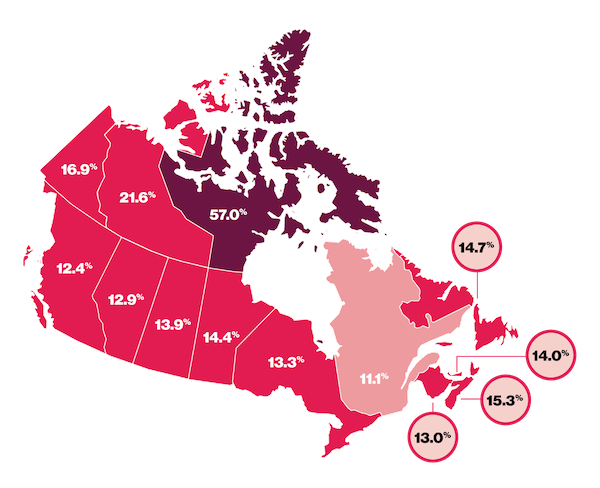
Food insecurity by province or territory, using data from Statistics Canada’s Canadian Community Health Survey, 2017-18. (image from proof.utoronto.ca/food-insecurity)

Jewish Family Services Vancouver (JFS), Richmond Jewish Day School (RJDS) and Kehila Society of Richmond are piloting a new food program to enhance students’ access to healthy and nutritious food in a way that promotes privacy, availability and inclusiveness.

When RJDS needed support with their school lunch program after a contract with a former caterer ended, Kehila Society saw an opportunity to work with JFS and create a food program that benefits all families throughout the week, regardless of income.

With start-up funds provided by Jewish Federation of Greater Vancouver, once a week, JFS delivers hot meals to RJDS at no cost to the students or their families. These meals are healthy, plant-based, and available to all students. In addition, a community fridge and pantry program is in operation throughout the week. The start-up funds provided to the Kehila Society enabled the purchase of a fridge and pantry cupboard, which JFS, the Kehila Society and Richmond Food Bank keep stocked. Students and their families can access healthy snacks, dry goods, fresh produce and meals during school hours.

“The students at Richmond Jewish Day School have absolutely loved the weekly hot lunches sponsored through JFS and the Kehila Society,” said Sabrina Bhojani, principal of RJDS. “Our parents have also expressed their delight with this program, knowing that their children are receiving a warm, healthy and nutritious meal at school. The research is clear – good nutrition helps our children to focus, concentrate and self-regulate, which, in turn, results in improved learning and student performance.”

Proper nutrition plays a central part in learning, yet one in eight households in Canada struggle to access nutritious food, according to PROOF, a research program investigating household food insecurity – defined as “the inadequate or insecure access to food due to financial constraints” – across the country (proof.utoronto.ca). That amounts to “4.4 million people, including more than 1.2 million children living in food-insecure households.”

Healthy, universal school meal programs play an important role in giving children and families access to nutritious and safe food in a non-stigmatizing manner when they need the support.

“School meal programs can play a crucial role in ensuring that all children … can eat healthy and nutritious foods – which, in turn, supports their ability to learn,” said Lynne Fader, co-director of the Kehila Society. “School meal programs are uniquely placed to address under-nutrition, by promoting healthy diets. Serving a free school meal increases children’s intake of healthy foods, especially among children with lower socioeconomic status.”

“All students deserve access to healthy, safe, nutritious and easily accessible food,” said Ilana Labow, director of food security, JFS Vancouver. “We are inspired by this vision and are committed to helping uplift students’ lives through delicious, good food. We look forward to nourishing this program together and watching it thrive and grow.”

– Courtesy JFS Vancouver

Format ImagePosted on March 11, 2022March 10, 2022Author JFS VancouverCategories LocalTags education, food security, health, Ilana Labow, Kehila Society, Lynne Fader, Richmond Jewish Day School, RJDS, Sabrina Bhojani

Positive Jewish leaders online

It’s hard not to doom scroll lately, but I’ve been heartened by watching Jewish leaders take centre stage via social media. These are bright spots in a difficult time. Here are a few to Google and follow. I’ve learned a lot online this way. Perhaps you might, too.

In the world of social media and Talmud study (yes, that’s a thing!), the short social media videos of Miriam Anzovin have gotten a lot of attention. She offers TikTok, YouTube and Instagram posts and links via Twitter. These are on the Daf Yomi, the 7.5-year cycle where one studies a page of Talmud a day. Anzovin’s amazing effort offers a brief summary and analysis of some of the big rabbinic issues. It’s also a breath of fresh air in a field historically dominated by men. Anzovin is a writer and visual artist. She describes her videos as “Daf Yomi reaction videos.” These takes often include slang, curse words, and perhaps difficult interpretations for the usual Jewish text study audience.

Some Orthodox men have voiced criticism to this approach to Talmud study. I would argue that this is a defensive, unhelpful reaction. More Talmud study is good. Talmud study of any kind, is, quite simply – more. It brings more attention to Jewish text and ideas, which is a good thing both for Judaism and for intellectual analysis. Sometimes, the reaction stems from being forced to admit that there are other perspectives and ways of reading religious text. Anzovin centres women’s voices, issues and opinions, critical thinking, liberal and modern views of very old texts. Social media offers her a perfect platform and her work has taken off. It’s long past due. I’m thrilled to see her show up in my feed.

Rabbi Sandra Lawson has been one to follow for awhile. She’s a leader – an activist, a musician and a teacher. Her social media presence allows me to learn a lot. I’ve learned Torah, said Kaddish, and more. Through her anecdotes, she’s encouraged hard examination of ways in which racism is a problem in Jewish life. She’s taken on a lot of firsts in both her former role as the associate chaplain for Jewish life at Elon University and is now the first director of racial diversity, equity and inclusion at Reconstructing Judaism. She was the first African American and first openly gay African American accepted by the Reconstructionist Rabbinical College. Her open, strong online presence embodies many things Judaism needs to see: her identity as a veteran, vegan, personal trainer, musician and wise educator pushes the boundaries of what some people think Jews or rabbis look like. For younger Jews on the web, seeing her laughing with her wife Susan, featuring her little dogs as she makes music – these are models of joyful, modern Jewish life that we need now more than ever.

What does informal Jewish education look like on Instagram? Well, many people source Jewish news specifically from A Wider Frame (@awiderframe).

Debbie, the jewelry designer behind @rootsmetals, posts deep dives into very specific historic, geographic and cultural Jewish topics. It comes complete with bibliographies. Prepare for her snarky responses to trolls (ever present online) who try to threaten her well-being.

Ashager Araro, @blackjewishmagic, is a liberal, feminist, Black Israeli. She does incredible work as an educator in person in Israel. She’s also on Instagram and Twitter, and travels to speak at Hillels and Jewish student centres in the United States. Her focus on Ethiopian Israeli history and modern Jewish life is illuminating, particularly for those who view race only through a parochial North American lens.

Some social media education targets a specific group. For example, Shoshanna Keats-Jaskoll speaks out for others who aren’t able to in the Orthodox world. She tackles the issue of agunot. Agunot are women who cannot obtain a Jewish divorce from their husbands and are unable to remarry according to Jewish law. Keats-Jaskoll also works to provide modest images of women through an internationally sourced photo bank. This works to combat the erasure of women’s faces and bodies and imagery in Orthodox photos, publications and Israeli billboards. Chochmat-Nashim (Women’s Wisdom), her organization, advocates for Orthodox women, including both modern Orthodox and Haredi groups in Israel and the diaspora.

This is just a taste of what’s out there. It’s a start to diversifying your feed. You may have noticed that I started by writing about leaders I admire and, guess what? They’re all women. It’s not that I don’t admire some male leaders. There are plenty of them and some of them are fine human beings – but too many “leader lists” leave women out entirely. March 8 is International Women’s Day. It’s one thing to say we advocate for equality, and to celebrate women’s achievements on a specific day. It’s another to raise up, embrace and educate on a daily basis.

Our tradition offers us moments to celebrate women’s roles, such as the recitation of Woman of Valour (Eishet Chayil) in some homes on Shabbat. However, that’s not a standard practice in every household. Plus, it’s only one moment of one day of a week, when Jewish women are contributing 24/7.

Many of our paid leaders, rabbis and cantors, and even volunteers, such as synagogue board members, are men. It’s been “traditional” to embrace a male leadership model in some communities. However, in an era when more of our lives are both online and more egalitarian, it’s OK to stop the doom scrolling and open up one’s mind – and feed – to some new leaders. In this case, they also just happen to identify as Jewish women.

Joanne Seiff has written regularly for CBC Manitoba and various Jewish publications. She is the author of three books, including From the Outside In: Jewish Post Columns 2015-2016, a collection of essays available for digital download or as a paperback from Amazon. Check her out on Instagram @yrnspinner or at joanneseiff.blogspot.com.

Posted on March 11, 2022March 10, 2022Author Joanne SeiffCategories Op-EdTags internet, Judaism, leadership, social media, Talmud, women
Baked treats for Purim

Baked treats for Purim

Maureen Abood’s verion of ma’amoul. (photo from maureenabood.com)

There are many different Purim foods around the world. In an article from several years ago on aish.com, Dr. Yvette Alt Miller gives recipes for a dozen lesser-known treats. Among them are kreplach, which she describes as a “hidden” food in that the filling is covered up by dough; therefore, it’s appropriate for Purim because of all the hidden aspects in the Purim story.

Other baked treats Miller suggests are French palmiers, to evoke the ears of Haman; Russian kulich, a long, sweet challah loaf, resembling ropes like those Haman wanted to use to hang Mordechai and on which he was hanged; Moroccan Purim bread, boyoja ungola di Purim, using hard-boiled eggs to represent Haman’s eyes; the Bulgarian pasta dish caveos di Aman (Haman’s hair); the Israeli orecchi di Aman (Haman’s twisted ears) and Persian nanbrangl (Haman’s fleas). For all the recipes, visit aish.com/purim_foods_around_the_world.

Here are three other recipes to try. Jews from Syria, Lebanon and Egypt make ma’amoul (which means filled) for Purim – the filling can be nuts (including, but not usually, almonds) or dried fruits, like dates or figs. I’ve also made poppy seed pound cake for the holiday, and my friend (cookbook author) Joan Nathan’s recipe for figs stuffed with walnuts.

MA’AMOUL
(makes 36 cookies)

filling:
1 cup finely chopped nuts (pistachio or walnuts)
1/4 cup sugar
1 tsp orange-blossom water
1 tsp water

dough:
3 cups white flour
1 cup unsalted butter or margarine, cut in pieces
2 tbsp water
1 tbsp orange-blossom water
confectioners’ sugar

  1. Preheat oven to 400°F.
  2. In a bowl, place flour. Cut in butter or margarine until mixture resembles coarse crumbs. Sprinkle orange-blossom water over dough. Stir and knead about three minutes.
  3. Form into 36 balls with a scant tablespoon for each ball. Hold each ball in your hand, make an indentation in the middle and work dough out to form a small cup about a quarter-inch thick.
  4. Combine nuts, sugar, orange blossom water and water for filling. Fill each ball with one teaspoon filling. Pinch dough, sealing in filling and molding the top to resemble a gumdrop. Using the tines of a fork, decorate the cookies.
  5. Place cookies one inch apart on ungreased cookie sheet. Bake 20 to 22 minutes until light brown around bottom edges and pointed tops.
  6. Before serving, cool and then sprinkle confectioners’ sugar on top.

POPPY SEED POUND CAKE

1/3 cup poppy seeds
1 cup milk
1 cup margarine
1 cup sugar
4 eggs, separated
1 tsp vanilla
1/2 tsp almond extract
2 1/2 cups flour
1 tsp baking soda
2 tsp baking powder
1/2 cup sugar
1 tbsp cinnamon

  1. Preheat oven to 350°F. Grease a tube pan.
  2. In a bowl, mix poppy seeds with milk and let sit five minutes.
  3. In a larger bowl, cream margarine, 3/4 cup sugar, egg yolks, vanilla and almond extract.
  4. In another bowl, combine flour, baking soda and baking powder. Add alternately to creamed mixture with poppy seeds and milk.
  5. In another bowl, beat egg whites then add 1/4 cup sugar. Carefully fold in to batter.
  6. Combine sugar and cinnamon in a small bowl.
  7. Pour half the batter into the greased tube pan, sprinkle with half the cinnamon sugar then pour in the rest of batter and top with the remainder of the cinnamon sugar. Bake for 55 to 60 minutes.

FIGS STUFFED WITH WALNUTS
(This recipe comes from Joan Nathan’s Jewish Holiday Kitchen. It makes 6 servings.)

12 dried figs
12 walnut halves
grated coconut (optional)

Open the centre of each fig and place a walnut half inside, then roll the stuffed fig in grated coconut, if using. Place on a dish with other fruit and serve.

Sybil Kaplan is a journalist, author, editor/compiler of nine kosher cookbooks (working on a 10th) and a food writer living in Jerusalem. She leads English-language Shuk Walks in Machane Yehuda and writes restaurant features for janglo.net.

Posted on March 11, 2022March 10, 2022Author Sybil KaplanCategories Celebrating the HolidaysTags baking, figs, ma’amoul, poppy seed pound cake, Purim, recipes

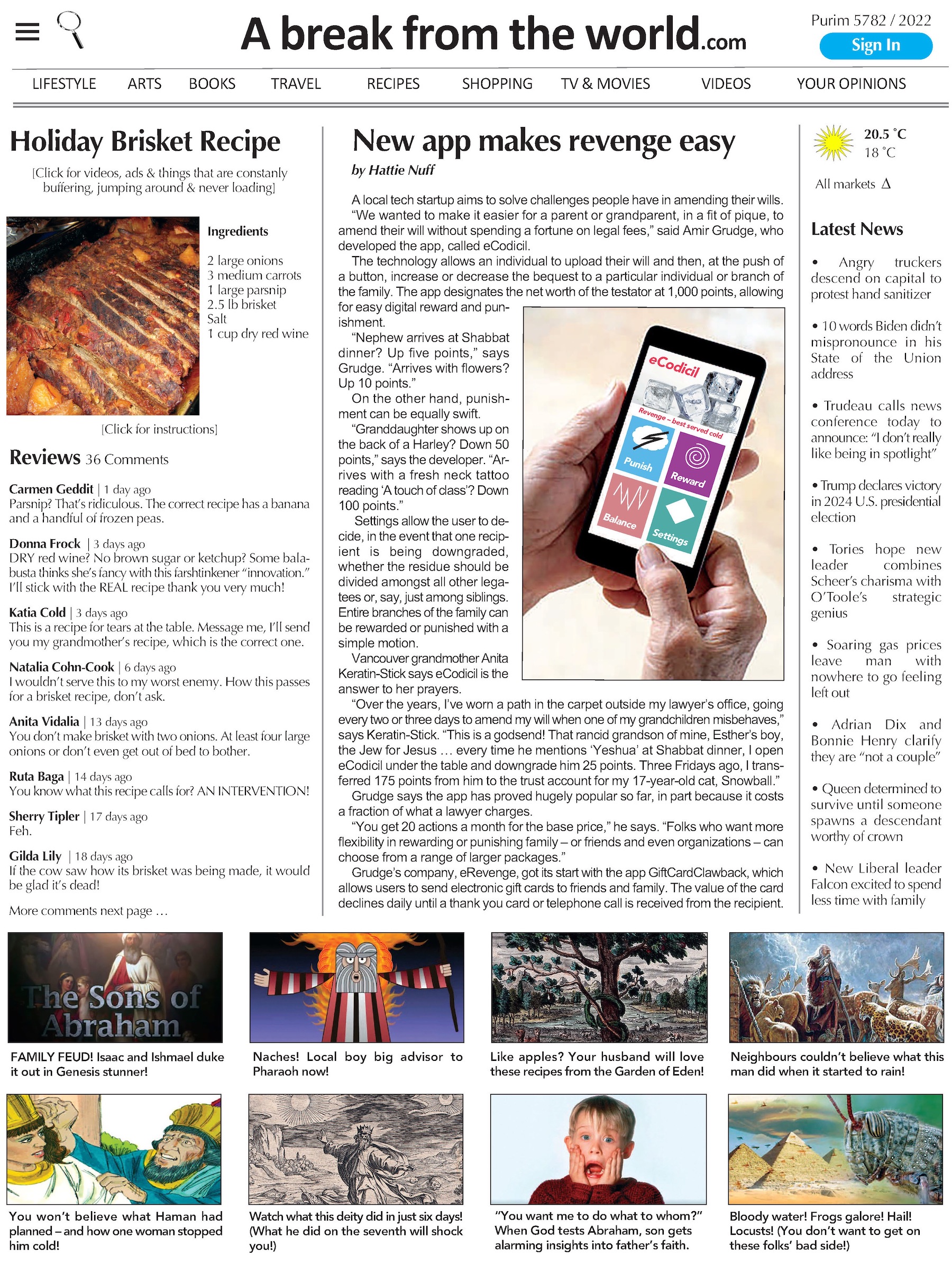
Happy Purim 5782 / 2022!

image - JI Purim Spoof 2022

Posted on March 11, 2022March 10, 2022Author The Editorial BoardCategories From the JITags fake news, Purim

נסיעה מקנדה לישראל בתקופת הקוביד

בימים אלה חזרתי לקנדה מנסיעה לישראל עייף ומותש. הוראות הקוביד במדינות השונות הפכו את הנסיעה לדבר מסובך, מורכב ובעיקר מעייף. כמובן שזה גם הרבה יותר יקר לטוס בימים אלה. יש לקוות שתקנות הקוביד יבוטלו ונחזור לשגרת חיים רגילה. לדעתי הגיע הזמן להתייחס לקוביד כמו אל כל זן חדש של שפעת. אי אפשר להמשיך במגבלות השונות שנה שלישית ברציפות. 

הצטרכתי לטוס מוונקובר לתל אביב בשל אשפוזה של אמי בבית החולים. לאחר מספר ימים שם היא נפטרה ואז נשארתי למסע הלוויה ופרק הניחומים. 

רכשתי כרטיס טיסה בקיי.אל.אם מהרגע להרגע והתענוג עלה לי לא פחות מאלפיים ארבע מאות דולר. יצאתי מיד לבצע בדיקת קוביד לפי דרישות מדינת ישראל והתשלום הוא גבוה במיוחד: מאתיים דולר. נדמה לי שקנדה היא המדינה היקרה ביותר במערב בכל הנוגע לבדיקות קוביד עבור אלה שטסים. כיוון שהתוצאות של הבדיקה הובטחו לי בתוך עשרים וארבע שעות לא יכולתי לצאת לכיוון ישראל בעשות הבוקר ולכן נשארה לי רק האופציה של החברה התעופה ההולנדית. 

בגלל הביקור החפוז החלטתי שלא לעשות צ’ק אין למזוודה ולקחתי עמי תיק מסמכים ומזוודה קטנה למטוס. למרות זאת נאלצתי לעבור בדלפק של קיי.אל.אם בשדה התעופה שלוונקובר, כדי שיאשרו את כל מסמכי הקוביד: תוצאה שלילית של הבדיקה, הטפסים עבור הכניסה לישראל ואישור שחוסנתי בקנדה כבר שלוש פעמים. 

לאחר הטיסה הארוכה שנמשכה למעלה מתשע שעות נחתנו באמסטרדם לעצירת ביניים. בדרך כלל אני יוצא מהשדה אל העיר לאור כך שיש לי כעשר שעות של המתנה עד לטיסה שיוצאת לתל אביב, אך הפעם החלטתי שלא לנהוג כך, כדי שלא אאלץ שוב לאשר את מסמכי הקוביד. 

הסתובבתי שעות בשדה, אכלתי לא מעט, שתיתי יין, התקלחתי ואף שכרתי חדר במלון שבטרמינל למספר שעות. למרות זאת נשארתי מאוד עייף, נמנמתי קלות בטיסה לתל אביב שיצאה בסביבות תשע בלילה. 

נחתנו בתל אביב בסביבות שתיים לפנות בוקר ולשמחתי שדה התעופה היה כמעט ריק בלילה שבין שישי לשבת. רצתי מייד לבצע בדיקת קוביד שנייה עבור ישראל, שעברה מהר יחסית והייתה הרבה יותר זולה מזו שעשיתי בוונקובר. 

יומיים לפני הטיסה בחזרה לוונקובר ביצעתי בתל אביב בדיקת קוביד נוספת, הפעם עבור הממשלה הקנדית. גם היא הייתה הרבה יותר זולה מאשר זו שעשיתי כאן. מילאתי את כל הטפסים הדרושים בעידן הקוביד: טופס יציאה מישראל וטופס כניסה לקנדה. עדכנתי גם את האתר של קיי.אל.אם בכל המסמכים הדרושים ובכן בתוצאת הבדיקה. 

עם זאת כשהגעתי לשדה התעופה בתל אביב נדרשתי שוב לאשרר את כל המסמכים. קיוויתי שזה הסוף לטירטורים בעידן הקוביד אך טעיתי בגדול. 

עם הנחיתה באמסטרדם נאלצתי שוב לאשרר את כל מסמכי הקוביד עבור קנדה. המתנתי בתור ארוך והפקיד רשם משהו על כרטיס עליה למטוס שלי. כשהגעתי לשער העלייה למטוס התברר שהפקיד לא הוסיף מדבקה המאשרת את המסמכים וצוות הקרקע סירב לאפשר לי להיכנס למטוס. נאלצתי שוב לחפש את אותו פקיד כאשר תור גדול של אנשים עמד לפניו. למזלי אשת צוות קרקע עזרה לי והעבירה לו מיד את כרטיס עלייה למטוס והוא הוסיף את המדבקה המיוחלת. רציתי במהירות לשער העלייה למטוס כי פחדתי שהטיסה תצא אל הדרך. 

עם הנחיתה בוונקובר נחתה עלי מכה נוספת: נתבקשתי באופן אקראי לעשות בדיקת קוביד נוספת, רביעית במספר בטיול זה. חוקי הקוביד עייפו אותי עד מאוד בנסיעת חירום זו. 

Posted on March 2, 2022March 10, 2022Author Roni RachmaniCategories עניין בחדשותTags COVID, family, flights, Israel, travel, vaccine, חיסון, טיסות, ישראל, לִנְסוֹעַ, משפחה, קוביד

Posts pagination

Previous page Page 1 … Page 179 Page 180 Page 181 … Page 662 Next page
Proudly powered by WordPress