Skip to content
  • Home
  • Subscribe / donate
  • Events calendar
  • News
    • Local
    • National
    • Israel
    • World
    • עניין בחדשות
      A roundup of news in Canada and further afield, in Hebrew.
  • Opinion
    • From the JI
    • Op-Ed
  • Arts & Culture
    • Performing Arts
    • Music
    • Books
    • Visual Arts
    • TV & Film
  • Life
    • Celebrating the Holidays
    • Travel
    • The Daily Snooze
      Cartoons by Jacob Samuel
    • Mystery Photo
      Help the JI and JMABC fill in the gaps in our archives.
  • Community Links
    • Organizations, Etc.
    • Other News Sources & Blogs
    • Business Directory
  • FAQ
  • JI Chai Celebration
  • JI@88! video

Recent Posts

  • Zionism wins big in Vegas
  • Different but connected
  • Survival not passive
  • Musical celebration of Israel
  • Shoppe celebrates 25 years
  • Human “book” event
  • Reclaiming Jewish stories
  • Bema presents Perseverance
  • CSS honours Bellas z”l
  • Sheba Promise here May 7
  • Reflections from Be’eri
  • New law a desecration
  • Resilient joy in tough times
  • Rescue dog brings joy
  • Art chosen for new museum
  • Reminder of hope, resilience
  • The national food of Israel?
  • Story of Israel’s north
  • Sheltering in train stations
  • Teach critical thinking
  • Learning to bridge divides
  • Supporting Iranian community
  • Art dismantles systems
  • Beth Tikvah celebrates 50th
  • What is Jewish music?
  • Celebrate joy of music
  • Women share experiences 
  • Raising funds for Survivors
  • Call for digital literacy
  • The hidden hand of hate
  • Tarot as spiritual ritual
  • Students create fancy meal
  • Encouraging young voices
  • Rose’s Angels delivers
  • Living life to its fullest
  • Drawing on his roots

Archives

Follow @JewishIndie
image - The CJN - Visit Us Banner - 300x600 - 101625

Earn Frequent Fryer points

Earn Frequent Fryer points

Mouthwatering air fryer chicken satay with peanut sauce. (photo by Shelley Civkin)

My father, alav hashalom, used to use the Yiddish phrase “Don’t hock me a tscheynik,” meaning, literally, don’t bang my teakettle. But, idiomatically, it means don’t bother me with nonsense. My husband Harvey has been hocking me a tscheynik for months now, in the hope that he’ll wear me down and I’ll finally give him the OK to buy an air fryer. Vos air fryer? Whenever people said air fryer, it conjured up a deep fryer filled with greasy doughnuts floating on the top. Or fatty chicken served with waffles, south of the border. It was about as appealing as an oozing wound.

I didn’t know from air fryers. But then my nephew and his wife got one, and regularly post pictures of the mouthwateringly delectable dinners they produce in their newfangled appliance. Still, I was not sold on the idea. While our apartment is a good size, our kitchen was designed for someone who’s culinarily challenged, petite in stature and not in favour of wasting space. Or, for someone like the character of Carrie Bradshaw, from Sex and the City, who only uses her oven to store sweaters. In short, it’s a galley kitchen that only fits two people, if you turn sideways and suck in your stomach. Our counter space is almost non-existent, yet we’ve managed to find a home for a Nespresso machine, waffle maker, Breville toaster oven, Breville blender and two Henckels knife blocks. I can barely fit a Vitamin C tablet on the remaining space. Still, Harvey thinks we can’t live (or at least not live well) without an air fryer.

After months of fighting him on this, I finally relented. Harvey did his due diligence, researched all air fryers known to man (and woman), then snuck out in the dead of night (notice how I made that all dramatic) and bought one. We got the Instant Vortex six-quart air fryer, which is big enough to hold a smart car. Or a baby buffalo.

As you can imagine, we had to make room for it on our aforementioned miniscule counter. The waffle maker now lives in the closet. The Nespresso machine has taken up residence in the liquor cabinet. And the Breville blender now cohabits with the Henckels Dutch oven under the butcher block. Our little family of appliances resembles a group home for wanton, headstrong youth. But still, we love them all the same.

A week has passed since we installed the air fryer into our humble abode and, well, it’s sheer bliss. I never knew it could be like this. So far, Harvey has made baked chicken thighs, carrots and broccoli, hardboiled eggs, potato wedges and hamburgers. All of which passed with flying (frying) colours, except, I’m sorry to say, the broccoli. It was a stringy, hard mess. The air fryer was literally begging us (OK, so I’m anthropomorphizing) for overtime – or at least a day off.

So, does this make us Frequent Fryers?

Meanwhile I’ve been Googling recipes for air fryer eggplant, tofu (Harvey would rather eat nails) and teriyaki salmon. Then, inspiration struck like yummy lightning – I found a bunch of mouthwatering recipes for air fryer chicken satay with peanut sauce. The deal was sealed. Note that, up to this point in time, I had not so much as touched our new appliance. I’d read the owner’s manual a dozen times though. Not wanting to challenge myself too much – you know, performance anxiety, fear of failure – I glommed onto the easiest, most appealing recipe I could find (credit goes to “Damn Delicious”). You’re welcome.

CHICKEN SATAY WITH PEANUT SAUCE

1/4 cup coconut milk
2 tbsp reduced sodium soy sauce
2 1/2 tsp yellow curry powder (I omitted this)
1 1/2 tsp turmeric
3/4 tsp cumin
3 cloves garlic, minced (I used 2 cloves)
1 tbsp freshly grated ginger
1 tbsp brown sugar
1 tbsp fish sauce (I omitted this)
2 lbs boneless, skinless chicken thighs or breasts cut into 1-inch cubes
1 tbsp canola oil (I used olive oil instead)
kosher salt and ground black pepper, to taste
rice vermicelli noodles

for the peanut sauce:
3 tbsp creamy peanut butter
1 tbsp reduced sodium soy sauce
1 tbsp freshly squeezed lime juice
2 tsp brown sugar
2 tsp chili garlic sauce (I used 1 clove garlic, minced instead)
1 tsp freshly grated ginger

  1. To make the peanut sauce, whisk together peanut butter, soy sauce, lime juice, brown sugar, chili garlic sauce (or minced garlic) and ginger in a small bowl. Whisk in two to three tablespoons water (I used coconut milk) until desired consistency is reached. Set aside in the fridge.
  2. In a medium bowl, combine coconut milk, soy sauce, curry powder (optional), oil, salt, pepper, turmeric, garlic, ginger, brown sugar and fish sauce (optional).
  3. In a large Ziploc bag or large bowl, combine chicken and coconut milk mixture, and marinate for at least two hours to overnight, stirring the mixture occasionally.
  4. Make some rice vermicelli noodles, rinse, drain and let them cool in the fridge.
  5. Soak bamboo skewers in water for 30 minutes before using.
  6. Drain the chicken from the marinade, discarding the marinade.
  7. Preheat the air fryer to 385°F for 12 to 14 minutes, or maybe a couple of minutes longer, depending on the wattage of your air fryer.
  8. Thread the chicken somewhat loosely onto the soaked skewers – don’t jam them together or they won’t cook evenly.
  9. Place the skewers into the air fryer basket, leaving room between each skewer. You may have to do a couple of batches to accommodate them all.
  10. Bake for six to seven minutes, then turn the skewers over and bake for another six to seven minutes, until they reach an internal temperature of 165°F.
  11. Serve immediately with peanut sauce over a bed of rice vermicelli noodles. Garnish with thinly sliced green onion or cilantro, and crushed peanuts.

To say that this meal was a success would be a gross understatement. In fact, I think Harvey proposed to me all over again. Then he offered to buy me a new computer. And a car. Perhaps the exhilaration of this delicious meal has gone to my head. Maybe he just said, “Thanks, it was delicious!” I can’t be sure. But my bet is on a new car.

Shelley Civkin, aka the Accidental Balabusta, is a happily retired librarian and communications officer. For 17 years, she wrote a weekly book review column for the Richmond Review. She’s currently a freelance writer and volunteer.

Format ImagePosted on October 7, 2022October 5, 2022Author Shelley CivkinCategories LifeTags Accidental Balabusta, air fryer, chicken satay, cooking, recipes

הבירוקרטיה מנצחת

הבירוקרטיה ממשיכה לנהל את החיים שלנו. חשבתי שסיימנו את הבעיות הביורוקרטיות אך הן ממשיכות לצוץ ולמרר את חיינו. הזכרתי בטור הקודם כי לאחר מותי אמי, אחי ואני נדרשנו לטפל בצוואת ההורים, אך לאור הבירוקרטיה הכל הפך למסובך

הזכרתי עוד כי לאור דרישות בלתי הגיוניות של בנק הפועלים בישראל שמחזיק בחשבון הבנק של הורי, נאלצתי בסוף חודש אוגוסט לטוס לסן פרנסיסקו, כדי להשיג אישור של הקונסוליה הישראלית שם של חתימתי. הפגישה בקונסוליה הממוקמת בבניין משרדים במרכז העסקים של סן פרנסיסקו, נקבעה ליום שלישי (23 באוגוסט) לפני הצהריים. נאמר לי מראש כי אסור לי להביא תיק, מחשב או טלפון, ולכן לקחתי את המסמכים במעטפה. אחרי שעברתי תשאול בטחוני ארוך המתנתי לתורי במשרד. כעבור מספר דקות סימנה לי הפקידה לגשת לדלפק שילדה. הצגתי בפניה חמישה מסמכים משפטיים (בהם זה שעבור הבנק). כל שעליה היה לעשות הוא לאשר שאני חתמתי עליהם. תכננתי לגשת לסניף של פדקס שנמצא בסמוך לקונסוליה לשלוח את המסמכים מהאושרים לאחי בישראל. לתדהמתי הפקידה בקונסוליה הודיעה לי כי הם יבדקו את המסמכים במשך חמישה ימי עבודה, ורק לאחר מכן אוכל לקבל. טענותי כי אני צריך את המסמכים בדחיפות ועל הקונסוליה מוטל רק לאשר את חתימתי, לא הועילו. המתנתי לבואה של סגנית הקונסול שבדקה שאני הוא אני (מול הדרכון הישראלי שלי ותעודת הזהות), ואישרה את חתימתי. שאלתי גם אותה מדוע אינני יכול לקבל את המסמכים המאושרים לידי, והיא הסבירה כי על הקונסוליה לבדוק אותם לעומק. לא עזרו כל תחנוני ונאלצתי לקבל את רוע הגזרה. לאור כך שילמתי לקונסוליה עבור בדיקת המסמכים ועבור המשלוח שלהם מסן פרנסיסקו לביתי בוונקובר. כך שהתנהלות הקונסוליה גרמה לי עיכוב בשליחת המסמכים החתומים לישראל והדבר היה כרוך גם בהוצאות כספיות נוספות

חזרתי לוונקובר ב-28 באוגוסט ושוחחתי עם בנו של אחי שגר בניו ג’רסי. גם הוא נאלץ לאשר את חתימתו מול הקונסוליה הישראלית. הוא בחר לעשות זאת בקונסוליה בניו יורק. לתדהמתי לאחר שחתימתו אושרה הוא קיבל את המסמכים בחזרה לידיו, ובניגוד לקונסוליה בסן פרנסיסקו, הקונסוליה בניו יורק לא החזיקה במסמכים במשך חמישה ימים. זה רק חיזק את הרגשתי שהקונסוליה הישראלית בסן פרנסיסקו פעלה שלא כשורה, ואסור היה לה לבדוק את המסמכים, אלה רק לאשר את חתימתי ולהחזירם אלי מייד

למחרת הגעתי בחזרה לוונקובר, קיבלתי את המעטפה מהקונסוליה הישראלית, בהם חמשת המסמכים החתומים על ידי, שאושרו על ידיה. הלכתי מדי לסניף של פקדס הקרוב לביתי ושלחתי את המסמכים בדואר אקספרס לאחי בישראל. נאמר לי כי בתוך ארבעה ימים (עד ה-31 בחודש) אחי יקבל את המעטפה במשרדו בירושלים. שילמתי על השירות “המיוחד” של פקדס מאה שבעים וחמישה דולר. במשך הימים הבאים בדקתי באתר של פדקס את התנהלות משלוח המעטפה מוונקובר לירושלים. נדהמתי לראות שפקדס עבודת בחוסר יעילות, שגרם לעיכוב במשלוח הדחוף של המעטפה אחי למעלה מחמישה ימים תמימים. המעטפה נשלחה על ידי פקדס משדה התעופה של ונקובר למרכז של פדקס בממפיס טנסי. משם הועברה המעטפה למרכז של פקדס באינדיאנפוליס אינדיאנה. לאחר מכן המעטפה נשלחה לאירופה והגיעה מרכז פקדס בשדה התעופה שארל דה גול פריז. משם היא הועברה למרכז פקדס בקלן שבגרמניה. רק בשבת בערב המעטפה נחתה סוף סוף בנמל התעופה בן גוריון והוחזקה במתקן פקדס עד יום שני בבוקר, עד שהועברה לאחי. כאמור הבירוקרטיה מנצחת ובגדול

Posted on September 21, 2022September 22, 2022Author Roni RachmaniCategories עניין בחדשותTags banks, bureaucracy, consulate, death, Israel, San Francisco, בירוקרטיה, בנקים, ישראל, מוות, סן פרנסיסקו, קונסוליה
Adding health supports

Adding health supports

Matti Feigelstock, left, and Alisa Farina (photos from Jewish Federation)

The Jewish Federation of Greater Vancouver is expanding its efforts to address the mental health needs of younger members of the community by forming a partnership with Project L’Chaim, and hiring a new child, youth and young adult mental health worker.

According to Shelley Rivkin, vice-president of local and global engagement at Federation, the partnership with Project L’Chaim, an organization helping adolescents and young adults through life’s challenges, stems from identifying the importance of raising awareness of mental health issues confronting youth and providing professional development for frontline workers.

To this point, stigma has long contributed to people not feeling safe in discussing the mental health issues faced in the community openly; many families, consequently, have felt very alone in their struggle to find the necessary services and supports.

However, as Rivkin explained, “The pandemic universalized and destigmatized mental health issues. More people started talking openly about the anxiety and depression they or their children were experiencing, as well as the challenges they experienced in finding the help they needed. Over the past two-and-a-half years, we heard from schools, camps, Hillel and youth workers in our various organizations that there was a need for an experienced child and youth mental health practitioner who had a visibility in the community and would be able to immediately support, whether it was crisis intervention or short-term counseling, and could be a resource to parents and families, as well as other professionals.”

For her part, Matti Feigelstock, Project L’Chaim’s coordinator, is able to promote teen mental health in the Greater Vancouver community “by bringing programming, training and curricula to the teens and teen-facing adults in our community, as well as mental health professionals.” Through both Zoom and in-person events, she aims to bring more awareness and remove the stigma of mental illness. She also wants to provide adults with the tools to be there for the teens in their care.

“Our curricula for middle and high schoolers provide students with the ‘why’ to live, helping them find their purpose and build resilience to face life challenges,” Feigelstock told the Independent.

Project L’Chaim has a lot planned for the upcoming year. “We have a full calendar of virtual training planned for parents, educators and clinicians on topics from anxiety in children to talking about substance abuse,” Feigelstock said. “We also are looking forward to hosting a mental health day in collaboration with all of the local Jewish organizations, along with an awareness campaign to promote the role every individual has in mental health. Additionally, we are working with the local schools to teach our course, the Happiness Hack, to students, ensuring the conversation continues in and out of the classroom.”

Feigelstock, who has been at the helm of Project L’Chaim since May, has been involved with community service work at several local nonprofit organizations over the past 19 years. She is currently co-executive director of the Mamatefet Community Society, a charity that supports expectant and new mothers. For the past year, she has been a therapist focusing on women and youth at Elevate Therapy.

Project L’Chaim was started through a grant from the Diamond Foundation in memory of the late Steven Diamond. It serves as the Vancouver branch of the Wellness Institute.

“Our partnership with Project L’Chaim creates opportunities for parents and family members, youth workers, teachers and other frontline workers to access opportunities to hear and learn from renowned youth professionals,” Rivkin said. “Project L’Chaim’s connections to the Wellness Institute open up significant educational opportunities for the community. Their excellent publications are also available throughout the community and provide critical information in an accessible manner.”

* * *

In August, Jewish Federation welcomed Alisa Farina to the newly created position of community child, youth and young adult mental health worker.

Rivkin explained Federation realizes that young people who are struggling with their mental health are very resistant to seeking help through formal routes. By establishing a mental health outreach position, a person who can meet them in venues they are comfortable in, Federation hopes to create an environment in which more youth will seek help.

“We know that parents and family members struggle to navigate the mental health system and access the resources they need. This position will support and supplement the existing programs and services already available and diversify the supports available in the community. We want to make sure that parents and family members who are impacted by these issues feel supported and able to overcome the fear and despair they experience as they search for the right programs and resources to help their children,” Rivkin said.

Farina will provide direct support to children, youth and young adults struggling with mild or moderate mental health issues, such as anxiety and depression. She also will provide assistance and advocacy to parents and families as they navigate mental health systems, including consulting with school counselors and other professionals. She has worked for the Burnaby School district for 29 years, the last 10 of which she focused on work with high-risk youth and their families.

“When children or young people experience vulnerable mental health, it affects the individual, family and our community,” Farina said. “Our approach will be to stand with young people and walk beside families by providing direct one-to-one support, family support, advocacy and mental health system navigation in a judgment-free, low-barrier and equitable way. We want to foster resilience and mental well-being in our young people.”

For more information, visit wellnessinstitute.org or jewishvancouver.com.

Sam Margolis has written for the Globe and Mail, the National Post, UPI and MSNBC.

Format ImagePosted on September 16, 2022September 14, 2022Author Sam MargolisCategories LocalTags Alisa Farina, health, Jewish Federation, Matti Feigelstock, mental health, Project L’Chaim, Shelley Rivkin, Wellness Institute

Drescher opens Federation campaign

Fran Drescher, best known for the TV show The Nanny, among other comedic roles, enraptured audience members at the Jewish Federation annual campaign launch Sept. 8. She offered deeply vulnerable descriptions of being raped and of surviving cancer, and the related mental health impacts these life-altering events sparked.

The presentation was the centrepoint of an evening dedicated to the topic of mental wellness. Actor, neuroscientist and Jeopardy host Mayim Bialik joined live from Los Angeles along with her partner and podcast cohost Jonathan Cohen. Their podcast, Mayim Bialik’s Breakdown, is focused on myths and misunderstandings about mental health and emotional well-being. They were interviewed by Globe and Mail reporter Marsha Lederman.

A panel of local experts completed the evening. Alisa Farina, Federation’s new child and youth mental health worker, Danya Rogen, a social worker who specializes in mood disorders, Dr. Annie Simpson, a clinical psychologist focused on childhood anxiety, and Tanja Demajo, chief executive officer of Jewish Family Services, shared reflections with Dr. Sandy Penn Whitehouse, a pediatrician and clinical associate professor at the University of British Columbia and medical director at B.C. Children’s Hospital.

Lana Marks Pulver, chair of the campaign, opened the event. Candace Kwinter, chair of the Federation board, introduced a video on mental wellness. Sue Hector, chair of women’s philanthropy, introduced Drescher. Federation chief executive officer Ezra Shanken closed the event. King David High School Vocal Ensemble led the Canadian and Israeli national anthems.

Posted on September 16, 2022September 14, 2022Author Pat JohnsonCategories LocalTags annual campaign, Fran Drescher, Jewish Federation, mental health
Israel’s Christian fellowship

Israel’s Christian fellowship

Yael Eckstein, president and chief executive officer of the International Fellowship of Christians and Jews. (photo from IFCJ)

Twice a year, the president and chief executive officer of the International Fellowship of Christians and Jews, Yael Eckstein, heads into Ukraine’s rural districts to visit elderly Holocaust survivors. Eckstein says she prefers to make the three-hour flight to Kyiv from her office in Jerusalem in the winter, when the temperatures in Ukraine have often plummeted, and country roads to small, out-of-the-way villages are overgrown with ice and snow and almost impassable. She knows that’s when these Jews, most of whom are in their 80s and 90s now, will need help most: when the summer’s vegetable harvest is almost gone and there’s no money by which to purchase food, when “it’s freezing, so freezing you can’t feel your fingers and there’s no heat” because there’s also no electricity.

For 18 years, Eckstein has been making this trek to connect with Ukraine’s most vulnerable Jews, those who survived the pogroms and Nazi exterminations in the 1930s and ’40s and are distrustful of their neighbours, so have lived self-sufficiently for decades. For many of these residents, Eckstein said, maintaining formal connections with local Jewish communities is viewed as a risk. “They don’t want to be on any lists of the Jewish community or of the synagogue, because they were the lists that Ukrainians used in order to find the Jews and kill them [during the Holocaust].” And so, for decades, they have done their best to live on what they can grow and preserve themselves.

“That’s a lot of hard, physical labour and work. When they get to 80 or 90 years old, suddenly they can’t do that any more. They can’t go chop wood [for their wood-burning stoves]. They can’t grow the vegetables,” said Eckstein. And they can’t haul enough water from the well ahead of winter to store in their kitchens when it’s icy, “so it leaves them literally starving, without heat and water.”

This past winter, those needs became even more pressing. The IFCJ was already networking with the country’s many small Jewish communities when Russia began amassing its forces at the Ukrainian border. About 200,000 Jews in the former Soviet Union were receiving humanitarian aid, including life-saving aliyah to Israel. A war could further jeopardize Ukraine’s most vulnerable residents.

“Around four days before the war broke out in Ukraine, I flew into Kyiv and assessed the needs on the ground,” said Eckstein. “When I got back [to Israel] the first thing I did was [give] a $1 million emergency preparedness grant to Jewish communities across Ukraine.” She urged them to use the money to buy canned food, mattresses and other emergency supplies in case war broke out. Eckstein said they also connected with major charities in Ukraine, to formulate a broader plan for helping Jewish refugees displaced by the conflict.

As a Jewish philanthropy organization whose success is largely driven by Christian donors, the IFCJ holds a unique role in garnering support for Israel and Jewish causes. It remains one of the largest pro-Israel charities in the world and its data show that it has raised more than $2.6 billion US for Israeli and Jewish causes since its inception in 1983. Since this February, the organization has contributed more than $6 million in aid to Ukrainian Jewish communities, with $1.5 million coming through its Canadian affiliate, the IFCJ Canada.

When it comes to raising funds and support for aliyah, the IFCJ is a powerhouse. In 2021, it brought more than 5,500 olim (immigrants) to Israel. Another 4,000 were resettled this year, including 38 Holocaust survivors who got to Moldova on stretchers. The cost of the transportation to Israel and medical treatment were paid for by the IFCJ, “but the second they landed in Israel, the Israeli government took full responsibility,” said Eckstein.

But, as stated, aliyah isn’t the only way that the IFCJ has provided aid to Ukrainian Jews. In February, the Moldovan government opened its airspace so that the IFCJ could land a plane carrying 15 tons of supplies for Ukrainian refugees displaced by the conflict.

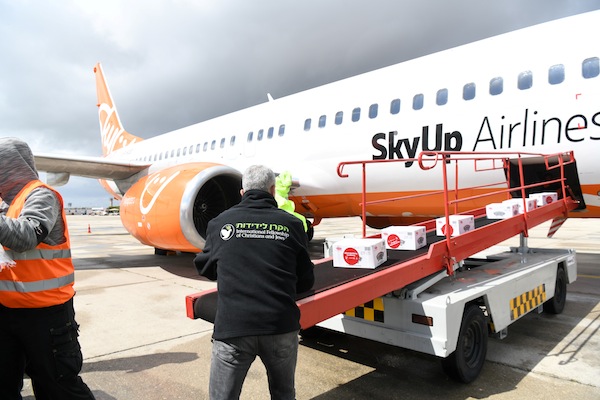
“We off-loaded the 15 tons of humanitarian aid to our partners on the ground to drive it to [refugees] inside of Ukraine and then we loaded the plane with 180 Jewish refugees who were making aliyah and flew them to Israel. When we had enough olim to fill two flights, we immediately flew two flights,” Eckstein said.

photo - Partnering with other Jewish aid organizations has been key to the International Fellowship of Christians and Jews’ efforts to provide aid for Ukraine refugees
Partnering with other Jewish aid organizations has been key to the International Fellowship of Christians and Jews’ efforts to provide aid for Ukraine refugees. (photo by Jhanelle Alleyne / IFCJ)

Partnerships are key to the success of many of IFCJ’s programs, especially to getting food and clothing to those in need. “We gave the [Joint Distribution Committee (JDC)] and Chabad, for example, millions of dollars. The IFCJ often works with the Jewish Agency in Israel, as well. We create the criteria and the program and they are able to implement it on the ground,” explained Eckstein. “[In] areas like Moldova, when there’s no one else who is able to do it, the fellowship creates the programmatic ability and implements the life-saving plans” that are then carried out by partners.

The IFCJ (initially called the Holyland Fellowship of Christians and Jews) was launched in 1983 by Yael Eckstein’s father, the late Rabbi Yechiel Eckstein. According to the organization’s website, its mission was “to fulfil his vision of building bridges of understanding and cooperation between Christians and Jews,” a focus that was reflected in the rabbi’s writings, speeches and broadcasts. In 1990, with the collapse of the Soviet Union, the fellowship launched its On Wings of Eagles program to fund the transport of Soviet Jews to Israel.

In 2003, the fellowship’s sister organization, IFCJ Canada, was launched to connect with Canadian donors. It contributes to a variety of global humanitarian programs.

“In regard to aliyah,” said IFCJ Canada executive director Jackie Gotwalt, “we work on the ground with local partners providing support and resources for newly landed olim to help them start their new lives in the Holy Land.”

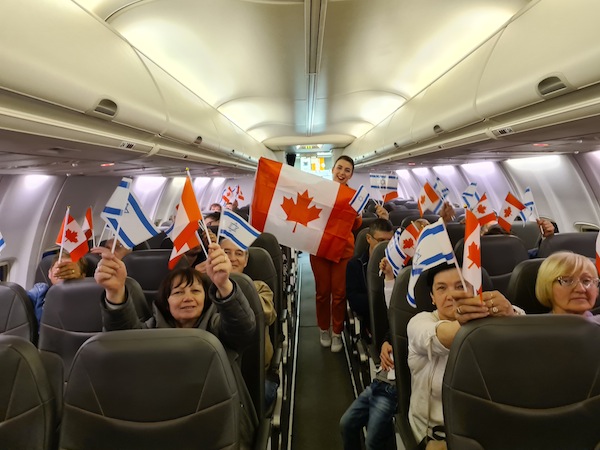
photo - The International Fellowship of Christians and Jews chartered planes and facilitated the aliyah of thousands of Jews this year
The International Fellowship of Christians and Jews chartered planes and facilitated the aliyah of thousands of Jews this year. (photo by Jhanelle Alleyne / IFCJ)

Since 2003, the Canadian organization has raised more than $120 million from its largely Christian donorship, which goes both to supporting aliyah and humanitarian aid in the former Soviet Union and other countries with at-risk Jewish populations, such as Ethiopia, Venezuela and, recently, France.

“The IFCJ focuses on support from Christian friends of the Jewish people to further efforts we support to address the humanitarian crisis in Ukraine and in bordering countries and, in particular, assist members of the Jewish community caught in this tragic conflict,” Steven Shulman said.

Shulman serves as the president and chief executive officer of Jewish Federations of Canada-UIA, which ensures direction and control of charitable funds raised by Jewish federations throughout Canada. He said the Jewish federations across Canada and IFCJ fundraise independently, though they both work with the Jewish Agency and the American JDC to further the same goals, which are to facilitate aliyah for those who request it and provide humanitarian aid to Jewish communities in the region.

Eckstein said there are many reasons why their Christian donorship contributes to the IFCJ, but at the core is a sense of obligation and a belief that they are doing their part to help Israel stay strong.

“It’s really biblical. Protestant and Evangelical Christians are mostly our donor base. What makes them unique from the other streams of Christianity is that they put a big focus on the Torah. They read the Tanach, what they call the Old Testament,” which places an emphasis on helping the Jewish people return to Israel, Eckstein explained.

“What I’ve seen in the past 18 years of working with Christian friends of Israel is they feel so lucky to be able to play a small part in both saving Jewish lives who [they feel] have been forgotten, neglected [or] persecuted by [others]. [The fact that] now, as Christians, they are able to help them, is something they feel [is] an opportunity and privilege.”

Jan Lee is an award-winning editorial writer whose articles and op-eds have been published in B’nai B’rith Magazine, Voices of Conservative and Masorti Judaism and Baltimore Jewish Times, as well as a number of business, environmental and travel publications. Her blog can be found at multiculturaljew.polestarpassages.com.

Format ImagePosted on September 16, 2022September 14, 2022Author Jan LeeCategories WorldTags Canada, fundraising, IFCJ, International Fellowship of Christians and Jews, Israel, Jewish Federations of Canada-UIA, philanthropy, Steven Shulman, Yael Eckstein

Queen Elizabeth II, 1926-2022

Ephraim Mirvis, chief rabbi of the United Hebrew Congregations of the Commonwealth, issued a special prayer in English and Hebrew to mark the passing of Queen Elizabeth II. It was shared by Beth Israel’s Rabbi Jonathan Infeld at the opening of the Jewish Federation of Greater Vancouver annual campaign Sept. 8, hours after the Queen passed away.

“In an age of profound change, she signified order and justice; and in times of tension, she offered generosity of spirit,” the prayer read. “A defender of faith with an unfailing sense of duty, she was a steadfast guardian of liberty, a symbol of unity and a champion of justice in all the lands of her dominion.… In life, she was a most gracious monarch, who occupied a throne of distinction and honour. In death, may her legacy inspire the nations of the world to live together in righteousness and in peace.”

History’s longest serving British monarch, Elizabeth II passed away 70 years and 214 days after ascending the throne upon the death of her father, King George VI.

Canada’s Governor General Mary Simon paid homage to the Queen and, on Monday, the government announced that Simon and Prime Minister Justin Trudeau, perhaps accompanied by others, would represent the country at the monarch’s funeral Sept. 19.

President Isaac Herzog will represent Israel at the Queen’s funeral. Jewish leaders around the world joined others in lauding the Queen’s service.

In 2005, the monarch attended a ceremony commemorating the 60th anniversary of the liberation of Auschwitz. According to reports, she refused to be ushered away by staff, instead remaining to speak individually to the attendees and listening to each of their experiences of survival.

“She gave each survivor – it was a large group – her focused, unhurried attention. She stood with each until they had finished telling their personal story. It was an act of kindness that almost had me in tears,” the late British chief rabbi Lord Jonathan Sacks wrote afterward. “One after another, the survivors came to me in a kind of trance, saying: ‘Sixty years ago I did not know if I would be alive tomorrow, and here I am today talking to the Queen.’ It brought a kind of blessed closure into deeply lacerated lives.”

Queen Elizabeth II was patron of the Holocaust Memorial Day Trust, a British government-funded charity that promotes International Holocaust Remembrance Day.

Buckingham Palace seems to have maintained an unspoken boycott of Israel, one of the countries the Queen never visited, although she met many Israeli leaders and knighted the former prime minister and president Shimon Peres.

Posted on September 16, 2022September 14, 2022Author Pat JohnsonCategories WorldTags memorial, Queen Elizabeth II

Extremism not helpful

Over the Labour Day weekend, while many Canadians were soaking up the declining rays of summer or doing last-minute back-to-school shopping, Middle East politics eclipsed everything else – well, for those of us who track these things closely, which, it turns out includes Jagmeet Singh, leader of Canada’s New Democratic Party.

In fairness, it is not clear when Singh hit send on an email that made the rounds over the holiday weekend. But the contents led the Centre for Israel and Jewish Affairs to send out not one but two urgent emails on the issue, both of which included the word “outraged” in the subject line.

And “outrage” is a fair reaction to the contents of Singh’s missive.

“We believe Israel’s illegal occupation of the Palestinian territories is at the centre of the challenges facing the Palestinian and Israeli people,” wrote Singh. This essentialist view ignores the reality that the occupation continues due to a complex interplay between anti-Israel terrorism, a lack of political will, and intractability around a two-state solution or some other coexistence plan that would lead to greater peace, which includes a lack of willingness to coexist from factions on both sides of the conflict.

“We all want to see a future where Israelis and Palestinians can live side by side, in peace,” Singh writes. But then he goes on to outline a list of grievances that places responsibility only on Israelis and which, therefore, is unlikely to do anything to realize such a future.

The demands include that the Canadian government increase funding to the United Nations Relief and Works Agency, “which supports Palestinian refugees.” The letter makes no reference to the controversial nature of UNRWA’s definition of refugees, which has refugee status passing down generations, thereby continually increasing their number, perpetuating rather than ameliorating the problem. Nor does the NDP letter mention the organization’s Palestinian education curriculum, which contains antisemitic elements that directly impede any progress towards peace in the region; allegations of corruption and mismanagement of the agency; and even UNWRA’s witting or unwitting aid of the terrorist group Hamas, with tunnels reportedly being found under UNRWA schools and rockets stored on their premises. Instead, the letter calls on Canada to “condemn the Israeli government’s attacks on civil society in Israel and Palestine, including the recent designation of six Palestinian human rights groups as ‘terrorist.’”

There are wishes for “peace in Israel and Palestine” in the NDP letter, but the lack of peace is blamed solely on one side, without acknowledging the violence and harms inflicted on Israelis. The fundamental fact of the issue is that no blatantly one-sided position will make things better for either Palestinians or Israelis and any position that places all the blame on one side will not lead to a resolution. Such a stance will only perpetuate conflict. Peace and coexistence in that region will depend on compromise on both sides.

In the larger scheme of world events, an imbalanced missive from the leader of a Canadian political party is largely irrelevant. Singh’s catalogue of blame will move the dial in Israel and Palestine not an inch. What it does is inflame the issue here at home and reinforce the trend in Canadian politics that sees this issue as a political football. At the same time as there are legitimate and important critiques of Israel’s behaviour and treatment of Palestinians, particularly those under occupation, Jewish self-determination should not be anyone’s campaign talking point.

There is a lesson here for those who support Israel, too. There is a strain that sees Israel supporters as more moral, more fair and more realistic than the activists who march against “apartheid,” “genocide” and what Palestinian leader Mahmoud Abbas recently called “50 holocausts” against Palestinians. However, the incessant and dishonourable contesting of the very existence of Palestinian people – if you haven’t seen it, you’re not on Jewish social media – does nothing to advance the cause of Jewish self-determination or end the human suffering or move anyone towards peace.

Extremism is not a Canadian value, nor a Jewish one  – and it will not result in an end to the Israeli-Palestinian conflict. Nor will it solve any of the countless challenges we are facing around the world. We need to resist the attraction of simplistic solutions to complex human problems. We need to do, think and behave better. And we need to demand that our leaders to do so, as well.

Posted on September 16, 2022September 14, 2022Author The Editorial BoardCategories From the JITags extremism, Israel, Israeli-Palestinian conflict, Jagmeet Singh, NDP, Palestine, peace
It’s all about love and family

It’s all about love and family

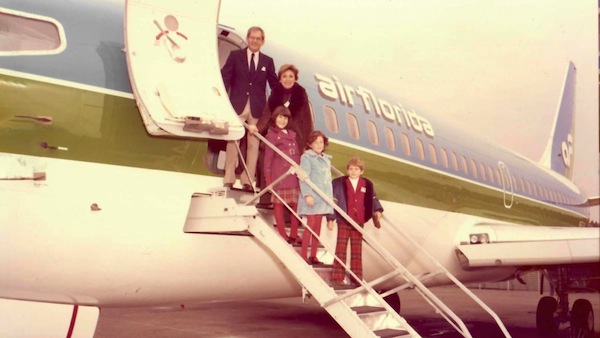
Last Flight Home follows Air Florida founder Eli Timoner’s last weeks of life. (still from film)

The Vancouver International Film Festival opens Sept. 29, and this year’s festival will be impressive, if the releases reviewed by the Independent are any indication.

Last Flight Home, a very personal and moving documentary written and directed by Ondi Timoner, will have viewers in tears. It will also have viewers contemplating mortality, family and what makes life full and worth living.

The film follows the last weeks of Timoner’s father Eli’s life. No stranger to hardship – he had been paralyzed on his left side since a stroke almost 40 years earlier – a bedridden 92-year-old Eli tells his family he wants to die. Immediately. Living in California, he could make that choice, and does make that choice. Once he passes the state assessment, the required 50-day waiting period begins.

During this time, Eli says his goodbyes to his wife, kids, grandkids and other relatives, to friends and to former employees. He offers advice and, with the help of those whose lives have been made better by his existence, he comes to love himself, finally shedding, after decades, the shame he felt at not being what he considered a good provider for his family. Before his stroke, he had been a wealthy businessman – founder and head of Air Florida – but, afterward, he and his wife had to declare bankruptcy and money was tight from then on.

Thankfully, Eli had those 50 days. While it was sad that he didn’t know how successful he really was in life until he chose to die, at least he did die knowing that he had loved and that he was loved.

* * *

photo - In Karaoke, married couple Meir and Tova rediscover their love for each other
In Karaoke, married couple Meir and Tova rediscover their love for each other. (still from film)

The Israeli film Karaoke, written and directed by Moshe Rosenthal, also deals with mortality and late-in-life realizations. Long-married couple Meir and Tova have long lost their passion for each other and, really, for living. It takes the arrival of a new neighbour, Itsik, to bring out both the best and worst in them and in their relationship.

Itsik is rich and confident, a player in every sense of the word. While his loud karaoke parties annoy most everyone in the building, the residents who gain the privilege of an invitation feel not only special, but a little superior, more worldly, as they open themselves up to the possibilities that Itsik embodies.

Billed as a comedy, Karaoke is more cringey than funny, and the musical score even makes it seem creepy at times, as does the pacing and lighting. That said, the acting is excellent and it does have some funny moments. As well, the messages are refreshing: love can be reignited and you can have adventures at any age.

* * *

photo - To make Killing Ourselves, Maya Yadlin got her parents and sister to come out to the desert to film
To make Killing Ourselves, Maya Yadlin got her parents and sister to come out to the desert to film. (still from film)

To make the 15-minute short Killing Ourselves, Israeli filmmaker Maya Yadlin took her parents and sister to the desert. According to her bio, this is something Yadlin often does – make movies about and starring her family. The result in this case is a delightful, amusing peek into their relationships. Most viewers will appreciate the interactions, with her parents both begrudgingly and proudly helping “film student” Yadlin with her homework and her sister, an actress, coming along for the ride – and the work.

* * *

VIFF runs until Oct.  9: viff.org.

Format ImagePosted on September 16, 2022September 16, 2022Author Cynthia RamsayCategories TV & FilmTags Eli Timoner, end-of-life, MAiD, movies, Vancouver International Film Festival, VIFF
Photographic chronicle

Photographic chronicle

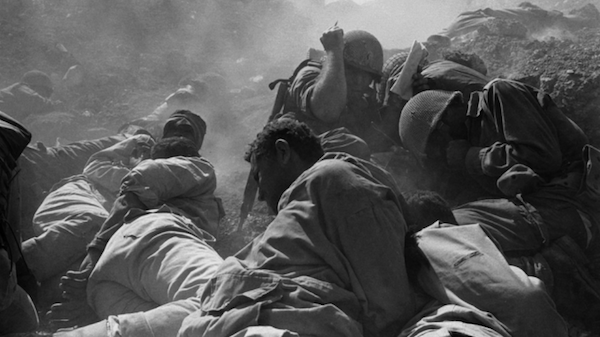
Image from 1341 Frames of Love and War, a photo by Micha Bar-Am.

Photographer Micha Bar-Am, now 92, is considered perhaps the foremost visual chronicler of Israeli history. In 1341 Frames of Love and War, filmmaker Ran Tal creates what amounts to a family reminiscence among Bar-Am, his wife Orna and sons Barak and Nimrod, complete with snippy retorts and full-throated arguments. All of this is set against thousands of Bar-Am’s photos, creating a barrage to the senses of blown-up buses, dancing hippies, funerals and the scope of Israeli life captured in still photos. The family, whose voices make up the narration of the documentary, are seen only in the pictures.

Although Bar-Am was present to immortalize in images the Eichmann trial and the liberation of the Western Wall, his work is mostly of ordinary Israeli people and events, including war, which has been all too “ordinary” for the country and its people. The photos predictably begin in black-and-white – the first colour photo in the film appears during the 1967 war, perhaps not merely a sign of changing technology but also of the before and after times of the occupation.

A photo from the time – an image Bar-Am captured of a soldier praying at the newly liberated Kotel – is a prism through which Micha and Orna chronicle their own changing views of their country. The soldier had fashioned an ammunition belt into a makeshift prayer shawl. Orna explains how they loved the photo at first, apparently as a symbol of resistance and survival. After a few years, they came to detest it as a representation of the connection between religion and power. Now, in their later years, they are agnostic about the thing.

“That’s how it was then,” Orna says. “We don’t have to feel love or hate toward it. That’s how it was.”

Bar-Am acknowledges that he was a shy young man and the camera was an excuse to get closer to things, to understand people better. Through his eyes, and the immortality of his images, Israelis and others can perhaps view themselves and the world around them more closely.

The film is an intimate exploration into the work of a legendary craftsman and, through him, a snapshot into the past.

For the full film festival schedule, visit viff.org.

Format ImagePosted on September 16, 2022September 16, 2022Author Pat JohnsonCategories TV & FilmTags history, Israel, Micha Bar-Am, photography, Vancouver International Film Festival, VIFF
Chance to win 2 tickets to VIFF’s screening of The Forger

Chance to win 2 tickets to VIFF’s screening of The Forger

A still from the film The Forger, starring Louis Hofmann.

The 41st Vancouver International Film Festival takes place Sept. 29-Oct. 9, 2022. This year, the Jewish Independent is the media sponsor of The Forger (directed by Maggie Peren, Germany/Luxembourg), so we’re doing a draw for free tickets to one of the screenings!

Email [email protected] by Sept. 23, 2022, to be entered in a draw for the Thursday, Oct. 6, 1:15 p.m., screening at International Village 9.

Synopsis of the film:
Based on a true story, Cioma Schönhaus, a young Jewish man living in 1942 Berlin, works at a munitions factory until he’s recruited by a former Nazi bureaucrat to forge passports for Jewish people to escape the country. Cioma waltzes through Berlin with reckless abandon, impersonating military personnel even as he risks discovery by the Gestapo. Adapting the story from Schönhaus’s memoir, director Maggie Peren gives her film the same immaculate attention to detail as Cioma does his forgeries, contrasting the dimly lit Berlin of Jewish people struggling with food rations with the decadence of the Nazis. The film balances the playful atmosphere of his ingenuity against the sombre backdrop of Nazi Germany and the looming danger he faces.

https://viff.org/whats-on/the-forger/

Format ImagePosted on September 16, 2022September 16, 2022Author The Editorial BoardCategories TV & FilmTags Vancouver International Film Festival, VIFF

Posts pagination

Previous page Page 1 … Page 158 Page 159 Page 160 … Page 664 Next page
Proudly powered by WordPress