Skip to content
  • Home
  • Subscribe / donate
  • Events calendar
  • News
    • Local
    • National
    • Israel
    • World
    • עניין בחדשות
      A roundup of news in Canada and further afield, in Hebrew.
  • Opinion
    • From the JI
    • Op-Ed
  • Arts & Culture
    • Performing Arts
    • Music
    • Books
    • Visual Arts
    • TV & Film
  • Life
    • Celebrating the Holidays
    • Travel
    • The Daily Snooze
      Cartoons by Jacob Samuel
    • Mystery Photo
      Help the JI and JMABC fill in the gaps in our archives.
  • Community Links
    • Organizations, Etc.
    • Other News Sources & Blogs
    • Business Directory
  • FAQ
  • JI Chai Celebration
  • JI@88! video

Recent Posts

  • Eby touts government record
  • Keep lighting candles
  • Facing a complex situation
  • Unique interview show a hit
  • See Annie at Gateway
  • Explorations of light
  • Help with the legal aspects
  • Stories create impact
  • Different faiths gather
  • Advocating for girls’ rights
  • An oral song tradition
  • Genealogy tools and tips
  • Jew-hatred is centuries old
  • Aiding medical research
  • Connecting Jews to Judaism
  • Beacon of light in heart of city
  • Drag & Dreidel: A Queer Jewish Hanukkah Celebration
  • An emotional reunion
  • Post-tumble, lights still shine
  • Visit to cradle of Ashkenaz
  • Unique, memorable travels
  • Family memoir a work of art
  • A little holiday romance
  • The Maccabees, old and new
  • My Hanukkah miracle
  • After the rededication … a Hanukkah cartoon
  • Improving the holiday table
  • Vive la différence!
  • Fresh, healthy comfort foods
  • From the archives … Hanukkah
  • תגובתי לכתבה על ישראלים שרצו להגר לקנדה ולא קיבלו אותם עם שטיח אדום
  • Lessons in Mamdani’s win
  • West Van Story at the York
  • Words hold much power
  • Plenty of hopefulness
  • Lessons from past for today

Archives

Follow @JewishIndie
image - The CJN - Visit Us Banner - 300x600 - 101625

Category: News

Confront challenges

Everyone could use some insight on how to confront life’s challenges. That’s why Chabad Richmond is offering a three-part online Zoom program called Inlook Outlook: Guidance from the Rebbe for Confronting Life’s Challenges on Wednesdays, Oct.13, 20 and 27, 7:30-8:30 p.m.

“This program focuses on the timely and relevant reflections and sage advice written by the Lubavitcher Rebbe, Rabbi Menachem Mendel Schneerson, throughout his lifetime, to those seeking his counsel,” said Rabbi Yechiel Baitelman, director of Chabad Richmond. “What’s fascinating is that the Rebbe’s insights and perspectives are still applicable today. The Rebbe drew from his profound grasp of Torah wisdom, and combined it with a nuanced sensitivity to each individual’s unique circumstances.”

The three-part program is “a shared dialogue around navigating change and managing stress, while defining and staying true to one’s purpose,” said Baitelman. “The Rebbe reminds us that whatever life challenges we face, we are always given the inner spiritual resources to overcome them.”

The Rebbe believed that how you think about any situation determines how you feel about it.

“By reflecting on practical advice penned to individuals during critical life-junctures, this program provides perspectives on life that begin from the inside out, starting from the soul and one’s destiny on earth. The Rebbe helped people find opportunity where others saw adversity,” added Baitelman.

Sign-in information for the program will be provided at the time of registration. Cost is $54 per person. To register, call 604-277-6427 or visit chabadrichmond.com/inlookoutlook.

– Courtesy Chabad Richmond

Posted on October 8, 2021October 6, 2021Author Chabad RichmondCategories LocalTags Chabad, education, Judaism, Menachem Mendel Schneerson, Yechiel Baitelman
חילופי אסירים

חילופי אסירים

סוף טוב לסגת מעצר הבית בוונקובר של סמנכ”ל הכספים של ענקית התקשורת הסינית “וואווי”, מנג וואנזו, ולהחזקתם בכלא הסיני של שני אזרחים קנדים: מייקל קובריג ומייקל ספבור. זאת משך כשלוש שנים שכללו דיונים משפטיים, ניסיונות דיפלומטים וסיקור רב בתקשורת העולמית.

וואזנו עזבה את ונקובר ביום שישי העשרים וארבעה בספטמבר ונחתה למחרת בבוקר בשנג’ן סין. היא זכתה לטקס כיאה לגיבורה לאומית. באותה עת ממש שני המייקלים (קובריג וספבור) נחתו בקלגרי בליווי שגריר קנדה בסין. את שני הקנדים קיבל בחום ראש הממשלה ג’סטין טרודו.

לאחר הסתלקותו של דונלד טראמפ מהבית הלבן בראשית השנה, נכנסו המגעים הדיפלומטים בין ארה”ב לסין להילוך גבוה, לפתרון סוגיית וואנזו, תוך שקנדה מפעילה לחץ על ארה”ב לעזור לה מול סין. הדיפלומטיה ניצחה וביום ששי (העשרים וארבעה בספטמבר) התביעה בארה”ב ביטלה את כתב האישום נגד וואנזו ו”וואווי”, בו נטען שהם הפרו את האמברגו נגד איראן. מייד לאחר מכן התביעה בקנדה ביקשה מביהמ”ש העליון של מחוז בריטיש קולומביה, לבטל את ההליך המשפטי להסגרת וואנזו לארה”ב. וכאמור מקביל סין שיחררה את קובריג וספבור שנאשמו בריגול נגדה.

בניגוד לתחזיות: טרודו ניצח שוב בבחירות בקנדה אך לא הצליח להשיג רוב בפרלמנט

ראש ממשלת קנדה מטעם המפלגה הליברלית, ג’סטין טרודו, ניצח שוב בבחירות הכלליות שנערכו ביום שני העשרים בספטמבר. זאת בניגוד לתחזיות הקודמות של המשאלים שינבאו מאבק צמוד עם מפלגת השמרנים. טרודו משמש ראש ממשלה מזה זה שנים. בארבע השנים הראשונות הוא עמד בראש ממשלת רוב. אך גם הפעם כמו בבחירות הקודמות, הוא לא הצליח להשיג רוב בפרלמנט ונכשל במטרה שלשמה הכריז על הבחירות המוקדמות. בעצם כל המפלגות שמרו על כוחן פחות או יותר ערב הבחירות. לפיכך הופנתה ביקורת קשה נגד טרודו על החלטתו ללכת לבחירות אחרי שנתיים של ממשלת מיעוט ברשותו, ועוד בתקופת המגפה, שעלתה למשלם המיסים כשש מאות ועשרה מיליון דולר. חיצי הביקורת מופנים גם לראש המפלגה השמרנית, ארין אוטול, שלא הצליח להביס את טרודו, והוא ימשיך להישאר בתפקיד ראש האופוזיציה.

בפרלמנט הקנדי יש שלוש מאות שלושים ושמונה מושבים וזו חלוקתם אחרי הבחירות האחרונות: המפלגה הליברלית – מאה חמישים ושמונה מושבים (עליה של מושב אחד לעומת הבחירות הקודמות), מפלגת השמרנים – מאה ותשעה עשר מושבים (ירידה של שני מושבים לעומת הבחירות הקודמות), מפלגת בלוק קוובקואה – שלושים וארבעה מושבים (עליה של שני מושבים לעומת הבחירות הקודמות), המפלגה הדמוקרטית החדשה – עשרים וחמישה מושבים (עליה של מושב אחד לעומת הבחירות הקודמות) ומפלגת הירוקים – שני מושבים (ירידה של מושב אחד לעומת הבחירות הקודמות). יצוין כי נציגה עצמאית לא התמודדה הפעם בבחירות.

בפני טרודו עומדות שתי אפשרויות: להקים ממשלת מיעוט הנשענת על קולות הליברלים (כמו הממשלה היוצאת), או לנסות ולהביא מפלגה נוספת או מספר מפלגות לממשלה. בנאום הניצחון שלו הודה טרודו לבוחרים על המנדט המחודש שהוא קיבל. הוא ציין מספר פעמים כי “שמע היטב” מה שהבוחרים רוצים, וזאת להמשיך בתוכנית המתקדמת להיטיב עימם בתקופת המגפה ולעבור אותה בהקדם. טרודו קרא לעבודה משותפת ולאחדות, ויש שראו בכך רמז למפלגות האופוזיציה להצטרף אל ממשלתו. בנאומו הזכיר טרודו חמישה נושאים שממשלתו החדשה עומדת לטפל בהם: סיום המגפה, שינויי האקלים, תמיכה כספית לילדים מיעוטי יכולת, עזרה למעמד הביניים לרכוש דיור ופיוס ועזרה לילידים (האינדיאנים).

Format ImagePosted on October 6, 2021October 6, 2021Author Roni RachmaniCategories עניין בחדשותTags Canada, China, elections, Huawei, Meng Wanzhou, Michael Kovrig, Michael Spavor, politics, Trudeau, בחירות, המייקלים, טרודו, מנג וואנזו, סין, ספבור, פּוֹלִיטִיקָה, קובריג, קנדה
Election changes little

Election changes little

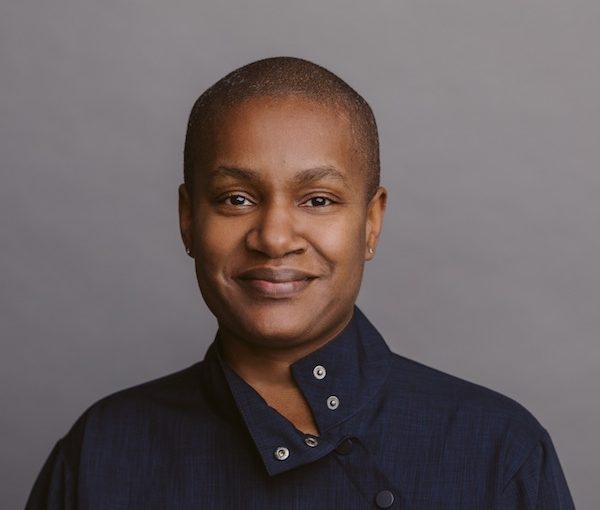
Green party leader Annamie Paul lost her bid for a seat in Toronto Centre. (photo from annamiepaul.ca)

Annamie Paul, the first female Jewish leader of a Canadian federal party, saw her hopes crushed Monday night as the Green vote plummeted across the country and she badly lost her bid for a seat in Toronto Centre. Paul came fourth in the riding, taking less than 9% of the vote. Her party lost one of its two British Columbia seats but, in their only bright spot, picked up a new riding in Ontario.

Having been kneecapped by internal party clashes in the lead-up to the election call, Paul was in an unenviable position, leading a party that had tried to oust her in a battle sparked by, or at least nominally blamed on, Paul’s moderate call for restraint during the Israel-Hamas conflict last spring.

Paul was not the only leader disappointed on election night. While politicians painted the outcomes in sunny terms, no one got much of what they wanted. After a $600 million election in the midst of a pandemic, the big picture in Canada’s political landscape is almost unchanged. With minor adjustments expected as mail-in ballots are counted, the Liberals and Conservatives are almost exactly where they were when the election was called.

Most prominently, reelected Prime Minister Justin Trudeau failed in his gambit to turn his minority into a majority government. The expense, resources and dangers of a pandemic election were rewarded with a nearly identical outcome as the last election.

Likewise, Erin O’Toole, who led his Conservatives to an almost identical result, will face discontent over his attempts to pull the party to the centre. Had the strategy worked, he would have been dubbed a genius, but failure will almost certainly unleash the wrath of his party’s right flank, which was largely thrown under the bus after O’Toole won the leadership on a slogan that depicted him as the “true blue” candidate, the more right-leaning of the two front-running options.

Jagmeet Singh, leader of the New Democrats, and Yves-François Blanchet, leader of the Bloc Quebecois, both appeared to resonate with their target constituencies, but, when the votes were counted, their electoral fortunes were only mildly improved. Maxime Bernier, leader of the People’s Party, lost his bid for a seat in Quebec and, while his party’s surprisingly strong showing in parts of the country, particularly on the Prairies, may have hurt the Conservatives, it left his own candidates empty-handed.

Several B.C. ridings remained too close to call at press time, including Vancouver Granville. Liberal Taleeb Noormohamad was about 200 votes ahead of New Democrat Anjali Appadurai as mail-in ballots were being counted. Despite polls showing Liberals falling behind in the province, the party appears to have held all its seats and even picked up both Richmond ridings. Steveston-Richmond East is a swing riding that has returned to the Liberal fold after a two-year interregnum. But, while few observers thought Richmond Centre was in play, Conservative incumbent Alice Wong is marginally behind Liberal Wilson Miao.

There were only two known Jewish candidates in British Columbia. In Nanaimo-Ladysmith, Conservative Tamara Kronis remains about 1,000 votes behind New Democrat Lisa Marie Barron at press time, a margin that will be a steep climb to overcome with just mail-in ballots remaining. The riding was watched nationally, as it was one of just two Green seats in Parliament. Paul Manly, who has a history of anti-Israel activism, fell to third place in a tight race. In West Vancouver-Sunshine Coast-Sea to Sky Country, New Democrat Avi Lewis placed a respectable third, with about 26% of the vote in one of Canada’s wealthiest ridings, while Liberal incumbent Patrick Weiler held on against a comeback effort by former Conservative MP John Weston.

(See editorials, “Election about nothing” and “Green party reckonings.”)

Format ImagePosted on September 24, 2021September 23, 2021Author Pat JohnsonCategories NationalTags Annamie Paul, Avi Lewis, Canada, elections, politics, Tamara Kronis
The Kitchen is new JFS hub

The Kitchen is new JFS hub

JFS Vancouver staff member Golriz Boroomand, left, and chief executive officer Tanja Demajo. (photo by Pat Johnson)

Tucked into a neighbourhood of low-rise industrial buildings, warehouses and mixed-use developments west of Main Street and south of Olympic Village is the new locus of Jewish Family Services Vancouver. The Kitchen, which opened mid-April, is the people-friendly hub for many of the programs JFS delivers to hundreds of clients every month.

“The Kitchen is an integration of a number of services that address poverty issues,” said

Tanja Demajo, chief executive officer of JFS Vancouver, which operates the Kitchen. While some components of the Kitchen’s programs are still on hold pending the end of the pandemic, it is already a busy and social environment. Clients can come weekly to pick up supplies from the Jewish Food Bank. While there, if they want, clients can meet with a caseworker to discuss access to government supports, meet with social workers or housing advocates or access other services. Behind the reception area are three private offices for caseworkers to meet with community members.

JFS still maintains a head office on Clark Drive, where some administrative work takes place, and where services best delivered in a less-social environment – such as counseling programs and services to Holocaust survivors – are offered. But the Kitchen really is the beating heart of JFS now.

“For example, with the seniors, they often have complex needs in terms of health, in terms of managing the relationship with the landlord, with different service providers, and the social worker is pretty much a point person and coordinates all that care for the client,” Demajo said. With many British Columbians, including too many seniors, unable to find a permanent family doctor, JFS can help connect them with help and accompany them to appointments if requested, she added.

“People who don’t have a [general practitioner] come and they need a prescription,” said Demajo. “Often, they aren’t comfortable going to just a general walk-in clinic, but often that’s the way to start. In many situations, our caseworkers would also go with the client to see the doctor, if they don’t feel like they can go on their own. We often try to see if we can find someone who will take them as a [patient] and it’s the same thing with the dentist. That’s how we work with people. When people are struggling to pay some of the bills because, of course, there’s a lot of unexpected emergencies, then we support them with that.”

Poverty is not only an economic challenge, she said, but a social one, too.

“It’s important just to acknowledge that people living in poverty are also dealing with a lot of isolation,” she said. So the busy and welcoming space the Kitchen provides is serving more than one need.

While the food bank has been operated by JFS in partnership with Jewish Women International for 15 years, this is the first time the program has had a permanent, purpose-built warehouse. In the back of the building, in a high-ceilinged space, are food-laden shelves, refrigerators and sorting spaces.

A parallel program is meals for those who are not able to prepare healthy dishes themselves, either temporarily due to illness or more permanently. JFS has had a meal delivery program for some time, but it was supplied through a third party. With a state-of-the-art commercial kitchen, JFS is now making their own plant-based kosher meals for delivery.

This component has allowed JFS to build relationships with farmers, which allows food bank clients the opportunity to select fresh produce.

“There are vegetables, berries, whatever is available on the farm,” said Demajo. “Customers can go to this online platform, choose what they want and pick it up from here on Thursday. The nice thing is that, again, people of different backgrounds can come here and connect with each other without knowing what their needs are.”

At the Kitchen, Tuesday is Breakfast Club.

“It’s a day for families,” Demajo said. “What they receive through the program is fresh vegetables and fruit, milk, cheese, yogurt, eggs, bread, peanut butter and cereals.” (There are dairy products in take-away food programs but the commercial kitchen is strictly pareve.)

Other food-related programs JFS delivers include Cooked with Chesed, through which clients can have five meals delivered every two weeks, featuring plates such as borscht, mushroom penne pasta, vegetarian Cobb salad, coconut chickpea curry and spaghetti and “meat” balls. Also available at the Kitchen are food vouchers that allow people to do their own shopping.

While pandemic restrictions have kept a damper on some of the social aspects, Demajo looks forward to a post-COVID world where the place will be hopping even more than it is now.

“This will hopefully become really a community hub,” she said. “Our hope was really to have a dedicated space for the community that JFS serves because one of the things that we recognized over the years is that JFS clients do not have space for gathering. They could come to different spaces, but they didn’t have their own dedicated space.”

This, she said, is why the Kitchen has a host of homey touches – artwork, photo displays, a play area for kids, a small library and, adjacent the kitchen itself, a café-like space where communal meals will occur when safe to do so.

The combined food programs serve more than 1,600 people. The food bank itself serves about 950 people.

“These numbers are constantly changing because some people stay with us for a long time, some people use the supports temporarily,” said Demajo.

Funding for the programs comes from the Jewish Federation of Greater Vancouver, private donors, and some federal and provincial government funding.

“When it comes to food, we’re also trying to build more partnerships and relationships where there is more in-kind food as well,” Demajo said.

Because they have a dedicated food storage space, including plenty of refrigerated shelves, the agency can now take in more perishable items than they could have accepted in the past. That means more fresh and healthy food for clients.

JFS has relationships with four farms – in Langley, Richmond, Pemberton and Chilliwack – that provide seasonal specialties.

“There are a lot of educational opportunities,” Demajo noted. “They have some animals there and provide not just food … so the plan is that down the road we also do some different programming with them as well.”

Format ImagePosted on September 24, 2021September 23, 2021Author Pat JohnsonCategories LocalTags food bank, health, Jewish Family Services, JFS, Kitchen, social services
Familiar face celebrates 100

Familiar face celebrates 100

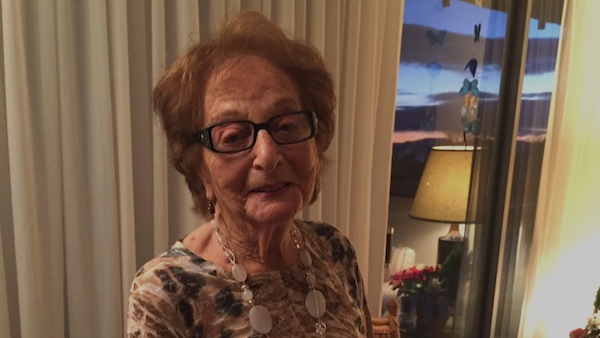
Goldie Kassen celebrated her 100th birthday on Aug. 12. (photo from Barbara Taranto)

Goldie Kassen, who turned 100 on Aug. 12, was fêted by family and friends from across Canada and around the world.

“My entire family was here for my birthday,” she told the Independent over the weekend. That includes two sons from Vancouver, another son from Alberta and a daughter from Israel, as well as 13 grandchildren and seven great-grandchildren. In all, about 40 fully vaccinated guests celebrated at the home of son Dr. Barry Kassen.

“A lot of the children of my friends were there,” she added. “My friends are gone, but their children came from Calgary, Montreal.… I had a lot of out-of-town people.”

Kassen was born in D’Arcy, Sask., in 1921. While there were a number of Jewish farm colonies during that era in Saskatchewan, D’Arcy was not one of them.

“My parents were the only Jewish people there,” she said. “My father came to Canada in the early 1900s. He went to Montreal. He worked there for awhile, then he heard about this land that he could get, so he went out to the land with an axe and a hammer and made his start there. Then my mother joined him about four years later.”

The couple had met and married in the area just outside Kiev, Ukraine. “The town was destroyed during the Holocaust – and the people,” said Kassen.

While the family fled Europe well in advance of the Nazi era, they nevertheless experienced tragedy. A daughter in Ukraine died of pneumonia at three months of age. After the migration to Saskatchewan, another daughter also died of pneumonia, at age 10. That left one son, but then came another son and, finally, Goldie.

“I had wonderful parents,” she recalled. “We lived off the land. What we grew, we ate. We didn’t have money. My mother had a huge garden and we ate everything that she grew. My father, of course, eventually got cattle, so we had our own beef. We just lived off what they produced. There wasn’t any money for extras.”

Her father was handy with carpentry and built the elementary school in D’Arcy where Goldie got her primary education. The building still stands, she said, but it is now used as a church.

There was a high school in D’Arcy, too, but it was six miles from the farm, so Goldie moved to Winnipeg, where her elder brother, 13 years her senior, and his wife had set up home. She graduated from St. John’s Technical High School, then returned to the farm. She wanted to go into nursing, but her father said there was no money for a three-year program, so she enrolled in a business course in Saskatoon.

For four years, she was a stenographer for a lawyer.

“I met my husband during the war years,” she said, referring to Abraham Kassen. She and other members of her Jewish youth group would be bused to dance halls to attend events for soldiers stationed nearby. “I met him at one of these dances,” she said.

“He was working in a store called Adilman’s in Saskatoon. It was a huge department store.”

Although the store closed in 1974, the building still stands in Saskatoon and is recognized as one of the city’s finest remaining examples of Streamline Moderne architecture – think art deco rounded corners and sleek silver accents.

“He was the head of the shoe department,” said Kassen. “Eventually, he became the manager of the whole store.”

The couple had twin boys, then another boy and finally a daughter.

“My children all did well for a mother who came from …” she paused and began to laugh, “I don’t know where.”

After raising her family, Kassen was asked by the Saskatoon Jewish community to become the local representative for JIAS, Jewish Immigrant Aid Services.

“The [Jewish] Russians were coming out of Russia in 1979 and they needed someone in Saskatoon,” she recounted. “I met them at the plane and I found places for them to live, I found jobs for them, I took their children to register for school. I settled over 100 Russians in Saskatoon.”

Even though her parents were from the Russian empire, she didn’t know much of the language to ease the work of settling newcomers. “I know two words,” she said, again with her quick laugh.

“I did that from 1979 until I left Saskatoon.”

Abraham died in 1986 and the two sons who live in Vancouver (both doctors) convinced her to move to the coast.

Any regrets about the move? “Never.”

Kassen didn’t know much about Vancouver or the Jewish community here when she arrived. But she did know a number of people from Saskatoon who had retired to the Louis Brier Home and Hospital. So, she walked in and volunteered shortly after arriving in town in 1988.

“I have to have something to occupy my time,” she said. “I worked there for over 25 years. Thirteen of those years I was the manager, the buyer and the bookkeeper of the gift shop.”

Her imprint on the gift shop was very personal. In addition to serving as a sort of tuck shop where residents can buy a chocolate bar or odds and ends, Kassen stocked it with collectibles she assembled from around Metro Vancouver and much further afield. Her frequent trips to Israel resulted in suitcases filled with kippot, tallitot, seder plates, mezuzot and other Judaica and tchotchkes that she thought shoppers might like.

Her time at the gift shop came to an abrupt end on Feb. 4 last year. With the emergence of the COVID pandemic, and on the advice of her MD son, she decided to close up shop. “I didn’t realize at the time that it would be the end,” she said.

The energy she devoted to the gift shop has not dissipated. “I still bake my own bread,” she said. “I gave away about eight challah on Rosh Hashanah. I’m always baking and cooking. I’m happy.”

The Independent spoke to her Sunday, just before she put a leg of lamb in the oven for family guests.

Phyllis and Michael Moscovich have been friends with Goldie since she arrived on the coast. Michael went to B’nai B’rith camp in Alberta with the Kassen boys.

“Her outlook on life is just always positive,” said Phyllis. “She just seems to take everything as it comes and to be cheerful all the time and positive all the time. I think that is who she is. She makes everyone around her feel good. Every time she comes to me for a meal, she brings something homemade with her. She cooks and bakes more than I will do in my lifetime, with ease. She just does it. That’s just who she is.”

Asked the inevitable question about the secret to longevity, the centenarian credits a healthy start and a refusal to settle down.

“I think the fact that I grew up eating from the earth, no toxins, everything was pure, I think that  gave me a good start,” she said. “I’ve always kept myself busy volunteering. I have to be busy. I can’t just sit and sleep. I have to be doing something or making something. I have a determination to keep going and I’m going to work on the next hundred now.”

Format ImagePosted on September 24, 2021September 23, 2021Author Pat JohnsonCategories LocalTags birthdays, Goldie Kassen, Louis Brier, Michael Moscovich, milestones, Phyllis Moscovich
Do you recognize anyone?

Do you recognize anyone?

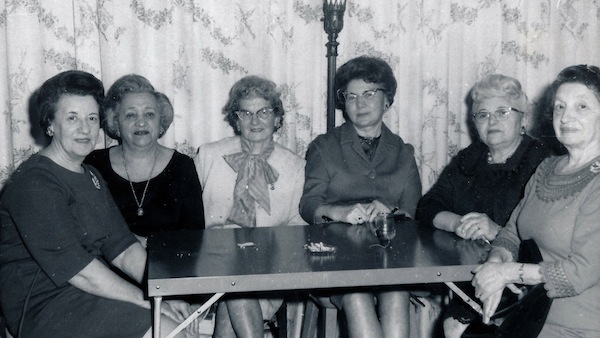
This photo was taken at the home of Harry and Ida Fishman, 4862 Ridgelawn Dr., in Burnaby, in the 1960s. If you recognize anyone in it, please email Roni (Fishman) Wosk at [email protected].

Format ImagePosted on September 24, 2021September 23, 2021Author Roni WoskCategories LocalTags Fishman, history
Ida Nudel passes away

Ida Nudel passes away

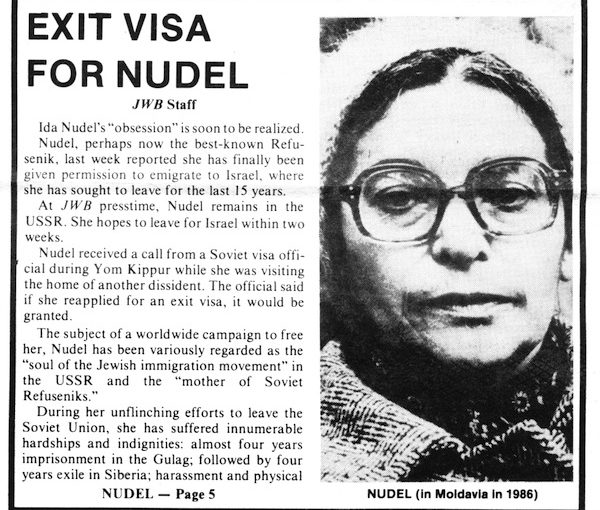
A cover story in the Oct. 14, 1987, JWB announced that Ida Nudel would be granted her long-sought-after exit visa from the USSR.

In the Jewish Independent’s special 90+1 issue this past May, reader Ronnie Tessler recalled one of the regular features of the JI’s predecessor, the Jewish Western Bulletin – the Gulag Record. Starting in 1978, the paper regularly reminded readers of how many days certain refuseniks were being held in the Gulag in the former USSR. One of the refuseniks featured, Ida Nudel, died this month, on Sept. 14, at the age of 90.

“The subject of a worldwide campaign to free her, Nudel has been variously regarded as the ‘soul of the Jewish immigration movement’ in the USSR and the ‘mother of Soviet refuseniks,’” reads the Oct. 14, 1987, JWB cover story announcing that Nudel would be granted an exit visa from the USSR.

“During her unflinching efforts to leave the Soviet Union, she has suffered innumerable hardships and indignities: almost four years imprisonment in abuse by the ever-present KGB, combined with travel restrictions amounting to incarceration,” the article continues.

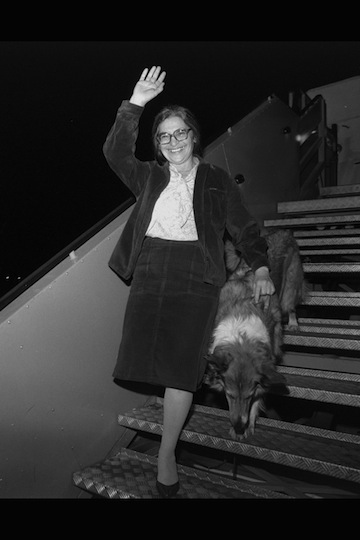
photo - Ida Nudel and her dog arrive on a private Boeing jet, owned by American oil billionaire Armand Hammer, at Ben-Gurion Airport on Oct. 15, 1987
Ida Nudel and her dog arrive on a private Boeing jet, owned by American oil billionaire Armand Hammer, at Ben-Gurion Airport on Oct. 15, 1987. (photo by Harnik Nati / IGPO)

“Occasionally, it was feared that, owing to diminished health, the 56-year-old Nudel would not live to see the Jewish state or be reunited with her sister Ilena Fridman, now residing in Israel.”

Fridman, the article notes, “visited Vancouver in October 1986 to lobby for Nudel’s release at a NETWORK-sponsored Soviet Jewry rally here….”

In addition to a concerted, long-term effort by Jewish groups worldwide, “urging Soviet officials to grant her an exit visa,” Nudel was visited over the years “by numerous delegations and dignitaries, including actress Jane Fonda, to bolster her spirits and encourage her efforts to leave the USSR.

“Under glasnost (openness), Nudel was allowed greater freedom to move and meet with Western journalists and fellow dissidents. Last month [September 1987], she was permitted to travel from her home in Moldavia to Moscow to meet with a group of women refuseniks to discuss their plight.”

Nudel was born in 1931, near Crimea, and “was raised by her maternal grandparents on a collective farm until she was 3,” writes Sam Roberts in the New York Times article about her death. “Her father was killed in World War II fighting German troops near Stalingrad when she was 10.

“After graduating in 1954 from the Moscow Institute of Engineering and Economics, Ms. Nudel worked for a construction company and later as an accountant for the Moscow Microbiological Institution,” notes Roberts.

As a result of her protests in the 1970s, Nudel lost her job and was exiled. When her exile ended, she settled in Moldova. After she was allowed to make aliyah, Nudel “originally lived in a rural settlement,” writes Roberts, “then moved to the city of Rehovot, about 18 miles south of Tel Aviv, to be closer to her sister [who had been allowed to emigrate in 1972].”

Nudel wrote an autobiography, A Hand in the Darkness, which was translated into English, and there was a movie made about her experience.

Format ImagePosted on September 24, 2021September 23, 2021Author Cynthia RamsayCategories WorldTags A Portrait of Jewish Americans, history, Ida Nudel, politics, refuseniks, USSR
הקוביד מראה את ההבדלים בין קנדה לדרום אמריקה – חלק ב

הקוביד מראה את ההבדלים בין קנדה לדרום אמריקה – חלק ב

המכר של מדרום אמריקה מנסה להסביר לי מדוע עדיף לגור ביבשת שלו ולא במערב. מה הוא אומר: “החיים במערב לחוצים פי כמה מאשר במדינות הלטיניות, זה ברור. אני מדבר על הכלל. אדם צריך לעבוד קשה כדי להתפרנס, מה שלא צריך פה עבור אדם כמוני שבא עם סכום כסף מסוים ולא צריך להיות מודאג כלכלית. אגב, גם אתה כמובן צריך לעבוד לא מעט או קשה, תלוי בהגדרה. כל אחד עושה מה שמתאים לו. אני עצמי לא הייתי עובר לחיות במדינה מערבית ועובד שם קשה. זה לא בשבילי. אני מבהיר מראש שאני לא אומר את זה בנימת ביקורת עליך. זה פשוט לא מתאים לי. אני לא אהגר למדינה אחרת כדי לעבוד קשה יותר מכפי שעבדתי בישראל. היגרתי כדי לשנות לחלוטין את אורח חיי, לחיות בקלות ובנינוחות ובלי לחץ ולהגשים כמה מטרות וחלומות שהיו לי, ואני עושה את זה גם בימי מגפה”. אם כן ידידי הלטיני שכח את מה שהוא מספר לי כל הזמן על המדינות הלטיניות שלו: מדובר במדינות עניות שברובן הדיקטטורות שולטות, בלגן ושחיתות אינסופיים. במדינתו אפילו את התרופות גונבים ואחר כך מוכרים אותן בשוק שחור. הוא לא מפסיק להתלונן על השכנים המרעישים, על רעש קבוע מהרחובות ובקיצור אין דין ואין דיין.

האיש הלטיני מספר לי כי הוא גר במקום יפה עם הרבה טבע נהדר ולי זה נשמע ממש כמו וונקובר. הוא מזכיר סוף סוף גם את המגרעות: “התיירות מביאה איתה דינאמיות אך יותר רעש. התיירות מביאה גם בעיות, כידוע. החיים כאן לא לחוצים בכלל. מאיפה קיבלת את הרושם הזה? הוא חוזר ואומר: בעיר תיירותית יש יתרונות וחסרונות. החסרונות באים לידי ביטוי בימי מגפה, הרבה פחות בימים כתיקונם. מצד שני, אילו הייתי נביא וידעתי שתפרוץ מגפה ספק אם הייתי עובר לכאן, כי התיירות מביאה יותר נדבקים כידוע לכול. באוקטובר 2019 כשאמרת לי בלחץ: תצא מהמדינה לא הבנתי בכלל מה אתה רוצה וממה אתה לחוץ. הייתי יחד עם עוד ידיד איטלקי היחידים בבריכה ושחיתי בכיף. בריכות לא חסרות כאן, מפלים, נחלים. לא היה שום סיכון. ידעתי שזה יימשך שבוע או מקסימום שבועיים, וכך קרה. את דרום אמריקה ויתרונותיה אינך מכיר מספיק. על חסרונותיה בימים אלה דיברנו מספיק. הייתי רוצה להבהיר כשדברתי על “חיים לחוצים” בחייו של המכר מדרום אמריקה, התכוונתי לכך שמפגינים חסמו את כל הכבישים הראשיים ואי אפשר היה לזוז לשום מקום. אלימות קשה. בתקופת הקוביד כל אחד עושה כרצונו, אנשים מסתובבים ברחובות ללא מסכות, כמות הנדבקים עצומה ורוב מוחלט של החיסונים מגיע מסין ומרוסיה וכידוע איכותם נמוכה ביותר. האיש שכח להזכיר שבמשך חודשים ארוכים הוא כמעט ולא יוצא מהבית בגלל המגפה הקשה.

כדי להצדיק מדוע הוא בחר דווקא לגור באחת מהמדינות העניות ביותר ביבשת הדרומית, הוא אומר: “את העולם המערבי אני מכיר היטב. ביקרתי בארצות מערביות לא מעטות. עזבתי את המערב מרצוני וידעתי למה. אם המגפה הזו תימשך אולי אחזור אליו, אבל לא מאהבת מרדכי. המציאות בעולם משתנה כל הזמן ולא לטובה. מה שהתאים לאתמול, לא בהכרח מתאים להיום, ומה שמתאים להיום, לא בהכרח יתאים למחר”. שוב שכח האיש את העובדה שבעולם המערבי יש יציבות בחיים ובמשטרים, לעומת חוסר יציבות קשה מאוד במרבית מדינות הדרום, שזקוקות לעזרה מהמערב כל הזמן.

גבי בעולם הלטיני אומר האיש יש ספרות, תרבות, מחול ומוסיקה ותיאטרון משובח. יצירות לטיניות ומכל העולם, כולל אופרה וכל דבר. אם לא הייתה בו תרבות, הוא לא הייתי נשאר לגור שם. אגב, רמת הספרות במדינות הלטיניות גבוהה מאוד ואתה יכול לפגוש כאן אינטלקטואלים וסופרים מהשורה הראשונה. בדרום אמריקה יש ירידי ספרות יותר מאשר בישראל ובמדינות רבות אחרות. בטוחני שהוא מדייק הפעם לשם שינוי בנושא התרבות, אך אי אפשר לטעון שבעולם המערבי אין יותר תרבות מאשר בדרומי. למשל בוונקובר עד לפריצת המגפה, באופן קבוע הלכתי עם בת זוגתי לקונצרטים, אופרות, הופעות מוסיקליות, סרטים ותערוכות. בתקופת הקוביד אנו ממשיכים מדי מספר שבועות להגיע למועדון הג’אז ‘פרנקי’, והאווירה בו ממש מצוינת ומזכירה מועדונים דומים בארה”ב ואירופה.

המכר חוזר לדבר שוב הפעם על המגפה שממאנת להסתיים והוא אומר: “אתה צודק שחובה להתחסן אבל השאלה מה הלאה. המגפה רחוקה מלהיגמר, אחוזי ההגנה נמוכים יותר מטענת דוברי פייזר, הדלתא גרם לנזק קשה הרבה יותר, כמות הנדבקים גדולה ולא רק בין אנשים שלא התחסנו. שים לב שבישראל היו הרבה מאוד נדבקים. מדינות רבות חוזרות לתקנות חירום, הגבלות ואף סגר כולל ארה”ב. ולגבי חיסון שלישי? ככל הנראה יהיה, וכל זאת בגלל שילוב של התנהלות שלומיאלית של הממשלות, התנהגות שערורייתית של הציבור וכמובן התפשטות וריאנטים. זכותך כמובן לחשוב אחרת אבל המציאות ברורה. טוב לשמוע שבוונקובר המצב טוב. אבל המגפה רחוקה מלהיגמר. גם בישראל המצב היה טוב עד שהדלתא הגיעה לשם. העולם רצה כפר גלובאלי כפי שכתבתי לך פעם וקיבל אותו ישר לפרצוף”. אני אגב מסכים עם המכר שהמגפה רחוקה להסתיים אך לדעתי, שמגובה בעמדת הרופאים הבכירים בעולם, זאת כיוון שאחוז סרבני החיסונים גבוה מאוד. טענתי לפני חודשים ואני טוען גם כיום ביתר שאת כי כולם מחויבים להתחסן, למעט אלה שאסור להם להתחסן מסיבות רפואיות. ומי שלא מוכן להתחסן – יש את הצורך להגבילו. טוב לדעת שמספר הולך וגדל של מדינות מתחילות לנקוט בעמדה תקיפה נגד מתנגדי החיסונים.

האיש הלטיני טען שאני מזלזל במסכות אך הזכרתי לו שרכשתי מאות מסכות כאשר המגפה החלה. הוא ממשיך: “במחוזות רבים בעולם לצערנו המסכות הן חיוניות, לפני מתן החיסונים ולצערנו גם לאחר קבלתם. עד כמה הן עוזרות כפי שאתה כותב, זו שאלה באמת טובה. במשהו הן מן הסתם עוזרות. אבל בוא נגיד לסיכום: להשתמש רק במסכה זה עלול להיות לא להספיק, לסמוך רק על החיסון בלי המסכה, גם זה לא בטוח שיספיק בגלל הבהמות, ואתה יודע יפה שהאנושות היא כרגע הגורם המרכזי של הפצת המגפה”. אני מסכים לחלוטין עם האמירה שבגלל התנהגות רשלנית של תושבי העולם המגפה עדיין חייה וקיימת. אם זאת אחזור ואציין שוב הפעם כי החיסונים הם הפתרון היחידי והקבוע למגפה. אנו נאלצים כיום להתחיל ולקבל חיסון שלישי, כיוון שרבים מסרבים להתחסן. אם מספר המחוסנים לא יעלה משמעותית נאלץ לקבל גם חיסון רביעי וחמישי ויתכן וזה יהפוך לנוהג קבוע – חיסון שנתי לקוביד במקביל לחיסון השנתי להשפעת.

שמח אני לגור בוונקובר ובמחוז בריטיש קולומביה שבו מספר המחוסנים כיום הוא הגבוה בעולם. לא הייתי רוצה היום ובכלל אף פעם לגור באחת ממדינות

דרום אמריקה. הבעיות שם הן כה גדולות, חוסר המשמעת של התושבים, העוני, האלימות והפשע ועוד צרות ללא הפסק. עדיף לגור בבריטיש קולומביה היפה שלנו.

Format ImagePosted on September 15, 2021Author Roni RachmaniCategories עניין בחדשותTags Canada, COVID, health, pandemic, South America, tourism, vaccine, בריאות, דרום אמריקה, חיסון, מגפה, קוביד, קנדה, תיירות

Election amid chaggim

Much has been made of the challenges facing Canadians as the country engages in its 44th federal general election while still in the grips of a pandemic. For Jewish voters, the succession of holidays in the weeks leading up to the Sept. 20 election makes scheduling events like community forums with candidates extra confounding.

Nevertheless, the Centre for Israel and Jewish Affairs (CIJA), along with partner agencies, will present a number of events across the country. Here in Metro Vancouver, there will be a virtual town hall on Sept. 14, 4 p.m., co-presented, as is tradition, with SUCCESS, the United Chinese Community Enrichment Services Society. Topics addressed will include racism and hate crimes; seniors’ care; post-pandemic economic recovery; immigrants and refugees; safe and healthy communities; and the sustainability of charitable and nonprofit organizations.

Two days earlier, on Sept. 12, a Richmond-focused virtual town hall will take place at 5 p.m., co-presented by CIJA and the Kehila Society of Richmond.

Tucked in between, on Sept. 13, is a national town hall, presented virtually from Toronto, again hosted by CIJA, this time in partnership with The CJN. All events are accessible from the website cija.ca/election.

Locally on Sept. 13, there is an all-candidates meeting on seniors issues for the ridings of Vancouver Granville and Vancouver South, co-hosted by Jewish Seniors Alliance. To register for it, visit jsalliance.org.

CIJA also has released a federal issues guide, outlining what it considers to be priorities on matters of domestic and foreign policy.

Among the recommendations is a request to supplement the Security Infrastructure Program, which provides funds to enhance security at institutions such as synagogues and community centres, with a program modeled after the Community Security Trust in the United Kingdom, which trains volunteers to provide patrols, situational awareness and threat prevention.

The guide urges amending the criminal code to make Holocaust denial an indictable offence and developing a standardized national social studies curriculum on antisemitism and the Holocaust.

The document, which is downloadable from the CIJA website, calls on the next government to address online hate through education and enforcement, including a social literacy campaign to “sensitize Canadians to the potent role social media plays in bullying, harassment, intimidation, dissemination of hate, and threats.” It calls for reestablishing provisions in the Canadian Human Rights Act to combat hate speech and strengthening Canadian tax laws to prohibit charities from promoting or inciting antisemitism or violent extremism.

The foreign affairs section calls on the government to ensure that Canadian humanitarian aid to Palestinians “goes where it is intended” and to oppose one-sided United Nations resolutions singling out Israel. It also calls on the government to demand that the Palestinian Authority stop the “paid to slay” program that rewards terrorism. It also calls for putting pressure on Iran until it “demonstrates meaningful improvements in comes into full compliance with its international obligations.”

Other CIJA recommendations include:

  • Implementing the United Nations Declaration on the Rights of Indigenous Peoples “as an important step toward truth and reconciliation.”
  • Putting pressure on Eastern European countries “that have evaded their responsibility to pass meaningful restitution laws” for Holocaust survivors and their descendants.
  • Strengthening immigration and refugee policies particularly to support those targeted for their identity, such as Christians and Yazidis in Iraq, LGBTQ2+ people in Chechnya and Iran, and Rohingyas in Myanmar.
  • Reintroducing the question about religion in the census “to prevent continued underreporting of Jewish Canadians.”
  • Ending the three-month celibacy requirement for LGBTQ2+ blood donors.

The full document is downloadable at cija.ca/election.

The Canadian Jewish Political Affairs Committee (CJPAC) is also busy during the campaign.

CJPAC engages “Jewish and pro-Israel Canadians in the democratic process” and helps community members build relationships within the Canadian political arena. Their website, cjpac.ca, has links to all major political parties, as well as links to volunteering and getting involved in campaigns. There is a final volunteer training webinar available at noon Pacific time on Sept. 13.

For information on your riding, where to vote and a list of candidates, go to the Elections Canada website at elections.ca.

Posted on September 10, 2021September 9, 2021Author Pat JohnsonCategories Local, NationalTags Canada, Canadian Jewish Political Affairs Committee, Centre for Israel and Jewish Affairs, CIJA, CJPAC, elections, Jewish Seniors Alliance, JSA, politics
Two Jews are on ballot

Two Jews are on ballot

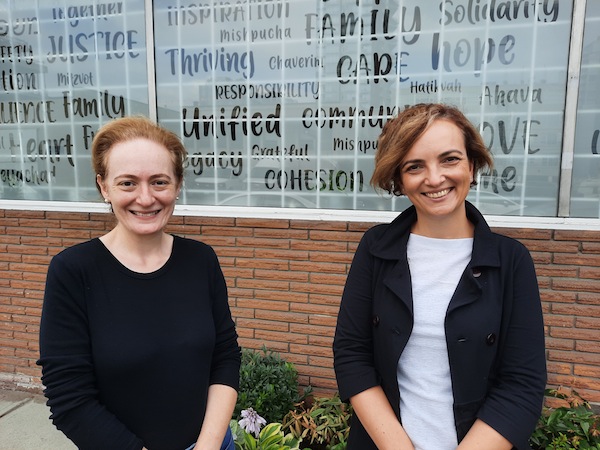
Jewish community members Tamara Kronis (Conservative party) and Avi Lewis (NDP) are running in the upcoming federal election. (photos from candidates)

British Columbia’s comparatively small Jewish community has produced a number of senior political figures, including the province’s first Jewish premier, Dave Barrett, and the current minister of finance, Selina Robinson, and minister of environment and climate change strategy, George Heyman. In this federal election, there appear to be just two candidates in British Columbia who are Jewish.

Tamara Kronis is the Conservative Party of Canada candidate for Nanaimo-Ladysmith. The riding is being closely watched by national observers as it is home to one of only two Green party MPs. Paul Manly, the incumbent, once sought an NDP nomination but was rejected by the party, apparently due to controversy over his positions on Israel and Palestine. While the other Green MP, former leader Elizabeth May, is seen as safe in her riding of Saanich-Gulf Islands, Manly appears to be in (at least) a three-way race with Kronis and New Democrat Lisa Marie Barron. Michelle Corfield is the Liberal candidate.

Kronis is a lawyer and heads a jewelry manufacturing and retail business. Until last month, she was associate chair of the Ontario Human Rights Tribunal and an independent director of Toronto Hydro. Earlier in her career, she served as director of advocacy for EGALE Canada, the national LGBTQ+ organization. She was a trial assistant at the International Criminal Tribunal for the former Yugoslavia.

Across the water and across the spectrum, Avi Lewis is the New Democratic Party candidate in West Vancouver-Sunshine Coast-Sea-to-Sky Country. A scion of Canada’s left-wing dynasty, Lewis is the son of journalist Michele Landsberg and Stephen Lewis, a former Ontario NDP leader and Canadian ambassador to the United Nations. His grandfather, David Lewis, was the leader of Canada’s NDP, from 1971 to 1975.

Avi Lewis is a journalist and activist who recently produced and co-wrote the Emmy-nominated animated short film about the Green New Deal, Message from the Future, with U.S. Representative Alexandria Ocasio-Cortez.

Lewis co-authored “The Leap Manifesto,” which was “a call to action on climate and inequality that was launched by an historic coalition of Indigenous leaders, unions and environmentalists, and signed by more than 50,000 Canadians,” according to Lewis’s website.

Lewis has an uphill climb. The riding, which straddles some of Canada’s wealthiest voters and the disparate communities along Howe Sound, has back-and-forthed between the Liberals and Conservatives in recent years. It is held by two-term Liberal MP Patrick Weiler, who is beating back a challenge from former Conservative MP John Weston. In 2019, the NDP candidate came fourth, well behind the Green party.

Format ImagePosted on September 10, 2021September 9, 2021Author Pat JohnsonCategories Local, NationalTags Avi Lewis, British Columbia, Canada, elections, politics, Tamara Kronis

Posts pagination

Previous page Page 1 … Page 94 Page 95 Page 96 … Page 314 Next page
Proudly powered by WordPress