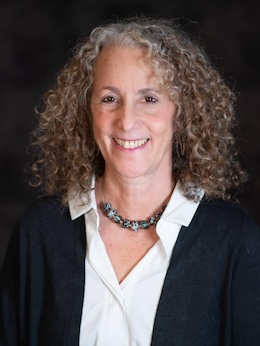
MK Dan Illouz opposes legislation that would enshrine the exemption of Haredim from military service. (photo from Knesset)
Dan Illouz, a Montreal-born Likud rookie member of the Knesset, is making a name for himself in Israel’s Parliament by speaking against his own party’s policy of opposing the draft of Haredim (ultra-Orthodox Jews) into the Israel Defence Forces.
“Exempting such a large group of people from their obligation to serve in the IDF at such a critical time is anti-Zionist,” the freshman lawmaker tweeted recently on X.
Responding to the challenge to Prime Minister Binyamin Netanyahu’s leadership, the Likud has taken steps to clamp down on internal dissent by party lawmakers opposed to legislation that would enshrine the exemption of members of the ultra-Orthodox community from military service.
The IDF’s personnel shortage has become acute in the wake of Hamas’s Oct. 7, 2023, surprise attack on Israeli cities and kibbutzim ringing the Gaza Strip, followed by Hezbollah’s rocket campaign against the Galilee andCentral Israel that began the next day. Reservists, called miluimnikim in Hebrew, have been repeatedly called up for months at a time. But, Netanyahu must balance his party’s stability in government with military personnel considerations, not to mention growing casualties.
In a move widely seen as linked to then-defence minister Yoav Gallant’s opposition to the controversial military draft exemption legislation – which has been demanded by ultra-Orthodox coalition partners whose support Likud needs to stay in power – Netanyahu fired Gallant last month and appointed Israel Katz in his stead. The prime minister then pushed for party discipline against dissenters like Illouz, who holds the rank of captain in the IDF reserves.
Coalition whip Ofir Katz informed Illouz that he was being removed from the Knesset’s economic affairs committee and foreign affairs and defence committee due to his “statements regarding coalition discipline and his conduct in recent days,” a spokesperson for Katz said.
In a further slap on the wrist, Illouz was barred from submitting private bills for six weeks.
Illouz has long spoken out against efforts to pass new legislation regulating exemptions for yeshivah students following a High Court ruling in June that they must enlist in the IDF unless a new bill is passed.
Digging in recently, Illouz announced his opposition to the coalition’s Daycare Bill, which seeks to circumvent a High Court ruling preventing state-funded daycare subsidies from going to the children of ultra-Orthodox draft dodgers.
“Exempting such a large group from the duty to serve in the IDF in such a critical period is a non-Zionist act that is unworthy of us as a nation – whether it be called ‘the enlistment law’ or ‘the daycare law,’ whose purpose is to cancel the daycares sanction and restore the funding,” Illouz declared.
The Daycare Bill was removed from the Knesset agenda last month after it failed to garner sufficient coalition support.
A member of the Quebec and Israeli bar associations, and a former legislative adviser to the Knesset’s coalition chair, Illouz previously served in a legal capacity at Israel’s Foreign Ministry. He is a graduate of McGill University Law School and the Hebrew University of Jerusalem’s master’s program in public policy.
Drawing on his legal expertise, Illouz co-authored a law banning any Israeli interaction with the United Nations Relief and Works Agency (UNRWA), due to some of its members’ being involved with Hamas in general and in the Oct. 7 massacre in particular.
Humanitarian aid and services to the two million people in Gaza must now be based on alternative agencies such as the UN High Commissioner for Refugees, the UN International Children’s Emergency Fund and the World Food Organization, said Illouz. (More than 200,000 Gazans have fled to Egypt and elsewhere since war broke out in their coastal enclave 15 months ago.)
Born in Canada to Moroccan immigrants, Illouz made aliyah in 2009 after completing his law studies. Like all newly elected MKs holding foreign citizenship, he was required to surrender his second passport before being sworn in as a member of Israel’s Parliament.
Illouz continues to serve as the chair of the Knesset delegation to the Organization for Economic Cooperation and Development and be a member of the Knesset delegation to the Inter-Parliamentary Union, an international body that brings together parliamentarians from 180 countries.
Gil Zohar is a writer and tour guide in Jerusalem.
Rabbi Elyse Goldstein delved into the impact of women’s evolving roles in Judaism during a webinar hosted by Kolot Mayim Reform Temple on Dec. 8. Her talk – Open Doors, Open Hearts: How Women Have Enriched Judaism – was part of the Victoria synagogue’s 2024-25 lecture series.
Using her own journey, the rabbi emerita of City Shul in Toronto explored how women’s leadership and scholarship have not only enriched the Jewish community but also transformed it for the better.
From her vantage point as a (recently) retired rabbi, Goldstein asserted that Jewish feminism has been a lifeline to Judaism over the past several decades. She referred to the profound changes within Judaism regarding the involvement of women as “disruptions” in the positive sense of the word: namely, “a societal thought pattern that profoundly changes everything around it.”
Rabbi Elyse Goldstein (photo from cityshul.com)
For Goldstein personally, a disruptive point arrived during her bat mitzvah. When it was time for her speech, she announced to the congregation – to the widespread gasps of those assembled and the dismay of her rabbi – that she, too, wanted to become a rabbi.
“I never really thought when I was 13 that women becoming rabbis would shake the very foundations of Judaism,” she said. That women “would question every assumption of Jewish life, which was based on patriarchal power, that they would challenge what it means to be a Jew altogether. I didn’t realize that I was in the middle of a quiet revolution that would not remain quiet.
“One of the biggest disruptions of Jewish feminism to Jewish life is that people who identify as female are going to lead not in spite of being female but because of it. In other words, that’s a big part of who they are. That is part of their self-identity and they’re going to lead from within that identity – not push it aside.”
The changes brought about by women becoming leaders appear, Goldstein said, in the pages of prayer books, in seminaries, in the boardrooms of Jewish organizations, yeshivot and the Israeli government.
“Our liturgy would change to not only include the matriarchs,” Goldstein said. “We would use neutered language for God and start singing songs of Miriam in summer camp. We would learn Talmud from Orthodox women. We would feel empowered to create midrashim (interpretations of the Bible).”
She referred to the first stage of Jewish feminism as “equal access Judaism,” or the idea that women should be given the same religious opportunities and responsibilities as men.
The second stage, Goldstein said, went further by questioning notions, not simply behaviours.
“It challenged the way we think and our theological language in describing God,” she said. “It began to shake the foundational assumptions about women and men, Jewish tradition and Jewish law. We didn’t just have women rabbis – those rabbis made us rethink not so much about what a rabbi looks like but what a rabbi is.”
We are in the third stage of Jewish feminism, one that considers if there is more that can be done, she said. “We have to ask about violence against women in the Jewish community and if that’s ended. We have to examine the court system in Israel, where women are still routinely denied Jewish divorces. We have to talk about the ordination of Orthodox women and how that is happening … and we’re not paying attention to it.”
Goldstein went on to talk about what are, in her view, four disruptions to Jewish life brought on by Jewish feminism: the ordination of female rabbis, starting in 1972; Jewish rituals that speak more directly to the experiences of women; changes in religious garb, with, for example, women in a congregation wearing tallitot (prayer shawls); and the reshaping of the gender-related language pertaining to God.
In addition to being the founding rabbi of City Shul, Goldstein started Kolel: The Adult Centre for Liberal Jewish Learning. An award-winning educator, a writer anda community activist, she has lectured across North America, Israel and the United Kingdom. Her works include ReVisions: Seeing Torah through a Feminist Lens and, as editor, The Women’s Torah Commentary.
Ben M. Freeman will present the next lecture in the Kolot Mayim series, on Jan 12. The author of the Jewish Pride trilogy, Freeman will discuss his latest book, The Jews: An Indigenous People, which will be released in February. Visit kolotmayimreformtemple.com to register for upcoming talks.
Sam Margolishas written for the Globe and Mail, the National Post, UPI and MSNBC.
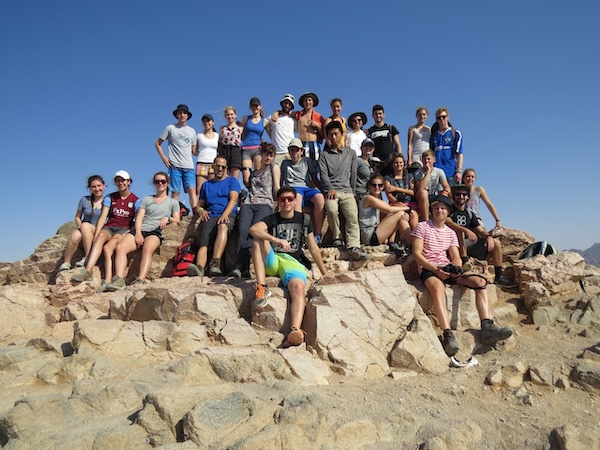
Students in the scholarship program at the Weizmann Institute in Rehovot, Israel, will do hands-on research and get to know the region. (photo from Weizmann Canada)
Weizmann Canada has scholarships for seven exceptional science students from Canada to participate in the Dr. Bessie F. Lawrence International Summer Science Institute (ISSI). The scholarship program – which will take place at the Weizmann Institute of Science in Rehovot, Israel, from June 30 to July 25, 2025 – is open to students between the ages of 18 and 20, including graduating high school seniors, gap-year students and first-year bachelor’s degree students.
ISSI offers a rigorous scientific experience, providing students with the opportunity to participate in hands-on research. During the program, students collaborate in small research groups, guided by institute researchers, on topics matching their skills. They use the latest tools, like electron microscopes and particle accelerators. Senior scientists enhance the experience with lectures and courses. The program culminates in team presentations of group theses based on their laboratory work.
Students will also have an opportunity to immerse themselves in a diverse scientific environment at a field school located in the Judean and Negev deserts. Expert guides from the Sde Boker field school will lead hikes that focus on the ecological, geographical and archeological features of this region.
Participants selected for this program will receive a full scholarship valued at more than $10,000, which covers airfare and all expenses incurred during their stay at the institute.
BC members of Team Canada U16 Junior Girls Volleyball sell donuts to raise funds to travel to Israel next summer. (photo from Maccabi Canada)
Young volleyball players and their families are calling on the community for assistance to send their team to Israel for the 2025 Maccabiah Games next July.
Team Canada U16 Junior Girls Volleyball includes 10 athletes, including four from Vancouver, five from Toronto and one from Winnipeg. The team is fundraising to cover the expenses, which amount to almost $10,000 per participant.
“These girls are devoting themselves to bringing their best game to the Maccabiah Games next summer,” said Roman Pereyaslavsky, the team manager. “It is not only a powerful goal for them, but the celebration of international athletic competition in Israel next year is also a huge message of solidarity with the people of Israel at this time of unprecedented challenge.”
The girls and their parents do not underestimate the hurdles they face in raising the funds to make the trip to Israel possible.
“Traveling to Israel and competing as Canadian representatives with Jewish girls from around the world is a massive dream,” said Liel Lichtmann, a Richmond Grade 10 student and member of the national volleyball team. “We are fundraising every way we know how and we are confident we can make this happen. We hope our community will make our dream a reality.”
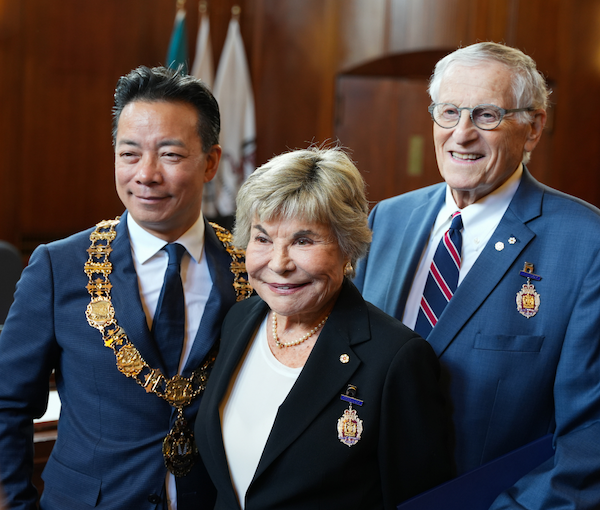
Vancouver Mayor Ken Sim, left, with Leslie and Gordon Diamond. (photo from Jewish Federation of Greater Vancouver)
To recognize their exceptional leadership and philanthropic impact in Vancouver and across the nation, Vancouver City Council unanimously agreed to bestow the Freedom of the City upon Leslie and Gordon Diamond. They were awarded the honour on Dec.12, 2023, and the award presentation was held Oct. 29, 2024.
“Leslie and Gordon have devoted their lives to the people of Vancouver,” said Mayor Ken Sim. “Their remarkable work in health care, affordable housing, community services and beyond has made a lasting impact, shaping not only our city’s history but also its future.”
An Officer of the Order of Canada and a recipient of the Order of British Columbia, Gordon Diamond founded the Diamond Foundation in 1984. Leslie, who is also a recipient of the Order of British Columbia, has worked alongside Gordon in driving initiatives that support affordable housing, social and seniors’ services, community development, education and health care.
The Diamonds’ philanthropic vision has catalyzed critical initiatives addressing health and substance use. Their contributions include landmark donations of $20 million each to Vancouver General Hospital’s Gordon and Leslie Diamond Health Care Centre and to the St. Paul Foundation’s Road to Recovery substance use disorder initiative.
As champions for the arts, the Diamonds have enabled countless underprivileged youth to access and enjoy the cultural fabric of the city. Their substantial support for the new Vancouver Art Gallery stands as a testament to their vision for arts accessibility and patronage.
“We are truly honoured to be recognized by the city we love,” said Leslie and Gordon Diamond. “To receive an award for doing what we love doing is humbling. Thank you.”
Shimon Koffler Fogel is moving on from his role as president and chief executive officer of the Centre for Israel and Jewish Affairs (CIJA).
Fogel’s career as a Jewish professional began in the 1980s with the Canadian Jewish Congress and the Atlantic Jewish Council and he joined the team at the Canada-Israel Committee, CIJA’s predecessor organization, in 1988.
Throughout his 40 years of leadership on behalf of Canada’s Jewish federations, Fogel made an impact through his relationships with Canadian leaders across party lines, his knowledge of policy and politics, and his strategic vision. His leadership was invaluable as Canadian Jewry navigated extraordinary challenges in the world, most recently in the wake of the Oct. 7 terror attacks and the rise of antisemitism.
To lead CIJA forward, the organization has assembled a team offering a diversity of executive-level skills, including in government relations, public policy, business and human resources. Noah Shack has agreed to take on the role of interim president, building on his career in Jewish advocacy that began at the Canada-Israel Committee 17 years ago. Shack will oversee CIJA’s day-to-day operations, closely supported by a strong lay leadership group composed of board chair Elan Pratzer, Michael Aronovici, Steven Kroft, Martha Durdin and Mark Spiro.
Over the coming months, CIJA’s board will convene a search process to select a permanent successor to Fogel.
At the Jewish Family Services Vancouver’s annual general meeting on Nov. 26, several volunteers were recognized for their work, dedication and achievements. Stan Shaw received the Naomi Gropper Steiner (z’l) Award; Candice and Todd Thal, the Paula Lenga (z’l) Award; Congregation Beth Israel, the Community Partner Award; Karl Biernbrodt, Richard Fruchter Staff Recognition; and Simone Kallner, the Sara Ciacci (z’l) Women Leadership Excellence Award.
Blue Rodeo founders Greg Keelor, left, and Jim Cuddy at the Whistler Film Festival. (photo from the festival)
The music documentary Blue Rodeo: Lost Together by director Dale Heslip was named winner of the 2024 Audience Award for a feature-length film at the Whistler Film Festival last week.
“The Audience Awards are a fun, yet important, way for our guests to have their say in the programming we put together at the Whistler Film Festival,” said director of film programming Robin Smith.
The world premiere of Blue Rodeo: Lost Together was attended by band founders Greg Keelor and Jim Cuddy, along with Heslip and producer Corey Russell. Francine Dibacco is also billed as a producer on the project. A Q&A with Keelor, Cuddy and Heslip was moderated by media personality and MuchMusic veteran George Stroumboulopoulos, also featured in the film.
“We were completely thrilled with having our world premiere at the Whistler Film Festival and the magical night we shared with the audience,” said Russell. “This award means so much and we want to thank the fans who took the time to see our film.”
Kelley Korbin, left, and Trilby Smith honour Bernie Simpson, who has been a longtime staunch supporter of Camp Miriam, which he attended, starting in the mid-1950s. (photo by Adi Keidar)
Hundreds gathered Dec. 7 to mark 75 years of Camp Miriam. Generations of campers convened at the Jewish Community Centre of Greater Vancouver for an emotion-packed reunion of alumni and friends, in which the Habonim Dror-affiliated Labour Zionist camp was fêted for having an outsized impact on building British Columbia’s Jewish community.
The celebration actually marked 76 years since the beginning of the camp, but the event, originally scheduled for last year, was postponed as a result of the Oct. 7, 2023, terror attacks.
Some of those who have strengthened Camp Miriam in recent years were honoured at the celebration.
Sam Bernofsky paid tribute to Leah Levi, who retired after 17 years as camp registrar, in 2023, but continues her involvement as bookkeeper and keeper of institutional memory. She received an ovation and video-recorded greetings from alumni and friends.
Trilby Smith and Kelley Korbin honoured Bernie Simpson who, among other contributions, has ensured that camperships are available for all who need them, guaranteeing that finances are never a barrier to participation. Simpson also nurtured relationships with non-Jewish supporters of the camp, including former BC Supreme Court Justice Angelo Branca, and former Speaker of the House of Commons John Fraser, both now deceased. Through fundraising and personal contributions, Simpson is credited with playing a core role in every capital project the camp has completed in recent decades. He is also Camp Miriam’s unofficial historian and archivist.
Speaking to the Independent, Simpson credited Camp Miriam (along with his wife, Lee) for every success in his life, including his time as a member of the BC legislature.
“It means everything to me,” Simpson said of the camp, which he began attending in the mid-1950s. “It probably shaped my whole life. The Habonim leadership at that time, which was the camp leadership, took me under their wing. I came from quite a disturbed home and they had lots of patience for me and they ended up being my life.
“They had time for a shmuck like me,” he said. “That was remarkable. But I’m not the only person.”
Alan Tuffs was being physically abused in his home, Simpson said. The head of the Jewish welfare agency, Jessie Allman, called Simpson up and asked if Camp Miriam would “take this boy.”
Tuffs went on to study Judaism in Israel and recently retired as a rabbi in Hollywood, Fla., after 45 years.
Shalom Preker was another Miriam success story, according to Simpson, having overcome challenges to become a PhD and a global expert in health financing. Preker has served in senior roles at the World Bank and the International Finance Corporation, focused on the health sector in developing countries.
Pioneers of the movement – often kids themselves at the time – were remembered throughout the evening. Michael Livni, né Langer, spearheaded the purchase of the camp on Gabriola Island. As a teenager, Langer/Livnicajoled philanthropists to front the money to purchase the camp’s site from the Cooperative Commonwealth Federation, precursor to the New Democratic Party, in 1956.
Until then, Habonim had rented camps for summer programming, and ran youth programs in Vancouver throughout the year. Livni, who made aliyah and went on to be a leading figure in both Reform Zionism and the kibbutz movement in Israel, died this year at age 89.
Simpson credited the late Army & Navy department store founder Sam Cohen, as well as the late Ben and Esther Dayson and the late Norman Rothstein as benefactors who set the foundation for Camp Miriam’s long-term sustainability.
The anniversary event featured a display of the camp over the decades and pioneers, living and departed, were celebrated. Camp “matriarch” Gloria Levi was on hand, and the movement’s leaders of the past and present shared memories.
Miriam alumni Michael Schwartz emceed the evening, provided a moving reflection on the impacts of Oct. 7 on the Habonim community, and recalled his own memories of camp.
“I got to experience moments I will never forget,” Schwartz said, including the staging of a “show trial” of the Little Mermaid. “Through all these experiences – some absurd, yes – Miriam taught me some of life’s most important lessons. It taught me about the so-called big, important things, like history and justice, political philosophy, but it also taught me about the truly important things, like teamwork, leadership, friendship and girls.”
Jay Eidelman, the camp’s new director of fundraising and strategic planning, said that next summer’s enrolment will be a record 360, with a waiting list of others who want to come.
“That’s 5% more than last year, which was also a record enrolment,” he said. “Our retention rate is an astounding 90%.”
Especially in this time of rising antisemitism, Eidelman said, Jewish kids need safe spaces.
“Miriam is that space and for many of our campers,” he said. “Miriam is the only place where they can explore their Jewish identities, their relationship to Israel and their relationship to our community.”
He noted that 85% of Miriam campers attend public schools and more than half come from outside the city of Vancouver.
“We are growing and we need to grow sustainably,” he said. “That’s why, in 2022, with the help of the Ronald S. Roadburg Foundation, we started a site master planning process to help us grow sustainably.”
Left to right at Camp Miriam’s 75th anniversary celebration are Sue Siklos (parent), Trilby Smith (past camp committee chair) and Gretchen DuMoulin. (photo by Adi Keidar)
Brian Tucker, chair of the camp’s board, and Ariella Smith-Eidelman, who is going into her second year as rosh machenah (head of camp), spoke from their respective positions. Video greetings were shared from alumni Selina Robinson, former provincial cabinet minister, and Seth Rogen, comedian and actor.
The anniversary celebration was emotional, said Leya Robinson, who took over as Camp Miriam’s community director last year, succeeding Levi. Before returning to her hometown of Vancouver, Robinson (a second-generation Habonimnik, thanks to her mother Selina) worked for the North American Habonim movement in New York as director of education and then spent five years in Israel, where she directed programs in Israel for Habonim Dror campers and university students worldwide.
“It was very heartwarming, almost in an overwhelming way,” Robinson said of the event. “Just to have that deep a sense of belonging and to look around and see how many other people felt that same sense of community and belonging to Camp Miriam. I just feel so lucky to be a part of the community and to have the experience at Camp Miriam.”
In these challenging times, she said, that connection is vital.
“It’s really easy to fall into despair seeing what’s happening, and having community helps to build up that sense of hope or to maintain that sense of hope and to see that we are not isolated and we have friends and partners and people to talk with,” she said.
David Bogdanov told the Independent that his camping experiences in the late 1970s and early ’80s were “very transformative and almost lifesaving.”
“It gave me a strong love of Israel,” he said. “It really enhanced my relationship with the Jewish community and really informed my whole life to a very large degree.”
Michelle Plotkin, a member of the committee that put the anniversary event together, wasn’t a camper herself but has seen the camp’s effects on her daughter.
“It just offers so many opportunities for the kids to be independent and learn how to be comfortable outside their comfort zone and stretch their minds and imaginations,” Plotkin said. “My daughter does things I never would have expected her to be comfortable doing.”
It was Plotkin’s idea to put together a one-time band for the event. The six-member group was made up of three professional and three amateur musicians, all of them Miriam alumni. The musicians, who dubbed themselves the Final Messiba, were Yonni Silberman (drums), Sunny Zatzick (guitar), Daniel Pimentel (bass guitar), Ira Cooper (vocals), Roy Vizer (percussion) and Jessica Stuart (lead guitar and vocals, and music director).
Gretchen DuMoulin, who chaired the evening’s organizing committee, has experienced almost all aspects of camp, from being a camper herself, a madricha (counsellor), a parent to campers and madrichim, and an organizer of family camps and then the 75th anniversary celebration.
She said Camp Miriam “is a whole Jewish and cultural experience. Every aspect of camp is thoughtfully planned with aspects of Jewish values, equality, social justice and leadership woven throughout. Every camper has an opportunity to become a leader at some level and for their voice to be heard and counted. It is 100% a youth leadership-run camp.”
DuMoulin cites lasting friendships as an enduring legacy of camp.
“There is something about spending weeks at a time, day and night, independently but together,” she said, “that just allows you to form friendships in a different way than when you are at home and in school.”
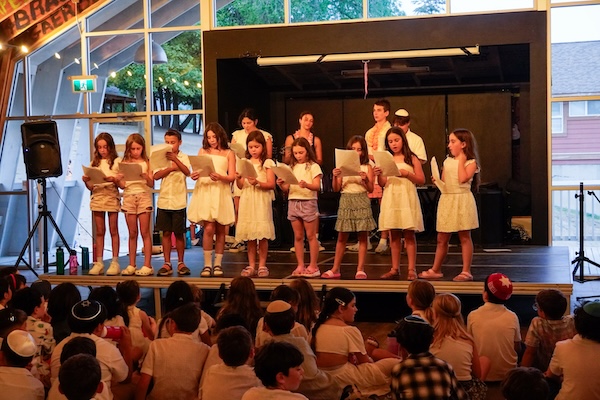
By fostering human connection, creativity and a love for the outdoors, Camp Hatikvah teaches children that true joy doesn’t come from likes or notifications – it comes from experiences shared with others. (photo from Camp Hatikvah)
In today’s fast-paced world, it can feel almost impossible to escape technology. Smartphones, tablets and social media have woven themselves into the fabric of daily life, often at the expense of face-to-face interaction and genuine connection. But, at Camp Hatikvah, campers are given the opportunity to disconnect from devices and reconnect with life’s simpler joys.
The camp has a no-technology policy for all its campers. This means that, for the entirety of their stay at camp, campers are completely unplugged so that they can engage with the world around them – through creativity, camaraderie and the kind of joy that is so often lost in the digital age.
For many of today’s youth, the idea of unplugging might seem daunting. Devices have become more than tools; they’re sources of entertainment, connection, and even identity. At Camp Hatikvah, however, the absence of screens doesn’t feel like a loss – campers quickly discover the delights of old-fashioned fun.
“It’s a precious gift to witness children simply at play,” said Liza Rozen-Delman, the camp’s executive director. “When they’re not tethered to screens, you see their imaginations come alive. They’re dancing, creating skits, and laughing in ways that feel so genuine. It’s the kind of joy you rarely see any more in the city.”
Camp Hatikvah has a technology-free approach. (photo from Camp Hatikvah)
These moments of unstructured play do more than just fill the hours; they foster skills that are crucial for a child’s development. Imagination, problem-solving and cooperation flourish in an environment where kids are free to create their own fun. Campers learn to navigate group dynamics, work through challenges and take pride in shared accomplishments.
One of the most profound benefits of Camp Hatikvah’s technology-free policy is the way it nurtures genuine relationships. Without the distractions of social media, campers are fully present for one another. They form bonds over shared adventures, whether it’s paddling across the lake, tackling a team-building challenge, or simply sitting together under a star-filled sky.
The mental health challenges facing today’s youth are unprecedented. Studies have linked the overuse of technology to increased anxiety, depression and feelings of isolation. Camp Hatikvah offers a much-needed antidote: a space where kids can breathe, laugh and simply be themselves.
“Away from screens, there’s a noticeable shift in the kids,” said Eden Gutterman, associate director. “They start to relax. They’re more in tune with their surroundings and with each other. It’s like they’re rediscovering what it means to just be a kid.”
Moments of unstructured play foster skills that are crucial for a child’s development. (photo from Camp Hatikvah)
The benefits of Camp Hatikvah’s technology-free approach aren’t limited to the children who attend. Parents also appreciate the impact of the camp’s philosophy. For many, it’s a relief to know their children are spending time away from screens and social media, engaging in activities that promote health and happiness.
“At the end of the day, what we’re giving these kids isn’t just a summer at camp – it’s a gift that will stay with them for the rest of their lives,” said Rozen-Delman. “The friendships they make, the confidence they build and the memories they create – those are the things that matter. And none of it requires a screen.”
Life’s most meaningful moments often happen when we set aside our screens and fully immerse ourselves in the present. By fostering human connection, creativity and a love for the outdoors, Camp Hatikvah teaches children that true joy doesn’t come from likes or notifications – it comes from experiences shared with others. In an increasingly digital world, the lessons learned at the camp are not just refreshing – they’re transformative, equipping campers with the tools to lead more balanced, connected and fulfilling lives long after summer ends.