Skip to content
  • Home
  • Subscribe / donate
  • Events calendar
  • News
    • Local
    • National
    • Israel
    • World
    • עניין בחדשות
      A roundup of news in Canada and further afield, in Hebrew.
  • Opinion
    • From the JI
    • Op-Ed
  • Arts & Culture
    • Performing Arts
    • Music
    • Books
    • Visual Arts
    • TV & Film
  • Life
    • Celebrating the Holidays
    • Travel
    • The Daily Snooze
      Cartoons by Jacob Samuel
    • Mystery Photo
      Help the JI and JMABC fill in the gaps in our archives.
  • Community Links
    • Organizations, Etc.
    • Other News Sources & Blogs
    • Business Directory
  • FAQ
  • JI Chai Celebration
  • JI@88! video

Recent Posts

  • Story of Israel’s north
  • Sheltering in train stations
  • Teach critical thinking
  • Learning to bridge divides
  • Supporting Iranian community
  • Art dismantles systems
  • Beth Tikvah celebrates 50th
  • What is Jewish music?
  • Celebrate joy of music
  • Women share experiences 
  • Raising funds for Survivors
  • Call for digital literacy
  • The hidden hand of hate
  • Tarot as spiritual ritual
  • Students create fancy meal
  • Encouraging young voices
  • Rose’s Angels delivers
  • Living life to its fullest
  • Drawing on his roots
  • Panama City welcoming
  • Pesach cleaning
  • On the wings of griffon vultures
  • Vast recipe & story collection
  • A word, please …
  • מארק קרני לא ממתין לטראמפ
  • On war and antisemitism
  • Jews shine in Canucks colours
  • Moment of opportunity
  • Shooting response
  • BC budget fails seniors
  • Ritual is what makes life holy
  • Dogs help war veterans live again
  • Remain vital and outspoken
  • An urgent play to see
  • Pop-up exhibit popular
  • An invite to join JWest

Archives

Follow @JewishIndie
image - The CJN - Visit Us Banner - 300x600 - 101625

Category: News

Israel joins the fruit-fly fight

Israel joins the fruit-fly fight

Biofeed’s Nimrod Israely, top centre, with mango growers in Karnataka, India. (photo from Biofeed via Israel21c)

Shortly before Indian Prime Minister Narendra Modi’s visit to Israel in early July, Indian diplomats in Israel heard about a revolutionary no-spray, environmentally friendly solution against the Oriental fruit fly (Bactrocera dorsalis) made by Biofeed, a 10-employee ag-tech company. They invited Biofeed to be one of six innovative Israeli companies meeting with Modi and Israeli Prime Minister Binyamin Netanyahu.

The company’s founder and chief executive officer, Nimrod Israely, who has a PhD in fruit-fly ecology, told the two leaders that Biofeed’s product can protect Indian farmers against fruit flies like the Iron Dome system protects the people of Israel against missiles. The Oriental fruit fly has been decimating 300 fruit species in India and in 65 other countries in Asia, Africa and the Americas and is considered to be the most destructive, invasive and widespread of all fruit flies.

Biofeed’s lures, hung on trees, contain an organic customized mix of food, feeding stimulants and control or therapeutic agents delivered by a patented gravity-controlled fluid release platform. Attracted by the odour, the fly takes a sip and soon dies – without any chemicals reaching the fruit, air or soil.

The launch of Biofeed’s first-in-class attractant for female Oriental fruit flies results from 15 years of development of the core platform and more than a year of development and testing in Israel and Karnataka, India. Mango farmers on four Indian orchards saw an overall decrease of fruit-fly infestation from 95% to less than five percent.

“We were hoping to bring a solution that will replace spraying and increase productivity by 50%,” Israely told Israel21c. “I am excited by the results, demonstrating the future potential for some farmers to bring about 900 times more marketable produce to market.”

photo - A fruit fly feeding in a Biofeed lure
A fruit fly feeding in a Biofeed lure. (photo from Biofeed via Israel21c)

One farmer in the Biofeed pilot explained that previously he had used a trap that attracted only male fruit flies, with limited success. “If you cut 25 fruits, we were getting only one good fruit; 24 were infected,” he said.

K. Srinivas Gowda, president of the 70,000-farmer Karnataka Mango Growers Association, wrote in a letter presented to Modi and Netanyahu that he “would like to have this [Biofeed] technology implemented to all the mango farmers through the government of India. This technology can be used to develop pest-free zones in the mango-growing belts in India.”

The pilot project started after Biofeed won a Grand Challenges Israel grant last year from the Israel Innovation Authority and the Foreign Ministry’s international development agency, Mashav.

“We don’t have the Oriental fruit fly in Israel. However, until now there was no solution for this problem. So, we took the challenge and chose to focus on India,” Israely said. The company worked with Kempmann Bioorganics in Bangalore to carry out the trial.

Biofeed’s products are used in many Israeli fruit orchards against the Mediterranean fruit fly and other common pests, including the olive fruit fly and the peach fruit fly (Bactrocera zonata).

“Bactrocera zonata is the number two pest in India. There are three main pests in India, so now we’ve given, within two years, a solution for the two most devastating fruit flies in India and in other parts of the world,” said Israely.

“We are the only company in the world with a solution for those two pests and both solutions are harmless to the environment,” he added. “We estimate the annual market potential of these two pest segments to be well over $1 billion.”

The Biofeed platform is effective with as few as 10 units per hectare and for a period of nearly a year before the dispenser needs replacing.

Biofeed, founded in 2005, also has a formula targeting mosquitoes that bear viruses such as Zika.

“Evolution has given insects an elaborate sense of smell, which they utilize to find mates, food, egg-laying sites and more,” Israely told Israel21c last year. “The company has developed a liquid formula that ‘knows’ how to tie different kinds of smells to other materials, as the need arises. The result is a special ‘decoy’ that draws the target insect through smell. The decoy is slow-released from a device over the course of a year. The insect is drawn to the decoy, feeds off it and dies shortly after.”

Headquartered in Kfar Truman, Biofeed sees the future of agriculture in developing countries such as India and China.

“We want to bring something that is extremely easy to use: you don’t need tractors, you don’t need to remember to spray once a week, you don’t need to put yourself in danger with sprays, there’s no safety equipment. This is something that can make a dramatic change in agriculture and human health,” said Israely.

For more information, visit biofeed.co.il/enhome.

Israel21c is a nonprofit educational foundation with a mission to focus media and public attention on the 21st-century Israel that exists beyond the conflict. For more, or to donate, visit israel21c.org.

Format ImagePosted on September 15, 2017September 14, 2017Author Abigail Klein Leichman ISRAEL21CCategories WorldTags ag-tech, agriculture, environment, farming, India, Israel, science, technology, tikkun olam
A rabbi’s dream come true

A rabbi’s dream come true

New York Rabbi Aaron Laine first arrived at Beth El, an Ashkenazi congregation in the Panama subdivision of Paitilla, 23 years ago. (photo by Lauren Kramer)

Imagine being a rabbi at the helm of a community where Judaism is actively embraced. A city where Jews enthusiastically attend synagogue and classes, keep Shabbat, send their kids to Jewish day school and honour the laws of kashrut. A rabbi’s dream, right? Then Panama City is that dream come true.

photo - Congregation Beth El
Congregation Beth El (photo by Lauren Kramer)

New York Rabbi Aaron Laine first arrived at Beth El, an Ashkenazi congregation in the Panama subdivision of Paitilla, 23 years ago. “Ninety-five percent of the community keeps kosher,” said the rabbi with pride. “On Sukkot, there used to be 10 sukkot built in the whole city but today everyone has a sukkah. And, where we once brought just 185 sets of lulav and etrog, we now bring in 1,700!”

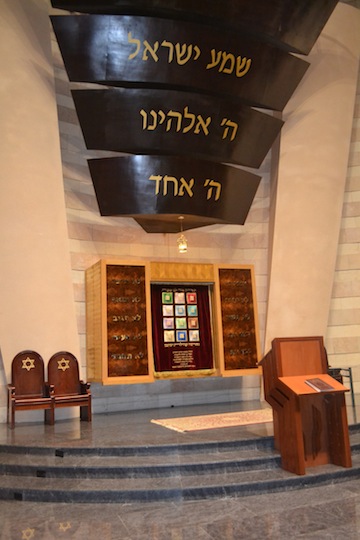
Panama City’s 15,000 Jews can choose from six synagogues, three Jewish day schools, two large kosher grocers and 25 kosher restaurants. Laine’s congregation of 400 families boasts two sanctuaries, a massive social hall, two mikvahs, classrooms and a football court on the roof. On Shabbat in Paitilla, Jews are so conspicuous you have to look hard to find anyone non-Jewish.

I attended services in July with my family, watching from the women’s section as male congregants embraced their rabbi, joining hands as they sang and danced their way around the bimah in a spontaneous, joyful celebration of Shabbat. Accustomed to a very different tradition in Vancouver, I asked Laine how the community had become so religious.

“It’s a predominantly Sephardi community here and there’s much less assimilation than there is in North America,” he reflected. “Adults are engaged in Jewish learning and their kids are raised in a very traditional environment in Panama. Almost all go to Jewish day schools, where they get a traditional outlook on life that automatically brings less intermarriage. And the community also uses the old system of pressure to make sure kids marry Jewish.”

In a country of 4.1 million, Jews are very influential in Panama. The past 60 years have seen two Jewish presidents: Max Delvalle, who served for just under a month in 1968, and, later, from 1985 to 1988, his nephew, Eric Arturo Delvalle. Jews play a heavy role in tourism, retail and construction, and have financed many of the gleaming high-rise buildings and condominium towers in Paitilla.

“We feel greater in number than 15,000,” noted Allan Schachtel, whose family-owned companies include a major tourism firm, the cruise ship port and the ferry boats that deliver tours of the Panama Canal. Laine summed it up succinctly. “Take away the Jewish investment in construction in Panama and the country would still look like a shtetl,” he observed.

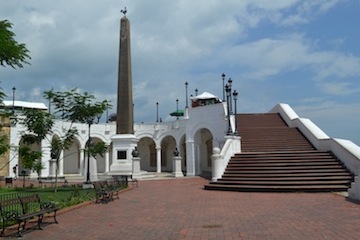
photo - The Plaza de Francia in Panama City recalls the 22,000 French workers lost to malaria and yellow fever in the 1880s
The Plaza de Francia in Panama City recalls the 22,000 French workers lost to malaria and yellow fever in the 1880s. (photo by Lauren Kramer)

In some places, it does. There’s a stark transition between the new, well-heeled Panama, with its tall, contemporary hotels, casinos and expansive malls, and the old. In Casco Viejo, the old city, we peeked inside Iglesia de San Jose to marvel at a massive altar flaked with gold that stretches 25 feet high. It’s the only thing that was saved in 1671 when the English pirate Henry Morgan ransacked and destroyed the city, burning it to the ground and making off with the loot. Local legend has it that a Jesuit priest painted the altar black to disguise it, and then told Morgan the original altar had been stolen by a different pirate. Today, supplicants still pray at the altar, four centuries after it was built.

Casco Viejo is full of charming passageways and ancient buildings that have only recently been gentrified. These days, they’re being transformed to house boutiques, gelato shops, galleries and restaurants, and the area buzzes with youthful energy and a vibrant night life. But there’s sadness here, too.

Iglesia de San Jose in Casco Viejo was the only thing saved when, in 1671, the English pirate Henry Morgan ransacked and destroyed the city, burning it to the ground. (photo by Lauren Kramer)

At the southern point of the quarter, the Plaza de Francia pays tribute to the French role in the construction of the Panama Canal. The French were the first to try and build the 80-kilometre canal in 1881, but their efforts were confounded by engineering troubles, bad planning and mosquito-born illness. Malaria and yellow fever felled 22,000 before the French gave up on the job. The Panama Canal Museum tells more of this story in a beautifully restored old-quarter building once home to the French Canal Company.

Back in Paitilla, life is good for the Jews of Panama City. Laine’s Spanish has grown fluent as he’s watched the community grow – not just in observance, but also in number. It’s swelled by Jews immigrating from Venezuela, Argentina, Uruguay and Peru. At a Chabad Friday night table, we met Israelis and Canadians who have chosen the city as their home and love its Jewish opportunity and spiritual warmth. This is a sweet life for a rabbi, Laine affirmed. “The Jews in Panama are good Yiddishe Neshamas,” he said, “they’re warm, traditional and deeply committed to family life.”

Lauren Kramer, an award-winning writer and editor, lives in Richmond. To read her work online, visit laurenkramer.net. This article was originally published by CJN.


Format ImagePosted on September 15, 2017September 14, 2017Author Lauren KramerCategories WorldTags Judaism, Panama, travel
Betalains boost resistance?

Betalains boost resistance?

Unripe (top) and ripe (bottom) tomatoes. Regular tomatoes (far left) start out green (far left top) and turn red when ripe (far left bottom). In contrast, genetically engineered tomatoes assume different shades of red-violet, depending on whether they produce betalains (the column second from left), pigments called anthocyanins (second from right) or betalains together with anthocyanins (far right). (photo from wis-wander.weizmann.ac.il)

Colour in the plant kingdom is not merely a joy to the eye. Coloured pigments attract pollinating insects, they protect plants against disease, and they confer health benefits and are used in the food and drug industries. A new study conducted at the Weizmann Institute of Science, published in Proceedings of the National Academy of Sciences, USA, has opened the way to numerous potential uses of betalains, the highly nutritious red-violet and yellow pigments known for their antioxidant properties and commonly used as food dyes.

Betalains are made by cactus fruit, flowers such as bougainvillea and certain edible plants – most notably, beets. They are relatively rare in nature, compared to the two other major groups of plant pigments and, until recently, their synthesis in plants was poorly understood. Prof. Asaph Aharoni of Weizmann’s plant and environmental sciences department and Dr. Guy Polturak, then a research student, along with other team members, used two betalain-producing plants – red beet (Beta vulgaris) and four o’clock flowers (Mirabilis jalapa) – in their analysis. Using next-generation RNA sequencing and other advanced technologies, the researchers identified a previously unknown gene involved in betalain synthesis and revealed which biochemical reactions plants use to convert the amino acid tyrosine into betalains.

To test their findings they genetically engineered yeast to produce betalains. They then tackled the ultimate challenge: reproducing betalain synthesis in edible plants that do not normally make these pigments.

photo - Tomatoes that have been genetically engineered to produce betalains only in the fruit, but not elsewhere in the plant
Tomatoes that have been genetically engineered to produce betalains only in the fruit, but not elsewhere in the plant. (photo from wis-wander.weizmann.ac.il)

The success announced itself in living colour. The researchers produced potatoes, tomatoes and eggplants with red-violet flesh and skin. They also managed to control the exact location of betalain production by, for example, causing the pigment to be made only in the fruit of the tomato plant but not in the leaves or stem.

Using the same approach, the scientists caused white petunias to produce pale violet flowers, and tobacco plants to flower in hues varying from yellow to orange pink. They were able to achieve a desired hue by causing the relevant genes to be expressed in different combinations during the course of betalain synthesis. These findings may be used to create ornamental plants with colours that can be altered on demand.

But a change in colour was not the only outcome. Healthy antioxidant activity was 60% higher in betalain-producing tomatoes than in average ones. “Our findings may in the future be used to fortify a wide variety of crops with betalains in order to increase their nutritional value,” said Aharoni.

An additional benefit is that the researchers discovered that betalains protect plants against grey mold, Botrytis cinerea, which annually causes losses of agricultural crops worth billions of dollars. The study showed that resistance to grey mold rose by a whopping 90% in plants engineered to make betalains.

The scientists produced versions of betalain that do not exist in nature. “Some of these new pigments may potentially prove more stable than the naturally occurring betalains,” said Polturak. “This can be of major significance in the food industry, which makes extensive use of betalains as natural food dyes, for example, in strawberry yogurts.”

Furthermore, the findings of the study may be used by the drug industry. When plants start manufacturing betalains, the first step is conversion of tyrosine into an intermediate product, the chemical called L-dopa. Not only is this chemical itself used as a drug, it also serves as a starting material in the manufacture of additional drugs, particularly opiates such as morphine. Plants and microbes engineered to convert tyrosine into L-dopa may, therefore, serve as a source of this valuable material.

The research team included Noam Grossman, Dr. Yonghui Dong, Margarita Pliner and Dr. Ilana Rogachev of Weizmann’s plant and environmental sciences department, and Dr. Maggie Levy, Dr. David Vela-Corcia and Adi Nudel of the Hebrew University of Jerusalem. Aharoni’s research is supported by the John and Vera Schwartz Centre for Metabolomics, which he heads; the Leona M. and Harry B. Helmsley Charitable Trust; the Adelis Foundation; the Lerner Family Plant Science Research Fund; the Monroe and Marjorie Burk Fund for Alternative Energy Studies; the Sheri and David E. Stone Fund for Microbiota Research; Dana and Yossie Hollander, Israel; the AMN Fund for the Promotion of Science, Culture and Arts in Israel; and the Tom and Sondra Rykoff Family Foundation. Aharoni is the recipient of the André Deloro Prize, and the incumbent of the Peter J. Cohn Professorial Chair.

For more on the research being conducted at the Weizmann Institute, visit wis-wander.weizmann.ac.il.

Format ImagePosted on September 15, 2017September 14, 2017Author Weizmann InstituteCategories IsraelTags ag-tech, agriculture, Israel, science, technology
האופציה הקנדית

האופציה הקנדית

בעידן טראמפ: האופציה הקנדית תופסת תאוצה אצל ישראלים ואמריקנים כאחד. (צילום: Cynthia Ramsay)

בעידן הנשיא האמריקני השערורייתי ביותר בתולדות המדינה, דונלד טראמפ, האופציה לעבור לקנדה תופסת תאוצה אצל אמריקנים וגם אצל ישראלים. כך מסתבר.

עיתונאית הארץ, נעמי דרום, שגרה עם משפחתה בקיימברידג’ מסצ’וסטס בשנתיים האחרונות, כותבת על האופציה הקנדית. הטור שלה שכותרתו “מתי קנדה נהיתה מגניבה בהרבה מאמריקה?” פורסם לאחרונה. דרום כותבת בכותרת המשנה כי “כמו הרבה ישראלים ולא מעט אמריקאים, גם אנחנו רואים בקנדה חוף מבטחים שאליו נוכל להיסחף כשהאפשרויות האחרות יאזלו. אבל איך קרה שאמריקה התחילה נושאת עיניים לחברה הצפונית אחרי שנים של זלזול?”

דרום אומרת כי עבור ישראלים רבים שגרים ביבשת, קנדה נמצאת שם כאופציה, פוטנציאל רומנטי בלתי ממומש. נראה שהכל שם הרבה יותר קל ושפוי: זכויות סוציאליות שזכאים אליהן כבר לאחר חודשים מועטים, ויזה קלת יחסית להשגה, קהילה יהודית נחמדה ועוזרת (היא מתכוונת לקהילה בטורונטו), הקנדים מדברים אנגלית, לא אוהבים רובים ולא אוחזים בטירוף באולטרה קפיטליזם של הדוד סם.

דרום מציינת כי מאז שטראמפ נבחר כמועמד המפלגה הרפובליקנית קנדה זוהרת כיהלום צפוני. מושב הסובלנות וביטוח הבריאות האוניברסלי, המקום שבו אוהבים מהגרים, מקבלים אותם, מאמצים פליטים סורים ומצטלמים איתם. עד הבחירות האחרונות משל בקנדה סטיב הרפר, פוליטיקאי שמרן, לא פופולרי ושנוי במחלוקת, בעוד ארצות הברית התגאתה בנשיא ליברלי, רהוט ורחום. אבל מאז התהפכו היוצרות וקנדה מתהדרת בטרודו הליברל, הפמיניסט והסובלני. האמריקנים לעומת זאת, נלכדו במערכת בחירות מכוערת

שהסתיימה בבחירתו של האיש שעוד לא פגש ניאו-נאצי שהוא לא מחבב. לאימתם גילו האמריקנים שהם פתאם פחות שווים מהשכנה המנומנמת שבה התרגלו לזלזל.

בתקופת הפריימריז לבחירות בארה”ב כותבת דרום, עיתונאי קנדי נסע לסקר את אספת הבחירות של ברני סנדרס, שהוא ותומכיו נחשבו לשמאלנים קיצוניים בין השאר בשל תמיכתם בביטוח הבריאות הציבורי. “אנחנו בסך הכל רוצים מה שיש לכם”, אמרו תומכי סנדרס לעיתונאי הקנדי, “מה כל כך קיצוני בזה?”.

אם פרסום התוצאות לבחירות בארה”ב יותר ויותר אנשים הכניסו לגוגל את המשפט “איך מהגרים לקנדה”, יותר מאשר אי פעם מאז נוסד מנוע החיפוש. בחדש שעבר פורסם כי מספר שיא של מהגרים בעיקר מהאיטי, התייאשו מארצות הברית ועברו את הגבול לקנדה.

הניו יורקר פרסם כתבה לפני מספר חודשים תחת הכותרת “הייינו יכולים להיות קנדה”. הכותב אדם גופניק, שגדל בשתי המדינות כתב בין היתר כי אמריקה תייחל, תרצה להיות קנדה, תקנא בקנדה, תכה על חטא ועוד על המהפכה האמריקנית, ערש הדמוקרטיה המודרנית?

דרום מסבירה כי גם היא ומשפחתה שקלו בשלבים מסויימים לוותר על סיבוכי הוויזה האמריקאיים ולהגר צפונה. היתרונות ידועים. אך מה אנו יודעים על קנדה? מה יש לנו בקנדה שלא גדלנו עליה, לא ראינו בטלוויזיה סדרות שלה, לא צרכנו סרטים קנדיים. מה אנו יודעים על הפוליטיקה שם? בעוד שאמריקה זורמת בעורקינו, קנדה היא טריטוריה זרה ומושלגת.

על הביקור בטורונטו היא אומרת: האנשים מנומסים אבל לא באופן מוגזם. טורונטו נראית נחמדה והחברים שלנו שגרים בה מרוצים מהחיים בה.

בין תגובות הקוראים של הרשימה: “קנדה נעימה מארה”ב, שלווה מארה”ב, אינה מושחתת כמו ארה”ב ויקרה ממנה. זו מדינה ענקית ומגוונת וכן יותר אירופאית, פחות רודפת בצע, מסודרת יותר. מס הכנסה גבוה יותר אך ביטוח הבריאות זול בהרבה. בקנדה האווירה רגועה יותר, פחות חומרנית. ארה”ב היא מדינה לעשירים ועם טראמפ הפער בין עשירים לעניים ילך ויגדל”.

Format ImagePosted on September 13, 2017September 14, 2017Author Roni RachmaniCategories עניין בחדשותTags Canada, immigration, Israel, Trump, United States, ארצות הברית, הגירה, טראמפ, ישראל, קנדה
Sumekh swipes out hunger

Sumekh swipes out hunger

Rachel Sumekh is one of five speakers who will participate in FEDtalks Sept. 13. (photo from Rachel Sumekh)

University students with meal plans often end a semester or term with a surplus on their cafeteria swipe card. Whether because they skip a few breakfasts, go on vacation or eat in a restaurant the occasional night, some of the meals they pay for go unpurchased. In most instances, students are not reimbursed for uneaten meals.

When Rachel Sumekh was studying history at the University of California Los Angeles in 2010, she and some friends went to the cafeteria, stocked up on to-go food using the amounts remaining on their swipe cards and handed it out to hungry people on the streets of the city.

The dining provider didn’t like the gesture of goodwill, as it created an unanticipated run on to-go food. Sumekh talked it out with the administrators and created the pilot project for Swipe Out Hunger, an initiative that is now on 32 American college campuses, helping feed hungry people across the country. Sumekh will talk about the project here on Sept.13 at FEDtalks, the opening event of the Jewish Federation of Greater Vancouver’s annual campaign.

The original idea, she admits, came from her friend Bryan Pezeshki, but he was busy continuing his studies – he’s now a doctor – and so Sumekh and a few friends carried it on as a side gig, meeting on Sundays and creating Swipe Out Hunger. In 2013, they decided to see what would happen if a full-time staff person were devoted to the project and Sumekh took on the job.

In such a venture, the humanitarian impulses of dining providers compete with their bottom line – unused amounts on meal cards means lower operating costs for them. So, in getting suppliers on board, Swipe Out Hunger organizers emphasize doing the right thing, while also implying there might be bad publicity if campus media discover food providers’ reluctance to participate in a program that fights hunger. Nonetheless, it is a challenge. Sumekh said students from about 300 different campuses have approached Swipe Out Hunger to start their own chapters, yet only about 10% of those have been successfully launched.

“So, it comes down to how difficult it is for universities to actually agree to implement this,” she said.

Originally focused on feeding hungry people in the communities around campus, Swipe Out Hunger has transitioned to focus mostly on addressing the hunger of students on campus.

Ironically, the problem of student hunger is exacerbated by an increasing accessibility of post-secondary education, she said. Financial aid and need-based scholarships are making it easier for young people from lower socioeconomic backgrounds to attend college. But, once there, they confront the realities of student life without money.

Educational institutions are giving financial aid, even full tuition in some cases, Sumekh said, but the students still have no money. “So who’s going to pay for their housing or their meals or their books or their transportation and all the other stuff?” She estimates that 75% of those benefitting from Swipe Out Hunger now are college students.

Sumekh says hunger leads to increased absenteeism, poor grades and dropping out. She pointed to a Canadian study that suggests 39% of Canadian college students cannot afford balanced meals and fear not having enough food at all. Almost half of the more than 4,000 students who participated in the study said they chose books, tuition and rent over healthy meals, one-quarter said the lack of good food affected their physical health and one in five said their mental health was affected. While there are no Swipe Out Hunger chapters in Canada yet, a similar program, Meal Exchange, exists here.

Universities are slowly coming to the awareness that their students’ well-being depends on healthy, sufficient diets, among all the other factors, Sumekh said. This is evidenced by the shift her organization has seen in the type of people who are approaching Swipe Out Hunger.

“Previously, 100% of the interest in our program was from students,” she said. “Now, over 50% of our interest is coming directly from administrators.… Universities are finally recognizing that they have students on their own campus who are going hungry and they have to do something about it.”

There has been a stigma around colleges acknowledging hunger among their students, she added, but this is diminishing in the face of recognition of the need.

Swipe Out Hunger also had a recent advocacy triumph. In June, thanks to pressure from Sumekh’s organization, the California state legislature and Governor Jerry Brown approved $7.5 million in funding to encourage colleges throughout the state to adopt a Swipe Out Hunger program, establish food pantries and hire staff to help students access nutritious food. So far, 1.3 million meals have been shared – and that number is likely to grow, as Swipe Out Hunger catches on in California and nationwide. Despite this success, Sumekh hopes her organization goes out of business.

“If there’s anything we believe, it’s that the old model of charity doesn’t work,” she said. “We don’t want to exist 20 years from now.”

Swipe Out Hunger is aiming for a systemic shift, where universities take it upon themselves to ensure that students’ needs are met, a universalization of an ad hoc program now on some campuses in which meals are provided to students in need.

While Swipe Out Hunger isn’t aimed specifically at Jewish students or any other cultural demographic, Sumekh credits both her Jewishness and assistance from the Jewish community for inspiring the initiative. The daughter of refugees from post-revolution Iran, Sumekh is excited to be sharing the stage at FEDtalks with Eric Fingerhut, chief executive officer of Hillel International, because she was involved with UCLA Hillel and got lots of support from the campus group when she was starting Swipe Out Hunger.

“When I was getting the program off the ground, I would go to Hillel and they would say, Rachel, whatever you need, tell us and we’ll make it happen,” she said. “It was an amazing way to see the Jewish community say, let’s just support this young Jew, even though what they’re doing isn’t just for Israel or just for Jewish people. If they’re doing something that’s living out our values, we should want to support that.”

For the full FEDtalks lineup and tickets, visit jewishvancouver.com/fedtalks2017.

Format ImagePosted on September 8, 2017September 5, 2017Author Pat JohnsonCategories LocalTags annual campaign, FEDtalks, Hillel, Jewish Federation, Rachel Sumekh, Swipe Out Hunger, tikkun olam
Unity, not uniformity, Hillel’s goal

Unity, not uniformity, Hillel’s goal

Eric Fingerhut, chief executive officer of Hillel International, will be part of FEDtalks on Sept. 13. (photo from Hillel International)

There are internal and external challenges facing the Jewish community, said Eric Fingerhut, and their solutions will come from the young people who are currently on college campuses.

The former U.S. congressman has served since 2013 as chief executive officer of Hillel: The Foundation for Jewish Campus Life and is one of five speakers at FEDtalks, the opening of the Jewish Federation of Greater Vancouver’s annual campaign, which takes place at the Chan Centre next week.

“The one place that the future of the Jewish community actually comes together in a relatively concentrated way for a relatively concentrated period of time is the college campus,” Fingerhut said in a telephone interview with the Jewish Independent. “The question that I want to address with the audience is, how can we use the opportunity of the college years to build a unified Jewish community – not a uniform Jewish community, but a unified Jewish community – that will enable the next generation to make their contribution to the long-term growth of Jewish life, Jewish learning and Israel?”

Finding unity among Jews, particularly around issues of religious and political expression, and in the face of anti-Israel activism that is prevalent on college campuses, is not easy, he acknowledged. Occasional reports emerge claiming that Jewish students are disengaging from the contentious debate around Israel and Palestine, but Fingerhut said confronting these issues is a matter of personal choice and disposition.

“There is no question that, on far too many campuses, there have been contentious debates – and sometimes worse than debates, sometimes really disturbing incidents involving anti-Israel and even antisemitic behaviour,” he said. “For some students, being engaged directly, encountering that kind of behaviour, is something that they feel comfortable doing, that they are inspired to do. But, for others, those kinds of situations are less comfortable and it’s not what they came to college to do. They have many other things on their plate. We don’t judge the level of commitment that a Jewish student has to the Jewish community and Israel by whether or not they show up at a counter-protest or a meeting about BDS. We encourage students to do that, but there are many, many ways for Jewish students to engage with Israel.”

Hillel, he noted, is the biggest recruiter for Birthright, Masa and other Israel experience programs. Hillel also coordinates Jewish Agency shlichim (emissaries) on 75 campuses, young Israelis who engage face-to-face with Jewish and non-Jewish students on North American campuses.

“We provide many, many ways to engage with Israel so that students can build a relationship with Israel, but not necessarily have to do that through being involved in the middle of some of these very ugly protests,” said Fingerhut.

Almost immediately after becoming CEO, Fingerhut was confronted with the development of the Open Hillel movement, a group that rejects Hillel International’s Standards of Partnership for Israel Activities, a policy that outlines the sort of groups with which Hillel will partner. Fingerhut took a firm line and he maintains it.

“Every student, regardless of their opinions or the issues they want to discuss, is welcome,” he said. “Every conversation is welcome. But, as an organization, we are Zionists. We are seeking to support Israel as our Jewish, democratic state. So, while that would certainly involve debate and discussion … it also means that we will not work with organizations whose mission is to hurt the state of Israel, who are trying to undermine the state of Israel. Certainly, that describes organizations that promote BDS.… We’re not going to work with them and we’re not going to host speakers whose career and work have been about trying to undermine Israel and its role as the sovereign representative of the Jewish people. Those are our guidelines and there are some who would want us to change those and we respect them. They have a right to argue for change, to make their case for change. They are welcome as individuals at Hillel, as everybody else [is], even though they disagree with our policies. But we’re not going to change our policies.”

Geopolitics is not the only potentially divisive area for Hillel. Religion is another factor. Building a pluralistic campus community is hard work, he said.

“Hillel is totally committed to Jewish pluralism,” he said. “Hillel’s a place where you’ll see a Friday night service in one room where men and women are praying separately on either side of a mechitzah, the divider. You’ll see another room where men and women are praying together and a woman is leading the service wearing a tallit. You’ll see in another room where maybe a song leader with a guitar is singing and leading music in a different style. You’ll see another room where people are meditating or discussing the issues of the day because prayer isn’t their thing. There may even be a room where people are discussing why they’re not in any of the other rooms.… And then we all come together and we have dinner and we make Kiddush and we celebrate together as a community.”

Respecting this diversity places a unique responsibility on Hillel, he said, and it portends a better future.

“It’s a core value of ours,” he said. “And we believe that, if a student learns to live in a vibrant, pluralistic Jewish community, where we’re not trying to change each other but we treat each other with love and respect, that will hopefully influence how they lead communities as adults when they graduate and go out into the world.”

As the leader of an organization that is almost a century old, one of the things Fingerhut confronts is an outdated perception of what Hillel is.

“Perhaps the number one question I still get asked from folks who remember Hillel from their college days is, how many people go to Hillel?” he said. “That’s just not a question we ask anymore … because our job is to inspire Jewish life on a college campus, and we do that wherever students are. Certainly, some of the activities happen inside a building that is called Hillel. But Hillel is inspiring Jewish life and Jewish activity all across campus, engaging students where they are.”

For example, he said, students sometimes tell him they don’t go to Hillel, but prefer to spend Shabbat with friends in their apartment or dorm.

“And I smile because I know that that was a Hillel-sponsored program,” he said. “We knew that, if the only Shabbos dinner we offered on campus was coming to Hillel, that will attract a certain number of people. But some are going to say, that’s not the way I want to spend Friday nights, going to a large group dinner. So, we knew that, by getting one popular student in a dorm to invite their friends to a smaller group dinner in an apartment building or in a dorm, that would attract additional students.”

As the news doesn’t generally focus on the positive, what doesn’t make headlines are the numbers of Jewish students engaged in a vast range of activities and programs, Fingerhut said.

“People tend to hear the negative, the problems, the anti-Israel activities, the antisemitism,” he said. “They tend not to see the very vibrant Jewish life that exists on so many campuses.”

FEDtalks takes place on Sept. 13 at the Chan Centre. For tickets, visit jewishvancouver.com/fedtalks2017.

Format ImagePosted on September 8, 2017September 5, 2017Author Pat JohnsonCategories LocalTags campus life, Eric Fingerhut, Hillel, Jewish values, pluralism
Newcomers settling in

Newcomers settling in

From left to right: Rabbi Dan Moskovitz, Meha Qewas, the Hon. Jody Wilson-Raybould, Hesen Mostefa, Brenda Karp and two of the Mostefas’ children. (photo from Temple Sholom)

“I am not scared,” says Meha Qewas, sitting at her small dining table with her 1-year-old daughter on her lap. In front of us is a plate of knefa, a very rich, sweet cheese dish covered in syrup, together with huge tumblers of juice many times bigger than what I’m used to being offered. Meha clearly values hospitality. The only thing sweeter than the mid-morning “snack” is the ebullience and warmth that flows out of Meha and her husband Hesen Mostefa.

When she says she is fearless, Meha is talking about finding work in Vancouver. Despite the challenges, she is confident both in her new friends in the Vancouver Jewish community and in her own ability to master English and overcome whatever other obstacles she may meet. Her confidence is not groundless: Meha was the main force behind and organizer of getting her husband and three children first out of Syria, then out of Iraq, the country where they took refuge for five years. “I wanted my children out of there,” she says, recalling the sight of Syrian children and youth in Iraq taking up smoking and selling candy on the street to make income for their families in the packed, rat-infested refugee housing.

Hesen also has a remarkable story to tell. Trained as a surgeon in Syria, he volunteered in Iraq with Médecins Sans Frontières (Doctors Without Borders), which eventually hired him as a doctor. During the years they spent in Iraq, Hesen put in long days with MSF while Meha struggled to take care of the children, run a household and plan their flight from Iraq. Eventually, Meha succeeded in securing passage to Canada with the help of sponsors from Vancouver’s Temple Sholom.

Temple Sholom’s efforts to sponsor Syrian refugees started with a High Holidays sermon from Rabbi Dan Moskovitz about the refugees’ plight. Members of the shul immediately formed a committee of volunteers to bring in at least one family, and others, if possible.

Meetings with the Jewish Federation of Greater Vancouver and the Anglican Diocese followed (the diocese is a federally approved sponsor for refugees with which other groups can team). The committee learned about private sponsorship and began working through Mosaic, a local agency that serves newcomers and refugees, and were connected to the Mostefas. The process to bring them to Canada was started.

In December 2015, however, Canada pulled some immigration services out of Iraq and began working through Jordan. A letter that Moskovitz gave to Senator Mobina Jaffer about the Mostefa family and their situation apparently found its way to the prime minister, and services in Iraq were reinstated as a result.

“In the end, over 200 people from shul got involved,” Moskovitz said. “I met personally with anyone who expressed concern about whether bringing in the refugees was a good idea. Most got on board with the initiative and I’m happy to say that, now that they [the Mostefas] are here, everyone in the community is thrilled.”

The synagogue’s efforts did not end there. They have since brought in another family, Bawer Issa, Shinhat Ahmed and their newborn son. The Issa family was welcomed at a Shabbat service in the synagogue on Aug. 25 (it can be seen on YouTube). Bawer spoke movingly at that event, recounting how some people had asked him if he was surprised, as a Muslim, that he had been rescued by Jews.

“We were not surprised,” he told the congregation. “Growing up in Iraq, we were brainwashed at school every day to hate Israelis and Jews as our number one enemy. My Kurdish father always told us not to care what they said, not to believe it. He told us that Israel had been the first to send aid when Saddam Hussein bombed us with chemical weapons.” Citing Israel’s continued support for Kurdish self-rule, Bawer said that he had already known that Jews were their friends.

At the upcoming biennial meeting in Boston of the Central Conference of American Rabbis, the umbrella organization of the Reform movement, a resolution – that Moskovitz helped write – will call for the sponsorship of 36 more refugee families by Canadian congregations.

The wider Vancouver community is invited to welcome the Issa and Mostefa families on Sept. 10, at 11:30 a.m., at a reception at Temple Sholom that also marks the first day back of the synagogue’s Hebrew school. An RSVP is requested to 604-266-7190 or via templesholom.ca/get-know-new-canadians.

Matthew Gindin is a freelance journalist, writer and lecturer. He writes regularly for the Forward and All That Is Interesting, and has been published in Religion Dispatches, Situate Magazine, Tikkun and elsewhere. He can be found on Medium and Twitter.

Format ImagePosted on September 8, 2017September 5, 2017Author Matthew GindinCategories LocalTags Canada, Dan Moskovitz, Iraq, Meha Qewas, refugees, Syria, Temple Sholom, tikkun olam
Volunteer to tutor students

Volunteer to tutor students

Chabad Richmond is looking for seniors to teach English to Israelis. (photo from chabadrichmond.com)

Want to make a difference in the lives of Israeli teens? Consider Israel Connect, a volunteer program where Vancouver retirees engage via Zoom (it’s like Skype) with Israeli high school students who want to sharpen their English conversation and reading skills. The program, which starts after the High Holidays, is sponsored by Chabad Richmond.

“We are looking for retirees, seniors or adults with time available for volunteering. Volunteers do not have to be teachers, and the curriculum will be provided,” said Vancouver coordinator Shelley Civkin. “We’re looking for Jewish adults who are fluent English speakers, have basic computer skills and own a computer with a camera.” Volunteers can tutor from home – it will entail a half hour per week – and technical support will be available if needed. Volunteers will be trained in how to download and use Zoom.

“This is a meaningful way for community members to support Israel in a practical way,” said Rabbi Yechiel Baitelman of Chabad Richmond. “You’ll be doing a mitzvah, while investing in Israel and its young people.”

Time preferences of volunteers will be coordinated beforehand, but sessions will likely take place in the morning between 8 and 10 a.m. The Chabad Richmond Israel Connect program is asking for a one-year commitment from volunteers.

“English proficiency is crucial to Israeli students, since it accounts for a third of their entrance exam marks for university,” said Baitelman. “Partnering with the Israeli Ministry of Education, the Israel Connect program targets teens from the most disadvantaged neighbourhoods in Israel. The tutoring sessions are vital to students’ upward mobility in terms of education and jobs, which is why this program is so important.”

“Past volunteers really enjoyed helping their Israeli students, and made great connections with them. The students’ marks on their English exams prove that this kind of one-on-one tutoring makes a significant difference in their lives,” said Civkin.

For more information, contact Civkin at 604-732-6330 or [email protected].

Format ImagePosted on September 8, 2017September 5, 2017Author Chabad RichmondCategories LocalTags Chabad Richmond, education, Israel, seniors, youth
שישה סרטים ישראלים בפסטיבל של טורונטו

שישה סרטים ישראלים בפסטיבל של טורונטו

“מונטנה” סרט הביכורים של הבימאית והתסריטאית לימור שמילה (שהייתה עד כה מלהקת מוכרת של סרטים). (צילום: tiff.net/tiff/montana)

ישראל נמצאת במקום מכובד בעולם מבחינת היצירה הקולנועית. זאת לאור העובדה שלא פחות משישה סרטים ישראלים ישתתפו השנה בפסטיבל הסרטים הבינלאומי של טורונטו, שחשב לשני בחשיבותו בעולם הקולנוע אחרי פסטיבל קאן. כידוע מדי שנה כוכבים ויוצרים רבים בתחום הקולנוע מגיעים לאירועי פסטיבל הסרטים של טורונטו.

להלן מידע בדבר שלושה מבין הסרטים הישראלים שיוקרנו בפסטיבל היוקרתי. במסגרת דיסקברי המשבצת המוקדשת ליוצרי העתיד של הקולנוע העולמי, שמומלץ לעקוב אחרי עבודתם, יוקרנו שני סרטים ישראלים. הראשון “מונטנה” סרט הביכורים של הבימאית והתסריטאית לימור שמילה (שהייתה עד כה מלהקת מוכרת של סרטים), שעוקבת אחרי צעירה החוזרת לבית ילדותה בעכו ממנו ברחה לאחר היעדרות ארוכה, לאור מות סבה. הצעירה מתאהבת במורה שהיא גם אמא, אותה היא פוגשת בזמן תקופת האבל ומתנהל קשר רומנטי אינטימי בין השתיים. כך גם מתגלה הסוד הקשה שגרם לצעירה לעזוב את עכו. “מונטנה” הוקרן כבר בפסטיבל הסרטים של חיפה. בסרט משתתפים בין היתר: נעה בירון, נטע שפיגלמן, חוה אורטמן ואבי מלכה. השני הוא “פיגומים” (קופרודוקציה ישראלית-פולנית) סרט הביכורים של הבימאי והתסריטאי מתן יאיר, שעוסק בקשר בין אב קשה ודומיננטי לבנו, תוך שהוא מצפה שהבן יחליף אותו בעבודתו על הפיגומים. הנער רואה חיים אחרים וטובים יותר לאחר שמגיע לבית הספר בו הוא לומד (בכיתה של תלמידים בעייתיים), מורה לספרות רגיש במיוחד לתלמידיו. “פיגומים” הוקרן כבר בהצלחה במסגרת הלא רשמית של פסטיבל קאן, וכן זכה בפרס התחרות הישראלית של פסטיבל הסרטים של ירושלים. בסרט משתתפים בין היתר: עמי סמולרצ’יק ואשר לקס.

במסגרת תצוגה מיוחדת יוקרן הסרט המדובר “פוקסטרוט” (קופרודוקציה ישראלית-גרמנית) של הבימאי והתסריטאי שמואל מעוז. הסרט עוסק בסיפורה של משפחה שנמצאת בקשר רחוק עם בנם החייל. האב בטעות גרם למותו של בנו למרות שלא התכוון לכך. הסרט יתחרה בפרס אריה הזהב של פסטיבל הקולנוע של ונציה. משתתפים בו בין היתר: ליאור אשכנזי, שרה אדלר ויונתן שיראי. מטבעה שרת החינוך, התרבות והספורט של ישראל, מירי רגב, ניצלה את ההזדמנות לבקר את הסרט במקום לתמוך ביוצריו, דבר המתבקש מתפקידה. רגב אמרה בין היתר את הדברים הבאים: “זוהי בושה וחרפה שהסרט “פוקסטרוט” של שמוליק מעוז ישתתף בפסטיבלי קולנוע נחשבים כפסטיבל טורונטו ופסטיבל ונציה. הדעת אינה סובלת, שסרטים המבאישים את שמו הטוב של צה”ל, הם אלו שנתמכים על ידי קרן הקולנוע הישראלי, הנתמכת על ידי המדינה, והם אלה שנבחרים להיות חלון הראווה של הקולנוע הישראלי בחו”ל”. בהקשר זה טענה רגב כי הסרט פוגע בשמו הטוב של צה”ל, בין היתר בשל סצנה הכלולה בו, כאשר קבוצת חיילים הנמצאת במחסום מפגינה אלימות קשה כלפי פלסטינים.

פסטיבל הסרטים של טורונטו נערך מדי שנה מאז 1976, במהלך חודש ספטמבר והוא נחשב לגדול בעולם. האירוע נמשך עשרה ימים ובמהלכו מוקרנים קרוב לארבע מאות סרטים. השנה יפתח הפסטיבל הארבעים ושתיים במספר ביום חמישי השבוע (השבעה בחודש) ויימשך עד ה-17 בחודש. על נותני החסות של האירוע נמנים: ויזה, רויאל בנק אוף קנדה, אייר פראנס, סינפלקס, סאן לייף פננשיאל, חברת התעופה דלתא, נשיונל בנק, פיצ’ה נובה, היץ’.אס.בי.סי, בריקס, אקורה רכב, מק קפה ובל. אירועי הפסטיבל בטורונטו מביאים להכנסה של כמאה ותשעים מיליון דולר לעסקים שונים בעיר ובקנדה בכלל. בין אורחי האירוע השנה: הלן מירן, אנג’לינה ג’ולי, גאל גרסיה ברנאל וחאווייר ברדם.

Format ImagePosted on September 6, 2017September 3, 2017Author Roni RachmaniCategories עניין בחדשותTags cinema, films, Israel, Toronto International Film Festival, הקולנוע, ישראל, סרטים, פסטיבל הסרטים הבינלאומי של טורונטו
Making discourse civil

Making discourse civil

Rabbi Jay Henry Moses will speak at FEDtalks on Sept. 13. (photo from Rabbi Jay Henry Moses)

While hate groups and their opponents across North America rally, and sometimes brawl, proponents of civil discourse are teaching people to communicate effectively across divides.

However, Rabbi Jay Henry Moses, who will speak in Vancouver this month, admits that those at the extremes may not be fertile soil for seeding civil discussion. It’s the vast majority in the middle of the bell curve he is interested in, the great number of people of goodwill who wish to debate agreeably but sometimes lack the skills to do so.

Moses is vice-president of the Wexner Foundation, which was founded by Ohio philanthropist Les Wexner in the 1980s to focus on the development of Jewish professional and volunteer leaders in North America, and public leaders in Israel. Moses will visit here as one of five speakers at FEDtalks, the opening event of the Jewish Federation of Greater Vancouver’s annual campaign, on Sept. 13.

The Wexner Foundation has an upcoming summit on civil discourse and the topic permeates everything the organization does.

“The topic is of particular interest to us because, built into the fabric of all the programs that we run for leaders is the element of diversity,” he told the Independent in a telephone interview. “We have, since the very beginning of our work, always been very clear that we serve the entire Jewish people and the entire state of Israel and that the leaders who go through the programs that we run will be stronger and better leaders for having encountered those with different viewpoints, and learn from them. It’s actually long been part of the secret sauce of what makes our program successful … that we’ve managed to be able to bring together people who disagree with each other about important things but who share a common mission of one type or another. We’ve been able to bring them together and have the resulting cohorts be greater than the sum of their parts precisely because of that diversity.”

Nurturing an openness to diversity of opinion, particularly in the frequently contentious realm of Jewish and Israeli leadership, allows alumni of Wexner’s varied programs to bring some of that wisdom to the other circles of influence they occupy, he explained.

Inside and outside of the Jewish world, there are challenges and opportunities around civil discourse, Moses said.

“I am optimistic in the long run but realizing in the short run the hill that we have to climb is pretty steep,” he said. In the aftermath of Charlottesville and other conflicts, the chasm between the ideal and the real is evident.

“The ideal may be that everybody will be able to participate in conversations with people they disagree with and do so in the spirit of openness and learning and growth and not necessarily agree, but at least be able to occupy the same space and have the spirit of open-mindedness in their conversations and maybe get to better solutions because of talking with people who are speaking differently and so on,” he said. “That’s the ideal that we are working towards. The reality is that we have extremes on both ends. We have people whose adherence to their worldview and ideology is so extreme and so rigid that they have no interest in, nor ability to, engage in conversation – civil conversation – with people they disagree with.”

Focusing on these extremes is not a recipe for success, said Moses.

“We have to start by not focusing on them, [and] actually focus on those in the middle of the bell curve who may be on one side or another of any given ideological divide, but who are not closed off entirely to engaging with people they disagree [with],” he said. “I think the vast majority of North American Jews, if you want to talk about the universe that we are mostly influencing, are mostly in the middle of that bell curve somewhere. They are not extremists and [are] candidates for the kind of experiences that can enrich them, and enrich our community, by bringing people together who disagree in the right way.”

Providing people with the tools to express themselves and to listen to those with whom they disagree is an art, not a science, and Moses acknowledges he doesn’t have the silver bullet. But working toward civil discourse may be more urgent now, in the age of social media.

“When conversation is left to its own devices, especially in an era of social media, we often lead with less than our best selves,” said Moses, dryly. “So, having a structure within which to safely and carefully and slowly approach sensitive topics is really important. Letting it unfold organically, as it often does in social media is, in many cases, a recipe for miscommunication and breakdown of civil discourse.”

Bad experiences on social media, Moses fears, have actually made people more wary of having potentially difficult conversations in person.

“They are more hesitant to have conversations in person because they’ve seen online how quickly it can devolve into personal attacks or other really uncomfortable and difficult situations,” he said. “I think we are encountering people we disagree with all the time but I feel like we’re actually talking to them less because we feel we have nothing to talk about. We don’t know how to start those conversations, or we have had them end badly. We’ve had personal relationships damaged and much of that damage has happened online because things happen more quickly and at a greater distance. So, face-to-face conversation is suffering as a result.”

The essence of his message to the Vancouver audience will be that struggling to communicate civilly is not a new phenomenon, but it is made more urgent by contemporary developments.

“This problem is not new – it’s been part of our community’s challenge for centuries,” he said. “At the same time, we are in a moment where, because of a combination of a lot of these factors, it’s a crisis, you have a level of urgency that it may not have had before. I want to make the point that, although unhealthy disagreement has a long history in Jewish life, we also have baked into the fabric of our tradition amazing resources and a time-tested recipe for creating a culture of dissent that allows us to engage in a healthy way as a community. I’d like to address some of the ways we can use those principles from our tradition and from our history, sort of repurpose them for the 21st century, and create a new model for how we can rebuild that culture of healthy dissent using our own DNA and adapting it to our day.”

Before becoming vice-president of the Wexner Foundation, Moses was head of the Wexner Heritage Program. Originally created as a stand-alone foundation, and now based within the larger foundation, the Wexner Heritage Program’s mission is “to expand the vision of Jewish volunteer leaders, deepen their Jewish knowledge and confidence, and inspire them to exercise transformative leadership in the Jewish community.”

“As the director of that program for many years,” he said, “I worked with Jewish communities across North America to identify and then train volunteer leaders – high potential, promising, up-and-coming volunteer Jewish leaders who engage in a two-year program of study of Jewish history and Jewish thought and also of Jewish leadership. We basically are investing in these leaders to give them knowledge and inspiration to go back to their Jewish communal volunteer work with broader vision, more confidence, a deeper network and a sort of bolder vision of what the Jewish future can be and their own sense of responsibility for bringing us toward that future.”

There are several connections between the Wexner Foundation and other speakers at FEDtalks, Moses noted. Also at the Chan Centre podium will be Eric Fingerhut, president of Hillel: The Foundation for Jewish Campus Life, of which the Wexner family has been very supportive. He also noted that Ruth Wasserman Lande, another speaker (profiled in the Independent Aug. 18), is a Wexner alumna.

Moses has a request for the Vancouver audience: “Judge me kindly if I’m sharing the stage with Ruth, who is an extraordinarily impressive and charming person.”

For the full speaker list and to purchase tickets, visit jewishvancouver.com.

Format ImagePosted on September 1, 2017August 30, 2017Author Pat Johnson and Rebecca ShapiroCategories LocalTags annual campaign, education, FEDtalks, Jay Henry Moses, Jewish Federation, Wexner Foundation

Posts pagination

Previous page Page 1 … Page 206 Page 207 Page 208 … Page 322 Next page
Proudly powered by WordPress