Skip to content
  • Home
  • Subscribe / donate
  • Events calendar
  • News
    • Local
    • National
    • Israel
    • World
    • עניין בחדשות
      A roundup of news in Canada and further afield, in Hebrew.
  • Opinion
    • From the JI
    • Op-Ed
  • Arts & Culture
    • Performing Arts
    • Music
    • Books
    • Visual Arts
    • TV & Film
  • Life
    • Celebrating the Holidays
    • Travel
    • The Daily Snooze
      Cartoons by Jacob Samuel
    • Mystery Photo
      Help the JI and JMABC fill in the gaps in our archives.
  • Community Links
    • Organizations, Etc.
    • Other News Sources & Blogs
    • Business Directory
  • FAQ
  • JI Chai Celebration
  • JI@88! video

Recent Posts

  • BGU fosters startup culture
  • Photography and glass
  • Is it the end of an era?
  • Taking life a step at a time
  • Nakba exhibit biased
  • Film festival starts next week
  • Musical with heart and soul
  • Rabbi marks 13 years
  • Keeper of VTT’s history
  • Gala fêtes Infeld’s 20th
  • Building JWest together
  • Challah Mom comes to Vancouver
  • What to do about media bias
  • Education offers hope
  • Remembrance – a moral act
  • What makes us human
  • המלחמות של נתניהו וטראמפ
  • Zionism wins big in Vegas
  • Different but connected
  • Survival not passive
  • Musical celebration of Israel
  • Shoppe celebrates 25 years
  • Human “book” event
  • Reclaiming Jewish stories
  • Bema presents Perseverance
  • CSS honours Bellas z”l
  • Sheba Promise here May 7
  • Reflections from Be’eri
  • New law a desecration
  • Resilient joy in tough times
  • Rescue dog brings joy
  • Art chosen for new museum
  • Reminder of hope, resilience
  • The national food of Israel?
  • Story of Israel’s north
  • Sheltering in train stations

Archives

Follow @JewishIndie
image - The CJN - Visit Us Banner - 300x600 - 101625

Category: TV & Film

On the lookout for wildfires

On the lookout for wildfires

Tova Krentzman’s Fire Tower is a documentary about the people stationed high above the ground in the Yukon and Alberta, who are looking for smoke or signs of a wildfire. (photo from  Tova Krentzman)

Tova Krentzman’s Fire Tower, a documentary about the people stationed high above the ground checking for wildfires in the Yukon and Alberta, has been covering the film festival circuit. Most recently, it was shown in February at the Available Light Film Festival in Whitehorse, where the director resides.

The idea for the film arose when Krentzman was working as a cook at a firefighting camp one spring. Several lookouts, the people who comprise the first line of defence in battling wildfires, stayed at the camp as they were getting ready to head to their respective towers.

“I had a chance to talk to them and hear their stories. I even got to visit one of them. I was completely fascinated. The seed was planted there,” she told the Independent.

Krentzman’s diverse background includes experience as a geologist, cook, medic and merchant seafarer. She is also a photographer. Initially, she thought chronicling the stories of the lookouts would make an interesting photography book. However, when the pandemic struck, she became increasingly involved with video and turned the subject into a film.

For the documentary, she featured several different types of people who are lookouts, with ages ranging from young adults to seniors. Nonetheless, Krentzman said, they share a certain trait in common: the ability to be with themselves and thrive alone.

She was struck by the ability of the lookouts to climb a 100-foot tower every day, often many times a day, and to stay focused throughout the months they were on duty. In Alberta, where the season can last for six months, from spring to fall, lookouts work long hours without any breaks. In the Yukon, though the season is shorter, the job also requires a particular fortitude.

“It is definitely a certain kind of inner physical and mental strength to be able to do this job. When you are alone, everything you have ever done in your life comes into your mind, all your mistakes, everything,” she said. “You have to be the kind of person who can manage themselves. But these are also people who are able to feel very connected to their surroundings and derive a lot of pleasure of being connected to nature and what they are looking at.”

After spending large amounts of time with the lookouts, Krentzman observed how content they were with what they were doing. There was no drama, no breakdowns. Instead, the film raises the issue of how, in a hyper-connected world, solitude can inspire a different kind of connection with not only nature but community and one’s creativity. 

“I think the film does get into what the struggles and challenges are. And so, people reflect on things and have some quiet reflective moments that they discuss and they are personal. I would say, overall, they are pretty satisfied with what they are doing,” she said.

photo - A scene from Fire Tower. To do their fire spotting, lookouts must climb a 100-foot tower every day, often many times a day
A scene from Fire Tower. To do their fire spotting, lookouts must climb a 100-foot tower every day, often many times a day. (photo from  Tova Krentzman)

Krentzman hopes that, through watching the 47-minute film, more people will realize that the towers exist. She also hopes that the film will draw attention to the dozens of people perched in the air on the lookout for potential danger. While wildfire events can blanket the news cycle during summer months, the towers are not widely known and most provinces no longer have them, she said.

“It is important to realize all the steps that go into fire protection and prevention. The lookouts spot many of the smokes and call it in when it is a little wisp of smoke – that is when you can actually prevent it from becoming bigger. The idea is to catch it before it is a big fire,” Krentzman said. “If you can see a fire from a satellite, then it is too big – that is not prevention. 

“They are really there to protect, as a first line of defence, and then they call in the fire agencies and there is a back-and-forth going on. It is quite incredible what goes on behind the scenes when it comes to fires.”

In the time since the documentary was made, Krentzman said, the fire seasons have started so early that she likely would not have been able to gain as much filming access to the towers because of liability concerns. 

Originally from Montreal, Krentzman has lived in different places, including Israel, where many in her family still live. Yet, she was drawn to the Yukon and has spent several years there.

“The Yukon is one of those places that, as a Canadian, you have to see what it is,” she said.

Fire Tower debuted at the Hot Docs Festival in Toronto last April and has appeared on screens in the United States, Asia and Europe. The documentary was to have been shown in British Columbia last summer at the ArtsWells Festival in Wells, but the event was postponed due to a wildfire. 

For more information and to ask about a group screening of the film, visit underwirefilms.com. 

Sam Margolis has written for the Globe and Mail, the National Post, UPI and MSNBC.

Format ImagePosted on March 28, 2025March 27, 2025Author Sam MargolisCategories TV & FilmTags documentary, education, environment, Tova Krentzman, wildfires
Blue Rodeo is thriving at 40

Blue Rodeo is thriving at 40

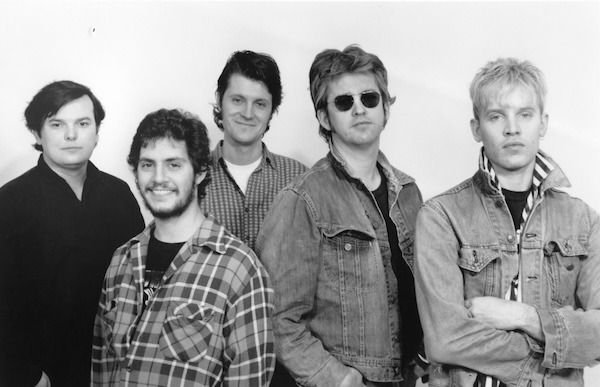
A 1989 PR photo for Blue Rodeo’s Diamond Mine album. Left to right are Bazil Donovan, Bob Wiseman, Jim Cuddy, Greg Keelor and Mark French. The documentary Blue Rodeo: Lost Together (left) has its world premiere at the Whistler Film Festival. (photo by Andrew MacNaughtan / bluerodeo.com)

The world premiere of Blue Rodeo: Lost Together, which gives viewers a glimpse into the rise of this iconic Canadian band, was so anticipated that the first screening of the documentary at the Whistler Film Festival sold out – a second screening has been added.  

The Whistler Film Festival runs Dec. 4-8, offering several programs, including feature-length films, shorts and its “Mountain Culture” series of films, après events and Q&As. The WFF24 Content Summit, which runs Dec. 4-7 in person and Dec. 10-12 online, presents speakers, panel discussions, workshops and other opportunities to learn and connect. 

Looking through the festival lineup, I came across Blue Rodeo: Lost Together and requested the screener for a few reasons. First, I grew up with Blue Rodeo’s music and knew many of their songs. Second, given the challenges of being recording and touring musicians – and Canadian to boot – I find it remarkable that the band is as popular as ever 40 years after high school friends Jim Cuddy and Greg Keelor started it. Lastly, founding members included Bazil Donovan (bass), Cleave Anderson (drums) and, most interestingly from my perspective, Bob Wiseman (keyboards). Wiseman is my second cousin and, though I’ve never met him, I have always been proud to let people know that I had a relative in Blue Rodeo. Wiseman was part of the group from 1984 to 1992.

image - Blue Rodeo: Lost Together posterBlue Rodeo: Lost Together delicately covers the comings and goings of musicians, and the sometimes-difficult friendship and professional collaboration of Cuddy and Keelor. It is frank about the band’s challenges in becoming a commercial success, starting as it did in the era of hard rock, but also dealing with some producers who had a different vision than Cuddy and/or Keelor of what would lead to that success. It is always fascinating to see how creative people balance their very personal drive with taking other people’s feelings and opinions into consideration (or not) and the need to feed and clothe themselves.

Overall, Blue Rodeo seems to have avoided any huge drama, though marriages and partnerships were tested by the rigorous tour schedule once the group broke into the international music scene. Some member partings were clearly amicable, such as when Anderson returned to his postman job after taking a five-year hiatus to play with the band – he had a family to support and wanted to be present for them. Other separations were more fraught: Wiseman wanted to leave a good year at least before he did, his unhappiness seeming to have started – from what I understand from the documentary – with the making of the album Casino, which was released in 1990. To make Blue Rodeo fit a more market-friendly mould, so it could become popular in the United States, Wiseman’s innate energy and expressive performance style was tamped down. “That was really traumatic for me,” he says in the film.

Despite creative differences and some tough times, all the interviewees in the documentary speak of one another and their experiences with great respect and gratitude. It is uplifting to see people treating one another kindly, even as they disagree. Hopefully, it isn’t just for show. Their affection seems genuine. The bonds these musicians have created between themselves and with their listeners seem strong. With all the bad that happens in the world, this is reason enough to watch this documentary – and, if you haven’t already, check out the music of Blue Rodeo.

At press time, there were tickets left for the Dec. 8 screening of Blue Rodeo: Lost Together. Of course, the festival features many other movies during its Dec. 4-8 run, including September 5 on Dec. 5 and 8. The thriller is based on the hostage-taking of Israeli athletes at the 1972 Munich Olympics. The description reads: “At the heart of the story is Geoff, a young producer eager to prove himself to his legendary boss, Roone Arledge. Teaming with Marianne, a German interpreter, Geoff unexpectedly takes the reins of the broadcast. As tensions rise, conflicting reports swirl and the lives of the hostages hang in the balance, Geoff faces difficult decisions that test his skills and moral compass.”

For tickets to the Whistler Film Festival and the full lineup of movies, visit whistlerfilmfestival.com. 

Format ImagePosted on November 29, 2024November 28, 2024Author Cynthia RamsayCategories TV & FilmTags Blue Rodeo, Bob Wiseman, Canada, films, history, movies, Munich 1972, music, Whistler Film Festival
Jweekly a model of success

Jweekly a model of success

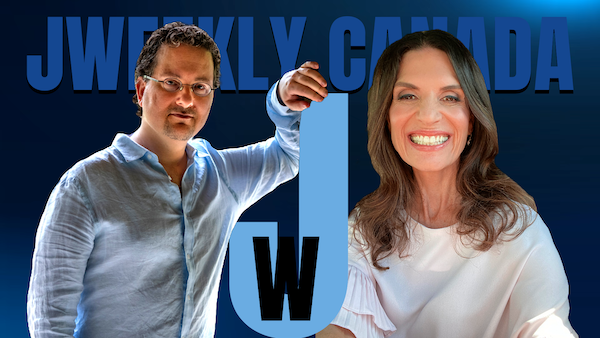
Ieden Wall and Susan Minuk’s contrasting styles balance JWeekly Canada perfectly. (photo from JWeekly Canada)

JWeekly Canada made its Season 5 debut in September, becoming the longest-running Jewish TV talk show in Canada.

Friends and colleagues warned Ieden Wall – the show’s creator, co-host, writer, director and executive producer – that he might be making a mistake by signing on with Omni TV, the multicultural TV channel owned and operated by Rogers Sports and Media. Wall, however, insisted that traditional cable TV, based in a North American major market, is a lemon with a surprising amount of juice to be squeezed out of it – if one plays their cards right. 

The data seem to support caution. Approximately 42% of adults now opt for streaming services, with 35% accessing streaming content through their TV sets and 7% using personal devices. Roku predicts that this trend will persist and that an estimated 75% of all Canadian households will cut the cord by 2026.

But JWeekly Canada, which Wall co-hosts with Canadian journalist Susan Minuk, has made lemonade.

Rogers Sports and Media runs Hudson & Rex on its CityTV platform in the same Saturday primetime slot as JWeekly Canada. It is hard to image that JWeekly Canada could compete digitally with the heavily marketed hit, which airs on Omni’s sister station. And, by all accounts, its budget of $9,000 per episode should not allow it to compete. Yet it does – JWeekly Canada reaches some 100,000 viewers a week and more than half a million viewers a month. The half-hour program airs three times per week on television, is posted on a handful of social media channels and streams on JWeekly’s website.

JWeekly Canada has found its audience.

Cable TV reaches 97.3% of the over-55 population but only 29% of the 18-34 demographic in Canada each week. Wall highlighted what he considers an overlooked statistic in a 2024 Statista survey: 79.6% of Canadians between the ages of 45-54 watch cable TV within their primetime leisure window. 

“There is a surprisingly large subsection of men and women in their mid-to-late 40s who search out desirable content on cable TV during their nightly leisure window,” Wall said. “This group was crucial in us building our core audience.”

While Wall shares the JWeekly Canada screen with Minuk, the two seldom appear together. Their contrasting styles balance the production perfectly. Minuk is the soft-spoken interviewer and Wall is the playful provocateur. Together they offer up a little something for everyone it seems. 

JWeekly Canada is a Jewish-themed talk show, but with broader appeal. It has avoided being ethnocentric, offering content that smiles with Jewish pride, while still welcoming a multitude of cultures. To emphasize this point, JWeekly Canada’s current audience is only 31% Jewish. 

When asked about the show’s diverse viewers, Wall said, “Listen, our guests are some of the most intriguing and accomplished people in our country. The fact that they are Jewish is ancillary to the merit of their talent and success.

“If you are talking to a genius scientist who just invented a revolutionary heart procedure, which augments human arteries with lizard skin, it doesn’t matter if he/she happens to be Chinese, Indian or Jewish. Right? Great TV is great TV.”

The show’s format is a hybrid of in-studio interviews, conducted by Wall and Minuk, and Wall’s field segments. His daring and quirky remote pieces have allowed JWeekly Canada to reach outside Omni TV’s boomer demographic and attract a younger audience. 

His recent incarnation is the creation of a Jewish AI system called Chat JPT. In this segment, Wall tries out a pre-market Jewish AI system designed by Dr. Shecky Kravitz. Wall develops an unlikely friendship with Hershel, one of the platform’s avatars, and quickly finds out that letting his all-knowing avatar tag along for daily activities is both a blessing and curse. Well, probably more of a curse. 

In JWeekly Canada’s second season, Wall did 12 segments from a residential elevator at a luxury highrise. He called the segment “The Elevator Show.” For it, he put an elevator on “service,” took it to a floor of his choice and did on-the-spot interviews. Residents from the building gathered outside the open cabin, on bridge chairs, to watch. It was pretty darn cool.

“I have always considered Ieden to be ingenious,” said talk show legend Dini Petty. “I really hope Ieden finds the financial resources and marketing support he deserves because his ideas are truly pioneering.”

Wall has plans to come to Vancouver in the spring for a three-part documentary series called Solid Gold, about the life and times of 19th-century businessman Louis Gold, who settled here from the US with his family and helped build the city. Wall’s vision is to document the rich Jewish history in all major cities across Canada.

And he is hoping to soon reach more BC Jews with JWeekly Canada. With increased viewership from West Coast Jewry online, Rogers Sports and Media is considering running the program on its Omni Pacific Channel next September. In the meantime, the program is streamed and podcast every week on jweekly.ca. 

Louis Mann is a retired psychotherapist living in Boston. He grew up in the Bathurst Manor district of Toronto and continues to take an avid interest in Jewish causes in Toronto and throughout Canada.

Format ImagePosted on November 29, 2024November 28, 2024Author Louis MannCategories TV & FilmTags entertainment, Ieden Wall, Jewish life, journalism, JWeekly Canada, Susan Minuk, television
Ari’s Theme opens VIFF

Ari’s Theme opens VIFF

Ari Kinarthy’s nightmare before the live recording session. (screenshot from Salazar Film)

The 43rd Vancouver International Film Festival (VIFF) officially opens Sept. 26 with the screening of Ari’s Theme, a TELUS original feature documentary about local composer Ari Kinarthy by local filmmakers Jeff Lee Petry and Nathan Drillot, who run Salazar Film.

Jewish Independent readers will be familiar with all three creatives, who will attend both VIFF screenings, ready to answer audience questions, as well as participate in a panel discussion.

Sam Margolis first wrote about Victoria Jewish community member Kinarthy in 2020 – Kinarthy, 30 years old at the time, had released two albums, won an international music competition and was looking for people who might want original music for a project they were working on.

“I create all my music entirely with the computer,” he told the Independent. “Sometimes, I will have access to a guitar player or singer but normally the music will be all done by the samples I use. I usually start with just piano and sometimes will write out a score. I think of a melody and/or harmony and continue from there. I love making themes.”

Kinarthy uses a special computer system to record his music, as he has spinal muscular atrophy type 2, a symptom of which is worsening muscle weakness.

When Margolis interviewed Kinarthy a second time for the Independent, it was because Ari’s Theme was about to première at Toronto’s Hot Docs Film Festival. In the article, which was published in April, the filmmakers share that the documentary was inspired by the first JI article.

“We hired Vaka Street Casting to help find us subjects for potential documentaries. They found the JI article while searching for individuals with unique stories,” Drillot told the Independent in an interview last week.

Drillot said the number one factor he and Petry look for in possible documentary subjects is that the individual has a unique perspective – “You’ve got to be an outside the box thinker,” he said, “which Ari most definitely is.”

“As we learned more about Ari’s story, we thought about how interesting it would be to work with a composer like Ari, who has a very particular life experience, and ask him to compose music about the most impactful moments, dreams and experiences of his life and let us create cinematic scenes around them,” Petry told the Independent in April.

It was hard to imagine just how Petry and Drillot would create those scenes and how Kinarthy would not only choose the times in his life to highlight, but be able to compose the music to accompany those emotional times. We learn in the film that Kinarthy doesn’t just want to write any song – he wants to leave a legacy, to make an impact on the world, so that his life will have been, in his words, “worth it.”

screenshot - Ari Kinarthy in a recording session with musicians at the Alix Goolden Performance Hal
Ari Kinarthy in a recording session with musicians at the Alix Goolden Performance Hall. (screenshot from Salazar Film)

Kinarthy’s honesty with his feelings, fears and ambitions, is remarkable. He undergoes a transformation during the film. His physical challenges and the dangers to his health if he gets sick have led to him being isolated for much of his life, relying on a few key caregivers and his parents. He is mentally strong, though, and this is made clear as he questions the walls he has built to protect himself and as he lives seemingly at peace with his limitations, while also knowing what he is capable of beyond them. That he allows the filmmakers – and us – to see just how vulnerable he is, is proof of his sheer strength.

“Watching Ari go through the process of making the film was incredibly rewarding,” said Drillot. “He overcame a lot of creative obstacles and consistently impressed the whole filmmaking team with his drive, determination and creativity. Personally seeing him watch the footage in the movie theatre was the most impactful. It’s a very unique experience to sit in a movie theatre and see your life reflected back at you. I really have a lot of respect for Ari for trusting the process and for constantly rising to the occasion.”

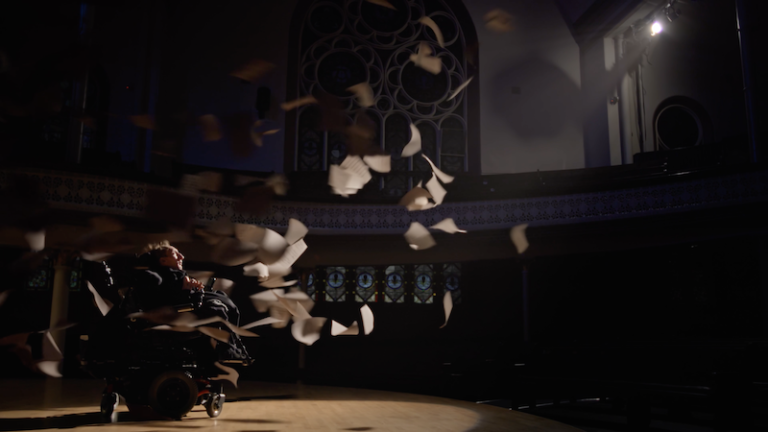
Kinarthy opens himself up creatively in ways even he may have thought not possible. We see him working with fellow musicians Allan Slade and Johannes Winkler, who provide feedback and guidance, and help him translate his vision into reality. It is in these scenes that we witness both Kinarthy’s confidence and anxiety, and the filmmakers capture it incredibly well, unobtrusively filming the men creating together, with other shots of Kinarthy talking about the process. There is an especially powerful scene, where Kinarthy sits alone in the Alix Goolden Performance Hall, on stage, as pages of music swirl madly about him.

Ari’s Theme uses such special effects, as well as animation and reenactments, to help tell Kinarthy’s story. There are home videos of Kinarthy and his family, and it is so moving to hear him talk about his family – describing his sister as a drum, driving him to enjoy himself; his dad as a cello, supporting from the background; and his mom as a piano, providing the strong underlying cords binding the family together. “And then there was me. I was a flute,” he says. “A little sound that would come in and out. I wasn’t integral to the song, but I added something unique. I often miss that version of myself, when life was expanding, free of concern and anxiety. As I’ve gotten older, these memories have become more and more important to me.”

In the film, Kinarthy questions whether other people will be interested in his memories. Anyone who sees the documentary will likely respond with a resounding, yes! Not only interested in the memories, but inspired by the man who shared them and the man who created their impressive soundtrack. 

Passages of that soundtrack will be performed live at the opening event by members of the Vancouver Symphony Orchestra. For tickets to either screening of Ari’s Theme (Sept. 26 or 28) and any other VIFF offerings, visit viff.org. The festival runs to Oct. 6. 

Format ImagePosted on September 20, 2024September 18, 2024Author Cynthia RamsayCategories TV & FilmTags Ari Kinarthy, documentary, Jeff Petry, music, Nathan Drillot, Salazar Film, Sam Margolis, Vancouver International Film Festival, VIFF
Victoria film fest set to start

Victoria film fest set to start

The Latin American and Spanish Film Week returns to Cinecenta, on the campus of the University of Victoria, Sept. 19-22. (photos courtesy Dan Russek)

The Latin American and Spanish Film Week returns to Cinecenta, on the campus of the University of Victoria, from Sept. 19 to 22. Now in its 14th season, this year’s event will offer movies from Argentina, Mexico and Spain, with all screenings taking place at 7 p.m. Each showing will have English subtitles.

The cinematic fiesta is put together by the Hispanic Film Society of Victoria. The society’s mandate is to promote Latin American and Spanish films in the city through the annual film festival. It also aims to further the knowledge and enjoyment of Spanish-language films through cultural and academic events to benefit the community.

Jewish community member Prof. Dan Russek, the organizer of the event, which began in 2010, said, “As part of the UVic faculty and a member of the Hispanic community, I am proud to bring this cultural event to Victoria again. It should interest folks not only from Latin America and Spain but also members of the community at large.

“There is no need to speak Spanish to understand the movies,” Russek added. “They all feature contemporary, relatable stories, and they function as windows to the diverse societies, cultures, histories and politics of the Spanish world. Our mission is to expand the horizons of our audience, and we believe, at the society, that we have achieved this goal again.”

The week will actually start on Sept. 18 at Caffe Fantastico (965 Kings Rd.) at 6 p.m. with a presentation from the society that will feature five local artists, all of whom hail from Latin America. They will discuss their experiences as migrants to Canada, their process of adaptation and their artistic practices.

Cuban pianist Pablo Cardenas, Mexican classical violinist Pablo Diemecke and Mercedes Batiz-Benet, a Mexican writer, theatre director and producer, will start the evening. They will be followed by Cuban trumpeter Miguelito Valdes and Chilean actress and theatre producer Lina de Guevara. The event is free, though audience members are encouraged to purchase food and drinks. 

The first film offering, on Sept. 19, is Totem, a Mexican movie from director Lila Aviles. The family drama focuses on 7-year-old Sol, who bears witness to the preparations of a party in honour of her cancer-stricken father, Tona. 

Totem was Mexico’s entry for best foreign feature for the 2023 Academy Awards. It picked up the Ecumenical Award for Best Film at the 2023 Berlin International Film Festival, and Aviles received an award for best director at the 2023 Jerusalem Film Festival.

Puán, an Argentine-Italian-French-German-Brazilian international co-production, will hit the screen on Sept.20. The 2023 comedy-drama from Maria Alché and Benjamin Naishtat tells the tale of Marcelo, a philosophy professor in Buenos Aires who sees his plans upended upon the arrival of his former colleague, who is based in Germany – the charismatic Rafael. Their conflict is set amid the crisis in Argentina’s education sector.

“The hapless but deeply lovable and tragically self-aware Marcelo needs and deserves a psychological makeover, and Naishtat and Alché are too fond of him to deny him one. How and where it happens is a treat,” Jessica Kiang wrote in Variety.

Lillian Torres’s Mamifera will represent Spain on Sept. 21. The 2024 film tells the story of Lola, who, along with her partner, Bruno, enjoys a happy life until an unexpected pregnancy turns everything upside down. Her previous determination not to be a mother is challenged by social expectations and the inner fears she faces. In a review for the Austin Chronicle, Jessi Cape wrote that the film “tackles an endlessly complicated, often excruciating, sometimes beautiful topic with grace, humour and easily relatable characters.”

The festival concludes Sept. 22 with Bernardo Arsuaga’s 2023 documentary The Michoacán File, which traces the history of Mexican food and the efforts of a group of diplomats, chefs and intellectuals to make the country’s cuisine an Intangible Cultural Heritage of Humanity, an acknowledgement granted by UNESCO. After the film, the public is invited to stay for a conversation and Q&A about Mexican food with Israel Alverez Molina, owner and chef of Victoria’s MaiiZ Nixtamal Eatery and Tortilleria, and Maria Elena Cuervo-Lorens, the author of two cookbooks on Mexican cuisine.

For more information about the Latin American and Spanish Film Week, visit the Hispanic Film Society of Victoria website, hispfilmvic.ca.

Sam Margolis has written for the Globe and Mail, the National Post, UPI and MSNBC.

Format ImagePosted on September 13, 2024September 11, 2024Author Sam MargolisCategories TV & FilmTags culture, Dan Russek, Latin American and Spanish Film Week, movies, Victoria
Rise and fall of a hacktivist

Rise and fall of a hacktivist

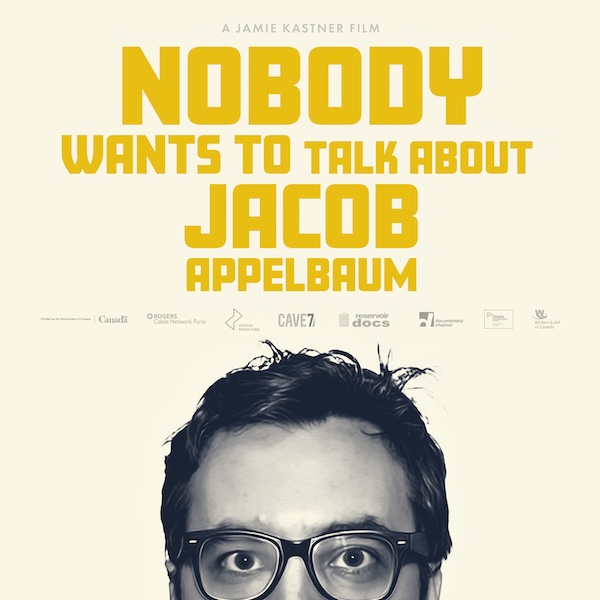
Nobody Wants to Talk About Jacob Appelbaum opens at VIFF Centre June 14.

Jacob Appelbaum was an influential internet freedom, privacy and free speech activist. He collaborated with Julian Assange and WikiLeaks, which Assange founded in 2006 to publish leaked documents and information. He helped the journalists with whom whistleblower Edward Snowden shared documents make the stories public. And he was prominent in the TOR Project (aka “the dark web”). Then, suddenly, Appelbaum took himself out of the spotlight.

Writer, director and producer Jamie Kastner wanted to know why. He also wanted to know more about this well-known yet little-known “hacktivist” and the subculture in which Appelbaum operated. The result is the documentary Nobody Wants to Talk About Jacob Appelbaum, which screens at VIFF Centre June 14-17 and June 20.

“I first saw Appelbaum in another documentary about WikiLeaks, in which he was playing a supporting role,” Kastner told the Independent. “He jumped off the screen both for his charisma and his clear-eyed and apparently fearless political commitment. I learned about the broad strokes of the scandal in which he was later involved, became intrigued not only by what had happened with him, but by this whole activist community about which I had known little.”

After being accused of sexual abuse in 2016, Appelbaum left the United States for Germany. It is there, reads the documentary’s PR material, that Kastner “finds him, adamant that he is the victim of government black ops, ‘canceled’ without legal process or recourse, punished for who he is, and for what he represents.”

“Though I’m sure even he would not claim that all the work he has done has been flawless,” said Kastner, “to me there remains at least an aspect to the work he’s done, regardless of what may or may not have come later, that represents a fearless standing up to authority, taking significant personal risks to expose abuses of power and to help improve people’s lives by making them better informed about governments and surveillance.”

He continued, “As lawyer Margaret Ratner Kunstler explains in the film, in an era in which journalism has shrunk and become ever more controlled by government and/or large corporations, the significance of so-called leakers and hackers has grown to become one of our last sources of unfiltered news and information.”

Kastner gave the examples of WikiLeaks having “released Chelsea Manning’s leaks, including the ‘Collateral Murder’ video of American drones killing civilians and journalists in Iraq in 2007, and a trove of Hillary Clinton’s emails in 2016, among many other controversial releases.”

In 2013, Snowden, “a former contractor for the National Security Agency, America’s cyber-intelligence gathering service … leaked a vast trove of documents revealing the information gathering practices of the US and its ‘Five Eyes’ allies countries, including how data was gathered covertly on their own citizens,” said Kastner.

With Snowden, the filmmaker added, Appelbaum “helped the journalists to whom Snowden leaked his documents both manage the technology involved, and investigate and disseminate stories arising from Snowden’s leaks, including penning a cover story in German newsmagazine Der Speigel revealing that the US was spying on Chancellor Angela Merkel’s cellphone.”

Nobody Wants to Talk About Jacob Appelbaum was about five years in the making. 

“It was a slow and wary process, once contact was made, of gaining access to Appelbaum and establishing trust on both sides,” explained Kastner. “I knew he was a controversial, brilliant and at times troubled figure, but I approached the story with an open mind. It struck me as a fascinating story in which one person’s trajectory tracked the rise and fall of a movement that, for a time, was rocking the world. 

“I worked with a team of researchers to gain necessary context and try to build relationships within this very wary community. I worked extensively – features, in my experience, take six months or so in editing – with my collaborator Michael Hannan in the edit suite, to try to craft a film that would make the audience experience the real-life spy quality I experienced in entering into Appelbaum’s world, in which things, at times, seem too fantastical to be true – but sufficient evidence is there to suggest they are not false.”

Kastner’s many credits – through his and wife Laura Baron Kastner’s Cave 7 Productions – include The Skyjacker’s Tale (2016), There Are No Fakes (2019) and Charlotte’s Castle (2023). Cave 7 documentaries have not only garnered award recognition but inspired action. There Are No Fakes, for example, helped launch “a criminal investigation into widespread fraudulent production of and distribution of Indigenous art,” leading to “eight arrests, 40 charges laid and 1,000 paintings seized,” notes the company.

As a documentarian, Kastner is especially aware of the evasiveness of “the truth” and its often-subjective nature. While he said, “I still admire the same qualities about Appelbaum that first drew me to the subject, his political spirit and work,” the making of the documentary took him to all sorts of places he hadn’t expected.

“Learning about the community from which he and Assange sprung made me realize the film was about a larger story, larger issues which the narrative of Appelbaum’s life raises,” said Kastner. “You don’t have to like him, the film is not an apologia or a hagiography. I investigate the accusations as extensively as possible. Ultimately, as the title suggests, the film equally became about the people who don’t want to talk about him, and the many reasons for that. I don’t think I had fixed ideas about the ‘truth’ going into this film. I don’t pretend the film leaves with any one conclusion, but rather hopefully, is the jumping-off point for further discussion.”

For tickets to a screening, visit viff.org/whats-on/nobody-talk-jacob-appelbaum. The documentary will start streaming on CBC Gem on June 26. 

Format ImagePosted on June 14, 2024June 13, 2024Author Cynthia RamsayCategories TV & FilmTags documentaries, hacktivism, Jacob Appelbaum, Jamie Kastner, WikiLeaks
Art transcends our lives

Art transcends our lives

Little Richard, left, and Jackie Shane. A still from the film Any Other Way: The Jackie Shane Story, which closes the DOXA Documentary Film Festival on May 11. (image from NFB and Banger Films)

An incredible voice, a charismatic performer, a unique human being. Yet, most of us have never heard of Jackie Shane, a rising R&B star in the 1950s and ’60s, who appeared to disappear in 1971.

Michael Mabbott and Lucah Rosenberg-Lee’s feature-length documentary Any Other Way: The Jackie Shane Story closes the DOXA Documentary Film Festival on May 11 at Simon Fraser University’s Djavad Mowafaghian Cinema. In addition to Toronto Jewish community member Rosenberg-Lee, who may attend the festival, Winnipeg Jewish community member Toby Gillies is coming to Vancouver with co-director Natalie Baird for the May 10 screening of their short, Don’t Let the Sun Catch You Crying, which also takes place at SFU’s Djavad Mowafaghian Cinema.

An R&B legend

A Banger Films and National Film Board of Canada co-production, Any Other Way mixes animation and real-life footage, using Shane’s music, recorded phone conversations between Mabbott and Shane, as well as other interviews, photos and the sole recorded performance of Shane to tell the transgender artist’s story. And it’s a fascinating story, from her leaving her home of Nashville, because of safety concerns, as a queer person, to being a musician in a traveling carnival, to leaving the carnival for Montreal, then leaving Montreal for Toronto, where she immediately felt at home. 

By 1963, Shane was a sensation. Her recording of “Any Other Way” was a hit, even though radio stations in Toronto at the time generally did not play Black music – people called CHUM Radio so much they had to play the song and it rose to #2. Shane was invited onto The Ed Sullivan Show but turned them down because they wouldn’t let her perform with makeup, dressed as she wanted; she didn’t do American Bandstand, saying it was a racist show. Shane chose not to do other shows or tour. She recorded her one live album in Toronto.

But not being able to be her true self took its toll and Shane walked away from her success in 1971, changed her name and moved. “I chose Los Angeles because I wanted to feel something else,” she says in the film.

For family reasons, she eventually had to return to Nashville, where she became a recluse, only emerging in 2016 for a reissue of her songs. Nominated for a Grammy in 2018, she was ready to tour, but died in 2019, before that could happen.

Among the treasures found in Shane’s storage unit was an autobiography she had handwritten, as well as unreleased recordings. 

“Those discoveries … were incredible,” said Mabbott in an interview on the NFB website. “After Jackie passed away, we started working with her family, who didn’t know that Jackie existed, and then inherited her incredible archive. As they were discovering who Jackie was, we were understanding her through her jewelry and tapes. What was also born out of that is the family’s story, which was a slightly unexpected creative approach.

“Hearing the family talk about her, learn about her legacy and describe what it meant to them was obviously very personal but also really universal. This is a family that lived blocks away from her, didn’t know she was there and missed out on having her. I think that a lot of us feel that loss and that translates in all sorts of ways.”

Happy imaginings

image - A still from the short Don’t Let the Sun Catch You Crying, co-directed by Toby Gillies and Natalie Baird, which screens May 10 at SFU’s Djavad Mowafaghian Cinema, as part of this year’s DOXA festival.
A still from the short Don’t Let the Sun Catch You Crying, co-directed by Toby Gillies and Natalie Baird, which screens May 10 at SFU’s Djavad Mowafaghian Cinema, as part of this year’s DOXA festival. (image from NFB)

The NFB short film Don’t Let the Sun Catch You Crying also explores loss. The PR material describes the seven-minute work as a “meditation on love, grief and imagination,” which “celebrates life and the transformative ability of art to elevate and transcend us.” 

Featuring Edith Almadi, the short uses Almadi’s artwork and words to spur contemplation of the bonds people form, and what it’s like to lose a loved one. In this case, Almadi is recalling her son, who recently died. 

“I fly with him,” she says, and she feels happiness. In the animation of Almadi’s artwork, we see her son fly to the moon and beyond, with fairies, butterflies and other creatures. Not only is she with her son in her art, but also with everyone she loves. In her imagination, she is totally free.

“Our initial motivation for interviewing Edith was to save memories for ourselves – we find the way she speaks fascinating and poetic,” write Gillies and Baird in a directors’ statement. “When Edith looks at her drawings, she sees her memories and fantasies. She is able to escape her physical circumstance, through entering her marker and watercolour worlds.”

Gillies and Baird have led an art program at Winnipeg’s Misericordia Health Centre since 2014, and that’s where they met Almadi, a Hungarian immigrant in her late 80s, who uses a wheelchair.

“In our time knowing Edith, she has always loved sharing her outlook publicly,” the directors write. “As we have developed the film, we have shown Edith our progress along the way. She says, ‘That’s me’ and ‘That’s all I have to give’ proudly. Facilitating art-making in this personal care home has allowed us to meaningfully connect with many people in their last stages of life. As directors, this film gives us the opportunity to share this one particular experience of intimacy found through collaborative art-making.”

DOXA runs May 2-12. For tickets and the full festival lineup, visit doxafestival.ca. 

Format ImagePosted on April 26, 2024April 26, 2024Author Cynthia RamsayCategories TV & FilmTags aging, Banger Films, death, documentaries, DOXA, Edith Almadi, history, imagination, loss, Lucah Rosenberg-Lee, Michael Mabbott, Natalie Baird, National Film Board, NFB, R&B, Toby Gillies
Ed Asner shines in final role

Ed Asner shines in final role

Ed Asner gives a remarkable performance in Tiger Within, which is part of the online Vancouver Jewish Film Festival, April 15-19. (tigerwithin.info/press-photos)

I had the privilege of interviewing Ed Asner several years ago. It was an experience I (and my mother, who also got to speak with him) won’t forget. So, it was with some sentimentality that I watched his last film, Tiger Within, which can be screened online April 15-19, as part of the Vancouver Jewish Film Festival, which has other movies being presented at the Rothstein Theatre April 12-14.

Asner, who died in 2021, gives a wonderful, understated performance in Tiger Within, as widower and Holocaust survivor Samuel, who takes a troubled young woman under his wing, and changes her life for the better. His performance is the main reason to watch this film. People old enough to know Asner will understand when I say Tiger Within would have fit perfectly into the ABC Afterschool Special lineup. Well-intentioned, it is not well written and, with the exception of Asner, the acting is middling.

Casey, played by Margot Josefsohn, is a rebellious teenager with a struggling mother who prefers to keep her nasty boyfriend happy than care for her daughter. Casey’s father has started a new family and their suburban life isn’t a place for the mouthy, punk-loving, artistic teen. Another highlight of Tiger Within is Casey’s art, which makes appearances throughout, further communicating her frustrations and other feelings.

Out on her own, Casey is lucky to meet Samuel, who sees her inner light and inherent worth, even if she doesn’t. He manages to see beyond the swastika someone spray-painted on her jacket, which she didn’t bother to wash off, and her antisemitic opinions, including that Jews made up the Holocaust, which were taught to her by her mom and others. He gives her the unconditional love, snippets of wisdom and space to “tame the tiger within” and make her place in the world.

The movie has a timely and important message. And a younger audience might be just the one to receive it in the manner it was intended. 

“One of the biggest tragedies is the misuse of love, the most powerful force there is,” writes director Rafal Zielinski on the movie’s website (tigerwithin.info). “Loving oneself, family, group, race, country (narcissism) and being incapable of loving the other equally, as oneself, is the misuse of love, it breeds hate.

“That is the message, I feel, in this film – Samuel overcomes hate for this girl and shows her unconditional love. 

“It’s the greatest gift anyone can receive on this earth, and he keeps his promise, he once made to his wife – ‘to forgive all before he dies.’”

For tickets to Tiger Within and other festival films, visit vjff.org. 

Format ImagePosted on April 12, 2024April 10, 2024Author Cynthia RamsayCategories TV & FilmTags Ed Asner, Tiger Within, Vancouver Jewish Film Festival, VJFF
Writing music for life

Writing music for life

Composer Ari Kinarthy writes music using interactive hardware and software systems that form sounds from movements. His story is told in the documentary Ari’s Theme, which will screen at Hot Docs in Toronto, then be available on TELUS originals. (photo from Salazar Film)

Ari’s Theme, about Victoria composer Ari Kinarthy, will make its world première this spring at Toronto’s Hot Docs Film Festival. Directors Jeff Petry and Nathan Drillot said the idea for the documentary came from an article about Kinarthy in the Jewish Independent, which was published in April 2020.

Petry and Drillot, who run Salazar Film, a production company located in Vancouver, were intrigued and inspired by Kinarthy upon discovering his method for composing music. By using interactive hardware and software systems that form sounds from movements, Kinarthy can use the movements he makes with his wheelchair to produce music that is recorded into multimedia platforms. For example, movements closer to the recording device create lower notes and movements further away result in higher notes.

“As we learned more about Ari’s story, we thought about how interesting it would be to work with a composer like Ari, who has a very particular life experience, and ask him to compose music about the most impactful moments, dreams and experiences of his life and let us create cinematic scenes around them,” Petry said.

Petry and Drillot pitched the project to TELUS originals, which supports local documentaries by independent filmmakers in British Columbia and Alberta, with the objective of bringing films on various social topics to wider audiences.

“As the filmmaking relationship between Ari and ourselves developed, it turned into a really deep collaboration, and other themes we hadn’t expected started to grow and evolve,” said Petry. “Ari showed a lot of strength and vulnerability in creating this film with us and, for this, we are really honoured by his trust.”

Kinarthy, now in his 30s, has used a wheelchair since childhood because of type-2 spinal muscular atrophy, a condition that continues to weaken his muscles. Kinarthy is profoundly cognizant of his mortality and Ari’s Theme delves into his desire to tell his story, as he endeavours to create a new composition inspired by some of the most meaningful moments in his life.

“This film has been nothing short of a gift from God,” Kinarthy said. “The ability to install my music in a visual project is already amazing, and my dream, but to have that project be a complete portrayal of my life is truly special. I have always wanted a way to not only inspire others but to have my memory, or legacy, encapsulated so that I live on beyond my body.”

Kinarthy said he enjoys the challenge of creating grand symphonic music of the sort John Williams writes – the kind composed for a hero. There have been times in his life, he said, when he has had to fight like one.

For Kinarthy, the process of working on the film was a journey from stress to happiness. 

“Looking back and reflecting on my past, myself, and my life was challenging and rewarding. I have been through a lot and I got to write music about key moments,” he said.

“Working with Salazar was a wonderful experience,” he added. “The studio was always very understanding of my situation and gave me tons of flexibility to write how I write. They were also very helpful in helping me articulate my thoughts. The directors and I became close during the process of the film, and I am so glad I got to meet them. I will never forget them.”

Petry and Drillot have several documentaries to their credit, including Becoming Sumo, the story of Ōsunaarashi Kintarō, the world’s first Arab Muslim professional sumo wrestler; Handsome and Majestic, a short film about a teenage transgender boy growing up in Prince George; and Wizard Mode, a feature-length movie (eventually acquired by Netflix US) about Robert Gagno, a world champion pinball player.

Over the past decade, Petry and Drillot have filmed around the world, from Nunavik to Bolivia, to the Democratic Republic of Congo. They received Juno and Grammy nominations for best full-length music documentary for their work with Canadian indie rock duo Tegan and Sara. 

Despite some problems, which were recently reported in the entertainment media, it appears the show will go on for Hot Docs Canadian International Documentary Festival, now in its 31st year. In late March, director Hussain Currimbhoy stepped down for personal reasons, according to the festival. Ten other members of the programming team also left, for undisclosed reasons.

Ari’s Theme will first screen in Toronto on April 30, followed by another festival screening on May 2. After its Hot Docs run, the film will be available on TELUS Optik TV Channel 8 and online at TELUS originals.

To read the article that sparked the idea for Ari’s Theme, visit jewishindependent.ca/no-barriers-to-music. To view the documentary following its showing at Hot Docs, go to watch.telusoriginals.com. 

Sam Margolis has written for the Globe and Mail, the National Post, UPI and MSNBC.

Format ImagePosted on April 12, 2024April 10, 2024Author Sam MargolisCategories Music, TV & FilmTags Ari Kinarthy, composers, documentary, Jeff Petry, Nathan Drillot, Salazar Film, TELUS originals
Movies that offer optimism

Movies that offer optimism

Stay With Us (still from the film)

Healing. Of body and soul. Of self, community, family, friends. This year’s Vancouver Jewish Film Festival offers many poignant films – dramas sprinkled with humour that invite contemplation, and hope that we flawed humans are capable of change and loving one another, despite our insecurities and differences.

Of the films the Jewish Independent reviewed this week, Stay With Us and Rose are among the films that will be screened at Fifth Avenue Cinemas in the main portion of the festival, April 4-12, which is followed by various screenings at the Rothstein Theatre April 13-14. No Name Restaurant will be both at Fifth Avenue, as well as online during that portion of the festival, which runs April 15-19.

Stay With Us is a sensitively written and well-performed movie that is based on Moroccan-born Canadian comedian Gad Elmaleh’s real-life fascination with the Virgin Mary. In the movie, he returns to Paris to visit his family, not sharing with them that he is in the process of converting to Catholicism. Perhaps because he’s dealing with his own actual emotional journey (though he co-wrote the script with Benjamin Charbit), Stay With Us delicately and thoughtfully explores some of the roles religion has in life and the effects a potential conversion can have on a family. 

Despite being an immensely personal film – Elmaleh’s real parents and sister play his family in the film and most of the cast are people close to him – Stay With Us will resonate with anyone who has questioned their purpose in life, or been curious about other religions and cultures. Elmaleh doesn’t disparage religion or the religious. Thankfully, he chooses to tackle the subject seriously, with well-timed comedy, his own stand-up act as part of the story, as well as other natural-seeming, unforced funny moments – the reaction of his parents when they find a statue of the Virgin Mary in his suitcase is hilarious, for example.

The movie Rose is similarly satisfying – serious but also light and amusing. In the first minutes, set at Philippe’s rocking, festive, friend-filled 80th birthday party, we learn that Rose and Philippe are still madly in love after decades of marriage, that their three adult children each have their own personal challenges and rivalries (between themselves and for their parents’ affection), and that Philippe is fatally ill.

Understandably, after Rose loses the love of her life, she grieves. Her children worry that she doesn’t answer the phone, that she’s not taking care of herself. When 78-year-old Rose does start to take care of herself, to focus on her needs, to rediscover herself after years of being a wife, mother and grandmother, her children worry even more.

image - a still from the film Rose
Rose (still from the film)

Written by Aurélie Saada and Yaël Langmann, Rose is a charming, heartwarming film about how we choose to experience life, its happy, sad and other moments – and how it’s never too late to find joy. Saada is the film’s director, and she also composed original music for the film, which has a notably wonderful soundtrack. The movie is infused with her Tunisian Jewish background.

“It was important for me to put my first film in this setting because I didn’t want to cheat,” Saada says in the press material. “I wanted this film to resemble me and not to borrow anything from cultures that I hadn’t sufficiently mastered. Also, Eastern Judaism is often caricatured in French cinema. I wanted to show its more complex face, far from the clichés. But it remains a setting, a costume, a perfume because the heart of the subject is not there. This film may be imbued with Judeo-Eastern culture, but a friend of mine from Corsica, a Christian, told me a short while ago: ‘It’s crazy, it’s like home.’ I believe that we humans are much more alike than we imagine.”

This notion pretty much encapsulates the film No Name Restaurant as well. Written and directed by Stefan Sarazin and Peter Keller, the idea for the story apparently came from Sarazin’s “numerous travels to the Middle East” and was “inspired by an abandoned boat in the desert and the friendship to an elderly Bedouin.”

Ben, an ultra-Orthodox Jew from Brooklyn, has yet to marry. Within hours of arriving in Jerusalem, both to visit family but mostly to meet the matchmaker – who he purposefully misses by taking his time to get to his uncle’s shop from the airport – Ben eagerly agrees to Uncle Yechiel’s request to head right back to the airport to catch a flight to Egypt.

image - still from the film No Name Restaurant
No Name Restaurant (still from the film)

The Jewish community of Alexandria, the president of which is Yechiel’s brother-in-law, needs a 10th man to form a minyan before Passover. If they can’t observe the holiday, according to some written agreement, all the community’s property and possessions will have to be turned over to the state.

Ben seizes the chance to save the ages-old synagogue, but misses his plane and then is kicked off the bus to Alexandria by fellow passengers, putting the whole plan in jeopardy. Luckily, he is picked up in the Sinai Desert by Adel, a Bedouin searching for his lost camel. Unluckily, Adel’s truck breaks down and the two men must head out on foot. Short on water – much of which had been used by Ben for ritual handwashings along the way – and going only on Adel’s memory of a well his family had frequented when he was a kid, the journey is fraught with existential concerns, including what other Arabs might do to a Jew in their midst and to the Bedouin who is helping him.

No Name Restaurant is a buddy movie that delivers all that one would expect from such a movie and more. With respect and humour, it brings together Jews, Muslims and Christians in a novel way to optimistic effect. 

For the full Vancouver Jewish Film Festival lineup, go to vjff.org.

Format ImagePosted on March 22, 2024March 20, 2024Author Cynthia RamsayCategories TV & FilmTags Vancouver Jewish Film Festival, VJFF

Posts pagination

Previous page Page 1 Page 2 Page 3 Page 4 … Page 24 Next page
Proudly powered by WordPress