Skip to content
  • Home
  • Subscribe / donate
  • Events calendar
  • Business Directory
  • FAQ
  • News
    • Local
    • National
    • Israel
    • World
    • עניין בחדשות
      A roundup of news in Canada and further afield, in Hebrew.
  • Opinion
    • From the JI
    • Op-Ed
  • Arts & Culture
    • Performing Arts
    • Music
    • Books
    • Visual Arts
    • TV & Film
  • Life
    • Celebrating the Holidays
    • Travel
    • The Daily Snooze
      Cartoons by Jacob Samuel
    • Mystery Photo
      Help the JI and JMABC fill in the gaps in our archives.
  • Community Links
    • Organizations, Etc.
    • Other News Sources & Blogs
  • JI Chai Celebration
  • JI@88! video

Recent Posts

  • SFU honours Gloria Gutman
  • Lifting people’s spirits
  • Wedding a ray of light
  • Indigeneity and Zionism
  • Rule of law broken: councilor
  • Football and its roles
  • The burden of defence
  • Fish Café returns after fire
  • All right in what goes wrong
  • Nuns & mermaids at TUTS
  • Camp offers holiday retreat
  • Students and mentors inspire
  • Once-in-a-lifetime trip
  • 100 dancers, one heart
  • Money for the sciences
  • What “Jewish food” means
  • Have a cookie, schnitzel too
  • Federation now across BC
  • Israel fighting for its existence
  • Deal strengthens Iran
  • Patriotic belonging diminishes
  • A campaign to engage
  • Upstanders’ first live event
  • Responding to Carney
  • Having your own home
  • Music a family tradition
  • Musical to warm heart
  • Community milestones … June 2026
  • Sharing her passion for Israel
  • Or Shalom reopens its doors
  • JFS from past to future
  • Need holistic approach
  • Sharing stories, advice
  • Journalist shares fears
  • Skills to live together
  • Road to independence

Archives

Follow @JewishIndie
image - CJN box ad Rockowers 2026

Byline: Rebeca Kuropatwa

Limiting screen time is vital

Limiting screen time is vital

Video Interaction Project coach Jenny Arevalo in action. (photo by Andy Reichsman/Ames Hill Productions)

With the ever-increasing number and variety of screens and gadgets grabbing our attention, pediatricians are asking us to take a step back. Some are even leading a counter-movement, warning parents and caregivers of the harm these technologies are inflicting on children.

Dr. Alan Mendelsohn, a general and developmental behavioural pediatrician, is an associate professor of pediatrics and population health at New York University’s School of Medicine and Bellevue Hospital Centre.

“The American Academy of Pediatrics published a statement designed to help pediatricians and parents think about toys for their children, in an era where toys have really evolved,” Mendelsohn told the Independent. “A very significant concern is that toys with bells and whistles, so to speak – with electronic gadgetry on the one hand or apps designed to engage children on the other – are likely to have very limited, if any, benefit to very young children.”

Mendelsohn has been working to use the pediatric primary care centre to support parenting activities most likely to help children’s development and school readiness. This has led to other programs, like Reach and Read and the Video Interaction Project, both of which teach parents the importance of reading and playing with their kids.

“We still have the same kinds of toys we’ve had in the past – simple, pretend kinds of toys,” said Mendelsohn. “But, at the same time, digital toys have become a high level of focus and priorities for many families. And, that’s in part as a result of the extensive messaging taking place about how electronics can be so important for children, and how apps and computers are going to help children learn.”

photo - Dr. Alan Mendelsohn
Dr. Alan Mendelsohn (photo courtesy Alan Mendelsohn)

According to Mendelsohn, there is limited or possibly even no good scientific evidence that screens can be beneficial for children under the age of 2 – with the possible exception of video chats in which the screen is functioning as an opportunity for interaction with family members that otherwise would not take place.

At the same time, he said, there is extensive data documenting that electronic add-ons, and screens more broadly, have a great deal of potential for harm.

“This is true for children of all ages, but it’s especially true for very young infants, toddlers and children who have not entered school yet … for whom that screen time … not only can lead to developmental challenges … but it can actually interfere with play and with parents being able to engage together with their children in the kind of rich, language-based interaction that advances children’s development,” said Mendelsohn.

The American Academy of Pediatrics recommends that children under 2 have no screen time, other than the aforementioned video chats. For children 2 and older, they recommend limiting screen time to one hour or less, and having that screen time be high-quality, i.e. educational, programming.

“This limited screen time should be used as an opportunity for interacting, rather than viewing it as an opportunity for babysitting, which is how it’s often used and viewed by parents,” said Mendelsohn.

“Parents using screen time as a distracter is not necessarily a bad thing…. The academy recognizes, and I think the pediatric community recognizes, just how hard it is to be a parent, especially of a young child. Parents spend the day working and come home to chores, housework and all kinds of things. Obviously, screen time can be very helpful to parents in that way. But, it’s important that parents realize the potential for harm to their children – recognize that screen time is unlikely to be beneficial for their children.”

Mendelsohn recommends that parents find opportunities to play with their kids and read books with them, as these activities are likely to improve their child’s development and help create a positive parent-child bond.

“The important thing here is that excessive screen time, regardless of age, has the potential to lead to problems and challenges for children by interfering with their capacity to pay attention once they start school, as well as by causing challenges with their capacity to regulate their own behaviour and learn in school,” said Mendelsohn.

Schools are using more and more screens and technology, and Mendelsohn doesn’t condemn the use of screens and technology in an educational, monitored setting. Rather, monitored use should extend into the home.

“Parents face a great deal of challenges as they seek to do that,” he said. “The important thing is for parents to be aware and to work, particularly as their children get older, to monitor their children’s screen time and to interact with their children when screen time is taking place, especially higher quality kinds of programming.

“Equally important is for parents look for opportunities to turn the screen off … to have those opportunities every day, whether through reading books together or playing together – always aiming to have quality time.”

Electronic games are not all created equal and those that are engaging and interactive, that foster playing with others – qualities many board games possess – are likely not harmful and might even be good.

“There are not clear answers,” said Mendelsohn. “But, what is clear is that screen time can be overwhelming in time, and that parents have difficulty limiting it. Limiting and monitoring it is the key to having screen time be one of many components of a child’s life as she or he grows into school age versus becoming the most prominent part of the child’s life.”

Mendelsohn suggested that parents ask their pediatricians for advice.

“Pediatricians are there as a resource for parents,” he said. “Parents should raise these issues with their pediatricians, and they’ll enjoy the conversations and guidance they receive.”

Rebeca Kuropatwais a Winnipeg freelance writer.

Format ImagePosted on January 11, 2019January 9, 2019Author Rebeca KuropatwaCategories NationalTags Alan Mendelsohn, healthcare, parenting, technology
Wilderness helps youth heal

Wilderness helps youth heal

BaMidbar students hike in all weather conditions, learning to live and care for themselves in outdoor environments. (photo from BaMidbar)

When she was 15 years old, now-camp director Jory Hanselman had some family members who were struggling with mental illness and addiction. At the same time, a couple of close friends passed away in pretty quick succession. Hanselman was struggling to cope, until her parents sent her to a wilderness therapy program.

“It was an extremely transformative experience for me,” Hanselman told the Independent. “I was there over Passover and so, while the program I was at was not in the least bit Jewish, my identity as a Jew was really central to what I experienced and got from it.

“I really connected it to the narrative, and thinking about finding my freedom from narrow places and overcoming obstacles I’ve faced in life. So, I looked into how I could become more involved in wilderness programs.”

In college, Hanselman spent summers at Ramah in the Rockies and saw firsthand the beautiful integration of Jewish learning via meaningful, outdoor-based experiences. And, when Ramah in the Rockies started exploring the idea of opening a Jewish wilderness therapy program, their director reached out to Hanselman, knowing that she had been working in the field. Hanselman was asked to provide input on how to build a therapy program.

“They decided they would move forward and officially create BaMidbar and so I came on board at that time, in September 2016, to help move the program from a space of ideas to implementation and actuality,” she said.

One great thing about its location – literally, in the wilderness – is that it’s only an hour-and-a-half drive from Denver, Colo. However, said Hanselman, “To give you a perspective, we are an hour drive from cell service in any direction.”

The therapy retreat is for Jews from 18 to 28 years old who are struggling with mild to moderate social and behavioural challenges, including depression, general anxiety, social anxiety and more. The young adults in the program have reached the tipping point where the issues are getting in the way of their being able to fully engage with the people and things around them in life.

“We also see lots of folks who have co-occurring substance abuse disorders, who are also using substances in addition to working through challenges associated with other mental health challenges,” said Hanselman.

photo - Staff member Cliff Stockton teaches primitive fire building skills to students at BaMidbar
Staff member Cliff Stockton teaches primitive fire building skills to students at BaMidbar. (photo from BaMidbar)

“The idea of wilderness therapy (WT) is using wilderness- and adventure-based experiences as the vehicle for therapy, to grow. So, we joke a lot in the WT industry that it’s not about doing therapy in the wilderness, it’s about doing wilderness-based therapy. It’s not just going out and meeting with a clinician in a wilderness-based setting; it’s really using that experiential environment as a vehicle for working through different therapeutic concepts.”

The BaMidbar program involves the whole family. While students work with an individual therapist, their family is having weekly phone meetings with the therapist who, in turn, also works with the field staff to implement a treatment plan.

“So, our students are learning how to, for example, build a fire with friction, and they use this opportunity to build primitive skills to challenge themselves,” said Hanselman. “They learn what tools they need to work through and understand what they’re capable of.

“Wilderness-based experiences are used as metaphors and storytelling to support our students in connecting what is happening in the wilderness environment to life outside the program.”

The small-group environment at the camp is used as a way to help campers learn and rebuild communication skills and other tools.

“We provide feedback and strong support for them, as they determine how to have healthy emotional responses to different stressful situations, or anger management strategies, and things like that,” said Hanselman.

While there are many WT camps, BaMidbar is possibly the only one that uses a Jewish lens and framework in everything they do, including using the Jewish calendar as an opportunity to look at topics that are thematically relevant to campers.

“To give an example, for Passover last year, every day we had a theme we focused on that tied to the Passover narrative, as well as our student therapeutic journey,” said Hanselman. “Day One, we focused on our narrow place. Day Two, we talked about the story of Nachshon Ben Aminadav … jumping into the unknown and what it might look like to take a leap of faith and know that you need to change your situation, even if you don’t know what the future holds. Day Three, we looked at manna in the desert and talked about what sustains you physically, metaphorically, spiritually. Day Four, we talked about receiving the Torah on Mount Sinai and did a summit hike, talking about our personal value systems, what we live by, things like that.”

With BaMidbar being a kosher camp, Shabbat is a break from the routine, which, in this case, is wilderness. On Shabbat, they spend time in a cabin, while still studying texts through the lens of how they are relevant to one’s life. This is the perfect time, said Hanselman, to talk about family. For instance, “because, throughout Genesis, that revolves around challenging family dynamics…. I always joke that Abraham was the first wilderness therapy participant. He leaves everything he’s familiar with and goes off into the wilderness on this journey of self-discovery. So, we do a lot of programming around Shabbat.”

photo - BaMidbar’s program is rooted in Jewish ritual. Here the BaMidbar community celebrates Havdalah
BaMidbar’s program is rooted in Jewish ritual. Here the BaMidbar community celebrates Havdalah. (photo from BaMidbar)

BaMidbar (which means “in the desert” in Hebrew) is non-denominational and the organizers are dedicated to meeting every student where they are in their unique journey, recognizing and honouring that it can be very different for each individual.

“We are very dedicated to making sure that students understand that our goal is to explore meaning, values and purpose through a Jewish lens – not to tell them how to live Jewishly or what that ideal Jewish life might look like,” said Hanselman. “That’s not our goal. Our goal is to look at the wisdom Jewish tradition provides and to support students for whole health wellness.”

Participants can expect 10 to 12 weeks in the wilderness (Shabbat in a two-room cabin). Groups are small, with a current maximum of eight individuals, and the program runs year-round.

In winter, said Hanselman, “We fully outfit our students, so they receive all their gear from us. We make sure they have what they need to be safe and warm in a wilderness environment. We have a lot of staff practices around safety and support in that winter environment, and then we have tents that have wood stoves in them when it gets below a certain temperature.”

The camp fee is around $3,500 US per week. A nonprofit, the BaMidbar program offers scholarships and works with every family, regardless of their financial situation. Currently, about 75% of students receive scholarships provided mainly by private donors and foundations.

While BaMidbar has received many inquiries from Canadian families, they have not had any Canadian participants. “But, we can work with them – from Canada, or Israel, or other countries,” said Hanselman. “We just haven’t yet.”

For more information, visit bamidbartherapy.org.

Rebeca Kuropatwa is a Winnipeg freelance writer.

Format ImagePosted on January 11, 2019January 9, 2019Author Rebeca KuropatwaCategories WorldTags addiction, camp, healthcare, Judaism, wilderness therapy
Health for the workers

Health for the workers

Marianne Hladun, second from the right, and fellow delegation member Melanie McConnell (chair of Women of Steel committee for USW Local 7619, Kamloops, B.C.), fifth from the right, at the Bangladesh Centre for Worker Solidarity in 2016. The other women are volunteers who work to promote unions in the factories, and health and safety. (photo from NCJWC Winnipeg)

The Winnipeg section of National Council of Jewish Women of Canada is opening Canadians’ eyes to yet another critical, yet often overlooked, worldwide dilemma – that of garment workers’ working conditions.

Part of its focus on fair trade, NCJWC partnered with Congregation Shaarey Zedek Sisterhood to bring a national expert on the topic to Winnipeg for a speaking engagement on Dec. 13 at the synagogue. Event organizer Sharon Graham and guest speaker Marianne Hladun, regional executive vice-president of the Public Service Alliance of Canada, spoke with the Jewish Independent before that talk.

Originally from Toronto, Graham moved to Winnipeg 12 years ago, and joined the local NCJWC in 2016, serving as the volunteer secretary.

“I became interested in this topic around 2017,” she said. “There were a lot of reports in the news and radio about a new union-led report on supply chain transparency in the garment and footwear industry.”

Large retailers like Canadian Tire, Sport Chek and many others have made it hard for consumers to know where the products they sell are made, said Graham. It is a common tactic of most large retailers, so that individual manufacturers can’t dictate prices and product availability. However, there are other impacts.

A factory in downtown Dhaka, Bangladesh, in 2016. (photo from NCJWC Winnipeg)

“This way, you don’t really know where their items are made. And, because you don’t know which factory they’re made in, there’s no way to tell under what conditions they’re made,” said Graham. “So, I wrote a letter to Canadian Tire and, to their credit, they sent me the name and I looked them up online. There are websites you can look up online to see manufacturers – what kind of record they have for labour rights, or for transparency about labour rights, like, if they allow outsiders into their factory.”

For Graham, the subject is also personal. “If you’re an Ashkenazi Jew,” she said, “you probably have an ancestor or ancestors who’ve worked in the garment trade. For me, it was my grandfather and great-grandfather on different sides. And, for both those men, the garment trade brought them a good living. My great-grandfather did really well in furs and my grandfather had a good living as a patterner in the garment trade.”

In her capacity at PSAC, which is a federal union representing about 180,000 members across Canada, Hladun said, “I represent about 21,000 members in the Prairies and, as part of that responsibility, I was able to participate in a mission to Bangladesh in February 2016, following the Savar plant collapse disaster, which was on April 24, 2013.”

The Savar building was a workplace for thousands of garment workers. In the collapse, 1,134 people died and approximately 2,500 were injured.

Following the tragedy, a legally binding accord was drawn up on fire and building safety in Bangladesh. The accord was an agreement between global brands, retailers and trade unions, and set for five years, after which time, the operations and oversight would be transferred to the government.

“Coming from a country like Canada, where we do have a true democracy, corruption doesn’t come to our mind first and foremost when we’re talking about government and workers,” said Hladun. “But, when you go to a country like Bangladesh, you realize very quickly that their parliament is basically garment manufacturer factory owners. So, there seems to be no one that’s working for the workers. That was something that a lot of us had a hard time really comprehending – that no one has your back.”

During the visit in 2016, Hladun found that, in factories of brands that had signed the accord, changes were being made. But, the factories that had not signed it were continuing with business as usual.

“Keep in mind that very few factories are actually part of the accord,” said Hladun. “But, the ones that were part of it had started remediation. They had done the inspections and, basically, if the certified building inspector there on behalf of the accord says a factory doesn’t have a fire sprinkler system and needs to instal one, they will tell them so.

“Then, the brand is responsible to work with the factory owner, and the brand is actually taking responsibility by funding the remediation. And, we’re starting to see some of that work happening. It was slow, as it took awhile to get the inspections done. But, it was starting to happen [in 2016]. I think there were about 1,400 factories covered, out of about 5,000, at that time.”

According to Hladun, the Bangladesh high courts are now forcing the accord to close their main office in Dhaka. The plan was to have a transition accord wherein, over the next couple of years, the office would aim to transfer everything to the government and a national agency would continue this work. But, as a result of a lot of political pressure, it appears that the government would rather eliminate the accord.

“There is a lot of pressure,” said Hladun. “Canada’s high commissioners sent a letter in October to several of the ministers in the Bangladesh government, urging them to override the court and to legislate that the accord stay in place until the transition to the government body is done … because the work is nowhere near ready.”

If the accord is eliminated, she said, the situation would return “to conditions pre-Savar building collapse.”

The accord’s website, bangladeshaccord.org, shows the brands that have signed onto the accord. Hladun urged Canadians to contact the brands and ask them to advocate with the government to continue with the program. She also suggested that interested Canadians contact their federal MP and ask them to pressure the Bangladesh government to continue the accord.

Hladun strongly advised against lobbying for a boycott, saying “that is the worst thing we can do. Basically, the garment industry is 4.2 million workers in Bangladesh. That industry is the only thing that provides income for workers in Bangladesh. They do not want to see a boycott. They want to see support for better working conditions.”

Another way to show support is with your wallet, by shopping and supporting factories and brands that have signed onto the accord or are treating their workers ethically regardless.

Rebeca Kuropatwa is a Winnipeg freelance writer.

Format ImagePosted on December 14, 2018December 12, 2018Author Rebeca KuropatwaCategories WorldTags Bangladesh, human rights, Marianne Hladun, PSAC, Sharon Graham, unions
Supporting their community

Supporting their community

(photo by Rebecca Zaidi)

Three years ago, Rabbi Audrey Pollack of SolelCongregation in Mississauga, Ont., decided to follow the lead of Rabbi DebraDressler of Temple Israel in London, Ont., and create an interfaith peace campin Mississauga.

Pollack, who hails from the United States, moved to Canada in 2015. The Reform congregation Solel “had a tremendous reputation in the movement in terms of the education,” said Pollack, as did “the rabbi of the congregation at the time, Rabbi Lawrence Englander, who retired after 40 years here.”

As for the idea of the camp, Pollack told the Independent, “When I spoke with Rabbi Dressler, it sounded like a great opportunity to bring together interfaith dialogue and cooperation. And so, I went out there that summer for the day to see what they were doing. I thought it was a great experience for kids, adults and the teen volunteers that we have.”

As the chair of the Interfaith Council of Peel, Pollack was well-positioned to start the interfaith camp, and Solel does a lot of outreach in the Mississauga community in general.

The suburb of Toronto “has about 700,000 people and we have about 250 families in our congregation, so we’re relatively small in terms of Jewish community here,” said Pollack. “We do a lot of dialogue and conversation with the community, because we are a diverse community. It’s important for people to know who Jews are and what we are about, to make friends and to really to support each other.”

Pollack wanted to find an Islamic partner who did a lot of English-language programs, as opposed to Arabic. They found Sheikh Jaffer H. Jaffer from the Masumeen Islamic Centre in Brampton, who was excited to join, said Pollack.

“The church – Canon Jennifer Reid from Saint Peter’s Anglican Erindale – we had already been partnering with for awhile,” she said. “I knew the minister there. They run a day camp program, like a vacation Bible study program. So, that was helpful our first year, just in terms of setting up and running a day camp. They already had a few people in place that had some background.”

At first, the interfaith camp’s content was a bit of mishmash, said Pollack, but it is continually being developed and updated to meet the needs of the community. One of the bigger challenges has been to maintain a balance from each denomination; the mosque membership is much larger than that of the church and synagogue.

“The first day, we always try to do something that everyone can do together, like a get-to-know-you day,” said Pollack. “Kids need to get to know each other as kids. We do a training beforehand for our adult and teen volunteers, and, I should mention that each faith centre makes a commitment to bring a certain number of volunteers.

“The first summer we did something on tzedakah, or charity, and this summer we did something on building friendship and peace.”

Each day of camp, they go to visit a different faith centre. The campers learn a little bit more about what each group believes and how they practise their beliefs. Everyone has an opportunity to visit, have a tour and ask questions.

“We really expect the youth from each of the faith centres to do some of that explanation,” said Pollack. “It’s an opportunity for them as well.

“I remember the first time we came here [to the synagogue] with the kids for summer. Our kids were so excited, because they’d been to the mosque the day before, and they wanted to give the tour and to explain what a Torah is, why we wear kippot and things like that. So, it’s an opportunity – not only for them to learn about other faiths, but for the home faith group to be proud of who they are … and to really make the connection that there are things we share in common, and that we need to get along with each other. Basically, we need to know our neighbours.”

Most of the participating kids go to public schools around the city and may sit next to each other in class, but they rarely get to share anything about their faith in class. They may have some misconceptions or stereotypes about what someone else’s faith or culture is, said Pollack, because they don’t really discuss it.

(photo by Rebecca Zaidi)

The camp is a great opportunity to share some truth and dispel such misconceptions, she said.

The kids who have had this camp experience are already looking forward to next summer, asking when registration will be open, said the rabbi. Their parents, too, are interested in what is going on.

“On the last night of camp – we’ve been running this as a four-day camp, maybe five next summer –  we get together at one of the centres for a potluck meal,” said Pollack. “It is all-vegetarian, so everybody can eat. There’s a presentation and a slideshow. After the first dinner, all the parents said they wanted to go to camp and learn, so we started doing an adult session, too.

“We did a progressive dinner,” she said. “We started with appetizers at one centre, and then moved on to the next centre and had dinner. By the time they got here, at the synagogue, I could barely talk, because they were all chatting away with each other. And, it was great, because many of them, before this, didn’t know each other well.

“It was a really great day and we’re looking at doing some other programming this year. During the camp off-season, we’ll have an opportunity for dialogue and discussion, and some activities.”

With budget and space limitations, the camp is capped at 12 kids from each faith centre. While the campers pay to attend, the camp makes sure cost is not a prohibitive factor. “We want anyone who wants to, to be able to come, so we try to keep our costs low,” said Pollack.

The congregations are looking to create a couple more opportunities this coming year for people to meet, she said, “and they would like to do something for the older kids as well … to do an evening or afternoon activity where they could do a craft or cooking or something like that, and the adults could have a discussion on something that we have in common with each other.”

(photo by Rebecca Zaidi)

Because the Jewish community in Mississauga is small, said Pollack, “for our kids, when they come together at synagogue, it’s really important for them to connect with Jewish kids. For them, the opportunity to talk to their new friends from different religions and cultural backgrounds, with pride and support of each other, is important. It’s also really important for them to see that there are ideas and values and ethics that we hold in common. Often, we talk about what divides us.

“For younger kids, they just like hanging out with their new friends. They’ll talk about the activities they did together, while, for the older kids, they’ll articulate and express what they’ve learned or didn’t know before. Each time they go back, they gain something a little different.

“A very valuable part about this camp experience,” she continued, “is building relationships through intentional dialogue and intentional conversation, and the opportunity to do that in a camp setting means that people are doing it in different modalities. They are connecting with each other through play and through giving back to the community.

“One of the other things we’ve made part of our program each day, in addition to the activities we are doing, is giving back. We’ve invited representatives from the hospital to come and the kids have made cards for people in the hospital. We’ve invited people from our greening and planting area of the city to come also. So, they understand that, no matter what community you come from, there’s a value in supporting community.”

Rebeca Kuropatwa is a Winnipeg freelance writer.
Format ImagePosted on December 14, 2018December 12, 2018Author Rebeca KuropatwaCategories NationalTags Audrey Pollack, camp, interfaith, Mississauga, youth
Dealing with addiction

Dealing with addiction

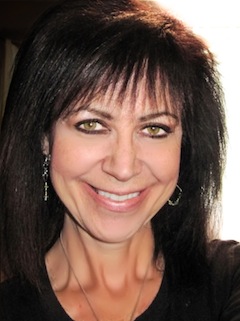
Dr. Jenny Melamed (photo from Jenny Melamed)

“I’ve been in addiction medicine for at least 15 to 20 years now. I spend my time with people in addiction and recovery; that is all the work that I do. I believe in recovery and I believe in remission for the disease of addiction,” Dr. Jenny Melamed told the Independent.

Melamed, who now lives in Vancouver, was born and raised in Johannesburg, South Africa. She moved to Canada with her husband in 1987 – first to rural Saskatchewan, then to Vancouver. Her work with addiction began with a friend’s suggestion to try some work at a methadone clinic. She immediately was drawn to help people in this way and became certified in addiction medicine in the United States, then in Canada and internationally.

“I’ve got lots of initials behind my name,” said Melamed. “I’ve spent most of my time in addiction talking, doing person-to-person counseling. I don’t wear a stethoscope.”

According to Melamed, physicians were among the first abusers of prescription drugs. “It was thought that treating pain with opioids would not be addictive,” she said.

“Opioids are narcotics that act on opioid receptors to produce morphine-like effects, so we were prescribing it and, now, there are so many opioids out there. And we’re having these pill parties, where kids are taking pills from their parents’ cupboards – going to these parties where they’re putting them into these big bowls and they don’t even know what they are taking out. We’re looking at 13- or 14-year-olds that are trying these drugs. They’re finding it young.

“There’s not that much OxyContin available anymore,” she added, “as people are now scared of it.”

Melamed said there is no way to know for sure if a person will become addicted or not. Kids often take more than one possible addictive drug at these kinds of parties, she said, so they will likely not even know which one(s) affected them and what the specific effects were.

“For some people who take their first drink or take their first opioid, they will say that ‘the minute I used X, I felt calm for the first time,’” she said. “For some, it starts immediately. For others, it starts as weekend use at parties. Then, they start to use a little more during the week, and then they start realizing that, when they try to stop, they can’t. They’re actually dependent on this drug and are going through withdrawal. They can’t move away from it.”

Melamed said, “Addiction is a disease of escape. They’re using it to help them cope. I said to a young girl yesterday, ‘Why do you use?’ She said, ‘Sometimes, I just don’t want to feel.’ And that’s what it is. They learn from an early age, and the addiction part of the brain takes over and says, ‘I will help you through this.’

“We all live in a society where there’s a lot of stress and many of us, especially young people that have not developed coping mechanisms, turn to different modes of escape, as they are the easiest thing to do.

“The important thing to remember is that, when you come down from whatever high you used, you still have the stress, if not even worse, as now you’ve got to pay for your drugs. You may have blacked out or overdosed … but, in the spur of the moment, addiction is such an instant gratification that you don’t even think of it. You just think about self-medicating.”

Recovering addicts learn that there is no such thing as a cure from addiction. Addiction may go into remission in the same way that type 2 diabetes can go into remission, said Melamed. If one changes their diet and loses weight, etc., they may not have to use insulin anymore, but, if they gain weight back, change their diet or lifestyle, the diabetes will flare up again.

“So, you get the person who is out with buddies and somebody says, ‘You want to try this heroin?’ not knowing there’s fentanyl in there,” she said. “And they die, because the brain tells them that they can try it just once. And they actually believe that they can go back to being a social user, or a social drinker.

“They don’t understand that this is a chronic disease that is with them for the rest of their life. And, you know, when you say to a 15-year-old, ‘you’re not going to be able to use or drink for the rest of your life,’ it’s a very difficult concept and very scary … and that’s why the AA [Alcoholics Anonymous] concept of one day at a time is really important.”

While only about eight to 11% of people who use a substance become addicted to it, no one knows which substance will entrap them. But, one thing is for certain – it can affect any of us and the problem affects us all.

“I think the first thing we have to understand is that it doesn’t matter what religion we are, what our economic status is – everybody has a risk of addiction,” said Melamed. “We have some very wealthy families in the city who have lost kids to addiction. We have to move it out of the stigma.

“You have the concept of, ‘Oh, he’s a functional alcoholic, just drinks at lunchtime.’ And, we accept that. But, we shouldn’t accept that in any form. And, we also shouldn’t stigmatize it in any form. We need to talk to our children about it and be on top of it.

“In some ways, as a Jewish population, we feel like we’re a little different and protected,” she continued. “We’re not. The conversation has to happen at home. When I gave a talk here, at the Schara Tzedek, about addiction, the room was empty. We believe our kids would never do it.”

There are things you can do at home, in addition to talking with your kids about addiction. Any prescription drugs that are not being used should be returned to a pharmacy for proper disposal, and any medications that are being used on a regular basis should be locked up.

“You also should take a look at why you are using these medications,” she said. “Even as adults, our drug use is inappropriate.”

Melamed said one of the best ways to keep an eye on your kids is by making your home a welcoming space where they and their friends are happy to hang out. That way, they are comfortable being around you and you see what is going on.

“You need to know where your children are, who their friends are and what they are doing,” she said. “And, you cannot assume that, just because they are from the same socioeconomic status, that everybody’s good. It’s really important to know parents, their friends and to know what’s going on.”

Melamed is open to hearing from educators, schools, community groups and others who would like her to come and speak on addiction and its treatment.

Rebeca Kuropatwa is a Winnipeg freelance writer.
Format ImagePosted on December 7, 2018December 4, 2018Author Rebeca KuropatwaCategories LocalTags addiction, alcoholism, healthcare, Jenny Melamed, prescription drugs, substance abuse
A first of its kind in Canada

A first of its kind in Canada

The University of Manitoba is now accepting applications for its interdisciplinary master’s degree in human rights. (screenshot)

The first interdisciplinary human rights graduate degree program in Canada will be starting soon, spearheaded by the director of peace and conflict studies at the University of Manitoba, Dr. Adam Muller, who helped design it.

The new degree will be the first of its kind in the country. Offered by the faculty of law at the U of M, it will train students for careers in human rights work in collaboration with the university’s faculties of arts, education and social work, as well as the Centre for Human Rights Research. Up until now, students wanting an interdisciplinary education in human rights law, theory and qualitative research methods had to go to the United States or Europe.

“We’re going to be training generations of students to serve domestically and abroad in a way that’s deeply inflected by rights, culture and ideas of dignity and social justice that, I think, in some ways, is uniquely Canadian and importantly Canadian,” Muller told the Independent.

“It’s worth noting that, when South Africa transitioned from an apartheid to a post-apartheid state, and they needed to rewrite their constitution, and particularly their charter of rights and freedoms, they drew upon the Canadian model and used Canadian jurists to assist in that drafting process.”

photo - Dr. Adam Muller spearheaded the new human rights program
Dr. Adam Muller spearheaded the new human rights program. (photo from Adam Muller)

Muller spent the first nine years of his life in South Africa. His family emigrated from there in the late 1970s in the wake of the Soweto Uprising, for political and other reasons. In addition to his position at the U of M, he is also the first vice-president of the International Association of Genocide Scholars.

Most of his work is about representations by artists of mass violence and atrocity, said Mueller. “So, I’m particularly interested in photographers, but also painters, musicians … people who try to give shape to unimaginable violence with the view of educating people about it.”

While there are other master’s of human rights programs in Canada, this is the first interdisciplinary master of human rights program in the country, said Muller.

The program will be housed in the faculty of law for a number of reasons, he said, the main one being that the language of human rights is first and foremost a legal language.

While other aspects of the program will look at the philosophical, sociological and anthropological discourses, Muller said, “There are different cultural inflections on the idea of human rights, partly because of the [perspective] that human rights practitioners have – an idea of a universal moral subject, which is complicated when you look at it anthropologically. Not all communities around the world share the same moral presuppositions, so those differences matter in terms of the understanding of global rights culture.”

While students will be encouraged to be human rights champions and advocates, the aim is that they not be so in a naïve way. “We want them to actually understand that human rights can be seen by other people as potentially unwelcome, super-impositions of a Western frame of reference over indigenous ways of thinking about the relationship with a person to the group,” said Muller.

In learning about what happened in genocides such as the Holocaust, students in the program will also be taught the continuing implications. For example, Muller wants the master’s students to go into the German studies class and learn, not just about the Holocaust, but about why it still matters in the German context today.

One of the unique aspects of this interdisciplinary program is that the courses available to students will vary from year to year, depending on what is being offered by the different faculties that have agreed to open up their classes to MHR students.

“We expect there to be, for example, considerable coverage of indigenous issues, just because there is a lot of that kind of work going on at the U of M,” said Muller. “We fully expect the MHR students to be both interested in and to become cognizant of the kind of debates surrounding human rights and indigenous people in the Americas.

“What we have is, I think, a healthy elasticity, in terms of the actual curriculum of the program,” he said. “So, there are three required courses, and then three courses students will be able to select from a vast range of options made available.”

Applications are now being accepted through the Centre for Human Rights Research at the U of M for admission in September 2019. It is not a prerequisite to have a degree in human rights.

Since the goal is to train students to become human rights professionals, the program will offer a practicum component for those students who prefer a hands-on approach.

Belle Jarniewski, who recently took on the role of executive director of the Jewish Heritage Centre of Western Canada and is probably most known for her work at the Holocaust Education Centre, which is an integral element of the JHCWC, is one of the scholars who was asked to review the MHR program proposal.

photo - Belle Jarniewski of the Jewish Heritage Centre of Western Canada was one of the scholars who reviewed the master’s in human rights program proposal
Belle Jarniewski of the Jewish Heritage Centre of Western Canada was one of the scholars who reviewed the master’s in human rights program proposal. (photo from Belle Jarniewski)

“I was quite honoured that Adam asked me to be one of the people across the country to review the proposal for the program and to submit a recommendation,” said Jarniewski. “I think that it’s very exciting to have a post-graduate human rights program offered. One of the things that I really like about it is that it really allows people to work in or concentrate on different areas of human rights.

“Certainly, I think human rights have always been important. But, in this particular time, where human rights are being abused in so many different countries, and where the mere understanding of what human rights are is being clouded, I think that a program such as this, that will produce scholars in this area, is of extreme importance.”

Jarniewski said Winnipeg is the perfect place to host such a program, with the Canadian Museum for Human Rights being in the city.

“Winnipeggers don’t fully appreciate the importance of it,” said Jarniewski. “When I go overseas, this museum has put us on the map. I think it’s just a logical city to host such a program, given that we have this wonderful museum, and our ability to access it for research purposes, as well as the ongoing work that they do in hosting lectures.

“I’m thrilled that this is happening, that it’s happening in Winnipeg, and that Winnipeg is taking on an important role in the area of human rights.”

For more information about the program, visit law.robsonhall.com/future-students/master-of-human-rights-mhr.

Rebeca Kuropatwa is a Winnipeg freelance writer.

Format ImagePosted on November 30, 2018November 28, 2018Author Rebeca KuropatwaCategories NationalTags Adam Muller, Belle Jarniewski, education, genocide, human rights, Winnipeg
Unique science fiction volume

Unique science fiction volume

Emanuel Lottem, left, and Sheldon Teitelbaum. (photo by Roni Sofer)

After four years of hard work, Sheldon Teitelbaum and Emanuel Lottem have completed the first instalment of Zion’s Fiction: A Treasure of Israeli Speculative Literature.

Today, Montreal-born Teitelbaum lives with his family in Los Angeles, but, before that, he lived in Israel for many years – starting with five years in the Israeli army, a period of service that included the 1982 Lebanon War.

“I lived to tell the tale and, when I came back, I received an offer from some local magazines and newspapers, including the Jewish Post & News [in Winnipeg], to write pieces for them, which I accepted, in addition to working on the night desk as a sub-editor,” Teitelbaum told the Independent.

Then, he was hired by the Weizmann Institute of Science as a writer, which he did for a couple of years before moving with his family to California. There, he began writing for the Los Angeles Times, as well as writing a number of articles for the New York Times, Wired, Entertainment Weekly and other publications, while also working at University of Southern California as a science writer.

About Zion’s Fiction, Teitelbaum said, “It is not a book of my stories. I have absolutely no apparent talent in writing stories. But, I have been involved in Israeli science fiction and have been reading it for 40 years. And, it occurred to me at a certain point that the local (Israeli) fiction had reached a level of confidence that merited the attention of the world. As a result, I called up my partner, Emanuel Lottem, who is Israel’s premier interpreter, translator actually, of science fiction … and, I Skyped him and said, ‘You know, I just want to lay down two words to you – Zion’s fiction.’ Apparently, his jaw dropped. It just says the whole story.”

Teitelbaum contacted science fiction grandmaster Robert Silverberg, who he has interviewed in the past, and pitched the idea. Silverberg was hooked and agreed to provide a foreword and to connect them with agent Eddie Schneider of JABberwocky Literary Agency in New York.

As it turned out, publishing houses were not interested and, if not for the last publishing house on their list, they would have had to wait even longer to see their idea in print.

Once they had a publishing house, next came the difficult task of determining what would go into the book.

“We actually had twice as many stories than we needed,” said Teitelbaum. “We decided to save them for the next volume. However, we had a book launching at the Israeli Science Fiction convention in September, and we met with the head of the Israeli Society for Fantasy and Science Fiction. In conjunction with them, we’d publish their newly released volume – a collection of the best of the best of the Geffen winners of the last 17 years.”

(The Geffen Awards are named after the late Amos Geffen, one of the first editors and translators of science fiction in Israel.)

“As you might know,” continued Teitelbaum, “translation is a hideously expensive engagement. And they were gracious enough to take on the initial translation with Emanuel, and I was ready to hunker down with the actual line editing.”

All 16 stories that were selected for the first volume of Zion’s Fiction have received positive reviews worldwide. They are very different from the kind of speculative fiction people read in the West, according to Teitelbaum.

For most Israelis, when it comes to science fiction, Teitelbaum said, “It’s a thing that’s extremely fragile – more fragile than you’d find anywhere else in the world … because, when Hezbollah bombs starts flying, everyone’s nose is to the ground … and there ain’t no room for the fantasy.

“Not to mention that Israel is situated at a crossroads fortress called Megiddo, which the Greeks gave the name Armageddon, which is a lodestone for apocalyptic worry and fretting all over the world … and especially in Israel, [where] nobody does a better job of trying to put off disaster by writing about it.”

The Israeli science fiction that is broadly popular is that which deals with near-future developments in society, with specific connections to what is going on politically.

In terms of readership, Teitelbaum feels Zion’s Fiction will appeal to academics, noting, “There are several Jewish studies programs in North America and Europe [interested]. As someone who volunteers at the local high school my kids went to, teaching science fiction as a course for senior English, I know that, if you want to get kids to read, this is one of the ways to do it.

“I also know that Introduction to Science Fiction in undergraduate classes has upwards of 600 people, and I’d hope this series would ultimately provide academics with a reason to fashion courses on the subject of the Israeli fantastique.”

Teitelbaum also thinks that Zion’s Fiction could serve as an excellent gift for anyone with a soft spot for Israel or an interest in Israeli writing, or for science fiction lovers wanting to explore a unique segment in the genre.

“Unlike American Jewish science fiction, which hits you over the head with issues of religion and intermarriage and, you know, all of the shtetl nonsense, Israeli science fiction is a lot more subtle,” said Teitelbaum. “It doesn’t deal with the Holocaust directly in most instances, although you can see that it’s an underlying theme.

“It takes place in the near future, rather than the far. It’s a little more realistic than you would find in American science fiction. It doesn’t concern itself with Jewish folklore from the old country. It wears its Israeliness easily. Its Israeli characters are identifiable as Israelis.”

Zion’s Fiction is widely available and has already been translated for sale in countries such as Japan, Korea and Russia, with interest expressed in Turkey and Germany. For more information, visit zionsfiction.com. To order the book, go to amazon.com.

Rebeca Kuropatwa is a Winnipeg freelance writer.

Format ImagePosted on November 30, 2018November 29, 2018Author Rebeca KuropatwaCategories BooksTags Emanuel Lottem, Israel, sci-fi, science fiction, Sheldon Teitelbaum
Teaching about death

Teaching about death

Dr. Jessica Zitter has both written a book and a movie about death and dying. (photo by Rikki Ward Photography)

Dr. Jessica Zitter, who works as an attending physician at a public hospital in Oakland, Calif., struggled with her job’s protocols for years. Until the day a nurse opened her eyes to the possibility that there was a better way, one that involved more compassion in the treatment of patients.

Zitter comes from a long line of doctors.

“They were into the art of medicine,” she said of the mentors she had when she first began her studies. “By that, I mean the art of surgery and intervening, and of doing things in a very precise way. There was something about that that I found heroic, and I wanted to be part of that world.

“So, I went to medical school – pulmonary and critical medicine – which I thought of as the most heroic of the specialties. I went on to start to focus on the machines, technologies, protocols and things that were part of the trade of being a pulmonary critical care physician. I tried to really perfect them … [thinking that,] if I use these perfectly, I’ll be able to help a lot of people.”

But, as she went along, she started to think differently. At first, she suppressed the feeling. “It was truly uncomfortable,” she said. “It caused me a lot of suffering.”

Zitter was using techniques and protocols on people who were not going to benefit from them, knowing full well that they would not benefit from them. Not only was she following her training, but she also wanted to please her patients – give them mainly good news and information about various procedures, instead of telling them the whole truth about their condition.

“I didn’t want to tell them, ‘Hey, I don’t think you’ll survive,’” said Zitter. “I didn’t want to say that because it’s too sad. I would communicate about things that were more practical like, if this happens, we will try this.”

A pivotal moment

Zitter’s approach changed after an encounter in the intensive care unit with a nurse from the family support team, called Power to Care.

“One day, I was about to put in a line [catheter] into someone who was really, really sick and likely dying, and the woman who headed that family support team was standing in the doorway watching…. I was about to put the needle in and she put her hand up to her face and she said, ‘Call the police,’ on a pretend telephone…. She said, ‘Call the police. They’re torturing a patient in the ICU,’” said Zitter. “And that was my epiphany moment. All these moments, I had this doubt. This was like a relief – you’re right, I am torturing the patient. What the heck? There was a clarity there that was really powerful.

“But, the sad truth is that I still put that needle in. I still put that catheter in that woman. The force of what I call the end-of-life conveyor belt is so powerful … not only the conveyor belt itself, but the drive to ‘protocolize,’ heaping on treatments … the culture in the hospital. It’s hard to break out. It’s hard to stop and take a pause, and say, ‘Wait a minute. What the heck?’”

The intervening nurse, Pat Murphy, in some ways became Zitter’s mentor on what it meant to be a doctor.

“I came to it late and from a place of profound dissatisfaction and moral distress, and I was just extremely lucky that I happened to be in one of four hospitals where this movement was starting to take hold,” Zitter told the Independent.

“And, I happened to have been open to it,” she added. She was able to get over her “human defence of not wanting to look stupid or like I didn’t understand … and to be able to say, ‘OK. Teach me.’

“I feel lucky that those two things were in check at that time,” said Zitter. “Not to say that I wasn’t filled with shame and embarrassment about what I’d been doing all that time, but the psychology…. Once you admit there’s a problem, then find a way to fix it.”

After years of immersing herself in this new paradigm, Zitter felt ready to share what she had learned. She published a book about it, called Extreme Measures: Finding a Better Path to the End of Life, in 2017.

As she was writing it, Zitter realized that, if a picture can impart a thousand words, maybe a movie would be able to convey even more. So, she put together a 24-minute documentary, Extremis.

Of the award-winning film, Zitter said, “It really shows the issues that come up in an ICU…. There is also a discussion guide that goes with it, so people can watch it and then come away from it with some lessons learned.

“This movie reaches a wide audience about really advanced care planning,” she said. “A lot of synagogues are using it, medical schools and nursing schools.”

Death education

Zitter was asked to teach sex education at both of her daughters’ schools.

“I want them to be able to make the best decisions they can make about their bodies and their health, and to be empowered to live the best they can,” she said.

But what about death education?

Extremis came out in late 2016. “It was nominated for the Oscars and a lot of my kids’ friends were watching it. And all these kids were really blown away by the movie and they were having a positive response to it,” said Zitter. “It made me think, ‘Why the heck aren’t we teaching kids about death? Why aren’t we having a conversation in high school, just like with sex ed?’ So, a friend of mine designed ‘death ed.’ We did it in her kids’ and my kids’ schools. It was really impactful.”

Zitter would love to see such a class in every school in the United States and Canada, along with other heath education classes, so everyone can have the opportunity to learn about a range of issues and discuss them.

Both the teachers and the students appreciated the lesson on death education, said Zitter. “There were no negative responses. Although some kids cried, and it was terrifying at first, they would then say, ‘That was sad, but I’m OK.’

“I was like, ‘It is sad that we are all going to die.’ But, you know what? It’s really good for these kids too, [because] it’s part of life. If we pretend no one’s going to die and don’t let our kids go to funerals, etc., we aren’t doing anyone a service.”

So far, Extremis has been translated into 90 languages and has been shown in 160 countries.

“We’ve got to tell people what’s actually happening and try to understand,” said Zitter. “I use myself as a prime example…. Why was I putting that catheter into a woman I knew was dying? What are these factors that are propelling me to do things that don’t make sense to me? The idea is to be more conscious of it, aware of it, and change it.”

For more information about the movie and the book, visit jessicazitter.com. The film trailer can be found on YouTube.

Rebeca Kuropatwa is a Winnipeg freelance writer.

Format ImagePosted on November 23, 2018November 20, 2018Author Rebeca KuropatwaCategories Books, TV & FilmTags death, dying, education, Extremis, healthcare, Jessica Zitter, medicine
Understanding dyslexia

Understanding dyslexia

Bennett and Sally Shaywitz co-founded the Yale Centre for Dyslexia and Creativity. (photo from the Shaywitzes)

One out of five people has dyslexia. Yet, even with this many people affected, not every school tests for it. This can lead to feelings of self-doubt and frustration for the child who has dyslexia but doesn’t know it. Parents and teachers may also become frustrated and the result can be children losing confidence in themselves.

Sally and Bennett Shaywitz, both academic physicians, say there is a simple test available for anyone to use to see if they have dyslexia.

Bennett Shaywitz was chief of child neurology at Yale for approximately 40 years, before stepping down a couple of years ago to devote all of his energy to dyslexia. “I’m the Charles and Helen Schwab Professor in Dyslexia at Yale,” he said. “Charles Schwab is very philanthropic and very dyslexic, so I’m very fortunate that I’m his name share.”

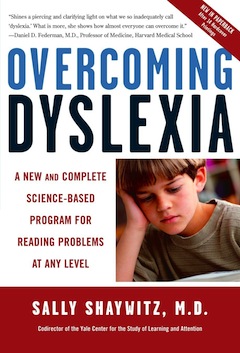
“Together, Bennett and I founded the Yale Centre for Dyslexia and Creativity,” Sally Shaywitz told the Independent. “I also wrote the bestselling book on dyslexia, called Overcoming Dyslexia.”

It all began when she was asked by Yale to work with children with learning disabilities, as none of the other faculty wanted to do it. “They thought it was beneath them,” she said. “I said, ‘Sure, I’ll do it part-time.’ And then I became intrigued with these children I saw who weren’t reading and whose parents were beside themselves and very worried. So, I began looking into it. Bennett was studying more basic science in attention. He got intrigued, so we worked together.”

As the research progressed, she discovered that there were many children who had problems with their reading yet seemed bright.

image - Overcoming Dyslexia book cover“Also, when I looked into it, they were studying children in schools and things, but there wasn’t a general study of a large population,” she said. “So, I started with the Connecticut Longitudinal Study. What differentiates that study is that it’s of a population, we work with a population statistician. We selected children from all over Connecticut and broke it into 14 towns. We invited all the children in kindergarten and, lo and behold, 95% of the ones we invited actually participated. That study is still going on. We are seeing those same people, about 375 of them, as adults, as 40-year-olds.”

The study started with 455 kids and 20% turned out to have dyslexia, while the schools had been under the impression that hardly any students were dyslexic.

“It taught me a lesson that I testified to the U.S. House of Representatives and the U.S. Senate,” she said. “It was that, to be counted, you had to be identified. Schools are not identifying kids, so they didn’t think they had any. Our data is very strong, and it goes along with data from the federal government that they’ve collected over the years. Dyslexia involves one out of five people – and we also discovered that it affects girls as well as boys.

“People used to say that it was just boys. What happens when people say that is that they only study boys. What we were able to do in the longitudinal study is we made up different instruments and validated them. One was a teacher instrument…. What we found was that, when boys and girls were tested, there were virtually equal numbers. But, when you ask the teacher about the child’s behaviour in class, they would say, oh, the boys were rowdy, pulling the girls’ hair, playing across the room, etc. And, the girls, they are so well behaved, but they never read a word. So, it was the boys that were sent for evaluation, because the teachers wanted to get them out of the room.

“We were able to show that dyslexia affects not only boys, but girls as well,” she said. “And, also, that it is persistent. It doesn’t go away. This study has made many major advancements.”

The Shaywitzes also found that, while, with non-dyslexics, reading and IQ are connected, with dyslexics, that correlation does not exist. This was in line with the very first description of dyslexia, in 1896, when a British physician referred to a young man who would have been the smartest in the class, if not for reading.

“People at the turn of the century really got it. They understood it,” said Sally Shaywitz. “But, over time, people stopped understanding it – deciding that, if you’re really smart, you can’t be dyslexic. So, what we were able to demonstrate is that, in fact, you can be very smart as well as dyslexic. The definition incorporates that dyslexia is an unexpected difficulty – unexpected, in that you can be very bright and yet read at a much lower level.”

The Shaywitzes said, due to such misconceptions, testing should be done as early as possible, around Grade 1.

“We developed a screener, called the Shaywitz Dyslexia Screen,” said Sally Shaywitz. “We gave it to Pearson Publishers, who I’ve worked with, wanting to involve teachers, as they know the child best and have mostly been ignored in a lot of these processes.

“There’s a kindergarten, Grade 1, Grade 2 or Grade 3 screening that has about 10 lead questions that the teacher responds to on a tablet. It takes five to seven minutes to get an answer as to whether or not the child is at-risk or not at-risk. You don’t have to test a kid and pull him out of his class or anything like that.

“So, the boys and girls start school and the parents say, ‘Oh, you’re gonna love it. You’ll learn to read. It’s going to be so much fun.’ Then, children enter school, waiting for this magical moment, and it doesn’t come. And, when they are called on to read aloud in class, the other kids giggle and make fun of them … and the teacher says, ‘How can you not know that?’ The kids lose confidence in themselves and begin to believe they are not very smart. That’s why children need to be screened and identified as at-risk very early on.”

Schools are way behind, she said. “Not every school identifies children with dyslexia.”

While the symptoms might improve, the person will always be dyslexic, she said. But, by identifying kids who have dyslexia early, parents and teachers can help the kids overcome their dyslexia in various ways.

The Shaywitzes have developed one tool, called the Key of Strength Model: Dyslexia and Creativity.

“They have almost an isolated island of weakness surrounded by a sea of a higher level of cognitive functions like reasoning, problem solving and critical thinking,” said Sally Shaywitz. “So, you want to identify the weakness and intervene. And, you want to identify the strengths and make sure kids can connect them.

“If they are not identified, they don’t know how smart they are and teachers mistakenly say, ‘Why don’t you try harder? Why didn’t you do that? Why didn’t you do your homework?’… things like that.

“In the case of dyslexia,” she said, “we have enough knowledge to do better. So, rather than a knowledge gap, we have an action gap. They have to implement the knowledge we have. It’s amazing that, in the 21st century, there is still so much misunderstanding of dyslexia that is harming so many.”

For more information on universal screening, dyslexia and more, visit dyslexia.yale.edu.

Rebeca Kuropatwa is a Winnipeg freelance writer.
Format ImagePosted on November 16, 2018November 15, 2018Author Rebeca KuropatwaCategories WorldTags dyslexia, health, Shaywitz
Stories with a message

Stories with a message

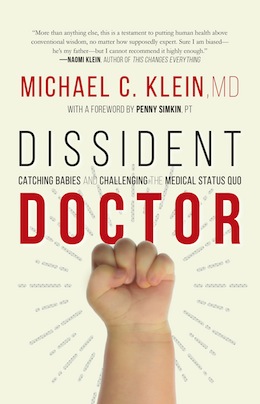
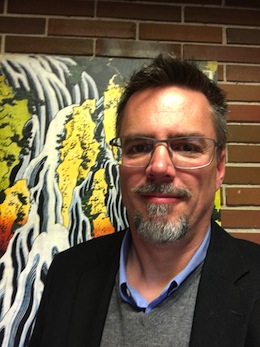
Michael Klein recently had his first book published. (photo from Michael Klein)

Dr. Michael Klein has published almost 200 scientific articles. Earlier this month, he launched his first book, Dissident Doctor: Catching Babies and Challenging the Medical Status Quo (Douglas & McIntyre).

Klein, who, with his wife Bonnie, splits his time between Robert’s Creek and Vancouver, is professor emeritus of family practice at the University of British Columbia, adjunct professor of family practice McGill University in Montreal and senior scientist emeritus at B.C. Children’s Hospital Research Institute. He was recognized as a member of the Order of Canada in 2016 for playing “a vital role in placing maternity care at the heart of family medicine.”

Klein has had a significant impact on the way the Canadian medical system has come to view midwifery and he played a prominent role in midwives becoming part of the healthcare system, first out east and later in here in British Columbia.

“I’m on the board of Canadian Doctors for Medicare, an organization that is trying to save Medicare from various encroachments from private interests, including U.S. multinationals,” Klein told the Independent. “We are about improving and extending Medicare. We are not about justifying things as they are. But, we are very much unhappy with the way privatization is going, which is a solution that is worse than the disease.”

book cover - Dissident DoctorAbout his new book, Klein said, “It began as something that I was writing as stories for my children and grandchildren … and, it got out of hand.”

At it happened, publishers at Douglas & Macintyre heard Klein tell a few of these stories and wanted them made into a book.

Klein set about developing them thematically. “I had to find out what the storyline was,” he said. “It’s a great deal about birth, but it’s not a birth book, per se. In many respects, birth is a metaphor.

“It’s about birth, family practice, midwifery, social justice, and about improving our rather challenged healthcare system. At the same time, I’ve deliberately chosen stories that have a message. For example, there are stories about people who were not supposed to get better but did. Many of the stories are actually detective stories. What I mean by that is that I try to make the stories go beyond the actual patient issue…. In what context does this illness take place? ”

Klein feels this approach to storytelling makes the point that, to provide really good care, you need to understand the patient, the full breadth of their situation.

He hopes the book also serves as a primer on how to advocate for yourself and your family in the complex medical system.

“Misunderstandings and mistakes in the healthcare system are actually inevitable,” said Klein. “I talk a lot about advocacy and the importance of making sure that, if things don’t seem right, they probably aren’t right.

“Because of my involvement with Canadian Doctors for Medicare, the whole issue of privatization is explored. For me, I have a special need to express this, because I’m in a unique position. I’ve practised in Canada before Medicare. I’ve practised in the States and ran health centres without Medicare – that wasn’t a lot of fun. And, I’ve practised back in Canada with Medicare.”

The main point Klein wants to impress upon readers is that humane, holistic care in the context of a person’s whole life is the ideal. “I am not putting this out as a dispassionate physician-scientist, but as somebody who really understands the big picture and can situate the patient or the system within a very large context of where we are going as a society,” he said.

The book is almost completely free of medical jargon, although it deals with complicated issues. Klein said the book is equally accessible to medical trainees, people in the profession and to the general public.

The stories he chose, the themes he discusses and the politics, he hopes, will be easily understood by anyone who has ever encountered the healthcare system. “Not just pregnant people and their partners, but anybody; also family physicians, midwives, obstetric nurses, dulas,” he said.

Klein showed the manuscript to people in all these categories, and, he said, “it seems to work for them.”

The feedback Klein has been getting is that people love the book’s advocacy stories. He even includes his wife’s experiences following a series of strokes, when she was told she was inoperable and would die. A surgeon in London, Ont., saved her life.

“There are a series of stories of my patients and other peoples’ patients who defied the odds, and where patient advocacy has been absolutely essential,” said Klein. “Whether they are physicians or laypeople, they became engaged in the right way with the health providers and improved their outcome.

“People relate to that very strongly, regardless of whether they are patients. The experiences they’ve had when their children, spouse or parents were sick and, either they were sidelined by the system or they embraced by the system. It varies enormously with who is providing the care and what their attitudes are. I cover that in the book.”

Other stories in the book tell of how Klein battled with the U.S. army and avoided going to the Vietnam War.

He also delves into his strong support for midwives. “People wondering if home birth is safe are very interested in that section,” said Klein. “Home birth is clearly safe. However, safe in the right kind of system, with the right kind of supports and back up. In other words, an integrated system like we have in British Columbia, as opposed to the chaos of the U.S.”

The launch event for Dissident Doctor took place in Toronto on Oct. 9.

Rebeca Kuropatwa is a Winnipeg freelance writer.
 

Format ImagePosted on October 26, 2018October 25, 2018Author Rebeca KuropatwaCategories BooksTags health care, Medicare, Michael Klein

Posts pagination

Previous page Page 1 … Page 7 Page 8 Page 9 … Page 31 Next page
Proudly powered by WordPress