Skip to content
  • Home
  • Subscribe / donate
  • Events calendar
  • News
    • Local
    • National
    • Israel
    • World
    • עניין בחדשות
      A roundup of news in Canada and further afield, in Hebrew.
  • Opinion
    • From the JI
    • Op-Ed
  • Arts & Culture
    • Performing Arts
    • Music
    • Books
    • Visual Arts
    • TV & Film
  • Life
    • Celebrating the Holidays
    • Travel
    • The Daily Snooze
      Cartoons by Jacob Samuel
    • Mystery Photo
      Help the JI and JMABC fill in the gaps in our archives.
  • Community Links
    • Organizations, Etc.
    • Other News Sources & Blogs
    • Business Directory
  • FAQ
  • JI Chai Celebration
  • JI@88! video

Recent Posts

  • Sharing her testimony
  • Fall fight takes leap forward
  • The balancing of rights
  • Multiple Tony n’ Tina roles
  • Stories of trauma, resilience
  • Celebrate our culture
  • A responsibility to help
  • What wellness means at JCC
  • Together in mourning
  • Downhill after Trump?
  • Birth control even easier now
  • Eco-Sisters mentorship
  • Unexpected discoveries
  • Study’s results hopeful
  • Bad behaviour affects us all
  • Thankful for the police
  • UBC needs a wake-up call
  • Recalling a shining star
  • Sleep well …
  • BGU fosters startup culture
  • Photography and glass
  • Is it the end of an era?
  • Taking life a step at a time
  • Nakba exhibit biased
  • Film festival starts next week
  • Musical with heart and soul
  • Rabbi marks 13 years
  • Keeper of VTT’s history
  • Gala fêtes Infeld’s 20th
  • Building JWest together
  • Challah Mom comes to Vancouver
  • What to do about media bias
  • Education offers hope
  • Remembrance – a moral act
  • What makes us human
  • המלחמות של נתניהו וטראמפ

Archives

Follow @JewishIndie
image - The CJN - Visit Us Banner - 300x600 - 101625

Byline: Cynthia Ramsay

Sizzlin’ Summer in June

Sizzlin’ Summer in June

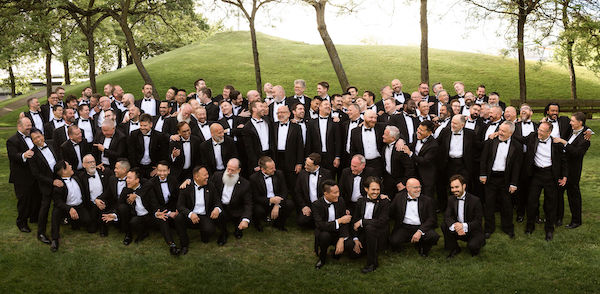
The Vancouver Men’s Chorus “brings such an effervescent joy to the shows and the spring season in particular is a big party for the chorus and audience alike.” (photo by Mark Burnham Photography)

The Vancouver Men’s Chorus (VMC) Sizzlin’ Summer concert promises to be a lively and entertaining experience.

“The VMC is more than just your average choral concert – we have the chops to pull off some pretty complex vocal arrangements, but we also like to mix that up with pure upbeat fun,” said Jewish community member Dr. David Rothwell, who is one of the choreographers of the show, which sees several performances June 9-17 at Performance Works on Granville Island. “The group brings such an effervescent joy to the shows, and the spring season in particular is a big party for the chorus and audience alike,” he said. “Whether it’s pulling out some disco moves for a nostalgic trip to ABBA’s heyday, or donning umbrellas after a hairy forecast from the Weather Girls, the choreography put together by myself and my fellow choreographers (Randy Romero and Jason Yau) helps tell the story of our music and elevates that entertainment factor even higher. We even get the entire chorus to join along in their own way.”

Humphrey Tam, VMC’s vice-president of marketing and communications, as well as a singer in the choir, shared a sneak peek at the repertoire.

“In Sizzlin’ Summer,” he said, “we have music ranging from your pop classics like ‘The Raining Men,’ ‘Girls Just Wanna Have Fun,’ ‘Summer Breeze,’ to new hits like ‘Summer Time Sadness’ by Lana Del Rey and ‘New Rules’ by Dua Lipa, to the world première performance of ‘Ocean Songs’ by composer Gerry Ryan (former arranger and first tenor of the VMC) who, sadly, passed away few years ago.”

Conducting Sizzlin’ Summer will be VMC artistic director Willi Zwozdesky, who has been with the chorus since its inception; resident accompanist Dr. Stephen Smith has been with the VMC since the 1990s.

“Both of them are instrumental in the success of the Vancouver Men’s Chorus,” said Tam. “In 2021, we expanded our musical team to include an assistant conductor, David Buchan, who brought in another layer to our sound. On top of that, we have a full orchestra band in our concerts!”

The chorus rehearses every Wednesday, except during July and August, when they take a break; there are also extra rehearsals on Sundays a month or two before a concert.

While VMC is an audition-required group, Tam said the “singers are a mix of people with tons of background in music and theatre to someone who has no previous musical experience. We welcome everyone to audition and, even if you can’t sing, there are plenty of opportunities to join the chorus as a volunteer to help out with productions.” He said he was, before joining the chorus, “one of those who had no musical background except for playing the clarinet for one year back in Grade 8.”

Rothwell, who used to teach dance before moving to Canada from Australia, is an animator by trade, so “movement is my bread and butter, whether on the stage or the screen,” he said.

“After moving to Vancouver in 2018 with my husband, we saw the VMC performing their hearts out in the annual Pride Parade. We were quick to reach out to see if they were taking new members and, five years later, we’re basically part of the furniture!” said Rothwell. “We both grew up immersed in music, and it’s been a perfect way to pursue our interests and build a network of vibrant, talented friends in Vancouver’s queer community.”

About Jewish community, Rothwell said, “My mum reconnected with our family’s Jewish roots when I was a teen, so while I wasn’t immersed in that side of my heritage until that point, I’ve grown to recognize and appreciate the tenacity, humour and joie de vivre that I feel is ingrained in the Jewish spirit, including my own. These days, I’ll gladly join a seder and keep everyone’s cups full to the brim!”

For VMC member Dr. Etienne Melese, much of his connection to Judaism also came from his mother. “When I was young,” he shared, “she taught me about all the Jewish traditions, holidays, and growing up in New York helped, too.”

Proud of being Jewish, he said, “I feel the history deeply.” While Melese’s paternal grandfather survived the Holocaust, other members of his family did not. “We still visit their memorial in Paris (Mémorial de la Shoah) every time we visit, and I think about the courage it took survivors to live through that time,” he said.

Melese, who earned his PhD in immunology from the University of British Columbia and is currently working in biotech on designing new therapeutics for diseases such as cancer, said, “I came to the Vancouver Men’s Chorus because I wanted the opportunity to sing again. I had spent six-plus years doing my PhD and, during that time, had not been singing in a choir, which I used to enjoy so much! Also, the community – I wanted to expand my network of friends.”

Melese has been in many choirs over the years. What draws him to singing, he said, is “being able to express yourself. I find, through music, I am able to access so many feelings that are hard to just put into words…. I find there is an energy to choirs that can really change your outlook that day.”

Knowing that such benefits can come from choral singing, the Vancouver Men’s Chorus remained active during the pandemic, albeit in different ways.

“It was a very difficult time for the chorus,” said Tam. “From a choir point of view, not being able to sing as a group and perform was a huge loss to us; but, on top of all things, the VMC is a huge support group for our members, it’s a huge chosen family. Every week when we meet, we share our stories and we socialize. Not having that bonding time with each other definitely was strange and hard for some of us. Luckily, despite not being able to sing together, we still continued to have Zoom activities throughout the entire 2020 and 2021, and we recorded two digital concerts to keep doing what we love. Starting September 2021, we rehearsed together again but with masks and social distancing, and performed our first in-person concert in two years with Making Spirits Bright 2021 (also with masks on). Thinking back, I really don’t know how we did that.”

The VMC is a diverse and inclusive group, with members ranging from 18 to 70+ years old, said Tam. “We have open rehearsals every September and January for anyone to come join us at our rehearsals and sing with us,” he said. “From there, they can see if we are a good fit for them and sign up for an audition.”

Rothwell is keen for more people to experience the choir. “In addition to our spring season in June, the VMC also is well underway in preparing for our December season, Making Spirits Bright,” he said. “As always, our music selection committee makes sure to include songs for all holidays of the season; celebrating Hanukkah continues to be a mainstay of our setlist, along with the winter solstice and more. We’re gearing up for another great show this December, so I’d also encourage readers to keep an eye out for our next show, Cheers!, later this year.”

But, returning to Sizzlin’ Summer, Melese shared his favourite song: “‘The Summer Nights,’ a play on Grease, so fun!”

For tickets and more information, visit vancouvermenschorus.ca.

Format ImagePosted on May 26, 2023May 26, 2023Author Cynthia RamsayCategories MusicTags choral singing, David Rothwell, Etienne Melese, Humphrey Tam, music, Sizzlin’ Summer, Vancouver Men's Chorus
Yiddish alive and well

Yiddish alive and well

Yiddish has the odds stacked against it – the vast majority of its speakers were murdered in the Holocaust, its use was repressed in the postwar Soviet Union, Israel favoured Hebrew over it, and it faced the challenges that any immigrant language faces in a new country, including in Canada. Yet, Yiddish lives on, and can continue to do so, and even flourish, contends Rebecca Margolis, director and Pratt Foundation Chair of Jewish Civilization at Monash University, in Australia.

Margolis, who is originally from Canada, will be in Vancouver to launch her new book, Yiddish Lives On: Strategies of Language Transmission, at the Peretz Centre for Secular Jewish Culture on May 23, 7:15 p.m. Introducing Margolis will be the Vancouver Jewish Folk Choir with the song “Yomervokhets,” a Yiddish translation of “Jabberwocky” by Raphael Finkel, set to music by the choir’s conductor, David Millard.

The event is particularly special, as Margolis uses the Vancouver Jewish Folk Choir – in which I’ve sung for more years than I can recall – as one of many examples of a “created language space.” Such spaces are “sites that are deliberately created to support the continuity of a language that is not commonly a mother tongue or widely spoken,” she writes.

image - Yiddish Lives On book coverThe small section that features the choir cites the work of local Yiddish scholar and translator Faith Jones, who is a member of the choir as well, and the book references a paper that she and I wrote together in tandem with the 2019 online exhibit marking the choir’s 40th anniversary. I have to say it was an exciting surprise to find a paper I co-wrote quoted, but it’s a quote from Faith’s 1999 thesis on the Yiddish library of the Peretz Centre (the choir’s home, too) that helped me clarify some of what draws me to Yiddish. In commenting on the intersections between Yiddish, politics and identity, Faith wrote that “what these strands have in common is the belief in the power of human beings to alter the course of history. In left political life, in feminist theory, in the movement for lesbian and gay equality, in the political culture of secular humanism, it is not the past which is romanticized, but the future. Yiddish does not offer the path to the past as much as to a collective future which is linked with the past: a better future, but better because of human endeavour.”

It is this human aspect – the intention we can possess – that runs through all of Margolis’s examples of the ways in which people, specifically Canadians, have kept Yiddish alive. She conceptualizes her book “as a series of expanding rings of engagement with the language and culture.” Each chapter focuses on a ring, while acknowledging the rings are interconnected: families (1950s to today), youth theatre groups (1960s to 1970s), literature (1970s to 1980s), singing (1990s to 2000s) and new media/technology (2000 to today).

Margolis explains that Yiddish exists in two communities: the Haredim (ultra-Orthodox), who speak Yiddish in their everyday lives, and the secular, people “for whom continued engagement with the language has taken place despite maintaining linguistic acculturation.” Margolis’s book is mostly about the latter group, but she does discuss the Haredim quite a bit and, to a much lesser extent, the experience of preserving Scottish Gaelic, which, she says, “is undergoing revitalization in Canada and abroad,” and Indigenous languages.

Yiddish Lives On is an academic book, but easy to read, and there are common threads that recur, so that, if you don’t quite understand a concept on first encounter, you will when it is used in a subsequent context. In addition to discussing scholarly texts, Margolis talks about Yiddish writers – in Canada between 1950 and 2020, more than 200 books were published in Yiddish! – and analyzes movies and shows like the web series YidLife Crisis, which was created by and stars Eli Batalion and Jamie Elman, two Montreal secular Jews who speak Yiddish, using “provocative comedic dialogue,” Margolis notes, “to address contemporary issues around Jewish identity.”

Margolis doesn’t expect that Yiddish will ever return to regular, everyday use by non-Haredim, however, she convincingly argues that “a language lives by being used” and that the many spaces that have intentionally been created for Yiddish – “from raising children as native speakers to a virtual Yiddishverse” – bode well for the language’s continuity.

To attend the book’s launch and the mini-concert that precedes it, register at peretz-centre.org.

Format ImagePosted on May 12, 2023May 11, 2023Author Cynthia RamsayCategories BooksTags language, Peretz Centre, Rebecca Margolis, singing, Yiddish, youth groups
The experience of a lifetime

The experience of a lifetime

There was no question that Zac Abelson (centre) would attend the Excelerate23 Summit in New York City this past March. (photo from Zac Abelson)

“I believe my Excel journey is only just getting started,” Zac Abelson told the Independent. “The last summer and the Excelerate conference have solidified my belief that there are not only bright young leaders in the world that will one day make an incredible impact, but that the Jewish community will forever be one that is strong, defiant, welcoming and passionate.”

Born in South Africa, Abelson moved to Canada with his family when he was 8 years old. “I have now lived in Vancouver for 15-plus years, being part of the Chabad Jewish community while growing up in South Surrey,” he said. “I learned my bar mitzvah on a tape recorded by my grandfather with the Chabad rabbi and went back to do my bar mitzvah with my grandfather in South Africa.”

Last year, Abelson was one of 60 international students chosen for a Birthright Israel Excel summer internship in Israel. One of the highlights of working with Deloitte, the company with which he interned, was “getting to learn and understand how the Israeli culture conducts business and truly see the impact they have on the world without most people knowing,” said Abelson.

Birthright Israel Excel, which started in 2011, is described as a business fellowship that offers select students an internship in Israel, followed by membership in a “community of peers focused on professional development, personal growth, Israel engagement and philanthropy.”

The most exciting part about being selected for the program, said Abelson, was the people.

“Excel selects not only the best and brightest but also the most genuine and caring individuals,” he said. “Being able to spend 10 weeks in a tight-knit community made every moment a life-changing experience and every memory one I will never forget. Mix those people with all that Israel has to offer and you have a recipe for an incredible summer.”

It was “an adjustment to be surrounded by so many talented people from the best schools in the world,” he acknowledged. “One can see it as daunting, but I chose to see it as an opportunity to learn and mix with the people who will push me to be a better version of myself.”

Abelson has just completed his studies at the University of British Columbia Sauder School of Business, graduating with a bachelor of commerce. “I now work full-time in real estate development,” he said, “helping shape and grow diverse and sustainable communities.”

In March, Abelson was one of more than 300 Birthright Israel Excel fellows from around the world who gathered in New York City for the Excelerate23 Summit.

“Having had such an incredible time with the Birthright Excel community this past summer in Israel, attending the Excelerate Summit in New York City was no question,” he said. “The opportunity to again be surrounded by such incredible Jewish leaders and innovators is rare and one I wanted to take full advantage of.”

Throughout the March 24-26 weekend, attendees participated in networking, industry panels and discussions about topics such as business development, Jewish identity and Israel engagement. The summit also held workshops on combating antisemitism.

Among the events Abelson attended was one entitled Scrappy to Scaled: How Entrepreneurs Turned Startups into Sustained Multi-Figure Operations.

“This was a fantastic session where we truly got to hear the grit required to turn an idea into a reality,” he said. “What I found fascinating was listening to Nathan Resnick – seeing how, rather than conforming to the expectation of what businesspeople and investors would look for, he allows his true light and personality to shine through, ultimately getting investments in the person over the product.

“Additionally, listing to [activist and former NBA player] Enes Kanter Freedom speak about his journey from hatred of the Jewish people to now embracing the community was eye-opening. It was unbelievable to see how his deep passion for acceptance and the international community drives him every day despite all that he has had to sacrifice. It also puts into perspective the sad reality of how stuck in the past the world still is and how unwilling to speak on important issues many sporting organizations still are.”

When asked what three things he would recommend about the Excel program, Abelson said, “One, you don’t know the value of an international network until you truly have one. Excel has allowed me to since travel the world and feel comfortable knowing there will always be an Excel fellow somewhere close by.

“Two, the feeling of connecting with like-minded, passionate and bright Jewish business leaders … will fill you with joy and hope for the future of both Israel and the world.

“Three, the Excel experience is more than just adding the internship to your resumé. It’s an experience of a lifetime that everyone in interviews will be intrigued with and ask you more about. Few in the workplace have such a wonderful story to tell.”

For more information about the programs offered, visit birthrightisraelexcel.com.

Format ImagePosted on May 12, 2023May 11, 2023Author Cynthia RamsayCategories Israel, LocalTags Birthright Israel Excel, business, education, Excelerate23, leadership, Zac Abelson
Teapacks brings happiness

Teapacks brings happiness

Israeli music pioneers Teapacks perform at the Queen Elizabeth Theatre May 14 (photo from Teapacks)

“We will bring a lot of Mediterranean happiness, with a lot of Jewish chutzpah,” Israeli singer-songwriter Kobi Oz told the Independent about Teapacks’ upcoming concert here on May 14. The event at Queen Elizabeth Theatre is the culmination of the community’s many Israel @ 75 celebrations.

Teapacks will sing about 30 of their hits, spanning their more than 30 years of composing and performing. Plus, said Oz, there will be many “duets with our fabulous female lead vocalist Shani Yizhari, one Arik Einstein cover, one Moroccan song and our version of Hatikvah.”

Teapacks was established some 35 years ago. Named after the correction fluid Tipp-Ex, Oz has explained the choice to be related to the band’s aim to “erase boundaries between people,” but the English transliteration of the name was changed relatively early on to Teapacks to avoid infringing on the trademark. (The Hebrew remains the same.)

Oz and Gal Peremen (bass) are founding members, and Rami Yosifov (guitar) is basically one, too. The rest of the band is Yizhari (vocals), Motty Joseph (drums), Shahar Yampolsky (accordion and synthesizer) and Adam Mader (violin, mandolin, flute and trumpet).

“We are good friends,” Oz told the Independent. “Playing in a band like ours is like riding a bike – you cannot unlearn it. We are like a mobile circus, very different from each other but something funny and worth dancing is always happening when we start making music together.”

photo - Teapacks members are good friends
Teapacks members are good friends. (photo from Teapacks)

Teapacks is credited by many as having led the way in making Middle Eastern music popular in Israel.

“Teapacks is basically a get-together of three kibbutz members from the northern Negev, with me from Sderot, a small town populated with Israelis who made aliyah from Morocco,” Oz explained. “From the start, we tried to make music that would go with each other’s taste – I brought the rai [Algerian folk] music influence and they came with rock and Israeli folk. Mizrahi Oriental music was ‘underground music’ and wasn’t played on the radio as often as it should be. Teapacks offered a sound that was suited to ’90s playlists, with refreshing ethnic lines and sound – Teapacks opened the door to [Israeli singer] Sarit Hadad with two smash hit duets.”

Oz said the band “started as a funny electronic pop band. With time, we became more acoustic, with social awareness messages, incorporating an elegance – accordions with oud and rock beats.

“We were pioneers in Israeli hip-hop from 1992, but our 1999 Disco Menayak album was filled with sampled tracks from old Israeli vinyl [recordings],” he said. “Our last three albums are all about blending these styles and creating the right balance between electronic and acoustic instruments, hip-hop and Israeli and North African folklore.”

About performing in the Diaspora for Yom Ha’atzmaut, Oz said, “I believe the Jewish people is one big cultural fabric, in Israel and all over the world. We know that music is a great way to celebrate this deep connection. For us, it’s like singing for our families. A lot of politicians are trying to tear us apart, inside and outside Israel. We believe that our music is the right dance floor for a lot of people longing to be together.”

The concert event at the Queen Elizabeth Theatre on May 14 starts at 6:30 p.m. The program will include the national anthems of Canada and Israel and a prayer for Israel by the Jewish day schools (Vancouver Hebrew Academy, Vancouver Talmud Torah and Richmond Jewish Day School). Local Israeli dance groups will perform, there will be a few speeches, a surprise video and Teapacks. The night’s emcees are honorary co-chairs Jonathan and Heather Berkowitz.

For tickets ($18 plus fees; children under 5 are free), go to jewishvancouver.com/israel75.

Format ImagePosted on April 28, 2023April 26, 2023Author Cynthia RamsayCategories Celebrating the Holidays, Local, Performing ArtsTags Israel, Jewish Federation, Kobi Oz, Mizrahi, rock and roll, Teapacks, Yom Ha'atzmaut
Flamenco of contrasts

Flamenco of contrasts

Lili Flamenco / Liat Har Lev performs two solos in the Dance Centre’s Open Stage Edition #3 on May 6, 8 p.m. (photo from Lili Flamenco)

The Scotiabank Dance Centre’s Open Stage Edition #3 on May 6 includes two solos choreographed and performed by Lili Flamenco / Liat Har Lev: We Shall Not Forget, dedicated to the six million Jews killed in the Holocaust, and Lemons, in the flamenco style Alegrias, which means “happiness” in Spanish.

“Although my family was not directly affected by the Holocaust, growing up in a Jewish family I heard and learned about it…. I created this piece with the hope that I and the audience will connect to the experience of the victims and survivors on a deeper level and remember what they endured just because they were Jewish,” Har Lev told the Independent.

In contrast, she said, “Lemons has an uplifting, joyful mood and a vibrant rhythm, harmony and pulse. It has more of a traditional flamenco flavour and will be performed with a guitarist [Peter Mole] and singer [Pat Keith]. It is inspired by my personal artistic journey and celebrates optimism and grit. I chose to perform it in conjunction with We Shall Not Forget because it has a lighter mood … and is completely different stylistically.”

Har Lev performed We Shall Not Forget last year as part of the Dance Centre’s International Dance Day events. (See jewishindependent.ca/a-celebration-of-dance.)

“I started developing We Shall Not Forget in 2020 during the pandemic with the support of the 12 Minutes Max program. I had access to support and feedback from facilitators, I received subsidized studio space at Scotiabank Dance Centre, and had the opportunity to participate in an informal public showing which, unfortunately, had to be featured on Zoom because of the pandemic. I never actually performed We Shall Not Forget to a live audience.”

In addition to Har Lev, Open Stage Edition #3 features dance works by Kiruthika Rathanaswami and Malavika Santhosh (in the classical Indian dance style of bharata natyam), Lili Shilpa Shankar (bharata natyam) and Voirelia Dance Hub (contemporary dance). For tickets, visit thedancecentre.ca.

Har Lev will also be performing at the Festival of Israeli Culture at the Jewish Community Centre of Greater Vancouver on May 14.

Format ImagePosted on April 28, 2023April 26, 2023Author Cynthia RamsayCategories Performing ArtsTags Alegrias, dance, Festival of Israeli Culture, flamenco, Holocaust, Liat Har Lev, Lili Flamenco, Scotiabank Dance Centre
Rabbi launches book at BI

Rabbi launches book at BI

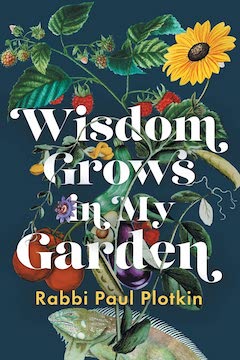
Rabbi Paul Plotkin returns to Congregation Beth Israel for the Canadian launch of his new book, Wisdom Grows in My Garden. (photo from AIA Publishing)

In part to fill his need to nurture – his kids off to college and his congregation less reliant on him – Rabbi Paul Plotkin took up gardening. Not only has he produced some of the most expensive tomatoes, taking into account all the capital that goes into every one that makes it into a salad or sandwich, but he has produced a new book: Wisdom Grows in My Garden (AIA Publishing). And he will launch that book in Canada on May 10, 7:30 p.m., at Beth Israel Synagogue, where he began his rabbinical career.

“I started in the summer of 1976 as Rabbi [Wilfred] Solomon’s first assistant, and he left for Israel after breaking his Yom Kippur fast on the way to the airport, and the 26-year-old ‘kid’ took over. Rabbi [Marvin] Hier was away from the Schara Tzedeck for most of the year preparing to build what was to become the Simon Wiesenthal Centre, so I was thrust into the position of often being the Vancouver non-Reform senior rabbi. It was quite a ride. It was a good thing I didn’t know what I couldn’t do, or I would have been paralyzed with fear. Instead, I jumped in and went to work.”

While BI was his first pulpit, Plotkin said, “I had been a youth director of my home synagogue while in college and in New York while at the seminary. I learned a lot about programming and leadership from those jobs and translated it into heading a synagogue.”

He admitted that the experience “was not without mistakes but what I couldn’t entirely appreciate was the menschlichkeit of my members. They appreciated my enthusiasm, my passion and my sincerity and pardoned most of my excesses and faults. It was a truly Canadian thing. I know now how special it was because my other two congregations in Florida were a lot different. Years later, I would share privately that my ‘worst critics’ in Vancouver treated me better than my good friends in Florida. By being thrown into the fire and succeeding – succeeding was a low bar, if the shul was still standing when Rabbi Solomon returned, I would have been praised – I learned of the potential people had for change, of their desire for knowledge, and that I could actually help transform people into greater commitment to mitzvot and the Jewish people.”

Plotkin was born and raised in Toronto, but has lived in South Florida for more than four decades. He is rabbi emeritus of Temple Beth Am and served on the Rabbinical Assembly’s committee on Jewish law and standards for some 20 years. He is the founding chair of its kashrut subcommittee and also is in charge of kashrut for Ben’s Kosher restaurant chain. He loves food and cooking. And Canada still holds a special place for him – he and his wife own a townhouse in Whistler, “primarily as a new summer cottage for after retirement,” he said. “We will be there for four months this summer.”

An avid writer, publishing articles in various newspapers and magazines, Plotkin has a blog on medium.com. He published a book some 20 years ago – The Lord Is My Shepherd, Why Do I Still Want?: Ancient Wisdom for the Modern Soul (Eakin Press) – but waited until retirement to write his second.

“First, in those days, I had to triage my time and creative mental energy. I also needed more age and seasoning for all of the pieces to melt together. Pirkei Avot teaches us to see wisdom in the elderly. Great red wine isn’t great in its first year. It takes years to develop nuance and subtlety. Creation of the book was no different.”

The idea came to him in a dream, he said.

“Unfortunately, I was still in my active work years, with an 1,100-family congregation. Finding time to breathe was hard, let alone write a book, so I made it a priority in retirement. Over the years after the dream, new ideas would come to me in the garden and I would jot them down and throw them into a file with the dream material.”

image - Wisdom Grows in My Garden book coverIn describing the book, Plotkin said, “Technically, it is a narrative memoir, because it is my story and told entirely from my perspective, but it is not in its heart a memoir. It revolves around the garden, but you won’t improve your tomato growing by reading the book. It is, in essence, a life lesson book (indeed, there are 25 life lessons in the book) that will help guide you to a better life. It is filled with humour and stories, two tools that featured prominently in 40 years of sermons. It will offer the reader some important guides to navigating a better life. I like to tell Jewishly knowledgeable audiences that the garden was my ‘Torah,’ my book is the Midrash.”

Plotkin said “gardening is a wonderful emotional and humbling pastime” and cited a recent article that “extolled its value as an alternative choice for exercising.”

“If you haven’t got time,” he said, “try a few herbs in a pot on the windowsill. If you have a black thumb, grow zucchini. In northern climates, everyone grows so many, they start to call friends they don’t have to offer them some. If you read the book, the irony of this last statement will become clear.”

Of the feedback he has received so far – from readers in his own demographic, as well as that of his mid-40s son, from Jews and non-Jews, from observant people and atheists – Plotkin said, “much to my shock, they all liked it and, yet, like a Rorschach test, they all found messages in my lessons that reflected their needs or interests. There is something in this book for everyone.”

Chapter 1 of Wisdom Grows in My Garden takes place at Beth Israel, said Plotkin. “I hope many readers and especially those who may remember me from their bar/bat mitzvahs and weddings that I officiated at will come out to the evening and say hello,” he said.

Format ImagePosted on April 28, 2023May 1, 2023Author Cynthia RamsayCategories BooksTags Beth Israel, education, gardening, lifestyle, Paul Plotkin
Powerfully against othering

Powerfully against othering

Into the Little Hill runs May 19 and 20 at SFU Goldcorp Centre for the Arts, Fei and Milton Wong Experimental Theatre. (photo by Flick Harrison)

“Into the Little Hill is a powerfully emotional opera,” soprano Heather Pawsey told the Independent.

Pawsey is the artistic director of Astrolabe Musik Theatre, which, with Simon Fraser University Woodward’s Cultural Programs, is presenting the opera’s Canadian première May 19-20. A multidisciplinary, modern take on the medieval story of the Pied Piper of Hamelin, Into the Hill features two singers, three dancers and live music. Written by English composer George Benjamin with libretto by Martin Crimp, Jewish community member Idan Cohen of Ne.Sans Opera and Dance is the local production’s director and choreographer.

“From the moment I first heard Into the Little Hill, I knew I had to have dancers in the production,” said Pawsey. “My company, Astrolabe Musik Theatre, has been experimenting with dance and movement in classical music, in varying degrees, for over 10 years now. Dance and movement are such normal, natural, innately human ways of expression, yet we see it so rarely in opera and classical music.”

When she heard Into the Little Hill, she said, “I literally saw the dancers in my mind … and knew that this was the perfect opera to intentionally incorporate them as amplifications of the characters, as commentators on the story, and as true partners with the singers (who are also precisely choreographed).”

After that, she was just “waiting for the perfect person with whom to work.” And she found that person in Cohen – his company, Ne.Sans, exists to reimagine and reconnect opera and dance.

“When Idan and I met in Amsterdam in 2018 on an opera I was singing and he was directing, I knew at the first rehearsal that he was the person I’d been waiting for: someone who knows music, who knows dance, who can work with professional dance artists and with singers who may have little or no dance training, and whose knowledge and experience come together in a profound understanding of the possibilities of singing and dance.”

“We’ve connected on so many levels,” said Cohen of Pawsey, who introduced him to Into the Little Hill. “Since then,” he said, “we’ve enjoyed many long conversations about this wonderful opera that is so close to both our hearts. I am so excited to finally be able to share our version of this brilliant work.”

“As far as I know,” said Pawsey, “l’Opéra de Montréal is the only other company in Canada to have produced one of George Benjamin’s operas (Written on Skin, his second). In 2014, I watched Written on Skin on MediciTV and literally got goosebumps. Singing contemporary music is a huge part of my career, yet I had never heard of this composer nor heard music anything like his: crystalline, precise, profound, spare, yet filled with emotion, colour, shadow, passion and power. I looked him up immediately and discovered that Into the Little Hill was (at that time) the only other opera he’d written…. I knew then that I had to produce (and sing!) it; that it would have dancers; and, voilà! A decade later, here we are. This opera speaks so profoundly against ‘othering.’ I know that people will come away having experienced something powerful, intense and beautiful.”

Pawsey and mezzo-soprano Emma Parkinson sing all six of the opera’s characters.

“One of the things I love the most about Into the Little Hill is its exquisite precision,” said Pawsey. “Vocally, orchestrally, dramatically, dramaturgically there are no extraneous notes, no extraneous words, and the power of this concentration is intensified by having only two singers portray all the roles. We aren’t distracted by multiple singers coming on and off the stage, nor by the differing ranges and timbres of their voices – we have focus.

“We also have gender-neutrality, something that is difficult to achieve in traditional opera, where characters’ genders have historically been determined by voice-type (ie. tenor, soprano, etc.). Having only two singers sing all the roles makes gender, sexual orientation or how one presents to the world irrelevant, and leaves the make-up of the characters to each individual audience member’s imagination. As an artist, it frees me from having to imagine or recreate assumptions about how ‘men’ or ‘women’ move, behave and speak (sing), and allows me to enter fully into what that character is actually expressing. My hope is that this also helps audiences to identify more freely with the characters.”

The opera speaks to Cohen on many levels.

“As a queer artist, a descendant of Holocaust survivors, coming to Canada from Israel/Palestine, I have always valued the importance of raising voices of underserved communities and to acknowledge our troubled past, learn from it, and aspire to do better,” he said. “I chose to leave my country in search of a better future and, as I arrived in Canada in 2017, I was amazed to find how relevant the history of Canada is to my own, from multiple angles, both as the oppressed and the oppressor, often against my will.

“My work is embedded in this life experience and perspective, and I am passionate in telling classical stories through alternative lens,” he continued. “Into the Little Hill is such a powerful opera that speaks of the human condition in a very creative way. There are different ways to speak of the tragic history of Western culture, and one of the reasons I chose to be an artist is because I see the importance of speaking of the violence and hurt, and to fight against discrimination.

“This opera is such a great, complex example of the fact that there is no one source of harm, and not one source of knowledge and perspective,” he said.

Critics have generally lauded Into the Little Hill, though some have expressed concern over the way in which the story is told.

“The narrative style of this opera imposes a certain detachment or distancing,” Pawsey said. “Traditionally, opera is all about emotion – big, huge, dare I say OPERATIC emotion! Here, Martin Crimp’s libretto uses Brechtian techniques (such as the Narrator directly addressing the audience, breaking the fourth wall, etc.) to discourage the audience from becoming too emotionally involved. Brecht used these techniques to encourage a deeper focus on the socially significant aspects of the story. This is particularly relevant in this opera’s tale of ‘who are we labeling as the “rats” in our society, what are we willing to do to get rid of them and what happens when we refuse to “pay the piper,” ie. take responsibility for the consequences of our actions?’

“Detachment, distancing – this is what we, as humans, do when we label, when we ‘other,’ when we divide into ‘us’ and ‘them.’ It’s a part of the de-humanizing process, which allows us to plan or to undertake horrific acts. But this is not to say that audiences will feel emotionless at the end of Into the Little Hill,” she stressed. “Fascinatingly, the muting of emotion evoked for individual characters and their stories makes us feel even more deeply and keenly the emotion of the story overall and how its outcome affects all the characters – and, by extension, us.”

Into the Little Hill takes place at SFU Goldcorp Centre for the Arts, Fei and Milton Wong Experimental Theatre. Conductor Leslie Dala is music director for the production, whose orchestration includes bass flute, basset horns, mandolin and banjo. Lighting design is by Victoria Bell, with costume design by Elena Razlog. The dancers are Juolin Lee, Daria Mikhalyluk and Hana Rutka.

For tickets and more information, visit littlehill.eventbrite.ca.

Format ImagePosted on April 28, 2023April 26, 2023Author Cynthia RamsayCategories Music, Performing ArtsTags Astrolabe Musik Theatre, dance, Heather Pawsey, Idan Cohen, Into the Little Hill, Ne. Sans, opera, theatre
Creating opportunities

Creating opportunities

The Jerusalem Business Development Centre (MATI) helps people create or expand businesses in Jerusalem. Two leaders of the Israeli organization visit Vancouver on May 11 as part of a Canadian tour. (photo from CFHU Vancouver)

Every year, the Jerusalem Business Development Centre, known in Hebrew by the acronym MATI, helps thousands of people create or expand businesses in Jerusalem. It does this through a range of services – from personal mentoring to training in various fields to the granting of loans – focusing its efforts on new immigrants, the ultra-Orthodox and residents of East Jerusalem.

On May 11, as part of a Canadian tour, Michal Shaul Vulej, deputy chief executive officer of MATI, and Reham Abu Snineh, MATI’s East Jerusalem manager, will be in Vancouver for “a conversation about shared living in Jerusalem, about mentoring and creating entrepreneurial opportunities for women and promoting diversity as strength.”

Abu Snineh joined MATI in 2011, as a project coordinator for a program to promote women’s entrepreneurship in East Jerusalem. Today, she heads the East Jerusalem branch, leading a team of seven employees.

“The beginning was challenging,” she told the Independent. “The decision to join an Israeli organization was inconceivable. I was afraid of the reactions and criticism of those around me. It also took me awhile to get comfortable with the staff. In addition, I did not speak Hebrew. I grew up in East Jerusalem and studied for my law degree and, later, further degrees in Jordan. All of my studies were in Arabic and I had never considered working with an Israeli organization. I realized that, if I ever wanted to really be able to help my community, I had to find a way to move forward and, over time, things settled down and today I feel completely part of the team.”

For Abu Snineh, it’s the social impact of MATI that most excites her – “The feeling that I am helping people in a difficult socioeconomic situation; helping individuals, families and women to improve their economic situation in general.”

For Shaul Vulej, it’s the “combination of social welfare and the entrepreneurship and business development – the stories of the women who manage to start a business, make a living and be financially independent, and even employ other women.”

MATI measures success by the number of participants, the number of businesses that develop, the number of businesses that expand and the number of new jobs that are created in Jerusalem because of its activities. All MATI’s programs include participant feedback, an annual review and an evaluation process.

Abu Snineh and Shaul Vulej shared one of MATI’s success stories with the Independent, that of Hiba, a fashion design instructor. They said Hiba, 36, grew up in East Jerusalem in a traditional Muslim family and was married at age 16. Despite various factors hindering her progress, she studied fashion design and proceeded to hold several jobs. She wanted to establish a sewing and fashion design school, so she joined some of MATI’s programs: the business establishment and management course, a digital marketing workshop and, recently, a program for import/export from Turkey, which will allow her to import fabrics herself. Together with her artisan husband, she rented an apartment and currently trains several groups, as part of a professional training project for teenagers, and promotes her business.

About 60% of MATI’s clientele are women, who have a range of educational backgrounds. The organization focuses on residents of East Jerusalem who are looking for employment, people who want to start a business, and existing business owners who need assistance to take the next step.

Abu Snineh described some of the challenges people living in East Jerusalem face. Difficulty communicating in Hebrew contributes to a “difficulty in being able to develop entrepreneurship and businesses that can be relevant also in Western Jerusalem, a barrier in the ability to market and sell goods and services to the Hebrew-speaking public, a barrier in dialogue with institutions and authorities in the business framework.”

A lack of trust in the Israeli government system, which does not recognize many of the East Jerusalem businesses as legal entities, has “created a situation where legal business owners in the country received grants, [while] many of the businesses in East Jerusalem (mainly small and medium-sized ones) were left without the financial security granted to others,” said Abu Snineh.

Other factors include the political and security situation, digital barriers that make it difficult to market outside of East Jerusalem or online, insufficient knowledge about business laws, “which blocks the ability to make the business legal and granting rights alongside obligations,” and “a lack of domestic and foreign tourism.”

When asked how Vancouverites could help or participate in MATI, Abu Snineh and Shaul Vulej said, “To help us establish the first hub in East Jerusalem…. A hub would provide the appropriate and technology atmosphere similar to other areas in the world.”

Also needed, they said, is support for “all the ongoing programs that provide for the progress of Arab society in East Jerusalem” and for “a program for the advancement of women in East Jerusalem.”

The May 11 event is presented by the Jerusalem Foundation in partnership with Canadian Friends of Hebrew University, and it is sponsored by the Asper Foundation, as well as the Canadian Memorial United Church. It takes place at the Canadian Memorial Centre for Peace, 1825 West 16th Ave., starting at 7 p.m. To reserve a spot, visit cfhu.org/upcoming-events or call 604-257-5133.

Format ImagePosted on April 14, 2023April 12, 2023Author Cynthia RamsayCategories Israel, LocalTags Asper Foundation, business, Canadian Friends of Hebrew University, CFHU, economy, education, equality, Jerusalem, Jerusalem Foundation, justice, MATI, women
Part of New Wave’s Season 3

Part of New Wave’s Season 3

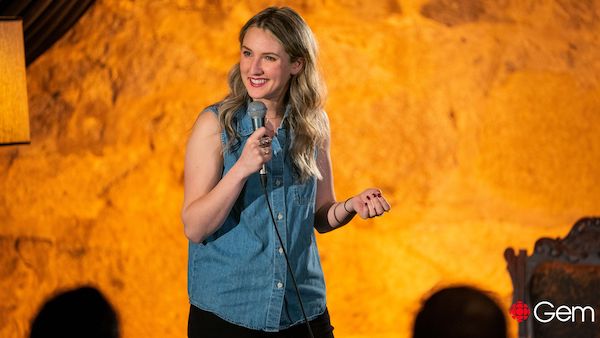
Laura Leibow is one of the 14 comics featured on The New Wave of Standup, now streaming on CBC Gem. (photo by Emily Cooper)

The whole thing was a highlight really! I still kind of had that post-COVID ‘I can’t believe I get to take the stage again’ sense of wonder in me at that time,” comedian Laura Leibow told the Independent. “Combine that with getting to see comics I respect and love do their thing made the whole experience very cool. Plus, I love staying in hotels.”

Leibow was speaking about the taping of the latest season of The New Wave of Standup, a Just For Laughs Vancouver and CBC original series, which is now streaming on CBC Gem. Leibow and fellow Jewish community member Jacob Balshin are two of the 14 comics featured on the show.

“I try really hard to approach taped sets in the same way I’d approach ones that are not being taped because, ultimately, it’s just about that live experience between you and the crowd and, hopefully, the tape will capture that,” said Leibow. “The only major difference is I mind the subject matter I cover a little more when I’m being filmed, so my mommy and daddy don’t get mad at me!”

Balshin went into the New Wave set having worked out more of what he was going to say than he usually does. “I love writing and try and work every day on my comedy. I do not like repeating the same set over and over again though,” he said. “It can make me depressed. Leading into the taping, I only ran the set a few times. I was just getting back into comedy after the last COVID lockdown in Ontario and did not want to take a break from having fun to repeat the same jokes over and over. I try not to overthink things. Comedy is the easy part of my life. The rest is the struggle.

“After I got off stage that night, I went to another show,” he said. “It was next door to where we were shooting and was actually part of a tour I was on…. I was able to make it in time to do my spot. I bombed trying new stuff. No one in the audience knew I had just filmed for TV 20 minutes earlier. Both sets held the same weight to me – I just want to make people laugh, and get better. I do not think any one set matters that much. And, if it does, I will be prepared because I know I have put in the work.”

It took Balshin time to find his comedic voice. “I did not know my own voice when I started comedy, so I would speak like other people who I was a fan of,” he said. “Now, it is not something I think about. Everything I do is naturally me. And that feels like a really good place to be – and something I always wanted. To me, the goal is to be yourself. Anyone can be funny, but only you can be yourself. So, over the years, it has been more about actually living a life and less about what happens on stage.”

While Leibow seems to have experienced a less drastic evolution, she, too, has reached the point where, she said, “I’m far less concerned now with trying to impress certain people than I am with just talking about what I think is funny.”

Leibow said, “My comedic voice is driven largely by my ADHD [attention-deficit / hyperactivity disorder], friendship, laughter, feminism, silliness, clay, and Jews. No, I don’t know if I can really nail down my comedic voice other than saying that it really is largely driven by my scattered brain and throwing spaghetti at the wall. If something really tickles me, and it seems to be making other people laugh, then that’s great!”

Both Leibow and Balshin have topics they won’t cover in their acts.

“I won’t tell a joke that denigrates or harms a marginalized group and I prefer to stay in my lane when it comes to certain issues,” said Leibow. “I’m not going to boldly speak out of turn on a topic about which I’m not well informed. I also try not to violate the privacy of my family members. Unless I think of a good joke that would require me to do so.”

Balshin only writes material that is about him. “I only have my own story to tell,” he said. “I hope my comedy makes you feel good when you watch it. And I always feel bad when someone has a bad night. If any joke I ever tell hurts someone, I am interested to know why and am willing to listen.”

On stage, Balshin interacts with the audience quite a lot.

“It is a part of my comedy that naturally developed from doing comedy in rooms in Toronto, where the audience … [wants] you to feel present and talk to them,” he said. “I struggle with social anxiety off stage and rarely talk to people. It is pretty fun to have a space where that seems to not exist for me at all. And I love when the audience opens up to me. It feels like the reward I get for being so open with them. And to know they trust me sometimes is really special.”

photo - Jacob Balshin
Jacob Balshin (photo by Emily Cooper)

Balshin tours the country regularly. “I’ve performed in places with populations in the hundreds many times in my career. For many, I am the first Jewish person they have ever met,” he said. “From my own experience, I would say there is a big difference between hate and ignorance. I would say the vast majority of what I have encountered firsthand is ignorance. Most people though do not care that I am Jewish. We are all just people.

“I hope to be funny and genuine enough on stage so that anyone who came in with any misconceptions or hate towards Jewish people can recognize someone who has nothing but love to give. Even though we are different, we can all relate to the weird experience that is living.”

In addition to being part of The New Wave of Standup, Balshin’s debut standup comedy special will be airing on his YouTube channel in the next few months. “It’s called 30 and Breathing Funny,” he said. “It was recorded on my 30th birthday and it would mean a lot if you gave it a watch. It better showcases my style of comedy and includes some material about being Jewish that is not in the CBC taping.”

Balshin moved to Vancouver last year, after a breakup. “When I arrived at the airport, friends Bobby Warrener and Malik Ellassal [also on New Wave this season] picked me up and immediately helped the move feel far less lonely. Getting to do my first TV taping with both them a few months later helped relieve me of that same feeling of loneliness,” he said. “And getting to watch them both kill, knowing how hard they both work and how much they deserve it, was definitely a highlight. Go watch their episodes! They are two of the funniest young comics in Canada.”

Rounding out The New Wave of Standup lineup are Brendan D’Souza, Travis Lindsay, Rachel Schaefer, Courtney Gilmour, Charles Haycock, Seán Devlin, Dino Archie, Heidi Brander, Jackie Pirico and Mike Green. To watch, go to gem.cbc.ca/the-new-wave-of-standup.

Format ImagePosted on April 14, 2023April 12, 2023Author Cynthia RamsayCategories Performing Arts, TV & FilmTags CBC Gem, comedy, Jacob Balshin, Just for Laughs, Laura Leibow, standup, The New Wave of Standup
Who decides what culture is?

Who decides what culture is?

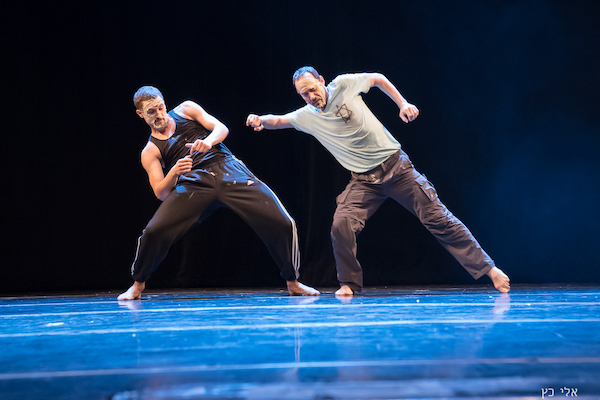
Mourad Bouayad, left, and Hillel Kogan in We Love Arabs, which is at the Dance Centre April 13-15. (photo by Eli Katz)

“I don’t have answers so I can only ask questions,” Israeli choreographer Hillel Kogan told the Jewish Independent. “If this is changing people’s political views, I doubt it, but at least what I’m trying to do is to put the questions on the table and make people, audiences, and myself see that art is not a separate sphere, that art is part of politics and social and cultural systems … and this is what I’m trying to expose in my pieces.”

The JI interviewed Kogan in advance of the Vancouver run of We Love Arabs, which is being presented at the Scotiabank Dance Centre by the Dance Centre and Théâtre la Seizième April 13-15. There will be both English- and French-language performances of this work, which also has Hebrew and Spanish versions. Kogan will dance the duet here with Mourad Bouayad.

We Love Arabs premièred at the 2013 Intimadance Festival in Tel Aviv. The brief outline for the piece, which Kogan has on his website, begins: “I address the audience, my name is Hillel Kogan. Some say that I do political art. I want to show you today how dance has the power to promote coexistence between Arabs and Jews in Israel. I invited an Arab dancer here….” The video teaser offers a glimpse of Kogan’s physicality, humour, tenderness, intelligence.

Born in Tel Aviv, Kogan has performed with and created for companies and choreographers around the world. At Batsheva Dance Company, he is director of educational programs. He is pursuing a master’s degree in cultural studies.

We Love Arabs garnered awards, and it has traveled to more than a dozen countries. The Vancouver show was postponed twice, said Mirna Zagar, executive director of the Dance Centre. First due to a scheduling conflict and then due to COVID. “However, I believe the work is just as relevant now as it was when we started,” she said. “It is an exceptional work that continues to engage audiences internationally.”

The Dance Centre often partners with other arts organizations, as a means of pooling resources and amplifying opportunities to show international artists. “This collaboration is along these lines,” she said. “I have known Esther Duquette, the now-outgoing artistic director at Théâtre la Seizième, for some years and the nature of this piece – multilingual and straddling theatre as well as dance – made it a perfect opportunity for our organizations to work together.”

The April 14 performance and talkback will be in French; the other two shows and the April 15 talkback in English. Kogan speaks six languages: Hebrew and Russian because his parents were born in the Soviet Union and he was born in Israel; he studied English in school; he learned French from working two years in Switzerland, and Portuguese and Spanish from working in Portugal for seven years. He doesn’t speak Arabic.

“This is interesting,” he said, “because this piece, We Love Arabs, is an autocritical peace that asks exactly this. Why am I facing the languages and cultures of the West and not the languages of my neighbours and of my co-citizens in Israel? Why don’t I read the books of Arabic writers? Why doesn’t Arab culture interest me, and why do I identify myself as ‘Western,’ which is a bit strange?”

It is both a geographic question, he said, living as he does in Israel, and a social, historical, cultural and political question. “And the piece deals with this question: who decides what the general culture is, and why I am – and why the Israeli art field, at least as I see it, is – so orientalist, which means looking at the Orient, at the Arab as inferior and wanting to impose on it the Western culture.”

The different versions of We Love Arabs resulted from Kogan’s wanting to perform the piece abroad, in the language the audience speaks. “I think it brings more this idea of relevance to the space,” he explained. “If I did the piece in Hebrew with subtitles, it would be more like a piece from Israel … and be framed as something local and in my perspective. The universality of the piece is one of the ideas – I want people to identify with it and, by choosing their own language, I feel there is more chance to make them sense that they are part of it as well.”

Kogan had no idea of how much impact We Love Arabs would have. “It was created for a small niche festival in Israel,” he said, and “for a specific audience who is already convinced in the political opinions that I hold. So, I didn’t imagine it ‘big.’… As I performed the piece out of Israel, I understood that the question of Jews and Arabs in Israel is just a microcosm of a more universal question: of the situation of power between minority and majority, and the way we see ‘the other’ – who is the master of the culture in any nation?”

In looking at the question, Kogan asks: “Who is invited to participate in creating a national identity, what is Israeli or what is Arab Israeli? It is not very different than the question of, I don’t know, for example, in Canada: who is invited, what is Canadian? Is it French? Is it American? Is it English? I don’t know the minority situation in Canada, but I know there is a history with Native Canadians. So, are they also invited to take part in culture? How much are they participating in mainstream dance, literature, music? How do we define what is high art and what is popular art? What is folk and folklore? And what is universal art?”

Initially dancing the duet with Kogan was Adi Boutrous, an Israeli Arab dancer who is also a choreographer and so not always available. Bouayad, who is French, danced in Israel in the Batsheva junior company. “This is how we met, so I invited him to perform with me,” said Kogan. “And, of course, it’s very different for an Israeli Arab to play the role of an Israeli Arab than for a French half-Arab person, because to be an Arab in France is different than to be an Arab in Israel.”

Not wanting to speak for Bouayad, Kogan noted that, while Bouayad may define “himself first as French, and his relationship with his Arab origins are just an extra part of his being,” for Israeli Arabs, he said, “I’m not sure that they are first Israeli and then Arab because of their own perception of themselves – but also the way the majority looks at them, the state looks at them, society looks at them, Jewish society looks at them.

“We often make the mistake even in the language, and we forget to say that Arabs are Israeli as well. We say Israelis and Arabs – even when we refer to Arabs who are citizens of Israel and who hold an Israeli passport, we call them Arabs, and we call ourselves, the Jews, Israelis…. We are both Israeli and the difference between us in definition is our religion. In a country like France, where it’s a republic and religion has at least formally not such an important role in the definition of citizenship and of nationality, then, of course, the change of cast is also changing the relationship.”

Kogan has no illusions that art can change the world. Elected politicians “are the ones who should change the world,” he said. For him, art is there to reflect, to inspire. “Art, for me, is a place for the imagination, for the possibility of not necessarily escaping reality, but giving an alternative to reality…. If art can feed the imagination and then, as an outcome of this feeding of imagination, can change the reality, OK, that’s great. But I think that … when artists try to change the world by their art – in history, at least as far as I see, it ends in political propaganda and just serves the hands of politicians.”

As many funny moments as there are in We Love Arabs, they have a profound purpose.

“I have anger towards some of the cultural systems, and the questions that I’m asking are involved with hard emotions. I feel that humour allows me to take some distance from the aggression and from being so emotionally involved,” said Kogan. “It allows me to laugh about myself as well. It allows me to invite people to laugh about a question without making it not serious. The laughing, I feel, is a tool to invite people to enter a conversation, to agree to criticize, to agree to ask questions … to see the bias, to be aware of the stereotypes, to be aware of the prejudgments that we have…. The laughter is just a means in order to speak about something very serious.”

For tickets to We Love Arabs, call 604-736-2616 or visit thedancecentre.ca.

Format ImagePosted on March 24, 2023March 22, 2023Author Cynthia RamsayCategories Performing ArtsTags Arab Israelis, culture, dance, Dance House, Hillel Kogan, Israel, Jewish Israelis, Mourad Bouayad, social commentary, theatre

Posts pagination

Previous page Page 1 … Page 22 Page 23 Page 24 … Page 85 Next page
Proudly powered by WordPress