Three members of the BC Jewish community have recently been announced as recipients of the King Charles III’s Coronation Medal, which recognizes individuals who have made a significant contribution to Canada or to a particular province, territory, region or community of Canada, or have made an outstanding achievement abroad that brings credit to Canada.
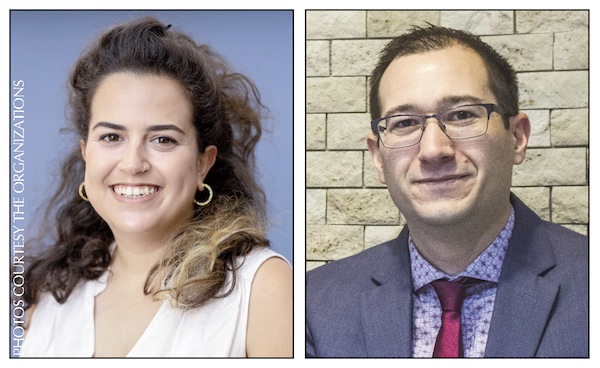
Maytal Kowalski (photo courtesy)
JSpaceCanada executive director Maytal Kowalski received for honour for building spaces for respectful and collaborative dialogue between Jewish, Muslim, Israeli and Palestinian communities in Canada. She is also the co-founder of Press Pause Collective, specializing in inclusive fundraising and marketing.
Danny Redden (photo courtesy)
Danny Redden, president of Royal Canadian Legion Shalom Branch 178, was recognized for the significant contribution he has made to his community. Redden is also national president of Royal Canadian Legion Tuberculosis Veterans’ Section and a member of the Dominion Executive Council, the national governing body of the Royal Canadian Legion.
Zena Simces (photo courtesy)
Senior consultant, author and leader Zena Simces was given the medal in recognition of her “extraordinary dedication, selflessness and service to community and country.” The acknowledgement noted: “Your contributions have made a significant impact on the lives of those around you and have set an inspiring example for others to follow.” Simces has more than 30 years of experience in the health, social services, education, justice and employment areas in government, not-for-profit and private sectors, and is the author of You Can Make a Difference: A Guide to Being a Great Consultant.
* * *
Klal Israel Sephardic Orthodox Synagogue members celebrate with Rabbi Yoseph Hayun. (photo courtesy)
It is with great joy that Klal Israel Sephardic Orthodox Synagogue in Vancouver announces the formal ordination of Rabbi Yoseph Hayun by the Israeli rabbinate.
Born in Israel as the youngest of nine siblings, Hayun emigrated with his family from Libya in 1949. In 1982, he served as a soldier in the Israel Defence Forces and participated in the First Lebanon War. Over the years, he built a warm and loving family, including three sons and three grandchildren.
After moving to Vancouver in 2005, he entered the construction field and began contributing to the local Jewish community. In 2013, he joined the Sephardi synagogue Beth Hamidrash and, in 2017, was elected as its president. At the same time, he served as acting rabbi for a period.
Hayun’s desire to deepen his Torah knowledge and lead a community inspired him to begin independent rabbinical studies in 2020. He co-founded the Klal Israel community with friends and continued advancing his studies with the Chief Rabbinate in Israel.
In September 2024, he was officially ordained as a rabbi by the Chief Rabbinate, marking a significant milestone in his spiritual and communal leadership journey. The celebration event was attended by community members and rabbis from the Vancouver Jewish community.
In his new role as rabbi, Hayun will continue to serve the Klal Israel synagogue, providing spiritual leadership, teaching Torah and offering halachic guidance.
* * *
Michael Zoosman (photo courtesy)
Michael Zoosman has been awarded the Rabbinic Human Rights Hero Award by T’ruah: The Rabbinic Call for Human Rights, one of the oldest Jewish social justice organizations in Canada and the United States. The honour was given to Zoosman in recognition and celebration of his long and deep commitment to ending capital punishment.
In 2020, Zoosman and Abraham Bonowitz co-founded L’chaim! Jews Against the Death Penalty, which has 3,800 members, both Jewish and non-Jewish, and is an online forum for learning and action. Zoosman also sits as an advisory committee member at Death Penalty Action.
The recognition gala event for this year’s awardees is scheduled for May 20 in New York City.
Artist Mari Sue Baga listens as Rabbi Shmuly Hecht talks about a painting of the Lubavitcher Rebbe that she made in his honour.(photo from Okanagan Chabad House)
On March 9, the Chabad Living Library officially opened its doors to the public. The afternoon event was attended by members of the Okanagan Valley community and beyond, celebrating the launch of this new addition to the cultural and educational landscape of the region.
One of the highlights of the event was the unveiling of an original artwork by local Jewish artist Mari Sue Baga. The painting, entitled “Living Legacy,” depicts the Torah as a living, breathing guide, illustrating the timeless wisdom that inspires and shapes Jewish education throughout one’s life.
Artist Mari Sue Baga’s painting, entitled “Living Legacy,” hangs in the Chabad Living Library. (photo from Okanagan Chabad House)Artist Mari Sue Baga’s “Living Legacy” has been made into a card. (photo from Okanagan Chabad House)
Baga spoke about her work and shared her inspiration behind the piece. She also surprised Rabbi Shmuly Hecht with a painting of the Lubavitcher Rebbe (Menachem Mendel Schneerson) that she had made in his honour. She presented it to Hecht, thanking him for his service to the community.
Hecht is the rabbi and emissary of Chabad to the Okanagan Valley. He spoke to the crowd about the significance of the library and its mission. He described a library as an inexhaustible source of wisdom, emphasizing that Jewish sacred literature, passed down by the sages, offers endless lessons to illuminate life’s path. He also explained that the Chabad philosophy – blending intellectual growth with emotional harmony – is embodied in the new library’s offerings.
“The essential thing is the deed,” Hecht concluded, encapsulating the library’s focus on both knowledge and action.
“In a small Jewish community, you’ve got to be creative, and keep finding new ways and avenues to engage and inspire,” he said. “The library was a perfect idea and just what the community needed. Our vision for the future is to make the library go mobile, and offer its services to communities all throughout the several-hundred-kilometre radius of space that we service, so we can include more Jewish people in the impact.”
The launch featured a variety of activities for all ages, including crafting sessions for the children. Guests were treated to sushi prepared by Jewish sushi chef David Dodgson & Co. Live music from Isaac Bloom and fellow University of British Columbia Okanagan students set a lively tone, enhancing the celebratory spirit.
A unique feature of the library is its double play kitchen – one for meat and one for dairy – designed to teach children about kosher kitchen practices in an interactive way. The library also features approximately 100 children’s books that instil Jewish ethics and morals, relevant to families of all backgrounds and affiliations.
For adults, the library’s collection of more than 1,000 books offers a treasure trove that spans a wide range of subjects, everything from Jewish heritage to practical life lessons aimed at helping individuals grow and thrive.
Guests were invited to explore the library’s exclusive collection of books that can’t be found anywhere else in the Okanagan Valley. The library is also fully automated, with all the books input online. Members get a card with a QR code and the system reminds the member in two weeks to return the book. Everyone who became members of the library during the launch event (or signed up online prior to it) were gifted a special item, made possible by local Jewish photographers Andrew and Arlene Simpson.
In a game of Jewish Jeopardy, participants competed in teams for a chance to win a Star of David necklace. However, because of the team format, organizers decided to hold a raffle for all those present instead, and the winner of the necklace was Ezra Cipes.
The new library houses a 150-year-old yarmulka donated by Jerry Cohen, housed in a glass frame. Cohen, 91, was present for the dedication.
Rabbi Shmuly Hecht and Jerry Cohen look at the 150-year-old yarmulka that Cohen donated to the library. (photo from Okanagan Chabad House)
The event was possible thanks to the generosity of many individuals and families whose contributions helped bring the library to life.
The library’s offerings are not only about the books – it’s about creating a space where the community can learn, grow and connect. One of the visions is for community members to come by on Friday and pick up challah, wine and other Shabbat items, along with some books to make Shabbat more meaningful and more enjoyable. There’s also a little Judaica gift shop shelf.
Hecht concluded the launch event by reminding the community of the wisdom shared by Jewish sages: “Don’t say, when I have time, I will study – perhaps you will never discover that you actually have time.” He encouraged all to seize the opportunity to enrich their minds and souls through the library’s collection.
The Chabad Living Library is a project of the Okanagan Chabad House. It is open Fridays and Sundays, 11 a.m. -1 p.m.; and Tuesdays, 5-6:30 p.m.
Those interested in becoming a member or learning more about upcoming events and programs, contact Okanagan Chabad House at 250-575-5384 or [email protected].
Rose’s Angels co-founder Courtney Cohen, left, with May Stefanov, tenant relations coordinator with Tikva Housing Society. (photo from Rose’s Angels)
Rose’s Angels recently completed its 12th year of giving, donating collected items to 14 Richmond not-for-profits, including Richmond Family Place, Colt Young Parent Program, Mamas for Mamas, Turning Point Recovery Society, Jewish Food Bank, Tikva Housing Society and Pathways Clubhouse.
Rose’s Angels, which operates under the auspices of the Kehila Society of Richmond, was created in 2012 by Courtney Cohen and co-founder Lynne Fader, in memory of Cohen’s grandmothers, Rose Lewin and Babs Cohen, who were both philanthropic and believed in giving back to community.
This year, an abundance of personal care items, non-perishable food, children’s arts and crafts, books and baby formula was donated. For many recipient agencies, baby formula and diapers are among their top priority items, and Rose’s Angels was able to give a large quantity of these items this year.
Donors, volunteers and other community members are integral to the success of Rose’s Angels. Letters were sent out to partner agencies, family, friends and others in January. Last month, monetary and physical donations were collected, Richmond Jewish Day School hosted a hygiene-item drive, and gift cards to grocery stores were purchased. Donations were then packaged and delivered by volunteers.
Cohen reflected on her hope to continue the legacy of her parents and grandparents.
“I hope to instil in my children the importance of tikkun olam (repairing the world) by focusing on one mitzvah at a time,” she said.
To learn more about or donate to Rose’s Angels, email [email protected] or call the Kehila Society at 604-241-9270.
Author Israel Ellis with his new book, The Wake Up Call, after a Feb. 10 talk at Beth Tikvah Synagogue in Toronto, where he joined journalist Dave Gordon in conversation. (photo by Dave Gordon)
In his new book, The Wake Up Call: Global Jihad and the Rise of Antisemitism in a World Gone MAD, author Israel Ellis brings the events of Oct. 7, 2023, into a compelling, fact-based and easy-to-read focus.
Backed up by scores of footnotes and references, the book is a no-nonsense look at the Hamas terror attack of Oct. 7 and, poignantly, the attack on democracy Ellis believes happened in the months prior to them. The addition of personal stories from Oct. 7 survivors and family members adds another level of documentation to an already all-encompassing book.
Ellis weaves in his own lived experience and perspective as a Jewish Canadian in the diaspora with firsthand accounts of contemporary antisemitism and his reflections on being the father of an Israel Defence Forces lone soldier fighting in Gaza. His personal observations allow the reader to connect with him, as well as better understand the interconnectedness of Jews, no matter where they live, and Israel.
For non-Jews, it can be daunting to begin learning about what happened on Oct. 7, and the global repercussions. Many non-Jews do not know the history of the Middle East, how the state of Israel fits into this history, or what the definition of “antisemitism” is. Ellis helps fill in these blanks, and this is why I am so excited to introduce this book to my friends.
Since Oct. 7, 2023, Canadians (and people from other countries) have seen large pro-Palestine protests in the streets of all the major cities and in academic spaces, with large university encampments set up across the country. Most people in the Jewish community see these protests for what they are: pro-terror and anti-democratic. But, for a Canadian with little knowledge of what the Israeli/Palestinian conflict is, these protests and encampments can look like a fight for human rights. No doubt, some individuals believe they are marching for human rights while chanting“intifada revolution,” but many are there to show support for Hamas, to some degree or another. This is why the knowledge, geopolitical insight and historical context Ellis brings with his writing is so vitally important.
I read a lot of books on Israel, as a non-Jewish Canadian interested in educating myself, and Ellis’s new book has become a favourite. One of the reasons is that Ellis writes about many protests and political events that are still fresh in our minds. He discusses protests that took place in Toronto and the encampments at McGill University (and others). He shows the utter incompetence of Canadian politicians, such as Toronto Mayor Olivia Chow, in handling the rise of radical Islam. He strongly condemns Canada’s minister of foreign affairs, Mélanie Joly, who shook the hand of Mahmoud Abbas, leader of the Palestinian Authority, in what is a now-famous Ramallah photo-op. These events, along with many others, are documented in Ellis’s book, illustrating a pattern of political complicity and complacency that he says has contributed to the eroding of Canada’s moral backbone.
As a Canadian university student, I have experienced firsthand my peers sympathizing with and rallying for terrorist organizations. The university institutions have been complacent in protecting neutral academic spaces, allowing terrorist propaganda to infiltrate our lectures and giving some professors the ability to promote hatred of Israel and the Jewish people.
A quote from The Wake Up Call that gave me chills reads: “There is no coming invasion. It is already here. Jihad has already been invited into our universities, professions, communities and public institutions. October 7 was a wake-up call. It is an example of the hunger for Global Jihad, and what can happen if it is allowed to be satiated. To think that these events are restricted to a narrow strip on the Mediterranean is a complete miscalculation of reality.”
The Wake Up Call should be read by anyone – uninformed or well-informed, Jew or non-Jew – who wants to better understand the political, social and historical context behind the current rise in anti-democratic, pro-terror narratives that have taken over many Western spaces.
Zara Nybo, a fourth-year student at the University of British Columbia, is a StandWithUs Canada Emerson Fellow. Connect with her via Instagram: @zaranybo.
My kids were volunteering at the Purim carnival, helping younger kids do games and offering other support. My husband was there to help. I went home early “for a break.” Meanwhile, I receive “helpful” warnings from Jewish websites and other moms on social media. “Passover is coming!” they mention with cheerful purpose. Perhaps this fills some people with glee. Mostly, I feel doom in the pit of my stomach.
Following influencers who run their large observant Jewish households like a well-oiled machine actually has been useful, to some extent. Oh, if she started making chicken broth or cleaned her pantry, maybe it’s time for me to do it, too? By following these tips, sometimes I feel I can manage better.
Then, however, the system fails me. Many of these capable influencers live in large Jewish centres, surrounded by kosher grocery stores, take-out and supportive extended families. They also have the finances to travel with their families to Passover resort vacations. If they travel, they don’t have to clean their houses or cook for the holiday. If they stay home, some use catering or even disposable plates for the whole holiday, which produces mountains of trash. My environmentally conscious household would never go for that.
For those who lack a large Jewish community infrastructure, or financial and family supports, making holidays happen can feel overwhelming. We hover in between, operating in a weird middle ground that is both freeing and isolating. Our families live far away. Since public school and work don’t stop for Pesach, we don’t travel for this holiday. We care about keeping Pesach. I cook and clean for weeks in advance, but I can’t do it all. I gave up on changing the dishes the year I gave birth to twins. While I may feel some guilt, I haven’t looked back.
Facing the next holiday’s prep feels exhausting. Maybe that’s because I just finished baking dozens of cookies (hamantashen and palmiers) for our Purim mishloach manot treat bags.
I’m thinking about how successful businesses and governments work. A business that runs smoothly depends on internal systems, competent managers to keep things working and other staff at various levels. A functional government also relies on an efficient bureaucracy. Right now, we’re hearing of how President Trump’s government is “cutting bureaucracy” and creating “efficiency.” However, what has followed is chaos.
Yes, there are always cases of bloated bureaucracy or waste, but, in many contexts, efficiency can mean that only one person knows how to do something essential. If that person has an accident or falls ill or is fired? Bad things happen.
I think of this while trying to keep my Jewish household on track through our holidays and the secular calendar. It takes mental energy and organizing skill to get kids through homework, afterschool extracurriculars, volunteering, and planning for summer activities in advance. Meanwhile, the dog needs grooming and her teeth brushed. Our house could use a good vacuuming.
Running a home is historically a Jewish woman’s domain. It’s a lot of work. There are Jewish literary references to a balabusta (Jewish housewife) and even Eishet Chayil, a Woman of Valour, from the book of Proverbs, which is traditionally recited to some women on Shabbat.
Many liberal households long ago ditched the tradition of reciting Eishet Chayil on Friday nights. Neither my childhood household nor my married one has everincluded this. Instead, like many other Jewish households where women are professionals, in my family, women work alongside household management. So, the historic celebration of a “women’s place” at home got scrapped, but the expectations increased.
Last night, I stayed up late after the whole household watched the movie Barbie together. Although I’m no Barbie fan, I enjoyed the subversive, witty tricks of this movie’s plot. Yet, I still had to place a grocery order afterwards. My husband was folding laundry. My twins changed their bedding before their bedtime, too. The exhaustion reminded me of one of the elements of a functional bureaucracy.
When things run smoothly, it’s because everyone has jobs – and no one’s job requires them to do everything. There is necessary duplication at work. More than one person knows how to do something, so that if a person goes away or gets sick, the system doesn’t collapse. Overlapping work roles and slack in a system are necessary. When an emergency happens, there’s extra capacity when systems overload.
Running a household smoothly, so that everyone’s well fed, valued and has their needs met, is a complicated endeavour. In the Babylonian Talmud, Tractate Sanhedrin, pages 86-88, there’s a lengthy conversation about what it means to be a “rebellious elder” and whether there are ever times when one must be executed for teaching inappropriate information. The rabbis suggest there are three different courts of appeal for these cases. Yet, there is also an understanding that some rebellious elders teach rulingsbased on tradition, from their teachers, and, other times, they offer a reasoned argument, based on what is “the correct understanding in my eyes.”That is, using logic, texts and real-life examples to draw conclusions.
Historically, women oversaw their households, that’s what our texts say, but times change. Now, we also expect women to be, at least theoretically, equals in the workplace. But the research indicates that women still bear the brunt of household chores, and the mental gymnastics and emotional work related to keeping everything afloat.
It’s time to rethink business models that preach that any duplication is redundant. If we want our homes to run smoothly, we must expect that more than one person be responsible for making Passover, or even afterschool carpools, happen. We moms cannot keep this schedule up any longer.
As I wrote this, one of my children rang the doorbell. He has a key but expects me to open the door for him anyway. That same child went out this afternoon to shop for Passover foods with his dad, who also picked up the weekly grocery order and did a lot of laundry today. Like Barbie’s weird movie world, or the topsy turvy Purim story, we must keep turning things around or even upside down. We cannot expect even “women of valour” to do everything. It’s time for everybody to learn more of the jobs to make our households function. Over here in Winnipeg, this mom is tired. It’s time for everybody to pitch in.
Joanne Seiff has written regularly for the Winnipeg Free Press and various Jewish publications. She is the author of three books, including From the Outside In: Jewish Post Columns 2015-2016, a collection of essays available for digital download or as a paperback from Amazon. Check her out on Instagram @yrnspinner or at joanneseiff.blogspot.com.
This year, the Jewish community will greet Passover with mixed emotions. On a holiday where we celebrate the 3,500-year-old Exodus from Egyptian slavery to freedom, we also mourn the modern-day hostages held captive for so long and the loss of those who will never return to their loved ones.
Passover offers a unique opportunity for families and friends to gather around the seder table, retell the story of the Exodus, eat symbolic foods and, most challenging of all, attempt to keep the younger children engaged until the meal.
It can be difficult to explain to our children the enduring importance of Passover – a tale of survival, courage and resilience. The story of the Jewish people facing an impossible obstacle and conquering it, of our people standing up against oppression, proud of our Jewish identity, confronting and overcoming baseless hatred.
For more than a year, Jewish students have been made to feel othered, embarrassed, threatened and, sometimes, compelled to hide their Jewish identity. Since Oct. 7, 2023, online Jew-hatred and anti-Israel vitriol have become all too common. While cities, overrun by hate-filled protests, seem almost completely desensitized to the hate, we see our children suffering.
An excerpt from the Passover Haggadah reminds us that “in every generation, one must see oneself as having personally come forth from Egypt … and you will tell your child on that day.…” As we sit down at the seder table this year, we will, once again, tell the next generation the story of the Jewish people’s victory against oppression and that pride in our identity is the way to fight oppression.
The younger guests at our seder – our children, our grandchildren, our nieces and nephews – are the next generation of leaders. It will be their responsibility to challenge antisemitism head-on, and it’s our responsibility to educate them about how to do it.
The Centre for Israel and Jewish Affairs remains committed to protecting the quality of Jewish life in Canada. Our team is working with government officials to advocate for the introduction of safe access (bubble) legislation to protect schools and places of worship from the threat of violence or harassment. We are also advocating to enforce existing legislation that combats both online and real-world hate.
We continue to demand accountability from social media platforms, institutions and organizations. We urge the government to support the provinces’ education for judges, Crown attorneys and law enforcement regarding antisemitism and hate crimes. We continue to stand by our policy priorities that include advocating for community safety, for maintaining public order and for fighting antisemitism in schools and on campus.
The community, after a long year-and-a-half, is tired. Some of us are scared. And yet, we remain proud. We know more work must be done to protect ourselves, our children and our Jewish identity. So, this year, as we retell our ancestors’ story to our children, we are reminded that we remember the past to protect our present – and our children’s future. It starts at the seder table. But it doesn’t end there.
Judy Zelikovitz is vice-president, university and local partner services, at the Centre for Israel and Jewish Affairs.
Tal Kinstlich and Stephanie Schneider, the owners of Vancouver’s Kosher Food Warehouse. (photo from Kosher Food Warehouse)
Canada is exempting key imported Passover foods from the current diplomatic trade war with the United States. The ministry of finance sent The CJN a list of kosher-for-Passover products imported from the United States, which are going to be allowed into Canada without being hit by the extra 25% retaliatory import tariffs that Ottawa began imposing on March 4.
The list includes matzah and related matzah products, cake mixes, chocolate, margarine, most juices (but not apple), gefilte fish, and canned fruit and vegetables. However, US exports of nuts, spices, dairy, wine, coffee, chicken and meat products are not exempt.
The development comes after Canada’s biggest kosher food importer recently predicted that the on-again-off-again tariff dispute would rocket prices for imported kosher-for-Passover food by up to 60%. Canadian Jewish leaders have been lobbying Ottawa to give relief to the country’s Jewish community as it heads into the holiday season.
While the news will likely bring a sigh of relief to consumers, it is only a temporary reprieve: it covers only Passover foods and runs only until the end of Passover.
For more on how these food tariffs are impacting Canadian kosher food stores and suppliers across Canada, and what advice they have for you, listen to the episode of The CJN Daily that features the owners of Vancouver’s Kosher Food Warehouse, Tal Kinstlich and Stephanie Schneider. Jack Hartstein also joins: he’s the vice-president of Montreal-based Altra Foods, the largest importer of kosher foods in Canada. The link is thecjn.ca/podcasts/key-passover-imports-will-be-exempt-from-tariff-war-with-u-s-ottawa-confirms.
Ilan Rabchinskey’s photograph of Tamarind Street Corn Cups in Sabor Judío: The Jewish Mexican Cookbook inspired me to make them. (photo by Ilan Rabchinskey)
Since reviewing Sabor Judío: The Jewish Mexican Cookbook by Ilan Stavans and Margaret E. Boyle for the Independent’s Hanukkah issue, I’ve tried several more recipes. And I’ve really enjoyed everything. So much so, that I pulled out the cookbook to try some Passover meals, and found some foods I would never have thought to make.
Stavans and Boyle have a section on Passover (Pésaj) in which they discuss some of the Mexican Jewish traditions. For example, some families incorporate Mexican history into the seder discussions, and the bitter herbs on the seder plate can include a variety chiles. They list 12 seder favourites, but, throughout the cookbook, they point out which dishes – like Stuffed Artichoke Hearts – are considered essential components of the Passover meal by some.
Snapper Ceviche con Maror, from Sabor Judío: The Jewish Mexican Cookbook by Ilan Stavans and Margaret E. Boyle. (photo by Ilan Rabchinskey)
Of the seder favourites, I made Snapper Ceviche con Maror, Tamarind Street Corn Cups, Apricot Almond Charoset Truffles and Tahini Brownies. The photos by Ilan Rabchinskey drew me into the corn cups, as I’m not a huge corn fan and might not have made them otherwise. I will do so again, however – they were easy, and they were a very tasty break from the ordinary. The snapper ceviche, too, will be a repeat, and the brownies were some of the best I’ve tasted, not too sweet, and very light, almost fluffy, but moist – I broke up a chocolate bar instead of using chocolate chips, which worked really well, and the sea salt on the top tasted so good. While the truffles were also delicious, they tasted more familiar, and were very date forward – I might try to mix up the date-apricot balance when I make them again.
The Jewish connections were obvious for some of these recipes, not so much for others. The snapper is served with a dollop of horseradish: “The use of maror, or horseradish, in this recipe was an invention during a Passover seder in Mexico City, creating a savoury contrast among the fish, the jalapeño and the horseradish,” write Stavans and Boyle.
The Jewish link to the corn cups is that the tamarind-flavoured hard candies the recipe calls for – Tamalitoz – were created by Jack Bessudo, who is of Mexican Jewish descent, and his husband, Declan Simmons. Since Tamalitoz are not available here, I bought another tamarind-flavoured candy from a local Mexican store and it worked quite well.
The brownies recipe comes from Israeli immigrants to Mexico, who shared with the cookbook writers that “tahini is also infused into their adaptations of mole, the sesame flavour substituting for more common varieties that rely on peanut or almond.”
Chag sameach!
SNAPPER CEVICHE CON MAROR (serves 6; prep time 25 min plus chilling)
3/4 cup fresh lime 1/4 cup fresh lemon juice 1 small jalapeño chile, seeds removed, finely chopped 1 small red bell pepper, seeds removed, finely chopped (about 1/2 cup) 1 small yellow bell pepper, seedsremoved, finely chopped (about 1/2 cup) 1/2 small red onion, thinly sliced 1 small garlic clove, minced, grated, or pushed through a press 1/8 tsp ground cumin 1/2 tsp kosher salt 1 pound red snapper fillets, skin removed 2 tbsp finely chopped fresh cilantro 1 tsp extra-virgin olive oil prepared horseradish, for topping (optional)
1. In a large bowl, stir together the lime juice, lemon juice, jalapeño chile, red and yellow bell peppers, red onion, garlic, cumin and salt.
2 . Using a sharp knife or kitchen shears, cut the fish fillets into 1/2-inch pieces and add to the citrus mixture, stirring to combine. Cover the bowl and refrigerate for 30 minutes.
3. Just before serving, stir in the cilantro and oil. Serve immediately, dolloped with horseradish, if desired.
TAMARIND STREET CORN CUPS (serves 4; prep time 40 min)
for the corn 3 tbsp unsalted butter 1/2 large white onion, finely chopped 2 medium garlic cloves, peeled and finely chopped 1/2 serrano chile, seeds removed, if desired, and finely chopped 1 1/4 tsp kosher salt, plus more as needed 2 fresh epazote leaves (whole) or 1 tsp dried oregano 5 cups fresh corn kernels (from about 10 cobs of corn, or use frozen corn kernels) 2 1/2 cups water 1/4 cup mayonnaise
for serving crumbled Cotija cheese crushed chile piquin or red pepper flakes crushed Tamalitoz candies,tamarind flavour fresh lime juice
1. Melt the butter in a large frying pan set over medium heat. Add the onion and garlic and cook, stirring occasionally, until soft and translucent, about5 minutes.
2. Add the serrano chile, salt and epazote leaves (or oregano), followed by the corn kernels and the water. (The water should barely cover the mixture.) Raise the heat to high and bring to a boil, then lower the heat to medium and cook, stirring occasionally, until the corn is tender and the liquid has almost completely evaporated, 30-35 minutes. Taste and add more salt, if needed.
3. Remove from the heat and discard the epazote. Add the mayonnaise and stir to combine.
4. Divide the corn mixture into four tall cups. Top with the Cotija cheese, chile piquin and crushed tamarind candies, to taste. Drizzle each cup with a little lime juice just before serving.
TAHINI BROWNIES (serves 6; prep time 15 min, baking time 22 min)
3 tbsp almond flour 1/4 cup cocoa powder 1/2 tsp kosher salt 1/4 cup extra-virgin olive oil 1/2 cup well-stirred tahini 4 ounces baking chocolate, roughly chopped 2 large eggs 1/2 cup granulated sugar 1 tsp vanilla extract 1/2 cup chocolate chips flaky sea salt, for sprinkling
1. Heat the oven to 350˚F and lightly grease an 8-by-8-inch dish. In a small bowl, whisk together the almond flour, cocoa powder and kosher salt and set aside.
2. Combine the oil, tahini and chopped baking chocolate in a small saucepan set over medium-low heat and cook, stirring often, until the chocolate is melted and the mixture is smooth. Remove from the heat and let cool slightly.
3. Meanwhile, in a large bowl, vigorously whisk together the eggs and sugar until frothy, 3-5 minutes. Whisk in the vanilla, followed by the cooled chocolate mixture.
4. Add the dry ingredients to the chocolate mixture and stir to combine, then fold in the chocolate chips.
5. Transfer the batter to the prepared pan, smoothing the top, then sprinkle lightly with flaky sea salt. Bake until a tester inserted in the centre comes out clean, 18-22 minutes. Remove from the oven and place the pan on a wire rack to cool. Serve warm or at room temperature.
APRICOT ALMOND CHAROSET TRUFFLES (makes about 3 dozen; prep time 15 min plus chilling)
2 cups pitted and chopped medjool dates 1 cup chopped dried apricots 1 cup golden raisins 1 cup roasted salted almonds 1 tbsp honey 3 tbsp sweet red wine (or grape juice)
1. Working in batches, add the dates, apricots, raisins, almonds and honey to a food processor and pulse until a textured paste forms. Transfer the mixture to a bowl and stir in the wine, 1 tablespoon at a time.
2. Scoop out tablespoons of the mixture and, using lightly moistened hands, roll them into balls. Place the truffles on a baking sheet or large plate lined with parchment paper as you go.
3. Refrigerate the truffles (uncovered is fine) for 2 hours, then transfer to a container with a lid and continue to refrigerate until needed. Serve chilled or at room temperature.
In Every Generation: A PJ Library Family Haggadah can be downloaded from pjlibrary.org/passover. (photo from PJ Library)
Passover is the ultimate Jewish story – a tale of freedom, hope and food – which makes it the perfect holiday to share with the entire family. Passover is time for gathering, reflecting, telling stories and working towards a world with freedom for all. But planning to cover all that with kids may feel lofty – especially if you’re a little hazy on the details yourself. The free Jewish book program PJ Library has you covered as a go-to destination for making Passover special.
Visit PJ Library’s Passover Hub at pjlibrary.org/passover to find everything you need to plan your Passover seder, set your table and answer your kids’ questions. There, you’ll find PJ Library’s free downloadable Passover Guide, a family-oriented primer that lays out how to prepare for the seders and the foods you need for your table, as well as offering up meaningful activities to make the most out of all eight days. The guide covers three main sections: how to get ready, what you need to get through the seder, and what comes after the festive meals have come to a close.
Also available for digital download from the hub is In Every Generation: A PJ Library Family Haggadah. It follows the arc of a traditional Haggadah and features all the major songs, prayers and moments, but also incorporates helpful framing and stories for kids so they can get the most out of this experiential meal. It also has new question prompts to help you reinvigorate your seder. The online version can be downloaded for free, while the PJ Library Haggadah is available for purchase in paperback from Amazon.ca.
Beyond the guide and the Haggadah, the Passover Hub features downloadable activities to keep little ones entertained during the seder, book lists, a step-by-step video playlist to help kids learn (or brush up on) the Four Questions, and recipes. There are fun and easy recipes like Charoset Breakfast Balls, a perfect grab-and-go breakfast that’s healthy and packed with protein, Chicken Skewers with Avocado Dip, or cholent, a classic hearty Jewish dish made in the slow cooker.
About PJ Library
PJ Library’s goal is to inspire joyful Jewish experiences by sending free storybooks and activities to families with children ages 0-12 and offering ways to connect with community. The program was founded in 2005 by the Harold Grinspoon Foundation and, with the support of donors and partners, now distributes books in seven languages to more than 650,000 children in more than 40 countries every month. The PJ Library family experience is built around the monthly storybooks and also includes family-focused holiday guides and other free gifts. Anyone who visits PJ Library’s website can hear original storytelling podcasts and explore a vast collection of Jewish parenting resources. The program welcomes families across the diversity of Jewish life. Learn more or sign up for monthly children’s books at pjlibrary.org.