Time to vote again!

You may not know there is an election underway. Voting to elect delegates to the Canadian Zionist Federation closes Sunday, so you still have time to cast your ballot. 

Although some of us have been receiving emails urging us to vote, it’s likely that most of us don’t even know there is campaign going on. It’s not front-page news. 

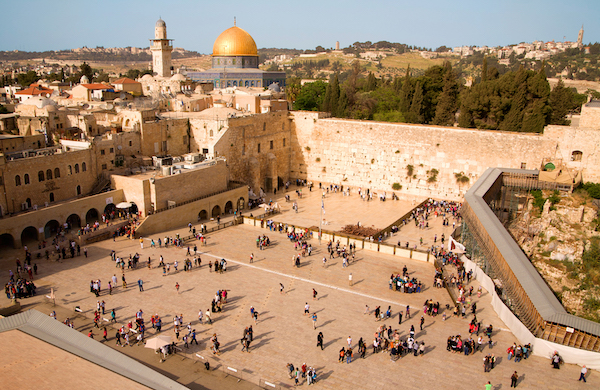
Those chosen in the CZF election on Sunday will become delegates to the 39th World Zionist Congress, in Jerusalem, in October. (The legendary First Zionist Congress was convened by Theodor Herzl, in Basel, Switzerland, in 1897.)

Even if you haven’t yet heard about the elections, we think it’s worth taking a few moments to familiarize yourself with the slates, their platforms, and the role of CZF in connecting Canadian Jews to Israel. We encourage you to take this opportunity to have a small but important voice in the future of Zionism and our relationship with the Jewish homeland. Registering to vote costs $2. 

The Canadian Zionist Federation is a national affiliate of the World Zionist Organization, and is comprised of 11 national Jewish Zionist organizations. These include the religiously affiliated groups ARZA Canada, “the Zionist voice of the Canadian Reform movement,” the Conservative movement’s MERCAZ Canada, and the Orthodox Eretz HaKodesh; political groups affiliated with Israeli parties, including Likud Canada, Herut Canada and Meretz Canada; ethnically oriented groups like Shas Olami, affiliated with the Sephardi and Mizrahi Orthodox party Shas, and Mizrahi Canada; and a linguistic grouping, the Canadian Forum of Russian-Speaking Jewry, as well as the non-denominational, non-partisan youth group Young Judaea, and Ameinu Canada, “a national, multi-generational community of progressive Jews in Canada, the United States, Australia and Brazil.” The slates in this election reflect and overlap within and across these groupings.

The World Zionist Organization styles itself as “the parliament of the Jewish people,” and it convenes every five years. WZO sets priorities for the Zionist movement worldwide. It is the main global voice on policy around Israel-diaspora relations, on such topics as Jewish education funding abroad, aliyah and religious recognition. The WZO allocates hundreds of millions of dollars in funding through Zionist institutions like the Jewish Agency, Keren Hayesod (United Israel Appeal) and Jewish National Fund.

Through the Canadian Zionist Federation – and then via the World Jewish Congress – each of us is granted a say in these essential issues. If you care about Israel and its relationship with the diaspora, and you would like to have a voice in the direction of that relationship, this is one important avenue.

Take time to peruse the platforms of the various groups vying for your vote.  You may want to place particular attention on issues around the preservation of Israeli democracy, and legal protections and social equality for women and minorities in the country. Perhaps one or more of the platforms will reflect your views on how Israel can work toward peace while protecting its citizens and ensuring the long-term security of its borders.

Read the materials and see which slate best reflects your opinion on how many millions of dollars should be spent to strengthen Jewish life in Israel and worldwide. These elections – and the decisions to be taken at the Congress to which the delegates will be sent – represent the values and priorities of world Jewry. 

Israel and Jews collectively are at an unprecedented moment – and while, by definition, every moment is unprecedented, especially in Jewish history, this feels different. 

Perhaps you didn’t know you were eligible to vote. Maybe you were only vaguely aware of the Canadian Zionist Federation and what it does. You had probably heard of the First Zionist Congress but maybe didn’t know that the through-line in Zionist history continues from Basel in 1897 to Jerusalem in 2025. 

Now you know a little more. Dive deeper. And, on or before Sunday, vote at czf.ca. 

Light and whimsical houses

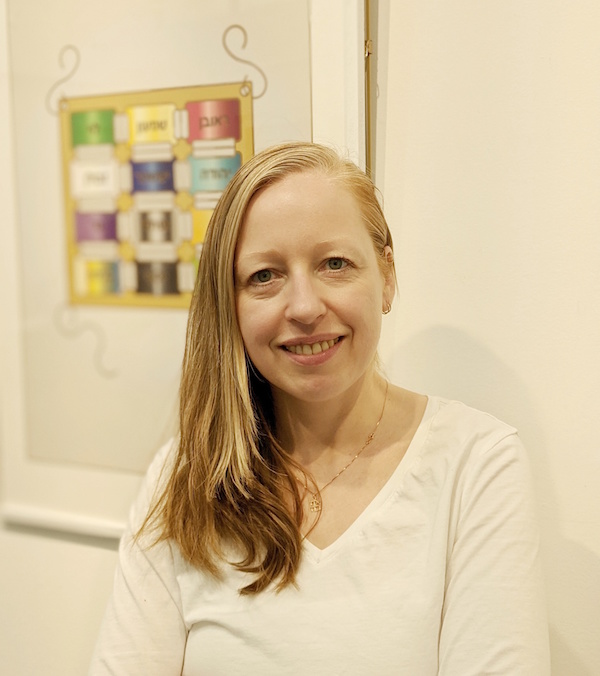
Roxsane Tanner’s watercolours are on exhibit at the Steveston Museum and Post Office (painted here by Tanner) this month. 

“Steveston is such a beautiful place,” artist Roxsane Tanner told the Independent. Her first solo show of watercolours features quaint houses of the village, where she has lived and worked for many years. The exhibit opened at the Steveston Museum and Post Office on June 1 and will be on display for the month.

photo - Roxsane Tanner
Roxsane Tanner (photo courtesy)

Born in Holland soon after the Second World War, Tanner came to Canada with her family in 1951.

“My father was in the resistance, and my mother was in hiding during the war. They were both Jewish and wouldn’t have survived otherwise,” she said.

Her older sister was born during the German occupation, and her mother had to hide her baby with a local family. “My sister was 3 years old when my mom came for her after the war, to take her back. That was the first time she saw her mother.”  

After the family came to Canada, her parents moved a lot. “They were very entrepreneurial,” said Tanner. “We lived in many small towns in Ontario and Quebec. Sometimes, my parents had several businesses open at the same time in the same town: a pet shop, a fabric shop, some others. They always worked hard. When I was 19, my parents and I moved to Vancouver. In the beginning, we lived in a trailer, the same one we drove here from across Canada.”

Tanner inherited her parents’ work ethic and their courage to try new things. “After high school, I wanted to study nursing, but soon after I started classes, I hurt my knees and had to come home – I couldn’t walk.”

After she healed, she became a dental assistant and worked as one for several years. “Until I met my first husband,” she recalled with a smile. “He was a wallpaper hanger. I fell in love with the man, married him, and joined his business. We worked together for several decades.”

Even after her first husband’s untimely death from cancer, she continued their business on her own. Many houses in Richmond and Vancouver feature wallpaper installed by Roxsane Tanner. By now, she has been a wallpaper hanger for more than 50 years. “But I’m slowing down,” she said. “I’m not accepting many new clients, not anymore.”

Now, she is becoming more and more absorbed in various artistic endeavours. Art was always on the periphery of her life. “I always dabbled,” she said. “Then, about 15 years ago, my second husband, Fred, and I visited Italy. He was a high school counselor before he retired; we were chaperoning a group of kids on that trip. I saw some beautiful jewelry local artisans sold on the street. I liked it, but it was too expensive. I thought maybe I could make something like that, and Fred encouraged me. When we returned home, I enrolled in a course on silversmithing and started making my own jewelry. Fred built a silversmithing studio for me in our backyard.”

She took more classes in different techniques, many of them on YouTube. “I can spend hours watching educational videos on YouTube,” she said. “There is always something new. Thousands of talented artists offer classes there. The good thing about YouTube: once you subscribe, you can watch the same lesson several times, until you really get it.” 

She sells her jewelry – earrings, bracelets and necklaces – in a local Steveston shop. Occasionally, she offers her own classes in jewelry-making, to children and adults. What started as a hobby from a casual observation in Florence ended up becoming a small business, as many of Tanner’s hobbies tend to do: sewing, for example.

“My mother taught me to sew, knit and crochet,” she said. And, wanting to pass the skills on to others, she started, out of her home, to teach children how to sew. “We buy special kits and make hats and scarves for the homeless,” she said. 

But that was not enough for her. Her creativity needed another outlet. About the same time as she embarked on jewelry-making, she also started painting in watercolours. “I took classes, of course, some on YouTube, others at the local Phoenix Art Workshop here in Steveston. At first, I painted landscapes, but I didn’t like it. A few years later, I went to Malta on a trip with the Phoenix Studio – they have amazing houses there, and I was inspired. The next year, we traveled to Mexico. I admired their historical buildings, but we also have amazing houses here, in Steveston. There are many heritage places here. I wanted to paint them.”    

When she returned from Mexico, she noticed a blue house in Steveston she liked and took a photo of it. “I painted it from my photo. It was my first, and my friends kept bugging me: you need to show your painting to the owner. So, I went and knocked on his door. I never met him before that day, and he was somewhat gruff at first. He asked me if I would sell it to him, and I agreed. That’s how it started.”

image - Steveston’s Fisherman’s wharf, painted by Roxsane Tanner
Steveston’s Fisherman’s wharf, painted by Roxsane Tanner.

Tanner has built another small business on that foundation. “I paint houses that are for sale. Realtors around Steveston commission my paintings as gifts for the new homeowners. People also come to me and ask me to paint their houses, or their children’s houses, as gifts. Sometimes, I paint from my own photographs. Other times, the clients bring their photos and order a painting from that image.”

Besides personal homes, she paints heritage places around Steveston. The old community centre, a coffee shop, a church turned into a thrift store, the pier, with its picturesque boats, and the tiny post office – the same one where some of her work is now on display.

The exhibition includes Tanner’s original watercolour paintings plus postcards and mugs with her artwork. Some of the paintings sport charming, quirky houses found only in the artist’s imagination. “I go online and search for heritage homes around the world. If I like one, I use it as my inspiration, but I don’t copy the photos. I want my painted houses light and whimsical, like a fairy tale. Maybe a bit crooked, but reflecting the essence of the house, its soul and personality. Even the real houses I paint are not exact copies of the photos. I don’t use a ruler to make the straight lines. I use my watercolours to remind people of the fun and joy their homes bring them.”

You can see more of Tanner’s art at instagram.com/studioplace99. 

Olga Livshin is a Vancouver freelance writer. She can be reached at olgagodim@gmail.com.

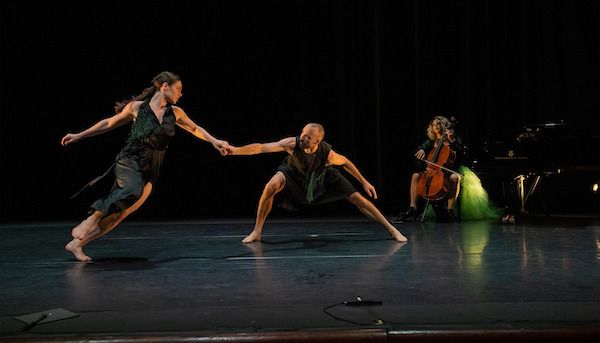
Dance as prayer and healing

Aliza Rothman is “passionate about bringing this kind of expressive dance and healing movement to others and into the world.” (photo from Aliza Rothman)

It’s a musical Shabbat at Or Shalom Synagogue. There are four musicians playing. The rabbi is singing and chanting prayers with the congregation and a woman is dancing. Her face glows.

Hasidic leaders like the Ba’al Shem Tov and Reb Nachman of Breslov emphasized the power of dance as prayer and healing – and Aliza Rothman is part of the Jewish Renewal movement that values these teachings. She sees dance as a form of expression and prayer.

“When I move, I feel better, more alive, more connected to myself, others, my body, my emotions, my life force. And I am passionate about bringing this kind of expressive dance and healing movement to others and into the world,” she told the Independent.

Rothman is an expressive arts therapist who has been teaching a Rosh Chodesh (New Moon) movement class at Or Shalom since she moved back to Vancouver in 2023. Dance is both her passion and her medicine.

After many years of classes and choreography, she found herself at a drum circle at a music festival. Moving to the beat, it became a kind of trance dance. Ever since, she has been drawn to free-form movement.

In her mid 20s, Rothman traveled to India and participated in dance meditations as well as trance dances. Her journey then brought her to live in Jerusalem, in 2000, where she attended a weekly class called the Boogie – a dedicated free dance space, a place to be yourself, to connect and be playful. She traveled around Israel to dance at music festivals. 

Jewish Renewal and dance came together for Rothman “on a soul level” when she was in her 20s. She dreamed of becoming a dance therapist.

“I had just come back from India, where I spent a few years traveling and on a spiritual quest that involved dancing, art, yoga and other healing heart-opening practices,” she said. “When I returned, I remember dancing outside on my own, and Hebrew songs and prayers came to me as I moved…. Years later, they really merged, when I went back to Israel, and then when I started facilitating dance workshops in Berkeley, Calif.”

Rothman moved to Berkeley with her now husband – Rabbi Arik Labowitz, spiritual leader of Or Shalom – to get a master’s in counseling psychology and expressive arts therapy. She led Rosh Chodesh and Omer dance groups there for close to 20 years.

She is also an open floor movement teacher. She discovered the activity in the Bay Area soon after it had begun, founded by five teachers who studied under the late Gabrielle Roth. 

“Open floor is a form of conscious dance – there are no steps to follow, there is no right or wrong way to move. We let the rhythm of the music move us. We teach, practise and embody core movement resources – it is a life practice.” explains Rothman on her website. 

“We work with 10 core movement resources: pause, release, centre, spatial awareness, toward/away, contract/expand, vector, activate/settle, dissolve, as well as four hungers – solitude, connection, belonging and spirit. Open floor is movement therapy.”

Since returning to Vancouver from Berkeley, Rothman has established her own private practice.

“I work with individuals as a somatic/trauma/movement and expressive arts therapist,” she said. “I believe in the body’s wisdom and innate ability towards healing and wholeness. I encourage people to move with their range of feelings – dancing our grief, anger, joy.”

Dear G-d,
if only my heart would be
straight with You all the time,
I would be filled with joy.
And that joy would spread all the way
down to my feet,
and uplift them in dance.
Please, never let my feet falter,
release them from their heavy bonds,
and give me the strength
to dance, dance, dance.

– Rebbe Natan Sternhartz, student of Rebbe Nachman of Breslov (Likutei Tefillot I:10)

Rothman grew up in the Jewish Renewal movement. Her parents were some of the first members of what is now Or Shalom but, back in the day, it was called “the Minyan,” led by Rabbi Daniel Siegel and his wife, Rabbi Hanna Tiferet Siegel.

“It rotated between all of our living rooms,” said Rothman.

Rothman’s parents are Myrna Rabinowitz, stepfather Barry Rabinowitz and father Leo Rothman. Myrna Rabinowitz is widely known in the Vancouver Jewish community as a singer, including as a member of the band Tzimmes.

“My mom had a lot of music playing in our house and, when I heard music, I danced,” said Rothman. “I danced all the time as a child – putting on shows, dancing in my yard, etc. I grew up with a soulful musical Jewish connection at home, a heart-centred, joyful Judaism, which I found more of when I moved to Berkeley.”

This month, Rothman is leading outdoor dance on Tuesday evenings in Queen Elizabeth Park. She will be teaching another Rosh Chodesh dance group beginning in the fall and hopes to begin some small dance-based expressive arts therapy groups in the fall, as well. She also teaches classes online. She can be reached at alizarothman.com. 

Cassandra Freeman is a freelance journalist and improv comedy performer living in Vancouver.

Will you help or hide?

Bema Productions’ The Last Yiddish Speaker cast, director and crew: standing, left to right, Tess Nolan, Kevin McKendrick, Andrea Eggenberger, Nolan McConnell-Fidyk and Ian Case; seated, Siobhan Davies, left, and Zelda Dean. The play imagines a world in which the Jan. 6, 2021, attack on the Capitol in Washington, DC, was successful and Christian nationalists have taken over the United States. (photo by Peter Nadler)

Victoria’s Bema Productions is staging the international premiere of Deborah Laufer’s The Last Yiddish Speaker at Congregation Emanu-El’s Black Box Theatre June 18-29.

The drama imagines a dystopian world in which the Jan. 6, 2021, attack on the Capitol in Washington, DC, was successful and Christian nationalists have taken over the United States. In the play, a Jewish father and daughter must be careful and cunning, as any deviation from the norm could be deadly. When an aged Yiddish-speaking woman lands on their doorstep, they must decide whether to take the risk of helping the woman or focus on saving themselves.

Laufer has numerous full-length plays to her credit, as well as dozens of short plays and even musicals (written with composer Daniel Green). Her plays have been produced around the world and she has been recognized with numerous awards.

While The Last Yiddish Speaker focuses on Judaism and the right for Jews to exist, the play could be about any marginalized group, in any country.

“Although the play is set in the USA, the theme is universal: the struggle of good over evil,” Zelda Dean, founder and managing artistic director of Bema, told the Independent. “In this play, Canada is still a safe place for Jews.” 

That said, it has a message for Canadian audiences, as well, Dean said. “It is very important that we address social and political issues, particularly with the huge increase in antisemitism in Canada. The play is entertaining, engaging and enlightening. It takes place in 2029, when the fascists have taken over the USA. It is timely and powerful.”

Directed by Kevin McKendrick, The Last Yiddish Speaker features Ian Case, Siobhan Davies, Nolan McConnell-Fidyk and Dean.

McKendrick is an award-winning director, notably being recognized by the Alberta Theatre Projects for significant contributions to theatre in Calgary. Case, a veteran stage actor on Vancouver Island, is also a director and arts advocate. Davies, meanwhile, is a stage and cinematic performer – she will be appearing in the upcoming film Allure, shot in Victoria. McConnell-Fidyk is a local actor who appeared in Survivors, a play aimed at spreading information about the Holocaust to audiences from Grade 6 and up. (See jewishindependent.ca/theatre-that-educates and jewishindependent.ca/survivors-play-brings-tears.)

Before the November 2024 presidential elections, Laufer told Philadelphia public radio station WHYY about her reasons for writing the play, including that she was deeply disturbed by the events of Jan. 6. “I thought, ‘Is this the end? Is our democracy completely ended?’” she said.

“The play reminds us there are times in history when we have the choice to speak out against oppression or choose to remain silent. You get the government you deserve,” McKendrick told the Independent. “How will you respond when faced with outright injustice?”

Tickets for The Last Yiddish Speaker can be purchased at ticketowl.io/lastyiddishspeaker. 

Sam Margolis has written for the Globe and Mail, the National Post, UPI and MSNBC.

A tour with extra pep

Elana Wenner (with folder) leads the Jewish Museum and Archives of British Columbia walking tour of Jewish Strathcona. (photo from JMABC)

Having taken the Jewish Museum and Archives of British Columbia’s tour of Jewish Strathcona, I know firsthand how interesting and worthwhile it is. This summer, there will be a little more swing to the July 27 tour – Kol Halev Performance Society will once again take part, but in an expanded role.

“Kol Halev has created a script for theatrical additions to the tour, along with musical components. Actors in full period costume will accompany the group and act out key scenes from the stories told along the way,” Elana Wenner, director of programming and development at the museum, told the Independent. “A full musical dance number is included as well, along with a reenactment of a wedding that mirrors cultural traditions from the past.”

Wenner got in touch with Sue Cohene, co-founder and current president of Kol Halev, after having taken some theatrical tours produced by other museums in the city and elsewhere.

“In the past,” said Wenner, “Kol Halev has put on productions based on BC Jewish history in conjunction with JMABC, before I worked here.”

“Kol Halev has been involved with the Jewish Museum since 2006, performing at their various galas and special events over the years,” Cohene explained. “In 2017, the museum created a photographic exhibit, shown alongside Kol Halev’s historically based play, Two Views from the Sylvia, which was presented at the Waterfront Theatre.

“Kol Halev Performance Society and the Jewish Museum and Archives have a long-standing collaboration and we update the museum on a regular basis about our shows, community teachings and future plans.”

A couple of years ago, said Cohene, Marcy Babins, interim executive director of the museum, suggested that she meet with Wenner, then the newly appointed director of programming and development, to discuss possible joint ventures.

“Connecting with Elana has been like carrying on a family tradition,” said Cohene. “Elana’s grandmother, Irene Dodek, was instrumental, along with Dr. Rabbi Yosef Wosk, in bringing Kol Halev on board to provide entertainment and theatrical historical education for Jewish Museum projects. Elana’s mother, Dr. Gail Wenner, has danced with Kol Halev and continues to share her creativity by creating historically influenced hats for our performers.”

Last summer, Kol Halev added a Yiddish dance performance to complement one of Wenner’s Jewish Strathcona walking tours. This summer, actors from the performance group will portray early Jewish community leaders during the tour, in addition to weaving in some traditional dance pieces.

Cathy Moss, one of Kol Halev’s main writers since the group was established, worked with the research provided by Wenner to create a script.

“Elana shared the tour route and basic information about Strathcona historical community leaders from the early 1900s to the 1940s,” said Cohene. “She kindly led Kol Halev on the tour, where we all looked at locations that could accommodate acting and dancing.”

“Elana did a great job compiling the research on the area,” said Moss. “Once I took the tour, it was easy to see what a compelling cast of characters inhabited Strathcona in the early days. It was fun to write dialogue for such interesting and lively folks.”

Moss relied on the museum’s material for each location along the tour, writing the dialogue for the characters based on the biographical details and context Wenner provided.

“The tour is great and informative on its own,” said Moss. “I would add that inviting Kol Halev to be part of it was an excellent idea. It adds another dimension that makes the experience that much more enjoyable. The wedding dance in particular will be appreciated by the tour-takers. It’s very entertaining.”

photo - Kol Halev rehearses the Patsh dance, choreographed by Santa Aloi. The group will dance and act in the July 27 JMABC Strathcona walking tour
Kol Halev rehearses the Patsh dance, choreographed by Santa Aloi. The group will dance and act in the July 27 JMABC Strathcona walking tour. (photo by Adam Abrams)

Kol Halev has several on-site rehearsals planned before the shows in which they’re participating – the July 27 public tour and a private tour in late June – “particularly to familiarize dancers and actors who were not involved last year,” said Cohene.

“We will have between eight and 10 dancers this summer and a few actors,” she said. “It’s a small working production that has room to grow.”

Cohene will be part of the performances.

“I’ll be playing a mother-in-law role in the 1940s wedding dance, which was choreographed by Tamara Thompson Levi,” she said. “I’ll also tap dance in the Yiddish Patsh dance choreographed by Santa Aloi.”

Wenner leads the Strathcona walking tours.

“This tour is a journey through the footsteps and choices made by the first community leaders in Vancouver,” she said. “It follows in the footsteps of community-building, highlighting the institutions and people who laid the groundwork for today’s thriving Jewish Vancouver institutions. Along the way, we see buildings that held components of the first Jewish community organizations, as well as the homes of some of the first leaders. We also explore the ideas of what Jewish community requires in general, and what it was like to live as a Jew in this part of the world at the turn of the last century. The tour is a synthesis of past and present, weaving together the origins and future of Vancouver’s Jewish community.”

The Jewish Museum has four different walking tours on offer this summer. In addition to the Strathcona neighbourhood tours led by Wenner on July 13 and 27, Aug. 10 and 24, Daniella Givon leads tours of the Mountain View Jewish Cemetery on July 6 and Aug. 10. In Victoria, Amber Woods leads both the Downtown (July 6 and Aug. 10) and Jewish cemetery (July 20 and Aug. 24) tours. All the walks start at 10:30 a.m. For tickets, visit jewishmuseum.ca, email info@jewishmuseum.ca or call 604-257-5199. 

Jazz fest celebrates 40 years

Among the performers at this year’s Vancouver International Jazz Festival are Ard n’ Saul (Ardeshir and Saul Berson), at Tyrant Studios on June 21. (photo by Joshua Berson)

The 40th anniversary edition of the Vancouver International Jazz Festival runs June 20 to July 1. It offers more than 180 events, with 50 free shows at 14 locations around the city. 

The festival took its maiden voyage Aug. 19-25, 1985. Billed as the first annual Pacific Jazz and Blues Festival, the event featured 100 musicians from British Columbia, Oregon and Washington state at clubs and venues around the city. It was created – and mostly financed – by John Orysik, Robert Kerr and Ken Pickering, along with Deborah Roitberg, who would become a founding board member. Together, they founded the Coastal Jazz and Blues Society, which was born with the intent of providing a 10-day music festival along with a year-long jazz presence.

In this year’s festival, there will be open jazz jams June 20-29, presented at and with Tyrant Studios. Come for the 9:30 p.m. sets ($18 in advance, $20 at door), then stay as the headliners become hosts, sharing the stage with visiting artists and local players alike starting at 11 p.m. (pay-what-you-can). Among the headliners are, on June 21, Ard n’ Saul, who pay homage to the classic two horns and rhythm section tradition – the group is led by alto saxophonist Saul Berson and tenor saxophonist Ardeshir.

On June 22, 6 p.m., at Zameen Art House, Infidel Jazz presents Asef ($20 in advance, $25 at door). Members of the group – Berson (saxophones), Itamar Erez (guitar), Sam Shoichet (bass) and Liam Macdonald (drums/percussion) – bring to the stage many years of experience playing a variety of music from around the world, including Balkan folk, tango, klezmer, flamenco and bebop. 

Also on June 22, at the Georgia Street Stage at 6:30 p.m., Dawn Pemberton and her band – which includes Max Zipursky on keys – play a free concert of music from gospel and R&B, to jazz, funk and soul. Zipursky also plays with Confiture on June 29, 8:30 p.m., at Ocean Artworks ($15 at door). Led by vocalist Tim Fuller, Confiture celebrates 30 years of house music, blending classics with original tracks.

photo - Andrea Superstein plays at Frankie’s Jazz Club on June 26
Andrea Superstein plays at Frankie’s Jazz Club on June 26. (photo from coastaljazz.ca)

On June 26, Juno-nominee Andrea Superstein plays at Frankie’s Jazz Club, at 8 p.m. ($20-$25), and the Evan Arntzen Quartet, with special guest Lloyd Arntzen, perform a free show on July 1, noon, at Ocean Artworks.

Vancouver-born, New York City-based saxophonist, clarinetist and vocalist Evan Arntzen blends modern jazz influences with deep roots in the genre’s history. The quartet will be joined by Arntzen’s grandfather, Lloyd Arntzen, a legendary clarinetist, saxophonist and vocalist who’s been a pillar of Vancouver’s traditional jazz scene since the 1940s.

For the full festival lineup and tickets, visit coastaljazz.ca. 

– Courtesy Coastal Jazz

Enjoy concert, help campers

Temple Sholom Senior Rabbi Dan Moskovitz and kids from the shul at Camp Kalsman. Proceeds from Omer Shaish’s My Broadway Shpiel performance on Aug. 21 go towards Temple Sholom’s campership program. (photo from Temple Sholom)

International singer and actor Omer Shaish brings My Broadway Shpiel to Vancouver on Aug. 21. Attendees can look forward to music from West Side Story, Fiddler on the Roof, Les Misérables and La Cage Aux Folles, as well as original music and some of Shaish’s personal favourites, including popular Hebrew songs. Proceeds from the concert go towards Temple Sholom’s campership program.

Shaish was born and raised in Israel and has performed at Habima National Theatre and Beit Lessin Theatre in Tel Aviv. In 2007, he moved to New York City and graduated from the American Musical and Dramatic Academy. With numerous theatre and vocalist credits to his name, Shaish has been touring the world with the classical vocal trio Kol Esperanza, as well as his self-produced show My Broadway Shpiel.

Each year, Temple Sholom, along with its Sisterhood and the Harlene Riback Camp Scholarship, offers a scholarship for up to $150 per child to its member families to help the congregation’s youth attend a Jewish day camp or sleepaway camp. This year, it distributed a total of $15,880 for 74 campers and its goal is to raise even more funds for next year’s campers. 

Studies have shown that Jewish camping is key to helping Jewish children explore their Judaism and establish a long-term Jewish connection. Temple Sholom’s campership initiative began in 1975 and has been going strong ever since.

“It is the kehila kedosha, or sacred community, of our Sisterhood that rises to this challenge, among other community responsibilities and occasions. It just so happens that the beautiful concept of kehila kedosha is instilled in our children, our future leaders, at Jewish summer camp,” said Alisa Delisle, a Temple Sholom congregant and the mother of Camp Kalsman song leader Paloma Delisle.

“Jewish summer camp encourages children to discover their Jewish identity while fostering a sense of belonging in a community like no other. For most, this is the first experience to navigate personal care and the world of peers without a parent or guardian’s assistance. As a sacred community, campers learn to take care of one another, cultivate pride in their surroundings and appreciate the power of Shabbat. Through experiential learning, Jewishness at camp is incorporated into everything fun.”

Camp Kalsman and PJ Library also offer summer camp scholarships to the broader Jewish community.

For tickets to My Broadway Shpiel, visit tickettailor.com/events/templesholom/1702794. 

– Courtesy Temple Sholom

Complexities of celebration

My family’s in the middle of a month of celebrations. June is always this way at our house, but it’s even more intense this time around.

In a “usual” June, we celebrate two family birthdays and a wedding anniversary; it’s also the end of school for our kids. This year, we started off with a bang. Our twins had their birthday on Erev Shavuot. In the morning, we joined the huge Pride Parade festivities. In the evening, our community, in Winnipeg, had a Tikkun Leil Shavuot (a traditional night of study at the beginning of the holiday) with hundreds participating from four congregations. While we ate dairy foods and celebrated, to our surprise, the whole room sang our kids a rousing version of Yom Huledet Sameach (Happy Birthday). It was something to remember – they were surrounded by smiles and learning.

Shavuot is celebrated in a lot of ways. It’s a first fruits and first wheat harvest holiday. It’s also the day that we celebrate the giving of the Torah and read the Book of Ruth. Some observe this holiday as a day of radical inclusion, when everyone, no matter your age or gender, should hear the Ten Commandments read.

Radical inclusion is something I think about a lot. This year, my nephew in Virginia, LJ, who has cerebral palsy and uses a power wheelchair and assisted communication device, celebrated Shavuot with his confirmation class at Temple Rodef Shalom, a Reform congregation near Washington, DC. He gave a speech at the service, carefully planned, about the intersection of his identities as a Jewish and disabled person and as an advocate for accessibility. He spoke eloquently about how Judaism teaches us to pursue justice, and how he works to help make that possible. LJ has given many speeches: on how others can learn about assisted communication, on how to teach math to those with visual disabilities, and on myriad other topics. At 16, LJ is already an accomplished advocate who rolls into rooms filled with adults and shows them new ways to help learners with disabilities.

During his recent speech, LJ mentioned how his religious school helpers have gone on to helping professions: speech pathology, special education, and more. It’s true that some see people with disabilities as having high needs, but all people have things to teach others and to give the world. LJ’s need for physical support results in a huge net positive. He positively affects the lives of many others around him.

At the Tikkun Leil Shavuot I attended, Rabbi Yosef Benarroch (who served in the 1990s as spiritual leader of Beth Hamidrash in Vancouver) gave the keynote. Benarroch is retiring from Congregation Adas Yeshurun-Herzlia here in Winnipeg and moving back to Israel to join his family. His address reminded us about all the ways in which we can help one another and perform acts of chesed (kindness) towards others. His summary of a day in the life of a congregational rabbi made me feel tired! However, it was filled with ways he was of service to others, while getting to do mitzvot (commandments) and sharing important moments in people’s lives.

I’d be the first to say that, sometimes, as a mom, helping meet others’ needs can be exhausting. There are years where I look ahead to June and think, “Wow, I’ll be making a lot of birthday cake – and how many holiday and celebratory meals?” Yet, hearing these two different perspectives, on Jewish advocacy and acts of kindness, really raised me up. It reminded me of how much there is to do in the world, and how lucky we are if we’re healthy, capable and able to do it.

Right now, in Manitoba, we’re coping with huge wildfires and many evacuees. As the bossy mom, I forced everyone to go through their closets so we could participate in the donation drives, because something like 17,000 people have been forced to flee their homes. One of my family members said, “We just donated stuff! We probably don’t have anything to offer!” Three bags of clothing (women’s, men’s and teens’) and blankets later, we were dropping off what we could find before Shavuot started. I reminded my 14-year-olds that this was their birthday mitzvah – the traditional extra commandment that they took on – and we celebrated it through the smoky morning. 

If you’re like me, it can be a struggle to relax into a wholehearted celebration while holding so much in our hearts at once. Whether it’s the hostages in Gaza, the war, the wildfires, antisemitism worldwide or issues closer to home, it’s understandable if it’s difficult to be completely joyful. Yes, we are commanded to celebrate at certain times, but I am reminded of the traditions of Jewish weddings. At every Jewish wedding, we break a glass to remind ourselves of the loss of the Temple in Jerusalem. We hold a bittersweet feeling of grief and pain even at our most meaningful moments. This acknowledgement doesn’t keep us from continuing to hope, to celebrate, while including everyone.

Today, I’ve had the honour of visiting a longtime family friend in the hospital. I brought her snacks and flowers from our garden. She’s just undergone surgery after a fall. I was relieved to find her in good humour. I’ve gotten to cook a bit for her family, as well as mine, and found time to work, walk the dog and even pull up copious weeds. Every handful of invasive greenery removed showed me the flowering plants underneath. I celebrated the riotous colour of both the weeds and the irises. 

There’s no guarantee that every moment will be happy or every summer a celebration. Still, we have so many opportunities to do kindnesses, perform mitzvahs and be there to advocate for one another. If Shavuot sticks with me long after it ends, it’s not because of cheesecake or even first fruits. During a month of family celebration this year, Shavout also offered the opportunity to celebrate our tradition, which offers us great gifts if we make the most of them: learning, Torah and radical inclusion, too. 

Joanne Seiff has written regularly for the Winnipeg Free Press and various Jewish publications. She is the author of three books, including From the Outside In: Jewish Post Columns 2015-2016, a collection of essays available for digital download or as a paperback from Amazon. Check her out on Instagram @yrnspinner or at joanneseiff.blogspot.com.

Sunny Heritage day

Hastings Mill Store was part of this year’s Heritage Discovery Day. (photo by Cynthia Ramsay)

This year’s Heritage Discovery Day – which has been hosted by Vancouver Heritage Foundation since 2003 – featured nine sites in Kitsilano, highlighting, but not confined to, the Craftsman style of house, which, according to the self-guided tour book, “is characterized by decorative brackets, exposed rafter ends, mock trusses in the gable ends, expansive low-pitched gable roofs and a rich variety of finishing materials and textures.” Saturday, June 7, was an ideal day for the event and this year’s Summer cover features photos taken throughout the neighbourhood, while going house to house. Driving home along Cornwall Avenue, the number of people enjoying Kits Beach was incredible. When it’s sunny here, the people emerge!

photo - City Farmer Garden's Cob shed, made with clay from Haida artist Bill Reid
City Farmer Garden’s Cob shed, made with clay from Haida artist Bill Reid. (photo by Cynthia Ramsay)
photo - One of the heritage homes on the tour
One of the heritage homes on the tour. (photo by Cynthia Ramsay)
photo - Kits Beach on June 7
Kits Beach on June 7. (photo by Cynthia Ramsay)

Flipping through JI archives #1

In putting together the Jewish Independent’s special 95th Anniversary issue last month, I came across so many articles of interest. Too many, of course, to include in one issue or series of issues. But I figured it’d be fun to have some random glimpses back into our community’s history. This is the first “Flipping through JI archives” column that will appear through to the end of the year. I hope you enjoy it as much as I will. 

image - the first Summer issue of the JI/JWB, July 27, 2001July 27, 2001: This clipping isn’t so random. It’s the first Summer issue we put together. Pictured are Pat Johnson (reading), Kyle Berger (fishing and backpacking) and me (playing tennis and baseball). The late Baila Lazarus, who took the photo, is cheering the city’s nightlife.

photo - Rockower Award-winning JI cover photo by Baila Lazarus, June 13, 2008June 13, 2008: Baila Lazarus, z”l, took most of our staff-filled Jewish Independent Summer covers, and she took this Rockower Award-winning one, which I absolutely love. With the help of Sue Cohene of Kol Halev Performance Society, we – left to right, Ron Friedman, Leanne Jacobsen, Josie Tonio McCarthy, me and Steve Freedman – donned period clothing to play a round of croquet in Cohene’s backyard.

image - perhaps the first colour photo in a story in the JI/JWB, June 28, 2002June 28, 2002: Spot colour has been used in the paper since the 1940s, albeit sparingly. In the 1960s, bright red print or text frames would highlight stories the paper’s publishers thought urgent. Less dramatically, the Jewish Western Bulletin and Jewish Independent logos would be in spot colour. It looks like holiday issue covers have been printed in full colour since 1999, but this photo seems like the first we ran as part of an article. Too bad it wasn’t for a happier story!

image - Israel Bonds announces first Cdn dollar investments, March 26, 1992March 26, 1992: Israel Bonds has long advertised in these pages. This article notes the organization’s inaugural Canadian dollar investments.

image - Safeway ad from May 17, 1934May 17, 1934: Safeway was a regular advertiser in the paper’s early years. Imagine berries from Aylmer in tins! Those two cans for 15 cents translates into about $3.36 in today’s dollars and, according to its website, Safeway has a deal on about the same amount of fresh strawberries for $3.99 (down from $6.99). The 59-cent cost of a three-pound tin of Crisco (with a free pie plate!) translates into $13.21, but you’d have to pay slightly more today, $14.29. And, there is no size equivalent to the pound of coffee on Safeway’s website, but based on the price per 100 grams it lists, it’d cost you $13.35 today, but 35 cents in today’s dollars is only $7.83.