Skip to content
  • Home
  • Subscribe / donate
  • Events calendar
  • News
    • Local
    • National
    • Israel
    • World
    • עניין בחדשות
      A roundup of news in Canada and further afield, in Hebrew.
  • Opinion
    • From the JI
    • Op-Ed
  • Arts & Culture
    • Performing Arts
    • Music
    • Books
    • Visual Arts
    • TV & Film
  • Life
    • Celebrating the Holidays
    • Travel
    • The Daily Snooze
      Cartoons by Jacob Samuel
    • Mystery Photo
      Help the JI and JMABC fill in the gaps in our archives.
  • Community Links
    • Organizations, Etc.
    • Other News Sources & Blogs
    • Business Directory
  • FAQ
  • JI Chai Celebration
  • JI@88! video

Recent Posts

  • Eby touts government record
  • Keep lighting candles
  • Facing a complex situation
  • Unique interview show a hit
  • See Annie at Gateway
  • Explorations of light
  • Help with the legal aspects
  • Stories create impact
  • Different faiths gather
  • Advocating for girls’ rights
  • An oral song tradition
  • Genealogy tools and tips
  • Jew-hatred is centuries old
  • Aiding medical research
  • Connecting Jews to Judaism
  • Beacon of light in heart of city
  • Drag & Dreidel: A Queer Jewish Hanukkah Celebration
  • An emotional reunion
  • Post-tumble, lights still shine
  • Visit to cradle of Ashkenaz
  • Unique, memorable travels
  • Family memoir a work of art
  • A little holiday romance
  • The Maccabees, old and new
  • My Hanukkah miracle
  • After the rededication … a Hanukkah cartoon
  • Improving the holiday table
  • Vive la différence!
  • Fresh, healthy comfort foods
  • From the archives … Hanukkah
  • תגובתי לכתבה על ישראלים שרצו להגר לקנדה ולא קיבלו אותם עם שטיח אדום
  • Lessons in Mamdani’s win
  • West Van Story at the York
  • Words hold much power
  • Plenty of hopefulness
  • Lessons from past for today

Archives

Follow @JewishIndie
image - The CJN - Visit Us Banner - 300x600 - 101625

Author: Cynthia Ramsay

Israel’s early days

Israel’s early days

Gloria Levi launches her most recent memoir at the Jewish Book Festival Feb. 12. (photo from Jewish Book Festival)

When local activist and writer Gloria Levi was a teenager, she was immersed in the Labour Zionist movement and “dreamed of becoming a pioneer in Israel.” In 1950, at age 19, she spent several months there. In 1957, with then-husband Norman (whom she had met on the previous trip) and two young children, she made aliyah. Her recently published memoir, Kissing An Old Dream Goodbye, honestly and succinctly relates what took her to Israel – and what brought her back just under two years later.

Levi launches her new book at the Cherie Smith JCC Jewish Book Festival on Feb. 12, 2 p.m., in the Waldman Library. Levi, who worked as a gerontologist for 30-plus years, has written a series of booklets, Challenges of Later Life, and co-wrote Dealing with Memory Changes as You Grow Older with Kathleen Gose. A lifelong student of Jewish texts and language, she translated The Life and Times of Simcha Bunim of P’shischa from Hebrew into English. She published her first memoir, My Dance with Schechina, in 2012.

Kissing An Old Dream Goodbye starts with Levi standing on the Marseilles pier, “impatient to set sail for Israel, the land of my dreams.” It was there that Norman noticed her, and the two became close over the subsequent months.

image - Kissing An Old Dream Goodbye book coverGrowing up in Brooklyn, Levi had just finished her first year at New York University – “Emotionally, socially and culturally, I was surrounded by Jews and rarely met non-Jews,” she writes. “I was fiercely independent and a bit of a rebel, and had a stormy relationship with my mother. My father had died when I was eleven. I paid my own way through university and had recently been living independently in Greenwich Village.”

Norman, then 23, had joined the British Army in 1944 and “had been with the British troops who liberated Buchenwald concentration camp. In 1947, he was “deployed to India during the bloody time of Partition.” He was traveling to Israel in 1950, intending to settle there.

While she stayed longer than the summer, Levi did return to the United States to finish her undergraduate degree, at the University of Iowa, “renowned for its child psychology department,” and Norman eventually returned to England. When a visit to Iowa City was about to extend past the deadline of his transit visa, the two decided to get married, as Levi’s career would have been jeopardized if they lived together without being married. “So much for romantic proposals!” writes Levi.

The couple ended up getting married in Canada, for various reasons, and then moved to Toronto, to Montreal and, finally, Vancouver. There, newlywed life was challenging, as they got to know each other, struggled with money and started their family. Levi writes with openness about the good and the difficult – a recurring theme is communication troubles between Norman and her. A prime example is that, when things finally began to look good for them, with secure jobs, a reasonable income, Norman suggested they move to Israel. Initially startled, Levi admits that she, too, still wanted to make aliyah, but “didn’t want to say much.”

They arrived in Israel, kids in tow, in late September 1957, heading to Kfar Daniel, a modified kibbutz. There, they adapted to yet another completely new way of life, making friends, learning the jobs they are given – Levi’s first work is cleaning outhouses – and figuring out how to live in a place with snakes, scorpions and other dangers, including possible imprisonment if you accidentally wandered into Jordan, and military service for Norman.

While they loved so many aspects of living in Israel – “the physicality of the land,” feeling like “a link to 2,000 years of history,” connecting “with the guttural, nuanced ancient mystical language of Hebrew” and feeling “that this truly was our home” – other parts of the experience, both on the kibbutz and in Akko, where they moved in 1959, were impossible to reconcile with their beliefs and moral code. Among Levi’s doubts about staying in Israel were “certain negative societal attitudes, my children’s potential education system, political injustices, corruption in the form of ‘protexia,’ and the top-heavy bureaucracy.” It is with regret and ambivalence, as well as some shame that they couldn’t make it work, that Levi and her family returned to Vancouver.

“I never felt concerned about going public,” she told the Independent of the personal nature of the book, “because I was describing my truth.”

And part of her truth is the love for the country that remains, despite the disillusion, especially regarding social justice – how kibbutz members interacted with one another at times, how citizens were treated by the state in certain instances and how Arabs were viewed. An epilogue takes readers briefly through Levi’s views of the political situation in 1964, 1967 and 2019.

“Given today’s controversies regarding Israel-Palestine, I wanted to describe the profound needs, emotions and idealism surrounding the early days of the state,” said Levi. “I wanted to convey my own journey of love and doubt, joy and conflict, idealism and human ego – the controversies inherent in communal living and the clashes of two peoples living and loving one land.”

In writing Kissing An Old Dream Goodbye, Levi said, “I hope I’m able convey the colour and beauty of the land, the strengths and limitations of people in an authentic, compassionate way.”

And Levi continues to write. Her current project is a novel called The Hotelkeeper’s Daughter, a “story about an immigrant Jewish religious family, taking place from 1938 to 1948,” she said. “It is the most exciting writing I’ve ever undertaken.”

For the book festival schedule, visit jewishbookfestival.ca.

 

Format ImagePosted on February 7, 2020February 6, 2020Author Cynthia RamsayCategories BooksTags aliyah, Cherie Smith JCC Jewish Book Festival, Gloria Levi, Israel, memoir
Loves making people laugh

Loves making people laugh

Esther Povitsky performs at the Biltmore Cabaret on Feb. 22 as part of JFL NorthWest. (photo from JFL NorthWest)

Chicago-born comedian, actor and writer Esther Povitsky is one of several Jewish community members performing in the Just for Laughs NorthWest comedy festival, which takes place around Metro Vancouver Feb. 13-25. Her credits include being co-creator and star of the show Alone Together, a recurring role on Crazy Ex-Girlfriend, parts on programs such as Brooklyn 99 and Parks and Recreation, stand-up on The Late Late Show and Comedy Central, as well as host of the podcast Glowing Up. The Jewish Independent spoke with her in advance of her Feb. 22 show at the Biltmore Cabaret.

JI: When did you first start doing stand-up and what motivated you to do it?

EP: I love comedy. I love watching it, I love laughing and making people laugh. I also liked the idea of being able to do something creative where I only relied on myself.

JI: Before you started stand-up, what were you working toward education- or career-wise?

EP: I thought I was going to be a professional dancer, and majored in dance in college.

JI: What is it about performing that you most enjoy, in stand-up and in acting?

EP: Having an excuse to drink too much coffee.

JI: When did you move to Los Angeles, and was it for a specific job or more opportunity for work in general?

EP: I did not have any specific jobs lined up! I moved here to pursue stand-up and worked as a babysitter, worked at a gym, a juice bar, and other random gigs.

JI: You describe your stand-up as just being you. Being Jewish on your dad’s side, where/how/does Judaism, Jewish culture or community fit into that, or your comedy series?

EP: I feel that I was raised very culturally Jewish and it’s a big part of my personality and who I am.

JI: In an interview you talk positively about the immediacy of seeing what works and what doesn’t onstage. How do you handle the highs and lows of comedy?

EP: I try to keep busy, stay active, spend quality time with friends and family, do puzzles, watch TV. I try to really focus on doing as many “normal” things as possible.

Povitsky’s Vancouver show is 19+. For tickets and the JFL NorthWest lineup, visit jflnorthwest.com.

Format ImagePosted on February 7, 2020February 6, 2020Author Cynthia RamsayCategories Performing ArtsTags comedy, Esther Povitsky, JFL NorthWest, stand-up
Addiction a risk for all

Addiction a risk for all

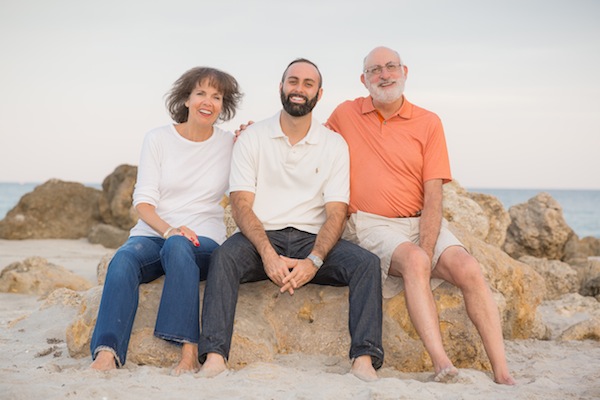
Left to right: Lisa, Jacob and Richard Hillman. (photo from Lisa Hillman)

“I had a fairly demanding and public position in the health system. I was president of our hospital foundation, had a very large board of about 25 people and a staff of about a dozen people. We were raising a lot of money to build a new hospital campus at the time, and so I was very public and very out and about. And, my fear was, as sick as it is to say today, that, if somebody would find out that my son had a drug problem, what would that say about me? What kind of mother could I be? What kind of person was I if I had a son who was using illicit drugs?” Lisa Hillman, author of Secret No More: A True Story of Hope for Parents with an Addicted Child, told the Independent.

“That was my feeling at the time,” she said. “I was not at all prepared to have addiction in my household. I was both ashamed and terrified at the same time.”

Hillman and her now-sober son, Jacob, shared their story at a Jewish Child and Family Service (JCFS) event at Congregation Shaarey Zedek in Winnipeg late last year.

Lisa and Richard raised their family in Annapolis, Md. Jacob was in high school when they found out he was using drugs. With almost 40 years of experience in the healthcare industry and being the healthcare decision-maker for the family, Lisa was determined to help Jacob overcome his addiction, while also keeping it a secret.

Like many others, however, she learned the hard way, after a couple of years, that this was not something she could fix. Although she held out hope that Jacob’s use of drugs was just a normal coming-of-age rite of passage, like trying cigarettes or alcohol, and that he would return to being the high-achieving person she knew him to be, that is not what happened.

“At first, we had him evaluated,” said Hillman. “I asked him if he would see a psychologist. He said ‘yes.’ He had bi-weekly meetings with a psychologist. At one point, my son gave me permission to talk to him – Jacob asked me, ‘If he tells you I’m alright, will you get off my back?’ And, I said, ‘sure.’

“This was when he was still in his senior year of high school. I visited with the psychologist, who said to me, ‘I told your son to smoke a little less.’”

Jacob was arrested during a holiday week after graduation, and the situation became more serious. As the family worked to get Jacob help, he resisted it, as addicts often do.

“The question I always get is, ‘How do you get them to accept treatment if they don’t want it?’” said Hillman. “I wish I had an answer for that. What we did with our son is finally say to him, ‘Jacob, you have a choice. You can continue to use, but you can’t live under our roof, or Dad and I will pay for inpatient treatment.’ Fortunately, he accepted inpatient treatment.

“Keep in mind, I’m very blessed,” she added. “I had some insurance and other resources. We were able to afford to send him someplace, which I know a lot of families can’t afford to do. I’m very, very lucky.”

The Hillmans found a place in Maryland, because Jacob did not want to leave the state. The place seemed to be very lovely and spiritual. They were hopeful he would get better there. But, after 12 days, the Hillmans visited their son and Lisa knew he had been using. Sure enough, the next day, Jacob’s counselor asked them to come pick Jacob up, that Jacob could no longer stay there.

“We brought him home to Annapolis,” Lisa Hillman said. “He entered the addiction treatment centre inpatient [program] that is part of my health system, where I was then and am still today, on the board. So, my drive for anonymity in this situation was about to crumble. The counselor my son was seeing said to me, ‘You have to tell somebody at work.’ So, I told my boss, the CEO of the hospital, and he was very empathetic and extremely understanding.”

Jacob went in for two weeks, after which the counselors suggested the Hillmans allow him to go to Florida for continued treatment, where he could live in a sober living house and continue to get outpatient treatment.

“The day he left, the counselor said to me, ‘Your son is going to have his program. What are you going to do for yourself?’” said Hillman. “My immediate reaction was that the counselor must have had 10 hits too many, because I didn’t have an addiction. I wasn’t the sick one, my son was the sick one. And yet, I realized I was crying all the time, I was obsessed with where he was and I couldn’t go to sleep at night until I knew he was home.

“I was isolated, I was depressed,” she said. “I wasn’t sharing anything with family and friends. So, I tried Al-Anon. And, from my very first time, I realized I’d [found] a home. These people understood me and were going through the same thing. I wasn’t alone anymore. I had people around me who got it and who were going through the same thing. Meanwhile, my son was in Florida and was getting better.”

Midway through that first year, Jacob had a minor relapse and told his parents about it over the phone. In that conversation, his mother said to him, “Jacob, we love you. Thank you for being honest and telling us. Please take care of yourself. You’re the only one who can.’ And Jacob replied, “Mom, thank you. That’s exactly what I needed to hear.”

Hillman recalled, “Pre-Al-Anon, I would have been on the phone screaming at him, angry. Fast-forward another six months, and he has another much more serious situation. We were told, ‘Your son needs detox.’ He was using heroin IV, a horrible scenario. So, we were asked to pay for a third inpatient treatment centre.

“I remember clearly asking the counselor, ‘How many times do we have to pay for this?’ And he said, ‘Tell your son that this is the last time.’ So, we did and, at the time, we did mean it, really. This was the last time we’d pay for him to have inpatient treatment.”

Although Hillman cannot say for sure that this ultimatum is what did it, Jacob stayed there for 100 days. After that, he moved, got a job and stayed for six months in a sober house. He kept the job for several years and eventually moved into an apartment. He has been active in AA ever since and has been clean for almost eight years.

Hillman has continued going to Al-Anon. She asked her husband to come with her and try it out at least once. They went to a different meeting than she had been going to. “We walked into the room and there were two couples who we know really well,” she said. “Both of them had children with similar problems and we had no idea. We’ve been going to that same meeting now for almost nine years, every Thursday night.

“That first meeting was a huge relief,” she said. “I couldn’t speak at the first meeting. I couldn’t open my mouth, with lips quivering as I cried. They let me cry. Other people at that meeting cried. And I heard a phrase that night, that I think really guided me: ‘Detach with love’ – meaning you have permission to detach from your loved one’s problems, that you’re not responsible for them, that you can’t fix their problems, but that you still love them.”

Hillman realized, over time, that Jacob would have to find his own way and that she couldn’t enable him by sending money or paying for things for him. “But, we never stopped loving him the whole way, the whole time,” she said.

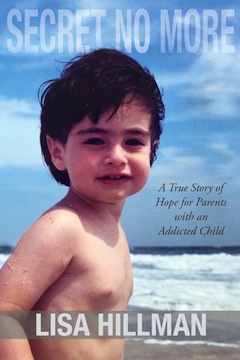
image - Secret No More book coverAs she healed, Hillman felt the desire to write a book about her experiences. She asked her son for permission to publish it.

“The reason for writing it was, I knew there were other families in hiding and ashamed, and that shame and fear just makes it worse,” she said. “It makes it worse for you if you love someone in addiction, and it doesn’t help the person with addiction. The whole purpose in writing this was to help particularly other moms and dads and sisters and brothers and boyfriends and aunts and uncles and grandfathers who I knew were sort of in hiding and had secrets and weren’t sharing – giving them hope that they can do it, too.

“Don’t hide,” she stressed. “Find professional help for yourself. My message is not to those with addiction, it’s to those who love people with addiction. My son says, ‘Mom, remind people that this is your story. Not mine.’

“If you have somebody in your life that is using or drinking, please go get help for yourself,” she said. “If one person in the family can get healthy and understand addiction, boundaries, and how to take care of themselves, then it will affect the rest of the family.

“That’s what happened in our family. I got stronger, my husband got stronger. Jacob saw that we were trying to understand him, that we were trying to get ourselves right again. He was getting better and we had a common language.”

Hillman said, “I think people who recover from an addiction and somehow live every day clean and healthy, year after year after year, to me, they are the most amazing, profound people. My son has become just an astonishingly profound young man and I’m very, very proud of him.

“I think that Judaism hasn’t helped us here today,” she added. “I think it’s getting better, but, looking back on it, part of my shame was that this doesn’t happen to Jews. We’re smart, educated, driven, are achievers, we don’t have addiction – but that’s not true.”

The Nov. 25 event with the Hillmans was sponsored by the JCFS and Gray Academy of Jewish Education. Panelists included an addictions physician, a therapist and an Addictions Foundation of Manitoba consultant on youth.

“Recovery is individual. There is no single treatment that works for everyone. There is no easy fix, like there is no single cause. It’s a combination of factors,” said Ivy Kopstein of the JCFS. “As a community, we need to end stigma and judgment, and replace it with compassion and understanding so we have no need for secrets anymore.”

Rebeca Kuropatwa is a Winnipeg freelance writer.

Format ImagePosted on February 7, 2020February 6, 2020Author Rebeca KuropatwaCategories NationalTags addiction, health, JCFS, Lisa Hillman, Winnipeg
Shluchim gather in N.Y.

Shluchim gather in N.Y.

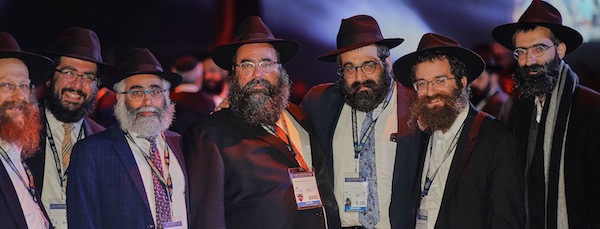
The 2019 “class photo” of Chabad shluchim who attended the Kinus Hashluchim in New York. Among the 4,000 Chabad emissaries attending were 14 from British Columbia. (photo from Chabad-Lubavitch)

Fourteen B.C. Chabad emissaries (shluchim), including one from Victoria and one from Nanaimo, recently converged on New York City for the annual five-day International Conference of Chabad-Lubavitch Emissaries (Kinus Hashluchim), which brings together shluchim from more than 100 countries around the world and other Jewish communal leaders, almost 6,000 people.

The Kinus Hashluchim reflects directly on the influence of the Rebbe, Rabbi Menachem Mendel Schneerson, z”l, leader of the Chabad movement, who, decades ago began sending young Chabad couples to far-flung corners of the world to serve and, in some cases, build Jewish communities. The shluchim, or Rebbe’s Army, now comprises 5,000 Chabad couples worldwide. The newest shluchim just established a Chabad centre in Kigali, Rwanda; one in Myanmar; and one on the Caribbean island of Turks and Caicos.

The November Kinus conference focused on the work that has been accomplished. “It’s an opportunity for shluchim to share the various challenges they encounter and the countless accomplishments they achieve. We get a chance to share ideas, inspiration and guidance not only from the Rebbe’s teachings, but from each other. And these enable us to go home spiritually refreshed and ready to implement new things,” said Rabbi Yechiel Baitelman, director of Chabad Richmond. “We definitely gain strength from each other, and our challenge is to celebrate and share Judaism with joy, and to continue optimistically and positively empowering Jews around us.”

During the five-day gathering, the shluchim participated in seminars and workshops on combating antisemitism, inspiring pride in the Jewish people, and much more. They also engaged in study, prayer and celebrations, including a gala dinner. The spiritual high point took place on the Friday, Nov. 22, when shluchim visited the Ohel, the Rebbe’s resting place. Thousands of emissaries waited in line to deliver handwritten notes and prayers to the grave.

“It’s an opportunity for us to rededicate ourselves to the Rebbe’s spiritual and social vision for the world,” said Rabbi Yitzchak Wineberg, director of Chabad Lubavitch of British Columbia. On Shabbat, shluchim and lay leaders spent time learning and praying in Brooklyn’s Crown Heights neighbourhood, which houses the worldwide headquarters of the Chabad Lubavitch movement at 770 Eastern Parkway. They also took part in farbrengens (traditional Chassidic gatherings). On Sunday, the annual “class photo” of more than 4,000 shluchim took place at Chabad headquarters.

photo - Left to right, some of the B.C. rabbis who attended the conference: Rabbi Falik Shtroks (Chabad White Rock/Surrey), Rabbi Chalom Loeub (Chabad UBC), Rabbi Shmulik Yeshayahu (Community Kollel), Rabbi Yechiel Baitelman (Chabad Richmond); Rabbi Meir Kaplan (Chabad of Vancouver Island), Rabbi Bentzion Shemtov (Chabad Nanaimo) and Rabbi Binyomin Bitton (Chabad of Downtown Vancouver)
Left to right, some of the B.C. rabbis who attended the conference: Rabbi Falik Shtroks (Chabad White Rock/Surrey), Rabbi Chalom Loeub (Chabad UBC), Rabbi Shmulik Yeshayahu (Community Kollel), Rabbi Yechiel Baitelman (Chabad Richmond); Rabbi Meir Kaplan (Chabad of Vancouver Island), Rabbi Bentzion Shemtov (Chabad Nanaimo) and Rabbi Binyomin Bitton (Chabad of Downtown Vancouver). (photo from Chabad-Lubavitch)

The Sunday evening gala, which Baitelman described as “vibrating with uncontainable energy, renewed enthusiasm and an undeniable sense of mission,” was held at the New Jersey Convention and Exposition Centre. Emcee for the evening was Rabbi Moshe Kotlarsky, vice-chair of Merkos L’Inyonei Chinuch, the educational branch of the Chabad movement. He spoke of the challenges Chabad emissaries encounter in their work, and praised them for their enthusiastic and unflagging commitment to making a difference in the world.

The gala’s keynote address was given by U.S. Ambassador to Israel David Friedman. He related that he has been Torah study partners with a Chabad rabbi in Woodmere, N.Y., for more than two decades, and said that helped prepare him for his current role as ambassador to Israel.

Many of the gala’s speakers emphasized how shluchim are deeply connected to Jews in every part of the world, and that each individual Jew is important to them. Rabbi Yitzchak Schochet, a Chabad emissary from Mill Hill Synagogue in London, England, said: “Ask yourself, where would the world be today without the Rebbe’s vision? Who else goes looking for Jews all around the world, in every corner of the world?… What would have become of [Jews] were it not for the unconditional devotion of every shaliach and shalucha?”

The gala wrapped up with the annual “roll call,” at which Kotlarsky read out the names of the countries that have permanent shluchim. The evening ended with dancing and singing. For those who are interested, the banquet was livestreamed by chabad.org at tinyurl.com/twu2x7z.

In addition to Wineberg and Baitelman, the B.C. contingent of shluchim included Rabbi Avraham Feigelstock (Community Kollel), Rabbi Schneur Wineberg (Chabad East Vancouver), Rabbi Dovid Rosenfeld (Lubavitch BC), Rabbi Mendy Feigelstock (Kosher Check), Rabbi Levi Varnai (Chabad Richmond), Rabbi Binyomin Gordon (Kosher Check), Rabbi Falik Shtroks (Chabad White Rock/Surrey), Rabbi Chalom Loeub (Chabad UBC), Rabbi Shmulik Yeshayahu (Community Kollel), Rabbi Meir Kaplan (Chabad of Vancouver Island), Rabbi Bentzion Shemtov (Chabad Nanaimo) and Rabbi Binyomin Bitton (Chabad of Downtown Vancouver).

Format ImagePosted on February 7, 2020February 6, 2020Author Chabad LubavitchCategories WorldTags Chabad, Judaism, Kinus Hashluchim, Yechiel Baitelman, Yitzchak Wineberg

What is the worth of work?

Recently, I’ve had numerous encounters with middle-aged women. This isn’t strange. I’m talking to women who are a lot like me: dealing with school-aged kids, piano lessons, finding childcare, etc. What’s remarkable is that the same conversation pops up – about work.

One friend, an author and artist, said that she does the math every time she’s invited to do a workshop or a special event. Will the cost of travel, supplies and teaching preparation be worth the return? She’s often told, “Well, we can’t afford to pay you to teach” but, when she shows up for the single event she agreed to do for payment, what happens? People surround her, saying, “Well, if we’d only known you were coming, we would have paid for you to do a multi-day workshop!”

Another woman explained that she is only now, after years of staying at home, getting back to very part-time work in her field. Why? The cost of childcare would have canceled out anything she would have earned with part-time work.

Among women who juggle a full-time job with conventional hours, there’s an acknowledgement that it’s extremely hard to manage. In some cases, their partners step up to do the childrearing and run the household. In others, there are moms who are obligated to work full-time, be “on call” as the primary caretaker and either do, or hire someone to do, all the household chores. For many, this works because everyone’s healthy and they have support from extended family. In case of illness or lack of family support? Forget it. Of course, since these women do manage it, anyone who struggles is seen as “not as capable” as a woman who “has it all.”

This is a big topic, and it’s also (surprise!) a Jewish topic. We’ve been wrestling with it forever. In Exodus, the Israelites flee Egypt and slavery. Yet, in Exodus 14:12, the Israelites are afraid and they actually suggest to Moses that it would be better to return to Egypt and slavery (work without being paid) than to die in the wilderness. Lacking faith, they struggle with how they will be fed, and manna appears for them.

The first question is, what is the value of our work? For the Israelites, they were willing to live for nothing more than food and housing, as Egyptian slaves, rather than cope with being tossed out into the unknown. They didn’t value their work, and perhaps didn’t have the confidence that things could be different. Yet, when they take that risk, miraculously, their basic needs are met.

There are no guarantees. We can offer up our work for free – in whatever professional fields we’re qualified to do so – but there’s no surety that, at the end, we’ll have any offer of full-time, paying work. I see women doing this all around me. There’s an expectation that you’ll volunteer to offer your presentation, and you’ll also tack on free teaching, writing, editing, professional-level creative work or even childcare for others’ children. (Yes, I’ve been asked to do all these things for free.)

Here’s the second question. Is the Israelites’ manna in the desert the ancient equivalent of the “guaranteed minimum income” or “basic income” concept? At what point in modern society do we decide that everyone should get enough to eat? When is it acceptable to say, “Everyone should have a warm place to live, no matter what you earn or your special needs or other health challenges”?

In the Talmud, in Berachot 17a, the sages of Yavneh say that we are all G-d’s creatures, those who learn Torah in the city and those who labour in the fields. That both kinds of people rise early. Neither one is superior. Their work has equal merit as long as they “direct his heart towards Heaven.” This includes the idea that the labourer doesn’t presume to do the Torah scholar’s work and the scholar doesn’t presume to do the labourer’s. In this gendered ancient world, this leaves out women. Then Rav Hiyya acknowledges that women are offered “ease and confidence” because they do an enormous amount to sustain Jewish learning through raising their kids Jewishly and supporting their husbands who study Mishnah.

So, even in talmudic times, work was valuable and considered important, no matter what you did. Further, a woman who is doing “traditional” things like taking care of her children’s education or her husband is owed “ease and confidence” for her efforts.

Our work has meaning. It has important economic and social value. However, sometimes, when we compare our resumés, we feel lacking; certainly if we are being asked to do work for free. It turns out that we shouldn’t be expected to work for free, because our work, no matter what it is, is equivalent and necessary.

A more modern reminder: Martin Luther King, Jr., preached that all work is crucial and deserves fair pay. He supported the Memphis Sanitation Workers’ strike. To be healthy, we need trash collection. Garbage collectors matter.

There’s also no such thing as being out of the workforce. That dinner you cooked, the snow shoveled, the cleaning you did to keep someone healthy, the child you kept safe – according to the rabbis, if you do your work with the right intention, it’s all equally important.

I was recently invited by a favourite undergrad professor of mine to submit a short bio for the Cornell University Near Eastern studies department’s alumni page. I read some previous ones – doctors, rabbis, professors and others – and felt out of my league. Then I talked about it with my husband and thought about it. Being asked to share my work experience on that forum means, like the rabbis’ view of work, mine is valuable too – and so is yours.

Joanne Seiff has written regularly for CBC Manitoba and various Jewish publications. She is the author of three books, including From the Outside In: Jewish Post Columns 2015-2016, a collection of essays available for digital download or as a paperback from Amazon. Check her out on Instagram @yrnspinner or at joanneseiff.blogspot.com.

Posted on February 7, 2020February 6, 2020Author Joanne SeiffCategories Op-EdTags Judaism, lifestyle, Torah, women, work
הזוג המלכותי בבריטיש קולומביה

הזוג המלכותי בבריטיש קולומביה

הארי ומייגן התקשו להתמודד עם אור הזרקורים, מאז חתונתם המלכותית לפני כשנתיים. (Mark Jones)

הנסיך הבריטי לשעבר הארי עזב את בריטניה במהלך חודש ינואר ועלה על טיסה לוונקובר. כאן המתינה לו רעייתו ובנו ארצ’י. זאת אחרי הגירושים מתוקשרים מהארמון הבריטי. הדוכסים מסאסקס כבר לא מייצגים את הכתר הבריטי, אחרי שהחליטו לפתוח בחיים חדשים ועצמאיים במהלך שטלטל חזק את הממלכה. ארמון בקינגהאם הודיע כי השניים לא ישאו עוד בתארים המלכותיים שלהם.

הארי (בן השלושים וחמש) ומייגן (בת השלושים ושמונה) התקשו להתמודד עם אור הזרקורים, מאז חתונתם המלכותית לפני כשנתיים. כנראה גם שלא הסתדרו עם חלק מבני משפחת המלוכה. במסגרת פרישתם מתפקידיהם המלכותיים, הזוג לא יזכה עוד במימון ציבורי ולא ייצגו את המלכה אליזבת.

הנסיך לשעבר הארי, שמקומו היה השישי בתור לכתר הבריטי, נועד לפני שעזב את בריטניה לפגישה קצרה ולא רשמית (בת עשרים דקות לערך) עם ראש ממשלת הממלכה, בוריס ג’ונסון. ראש הממשלה אמר כי כל המדינה רוצה לאחל להם את הטוב ביותר. לפי הדיווחים בתקשורת המקומית, הארי דילג בהמשך על ארוחת ערב עם מנהיגים אפריקנים שביקרו בממלכה לרגל הפסגה, על מנת שלא למשוך את תשומת הלב מאחיו וויליאם, שאירח את האירוע. לא בטוח שהשניים מסתדרים.

משבר המייגזיט (על משקל ברקזיט) החל כשהזוג הכריז במפתיע בראשית בינואר, על כוונתו למצוא תפקיד פרוגרסיבי חדש ולחלק את זמנו בין הממלכה לצפון אמריקה, מבלי לעדכן את המלכה אליזבת ואת אביו של הארי, יורש העצר צ’ארלס. עם זאת, התפקיד המשולב שחיפשו שונה לחלוטין ממה שתואר בהכרזת הארמון משבת, שהתקבלה לאחר שיחות חירום בהשתתפות המלכה ויתר בני המשפחה הבכירים.

הזוג הסכימו לשלם בחזרה מכיסם כשניים וחצי מיליון פאונד מכספי המסים הבריטים, שהושקעו בשיפוץ מעונם בטירת ווינדזור. הם עדיין יכולים לשמור על החסויות המסחריות והאגודות הפרטיות שלהם, אבל עליהם לשמור על ערכי הארמון בכל הסכם מסחרי עתידי. לפי הערכה ההסכם עם בני הזג דווקא עשוי לחזק בסופו של דבר את הכתר ולשמש תבנית לבני מלוכה אחרים בעתיד.

למרות רצונם להתרחק מעין המצלמות, כלי התקשורת לא צפויים להניח לזוג המפורסם. אמצעי התקשורת פירסמו תמונות של מייגן מטיילת עם הנסיך ארצ’י ועם שני כלביה ליד רצועת החוף היפה בוונקובר.

ראש ממשלת קנדה, ג’סטין טרודו, אמר לפני מספר ימים כי טרם התקבלה החלטה, אם הממשלה תשתתף בעלויות של סידורי האבטחה של הנסיך הבריטי לשעבר הארי ואשתו מייגן מרקל. טרודו ציין כי איננו בטוח עדיין מה יהיו ההחלטות הסופיות, והיכן הזוג יגור. לדבריו אזרחי קנדה מתלהבים מאוד מהרעיון שהזוג המלכותי יגור במדינה, אולם יש עוד הרבה דיונים שצריך לקיים בנושא.

לפי דיווחים בכלי התקשורת בבריטניה קנדה תקצה כשבע מאות אלף דולר אלף דולר בשנה, לצורך כיסוי עלויות האבטחה של הדוכסים מסאסקס ובנם הנסיך ארצ’י. ואילו בתקשורת הקנדית העריכו כי העלות השנתית תהיה כמיליון וחצי דולר בשנה. באופן מסורתי, ממשלת קנדה מקצה כספים לצורכי אבטחתם של בני משפחת המלוכה שמגיעים לביקור במדינה. זאת כיוון שקנדה חברה בחבר העמים הבריטי, ובאופן פורמלי אליזבת היא ראש המדינה.

עד כה ידוע כי הזוג המלכותי שהסעיר את בריטניה ואת העולם כולו, כשהכריז על רצונו לצמצם את תפקידיו המלכותיים ולחלק את חייו בין צפון אמריקה לבריטניה, מעוניין לגור דווקא בקנדה. הבחירה תהיה קרוב לוודאי במחוז בריטיש קולומביה: בעיר ונקובר או אולי בבירת המחוז ויקטוריה שבאי ונקובר.

Format ImagePosted on February 6, 2020June 30, 2020Author Roni RachmaniCategories UncategorizedTags Harry and Meghan, royal family, Victoria, הארי ומייגן, ויקטוריה, משפחת המלוכה
Richmond marks the Shoah

Richmond marks the Shoah

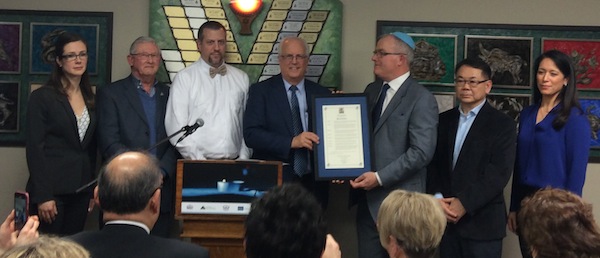
Left to right: Councilor Kelly Greene, Councilor Bill McNulty, Bayit past president Michael Sachs, Richmond Mayor Malcolm Brodie, Bayit president Keith Liedtke, Councilor Chak Au and Councilor Alexa Loo at the Bayit, after the mayor officially proclaims Jan. 27 as International Holocaust Remembrance Day in the city of Richmond. (photo by Cynthia Ramsay)

On Jan. 22, emotions were near the surface in a Holocaust commemoration that included the official proclamation of Jan. 27 as International Holocaust Remembrance Day in the city of Richmond. In a packed sanctuary at the Bayit, a synagogue in the province’s second-largest Jewish community, survivors, rabbis, community leaders and a host of elected officials from all levels of government were on hand to mark what was billed as an historic day.

Writer and teacher Lillian Boraks-Nemetz spoke as a survivor of the Holocaust and shared her first-person account, as well as the moral implications of what happened and the weight of survival.

photo - Lillian Boraks-Nemetz
Lillian Boraks-Nemetz (photo by Cynthia Ramsay)

“Not a day passes when I don’t ask myself why did I survive when six million perished, 1.5 million children and among them my 5-year-old sister,” said Boraks-Nemetz. “And I survived. Why? When every European Jewish child was automatically sentenced to death by Hitler, I won. Was my survival a miracle? A twist of fate? The will of God? Why me?”

She recalled the day everything changed, Sept. 1, 1939.

“I was alone on the porch of my grandfather’s summer home when masses of airplanes passed over my head. I heard shots, explosions, my dad ran to get me and we barely made it to the shelter, where the sight of crying children and frightened people confirmed my own fears,” she said. The Nazis invaded her Polish homeland. Jews lost all human rights, her father lost his right to practise law, her uncle was prevented from practising medicine. Teachers, professors and businesspeople were all kicked out of their positions. Jewish children did not attend schools and they were bullied, a precursor of the much graver fate to come.

Soon the Jews of Warsaw were imprisoned in the ghetto, where a Nazi-created dystopia developed.

“People stole food from each other,” she said. “All morality ceased to exist in an amoral world.”

Young Lillian was smuggled into the factory where her mother was a slave labourer. Lillian’s grandmother had bought a small house in a village and promised it to a man in exchange for posing as her husband, creating a pretext of a non-Jewish Polish family. Lillian was then smuggled from the ghetto through bribery and survived the war with her grandmother and the man.

“What were my chances of surviving? The rate of a child’s surviving the ghetto was seven percent,” she said. “We were liberated in 1945 by the Russians. But liberation isn’t liberating to survivors.”

While adults worked to reestablish their lives in a new country, children were left largely to their own devices to assimilate all that had happened. Psychiatry or any professional help was largely nonexistent.

“I was told to forget and to let go by people who didn’t have a clue what was on my mind or my soul,” she told the audience. “This was not a physical wound that results in a bruise or a scab, which then falls off and mostly disappears. This is a branding on the soul of fire caused by man’s inhumanity to man, woman and child. The enormity of the Holocaust is still largely incomprehensible and still emotionally inaccessible to those who were born here.”

photo - Judy Darcy
Judy Darcy (photo by Cynthia Ramsay)

Judy Darcy, British Columbia’s minister of mental health and addictions, shared the story of how her father survived the Holocaust and subsequently hid his Jewish identity to everyone, including his own children, until the last years of his life, when he tried to reconcile his experiences in meetings with the late Toronto rabbi Gunter Plaut. Darcy’s story was featured in the Independent (Feb. 24, 2017, jewishindependent.ca/mlas-father-hid-past).

photo - Rabbi Levi Varnai speaks as Keith Liedtke looks on
Rabbi Levi Varnai speaks as Keith Liedtke looks on. (photo by Cynthia Ramsay)

Rabbi Levi Varnai, spiritual leader of the Bayit, recalled his family’s survival during the Holocaust, and Ezra Shanken, chief executive officer of the Jewish Federation of Greater Vancouver, spoke of the human potential for good and evil.

“We must understand that we as human beings have the capacity for immense love but also to create immense pain and it’s only through disciplining ourselves through education and through moments like this that we ensure that the community that I think we all want, which is a community of love, is what will remain,” Shanken said.

photo - Ezra Shanken
Ezra Shanken (photo by Cynthia Ramsay)

Richmond’s Mayor Malcolm Brodie spoke at the event. In an interview with the Independent after, he noted that he often receives requests for proclamations. Recently, the urgency for making a statement and standing with Jewish people was accentuated when a Richmond auction house had to be pressured to cancel the sale of Nazi military memorabilia. Participating in the commemoration with the Jewish community was significant for him, said the mayor, and the past is a lesson for the future.

“I found it quite moving,” said Brodie, noting the remarks by Boraks-Nemetz and Darcy. It is important, he said, “to remind people, and the greater community, to watch out for the signs, because something like this – hopefully never on the scale – but something could happen again.… There have been enough times recently that antisemitism is still a real thing. It is something that we don’t hear too much about but it is something that is very real. In addition to honouring these millions who died, we have to educate young people to make sure that everybody knows the facts and we make sure that it never happens again.”

Michael Sachs, a Jewish community activist and past president of the Bayit, was pivotal in organizing the event – which was co-hosted by the Bayit, Vancouver Holocaust Education Centre, Centre for Israel and Jewish Affairs, Kehila Society of Richmond and Jewish Federation of Greater Vancouver – and ensuring the attendance of the elected officials. Among the attendees were the mayor, most of Richmond’s city councilors, all four of the city’s members in the Legislature, Member of Parliament Alice Wong and former MP Joe Peschisolido, as well as others.

“There were 100 chairs and it was standing room only,” Sachs said afterward. “It’s historic because it’s the first time in Richmond that this proclamation has been made. To have such an outpouring of elected officials, VIPs and all these people coming out – it’s the first in history in Richmond.”

Sachs was effusive in his praise for the mayor for his actions. While many commemorations are taking place because it is the 75th anniversary of the liberation of Auschwitz, that was not a prime motivator of the Richmond event, said Sachs.

“It’s the first step of many that will come,” he said. “It’s the beginning of a real public acknowledgement that will lead to more public education. We had someone who was there, one of the aides of an elected official, and he came up to me afterwards and he said, ‘I didn’t know anything about the Holocaust.’ That’s one person right there,” Sachs said. “And, hopefully, this moment continues to help bring Holocaust education into every classroom in this province.”

Format ImagePosted on January 31, 2020January 28, 2020Author Pat Johnson and Cynthia RamsayCategories LocalTags Bayit, Holocaust, Malcolm Brodie, Michael Sachs, Richmond
JFL NorthWest returns

JFL NorthWest returns

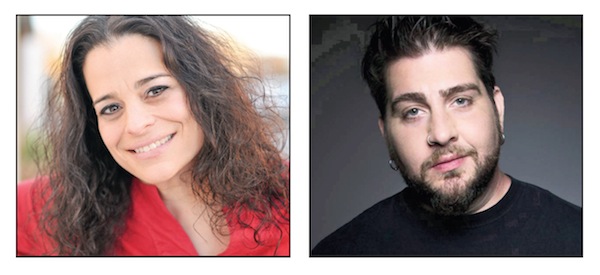
Jessica Kirson and Big Jay Oakerson are part of the Just for Laughs NorthWest comedy festival lineup in Vancouver Feb. 13-25. (photos from JFL NorthWest)

The Just for Laughs NorthWest comedy festival takes place around Metro Vancouver Feb. 13-25. Among the performers are several members of the Jewish community, including Andy Kindler, Jessica Kirson, Big Jay Oakerson and Esther Povitsky. The Jewish Independent recently spoke with Kirson and Oakerson.

Kirson is an award-winning comedian. She has appeared on several talk and TV shows, and has her own podcast, Relatively Sane. She was a consultant, producer, writer and actor in the Robert De Niro film The Comedian and will play herself on the HBO series Crashing with Pete Holmes. As part of JFL NorthWest, she will be at the Biltmore Cabaret on Feb. 17, 9 p.m.

JI: Since the JI spoke with you in 2016 ahead of your Chutzpah! show (jewishindependent.ca/gonna-be-a-fun-night), a lot has happened in your world. Could you share some of your professional highlights over the last few years?

JK: So much has happened. I have done a ton of television and movie appearances. I’m loving traveling all over the world doing stand-up. I am executive producing a movie for FX, a documentary about female comedians; it will première this summer. I had a special come out on Comedy Central called Talking to Myself, in addition to a bunch of other projects.

JI: You’ve been in the podcast world for a long time now. What do you particularly like about the medium?

JK: I started Relatively Sane because I wanted to create a podcast that wasn’t just funny and silly. I wanted it to get real also. I wanted to talk about anxiety, depression, etc. I love it. It’s one of my favorite creative mediums now.

JI: What is the difference, if any, performance or prep-wise between working on a radio show versus a podcast?

JK: It’s very similar. I don’t do a ton of prep work with my guests. I love finding things out while I’m talking to them. It’s more real that way.

JI: Can you tell me a bit about your Comedy Central special, how it came about and what it has meant to you career-wise?

JK: I had felt like I deserved a comedy special years ago. It was the one thing I felt I deserved that I didn’t get. I got a call from Bill Burr. He told me he wanted to produce my special. He shocked me. I feel very grateful to him. When comics do things like that for other performers, it’s amazing. We should all do it for each other.

JI: Similarly, The Comedian and Robert DeNiro. How did that happen?

JK: DeNiro saw me performing at the Comedy Cellar in New York City. He was looking for comics to be in his movie. We met up that week, we connected and I became his right-hand person. I ended up being in the movie and getting a producer credit. The hardest part was showing up every day, giving my opinion and not caring what the producers and director thought. It was very intimidating but I had him by my side so it worked out.

JI: Is getting your own television show still something you’d like to achieve?

JK: Yes, I would love to have a talk show.

* * *

Oakerson has appeared on many television shows. He has recorded two specials, one for Comedy Central in 2016 and one for Netflix in 2018, as well as three albums. He was the host and creator of What’s Your F#$king Deal?! and currently co-hosts the podcasts The Legions of Skanks, The SDR Show and The Bonfire with Big Jay Oakerson and Dan Soder. For the JFL NorthWest festival, he will perform at the Biltmore Cabaret Feb. 19-20, 9:30 p.m.

JI: When did you first start doing stand-up and what motivated you to do it?

BJO: I started doing comedy in 1999 at the urging of a friend who caught up with me after high school and expressed her disappointment in me never trying it before.

JI: In what ways has your stand-up style changed since you first started?

BJO: First of all, my level of nerves is significantly down. I think I’ve evolved it into a very comfortable style of storytelling and interaction versus joke writing/telling than I started with.

JI: Did you grow up in a household where you were encouraged to form and express your own opinions?

BJO: I don’t recall anyone in my household being highly opinionated about anything.

JI: Were you a witty or mouthy child?

BJO: 30% mouthy, 70% witty.

JI: What role, if any, does being Jewish, Judaism, Jewish culture or community have in your life and/or your career?

BJO: I thought I’d get a bump in this business because I’m Jewish, and nothing. I guess I’m not that kind of Jewish.

JI: What is it about pushing the boundaries that you most enjoy, and to what purpose do you do it?

BJO: “Edgy comedy” was generally the comedy I was drawn to growing up, so it’s just sort of how my humour developed. If I can make you question things or think about a different perspective on something, great, but, ultimately, I’m just trying to make people laugh.

JI: Are there any red lines you won’t cross?

BJO: Not if I think I can make the subject more funny than offensive.

JI: What do you enjoy most about doing podcasts?

BJO: Freedom.

Both Oakerson’s and Kirson’s shows are 19+. For tickets and the full JFL NorthWest lineup, visit jflnorthwest.com.

In next week’s JI: an interview with Esther Povitsky.

Format ImagePosted on January 31, 2020January 28, 2020Author Cynthia RamsayCategories Performing ArtsTags Big Jay Oakerson, comedy, Jessica Kirson, JFL NorthWest
War heroism recalled

War heroism recalled

Prof. George Bluman speaks at the 15th annual Raoul Wallenberg Day commemoration, Jan. 19. (photo by Masumi Kikuchi)

Japanese diplomat Chiune Sugihara was honoured in Vancouver this month with a lecture on his wartime heroism – by a man who owes his life to the actions of Sugihara when the diplomat served as consul for the Imperial Japanese government in Lithuania, near the start of the Second World War.

George Bluman, a professor emeritus of mathematics at the University of British Columbia, spoke at the 15th annual Raoul Wallenberg Day commemoration Jan. 19, which was held at the H.R. MacMillan Space Centre. The annual event is presented by the Wallenberg-Sugihara Civil Courage Society and took place 75 years and two days after Wallenberg, a Swedish diplomat in Hungary whose actions saved the lives of tens of thousands of Jews, was last seen alive. The actions of Sugihara, vice-consul of the Japanese embassy in Kaunas, Lithuania, paralleled those of Wallenberg in that he issued visas and took extraordinary actions to save the lives of the threatened Jews of Europe.

Bluman’s parents, Nathan and Susan Bluman, fled to Lithuania after Germany invaded Poland in 1939. There, they received transit visas from Sugihara, which enabled them to travel through the Soviet Union to Japan. They then obtained temporary permits to enter Canada and they were aboard the last ship sailing from Japan to Vancouver prior to the attack on Pearl Harbor.

An estimated 15% of Sugihara survivors became Canadians, many of them remaining in Vancouver, including the Bluman family, which has come to number 23, now including great-grandchildren of Susan and Nathan. It is estimated that Sugihara’s actions facilitated the escape of thousands of Jewish refugees.

In addition to the Sugihara descendants living in Vancouver, Bluman noted an additional local connection. On his way to Europe for the series of diplomatic postings that would lead to his heroic acts, Sugihara and his wife Yukiko arrived by ship in Vancouver in 1937, then took a transcontinental train to the East Coast to board another ship, which would take them to Europe.

A 2017 poll in a Tokyo publication rated Sugihara as the most important Japanese person ever. “Why?” Bluman asked. “Against advice from his superiors in Tokyo, he issued transit visas to Japan that ended up saving about 2,100 Jewish refugees who otherwise would have been likely murdered. Those saved included my parents as well as one of my uncles and his wife.… Perhaps as many as 40,000 people owe their lives due to the extraordinary heroic deeds of Sugihara.”

Two diplomats from the Netherlands played crucial roles in Sugihara’s heroics, Bluman said. After the Nazi occupation of that country, in May 1940, an anti-Nazi Dutch government-in-exile was established in London and remained in charge of all Dutch embassies. The anti-Nazi Dutch ambassador in Latvia, L.P.J. de Decker, dismissed his pro-Nazi Lithuanian honorary consul, replacing him with Jan Zwartendijk, a Dutch engineer heading Philips electronics in Kaunas.

“Two young Dutch rabbinical students approached Zwartendijk, requesting documentation to go to Curaçao, a Dutch colony in the West Indies, with the aim of traveling east through the Soviet Union, Japan, the Pacific Ocean and the Panama Canal to tiny Curaçao, an island off the coast of Venezuela, about one-sixth the size of Metro Vancouver. They also sought permits for their mostly Polish classmates.

“Why Curaçao?” asked Bluman. “Because no visa was required to enter Curaçao. The local governor had sole authority to permit entry. But this was rarely granted. Zwartendijk was given permission by de Decker, the Dutch ambassador in Riga [Latvia], to issue permits to Curaçao to their fellow rabbinical students that stated, in French, ‘A visa for entry is not required,’ leaving out the condition of the governor’s permission. Moreover, Zwartendijk courageously agreed to issue such permits to all Jewish refugees who applied for them.”

A delegation of Jewish refugees approached Sugihara about obtaining Japanese transit visas, a necessary step for the scheme’s success.

“Without permission from Tokyo, and after getting Soviet approval, signed by Stalin, for refugee transit through the Soviet Union, Sugihara issued transit visas valid for a stay of 10 days in Japan, based on the seemingly sufficient Zwartendijk Curaçao permits,” said Bluman. “Zwartendijk signed 2,300 such permits, until his office was forced to close on the day Lithuania was annexed by the Soviet Union.… The scam worked.”

With the annexation of the Baltic states to the Soviet Union, all foreign embassies were ordered closed. Though Zwartendijk left, Sugihara managed to stay on for a further four weeks to continue writing transit visas – even for Jews who had not obtained a visa from Zwartendijk.

“These Jews included my parents, who approached Sugihara’s office six days after Zwartendijk had left,” Bluman said.

Ultimately, about 80% of the Jewish refugees issued Sugihara visas survived and about three-quarters made it to Japan. Almost half carried on to Shanghai, China, to wait out the war.

Sugihara’s diplomatic career effectively ended in Romania, where he was posted at the end of the war. When the Soviets occupied Bucharest, Sugihara and his family were imprisoned in a prisoner-of-war camp for 18 months.

Back in Japan in 1946, Sugihara was dismissed from diplomatic service and spent the next several decades in low-key positions in Japan and Moscow. His retirement from service was ostensibly a matter of downsizing, but some have speculated that his heroic insubordination was a cause.

Only in 1968 did Sugihara learn that most of the Jews he had helped had survived. In 1985, he was recognized by the state of Israel, receiving the Righteous Among the Nations award from Yad Vashem, as well as perpetual Israeli citizenship for himself and his family. Zwartendijk was posthumously honoured in 1997. Sugihara died in 1986, at the age of 86. Bluman retains close contact with the family in Japan.

“In my family,” Bluman concluded, “there is one great hero we always carry in our hearts and to whom we will be forever grateful: Chiune Sugihara.”

After Bluman’s presentation, attendees watched the film Persona Non Grata: The Story of Chiune Sugihara. Earlier, Alan La Fevre, president of the Wallenberg-Sugihara Civil Courage Society, welcomed guests, including the deputy mayor of the city of Vancouver, Christine Boyle, who read a proclamation declaring Raoul Wallenberg Day. Diplomats from Japan and Ukraine were in attendance.

The Wallenberg-Sugihara Civil Courage Society was formed in 2013 by members of the Swedish and Jewish communities. The society continues the legacy of the annual Wallenberg Day events in Vancouver, recognizing and honouring individuals who, at great personal risk, have helped others by acting against unjust laws, norms or conventions.

Format ImagePosted on January 31, 2020January 28, 2020Author Pat JohnsonCategories LocalTags Chiune Sugihara, George Bluman, Holocaust, Wallenberg-Sugihara Civil Courage Society

When is never again?

Monday was International Holocaust Remembrance Day. Scrolling through social media, it was jarring to see the juxtaposition of images and ideas reflecting on that terrible history intermingled with the mundane and fantastical miscellany of everyday 21st-century life. This is the reality of our world: the grave realities of yesterday and today poking through the onslaught of witty memes, outrage over a vast range of real and imagined evils, cute kittens and the panorama of detritus and riches available to, and bombarding us, at every moment.

This is how it is. Even as we recommit ourselves to the promise of “never again,” still we carry on with our daily lives. Yet these realities are not, and should not be, disconnected from one another. The memory of the Holocaust and its victims, and the importance of listening to and learning from its survivors and its messages, are sacred obligations. But their lessons and meanings can and should be applied to the more commonplace events we experience. History is a prism through which we should view the present and the future.

Like the jarring extremes that can be found scrolling social media on Holocaust Remembrance Day, this collision of gravity and triviality is problematic. We recoil from inappropriate comparisons. Yet, in a world where legitimate causes struggle to be heard above the competing din, we often fall back on the most incendiary formulations, so every injustice becomes “fascism,” every leader we dislike a “Nazi.” This dilutes the seriousness of the history it invokes – and it also makes it more difficult to identify and draw attention to genuinely grave dangers, including literal fascism or fascist-adjacent ideas and actions emerging in Europe and closer to home.

The number of lessons to be drawn from the Holocaust are as innumerable as there are human behaviours. A relevant one for our time is the fragility of democracy and civil order. The actions of Raoul Wallenberg and Chiune Sugihara (click here to read story) are examples of a dystopic situation where good people are driven to break laws and norms promulgated by evil forces. In situations where democracy and social order are upended, goodness is criminalized and malevolence is institutionalized.

Democracy is under threat in much of the world right now. Human nature is such that we take for granted once-unimaginable wonders – gadgets in our pockets containing the breadth of human knowledge, the perceived right of every individual to live free from fear of tyranny – almost as soon as we access them. We forget that democracy is barely two centuries old and that it is not only imperfect but tenuous. With extraordinary ease, individuals of various stripes have managed to smother or at least severely disfigure nascent democracies in Russia, Poland, Hungary and elsewhere in Eastern Europe. A more established democracy in Turkey has been twisted away from its secularist, pluralist roots. The world’s largest democracy, India, is engaged in serious religious-based oppression.

In Israel, there are social forces and political parties pushing the extremes, as well. The Kahanist party, Otzma Yehudit, is aiming to again contest the March elections and has been rooting around the emerging electoral alliances for a slot. To his credit, Naftali Bennett, head of the New Right bloc and no raging moderate himself, rejects being in a tent with Otzma Yehudit and rightly warns other parties to steer clear.

And, in ways whose significance we may not yet be able to judge, the fabric of American democracy – checks and balances between branches of government – is being threatened. The president, indicted for attempting to extort our ally Ukraine to participate in political dirty tricks in exchange for desperately needed military funding to defend itself against the encroaching Russian military, seems destined to be exonerated by a Senate more concerned with party discipline than the rule of law, the constitution or human decency. If the probable outcome is realized, it will represent a blow to the grand ideals of the world’s oldest contemporary democracy.

Is raising this example itself a symptom of the problem we are discussing? Is it relevant and proper to discuss the American or Israeli situation in the same context as Russia, Poland or Hungary? Do we diminish the memory of the Holocaust by raising this topic in this perspective? Is it equally specious to assert that we won’t know, perhaps until it is too late, whether we should have been more or less vigilant when a man with little or no respect for norms of nicety or constitutionality ascended to the highest office in the democratic world?

This is the line we walk when we say “never again.” The magnitude of the history underpinning this promise is so enormous that we risk lessening it through invocation. Yet, if we isolate that history and its lessons, like good china saved only for the most special occasions, are we not conversely risking the very promise we undertake?

Posted on January 31, 2020January 28, 2020Author The Editorial BoardCategories From the JITags antisemitism, democracy, history, Holocaust, Israel, racism, United States

Posts pagination

Previous page Page 1 … Page 264 Page 265 Page 266 … Page 649 Next page
Proudly powered by WordPress