Skip to content
  • Home
  • Subscribe / donate
  • Events calendar
  • News
    • Local
    • National
    • Israel
    • World
    • עניין בחדשות
      A roundup of news in Canada and further afield, in Hebrew.
  • Opinion
    • From the JI
    • Op-Ed
  • Arts & Culture
    • Performing Arts
    • Music
    • Books
    • Visual Arts
    • TV & Film
  • Life
    • Celebrating the Holidays
    • Travel
    • The Daily Snooze
      Cartoons by Jacob Samuel
    • Mystery Photo
      Help the JI and JMABC fill in the gaps in our archives.
  • Community Links
    • Organizations, Etc.
    • Other News Sources & Blogs
    • Business Directory
  • FAQ
  • JI Chai Celebration
  • JI@88! video

Recent Posts

  • Sharing her testimony
  • Fall fight takes leap forward
  • The balancing of rights
  • Multiple Tony n’ Tina roles
  • Stories of trauma, resilience
  • Celebrate our culture
  • A responsibility to help
  • What wellness means at JCC
  • Together in mourning
  • Downhill after Trump?
  • Birth control even easier now
  • Eco-Sisters mentorship
  • Unexpected discoveries
  • Study’s results hopeful
  • Bad behaviour affects us all
  • Thankful for the police
  • UBC needs a wake-up call
  • Recalling a shining star
  • Sleep well …
  • BGU fosters startup culture
  • Photography and glass
  • Is it the end of an era?
  • Taking life a step at a time
  • Nakba exhibit biased
  • Film festival starts next week
  • Musical with heart and soul
  • Rabbi marks 13 years
  • Keeper of VTT’s history
  • Gala fêtes Infeld’s 20th
  • Building JWest together
  • Challah Mom comes to Vancouver
  • What to do about media bias
  • Education offers hope
  • Remembrance – a moral act
  • What makes us human
  • המלחמות של נתניהו וטראמפ

Archives

Follow @JewishIndie
image - The CJN - Visit Us Banner - 300x600 - 101625

Month: November 2023

Tidbits about life now

Tidbits about life now

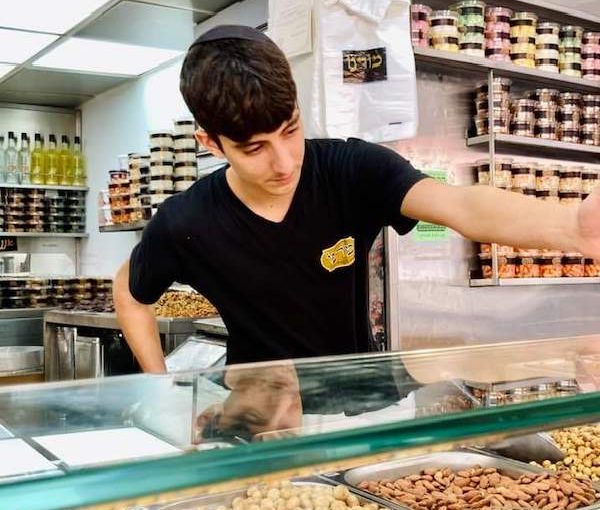
Teenagers are filling in for drafted reservists at Jerusalem’s Machane Yehuda market. (photo by Gil Zohar)

With the horrors of Oct. 7 embedded in our minds, in our hearts and in our souls, Israel has come together in so many ways, including for war. The effects are so broad and deep. Here is a bird’s-eye view from my narrow perch.

  • All the booms in the air, coming from far-off (and not-so-far-off) mid-air missile collisions – bravo Iron Dome! The swoosh of our fighter jets overhead – bravo Israeli Air Force! And all those customized Red Alert apps buzzing away on everyone’s cellphones – bravo Elad Nava, tech entrepreneur extraordinaire! It’s starting to sound like an orchestra out there.
  • Social media was calling for Israelis to sing, to go out on our patios at 9 p.m. and belt out Hatikvah. We did. And it felt great! So darn cathartic. What a sense of solidarity. As it turns out, on this particular evening, Hamas warned Tel Aviv of a missile barrage at 9 p.m. Guess our singing acted as type of musical Iron Dome, as no barrage arrived. Which is not to say Tel Aviv hasn’t had its share of missiles, just not at this particular time.
  • Driving to work, traffic slowed down considerably due to some “jackass” up ahead. Turned out to be a convoy of military jeeps carrying weapons and personnel to our north. As I passed them – 12 vehicles – I slowed down (in the left lane), gave a friendly honk and a thumbs up to each. Twelve times. Cars behind me did the same.
  • With 75 seconds to reach our safe room and with missile attacks being random with no real pattern, the stress and uncertainty prevents me from enjoying my private bathroom time, sitting down with a newspaper or book or my smartphone. But not under current circumstances. Just want to get in and out of there as quickly as I can..
  • Same for showering. No more basking under a warm spray of fresh water. No more humming a few showtunes while lathering up. Nope. Just a quick soaping and get out of there. For shaving, I’m getting use to a three-day growth cycle.
  • And, getting really personal … in the bedroom with the wife, I am now suffering reverse performance anxiety. I just get it done and move on. Don’t want to get caught with my pants down when the sirens sound.
  • Bravo to McDonald’s – giving McHappy meals free of charge to our soldiers. The restaurant stepped up, and many businesses are doing the same. From banks, to other restaurants, to retailers, providing goods or services at discounted prices to relieve some of the burden weighing on the country. Wonderful to see this coming together.
  • I miss my exercise routine. Was swimming a couple time a week. Now, not. The pool closed due to homeland security restrictions limiting gatherings at places of leisure. Who would categorize exercise as leisure? Anyway, I don’t think I’d hear the missile alert with my head bobbing in and out of the water while doing the breaststroke or front crawl. More so, there’s no running along the poolside, so would not make the saferoom in time.
  • We are not immune to panic buying. A few nights into the war, based on some rumour or other, I went grocery shopping to stock up on water, canned goods, candles, matches, toilet paper…. Didn’t get out of there until almost 11 p.m. The checkout line snaked all the way to the meat section. It was long, the joke being that, by the time we reach the checkout counter, Netanyahu will have negotiated a hudna (truce in Arabic). Ha.
  • I keep saying I’ll do it. Need to put more than just a half dozen bottled waters and a few inhalers in our safe room. Should stock it with canned goods, more medicine, flashlight, battery-powered radio and other survival aids. Maybe tomorrow.
  • If someone forgets their house key and knocks at our now always-locked door, they need to say a password before we’ll open the door. The theory being, if a Hamas terrorist is holding a gun to their head, they won’t say the password. Talk about paranoid. Probably run-of-the-mill war-related stress.
  • Joe Biden. His Oct. 11 “Don’t” speech was amazing! Talk about geopolitical alliances, commitments, pacts, and the such – I won’t. I’ll simply say I fell in love that evening.
  • Joe Biden. His Oct. 18 “We’ve got your back” speech was TREMENDOUS! I fell in love with him. Again. With a lightning visit to Israel, he kind of reminded me of Clint Eastwood in his glory days. He had that “make my day” squint in his eyes. Might have been him struggling to read the monitor, but he came across as a Dirty Harry kind of guy.
  • There are still a handful of Israelis – OK, maybe more than a handful – who just don’t get it. Now is not the time for divisiveness and finger pointing. There was utter failure. But the hard questions and difficult answers will come later. Now is the time for unity!
  • My wife and daughter volunteered at a high-end event (my wife works in the industry) to help arrange 1,000+ meals for our soldiers. There will be some very satiated soldiers enjoying gourmet meals in cardboard boxes and with disposable utensils.
  • And the sweet smell of my wife’s chocolate chip cookies and brownies baking in the kitchen. She slaps my hand as I go for a cookie: “Not for you! For our soldiers.” It’s that spirit of coming together.
  • My daughter left the house early the other morning and returned about an hour later with a huge orange garbage bag full of…. “What’s that?” I inquired. “Laundry. From a family in the south who was evacuated to some hotel. Mom volunteered.” As much as we get preoccupied with the war, with survival, sometimes it’s the mundane that really makes a difference.
  • Ouch. Our currency at its weakest since 2015. Pretty painful when you are sending US dollar instalments to your son studying in the States.
  • I know the diaspora is busy raising money for Israel at speeds and amounts like never before. But don’t stop once you give. Give more. This war will cost Israel billions. If you have given, please give again. Sderot is Israel’s front line. Israel is the diaspora’s front line.

Bruce Brown is a Canadian and an Israeli. He made aliyah … a long time ago. He works in Israel’s high-tech sector by day and, in spurts, is a somewhat inspired writer by night. Brown is the winner of the 2019 AJPA Rockower Award for excellence in writing, and wrote the 1998 satire An Israeli is…. Brown reflects on life in Israel – political, social, economic and personal.
Format ImagePosted on November 10, 2023November 9, 2023Author Bruce BrownCategories IsraelTags civil society, Israel-Hamas war, Oct. 7, volunteering

Civil society has been crucial

The Institute for the Study of Civil Society and Philanthropy in Israel at Hebrew University of Jerusalem recently released a report called Civil Society Engagement in Israel During the Iron Swords War: Emerging Trends and Preliminary Insights. Written by Prof. Michal Almog-Bar, Ronit Bar, Ron Barkai and Hila Marmus, it offers an analysis of the exceptional civil engagement and volunteerism witnessed in Israel during the first two weeks of the Israel-Hamas war.

Operation Iron Swords was triggered by a heinous terrorist attack on Israeli civilians, launching a massive mobilization effort aimed at bolstering the nation. In response, civil society rallied under the banner of “Defending Our Home,” setting aside preexisting social divisions. The collaborative report, authored by experts at Hebrew University, examines the remarkable civil initiatives, volunteerism and philanthropic contributions that played a pivotal role in addressing urgent needs and challenges during this critical period.

During the first two weeks of the war, civil initiatives demonstrated their ability to address the urgent needs and pressing challenges that arose within Israeli society. These initiatives played a pivotal role in executing crucial tasks such as rescue operations, evacuations, temporary shelter provision, and the distribution of vital food and medical supplies. Additionally, they provided invaluable psychological support to those affected, emphasizing the power of grassroots efforts in times of crisis.

Here are the key highlights of the institute’s report.

Diverse Civil Initiatives: the report highlights over 1,000 civil initiatives that emerged across Israel, encompassing a wide range of activities. These initiatives included the rescue and evacuation of civilians and animals, and provision of essential supplies, as well as support for bereaved families and those who went missing during the conflict.

Local and Affiliated Groups: local and affiliated groups played a significant role in addressing the specific needs of their communities, providing temporary accommodation to evacuees and extending their support beyond their local borders.

Volunteerism: 48.6% of the Israeli population engaged in volunteering during the war, a notable increase from the rate observed during the COVID-19 crisis (33%). Notably, volunteerism cut across all age groups, genders and religious affiliations. In particular, the rate of volunteerism among the Arab-Israeli population during the war reached 29%, a rise from the 19% recorded during COVID.

Spontaneous Volunteers: a substantial majority of volunteers (28%) during the war were newcomers to volunteering, underscoring the widespread participation of citizens who had not volunteered before the conflict. These newcomers were predominantly secular and had above-average incomes.

Primary Volunteer Activities: the most prominent volunteer activities included collecting, packing and distributing food and equipment, transportation of people, food and equipment, assisting security forces, participating in outreach activities through social networks, and offering essential aid to evacuees.

Volunteers and Donations: many volunteers integrated their efforts with financial contributions, participating in voluntary initiatives and crowdfunding campaigns, highlighting the synergy between volunteerism and philanthropy.

Inclusivity: unlike the predominantly youth-driven volunteering seen during the COVID crisis, individuals of all age groups participated actively. Notably, 46% of those aged 18-35, 52% of those aged 35-55 and 52% of those 55+ engaged in volunteering. Volunteerism transcended gender and religious boundaries. The use of technology for digital volunteering extended the reach to remote and mobility-limited populations, underscoring the adaptability and inclusivity of these volunteer efforts.

Financial Mobilization: Israel witnessed a swift and substantial mobilization of financial resources, surpassing levels observed during prior military operations. Support poured in from North American Jewry and Jewish federations, with donations estimated to be in the hundreds of millions of dollars.

The report underscores the importance of effective coordination between civil organizations and government bodies to ensure a unified response to pressing needs. It also suggests that civil organizations can evolve into a valuable support force for government activities during ongoing combat operations.

The study was a collaborative effort between the Institute for the Study of Civil Society and Philanthropy in Israel at Hebrew University, the Israeli Council for Volunteering, Civic Leadership (the umbrella organization of Israeli nonprofit organizations) and the Forum of Foundations in Israel. It included several surveys. The survey of volunteering during the first two weeks of the war was administered by the company Geocartographia and included 1,000 participants, constituting a representative sample of the adult population of Israel aged 18 and over.

– Courtesy Hebrew University of Jerusalem

Posted on November 10, 2023November 9, 2023Author Hebrew University of JerusalemCategories IsraelTags civil society, Institute for the Study of Civil Society and Philanthropy in Israel, Israel-Hamas war, Operation Iron Swords, volunteering
Tensions at university

Tensions at university

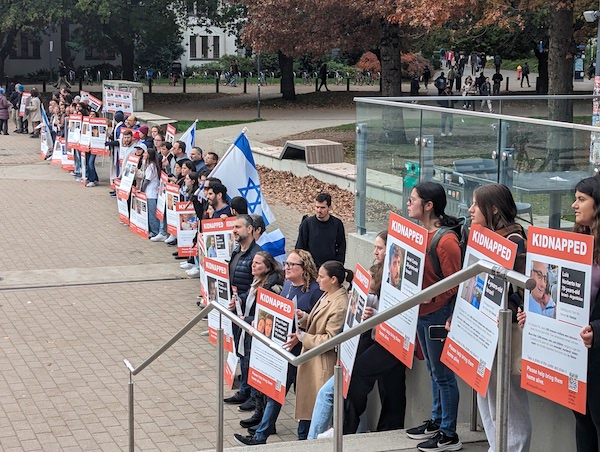
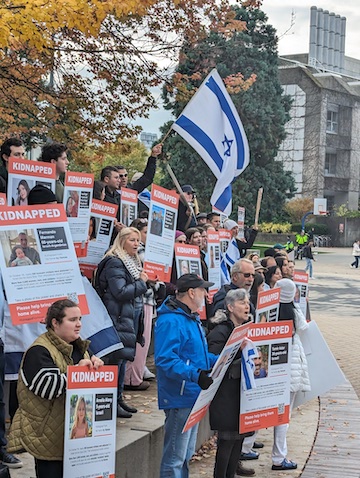
On Nov. 1, about 200 Jewish students and their supporters engaged in a low-key demonstration, with many holding posters of kidnapped Israelis. (photo by Pat Johnson)

When the new president of the University of British Columbia arrived for his first day on the job Nov. 1, he already had a full plate, including a 9 a.m. meeting with Jewish representatives and an urgent letter from community organizations expressing concerns about the safety of Jewish students on campus.

Dr. Benoit-Antoine Bacon starts his tenure at a contentious time, as Jewish, pro-Israel, anti-Israel and other students engage, sometimes constructively but often much less so, with events taking place in the Middle East.

Rob Philipp, executive director of Hillel BC, was joined by his assistant executive director, Ohad Gavrieli, and Nico Slobinsky, Pacific region vice-president for the Centre for Israel and Jewish Affairs, at the meeting with Bacon. Afterward, Philipp told the Independent the university has been on the right track but needs guidance.

“Generally speaking, I would say UBC has been very supportive of us, to the best of their ability,” he said, noting that Bacon’s welcoming of Jewish representatives is a good sign. “I had one of the very first meetings with him, so that speaks to how important this is on their radar.”

The university administration has been “somewhat consistent,” said Philipp.

“We are seeing support,” he said. “We don’t always see the right action, so that’s where we have to help and guide them.”

The larger issues, he said, are the serious affronts to civility on campus during the weeks since the start of the war between Israel and Hamas.

“There are so many red lines being crossed right now, it’s incredible,” said Philipp. “It seems OK now to kill civilians, to murder people for the ‘just’ cause and it keeps spilling over. People aren’t always understanding the details behind it all, so it’s as difficult a time as I have ever seen in this community – and it’s not just UBC, it’s all the university campuses all over North America.”

Hours after the meeting with the university president, about 200 Jewish students and their supporters engaged in a low-key demonstration, walking from Hillel House to the student union building, with many marchers holding posters of kidnapped Israelis. A student entered the building to deliver a letter to the president of the student government, the Alma Mater Society, expressing the group’s collective concerns. An emailed response to the letter from the AMS president was characterized by Hillel officials as positive.

photo - Jewish students and their supporters at the University of British Columbia on Nov. 1
Jewish students and their supporters at the University of British Columbia on Nov. 1. (photo by Pat Johnson)

A Jewish student leader from Simon Fraser University who asked that her name not be published said she came to the rally to protest the antisemitism in the world and, specifically, the lack of regard among student bodies to recognize what happened in Israel.

“It’s an extremely complex conflict that isn’t just black-and-white and I wish people would pay more attention or just seek a more nuanced view on the subject,” she said, adding that the climate at Simon Fraser does not seem as negative as at UBC, but that could change. In the last couple of years, the student government at SFU has demonstrated unbalanced, anti-Israel approaches, including adopting a motion on Israel and Palestine for which they consulted what the student called “tokenized [Jewish] fringe groups” while excluding Hillel and other mainstream Jewish voices.

Other participants at the rally said they felt the need to attend to be seen, and to register empathy with Israelis overseas and with Jewish students in Canada.

“We are here today so UBC acknowledges what’s going on in Israel – the kidnapped kids, elderly, children, women, Israelis – and what happened on Oct. 7,” said a 21-year-old Israeli-born woman who is not a student but came to support her brother, who is.

“I’m feeling very alone and feeling a lack of empathy and sympathy with what’s going on in Israel, feeling like people are too quick to comment sometimes,” she added.

Several non-Jewish students participated in the rally.

“I’m here because even though I’m not Jewish, I have a lot of Jewish friends and I believe the Hamas attacks against Israel are terrorism,” said fourth-year political science student Joe Latam. “The university’s attitude towards these literal terrorist organizations has been completely inadequate and they need to take better action.… The Jewish people have been systematically discriminated against for thousands of years and Israel is the one place where they can feel safe.”

Zara Nybo, who is also not Jewish, was motivated in part because her partner is Jewish and she sees the impact of events on him and his family.

“It’s important for me to stand up against terrorism and help spread the word that there are still innocent hostages who have been taken out of their home country,” she said. “We see a lot on the news that is politicized and very emotionally heartbreaking. I’m not here to say that Palestinian citizens have not died in this war, but I am here to say that death is death and we need to be able to recognize that heartbreak is heartbreak, so we are all here together.”

A first-year student who is Sikh called statements he has seen from peers and student leaders “frankly shameful.”

“I think there are many international students here that have been espousing hate, that have been espousing terrorist beliefs,” he said. “They have been saying they are pro-Hamas, they are saying [the Oct. 7 attacks were] a ‘beautiful act of resistance.’ I think we should double-check whether they deserve to be students at our wonderful university institutions.”

Bar Wolpert, an Israeli doing a one-semester landscape architecture exchange at UBC, said he was accosted by someone who tried to “shame” him as an Israeli.

“He just approached me out of the blue,” said Wolpert. “He was [aiming] his camera in front of my face.”

The person asked Wolpert if he supports “genocide.”

“I’m holding a [poster of a] kidnapped woman,” he said. “I am Israeli. I have a loss. So, please, first, respect my loss, respect my grief. And we are all standing here with many signs of kidnapped people and dead people, that is what is mattering for us right now, so before you are attacking me, respect my loss.”

Also at the rally were two brothers, Israeli high school students, whose parents sent them to stay with Canadian friends and family during the conflict.

A mother, walking with her young adult daughter, teared up when she realized that the poster she was carrying of a 21-year-old French-Israeli hostage could have been her own daughter.

“I can understand the pain,” said Evelyn Fichmann. “I think anybody can understand the pain.”

As he walked alongside scores of Jewish students and allies, a UBC student said the event gave him much-needed optimism.

“It really gave me some hope about unity,” he said.

Format ImagePosted on November 10, 2023November 9, 2023Author Pat JohnsonCategories LocalTags antisemitism, Benoit-Antoine Bacon, Hillel BC, hostages, Israel, Oct. 7, Rob Philipp, security, UBC, university campuses
A call for toughness

A call for toughness

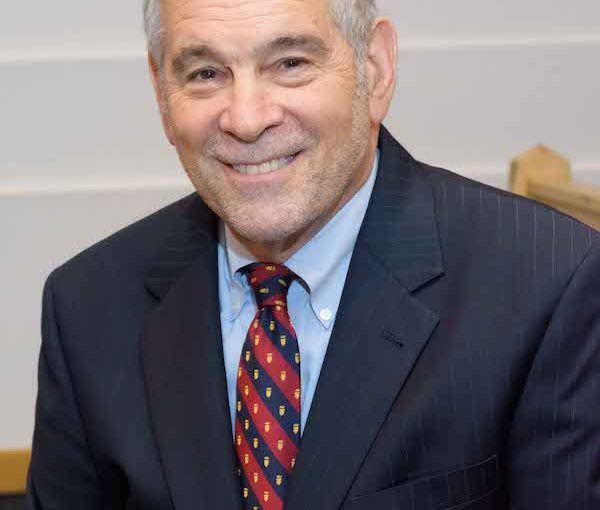
Rabbi Dr. Michael Berenbaum spoke at Congregation Schara Tzedeck on Nov. 5. He said: “We can’t raise a generation that is scared of being Jewish.” (photo from kolotmanagement.com)

The mood at Congregation Schara Tzedeck was solemn Sunday night, Nov. 5, when parents, grandparents and students from the Jewish community gathered to listen to Rabbi Dr. Michael Berenbaum, an American professor who is considered one of the world’s preeminent Holocaust scholars. Berenbaum came to discuss the importance of campus conversations, and specifically how to handle the critics of Israel who are voicing their support of Palestinians vociferously on college campuses throughout Canada and the United States.

Until the Oct. 7 terror attacks, Berenbaum said, our children had never known serious difficulty as Jews. “They’ve had the privilege of living in the greatest time to be Jewish, maybe in the history of the Jewish people,” he said. “Now, we’re asking our kids to toughen up, because they’re now going to face difficulty, pain, anguish and danger – physical or intellectual – for being Jews. This is our test of the hour, and it comes with the shattering of easily held assumptions about Jewish life.”

The Oct. 7 pogrom, he said, was worse than the 1906 Kishinev pogrom and worse than Kristallnacht in 1938 in terms of the number of Jews killed and the vehemence with which they were killed. “We believed Israel was founded to protect its people from these pogroms, and yet we were not safe.”

Berenbaum said it is crucial for Jewish students to be armed with accurate knowledge so they can counter the anti-Israel rhetoric they hear on campus. That means refuting claims that Israel is committing genocide. “Understand that this is war, and it has both direct and collateral consequences,” he said. “You cannot deal with war at this point without significant civilian casualties. While Israel is taking significant steps to avoid that, it’s unavoidable.” He noted that, since March 2011, the conflict in Syria has claimed the lives of 500,000 people – “and the rest of the world has heard nothing about this.”

On the claim that Israel is “occupying Gaza,” he clarified that Israel left Gaza in 2005, displacing 8,000 settlers so that Gazans would take control of their lives. “Israel is the only country in the world who has sacrificed land for normalization. We gave up Sinai for normalization with Egypt, and the reason the invasion happened now was because it appeared Saudi Arabia would establish a certain kind of peace with Israel,” he said. “Normalization represented a danger to the lateral forces in the region and that’s why this broke out now.”

On the claim that “Jews are colonizers,” he noted that Jews have never forsaken their connection to the land of Israel, and that there have been five cities with a permanent Jewish settlement in Israel. “When they came to Israel, they settled and worked the land, which is the opposite of colonization,” he said. “They didn’t take its resources and export it elsewhere.”

He noted that Palestinians were offered a state in 2000 and again in 2006, and they turned both opportunities down. “The Palestinians have never lost an opportunity to lose an opportunity, because their leadership is weak and corrupt,” he said.

There are a few things we can do now to ensure we are strong, he continued. One is to educate ourselves on the history of the state of Israel and Zionism. Another is to ensure we have solidarity by reaching out to one another.

 “These are not easy times and we need Jewish toughness and resilience,” said Berenbaum. “We can’t raise a generation that is scared of being Jewish. I want our Jewish students to be proud, tough and confident enough to accept the animus that will come their way, but to have the human capacity to respond to it.”

He ended his talk by calling Jews the “canary in the coalmine. You want to know if a society is healthy? See how it treats its Jews. We’re living in a world that’s fundamentally unhealthy, but it’s important to remember that we have many friends, we are not alone. We have to cultivate and respect those friendships, and not take them for granted.”

The events of Oct. 7 precipitated an earthquake, he added, “and the ground won’t settle for awhile. But earthquakes give the opportunity to build in a different way. We are in for a tough and difficult time, which will demand the best of us. But I fundamentally believe we have it in us to rise to the occasion.”

Lauren Kramer, an award-winning writer and editor, lives in Richmond.

Format ImagePosted on November 10, 2023November 9, 2023Author Lauren KramerCategories LocalTags antisemitism, education, history, Israel, Israel-Hamas war, Michael Berenbaum, Oct. 7, parenting, terrorism, university campuses
Efforts to reduce fake news

Efforts to reduce fake news

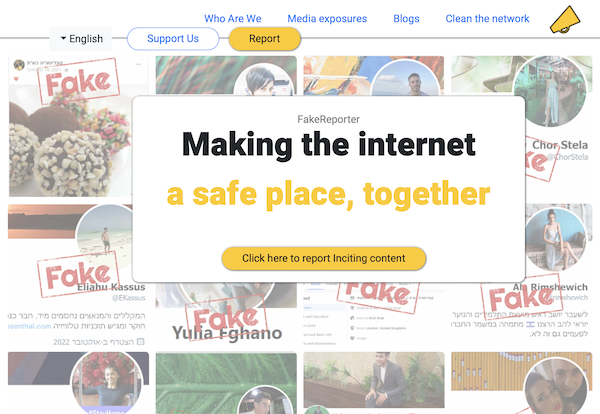
People can report misinformation and hateful material at FakeReporter.net.

In a world where misinformation and disinformation are coming at us in unprecedented volumes, an Israeli organization is working literally around-the-clock to flag, correct and eliminate online falsehoods – and they depend on ordinary people to inform them of lies that need addressing.

Achiya Schatz, co-founder and chief executive officer of the group FakeReporter, spoke virtually at a Nov. 2 event organized by Canadian Friends of Hebrew University of Jerusalem and Congregation Beth Israel.

“We try to leverage crowd wisdom in order to make the internet a safer place,” said Schatz.

The challenge goes far beyond reducing misleading information online, he said. The very survival of democratic societies is at stake.

“If we do not have the capacity to distinguish what’s true from what’s false,” he said, “then, by definition, the marketplace of ideas doesn’t work and, by definition, our democracy doesn’t work.”

FakeReporter’s work is painstaking. An on-call team of thousands of volunteers are connected by WhatsApp and other communication tools. When a report of unverified information comes in, it is channeled to an appropriate individual or team to investigate. They will contact government officials, military spokespeople or others who might be able to confirm or debunk the information. They post their findings on social media, disseminate it to conventional media outlets, especially those that may have spread the falsehoods, and report it to the social media or other platforms where it appears.

While the “fog of war” around the conflict between Israel and Gaza is an obvious source of fake news that keeps FakeReporter teams hopping, equally insidious efforts are fomenting internal strife in Israel.

“Arab citizens of Israel have been heavily attacked,” Schatz said of anti-Arab propaganda targeting citizens of Israel online. Posts have aimed to make Jewish Israelis believe that Arab Israelis are a threat. Photos of Arabs allegedly stalking Jewish homes and businesses turned out to be, after investigations by FakeReporter, tradespeople scoping a roofing project and municipal workers going about their business, for example. The messages, from unidentified sources, have the potential to create civil unrest inside the country amid ongoing conflicts with external terrorist groups on multiple fronts.

On the global level, FakeReporter is responding to a barrage of war-related and more routine anti-Israel material online. In response, taking the nomenclature and vision of Israel’s Iron Dome air defence system, Schatz said, his group is creating what strives to be an invincible defence against online incitement.

“We created a Digital Dome,” he said. “It’s an operation that, in one place, anyone can report hate speech, [content] glorifying terror, Hamas supporters and, generally, violence online on Meta, Google, LinkedIn and TikTok.”

The form for people to fill out is at DigitalDome.io, and the organization’s website is FakeReporter.net.

While there is an unlimited number of comparatively minor falsehoods, Schatz said his group is dedicated to confronting some specific and convoluted conspiracy theories that are going viral. Like the fantastical theories that emerged after the 9/11 terror attacks in the United States, the Oct. 7 attacks have spawned what Schatz calls the “traitors among us” conspiracies, in which Israeli security agencies are alleged to have masterminded, or at least participated in, the attacks, as a cover to attack Gaza.

While his organization is busy assessing and confronting the mass of misinformation and disinformation, individuals can do their part by consuming information critically, Schatz said.

To spot fake news, he said, several questions can narrow the field.

“Can I trust the person who wrote and distributed the news?” he said. “Is what I’m reading an opinion or a fact? Does what I’m reading make me feel rage? This question will help you understand that you are seeing something that maybe you should question.” If the “news” you saw in one place is not reported anywhere else, be very suspicious, he said.

The spread of false information is exacerbated by unwitting individuals who share what they find online.

“Before you spread anything forward, you should just breathe for a moment, look at it again with critical thinking and that would do half the job,” he said. “Don’t just spread news through WhatsApp groups and Telegram groups.”

If you find something that glorifies or promotes violence, that is racist, antisemitic or likely untrue, don’t send it to friends, send it DigitalDome.io, he said.

There are other things to consider in determining whether an item might be fake news.

“Many times, information is real but it’s not in the context,” said Schatz. A photo of a bombed building may be real, as opposed to Photoshopped. But what is purported to be in Gaza is often discovered to be from wars in Syria, Ukraine or elsewhere.

The FakeReporter team uses multiple strategies to assess the veracity of photos.

“We can recognize the vehicle,” he said, “we can geo-locate the area, understanding where it is in the world, and we can look for the information online and see, [was it] maybe published before?”

The problem is global and Schatz said governments and social media platforms must work together – or, as in the case of European legislation, governments can impose severe financial penalties on companies that do not speedily react to reports of false or dangerous information on their sites.

The European Union’s Digital Services Act makes it the responsibility of large online information companies to police and remove hate speech, disinformation and cyberbullying, as well as unsafe or illegal retail products, such as sham or life-threatening pharmaceuticals. Other countries could replicate Europe’s legislation, said Schatz.

“What is beautiful about the EU is that they have had a few countries come together and they used their power against big tech [in ways] small countries cannot,” he said. “Israel cannot do anything about it.… Even if we do pass a law, why would Facebook or Twitter care about the law that we passed? They don’t care. That’s a huge problem. What I think Canada and other countries should do is adopt what is happening in the Digital Services Act in Europe and then it’s much easier for the tech companies and for the country, because it’s just replicating what they already can do.”

All the examples Schatz used to this point were addressing the source of misinformation and disinformation. Societies also must sensitize the targets of this content by giving individuals the tools to assess what they see and hear.

“Finland, for example, understood the disinformation coming from Russia is a national threat to them,” he said. “So, they created programs, first for kids and then grown-ups, in digital literacy and information literacy and they are teaching … how to consume information.”

Dina Wachtel, Western region executive director of Canadian Friends of Hebrew University, opened the online event. Rabbi Jonathan Infeld of Congregation Beth Israel introduced Schatz and offered reflections on the topic.

Schatz warned that disinformation is at an inflection point, likely headed for an exponential increase thanks to artificial intelligence, while global responses to the problem are embryonic.

“We’re still learning,” he said. “We’re still adapting. Digital and information literacy is something that is still in its baby steps.”

Format ImagePosted on November 10, 2023November 9, 2023Author Pat JohnsonCategories IsraelTags Achiya Schatz, Beth Israel, Canadian Friends of Hebrew University, CFHU, conspiracy theories, Dina Wachtel, education, fake news, FakeReporter.net, media literacy

Under the bed, in the closet

If you’ve ever seen the movie Monsters, Inc. or its sequels, you may have an immediate visual image of what the craziest monsters look like when kids imagine what’s under the bed or in the closet. A few weeks ago, I started approaching this when we essentially moved. To clarify, we moved into our “new” house, built in 1913, more than a year ago. However, we’d all camped out in temporary spaces on the third floor while there were renovations done to the first and second floors.

We weren’t making cosmetic updates, these were basic needs like bathrooms that worked, a kitchen with heat, and other essentials. Turns out that, after more than 100 years and some poorly done, decades-old renovation choices along the way, it’s a good idea to have things fixed and updated – insulation and asbestos removal, new plumbing and safe wiring, too. We had scheduled our big “move” to the renovated second floor bedrooms for the Simchat Torah/Thanksgiving weekend. We would have had three days to manage the chaos. Little did we know that Hamas scheduled its horrific Israeli invasion and massacre for the same weekend.

Fueled by anxiety and a looming school and work deadline, we moved all four of us and dog beds downstairs. We set up kids’ clothes areas and adults’ nightstands, while we parents furtively looked at increasingly upsetting news online. I’ll probably always remember this moment in our Canadian character home renovation as when this massacre and the war against Hamas started.

We cleaned up the nearly vacated third floor, then set it up sufficiently to host another family who was visiting town the very next weekend. During the visit, we walked them over to see the Manitoba Legislature grounds while monitoring when each pro-Palestinian/anti-Israel rally might occur. There have been several now in Winnipeg, complete with pro-Israel counter-protests, with conflicts that required police intervention. We kept plowing forward amid the nightmare of the news.

Like many other places, Winnipeg has experienced acts of antisemitism. Some of it hit us personally. There was graffiti that my kids reported at middle school, and some of the bigger incidents have happened nearby or to people we know.

Like many other people have experienced, there are times when I have felt paralyzed and isolated by the overwhelming nature of the conflict. I am miserable about the loss of life, the impossibility of Israel’s situation, the fear for the hostages amid the knowledge that Hamas broke a ceasefire when it attacked Oct. 7, and that a ceasefire alone will not resolve this situation. I cannot bear the news. I also cannot look away.

The hardest task of this latest move has been the one where we open any closet door. I am still cleaning up boxes of belongings we have stored for more than a year. Things fall on me and surprise me. The worst part is the fear, the moment when the unknown jumps out at us and causes panic. Even if the box is labeled or the animated monster is in a movie, our startle instincts still cause fear when the unexpected and awful occurs.

When my kids told me about the hateful words on the test-taking dividers in math class, I didn’t feel afraid, but purposeful and angry. I wrote the teachers to report the situation and acted promptly. Within a few hours, the physical issue was addressed. The graffiti may be gone, but out there, some kid is still capable of writing more hate or worse.

Making lists, doing constructive activities – whether they are our daily obligations, additional volunteer efforts, or taking on new mitzvot (commandments) or prayers – may make us feel stronger. Also, in Mr. Rogers’ words, we can “look for the helpers.” We can ask for support from friends, neighbours, teachers, and others. We stay alert to the dangers and also strengthen ourselves with steps to make change during an incredibly difficult time.

There are lists on social media of how to protect our mental health and warnings for how to be proactive about protecting ourselves further. While this feels like new territory for us, it is, in fact, an ancient path. The prayer we use is the most compassionate call to free captives, and it begins with “Acheinu,”  “our brothers.” Old-fashioned translations call it our “brethren.” We pray for Israel, for those in captivity, and for the soldiers, too. For those who feel this leaves something out, remember that our tradition is one of shalom, peace. We pray for peace at every turn in our religious services. We’re not praying for any innocent person’s death.

I can’t say we’re all tidied up at our house and that everything has found its proper place. Daily, I discover items that we put away and then lost during this renovation and life transition. The metaphor extends to this difficult period as Jews in Israel and the diaspora. We’re not in a good place. We need to manage a truly dangerous situation. We’re losing things. Scary things surprise us. The unknown at the back of the closet is terrifying and is a living nightmare for many.

Let’s pray, if you’re the praying sort – or hope, if you’re not – for peace, for safety, for the return of captives and for the strength of those who fight on our behalf, in Israel and elsewhere in the world. Also, make yourself a list. Figure out how you’re going to get through this time. Try and focus on the light. I’m going to keep emptying moving boxes, too.

Joanne Seiff has written regularly for CBC Manitoba and various Jewish publications. She is the author of three books, including From the Outside In: Jewish Post Columns 2015-2016, a collection of essays available for digital download or as a paperback from Amazon. Check her out on Instagram @yrnspinner or at joanneseiff.blogspot.com.

Posted on November 10, 2023November 9, 2023Author Joanne SeiffCategories Op-EdTags antisemitism, Israel-Hamas war, Oct. 7, terrorism

We are not here, there

These past weeks have been nothing we diaspora Jews have known for generations. We feel pain, anguish and horror. If our hearts are not just broken, but shattered, how can we begin to imagine theirs, in Israel, when we are here and not there?

As citizens of the world, we fail to comprehend how human beings can be filled with a type of venom so potent to allow themselves to commit acts of such savagery. We want to turn our eyes away from the pictures that serve as testament to the Hamas terrorists’ brutality, but we are forced to look, we must look.

We try to capture in our minds snapshots of the land we love; the rich and wonderful places we have visited on times spent there and the vitality of the strong, diverse and beautiful people that crowd Israel’s usually bustling streets.

We WhatsApp, email and call family and friends to check on their safety. We are without words. We don’t have the vocabulary. It is hard to put together sentences or know what to ask. We type and erase, erase and then type again. Of course, they are not OK, we know they are not, but grasping the depth of their despair we cannot know for we are here: we are not there.

We turn to the media to tell us what they know, or what they think they know. We scroll at an accelerated pace through social media and, if brave enough, we post our thoughts and then we wait; we wait for response.

We try not to judge, but we do judge those people we thought could understand our anguish. Why haven’t they reached out? Why haven’t they written? Do they find it harder to find the words than we do?

We go to gatherings and rallies thinking how can we even begin to feel afraid? We are not in harm’s way, for we are here and not there, and, yet, we catch glimpses of the helicopter hovering above and the uniformed police and security guards stationed outside our community institutions. Some debate going to classes on university campuses, sending precious children to school and attending synagogue services. We measure the size of the protests that take place on the streets of our home.

As the days go by, we try to go back to some sort of normal, feeling guilty that we actually can, because we are here and not there. This time, however, something feels eerily different. Things are not the same. Until now, perhaps we lived under the illusion that we are safe, protected and fully accepted because we are here and not there. We have tricked ourselves into believing that double standards do not exist, that under-the-surface bias toward us cannot lurk. But we know better now that it can, and it does, and it is painful and lonely and real.

We must not be complacent, as we cannot fade into the masses. We must put on our own armour of pride, strength and morality and endure all that lies ahead. And, while we go on, we do so having to sit with the uncomfortable truth that, while we are not there, we are not really here either.

Danita Dubinsky Aziza is a member of the Winnipeg Jewish community and wrote a book about her experiences as a third-generation Canadian living in Israel from 2008 to 2012, Finding Home: A Journey of Life Lessons in the Land of Israel. This article was originally published in the Winnipeg Jewish Review.

Posted on November 10, 2023November 9, 2023Author Danita Dubinsky AzizaCategories Op-EdTags Diaspora, Hamas, Israel, security, terrorist attacks
A spoof on true crime

A spoof on true crime

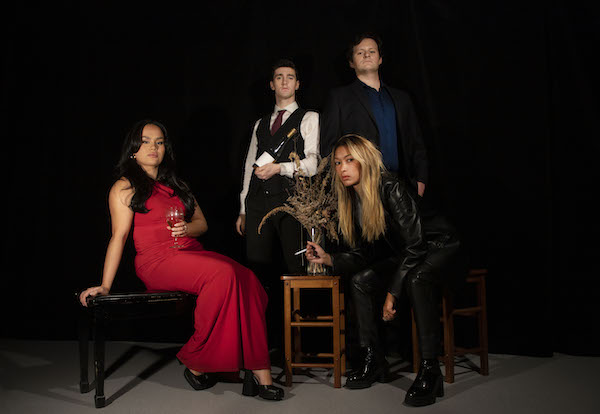
Left to right: Sophia Paskalidis, David Underhill, Drew Ogle and Mai Stone (seated) co-star in Tragedy, Slander & Wine. (photo by Sarah Cherin)

When a community theatre production ends with an actor dying on stage, the media descends on the small B.C. town. Conspiracy theories flourish and no one is above suspicion.

This is the plot of Tragedy, Slander & Wine by Jewish community member David Volpov, which premières at the NEST on Granville Island Nov. 13-19. The mystery/comedy explores, among other things, media literacy.

“My goal in writing Tragedy, Slander & Wine is to bring awareness about the issue and to invite audience members to think more critically about the media they consume. So, that’s where the idea of true crime entered the play,” said Volpov, executive director of Promethean Theatre, which is presenting the work. “I see true crime lovers popularize a lot of sensationalistic interpretations of well-known deaths. I think people tend to want to believe wild hypotheses instead of the cut-and-dried truth simply because it’s more entertaining. This conspiratorial thinking can become dangerous if it impedes on innocent people’s lives, which is what happened in real life to the town of Moscow, Idaho, after several infamous deaths.”

On Nov. 13, 2022, Ethan Chapin, Xana Kernodle, Kaylee Goncalves and Madison Mogen were stabbed to death in the young women’s off-campus (University of Idaho) house. False accusations and other misinformation proliferated, causing much harm to the community. Eventually, suspect Bryan Kohberger was charged with their murders, and his trial continues.

In Volpov’s fictional story, the play’s description notes, “The finger-pointing grows so rampant that the victim’s sister, Shannon (Mai Stone), can’t even have a healthy relationship with her own mother. Shannon’s longtime friend Alec (Drew Ogle) promises to help Shannon replenish her image in the public eye and shed her status as a pariah. But they find out that manipulating the media is harder than they anticipated. They have to get past power-hungry reporter Penelope (Sophia Paskalidis) and gatekeeping publicist Colin (David Underhill). Soon, Shannon uncovers a secret plot that upends everything she thought she knew about the tragedy.”

The play features four actors on stage and seven performers who act only on screen.

“I knew that I needed a multimedia film component in the production to spoof true crime,” Volpov told the Independent. “We filmed interviews with the townsfolk, who give the audience information about the circumstances of the mystery of the play. The film is played on TVs, which are onstage during the entire performance.”

This approach was new to many working on the production and Volpov said he appreciated the help of a few film artists who offered their guidance. In particular, he noted, “Our videographer, Bruna Xavier, and our film editor, Ian Tan, are both godsends. I’m really excited for audiences to see what this collaboration created because it’s not something that Vancouver audiences have seen before.”

Tragedy, Slander & Wine is Promethean Theatre’s sixth production. Formed in 2018, the company’s mandate is “to create work opportunities for emerging artists,” said Volpov. “There are some apprenticeships open to emerging artists in Vancouver theatre companies, but I keep hearing from my peers that these positions only take them so far. They feel stuck in what they consider a trainee limbo before they can get a shot at a role they want. That’s why Promethean puts emerging artists directly in positions of creative leadership. In that sense, we act as a launchpad for artists who want to continue expanding their practices.” (For more information, visit prometheantheatre.ca.)

photo - With Tragedy, Slander & Wine, playwright David Volpov invites audience members to think more critically about the media they consume
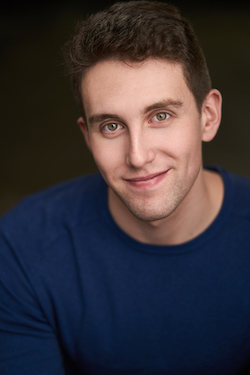
With Tragedy, Slander & Wine, playwright David Volpov invites audience members to think more critically about the media they consume. (photo from Promethean Theatre)

Volpov joined the producing team after having acted in Promethean’s first production, Saint Joan. He graduated from the bachelor of fine arts acting program at the University of British Columbia in 2020.

“Like many people who graduated then, my final play at UBC was cut short after just three performances due to COVID,” he said. “This experience really opened my eyes…. I always knew acting is a difficult profession, but to see virtually every theatre and movie set shut down spiked my existential worries a lot. There’s a silver lining, though. I returned to playwriting during the lull period in 2020 because I realized that writing was a way I could create art while social distancing. I learned that I didn’t have to wait for theatre work to come to me; I could generate work myself. In hindsight, I didn’t actually know what art I wanted to make when I graduated UBC. It wasn’t until I began writing plays that I found my voice and had something to say about the world.”

Tragedy, Slander & Wine is one of the works Volpov began writing during the pandemic. “I felt troubled by how quickly conspiracy theories spread,” he says in the press release for the play. “I saw this cycle repeat after each major world event. Our abilities to engage in meaningful discourse eroded while our reliance on bias-confirming news increased. With so much misinformation online nowadays, how is anyone supposed to parse through what’s fact and what’s fiction?”

“Research shows that feelings of anxiety, disenfranchisement and isolation cause people to think more conspiratorially,” Volpov told the Independent. “People feel comforted by believing that their enemies cause their bad fortune (as opposed to random chance). One of the reasons conspiracy theories endure is because they have a backfire effect: when someone confronts a conspiracy theorist about their beliefs, it is interpreted as confirmation. Theorists think ‘of course, the higher powers want to convince me I’m wrong, that’s part of their plan.’ I don’t think conspiracy theories will ever go away, unfortunately.”

Nonetheless, Volpov is doing what he can to improve the situation, in addition to writing about it.

“Promethean Theatre partnered with a media literacy platform to provide education about the topic,” he said. “They are called Ground News and are a Canadian company based out of Kingston, Ont.

“I believe that there are many ways that people can combat their confirmation biases and to have a well-rounded knowledge about current events,” he continued. “The number one thing people can do is to read multiple sources about one story. I know it probably feels like a chore, but reading different perspectives can mitigate our political blindspots.

“After that, I recommend cutting your social media use when engaging with current events. Traditional media isn’t perfect, and it’s rightfully facing scrutiny from the public, but social media can be especially pernicious because the algorithm can steer people to engage with content that already supports their beliefs. Also, the algorithm boosts sensationalistic content while ignoring nuance, which I think is necessary for every discussion.

“My next piece of advice is, be diligent about claims you read. If information can’t be traced back to a source,” he said, “it can’t be verified as true.”

Tragedy, Slander & Wine is recommended for audience members age 16+ because of its “mature content, including references to substance abuse, murder and suicide.” Among the performances is a matinée for high school students Nov. 15, and artist talkbacks after the Nov. 18 and 19 matinées. For tickets, visit plainstage.com/events/tragedy-slander-and-wine.

Format ImagePosted on November 10, 2023November 9, 2023Author Cynthia RamsayCategories Performing ArtsTags comedy, David Volpov, media literacy, Promethean Theatre, satire, Slander & Wine, theatre, tragedy, true crime
Culture Crawl starts Nov. 16

Culture Crawl starts Nov. 16

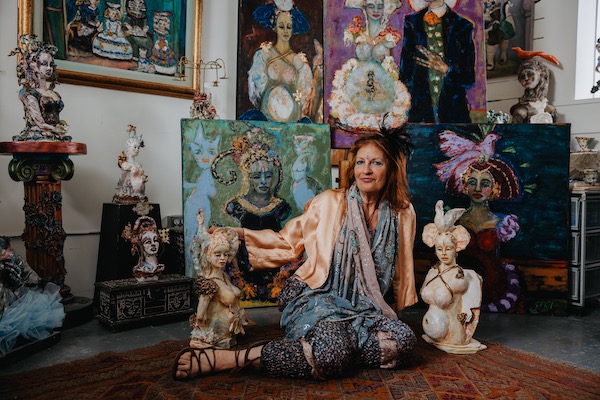
Suzy Birstein is one of the many Jewish community artists taking part in this year’s Eastside Culture Crawl Visual Arts, Design & Craft Festival, which runs Nov. 16-19. (photo by Britt Kwasney)

The 27th annual Eastside Culture Crawl Visual Arts, Design & Craft Festival takes place Nov. 16-19 and features almost 450 artists, including many from the Jewish community. Among the community members opening their studios to visitors are Suzy Birstein, Olga Campbell, Hope Forstenzer, penny eisenberg, Robert Friedman, Lori Goldberg, Lynna Goldhar Smith, Ideet Sharon, Stacey Lederman, Shevy Levy, Lauren Morris and Esther Rausenberg.

“We welcome the public to dive back into the Culture Crawl this fall to experience and be inspired by our artists’ growth and discovery. [The pandemic] has been a time of change for many of us and I believe art is a conduit for moving forward together,” says Rausenberg in the event’s press release. Rausenberg is a photo artist, as well as artistic and executive director of the Eastside Arts Society, which puts on the Crawl.

The Independent spoke with a few of the participating Jewish artists about what visitors to their studios can expect to see, and whether creativity is a place of refuge or if it is harder for them to create in times of conflict, including but not limited to the Israel-Hamas war and the war between Ukraine and Russia.

Visitors to Birstein’s studio will see her “figures from fired clay infused with aged and lustred surfaces, which inspire paintings in oil, cold wax and collage.”

The artist is currently working on two series, which will merge into the solo retrospective at Il Museo Gallery, curated by Dr. Angela Clarke for 2025.

“Both series evoke my art/travel adventures to Europe, Mexico and Cambodia,” said Birstein.

“‘Ladies-Not-Waiting’ reference the gazed-upon women by old master painters – Velasquez, Fouquet and Manet – alongside self-portraits painted by masterful female artists, Frida Kahlo, Leonora Carrington and Leonor Fini,” she said, while Tsipora (her Hebrew name, meaning Bird) is a series of loose self-portraits, which “embrace an exotic earthiness living within my poetic imagination.”

Both bodies of work, she said, “speak to nesting and transcendence, the mirror and reflection and celebrate the individual and universal.”

For Birstein, in times of conflict, “be it COVID, warfare, personal challenges – the only thing that centres me, coming directly from within me, is the creative refuge of my studio and making art. As I say this, I must stress that the love and compassion I feel for and receive from my family, friends, students and peers is the other half of that equation. I can’t imagine one without the other and I am extremely grateful.”

Friedman describes himself as “a muralist-styled stained glass artist.” He has worked in stained glass for more than 40 years and has recently added a blown glass dimension to his work, according to his website, which is also a recent addition.

“My studio is a great place and haven for creative thought and output,” he told the Independent. “[T]hese troubled times just [add] more impetus for me to have it reflected even more so in my artwork.”

Goldberg also finds herself more driven.

“My work is about vitality, life, vibration forging connections and bringing two opposing energies together as a way to find potential for resolution,” she said. “I have a responsibility as an artist to respond. I am more motivated. Expressing ‘Heaven on Earth’ is one way I respond to pain and suffering.”

Goldberg had a three-month residency on the North Shore, which she spent painting the forest – work that studio visitors will see.

“I was recently reading the book Speak for the Trees by Diana Beresford-Kroger about how the roots of the trees, the mycelium and plants and trees talk to each other,” said Goldberg. “By painting in the forest, I learnt how to listen, experience the tranquility, vitality and interconnectedness of the forest and to myself.”

Since the spring, Goldhar Smith has been “creating minimal colour-field style landscapes based on the idea of the shape of light and the colour of shadows,” she said. “The paintings are rendered in soft blues and pastels or deeper mysterious tones and suggest memories of places real and imagined.”

She acknowledged, “The conflict in Israel has, of course, been enormously upsetting and I find myself in despair for both sides of the conflict. My paintings do not yet reflect these emotions, but they will in coming months. I don’t yet know what I will be painting but I will be exploring more difficult terrain.”

For Forstenzer – a glass artist and director of the Sidney and Gertrude Zack Gallery – creativity can be a place of refuge, but also more challenging in times of conflict.

“Making work when I’m feeling the stress of all that’s going on personally and globally is truly healing,” she explained, “but when I’m feeling overrun with those things, it can be a lot harder to fully concentrate at times.”

Lately, Forstenzer has been making glass clocks, something she describes as “incredibly fun.”

“I can experiment with colour and pattern in the glass, and I’ve learned a lot about clockwork mechanisms, which is also an exciting thing to dive into – I’ve been down many rabbit holes online about clockmakers,” she said. “I’ll have a bunch of clocks on display and for sale at the Crawl.

“I also have spent a lot of the last year generally playing with colour and pattern,” she added. “I’ve made vessels – vases, bowls, cups – that experiment with a particular colour or look or pattern or stripe in glass. Once I have a colour process in place, I often go on to use those colours, patterns and processes in sculptural pieces. Since I’ve done so much experimenting this year, there will be a lot of pieces on display and for sale at the Crawl as well.”

In addition to opening their studios, Forstenzer and Birstein are part of the Crawl’s juried exhibition, which has the theme “Out of Control.”

“At a time when we start to celebrate our freedom from pandemic restrictions, it’s an opportunity to reclaim experiences that were denied for so long, a chance to think outside of the box and just let go,” says Rausenberg in the press release.

The exhibition features the work of 80-plus Eastside artists and takes place at multiple venues: Alternative Creations Gallery and Strange Fellows Gallery (both until Nov. 19), the Pendulum Gallery (until Nov. 24) and the Cultch (until Nov. 25).

For more information, visit culturecrawl.ca.

Posted on November 10, 2023November 9, 2023Author Cynthia RamsayCategories Visual ArtsTags creativity, David Friedman, Eastside Culture Crawl, glass, Hope Forstenzer, Lori Goldberg, Lynna Goldhar Smith, painting, sculpture, stained glass, Suzy Birstein
Improving mental wellness

Improving mental wellness

Adrianne Fitch is project coordinator for the Vancouver Disability Solutions Network, which is hosting the Mental Wellness for People with Disabilities Forum on Nov. 28 at Heritage Hall in Vancouver. (photo by Adrianne Fitch)

Adrianne Fitch has turned her disabilities into assets. Suffering from severe-to-profound hearing loss and episodes of anxiety and depression throughout her life, she understands firsthand the barriers that people with disabilities face and what could help make life better.

Fitch is project coordinator for the Vancouver Disability Solutions Network, or VDSN, a group of 200 nonprofit organizations and other providers serving people with visible and invisible disabilities. This includes people with physical disabilities, people with a mental health diagnosis, and people suffering from anxiety and depression in a post-COVID world. The network is hosting the Mental Wellness for People with Disabilities Forum on Nov. 28 at Heritage Hall in Vancouver.

“I don’t think the mental health needs of people with disabilities are any different than those of people without disabilities,” said Fitch.

However, depending on the nature of the disability, accessibility can be an issue.

“As someone with a severe-profound hearing loss,” she said, “I would have a really hard time taking part in a group therapy session unless captioning services were available.”

Fitch said many people in British Columbia have faced problems within the mental health system, such as limited access to services, long waiting times, insufficient resources, inadequate service coordination and continuity, and shortages of qualified mental health professionals.

“I think most of us can agree that the COVID pandemic and lockdown resulted in a great deal of isolation and a general decline in mental wellness all over the world.… [W]hen you’re also living with a disability, accessing quality mental health care can be even harder,” she said.

“At the forum, we hope to develop collaborative initiatives to promote mental wellness in our community,” she told the Independent.

Last year’s VDSN forum was on Newcomers with Disabilities. It resulted in a collaborative partnership between MOSAIC and Disability Alliance BC to support immigrants with disabilities receive provincial disability assistance.

At this year’s gathering, Fitch is hoping participants will collaborate to create new mental wellness programming adapted to people with disabilities; extend the reach and impact of what is currently being provided and what could be provided by organizations working together; raise awareness of existing programs geared to mental wellness; and educate families, friends and peer groups on how to support their loved ones to promote mental wellness.

Fitch likes the term “mental wellness” because the term “mental health” is sometimes perceived as medicalizing or stigmatizing something that is universal.

“Our focus for the forum is on improving mental wellness rather than fighting an illness or condition. Whether or not we have an actual diagnosis,” she said, “we can all benefit from practices, strategies and information related to managing our mental wellness.”

In a recent focus group that Fitch led, the people with disabilities participating felt that their mental wellness would be enhanced by exercise and fitness; a place to go to experience spirituality; financial stability; better access to psychiatrists; a compilation of existing services; and education for their families about how to support them.

“I would like to encourage your readers to check in with their friends and family, especially if they show signs that they are struggling with mental wellness,” said Fitch. “Sometimes just knowing you have people in your life who care about you and are ready to lend a hand or a sympathetic ear can make a world of difference.”

Fitch acknowledged that the pandemic was a tragedy, but said it revolutionized her professional life because, for the first time, she could take part in online meetings and events where captioning was provided.

Fitch is a past executive director of the West Coast Mental Health Network, the province’s only completely peer-run organization for people with a mental health diagnosis.

“On a community level, the network allowed me to meet some of the most interesting, compassionate, talented and dedicated people I have ever known,” she said.

The province cut the network’s funding years ago, she said. Today, there are occasional events listed on its Facebook page.

Fitch said she struggles with depression and anxiety but is helped by having many diverse interests, including playing Scrabble, especially with players that are higher ranked than her, and attending folk music festivals.

“On special occasions, like birthdays and anniversaries, I pay tribute to people in my life by writing personalized poetry,” she said, “and I also bake them customized birthday cakes based on their favourite flavours.”

Her other creative hobbies include bead weaving and pottery. She has exhibited her “Creepy Head Menorahs” at the Jewish Community Centre of Greater Vancouver. And, once a year, she likes to write Passover song parodies based on her favourite music, especially songs by the Beatles.

Anyone interested in participating in the Mental Wellness for People with Disabilities Forum on Nov. 28, should contact Fitch at [email protected] or go to eventbrite.ca/e/mental-wellness-for-people-with-disabilities-forum-tickets-723149328107. Everyone is welcome to attend.

Cassandra Freeman is a freelance writer living in Vancouver.

Format ImagePosted on November 10, 2023November 9, 2023Author Cassandra FreemanCategories LocalTags accessibility, Adrianne Fitch, COVID, forums, health, mental wellness, Vancouver Disability Solutions Network, VDSN

Posts pagination

Previous page Page 1 Page 2 Page 3 Page 4 Next page
Proudly powered by WordPress