Finding Ziklag

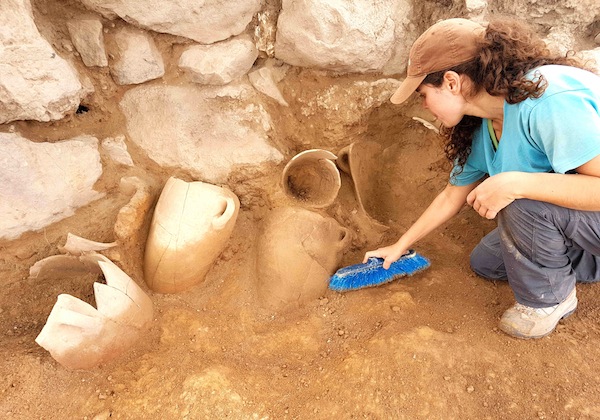
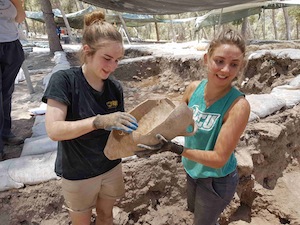
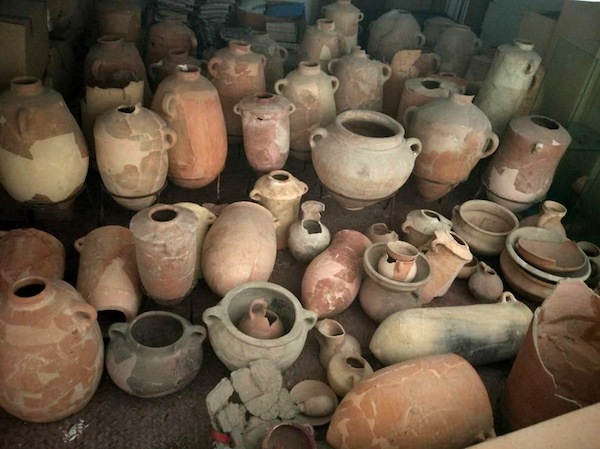
Dozens of undamaged pottery vessels have been discovered so far at the site. (photos from Israel Antiquities Authority via Ashernet)

In 2015, archeologists began an excavation in the Judean Foothills, between Kiryat Gat and Lachish. In research conducted in a cooperative venture by the Hebrew University in Jerusalem, the Israel Antiquities Authority (IAA) and Macquarie University in Sydney, Australia, the archeologists believe they have found the Philistine town of Ziklag. Dozens of undamaged pottery vessels have been discovered so far at the site, and it has been determined that the vessels are at least 3,000 years old.

photo - Dozens of undamaged pottery vessels have been discoveredZiklag is a Philistine name, given to the town by immigrants from the Aegean. It is mentioned many times in the Bible in relation to David (in both Samuel I and II). According to the biblical narrative, Achish, king of Gat, allowed David to find refuge in Ziklag while fleeing King Saul and, from there, David departed to be anointed king in Hebron. Ziklag was also the town that the Amalekites, desert nomads, raided and burned, taking women and children captive.

רופא לפוריות ננזף

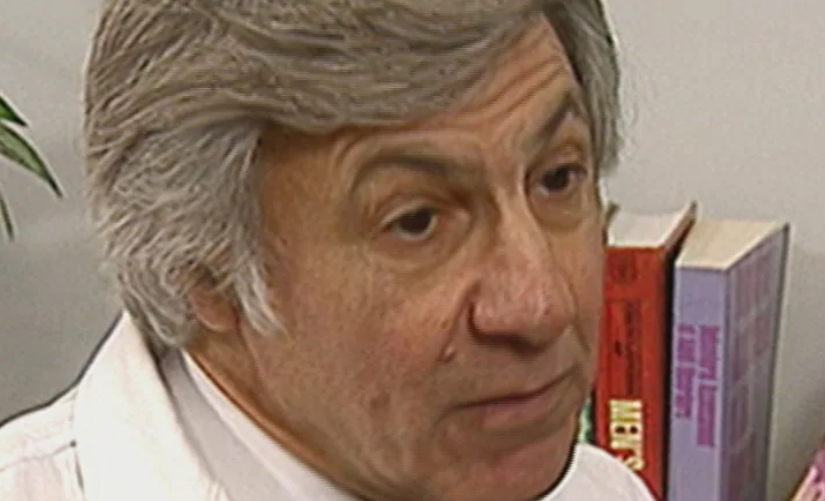
ד”ר נורמן בארווין (CBC)

רופא לפוריות באוטווה ננזף השבוע רשמית על כך שהפרה לפחות אחת עשרה נשים עם הזרע שלו, והפרה עוד עשרות ביציות של מטופלות עם זרעונים לא של האב המיועד בתחילת שנות השבעים.

ד”ר נורמן בארווין (בן שמונים כיום) הוכרז כבלתי כשיר להמשיך ולהיות רופא על ידי המכללה לרופאים ומנתחים של מחוז אונטריו. הוא התפטר כבר בשנת אלפיים וארבע עשרה, זאת לאחר שהחולים החלו להתלונן על כך שילדיהם נולדו עם זרע שאינו שייך לבן הזוג או לפרטנר המיועד שלהם.

המכללה לרופאים ומנתחים של אונטריו קבעה שד”ר בארווין ביצע מעשה של התנהגות בלתי הולמת מקצועית בכך שלא שמר על הסטנדרט של הפרקטיקה של המקצוע, כשהוא מעורב במעשים ומחדלים לא מכובדים ולא מקצועיים. וכי אינו כשיר לעסוק עוד במקצועו.

כאמור ההאשמות נגד ד”ר בארווין החלו בשנת אלף תשע מאות ושבעים, בזמן שעבד בבית החולים הכללי של אוטווה ובמקביל במרפאה באוטוווה. שם הוא סיפק טיפולים הורמונלים מיוחדים, טיפולי פוריות ועוד לעשרות הלקוחות שלו.

בשנת אלפים וחמש עשרה בתו של אחד ממטופליו ביקשה לגלות מי היה אביה. היא פתחה בחקירה ממושכת שהובילה אותה לגלות שבן דוד שני שלה, היה קרוב משפחה של ד”ר בארווין. הרופא עצמו עבר בדיקת די.אן. איי שאישרה שהוא אביה של המטופלת. בחקירתו אמר ד”ר בארווין כי מדובר היה באירוע חריג, בוא הוא השתמש בזרע שלו כאשר ביצע כיול במכשיר שמונה זרע. וזה הביא אולי להתערבבות הזרע בחלק מהביציות.

אבל הפרשה החמורה נמשכה כשמטופלת אחרת שילדה בת בשנת אלף תשע מאות ותשעים, וחשבה שבתה היא תוצאה של הפריית מבחנה בינה ובין בעלה, החלה בחקירה כאשר בתה אובחנה במחלת הצליאק, מחלה גנטית שלא הייתה לא במשפחה ולא במשפחתו של בעלה. היא הישוותה את תוצאות הדין.אן.איי שלה ושל בתה וגילתה שהבת שלה היא חצי אחות לצאצאית נוספת ממעבדתו של ד”ר בארווין. כך שהרופא הוא בעצם אביהן של השתיים. בהמשך החקירה זוהו עוד תשעה ילדים נוספים שנולדו מזרעו של הרופא.

הרופא הואשם בשנת אלפים ושש עשרה בגין מתן זרע לא נכון לחמישים עד מאה נשים נוספות, שילדו מאוחר יותר. משפחה אחת תיארה את הטראומה כשגילתה ששני ילדיה אינם אחים מלאים כפי שחשבו, אלא אחים למחצה עם אבות שונים.

אם אחרת קיבלה מידע שגוי על תורם הזרע שלה, ואינה יכולה לקבל אף מידע על ההיסטוריה הרפואית של בנה, הסובל מלקויות למידה, כיוון שאין לה מושג מהיכן הגיע הזרע ומי האב. אישה אחרת גילתה שילדיה קשורים זה לזה אך לא לבעלה, עמו חשבה שבוצעה ההפריה.

לדברי המכללה לרופאים ומנתחים באונטריו, שם עבד ד”ר בארווין, היקף הנזק אינו ידוע, שכן נשים רבות העוברות שירותי די.אן.איי פוריות, אינן מעלות על דעתן שבוצע מעשה כזה ואינן מבצעות בדיקות.

במכללה דחו את טיעון ההגנה של בארווין שכייל את המכשירים באמצעות הזרע שלו, וכך התעברו הנשים בשוגג, כיוון שכניסה להריון בדרך כזו היא בלתי אפשרית מבחינה מדעית וסטטיסטית. כך שהסברה היחידה שנותרה היא שד”ר בארווין ביצע את החלפות הזרעונים במכוון.

הרופא כאמור פוטר מעבודתו כבר בשנת אלפיים וארבע עשרה. הוא נקנס בסך הכל בכעשרת אלפים דולר בלבד. אולם סביר שזו רק תחילת הדרך וכי כעת עם השלמת החקירה, עשויות המשפחות לתבוע פיצויים של מיליוני דולרים על מעשיו החמורים.

Music as a uniting force

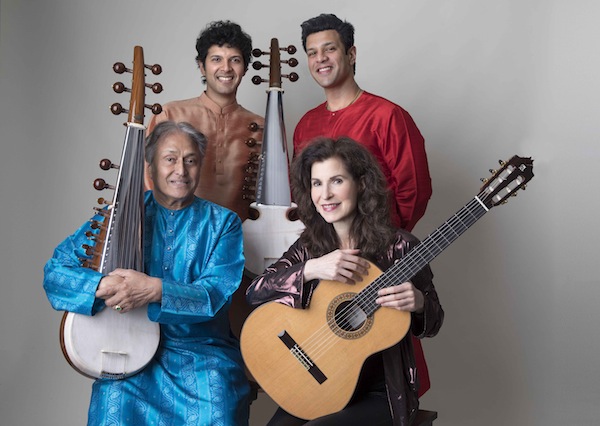
Clockwise from top left are Ayaan Ali Bangash, Amaan Ali Bangash, Sharon Isbin and Amjad Ali Khan. (photo © Suvo Das)

On July 12, Strings for Peace will have its world première at the Indian Summer Festival, which is described as “a multi-disciplinary arts festival ‘where worlds meet’ in Vancouver.”

Produced by the Indian Summer Arts Society, the festival’s mission “is to offer daring, multi-arts events that bring together diverse artists, audiences and artists in a spirit of global dialogue and citizenship.” Sharing a similar spirit, it is fitting that Strings for Peace – created and performed by sarod masters Amjad Ali Khan and his sons Ayaan and Amaan Ali Bangash, and guitarist Sharon Isbin – will be unveiled at the festival.

“The legendary sarod master Amjad Ali Khan emailed me 10 years ago to invite me to a concert of his in New York and to explore the idea of a collaboration,” said Isbin, a three-time Grammy Award winner whose repertoire includes Baroque, Spanish-Latin music and jazz fusion. “I had long admired Indian classical music, and was bowled over to hear his performances with his sons…. A warm friendship developed and, six years ago, he conceived the idea of composing ragas for us all to perform together. I received the music last December and loved it. They said that’s good because we have already booked a tour with you in India in February 2019! I had little time with my schedule, but was motivated because the music was exquisitely beautiful, as is their artistry. It was a magnificent experience to perform together in Kolkata, Mumbai and Delhi. I cherish our friendship and the opportunity this has given me to explore an inspiring new genre and collaboration.”

The four performers have made a recording for release in 2020, said Isbin, “and I am excited that Strings for Peace will be touring in the U.S. during summer and fall 2020.”

In an article earlier this year in the Hindustan Times, Isbin speaks about the difference between the Indian classical, mainly oral, tradition and the written Western classical music tradition. “Indian classical music has long pieces. You are taken on a journey,” she notes. “It is a very expansive state of consciousness, whereas a Bach or a Beethoven piece has a clear and defined sense of enclosure.”

“Performing together in India last February,” she told the Independent, “I was amazed to hear similarities between improvised embellishments in Indian classical music and melismatic nuances in Spanish, flamenco and Sephardic music.”

Born and raised in Minneapolis until age 18, Isbin lives in New York City. She is the founding director of the Juilliard School guitar department and director of the guitar department of the Aspen Music Festival. She performs around the world and has appeared as a soloist with almost 200 orchestras.

“When I was 9, my family moved to Italy for my father’s sabbatical year as a scientist and professor of chemical engineering,” she said of her beginnings as an artist. “My older brother Ira asked for guitar lessons, hoping to be the next Elvis. My parents found a great teacher who had studied with [Andrés] Segovia, but when my brother learned it was classical, he bowed out and I volunteered to take his place. I loved that an instrument was built for me, and that you held and caressed it to make music.”

Of the role, if any, Judaism or Jewish culture plays in her life, Isbin said, “My grandparents came to the U.S. as refugees from Russia and Poland to escape deadly pogroms, and I have many relatives who live in Israel. I have always felt a cultural connection to Judaism and to Israel. In fact, I was a teenager when the first work ever composed for me was a concerto by the late Israeli composer Ami Maayani, which I premièred with the Jerusalem Symphony and the Minnesota Orchestra. Since then, I’ve premièred more than 80 works written and arranged for me.”

Her experience with the Khans highlights how she views music’s potential to bring together different cultures. “There is only one human race, and we all need to appreciate and celebrate that commonality,” she said. “Music, because it transcends language, can be wonderfully uniting.”

Strings for Peace premières July 12, 8 p.m., at the Chan Centre for the Performing Arts. For tickets and the full schedule of the Indian Summer Festival, which opened July 4 and runs to July 14, visit indiansummerfest.ca.

Court’s segregation decision

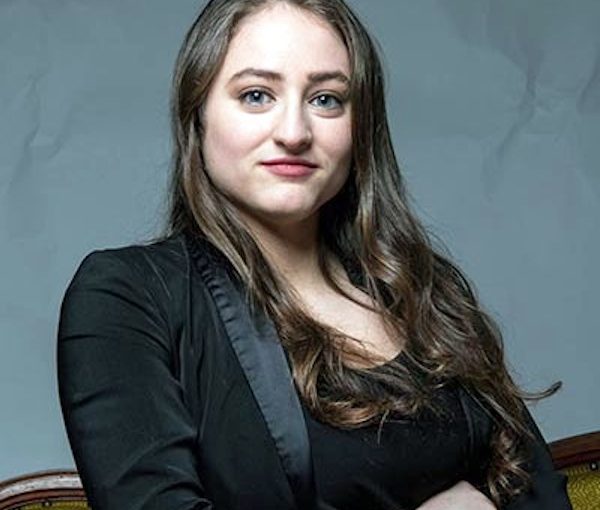
Halifax-based lawyer Hanna Garson. (photo from Hanna Garson)

In 2015, the B.C. Civil Liberties Association and the John Howard Society launched a legal challenge to the federal government’s laws that allow administrative segregation – a form of solitary confinement – in prisons, calling it a cruel and inhumane punishment that can lead isolated prisoners to harm and even kill themselves. They won their case in the B.C. Supreme Court in January 2018, a decision that was appealed by the government the next month. Last week, the B.C. Court of Appeal affirmed the unconstitutionality of provisions that allow indefinite and prolonged solitary confinement of prisoners.

In the January 2018 decision, the B.C. Supreme Court gave the federal government 12 months to pass new laws. In January 2019, the court gave the government an extension to April, but said certain stipulations had to come into effect immediately. Correctional Service Canada was ordered to take several steps, including giving prisoners in segregation more time outside, requiring daily visits from healthcare professionals, allowing inmates legal counsel in hearings related to solitary confinement, and changing the authorization system regarding the placement of an inmate in segregation for more than 15 days.

The federal government was given another extension after the April deadline, to the end of June. Then, on June 24, the B.C. Court of Appeal came out with its decision on the matter – rejecting the government’s appeal.

“This particular case is very interesting, as there are no actual individual complainants,” said Jewish community member Hanna Garson, a lawyer based in Halifax whose focus is ensuring that everyone is treated fairly by the justice system. “So, the court [was] being asked to decide whether or not the written laws themselves breach provisions of the Charter of Rights and Freedoms in Canada.”

According to Garson, sections of the Charter are indeed being breached when it comes to administrative segregation, especially as it comes with no time limit. “People are being put into segregation not knowing when, if ever, they’re going to get out,” she told the Independent. “That really plays on the mind.”

Noting that many people have mental illness or struggle with mental health before they are incarcerated, which “may have led to their negative interaction with the law,” she said, “That population, in particular, is very damaged by periods of segregation.”

The appeal court’s reasons for judgment, written by Justice Gregory Fitch, stated that the Corrections and Conditional Release Act violated Section 7 of the Charter, which protects an individual’s right to life, liberty and security of the person. The court “found that the harm caused by prolonged confinement in administrative segregation undermines the maintenance of institutional security, as well as the ultimate goal of achieving public protection by fostering the rehabilitation of offenders and their successful reintegration into the community.” It also “found that prolonged confinement in administrative segregation is not necessary to achieve the safety or security objectives that trigger its use.”

The judgment noted “that administrative segregation has a small, but significant, disproportionate effect on indigenous men and an even more significant effect on indigenous women” and that the “impugned laws” violated Section 15 of the Charter “to the extent that they authorize and effect a procedure that results in discrimination against aboriginal inmates.”

Section 15 states that, “Every individual is equal before and under the law and has the right to the equal protection and equal benefit of the law without discrimination and, in particular, without discrimination based on race, national or ethnic origin, colour, religion, sex, age or mental or physical disability.”

Another issue, said Garson – who, in addition to being part of the firm Planetta Hughes LLP, is chair of the East Coast Prison Justice Society and is on the board of the Elizabeth Fry Society Mainland Nova Scotia – is that, while prisoners being placed in segregation have access to review boards, administrative segregation review boards consist of the same prison administration that placed them there. “So, it’s not an independent review and so, basically, the people who initially made the decision then question their own decision, which doesn’t necessarily secure a fair assessment of whether or not a person really needs to be segregated,” she said.

While legal counsel is permitted at these reviews, it is not provided in many provinces and few prisoners can afford representation or are not in a mental state of being able to request it, she said. “If you’re running a facility with hundreds of people who may be violent, I can understand a time-out for a moment to see what else needs to be done,” said Garson. “But, there needs to be a time limit and other solutions.

“Long-term, serious mental health treatments take far more expensive staff and thorough training. Are these better solutions though? Without a doubt, yes. Unfortunately, a lot of the constraints are budgetary and this is something that, oftentimes, courts are hesitant to rule on. But, for example, the court did say that, as it says in Section 15 [of the Charter], everyone has a right to be equal before the law and receive equal treatment of the law. So, the court does an assessment of whether or not people are being discriminated against by these laws.”

After hearing testimony and expert opinions, Garson said, “the court decided that both aboriginal people and people suffering from mental illness are segregated far more often … and that the impact on them is far more negative. But, it went further, ordering incarceration facilities to put in place better solutions – better programming that does not involve segregation.

“Usually, the court is hesitant to make decisions that would force the government to put more funding into something. But, it did in this decision, which is, in my opinion, really wonderful and a great precedent. This case is really groundbreaking and, to a certain extent, it was a wonderful thing that it was appealed.”

The B.C. Supreme Court said, “basically, we had to come up with new laws. But then, they suspended it for a year, as the government needs time to pass new bills and stuff like that. In the meantime, the attorney general appealed, because they don’t think it’s fair,” she said.

The Constitution of Canada, which includes the Canadian Charter of Rights and Freedoms, is the supreme law in Canada, she explained. Section 52 (1) of the Constitution Act 1982 mandates that any law inconsistent with the provisions of the Constitution is, to the extent of the inconsistency, of no force or effect. The decision by the appeals court will become a binding precedent in all provinces, not only in British Columbia.

Garson emphasized that she is especially happy with the decision because it is one that has really considered the damage segregation does on the mental health of those being isolated and notes that, “if we really care about rehabilitation, then [segregation] makes no sense as a strategy, especially for those with mental illness.”

Because the court looked at the experiences of those who have been segregated and the decision will affect them, the system and society as a whole in the long-term, Garson said, “It’s more like a living document in that way, and it’s a very exciting case for this reason.”

As for where Jewish law falls on this matter, the organization T’ruah has been leading a campaign to abolish solitary confinement in the United States. In a 2014 report on the compliance of the United States with the United Nations Convention Against Torture, T’ruah notes, “The very first two chapters of our Torah teach us that every human being is created in the image of God, and that no human being should be alone. The practice of solitary confinement violates these principles and diminishes the divine image. It also violates one of the Torah’s central moral teachings, expressed in Leviticus 19:18, that one should ‘Love your neighbour as yourself.’ The rabbis explain that this is taught, so that no one can justify degrading treatment of a member of their community…. If you do thus, know that the person you have dishonoured was created in the image of God.”

The report argues that “Jewish tradition understands instinctively that humans are social creatures. In a story about a character who outlives his family, friends and study partners, the Talmud teaches, ‘Either companionship or death.’ Life alone is unbearable. Jewish law warns against excessive punishment, ‘lest your brother be degraded before your eyes.’ (Deuteronomy 25:3) Even a person who has committed a horrific crime must be regarded as a member of one’s own family and, therefore, deserving of dignity.”

T’ruah contends that Jewish criminal law seeks to inspire teshuvah (repentance) and that there are several principles that should hold in prisons:

“1. No matter his or her crime, the prisoner should be seen as our ‘brother or sister’ and treated with dignity.

“2. No human being should be alone for extended periods of time. Isolation diminishes the human being and can even be deadly.

“3. Prisons should seek to rehabilitate the prisoner and not simply to degrade him or her.

“4. A prisoner should have a fair trial before being placed in solitary confinement. Therefore, solitary confinement cannot be used for those in pre-trial detention.”

Rebeca Kuropatwa is a Winnipeg freelance writer.

Colour bursts forth in Conjunction

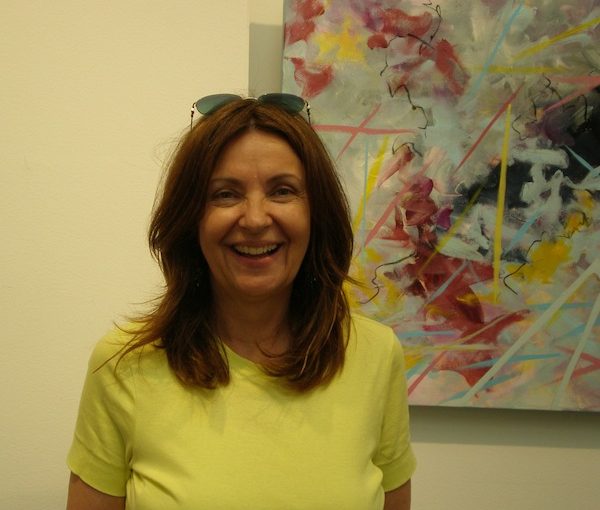
Ira Hoffecker’s current solo exhibit at the Zack Gallery, Conjunction, runs until July 21. (photo by Olga Livshin)

Conjunction, Ira Hoffecker’s current solo exhibit at the Zack Gallery, opened on June 13 and runs until July 21.

German-born Hoffecker and her family moved to Canada in 2004. “I always liked art, but when I lived in Germany, my husband and I worked in marketing for the movie industry,” she explained in an interview with the Independent.

Once, when her children were still young, they came here for a family vacation and traveled Vancouver Island. “We loved it,” she said. So much that, when they moved here permanently, they settled in Victoria. As if that wasn’t change enough, Hoffecker also decided to switch careers and follow her lifelong love of art. She enrolled in the Vancouver Island School of Art and has been studying and creating ever since.

Hoffecker’s previous show at the Zack Gallery, in 2016, was dedicated to maps. Since then, her art has undergone a couple of transformations. Conjunction is much brighter and more expressive set of works, although the abstract component remains.

On the journey to her new colourful mode, Hoffecker went through a black-and-white stage, which was the focus of her master’s in fine arts’ thesis, which she completed last year. The works she created for her master’s degree include a number of huge paintings – abstracts made with tar on canvas – plus three documentary videos. The theme – “History as Personal Memory” – was a painful one for the artist. She recalled, “One of my professors said that my works are the interconnected layers of urban setting and history. ‘Where is your personal layer?’ he asked me.”

Taking this advice, she has been trying to delve into her personal recollections, to uncover her place in history, her “personal layer” among the historical layers dominating her art. “In ‘History as Personal Memory,’ I tore pages from a history book about the Third Reich, an era in history that many Germans would prefer to forget. Yet I think it is important to face and discuss this past. Such dialogue might prevent the horrors from happening again,” she said.

In Hoffecker’s art, the artist’s memories are intertwined with the history of her nation. “Correlations between my childhood abuse, which I tried to forget, and the history of Germany, which the Germans tried to eradicate from their memories, exist in my paintings and films,” she said.

In her art and her videos, she opens up about the abuse she suffered as a child at the hands of her grandfather, who was also a Nazi. She is convinced that such openness has helped her heal, whereas suppressing the memories led only to the festering of her inner wounds.

The same is true for historical memories, Hoffecker insisted. “Germany needs to remember, to confront and challenge complacency to prevent a repetition of historical atrocities,” she said.

Her master’s thesis was a deep and painful discovery, a journey in black-and-white to underscore the grimness and tragedy of the topic. Once it was completed, she was ready for a change of direction.

“I spent the summer last year in Berlin,” she said. “When I came back home to Victoria, I wanted to paint some colours again.”

Hoffecker’s current exhibit bursts with vibrant colours and optimism. The series Berlin Spaces, like most of her paintings, has several layers. “There are outlines of many famous Berlin buildings there,” she said, tracing the architectural lines embedded in the abstract patterns with her finger. “The Jewish Museum, the Philharmonie, the library, the Reichstag. It is like a reconstruction, when I think about the past. I overlay history and architecture.”

One of the paintings, a bright yellow-and-pink abstract, has writing among its patterns. “It means ‘forgetting’ in German,” Hoffecker explained. “A few years ago, I was invited to have a solo show in Hof, a city in Germany. I worked there in the archives, found many old maps and records. One of their buildings is a factory now. After the war, it was a refugee camp, and there is a plaque to commemorate the fact. But, during the war, it was a labour camp, a place from where Jewish prisoners were transported to concentration camps and death, but nothing is there to remind [people] of that past. The painting reflects the current happy state of the building, but it also reflects the tragic past, the past we shouldn’t forget.”

While not many art lovers will see the horrors of the labour camp in the airy and cheerful palette of the painting, Hoffecker doesn’t mind. Like other abstract artists, she infuses her images with hidden messages, but doesn’t insist on her personal intentions.

“I own the making,” she said. “I bring in my memories and my heart, but I have to leave the interpretation to the viewers. One man in Victoria loves my art. He bought two of my paintings. He said he sees animal in them. I don’t paint animals, but I’m glad people’s own experience resonates with my paintings.”

Hoffecker is very serious about her art, but bemoans the need for promotion. “I did marketing for movies professionally, but I never really cared [about the reaction]. If someone didn’t like the movie we were pushing, it was his business,” she said. “But to promote my own paintings is scary. When someone doesn’t like what I do, I care. It hurts. I don’t want to do it. An artist wants to be in her studio and paint. It is all I want: to paint and to exhibit. I want people to see my work. Besides, a show is the only time when I see many of my paintings together. I never can do that in my studio. I only see one or two at a time.”

To learn more about Hoffecker’s work, visit irahoffecker.com.

Olga Livshin is a Vancouver freelance writer. She can be reached at olgagodim@gmail.com.

Play’s Vancouver links

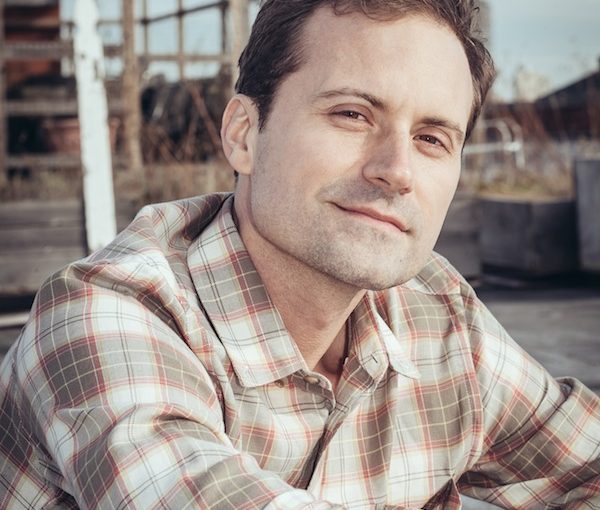
Zayd Dohrn’s Reborning returns to the New York stage this summer. (photo from Zayd Dohrn)

The play Reborning, written by Zayd Dohrn, is being performed Off-Broadway at the Soho Playhouse in New York City from July 5 through Aug. 3, thanks to Vancouver’s Reality Curve Theatre.

A Canadian nonprofit professional theatre company founded in 2011, Reality Curve reached out to Dohrn to bring this play, which ran in Vancouver last year, to the New York stage. The production is produced by artistic director Paul Piaskowski, Darren Lee Cole and Rebecca McNeil, and is presented by Playbook Hub with support from the Vancouver Film School, the Canada Council for the Arts and Shimon Photo.

Reborning is a dark comedy-drama with elements of horror. In it, people are able to buy life-like infant dolls that look like loved ones who have died. The play centres around Kelly, a woman who lives with her boyfriend in Queens, N.Y., and creates “reborn” baby dolls. She has a client who commissions her to make a replica of her dead baby girl and, as Kelly constructs this doll, it stirs up memories from her own life.

“It’s a relationship between a younger and older woman – a customer and an artist – who are both looking for something and it becomes dangerous,” said Dohrn, who lives in Chicago and is an associate professor at Northwestern University. “There is a whole subculture with these dolls. I wrote the play right after the birth of our first child. My wife was shopping online for baby toys and clothes and she found these life-like dolls. The photos of them are incredible, realistic, detailed and medically accurate. Some even have hospital bracelets. There is something beautiful about them, yet very disturbing.”

Dohrn talked to customers and heard their testimonials. “Many of these people can’t get over the loss of their baby and use the dolls therapeutically.”

The play stars Emily Bett Rickards (CW’s Arrow), Piaskowski (Unspeakable, The Twilight Zone) and Lori Triolo (Riverdale), who is also the director.

The first production of Reborning, which starred Ally Sheedy, was 10 years ago at the Summer Play Festival at the Public Theatre in New York City, when Dohrn was at the Julliard School. It has had more than 20 productions nationally and internationally over the last decade, including in Los Angeles, Brazil, Panama, Florida, San Francisco and, in 2018, Vancouver, where he connected to Reality Curve.

Dohrn’s life and road to literary success could be a fascinating play in itself. His parents, Bill Ayres and Bernadine Dohrn, were leaders in the radical group the Weather Underground (also known as the Weathermen) back in the 1960s and 1970s. There was an accidental explosion in a Greenwich Village townhouse where Weathermen lost their lives, and the couple went underground, using assumed names. Dohrn, who is now 41, spent his early childhood on the run.

“It didn’t seem strange to me to grow up being fugitives, that was just our life,” he said. “We lived in New York City in Harlem, traveled a lot, moved around a lot and lived in communes. Then my parents turned themselves in and we settled in New York. My mom went to jail for almost two years when I was 5, and I have vivid memories of visiting her there. My dad took care of me while she was gone.”

When his mom was released from prison, she became a lawyer. “My dad became a professor and I was raised in a middle-class house, although they still had their notoriety and they were committed to their politics and their cause,” said Dohrn. “Growing up, we would go to a lot of demonstrations and meetings with other activists.”

Dohrn went on to earn an undergraduate degree from Brown University, a master’s in fine arts from New York University, a master of arts from Boston University and a playwriting fellowship from Julliard. He also spent a lot of time in China. Fourteen years ago, he married Rachel DeWoskin, and they have two daughters. DeWoskin, who is from Ann Arbor, Mich., is an author, teaches at the University of Chicago and also spent many years living in China before she and Dohrn met.

Many of Dohrn’s plays draw from his childhood and life experiences. In one of his earlier plays, Haymarket, set in 1886, a bomb explodes in the middle of a peaceful rally of demonstrators in Chicago – at least one of the radicals goes into hiding. His play Sick, about a Manhattan couple who go to extreme measures to protect themselves from pollution, was reminiscent of living in Beijing and witnessing the fear during the SARS epidemic.

When asked about his religion, Dohrn said he considers himself a cultural Jew. “My mom was half-Jewish and my parents were atheists, but, culturally, my mom considers herself Jewish and we were raised as cultural Jews and celebrated Passover and Chanukah,” he explained. “We celebrated in a radical way – we did Passovers in a women’s prison in upstate New York, celebrating the Exodus as a story of freedom and celebrating with female inmates in prison.”

Dohrn noted that he, his wife and kids have traveled a lot, visiting Jewish sites. “My wife considers herself Jewish and we are raising our girls with a lot of Jewish cultural influences,” he said.

Dohrn and DeWoskin spend time each year in China. “Rachel kept her apartment in Beijing for at least 10 years and we would go for a few months every year,” he said. “When our kids started to grow up, we wanted a place where they could be more independent so we got an apartment in Shanghai. We spend three-quarters of the year in Chicago and one-quarter of the year in Shanghai. We both have academic schedules so we are able to spend the summers and winters there. There are still historical monuments and artifacts from the Jewish community in Shanghai and the synagogue is now a museum. Our apartment there is in the building that was the Jewish processing centre for the refugees during World War II.”

Currently, Dohrn is developing a series about radical political movements like the Weather Underground and the Black Panthers for Showtime and a feature film for Netflix. He’s looking forward to Reborning being back on the New York stage. “For me,” he said, “it’s a bookend, to have it back in New York again after all these years.”

Alice Burdick Schweiger is a New York City-based freelance writer who has written for many national magazines, including Good Housekeeping, Family Circle, Woman’s Day and The Grand Magazine. She specializes in writing about Broadway, entertainment, travel and health, and covers Broadway for the Jewish News. She is co-author of the 2004 book Secrets of the Sexually Satisfied Woman, with Jennifer Berman and Laura Berman.

Intolerance is growing

A recent study indicates that Americans are increasingly tolerant of the idea that businesses should be able to refuse service to customers based on the customer’s identity.

Of those polled, 19% said that a business should be able to refuse to serve Jews, an increase from 12% the last time the question was asked five years earlier. Twenty-two percent believe that Muslims could be legally denied services, 24% said atheists should be able to be turned away and slightly fewer than one in three believe that gay, lesbian or transgender people could be denied service. Fifteen percent of respondents said that a business should have the right to refuse to serve African-Americans, an increase from 10% in 2014. Most notable is that these numbers have increased over the past five years. For example, the number of people who said gays or lesbians could be denied service almost doubled, to 30% from 16%. (The question did not include Muslims five years ago.)

The issue has come to a head on a couple of occasions, such as when bakeries have refused to provide cakes for same-sex weddings. But it is the increase in the feelings of exclusion that have grown over the past half-decade that indicate we are not in a period of unfettered progress in our acceptance of diversity.

Some economists would suggest that the market should decide the matter – a business that turns away customers may have more trouble surviving, or it may benefit from an increase in like-minded clients, but that is of concern only to its owner. Others would say, if a baker doesn’t want to bake your wedding cake because they are prejudiced against your sexual orientation, why on earth would you want to patronize them? Of course, the principle of equality goes beyond economics. Court decisions in Canada and the United States have indicated that the law will not tolerate the refusal of service to identifiable groups by a business or service that otherwise is available to the general public.

There are nuances to the discussion, though.

This year, the White Rock Pride Society claimed discrimination after the Star of the Sea Catholic church refused to rent a venue to the LGBTQ organization. Here is where things get a little more complicated. A Catholic individual – or a Muslim, or a Jew or anyone – operating a business aimed at the general public does not have the right to discriminate based on a customer’s identity. But a church – or a synagogue or a mosque – is not on par with a business that is open to the public. One has to wonder about the motivation of a gay organization approaching a Catholic church to rent space, which seems like a bit of a set-up for a discrimination complaint. But the larger issue here is that religious organizations should certainly have the right to determine who can use its facilities. Imagine, for example, an overtly antisemitic organization asking to rent space in a Jewish community centre. There is a substantial difference, of course, between one’s beliefs (being anti-Zionist or even antisemitic is a choice) as opposed to an immutable characteristic of one’s personality, such as sexual orientation.

The issue is at once simple and complex. Businesses are not individuals with human rights. They are entities created under laws and they must adhere to the laws and norms of the jurisdiction in which they operate. We might be thankful to know that, if a particular pizza maker or café owner holds antisemitic views, we can choose not to patronize them. This is an entirely different scenario than the flip side of that coin, in which a business refuses to serve Jews.

There has been a lot of commentary in recent years that the American president and others in high-profile positions have given permission to people to air their prejudices openly. A study like this is welcome because it puts quantifiable numbers to the perception of growing intolerance. This is a wake-up call to those who would ignore the warning signs of our current era of discontent. The evidence has arrived. Now, what are we going to do about it?

Maturation entails practice

There’s a funny story from when my husband and I were first married. We were in graduate school, but I had returned to grad school after teaching in Washington, D.C., inner-city high schools. I discovered that my husband and his friend Lou, one of his school lab mates, were regularly going out to eat fast food. Worried for his health and our budget, I let my new husband and our friend know that he was absolutely “not allowed” to be doing this. It was bad for them! My high school teacher tone was threatening and both guys heard me loud and clear.

Lo and behold, later, they walked past the student centre’s Burger King. And guess what? As Lou describes it (to this day), “WHOA!… She shut down Burger King!” Both believed that perhaps I had this huge power. I had jokingly let them think that I could shut down Burger King, all on my own. Sometimes, for our own best interest, we need to be told what to do.

The Torah portion Chukat, Numbers 19:1-22:1, is full of practical advice about how to deal with challenges in life, including food, death and sacrifices. There’s information about how adults should clean themselves, change clothing and do other ritual routines, such as those around deaths, which could prevent the spread of disease. Yet, there are complainers who forget to be grateful even about food, as when, in Numbers 20:5, the Israelites say, “Why did you make us leave Egypt to bring us to this wretched place, a place with no grain or figs or vines or pomegranates? There is not even water to drink!”

Then, there are divine-inspired miracles, like when Moses struck the rock (twice) and the water appeared.

There is a medical term called “dysregulation.” It means something may not be “normal,” but it could be part of a metabolic physiological or psychological process. So, a person can be physically dysregulated (klutzy or clumsy) or emotionally dysregulated (unable to respond with socially appropriate emotions). Dysregulation doesn’t come from one thing. It’s a general term. It means, this is abnormal and maybe the person is impaired by it. It’s something to be aware of and to work on.

Those who struggle with dysregulation may mature or become stronger than average and successful because of how hard they work to function “normally.” An example might be adopting an older animal-shelter dog. When I’ve adopted these dogs, sometimes they are already adolescents but lack basic training or manners. Through consistent, daily practice, they become good at the few obedience commands and behaviours I expect. When both my dogs sit on command at a street corner, a bystander, perhaps with an unruly dog, might say, “Wow! That’s amazing! How did you do that?”

I smile. The answer is something like, “Well, I’ve been asking these dogs to sit at every street corner every morning for the last six to 12 years.” With a lot of practice, my older shelter dogs grow and learn. They are every bit as amazing as a pedigreed puppy someone bought. It’s a maturation process, and it comes with years of practice and the assumption of responsibility.

In this Torah portion, there is the strong narrative voice and actions of G-d, telling the people what is expected of them, and pointing out where they may have faltered or failed. In effect, the impairments faced by people who used to be slaves have to be overcome. The people have been in a state of imbalance because of their traumatic experiences. Overcoming that dysregulation means healing, finding maturity and a reliable path forward.

All of this doesn’t happen overnight. We can’t do it alone. I know about dysregulation through reading about it in medical reports. Yet, through consistent learning, maturation and hard work, humans (and animals like shelter dogs) can overcome many things. This is a process. It’s a “two steps forward, one step back” narrative.

I was reminded of this issue when I recently visited a newly renovated grocery store. While the layout looked complete, the cashier said there was a mountain of work still to be done in the warehouse. Even the employees, on close inspection, were out of sync. I watched a manager willing to give a locked cart to a shopper for free rather than make change. Meanwhile, another manager shooed away a person down on his luck who was asking for change or food. There was a huge amount of new and fancy food on display but the food bank bin was nearly empty.

The store boasts of being community-minded, but it was dysregulated. They’d lost their way. Just as in the Torah, nobody, not even Moses, is perfect – he shouldn’t have hit the rock twice. Nobody should complain about the lack of figs or pomegranates – but we’ve got shortcomings. We’re all in the process of becoming something more.

Growth comes through many paths. Sometimes, in order to cut back on the fast food, you need a scary commandment from your new spouse! On more important matters? There’s an important divine voice. It’s a series of small, ritual, self-regulated steps that shape us into being our best selves.

Joanne Seiff has written regularly for CBC Manitoba and various Jewish publications. She is the author of three books, including From the Outside In: Jewish Post Columns 2015-2016, a collection of essays available for digital download or as a paperback from Amazon. See more about her at joanneseiff.blogspot.com.

The purple dyes of the Carmel Coast

(photo from Haifa University via Ashernet)

“Until now, there has not been any meaningful direct archeological evidence of workshops for the production of purple-coloured textiles from the Iron Age – the biblical period – not even in Tyre and Sidon [in Lebanon], which were the main Phoenician centres for the manufacture of purple dye. If we have identified our findings correctly, Tel Shikmona, on the Carmel Coast [in Israel], has just become one of the most unique archeological sites in the region,” explained Prof. Ayelet Gilboa and PhD candidate Golan Shalvi from the University of Haifa, who are studying finds that have been guarded in various storerooms in Haifa since the 1960s and ’70s.

Tel Shikmona is known mainly for its surrounding Byzantine settlement, including some splendid mosaics. The Iron Age settlement dates to the 11th to 6th centuries BCE, corresponding in biblical terms to the period of the judges, the United Monarchy (Saul, David and Solomon), the kingdoms of Israel and Judah and the Assyrian/Babylonian epoch. It occupies about five dunams (a bit more than one acre) out of the 100-dunam site of the Byzantine city at its peak. A section of the tel was excavated between 1963 and 1977 by Dr. Yosef Elgavis on behalf of the Haifa Museum, with the active support of then-Haifa mayor Abba Hushi. The site was known by archeologists and experts to have yielded rich material findings; for various reasons, however, these have never been published in a comprehensive manner.

The wealth of findings is associated with the Phoenician culture, including an unusual number of vessels imported from overseas, and it is the largest collection of ceramic vats found anywhere in the world from the first millennium BCE that still preserve purple colouring (made from the glands of murex snails). “Rather than being considered a region of secondary importance in this period, the Carmel Coast can now gain its rightful place as one of the most important production areas of the dye in ancient times in general, and during the biblical period in particular,” concluded the researchers.

The Shikmona project is being undertaken under the auspices of the Zinman Institute of Archeology at the University of Haifa, with the support of the Israel Antiquities Authority and the National Maritime Museum in Haifa, where some of the findings are displayed.

החיזבאללה פועל בקנדה

(LinkedIn) עלי קוראני

ארגון הטרור השיעי החיזבאללה שקשור באיראן אסף מידע ביטחוני רגיש על שדה התעופה הבינלאומי “פירסון” שבטורונטו. כך מסרה רשות הביטחון בתחבורה האווירית של קנדה לפני מספר ימים. מתברר שסוכן רדום של החיזבאללה שגר בארצות הברית, עלי קוראני, ביקר לפחות שבע פעמים “בפירסון” – שדה התעופה הגדול שך בקנדה (מדי שנה עוברים בו לא פחות מכחמישים מיליון נוסעים).

קוראני שהוא אזרח אמריקני ונשוי לאזרחית לבנונית-קנדית, אסף מידע מודיעיני נרחב על אמצעי הבטחה בשדה התעופה הבינלאומי. המידע שהועבר למפעילו של קוראני בלבנון כלל בין היתר את הנושאים הבאים: מיקום מצלמות האבטחה, מיקום גלאי המתכות, מהם נוהלי הביטחון בשדה, מה לובשים אנשי האבטחה במשמרות שלהם ומי מהם נושא עימו נשק.

קוראני התגייס לחיזבאללה לאחר שהבית של משפחתו נהרס במלחמת לבנון השנייה, שהתקיימה בין ישראל לחיזבאללה (בקייץ של אלפיים ושש). על קוראני הוטל עליו להעביר נשק מקנדה לארה”ב ולבצע שם פעולות טרור. זאת תוך התמקדות בעיקר באנשי עסקים יהודים שגרים בניו יורק, נספחי צה”ל שעובדים בעיר ואף הקונסוליה הישראלית בניו יורק. הטרוריסט שנמצא במעצר בארה”ב מזה כשנתיים הורשע כבר בדין. הוא צפוי לקבל מאסר עולם וגזר דינו יתפרסם במהלך ספטמבר הקרוב. עורכי דינו של הנאשם הזדרזו והודיעו כבר כי יערערו על עונשו הכבד.

קוראני סיפר לחוקריו באף. בי.איי כי קבוצת הפעולה החיצונית של החיזבאללה (המכונה יחידת תשעה מאות ועשר) פעילה בקנדה, אף יותר מאשר ארה”ב. הוא מסר לחוקרים שמות של חמישה עשר איש מרשימת ההתקשרות הפרטית שלו, שחלקם הגדול גר דווקא בקנדה.

קנדה מתברר עוד משמשת מרכז חשוב להלבנת כספים של החיזבאללה שמקורם ממכירת סמים. הלבנת הכספים מתרחשת במספר ערים ובעיקר בוונקובר. ערים נוספות ברשימה הלא מכובדת הזו: טורונטו, מונטריאול, קלגרי והליפקס. הסמים מועברים לקנדה דרך מספר דינות באמריקה הלטינית ובעיקרן קולומביה ומקסיקו. זאת על ידי הפעילים של ארגון הטרור הלבנוני. הכספים ממכירת הסמים מולבנים ומשמשים למימון פעולות הטרור של הארגון, במקומות שונים בעולם.

הפעילות של איראן וארגוני הטרור המסונפים לה התרחבה בשנים האחרונות למדינות אמריקה הליטינית, בשל הסנקציות האמריקניות הקשות שהוטלו עליה. נשיא ארה”ב, דונלד טראמפ, הטיל רק לאחרונה עוד סנקציות כלכליות על איראן. טראמפ מאמין שבדרך הלחץ הוא ישיג משהו אך בדרך כלל התוצאות הפוכות. במדינות אירופה ומומחים בתחום הביטחוני בארה”ב, קנדה וישראל, מאמינים בניגוד לטראמפ כי הסכם הגרעין עם איראן, היה טוב לכל הצדדים. אל טראמפ הצטרף עד כה רק מנהיג אחד שתמך בביטול ההסכם עם איראן והוא: ראש ממשלת ישראל בנימין נתניהו.

בשנים האחרונות החלה המשטרה הפדרלית הקנדית (האר.סי.אם.פי) לחקור לעומק את נושא הלבנת הכספים מצד החיזבאללה. פעילים של ארגון הטרור הלבנוני מלבינים כספים בהיקפים גדולים מאוד, בעזרת מספר ארגוני פשע וקרטלי סמים מקומיים ובינלאומיים.

לפי החקירות המסובכות של האמריקנים בשיתוף בין היתר של הרשויות בקולומביה, עולה כי החיזבאללה פועל במשותף עם ארגוני פשע בינלאומיים ברחבי העולם. בין היתר במדינות כמו סין וההונג קונג, בשיתוף עם שכירי חרב, סוחרי סמים וקרטלי סמים גדולים (בהם קרטל מדיין של פאבלו אסקובר שחוסל לפני כעשרים ושש שנים). מהאזנות לשיחות טלפון רבות של פעילי החיזבאללה מתברר, שהארגון מפעיל את קשריו לפעילויותיו הפליליות השונות, ברחבי העולם. ובעיקר במדינות הבאות: ארה”ב, קנדה, אוסטרליה, פנמה, ירדן, דובאי וכמובן גם לבנון.