Safe spaces, diverse voices

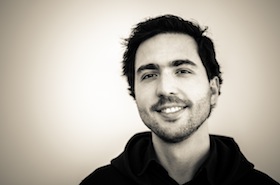
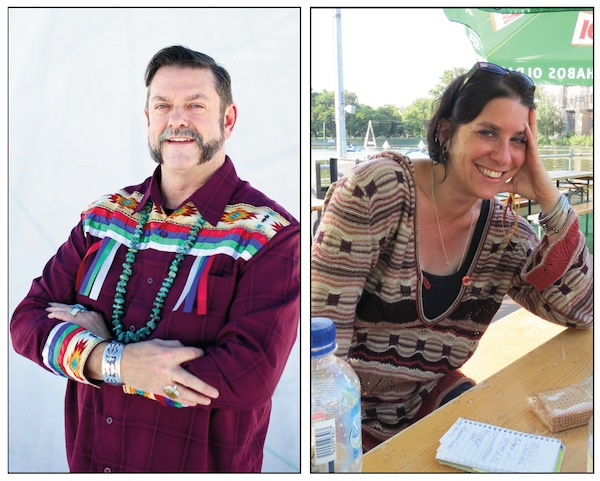
Bradley West and Shayna Plaut (photos from conference organizers)

As part of Winnipeg Pride Week in May, local organizers put on the first-ever Queer and Faithful Conference.

A grassroots event created to give voice to LGBTQ2+ people of colour and their experiences with faith and spirituality, the conference featured two panel discussions with opportunity for informal roundtable discussions. The keynote speaker at the May 25-26 conference at Robert A. Steen Community Centre was writer, facilitator and performer Jenna Tenn Yuk. She spoke about exploring identity and the intersections of race, queerness and faith through personal storytelling, spoken word poetry and facilitation; encouraging interfaith conversations around intersectionality, privilege, social location and other aspects; creating safer spaces for LGBTQ2+ people of colour in faith-based environments; and ensuring safe spaces to ask questions and explore the issues as a community.

Bradley West, who has been involved with Winnipeg’s queer community for more than 20 years, and Shayna Plaut, a former Vancouverite who now lives in Winnipeg, were part of the conference’s Jewish panel.

“I think the conference came about because there were people who had been talking about the importance of keeping their faith, while also celebrating their gender and sexual diversity, and there were some people who were finding that to be a little difficult,” West told the Independent.

Explaining that it was an uncomfortable topic for many people in the broader queer community, he said, “In fact, one of the members said, on Saturday, that, ‘because faith rejected us so soundly, we have rejected faith.’ We need to create a safe space where we can come together and have these conversations – where people from the various faith communities and also from the queer community can come together in a mutual space.”

While such conversations have been going on for some time, typically led by faith leaders and queer community organizers, the aim of the recent conference was to offer a more personal approach.

“The organizers wanted to have voices of the people who are more marginalized in our community, because of their skin tone, or religion, or spirituality, or faith,” said West. “They wanted to make sure it wasn’t just centred around white voices; white, Christian voices….. Oftentimes, when we are having conversations about faith in this Canadian landscape, we default to the dominant voice which, in our historical context, is Christian.

“So, they definitely had a lot of Christians who were there and who were involved, but, in terms of the planning and the panel speakers, and in terms of how they wanted people to think, was thinking of how we might be able to create an open dialogue with each other … to be able to, first, honour our own faith journey, but then also to understand the faith journey of others, especially when that faith journey is very different from our own.”

According to conference organizers, 70 to 80 people attended over the two-day period, with attendees coming from Winnipeg, as well as from surrounding areas, such as Morden, Selkirk, Steinbach and Portage La Prairie.

“From what I experienced, everyone … was approaching it with a spirit of reflection,” said West. “They were definitely gently challenged by the speakers to reflect on their own personal participation in terms of do you really believe your faith is the only faith or the true faith … and does that subtly reinforce this idea that those who are different are ‘less than’?”

The speakers, he continued, “were gently challenging people to think about how we interact – not only with the different denominations in our faith, but everyone of Abrahamic faiths, with different strings of denominations, and also those outside of some of the faiths … different groups practising different versions of the larger faith. Sometimes, we have a tendency to think that our journey and our view is the view that is shared by everyone in our faith … and so, there were those gentle reminders to reflect on that. Overall, as a participant, I would say there was a sense of a call to self-reflection, and there wasn’t any resistance in terms of the intent to self-reflect, for sure.”

For West, one thing that struck a chord was that, even though he was in a room full of strangers at the beginning of the event, everyone got to know one another very quickly. “I think it was very much about, yes, we have differences, but we also have commonalities and, as we move forward, we need to look at both … have a bifocal lens in honouring our differences – not minimizing or whitewashing, or asking us to abandon our differences in order to get along … just focusing on our similarities. We’re going to honour that and work together, and look at how we’ll create spaces and places within our own lives. And then maybe, by extension, our own communities will allow more of these dialogues.

“The gathering had the flavour of us coming together and having these conversations, and continuing to do so outside of this space,” he said. “That core that comes from great changers, like [Mahatma] Gandhi, talking about that idea of, if you want to change something, first, change yourself, because, wherever you go, there you are. If you change yourself, you’ll automatically change the spaces you go into, because you are no longer the same person.”

Plaut’s faith has changed over the years. Born into a Chassidic home in the United States, her family decided to follow Conservative Judaism when she was 5.

“The joke I like to say is, I’m queer, I’m Jewish, I’m a mom, I have seven tattoos, 13 earrings, and I keep a modicum of kosher,” said Plaut. “I teach at the University of Winnipeg and work in the field of human rights and journalism.”

When asked to help organize the conference, Plaut jumped at the chance. She took on the role of food coordinator and ensured all the food was vegetarian, so that everyone could eat, regardless of their religious or dietary restrictions. She also took it upon herself to make sure that not only the Abrahamic faiths were represented, but also Hindu or Sikh, by reaching out to some of her students.

“Folks would use their own experiences and explore some of the strengths that they found within their faith and also some of tensions,” said Plaut about the conference. She said that some people feel like they have to choose, in terms of their identities – religious, cultural and sexual – and that the conference encouraged an exploration of various faiths’ strengths and limitations in terms of guiding people, and what it means to find acceptance within a faith.

The conference attracted a range of attendees.

“Many of the folks who came, not all, but a good proportion, may not have identified as being queer themselves,” said Plaut. “Many of them were grandparents, actually, or parents who wanted to know how to better support their children or grandchildren. They wanted to learn.”

While organizers worked hard to share with and connect people, they left it up to the participants whether to exchange their contact information with one another. Some attendees expressed interest in continuing the conversation beyond the conference and organizers are working on determining the next steps. Many of the participants joined the nearly 50,000 marchers at the Winnipeg Pride Parade, which took place June 1.

“It was amazing, our biggest Pride ever in terms of participants in the parade,” said Plaut. “There were over 112 organizations that registered either floats or walking groups.”

Rebeca Kuropatwa is a Winnipeg freelance writer.
Jessies, Order of Canada, Korczak, Rockowers, Federation & VHEC

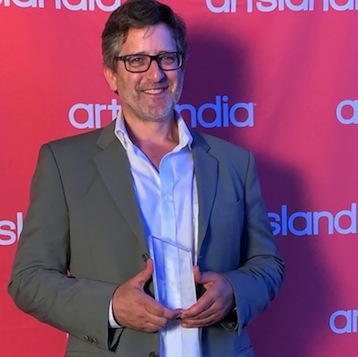
Warren Kimmel won a Jessie Award for his portrayal of the title character in the Snapshots Collective’s Sweeney Todd: The Demon Barber of Fleet Street. (photo from Snapshots Collective)

The 37th annual Jessie Richardson Theatre Awards were held on July 15 at Bard on the Beach’s BMO Mainstage in Vanier Park. Fifty theatrical productions were nominated from last year’s theatre season.

In the small theatre category, the Snapshots Collective’s Sweeney Todd: The Demon Barber of Fleet Street, which included several Jewish community members in its creative team, garnered eight nominations: director Chris Adams and costume designer Emily Fraser were acknowledged, along with the outstanding performances by Jewish community member Warren Kimmel, Colleen Winton, Oliver Castillo and Jonathan Winsby, and the production as a whole for its quality and innovation. In the end, the show won four Jessies, for the performances of Kimmel, Winton and Castillo, as well as nabbing the award for outstanding musical production.

Jewish community member Itai Erdal won the award for outstanding lighting design category for his work in Arts Club Theatre Company’s The Curious Incident of the Dog in the Night-Time. Erdal was also nominated for his lighting in Théâtre la Seizième’s Le Soulier.

At the July 15 ceremony, community member David Diamond received the Greater Vancouver Professional Theatre Alliance Career Achievement Award.

For more information, visit jessieawards.com.

* * *

On June 27, 2019, Governor General of Canada Julie Payette announced this year’s appointments to the Order of Canada, including, as officers, two local Jewish community members: Gordon Diamond, for “his steadfast leadership in business and for his philanthropic support for causes related to health care, education and social services,” and Dr. Peter Suedfeld, for “his groundbreaking research on the psychological impacts of extreme environments and stressors on human behaviour.”

* * *

On June 18, 2019, at Government House in Victoria, B.C., the Janusz Korczak Medal was awarded to Ted Hughes, OC, and Helen Hughes, OC, while the Janusz Korczak Statuette was awarded to Irwin Elman, the past advocate for children and youth of Ontario. The awards were bestowed in recognition of caring for children in the spirit of Dr. Janusz Korczak.

The ceremony started with welcoming remarks by the event’s host, Lieutenant Governor Janet Austin, and Holocaust survivor and writer Lillian Boraks-Nemetz spoke about Korczak, with a personal touch. The awards were presented jointly by Jennifer Charlesworth, B.C. representative for children and youth, and Jerry Nussbaum, president of the Janusz Korczak Association of Canada. And the event was emceed by Jerymy Brownridge, private secretary to the lieutenant governor and executive director of Government House.

* * *

The Jewish Independent won two American Jewish Press Association Simon Rockower Awards for excellence in Jewish journalism this year (for work published in 2018). The awards were presented at the 38th annual AJPA banquet, held in conjunction with the association’s annual conference in St. Louis, Mo., June 23-26.

Bruce Brown’s “The draft: a dad reflects” – in which he shares his experience of sending his son off to serve in the Israeli Air Force – placed first in the personal essay category for its circulation class.

The JI’s editorial board – Pat Johnson, Basya Laye and Cynthia Ramsay – took second place in the editorial writing category for its circulation group. The submission, which included the editorials “Holocaust education needed,” “Impacts of nation-state” and “What is anti-Zionism?” elicited the following comment from the Rockower judges: “Riveting and well-explained editorials on anti-Zionism, the identity of Israel as a nation-state, and a local controversy involving Holocaust education.”

* * *

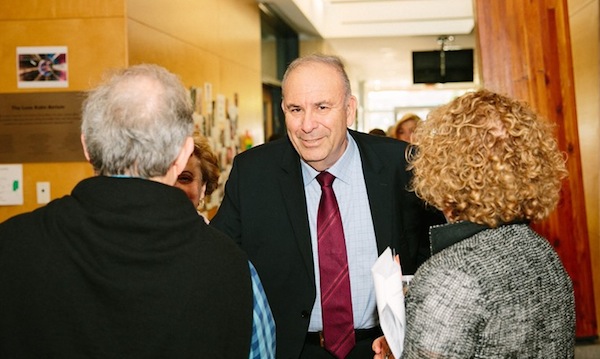
photo - Ambassador Nimrod Barkan at Jewish Federation of Greater Vancouver’s annual general meeting on June 18
Ambassador Nimrod Barkan at Jewish Federation of Greater Vancouver’s annual general meeting on June 18. (photo from facebook.com/pg/jewishvancouver)

At Jewish Federation of Greater Vancouver’s annual general meeting on June 18 at King David High School, Federation elected two new directors – Karen Levitt and Melanie Samuels – and the board appointed a new executive. While Karen James has completed her term as board chair, she remains on the board as immediate past chair. Alex Cristall takes over as chair, Penny Gurstein is vice-chair, Bruce Cohen is secretary and Jim Crooks is treasurer.

At the AGM, several honours were bestowed: Stephen Gaerber was the recipient of the Arthur Fouks Award, Megan Laskin the Elaine Charkow Award and Sam Heller the Young Leadership Award. Tribute was also paid to James; as well as Jason Murray, outgoing chair of CIJA’s local partnership council; Richard Fruchter, chief executive officer of Jewish Family Services; Rabbi Noam Abramchik and Rabbi Aaron Kamin, rosh yeshivah of Pacific Torah Institute; and Cathy Lowenstein, head of school at Vancouver Talmud Torah. Ambassador Nimrod Barkan attended the AGM as part of his last visit to Vancouver before he completes his term as Israel’s ambassador to Canada.

Federation thanks the directors who came off the board – Eric Bulmash, Bryan Hack, Rozanne Kipnes and Laskin – for their dedication to community and that they chose to share their time and talents with Federation. In Bulmash’s case, he will continue to contribute, but in a different capacity, as he is Federation’s new vice-president, operations.

* * *

At its annual general meeting on June 19, the Vancouver Holocaust Education Centre announced the two winners of the Kron Sigal Award for Excellence in Holocaust Education. The VHEC also inducted two new recipients of the Life Fellows designation.

The designation of Life Fellow recognizes outstanding dedication and engagement with the Vancouver Holocaust Education Centre Society through long-term involvement and significant contributions to the organization’s programs and mandate. This year, VHEC is delighted to have two recipients, Wendy and Ron Stuart, in recognition of their longstanding contributions as artistic directors of the VHEC’s community-wide Yom Hashoah commemoration.

Each year, the VHEC presents the Meyer and Gita Kron and Ruth Kron Sigal Award to a B.C. elementary or secondary teacher who has shown a remarkable commitment to teaching students about the Holocaust and its important lessons. This year’s recipients are Nicola Colhoun and Dr. Christine Paget from West Vancouver Secondary School.

In their remarks, Colhoun and Paget shared, “As social studies teachers … we are tasked with the lofty goal of having students care about what has come before them to shape the world they live in now…. Through the testimonies of survivors, the past becomes tangible, it becomes human, and it becomes relevant to students…. So many of our students come away from the Holocaust Symposium saying things like, ‘I get it now.’ ‘I didn’t realize, but now I understand.’ They understand why the history of the Holocaust matters. And they also understand why they need to speak up for inclusion, and stand against racism and persecution of any kind, from the school hallways to the hallways of power.”

The VHEC’s executive is Philip Levinson, president; Corinne Zimmerman, vice-president; Marcus Brandt, second vice-president; Joshua Sorin, treasurer; Al Szajman, secretary; and Ed Lewin, past president.

Managing theft and loss

We’ve seen a huge rise in neighbourhood property crime. We’re still driving a car without a back window (yup, two windows vandalized). We also lost a flower planter in June.

We realized the flowers were gone on Shabbat. We were on our way to services when we saw that we only had one and not two matching flowerpots. This matters for two reasons. First, we use the pots to keep people from parking illegally and blocking our gate. Sometimes, the planters get moved because a truck is parked to do work at our house or at a neighbour’s. Sometimes, big trucks or strangers just run over our planters so they can turn around or park illegally at our house. Despite multiple “private parking” signs, we struggle with these issues frequently. After each run-over or blocked gate, we’re scooping up the soil and repotting the flowers, trying to keep the planters going.

Two weeks after the pot went missing, when I was helping my twins walk their bikes to the schoolyard so we could safely practise cycling without training wheels, we stopped to look at our neighbours’ yards. My kids planted the flower pots themselves as part of their birthday celebrations at the beginning of June (reason #2 for their importance). They knew exactly which colours they’d put in each planter. And – surprise – our planter was firmly ensconced in a neighbour’s front yard, a block away from home.

We tried knocking but no one was there. When we returned home, we couldn’t put it out of our minds. My husband filed a supplement to our police report, asking if the cops could help invite these folks to return our flowers. So far, nothing has happened.

One of my kids has taken to doing the early morning walk with me and our two dogs now that it’s summertime. He reflects on the stolen/lost flowers every morning we pass them. On one of these walks, he brought up another story: he’d encountered a lost dog at day camp. Others shooed it away from the grass, into the parking lot, where he feared it would be run over. No one, in his view, helped it get home.

When I mentioned it to adults at camp, I was reassured that someone had found the dog’s owner. It was also pointed out to me that many kids were afraid of dogs; perhaps that’s why it was shooed away. I responded that, even if no one taught kids how to behave around animals, that dog was a “lost item.” Jewish tradition teaches us that it is a mitzvah, a commandment, to return lost items to their owners.

Jewish tradition is full of stories and rabbinic instructions for how we are to manage theft and loss. How we should address theft, punish thieves and figure out the motivations of those who do harm are part of what we should learn and teach as Jews. It’s our responsibility to return things and to help others find that order and closure in the world.

The rabbis recognize this commandment is complex. In some cases, hungry or suffering people may steal, borrow or “find” a lost item that they need to survive. However, we shouldn’t assume that the person who lost something can always make do or be fine without it. If we budget in our household to fill two planters with flowers – so the twins can each plant one – and someone steals one? Our kids feel that one planter is clearly not the same as two. There’s no food involved in this but, aside from contacting the police or directly confronting the neighbours, we run the risk of being seen as the crooks if we “steal” it back.

We have public services – police, courts, animal services – to solve some conflicts. Yet, if public services are delayed or unresponsive, we’re left with the same moral issues. How do we solve these problems without timely intervention or help? What can we do to practise tikkun olam, repair of the world?

We rely on voting in a democratic society, as well as a responsive civil service, to make sure our public services work. (This is a hint – please vote in the next election.) On a personal level, though, my kid suffers when he worries about a missing person, a dog or a flowerpot. He is the same kid who knows what the Red Dress installations mean: I have an 8-year-old who knows these commemorate the loss of missing and murdered indigenous women and girls. It’s hard to see a kid learn about this. It’s harder yet to live with loss. Imagine the huge pain of losing a person. For a kid, losing a beloved animal or giving up on something that was stolen seems hard enough.

The rabbis give ways to respond to challenges of theft or loss and it’s up to us not just to study the sources, but to live in a way that carries out their teachings. We must call others to account when they fail to do what’s right. If someone steals, promises to pay for something and doesn’t, or “loses” someone or something, it’s our obligation to ask them to honour their commitments.

It’s not OK to take a loved one, an animal, a kid’s flowerpot or to skip paying the bill. We have limited funds in our household, school and government budgets. Yet, our tradition also teaches a compassionate compromise – if a person truly cannot survive, we must help. The question we’re left with is how to find closure when the world fails us. If no one returns a missing child or animal, if we do not honour our commitments to others, what kind of a place is this?

We have a stake in making this world a better place. It starts with practical steps like helping get a lost person, dog or belongings home safely. Let’s at least honour our obligations.

Joanne Seiff has written regularly for CBC Manitoba and various Jewish publications. She is the author of three books, including From the Outside In: Jewish Post Columns 2015-2016, a collection of essays available for digital download or as a paperback from Amazon. See more about her at joanneseiff.blogspot.com.

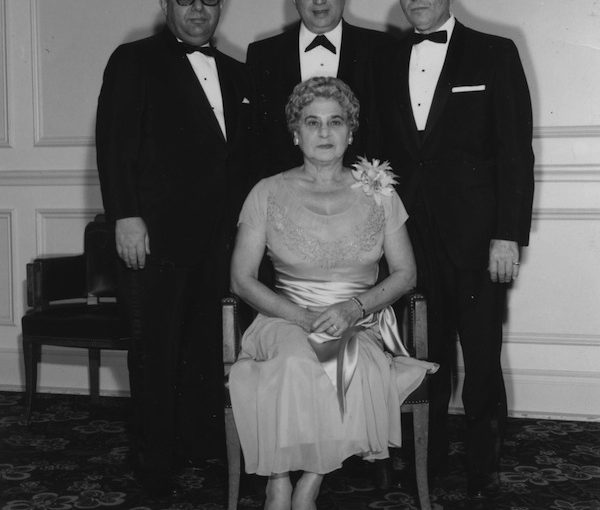
Mystery photo … July 19/19

Lil Shapiro with three unidentified men, at a Jewish National Fund event, 1960. (photo from JWB fonds, JMABC L.11896)

If you know someone in these photos, please help the JI fill the gaps of its predecessor’s (the Jewish Western Bulletin’s) collection at the Jewish Museum and Archives of B.C. by contacting archives@jewishmuseum.ca or 604-257-5199. To find out who has been identified in the photos, visit jewishmuseum.ca/blog.


Exchange of missiles

It is May 4, 2019. I am at my desk. It’s early Saturday. I’m catching up on some work. Morning sound in the background. Israeli-style. Siren in the distance. Kind of a weird sound. The way chirping birds and wispy winds comprise morning sound elsewhere.

I didn’t really connect with the siren’s eeriness. Was too deep into Excel and emails. Then my daughter darted from her room. Smartphone in hand. (Do they sleep with these things?) “Don’t you hear it? There’s a siren. But my newsfeed says it’s elsewhere.”

“OK, let’s go to the protected room,” I said. Somewhat controlled. Somewhat alarmed.

We woke everyone up. My wife. My son and his girlfriend – banging on his bedroom door, “Move it!”

Last siren heard in Rehovot was during Protective Shield in 2014. My son just 16. And sleeping alone. So much has changed. And so much has stayed the same. This Gaza quagmire, to whit.

We congregated in our den-cum-protective room. Shut the re-enforced glass window – a heavy screech. Closed the too-heavy steel door – a loud bang. Turned on the TV – 90 missiles slamming into Israel’s south. Our hearts and mouths dropping. The bang of our Iron Dome hitting the missiles overhead. All clear. We can come out. Morning sound.

Singing about Bobby McGee, Janis Joplin crooned, “Freedom’s just another word for nothin’ left to lose.” And the Gazans have nothin’ to lose. They live in worse than miserable circumstances. Another war. Another round of missile exchanges. It really has no impact on their miserable living standards.

In Israel. We have too much to lose. The upcoming Eurovision – in two weeks – comes to mind. If we go to war now, or launch a massive retaliatory strike leading to counter-strikes, it risks the wonderful success of Israel hosting this international event. Ten thousand visitors. Ten million dollars in revenue. Excellent public relations. Fun. Lightness. Celebration. In Israel, it’s never a good time for war. Always something to lose.

But I think Janis was singing more about drugs, sex and rock ’n’ roll. Here in wonderful Israel the reality – like our morning sound – is a bit harsher.

Sunday, May 5

Morning

A restless night. Even for those lucky enough to live far from the Gaza periphery. Distance is so relative here in tiny Israel.

Woke up several times to check my smartphone – news updates. (Even we adults sleep with those things.) More than 300 missiles fired. One Israeli casualty after a missile struck his house.

Schools canceled within a 40-kilometre radius of Gaza. We live 45 kilometres away; missed the limit by five kilometres. Before Roni went to school, I grilled her on the basics of dodging missiles. She passed. Although there was some ambiguity about when to leave the protective room. “What if there’s no boom, Dad?” (i.e. The missile is shot out of the sky by the Iron Dome.) “Improvise, kid,” was my best answer.

Evening

Another 200 or so missiles fired at Israel today. They aimed for my place again. And missed. Bastards! Dor called me at work from our protected room. Roni texted me from school. Everyone OK. It’s hard being far away. Again, distance is relative.

A factory hit in Ashkelon. Two killed. WTF! And a moving car hit by an anti-tank missile. Driver killed. Again, WTF!

As I write this, lots of booms in the background. Wife and kids looking out the window. Watching the missiles. And the anti-missiles. A sound-and-light show. Happening in the neighbouring cities. Far away.

Some shock here. I must admit.

Monday, May 6

Ceasefire. Gaza has Ramadan. Israel has the Eurovision. A temporary respite for both sides.

We certainly wreaked havoc in Gaza. Two hundred and sixty high-value targets destroyed. But looking for something a bit more definite. Like victory in six days. Like a spectacular comeback. Like Entebbe. Like knocking through walls. Like encircling the Mukata. Of late, just too many broken ceasefires.

To paraphrase Golda Meir – until the Palestinian leadership loves their children more than they hate ours, only a decisive military victory will create peace and quiet. Or at least quiet.

Celebrating 71 on Thursday. Will raise our flag high and eat lots of hummus and kabab.

Regards from Israel, Bruce.

Bruce Brown, from Winnipeg, lives and works in Israel. His first Israeli home-front diary of life in times of national stress and war, “The draft: a dad reflects,” which was published in the Jewish Independent last year, placed first in the personal essay category of the 2019 American Jewish Press Association Simon Rockower Awards for excellence in Jewish journalism.

Jewish women in West

When Jeanne Abrams told a friend she was planning to do her doctorate dissertation on an aspect of Colorado Jewish history, her friend replied, “What a wonderful idea! You’ll hardly have any work to do.” She proved wrong.

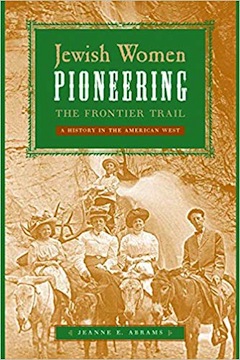
“While I was researching my dissertation and finishing up my PhD, I visited the Beck Archives of Rocky Mountain Jewish History at the University of Denver,” Abrams told the Independent. “The director, when she retired, asked me to interview for the job. The rest is history. As director of the Beck Archives, one of my tasks was to become an expert on Western American Jews, and that’s how the book came about,” she said, referring to Jewish Women Pioneering the Frontier Trail: A History in the American West (New York University Press, 2006).

“I’ve always had an interest in American Jewish women, and found there were some differences that I wanted to point out, and that Jewish women played a very important part in settling and developing Jewish communities in the American West,” she said.

Abrams herself was born to Holocaust survivor parents in Stockholm, Sweden. Sheltered there after the war by the Swedish Red Cross, her family moved to the United States when Abrams was less than a year old.

Through her research, she has learned that, in the United States, while Jewish men were very involved in city and organization building, it was often left to the women to develop religious continuity and community.

She said Jewish women “were in the forefront of founding synagogues, keeping Jewish tradition alive in the home, and they also branched out in many areas – particularly strong in philanthropy and charitable enterprises. At the same time, because of a combination of factors, including the more open environment in the West and that kind of spirit of adventure, Jewish women also really ventured into professions, into higher education.

“I think this environment in the West made this area of the country different for Jews in general. I certainly don’t want to suggest that there was no antisemitism in the West but … [Jews] were more prominently accepted into general society, so American Western Jews, men and women … were often leaders in both the general community and the Jewish community simultaneously.”

Throughout Denver’s history, there have been many endeavours that have involved people of different faiths. As an example, Abrams cited the Denver Charity Organization Society, which was organized in 1887 by a Jewish woman, a rabbi, a Catholic priest and a Protestant minister. The society evolved into what is now known as the United Way.

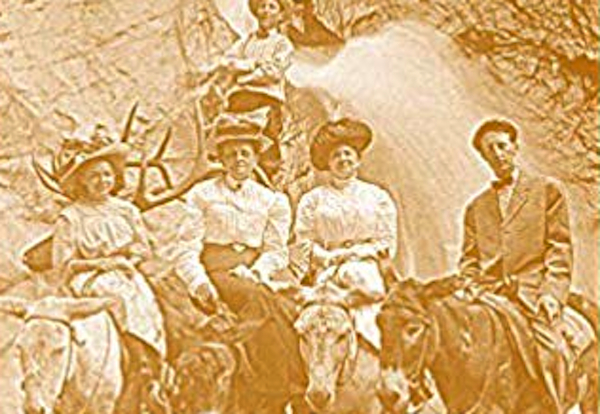
image - Jewish Women Pioneering the Frontier Trail book cover“Jewish women were also in the forefront of political life here in many ways, and I don’t think that most people realize that women voted in the West long before they did on the East Coast…. We’re coming up to the 100th anniversary of the amendment that allowed women to vote in the U.S.,” said Abrams. “In 1893, women were already voting in Denver. It was the largest city in the U.S. in which women could vote. I think people often think of women’s suffrage with the East Coast, New York, and minimize the amount of influence that early suffragettes had in California, here in Colorado, and in many other cities.”

In 1899, the National Jewish Hospital was founded as a place for people with tuberculosis. It drew patients and staff from all over the country, and was funded by people all over the country. According to Abrams, this was likely one of the first national Jewish organizations to hire a Jewish woman in the role of executive director, in 1911.

While Abrams’ research has primarily focused on Denver’s Jewish population, she also has come across parallels in Canada.

“We know Jews have a very long tradition of philanthropy and social justice. I found that across the border as well,” said Abrams. “But, in terms of the hospitals, when I studied them, I’d say, in Denver, the two Jewish sanatoriums actually had more interaction by women than I saw in Montreal.”

With her book, Abrams wanted to impart a sense of appreciation for women in the American West – of them having been leaders.

“They’ve often been overlooked, because historians tend to be very East Coast-centric,” she said. “I think that people generally seem to be surprised that there are Jews living out in the West. If they thought of anyone, they had the stereotype of cowboys living there.”

While more people associate Denver with the gold rush, Abrams noted that more people actually came to Colorado in search of health than wealth, specifically referring to the tuberculosis treatments available.

These days, Abrams has mainly been studying early American history. Her most recent book was, she said, “on America’s first three ladies. It’s called First Ladies of the Republic: Martha Washington, Abigail Adams, Dolley Madison and the Creation of an Iconic American Role. I’ve moved back and forth, but I’ve enjoyed the different topics I’ve covered.”

Rebeca Kuropatwa is a Winnipeg freelance writer.
The courageous beach queen

Lea Gottlieb at work. (photo from Lea Gottlieb Archive via Design Museum Holon)

Summertime … bathing suit season. As a child, I fondly remember our family trips to Israel. Among all the memories is the treat of a scrumptious falafel before we went off to the Gottex bathing suit factory, where my mother indulged my two sisters and me with the colours and styles from Lea Gottlieb’s latest swimwear collection.

Born Lenke Lea Roth on Sept. 17, 1918, in Sajószentpéter, Hungary, Gottlieb was raised in poverty. Before the Second World War, she worked as a bookkeeper in a company that produced raincoats. There, she fell in love with Armin Gottlieb, the owner’s son; the two married and started a family.

During the Holocaust, Gottlieb’s husband was imprisoned in a labour camp. Gottlieb and their young daughters, Miriam and Judith, went into hiding and were saved by a family who sheltered them in a pit behind their home beneath trees and flowers.

After the war, the family reunited and tried to rebuild what they had established in the past, moving to Czechoslovakia to start anew. However, staying in Europe, with its continuing antisemitism proved impossible for the Gottliebs and, in 1949, they moved to Israel.

They landed in the country with pretty much nothing but the clothes on their backs and Gottlieb’s gold wedding band. Turning this item into cash, as well as borrowing some money, she purchased a sewing machine and enough fabric to start making raincoats. It didn’t take long for Gottlieb to understand that a line of raincoats in a place that has mostly sunshine would not make for a fruitful future – rather, bathing suits would prove a more promising venture. Merging her name, Gottlieb, with the word textile, Gottex came into being.

Gottlieb’s Hungarian cultural roots remained evident. She maintained her distinct accent and served Hungarian cuisine in her showrooms. She celebrated her survival by incorporating flower motifs into her signature designs, and, with her choice of colours, she expressed her love of her new home, Israel – aqua for the Mediterranean, yellow for the dessert, pink for Jerusalem stone and greens, the Galilee. From swimwear came a line of trousers, caftans and tunics, as Gottlieb wanted her creations to be worn at the beach or by the poolside, for a drink at the bar and on the dance floor.

photo - Gottex Israeli fashion house, Tel Aviv, 1961
Gottex Israeli fashion house, Tel Aviv, 1961. (photo from wiki commons)

During the peak of Gottlieb’s career, her work was admired by many leading ladies. Elizabeth Taylor, Princess Grace, Nancy Kissinger and Brooke Shields were among her many fans. A friendship formed with one special client, the late Princess Diana, who was given private showings in Buckingham Palace each season.

Gottlieb and her daughter Judith were the design team, based in Israel, while her husband oversaw the financial side and daughter Miriam ran the showroom in New York. Together, the family built a global fashion house and Gottex became the top swimsuit line in the United States, with the most sought-after models walking in their shows and being featured on the cover pages of international fashion magazines.

Gottlieb’s achievements included numerous fashion awards, earned both in Israel and elsewhere. A highlight of her career occurred at Yad Vashem, the World Holocaust Remembrance Centre, in Israel. There, Gottlieb was part of an honourary exhibition, called My Homeland, which acknowledged Holocaust survivors’ essential role in contributing to Israel through cultural, economic and national security development.

In 1995, the loss of Gottlieb’s husband, the financial pillar of the company, was a devastating blow. She was forced to sell Gottex in 1997. As part of the sale, she had to sign a non-compete agreement, which prohibited her from designing for eight years. And more loss was to come. In her daughter Judith’s final days of battling cancer, in 2003, she apparently implored her mother to continue with her passion of design and start again. But, even when the company did come up for sale, Gottlieb couldn’t afford to buy it back. “I lost the two most important things in my life, my daughter Judith and my life’s work,” said Gottlieb after her daughter’s death.

But, at 85 years old, Gottlieb managed to reinvent her career. With the support of a design team, she launched a new line of swimwear under her own label, Lea Gottlieb. The industry had become much more competitive since she created Gottex and, relatively soon after she had restarted, Gottlieb closed production and retired.

Gottlieb passed away in 2012, at the age of 94. She left behind a legacy in her beloved homeland, as well as in the eyes of veteran and aspiring designers around the world.

Ariella Stein is a mother, wife and fashion maven. A Vancouverite, she has lived in both Turkey and Israel for the past 25 years.

Solving a mystery

(photo from University of Haifa via Ashernet)

This pre-Columbian cultural artifact at the University of Haifa is one of the mysterious art objects from Puerto Rico that were alleged to have been made by members of the Ten Lost Tribes. “This is definitely one of the strangest and most fascinating stories I’ve ever been involved in,” stated the university’s Dr. Iris Groman-Yaroslavsky. “To date, we have not found any similar carved stone art objects from this region of the Americas and, therefore, many researchers assumed that they must be fake. However, the microscopic tests we performed show beyond any doubt that the stones were carved around 600 years ago.”

The story of these art objects, known as the “Library of Agüeybaná,” goes back to the 19th century, when a Puerto Rican monk by the name of José María Nazario presented a collection of some 800 carved stone statuettes, some of which had a clearly human form while others appeared to be artistic or ritual items. No similar statuettes or art objects have ever been found from this region, and it was he who claimed the Lost Tribes connection. In 2001, a research student named Reniel Rodríguez Ramos saw the stones during a study trip and was enchanted. He completed his doctorate in pre-Columbian cultures and returned to investigate the stones. Eventually, he came to Groman-Yaroslavsky’s lab, which specializes in microscopic examinations.

שינויים ניכרים באזורים הארטקטיים

(Mario Hoppmann/NASA)

חוקרים בכירים ארה”ב: הקרח באזורים הארקטיים של קנדה החל להפשיר שבעים שנה לפני התחזיות

משלחת מאוניברסיטת אלסקה (בפיירבנקס) מצאה שינויים ניכרים בתוואי הקרקע הקפואה באזורים הארטקטיים של קנדה, במהלך שלוש עשרה שנים: בין אלפים ושלוש לאלפיים ושש עשרה. לפי הממצאים בנוסף לנסיגת שכבת הקרח נוצרו גם גבעות נמוכות, שחסמו את הרוח ואפשרו לצמחייה להכות שורש

שכבת האדמה הקפואה באזורים הארקטיים בקנדה החלה להפשיר שבעים שנה שנה לפני הזמן הצפוי. על כך מצביעים הממצאים של משלחת חוקרים בכירה שהגיע לאזור. לדבריהם התופעה מעידה על כך שכדור הארץ מתחמם בקצב הרבה יותר מהיר מכפי שצפו בתחזיות השונות. חברי המשלחת מאוניברסיטת אלסקה שבארצות הברית, אמרו כי הופתעו מאוד מהמהירות שבה גרמו עונות הקיץ החמות במיוחד לערעור השכבות העליונות של גושי הקרח התת־קרקעיים.

זה היה מדהים אמר לסוכנות החדשות הבינלאומית רויטרס, ולדימיר רומנובסקי, גיאו־פיזיקאי חבר במשלחת של האוניברסיטה. זה סימן לכך שהאקלים כיום חם הרבה יותר מאשר היה אי פעם – במהלך חמשת אלפים השנים האחרונות. החוקרים פרסמו את ממצאיהם המעניינים והיוצאי דופן בכתב העת המדעי גיאופיזיקל רייסרץ’ לטרס.

לפני מספר שבועות פורסמו הממצאים האלה ברבים- לקראת פסגת משבר האקלים שהתקיימה בבון שבגרמניה. האירוע הבינלאומי אורגן על ידי האו”ם וגורמים נוספים. זאת במטרה להגביר את המאמצים המשותפים למצוא פתרונות בנושא הכל כך מסובך. כידוע כל מדינות המערב תומכות ברעיון כי כדור הארץ מתחמם לפי ממצאים של המדענים השונים. ורק נשיא ארה”ב הנוכחי, דונלד טראמפ, מתכחש לממצאים אלה.

המאמר התבסס על ניתוח נתונים שהחוקרים אספו בביקורם האחרון באזור לפני כשלוש שנים. ובמקביל הוא מתבסס גם על סקירות אקלימיות מאז שנת אלפיים ושלוש ועוד היום. הצוות השתמש במטוס ששודרג במיוחד כדי לבקר בנקודות מרוחקות ביותר, בהן תחנת מכ”ם מתקופת המלחמה הקרה, שנמצאת במרחק של יותר משלוש מאות ק”מ מכל יישוב אנושי. כצפוי החוקרים לקחו על עצמם סיכונים גבוהים בביקור באזורים מרוחקים אלה. לדברי החוקרים ממש בנחיתה לקרקע נגלה לעיניהם נוף שונה לחלוטין על פני הקרקע הארקטית, שאותה ראו בביקורים קודמים לפני כעשור שנים.

הנוף הפך לים גלי של גבעות, שקעים צרים ובריכות. הצמחייה שבעבר היתה מעטה החלה לצמוח בכמות גדולה בחסות המקלט שסיפק הנוף מהרוחות הבלתי פוסקות. החוקרים הרגישו מצד אחד סיפוק מקצועי על כל מה מצאו, ומצד שני הרגישו תחושה שהאסון ממשמש ובא. הם ציינו כי המראה הזכיר להם אדמה חרוכה אחרי הפצצה.

זו תופעה המזכירה לי מכרה הפחם, אמרה אחת החוקרות הבכירות במשלחת. סביר למדי שתופעה זו משפיעה על אזורים נרחבים יותר ממה שאנו מעריכים. ואת זאת החוקרים יבדקו בהמשך. החוקרים חוששים ליציבות שכבת האדמה הקפואה בשל הסכנה שהפשרה מהירה תשחרר כמות נרחבת של גזים, שיביאו להאצה משמעותית של ההתחממות הגלובלית

לפי הערכות של האו”ם גם אם המחויבויות הקיימות בהסכם פריז משנת אלפיים וחמש עשרה, להפחתת פליטות גזי החממה, ייושמו במלואן העולם עדיין רחוק מאוד ממניעת הסכנה – שתהליכים דומים של היזון חוזר יביאו להאצת ההתחממות של כדור הארץ.

נוכח אזהרות המדענים כי טמפרטורות גבוהות יותר יגרמו להרס רב בחצי הכדור הדרומי, ויהוו איום על יכולת הקיום של העולם המתועש בחצי הכדור הצפוני, ארגוני סביבה נתלים במאמר שפרסמו החוקרים כהמחשת הצורך בהפחתת פליטות גזי החממה. הפשרת האדמה הקפואה היא אחת מהנקודות המצביעות על משבר האקלים, אמרה ג’ניפר מורגן מארגון גרינפיס אינטרנשיונל.

Blues, klezmer at Mission

Gabriel Paquin-Buki, far right, founded the band Oktopus, which started performing in 2010. (photo by Rémi Hermoso)

Among the Jewish performers at this year’s Mission Folk Music Festival, July 26-28 at Fraser River Heritage Park, are Vancouver’s Jesse Waldman and Montreal’s Gabriel Paquin-Buki. For both musicians, family has been a key inspiration.

Waldman is a guitarist, singer-songwriter, studio producer, sound designer, and film and TV composer. Originally from Thornhill, Ont., just north of Toronto, his bio describes a cassette of his grandmother singing the Yiddish folk song Papirosen to his mother as one of his “most cherished possessions.”

“That recording was from the late ’50s, most likely 1957,” Waldman told the Independent. “My family had one of the first consumer-level tape recorders, they also had one of the first eight-millimetre film cameras, too. They always loved documenting the family, taking time capsule-like snapshots to cherish and enjoy later on in life.

“The recording of that particular song – which is about a young girl selling cigarettes on a street corner – has a beautifully haunting melody. I believe my grandmother learned it from her mother, my great-grandmother. At some point, it was transferred onto a stereo cassette recorder and a few copies were made. The same tape also contains interviews with my mother, a toddler at the time, and other family members, since passed away.”

A guitar he found in his parents’ basement also played a part in the start of his musical career.

“The guitar was an old beat-up nylon-string classical guitar that belonged to my Aunt Sherri,” said Waldman. “Actually, I suspect it belonged to one of her ex-boyfriends. I figured out how to play ‘Smoke on the Water’ on one string and was hooked for life! That was back in 1989.”

Waldman made his way to Vancouver in 1995 “on a whim,” he said. “I wanted to go somewhere where no one knew me and reinvent myself. From the moment I saw the mountains and smelled the ocean, I instantly felt at home. Then, after meeting the people and getting a feel for the laidback vibe of the West Coast, I was sold on Vancouver.”

For Paquin-Buki, whose group Oktopus began performing in 2010, it was his father who introduced him to klezmer.

“My father was born into a Polish Jewish family and has carried klezmer music with him all his life. His transmission to me of this cultural legacy occurred quite naturally. The cassettes he would play in the family car, the klezmer recordings during parties at our home, the live bands at family weddings and those rare times he would play songs on the piano were enough for me to access the roots of this musical tradition,” said Paquin-Buki.

“As it is for many children, I believe it was the rhythm of this music that excited me. The recordings we listened to were mostly of fast songs and, for me, were synonymous with joy. My love for this music today has so many facets! When we listen to klezmer, we can somehow feel the richness of the Jewish people’s millennial history and hear their encounters with musicians from all over the planet and across centuries. Also, major-minor ambivalence in the main klezmer scale (the freygish) embodies the dichotomy between laughter and tears so characteristic of Jewish culture. And it’s always fun music to play.”

Waldman has similar views. “I’ve always enjoyed klezmer music,” he said. “The mile-a-minute dance numbers, the sorrowful ballads and the cheeky vocals. Many klezmer compositions use melodies based on the harmonic minor scale, which includes a minor third and a major seven, which makes it sound particularly haunting and mournful to me. In terms of culture, all of my band mates in my early days were Jewish. I definitely cut my teeth with fellow Jews who know the delights of Shabbos dinner and a good bagel with lox and cream cheese!”

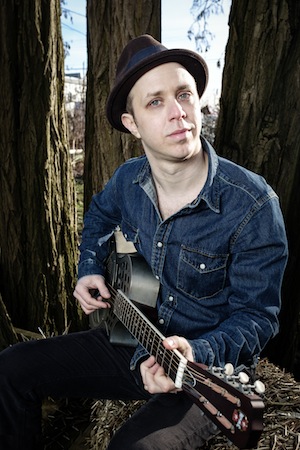
photo - Jesse Waldman
Jesse Waldman (photo by Jodie Ponto)

While he enjoys klezmer, Waldman’s music is predominantly folk and blues. “I love the sound, the rawness and heavy emotional weight of those styles,” he explained. “I also love the storytelling aspect of it, specific life experiences, places and relationships. Real folk and blues is unique to each artist but also has a tradition of carrying classic songs through the generations. I also love how blues has a way of transforming deep pain into something beautiful.”

Waldman’s debut album, Mansion Full of Ghosts, which was released in 2017, is described as “an exploration of the city’s vast duality, a backdrop of beauty mirrored by a fierce underbelly and a need to keep a light on in the dark.” It includes songs about his neighbourhood, the Downtown Eastside, and, in talking about what drives him to make socially conscious music, he said, “I think mostly my compassion for other people, particularly those less fortunate than myself. I also yearn to connect with people on a deeper level and music and honest lyrics are a good way to achieve that.”

Among the talent featured on that album is his partner, Megan Alford. Currently, the two are working on a recording of her music, Field Guide to Wildflowers, scheduled for an early 2020 release. “My role is producer and guitar player,” said Waldman. “She is an outstanding songwriter with a great voice and poignant and deeply personal lyrics. We’ve been working together for a couple years now and the songs have really come to life.”

As can blues music, klezmer holds space for both happiness and sadness. In addition to being a musician, Paquin-Buki holds a master’s degree in comparative literature. In his first semester, he took two courses that focused on literature from the concentration camps. Le Verfügbar aux enfers (The Lowest-Class Worker Goes to Hell), written by Germaine Tillion, a prisoner at Ravensbrück, particularly caught his attention. “This work has a substantial musical dimension and contains a lot of humour…. I was very keen on exploring this taboo subject of laughter and the Holocaust and especially on trying to understand what its benefits were and what shapes it could subsequently take…. For the time being, there is no direct connection between this topic and Oktopus’s music but, in performance, it allows me to flesh out historical intros between pieces. It also adds a new dimension to these tears that are halfway between laughter and sorrow, since klezmer music – and particularly the clarinet – reproduces vocal inflections that convey laughter and sorrow.

“I would very much like to compose a piece based on one of the works I used in my thesis, ‘La danse de Gengis Cohn.’ I also have a mind to add a work from KZ Muzik, a vast box set recording that traces and publishes many works composed in concentration camps. But, overall, the fact remains that my own academic project on such a profound and terrifying topic has changed my general view of the world and impacts everything I do.”

photo - Gabriel Paquin-Buki
Gabriel Paquin-Buki (photo by Julien Patrice)

Paquin-Buki is the driving force behind Oktopus’s mission to perpetuate klezmer. “By striving to perpetuate this musical tradition, I am keeping the culture of my ancestors alive and this is of special significance to me,” he said. “Nevertheless, since klezmer carries universal values, our approach also makes substantial room for the musical traditions of Quebec.”

Indeed, Oktopus combines elements of different cultures.

“The klezmer repertoire is so vast that we cannot possibly cover it all in our lifetimes,” said Paquin-Buki. “But we have also chosen to incorporate classical melodies – we are all classically trained and so we necessarily view klezmer through the lens of classical music, in the way our ears have been trained to hear it – as well as Quebec chansons [folk songs] and, sometimes, songs from other cultures around the world.

“Trying to somehow recreate these songs as they were played decades or even centuries ago is not really in line with our view of tradition, which is not a static concept for us. Tradition is something that evolves and so, in certain respects, we try to imagine what the klezmorim repertoire might have been like if they had settled in Montreal. They would have necessarily incorporated Québécois and Canadian songs and styles. Historically, klezmer absorbs the different cultures it encounters along its way, while staying true to its deep roots, which colour everything it touches. The important thing is to remain connected to those roots.”

One challenge in maintaining that connection for Paquin-Buki has been that his “classical training got in the way in some respects because klezmer is largely an oral tradition.” He couldn’t find any scores for a klezmer ensemble and, he said, “In the environment in which I functioned as a musician, nothing was possible without written-down notes. But, to make a long story short, I finally decided to write out the arrangements myself. They turned out very badly at the beginning, but with help and a lot of work, they evolved into something presentable.

“The group’s configuration,” he said of Oktopus, “is loosely based on what I heard on recordings of the Klezmer Conservatory Band: clarinet, violin, flute, trombone, tuba (now bass trombone), piano and drums. Back in 2009, I was not acquainted with that many musicians, so I recruited a few friends and other promising students from the faculty of music. The group began playing in 2010 – three pieces performed in a chamber music concert at the Université de Montréal. The following year, we were offered our first professional engagements.” Oktopus has two albums – Lever l’encre (2014) and Hapax (2017) – both of which were nominated for Juno and Canadian Folk Music awards.

Local Jewish community member Geoff Berner (jewishindependent.ca/songs-of-justice-and-of-hope and jewishindependent.ca/songs-with-meaning) is also on the Mission Folk Music Festival lineup this year. For more on the festival, visit missionfolkmusicfestival.ca.