Skip to content
  • Home
  • Subscribe / donate
  • Events calendar
  • News
    • Local
    • National
    • Israel
    • World
    • עניין בחדשות
      A roundup of news in Canada and further afield, in Hebrew.
  • Opinion
    • From the JI
    • Op-Ed
  • Arts & Culture
    • Performing Arts
    • Music
    • Books
    • Visual Arts
    • TV & Film
  • Life
    • Celebrating the Holidays
    • Travel
    • The Daily Snooze
      Cartoons by Jacob Samuel
    • Mystery Photo
      Help the JI and JMABC fill in the gaps in our archives.
  • Community Links
    • Organizations, Etc.
    • Other News Sources & Blogs
    • Business Directory
  • FAQ
  • JI Chai Celebration
  • JI@88! video

Recent Posts

  • Sharing her testimony
  • Fall fight takes leap forward
  • The balancing of rights
  • Multiple Tony n’ Tina roles
  • Stories of trauma, resilience
  • Celebrate our culture
  • A responsibility to help
  • What wellness means at JCC
  • Together in mourning
  • Downhill after Trump?
  • Birth control even easier now
  • Eco-Sisters mentorship
  • Unexpected discoveries
  • Study’s results hopeful
  • Bad behaviour affects us all
  • Thankful for the police
  • UBC needs a wake-up call
  • Recalling a shining star
  • Sleep well …
  • BGU fosters startup culture
  • Photography and glass
  • Is it the end of an era?
  • Taking life a step at a time
  • Nakba exhibit biased
  • Film festival starts next week
  • Musical with heart and soul
  • Rabbi marks 13 years
  • Keeper of VTT’s history
  • Gala fêtes Infeld’s 20th
  • Building JWest together
  • Challah Mom comes to Vancouver
  • What to do about media bias
  • Education offers hope
  • Remembrance – a moral act
  • What makes us human
  • המלחמות של נתניהו וטראמפ

Archives

Follow @JewishIndie
image - The CJN - Visit Us Banner - 300x600 - 101625

Tag: tikkun olam

To forgive and to save others

To forgive and to save others

Left to right are Megan Laskin, Sherri Wise, Karen James, Jane Stoller, Jeannie Smith, Alyssa Schottland-Bauman and Sharon Goldman. (photo from Jewish Federation)

For the past 14 years, the Jewish Federation of Greater Vancouver has organized a women’s philanthropy event called Choices. The evening is meant to inspire women to understand the power of their tzedakah and to feel part of the community. On Sunday, Nov. 4, in Congregation Beth Israel’s Gales Family Ballroom, the informal consensus in the room of more than 500 women was that Choices exceeded its objectives.

One of this year’s achievements, according to event co-chair Jane Stoller, was that there were 50 first-time attendees. Stoller explained that a table of Hillel BC students had been sponsored and there were new faces from Federation’s young adult program, Axis, in the crowd. In addition, she said a record number of Israeli women were among the new attendees.

As for the featured speakers this year, both not only spoke movingly, but they also tied in Federation as an important component of their respective stories.

Sherri Wise is a dentist who lives and works in Vancouver. She survived a triple bombing on Ben Yehuda Street in Jerusalem on Sept. 4, 1997.

Wise described the sequence of events that led her to be at a café on a beautiful sunny day and what transpired after three Palestinian terrorists each blew themselves up in the immediate vicinity. Wise was seriously injured, with more than 100 nails embedded in her limbs and second- and third-degree burns on many areas of her body. After recounting the details of this tragedy, Wise was able to focus on some of the positives that arose from the horror. “Someone from Jewish Federation in Vancouver contacted Federation in Jerusalem and a kind woman named Trudy came every day to visit me.… I never even learned her last name,” she said.

Wise said she has managed to get on with her life not only with the help of her parents and the Jewish community, but also by making a decision not to harbour anger or hatred toward those who injured her, killed seven and injured 200 others. “Those men were born innocent babies and they were taught to hate – what chance did they have?”

Wise has since helped craft, advocate for and see enacted the Justice for Victims of Terrorism Act. This bill includes deterrents to those who would support terrorist organizations financially and materially, and grants rights to Canadian victims of terrorism. Wise imparted a message of healing, gratitude and finding a way to make a positive difference.

Jeannie Smith, the daughter of Irene Gut Opdyke, was the second speaker. Opdyke, who passed away in 2003, saved the lives of 12 Jews in Poland during the Holocaust and was recognized by the Israeli Holocaust Commission as one of the Righteous Among the Nations. Smith recounted many details of her mother’s story to a captivated crowd.

At the age of 17, Gut was forced to work in, among other places, the home of a high-ranking German officer stationed in Poland near her hometown. Prior to “keeping house” for this officer, she had worked in a laundry facility at a German officer’s camp. When she learned that she would be relocated to a villa in the town and that the Jews of that town would be liquidated, she managed to smuggle the group of Jews she had worked with in the camp’s laundry into the basement of the villa.

Eventually, the officer discovered the hidden Jews but, for a variety of reasons – none of them altruistic – he did not turn them in. As the Soviets approached and the Germans fled Poland, the 12 Jews, one of whom was pregnant, fled to the forest and joined the partisans.

There are many more twists and turns to Gut Opdyke’s story, but she ended up in California, where she married an American man who was the only person in the United States who knew anything about her painful and heroic past. Gut Opdyke was moved to begin speaking about her experiences only after she received a random call from a Holocaust denier. For the rest of her life, she was a Holocaust educator who shared the story her daughter, Smith, shared with the women at Choices.

Smith expressed gratitude toward the Jewish Federation of Portland because they paid for her father to live out his life in the Jewish seniors home once he developed Alzheimer’s. Commenting about Federation, she said, “One person can make a difference, and an organization can make a mighty difference.” She concluded with what she said her mother used to end her speeches with as well: “Every day we have an opportunity to be kind, to stand up for what is right and to go against what is wrong. We can be the difference in someone’s life.”

Both Wise and Smith received standing ovations for their heartfelt stories of love and resilience.

Leanne Hazon was one of the first-time attendees at the event. Having lived in Toronto for the last 18 years, the Richmond native returned to Metro Vancouver earlier this year for work.

“I thought the whole event was amazing!” she said. “It had such a nice vibe and feeling of community, very warm and welcoming. And the speakers were exceptional…. Sherri Wise’s message of forgiveness was so powerful and Jeannie Smith’s story about her mom was very moving.”

For more information on Jewish Federation and its annual campaign, visit jewishvancouver.com. 

Michelle Dodek is a freelance writer living in Vancouver.

Format ImagePosted on November 16, 2018November 15, 2018Author Michelle DodekCategories LocalTags Choices, forgiveness, Holocaust, Jeannie Smith, Jewish Federation, philanthropy, Sherri Wise, terrorism, tikkun olam, women
New liaison job created

New liaison job created

Storeys, the Diamond Residences, is among the affordable housing sites where the new TCL will be working. (photo from jfsvancouver.ca)

Jewish Family Services has launched a new tenant community liaison (TCL) position to provide stability and support for JFS clients receiving a Tikva Housing subsidy or who are housed in one of Tikva’s rental buildings for low- and moderate-income Jewish adults and families.

The purpose of the TCL position, which is funded by the Ben and Esther Dayson Foundation and a grant from the federal government, is to increase the long-term success of housing vulnerable and at-risk Jewish community members.

“Once JFS clients are settled in as new tenants, they often struggle to adjust to living in a permanent housing situation,” said Tanja Demajo, director of family and adult resources at JFS. “Many of our clients have a history of addiction, mental illness, a physical disability, and/or family abuse, so adapting to life in a new community is a challenge for them.”

The new TCL will act as a link between JFS and Tikva Housing to ensure that tenants who need support are settled in successfully and to help them understand their roles, rights and responsibilities. In addition, the TCL will provide workshops and counseling, as well as community-building activities, such as holiday celebrations and networking events. Tenants will also learn about appropriate services or resources.

Alice Sundberg, director of operations and housing development at Tikva Housing, said, “We value the collaborative relationship we have with JFS to make sure that those most in need in our community get access to affordable housing. The tenant community liaison will help to ensure that the people we serve have more than just a roof over their heads. We plan to work closely with the TCL to connect our more vulnerable tenants to support services, job and educational resources, as well as enhanced links to the Jewish community and culture.”

Affordable and social housing has become a critical issue in the Lower Mainland for almost all income levels. Following the trend in the general population, the part-time JFS housing coordinator has seen more than a 20% increase in the number of people asking for assistance, with an average of 55 new calls a week.

In the city of Vancouver, monthly rent of $1,730 for a one-bedroom unit is considered affordable. When a person on disability makes a yearly income below $18,000 per year and the minimum wage is $12.65 an hour, it is not surprising that the percentage of homelessness has increased by 30% since 2014. The 2017 Homelessness Count in Metro Vancouver confirmed that some of the main barriers to finding housing are the high cost of rent and the lack of income and shortage of units that suit clients’ needs.

As the Jewish community responds to the issue of affordable housing, the tenant community liaison is a step forward. “Lack of support for affordable and social housing damages clients lives and affects all of us directly or indirectly,” said Demajo. “Having a home is not a luxury, it is a basic need.”chart - roles and responsibilities of Tikva Housing and Jewish Family Services

Format ImagePosted on November 9, 2018November 9, 2018Author Jewish Family ServicesCategories LocalTags affordability, Alice Sundberg, housing, Jewish Family Services, JFS, Tanja Demajo, tikkun olam

Call for nominations – Lamplighter Award

The Centre for Judaism of the Lower Fraser Valley is looking for nominations for its annual Lamplighter Award, which honours a child who has performed an outstanding act of community service. Candidates must be between the ages of 6 and 18 and submission of potential recipients must include two references describing the child’s community service.

The chosen Lamplighter will receive the award, as well as a monetary gift, on Dec. 9, 7 p.m., at Semiahmoo Shopping Centre in a ceremony led by Rabbi Falik and Simie Schtroks, directors of the Centre for

Judaism, with various official representatives of the cities of Surrey, White Rock, Langley and Delta in attendance.

Last year, twins Emily and Jessie Miller received the award for spearheading the Live2Give program in their NCSY chapter. They also managed to get many other teenagers to get involved in projects focused on helping others.

To nominate a candidate for the award or to sponsor the gift or event, contact Simie Schtroks as soon as possible at [email protected].

Posted on October 26, 2018October 25, 2018Author Centre for JudaismCategories LocalTags Lamplighter Award, Schtroks, tikkun olam, youth
NCJWC Vancouver’s new board

NCJWC Vancouver’s new board

Left to right, National Council of Jewish Women of Canada Vancouver section’s 2018/19 board of directors Catherine Stoller (president), Linda Arato (secretary), Anne Lerner (social action chair), Rochelle Garfinkel (administration) and Debby Altow (past president) were installed by Shelagh Stoller, who gave a brief bio of each member and presented the traditional red rose. The 94th annual general meeting, which took place Oct. 14, confirmed members’ support of NCJWC’s advocacy at the United Nations, on Canada’s citizenship issues and against antisemitism here and abroad. Catherine Stoller reported on the programming for disadvantaged schools in Vancouver, which receives help from the B.C. Gaming Commission.

Format ImagePosted on October 26, 2018October 25, 2018Author NCJW VancouverCategories LocalTags National Council of Jewish Women, NCJW, tikkun olam, women

We must care for the earth

Some Jewish communities see making eco-friendly choices as the Jewish and socially conscious thing to do. I’ve also participated in Jewish meals and events in which environmental choices were the farthest thing from anyone’s mind. In fact, as they cheerfully dump hundreds of disposable paper products and plastic tablecloths into the garbage, I’ve heard people say that this “social action nonsense” is all some liberal craziness that doesn’t have much to do with Jewish practice.

Sometimes, as families grow more comfortable financially, the notions of reuse and salvage seem less attractive. However, for many of us, junk yards and scrap peddling are an important part of our immigrant past. All this came up in conversation recently with my husband.

As we walked past a neighbour’s renovation, there was a 100-year-old wooden door in a rain-sodden trash heap. We’ve been to architectural salvage places in the past, looking for these doors because they match everything else in our old house. They’re well-made and last a long time. Even second-hand, they aren’t cheap. My husband commented that too many folks feel that, “if I can’t use it, it isn’t useful.”

We contrasted this with a famous family story. As a kid, my husband’s family travelled to Toronto to see their Lubavitcher relatives. On the way home to upstate New York, they carried an unusual gift across the border. They strapped a steel security door on top of their car – a gift from a cousin’s scrap yard. In our families, old-school values still ring true. If you need a door and you can get a perfectly good used one, why not?

While Jewish families often cross borders and levels of Jewish practice and observance, how often do we think about the cause and effect of our actions when it comes to the environment?

I began thinking about this more particularly when my kids learned brachot (blessings) at preschool. Each time we thanked G-d for something that grew from a tree, a vine or the ground, we were acknowledging the power and importance of the earth for our well-being.

When attending services, we pray all winter, from Shemini Atzeret through to Passover, for wind to blow and rain to fall. But what if the rain is polluted? What if our lakes, rivers and oceans are filled with microplastics waste?

We need to focus on how we can reduce our consumption and increase our reuse of what we’ve got. If we thank the Almighty and appreciate the earth’s healthy produce, how do we reconcile that, for instance, with the mounds of plastic we create with packaging, disposable cups and bottles, and more? Most of our recycling products travel to China to be processed. Lately, China has gotten stricter in what it will accept. This means that more of our low-quality waste ends up in a landfill here at home. Current research shows it ends up in our water and bodies, too.

The next logical step of our concern is how we vote. If we vote for candidates who support environmental initiatives (the use, for instance, of compostable bags or a plastic bag ban), we vote our values at the polls. Of course, most of us don’t make voting decisions merely on one issue, but what’s the point of voting for someone whose views contradict what we pray about?

These are big issues, and not easily covered in one column. Still, I see reasons to be optimistic. I’ve noticed that some congregations have shifted their usage of plastic. Maybe Kiddush is being served in glass shot glasses instead of plastic cups, or folks are offered ceramic coffee mugs rather than Styrofoam at events. Some Jewish groups do tikkun olam (fixing the world) activities, cleaning up parks or waterfront areas. Others offer digital bulletins or newsletters rather than printing hardcopies and mailing them.

Some say that individuals can’t make any difference; it’s big polluters that we need to stop. Yes, we need to address big pollution as well as practising small-scale change. When you make an effort to reuse, recycle and responsibly discard your waste, it matters. It’s obvious when walking up a back lane that much of this happens one water bottle or overflowing trash can at a time.

We certainly have a lot of business opportunity in Canada, too. We’ve got lots of Hydro “clean” electricity for processing. I wonder what the next stage of the long Jewish tradition of reuse (scrap yards and junk peddling) might be. In the meantime, start with your next big holiday meal. Could you skip the paper plates or Styrofoam coffee cups and wash some dishes instead?

There is no sense in teaching our kids to say thank you for what they eat and how it grows, or how to be grateful for rain, if we don’t make an effort to keep the world alive and healthy for future generations. Is this a Jewish value or a human one? If we are truly “a light unto the nations” as Jews, we must do this work, and show others how to do it. We can innovate on these earth-saving issues here, educate others elsewhere and pass this knowledge on. We may find ourselves buried under a mountain of plastics and garbage if we don’t.

Joanne Seiff writes regularly for CBC Manitoba and various Jewish publications. She is the author of three books, including From the Outside In: Jewish Post Columns 2015-2016, a collection of essays available for digital download or as a paperback from Amazon. See more about her at joanneseiff.blogspot.com.

Posted on October 19, 2018October 18, 2018Author Joanne SeiffCategories Op-EdTags environment, Judaism, tikkun olam
Project Isaiah food drive tally

Project Isaiah food drive tally

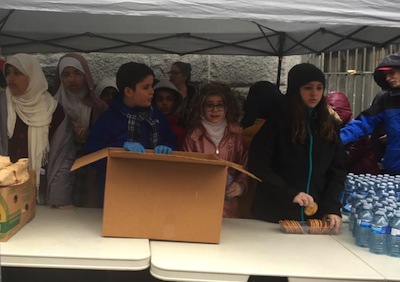
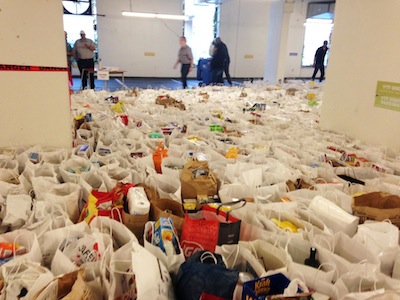
More than 80 volunteers came together to help Jewish Family Services sort the food on Sept. 26, organizing nearly 1,300 bags of food and toiletries. (photos from facebook.com/JFSVancouver)

During this year’s Project Isaiah food drive, the Metro Vancouver community donated four months’ worth of provisions for the Jewish Food Bank, which will feed and support the 300 households who turn to the Jewish Food Bank each month.

photo - Nearly 1,300 bags of food and toiletriesMore than 80 volunteers came together to help Jewish Family Services sort the food on Sept. 26, helping unload, box and organize nearly 1,300 bags of food and toiletries. The collection is a huge effort and JFS could not have done it without all of its partners across the Jewish community, as well as the countless individuals who donated and volunteered, and Vancouver Talmud Torah and Congregation Beth Israel who offered the use of their facilities.

The number of those who rely on the Jewish Food Bank continues to rise. JFS’s services also include home delivery to seniors and people with disabilities, and the recently launched Jewish Food Link program extends the agency’s reach to serve people in the Tri-Cities and Richmond areas.

Format ImagePosted on October 19, 2018October 18, 2018Author Jewish Family ServicesCategories LocalTags Jewish Food Bank, JFS, Project Isaiah, tikkun olam
Marc’s Mensches awards Benson

Marc’s Mensches awards Benson

Left to right: The Bayit president Michael Sachs, Richmond Mayor Malcolm Brodie and Marc’s Mensches winner Taya Benson. (photo from the Bayit)

Marc’s Mensches winner Taya Benson fundraised more than $7,500 for the Richmond SPCA, where she also volunteers every week. She was awarded the cash prize on Sept. 26 at the Pizza in the Hut event for Sukkot, which was co-sponsored by the Jewish Federation of Greater Vancouver and Marc’s Mensches. The event brought out a diverse crowd of more than 200 people, including many local officials and civic election candidates.

While the Marc’s Mensches initiative continues, the program is in the process of switching objectives: instead of being a contest, it will be focused on working as a group to do acts of chesed (loving kindness) around the city and community. “People can still nominate [youth] for the monthly gift card draw,” Bayit president Michael Sachs told the Independent, “but the main focus in Year 2 is harnessing the power of these mensches and doing good all over.”

Format ImagePosted on October 19, 2018October 18, 2018Author The BayitCategories LocalTags Marc's Mensches, Richmond, tikkun olam, youth
The achievements of Israel

The achievements of Israel

The anthology Miracle Nation: Seventy Stories About the Spirit of Israel; A Tribute to Rebirth in the Land of Our Ancestors by Israela Meyerstein (Mazo Publishers, 2018) highlights the amazing achievements of Israel in the 70 years since its rebirth in 1948. It contains the stories of ordinary people leading lives of courage, altruism and inspiration; stories that embody tikkun olam, repairing the world, which is at the heart of Judaism.

Meyerstein, a family therapist for more than 40 years, dedicated the book to Israel’s 70th birthday and in memory of relatives who perished at Treblinka. Each of the stories, many of which are contributed by writers other than the author, reminds us of how much there is to be proud of, as well as offering hope and optimism for the work still to be done.

Shlomo Alima, in “Destination: Return to Zion,” tells of his Iraqi ancestors, who were from the oldest Jewish Diaspora community in the world. His family left everything behind in 1925 to pursue their destiny in Israel. Their long, dangerous journey was made on donkeys, camels, bicycles and taxis – a two-month trek through Syria and Lebanon. They settled in Bet Yisrael, near Mea Shearim, and, in a two-room house, his grandparents raised 12 children. (Sadly, at only 30 years old, his father was murdered.)

Rabbi Micha Odenheimer contributed “Tevel b’Tzedek: Creating a Just, Compassionate and Beautiful World,” about a caste called the Mahji, who lived on the hills nearby rivers cascading from the majestic snow-covered Himalayas. They lived by fishing, both for feeding themselves and for trading with their neighbours, who grew rice, corn and wheat. Eventually, however, new roads brought people from other castes, who used explosives to kill the fish and bring them to the surface, and the Mahji ended up working in a brick factory, in order to survive. In addition, logging depleted the forests such that, during the monsoon season, the torrential rain couldn’t be absorbed into the earth quickly enough to recharge the springs that were needed in the dry season. Their life became unbearable.

But, a few years ago, something changed. An Israeli organization called Tevel b’Tzedek came to the area and joined up with a Nepali group, helping them grow enough crops for their own needs as well as for sale. Tevel b’Tzedek is Hebrew for “earth in justice.” Founded by Rabbi Micha Odenheimer in 2007 with 15 volunteers, there are now 800 volunteers, working with others to help some 40,000 Nepalese living in slums and villages.

Tevel b’Tzedek is just one of the many such Israeli organizations featured in this book. Another is Eco Peace Middle East, an environmental project that brings together young people from both sides of the Jordan River and the Dead Sea to try and prevent the waters from drying up, and to conserve water.

Pikuach nefesh (saving a life) is illustrated by stories of amazing acts by the Israel Defence Forces and of field hospitals for wounded Syrian civilians. Israeli hospitals offer medical care to Jews, Christians, Muslims, Druze – all nationalities and ethnicities without bias. There are wonderful organizations like Magen David Adom, Natal, Zaka and others that are always ready to save lives.

Another notable institution is Leket Israel, started by Joseph Gitler, a lawyer from New York. He found a way to garner good, surplus food – thrown out by supermarkets, caterers at event halls and farmers who grew too much – and collect it for those who need it. Leket is now an enormous food rescue network, which annually has 50,000 volunteers and feeds hundreds of thousands of Israelis every week.

Another miracle in Miracle Nation is described in “Oasis of Peace: Can a Song Heal?” by master musician Yuval Ron. Neve Shalom (Oasis of Peace) is a village where Jewish, Christian and Muslim families remain faithful to their own religious traditions, while dedicating their lives to advancing peace. It began as a dream of Father Bruno Hussar, who was born in Egypt and brought up in France. Only in adulthood did he discover that his family was Jewish. He started Neve Shalom on a monastery hillside, living alone until five families joined him. Today, the community is thriving – visitors from all over the world, including those who work for nongovernmental organizations and the United Nations, come to study in Neve Shalom. Friends of Oasis of Peace now exists in 11 countries.

On every page of this inspiring book, you will find a reason to be proud of this “miracle nation” – Israel – and its contribution to making the world a better place.

Dvora Waysman is a Jerusalem-based author. She has written 14 books, including The Pomegranate Pendant, which was made into a movie, and her latest novella, Searching for Sarah. She can be contacted at [email protected] or through her blog dvorawaysman.com.

Format ImagePosted on October 19, 2018October 18, 2018Author Dvora WaysmanCategories BooksTags Israel, tikkun olam, world
Advocating for children

Advocating for children

Left to right are Ann Montague, Dr. Blye Frank, Marta Santos Pais, Jerry Nussbaum, Lillian Boraks-Nemetz and Marny Point. (photo by Tiffany Cooper)

On Sept. 13, at the Dean’s Distinguished Lecture held by the University of British Columbia faculty of education in partnership with the Janusz Korczak Association of Canada (JKAC), the audience listened to the words of a saint.

It is an apt description of Marta Santos Pais, whose middle name does indeed mean saint, in Portuguese. Santos Pais is the United Nations special representative of the secretary-general on violence against children. She has worked for decades with remarkable optimism, resilience, focus and patience to try and create a world where no child will suffer violence. At the least, it’s a saintly endeavour.

Santos Pais, who has a law degree from the University of Lisbon, was appointed to her current position in 2009, after a distinguished career working in several capacities in Europe for the rights of children, including being involved in the drafting of many high-level resolutions and policies. As a global independent advocate, Santos Pais would like to see the elimination of all forms of violence against children: in the justice setting, in the home, in institutional care, in schools, in the workplace and in the community.

The co-sponsor of the lecture, JKAC, was established in 2002 and is dedicated to the remembrance of Janusz Korczak and the dissemination of his ideas about the protection and education of children. Korczak was a Polish Jew who was killed by the Nazis along with the orphaned children under his care in the Warsaw Ghetto. Despite being given the opportunity to escape, Korzcak instead chose to stay with the children and accompany them to Treblinka, where they were all murdered.

Marny Point, a coordinator and instructor in NITEP, the Indigenous Teacher Education Program at UBC, and a representative of the Hul’q’umi’num Salish peoples, spoke in her language as well as in English to open the event. Holocaust survivor, author and JKAC board member Lillian Boraks-Nemetz then spoke briefly, reading from Korczak’s ghetto diary and highlighting the need for those who care for children to first attain self-knowledge.

“How can we aspire to become the kind of teacher and human being Korczak was?” asked Boraks-Nemetz, underlining his claim that it was through knowing ourselves that we may begin. Evoking Korczak’s warning that children are too often overlooked amid the storms that blow through the adult world, Boraks-Nemetz quoted him to that effect: “It is the children who always have to carry the burden of history’s atrocities.”

Dr. Anton Grunfeld presented a graduate scholarship to Ann Montague, a researcher in child education. She was awarded the scholarship on the basis of an ethnographic study of children’s education she conducted in Bali with an eye towards “mobilizing children as agents of care for the environment.”

While Dr. Blye Frank, dean of the faculty of education, introduced Santos Pais, Dr. Mary Ellen Turpel-Lafond, an Allard School of Law professor who works at the Indian Residential School History and Dialogue Centre – and who served as British Columbia’s first representative for children and youth from 2006 to 2016 – spoke a bit about Santos Pais first. She highlighted Santos Pais’s influence on the Truth and Reconciliation Commission of Canada’s 94 calls to action for the federal government, especially the sixth, which advises the abolition of Section 43 of Canada’s Criminal Code allowing the corporal punishment of children. Several of the evening’s speakers noted the importance of convincing the Canadian government to repeal Section 43 and join other countries that have outlawed all physical violence against children. Turpel-Lafond noted with particular gratitude the work of JKAC president Jerry Nussbaum in this regard.

Santos Pais began by acknowledging Korczak’s legacy, citing its role in inspiring the provisions of the UN Convention on the Rights of the Child (CRC). She drew a connection between the achievement of sustainable development and putting children first – starting with investing in the early years and creating a safe, loving environment for all children.

Progress has been made in the areas of “data, legislation, policy and program developments,” but the daily reality of millions of children, particularly the most vulnerable and marginalized, cries out to be addressed with more effectiveness, she said.

Santos Pais spoke of the goal to “leave no children behind anywhere and at no time – but, of course, the world is not yet there.” She noted that 2019 marks the 30th anniversary of the CRC, giving us an occasion to recommit to addressing the one billion children still affected by violence each year.

Santos Pais spoke of the UN’s efforts both to listen to children around the world about their experience of violence, and to comprehensively study the wider social and economic costs of violence towards them. According to Santos Pais, presenting such evidence can be an important piece in motivating governments to see preventing violence towards children not as an expense but as a benefit to their country as a whole. Still, she said, many governments have told her that the goal of completely eliminating violence towards children in the near future is too idealistic, that it is “a joke.” To the contrary, she stressed, “We tend to believe that this goal can be accomplished and that there are many practical steps that we can take towards it.”

After Santos Pais’s speech, Nussbaum and Frank presented her with a Janusz Korczak statuette in honour of her service to children. “Thank you so much,” she said. “I’m going to cry now in my seat.”

Matthew Gindin is a freelance journalist, writer and lecturer. He is Pacific correspondent for the CJN, writes regularly for the Forward, Tricycle and the Wisdom Daily, and has been published in Sojourners, Religion Dispatches and elsewhere. He can be found on Medium and Twitter.

Format ImagePosted on October 12, 2018October 9, 2018Author Matthew GindinCategories LocalTags Janusz Korczak, Marta Santos Pais, tikkun olam
Vintage paddles for auction

Vintage paddles for auction

Members of the Tikun Olam Gogos show off some of the paddles being auctioned, until Oct. 10. (photo by Paula Simson)

Last fall, Sue Hyde, dragon boat master and member of Tikun Olam Gogos (which loosely translates as Grandmothers Repairing the World), walked into a board meeting with a hand-painted paddle she had decorated herself. Her idea was to sell paddles like it to raise money for the Stephen Lewis Foundation’s Grandmothers to Grandmothers Campaign, which supports grandmothers in Africa who are raising children orphaned by AIDS.

Tikun Olam Gogos is a Jewish charitable organization, sponsored by the Sisterhood of Temple Sholom, and it is dedicated to fundraising for Grandmothers to Grandmothers. The board was in favour of Hyde’s idea – and one of the board members bought the paddle on the spot. Paddles for African Grandmothers was born.

Hyde had access to more than 30 vintage paddles and the Tikun Olam Gogos asked various artists to paint them. The resulting paddles are being auctioned off until Oct. 10 at tikunolamgogos.org/on-line-auction.

“The paddles were done by a selection of different artists, including one stand-up paddle done by a Syrian refugee,” Tikun Olam Gogos member Sunny Rothschild told the Independent. “The rest are meant to hang on the wall. The paddles are amazing, intricately carved as well as painted. Some are two-sided and some aren’t.”

photo - Tikun Olam Gogos makes bags and other items to raise funds, which will be for sale at the group’s Many Rivers to Cross event Oct. 13
Tikun Olam Gogos makes bags and other items to raise funds, which will be for sale at the group’s Many Rivers to Cross event Oct. 13. (photo by Paula Simson)

The fundraiser will culminate with an evening concert on Saturday, Oct. 13, featuring the City Soul Choir and a meet-and-greet with the artists. Winning bidders can pick up their paddles then.

Marie Henry, the founder of Tikun Olam Gogos, also spoke with the Independent. The Tikun Olam Gogos are part of the Greater Vancouver Gogos, which includes more than 25 groups.

“I was visiting in-laws in Kelowna, and I went to a public market and saw a stall where women were selling beautiful tote bags. I found out they were supporting the Stephen Lewis Foundation,” she explained. “I came back and joined the group in Vancouver, but the only problem was I was the only Jew in the group and events kept conflicting with the Jewish calendar. ‘This is crazy,’ I thought, ‘I’m going to form my own group.’”

Henry did just that, in 2011. Today, the group, which is named after the Jewish concept of repairing the world (tikkun olam) and the Zulu word for grandmother (gogo) has Jewish and non-Jewish members. Henry said that only some of the members are actual grandmothers, with the rest being “grand others.”

There are a few hundred Grandmothers to Grandmothers groups across Canada, as well as organizations in the United Kingdom, Australia and the United States. Tikun Olam Gogos has sold more than 2,000 tote bags, with all profits going to the Stephen Lewis Foundation. That’s some $200,000 in donations from tote bags, said Rothschild.

“The admin costs are 11% of all the monies raised, one of the lowest rates of all charities in Canada,” Henry added.

While Henry takes care of notes and minutes and other administrative details for the group, she said, “We have a lot of really talented women in the group, like Sunny, who takes responsibility for part of the group and helps run it.”

Rothschild joined Tikun Olam Gogos almost four years ago, when she was slowing down her career as a lawyer and had more time for volunteer work. She is active in sewing the group’s signature tote bags, as well as taking turns selling them at local craft fairs, where the Gogos get a chance to tell people about their work and the Stephen Lewis Foundation. “That’s the best part,” she said.

“I have a Post-it up in my house – ‘May my life be for a blessing,’” said Rothschild. “This is one of the things that I do because I want my life to be meaningful and to have mattered.”

“The reason that I started this group when I found out what they are doing,” said Henry, “is to help these grandmothers raise up to 15 grandchildren. My grandchildren live a life of privilege and I feel so horribly guilty that these women in their senior years have to suffer so horribly badly. Doing this, I feel useful. In the final analysis, we are performing tikkun olam.”

“I don’t think that the governments in Sub-Saharan Africa understand the revolution that is going to take place because of these women becoming empowered,” said Rothschild. “There are amazing stories of what women are doing, standing up for their rights. It’s really quite amazing what’s happening.”

“The support that we give them helps them to do that,” added Henry. “I see this as the same to the way that suffragettes in North America stood up for their rights, and here it’s happening in a similar way nearly a hundred years later.”

For now, Henry and Rothschild are hoping the community will come out to support Paddles for African Grandmothers at the Many Rivers to Cross concert.

“We’ll be selling tote bags,” said Rothschild. “People can buy a glass of wine, there will be food too – it will be a lovely event.”

Tickets for the Oct. 13, 7 p.m., show at Temple Sholom can be purchased via tikunolamgogos.org/events.

Matthew Gindin is a freelance journalist, writer and lecturer. He is Pacific correspondent for the CJN, writes regularly for the Forward, Tricycle and the Wisdom Daily, and has been published in Sojourners, Religion Dispatches and elsewhere. He can be found on Medium and Twitter.

Format ImagePosted on October 5, 2018October 3, 2018Author Matthew GindinCategories LocalTags Africa, City Soul Choir, Marie Henry, Stephen Lewis, Sunny Rothschild, Temple Sholom, tikkun olam, Tikun Olam Gogos

Posts pagination

Previous page Page 1 … Page 16 Page 17 Page 18 … Page 30 Next page
Proudly powered by WordPress