Skip to content
  • Home
  • Subscribe / donate
  • Events calendar
  • News
    • Local
    • National
    • Israel
    • World
    • עניין בחדשות
      A roundup of news in Canada and further afield, in Hebrew.
  • Opinion
    • From the JI
    • Op-Ed
  • Arts & Culture
    • Performing Arts
    • Music
    • Books
    • Visual Arts
    • TV & Film
  • Life
    • Celebrating the Holidays
    • Travel
    • The Daily Snooze
      Cartoons by Jacob Samuel
    • Mystery Photo
      Help the JI and JMABC fill in the gaps in our archives.
  • Community Links
    • Organizations, Etc.
    • Other News Sources & Blogs
    • Business Directory
  • FAQ
  • JI Chai Celebration
  • JI@88! video

Recent Posts

  • המלחמות של נתניהו וטראמפ
  • Zionism wins big in Vegas
  • Different but connected
  • Survival not passive
  • Musical celebration of Israel
  • Shoppe celebrates 25 years
  • Human “book” event
  • Reclaiming Jewish stories
  • Bema presents Perseverance
  • CSS honours Bellas z”l
  • Sheba Promise here May 7
  • Reflections from Be’eri
  • New law a desecration
  • Resilient joy in tough times
  • Rescue dog brings joy
  • Art chosen for new museum
  • Reminder of hope, resilience
  • The national food of Israel?
  • Story of Israel’s north
  • Sheltering in train stations
  • Teach critical thinking
  • Learning to bridge divides
  • Supporting Iranian community
  • Art dismantles systems
  • Beth Tikvah celebrates 50th
  • What is Jewish music?
  • Celebrate joy of music
  • Women share experiences 
  • Raising funds for Survivors
  • Call for digital literacy
  • The hidden hand of hate
  • Tarot as spiritual ritual
  • Students create fancy meal
  • Encouraging young voices
  • Rose’s Angels delivers
  • Living life to its fullest

Archives

Follow @JewishIndie
image - The CJN - Visit Us Banner - 300x600 - 101625

Tag: storytelling

Tell your own “crankie” stories

Tell your own “crankie” stories

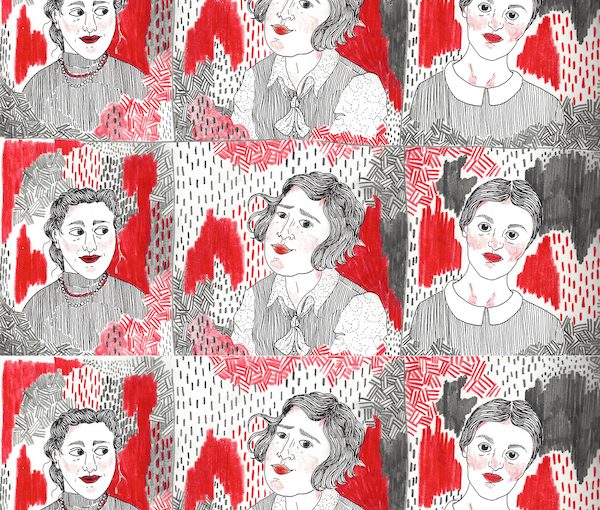
Where Do Stories Come From? (fun vanen nemen zikh di mayses) on Nov. 9 highlights a poem from each of three Yiddish women writers: Ida Maze, Esther Shumiatcher-Hirschbein and Yudika. (Illustration by Cesario Lavery)

This year’s Chutzpah! Festival includes several opportunities for people to participate in the arts being performed. A prime example is Where Do Stories Come From? (fun vanen nemen zikh di mayses), wherein attendees of the Nov. 9 event at the Rothstein Theatre will be able to learn new music inspired by Yiddish poetry and, in the Zack Gallery, on Nov. 7 and/or Nov. 12, participate in a “crankie” workshop.

Where Do Stories Come From?, which is presented by the Chutzpah! Festival and KlezKanada – co-curated by the organizations’ respective artistic directors, Jessica Mann Gutteridge and Avia Moore – includes “new musical and visual settings for three Yiddish poems by celebrated Canadian women writers, selected and translated by Faith Jones, with accompanying visual artwork in the form of ‘crankies’ – a centuries-old art form in which an illustrated scroll, evocative of the Torah, is wound across spools set in a viewing window.”

The artistic directors decided early on to work with the poetry of Canadian women writers who wrote in Yiddish, said Gutteridge, “and there was no more perfect collaborator to work with on selecting the poetry than Vancouver’s own Faith Jones. For the musical work, we drew on the incredibly rich community of KlezKanada’s artists and were lucky that Sarah Larsson was interested in the project – she’s not only a gifted composer with a thorough knowledge of Yiddish music, but is herself a stunning vocalist and music director.

“We also spent a lot of time looking at incredible artworks by Jewish visual artists and ultimately selected Benny Ferdman, Ava Berkson and Cesario Lavery, all of whom bring an interest in Yiddish, diverse styles, and interest in visual storytelling to the project. As part of the project involves community participation, we also ensured that all the artists are skilled at and enjoy working with community of all abilities and ages.”

The idea for the event came after Gutteridge met Moore at a KlezKanada Summer Retreat in 2022.

“When the JCC Association announced they would be funding new community-based projects incorporating live music and storytelling with an emphasis on partnerships,” said Gutteridge, “we realized we had a wonderful opportunity to work together to share our assets – KlezKanada’s immersive creative residency environment and access to brilliant artists with knowledge of Yiddish culture, and the Chutzpah! Festival’s presentation opportunities.

“KlezKanada’s 2023 Summer Retreat theme was Yiddish film and, because it’s a very unplugged environment, had plans to explore the ‘pre-film’ illustrated story technique of crankies,” she continued. “We thought this art form would pair beautifully with the musical work being created, and would offer a very engaging opportunity to the community to participate in creating a multidimensional presentation together.”

Where Do Stories Come From? is supported by the JCC Association’s Making Music Happen program and Chutzpah! Festival’s music programming is supported by AmplifyBC’s Live Music Presentation Fund.

The event’s title comes from one of the three poems highlighted, one by Ida Maze. “It’s a poem that grabbed the entire group immediately and we knew we wanted to work with it,” said Gutteridge. “In the poem, Maze creates a strong visual image of a little house that appears to be abandoned, but as you approach you see that a fire is lit and, in the house, sit a grandfather and a grandmother sharing culture and stories with the children, and the stories are then carried away on the wind. For us, this poem really captured the idea of the project – that intergenerational cultural transmission is the key to how we survive and thrive and, in many ways, is a model for how we hope to see this project unfold. But I think the very notion that we pose this as a question invites everyone who experiences the work to ask themselves where they think stories come from.”

The other poems are by Esther Shumiatcher-Hirschbein and Yudika.

“Faith made a longer list of poems selected for their striking visual imagery and potential musicality and presented them to our full group of artists,” explained Gutteridge. “Right away, we all responded to the Ida Maze work and had to then narrow our choices to two more. We asked the artists to highlight which poems they found particularly inspiring and, as artistic directors, Avia and I also kept an eye on whether the selections were creating an interesting and balanced program in terms of style and theme. It was an enjoyable and smooth process and I think we all enjoyed kicking off the project together in this way.”

As for the workshops, Gutteridge said, “Ava and Cesario will be with us through the week to guide workshop participants through the process of making their own crankies, inspired by prompts from the poetry we will provide. While the crankies being made for the music event will be large scale, a wonderful characteristic of this art form is that it can be made any size using very humble materials like a shoebox or even a matchbox. With our partner the Zack Gallery, the work created in the workshops will be on display in a community exhibition, and our video director Flick Harrison will be on hand to help participants capture their crankies in action. Participants can opt to share their crankies and stories in an online video gallery. We hope we will see intergenerational groups making crankies together!”

During the week, Chutzpah! will also be hosting the return of the Flame, with their evening of storytelling on Nov. 6.

“The Flame’s artistic director, Deb Williams, will teach her remarkable day-long storytelling workshop on Sunday, Nov. 12, ending just before our final crankie workshop and the concert presentation,” said Gutteridge. “We hope that these projects together will inspire community participants to explore their own stories and find new and inspiring ways to tell and share them.”

For tickets to Where Do Stories Come From? and other Chutzpah! events, visit chutzpahfestival.com.


Format ImagePosted on October 12, 2023October 12, 2023Author Cynthia RamsayCategories Performing ArtsTags Chutzpah!, film, Jessica Mann Gutteridge, KlezCanada, Rothstein Theatre, storytelling, workshops, Yiddish, Zack Gallery
A grandfather’s story – available online to May 7

A grandfather’s story – available online to May 7

The documentary How Saba Kept Singing had its world première last weekend as part of HotDocs. It can be accessed online until May 7.

The film starts with David Wisnia preparing for his return to Auschwitz-Birkenau after 70 years. Traveling with his grandson and musical partner, Avi, David reveals some new stories about his survival journey. Throughout his life, he had selectively shared details about his war experience, mentioning that his singing voice provided him with privileges that aided in his survival. However, he omitted a major detail – a love affair with a fellow prisoner is what actually helped save his life. Told through David’s perspective, the truth regarding his survival some 75-plus years ago is uncovered.

The film is written, directed and produced by Sara Taksler. It is executive produced by Hillary Rodham Clinton and Chelsea Clinton, and produced by Retro Report, HiddenLight Productions, in association with Burnt Umber Productions.

To buy a ticket to watch the documentary online, go to hotdocs.ca/whats-on/hot-docs-festival/films/2022/how-saba-kept-singing. 

– Courtesy HotDocs

Format ImagePosted on May 6, 2022May 4, 2022Author HotDocsCategories TV & FilmTags David Wisnia, documentary, film, Holocaust, storytelling, survivor
Orcas inspire creative music

Orcas inspire creative music

The creation of Songs for a Lost Pod helped singer/songwriter Leah Abramson explore her family’s Holocaust history. (photo by Angela Fama)

The world première of Leah Abramson’s Songs for a Lost Pod was supposed to be part of this year’s PuSh Festival three months ago. Delayed because of COVID restrictions at the time, it now will debut May 28-29, 7:30 p.m., at Studio T, SFU Goldcorp Centre for the Arts.

Songs for a Lost Pod is a “nine-song cycle [that] makes spectacular use of orca vocalizations, transforming them into rhythmic beats in a musical exploration of historical trauma, environmental crisis and communication between species.” The theatrical production is the most recent development in a process that includes an album by the same name, released in 2017.

“It was just an outward spiral, really. The project started with dreams I had about whales, which turned into researching whales for fun, which then turned into a master of fine arts thesis, an album, a comic book, and now a stage show!” said Abramson when the Independent interviewed her in anticipation of the PuSh festival. “When I made the album, I knew there was so much research and information behind the lyrics and music of each song, and I felt like I wanted people to understand that context, so I made the comic book to highlight some of the research and stories. Then, as I was arranging the music to be performed live, I realized that I wanted people to have that context, too, so I’ve turned the research and background into a script. Then we decided that adding visuals would really help immerse the audience in the material. The project has just been expanding from the beginning.”

Abramson, who grew up in Burnaby, said she has been interested in music from a young age. “My grandma sang in her synagogue’s choir and my dad played the piano, so they tell me it runs in the family,” she said. “But I was also told that music was only for fun, and not a real career, unless you were a concert pianist or something like that. So, I tried to do other things, but I was miserable unless I was making music.

“Over the years, I’ve done lots of touring and playing in bands and teaching, but writing and composing has always been what I love the most. I have pretty varied interests – I’m fascinated by marine biology and I love learning about the environment, as well as human history. The great thing about writing songs is that you can research anything and put it into your work. Right now, I’m really excited about writing music for the stage, as well as choral music.”

Along with her MFA in creative writing (with a focus on lyrics) from the University of British Columbia, Abramson studied classical music at Capilano University, and also has studied traditional Appalachian balladry.

In addition to the song-cycle, Songs for a Lost Pod features the narrative script that Abramson mentioned, which “juxtaposes the whale histories with Leah’s own family and their experience surviving the Holocaust and its aftermath,” according to the program description. “Mind of a Snail’s handmade projections create an impressionistic and largely non-representational visual world to support the songs and narration, guiding the audience into a space of contemplation.”

“When I first started looking into whale histories, the parallels presented themselves pretty quickly,” Abramson told the Independent. “It was not my intention to delve into my family’s past, but, while learning about captures and commercial whaling practices, it was hard not to look at the bigger picture of human behaviour throughout history – aspects of cruelty and destruction that manifest in heartbreaking ways. But also, whales are similar to humans – whale intelligence is extremely high, and whale families are extremely tight knit.”

It was difficult for Abramson to explore her family’s Holocaust history – “the loss and pain are pretty overwhelming,” she said, “and it’s not always easy to find a way forward when that intensity is present. Whale families became a mirror for me, a way to understand and experience intergenerational trauma at a greater distance. The project allowed me to deal with my feelings in a more manageable way, through empathy for another species. And it provided a space for my grief, but also helped me find a way through it. Trauma is so common in families of all different backgrounds. Our ancestors may have lived through wars or other calamities and there are so many people living through these things right now. I think learning others’ stories can help people start to process their own family’s pain, even if the details are different. I felt like whale stories did that for me.”

Credit for Songs of a Lost Pod’s music and lyrics go to Abramson in collaboration with Antoine Bédard, J.J. Ipsen, Andrew Lee (Holy Hum), Aidan O’Rourke (Lau), Sandro Perri, Arliss Renwick and Marten Timan. The program notes that credit also could be given to the A5 whale pod, as the musicians “were given selected A5 pod orca vocalizations, along with Abramson’s other field recordings, to turn into beats and tracks, which formed the backbone of Abramson’s songwriting process, and the rhythms behind much of the music.”

Fellow Jewish community member Barbara Adler also has contributed to the project, and is the show’s narrator.

“Barbara and I have known each other for so long that we can’t remember when or how we officially met,” said Abramson. “It’s like that with people in creative community sometimes – you grow up making art alongside each other. We have shared some special experiences and projects over the years, and continue to work together and in parallel. We have some shared Czech-Jewish roots, which makes Barbara a really good fit for this project in particular. She’s working on a lot of interesting projects of her own, and I’m also happy to be one of her composer-collaborators for Mermaid Spring, which is a musical she’s making with Kyla Gardiner (who also happens to be our lighting designer).

“Barbara has been sending me song lyrics over the last few years, which I have been setting to music. I love working with the characters she has created, and it has truly been a joy to work on those songs. I also really admire Barbara’s artistic process. When she writes, she really digs into all the nuances of a situation or character. She welcomes complexity and the messy underside of creation. I think Barbara balances my impulsivity, and helps me step out from the shadows in my shyest moments. She’s also a great performer!”

Co-presented by Music on Main and SFU School for the Contemporary Arts, tickets for Songs for a Lost Pod ($15) can be purchased from musiconmain.ca/event/songs-for-a-lost-pod.

Format ImagePosted on May 6, 2022May 4, 2022Author Cynthia RamsayCategories Music, Performing ArtsTags Barbara Adler, environment, family history, Holocaust, Leah Abramson, music, Music on Main, narration, SFU School for the Contemporary Arts, Songs for a Lost Pod, storytelling, whales

The Chiribim-Chiribom feud

Many years ago, in the village of Chelm, there were two families, the Chiribim and the Chiribom. They were enemies. They fought over everything. They fought over land, they fought over water, they fought over cows and horses and chickens. They fought over air.

The Chiribim and Chiribom didn’t talk to each other. They were stubborn. They didn’t look at each other.

In the synagogue and village hall, they would sit on opposite sides of the room and glare or shout or scream. Or spit. It was disgusting.

The feud had been going on for years, decades, perhaps centuries. No one knew where it began or how it had originated. What insult had provoked the first Chiribim to scorn the first Chiribom? It was long ago and long forgotten.

Sometimes the anger came to blows, but, fortunately, so far no one had been seriously injured or killed.

Rabbi Kibbitz, the oldest and wisest of leaders, was sick of it. He was tired of the malice, tired of the hatred, tired of the tension. He was tired of mopping spit off the floor of the synagogue.

So he decided to solve the problem. The Chiribim and Chiribom needed to come together to work out their differences. They were farmers, they worked the land. They were neighbours, living so close to each other but so far away.

The problem was that he couldn’t get them all in the same room without someone blowing up.

It had been pouring rain for most of the week of Passover, and everyone was cranky.

In those days, after a long rain, everyone in the village would go out into the woods to pick mushrooms. Mothers, fathers, grandmothers, grandfathers, aunts, uncles, cousins, brothers and sisters would all pack up their lunches, bring along empty baskets, and hunt for wild treasure. The youngsters would find dozens of kinds of fungi, and the elders would teach them which ones were tasty, which were revolting, and which might kill you.

During the rainstorm, Rabbi Kibbitz sent a note to the Chiribim, asking them to join him in the forest for lunch. He also sent a note to the Chiribom, asking them to join him for lunch in the same place, at the same time.

Early the next morning, the rabbi pulled on his boots, put a basket over his arm and plodded into the Black Forest. First, he would find the Chiribim and then the Chiribom. And then they would work it all out.

Unfortunately, he forgot his glasses, so he was having a hard time seeing where he was going.

Soon, he came upon a group of people.

“Chiribim?” he asked them.

They shook their heads. “Chiribom,” they answered.

Sighing, the rabbi continued his search.

He realized he should change his tactics. He would meet with the Chiribom first, and then the Chiribim.

Soon, he came upon another group of people. “Chiribom?” he asked them.

They shrugged, “Chiribim.”

“Hmm.” The rabbi wandered off, muttering, “Chiribim bom bim bom bim bom.”

Another group of people were asked, “Chiribom?” and they answered, “Chiribim.”

The next group were queried, “Chiribim?” and they replied “Chiribom.”

The rabbi was getting frustrated. “Ai Chiribiri biri bim bom bom! Ai Chiri biri biri bim bom bom!”

Back and forth the rabbi went racing through the forest. If he asked, “Chiribim?” they told him, “Chiribom.” If he asked “Chiribom?” they told him, “Chiribim.”

“Ai Chiri biri biri bim bom bom. Ai Chiri biri biri bom!”

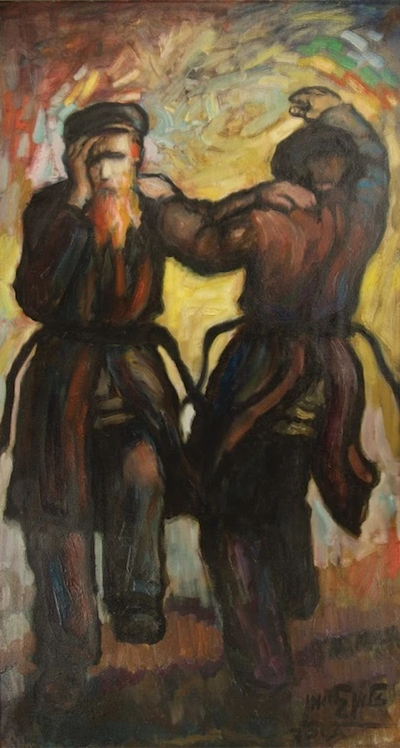
image - “Chassidic Dance” by Zalman Kleinman, 1964
Until Rabbi Kibbitz decided to put an end to their feud, one could never have imagined the Chiribim and the Chiribom speaking, let alone dancing together. (“Chassidic Dance” by Zalman Kleinman, 1964)

The Chiribim and Chiribom were stubborn. They loved an argument, and neither group liked to be pinned down or admit to anything. Perhaps they were playing tricks on the rabbi. Perhaps they were just being obstinate.

“Bim!” the rabbi shouted.

“Bom!” they answered.

“Bom?” the rabbi yelped.

“Bim!” came a chorus.

“AAAGH! Bim bom bim bom bim bom!”

He began to twirl about.

He asked another group, “Bom?”

They answered, “Bim!”

The next had to be … “Bom?”

“Nu. Bim!”

“Impossible! Bim bom bim bom bim bom!”

The rabbi was running and twirling, almost dancing. “Ai Chiribiri biri bim bom bom.”

His hair was everywhere. His coat was open. “Ai Chiri biri biri bim bom bom. Ai Chiri biri biri bim bom bom. Ai Chiri biri biri bom.”

Well, the Chiribim and the Chiribom started laughing. They couldn’t help themselves. Their rabbi, this wise old man, was acting like a chicken with his head cut off, like a frog trying to escape a pack of curious boys, like a school teacher with a cube of ice dropped down his back. All the time he was muttering to himself like a crazy man, “Chiribimbombimbombimbom.”

They laughed and they grinned and they smiled, and then they looked up.

Across the forest they saw something that they had never seen before.

They saw each other smiling and laughing and grinning.

They looked and they realized that they all wore the same kind of clothes. They had the same kinds of shoes and hats and hair. They all held baskets full of mushrooms.

So the Chiribim and the Chiribom came together in the middle of the forest and shook hands, and they kissed cheeks, and they hugged.

And, of course, they had a Passover lunch.

Such a feast! Chopped liver on matzah with fresh-picked mushrooms. Beet salad. Brisket. And Mrs. Chaipul’s light-as-a-feather lemon meringue pie. So delicious!

When they were done eating and finished cleaning up, they lifted the poor rabbi up on their shoulders, because he was still too dizzy to walk, and all together they carried him back to the village of Chelm, singing: “Ai Chiri biri biri bim bom bom….”

From that day on, they were no longer known as the Chiribim or the Chiribom, but as the Chiribimbombimbombimbom…. Bim…. Bom.

“Ai Chiri biri biri bim bom bom.

“Ai Chiri biri biri bim bom bom.

“Ai Chiri biri biri bom….”

Izzy Abrahmson is a pen name for author and storyteller Mark Binder, who lives in Providence, R.I., and tours the world – virtually and in-person. Abrahmson’s Winter Blessings: Warm Stories from the Village was a National Jewish Book Awards finalist. This story about Chiribim and Chiribom is from his latest book in the Village Life Series, The Village Feasts: Ten Tasty Passover Stories, which is available on Amazon and at books2read.com. To listen to the audio version of this story, narrated by Binder, visit izzyabe.com.

Posted on April 8, 2022April 7, 2022Author Izzy AbrahmsonCategories Celebrating the HolidaysTags books, Chelm, Chiribim, Chiribom, music, Passover, storytelling, Village Life

A rediscovered novella

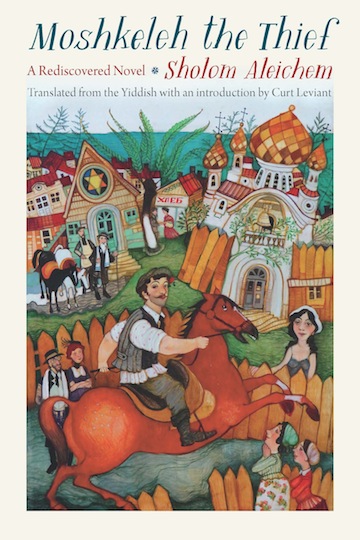
Moshkeleh Ganev, a forgotten novella by Sholom Aleichem, was recently resurrected from obscurity by gifted translator Curt Leviant.

image - Moshkeleh the Thief book cover

Missing from the standard edition of Sholom Aleichem’s collected works, which was published after his death, Leviant came across a brief citation of the story in a Yiddish literary quarterly published in Israel, while doing research on another project at the Hebrew University library. Leviant went on to translate it into English and Moshkeleh the Thief was published in 2021 by University of Nebraska Press.

The story stands out as a lively and endearing picture of shtetl life in Russia’s Pale of Settlement. Sholom Aleichem himself wrote in 1903 that the work celebrated a phase in his career when he had, he said, “really begun to write,” and was not merely “fooling around.”

I read Moshkeleh at a rapid clip as soon as it was mailed to me by Leviant, unable to stop due to the inescapably arresting character of the narrative. Sholom Aleichem has the ability to keep readers riveted to his stories, as though we are living in the community he is describing. His narratives are always very much alive in this sense.

Tsireleh, the attractive daughter of Chaim Chosid, a wine-cellar manager (a marginalized role for many Jews of that time, whose sights were set on more prestigious occupations), was, for me, a pivotal character in the tale for several reasons.

Unlike Chava in Tevye the Dairyman, Tsireleh was another variation on the Sholom Aleichem theme of a daughter whose involvement with non-Jews (Chvedka) posed a challenge to a sense of Jewish identity. The nine Tevye stories were authored over several years, starting in 1894. Moshkeleh was first serialized in a Warsaw Yiddish paper in 1903, when five of the Tevye stories had already been published; the remaining four were published after 1904. So, thematic strands interwoven in the lives of characters like Chava and Tsireleh that were important to the author may have overlapped. For example, Tsireleh comes close to the same threat to tradition in her relationship with Maxim Tchubinski, a non-Jew, and her elopement with him to a Christian monastery, but is whisked away by Moshkeleh at the 11th hour.

It is tempting to think that, despite Tsireleh’s nascent feminism, she was a pushover for any man who declared his love for her in passionate terms, as did both Maxim and Moshkeleh. But one can also see her elopement with the latter – even though he is a horse thief fated for deportation – as an enduring commitment to the faith of the family she left behind in her drive toward independence. Far from being overly impressionable in matters of the heart, there remained a silent commitment to the Jewish faith, unlike Tevye’s Chava.

Also unlike Chava, Tsireleh was a contrarian from the get-go, who longed for a different life than the one she felt she was saddled with as Chaim Chosid’s daughter. She had earlier rebelled against the yet-to-be role of subservient wife, becoming pregnant and going on to appropriate the domesticity envisioned for her sisters, not to mention all the young women in the shtetl. Her own metaphor was not becoming a clucking hen who sits on her eggs until they hatch, only to repeat the process several times over. She rebelled against the idea of marrying at too young an age to experience the world in a different way, and rebelled against the thought of having to marry a suitable man from a respectable family. She promised herself she would build her life differently. Eloping with a non-Jew like Maxim Tchubinski on a Pesach night was a dramatic example of why, unlike other characters in the novel, she wasn’t cut from an ordinary mold.

Yet her elopement with Moshkeleh does show an enduring commitment to her Jewish faith. Perhaps Tsireleh was for Sholom Aleichem a character representing themes he wrestled with when it came to communities in which opportunities for assimilation were an ever-present temptation – or threat.

David Begelman, PhD, is a psychologist in New Milford, Conn.

Posted on March 25, 2022March 24, 2022Author David BegelmanCategories BooksTags Curt Leviant, Moshkeleh Ganev, Moshkeleh the Thief, Pale of Settlement, Sholom Aleichem, storytelling, translation

Inspiring songs and stories

Inspired by Story and Song – this was the topic of the JSA Snider Foundation Virtual Empowerment Series session held on Dec. 2, in partnership with the Louis Brier Home and Hospital.

Jewish Seniors Alliance co-president Gyda Chud welcomed the 45 Zoom participants, as well as the 35 Louis Brier residents, who joined to hear Shanie Levin’s stories and Myrna Rabinowitz’s singing.

Rabinowitz opened with a Chanukah song in Yiddish, “Drei Zich Dreidele” (“Spin Yourself Dreidel”), which was followed by Levin reading Sholem Aleichem’s Hanukkah Gelt (Hanukkah Money). In this story, Motl and his brother take part in the beloved customs of a favourite holiday: the lighting of the chanukiyah, eating potato latkes, playing dreidel, and the gift of gelt.

In the course of the program, Rabinowitz sang songs in Hebrew, Yiddish and Judeo-Spanish. She sang “Oh Hanukkah,” a song in Judeo-Spanish about the holiday’s eight candles, as well as more personal songs, including one she wrote on the occasion of her grandson’s birth and one she wrote for her father. She offered the audience a treat by singing the classic and sentimental Yiddish song by the Barry sisters from the 1950s, “Wie Nemt Men a Bissele Mazel?” (“Where Can You Get a Little Luck?”).

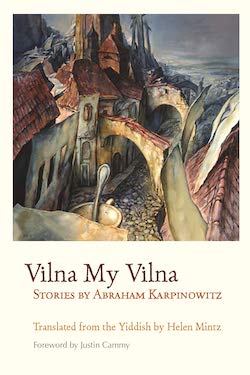
Levin chose the story by Abraham Karpinowitz titled Jewish Money, from the book Vilna My Vilna, which is a volume of his work that was translated into English by local storyteller Helen Mintz. Karpinowitz was known for his detailed and vivid descriptions of the city of Vilna and the odd characters who lived there.

The Spice Box is an anthology of Canadian Jewish writers and Levin read an illuminating story written in 1968 by Larry Zolf, who was a CBC personality and writer for the program This Hour Has Seven Days. The story, Boil Me No Melting Pot, Dream Me No Dreams, deals with the difference between the American and Canadian immigrant experiences.

Preposterous Papa, the final story read by Levin, was an excerpt from a book by Lewis Meyer. Meyer’s father grew up in a small town in Oklahoma, which had very few Jewish families. Unable to commute to the synagogue in the larger city, his father bought a house and converted it into a chapel, offering a place for the few Jewish families in nearby towns to socialize and pray on High Holidays.

Rabinowitz ended the program with an upbeat song in Yiddish, the title of which translates as “We Are All Brothers and Sisters.”

Nathalie Jacobs of the Louis Brier thanked the performers and expressed her wish to partner again with JSA in the future.

Tamara Frankel is a member of the board of Jewish Seniors Alliance and of the editorial committee of Senior Line magazine. She is also a board member of the Jewish Community Centre of Greater Vancouver.

Posted on December 17, 2021December 16, 2021Author Tamara FrankelCategories Music, Performing ArtsTags Jewish Seniors Alliance, Louis Brier Home, music, Myrna Rabinowitz, RJDS, seniors, Shanie Levin, storytelling, The Storytelling Festival
Dream warms frozen flames

Dream warms frozen flames

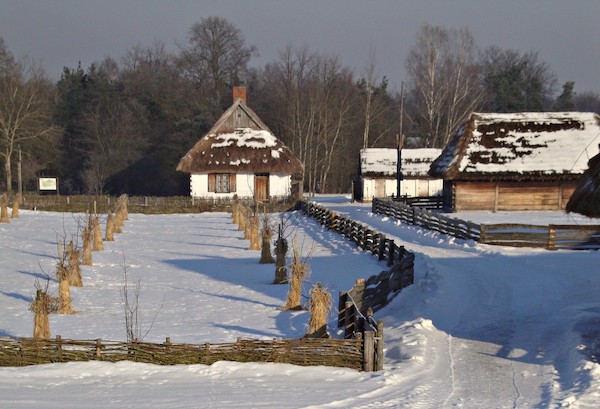
It was just before sunset on the last night of Chanukah, the coldest it had ever been in Chelm. (photo from pxhere.com)

It was a cold day in the village. It was so cold that when Reb Cantor, the merchant, sneezed without covering his mouth, his mucus solidified and blew a hole through the window of his shop, which his wife fixed by throwing a cup of tea at his head. He ducked, and the tea hit the windowpane and froze into place. It was that cold.

It was so cold that the flame of the eternal light in the synagogue froze solid. Instead of flickering brightly, it stood still, like red and yellow glass.

The villagers were frightened. It was just before sunset on the last night of Chanukah. Soup froze on its way from the pot to the table. Vodka oozed as it was poured into a glass. Chanukah candles snapped at the slightest touch. Reb Cantor’s matches broke into splinters. Stoves were almost useless. Warm challahs froze into rocks in seconds. Axes had to be warmed or else, when they struck the firewood, the blades shattered as if they were made of crystal. The Uherka River had frozen solid, trapping in its icy clutches a flock of geese late to leave the area.

It seemed as if the end was near. Everyone was hungry. They were afraid to go outside because the wind sucked the heat from their skin. The air itself left their lips numb. Kissing could be dangerous.

The day had been dark and cold, and the night would be darker and colder. Meals were uncooked and uneaten. Chanukah candles, set in their menorahs, were unblessed and unlit. Families stayed in their homes, huddled together in bed.

Even in the house of the wisest man in the village of fools, the menorah was dark.

Rabbi Kibbitz shivered in his bed with his wife, Channah Chaipul (she kept her maiden name, which, as you know, is another story). The two of them lay fully dressed beneath four sheets, three blankets, two quilts and seven coats – everything warm that they owned. Still, his teeth were chattering. For the first time in his life, he regretted not owning a dog or a cat.

“Channah,” the rabbi said. “We have to light the candles.”

“You do it,” she said. “I’ll watch from here.”

“My hand is too unsteady. The shammos will blow out. You are better at that sort of thing.”

“I’m almost warm,” she said. “You do it.”

“I’m nearly frozen,” he answered.

“So? You want me to get out of bed, light the candles, and come back in with icy cold feet?”

He shuddered. The last time she had put a cold foot on his ankle, his heart nearly stopped.

He sighed and closed his eyes. Maybe in a few minutes he would….

“Are you awake?” she said, elbowing him in the ribs.

“Channah!” he said, suddenly sitting up. “I had a dream!”

“Are you crazy? Lie down, you’re letting in a draft.”

“No, Channah, I’ve had a dream. Quickly! Get up! We need to gather everyone together in the synagogue.”

Mrs. Chaipul squinted at her husband. She hadn’t seen him this excited since he’d beaten Rabbi Abrahms, the schoolteacher, at canasta. “What did you dream?”

“I can’t tell you,” he answered. He slid out of bed and gasped as the frigid air slapped his neck like an icy wet towel. “Tell everyone to bring their menorahs and come to the synagogue. Quickly!”

Grumbling and shivering, Mrs. Chaipul stood, and nearly stopped right there. She wondered if it was possible for blood to freeze. Then, the rabbi went one way and his wife went the other, banging on doors and windows. They ran as fast as they could (which was remarkably briskly, considering their ages), waking villagers and telling them to gather in the synagogue.

“What? Why? Are you crazy?”

“Yes, I am,” said Mrs. Chaipul. “But the rabbi has had a dream. So you can freeze in your house or freeze in the shul. It’s up to you.”

Parents groaned. Children were wrapped in blankets. Doors were pried open. Menorahs were carried carefully, lest they crack into pieces on the short trip to the synagogue.

The small shul filled quickly.

Rabbi Kibbitz stood at the front, on the bimah, with five tallisim wrapped around his shivering old shoulders. He stood beneath the eternal light, staring at the still-frozen flame.

“Is everyone here?” he asked. Everyone looked around and nodded. No one was missing. “Then, please, somebody shut the door!”

“It’s shut,” came a shout from the back.

“Oy,” muttered the chilled rabbi.

“So, Rabbi, what is it?” said Reb Cantor. “What is so important that you asked us to risk life and limb to come to the synagogue on a night so cold my eyeballs almost froze?”

“I had a dream,” the rabbi said.

“So, I heard,” answered Reb Cantor. “You maybe want to tell us what the dream was?”

“I dreamed,” Rabbi Kibbitz sighed, “that all the villagers of Chelm gathered together in the synagogue.”

“Yes? Yes?”

“Well, in my dream, it was a cold, cold night, and the Chanukah candles weren’t yet lit.”

“Yes? Yes?” the villagers repeated.

“And everyone, all of you, came here to the synagogue.”

“Yes? Yes?”

“That’s it.” The wise rabbi shrugged. “We were all here. Then Channah nudged me, and I woke up.”

“That’s not much of a dream,” muttered Mrs. Chaipul.

The citizens of Chelm stared in disbelief at their beloved rabbi.

“You’re crazy!” shouted Reb Cantor. “You yanked us out of our moderately warm beds and dragged us here to tell us that you had a dream that we were all here? That’s it? Rabbi Kibbitz has finally lost his mind! Rabbi Abrahms, it is time for you to become the chief rabbi of Chelm.”

The villagers began to grumble and argue and stamp their feet. A wave of exasperated hot air lifted to the ceiling as their voices rose into shouts.

“Wait, wait!” Rabbi Kibbitz said. “Please, listen.”

Just then a child’s voice shouted, “Look! Look!”

It was young Doodle, the orphan, and one of the most foolish boys in the village of Chelm.

Doodle was pointing up at the eternal lamp. The pale light was thawing – flickering faintly, but growing brighter as it filled the synagogue with its glow of red, orange, yellow and gold.

Reb Cantor himself lifted Doodle up. “Careful, careful now,” he whispered, as the young boy touched his shammos to the light of the eternal flame.

That candle was passed back and forth throughout the shul, as every family lit their own shammos. Everyone held their breath, wondering whether the wind and the cold would extinguish the thin flames.

Then, at long last, the villagers of Chelm said the blessings all together. The shammosim touched the other candlewicks. Soon, for each family, one flame became eight (plus the shammosim).

Now the synagogue was full of light, and the villagers began to sing.

Reb Cantor swept the old rabbi up in a bear hug. “That was some dream!”

Everyone laughed and danced.

They stayed there all night, and the candles burned so slowly that it was well past dawn before the last one burned out.

That morning, when the doors to the synagogue were opened at last, a warm breeze left the shul and spread out over the village.

The ice on the Uherka River cracked, and the flock of trapped geese took flight. All the villagers watched and cheered as the birds sped south.

And, from the east, the sun rose higher, and its rays felt warm with promise.

Izzy Abrahmson is a pen name for author and storyteller Mark Binder, who  lives in Providence, R.I., and tours the world – virtually and in-person. Abrahmson’s Winter Blessings: Warm Stories from the Village was a National Jewish Book Awards finalist.

Format ImagePosted on November 19, 2021November 18, 2021Author Izzy AbrahmsonCategories Celebrating the HolidaysTags Chanukah, Chelm, fiction, storytelling
Gritty, moving, funny stories

Gritty, moving, funny stories

Stephen Aberle, Nicola Lipman and Geoff Berner will perform stories from Vilna My Vilna: Stories by Abraham Karpinowitz, as translated by Helen Mintz, as part of Western Gold Theatre’s Virtual Gold series.

Vilna My Vilna: Stories by Abraham Karpinowitz (Syracuse University Press, 2016) is a collection of 13 short stories and two brief memoirs by Abraham Karpinowitz (1913-2004), translated from Yiddish into English by local storyteller Helen Mintz.

Thanks to Mintz, “more of us can now visit Karpinowitz’s Vilna – a city full of colourful characters, both real and not, and share in a small part of their lives.” (jewishindependent.ca/vilna-the-place-its-people) And, thanks to Western Gold Theatre, even more people will be able to visit Karpinowitz’s Vilna this Chanukah.

When Vilna My Vilna was published, actor Stephen Aberle both helped present the book and interviewed Mintz at the JCC Jewish Book Festival.

“As part of the presentation, Helen and I read excerpts from several of the stories. I was struck immediately by how engaging and naturally theatrical these stories and characters were, and I’ve been thinking ever since that a dramatic rendition would be a great thing,” Aberle told the Independent. “Then, earlier this year, Tanja Dixon-Warren, Western Gold Theatre’s artistic director, approached me with the idea of curating one of their Virtual Gold series around Chanukah time. I immediately thought of Vilna My Vilna as the perfect material for such a project, pitched it to Tanja, and she loved the idea, as did Helen. So, I set about to recruit my luminously wonderful co-presenters, Geoff Berner and Nicola Lipman, to be part of it all.

“When Helen and I first began talking about some kind of performance of these stories, we thought of Geoff and it just clicked perfectly. His ‘klezmer-punk’ material and presentation and his beautiful selection and rendition of Yiddish songs provide exactly the flavour to suit these rather gritty stories,” said Aberle. “And I had got to know Nicola through working together on the development of a wonderful new play by Manami Hara, Courage Now (coming soon to a theatre near you – but that’s another story) about Chiune Sugihara, the Japanese diplomat who helped thousands of Polish and Lithuanian Jews escape the Nazis.”

Lipman was “another perfect fit,” said Aberle. “And here we are!”

Western Gold Theatre will release individual video recordings of the selected stories, one at a time, throughout Chanukah, said Aberle, “and Geoff will frame each of them with some of his stirringly beautiful Yiddish music – an intro and an ‘extro,’ if you like – thematically linked to the content of the story. I won’t say a lot more except to add that, when Geoff and I were talking about which songs to do where, what connections to make and so forth, I think we both found it haunting and moving. Chills.”

image - Vilna My Vilna book coverDeciding which of the short stories to include in the production wasn’t easy.

“I have pages and pages of notes about the stories, characters, settings, arc of the narrative and so forth,” said Aberle. “In the end, I felt like a lot of my choosing was helped along by the format: we’ll be recording ourselves reading over Zoom, so we need to keep things fairly simple, with not too many characters and not too much complex action. I chose stories where the scenes tend to involve one or two characters at a time, so the performers can dig in and work off each other.

“I also tried to choose a variety of themes and moods. The stories are written against the backdrop of the writer’s awareness of what was to come: the Nazi annihilation of Vilna’s Jewish community. We have to be true to that bleak awareness; at the same time, there’s a lot of joy and humour. I tried to make choices to honour the depth and balance Karpinowitz brings to his work.”

Of the stories to be presented, the production’s press release highlights “Vilna Without Vilna,” describing it: “A Vilna native (a pickpocket in his youth, now grown up and respectable) comes back to visit his home city and finds that not a trace of what he remembers remains.”

In “The Folklorist,” a “researcher into Yiddish folklore finds himself professionally drawn to the Vilna fish market – and personally drawn to one particularly expressive fishwife.” And “Chana-Merka the Fishwife” picks up this story, “continuing the adventures of the Vilna fishwife and the school of Yiddish Institute scholars who swim after her.”

Finally, “Tall Tamara” recounts how a “Vilna prostitute and her friend find their way out of the brothel and into very different lives.”

The performances will all be online.

“Theatres are just starting to re-reopen up to in-person performances, but, for this project, we’re sticking to video presentations,” said Aberle, thanking Dixon-Warren and Western Gold “for their vision in creating the Virtual Gold series.”

“When the pandemic shut things down,” he said, “they decided they weren’t going to let it stop their work. They also decided it was important to provide opportunities to artists from a diverse spectrum of communities. And to make all the presentations free! That all takes courage and generosity of spirit.”

For those who watch the Virtual Gold series, Aberle said, “I think I can pretty much guarantee there will be laughs; there may be a few tears. It’s an honour to help share these works so more people can get to know them.”

The stories from Vilna My Vilna will be posted throughout the week of Chanukah, Nov. 28-Dec. 6, at westerngoldtheatre.org/virtual-gold. The full name of the series is Look! Listen! and Learn! Virtual Gold, and the Learn! segment will feature a video interview with Mintz about Vilna, Karpinowitz and being a translator, which will be posted on the Virtual Gold page, as well as on Western Gold Theatre’s YouTube page.

Format ImagePosted on November 5, 2021November 4, 2021Author Cynthia RamsayCategories Performing ArtsTags Abraham Karpinowitz, Geoff Berner, Helen Mintz, music, Nicola Lipman, Stephen Aberle, storytelling, theatre, Vilna, Yiddish
Chutzpah! back on the stage

Chutzpah! back on the stage

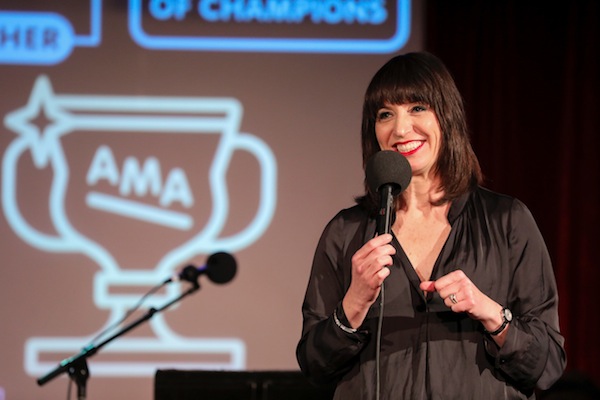
Ophira Eisenberg (photo by Mike Katzif)

Live performances – that you can see in person – are, thankfully, a thing again. At least, for now. And this year’s Chutzpah! Festival, Nov. 4-24, features many shows that people will be able to attend, most of which will also be streamed digitally.

For the two artists the Jewish Independent interviewed this week about the festival, the upcoming performances hold special meaning.

“I am so looking forward to coming back to Canada,” said New York-based comedian and storyteller Ophira Eisenberg, who was born in Calgary. “And Vancouver at that! Where it all started.” Eisenberg performs Nov. 7 at the Rothstein Theatre.

Shay Kuebler/Radical System Art’s Momentum of Isolation sees its world première at the theatre Nov. 13 and 14. The dance company returns to Chutzpah! as resident artists. The Rothstein Theatre and Chutzpah! “have been critical to the growth of Radical System Art and my work as an individual artist,” Kuebler told the Independent, describing the theatre as “the cradle that supported us” during “our infancy as an organization.”

“When I stepped back into the theatre,” Kuebler said, “it was like being back in a close friend’s home. It feels right. There’s a groove and comfort there. This has enabled us to create with as much momentum as possible, both as a company and collective of artists.”

Stepping back into a theatre has been an emotional experience for many artists.

“This spring in New York, I performed numerous times outside,” said Eisenberg. “All of the situations were a little different and, a couple of times, the address of the show was a large tree in a park! It wasn’t ideal and definitely was challenging, but people really wanted to laugh and take in some live entertainment, so it was uplifting.

“My first real performance inside at a comedy club was in early May, when New York opened small performance venues,” she said. “The audience was distanced and masked, and I think they laughed louder and harder than an audience of 3,000 – or maybe my ears weren’t used to hearing live indoor laughter and it sounded explosive. Either way, it almost brought me to tears, and I know I’m not the only one that felt that way.”

Eisenberg comes to Vancouver soon after the final episode of National Public Radio’s comedy trivia show Ask Me Another, which she hosted for nine years, interviewing and joking with numerous famous folk, including Sir Patrick Stewart, Awkwafina, Ethan Hawke and Julia Stiles, among many others.

“After interviewing hundreds of celebrities, authors, musicians,” said Eisenberg, “one thing that stands out to me is that, whenever we talked about a project that meant a lot to an artist, they mentioned that what made that project so successful was the supportive environment – and the fact that they worked with people who allowed experimentation and even failure. That ended up bringing out their best work. I think about that a lot when it comes to creating a space for artists to truly succeed.”

Eisenberg has headlined and performed at countless festivals and appeared on numerous comedy networks and programs. She has her own comedy special, called Inside Joke, and her first book, Screw Everyone: Sleeping My Way to Monogamy (Seal Press), was optioned for a feature film. She is a regular host and storyteller with the Moth, an organization that has become a radio show and  podcast, in addition to putting on live events and other activities.

As for what she would still like to accomplish in her career, Eisenberg said, “I’m working on another podcast that I hope is also long-running! But I have so many things I’d like to do. Maybe too many things! On the docket are writing another book, and I’d love to write for TV. Performing live is my first love, so I’m looking forward to a safer world where that can happen more often.”

Eisenberg’s journey to success began at a young age.

“I truly believe I was drawn to New York as a child from watching Sesame Street!,” she said. “I went to McGill for university, where I got a bachelor’s in anthropology and theatre, then moved to Vancouver for a couple of years, where I tried standup for the first time.

“I was honestly too scared to move to New York,” she admitted, “so I moved to Toronto and spent five years performing and starting to understand my craft. Then, one day, I thought, ‘I need to move to New York now while I can still happily live with a futon and milk crate furniture.’ Two years after moving here, I discovered the Moth…. I love writing jokes, but I was working on other material that just did not fit into the standup mold. I found an outlet of expression at the Moth and in this short form storytelling, and I continue to pursue both.”

When asked to describe her connection to Judaism and/or Jewish community or culture, Eisenberg said, “I have a joke in my act that goes something like this: ‘I was raised Jewish in Calgary, Alberta, or so I thought because when I moved to New York I wondered, “maybe I was raised Protestant?” Everyone in New York is more Jewish than I am. My Puerto Rican neighbour knows more about Judaism than I do.’

“That is just a joke but living in New York is definitely the first time I felt surrounded by pervasive cultural Judaism. My father was the principal of the Hebrew school in Calgary but left that job the year I was born, so I went to public school. We still practised at home and went to synagogue during the High Holidays. As an adult, I’ve definitely been able to find my community here in Brooklyn, which is very wonderful and embracing.”

Exploring isolation

In 2018, before the pandemic sent us all into relative isolation, the United Kingdom appointed its – and, apparently, the world’s – first minister of loneliness, to address the problem as a public health issue.

“Right away, the title of ‘minister of loneliness’ grabbed me,” Shay Kuebler told the Independent. “There’s something very simple about it and it almost feels like a caricature, yet, when you think of someone whose entire work/career is to disrupt loneliness, it becomes deeply serious. When you read about isolation and loneliness, the gravity of this position becomes even more clear.”

The United Kingdom’s action was a catalyst for Kuebler, who noted, “You can now find multiple countries that have ministers of loneliness.”

The work Momentum of Isolation “speaks to a number of ideas around isolation and loneliness,” he said. “By doing so, I hope to open up greater conversations around the topic and maybe have audiences start their own exploration of the topic.”

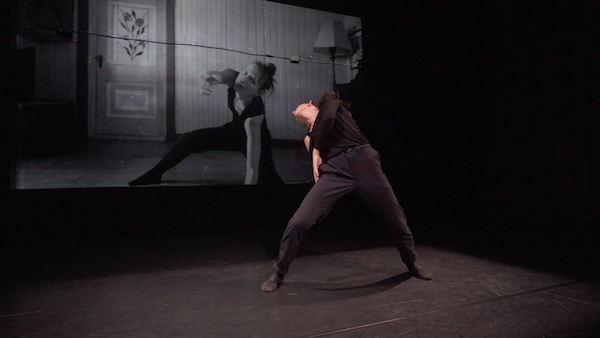
photo - Sarah Hutton performs in Shay Kuebler/ Radical System Art’s Momentum of Isolation
Sarah Hutton performs in Shay Kuebler/ Radical System Art’s Momentum of Isolation. (screenshot)

Momentum of Isolation explores the theme both through physical isolation and social isolation, explained Kuebler. “These two points are explored through a number of different scenes, which make the show episodic in its structure, with some through-lines and arcs for characters moving all the way through.”

The work has turned out to be even more relevant than Kuebler initially thought it.

“Honestly, this show took on an evolution that I could have never projected,” he said. “The timing of our first full-company research period coincided with the closures and lockdowns across 2020. I knew that this project was important, and being forced into an online/isolated form of research was profound, to say the least.

“This isolated online research, which enabled one-on-one time with each of the company artists, created a well of material,” he said. “It was a format that was completely new, but something I found extremely valuable. While working with each artist one on one, I was simultaneously writing and composing music for the work. This not only led to a lot of new scenes and ideas, but it also distilled what was most relevant and necessary to say.

“For me, this piece was both a rediscovery and a reinforcement of what I hold most valuable. It has brought me back to how and why I want to create. I am grateful for this.”

For those unfamiliar with Radical System Art and dance in general, Kuebler added, “I know when we hear ‘dance’ and, especially, ‘contemporary dance,’ a lot of people can feel hesitant. I want readers and audiences to see this show as more of a ‘contemporary theatre experience.’ It brings together technology, design and multiple art forms around a very relevant – and timely – theme. It is something being made now, through many different artists and their many unique experiences…. With a collaborative approach to connecting with our audiences, we hope to create something new, relevant and accessible.”

For Chutzpah! tickets and the full lineup, visit chutzpahfestival.com or call 604-257-5145.

Format ImagePosted on October 22, 2021October 21, 2021Author Cynthia RamsayCategories Performing ArtsTags Chutzpah!, comedy, dance, isolation, Ophira Eisenberg, Radical System Art, Shay Kuebler, standup, storytelling
Chutzpah! coming soon

Chutzpah! coming soon

Josh “Socalled” Dolgin leads an evening of Yiddish songs as part of Chutzpah! 2021. (photo from Chutzpah!)

The Chutzpah! Festival returns this November, presenting music, theatre, comedy and dance that reflect the joy of coming back together. For more than two decades, Chutzpah! has been an annual highlight of Greater Vancouver’s arts season. From Nov. 4 to 24, artists will once again grace the stage of the Norman & Annette Rothstein Theatre, the festival’s hub, and share their work in person and online. Tickets go on sale Sept. 15.

The 21st Annual Chutzpah! Festival will include a variety of performances, paired with conversations and opportunities to interact with the artists. Audiences will have the chance to attend in-person shows, with COVID safety protocols in place, or enjoy digital streams from their homes. With an emphasis on artists from across Canada, the festival will also present work from Israel, the United States and the United Kingdom.

“Artists and arts enthusiasts alike have been eagerly awaiting our chance to come back together to share our stories,” said Jessica Mann Gutteridge, artistic managing director. “With the joy of reconnecting comes the knowledge that our lives have profoundly changed over the past year-and-a-half. The Chutzpah! Festival will explore and celebrate the many ways we tell stories now, with a variety of ways to experience and participate in the work.”

The festival opens Nov. 4 with a screening at the Rothstein Theatre of the Marx brothers classic A Night at the Opera, during which City Opera Vancouver will sing the operatic music parodied in the film. The 1930s cinema experience will include festive treats, glamour and a costume contest.

In the comedy realm – all in-person performances at the Rothstein Theatre – Canadian-born, New York-based stand-up comedian, storyteller and writer Ophira Eisenberg, host of NPR’s comedy and trivia show Ask Me Another, performs Nov. 10. Israeli-American stand-up comedian Avi Liberman is joined by special guest Jacob Samuel and host Kyle Berger on Nov. 20. And Iris Bahr, who impressed Chutzpah! audiences in 2020 with her festival hosting and her solo show DAI (enough),  performs her new solo show Nov. 23.

The dance performances at the Rothstein will be in-person events, as well as digitally streamed. Nov. 6 and 7, a Project inTandem double-bill features the works of Calgary producers and choreographers Sylvie Moquin and Meghann Michalsky, which explore the themes of female struggle and empowerment. Nov. 13 and 14, Shay Kuebler/Radical System Art return to Chutzpah! as resident artists with the third “chapter” of Kuebler’s research that began in 2018, after he read about the United Kingdom hiring a minister of loneliness. On Nov. 16 and 18, Ballet BC artist in residence Alexis Fletcher, who was 2019 and 2021 Chutzpah! resident artist, returns to the festival with a solo integrating movement and the visual art of Vancouver painter and HIV/AIDS activist Tiko Kerr, while 2020 and 2021 Chutzpah! resident artist Ne.Sans Opera & Dance, led by Idan Cohen, returns to showcase a new solo drawing inspiration from the myth of Orpheus and Gluck’s opera Orfeo ed Euridice, with co-creator Ted Littlemore (aka Mila Dramatic).

Theatre works featured are Lilach Dekel-Avneri and the Pathos-Mathos Company’s The Eichmann Project – Terminal 1 on Nov. 8 (digital stream available); The Flame – An Evening of Storytelling on Nov. 17, under the stewardship of artistic director Deborah Williams, featuring storytellers including Stephen Aberle, Glenda Zenoff, Eleanor Lipov and Helen Schneiderman, with musical guest Anton Lipovetsky; and Halifax-based Surplus Production Unit’s A Timed Speed-Read of the Triangle Shirtwaist Factory Fire Trial Transcript on Nov. 21 and 22.

Montreal’s Josh “Socalled” Dolgin, accompanied by a local string quartet, leads an evening of rediscovered Yiddish songs, with stories and perhaps a little magic, on Nov. 19, and Israel’s Guy Mintus Trio’s performs A Gershwin Playground Nov. 24. (Digital streams available for both shows.)

Nov. 8-12, Chutzpah! Festival favourite, U.K.-based theatre artist Tamara Micner, transforms her theatrical work-in-progress (workshopped in the 2020 festival) into an audio installation. Audience members will be invited into the Zack Gallery to listen to Micner’s reading of letters written to Paul Simon and Art Garfunkel, reflecting on how their music informs her feelings about friendship, activism, Jewishness and art. There will be opportunities to “meet” the artist via video stream for conversations about her work and ideas.

Throughout the festival, Bahr converses with festival artists, featuring her stand-up and a wide-ranging cast of characters.

Due to COVID-19 safety processes, all tickets must be purchased in advance and will not be available at the door. Visit chutzpahfestival.com starting on Sept. 15 or call 604-257-5145.

– Courtesy Chutzpah! Festival

Format ImagePosted on September 10, 2021September 9, 2021Author Chutzpah! FestivalCategories Performing ArtsTags Chutzpah!, comedy, dance, Iris Bahr, music, storytelling, theatre

Posts pagination

Previous page Page 1 Page 2 Page 3 Page 4 Next page
Proudly powered by WordPress