Skip to content
  • Home
  • Subscribe / donate
  • Events calendar
  • Business Directory
  • FAQ
  • News
    • Local
    • National
    • Israel
    • World
    • עניין בחדשות
      A roundup of news in Canada and further afield, in Hebrew.
  • Opinion
    • From the JI
    • Op-Ed
  • Arts & Culture
    • Performing Arts
    • Music
    • Books
    • Visual Arts
    • TV & Film
  • Life
    • Celebrating the Holidays
    • Travel
    • The Daily Snooze
      Cartoons by Jacob Samuel
    • Mystery Photo
      Help the JI and JMABC fill in the gaps in our archives.
  • Community Links
    • Organizations, Etc.
    • Other News Sources & Blogs
  • JI Chai Celebration
  • JI@88! video

Recent Posts

  • Federation now across BC
  • Israel fighting for its existence
  • Deal strengthens Iran
  • Patriotic belonging diminishes
  • A campaign to engage
  • Upstanders’ first live event
  • Responding to Carney
  • Having your own home
  • Music a family tradition
  • Musical to warm heart
  • Community milestones … June 2026
  • Sharing her passion for Israel
  • Or Shalom reopens its doors
  • JFS from past to future
  • Need holistic approach
  • Sharing stories, advice
  • Journalist shares fears
  • Skills to live together
  • Road to independence
  • Cutting grass with scissors
  • Zionism as a solution
  • Deceit, desire & the divine
  • Reclaiming sacredness
  • Creative project ideas
  • Summer squares and cobbler
  • Thou shalt … summer commandments
  • Legal help for students
  • Revisiting myth of Lilith
  • Wrong person rebuked
  • Canada’s mixed messages
  • Questions for museum
  • Symposium on antizionism
  • Making soccer political
  • CJPAC lauds Pulver’s impact
  • City recognizes Vrba’s legacy  
  • Organ donation saves lives

Archives

Follow @JewishIndie
image - CJN box ad Rockowers 2026

Tag: politics

מספר הישראלים המעוניינים לעזוב למדינה אחרת אלה הולך וגדל

 כצפוי מספר הישראלים המעוניינים לעזוב למדינה אחרת לאור המשבר הקשה הפוקד את המדינה בימים אלה הולך וגדל. זאת בעיקר לאור הרפורמה במערכת המשפטית אותה מציעה ממשלת הימין בראשות ראש הממשלה, בנימין נתניהו. קנדה משמשת באופן קבוע אחד היעדים הבולטים בעולם להגירה כולל לאלה שרוצים להגיע מישראל. בקנדה יש כיום את הריכוז השלישי-רביעי בעולם של יהודים הגרים מחוץ לישראל וגם נקודה זו חשובה לישראלים

הנה מספר תגובות בנושא שמתפרסמות בימים אלה בפורומים השונים של ישראלים בקנדה של פייסבוק – בנושא המעבר מישראל אל קנדה

אלינור כהן כותבת: יש עלייה של מאה אחוז במספר הבקשות שאני מנהלת ואני מוצפת בשאלות ממשפחות שחושבות לעבור לגור בקנדה מהסיבות הכי עצובות שיש

לגבי נושא המחאה נגד תוכנית הרפורמה במערכת המשפט כותבת דפנה קדם: בטורונטו וונקובר אנו מוחים זה שבוע שלישי למען שמירת הדמוקרטיה בישראל. היא מציעה למעוניינים להצטרף לקבוצות המחאה בטורונטו, ונקובר או גם בערים אחרות בקנדה

אסנת קמחי חושבת לעבור עם המשפחה לקנדה. היא שואלת: אנו חושבים לעבור לקנדה. נשמח לקבל עצות, טיפים והמלצות

דניאלה בואנו גם היא מעוניינת לעבור לקנדה. היא כותבת בפורום: מחפשת לעשות רילוקיישן לקנדה עם בעלי והילד בן השנה. יש לי ניסיון של שלוש שנים בצילומי רנטגן של שיניים. אשמח באם תוכלו לעזור לי בנושא

ליאת מרסו מחפשת עזרה דחופה בנוגע להגירה לקנדה ושואלת איך מתחילים ובמי היא יכולה להיעזר

עידן סטולרוב מחפשת עורך דין מומחה להגירה לקנדה

נטלי קיינן מחפשת להכיר ישראלים שגרים באדמונטון שבמחוז אלברטה כיוון שהיא מעוניינת להגר לשם

ג’ניפר סיל כותבת כי אחיה בן העשרים ושתיים הוא שחקן כדורגל (חופשי) שמעוניין לעבור לקנדה. היא שואלת האם מישהו מכיר סוכן מקומי או מישהו אחר שיכול לעזור לו

אלמוני המציין כי משפחתו מתכננת להגר לקנדה בקיץ הקרוב. הוא שואל האם ניתן לפתוח חשבון בנק בקנדה און-ליין מישראל, כדי להעביר כספים לקראת ההגעה

אלדד בלייש שמעוניין לעבור לקנדה הוא טכנאי רנטגן. הוא שואל האם בקנדה מקבלים תעודות רשמיות מישראל ומה התהליך לאישורן

מאיה טאוב מעוניינת לעבור לקנדה והיא שואלת מה האתגר המרכזי של זוגיות ברילוקיישן

אלמונית כותבת כי היא גרה כיום בישראל. היא מעוניינת לחדש את האזרחות הקנדית שלה ולהשיג אזרחות קנדית לבעלה ולילדים. היא שואלת כיצד עושים זאת בצורה היעילה ביותר ומה התנאים לכך

מעיין עופרי שהיא פרמדיקית בישראל שואלת בפורום על פרמדיקים שעובדים כיום בקנדה. היא רוצה מידע מפורט בתחום התעסוקה הזה

מספר הפורומים של ישראלים בקנדה בפייסבוק הולך וגדל עם השנים. הרשימה כוללת כיום בין היתר: חמישה פורומים שונים בעלי אותו שם של ישראלים בקנדה (הכוללים 18 אלף חברים, שמונת אלפים חברים, שבעת אלפים חברים, שש מאות חברים, כחמש מאות חברים, כשלוש מאות חברים), שני פורומים בעלי אותו שם של ישראלים בטורונטו (הכוללים כעשרים ואחד אלף חברים ועשרת אלפים חברים), ישראלים החיים בקנדה (הכולל כארבעת אלפים ושש מאות חברים), ישראלים בהייטק באמריקה – מיועד לאלה שגרים בארה”ב ובקנדה (כולל כארבעת אלים חברים), סטודנטים ישראלים בקנדה (כולל אלף שלוש מאות חברים), שני פורומים בעלי או שם של ישראלים באמריקה – מיועד לאלה שגרים בארה”ב ובקנדה (כוללים עשרים אלף חברים ואלף ארבע מאות חברים) וכן קנדה למטיילים (הכולל כתשעת אלפים חברים)

Posted on March 1, 2023February 28, 2023Author Roni RachmaniCategories UncategorizedTags Canada, emigration, governance, immigration, Israel, Netanyahu, politics, בנימין נתניהו, הגירה, ישראל, משילות, פוליטיקה, קנדה
Israelis not that divided

Israelis not that divided

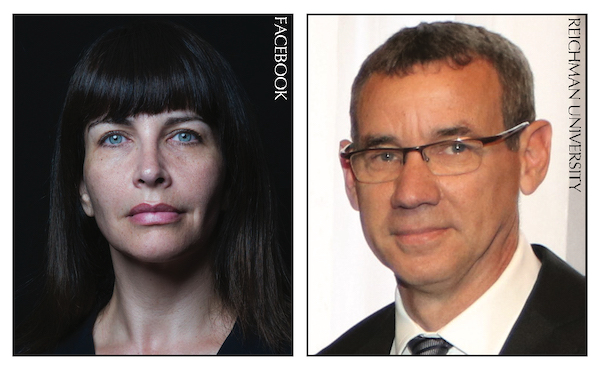
Dr. Einat Wilf and Mark Regev spoke at a Centre for Israel and Jewish Affairs event Feb. 9.

Canadian Jews who don’t like the look of Israel’s new government should not withdraw from engagement with that country and its discourse, but get more involved, says Dr. Einat Wilf, a former Labour party member of the Knesset.

Leaders in the North American Jewish community are expressing concerns over the new government and aspects of its policy agenda, while others worry that the always-present fear of schisms between Israeli and Diaspora Jewry could be reaching a breaking point. But Wilf said this is a time for overseas Jews to act strategically to influence policies that reflect their priorities.

Wilf, who served in the Knesset from 2010 to 2013, is an author, businessperson and one-time foreign policy advisor to Shimon Peres. She was part of a panel convened by the Centre for Israel and Jewish Affairs Feb. 9. Wilf engaged with Mark Regev, who is chair of the Abba Eban Institute for Diplomacy and Foreign Relations at Reichman University and a former spokesperson and senior foreign affairs advisor to Binyamin Netanyahu. He also served as Israel’s ambassador to the United Kingdom. Yaron Deckel, the Jewish Agency for Israel’s director for Canada and a veteran Israeli journalist, moderated the event.

Wilf said it is up to Canadian Jews to decide how to respond to the political situation in Israel. “But my personal view is that this is perhaps the time for Jews outside Israel to fund more and channel money and efforts to things that have to do not with welfare but actually with how Israel is Jewish,” she said. “North American Jews, if they want Israel to be hospitable to their kind of Jewish practice, they need to make a stark choice.”

The Conservative and Reform movements in Israel are simply too small to be major players in this discussion and so the more practical camp with which Diaspora adherents of those denominations can partner to meet their goals is the secular movement, Wilf said. This is the most likely way to advance policies such as egalitarian prayer at the Kotel, liberal interpretations of identity for aliyah and reducing the powers of the chief rabbinate.

Both panelists attempted to dispel some conventional wisdom, including that Israeli society is divided, turning its back on liberalism and getting more and more religious.

“Israeli democracy, as it stands now, is more inclusive, more representative of the greater diversity of voices than it has been probably throughout its history,” said Wilf. That diversity, by its very inclusiveness, has opened the door to ideas that can be considered contrary to traditional progressive Israeli values, she argued. “That means that more non-liberal voices are represented than ever before.”

Regev concurred. The “good old days” of early Israeli democracy were, he said, “a one-party state run by the Labour Party.… It was a much more conformist society, it was difficult for gays, it was difficult for women, it was a society that was more closed, it was difficult for Mizrahim,” he said. “Today, I have no doubt if you look at the trajectory, Israel is more liberal, more pluralist, more open, more free than ever before.”

A couple of decades ago, Regev noted, if you wanted to go out for dinner in Jerusalem on a Friday night, you had to travel to east Jerusalem. “Now, in Jewish Jerusalem, you have all sorts of places you can go to,” he said. “The idea that Israel is becoming only more religious, more Haredi, more Orthodox is just not true.”

One of the areas where most Israelis agree, said Wilf and Regev, is on the Palestinian issue. After Yasser Arafat ended the peace process and started the Second Intifada, and his successor Mahmoud Abbas demonstrated no more conciliatory a tone, Israelis realized the ball was not in their court. All they can do is wait for a change of leadership on the Palestinian side, both said.

The fiercest divisions in Israeli society right now are over proposals to reform the judiciary, including allowing the Knesset to override Supreme Court decisions by a majority vote and to hand the power of judicial appointments to politicians.

Deckel noted that Canadian legalist Irwin Cotler has warned that the judicial overhaul would make Israel a flawed democracy and other Jewish leaders in North America have spoken up in ways that are rare or unprecedented against some of what the new government is advocating.

“Is there really a threat to Israeli democracy?” asked Regev. “I’m not so sure. I don’t believe there is. I believe Israeli democracy is strong. I believe we can debate the pros and cons of the different judicial reforms put on the table without having to say this is the end of democracy.”

Both commentators think fears of the new government are overblown, although Wilf has a caveat. She has studied past Netanyahu governments and concluded their bark is generally worse than their bite or, at least, that the “hysteria” with which they were met was not commensurate with the policies they enacted.

“All Netanyahu governments, especially the one of 2015, were received with complete hysteria and none of it materialized,” said Wilf. “Sometimes the exact opposite. Netanyahu turned out to be much more centrist, careful, generally very much eschewing violence and conflict and even bringing peace agreements.”

A difference now, said Wilf, is that Netanyahu is head of a more ideologically narrow government, where in the past he had built fairly broad coalitions.

“For Netanyahu, that was very comfortable,” Regev said. “Because, when you have a coalition partner to the left of you and a coalition partner to the right of you, that allows you to be the conductor of the orchestra, so to speak.”

Regev sees a danger in Diaspora Jews who disagree with events in Israel airing dirty laundry, but Wilf said that is the least of her concerns. No matter who is in charge or what policies they advance, overseas opponents will make the same case, she said. “They still would have argued that Israel is a settler-colonial, apartheid, genocidal, white European blah blah blah,” she said. “That’s how they work.”

Addressing the widespread spike in antisemitism, Regev sees a silver lining. “You could be very cynical and you could say some things don’t change. But something has changed,” he said. “Something very important has changed. Unlike my father when he was a child and the Jews were stateless and defenceless and knocking on people’s doors [saying] ‘Please let me in so they won’t kill me,’ today we can proudly say that, if something has changed, the Jews have changed. We have a state. We have a successful state. With all our problems, Israel is a very successful country, politically, economically, diplomatically, militarily. We can protect ourselves.”

Gail Adelson-Marcovitz, national chair of the board of the Centre for Israel and Jewish Affairs, opened the online event, which attracted more than 1,000 participants. “Many of us believe that Israel is a state of the totality of the Jewish people and not just its citizens,” she said. “While it is the citizens of Israel who elect their government, that choice has ramifications for many aspects of our partnership and specifically impacts Diaspora Jews. We feel that our interest must, at the very least, be heard, if not respected, particularly in those areas where we are impacted.”

Format ImagePosted on February 24, 2023February 23, 2023Author Pat JohnsonCategories Israel, LocalTags Centre for Israel and Jewish Affairs, CIJA, democracy, Diaspora, Einat Wilf, Gail Adelson-Marcovitz, Israel, Mark Regev, politics
Book Fest epilogue event

Book Fest epilogue event

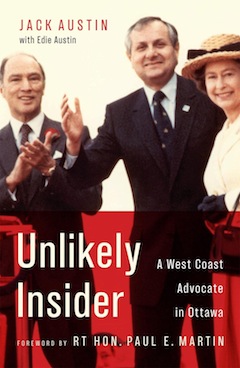
Jack and Edie Austin (photos from JCC Jewish Book Festival)

image - Unlikely Insider book coverFormer federal cabinet minister and senator Jack Austin, who has been involved in politics and public policy for more than 50 years, and his daughter, Edie Austin, editorial page editor of the Montreal Gazette, will be in conversation with Ronald Stern, founder and president of Stern Partners, on Feb. 28, 7 p.m., at the Rothstein Theatre as a Cherie Smith JCC Jewish Book Festival epilogue event.

The two will discuss their book, Unlikely Insider: A West Coast Advocate in Ottawa, about Jack Austin’s public service. With both historical perspective and an eye to the future, Austin reflects on events and people whose impacts are still being felt, and on the enduring challenges of Canadian life. For tickets ($18) to attend the event, visit jccgv.com/jewish-book-festival.

– Cherie Smith JCC Jewish Book Festival

Posted on February 24, 2023February 24, 2023Author Cherie Smith JCC Jewish Book FestivalCategories BooksTags Edie Austin, Jack Austin, JCC Jewish Book Festival, politics

Land of milk, honey …

Toward the end of last year, Israel signed an historic agreement with Lebanon, enabling both countries to enjoy an abundance of natural gas located deep below their respective territorial waters.

Now, Israel can continue exploring its northern Karish gas field without the risk of Hezbollah missiles overhead. And Israel will receive indirect royalties from Lebanon’s Kana field – with no peace treaty (yet), royalties will be paid via a third country. Add that to potential revenues from Israel’s other natural gas finds in the Mediterranean, and there’s the opportunity of Israel replacing Russia as Europe’s main natural gas provider. Israel will become more than just the land of milk and honey.

Optimistic forecasts of a natural gas Sovereign Wealth Fund are for billions of shekels in tax revenue. Trusting that the new ruling gas triumvirate – Prime Minister Binyamin Netanyahu, Finance Minister Bezalel Smotrich and Energy Minister Israel Katz – will optimize our natural gas and its wealth fund, then Israel becomes the land of milk, honey, natural gas and an overflowing wealth fund.

Hopefully, Lebanon’s natural gas opportunity will help their economy. Then it, too, will be a country overflowing in natural gas and with its own wealth fund.

***

Israel’s 2022 inflation rate was 5.3%, its highest since 2008.  Within the OECD, Israel had the third lowest rate, behind Japan’s 3.0% and Switzerland’s 3.3%. How’s that for our little shtetl! Can’t even compare these rates with the much poorer performing OECD countries such as Estonia at 23.6%, Lithuania at 24.1% and Turkey at 83.5% (yikes!).

Israel’s rate was even lower than the 6.3% of Canada, whose neighbour to the south experienced a similar level. As for Israel’s neighbours, Jordan and Saudi Arabia were at 4.4% and 3.3% respectively … pretty good. Egypt suffered a 24.4% inflation rate, Syria a rate of 105% and Lebanon 189.4%, one of the highest in the world! Israel, the land of milk, honey and competitive inflation rates.

***

Then there’s the judicial reforms bonanza. Israel’s new justice minister, Yariv Levin, is looking to overhaul the system by granting the government – through a simple majority vote – the right to overturn High Court decisions and by giving politicians more power in appointing Supreme Court judges. Detractors are concerned this gives the government way too much say over legal matters and threatens our democracy.  Supporters – largely those who voted for the new government – believe these changes will strengthen the legislature’s ability to enact the will of the electorate. Theirs, anyway.

Karnit Flug and Stanley Fischer, former Bank of Israel governors, are firmly in the former camp. They’re concerned these reforms will harshly undermine the High Court’s authority and concentrate too much power with the government, hurting Israel’s sovereign credit rating, destabilizing the economy and reducing the standard of living.

Netanyahu – the free market czar who revolutionized Israel’s economy as finance minister and who extracted natural gas from our sea as prime minister – believes his judicial reforms will rejuvenate the economy by reducing excess regulation and judicialization.

Adding to the festivities. Israel’s anti-reform (and largely anti-government) movement had its third weekly 100,000-person protest in Tel Aviv last month. A sea of people storming the city square, waving flags of blue and white, singing folk songs and Hatikvah and shouting slogans of support for the high judges. Israel, the land of milk, honey and a real judicial balagan.

***

It’s here! 7-Eleven opened its first store in Israel. In downtown Tel Aviv (of course), with plans to roll out hundreds of branches throughout our little shtetl over the coming years. Hello, Slurpees! Those multi-coloured slushies were a staple of my Canadian childhood. Although now  I am more a fan of the fresh Dole bananas sold at the stores in the United States and Japan, which I’d buy as a healthy snack while on overseas business trips. Looking inward, does this mean the demise of Israel’s famous mom-and-pop stores, found in neighbourhoods across the country, the Bella’s and Yankela’s, which add to Israel’s heimishe-like atmosphere? That would be a pity! Israel becoming the land of milk, honey, Slurpees … and Dole bananas.

***

On a much lighter note, what about Israel’s maple syrup revolution? It was once only available from specialty food stores, and at an exorbitant price. But what’s a poor Canadian immigrant to do? I paid the ransom and our family enjoyed Shabbat morning French toast, pancakes and waffles. Whenever visiting Canada, I stocked up with the stuff, packing carefully bubble-wrapped bottles of both real and imitation maple syrup into my suitcase.

But, thanks to free trade. Real maple syrup – the organic kind from Canada – became super cheap in Israel, even less expensive than in Canada! And it’s available everywhere, even at Bella’s and Yankela’s. Now when I return to Canada, I take back Canadian maple syrup as gifts. Dare I say it … Israel, the land of milk, honey and Canadian Maple Syrup, eh.

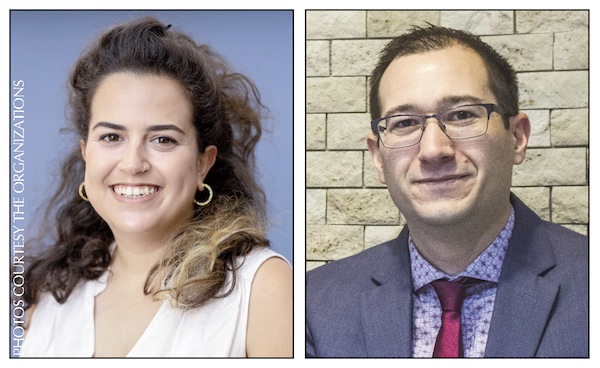
Bruce Brown is a Canadian and an Israeli. He made aliyah … a long time ago. He works in Israel’s high-tech sector by day and, in spurts, is a somewhat inspired writer by night. Brown is the winner of the 2019 AJPA Rockower Award for excellence in writing, and wrote the 1998 satire An Israeli is…. Brown reflects on life in Israel – political, social, economic and personal.

Posted on February 10, 2023February 9, 2023Author Bruce BrownCategories Israel, Op-EdTags business, economics, inflation, Israel, judicial reform, politics

Obligation to criticize

Last Saturday, Israel’s ambassador to Canada announced he was resigning over differences with the new government back home.

Ronen Hoffman has served only about a year in the role. He was appointed by the last government and, before that, had been a Yesh Atid party member of the Knesset under the leadership of former prime minister Yair Lapid. So, Hoffman was a political appointee, which makes his resignation significant but not the bombshell it would have been had he been a career diplomat.

Nevertheless, this was perhaps the most conspicuous example in Canada of ripples of response to what media around the world have taken to calling Israel’s “most right-wing government ever,” which was sworn into office under the once-and-then-again-and-now-again Prime Minister Binyamin Netanyahu Dec. 29.

Having alienated, via policies or personality, a great number of potential allies on the centre and right, Netanyahu cobbled together a parliamentary coalition that includes some of the most extremist voices in Israeli society. As we mentioned in this space last issue, some of the approaches the new government seems bent on are not merely matters of policy but structural tampering with the fundamental tenets of Israeli democracy, including the courts, definitional foundations of citizenship, possible assaults on LGBTQ+ rights, as well as what appears to be a new bull-in-the-china-shop approach to governance and settlements in the West Bank.

In this issue of the paper alone, two separate Canadian organizations express concern about the impacts that perceptions of the new government in Israel will have on their work here.

Some Diaspora voices have been saying that this is the time for overseas allies to express in whatever ways possible to their Israeli counterparts, family and friends the impacts that certain policy approaches there will have on Jewish people here, and on relations between Jews in both places.

There is no doubt that the people who have made a cottage industry of attacking Israel in the past will continue to do so, using as fuel any evidence that the state of Israel is abandoning its commitments to human equality, democracy and pluralism. Haters gonna hate.

But there is another possibility, a conceivable glimmer of light shining through the cracks of Israeli-Diaspora relations.

There has always been a rhetorical disconnect between “anti-Zionism,” which by definition seeks the elimination of the Jewish state, and “criticism of Israel” or “criticism of particular policies,” which tends to be more nuanced. There has also been a casual accusation that pro-Israel voices are “uncritical” in their support for Israel, that there is a tendency to turn a blind eye toward things taking place in Israel that deserve condemnation.

Recent developments put these various positions in stark contrast.

There are now many issues and policies that probably the vast majority of Jews outside Israel (as well as inside Israel, as enormous protests in recent days have shown) find disagreeable, even abhorrent. For those who support Israel’s right to exist and for those who don’t, these issues and policies present an opportunity.

It is now especially necessary for supporters of Israel and allies to be absolutely clear that it is possible and reasonable to be emphatically, unequivocally supportive of the right of the Jewish people to self-determination in the form of the state of Israel while at the same time pointing at very specific policies with which we disagree vehemently.

There has often been far too much vagueness in this discussion, allowing people with unreasonable positions to appear reasonable, to allow people who would like to see Israel wiped off the map claim they are only criticizing “policy.” On the flip side, while there has always been a vibrant discourse among Diaspora Jews on events in Israel, critics have somehow been able to ignore that vibrancy and claim a monolithic Zionist hegemony of ideas. (This is, ironically, a conspiracy theory masquerading as a conspiracy theory.)

As this Israeli government proceeds with its agenda, and recognizing that Israeli voters have the final say, overseas Jews who for generations have supported and helped build the Jewish state have a right to express our opinions. We also have an obligation to be specific. There has perhaps never been a time when it has been easier to be clear: Israel has a right to exist. But efforts to chip away at the foundations of Israel’s judiciary, human rights and citizenship definitions are unacceptable, and it is right for Israelis and their overseas allies to say so in our loudest voices. Criticizing policies and being steadfast defenders of Israel have never been contradictory impulses. Now, more than ever, these are our obligations.

Posted on January 27, 2023January 26, 2023Author The Editorial BoardCategories From the JITags democracy, Israel, politics, Ronen Hoffman
Summit covers tough issues

Summit covers tough issues

Author and former politician Michael Oren addresses the Jewish Media Summit, which took place in Jerusalem Dec. 19-22. (photo by Dave Gordon)

The Iranian threat, the new Israeli government, BDS, terrorism, and the challenges of aliyah, were just some of the discussion topics last December, at the fifth annual Jewish Media Summit, which took place in Jerusalem Dec. 19-22.

The nearly 100 attendees hailed from Israel and across Europe, as well as from South Africa, South America and North America, and included the Jewish Independent. Most panels and keynote addresses consisted of official spokespeople, politicians (incoming and outgoing) and organizational heads. The conference was organized by the Ministry of Diaspora Affairs, Ministry of Foreign Affairs, and the Government Press Office.

Former U.S. ambassador to Israel Michael Oren spoke about one of his pet projects. Oren is a former member of the Knesset and the author of several books, including Ally: My Journey Across the Israel-American Divide.

Several years ago, when Oren was a deputy minister in the Prime Minister’s Office, he proposed to Prime Minister Binyamin Netanyahu that Israel have a blueprint leading into the state’s 100th birthday – Oren’s book Israel 2048 will be published in April.

To write the publication, Oren investigated different areas of Israel’s future: social, education, health and foreign policies; Israel-Diaspora relations; Palestinians, Arabs. “We found experts in every field. It was a tremendous undertaking,” he said. “I would not shy away from any issue, controversial, even explosive.”

About Israel, he noted “we don’t have sovereignty over large areas of our territory,” referring to the 60% of the country that is the Negev Desert. As an example of what this means in terms of governance, he said there’s no application of Israeli law regarding housing there and so there are some 400,000 illegal Bedouin structures in the Negev.

“But if I built a two-millimetre addition to my balcony in Tel Aviv, I have a police car there, within seconds, giving me a big ticket,” he said. Additionally, he said there’s “an inability to enforce [other] Israeli laws” there, so there’s no control over guns, drug or human trafficking, and polygamy is rampant, despite it being illegal.

Of concern, he said, is that more Bedouin are being influenced by Islamic extremism and the Palestinian narrative.

“It’s critical that the 2048 initiative is not the initiative of religious people, of secular people, of right-wing, left-wing, Ashkenazim, Mizrahim. It’s everybody together,” he said. “If you want Israel to have a second great century … we have to work on it. And we have to work at it by talking to one another, about real solutions.”

Oren spoke with the Jewish Independent about how he thinks Israel will ease challenges to aliyah.

“What shocked me is that large segments of the population are no longer interested in large-scale aliyah,” he said. “I couldn’t get people in Israel and [in the] Israeli government to be very interested in encouraging aliyah from France.”

The predominant reason for this lack of interest in welcoming new immigrants from France or any other country in the Diaspora, he said, is that Israelis are becoming increasingly angry at how the many costs of new olim (immigrants) are offset by the state.

“This is going to play out now with Russia and Ukraine as well,” he noted. “So, while everyone’s focused on the grandfather clause [of the Right of Return], I asked a deeper question: to what degree is aliyah still a central tenet of our raison d’être of the Jewish people? Because, from my perspective, if we are not encouraging large-scale aliyah, we’ve lost a big sense of why we are here. And I see this as a danger.”

The largest section of Oren’s new book, however, deals with the Palestinians. Oren said he was involved in one way or another with “every peace initiative since 1993.”

On another topic, Oren noted that Benny Gantz, then-minister of defence, proposed a solution to the Iranian threat: “force our international partners” into offering “military intelligence and diplomatic cooperation.”

“Our actions must be preventative, before it is too late,” said Oren.

On a tour of the Tz’elim IDF base, a 10-minute drive from Gaza, Gen. Bentzi Gruber spoke about the ethics of combat, stressing that the army makes enormous effort to minimize innocent casualties. In contrast, he said, only two Hamas rockets hit the base, while thousands hit civilian areas.

Gruber added that he fights a psychological battle, too.

“I fight all my previous wars every night in my sleep. My wife wakes me up when I’m yelling,” said the deputy commander of the IDF armoured division. “Every soldier that fought in a war carries the scars with them. If you killed a terrorist or a civilian, that never leaves you.”

The tour included a mini-Gaza mockup city, a training area for the Israel Defence Forces.

Kibbutz Nirim, a few hundred metres from Gaza, has been hit by rocket fire from Gaza in recent years. The kibbutz’s spokesperson, Adele Raemer, who addressed the United Nations Security Council in 2018, said the village had to build safe rooms, as residents have just a few seconds to get out of harm’s way. One terror tunnel discovered nearby was 75 feet deep, 1.1 miles long, and made of 500 tons of cement.

Still, she said, she “has nothing against ordinary Gazans,” and locals participate in Project Road to Recovery, where Jews shuttle Arab patients to local hospitals “because we care about our neighbours.”

President Isaac Herzog encouraged Jews around the world to fight the BDS (boycott, divestment and sanction) movement, whether espoused by foreign governments or the media, on college campuses or elsewhere. He commented on those who disagree with Israel’s new government.

“Israeli democracy is vibrant and strong,” he said. “The many voices that compose us do not point to the weakness of our democracy, but our strength. The rule of law, freedom of speech, human and civil rights, these have been and always will be the wall of our democratic state.”

In a non-political talk, Neta Riskin, who plays Giti Weiss in Shtisel, spoke about the surprise hit, which has run three seasons. At first, the show’s publicist told them “there’s nothing to work with” and it wouldn’t last, but word of mouth and good reviews bolstered the show, she said.

For her, Shtisel “has nothing to do with religion. It has to do with people – longing, hope and people’s desires. The cultural restraints of the show made it more interesting. No dead bodies. No sex.” She said she was pleased that women’s stories were also being told in the show.

Shtisel is popular in the Haredi community, with people watching it on their phones, according to Riskin. “The show managed to bridge an un-crossable bridge,” she added, noting how popular it was among all stripes of Jews and non-Jews alike.

Dave Gordon is a Toronto-based freelance writer whose work has appeared in more than 100 publications around the world. His website is davegordonwrites.com.

Format ImagePosted on January 27, 2023January 26, 2023Author Dave GordonCategories IsraelTags aliyah, BDS, Jewish journalism, Jewish Media Summit, media, Netanyahu, politics, security, terrorism

Democracy in danger

A pageant of pandemonium consumed the United States House of Representatives last week as it took 15 votes to confirm Kevin McCarthy as speaker. The chaos was caused by a group of far-right congresspeople representing less than five percent of the total House membership. Eventually, McCarthy triumphed – well, squeaked through – by cutting backroom deals that will empower the extremists and weaken the office of the speaker.

Although the holdouts are on the far-right fringes of American society, personality was a major factor in the weeklong deadlock. The opponents have issues with McCarthy as a person and a politician as much as they have with his policies. To succeed, McCarthy had to agree to concessions and cough up inducements that defile the dignity of his office and put the House of Representatives in jeopardy of being hopelessly deadlocked and dysfunctional.

An analogous situation is unfolding in Israel, where Binyamin Netanyahu has returned to the prime ministership. To do so, he had to make some very grubby deals with some very distasteful people.

Here, too, personalities were at play, as much as policies. There is a swath of centre-right politicians who would have joined a coalition that was not headed by Netanyahu. As a result, to regain power, Netanyahu was forced to make deals with far-right figures who should never have been considered for inclusion in a democratic government.

Both of these situations speak to an unfortunate reality of parliamentary democracy. When a bloc fails to attain a comfortable majority, they can find themselves dependent on the support of narrowly focused, ideologically driven extremists that represent very few voters. In many cases, the extremist tail ends up wagging the dog.

This is regrettable and it is sometimes inevitable. Democracy is by no means without its downsides. In fact, Winston Churchill’s aphorism – “Democracy is the worst form of government – except for all the others that have been tried” – resonates here.

The foundational piece of democracy is free elections and the peaceful transition of power, a cornerstone that was attacked on Jan. 6 two years ago at the U.S. Capitol. That cornerstone is now under siege in Brazil, in a striking parallel – as if the supporters of defeated former president Jair Bolsonaro directly stole the playbook of the American Republicans’ “stop the steal” scheme to subvert the 2020 U.S. election.

Violent protesters ransacked Brazilian government buildings this week, stealing weapons and artifacts and vandalizing facilities. Brazil does not have as long a history of democratic infrastructure as Israel or the United States, which could make it more vulnerable to attack. One core difference in the Brazilian case, versus the Israeli or American situation, is that the threats, at this point, are coming from outside the government – the protesters are supporters of a defeated (and possibly self-exiled) former leader. In the United States, the insurgents have an apparent stranglehold on one of the houses of Congress and, in Israel, are fully in charge.

The biggest concern in a democracy comes when the extremist tail that wags the dog not only influences policies but actually begins chipping away at the institutional underpinnings of democracy itself. This is a legitimate concern in Israel, as some partners in the coalition are threatening the judicial system, the functioning of police and the very definition of Israeli citizenship. The vote for U.S. House speaker did not itself represent a threat to democracy, though the final votes poignantly took place on the second anniversary of the insurrection that was the greatest attack on American democracy since the Civil War – a moment from which the country and its democratic foundations still reel. And continued dysfunction in the House portends a difficult road ahead for U.S. democracy as voters tire of do-nothing legislative bodies and what some perceive as broken political systems.

Both Israel and the United States are on unprecedented precipices. (Brazil, ironically, probably less so.) However, in both Israel and the United States, entrenched civil society organizations and strong parliamentary opponents are in place to monitor and bolster the fundamentals of their societies. Those on the (geographical and/or ideological) outside should support in every way we can the movements for democracy, pluralism and tolerance in Israel, the United States and everywhere in the world where these values are threatened, including if we see dangers to them here at home.

Posted on January 13, 2023January 11, 2023Author The Editorial BoardCategories From the JITags Brazil, democracy, Israel, politics, United States
Regards from Israel …

Regards from Israel …

During coalition building negotiations, Binyamin Netanyahu had to consider lists of demands that would make even the pious cringe. (photo from president.gov.ua)

So, my mom doesn’t have to worry about me anymore. Ever since I moved to Israel, she’s been concerned about my safety. Well, Israel is now one of the five safest countries in the world to visit, according to Swiftest, an American travel insurance website. From homicide rates to natural disasters to rode carnage, Israel rounds out the top five safest places, just after Singapore, Denmark, the Netherlands and Switzerland. The most dangerous country to visit is South Africa. Canada was ranked the 21st safest country, so now I’ll have to start worrying about my mom’s safety. Just sayin’.

* * *

During coalition building negotiations, United Torah Judaism (UTJ) – holding seven seats Binyamin Netanyahu required to build his government – presented a list of demands that would make even the pious cringe. This included affirmative action for ultra-Orthodox job seekers in state-owned companies. More religious studies in secular schools. Less secular studies in religious schools, like science, arithmetic and English. More gender segregated beaches. (How often do the Orthodox go to the beach? Do they need additional beachfront real estate?) Legislation permitting yeshivah students to continue Torah studies and defer army service. And, are you ready for this? A demand to stop energy generation on Shabbat. Does this reek of theocracy-building or what? And it costs the Israeli taxpayer – about which the UTJ constituency knows little – about nine billion bucks a year!

Not to be outdone in chutzpah, Religious Zionist Member of the Knesset Orit Struk is reportedly a strong advocate of a government amendment enabling private businesses to refuse to provide services based on religious beliefs. But only if the same “widget” is available elsewhere at similar terms. Good thing she clarified that. Seriously! So a business owner can now deny selling to people of colour, to LGBTQ+ people, to Arabs and to others, Jews and non-Jews. If it’s justified by religious beliefs and becomes even more outlandish. Doctors could also decide who to operate on. Yes, bearers of the “hypocritic” oath: “I’m not operating on that guy. He’s homosexual.” OMG!

I’m not just sayin’, I’m shoutin’! Bring in some sanity!

* * *

Speaking of the Haridim, according to a new research study from the Hebrew University, Philip Morris spent more than $1 million on advertising to attract the ultra-Orthodox. Now what makes this demographic so influenced by cigarette advertising? Is this related to that sector’s education, or lack thereof, in the sciences and the deadly impact tobacco products have on health? Maybe the incoming government should introduce more secular education in the religious schools. Make Israel a more educated and healthier country.

And talking about education – in a survey by the education platform Erudera, Israel is the fifth most educated country in the world. More than 50% of Israelis hold a higher education degree. This despite Rabbi Yitzchak Godknofp, the United Torah Judaism’s party chairman, claiming that math and English studies have no effect on Israel’s economy in his lame attempt to defend these core subjects not being taught in Orthodox schools. Really, no effect?!

By the way, Canada was in top spot, with almost 60% of Canucks holding a tertiary degree. And in Canada all schools teach the three Rs.

Just sayin’.

* * *

Tel Aviv made the UBS Global Real Estate 2022 Bubble list, being in the top 10 cities with a severe housing bubble. Given Tel Aviv’s 2021 rank as the most expensive city, according to The Economist magazine and my wallet, this is really no surprise. To wit, housing prices increased threefold between 2001 and 2017. And, during 2022, climbed another 18%. This bubble was not only in Tel Aviv but throughout our tiny shtetl. Also included in the list of top 10 severe housing bubble cities are Toronto and Vancouver; Winnipeg – my home city – is not on the list.

Towards the end of 2022, Tel Aviv fortunately lost its place as the world’s most expensive city. It moved to third place, behind Singapore and New York. Coming in last were Damascus, Syria, and Tripoli, Libya. All things considered, I’d rather be living in one of the most expensive cities.

Just sayin’.

* * *

Not all is bleak. According to The Economist, Israel was the fourth best performing economy within the OECD during 2022. Metrics included GDP growth rate, annual inflation and share prices. Greece ranked first, the U.S. ranked 20th and Germany 30th. As a top world economy, shouldn’t prices be more reasonable in Tel Aviv? Just askin’.

* * *

Somewhat belated happy Hanukkah thoughts. Sufganiyot – Israeli jelly-filled donuts doused in oil – shouted out from every bread counter in the country. It made me more whimsical and homesick for the donuts of my Canadian youth, Tim Hortons – Tim Hortons bakes ’em. I’m all for celebrating the Maccabees’ triumph over the Syrian-Greek Seleucids’ empire in Judea – yes, Hanukkah is mainly about victory – and their eight-day oil-based menorah-lighting miracle. Just didn’t want my sufganiyot tasting like they had been sitting in oil for eight days. Just sayin’. Belated wishes for a happy Gregorian new year.

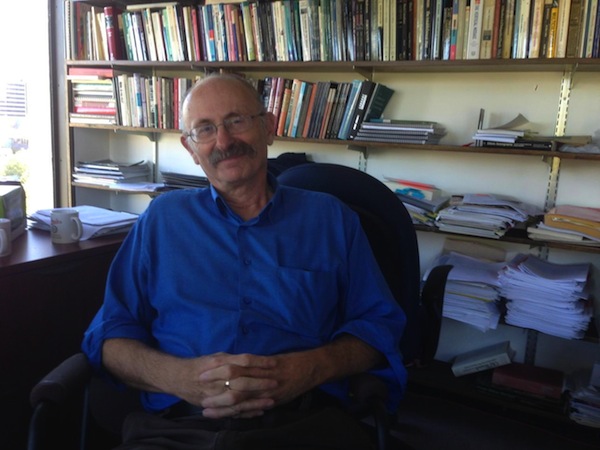
Bruce Brown is a Canadian and an Israeli. He made aliyah … a long time ago. He works in Israel’s high-tech sector by day and, in spurts, is a somewhat inspired writer by night. Brown is the winner of the 2019 AJPA Rockower Award for excellence in writing, and wrote the 1998 satire An Israeli is…. Brown reflects on life in Israel – political, social, economic and personal.
Format ImagePosted on January 13, 2023January 11, 2023Author Bruce BrownCategories IsraelTags cultural commentary, economics, governance, Israel, orthodoxy, politics

A first step to solutions?

Among other things, Hanukkah is about bringing light into the darkness. There is plenty of darkness in the world and a vast range of concerns calling for radiance.

Mainstream media seem to have taken the cue that Hanukkah is the moment to discuss the alarming and rising phenomenon of antisemitism. Time magazine declares: “Amid antisemitism, Hanukkah celebrations carry new weight.” USA Today explained a new tradition: “On Hanukkah, the ninth candle reflects how anyone can fight antisemitism by sharing truth.” Here in Canada, both Prime Minister Justin Trudeau and Opposition Leader Pierre Poilievre highlighted antisemitism in their annual Hanukkah messages. Expect to see similar expressions of concern in a few days, as the end-of-2022 reflections on the good and bad of the year just passed and hopes for the fresh new year fill pages and airtime during the slow news days of the winter holidays.

We are not complaining. This issue needs thorough and ongoing coverage. It just seems, somehow, that writing and talking about what is often called the world’s oldest bigotry lacks new insights. Many agree that this is a problem. Few, though, have solutions beyond platitudes. 

Finding innovative ways to think and talk about “the world’s oldest” anything is, by definition, a challenge. Some of the greatest scholars in the world have studied the problem, vast networks of activist organizations and Jewish communal agencies devote themselves to defeating it, and still it grows. If we had the definitive explanation or the silver bullet to solve it, you would not be reading it here – we would be sharing our wisdom from the dais of the Nobel Prize ceremony and as the lead story on the world’s media. Undaunted, a few thoughts:

The very phrase “antisemitism” may be problematic. The term was invented in the late 1800s by a proud antisemite to describe his orientation. But while there is a great deal of conscious and visible antisemitism in the world today that rightly raises alarms, there has always been an equally, perhaps more, worrying phenomenon in the form of unconscious bias about Jews that permeates many societies and individuals. This is more insidious and, therefore, more difficult to challenge. 

It is worth noting that antisemitism is often most prevalent where no or few Jews exist, making it easier to project onto a largely imaginary enemy the fears and hatreds carried by the individual or the society. Similarly, we see a projection of Jewishness onto any unpopular phenomenon, an example being the “Great Replacement” theory, a paranoid fantasy in which whatever the perpetrator despises (in this case immigration) is cast as a problem with Jewish roots.

Both of these phenomena touch on what we suspect is the nut of antisemitism: it is a problem that affects Jews but it is not a problem of Jews. That is, if Jews did not exist, the antisemites would have to invent them – which is, in essence, precisely what they have done with the caricatured “Jew” that is demonized by antisemites. 

This understanding, of course, does nothing to resolve the problem. And, again, a problem known as “the world’s oldest hatred” is not going to be solved in one generation with one easy antidote. It is encouraging, though, to see the range of responses to the problem, from more in-depth coverage in mainstream media to the statements of top leaders in Canada, as well as in the United States, where a major presidential effort against antisemitism is being led by Doug Emhoff, the second gentleman of the United States, who recently led a roundtable of leading thinkers, and in a host of other undertakings worldwide.

As is said in a different context, the first step to recovery is admitting you have a problem. As a society, we have a consensus that antisemitism is a growing problem. As we approach 2023, we hope those thoughts will turn to even more action in confronting this confounding blight. 

Posted on December 23, 2022December 21, 2022Author The Editorial BoardCategories From the JITags antisemitism, Hanukkah, history, politics

Rail against extremism

Coalition negotiations continue in Israel after the fifth election in less than four years. And the signs are ominous for the future of Israeli democracy, for women’s equality, for religious pluralism, for LGBTQ+ rights, for peace and for coexistence.

Bezalel Smotrich, head of the Religious Zionist party, will be a major player in the new government, as will the leaders of two parties with whom he ran in an electoral slate: Itamar Ben Gvir, head of Otzma Yehudit (Jewish Power), and Avi Maoz, head of the religious extremist faction Noam.

Smotrich will apparently have unprecedented influence over the growth and governance of West Bank settlements. The explosive issue of “who is a Jew” – which determines eligibility for immigration under the Law of Return – will fall in part to Maoz, who wants to delegitimize non-Orthodox conversions and narrow the parameters under which an immigrant is permitted under the Law of Return from grandchildren of Jews to those born to Jewish parents. In addition to determining Jewish identity, Maoz has a preoccupation with homosexuality and has promised to ban Pride Parades and  oppose equality for gay Israelis. (Netanyahu has said he won’t allow Maoz to diminish gay rights.) Netanyahu has promised to hand Maoz control over a NIS 2 billion budget (about $790 million CDN) for “external programming” in public schools.

Yair Lapid, the outgoing prime minister, railed against this allocation.

“If we don’t stop them, Avi Maoz and his unenlightened gang will put unenlightened, racist, extremist, misogynistic and anti-LGBT content into our children’s schools,” said Lapid.

Ben Gvir and his party call for the expulsion of Arabs they deem disloyal and he has suggested that the anti-Zionist religious sect Neturei Karta should be put “on a train.” Ben Gvir’s party advocates the absorption of the West Bank which, by necessity, would eliminate either the Jewish identity or the democratic nature of Israel – and we do not need to speculate on which Ben Gvir would be willing to discard.

The three horsemen have endorsed banning public transit and sports on Shabbat, eliminating a department that promotes women in the military, and snatching the power to appoint judges from a nonpartisan panel and putting it in the hands of politicians, in addition to a host of other far-right policy fetishes.

“This Israel is not going to be governed by talmudic law,” Netanyahu said in defence after attacks on his coalition agreements. This is precisely the direction his partners are headed, however, and the very fact that he was moved to make such a disclaimer is proof of how dangerously close the new government will be to crossing a religious-secular divide that the pioneers of the state consciously erected.

The jigsaw puzzle parliament is not Netanyahu’s fault – any prime minister was going to have to cobble together a mismatched majority. What is Netanyahu’s fault is the particularly rancid aspects of the coalition. Seeing the unlikelihood of the most hateful and divisive minor parties reaching the electoral threshold in the previous election cycle, Netanyahu personally intervened to urge them to band together to get into the Knesset. An historical precedent is worth reiterating: when the fundamentalist Rabbi Meir Kahane was elected to the Knesset in 1984, the entire chamber stood up and walked out when he spoke. By contrast, when Kahane’s ideological descendants were facing electoral oblivion in 2020, Netanyahu stepped in to help ensure their success. There are many cases in Israel (and other divided parliamentary democracies) where the extremist tail wags the more mainstream dog. In this case, to mix canine metaphors, the ostensibly mainstream leader laid down with dogs and woke up with fleas.

The controversies in Israel have already swept across the ocean. Diaspora Jewish communities are aflame in concern and condemnation. The longstanding divides between Israeli and Diaspora Jews are already being exacerbated – and the new government hasn’t even been sworn in.

The most stalwart voices of Diaspora Zionism are issuing warnings. Abe Foxman, longtime head of the Anti-Defamation League, came out of retirement to harrumph that his support for Israel is not unconditional. The usual suspects in the anti-Israel camp are crowing that their prognostications have proved spot-on. But, more worrying, are middle-of-the-road Jewish and non-Jewish voices who are looking at developments and wondering what it is they defend when they defend Israel. The multi-partisan support Israel has largely enjoyed in the United States, Canada and some other places will be further challenged by Israel’s nationalist, anti-pluralist and generally extremist policies.

In this space, we have repeatedly said that it is up to Israelis alone to determine what defence strategies are necessary to preserve life and limb against terrorist and other threats in Israel. It is Israelis who put their lives and the lives of their children on the line in national defence.

That exclusivity does not extend to policies like teaching homophobia in schools or limiting the role of women in the military – and it certainly doesn’t extend to policies, like the Law of Return, that directly affect Diaspora Jews.

People who care about the pluralist, democratic, inclusive Israel that was dreamed of and built by generations who came before us have a right – an obligation, in fact – to rail against what appears to be on the horizon for the country we care so deeply about, are invested in so much, and count on for Jewish safety and survival.

Posted on December 9, 2022December 7, 2022Author The Editorial BoardCategories From the JITags coalition, democracy, Diaspora, human rights, Israel, Netanyahu, politics, theocracy

Posts pagination

Previous page Page 1 … Page 12 Page 13 Page 14 … Page 36 Next page
Proudly powered by WordPress