Skip to content

  • Home
  • Subscribe / donate
  • Events calendar
  • News
    • Local
    • National
    • Israel
    • World
    • עניין בחדשות
      A roundup of news in Canada and further afield, in Hebrew.
  • Opinion
    • From the JI
    • Op-Ed
  • Arts & Culture
    • Performing Arts
    • Music
    • Books
    • Visual Arts
    • TV & Film
  • Life
    • Celebrating the Holidays
    • Travel
    • The Daily Snooze
      Cartoons by Jacob Samuel
    • Mystery Photo
      Help the JI and JMABC fill in the gaps in our archives.
  • Community Links
    • Organizations, Etc.
    • Other News Sources & Blogs
    • Business Directory
  • FAQ
  • JI Chai Celebration
  • JI@88! video
image - Weizmann Canada Physics Tournament 2025
image - The CJN - Visit Us Banner - 300x600 - 101625

Recent Posts

  • היהירות היא אחד האויבים הגדולים ביותר של ישראל
  • Vrba monument is unveiled
  • Music to build bridges
  • A better future possible
  • Anne Frank exhibit on now
  • Human rights in sport
  • Telling the story of an icon
  • Crawl bigger than ever
  • JCC Maccabi in Toronto
  • A way to meet fellow Jews
  • Time to include
  • Add Jewish joy to the mix
  • Reminder of humanity’s light
  • From the archives … editorials
  • Year-round holiday recipes
  • מדוע עזבתי את ישראל ואינני חושב לחזור ארצה
  • OJC hosts Oct. 7 memorial
  • A journey beyond self
  • Antisemitism a problem
  • Young man is missed
  • Orr action sparks complaint
  • Prison sentence for hate
  • Etgar Keret comes to Vancouver
  • New fall lecture series
  • Series explores music
  • Doc on Zapiro screens Nov. 6
  • Joy of shared existence
  • Community milestones … October 2025
  • MAID vs Jewish values
  • Cheshvan a great month, too
  • Bull, bear or bubble?
  • From the archives … a coin, etc.
  • מדוע האנטישמיות הולכת וגואה בעולם
  • New bio gives Vrba his due
  • Joy brighter than ever
  • When approaches differ

Archives

Follow @JewishIndie

Tag: NCJW

NCJWC Vancouver plans, learns, noshes and welcomes newcomers

NCJWC Vancouver plans, learns, noshes and welcomes newcomers

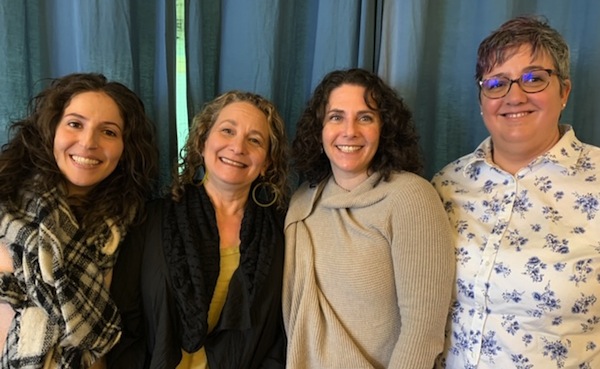
Books for Kids volunteers at NCJWC Vancouver’s 96th AGM, left to right: Jodi Seidelman, Rhea Lazar, Gail Gumprich and Tanya Hebron. (photo from NCJWC Vancouver)

On International Women’s Day, March 8, National Council of Jewish Women of Canada, Vancouver section, planned, learned, noshed and welcomed newcomers.

Sunshine was all around the room at NCJWC Vancouver’s 96th annual general meeting, which took place at the Jewish Community Centre of Greater Vancouver in the Snider Senior Lounge.

Members were welcomed by president Catherine (Cate) Stoller and the new board was installed by Shirley Hyman, Limmud Vancouver program chair and longtime volunteer for NCJWC.

The new executive board is Stoller (president), Fran Ritch (treasurer), Jackie Krystal (co-treasurer), Linda Arato (recording secretary), Anne Lerner (vice-president, social action), Ricki Mintz (vice-president, engagement), Marnie Weinstein (vice-president, marketing and administration) and Rochelle Garfinkel (member-at-large). Appointed board members are Rhea Lazar (chair, Books for Kids program) and Sandy Hazan, Sarah Morel Shaffer and Jane Stoller (co-chairs, Operation Dressup).

After the AGM, Anna-Mae Wiesenthal, a Jewish history teacher at King David High School and a PhD student in Holocaust studies, gave a presentation on the “othering” of indigenous peoples in Canada during the settler colonial period and of Jews in Germany during the Holocaust.

Stressing the strong connection between NCJWC’s social action in the Jewish and non-Jewish communities in British Columbia, council’s advocacy nationally against antisemitism, its support for family services in Israel and its international role supporting human rights, Cate Stoller cheered the passing of the baton between generations. For more information about the Vancouver section of NCJWC, visit ncjwvancouver.org.

Format ImagePosted on March 27, 2020March 26, 2020Author NCJWC VancouverCategories LocalTags AGM, National Council of Jewish Women, NCJW, tikkun olam
NCJW hosts Govender

NCJW hosts Govender

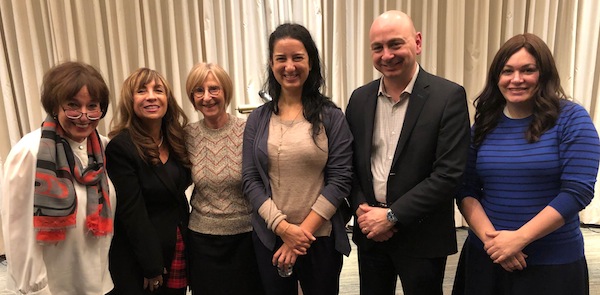
Left to right: Debby Altow, NCJW Vancouver past president; Cate Stoller, NCJW Vancouver president; Shelley Rivkin, vice-president, Jewish Federation of Greater Vancouver; Kasari Govender, B.C. human rights commissioner; Ezra Shanken, Jewish Federation executive director; and Etti Goldman, Centre for Israel and Jewish Affairs. (photo by Rochelle Garfinkel)

Newly installed B.C. Commissioner of Human Rights Kasari Govender spoke to members and guests of the National Council of Jewish Women of Canada on Nov. 21 at the Jewish Community Centre of Greater Vancouver. Govender discussed a wide range of topics, including the connections her office will be making with similar bodies across Canada, her focus on the systemic issues affecting human rights in our province, and her welcoming of ideas for implementing forward-thinking and creative approaches to human rights issues. Govender’s presentation echoed the values and focus of NCJWC Vancouver section, which has a long tradition of innovation and creativity in the sphere of social action. For more information about upcoming events and programs, visit ncjwvancouver.org.

Format ImagePosted on December 13, 2019December 12, 2019Author NCJW VancouverCategories LocalTags British Columbia, human rights, Kasari Govender, National Council of Jewish Women, NCJW
NCJW Vancouver fall update

NCJW Vancouver fall update

National Council of Jewish Women of Canada, Vancouver section, members. Seated, left to right, are Lisa Boroditsky, Jill Kipnis and Sandi Hazan Switzer. Standing are Heather Sirlin, left, and Jane Stoller. (photo from NCJWC Vancouver)

Members of National Council of Jewish Women of Canada, Vancouver section, have been busy close to home, not only supporting various initiatives for disadvantaged children in local schools – Books for Kids, HIPPY, Operation Dressup, and hygiene and nutrition school programs – but learning more about the Jewish history of the city.

photo - Newcomers to Vancouver, Guillermo and Debby Castillo from Mexico, who joined the NCJWC walk Sunday morning
Newcomers to Vancouver, Guillermo and Debby Castillo from Mexico, who joined the NCJWC walk Sunday morning. (photo from NCJWC Vancouver)

On Sept. 8, more than 25 people participated in a sold-out walk through the “old city” of Vancouver, organized by Lisa Boroditsky, Jane Stoller and Sandi Hazan Switzer. Participants were enthralled by the stories of Harry Hammer, by the geographical and architectural details, to say nothing of the oral history of horse-drawn carts, family stores and tales of running to the bus for cheder.

NCJWC members also worked nationally, supporting successful efforts by CIJA (Center for Israel and Jewish Affairs) to get Parliament to adopt the International Holocaust Remembrance Alliance’s definition of antisemitism; and internationally, issuing a call to action to participate in the campaign to free human rights lawyer Nasrin Sotoudeh, who has been imprisoned in Iran’s Evin prison since June 2018.

In May of this year, Prof. Irwin Cotler, chair of the Raoul Wallenberg Institute in Montreal, addressed the executive of the International Council of Jewish Women on the issue of human rights. He made a compelling case for participation in the campaign to free Sotoudeh, sentenced to 38 years and 148 lashes in Iran because of her work defending women’s rights. She has been imprisoned four times since 2010.

Freedom of expression and peaceful assembly are integral to ensuring rule of law and the functions of democracy; they are fundamental principles clearly defined in international law and they are the inherent right of all people. These two democratic themes were betrayed in 2018 when, as part of peaceful protests, some women removed their hijabs and waved them like flags and then were prosecuted for this behaviour. For defending these women, Sotoudeh has been unjustly imprisoned.

The International Council of Jewish Women executive voted to support Cotler’s recommendation and Debby Altow, vice-president for Canada on this executive, circulated a backgrounder and sample letter of protest for 33 affiliates worldwide. Both email and postal addresses for United Nations Secretary-General António Guterres and UN Commissioner Michelle Bachelet, were distributed, making such protest letters easier to submit. For more about Sotoudeh and NCJW Vancouver section, visit ncjwvancouver.org.

Format ImagePosted on September 20, 2019September 17, 2019Author NCJW VancouverCategories LocalTags history, human rights, Nasrin Sotoudeh, NCJW, philanthropy, tikkun olam, volunteering, women
Community milestones … a special visit, a big birthday, a cycling win and a wedding

Community milestones … a special visit, a big birthday, a cycling win and a wedding

Left to right are Shirley Barnett, Michael Schwartz, Sam Sullivan, Julian Prieto, Margaret Sutherland and Alysa Routtenberg. (photo from Jewish Museum and Archives of British Columbia)

The Jewish Museum and Archives of British Columbia was pleased to welcome Sam Sullivan, MLA for Vancouver-False Creek, for a tour of the B.C. Jewish Community Archives on Aug. 15, 2019. Archivist Alysa Routtenberg and director of community engagement Michael Schwartz shared highlights of the archival collection and explained how JMABC staff and volunteers work to preserve and share these important documents.

Among his many accomplishments, Sullivan is a former mayor of Vancouver and the founder of Transcribimus, an online service dedicated to transcribing early Vancouver city council meeting minutes and publishing them online. Transcribimus was an essential resource in the JMABC’s efforts to restore the Jewish section of Mountain View Cemetery in 2013-2015, an initiative led by former JMABC board member Shirley Barnett.

***

President Cate Stoller gives an overview of the year.
photo - Jane Stoller reports on Operation Dress-Up
Jane Stoller reports on Operation Dress-Up.
photo - Vancouver musician Babe Coal entertains
Vancouver musician Babe Coal entertains (photos from NCJW Vancouver)

National Council of Jewish Women of Canada celebrated its 95th year in Vancouver with a birthday party June 4, 2019, at the Vancouver Lawn Tennis and Badminton Club.

* * *

photo - Ben Etkin-Goulet
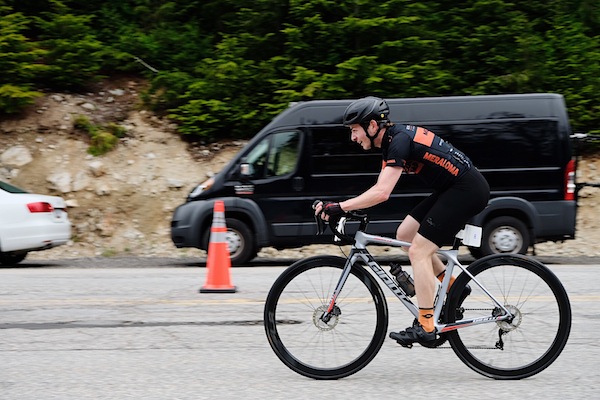
Ben Etkin-Goulet (photo by Cheralyn Chok)

Ben Etkin-Goulet beat all the other cyclists in his category at the GranFondo Axel Merckx Okanagan on July 14. The 24-year-old Vancouverite completed the 92-kilometre Mediofondo in two hours and 30 minutes, beating out hundreds of competitors. It was only his second competitive race.

“I’ve been commuting for as long as I can remember,” said Etkin-Goulet, “but I started cycling more as a sport in 2016 and I’ve been ramping up since then. This last year was my first year training throughout the winter.”

Etkin-Goulet graduated last year with a degree in commerce from the University of British Columbia and works in data analytics at Boeing. He is the son of Fabienne Goulet and Alan Etkin and grandson of Leonor Etkin.

* * *

photo - Newlyweds Jaclyn and Alex
Newlyweds Jaclyn and Alex

Parents Cyndi and Max Mintzberg and Ricki and Mark Kahn and grandparents Evelyn, Gloria and Irwin are delighted to celebrate the marriage of Jaclyn and Alex.


Format ImagePosted on August 30, 2019August 29, 2019Author Community members/organizationsCategories LocalTags Alysa Routtenberg, Babe Coal, Ben Etkin-Goulet, Cate Stoller, Jane Stoller, Julian Prieto, Kahn, Margaret Sutherland, Michael Schwartz, Mintzberg, NCJW, Sam Sullivan, Shirley Barnett
Trying to make access equal

Trying to make access equal

Dr. Cheryl Rockman-Greenberg (photo from Rockman-Greenberg)

In the 1970s, when Dr. Cheryl Rockman-Greenberg was eyeing the budding field of genetics as a career, she had to become a pediatric doctor first. Now, Rockman-Greenberg counts her clinical background as a blessing, one that, today, geneticists no longer require.

“Having a strong background in clinical medicine certainly always helped me in my career, because the kind of genetics I was always interested in was in rare metabolic diseases,” said Rockman-Greenberg. “These are diseases often caused by enzyme deficiencies that go by very elaborate names. Having a good foundation in clinical medicine through pediatrics certainly helped me.”

Rockman-Greenberg, who lives in Winnipeg, was invited to speak at the city’s Congregation Shaarey Zedek Sisterhood Interfaith Luncheon on April 30.

“I learned that the luncheon was spearheaded through the sisterhood in many ways to promote information sharing between the faiths,” she said, noting that a purpose of the event is education and “to look at how we can build bridges between people of different faiths and not build walls.”

“From a global perspective,” she said, “I think it fits the themes of the interfaith luncheon. And, from a Jewish perspective, I’ve certainly been involved over the years, particularly with the National Council of Jewish Women, of increasing awareness of the importance of genes for health, and bringing together some of the advocacy groups in rare genetic disorders.

“I helped the National Council put out a brochure on carrier testing on new genetic disorders in the Ashkenazi Jewish population that has been extremely well-received worldwide. This information is always evolving.”

At the luncheon, Rockman-Greenberg was planning to discuss, among other things, Bill S-201, also known as the Genetic Non-Discrimination Act, which passed into law in Canada in 2017, though it is still being challenged by insurance companies in Quebec.

“This is a remarkable act in the sense that it does protect Canadians from the use of genetic test results outside of medical care and medical research,” Rockman-Greenberg told the Independent. “In other words, genetic test results do not have to be disclosed to insurance companies or employers. We’re one of many countries who have such legislation in place, and many people here have worked for years and years lobbying for similar legislation for Canada.”

Methods of genetic testing continue to advance, said Rockman-Greenberg. Tests that were nonexistent or very complicated to administer as recently as two decades ago can now be done quickly and inexpensively.

“The evolution has dramatically changed over the past 10 years, particularly in the sense that the techniques we use to diagnose genetic disease have dramatically changed – from studying one gene at a time, to being able to sequence the entire genome of an individual,” she explained.

When Rockman-Greenberg refers to “new genetics,” she is referring to the ability to offer state-of-the-art, revolutionary genetic testing that was not possible just 10 years ago. It is this access that Rockman-Greenberg is lobbying for now.

“Everybody doesn’t have the same access to the testing in Canada,” she said. “It’s certainly not uniform from province to province or within provinces. So, many people are very committed to ensuring there are strategies in place to promote fairness.

“Notwithstanding that, the legislation is going to protect people against disclosing information that is already in place. I think we are ahead of the game because we have this in place. But, we are not ahead of the game in making sure people are going to have access to new diagnostic testing and new therapeutics in a way that’s going to be equal across the board.”

Rockman-Greenberg’s focus on rare metabolic diseases means that she has witnessed firsthand the struggles to get specialty drugs approved through a system focused on the big diseases, such as diabetes and cancer.

“You may get a new drug for diabetes that will be approved and available for patients very quickly, whereas some of the new drugs for other diseases I treat can take years and years before they go through the approval process,” she said.

Rockman-Greenberg thought that the topic was an appropriate one for an interfaith gathering, “as everybody having the same chance to be successful is very important to me. I work with families and patient support groups to help remove barriers and help people feel empowered.”

She said, “There are many challenges in dealing with rare diseases and I try to work both sides: the patient side, as well as advocate for changes at the government level, to make sure there is fairness in access to new therapies.”

Rebeca Kuropatwa is a Winnipeg freelance writer.

Format ImagePosted on April 19, 2019April 17, 2019Author Rebeca KuropatwaCategories NationalTags Cheryl Rockman-Greenberg, equality, genetics, health, human rights, interfaith, law, NCJW, Shaarey Zedek, Winnipeg
Community milestones this February

Community milestones this February

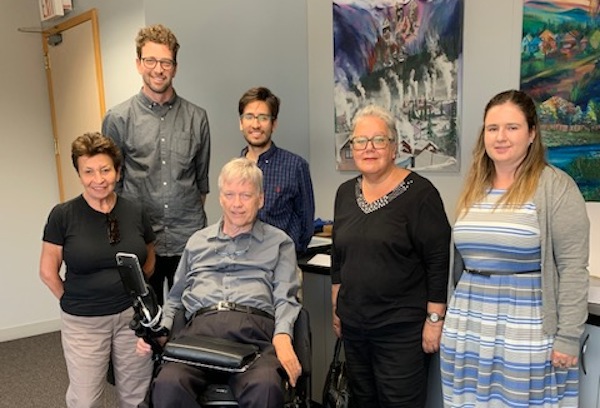
Left to right, back row, are Rory Richards, Kasimir Kish, Gord Kushner, Sarah Ann Chisholm (Jewish Family Services liaison), Daniel Bar Dayan, Jeremy Berger and Anat Gogo. In the front, left to right, are Rhonda Sacks, Marcela Manes, Shelley Karrel, Selina Robinson (guest speaker at the recent AGM), Alice Sundberg and Eric Fefer. (photo from Tikva Housing)

Tikva Housing had its annual general meeting Dec. 13, 2018. Two new directors were elected at the AGM, and another has joined since, to be appointed at the next board meeting.

The new directors elected in December were Jeremy Berger, a commercial property manager with Porte Realty, and Rhonda Sacks, a realtor with Sutton Group. Both have demonstrated a keen interest in Tikva’s work and have been actively engaged since joining. The new director to be appointed at the Feb. 28 board meeting is Rory Richards, who brings marketing and communications expertise, as well as strong links in the Jewish community.

Continuing board members are Shelley Karrel (chair), Gord Kushner (treasurer), Heather Sirlin (secretary) and directors-at-large Dan Granirer, Marcela Manes, Kasimir Kish and Mike Grudman.

Alice Sundberg, Tikva Housing’s director of operations and housing development, describes the Tikva board as a dynamic group of professionals who share a passion for providing affordable housing in an expensive region. In a meeting last October, they made a plan for Tikva’s next three years. The key strategic goals are engaged and committed board members and active committees; an endowment fund to provide stable and predictable funding for the rent-subsidy program; an expanded housing portfolio; closer ties with other Jewish nonprofit housing providers; and adequate human resources to manage all these goals.

Housing administrator Anat Gogo noted that the demand for rent subsidies is constant. Currently, Tikva is assisting approximately 30 families to be able to stay where they are, without worry of eviction for failure to pay their rent. For more information or to get involved with Tikva, contact the office at 604-998-4582.

***

photo - Tanya Paz
Tanya Paz (photo by Belle Ancell)

National Council of Jewish Women of Canada, Vancouver, welcomes Tanya Paz as executive director. Paz volunteered for NCJWC in the 1990s, subsequently served on the board of directors and was Council’s liaison to Canadian Jewish Congress (now Centre for Israel and Jewish Affairs).

Both Paz’s background as development director for the first car-sharing organization in British Columbia (Modo) and her involvement with the Vancouver Jewish Film Festival and other organizations, make her a valuable addition to the community of volunteers that is NCJWC. She also brings a wealth of experience in municipal affairs, in environmental initiatives and in social activism. And her expertise in community development and her commitment to women’s and children’s issues ensure a strategic approach to the goals of Council.

Working with the board of directors, Paz will help bring the goals of NCJWC – advocacy, education and social action – to both the Jewish and general communities throughout the region, with a focus on women and children experiencing poverty.

***

Nina Krieger, executive director of the Vancouver Holocaust Education Centre, is among those who have been appointed to the National Expert Committee on Countering Radicalization to Violence.

The Canada Centre was officially launched in 2017. Located at Public Safety Canada headquarters in Ottawa, its work includes the National Strategy on Countering Radicalization to Violence and the role of the expert committee is to help the centre meet the strategy’s three priorities: building, sharing and using knowledge; addressing radicalization to violence in the online space; and supporting interventions.

Krieger, who previously was education director and curator at the VHEC, is highly regarded for developing educational programs and exhibits that challenge audiences to probe the difficult historical, cultural and ethical issues raised by the Holocaust. She is also a member of the Canadian delegation to the International Holocaust Remembrance Alliance and past chair of the Memorials and Museums Working Group.

Joining Krieger on the expert committee are Dr. Ghayda Hassan (co-chair), a clinical psychologist and professor of clinical psychology at the Université du Québec à Montréal: Peter John M. Sloly (co-chair), a former Toronto police service deputy chief and currently a partner at Deloitte Canada; Bob Rae, a professor of public policy at both the Munk School and Victoria College at the University of Toronto, who also serves as senior counsel at Olthuis Kleer Townshend LLP; Dr. Jaspreet Khangura, an emergency physician at Royal Alexandra Hospital and Northeast Community Health Centre in Edmonton; Dillon Black, a gender-nonconforming feminist anti-violence and LGBTQ+ rights advocate and current PhD student with the eQuality Project in the department of criminology at the University of Ottawa; Max FineDay, executive director of Canadian Roots Exchange, an organization that builds bridges between indigenous and non-indigenous youth in Canada, among other things; Rizwan Mohammad, a Canadian Muslim civic engagement coordinator; Irfan Chaudhry, a hate crimes researcher and the director of the Office of Human Rights, Diversity and Equity at MacEwan University; and Dr. Shelly Whitman, executive director of the Roméo Dallaire Child Soldiers Initiative, who is considered a subject matter expert on the issue of child soldiers.

***

photo - Ten Bnei Menashe immigrants to Israel celebrated their bat mitzvah on Jan. 28
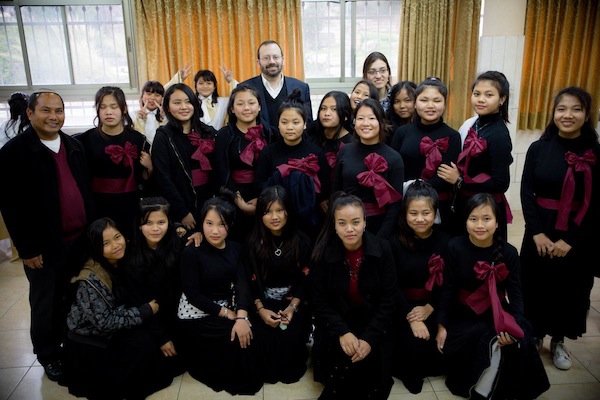
Ten Bnei Menashe immigrants to Israel celebrated their bat mitzvah on Jan. 28. (photo from Shavei Israel/Laura Ben-David)

On Jan. 28, 10 recent Bnei Menashe immigrants brought on aliyah from India by Shavei Israel, celebrated their bat mitzvah at a gathering of family and friends hosted by Girls Town Jerusalem, where they are enrolled as students.

“We were delighted to attend this very special and moving bat mitzvah celebration, which symbolizes the right of passage that the girls and their families have undergone in returning to the Jewish people,” said Shavei Israel founder and chair Michael Freund.

“We are determined to continue with our efforts until all the remaining 7,000 Bnei Menashe still in India are able to return to Zion,” he added.

The Bnei Menashe are descendants of the tribe of Manasseh, one of the Ten Lost Tribes exiled from the Land of Israel more than 2,700 years ago by the Assyrian Empire. So far, some 4,000 Bnei Menashe have made aliyah with Shavei Israel over the past 15 years, including more than 450 last year.

Format ImagePosted on February 22, 2019February 21, 2019Author Community members/organizationsCategories LocalTags Bnei Menashe, Girls Town Jerusalem, National Council of Jewish Women of Canada, NCJW, Nina Krieger, Shavei Israel, Tanya Paz, Tikva Housing, Vancouver Holocaust Education Centre, VHEC
Organ donation awareness

Organ donation awareness

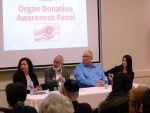
Left to right are panelists at a recent National Council of Jewish Women panel on organ transplants: Dr. Aviva Goldberg, Rabbi Yossi Benarroch, Marshall Miller and Na’ama Miller. (photo from NCJW)

On Dec. 11, the Winnipeg section of National Council of Jewish Women (NCJW) held an organ donation awareness event, featuring community members Rabbi Yossi Benarroch, Dr. Aviva Goldberg, and husband (organ recipient) and wife (organ donor) Marshall and Na’ama Miller.

Benarroch spoke first, after a welcome from organizers and a video about organ donation (youtube.com/watch?v=5cfaAWTH5zM).

“The short of it is, basically, that Jewish law permits organ donations,” he said. “There’s no question about that. Of course, when we talk about law, law is complicated and there are lots of opinions. There’s an ideal in Judaism, which is one of those foundations, and it’s called ‘pikuach nefesh doche hakol’ … which basically means that, in Judaism, there’s nothing more important than saving a life.

“I’m a very observant Jew and I keep kosher,” he said, “but if I had to eat something that wasn’t kosher – pork or whatever – in order to save my life, then Jewish law says you’re obligated to do that.”

Benarroch said it is written that, if someone saves a life, it is as if they have saved the entire world. Furthermore, he said, we are called to not stand idly by if another person is suffering. “We are obligated to intervene and actually obligated to help that individual,” he said.

Marshall Miller, who was diagnosed with progressive kidney disease more than 25 years ago, eventually required replacement therapy.

“Slowly, over time, my kidney failure began to get worse and worse,” he shared. “The disease progressed to the point where, a few years back, my GP at the time said, ‘Marshall, you’re now at the point where you have to go see a specialist because I can’t do anything more for you here … you need an expert to deal with your situation.’

“Everybody who suffers from kidney disease understands that, what kidneys do, among many things, is purify your blood. When your blood isn’t being purified properly, you can start to feel kind of lousy. I think my family can attest to the fact that I was starting to feel lousy. I think my whole family suffered along as I did, as I got sicker and sicker.”

When his kidney function was down to less than 10%, the specialist started talking seriously about replacement therapy. This involved dialysis three times a week until a matching donor could be found.

During the search for a donor, Na’ama Miller decided to find out if she might be able to help other people in her husband’s situation. As it turned out, she was a match for her husband.

“We were told it was a one hundred million shot,” she said. “And so, we were next faced with a bit of a dilemma … because it was scary for the kids. But Samantha and Maya were very much in favour of it, because they didn’t want me to be miserable anymore.”

She said, “People ask me, how I could do this … if it was hard. I give everyone the same answer. It was a no-brainer, a very easy decision for me. As Marshall said … we were all suffering along with him.”

“It’s worth it. You saved a life,” her husband added. “We hope this event here – even if only one more person signs up … hopefully, more and more people will choose to do it among the Jewish community after hearing the story.”

After the Millers spoke, a second video was screened, about a former Winnipegger who donated a kidney to save the life of a woman in California, who he has never met.

“Right now, in Canada, there are over 4,500 people waiting for an organ transplant – 4,500 Marshalls,” said Goldberg, who is the director of the Canadian Society of Transplantation and chair of the Transplant Manitoba kidney allocation review committee. “We don’t have 4,500 Na’amas. That’s why we need donors – both living and also deceased donors.

“That’s what we want to talk about today,” she said, “even if you don’t go forward to become a living donor, which is a really big deal. It’s not something that every person in this room is going to be able to do and that’s totally fair. But, there’s something that everyone in this room can do and that’s to sign up for organ donation after you’ve died – say that this is something I’d like to do, that you’d like to leave a legacy … you can save lives after you’ve died, either with organ or tissue donation. You can save lives by donating organs – heart, liver, lungs, pancreas, kidneys and even small bowel – but, also tissue donation.”

In some cases, people can donate their corneas to help improve the life of others. According to Goldberg, Manitoba, last year, was the fourth on the world list of most donors.

While Goldberg implored people to sign up as donors online, she further reminded them that talking to family about your willingness to be a donor is also very important – and not just immediate family, as they might be in the same car with you when you have a horrific accident, for example.

“The way that organ donation works in Canada, here, in Manitoba, is that after someone has died and they are potentially going to be an organ donor, their family is approached,” said Goldberg. “If you sign up for the registry, it’s a way of saying to your family, on the very worst day of their lives, that this is something your loved one wanted – wanted so much that they went to the registry, signed up, made that choice. It’s a hard discussion to have … [but] it’s so important to do.”

During the question-and-answer period, one attendee asked if there was an age limit for someone to donate an organ. The answer? “No.”

Another question was about the possibility of rejection and, to that, Marshall Miller shared his experience. “I suffered from a mild early rejection,” he said. “But, the ability to detect the rejection and be able to remedy it is incredible. They were able to treat me with medication instantaneously and, really, it was a non-issue for me. Even though there is a risk of rejection, it can easily be found if you attend your appointments and take your medication.”

For information on organ donation in British Columbia and to register, visit transplant.bc.ca.

Rebeca Kuropatwa is a Winnipeg freelance writer.

Format ImagePosted on January 11, 2019January 9, 2019Author Rebeca KuropatwaCategories NationalTags healthcare, Judaism, NCJW, organ donation
NCJWC Vancouver’s new board

NCJWC Vancouver’s new board

Left to right, National Council of Jewish Women of Canada Vancouver section’s 2018/19 board of directors Catherine Stoller (president), Linda Arato (secretary), Anne Lerner (social action chair), Rochelle Garfinkel (administration) and Debby Altow (past president) were installed by Shelagh Stoller, who gave a brief bio of each member and presented the traditional red rose. The 94th annual general meeting, which took place Oct. 14, confirmed members’ support of NCJWC’s advocacy at the United Nations, on Canada’s citizenship issues and against antisemitism here and abroad. Catherine Stoller reported on the programming for disadvantaged schools in Vancouver, which receives help from the B.C. Gaming Commission.

Format ImagePosted on October 26, 2018October 25, 2018Author NCJW VancouverCategories LocalTags National Council of Jewish Women, NCJW, tikkun olam, women
Celebrating a colleague

Celebrating a colleague

Left to right, are Sally Berry, Debby Altow, Judy Stern, Linda Arato and Shirley Hyman. (photo by Sharon Stern)

Judy Stern was honoured at a luncheon July 31 for her long service to National Council of Jewish Women of Canada, Vancouver section.

Stern was the office manager for NCJWC for more than 12 years. During that time, she fielded phone calls about the organization’s programs, organized callers for its annual fundraiser Friends and Angels, sent out thousands of tribute cards, edited the newsletter, connected with various communal agencies, shepherded the Books for Kids materials, communicated with NCJWC members old and new, and supported the longstanding program Operation Dressup. She was a valuable and cherished colleague and we wish her well.

The lunch at Shaughnessy Restaurant was attended by several past presidents of Vancouver section and other volunteers, including Debby Altow, Linda Arato, Sally Berry, Annette Chernin, Shirley Hyman, Anne Melul, Linda Shulman, Shelagh Stoller and current president Catherine Stoller.

Format ImagePosted on August 31, 2018August 29, 2018Author NCJWC VancouverCategories LocalTags Judy Stern, NCJW, tikkun olam, women
NCJW pays tribute to Poliakoff

NCJW pays tribute to Poliakoff

Left to right: former National Council of Jewish Women Vancouver section president Shirley Hyman; Gloria Hendin, tribute committee chair; Barbara Heller, longtime supporter of council; Marion Poliakoff, the guest of honour; Bonnie Gertsman, former Vancouver section president; Anne Melul, former Vancouver section membership chair; and Debby Altow, past president, Vancouver section. (photo by Joanne Emerman)

National Council of Jewish Women hosted a tea at Temple Sholom on Jan. 9 to celebrate Marion Poliakoff, a true Renaissance woman. At 94 years young, she continues to be an inspiration to council members past and present.

Poliakoff’s career and her personal life demonstrate the principles of NCJW: fostering multiculturalism, alleviating poverty among women and children, supporting family counseling in Israel through ALUMA, and cherishing music and family. Her commitment to clear and convincing communication has been a boon to many newsletter writers – and she continues to edit us closely.

Gloria Hendin, who chaired the event committee, welcomed everyone. Shelagh Stoller bought the gift for Poliakoff, which Shirley Hyman presented. Barbara Heller managed all the banner decorations, Bonnie Gertsman and Anne Melul organized the food, and Judy Stern greeted guests as they arrived. The entertainment came courtesy of Poliakoff’s daughter, Amy Poliakoff, who brought her flute from Boston. I delivered the tribute speech, which I share below.

Vancouver section president Catherine Stoller set the tone for the annual general meeting that followed the celebration. “Looking backward, we recall our ancestry. Looking forward, we confront our destiny,” she said. The board of directors was installed by Shanie Levin with those words ringing in their ears!

In preparing my remarks, I read Melul’s biographical notes on Poliakoff, Carol Weinstock’s article on NCJW in the Jewish Museum and Archives of British Columbia’s journal, The Scribe, and the book More Than Just Mrs.: Jewish Women’s Organizations in B.C., as well as the council’s cookbook. Of course, I also spoke with many council members who worked with Poliakoff, and reflected on my own personal experiences with her. With some minor editing, to reflect their publication after the event, my remarks follow.

Marion was born in the United States. Holding a bachelor’s from Simmons College in Massachusetts and a master’s in journalism from New York’s Columbia University, she married Mel Poliakoff in 1949, adopting Mel’s son Merrill at the same time. Although at first they were unable to live in Tenafly, N.J., because, as Jews, they could not buy a house there, nevertheless they did move there a few years later. She became the first Jew elected to public office, serving on the board of education.

In 1972, she moved to West Vancouver with her husband and their daughters Amy and Nan. They loved tennis, skiing and sailing. Sadly, Merrill and Nan are gone, but many of Marion’s family were able to join the council’s tribute.

When Marion met Bess Narod – Bess is from Ottawa; I knew her family back home – they went to an NCJW meeting, and that was the start of Marion’s connection with council. The first big item she worked on, the hearing screening project in schools, demonstrated council’s mission: identify a need, pilot a response, make it a success and turn it over to government. The Vancouver health department now runs it.

Marion also met Rita Weintraub, who became a lifelong friend. Together, they have worked to support the Isaac Waldman Jewish Public Library at the Jewish Community Centre of Greater Vancouver.

Meanwhile, Marion got another master’s degree – from the University of British Columbia’s School of Social Work – and, through a field placement at Britannia Community Centre, became interested in multicultural issues. Always the consummate writer, she contributed the Multicultural Corner column to the monthly newsletter of the B.C. Association of Social Workers; another column went into the Britannia newsletter, which was translated into Italian and Chinese.

The City of Vancouver grabbed Marion and she ran parenting groups for mothers in three community centres – using translators for Farsi, Chinese and Italian participants. In 1981, she received the Social Worker of the Year Award from the B.C. Association of Social Workers for her multicultural work.

I met her when I was the director of communications for the Canadian Cancer Society and she was a social worker at the B.C. Cancer Agency. I was working on breast cancer issues, with multicultural projects for Chinese and South Asian women. We found we had much in common.

Marion was also the one who called me every year to pay my NCJW dues, even though I was not an active volunteer in those years. She recruited me after I retired to join the board and, 13 years later, I’m still on it in one capacity or another.

In 1991, HIPPY (Home Instruction for Parents of Preschool Youngsters) was brought to Canada from Israel as a council initiative by Carol Slater. Ever alert to new connections, Marion linked Britannia, along with Simon Fraser University, to council as our community partners to launch the HIPPY project. She was intimately involved in establishing its work with immigrant mothers and their families. While its name has changed to the Mothers Matter Centre, HIPPY remains one of council’s programs, and Wazi Kapenda, its Western director, was in attendance at the tribute.

Marion’s volunteering extended to driving people to services at Congregation Har El, eventually donating her beloved baby grand piano to the shul, fundraising for the synagogue, and cooking and serving food weekly to needy and homeless people at Harvest House.

Later, she joined the North Shore Osteoporosis Society, organizing monthly speakers. I spoke at one gathering and there were more than 100 people attending – a not uncommon number!

Her commitment to ALUMA (formerly the Israel Family Counseling Agency) was, and continues to be, an inspiration. She fought for support for ALUMA in council, because the organization was dedicated to supporting people in Israel who could not afford professional counseling but who desperately needed it. And Judy Stern could always count on Marion to canvass for Friends and Angels, council’s only annual fundraiser.

Marion’s was a home where music was loved and valued, even after the piano was gone. She supported the Vancouver Symphony, the Vancouver Chamber Music Society and Music in the Morning. Music continues to be a tree of life for many of her family members. Her close friend Shirley Lecker is part of that tradition.

Do you see a thread unspooling here – with HIPPY, with anti-poverty issues, with a commitment to Jewish values, with a passion for family, with a professional eye for communication, with an abiding love of music? When I said Renaissance woman, the label is legitimate.

It is such an honour to acknowledge Marion for her work with council – and with many of us personally. It is beyond words. To simply say thank you is really inadequate. But, from the bottom of my heart, and from all of us, thank you, Marion.

Format ImagePosted on January 19, 2018January 17, 2018Author Debby AltowCategories LocalTags health, HIPPY, Marion Poliakoff, NCJW, tikkun olam, volunteering, women

Posts pagination

Previous page Page 1 Page 2 Page 3 Page 4 Next page
Proudly powered by WordPress