Skip to content
  • Home
  • Subscribe / donate
  • Events calendar
  • News
    • Local
    • National
    • Israel
    • World
    • עניין בחדשות
      A roundup of news in Canada and further afield, in Hebrew.
  • Opinion
    • From the JI
    • Op-Ed
  • Arts & Culture
    • Performing Arts
    • Music
    • Books
    • Visual Arts
    • TV & Film
  • Life
    • Celebrating the Holidays
    • Travel
    • The Daily Snooze
      Cartoons by Jacob Samuel
    • Mystery Photo
      Help the JI and JMABC fill in the gaps in our archives.
  • Community Links
    • Organizations, Etc.
    • Other News Sources & Blogs
    • Business Directory
  • FAQ
  • JI Chai Celebration
  • JI@88! video

Recent Posts

  • Sharing her testimony
  • Fall fight takes leap forward
  • The balancing of rights
  • Multiple Tony n’ Tina roles
  • Stories of trauma, resilience
  • Celebrate our culture
  • A responsibility to help
  • What wellness means at JCC
  • Together in mourning
  • Downhill after Trump?
  • Birth control even easier now
  • Eco-Sisters mentorship
  • Unexpected discoveries
  • Study’s results hopeful
  • Bad behaviour affects us all
  • Thankful for the police
  • UBC needs a wake-up call
  • Recalling a shining star
  • Sleep well …
  • BGU fosters startup culture
  • Photography and glass
  • Is it the end of an era?
  • Taking life a step at a time
  • Nakba exhibit biased
  • Film festival starts next week
  • Musical with heart and soul
  • Rabbi marks 13 years
  • Keeper of VTT’s history
  • Gala fêtes Infeld’s 20th
  • Building JWest together
  • Challah Mom comes to Vancouver
  • What to do about media bias
  • Education offers hope
  • Remembrance – a moral act
  • What makes us human
  • המלחמות של נתניהו וטראמפ

Archives

Follow @JewishIndie
image - The CJN - Visit Us Banner - 300x600 - 101625

Tag: NCJW

NCJW Canada is honoured

NCJW Canada is honoured

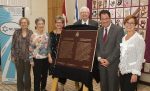
At the Oct. 23 ceremony for the unveiling of a plaque honouring National Council of Jewish Women of Canada’s 120 years of service are, from the left, Sharon Allentuck, Gloria Roden, Debbie Wasserman, Dr. Richard Alway, Councilor James Pasternak and Eva Karpati. (photo from NCJWC)

On Oct. 23, National Council of Jewish Women national president Debbie Wasserman accepted a plaque honouring the work of NCJW. It was from Parks Canada and the Historic Sites and Monuments Board of Canada and it was unveiled at the Toronto offices of NCJW Canada. The recognition came on the council’s 120th anniversary.

“NCJWC in Vancouver has an enviable track record of working with disadvantaged elementary schools, funding programs of nutrition, hygiene, cooking, farm visits and street safety,” NCJWC Vancouver’s Debby Altow told the Independent. “We have received heart-stopping letters of thanks from the kids and their teachers; they inspire us to do even more in our fight to alleviate poverty…. Our Operation Dressup delivers thousands of items of good clothing, plus shopping certificates for teens every year, and our Books for Kids program reaches into daycares, preschools, doctors’ offices and other sites…. We hope to expand these programs into other nearby communities.”

Altow said, “Vancouver section president Catherine Stoller is following in the footsteps of her mom, Sheilah, serving as president of the section for the past three years. Our section has been an integral part of the community for over 90 years, and the Heritage designation, while it rests in Toronto, really applies to every province where council has been active.”

Of the Oct. 23 event, Wasserman said, “The ceremony was very moving. We began by proceeding into the auditorium…. The Canadian flag was dominantly displayed and the plaque was draped. We all sang O Canada. The master of ceremonies then introduced all the dignitaries and all spoke about the importance of NCJWC over its 120-year history. The ceremony’s highlight was when we all came off the stage to unveil the plaque displayed on an easel.”

Wasserman and NCJWC Toronto president Eva Karpati unveiled the plaque. Ena Cord, immediate past president of the Toronto section, read the inscription in English and Dahlia Rusinek, a past Toronto section president, read it in French. There were many photos taken, and a reception followed.

“Parks Canada contacted us earlier this year to tell us that NCJWC was to be recognized as an organization of national significance to Canada, seeing that we were the first Jewish women’s organization in Canada,” explained Wasserman. “The plaque will be permanently installed at 44 St. George St. in Toronto, the former head office of NCJWC.”

Dignitaries at the ceremony included Eric Nielsen of Parks Canada (master of ceremonies), Dr. Richard Alway of the Historic Sites and Monuments Board of Canada, Toronto City Councilor James Pasternak (York Centre), NCJWC Toronto member and historian Gloria Roden, and Sharon Allentuck, NCJWC immediate past president and Winnipeg section member.

“As a passionate advocate for social justice and equality since 1897, the National Council of Jewish Women of Canada has forged an enduring legacy of community service across Canada,” Nielsen noted in his remarks. “It’s incredible to think that the council was founded right here in Toronto and has been growing steadily for over a century.

“The birth of the council came at a truly interesting time in Canadian history,” he continued. “During the late 19th century, urbanization, industrialization and immigration were causing social disruption in many cities across Canada. It was at this time that a pioneering group of Jewish women united to effect social change. Led by Meldola de Sola, wife of a distinguished Montreal rabbi, women of the Holy Blossom Synagogue in Toronto began meeting in private homes to study Genesis and the teachings of Judaism in preparation for beginning philanthropic activities in their communities.

“At the time of its founding in Toronto, the National Council of Jewish Women of Canada focused on supporting young girls and new immigrants. They provided shelter, training, and other forms of assistance, all while strengthening the Jewish community.”

Nielsen said that, through NCJW, Jewish women across the country “gained a voice in Canadian society and the women’s movement.”

The oldest Jewish women’s organization in Canada, NCJWC has evolved, said Nielsen, “to meet the changing needs of the most vulnerable in society.” And it “continues to work tirelessly to promote social justice, freedom, equality and tolerance at home. Equally concerned with the well-being of people outside of Canada, the council’s members have also collaborated with aid organizations, such as the Red Cross, to contribute to humanitarian efforts abroad.

“Thanks to their efforts, we are creating a rich mosaic portraying the greatest moments of our nation’s history. Future generations will better understand their history through this mosaic and, hopefully, better understand themselves and the values of our country.”

Nielsen congratulated NCJWC. “The council’s invaluable legacy,” he said, “is a source of inspiration for all who work to promote meaningful social change, at home and abroad.”

Noting that NCJWC “began in 1897 with 20 women studying and learning Bible,” Roden said the council “realized there was an urgent need to help immigrants arriving daily in Toronto. And so, by 1909, a place was needed for the growing group to expand their activities. Two rooms on Walton Street in the Ward were rented, but, by 1913, there was a move to new larger headquarters on McCaul Street.

“With the outbreak of the First World War,” she said, “young council members took an active part and McCaul Street was transformed into a Red Cross centre, providing hospital supplies and other necessities for wartime aid. In 1918, with the Spanish flu epidemic, council volunteers carried meals to 800 flu victims from our kosher kitchen and provided home nursing care.

“In 1919, council women became big sisters to children and working girls, and bought Fairview Cottage at Whitby Beach to provide these girls with an oasis for much-needed fresh air and sunshine. By 1937, council continued their involvement with the Jewish Camp Council to included Camp Camperdown near Orillia.”

The offices on St. George were “purchased with a modest down payment,” said Roden. “It was called Community House, with the Jewish community using the much-needed premises for a variety of activities. It operated classes, including cooking, sewing, journalism, language, dance and art. Sports teams were formed … [to help newcomers to Canada], a daycare centre, English classes, and even a legal storefront service was established. A club for handicapped girls was formed to teach sewing and social skills, and there were interpreters to translate for the newly arrived.

“The NCJW has continued with our motto of ‘Faith and Humanity,’ and the voluntary participation as our civic responsibility as citizens of our great country. We continue to study, educate ourselves and participate with pride.”

Rebeca Kuropatwa is a Winnipeg freelance writer.

Format ImagePosted on November 17, 2017November 15, 2017Author Rebeca KuropatwaCategories NationalTags National Council of Jewish Women of Canada, NCJW, tikkun olam, women
Helping out new immigrants

Helping out new immigrants

Sol and Shirley Kort (photo from Alisa Kort)

The Kort family – in an initiative led by sisters Beverley and Alisa – has established a scholarship in their parents’ names with the National Council of Jewish Women. The award will provide education funding to two newcomer women each year.

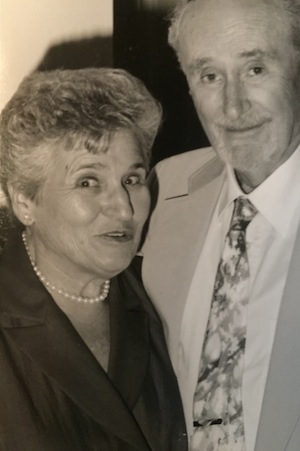
Beverley and Alisa’s parents, Shirley and Sol Kort, have both passed away. They met, said the sisters, in Shirley’s hometown of Edmonton at a Shabbat dinner event organized by the local Jewish community for the American Jewish soldiers stationed there – this included Detroit-native Sol, who was then in the U.S. army.

The couple moved to Vancouver in the 1940s and Sol started up the business Kent Chemicals with a fellow American who relocated to Vancouver.

Of Kent Chemicals, Beverley said, “He did that for many years, until the 1960s. Then, he sold his business and went into continuing education at UBC. On the side, he was leading and developing a lecture series called Search for Meaning, and more. He decided that, instead of being a chemist, he’d become an adult educator in the humanities.”

Sol was in his 40s when he changed career paths. In his new endeavour, he enjoyed connecting with people who were pushing the boundaries of understanding philosophy, science and psychology – people questioning the world.

Beverley recalled going to her father’s lectures, along with other kids, starting in her early teens. “I’d sometimes leave school and go to those lectures,” she said. “People came and stayed at our house. I was exposed to all sorts of interesting perspectives, like Buddhism and different types of spirituality, levels of consciousness, and ideas. I was already curious about human nature and this catapulted me onto the level of, ‘Oh, my God! Wow. What’s going on?’”

Meanwhile, Beverley’s mom, Shirley, was busy doing her own work, serving on the board of the Jewish Community Centre of Greater Vancouver for many years and being involved in National Council of Jewish Women (NCJW), among other pursuits. Later, Shirley helped form Shalom Vancouver, a welcoming service for newcomers to Vancouver.

“This was very important to her,” recalled Beverley. “People would describe her as one of the most welcoming, supportive people. When we did a special kind of presentation about my mom for the NCJW after she passed away, people got up and spoke about their relationship with her, especially young women who moved to Vancouver when she was quite involved in the council. They just found there wasn’t anything she wouldn’t do to help them get settled – connecting with people, coming to our house for dinner. Our whole family has this culture of, come for dinner, how can I help you connect, that kind of thing.”

Alisa added, “My mother was also on the board of the Volunteer Bureau of Canada and had been a president of the Vancouver chapter of the NCJW a number of times, [as well as being] involved in their mobile hearing testing project, HIPPY and Shalom Vancouver. My father was involved with the Vanier Institute of Canada and was director of humanities and science in continuing education at UBC.”

Alisa noted that one of her father’s good friends, author Ted Roszak, wrote of Sol that “he was ‘a bright, inquiring and caring educator who wanted to bring every leaping mind he could find to his school.’”

When Sol passed away, the Kort family established a fund in his name at the Isaac Waldman Jewish Public Library, as he was an avid reader. They also sponsored the Sol and Shirley Kort Author Series, the opening night of the Cherie Smith JCC Jewish Book Festival, for many years.

photo - Shirley and Sol Kort
Shirley and Sol Kort (photo from Alisa Kort)

“My mom, during her life with my dad, was always hosting events and having people come and speak, and dealt with the behind-the-scenes things, organizing and being social,” said Beverley. “For her, hosting the author series in her and my dad’s name was a nice continuation of that. We did that for many years. They would come to our house the night before. And, the author would come, and my mom would meet him and talk. We named it after both of them because we always wanted to do something for both of them together.”

When Shirley passed away, the family wanted to find a way to further commemorate both of their parents’ lives, and looked to the NCJW, even though Sol wasn’t a member of the council.

“He was like a feminist more than his own daughters were, and he was an educator and a mentor,” said Beverley. “He was always finding people who needed mentoring. We were hosts for a Bosnian family who we’re still good friends with. After retiring, they set up weekly sessions with him to talk about books. He led speaking series for seniors and was always looking for ways to teach.”

Among the NCJW initiatives that were important to Shirley was HIPPY (Home Instruction for Parents of Preschool Youngsters), said Beverley, and she talked about it “a lot during the last three years of her life, as she struggled with dementia. HIPPY is about mentoring women and furthering their education. We wanted to do something that would further education and make a difference in someone’s life – that’s why we chose the scholarship.”

The Shirley and Sol Kort scholarship provides $2,500 per year to two newcomer women toward their education.

“HIPPY is a way of keeping my parent’s memory alive and supporting something that represents the essence of what they found important in the world, which is welcoming people, furthering education, being supportive and being larger than the Jewish community,” said Beverley.

According to Alisa, her parents were interested in people, above all – they were passionate about education and in helping newcomers to the Jewish community and beyond. Beverley and Alisa also are inspired in what they do by their late grandmother, who informally adopted one of the young children who made their way to safety via the Kindertransport.

Regarding the HIPPY scholarship, Alisa said, “It seemed to embody all that our parents held dear and it also seemed very important to support women, particularly women with children struggling to find a new life in a new country after having to let go of so much of what made them who they are.”

The initial recipients of the award, said Alisa, “were both very highly motivated and articulate about their experiences as immigrant women and mothers in Canada, and how … being involved in HIPPY has factored into their journey and continues enriching their lives. They’re multicultural in background. One of the women intends to complete her bachelor of social work and the other wants to get her social work diploma.”

Past president of NCJW’s Vancouver chapter, Debbie Altow, said, “Shirley Kort inspired us all in council. Besides working to bring HIPPY to Canada, she led the way – she was the first in our membership to use a computer; she worked tirelessly to pilot a hearing testing program for preschoolers (a project taken over by Vancouver’s health department); she hosted so many meetings that daughter, Beverley, printed up a neat collection of her recipes; and she had family and friends all over Western Canada, especially in Edmonton and Winnipeg.

For more information about NCJW in Vancouver, visit ncjwvancouver.org.

Rebeca Kuropatwa is a Winnipeg freelance writer.

Format ImagePosted on September 1, 2017August 30, 2017Author Rebeca KuropatwaCategories LocalTags education, Kort, NCJW, tikkun olam, women
Korts fund education

Korts fund education

Sol and Shirley Kort (photo from Alisa Kort)

Catherine Stoller, president of the Vancouver section of the National Council of Jewish Women of Canada, announces the Shirley and Sol Kort Family Award to HIPPY, which will enable HIPPY home visitors to pursue higher education in an accredited program. The award, $5,000 annually for five years, will be divided between two qualified applicants, to be adjudicated by the HIPPY board of directors.

The HIPPY program, originating in Israel and now operating in many countries around the world, is dedicated to ensuring that immigrant and refugee women can achieve the training and education they need to support their families and create a better future. The Kort family thus continues the dedicated and creative work of Shirley Kort, who was a longtime member of NCJW, and one of the key supporters of establishing HIPPY here in Canada.

Both Shirley and Sol Kort were community activists, focusing largely on the immigrant community. They were equally committed to the role of education as the key to better lives for everyone.

NCJW of Canada will be celebrating its 120th birthday this year – the Vancouver section has a history of 96 years! NCJW’s commitment to education, service and social action is demonstrated locally, nationally and internationally. Its members have worked with immigrant and refugee agencies for decades and NCJW is proud to celebrate the Kort family’s dedication to these issues.

Format ImagePosted on March 10, 2017March 8, 2017Author NCJW VancouverCategories LocalTags HIPPY, NCJW, tikkun olam, women
Mystery photo … Jan. 27/17

Mystery photo … Jan. 27/17

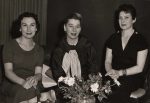
National Council of Jewish Women, 1955. (photo from JWB fonds, JMABC L.13956)

If you know someone in this photo, please help the JI fill the gaps of its predecessor’s (the Jewish Western Bulletin’s) collection at the Jewish Museum and Archives of B.C. by contacting [email protected] or 604-257-5199. To find out who has been identified in the photos, visit jewishmuseum.ca/blog.

Format ImagePosted on January 27, 2017January 26, 2017Author JI and JMABCCategories Mystery PhotoTags NCJW, women
Mystery photo … June 24/16

Mystery photo … June 24/16

National Council of Jewish Women, 1965. (photo from JWB fonds, JMABC L.13971)

If you know someone in this photo, please help the JI fill the gaps of its predecessor’s (the Jewish Western Bulletin’s) collection at the Jewish Museum and Archives of B.C. by contacting [email protected] or 604-257-5199. To find out who has been identified in the photos, visit jewishmuseum.ca/blog.

Format ImagePosted on June 24, 2016June 22, 2016Author JI and JMABCCategories Mystery PhotoTags archives, JMABC, National Council of Jewish Women, NCJW
Many benefits of fair trade

Many benefits of fair trade

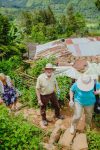
Zack Gross on the way to see some fair trade sugar cane in Peru. (photo from Zack Gross)

According to Zack Gross, there is child labor and slavery associated with the production of chocolate, sugar and coffee – as well as with other commodities, from sport balls to clothing, crafts and carpets.

Gross, who is the fair trade outreach coordinator at the Manitoba Council for International Cooperation (MCIC), was speaking at a fair trade event held on May 29 by the Women’s League of Congregation Etz Chayim and the Winnipeg chapter of the National Council of Jewish Women (NCJW) at the synagogue.

MCIC is a coalition of about 40 international development organizations funded by both the provincial and federal governments, which helps support its member organizations’ overseas projects and educates Manitobans about global issues.

Gross grew up in Winnipeg and attended I.L. Peretz Folk School, where he was first introduced to social justice issues. He has worked in the anti-poverty field internationally for nearly 50 years. He is the current president of the Canadian Fair Trade Network, a national organization based in Vancouver, and, last fall, Fair Trade Canada honored him with a lifetime achievement award.

At the Etz Chayim event, Gross spoke about the growing fair trade market, including that it has recently become more mainstream and now has many items that are kosher-certified.

“Much of my work is making presentations to interested audiences, but I also meet with local businesses, government representatives, and any others who can help to increase fair trade purchases and procurement,” he said.

Fair Trade Manitoba is a program of MCIC. “We also have a Fair Trade Winnipeg steering committee, which is working with City Hall toward Winnipeg becoming a ‘fair trade city,’ a designation Brandon and Gimli in Manitoba have already reached,” said Gross.

“Fair Trade Manitoba began as a collaboration of people involved in local schools, unions, faith groups and NGOs who share a vision of creating a better world. Manitoba is seen as a leader in fair trade. Earlier this year, we organized a national conference that attracted over 350 people and, last month, we had 13 people, including my wife and myself, travel to Peru to visit fair trade co-ops (producers and processors).

“But also, in a less sensational way, fair trade can help poor farmers find new markets and make more money, so they can have schools and clinics in their communities, can use better environmental methods in their production, can use safer equipment and can contribute more to their local and national economies.”

Fair trade can also help create economic opportunities for women and youth who have no capital, he said.

“When people are shopping – what we call ‘voting with your dollars’ – they should look for the fair trade label when buying coffee, tea, sugar, chocolate, tropical fruits and many other products,” said Gross, who advised that consumers visit cftn.ca/products-companies for more detailed information.

He also suggested people make their schools, campuses, faith groups, workplaces and events fair trade, and referred those interested in doing so to fairtrade.ca.

Yelena Maleyev was a key member of the local NCJW in putting this event together.

“We are passionate about educating the public about global issues that affect us locally, like child slavery and human trafficking,” she said. “The Women’s League shares our passion for organizing educational events, so it was a perfect partnership.”

At a local event last year, NCJW focused on increasing awareness of human trafficking and child slavery. This year’s event continues that effort, as fair trade can reduce the incidence of both.

“There is a need for fair trade purchase decisions in our daily lives to ensure we reduce our harmful footprint on the world,” said Maleyev. “Keep in mind that purchasing fair trade not only helps the environment, it provides humane working conditions for those in the supply chain, ensures a living wage for the workers, does not allow for exploitation of women and children, and yields sustainable growth in the economies where these companies are located.

“The goal of ending child slavery goes hand in hand with the global goals of abolishing extreme poverty, protecting our environment and supporting women and families in the developing world. Children are the most vulnerable citizens of our world and, to protect them, we must ensure we do not support corporations that exploit them. If we, as consumers, make conscious purchase decisions daily, we can directly impact the economic sustainability of ethical corporations.”

About the Etz Chayim event, Gross said, “Ultimately, what struck me was a comment by one attendee … ‘Anyone who knows their Torah should be a strong supporter of fair trade.’ Amen to that!”

Rebeca Kuropatwa is a Winnipeg freelance writer.


Format ImagePosted on June 17, 2016June 16, 2016Author Rebeca KuropatwaCategories NationalTags fair trade, MCIC, NCJW, poverty
Lifting up women’s voices

Lifting up women’s voices

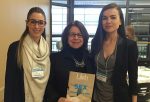
Left to right: Dana Chappellaz, Susan Weidman Schneider and Yelena Maleyev. (photo by Shayla Fink)

The first-ever Winnipeg Jewish Women’s Symposium was held at Rady Jewish Community Centre on April 9 and 10, bringing together women of all ages to explore the different ways in which women can make a difference in the Jewish and general communities.

The event was the inspiration of Rady JCC executive director Gayle Waxman and assistant executive director Tamar Barr.

“Gayle and Tamar approached me to co-chair the symposium on behalf of Rady in the fall of 2015, and it’s been a flurry of activity ever since,” said Lindsay Sawyer, a financial planner and a Rady JCC volunteer, who co-chaired the event with Yelena Maleyev, a product manager at Manitoba Telecom Service and a leader in National Council of Jewish Women (NCJW) in Winnipeg.

“We’ve taken great care to ensure that our speakers cover a wide range of topics to appeal to women of all ages in our community – from new volunteers to seasoned community leaders,” she said.

According to Sawyer, although women are talented, dynamic and committed people, they are still too often underrepresented at the board level of the Jewish community – something she and others involved in the symposium are setting out to change.

“If we don’t invite ourselves to shape the direction of the community we live in, we’ll wind up missing too many valuable voices at the table,” said Sawyer. “Our hope is to engage and inspire talented woman of all ages who, due to lack of opportunity, direction or support, may not yet be having their voices heard, while also celebrating the achievements of those who are playing key roles in their organizations.

“We are elated to have had Susan Weidman Schneider join us this year as our keynote speaker. Susan, an expat Winnipegger, is the founder and editor-in-chief of Lilith magazine, an award-winning Jewish women’s quarterly. It was our privilege to celebrate such an accomplished and dynamic talent and to be able to claim Susan as one of our own.”

Maleyev, who is Winnipeg NCJW’s treasurer as well as the creator of its young women professionals branch, also wants more women to get involved.

“We have seen successful events, such as SHE Day, grow over the years, and agreed that we should provide a similar opportunity for women in our community, but approach it from a Jewish perspective,” said Maleyev. “We aim to empower and educate the younger generation, while ensuring all women are involved and encouraged to remain involved. We want to match the energy of the younger generation with the experiences of those who have been in leadership roles for awhile now. Like Sheryl Sandberg mentions in her book Lean In – the more women help one another, the more we help ourselves. Acting like a coalition truly does produce results.

“We want to encourage the power of mentorship and how sharing our experiences at any age can help uplift one another,” she continued. “Women make up over half of the population and yet not even close to half the leadership roles in management or on boards. We need equal representation to ensure our voices are heard. We need mentors, sponsors, role models and supporters to help us achieve our professional goals, as well as balance in our personal lives.”

The symposium kicked off with Havdalah and a performing arts showcase on April 9 and, on April 10, the learning sessions took place. About 150 women attended.

“The performing arts showcase was absolutely exceptional,” said Sawyer. “It was honestly just an absolutely incredible experience to hear the stories of so many very talented and passionate women … about the importance of community and making sure our voices are heard. I left on Sunday with such incredible enthusiasm for both where our community is and where we’ll be going with the next generation of leadership coming into contributing volunteer positions.

“Certainly, at the top of my list, was one of the opening panels, with Dianne Glass, Debbie Hoffman, Laurel Malkin and Baillie Chisick. Their views of being a voice at the table and women in community leadership was so inspiring and uplifting.”

Sawyer also lauded Weidman Schneider’s keynote address about where women have come from and where they still need to make inroads.

“It’s my hope that this event will continue and that we can continue to reach out to our community and inspire others to join us in continuing to make our Winnipeg Jewish community a special and welcoming place,” said Sawyer.

Maleyev, who found the symposium “phenomenal,” said, “The panelists were all incredibly inspiring. They shared many personal and professional stories, and provided varied opinions and experiences…. Susan brought such good perspectives on the topic of feminism and urged us to be allies in our feminist journey. As well, attendees received many opportunities to mingle and network, and meet new people in the community.”

Maleyev is hopeful that, with support from women mentors, more young women will see that there is room for them to grow their skills and get involved with whatever organizations align with their values.

“Our very sincere thanks to the leadership of Gayle Waxman, Tamar Barr, Cindy Lazar [NCJW] and all our tremendously talented and dedicated volunteers in bringing this event to fruition,” said Sawyer.

Rebeca Kuropatwa is a Winnipeg freelance writer.

Format ImagePosted on April 22, 2016April 20, 2016Author Rebeca KuropatwaCategories NationalTags feminism, Lilith, NCJW
Mystery photo … Nov. 27/15

Mystery photo … Nov. 27/15

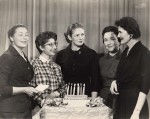
Women gathered around a table with a candled cake, National Council of Jewish Women, circa 1955. Leonore Freiman is in the middle. (photo from JWB fonds, JMABC L.13952)

If you know someone in this photo, please help the JI fill the gaps of its predecessor’s (the Jewish Western Bulletin’s) collection at the Jewish Museum and Archives of B.C. by contacting [email protected] or 604-257-5199. To find out who has been identified in the photos, visit jewishmuseum.ca/blog.

Format ImagePosted on November 27, 2015December 16, 2015Author JI and JMABCCategories Mystery PhotoTags JMABC, Leonore Freiman, National Council of Jewish Women, NCJW
Mystery photo … Aug. 28/15

Mystery photo … Aug. 28/15

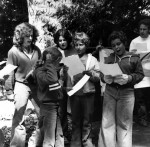
Children singing, Camp Miriam, Gabriola Island, B.C., 1979. (photo from JWB fonds; JMABC L.09623)

If you know someone in these photos, please help the JI fill the gaps of its predecessor’s (the Jewish Western Bulletin’s) collection at the Jewish Museum and Archives of B.C. by contacting [email protected] or 604-257-5199. To find out who has been identified in the photos, visit jewishmuseum.ca/blog.

photo - Group with a drawing of Camp Hatikvah, 1988
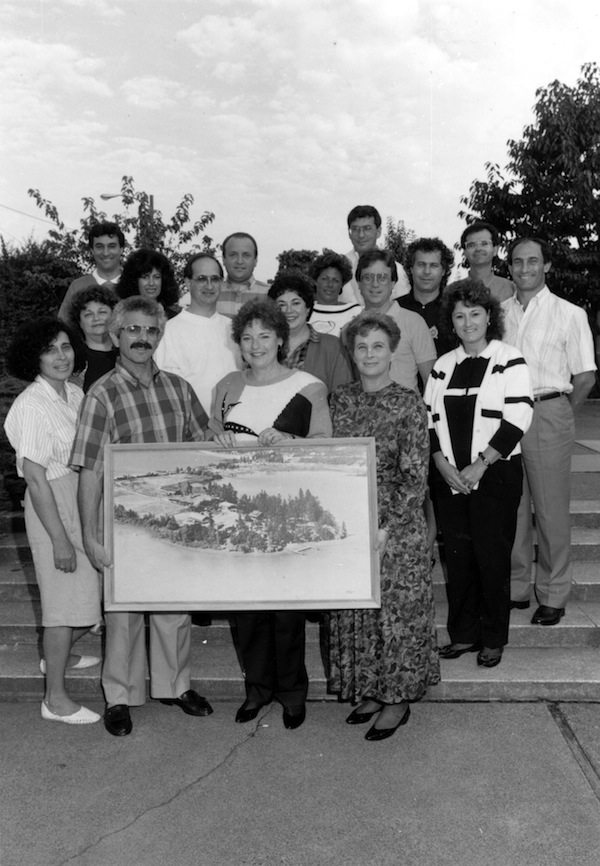
Group with a drawing of Camp Hatikvah, 1988. (photo from JWB fonds; JMABC L.09611)
photo - Women using typewriters, National Council of Jewish Women, circa 1955
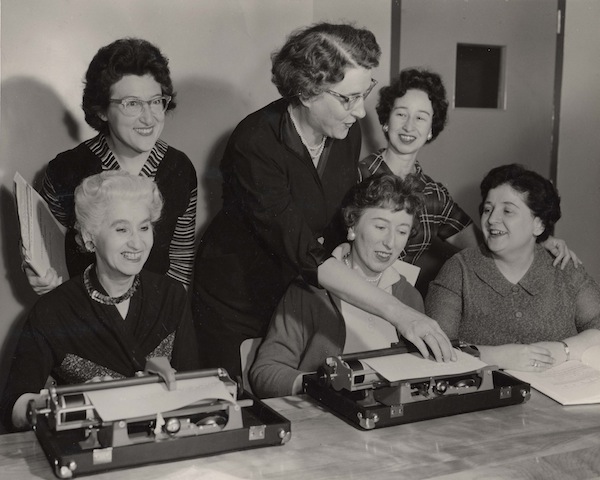
Women using typewriters, National Council of Jewish Women, circa 1955. (photo from JWB fonds; JMABC L.13953)
photo - Two unidentified men at the Vancouver Jewish Community Centre, circa 1962
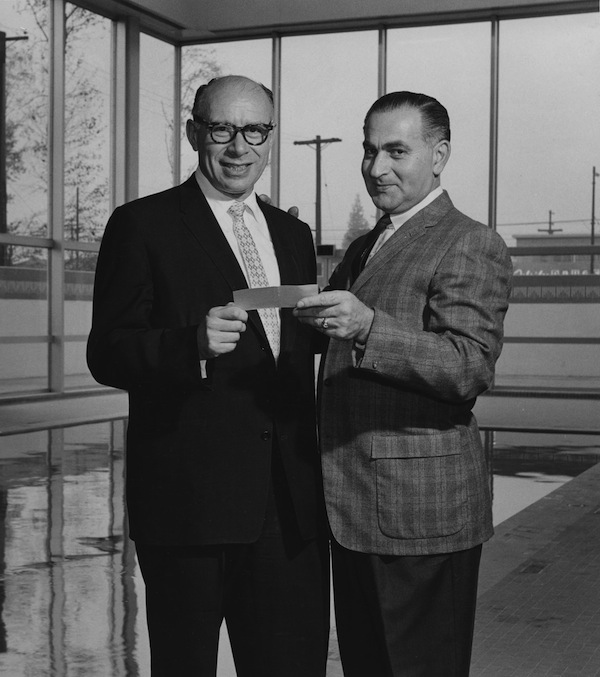
Two unidentified men at the Vancouver Jewish Community Centre, circa 1962. (photo from JWB fonds; JMABC L.11516)
Format ImagePosted on August 28, 2015August 27, 2015Author JI and JMABCCategories Mystery PhotoTags Camp Hatikvah, Camp Miriam, Jewish Community Centre, National Council of Jewish Women, NCJW
We Care believes in change

We Care believes in change

Leah Gazan (photo by Rebeca Kuropatwa)

Human traffickers target those who are most vulnerable – women and children, and people from impoverished and marginalized cultures and communities. Anti-trafficking organizations estimate that between 12 and 30 million people are held in forced labor (including sexual servitude) and that two to four million people are trafficked across borders each year.

On March 12, Manitoba marked its second Human Trafficking Awareness Day. To observe the day, National Council of Jewish Women (NCJW) of Canada, Winnipeg section, held the event United We Care, An Evening in Support of the We Care Campaign for Education about Missing and Murdered Indigenous Women and Girls.

The program took place at Graffiti Art Programming and included an art exhibit, as well as an address from Leah Gazan, an advocate for MMIW issues in Manitoba and the rest of Canada. Indigenous artist Jessica Canard created a painting during the event that was auctioned off at the end of the night.

Gazan introduced herself as a member of the bear clan. “The bear clan has roles and responsibilities,” she said. “One is to be a protector. My mother was a child welfare survivor, a Lakota woman, a street kid. She overcame great obstacles, obtained a master’s degree, and changed legislation.

“My father was a Holocaust survivor from Holland and, like my mother and in spite of historical trauma he experienced, he went on to receive two master’s degrees, a teaching degree, raise a family and spend his life trying for social justice with a special focus on fighting for children.”

Gazan said her parents taught her that change is possible, “with the goal of realizing a good world for all peoples, animal life, plant life, our women and our girls. We are all sacred. We all have to take responsibility for the collective well-being of all creation.”

The We Care campaign came from a conversation between Gazan and artist and singer Raine Hamilton. Upset about what was happening to indigenous women and girls in Canada, Hamilton wanted to do something. Gazan encouraged her, saying, “If you want to do something, Raine, you do something, and I will support you.”

In 2013, James Anaya, former special rapporteur on indigenous issues for the United Nations, called the state of violence and the number of murdered and missing indigenous women in Canada a national crisis. According to the RCMP’s 2014 National Operational Review on Missing and Murdered Aboriginal Women, “Police-recorded incidents of aboriginal female homicides and unresolved missing aboriginal females in this review total 1,181 – 164 missing and 1,017 homicide victims.” There were 225 unsolved cases: 105 missing for more than 30 days as of Nov. 4, 2013, “whose cause of disappearance was categorized at the time as ‘unknown’ or ‘foul play suspected’ and 120 unsolved homicides between 1980 and 2012.”

“We represent 4.3 percent of the Canadian population, yet we represented 16 percent of all reported homicides,” said Gazan. “Indigenous women and girls are not safe in this country and this is related to a number of factors, including high rates of poverty among indigenous women.”

According to the UN and the platform action committee in Manitoba, Gazan said, “The current rate for poverty for indigenous women living off reserve is at 42.7 percent. That is twice the rate for non-indigenous women and exceeds rates of indigenous men, with an average income of $13,300. That’s $6,060 lower than non-indigenous women and approximately $5,000 lower than indigenous men.”

Gazan stressed, “This is not an indigenous issue. This is an issue for all Canadians who want to protect the fundamental rights of all persons. It will take all of us in solidarity to address these issues.

“One cannot begin to understand the complexity of this issue without the focus on the colonization of indigenous women,” she continued. “Prior to colonization, our women and, in particular, our grandmothers were the main decision makers within our nations. Women were seen as powerful. This was very much related to our ability to bring life into the world.

“Through the eyes of colonialists, indigenous women were seen as property of men, much like women in Europe at that time. The exclusion of indigenous women in decision making eventually led to the cultural, social and economical dispossession of indigenous women that was eventually stipulated in policies that were enforced in the Indian Act.

“In 2006, the International Indigenous Women’s Forum noted that the systemic violation of their collective rights as indigenous people is the single greatest risk factor for gender-based violence, including violence perpetrated within their communities.”

The situation can be changed, however, “and that’s exactly what the purpose of the We Care campaign is,” said Gazan. “It’s to educate and engage fellow Canadians so that we can change that story … so we can end what has resulted in unacceptable levels of violence that’s perpetrated against indigenous women and girls in this country.

“It’s a place where we can come together to demonstrate and send a clear message that we will not stop until indigenous women and girls are afforded the same rights and safety as are afforded to other Canadians.”

The group hopes that this campaign will become one of the main issues in the upcoming federal election.

“We need Canadians to join with us in unity, to say that we care,” said Gazan. “It seems so overwhelming that people don’t know what to do because it’s so bad, but I don’t think it’s because people don’t care. I believe people care.

“What if we start to join together to recreate a new story that results in a safer city, province and country for indigenous women and girls as an act of humanity?”

NCJW across Canada and its international body, the International Council of Jewish Women, has established advocacy against human trafficking as a priority issue. All proceeds from the March program’s ticket sales and the auction went to the We Care campaign.

To participate, snap a photo of yourself holding a sign that says #WeCare and #MMIW, then post it on Twitter and Facebook, showing it’s an issue that matters to you. More information is available at facebook.com/wecaremmiw.

Rebeca Kuropatwa is a Winnipeg freelance writer.

Format ImagePosted on April 24, 2015April 23, 2015Author Rebeca KuropatwaCategories NationalTags Leah Gazan, MMIW, National Council of Jewish Women, NCJW, trafficking, WeCare

Posts pagination

Previous page Page 1 Page 2 Page 3 Page 4 Next page
Proudly powered by WordPress