
Skip to content
  • Home
  • Subscribe / donate
  • Events calendar
  • Business Directory
  • FAQ
  • News
    • Local
    • National
    • Israel
    • World
    • עניין בחדשות
      A roundup of news in Canada and further afield, in Hebrew.
  • Opinion
    • From the JI
    • Op-Ed
  • Arts & Culture
    • Performing Arts
    • Music
    • Books
    • Visual Arts
    • TV & Film
  • Life
    • Celebrating the Holidays
    • Travel
    • The Daily Snooze
      Cartoons by Jacob Samuel
    • Mystery Photo
      Help the JI and JMABC fill in the gaps in our archives.
  • Community Links
    • Organizations, Etc.
    • Other News Sources & Blogs
  • JI Chai Celebration
  • JI@88! video

Recent Posts

  • SFU honours Gloria Gutman
  • Lifting people’s spirits
  • Wedding a ray of light
  • Indigeneity and Zionism
  • Rule of law broken: councilor
  • Football and its roles
  • The burden of defence
  • Fish Café returns after fire
  • All right in what goes wrong
  • Nuns & mermaids at TUTS
  • Camp offers holiday retreat
  • Students and mentors inspire
  • Once-in-a-lifetime trip
  • 100 dancers, one heart
  • Money for the sciences
  • What “Jewish food” means
  • Have a cookie, schnitzel too
  • Federation now across BC
  • Israel fighting for its existence
  • Deal strengthens Iran
  • Patriotic belonging diminishes
  • A campaign to engage
  • Upstanders’ first live event
  • Responding to Carney
  • Having your own home
  • Music a family tradition
  • Musical to warm heart
  • Community milestones … June 2026
  • Sharing her passion for Israel
  • Or Shalom reopens its doors
  • JFS from past to future
  • Need holistic approach
  • Sharing stories, advice
  • Journalist shares fears
  • Skills to live together
  • Road to independence

Archives

Follow @JewishIndie
image - CJN box ad Rockowers 2026

Tag: lifestyle

Criticism is hard but vital

A year ago, for an important birthday, we bought a mature lemon tree. This perhaps sounds absurd because we live in Winnipeg, which has extremely cold winter temperatures. However, our home has a heated sunroom and the lemon tree, in its pot, blossomed and bore fruit. When warm weather came, we moved it outside to enjoy the summer. The outdoor location, against a wall, sheltered the tree and two lemons ripened.

My kibbutz year came back as I picked that first lemon. The lemon blossoms perfumed the indoor air as they came and went. Off-the-tree citrus, just like any other fresh produce, tastes so much better than anything bought at a grocery store. While lemons offer a sharp, puckery sour taste, their zest and juice absolutely make food sparkle. 

I posted about our “crop” of two lemons on social media. Immediately, I had a friend from Israel commenting on how lemons were her favourite fruit. Two other North Americans asked how we managed to grow them. I sensed their excitement through their onscreen responses.

This experience recalled another scenario, which plays out regularly in Jewish life – that of feedback, or constructive criticism. I was a blunt kid, accused of being not just assertive but aggressive at times. Instead of cloaking things in demure, “ladylike” manners, I said what I thought. I took to heart the idea that everyone can improve and that we should have high expectations. Yes, criticism can be difficult, and it’s sometimes unwarranted, but, without it, we sometimes can’t grow and improve as individuals or communities.

I recently took part in a Jewish business fair for newcomers at our Jewish community centre. Sponsored by Jewish Child and Family Services, it uplifted many who had moved from elsewhere. I loved the opportunity. I smiled and chatted with everyone who came to my writing and editing booth. One community member recognized me and took the time to let me know she was sorry nothing was good enough for me here. Her view of my work, written over many years for both Jewish and non-Jewish publications, was overwhelmingly negative. I responded cheerfully, suggesting that there were many good things about Winnipeg’s Jewish community, but that it was also a good thing to learn about other possibilities from elsewhere, reflect and improve. She sniffed disapprovingly and walked away.

This interaction reflected other times when I’ve been asked for suggestions or advice. The responses often included some version of “That’s not how we do things here” with a sneer, grumble or angry tone. Even when the feedback includes a lot of praise and support, including data or anecdotal evidence from other communities, some people are defensive and aren’t ready to hear it.

In some cases, I’ve heard “since I didn’t land that gig/volunteer position/award, I was just offering sour grapes.” Sour grapes are that metaphor for saucy words we offer when we’ve been rejected and react with impulsive hurt, though sour grapes make good wine. That pucker-up taste, just like with lemons, can do wonders, with time, to improve food and drink.

A wise friend, a Holocaust survivor in her mid-80s, asked for feedback after our family’s lifecycle event at our congregation. Akin to an exit interview, it’s important to have congregants’ thoughts on how the synagogue is doing, what went well and what could be done better. I took the time to respond. I sent the information to the people in responsible positions who should see it. I also wrote a separate gushing, positive note about the livestreaming feed, which is so inclusive for us when we cannot be in the building. I got a response from someone about the livestreaming feed email. I’ve received nothing so far about the constructive criticism.

It’s normal to feel defensive about criticism, especially if it hits hard or close to the bone. Yet, a professional should be able to respond. Feedback helps us grow, whether as a customer service-oriented synagogue or a business. I have struggled with this. Rejection and negative feedback are part of being a writer.

I used to joke that a swift, rude rejection didn’t reflect on my work. Instead, I imagined a grouchy editor who ate a burrito for lunch. He had bad indigestion and took it out on me. Then the rejection wasn’t such a big deal. The guy’s stomach trouble and bad manners became funny, rather than a reflection of my efforts.

In time, I’ve embraced the notion that a rejection, including a frankly critical one, offers positive opportunities. An editor’s simple “No, thank you” can result in a quick sale when I resubmit the piece elsewhere. Helpful feedback means I can improve my skills. Complete silence doesn’t mean anything – it doesn’t indicate that my work is awful or it’s still being considered.

Jewish tradition grows from a long rabbinic tradition of debate, discussion, criticism and reproof. It’s part of who we are. It’s sharp and puckery like that fresh lemon bite or the tannic pucker of sour grapes. It’s not easy to hear. Yet, when offered in good faith, thoughtful analysis only shows how much the respondent cares. Hearing nothing from a congregant, colleague or friend doesn’t mean everything is good. It may mean that they don’t care enough to respond. Or perhaps they say nothing because they can’t stand the rude response, defensiveness or silence that might follow.

It’s important, as part of a community, to offer effusive praise and support for one another whenever we can. It’s also key to our future to reflect, reevaluate and offer ways to improve. We often make a good salad spectacular with a squeeze of tangy lemon. Sometimes, we need to pucker up to improve things, so we may experience the huge flavour that can follow. 

Joanne Seiff has written regularly for the Winnipeg Free Press and various Jewish publications. She is the author of three books, including From the Outside In: Jewish Post Columns 2015-2016, a collection of essays available for digital download or as a paperback from Amazon. Check her out on Instagram @yrnspinner or at joanneseiff.blogspot.com.
Posted on July 12, 2024July 10, 2024Author Joanne SeiffCategories Op-EdTags critical thinking, Jewish tradition, lifestyle

Community and relationships

Recently, I came across a LinkedIn post. It suggested that people could evaluate their work by asking if it “made  money, saved money or saved time.” One of the responses suggested that nurses, for instance, would not fit into this model. Neither would teachers, therapists or social workers, for that matter. While education or therapy do eventually probably save money and time for society, their worth isn’t measured by these markers. As a writer, my work is also worthless in this evaluation, as it doesn’t earn lots of money or save time. But caring/thinking professions are still meaningful. I did a silent revision to the post. I added: Does your work create meaning? Is your work creating value? Meaning and value aren’t always measured in monetary terms.

I didn’t respond to this piece I read online. I don’t know who posted it originally, but priorities are different than mine. It isn’t a bad thing to save money, make money or save time, but I was left wondering – if these are a person’s top priorities, what will they do with the money or time saved? I wonder where “making meaning” comes into this person’s life.

My household is just recovering from our twins’ b’nai mitzvah. Out-of-town relatives and friends were here for several days before and after. I managed many details and events, multiple meals, a tent, chair and table rental, games and more. The synagogue service my children led was very meaningful, and looking out at the congregation was amazing. I felt so supported by family, friends and community.

For days afterwards, Jewish community members wished us mazal tov and non-Jewish neighbours and friends continued to congratulate us. My twins got gifts from places we didn’t expect. Both kids were truly flummoxed by the love and generosity showered on them.

I won’t lie: I’m exhausted after this lifecycle experience. I was the main organizer for everything other than services. Everything went smoothly, far better than I’d expected, especially given that our synagogue is under renovation.

When guests suggested a future as an event planner, I said no! I couldn’t wait to get back to my freelance writer/editor day job. Perhaps what I have learned is that, while I’m good at organizing and details, I don’t find meaning in doing those things. For me, it’s only the relationships and community that makes meaning.

A snippet of learning I did this week made that clear. I was studying the Babylonian Talmud tractate of Bava Metzia 109 when I read this story:

“Rav Yosef had a certain planter, a contractor whose job was to plant trees. He died and left behind five sons-in-law. Rav Yosef said: Until now I had to deal with only one person; now there are five. Until now, they did not rely on each other to plant the trees and did not cause me a loss, as the responsibility was their father-in-law’s, but, now that they are five, they will rely on each other to plant the trees and cause me a loss. Rav Yosef decided to discontinue the agreement with them. Rav Yosef said to them: If you take the value of your enhancement that you brought to the field and remove yourselves, all is well, but, if not, I will remove you without giving you the value of the enhancement.”

The rabbis then debate if Rav Yosef’s behaviour as a businessman was acceptable. Their conclusion is that canceling the agreement was acceptable, but sending the sons-in-law off his land without compensation wouldn’t be right. When I read Rav Yosef’s choices here, as a person in business, I saw why he made his choices. Rav Yosef had a business relationship with a contractor. When that ended due to death, he didn’t have the same agreement or support from the five sons-in-law, all of whom might have left the job to someone else. He wanted to pay them for what had been done and cut his losses.

I worried about the contractual commitments I’d made for our family event. Would the tent, tables, chairs, catering, servers, games, six-person bike, fancy vegan popsicle cart all arrive as scheduled? In the end, it all worked out. However, if I’d been faced with an issue like Rav Yosef’s – the death of someone I trusted and a time-sensitive need to get something done – I too might have wanted to pay for the work done so far and cut my losses.

Sometimes, we recognize that, without the original helper, chaos might erupt. Our synagogue caterer provided food for 75 people as take-out for us, but had no servers, due to the building closure and renovations. I worried about what to do. Luckily, through Jewish community connections, I found someone who used to work at the synagogue, and three others who worked at a different Jewish congregation. My brother (former manager of a fine-dining restaurant) stepped in to help. My neighbour volunteered her oven as a backup to warm up food, though we did not need it in the end.

This experience helped me realize that, although we moved to Canada in 2009, we had built community over time. People volunteered to support us and connections with businesspeople made the event happen. A “team” of loving people, both from far away and close by, pulled together to make meaning for us as a family.

Long before I had kids, I loved attending Shabbat services that celebrated a new baby, an upcoming wedding, a birthday or bar or bat mitzvah. Now I see that, as part of the extended community, I too created meaningful connections. The congratulations, singing “Simon Tov U’Mazel Tov,” and warm smiles matter. Being a witness and a celebrating participant are valuable.

For some, our twins’ b’nai mitzvah helped people make money. Months of work as the “organizer/Mom/event planner” saved money. If recent world events, or Rav Yosef’s contractor agreement, have taught anything, it’s that our lives could be short – time matters. It matters that we do straightforward, moral business with others. So many things can go wrong. There is absolutely nothing like a few days of love, support and meaningful interactions with people who care about us. We can also always use more love and community support. 

Joanne Seiff has written regularly for the Winnipeg Free Press and various Jewish publications. She is the author of three books, including From the Outside In: Jewish Post Columns 2015-2016, a collection of essays available for digital download or as a paperback from Amazon. Check her out on Instagram @yrnspinner or at joanneseiff.blogspot.com.

Posted on June 28, 2024June 27, 2024Author Joanne SeiffCategories Op-EdTags Judaism, lifestyle, meaning, value, work

So many choices to be made

The late afternoon, right after school or summer camp, is go time for many parents. These are the moments where my twins have every kind of need, from taking off their outside gear and emptying lunch bags to signing permission forms, getting help on projects, and more. It is a period of chaos, usually with a desperate need for snacks as well as dinner preparation, all rolled up. There are days when things are calm, sure, but there are other times when I savour my last moments of quiet at 3:25 because from 3:35 until 6:30 or so, after dinner, I am a whirlwind doing Marathon Mom work.

Our public junior high this year presented us with Mega Options activities for the last few days of school. While the various options were hyped to students in advance, only whispers of this made it home. So, on an average Monday afternoon in June, my kids told me to be sure to open the special Mega email fast, as all the best activities would fill up. At 4:30 on the button, my inbox told me about the many Mega Options I would need to hurry to fill out to meet my twins’ expectations.

There were so many choices: Métis sash-weaving and historic cemetery trips, Inuit printmaking and Indigenous storytelling, Euro-style soccer tournaments, Pickleball, phone photography, kinesiology and nutrition lab field trips to a university, and more. There were bike treks, orienteering, the list went on. The selection was huge. Not every outing had a description or information. Some choices came with big fees. Others were free.

It was a huge rush to decide. We watched some activities fill up even as we tried to sign up – and, with twins, we had to sign up twice. In the end, my more social kid called one of his close friends. On the other end of the phone line, I heard his mom, a teacher I am friendly with, coaching him through. It was a great solace to know I was not alone in sorting through this!

Within moments, both my twins were signed up, with their friend, for one day of board games, outside games, and baking bannock and eating together. The other day was reserved for going to Assiniboine Park, Winnipeg’s version of New York City’s Central Park, and always a fan favourite. I emailed the other mom afterwards. “Sheesh!” she replied. “That was stressful – lol.” It was. She was completely right. The Mega Options format left me strung out and worried. Did we make the right choices? What does “A day at Assiniboine Park” mean? There was no description. What do we parents need to provide? Lunch? Money? Rides?

After the decisions were made and the activities secured, I was relieved. The fun warm weather choices our boys made were free, easy and uncomplicated. Sure, it wasn’t going to be a big learning experience, but the decisions were made. We no longer had to dwell on the choices themselves. 

After stepping back, I realized that these late afternoon blitzes are so hard because they can be unpredictable and disorderly. There are multiple tasks thrown at parents at once, when we’re not necessarily at our best energy-wise. Both flexibility and preparedness are necessary. There’s no telling if today I’ll have to be a math whiz, an event planner, or a custodian, cleaning up after a kid is sick in the hallway. (Hey, it happens.)

The skills required to manage the late afternoon rush aren’t just relevant to kids. As adults, and as Jewish people, we are often offered “Mega Options” when it comes to making choices. We don’t have one specific menu item at restaurants, nor do we have a single kind of Jewish ritual, religious life or home observance. We face tons of choices every day. Further, while the pandemic narrowed some options, the post-pandemic world has vastly increased them. When our usual routines are disrupted, we’re forced to evaluate what we’ve done all along. Is streaming a religious service easiest?  Are we healthy enough to attend in person? What is the COVID protocol (or non-protocol) these days, even as the virus still circulates? Sometimes, we crave situations where the decisions are just made for us, even as we know it would be better to make up our own minds instead.

This was our world before Oct. 7. Afterwards, the choices became even larger. Now, questions of safety and freedom from harassment also come into play. We choose whether to wear anything identifiably Jewish when out on the street. We question if we’ll feel safe attending this Jewish venue. Is attending this graduation/parade/campus/event going to force us to deal with protesters or hate speech? Then there’s: Are we still safe, wherever we live? Should we be considering a move to someplace safer? Is there somewhere safer? 

We could pretend that all these choices are a part of the modern age, but we know from Torah study, the many debates of the Talmud and Jewish history that the act of making choices is an essential part of what it means to be Jewish. From the first, we were shown hard choices and real consequences: from Leviticus 10’s Nadav and Abihu, who chose to sacrifice “strange fire” and were struck down for it (a bad choice, apparently), to Deuteronomy 30:19, which summarizes a long list of choices we can make, concluding, “I have put before you life and death, blessing and curse. Choose life….” 

The Mega Options presented to celebrate the end of school is nothing when compared to big decisions in life. One could just shrug it off as no big deal – but life is a series of little choices, one after another, that can affect everything. Survivors of major disasters often explain how they “just missed” the accident because they felt sick, woke up late or forgot to make their lunch. Historically, Jewish refugees described how they left at a moment’s notice, with only a suitcase, or just the clothes on their backs.

We don’t always know which choices are the big ones, or the good ones. Some of the best choices result in happy, long-lasting results, like meeting one’s life partner, discovering a passion or skill, or experiencing an amazing natural event like a meteor shower or the Northern Lights. Here’s to hoping our choices are easy and small ones, and that these options lead to all positive things. Here’s to celebrations, miracles and good deeds this summer – may we all have more “mega” pleasant choices ahead. 

Joanne Seiff has written regularly for the Winnipeg Free Press and various Jewish publications. She is the author of three books, including From the Outside In: Jewish Post Columns 2015-2016, a collection of essays available for digital download or as a paperback from Amazon. Check her out on Instagram @yrnspinner or at joanneseiff.blogspot.com.

Posted on June 14, 2024June 13, 2024Author Joanne SeiffCategories Op-EdTags education, Judaism, lifestyle, Oct. 7, summer

Expectations for behaviour

Our neighbourhood has narrow sidewalks lined by hedges. When my dog and I take our daily walks, we step to the side at a driveway or front walk so that another pedestrian can pass. My dog sits patiently, sometimes even when I don’t prompt her. Over the years, through the lives of several dogs, we (the dogs and I) have received compliments because of how well behaved the dogs are. I say thank you. The next question is, “How did you do it? I can’t get my dog to do that!” My response is always the same. We’ve been taking these walks every day for years. We practise! Usually, the passerby shakes their head, as if I am just not letting on my secret – but I have. Consistency is everything in reinforcing behaviour.

In the Babylonian Talmud, Tractate Bava Metzia 60a, the rabbis discuss sales practices. While Rabbi Yehudah disagrees, the rabbis conclude that a shopkeeper is allowed to offer children toasted grains and nuts for free. By doing so, he accustoms the children to see him for their shopping, rather than going to other shopkeepers. Also, the rabbis suggest, it is OK to offer things for sale at a “below market” price, that is, on sale, in order to attract customers. These are, in effect, ancient – and approved – business marketing guidelines that reinforce desired behaviours. In this text, there are also suggestions for what is not acceptable and why.

Festive holiday meals sometimes give us time to think about what’s acceptable in our homes, too. One invites friends and family over, or goes to other homes, and that’s when you can see all sorts of different families, with different guidelines about what’s acceptable. I find myself observing all this with interest. This is one way we learn about other ways of doing things. It’s also a chance to reevaluate how we run our homes. What could we do better? What isn’t acceptable in one home may be fair game in another.

As an adult, I observe all this but my children, just like those attracted by toasted nuts in Bava Metzia, react fast when they see things that are tempting or considered “out of bounds.” For instance, my kids love additional opportunities to eat treats. However, kids also notice when things go awry.

More than once, we’ve had a young holiday guest have a colossal meltdown. We all know that kids can lose it, especially during atypical situations, in others’ houses, later in the evening, etc. However, my kids feel strongly about times when the kid (or family) shows disrespect to us. After all, it’s our house. Having a child fall apart due to exhaustion or overstimulation happens. Having a kid yell at us is different, and my kids are rightfully upset when another child snaps or is rude when I express concern or want to keep them from getting hurt. My family pointed out that I, as a grown-up, am responsible for everybody’s safety in my house – of course, I have to say something when a situation looks dangerous. 

Earlier this year, our household was unsettled not only due to an extended outburst, but because no one apologized for it. Some parents apparently think that we, as holiday meal hosts, should tolerate and absorb a tantrum. For days afterwards, I fielded my kids’ comments as I stung with frustration. We spend many hours cleaning, setting the table and making multi-course celebratory meals. We take great care. Why go to all this effort for guests who don’t model basic respect for their kids in another person’s home?

By comparison, another set of family friends stayed over during a holiday. They were having breakfast in our kitchen with my kids when I came into the room. Their teenager had raspberries topping each finger (something I don’t allow my kids to do) but also, hadn’t washed their fruit. I rushed to wash the fruit, while the teenager said she was “immune” to whatever was on it. Her mom immediately jumped in. This mom insisted the teenager thank me for washing the fruit and correcting the possibly unsafe situation.

In this interaction, my kids saw the parent modeling an expected behaviour. They looked relieved. Those daily dog walks, often with kids, offer plenty of time to reflect on what we see. My twins, at the cusp of teenagerhood, now have firm ideas of how boundaries work, what respect and kindness mean, even in difficult situations. They know when parents correct things or when things go off the rails.

Watching the student encampments unfold at universities has been a chance to review those boundaries. When is it OK to protest? Why? It’s important to learn how one’s behaviours affect others and how they have lifelong ramifications. We’re seeing these issues play out in real time. 

In our house, we’ve discovered new growth. Reinforcing consistent upright, respectful and kind interactions is annoying sometimes. Saying “careful!” every day because I worry about someone’s safety can be a drag. Yet, just like the dog sitting at the street corner, my household has reinforced certain behaviours. We say thank you when someone works hard to take care of us. We worry about others’ safety. We apologize when things go wrong.

Recognizing how we should behave with others is a crucial part of living in a functional community. Watching the university encampments from afar and their conflicting messages of hate towards the Jewish community and Israel makes me worry about how we will proceed in the future. The media coverage of these protests makes me question what the protesters’ parents modeled. What are these parents thinking now? The chants by some of the students make me wonder if their version of community considers Jews or Israelis eligible for membership.

I’m heartened to see when my hard work pays off as a parent, holiday meal host or dog owner. Yet, I’m worried about what it means when our boundaries or expectations aren’t respected, too. Being yelled at in my own home at a holiday meal wasn’t a good harbinger of the future. Our tradition sets some expectations for behaviour in the marketplace and at home. Even as we interpret these traditions differently, how we consistently model behaviour will determine our children’s and our society’s future. Consistently reminding one another of how to behave as responsible community members may result in a better, safer future for all of us. 

Joanne Seiff has written regularly for the Winnipeg Free Press and various Jewish publications. She is the author of three books, including From the Outside In: Jewish Post Columns 2015-2016, a collection of essays available for digital download or as a paperback from Amazon. Check her out on Instagram @yrnspinner or at joanneseiff.blogspot.com.

Posted on May 10, 2024May 8, 2024Author Joanne SeiffCategories Op-EdTags Judaism, lifestyle, respect, Talmud

Knishes and relationships

My kids came home asking about knishes. Did I know how to make them? Where do we buy them? I thought this was weird. I asked for more information. 

Their school resource teacher and International Baccalaureate coordinator, Ms. T, plays an important role in their lives. She does lunch time enrichment clubs, coaches sports, and her responsibilities include supporting kids with disabilities, and the IB program. When I say that I’m not sure how she does it all, one of my kids springs up out of his seat, showing how she crouches in front of a computer in one office, typing madly. Then he dashes across the kitchen to indicate her rush to the next office, to crouch at another desk. She is, simply, everywhere.

This is when I learned that Ms. T said knishes were not, in fact, everywhere. In Winnipeg, people buy these ethnic foods from synagogues who cater, a Jewish deli or bakery. Due to a strange confluence of events, two Winnipeg synagogues are under renovation currently and without their usual catering kitchens. Other sources for knishes apparently hadn’t worked out. As a result, one of our favourite teachers was bereft of knishes.

As a kid in Virginia, I experienced knishes in two ways: one involved a street cart vendor when visiting New York with family members. The other came from a frozen packet from a far away kosher grocery store in Maryland. I’d never made one at home. I’d never considered it. It wasn’t eaten frequently in my house. Winnipeggers eat them more often. Of course, since moving here, I have, too, but I don’t miss them when they aren’t around.

I was thinking about our relationships with knishes, teachers and community recently, when I took a class from My Jewish Learning on the Hadran prayer, taught by Rabbi Elliot Goldberg. What’s that? Funny you should ask. When a person finishes studying a tractate of Talmud, they recite this prayer. I’d never heard of it until I started studying Talmud daily. When we got to the end of the first tractate, I learned that, when one finishes this kind of thing, there is a siyyum, a celebration of one’s completion of study. I’d never heard of a siyyum as a kid at a Reform congregation. When I first attended one as an undergraduate, it seemed like something that I would never be involved in. I remember an awkward party at the Jewish Living Centre with stale cookies, juice and cheers about the gawky guy with glasses who had finished studying … I’m not sure what. In a siyyum, there’s food, there’s a public teaching of something you’ve learned, and the community cheers you on. 

With the start of the pandemic, my own siyyum events have been online, usually through My Jewish Learning. There’s no food on Zoom, so that aspect of the celebration is muted, as is the cheering and crowd. Nonetheless, I have grown to love these events. It’s an hour that I pull out of my day at random, whenever it’s held online, and even during remote school or summer break or whatever, it’s “Mom’s siyyum time.” I’m learning with rabbis online via an iPad, even while making peanut butter sandwiches for lunch or hiding from the whole household to concentrate. It’s cerebral. It’s a shared learning community. It’s oddly emotional.

The first time I heard the Hadran prayer read, I cried. I found myself wondering what was wrong with me, but this class spelled out why it feels meaningful. The Hadran is usually said after studying a seder (order) of Mishnah or a tractate of the Babylonian Talmud, but sometimes it is said at a rabbinical school graduation, a Jewish high school graduation. It’s an acknowledgement. It starts with, “We will return to you, Tractate X (whatever tractate you’re studying), and you will return to us; our mind is on you, Tractate X, and your mind is on us; we will not forget you, Tractate X, and you will not forget us – not in this world and not in the next world.” The prayer goes on to talk about the blessing and value of studying Torah, and the hope that our descendants will have the same opportunities. It’s well worth a read. (Look up “Hadran” on sefaria.org.)

The entire text creates emotional ties and intellectual relationships. I’m connected to the mysterious 10 rabbis from long ago and to unknown great-grandchildren in this text. I’m connected to a cycle of learning and a return to sacred study. I’m grateful for the opportunity, and mindful that it takes work to study, even if it’s a holy endeavour. It’s a prayer that acknowledges that readers have relationships with texts, which mimics what I learned in graduate school about some literary theory, too. That long-ago English professor taught that, when we read novels or newspapers, our life experience, reading skills and emotions bring half of the meaning to the words in front of us. We’re in relationship with texts, just like we’re in relationships with our teachers and communities.

We had an afterschool Reach for the Top trivia tournament to attend with Ms. T. I knew what to do. I figured it out in advance. I made potato knishes. As we hopped out of our car, my twins recognized Ms. T’s bright blue Jeep. They rushed towards her, with carry-out containers full of potato knishes.

I joked, saying, “Who makes knishes?! They come from a cart in New York City!” With a sombre smile, she said, “My baba.” Her grandmother used to make her knishes. Oh. I gave a flip response, saying, “OK! I’ll be your baba now.” She put the knishes in the car and we went off to the three-hour tournament. Ms. T rushed out later. That night, she sent me an email of thanks, saying it made a delicious snack when she headed to her next meeting. 

We’re in a cycle of relationships in life, with lots of connections. A siyyum is an opportunity for us to celebrate and acknowledge hard work with a closure ritual. The Hadran tells us that “we will return” to a beloved text or, perhaps, to a beloved teacher.

The trivia tournament might not be Talmud. The knishes aren’t always round, or even necessarily knishes, but the connections between text, teachers, generations of learning, eating and love are real and they’re part of making Jewish meaning, too. A siyyum’s ritual of completion is always linked to food and a sense that we’re part of a bigger family and cycle of life. We return to you – whether it’s a knish made with love or a tractate of Talmud. 

Joanne Seiff has written regularly for the Winnipeg Free Press and various Jewish publications. She is the author of three books, including From the Outside In: Jewish Post Columns 2015-2016, a collection of essays available for digital download or as a paperback from Amazon. Check her out on Instagram @yrnspinner or at joanneseiff.blogspot.com.

Posted on March 8, 2024March 7, 2024Author Joanne SeiffCategories Op-EdTags cooking, education, Judaism, lifestyle, relationships, Talmud

Speaking up for safe spaces

Although I have been doing Daf Yomi (studying a page of Talmud a page a day), I fell asleep a few days ago before I could finish learning my page of Talmud. I was worn out. And it was a page particularly relevant to my life.

Bava Kamma 99 talks about the value a craftsperson brings to the raw materials. For instance, if a customer brought wool to be dyed but something went wrong and the dyer made a mistake, the dyer would owe the customer the value of the wool. The value of the craftsperson’s enhancement is a different, additional calculation on top of the raw materials’ value. The skill and artistry that the craftsperson brings to their craft has economic value, which is part of what this tractate of Jewish law covers. 

I’m a maker. I create lots of things, from baking bread to making labneh and many homemade family meals. I can make jams and pickles. I’m a hand spinner. I also dye yarn. I knit and design things. I even occasionally weave. I sew clothing, too, if in an elementary way. I appreciate it when I read about how a craftsperson adds value to raw materials in a Jewish text because it’s personally relatable. It shows that, in a time when everything was handmade, the rabbis valued the skilled work involved to make functional and sometimes beautiful things.

Since I had to study the rest of page 99 before heading on, I did half of that page and the next on the same day. Bava Kamma 100a talks about how teachers “go beyond” – not just in how they teach Torah, but in how they do mitzvot (commandments) and help others. Even though I trained as a teacher long ago, nobody’s an expert at everything. I teach some things, like hand spinning, and not others. I’m not able to “go beyond” as a sewing teacher, for example, and, instead, I searched for someone who could teach my kids.

My kids took sewing classes and attended sewing camp for two summers at a studio nearby. The small business owner was warm and inviting. It seemed to be a safe place. When she asked people to write blog posts for her, I did. It didn’t pay much but I thought it was a good community business, promoting slow fashion and reuse.

As many people were, I was in shock after Oct. 7. I didn’t immediately see anything concerning about this business, as it felt like it was “mostly” about sewing. Then, eventually, I began to realize that, in fact, there was an increasing trickle of activism on this social media feed. Like many Canadian progressives, this was part of a wider theme. Nothing was expressed in solidarity with the hostages or those who died on Oct. 7. Rather, the business began acknowledging and amplifying Palestinian influencers, posting participation in a raffle for the Red Crescent and posting ceasefire comments.

Every time I ask questions of someone I know – Why are you posting this? Do you support the right to a democracy to protect itself? – the exchanges, often disappointing, take an enormous amount of energy. Being brave and speaking out is tiring with so much antisemitism circulating.

I finally got up the nerve to ask the business owner … why are you posting about this, what does this activism about Israel and Gaza have to do with your small business? Are you Israeli or Palestinian? Are you an activist about a lot of things beyond slow fashion? If so, where is your outrage about Nigeria, Sudan, Syria, Uyghurs…?

In response, she did say she wanted all the hostages released, but she had never posted that publicly. Instead, she had reposted images promoting a tatreez (Palestinian embroidery) class. Fine, I thought, this aligned with her sewing business – but the image posted showed the outline of Israel with Arabic on top that read “PALESTINE” across the whole country. It erased Israel altogether.

I engaged via social media messaging, but saw it wasn’t likely to help. She asked, well, what do you want me to say? I suggested one could choose to be an ally of people you taught or worked with, or could choose to listen and to not amplify only one side. She didn’t choose either of those options. Instead, she decided to take down my writing from her site. I’d suggested that she could remove my name, if she chose, as it was her prerogative, that she’d bought my writing and owned it. 

She then made things clear, saying it was “Only Jews who told her to ‘shut up’ or ‘stay in her lane as a Canadian.’” She said plenty of Jews aligned with her beliefs … although, based on the polls, I responded they were likely a minority. I suggested maybe only those Jewish customers brave enough to say something had spoken up.

I was initially sad to lose this community connection. I could have unfollowed this person without this discussion. My kids would never have taken another class. I’d never do business with her again. The depth of her concerning opinions wouldn’t have been revealed. 

By exposing this small businessperson’s attitude, I learned more about what was “out there” in the local makers’ community. This included a willingness to lose business and relationships with students and clients who feel uncomfortable with these views. 

I struggle sometimes to create a positive sewing lesson environment for my kids at home. However, there’s a different outcome here. I might grow as a person from “adding value to raw materials” as a craftsperson, to teaching more. This was something I could do. I falsely hoped that, if I tried hard to communicate, build bridges and connect with this person, things would change. But I need to continue learning and growing, too. Even this negative experience might have positive potential for growth.

When telling my family about the experience at the dinner table, my twins surprised me by saying, “Well, what took you so long? We could never go back there again.” Indeed, sometimes we give intolerant people too many chances to rise to the occasion, to become upstanding people. In this case, my kids knew the way before I did. 

Joanne Seiff has written regularly for the Winnipeg Free Press and various Jewish publications. She is the author of three books, including From the Outside In: Jewish Post Columns 2015-2016, a collection of essays available for digital download or as a paperback from Amazon. Check her out on Instagram @yrnspinner or at joanneseiff.blogspot.com.

Posted on February 23, 2024February 22, 2024Author Joanne SeiffCategories Op-EdTags antisemitism, daf yomi, lifestyle, Oct. 7, Talmud
L’Chaim program grows

L’Chaim program grows

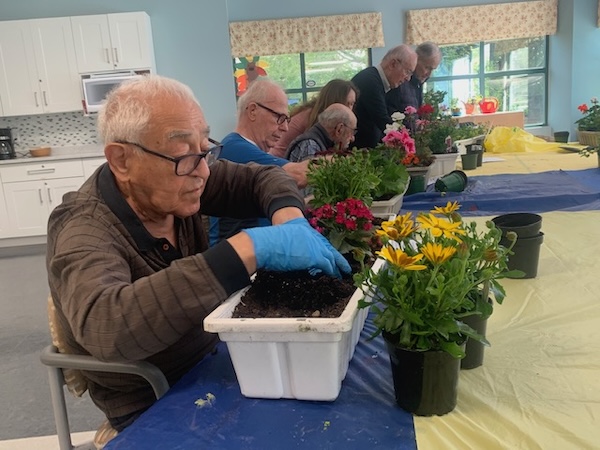
L’Chaim Adult Day Centre is now open five days a week. (photo from L’Chaim)

L’Chaim Adult Day Centre has received funding from Vancouver Coastal Health to expand its program. It can now offer its services to frail senior citizens in the community on a five-day-a-week, 16-clients-per-day basis.

L’Chaim first opened its doors on Sept. 14, 1985, in the Maccabee Room of Beth Israel Synagogue. At first, L’Chaim operated only one day a week and was run completely by volunteers. A project of the National Council of Jewish Women and the Jewish Family Services Agency, it was able to secure funding from the Jewish Community Fund and Council, as well as NCJW.

Soon afterward, a committee was formed to secure funding from the BC Ministry of Health, which allowed the program to operate two days a week. Ten years later, L’Chaim moved to the Jewish Community Centre of Greater Vancouver, thanks to a $400,000 grant from the BC government, which enabled the JCC to renovate the premises to meet L’Chaim’s needs. On April 1, 1996, L’Chaim opened at the JCC and, since then, it has been operating three days a week, serving 13 clients a day.

As the Jewish population has grown and aged, the number of clients seeking L’Chaim’s services has increased. Unlike other adult day centres in Vancouver, L’Chaim has a cultural mandate to accommodate Jewish seniors who live outside Vancouver’s geographical boundaries, but prefer to frequent L’Chaim precisely because of the Jewish component of its activities. This has not precluded the intake of seniors in the area who, though not themselves Jewish, want to attend L’Chaim because of its cultural programming and level of care, but demand has been greater than L’Chaim can service and the wait list and wait times are long.

With the recent expansion, under the supervision of L’Chaim’s trained activity specialists, more participants will be able to benefit from the variety of programs offered, including exercise sessions, discussion groups, live entertainment, expressive art and garden therapy, games, and day trips into the community. Participants receive a culturally and nutritionally appropriate meal prepared fresh daily, consisting of a three-course kosher lunch tailored to their dietary needs. As well, L’Chaim has a nurse on the premises who supervises medications, monitors participants’ health status and other aspects. Of course, Shabbat and Jewish holidays are occasions for special celebrations, often in conjunction with other stakeholders and programs at the JCC.

 “Old age,” as Tennyson wrote, “hath yet his honour and his toil,” and the longer people can stay at home surrounded by loved ones and visit those places that have become familiar, the better off we all are. L’Chaim is honoured that it can provide care and comfort to the frail elderly and thereby offer support to their relatives and caregivers. Anyone who goes by the JCC will see that it is a hub of activity and being located within its walls makes L’Chaim all the more vibrant. Relatives can drop off their loved ones and take advantage of JCC activities; L’Chaim clients can see people they know who drop by the office.

Now that L’Chaim has obtained funding to expand its services, it looks forward to growing from strength to strength, and this will require time and money. Fortunately, L’Chaim has an active board of committed individuals, as well as day-to-day onsite volunteers, who aid its director, Leah Deslauriers.

Deslauriers was hired by the JCC as the seniors program coordinator shortly after she graduated from the gerontology program at Simon Fraser University. In 2008, she started overseeing L’Chaim, when their administrator went on vacation, and she left her position at the JCC and became the director of L’Chaim in 2017. The position includes intake, fundraising and strategic planning, and it is in large part due to her accomplishments that L’Chaim now embarks on the next stage in its development.

L’Chaim benefits from the financial support of the Jewish Federation of Greater Vancouver, several Jewish foundations, and the donations, large and small, of many friends and supporters. To all of them, L’Chaim is grateful. 

To see if you or your loved one is eligible for L’Chaim’s services, contact the home and community care office in your local health authority or get in touch with Deslauriers by calling 604-638-7275. 

– Courtesy L’Chaim Adult Day Centre

Format ImagePosted on February 23, 2024February 22, 2024Author L’Chaim Adult Day CentreCategories LocalTags JCC, Jewish Community Centre, Leah Deslauriers, lifestyle, L’Chaim Adult Day Centre, seniors

Small but staying visible

A new novel blurb for Tilda is Visible by Jane Tara just arrived in my email inbox. I haven’t read it yet, but its premise is familiar. Publisher’s Lunch describes it as a book “about a successful woman who wakes up one day to discover her ear is gone, the next day her nose; she is diagnosed with a condition whispered about around the globe – as some women age, they start to disappear; she finds a renegade doctor, other diagnosed women, as well as a blind man who might see her more clearly than anyone ever has.”

The plot reminded me of an anecdote I heard. Since a person in a position of authority at work must be impartial, any outward expressions of her Judaism or feelings about the war remain mostly off-limits as a “boss.” An admin assistant proudly hangs a Ukrainian flag, but an Israeli flag is out of bounds. The boss feels that the current situation and increasing antisemitism make her feel smaller. Her recent solution? She put up a piece of tape on her door with a handwritten number. She does this to recognize how long Israeli hostages have been held in Gaza. This idea, started by hostage Hersh Goldberg-Polin’s mother, Rachel, helps people show a visible sign of concern about the hostages. It’s a small way to stay visible during a difficult time.

Older women often experience the feeling of becoming smaller. As women age, their earnings can decrease, despite job seniority or wisdom. If a woman doesn’t dye her hair or “keep up” appearances, others comment that she is “past her prime,” as if worth is only wrapped up in appearances or fertility. Despite recent legal or financial protections, many older women’s financial worth depends directly on a higher-earning male partner.

Many Jews describe a similar feeling of “becoming smaller” after Oct. 7. Politicians pair antisemitism and Islamophobia when discussing discrimination and hate, but the numbers aren’t equivalent. In Canada, the Jewish community is a minority and, in terms of population, substantially smaller than the Muslim community. Jewish community members describe choosing not to shop in areas where they used to feel safe or trying to avoid conflict in places where protests take place. Protesters may hold Jewish Canadians somehow responsible for the Gaza war. 

There have always been security concerns, but now when a Jewish event happens, organizers include information about security provisions. We are a small group, forced by circumstance to become smaller to protect ourselves. Our worth and safety as citizens feels tied to the majority’s interest in keeping minorities from harm.

For some, it’s a new and restrictive feeling. However, social media clips of Israeli soldiers singing “Gesher Tzar Me’od” show that this isn’t new. These words, which come from Rabbi Nachman of Breslov, with music written by Ofra Haza, are “The whole world is a narrow bridge and the main thing is not to be at all afraid.” 

Rabbi Nachman lived from 1772 to 1811 in Ukraine and founded the Breslov Hasids. He was the great-grandson of the Baal Shem Tov, who started Hasidism. During his lifetime, Rav Nachman traveled to Israel, moved within Ukraine, and struggled with tuberculosis. Although he died at age 38, his teachings remain vibrant. While this song is old, the message remains contemporary.

One way to understand the feeling of becoming smaller or narrower is to look at Jewish texts that embrace the concept. Psalm 118:5 says, “From the narrow place I called out to you [G-d], G-d answered me from a wide space.” Another translation ends, “the Lord answered me and brought me relief.” The word for Egypt, Mitzrayim, holds within it this idea of a “narrow space.” How eerie that soldiers, heading south into Gaza, towards Egypt, reminded themselves of this.

Continuing the metaphor, when leaving Egypt, Moses took the people into the wilderness, which is seen as a big, uncharted territory. Diving into the unknown is scary. New endeavours feel this way, whether it’s something dangerous like a war or something less worrying, like starting something new or entering an unfamiliar place.

We’re often encouraged that, if we dive in and move beyond our anxieties, we will have great opportunities ahead. Surely Rabbi Nachman’s efforts to help people seemed novel in his time. He taught through niggunim, wordless melodies. He encouraged his followers to embrace uninhibited prayer, personal conversations with the Divine, and to fulfil the mitzvah of always being joyful. To those who just go to services and follow along, or who don’t pray at all, it all might feel a little ecstatic and weird.

Yet, getting beyond a narrow place or being made to feel small can sometimes result in something bigger and better ahead. Whether you make yourself bigger through prayer, protest, quiet signals (like masking tape numbers), getting out into nature and the world or singing, you are finding a bigger space for yourself. When I simply take a walk with my dog and pause to see the prairie landscape, to greet neighbours and be greeted, I feel momentary narrow places dissipating. In contrast, when we think of the truly small spaces where Israeli hostages spend their time, our feelings of being diminished in the diaspora may not feel as pressing.

We choose to see others and be seen when we consider wider possibilities or the wilderness ahead. Being acknowledged and “seen” for our contributions helps everyone. It scares away our inhibitions to make it past the narrow spaces and into a better time. Right now, advocacy through law helps some fight hate and discrimination. Some, like the Israel Defence Forces, physically fight. Others might bide their time in scary, smaller spaces to get to a safer space, a place full of potential, ahead.

When we’re afraid, our breathing becomes shallow. We get less oxygen to our brain. We think less clearly. Rabbi Nachman and Ofra Haza may not have known the biology behind why singing would open up our souls. Surely, those deep singing breaths help us take on bigger, harder things. Those deep breaths, like experiencing the outdoors in nature, offer us more power to conquer our fears. When we sing out, we also become visible. Our voices, even as a minority in the diaspora, may be heard. 

Joanne Seiff has written regularly for the Winnipeg Free Press and various Jewish publications. She is the author of three books, including From the Outside In: Jewish Post Columns 2015-2016, a collection of essays available for digital download or as a paperback from Amazon. Check her out on Instagram @yrnspinner or at joanneseiff.blogspot.com.

Posted on February 9, 2024February 8, 2024Author Joanne SeiffCategories Op-EdTags antisemitism, Israel-Hamas war, Judaism, lifestyle, Oct. 7, Rebbe Nachman

Peer support’s long history

The Jewish Seniors Alliance of Greater Vancouver has invited Honoré France, a scholar on aging and expert on peer support, to speak via Zoom on Jan. 22. He will discuss the topic Discovering the Essential Importance of Seniors Supporting Seniors.

France, a professor emeritus in the department of educational psychology and leadership studies at the University of Victoria, will focus on the senior peer support training he developed. The training has been used by JSA for several years to help new volunteers learn how best to connect and liaise with isolated, lonely seniors in the community.

Among the topics France will cover are the early history of seniors peer support, strategies for self-care, information about memory, the value of exercise and the development of a healing presence.

Earlier this month, France shared some of his presentation with the Independent, including a peek at the origins of peer support during the beginning of psychiatry in the late 1700s – through French physician Philippe Pinel and hospital superintendent Jean-Baptiste Pussin. 

The talk will then move to more modern examples of senior peer support, including Indigenous approaches, and the development of group homes and inclusive treatment.

According to France, peer support is successful when various factors are in place, including effective approaches in helping aging populations and the promotion of the concept of self-help and independence among older people. 

Additionally, for peer support to be beneficial, people need to want to help themselves, there needs to be a reserve of talented older people who want to be helpful and, should someone have a problem or concern, there must be a willingness to seek out peers. 

After addressing various aging myths, such as the belief that dementia is inevitable, France will examine ways to stay mentally, physically and spiritually fit. He will explore nature as medicine, practices of letting go and cleansing, positivity (finding purpose and meaning), and mind-body activities like yoga, meditation, art and helping others.

France said he hopes that, by the end of the session, participants will “understand the developmental stage of aging and the central concept from Viktor Frankl about meaning and the crucial role it plays in healthy aging, and to follow their dreams as they age in the same way they did earlier in life.”

Frankl, an Austrian psychiatrist and Holocaust survivor, believed finding meaning in life to be the central human motivational force.

“Aging is natural and part of living,” said France, and people “can be in control physically, mentally, psychologically and spiritually. Aging is what you make of it and learning is a medicine and keeps you mentally fit.”

France emphasized that, no matter what a person’s condition in life is, they can live fully, consistent with their physical and psychological level. 

His talk will look at ways people can train themselves “to listen to others and to be like Frankl – optimistic, resilient, and always ‘moving.’ And, finally, [how to] develop a healing presence, as well as how to empathize at a deep level by bringing ‘light’ into the world to those in need.”

He added, “I will also provide some strategies for dealing with stress that I use. There will be a question period at the end, and Grace Hann will speak about the volunteer program at the Jewish Seniors Alliance along with one or two volunteers,” France said.

Hann is JSA’s senior peer support services trainer and supervisor.

Aside from his role at UVic, France is an artist, writer, therapist and consultant in the field of mental health. He has worked at the Shanghai University of Traditional Chinese Medicine, Addis Ababa University and the University of Massachusetts, where he graduated with a doctorate in counseling.

His academic interests include diversity, group processes and creative arts therapy. His current research involves reconciliation and residential schools, cross-cultural issues, creative arts, spirituality and eco-psychology (an intellectual movement to understand the relationship between humans and nature).

France has written several books and more than 75 academic articles on counseling issues and practices. Further, he has presented more than 80 scholarly book chapters around the world. He is currently re-writing and updating a 1989 publication on senior peer counseling, titled Senior Peer Support/Counselling Handbook: An Interactive Guide, which is set for publication this year.

On a personal level, he keeps active through gardening, playing squash and pickle ball, carving, building furniture and participating in strategic games, such as Go and chess. Currently, he is finishing up a novel based on his experiences hiking the West Coast Trail, his life teaching and backpacking around the world.

France’s talk is part of the JSA Snider Foundation Empowerment Series and the South Vancouver Seniors Network is a co-sponsor of the event. The Zoom starts at 11 a.m. The link to join it will be distributed through JSA’s email newsletter. Those interested in attending can also email [email protected] for the link. 

Sam Margolis has written for the Globe and Mail, the National Post, UPI and MSNBC.

Posted on January 12, 2024January 11, 2024Author Sam MargolisCategories LocalTags aging, health, Honoré France, Jewish Seniors Alliance, JSA, lifestyle, mental health, peer support

Torts and the Jewish holidays

I’m that grown-up who jumps to catch a kid who is about to fall off a playground slide, even if the kid isn’t mine. I’m saying, “Hey, be careful!  You don’t want to hurt your bum,” or whatever concern is applicable. Some feel I’m overprotective. Rather than using unkind words like “hovering,” I prefer “proactive worrier.”

I felt isolated with this habit. Then I got to know the contractors for our home renovation better. The brothers who worked for us were also parents. They did everything possible to keep kids, dog and parents safe as they worked on the house with us living in it. The older brother, the electrician, would spell out exactly which hazards he was trying to avoid. He would close a door, put up a sign saying “Please stay out” or another proactive way to avoid problems. The day they installed a big new bathtub was a good example. After caulking it, the tub was filled with water to weigh it down and create a good seal. We knew the kids and dog would be very tempted to check it out – we imagined kids falling in in their clothing, playing with rubber duckies, a dog jumping in and flooding the room. We strategized how to keep everyone away from the tub until the caulk hardened.

I was surprised when I started studying Bava Kamma, a Babylonian talmudic tractate dedicated to civil law, particularly the law of damages and compensation owed. In “fancy” legal vocabulary, this is tort law, which “provides damages to victims in compensation for their losses.” The rabbis of the Talmud thought through these issues. They used examples from their day. They talked about oxen that gored, camels that fell (and caused a stumbling block) and other unpredictable situations. I’d heard sermons where people laughed about this level of detail, but my brain returned to those playground moments. Perhaps others don’t take these examples seriously because they’ve never interacted with large, stubborn livestock or a fussy, heavy toddler or two.

Here’s an example of a question posed in a baraita in Bava Kamma 29: “If one’s jug broke and he did not remove its shards, or if his camel fell and he did not stand it up, Rabbi Meir deems him liable to pay for any damage they cause. The rabbis say that he is exempt according to human laws, but liable according to the laws of Heaven.” So, the understanding is, if you create a dangerous situation, you’re obligated to clean it up. If you don’t clean it up, you’re still responsible for it. You’re guilty even if you don’t owe money as compensation.

Examples like these keep popping up. This tractate is a Jewish rabbinic lesson in taking responsibility for our actions. How might something we do harm someone? What if it’s an accident, like dropped pottery? What if you purposely left broken glass or pottery that could harm others?

This ancient rabbinic text can seem dry, as law texts might be, but also relevant. In the last few days, many communities have started to use law as an excuse to exclude public acknowledgement or celebration of Hanukkah. Moncton, N.B., made a name for itself in this way. A Hanukkah candlelighting has been customary there for 20 years. Suddenly, this year, the mayor and council felt it interfered with the separation of church and state. They canceled the event, although Moncton City Hall decorates with angels, a Christmas tree and wreaths. A last-minute petition with many opposing voices succeeded in forcing a new vote that overturned this decision, so the menorah and candlelighting were reinstated.

Other communities wrestling with this include Williamsburg, in my home state of Virginia. Organizers there suggested that a menorah lighting couldn’t be allowed unless it was under a “ceasefire now” banner. In Britain, a London town council reversed their decision to cancel a public menorah lighting after an outcry. Back in Canada, in Calgary, Alta., the mayor canceled her attendance at the city’s public menorah lighting. 

Suddenly, the rabbis’ detailed discussions in Bava Kamma make more sense. Their debates explore when someone is wronged by accident, and if they owed compensation. However, they also include the question of responsibility when someone is wronged “on purpose.” For example, when a government uses the law to suppress a minority religious observance, like Hanukkah. When this kind of action takes place, it does harm. It does harm beyond whether Jews are legally allowed to light a hanukkiyah in a public place. The message it sends causes bigger damage and fear. 

After all, if Jews in Canada or the United States aren’t allowed to publicly celebrate their religious rituals, it feels unsafe to be Jewish in these places. Where is it safe? Most Jews would then think about Israel as being the place where it’s truly safe to be Jewish. The people who want to withdraw public observance of Jewish traditions due to the Israel/Hamas war send a message to Jews living in North America – it’s not OK with them to have a Jewish homeland in Israel. It’s also not OK with them for Jews to observe their religion openly here. They probably missed the irony, as their message is that it’s especially not OK when the Jewish holiday is about religious freedom.

Laws about compensation for damages can sound uninteresting. It becomes more intriguing when imagining an unsafe play structure, a broken piece of pottery or a camel that won’t budge. It gets even more pertinent – and uncomfortable – when the law is used to keep us from celebrating our religious traditions freely, in public, without fear, in a democracy.

While Hanukkah is ending, it’s still the time of year when many indulge in more sweets and tortes than we’d planned. Sadly, it’s a different kind of tort this year, one where we consider how to compensate for the potential loss of religious freedom. 

Joanne Seiff has written regularly for CBC Manitoba and various Jewish publications. She is the author of three books, including From the Outside In: Jewish Post Columns 2015-2016, a collection of essays available for digital download or as a paperback from Amazon. Check her out on Instagram @yrnspinner or at joanneseiff.blogspot.com.

Posted on December 15, 2023December 14, 2023Author Joanne SeiffCategories Op-EdTags Chanukah, Hanukkah, Judaism, law, lifestyle, politics, religious freedom, Talmud

Posts pagination

Previous page Page 1 … Page 4 Page 5 Page 6 … Page 24 Next page
Proudly powered by WordPress