
Skip to content
  • Home
  • Subscribe / donate
  • Events calendar
  • Business Directory
  • FAQ
  • News
    • Local
    • National
    • Israel
    • World
    • עניין בחדשות
      A roundup of news in Canada and further afield, in Hebrew.
  • Opinion
    • From the JI
    • Op-Ed
  • Arts & Culture
    • Performing Arts
    • Music
    • Books
    • Visual Arts
    • TV & Film
  • Life
    • Celebrating the Holidays
    • Travel
    • The Daily Snooze
      Cartoons by Jacob Samuel
    • Mystery Photo
      Help the JI and JMABC fill in the gaps in our archives.
  • Community Links
    • Organizations, Etc.
    • Other News Sources & Blogs
  • JI Chai Celebration
  • JI@88! video

Recent Posts

  • SFU honours Gloria Gutman
  • Lifting people’s spirits
  • Wedding a ray of light
  • Indigeneity and Zionism
  • Rule of law broken: councilor
  • Football and its roles
  • The burden of defence
  • Fish Café returns after fire
  • All right in what goes wrong
  • Nuns & mermaids at TUTS
  • Camp offers holiday retreat
  • Students and mentors inspire
  • Once-in-a-lifetime trip
  • 100 dancers, one heart
  • Money for the sciences
  • What “Jewish food” means
  • Have a cookie, schnitzel too
  • Federation now across BC
  • Israel fighting for its existence
  • Deal strengthens Iran
  • Patriotic belonging diminishes
  • A campaign to engage
  • Upstanders’ first live event
  • Responding to Carney
  • Having your own home
  • Music a family tradition
  • Musical to warm heart
  • Community milestones … June 2026
  • Sharing her passion for Israel
  • Or Shalom reopens its doors
  • JFS from past to future
  • Need holistic approach
  • Sharing stories, advice
  • Journalist shares fears
  • Skills to live together
  • Road to independence

Archives

Follow @JewishIndie
image - CJN box ad Rockowers 2026

Tag: lifestyle

Writing in praise of neoteny

Writing in praise of neoteny

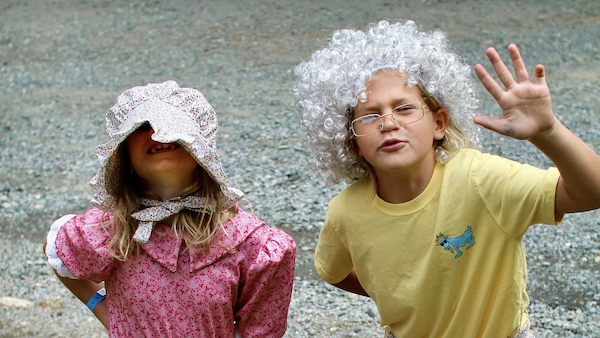
Campers being silly at Rockbrook Camp for Girls. (photo from rockbrookcamp.com)

Today, the word of the day is neoteny. It’s really a term from evolutionary biology, but it describes the retention of childlike attributes in adults. You might think of a grown-up who has a “baby face,” or is generally “cute.” When you are talking about these kinds of physical features, we tend to think it’s a good thing to have “young looking skin” or the “energy of youth,” for example. Neotenic people are usually attractive. Being neotenous is mostly considered a good thing.

But what about personality traits, attitudes or approaches to the world? What about these ways of being childlike? Think about what life is like as a child. The world is magical, full of curiosities, almost always kind and wondrous. As kids, we spend so much time being creative and playing. We feel so many more things – joy, excitement, anticipation, and the broad sensuous world around us. All of this probably makes it so easy to make friends (“Come on! Let’s play!”).

You’ve also noticed what usually happens when we grow up. We get serious, we latch on to patterns of behaviour, we get scared, we feel the need to protect what we believe, we accept responsibilities and feel pressure to perform and “be” someone in particular. As adults, we spend almost all of our time, mostly alone, working to stay organized and fighting opposing forces. We’re all too consumed by those adult things we’ve grown to accept as important, and it ain’t easy.

photo - Kids at Rockbrook Camp for Girls with soapy hair
(photo from rockbrookcamp.com)

It’s no surprise to see that being an adult overpowers those childlike traits. Sadly, to grow up often means losing touch with what we used to be, those aspects of being human we loved as kids. As adults, we have a harder time feeling what makes the world wonderful, a harder time making friends, and a much harder time playing and having fun. Of course, there are exceptions to this, but that’s the point. They are exceptions. And that’s too bad.

Let’s remember the value of being childlike even as adults.

Let’s be joyful as we’re responsible.

Let’s be curious when encountering opposing beliefs.

Let’s be friendly and playful, cooperative and excited about learning new things.

Let’s strive to foster our innate neotenous instincts.

Bringing this back to camp.… Summer camp is a place where kids can really be kids. It’s a special time when they are encouraged to play, make friends, be creative and explore the world around them. Separate from the forces of home and school (which are fundamentally about forming “adults”), camp provides a wonderful opportunity to strengthen our “kid selves.” It celebrates and fosters the neotenous traits. Camp is a joyful break from all that training, and that’s a big part of why it’s so fun.

Maybe we could say…. Camp helps you learn how to be a really great kid so that, later in life, you’ll be a really great (happy, satisfied, remarkable) adult.

Camp’s power to strengthen these “kid traits,” I suspect, will be a big part of that success. 

Jeff Carter is director of Rockbrook Camp for Girls, which is in the western part of North Carolina. For more information, visit rockbrookcamp.com.

Format ImagePosted on December 15, 2023December 14, 2023Author Jeff CarterCategories Op-EdTags education, lifestyle, neoteny, Rockbrook Camp for Girls, summer camp, youth
Growing and sharing our inner light

Growing and sharing our inner light

If we fear “advertising” our identities, we should do everything we can to maintain our inner light and self-worth in trying times. (photo from PxHere)

Years ago, my husband lost both his grandmother and his great aunt. Several years apart, he traveled to the Lower East Side in New York to attend their funerals at the same funeral home. There was a rabbi there who officiated at both funerals. This rabbi told the same story twice. Perhaps he had only the one funeral teaching, but my husband remembered it. This rabbi suggested that a famous rabbi taught that the worst of the plagues against the Egyptians was darkness. Why was darkness the worst? It was all encompassing, overwhelming, and seemingly permanent. No one knew if the sun would ever return. This rabbi used this to talk about death, but the metaphor stayed with us.

Despite our efforts to find the source for this story, we couldn’t track down its origin. While looking for it, I thought about darkness and what we can learn from it as we celebrate Hanukkah this year.

There are parallels between the Hanukkah story and our current struggles. Before Oct. 7, Israelis were distracted by potential changes to their court system and very divided politically. While that political turmoil didn’t disappear in the face of the massacre and the war, Israelis have immediately united in the aftermath to work together. Israelis I know have said that it isn’t the government that is taking care of those who are displaced, but rather nongovernmental organizations and volunteers from every corner of Israeli society. Israelis are cooking meals for soldiers, for moms managing as single parents for long periods of time, and for those who have been evacuated or made homeless by the conflict. Israelis and the Jewish people worldwide have also worked together as a people to take care of one another.

The military conflict of Hanukkah is a story of division and unity. There were Jews at this time, around 200 BCE, who had become increasingly assimilated and Hellenized. They cooperated with the Seleucid Empire. There was societal upheaval. Others were more traditional in practice and offended by the changes made by more “liberal”-minded Jews and King Antiochus. The Maccabees represented the traditional or more orthodox Jewish tradition. They rose up against King Antiochus’s pagan practices and the more assimilated Jews who had adapted to Hellenistic practice.

We know now that the Maccabees won these battles. They rededicated the Temple in Jerusalem. This is a military victory and a story around religious or national liberation. The rabbis tried to focus the religious observance on the miracle of the light (the “ner tamid,” the holy flame in the Temple that should not go out) rather than on the military situation. However, we wouldn’t have Hanukkah without these historical cultural conflicts or the Maccabees’ wars.

The historical details of this struggle are in the books of the First and Second Maccabees, which describe the Hanukkah story. While there are many references to the holiday in the Mishnah, the detailed story has been maintained through the Catholic and Orthodox churches, which kept First and Second Maccabees as part of their Old Testament. Protestants don’t include these books in their bibles. We study these texts to understand Hanukkah, but they don’t hold any official status in Jewish tradition.

This, too, has a parallel to our modern experience. While we know our traditions around Hanukkah, some of the context comes from many historical texts preserved by others. During this war against Hamas, we are being forced to defend ourselves against antisemitism, and also to defend the existence of the state of Israel. The worldwide Jewish community doesn’t have to use our personal experiences to educate others about this. The historical contexts for understanding both antisemitism and the need for the existence of the state of Israel are embedded in world history. Learning about the historical roots of Christian antisemitism in Europe or in the dhimmi law of Islamic empires is part of the greater history. Information about when the Romans conquered Israel and destroyed the second Temple can be found in multiple sources, including on the Arch of Titus in Rome. The creation of the modern state of Israel in 1948 is also part of a much broader historical context.

The rabbis chose, in creating the rules around the holiday of Hanukkah, to focus on light and miracles rather than military victories. Rabbi Lord Jonathan Sacks (z”l) wrote in “8 Short Thoughts for 8 Hanukkah Nights” about the ways in which the light is emphasized. His fifth short thought focuses on Maimonides’ teaching about how to fulfil the mitzvah of Hanukkah. Maimonides teaches that lighting candles on Hanukkah is precious and that one must sell something or borrow to fulfil this commandment. Yet, if one finds Shabbat is coming and you have only one candle? Light it for Shabbat. In this case, Maimonides teaches: “The Shabbat light takes priority because it symbolizes shalom bayit, domestic peace. And great is peace because the entire Torah was given to make peace in the world.” Sacks suggests that, “in Judaism, the greatest military victory takes second place to peace in the home.” He points out the great victory is a spiritual and not military one.

For Israel today, too, the great victory must be the notion of continuing to pray and negotiate for peace while also navigating difficult military situations.

Sacks makes several points that could be articles on their own, but the ones I felt most drawn to remain relevant. The Hanukkah candles should be lit so that people can see them outside, but if one is afraid of inviting hate, it has long been taught that it is OK to light the candles indoors, out of public view. Still, we are meant to be public about our “light” more generally and fight for it, if necessary. If we fear “advertising” our identities, we should do everything we can to maintain our inner light and self-worth in trying times.

Finally, Sacks discusses a story in the Talmud in which Rav and Shmuel, third-century rabbis, disagree over whether you can use one Hanukkah candle to light another (if you lack an extra candle, a shamash, the helper candle, that is used to light the other eight candles). Rav suggests that you may not, as this might diminish the light of the first candle. Shmuel disagrees, and halachah (Jewish law) follows Shmuel, who teaches that you can use one Hanukkah candle to light another because it helps the light grow and brings us more light. Using your light to enlighten others is the best practice.

I bumped into a rabbi I admire who lives in Winnipeg, where I live. We were each dropping off kids at a Jewish youth group activity. He wore a ball cap, as he was “off duty.” I thanked him for his contribution to a news article about the war and local protests, and he responded, “These are dark times.”

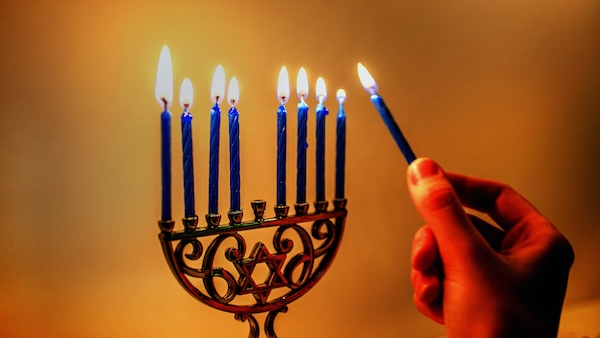
Like the plague of darkness in Egypt, we don’t know exactly how or when things will lighten. We need Hanukkah’s message and rituals to offer that light. Maybe we won’t put our Hanukkah candles on public display this year, but we can draw wisdom and comfort from our long history and rabbinic teachings. These teach us to reach deep to find the messages of hope, faith and peace from a story about a war. This time around, we need to act individually like Hanukkah candles. We can lend our inner lights to volunteer, to speak out, to support others and to kindle others’ lights during a hard time. Even during times of war and hate, we can be the light. 

Joanne Seiff has written regularly for CBC Manitoba and various Jewish publications. She is the author of three books, including From the Outside In: Jewish Post Columns 2015-2016, a collection of essays available for digital download or as a paperback from Amazon. Check her out on Instagram @yrnspinner or at joanneseiff.blogspot.com.

Format ImagePosted on December 1, 2023November 30, 2023Author Joanne SeiffCategories Celebrating the Holidays, Op-EdTags Hanukkah, history, Jonathan Sacks, lifestyle, politics, Talmud
Contemplating the war

Contemplating the war

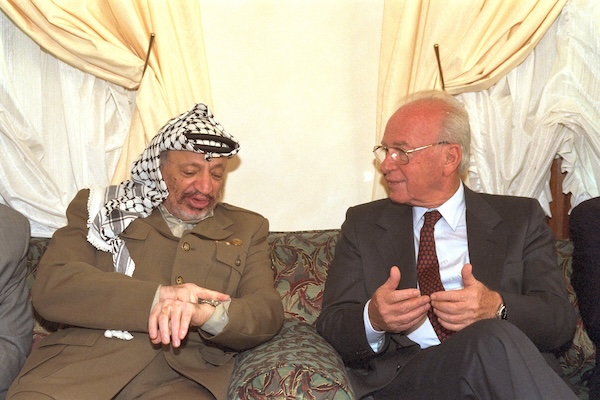
Prime Minister Yitzhak Rabin meets in Casablanca with PLO Chairman Yasser Arafat, 1994. (photo from flickr.com/photos/government_press_office/6324960139)

With all the darkness surrounding us since Oct 7, since the shattering of that tranquil Shabbat, have the people of Israel witnessed a miracle?

When Israel’s guard was fully down, when the south was under a vicious blitzkrieg by the monstrous Hamas, why did Hezbollah – with their 150,000 missiles pointed towards Israel – not exploit this excellent opportunity to open a second front? When Israel was existentially exposed, Hezbollah chose not to respond, at least not in any real-time, meaningful way. Complex geopolitical and military and conspiracy theories abound, attempting to explain why and why not. Pundits speculate and postulate and surmise. But maybe, just maybe, at some very esoteric level, the simplest and most logical answer, according to my close friend, a rabbi: it was a modern-day miracle. Pftt, pftt, pftt, as my great-grandmother would add.

***

The lights! Growing up, I was conditioned to shut the lights when leaving a room. I attempted to teach the same to my kids – and to my wife, although sometimes it seems she opens the lights when leaving a room. And then the missile sirens go off. Whoa! Slow it down. We have 90 seconds. Certainly time enough to shut the lights when racing to our shelter. My shouts muted by the screeching of the red alert, “Lights! Lights! Shut the lights!” I yell. To no avail, of course.

***

The day after … too soon to start thinking about it? That is where discussions about the war ultimately end up, each of us with our own theory, our own concerns, our own hopes. Once Israel achieves victory, in whatever form that takes, Gaza must then be rebuilt. But first it must be deradicalized – no more Hamas. Demilitarized – no more bombs hidden in schools, mosques and hospitals. And democratized – according to Winston Churchill, it’s the worst form of government … except for all others.

For this to succeed, Gaza should be divided into three cantons, similar to Germany, post-Second World War, each managed by a strong, Western or westward-looking country with enlightened self-interest for a stable and less radical Middle East. Maybe the United States. Maybe Britain. Maybe Germany. Maybe Egypt or Jordan. Escorted by a massive 21st-century Marshall-like plan. Maybe the Blinken Plan. Channeling the equivalent of $15 billion in 1948 purchasing power, that’s $191,569,917,012.48. OK, not that much, as the Gaza Strip is tiny compared to Germany, but enough funds to restore its economic infrastructure, to rebuild the Strip and rehabilitate its citizens, and make Gaza the Singapore of the Middle East – shipping, tourism, industry, maybe even offshore natural gas – like it could have become in 2005, when Israel fully withdrew. But then, what do I know.

***

Well before the day after, we need to take care of the Israeli hostages, including babies, children and octogenarians, both those still held in unknown condition by Hamas and other terrorists in Gaza, and those who have been returned. Interesting, but not necessarily surprising, is that neither the United Nations General Assembly nor UNICEF nor even the Red Cross demanded their unconditional release. Let alone a humanitarian visit.

As related by Liat Collins of the Jerusalem Post, Guelah Cohen – a 1980s right-wing parliamentarian, 2003 Israel Prize winner and mother of current senior Lukid lawmaker Tzachi Hanegbi – summarized this tragic situation best. Back during the First Lebanon War, when Tzachi was a combat solder, Cohen was asked what she would do if he were taken prisoner. She thoughtfully responded that, as a mother, she would be outside leading the protests to bring her son home, shouting with a megaphone outside the Prime Minister’s Office for the government to do anything and everything in its power to achieve his release. But, as a member of the government, she would be sitting quietly in the Prime Minister’s Office, advising him not to listen to the public. 

Prime Minister Yitzhak Rabin, during the controversial days of the 1993 Oslo Peace Accords process and accompanying Palestinian terror, said, “We must fight terrorism as if there’s no peace process and work for peace as if there’s no terror.” How utterly profound.

So, with the tragic circumstances of the hostages, the government must listen to the cries of the hostages’ families. But they also must lead and not be swayed by public opinion. The government must fight the war on Hamas as if there were no hostages and must, at the same time, bring all the hostages home. Alive.

***

As for economic recovery, I share a very micro, personal anecdote. About 18 months ago, we redid our condo, buying much of our furniture from BaKatzer, a wonderful and unique boutique furniture store located in a moshav (agricultural community) just outside the Gaza periphery, not too far from Ashkelon, which receives the brunt of the rockets from Gaza. While not the easiest of customers – I can be very demanding on price and service – I recently sent the owner a WhatsApp message. “Hey!” I wrote. “Hope all is well during these difficult times and hope to be back soon for more shopping.” Given my unforgiving consumerism, maybe she saw that as another threat. Alas, I can also be a very loyal consumer.

***

And there we were, my wife and I sitting around our Shabbat table with my daughter and her best friends, one with a brother who is a paratrooper and fighting in Gaza, the other an intelligence officer whose service was just extended, and still another, who was on a weekend leave from his Golani unit stationed up north. The conversation quickly moving from the trivial and benign to questioning and 

responding to issues and concerns that should be far away from them, that should not trouble the young minds of these 20-somethings, who should not deal with the complexities of miracles and hostages and day-after theories. Alas, there we were, talking of war and survival, looking hopefully to tomorrow. Am Israel chai. 

Bruce Brown is a Canadian and an Israeli. He made aliyah … a long time ago. He works in Israel’s high-tech sector by day and, in spurts, is a somewhat inspired writer by night. Brown is the winner of the 2019 AJPA Rockower Award for excellence in writing, and wrote the 1998 satire An Israeli is…. Brown reflects on life in Israel – political, social, economic and personal.

Format ImagePosted on December 1, 2023November 30, 2023Author Bruce BrownCategories IsraelTags history, Israel-Hamas war, lifestyle, peace, politics, terrorism

Finding awe & wonder again

As a kid, I remember sitting through High Holidays with my family at our Reform congregation. We’d hit a section in the services where the English responsive reading, inspired by the Hebrew, used words like “awe,” “awesome” and “supreme.” There were smirks and stifled giggles as we passed this yearly reading. Why? Our family had discussed it at a holiday meal, and we agreed this sounded like a really big pizza special. It was hard to concentrate after that, thinking about pizza.

This moment hit me again when I heard Rabbi Jeffrey Saxe, one of the rabbis at Temple Rodef Shalom in Virginia, give a Kol Nidre sermon about awe, gratitude and wonder. It was powerful. Before I get into the details, we chose to stream services again this year from home in Winnipeg. In part, it’s so we can be a part of two worlds – my parents’ congregation in Virginia, where I grew up, and our Winnipeg synagogue, too. After the holiday, I can discuss sermons with my mom as if I had been sitting beside her during services and this is meaningful. For many people who are apart from their families during holidays, using shared moments to bond is important.

Even though I knew our choice to stay home made sense, I felt pressured to “get back to normal” and “be together again,” especially when a synagogue publication suggested that those who chose to stream did so for “mobility reasons.” (Not all those who choose to stay home have the same challenges. There are multiple reasons to stay home.)

Back to Rabbi Saxe’s sermon, which touched on the ways that the rabbis created liturgy that helps us remain grateful, and even encourages experiences of awe and wonder. If you see a rainbow, there’s a prayer for that. There are specific prayer formulas for eating fruits, snacks, and there’s even, Rabbi Saxe mentioned, a prayer for after you’ve gone to the bathroom. At this, some in the congregation laughed.

I felt shame. Not only is the bathroom prayer something I’ve written about and, yes, recited, but it’s also something I might have laughed at as a kid. Without going into details, thanking G-d for the intricacies of how our bodies work, opening and closing appropriately at the right times, can be absolutely meaningful. If you doubt this, maybe you have been very lucky and never had food poisoning or a stomach virus. Yes, we smirk and laugh when we feel uncomfortable, sure. Also, it’s when we take things like being healthy for granted.

I also felt weird guilt about not being in a congregational community over the holidays, even though we had a holiday meal with another family, dressed up, streamed services and took time off together. I felt strange checking messages over Yom Kippur. Then something happened.

Within a short period of time, two of our close family friends ended up in the hospital. One is in his 80s, in ICU, with COVID. The other friend is 5 years old, and she has a sister who is a newborn.

During Yom Kippur, the 5-year-old was admitted to Children’s Hospital after being up all night in the emergency room.

In the middle of Yom Kippur services, I got up, went to the kitchen and gathered together food for the parents for this unexpected stay. This is why we make the second round challah, I thought, as I threw it in the bag. I left my family, hopped in the car while fasting, and navigated the hospital until I found the room with one dear-to-us child with her oxygen mask, her exhausted-looking parents and their infant. I handed them the food, it wasn’t time for a visit, and rushed out again.

Somewhere on the drive home, I processed what had happened. I felt a profound sense of awe. I had been in exactly the right place. If I’d gone to services in person, I wouldn’t have been online or known that our friends’ child had been admitted to the hospital. I wouldn’t have been able to rush out and offer food, a quick bikkur holim (visiting the sick), and support her family. Leaving the twilight of their windowless hospital room, I was blinded by sunlight as I left the garage. I parked in front of our house and took a moment to cry.

Our liturgy traditionally links daily gratitude with prayer. This is an automatic check-in with nature, our bodies and the world to see and wonder at what’s around us. However, we’re all too likely to get sarcastic, cynical and, frankly, depressed. Mental health experts recommend expressing gratitude and getting into nature to improve our health, but the rabbis, like other faith traditions, prescribed it a long time ago.

It’s easy to ignore the natural world or our bodily functions. I’ve become increasingly aware of the sensory overload in our society. Some people easily manage very stimulating environments, like a dance club or even a household with the TV and radio on, a dog barking and a phone ringing, all at once. Others cannot manage this much. Sometimes, it’s diagnosed as a sensory processing disorder, but this can mean different things. There’s a person who cannot manage too much input, and the person who needs fidget toys and constant stimulation to maintain equilibrium. Nature or the trendier “forest bathing” can sometimes help us find balance.

As I head into autumn, I’m seeking fewer big events or gatherings. Here’s to quiet moments of awe. One of my kids is a new band student. His enthusiasm about his instrument is contagious. I cannot wait to play sax duets and “honk” together. The other kid has been spotting woodpeckers on our dog walks and pointing out migrating birds as the weather turns.

Rabbi Saxe closed his sermon with Genesis 28:16, when Jacob wakes up and says, “Surely, G-d is in this place and I did not know it!” Perhaps, like Jacob, we can all wake up and discover the joys of small wonders, too. We just have to slow down, open up and look for them.

Joanne Seiff has written regularly for CBC Manitoba and various Jewish publications. She is the author of three books, including From the Outside In: Jewish Post Columns 2015-2016, a collection of essays available for digital download or as a paperback from Amazon. Check her out on Instagram @yrnspinner or at joanneseiff.blogspot.com.
Posted on October 12, 2023October 12, 2023Author Joanne SeiffCategories Op-EdTags bikkur holim, High Holidays, Judaism, lifestyle, mitzvah, Talmud

Obligated to warn of danger

I often chat with a retired doctor neighbour as I walk by his house with my dog. When he mentioned hiking solo on the famously difficult Mantario Trail in southeastern Manitoba, it sounded risky to me. I asked him what safety precautions he was taking. Afterwards, he chided me for being overly motherly and a worrywart. While his response made me feel uncomfortable, maybe it was because he was defensive about a potentially unsafe hike. The defensiveness might be a sign that part of his brain thought I might be right.

I just studied Kiddushin 29, a page of the Babylonian Talmud, while doing Daf Yomi (a page a day of Talmud). It turns out, this scene has played out before. At the time, rabbis had their own yeshivas/schools where others came to learn and a seven-headed demon was in Rav Abaye’s “study hall.” The best advice to avoid a demon, according to the rabbis, was to travel during the day and in pairs. Demons were known to come out at night, but this situation was so dangerous that students were unsafe even during the day.

Now, it happened that Rav Aha bar Yaakov wanted to come study with Abaye, but had nowhere to stay. Instead of helping Rav Aha find a place to sleep, Abaye tells others not to accommodate him. This forces Rav Aha to stay overnight at the study hall. It’s a set up. There, Rav Aha must battle the demon and vanquish it. Abaye hopes for a miracle to take place.

When Rav Aha is faced with the demon, the text indicates that he prayed. As he prayed, he bowed to shuckle (the movement many Jews make when davening/praying), and each vigorous bow resulted in knocking off one of the demon’s heads. Rav Aha battles the demon with prayer and survives.

This storyline, according to Dr. Sara Ronis’s introduction to the page on My Jewish Learning, fits into a greater literary and historic context. There are many tales of a divine hero combating a demon in Ugarit and ancient Mesopotamia. There are Zoroastrian, Christian and Jewish holy heroes who triumph over demons through prayer.

Rav Aha was a pious and great man who came eagerly to study with Abaye. However, he wasn’t without fault. Just before this story takes place, Kiddushin 29b says that Rav Aha sent his son to study. Alas, his son’s studies weren’t sufficiently “sharp,” so Aha left his son at home to manage the household while Rav Aha went to study instead.

After his confrontation with the demon, Rav Aha says to the others, “If a miracle hadn’t occurred, you would have placed me in danger.” Rav Aha was given no warning about the demon. He had no opportunity to stay elsewhere. Abaye relied on Rav Aha pulling off a miracle to save his study hall and his students.

This is one of the talmudic stories you can “sink your teeth into.” The rabbis appear as flawed people and a product of their time. There were stories about demons floating around the wider community, and people in general worried about demons and how to fight them. In the Jewish community, you see a “pious and learned” person, Rav Aha, who chooses his own study over further opportunity for his son’s education. And Abaye is a famous scholar, but asks others to deny hospitality to a student, and chooses to endanger others.

After my concern over the Mantario Trail hike, I got to wondering. If your friend is about to be in a potentially unsafe situation, do you have an obligation to warn them, to show concern? I believe we do. I still think I have this obligation, even if I’m belittled for it. I think we have the obligation even if some see it as hovering, annoying or overly solicitous.

I think about this a lot. We live in a peaceful urban residential enclave, but it’s not unusual to hear news reports of violent crime just a few blocks away. We have a neighbourhood watch, too. It pays to be cautious to avoid “demons” that might endanger us. It isn’t just a motherly inclination to be street smart. It’s not wrong to let others know if we foresee danger ahead.

Returning to this talmudic story, I’m angry that Abaye doesn’t warn or protect his student, Rav Aha. Abaye had an opportunity to do the right thing and failed in his responsibilities as a teacher. I’m also amazed at Rav Aha’s tact and self-control. After being endangered in this way, I might have made a much bigger fuss.

This time of year, we’ve got a lot to think about in the Jewish world. On Yom Kippur, the Day of Atonement, we spend time thinking about our behaviours and failings as individuals and in community, the concept of forgiveness and our fate for the coming year. Yet we also look forward to Sukkot, grateful for the harvest, and to celebrating the Torah with joy on Simchat Torah.

Our calendar is complicated. Like the story of Abaye and Aha, we can’t find just a single obvious answer. Maybe this keeps us from getting bored as we repeat the rituals of each Jewish year. Perhaps it helps us sharpen our skills so we can perform miracles, protect and look out for one another, and slay unexpected (proverbial) demons, too.

Joanne Seiff has written regularly for CBC Manitoba and various Jewish publications. She is the author of three books, including From the Outside In: Jewish Post Columns 2015-2016, a collection of essays available for digital download or as a paperback from Amazon. Check her out on Instagram @yrnspinner or at joanneseiff.blogspot.com.
Posted on September 22, 2023September 21, 2023Author Joanne SeiffCategories Op-EdTags High Holidays, Judaism, lifestyle, Talmud

A yearly reminder to return

Family friends in their 80s just came over to visit. It was perhaps their first time at our house in a year or so. They’ve been busy. They had a family member move back to Winnipeg, there’s been a pandemic and, well, we’ve been busy, too, with kids on summer break, work obligations, visits from relatives, and home renovation.

When they first visited, our new (to us) historic home was empty. While the house had great character, original workmanship and many good points, it also needed a ton of work. We’ve had it all, from asbestos and electricity to plumbing, insulation, and so many other repairs. It didn’t have a single bathroom that worked.

When they walked in today, they said, “Oh wow!  It looks like you’re home!  It looks like you really live here now.” My kids then took our friends on a grand tour. They were amazed and impressed by all that’s happened. They saw such big improvements and wanted to know what we’d done ourselves, what our contractors had completed, and when and how it had happened. It was wonderfully reassuring, and also strange. We hadn’t realized how long it had been.

I couldn’t pin down when last they’d visited, even though I looked at the calendar. Then I also noticed that it’s Elul, the Jewish month where we’re supposed to wake ourselves up. We hear the shofar each day if going to morning minyan, a way to remind ourselves that Rosh Hashanah and Yom Kippur are coming. We need to look inward, do teshuvah, which is usually translated into English as repentance. Another way of understanding this word is to read it as return.

I have heard sermons or read things that entreat me, as a Jewish person, to start repenting – it’s time to apologize, repair relationships and become a better person. We need the reminder that repairing relationships and apologizing for things we’ve done wrong is important all the time. It’s also a specific ritual to prepare for the High Holidays.

Even as we enter this teshuvah season, I’m thinking of that other definition, the notion of return. Our household has been working hard to cope, in good humour, through an entire year of living through a house under renovation.

We’re lucky – we have a home! It’s mostly been warm and comfortable. Still, we’re all sleeping in temporary places. I’ve had my clothing “organized” in a laundry hamper for the entire year. We’ve had times with one functional bathroom and no kitchen. During this year, there have been days when getting to my chest of drawers or my oven has been an impossibility. We’ve moved and lost things multiple times. We’ve had days without water or heat. Other times, my kids are going to sleep or practising piano or doing homework with contractors working and making noise in the background.

When I see the house through my friends’ eyes, it’s a huge undertaking. This renovation is, in some ways, helping return this home to its best self. When it’s complete, we will have opened up windows and doors that were closed off for 40-some years or more. Things will be safe, full of warmth, light and air, with electricity that’s up to code and even the installation of a much-needed structural beam.

Seeing this house change through my friends’ eyes made me think about this return concept. When we return to ourselves, and hear our inner voice again, it means several things. Our teshuvah/return helps us be the best we can be. First, perhaps we’ve lost our way, but, as the morning liturgy reminds us, we were created in the divine image. It’s like an old house. We have good bones! Maybe we need to do some upkeep, work to stay up to date. Returning to our best selves might require us to listen, pay attention to our gut feelings, do some renovation.

Also, the teshuvah or returning work might be different from year to year. To make a new year a fresh start, we might well have to return to our core values and strengths, open up disused spaces that had been blocked off in ourselves. Sometimes, we start by apologizing to ourselves, too. We all underestimate how far we’ve come and how much we’ve grown and changed. I know our family is guilty of forgetting how much we’ve dealt with over the last year. Although we do remind each other of the changes we’ve experienced, change feels like the only constant right now, as walls move, windows and doors are repaired, and the light comes in again. Through this, we never know which piece of furniture will need moving or what we’ll have to clean (again) because of construction dust.

It’s also about being grateful. Having a kitchen to cook in this summer has been a celebration. How lucky it is to have all this garden produce and to have a place to cook it in. So many don’t have a kitchen or a garden. Maybe they lost it to fire or a bombing. Every day, I feel grateful even as I’m exhausted by my new garden’s potential zucchini and squash crop.

This return work must be grounded in a bigger reality. More than one person has remarked to me that they couldn’t do what we’re doing. In context, though, I’m not sure it’s such a big deal to renovate an old house. People are fleeing wildfires, losing their homes and families, and suffering from war, famine and disease across the world. Living in the middle of a renovation doesn’t feel like too much. It’s a privilege to have a home and have the resources to undertake this repair.

When I’m considering my gut feelings, I know I have high (perhaps unreasonable) expectations of myself and others. I suspect others may approach self-improvement this way, too. Perhaps the biggest teshuvah is remembering that we return to ourselves, while understanding that others might be elsewhere on this path … and that’s OK. Wishing you everything good as we begin 5784!

Joanne Seiff has written regularly for CBC Manitoba and various Jewish publications. She is the author of three books, including From the Outside In: Jewish Post Columns 2015-2016, a collection of essays available for digital download or as a paperback from Amazon. Check her out on Instagram @yrnspinner or at joanneseiff.blogspot.com.

Posted on September 1, 2023September 2, 2023Author Joanne SeiffCategories Op-EdTags High Holidays, Judaism, lifestyle, teshuvah
Rosh Hashanah table talk

Rosh Hashanah table talk

In his diaries, Franz Kafka reflected that our not knowing “the real highway” we’re on means that “we drift in doubt. But, also in an unbelievable, beautiful diversity. Thus, the accomplishment of hopes remains an always unexpected miracle.” (photo from Piotr Malecki)

The Chassidic Rebbe Haim of Tzanz told this parable: A person had been wandering about in the forest for several days, unable to find a way out. Finally, in the distance, he saw another person approaching him, and his heart filled with joy. He thought to himself: “Now, surely, I shall find a way out of the forest.” When they neared each other, he asked the other person, “Brother, will you please tell me the way out of the forest?”

The other replied: “Brother, I also do not know the way out, for I, too, have been wandering about here for many days. But, this much I can tell you. Do not go the way I have gone, for I know that is not the way. Now come, let us search for the way out together.” (Adapted from S.Y. Agnon, The Days of Awe)

Perhaps this is a story to read at your Rosh Hashanah table, to start a discussion about your – and your guests’ – hopes for new direction in life. Think about a new path you would like to explore this coming year, or let others know about an old path you have tried that they might best avoid.

In his diaries, Franz Kafka, the 20th-century Czech Jewish writer, reflected on the difficulty of finding our way and yet our eternal hope:

“If we knew we were on the right road, having to leave it would mean endless despair. But we are on a road that only leads to a second one and then to a third one and so forth. And the real highway will not be sighted for a long, long time, perhaps never. So, we drift in doubt. But, also in an unbelievable, beautiful diversity. Thus, the accomplishment of hopes remains an always unexpected miracle. But, in compensation, the miracle remains forever possible.”

The poet and Bible scholar Joel Rosenberg speaks of Rosh Hashanah as a homecoming, rather than as journeying:

“The Hebrew word for year – shana – means change. But its sense is two-fold: on the one hand, change of cycle, repetition (Hebrew, l’shanot, reiterate, from sh’naim, two), but, on the other hand, it means difference (as in the [the Pesach seder when we ask] mah nishtana? How is this night different?) We are the same, we are different. We repeat, we learn, we recapitulate. We encounter something new. ‘Shana tova!’ means, ‘Have a good change!’”

And yet, how familiar is this time! The chant, the faces, the dressed-up mood, the calling on the same God, the words, the blessings, the bread, the apples, the honey, the wine – all are the same, and yet completely new. We meet ourselves again and for the first time.

A year that begins anew is also the fruit of the year that preceded. Good or bad, it has made us wiser. It will not constrain us. We choose from it what we want and need like gifts we brought from journeys. Rosh Hashanah is always like coming home – just as Pesach was always going on a journey.

“How do we find our Divine Parent who is in Heaven? How do we find our Parent who is in Heaven? By good deeds and the study of Torah.

“How does the Blessed Holy One find us – through love, through brotherhood, through respect, through companionship, through truth, through peace, through bending the knee, through humility, through more study, through less commerce, through the personal service to our teachers, through discussion among the students, through a good heart, through decency, through No that is really No, and through Yes that is really Yes.” (Midrash Seder Eliyahu Rabbah 23)

Noam Zion is a senior fellow emeritus of the Kogod Research Centre at the Shalom Hartman Institute. He has developed study guides on Bible, holidays and rabbinic ethics. His publications and worldwide lectures have focused on “homemade Judaism” – empowering families to create their own pluralistic Judaism. This article was originally published in 2014; it is adapted from his Rosh Hashanah seder. Articles by Zion and other Hartman Institute scholars can be found at shalomhartman.org.

Format ImagePosted on September 1, 2023August 30, 2023Author Noam ZionCategories Celebrating the HolidaysTags Franz Kafka, Joel Rosenberg, Judaism, lifestyle, midrash, Rebbe Haim of Tzanz, Rosh Hashanah

The first step is the to-do list

Yesterday, I shared my to-do list with a friend via email. She responded with “Ahh! I’m tired just reading this!” What I didn’t mention is that I had to do all this plus other chores, thrown in, which I had either forgotten to write down or were such household habits that I didn’t list them. For many caregivers who work and manage households, this sounds familiar. It’s the list that is the first step. Write it down. Name the obligation. Then release yourself from trying to remember it all. Finally, cross it off the list later.

This isn’t a new phenomenon. Studies have shown how much of this organizational and emotional labour falls to women. For example, a recent National Public Radio piece from the United States covered research by economists, which showed that women (mothers) were almost always contacted by schools first, no matter which parent was designated as the “first contact” on the emergency form. The social media chatter that followed remarked on how female medical residents or surgeons, working hours away from their children’s schools, were still called first even though the primary caretaker was the father. In the study itself, one economist described the mental load of planning ahead for “if the school called” and how women’s workload could be managed in such situations. She noted that, even though her husband was the vice-president of the Parent Teacher Association, the school always called her first.

In economic terms, women then self-select for lower paying, more flexible work simply to manage these challenges, resulting in lower income and fewer opportunities for career growth. Societal obligations placed mostly on women create a lifelong effect on earning power and household income.

This morning, as I bake bread, make chicken broth in two slow cookers, write this article and air out the house with fans because of an unexpected drop in temperatures due to a rainstorm, I time everything to fit into the hours between when I drop kids off at 9 a.m. and pick them up at noon for their half day of camp. This is, of course, not a specifically Jewish problem, but aspects of it are in our house.

We have twin 12-year-olds, with both kids doing b’nai mitzvah lessons at the same time. These kids come with different challenges. Like all learners, they may need different supports to master chanting trope. Amid the meltdown tears last night, it became clear that what was necessary was for each kid to have 15 minutes to practise separately every day with me. As the crying continued – and I include myself in the crying – my partner tried to help.

This is when you might wonder why all this falls to me, and you’d be right to ask. My partner told us that the year before his bar mitzvah involved a lot of crying. He was so overwhelmed that he quit playing drums at school, because he couldn’t manage both things. His mother had been given no Jewish education. She couldn’t read Hebrew and didn’t know the prayers. His father worked late every day, coming home at 11 p.m. My twins’ dad was truly on his own, with a cassette tape. He never learned the trope and struggled with short-term memory issues. Mastering his bar mitzvah portion took him a long time. As an adult, he never gained some of these prayer skills. A demanding job means now is not the time for him to catch up. The obligation’s all mine.

We’ve now been married for 25 years and I just learned last night about this tough path my husband took towards bar mitzvah. By comparison, I had supportive parents with some Jewish literacy, plus we attended services regularly. I was self-directed as a learner. Mastering everything for my bat mitzvah was interesting and challenging but not a struggle. I continued learning through university and graduate school and beyond, as I continue to study Talmud when I can. We chose a bilingual Hebrew/English elementary school for our kids partially because it would make bar mitzvah study easier for them.

Few people see what my lists of work and household obligations look like. I tell even fewer people about fitting in 20 minutes of Daf Yomi, a page of Talmud every day. When I mention the Talmud study, I’ve been asked why I bother. The minutiae of discussions of Jewish law that rabbis conducted so long ago is of no interest to most. Sometimes, if the person wants to know why, I explain that I learn things about Jewish tradition, history and daily life from these debates.

I also admit to myself that I find some reassurance in these pages. Although the specifics might have been different, life’s minutiae is pretty much the same. The rabbis struggled over multiple daily tasks, relationships and household concerns in many of the ways I do. They sweated the details, even if they didn’t do them all personally.

If everything works out, in June 2024, my kids will step up to the bimah (pulpit) and become bar mitzvah boys, which is a huge lifecycle event. Between now and then, practising with them will be another part of my to-do list. Good study habits mean you do a little every day until, suddenly, you learn something new. Just like my lists, nothing is insurmountable if you name it, take it step by step, and cross it off the list when the task is complete.

Like many women, I get bogged down by the minutiae. I wish I could share more of the household labour and emotional load. Even men who try to assume more of these tasks have to struggle against the societal expectations our culture wields. Step by step, we make change in our lives, our lists and our expectations for one another. It’s not a sprint. You can’t cram the night before to pass this exam. Life is a series of chores, moments, obligations and, well, joys.

Early this morning, I leashed up the dog while I sang the first Haftorah blessing aloud. I try to put the melody into the twins’ heads while donning my shoes and raincoat as I head out. Each step makes a difference to hopefully hit one very big milestone ahead.

Joanne Seiff has written regularly for CBC Manitoba and various Jewish publications. She is the author of three books, including From the Outside In: Jewish Post Columns 2015-2016, a collection of essays available for digital download or as a paperback from Amazon. Check her out on Instagram @yrnspinner or at joanneseiff.blogspot.com.

Posted on August 18, 2023August 21, 2023Author Joanne SeiffCategories Op-EdTags culture, Judaism, lifestyle, parenting, social commentary, Talmud, women

Sharing the load as a team

The greatest triumph of our summer so far is moving 10 cubic yards of gravel. Obviously, there’s a story in this! When we moved to our present house, we knew that the landscaping (along with the plumbing, electricity, insulation, boiler and more) needed work. A previous owner created rock-filled beds in both the front and backyards. This wouldn’t have been our chosen landscaping technique, but, when we moved in, these beds had so many weeds and enough scattered rock that it would be hard to remove them, so we chose to improve on what was here already.

We found an advertisement offering an entire dump truck’s worth of (slightly used) gravel for a low price. I made bad geology jokes about “new” versus “used” gravel after that, but we called them up. Soon after, we received two huge piles of gravel in our driveway, dumped efficiently by a Hutterite colony that found they had too much on hand. We had saved cardboard and put it down to kill weeds. Then the cardboard was covered with the slightly dusty and dirty (used) gravel.

The first pile of gravel, for the front of the house, was moved by the end of May long weekend. Through trial and error, I found a successful system that one mom (me) and twins (age 12) could manage. It involved using beach sand buckets and plastic flowerpots. Each person filled up two of these, and we pretended to do weightlifting as we marched from the pile to the landscape bed, over and over. My much larger partner filled a heavy wheelbarrow full of gravel with a shovel and moved it instead. We also had help from a kind neighbour who loaned us a second garden cart, which could be operated by the twins if (and only if) they cooperated.

The backyard gravel pile took longer. It wasn’t in the way as much, not as publicly in view and, well, some of our enthusiasm for the project had worn off. We finally moved it all into the backyard by mid-July. There are, of course, people who hire landscapers using Bobcats, or workers with multiple wheelbarrows, but we did the physical labour, for free, as a team. It worked for us. As neighbours commented on the hardworking “mama and twins” and the disappearing piles, we felt proud of our efforts.

This gravel experience reminded me of other Jewish traditions around summer, with Tisha b’Av coming. This day of mourning, where we remember the destruction of the Temple in Jerusalem, has a lot of upsetting stories attached to it. One reason the rabbis give about why the Temple was destroyed is “sinat chinam” or “baseless hatred.” In other words, there was so much infighting between Jewish factions that it caused the Romans to be able to destroy Jerusalem and the Temple.

The Roman Empire was big and powerful. Probably there were many reasons its leaders wanted to conquer more territory, including Jerusalem and the Temple. Yet, the talmudic rabbis give multiple examples of how individuals’ bad behaviour resulted in the fall of the entire Jewish world. Was every single one of these painful stories of bad behaviour completely historically factual? Well, maybe not. It’s hard to say from here.

Regardless, the personal stories of hatred remain powerful thousands of years later. I thought of this stuff as we trudged back and forth with our little buckets of stones. I also nearly joked with my children about Sisyphus, forced to push his rock uphill for eternity, as they occasionally complained, but Sisyphus was Greek, not Roman, and I didn’t want to mix metaphors while hauling gravel.

What I found most interesting about moving the gravel, or cleaning up construction messes as a family, is that, after initial grumbling, we all settle down into a rhythm together. We put in the work. We all pull in the same direction and, well, with all four of us working, things get done.

This struck me as the absolute opposite of sinat chinam, or baseless hatred. We are faced so often with hard tasks – as individuals, as families, in neighbourhoods or in the wider Jewish community. Not every task is physical labour either. It’s easy to fall apart and bicker over everything instead of finding a common cause and working efficiently together. However, if we search for what we have in common, including big goals, it’s amazing what we can accomplish.

Jewish people are like everyone else – we’re all very different individuals, prone to disagreement and conflict. Some of us will avoid haircuts, washing clothes, eating meat and then fast on Tisha b’Av. Others may skip those rituals altogether. Whatever we do or don’t do for Jewish holiday observance, we also might forget that we have things in common, too. If we choose to pull in the same direction to make changes about things that matter to us, we can do it.

I’m not claiming to know what matters for all of us or how to fix it, because in my mind, that, too, is part of our work. The work we have to do together, as people who care about one another, as part of a larger community. Perhaps identifying common goals is a hard part of our task, too.

This summer, my family moved gravel. It wasn’t world peace and it didn’t end homelessness or poverty. It was just a step closer to restoring our character home, which needs so much more done to it. Each time I see my family working together, wiping up endless drywall dust or moving small stones, I think about how much we accomplish and build as a family “team” and how proud I am to be a part of this one.

As community members, we’ve also got a “team” and, together, we can do so much to improve the world if we pull in the same direction. If we base our efforts in love, we can find common ground and work together. It might not bring about the rebuilding of the Temple in Jerusalem (and not everybody even yearns for that) but it might make the world we live in a much better place in the meanwhile.

Joanne Seiff has written regularly for CBC Manitoba and various Jewish publications. She is the author of three books, including From the Outside In: Jewish Post Columns 2015-2016, a collection of essays available for digital download or as a paperback from Amazon. Check her out on Instagram @yrnspinner or at joanneseiff.blogspot.com.

Posted on July 21, 2023July 20, 2023Author Joanne SeiffCategories Op-EdTags history, Judaism, lifestyle, Talmud, Tisha b'Av

A life of light and of shade

The quality of our lives seems to contain alternating waves of good and bad, hard and soft, light and shade. If we are lucky enough to appreciate that this is the nature of existence, we can bear much better with the shady parts of our lives. We can have faith that, whatever challenges we are facing, no matter how painful, the good times will roll around again. And the good times can be so good, so full of richness, pleasure, joy, lightness and brightness, that they are worth the price we may ultimately have to pay for the good fortune we have the luck to be earning.

The dilemma is that sometimes we do not realize that what we are passing through are the bright times, the good times, the best times. That often comes only with retrospection.

I remember that I left home at the age of 18 to spend a year of work and study in Israel. I did not think to ask for the permission of my parents, I just made my plans and informed them of those plans. I never thought to do otherwise, and I was never questioned. I saved up the money I needed from the odd jobs I performed as I wended my way through my high school years. I applied for the assignment, gathered my pennies and off I went, traveling across the globe.

I was a part of a group, but I felt very much alone. I remember that, being alone, on the ship sailing across the ocean, my mind brimming full of speculations about the nature of the world. I wrote incessantly about that on every scrap of paper I could find.

I have some of those scraps in a file I have kept to this day. So much of it, seems to me today, to be a load of nonsense. The gist of it was that I was a solitary sailor afloat on the sea of life and that life was incredibly sweet. I was full of wants. I wanted to find a true companion. I wanted a country of my own. I wanted to save the world. I was going to do it all myself if I had to. At the time, I could read it all in the palm of my hand, and it was all going to happen. I was totally free from obligations, except those that I chose to lay upon myself – and included in those was responsibility for creating the perfect world. All of us are heroes in our own eyes, and we have to try as hard as we can to live up to that image of ourselves.

How was that not the most superlative moment of my life to that date? I had not the merest clue as to the nature of the importance of those moments in my existence. I was unconsciously writing an agenda for my life.

I am no different from others, and all of you have had those moments in your lives, those moments whose importance is only appreciated by you with the passage of time and the gleanings of experience.

I remember holding a child of mine in my arms, and feeling like I would burst with joy. I remember when I was leaving my first job, hearing that my superiors were frantic about who they could find to fill the hole I was leaving. I remember when I realized that I had succeeded in resolving a dilemma that would yield years of success at a seemingly impossible task that I had taken on. I remember the instant when I recaptured the love of my heart after 50 long years of disappointment when I had not found the companionship I longed for. I remember the moments when I began to understand what elements of my behaviour prevented my Bride from feeling the depth of my love for her. All these events, which cast other parts of my life in the shade where they belonged, I could only truly appreciate in retrospect. The thrill they yield when I recall them I relive over and over again. So it must be for so many of you, when you recall your own experiences.

Surely there are lessons to be learned by sentient beings from these experiences. Don’t they help us, when we find ourselves in periods when there is shade all around us, know that the moments we hope for and will cherish all the days of our lives will surely arrive for us if we carry on? Just as day follows night, won’t our turn at good fortune arrive if we put in the necessary effort to survive what may seem to us to be the worst of times, and if we are lucky enough to have the good health and fortune to do so? Isn’t that the secret, that we try, and try again, to confront the challenges we face, and we never, never, give up?

Max Roytenberg is a Vancouver-based poet, writer and blogger. His book Hero in My Own Eyes: Tripping a Life Fantastic is available from Amazon and other online booksellers.

Posted on July 7, 2023July 6, 2023Author Max RoytenbergCategories Op-EdTags aging, gratitude, lifestyle, memoir, memory, mental health

Posts pagination

Previous page Page 1 … Page 5 Page 6 Page 7 … Page 24 Next page
Proudly powered by WordPress