Skip to content
  • Home
  • Subscribe / donate
  • Events calendar
  • Business Directory
  • FAQ
  • News
    • Local
    • National
    • Israel
    • World
    • עניין בחדשות
      A roundup of news in Canada and further afield, in Hebrew.
  • Opinion
    • From the JI
    • Op-Ed
  • Arts & Culture
    • Performing Arts
    • Music
    • Books
    • Visual Arts
    • TV & Film
  • Life
    • Celebrating the Holidays
    • Travel
    • The Daily Snooze
      Cartoons by Jacob Samuel
    • Mystery Photo
      Help the JI and JMABC fill in the gaps in our archives.
  • Community Links
    • Organizations, Etc.
    • Other News Sources & Blogs
  • JI Chai Celebration
  • JI@88! video

Recent Posts

  • SFU honours Gloria Gutman
  • Lifting people’s spirits
  • Wedding a ray of light
  • Indigeneity and Zionism
  • Rule of law broken: councilor
  • Football and its roles
  • The burden of defence
  • Fish Café returns after fire
  • All right in what goes wrong
  • Nuns & mermaids at TUTS
  • Camp offers holiday retreat
  • Students and mentors inspire
  • Once-in-a-lifetime trip
  • 100 dancers, one heart
  • Money for the sciences
  • What “Jewish food” means
  • Have a cookie, schnitzel too
  • Federation now across BC
  • Israel fighting for its existence
  • Deal strengthens Iran
  • Patriotic belonging diminishes
  • A campaign to engage
  • Upstanders’ first live event
  • Responding to Carney
  • Having your own home
  • Music a family tradition
  • Musical to warm heart
  • Community milestones … June 2026
  • Sharing her passion for Israel
  • Or Shalom reopens its doors
  • JFS from past to future
  • Need holistic approach
  • Sharing stories, advice
  • Journalist shares fears
  • Skills to live together
  • Road to independence

Archives

Follow @JewishIndie
image - CJN box ad Rockowers 2026

Tag: lifestyle

A foolproof eggplant recipe

A foolproof eggplant recipe

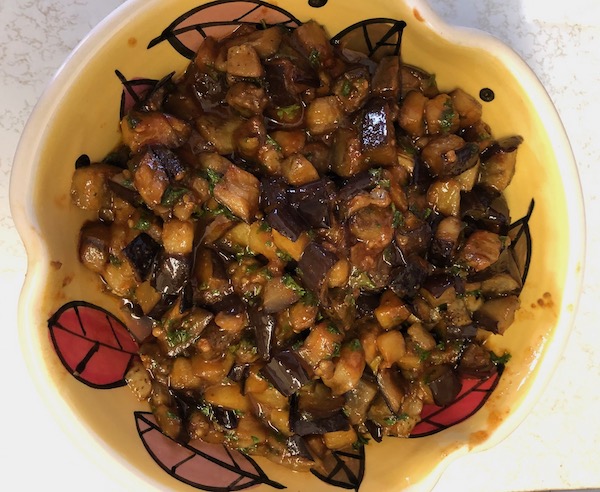
Rebbetzin Chanie’s eggplant dish is “super-easy and ridiculously yummy.” (photo by Shelley Civkin)

A recent Shabbat dinner with Rabbi Yechiel and Chanie Baitelman and a few other guests was like waking into the light after being in darkness for three years. The isolation brought on by COVID, compounded by health issues leaving us feeling vulnerable, resulted in Harvey and I spending every Shabbat and all Jewish holidays by ourselves for three long years. It was our first Shabbat “out in the open” and we couldn’t have asked for a warmer or more welcoming environment.

Observant, but not very much so, Harvey and I are used to lighting Shabbat candles, and he always reads Eishes Chayil (Woman of Valour) to me. But that’s pretty much all we do on Shabbat. So it was truly a delight to spend it with the rabbi and Chanie, their two youngest children, and a few others. The Shabbat rituals added much to the sanctity of the evening, and reminded me why we do what we do, and why Jews are G-d’s chosen people. The singing, the chatting – really, just the feeling of being “home” – all contributed to this intimate and freilach (joyous) evening. And then there was the food.

No Jewish celebration is complete without spectacular homemade food. And Chanie hit all the right notes on that count. We started out the meal with a bunch of small dishes, including the best eggplant dish I’ve ever had the pleasure of meeting. There was also baked fish, another eggplant dip, a gorgeous salad, freshly baked challah and an Israeli couscous salad. And that was just to start! Having been a guest at their home before, I knew that this was just the beginning, and that I should pace myself. Juicy, delicious Shabbos chicken followed, along with zucchini and onion quiche.

The star of the show for me, though, was Chanie’s Middle Eastern eggplant dish, which is the stuff that Jewish dreams are made of. People always say delicious food is “to die for!” but, really, the saying should be: “It’s to live for!” Naturally, I asked Chanie for the recipe and she admitted that she doesn’t really use one, which is why it tastes different every time she makes it. I tried to nail her down, as I wasn’t about to let this amazing dish get away. A couple of days later, and after a lot of question-asking and prodding, she relented and texted me the ingredients. No measurements. Just ingredients. Her directions to me were simple: “Just taste it as you go along.” Not unlike what our grandmothers did. But this is not something you say to someone like me, who’s a bit compulsive, and a stickler for a recipe. Needless to say, I was a bit flustered by the meagre directions.

Not to be daunted by a challenge though, I did what I rarely do – I winged it. With great trepidation, I might add. Chanie’s eggplant dish was so spectacular that I just knew I had to figure it out on my own, no matter how many tries it took. And, whaddaya know, I hit it out of the ballpark on the first go! And now, as humbly as possibly, I will share (to the best of my memory) the ingredients and measurements that I recall, and if it doesn’t work out … well … just try again. All measurements are approximate. As if that helps.

REBBETZIN CHANIE’S EGGPLANT
(makes enough for four as a side dish)

3 smallish eggplants, cubed and with skin on
juice of 1 lemon
1/2 tsp cumin
1/2 tsp paprika
1/2 tsp smoked paprika
2-3 cloves minced garlic
2 heaping tbsp tomato paste
2 heaping tbsp honey or date syrup (I used honey)
large handful of parsley, finely chopped
pepper to taste

Dice unpeeled eggplants into small cubes and sprinkle generously with olive oil. Don’t be afraid to use a lot of oil. Then sprinkle with salt. Bake at 375°F. until very soft, about 40 minutes. Turn it halfway through.

While the eggplant is baking, fry up minced garlic in a good amount of olive oil. Once it starts to brown, turn the heat down and add lemon juice, cumin, paprika, smoked paprika, tomato paste, honey or date syrup, and pepper. As you fry it up, taste it and adjust accordingly. There won’t be a lot of sauce but, trust me, the flavour is enough to permeate all of the eggplant.

Once the eggplant is nice and soft, mix it in with the garlic and tomato paste mixture, add the parsley, and you’re good to go. This dish is spectacular on its own, or with challah or focaccia to soak up the oil. It’s great served hot but it’s even better served cold the next day, once the flavours have had a chance to meld and marry. My husband declared it “company worthy” and hopes I’ll make it daily. Nice try, honey.

What I like about this dish is that it’s super-easy and ridiculously yummy – it’s sweet, smoky and slightly tart all at once. It’s also very oily, but that’s part of its Middle Eastern charm. You can adjust the amount you use, as eggplant tends to suck it up like a sponge. In our household though, you can never have enough olive oil.

I served this eggplant dish with steak, but it would go well with pasta, fish, rice, chicken or pretty much anything. Chanie told me that she makes up a big batch of the garlic tomato paste mixture and freezes it, so that when she’s in the mood for eggplant, all she has to do is cube the eggplant, bake it and add it to her defrosted pre-made “sauce” mixture. If I were a store or a restaurant, I’d put a money-back guarantee on this dish. Short of outrageously over-spicing it, you really can’t go wrong. I mean, it’s eggplant after all. The nightshade superstar. Enough said. Go dice your eggplant and call me when it’s done. I won’t take no for an answer. I’ll even bring the bread.

Shelley Civkin, aka the Accidental Balabusta, is a happily retired librarian and communications officer. For 17 years, she wrote a weekly book review column for the Richmond Review. She’s currently a freelance writer and volunteer.

Format ImagePosted on June 9, 2023June 8, 2023Author Shelley CivkinCategories LifeTags Accidental Balabusta, Chanie Baitelman, cooking, eggplant, Judaism, lifestyle, Shabbat

Recipes for special moments

As my kid peered over the counter, straining to see into the mixer bowl, I had a moment that I hope I will always remember. “Egg chemistry is amazing!” I commented, as he asked what cream of tartar did and we read the label together. Then, as the mixer churned faster than I could ever do by hand, we saw soft peaks and medium peaks pass into stiff peaks. We were ready to drop globs of this air-filled sugar mixture onto the baking sheets, ready to turn egg whites into crunchy meringues.

It’s after Shavuot. There’s Winnipeg’s glorious spring all around us, as well as the remains of a delicious lemon custard pie (like key lime pie, if you’re wondering, but with lemons) in the refrigerator. Since some of the Shavuot dairy desserts use egg yolks, we were left with the practical gift of the whites and the magical meringues that followed.

I live with a science professor and twins who won their school science fair this year, but I wouldn’t call myself good at science. However, moments like these, whipping egg whites with one of my kids, make me think back to my high school chemistry teacher, Tuvia. Tuvia grew up in New York and settled on a religious kibbutz in Israel. He had an impressive beard and was probably in his 40s when he taught our Grade 11 class of North Americans, living on secular Kibbutz Beit HaShita in 1989-90. He had limited access to supplies or facilities when it came to doing experiments. I got the sense that teaching our class took time out of his regular work schedule. Even so, he captured the joy and neat magic of how basic chemistry worked.

Due to a sickness that caused a lengthy absence, I was behind in his class. I got to visit his family at their kibbutz with another classmate or two. From what I remember, I sat at his kitchen table to do make-up work. His wife offered us snacks. Kids played outside, running through the sprinklers on the well-tended paths, surrounded by flowers.

Tuvia offered us a good grounding in chemistry but also a window into what an Israeli religious kibbutz settlement looked like, simply by inviting us home to help us catch up on our schoolwork. This was something our year abroad program wasn’t offering. More than 30 years later, that memory is a valuable one. Tuvia, if you’re out there in our “connected by Jewish geography” world – thank you for being such a good teacher.

On social media at this time of year, it’s common to see lots of weddings and other celebrations. Family picnics, parties and graduations fill up many people’s schedules. My household’s not immune: this month, we’ve got a big school play, three birthdays, an end-of-year elementary school event, a milestone wedding anniversary and more. I joked with a friend that it’s like somebody pushed a “GO” button. Everybody’s running around like crazy.

Many people (likely extroverts) get a lot of joy from the big occasions. Turns out that I’m one of those people who can do without the big events. The pandemic reminded me that, if I had to avoid gathering in large groups forever, I probably wouldn’t mind. There’s a lot of pressure to “return to normal” right now, even though COVID still exists. But, even if it didn’t, I am one of those who didn’t really find “normal” large social events all that easy before.

The gift that I’ve received instead is this amazing joy in the small things every day. In sitting outside in the shade, watching one kid construct mysterious imaginary fairy worlds while the other one doggedly coaxes along things he has built, like his solar rover. I loved starting our garden, where we all dug in the earth together, tucking in our seedlings and seeds, and feeling such hopeful enthusiasm for what will grow and for the growing season’s potential.

We have lots of specific, prescribed blessings in Jewish tradition to help us find that everyday gratitude and joy. There’s the brachah (blessing) for seeing a rainbow, for a thunderstorm, or even for seeing a king. I don’t always remember the blessings at the right moment, but, in the end, I’m not sure it matters. The prompt to recognize these things, express gratitude and sense the wonder of the world is still there.

Along with making meringue magic and planting in the sunshine this past weekend, I heard some hard news, too. One friend from university, a single mom who lives far away, age 49, is facing a new diagnosis of lung cancer. Another faraway friend, dear to my heart, is soon to enter palliative care and hospice. This bad news just about derailed me. There were moments to cry. Yet, I grasped hold of the sunshine, the airy bits of sugar and egg, the time weeding and digging in the earth, and, instead of tears, two kid drawings and a note filled with love went out in the mail today to my friend entering hospice.

Very few things are as tidy as basic math or chemistry problems. Food chemistry, like making meringues, is just about the most predictable experiment I know. Those recipes are like the ritual prayers for seeing moments of wonder. To me, recipes, like their religious ritual equivalent, perhaps express a purely rote way to acknowledge wonder in the everyday. I am holding onto that recipe for wonder with both hands as I head forth through this warm season of celebration. Sometimes, a “recipe” for complete healing after surgery removes cancer or a prayer for a peaceful send off to Olam HaBa (the next world, the place some believe we go after death) is all we can do. In the meanwhile, it’s a good time to eat those crunches of sugar and air – but only after we clean the dirt from our fingernails and race through the sprinklers to another summer day.

Joanne Seiff has written regularly for CBC Manitoba and various Jewish publications. She is the author of three books, including From the Outside In: Jewish Post Columns 2015-2016, a collection of essays available for digital download or as a paperback from Amazon. Check her out on Instagram @yrnspinner or at joanneseiff.blogspot.com.

Posted on June 9, 2023June 8, 2023Author Joanne SeiffCategories Op-EdTags baking, cooking, Judaism, lifestyle, parenting

Beauty in indrawn breath

An indrawn breath. What are the things that cause your eyes to widen, that are such a surprise, good or bad, that they literally take your breath away? There may not be many things that do that to you, but they do leave an impression. I have found it important to mark them.

Myself, I prefer the happy surprises. When that person you have been dreaming about every night pops the question, that can take your breath away. Perhaps even better, someone you never dreamed of appears before your eyes, sweeps you off your feet and whisks you to a place that never existed before. Your feet rise from the ground and, amazingly, you are bodiless, and it can go on and on, even for a lifetime! Eventually, you have to breathe again, but now you are in a new world, and things have changed forever. Am I raising your expectations too high? Why not ask for the moon? It happened to me.

How about when a new life is born. Then, suddenly, there is an indrawn breath, and a cry – the world has changed forever for all those concerned. And there will be many ups and downs. Try to enjoy the ups as much as you can!

I remember coming upon an iris in a garden, the colour was blue-black. It took my breath away. The beautiful delicacy of an orchid, its shape, colours – that does it for me every time. A piece of music can pierce me to the very core and set me weeping, so that I find it almost impossible to breathe. A summer day in a vineyard, the clouds advancing to attenuate the summer heat, the blush of air on my skin from a gentle breeze as I hide in the shade of a massive tree – I hold my breath and hug myself. When I stand with my fingers brushing the weathered stone of the ancient Wall in Jerusalem, I can feel the thrum of the centuries rumbling under my skin and my body shakes uncontrollably in resonance with the events I am heir to; I feel myself gasping for air, I am transported.

Let me take you into my confidence. I am intoxicated with life, totally drunk and out of my skull. The tsunami of sensory input coursing through the coruscations of my cortex from my eyes, ears, skin, not to mention my taste buds and my gut, have me in a constant state of arousal. And I haven’t even mentioned sex. I kid you not.

The tiny tiptoeing of an insect on my skin brings me to full alert. I wonder where it thinks it is going, what it sees, feels. Will it bite, just feed on my exfoliations, or is it exploring to find a friend? As it crawls across my arm, I contemplate the feel of my muscles when they propel me down the street. I sometimes am impelled to break into a run just to experience the pump of my heart and the puff of my lungs. What a rush to be alive!

Talk about taste and what it does to my senses: the sweet and bitter of wine, the acridity of a cigar, the shock of a shot of single malt, and that’s just the stuff designed to kill brain cells. What about salt and vinegar, spiced meats and garlic, onions and, a favourite, caraway seeds?

There is no bland for me. How about a rib steak, medium rare, seared so the exterior is caramelized, adding salad with a sharp vinaigrette? How about battered cod, with French fries and lots of ketchup? Does this sound like a sensible low-cal diet for an old fogey like me? Let’s not mention desserts, enjoyed in moderation even though I am diabetic. The sight of one in a French restaurant is sometimes enough to excite me to breathlessness. I haven’t mentioned that I love a tart apple pie.

I have experienced Yellowknife at 40-below, with a wind, and the desolate airport tarmac, in scenic Mauritania, at 45˚C, the juicy humidity (with body melting like ice cream) of the Congolese jungle and the aridity (feeling like a dried-up leaf) of Darfur. I know when I am fortunate in passing my time in a temperate climate. Just being in a pleasant place is something I can never take for granted.

And, for a bit of something else, I know what it is to try to survive in the hurley-burley of a chaotic business environment. I have learned to appreciate the joys of single-tasking after being in situations where I have felt like a 10-armed paperhanger, working against time. And more? Believe me, you would not necessarily enjoy seeing your name on the front page of a newspaper or your face on the TV news. Talk again about the indrawn breath.

But it is our human relationships that top it all for me. There is nothing like the right one, or the wrong one, to get us breathing like a steam engine, testing the resistant capacities of our vascular systems. It surely takes the cake for the height of experience. When your moment arrives, and you feel that sense of communion with another person, just smiling at each other across a small space, you feel the need to pinch yourself to prove that the instant is really real. I don’t know about you, but I have to take a really big breath to try and keep calm. I feel I could burst with the ecstasy of the experience, because I can remember the misery of those other so-lonely times. Oh, yes, I can.

Welcome to Life.

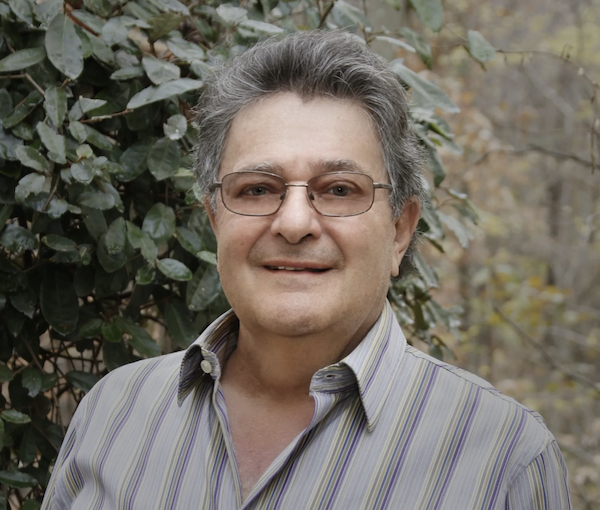
Max Roytenberg is a Vancouver-based poet, writer and blogger. His book Hero in My Own Eyes: Tripping a Life Fantastic is available from Amazon and other online booksellers.
Posted on June 9, 2023June 8, 2023Author Max RoytenbergCategories Op-EdTags aging, lifestyle

Boundaries are a good thing

The house directly behind ours is for sale. This neighbourhood doesn’t have back lanes, so we look out over their backyard as well. Occasionally, when I’ve stepped outside with the dog, I encounter a family checking out that house’s yard, just beyond my fence. I always call out, smiling, welcome them and say I hope they will be our new neighbours. I’ve had several wonderful interactions, and one that gave me the creeps – the potential buyer, a man in camouflage with a woman trailing behind, left me unsettled. I took my big dog back inside and locked the door.

Our shared back fence needs to be mended. There is a tree, partly on our property, which needs to be trimmed. We never managed to meet the old neighbours, who we hear were seniors who couldn’t manage the upkeep and needed to downsize. We planned to try again to talk to the neighbours about the fence and the tree, but then the For Sale sign went up. Now we await the next occupants.

Overall, we’re delighted with the friendliness of our new neighbourhood. We took our weekend morning dog walk with another neighbour and her baby and participated in our community clean up. It’s a thoughtful place, where we help each other remember the yard waste pickup days or we look out for lost items. Yet fences exist for a reason – not just to keep dogs and kids in the yards, but also to provide us with personal space.

These encounters reminded me of Robert Frost’s famous poem “Mending Wall” and its unforgettable line “Good fences make good neighbours.” This poem (which is available online and worth reading) often springs to mind when I’m considering how to navigate in the world.

Jewish life also has lots of boundaries and reminders for how to order our lives and relationships. This is such a big part of our tradition that it’s hard to offer only one example. There are the ways we read the Torah portion each week, or how we get married or how we bury loved ones, how we are to educate our kids or how we should treat our elders. Our tradition offers us lots of structure and ideas for how we are to behave in a Jewish context.

All this came to mind when talking to a friend about work boundaries, which we’ve both struggled with addressing. She works unpredictable shifts. They sometimes seem assigned at random and she’s worked every weekend in recent memory. Her schedule isn’t dependably the same. There are weeks where she works six days in a row. Other times, she is told to go home early due to lack of work, or has several days off unexpectedly. It becomes very hard to make solid plans, like when I might see her next, or even when she can easily pick up groceries or consistently go to a once-a-week event.

I have a household that thrives on routine. For best success, we plan the heck out of things. If my kids have an afterschool activity and I’m taking them there, I’ve often thought out dinner and gotten it into the slow cooker before I start work in the morning. We have a dog that doesn’t like to be alone, a fair number of household medical appointments, and our old house is still undergoing needed renovations. We parents are spread thin! For me, having an unpredictable work meeting or emergency outing can disrupt this fragile equilibrium. Planning makes everything possible. It’s how I fit in my various paid and volunteer commitments, my kids’ and household needs, and also, I joke, my eating and sleeping.

In most Jewish practices, we’re a people of moderation, things have to be in balance. Like Frost’s poem, sometimes what makes us “good neighbours” are those walls, the boundaries we create to make structures that enable us to cope. We need structure. In religious life, we might call some of those structures rituals or behavioural expectations: derech eretz, how we are to behave towards one another. Whether it’s from the Tanakh (Torah, Prophets and Writings) or from rabbinic teachings, we’ve got a framework that helps us create those metaphoric walls.

Unfortunately, it can be hard to actually maintain our own boundaries when things get out of hand. It’s hard to stand up to a difficult work situation or a bully at school and say, “No, this is out of bounds.” Yet, most of the time, this is what we have to do to maintain our dignity and move forward. Sometimes, we have to remind others that “this isn’t in the job description” or, for kids coping with a bully, “No, I don’t have to respond when you say hurtful things. I can walk away and tell an adult.”

Good boundaries help us become better people, better workers, or even more thoughtful in our Jewish practice. However, it’s hard to find the courage to respond appropriately and draw one’s “line in the sand.”

Today, my twins went to the backyard for raucous playtime with pool noodles. They hopped on and off the deck, sparring with their imaginary swords, as they dueled and chased each other. Much later, right before bedtime, I heard that one of them saw a woman at “that house for sale.” My son demonstrated her expression of distaste as she gazed at them and his bad feeling about it – but my kids were safe in our yard as they played, laughing on our side of the fence.

Setting boundaries for ourselves, or fixing a literal fence, can sometimes mean everything. It may make good neighbours or give us orderly schedules that allow us to more calmly cope with our lives. Staying healthy and promoting our well-being might not always be wrapped up in spa days or vacations. We might promote wellness by saying no when others overstep. We can embrace structures, rituals, traditions or routines that make us feel best, allowing time for pool noodle sword play or a consistent day off work. We need boundaries in all things, work and play, because it’s the good fences that make good neighbours.

Joanne Seiff has written regularly for CBC Manitoba and various Jewish publications. She is the author of three books, including From the Outside In: Jewish Post Columns 2015-2016, a collection of essays available for digital download or as a paperback from Amazon. Check her out on Instagram @yrnspinner or at joanneseiff.blogspot.com.

Posted on May 12, 2023May 11, 2023Author Joanne SeiffCategories Op-EdTags boundaries, Judaism, lifestyle, neighbours
Rabbi launches book at BI

Rabbi launches book at BI

Rabbi Paul Plotkin returns to Congregation Beth Israel for the Canadian launch of his new book, Wisdom Grows in My Garden. (photo from AIA Publishing)

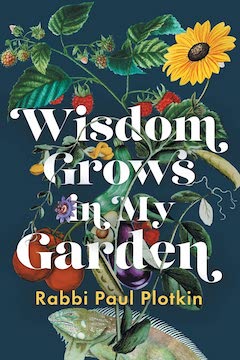
In part to fill his need to nurture – his kids off to college and his congregation less reliant on him – Rabbi Paul Plotkin took up gardening. Not only has he produced some of the most expensive tomatoes, taking into account all the capital that goes into every one that makes it into a salad or sandwich, but he has produced a new book: Wisdom Grows in My Garden (AIA Publishing). And he will launch that book in Canada on May 10, 7:30 p.m., at Beth Israel Synagogue, where he began his rabbinical career.

“I started in the summer of 1976 as Rabbi [Wilfred] Solomon’s first assistant, and he left for Israel after breaking his Yom Kippur fast on the way to the airport, and the 26-year-old ‘kid’ took over. Rabbi [Marvin] Hier was away from the Schara Tzedeck for most of the year preparing to build what was to become the Simon Wiesenthal Centre, so I was thrust into the position of often being the Vancouver non-Reform senior rabbi. It was quite a ride. It was a good thing I didn’t know what I couldn’t do, or I would have been paralyzed with fear. Instead, I jumped in and went to work.”

While BI was his first pulpit, Plotkin said, “I had been a youth director of my home synagogue while in college and in New York while at the seminary. I learned a lot about programming and leadership from those jobs and translated it into heading a synagogue.”

He admitted that the experience “was not without mistakes but what I couldn’t entirely appreciate was the menschlichkeit of my members. They appreciated my enthusiasm, my passion and my sincerity and pardoned most of my excesses and faults. It was a truly Canadian thing. I know now how special it was because my other two congregations in Florida were a lot different. Years later, I would share privately that my ‘worst critics’ in Vancouver treated me better than my good friends in Florida. By being thrown into the fire and succeeding – succeeding was a low bar, if the shul was still standing when Rabbi Solomon returned, I would have been praised – I learned of the potential people had for change, of their desire for knowledge, and that I could actually help transform people into greater commitment to mitzvot and the Jewish people.”

Plotkin was born and raised in Toronto, but has lived in South Florida for more than four decades. He is rabbi emeritus of Temple Beth Am and served on the Rabbinical Assembly’s committee on Jewish law and standards for some 20 years. He is the founding chair of its kashrut subcommittee and also is in charge of kashrut for Ben’s Kosher restaurant chain. He loves food and cooking. And Canada still holds a special place for him – he and his wife own a townhouse in Whistler, “primarily as a new summer cottage for after retirement,” he said. “We will be there for four months this summer.”

An avid writer, publishing articles in various newspapers and magazines, Plotkin has a blog on medium.com. He published a book some 20 years ago – The Lord Is My Shepherd, Why Do I Still Want?: Ancient Wisdom for the Modern Soul (Eakin Press) – but waited until retirement to write his second.

“First, in those days, I had to triage my time and creative mental energy. I also needed more age and seasoning for all of the pieces to melt together. Pirkei Avot teaches us to see wisdom in the elderly. Great red wine isn’t great in its first year. It takes years to develop nuance and subtlety. Creation of the book was no different.”

The idea came to him in a dream, he said.

“Unfortunately, I was still in my active work years, with an 1,100-family congregation. Finding time to breathe was hard, let alone write a book, so I made it a priority in retirement. Over the years after the dream, new ideas would come to me in the garden and I would jot them down and throw them into a file with the dream material.”

image - Wisdom Grows in My Garden book coverIn describing the book, Plotkin said, “Technically, it is a narrative memoir, because it is my story and told entirely from my perspective, but it is not in its heart a memoir. It revolves around the garden, but you won’t improve your tomato growing by reading the book. It is, in essence, a life lesson book (indeed, there are 25 life lessons in the book) that will help guide you to a better life. It is filled with humour and stories, two tools that featured prominently in 40 years of sermons. It will offer the reader some important guides to navigating a better life. I like to tell Jewishly knowledgeable audiences that the garden was my ‘Torah,’ my book is the Midrash.”

Plotkin said “gardening is a wonderful emotional and humbling pastime” and cited a recent article that “extolled its value as an alternative choice for exercising.”

“If you haven’t got time,” he said, “try a few herbs in a pot on the windowsill. If you have a black thumb, grow zucchini. In northern climates, everyone grows so many, they start to call friends they don’t have to offer them some. If you read the book, the irony of this last statement will become clear.”

Of the feedback he has received so far – from readers in his own demographic, as well as that of his mid-40s son, from Jews and non-Jews, from observant people and atheists – Plotkin said, “much to my shock, they all liked it and, yet, like a Rorschach test, they all found messages in my lessons that reflected their needs or interests. There is something in this book for everyone.”

Chapter 1 of Wisdom Grows in My Garden takes place at Beth Israel, said Plotkin. “I hope many readers and especially those who may remember me from their bar/bat mitzvahs and weddings that I officiated at will come out to the evening and say hello,” he said.

Format ImagePosted on April 28, 2023May 1, 2023Author Cynthia RamsayCategories BooksTags Beth Israel, education, gardening, lifestyle, Paul Plotkin

Hope as commitment

Rabbi Suzanne Singer of Temple Beth El in Riverside, Calif., ended the 2022-23 Hineini lecture series in April on a distinctly positive note. Her Zoom talk, hosted by the Victoria congregation Kolot Mayim, focused on “finding hope in a world of unending problems.”

photo - Rabbi Suzanne Singer
Rabbi Suzanne Singer (photo from endoflifechoicesca.org)

Singer began with the story of the golden calf. When Moses is delayed on Mount Sinai, the people, fearing he won’t return, make an idol to worship – a terrible sin. However, said Singer, God was prepared for this transgression and offered a means to repentance: instructions for the tabernacle.

“The Mishkan was built as a place for God to dwell and to bring God’s presence back among the people,” she said. “By offering the Israelites the opportunity to use their gold for a higher purpose, God is giving them the opportunity to redeem themselves and to resume their intimate relationship to God.”

Yet, she pointed out, the instructions for the tabernacle were given before the calf appears. Among the possible explanations for the inverted order is the notion of hope.

“It’s almost a 100% certainty that, at some point, every human being is going to commit a transgression,” said Singer. “But God is prescient enough to understand this, so, underlying God’s instructions for the Mishkan is the reality of sin. God knows that people are going to sin, but God wants to guarantee that there’s always a possibility of redemption, that there’s always a tabernacle available for every golden calf.”

According to Singer, this knowledge can allow us to live our lives understanding we have the ability to make amends. With all the problems in the world – climate change, wars, economic disruption, gun violence – people need to remember that the tools are there to repair the world (and the soul).

“God is telling us that we can transform our idolatry, our egoism, our greed, our thirst for power into something sacred,” said Singer.

Singer defines hope as a commitment that allows us to picture the future and provides us the energy to build it. Hope requires action and a stubborn determination to produce a positive outcome.

She cited several examples in which hope persevered against extraordinary odds, from the pear tree outside the World Trade Centre that survived the Sept. 11, 2001, terror attacks to the Ethiopian Jews who trekked through dangerous terrain to reach the airlifts to Israel.

“Resilience is linked to the belief that we can make a difference in our lives and the lives of others. Hope really gives us the will to not only heal ourselves, but to make the world a better place,” she said.

The rabbis of our tradition, said Singer, tell us that, when we arrive in heaven, we will be asked seven questions: the most important one is, did you live with hope?

Using the words of Rabbi Jonathan Sacks, Singer noted that Judaism is the only civilization whose golden age is in the future. “If we don’t like what we see in our society or in our world, we have the capacity to make things better,” Singer said. “The Exodus story tells us that our circumstances do not define us, and that we can change those circumstances for a better future.”

Quoting Sacks again, she added, “To be a Jew is to be an agent of hope. In a world serially threatened by despair, every ritual, every mitzvah, every syllable of the Jewish story is a protest against escapism, resignation or the blind acceptance of fate.”

Even in the polarized political climate of our age there is hope, Singer said, offering Derek Black as an example. A decade ago, Black was a rising figure in the white supremacist movement. After engaging with and getting to know an ethnically diverse group of students during Shabbat dinners at a Florida university, he renounced his racist worldview.

Acknowledging that many serious problems exist, Singer noted that war is rarer now, genocides are fewer, life expectancy is higher and hunger has diminished.

“No one knows the wars that don’t happen, the family members who aren’t claimed by disease, the children who don’t die in infancy,” she said.

“Hope is a strategy, not a feeling, and it’s within our power to call it forth,” she concluded. “One needs to believe in and build a future, even if we may not be there to experience it.”

Singer, who was a student rabbi at Kolot Mayim in the early 2000s, is active on many fronts. She serves as a member of the Reform movement’s Commission on Social Action and as president of Pacific Area Reform Rabbis.

Sam Margolis has written for the Globe and Mail, the National Post, UPI and MSNBC.

Posted on April 28, 2023April 26, 2023Author Sam MargolisCategories LocalTags Hineini, hope, Judaism, Kolot Mayim, lifestyle, Suzanne Singer

Multiple membership models

Years ago, I briefly served on a synagogue board and did some research into membership dues. Some congregations had flat rates. Others had scales according to income or age. Others had no set dues, members gave according to what they felt they could give, with the congregation merely offering suggested amounts. There are plenty of articles on this topic, and even a book by rabbis Kerry Olitzky and Ari Olitzky. Synagogues cost money to run: salaries, buildings and activities are expensive. If we want Jewish life to continue, we need to consider this because synagogues offer us education, community, lifecycle events and more. However, there is no one size fits all when it comes to membership models.

Just as there are many models for dues, there are different ideas about new members. Some congregations post their membership application forms online and indicate where to submit the finished paperwork. Others offer membership information via email or post when it’s requested. Still others insist that the potential congregant meet with the executive director to gain access to the paperwork or the requirements for membership.

My husband and I have moved a lot in nearly 25 years of marriage. That has included “shul hopping” within communities sometimes. We’ve formally belonged to seven congregations, and attended services at many other places. Our experience hasn’t been limited to one North American movement. Due to our families’ diverse affiliations, geographic limitations and shifting needs, we’ve been members at Reform, Conservative, Modern Orthodox and unaffiliated congregations. We joke, when asked, that “we get around.”

All this resurfaced while I read about Toronto Congregation Beth Tzedec’s recent experiment with membership. This congregation saw that members under age 40 paid only 5% of their total operating income. By waiving dues for members under 40, Beth Tzedec gained 900 members in eight months, according to a recent JTA article. This remarkable leap in membership shows just how much of an obstacle membership dues are for many younger Jewish people in Canada.

For years, when I joined a congregation in a new place, I was asked to join committees, lead services, teach, volunteer or provide other services. Only very rarely did any of these congregations ask first, “What can we do to meet your needs?” or “What are you hoping to gain from this experience?” While it sounds crass to see this as a solely “transactional” experience, it can be painful to spend a lot of money to support a place that sees no obligation to create a relationship or a meaningful experience with its new and/or younger members.

Few congregations have new members start by meeting with a rabbi or cantor or other engagement professional. The first interaction is almost always with an executive director who is essentially asking, “How much can you pay us?” While congregations almost always state that they don’t turn down anyone due to lack of funds for membership, in practice, many people are turned away. They’re turned away or turned off because they don’t even make the embarrassing first appointment where they must admit they cannot afford the full costs of membership.

We just signed on the dotted line at a big, established congregation because our twins are nearing b’nai mitzvah age. We’ve been regular synagogue attendees for years. We had asked about membership when I was pregnant and, at the meeting with the executive director, we felt as though we were being interviewed to join a country club. As older first-time parents, we saw the membership cost was delineated by age and we fell into a more expensive category. Our roof was leaking, we were expecting twins. Our decision was easy – we fixed the roof. Synagogue membership could wait.

Over the years, we briefly joined two other congregations to access their educational opportunities or community events. In the end, though, we faced the same process over a decade later, with a different executive director. He told us that no one was turned away. However, the paperwork indicated that, unless we paid the building fee plus membership dues plus b’nai mitzvah charge, we couldn’t have a lifecycle event at the congregation. That upfront cost was about 4% of our gross annual income, which is a large chunk of change. That’s before paying for a Kiddush luncheon or family celebration.

There’s no one answer to this challenge. Here are some ideas based on our anecdotal experience.

Make synagogue membership paperwork and financial information easily available on a website or via email. It shouldn’t be a secret, offered only in a face-to-face meeting with the executive director. This isn’t a good first impression. Potential members might also want to meet with a rabbi, cantor or other professional rather than the executive director.

Second, consider a membership model that provides multiple options based on income rather than age or a flat fee. There will always be older members who earn less income and younger people who can afford more.

Third, create an environment where members will not begrudge further donations. If the membership fee is a suggestion, and is affordable enough so that people can manage it, then a happy member may want to donate more money in the future. A supportive congregation and positive community experience is worth a lot!  Members who sense that level of support are willing to pay for it.

Finally, recognize that many “middle-class” incomes don’t cover the cost of living the way they used to. Due to inflation, a professional who, for instance, works as a teacher or at a nonprofit may not have much expendable income. Find ways in which professionals might volunteer hours in lieu of part of their membership fees. Despite education and experience, these professionals have often been asked to volunteer for work in a Jewish context that one would have paid for elsewhere. They pay for membership that they perhaps couldn’t afford – for the privilege of also volunteering expertise.

We need each other for many reasons. Membership dues are not just for a minyan but also for the building where the minyan meets. Our tradition teaches us that every person is valuable, that embarrassment should be avoided at all cost, and that Jewish communities are essential. Synagogue membership models should reflect those teachings, too.

Joanne Seiff has written regularly for CBC Manitoba and various Jewish publications. She is the author of three books, including From the Outside In: Jewish Post Columns 2015-2016, a collection of essays available for digital download or as a paperback from Amazon. Check her out on Instagram @yrnspinner or at joanneseiff.blogspot.com.

Posted on April 14, 2023April 12, 2023Author Joanne SeiffCategories Op-EdTags continuity, family, finances, Judaism, lifestyle, synagogues

Making room for compassion

I’ve been under stress lately. It’s the usual: money, household, family and work concerns. Some of it is my own doing: in our enthusiasm for extracurricular activities, I somehow managed to sign our twins up for three different weekly ones during January and February. Yet, even though rushed dinners and drives through snowstorms and -30°C windchills aren’t my favourite activities, I found a silver lining. As my kids learned to use sewing machines at the studio, I got to knit and read quietly in the renovated waiting area overlooking river skating trails and watching the sunset. During chess club at the local Chabad, I saw friends briefly, then I hid, reading alone.

Thinking about the two sides of these activity nights made me reflect further. Having the time and energy and, yes, money to manage these extra enrichments is a gift, even if schlepping kids around can be hard and tiring for parents. The few moments of relative quiet, while the kids are happy, occupied and learning, usually enable me to regain my composure.

Once I have had those moments, I find room to be more patient, kind and compassionate. I’m not big on spas or manicures or tropical vacations. For me, something as simple as a few moments alone in a warm, quiet place with a good book or a good view can give me that reprieve.

I thought of this while speaking with my mom recently. She mentioned that, while on neighbourhood forums, sometimes she feels that all people do is complain. Worse, she feels that, in a Jewish forum, there is always someone who reads everything that happens to her as antisemitic. There was a pause in the conversation as I sensed her frustration. I was able to reach back into one of those warm, calm moments and suggest, in response, that perhaps in an era of rising antisemitism, the person concerned about antisemitism had actually experienced trauma. That, maybe, her fearful responses and anxiety were a response to a real incident.

Similarly, I wondered about those who were “always complaining” online. Perhaps those people also had bad experiences, but had no one offline to comfort or hear them. No one “saw” them. As a result, they were seeking that attention and reassurance online instead.

There is no shortage of distressing stuff happening, particularly if you’re reading about the ongoing earthquakes and displacements in Turkey and Syria, the deaths and violence between Israelis and Palestinians, or the increased crime or fatal drug overdoses at home in Canada. There is plenty of “awful” to go around.

The big challenge is in finding that space in which to compose ourselves and respond to others with compassion and patience. It can be as simple as a cheerful conversation or joke, and as difficult as listening to someone’s painful cries for help, on repeat.

As someone who grew up in the United States, I dreaded what I would hear after the Shabbat recently described as a “Day of Hate” proposed by neo-Nazis. All day, I remained tense, worried. What happened? Thank goodness, nothing much. My brother’s family attended a lovely bat mitzvah at our family’s long-time congregation … like many in the States, they went to synagogue and nothing happened. Yet, the overall increased antisemitic activity afoot made it hard for me to just relax and hope for the best. Even if nothing happened on that day, the amount of hate going around has increased. Almost worse though is the response that Jews who are anxious about this are simply “crybabies” or “crying wolf” or worried about nothing. The bad feeling comes from fear. Some of it, due to intergenerational trauma, is internalized.

My husband’s father was born in a displaced persons camp in Germany after the Second World War. Although my husband’s grandparents lived, they lost most of their families. They managed to survive the war, with harrowing stories. My husband’s bubbe, may she rest in peace, talked about her experiences over and over. I often sat next to her, holding space for her stories, as she repeated her trauma in different ways. She’d effortlessly shift languages, speaking whatever language – among them, Hebrew, Yiddish and English – to whomever also had that room to hear her, see her and listen.

By contrast, my husband’s zayde, z”l, spoke less about the war, but, in his final years, when he lived in a nursing home, he replayed a scary story over and over. At every door of the care home, the healthcare workers posted photos of him, because he’d try to escape. Mimicking what must have happened during the war, he’d trick someone or sneak past or do something that allowed him to leave the home. They were the enemy, trapping him, and he needed to get out. Zayde often succeeded, showing up on the doorstep or sitting in his car in the driveway. He scared the heck out of Bubbe when she found him. He, too, was replaying his traumatic past.

We’re lucky to have new kinds of therapies and medications that help some people cope with trauma, but many of us still are working through issues. Even with access to basics like housing, food, medication and, hopefully, love, we all struggle to be seen and heard, to find enough compassion and love to make it through. We need to each find that quiet, well-lit space to regain our composure, so we can then reach out and help others.

As Hillel says in Pirkei Avot: “In a place where there are no men, strive to be a man.”  It could also mean: “In a place where no one is acting like a good person, strive to be one.” Nowadays, some of our places for listening are online. Our social encounters are different than before, and finding that patience or inner strength can require more effort.

Love, and its close cousin, compassion, are not limited commodities. A heart full of kindness can find more space to help. As my crazy wintertime parenting and worry load lightens, I realize that I wish everyone could have that gift of an hour of solitude, watching the sun set over a river, seeing a rabbit’s tracks or a biker commuting home. We can’t singlehandedly fix or stop the world’s trauma, but we can gift each other our time and patience to help others feel seen and to heal from it.

Joanne Seiff has written regularly for CBC Manitoba and various Jewish publications. She is the author of three books, including From the Outside In: Jewish Post Columns 2015-2016, a collection of essays available for digital download or as a paperback from Amazon. Check her out on Instagram @yrnspinner or at joanneseiff.blogspot.com.

Posted on March 10, 2023March 9, 2023Author Joanne SeiffCategories Op-EdTags antisemitism, compassion, lifestyle, parenting

Different ways to celebrate

Meetings aren’t my favourite things, but sometimes they are stimulating or useful. At a recent meeting, I found myself thinking about the issues differently than the others in the online gathering.

Earlier this month, the Torah portion Yitro included the Ten Commandments, an important moment for the Jewish people, which we celebrate on Shavuot. We all received the Ten Commandments, and one interpretation says that this is an act of radical inclusion, because it includes all Jews. Not just the men, or the adults, or those over 13 years old, and not just those who are considered typical for one Jewish ritual or another, but everyone must be present to hear the reading of the Commandments. This means that a proper reading of the Ten Commandments should be accessible to everyone in the Jewish world, including people with disabilities of all kinds.

I have thought a lot about disability access, but I hadn’t reflected on it in terms of another holiday that is big in many Jewish communities: Yom Ha’atzmaut. At this meeting, a community leader explained – to those who had not experienced it – how the Israeli Day of Independence is celebrated here in Winnipeg. I knew she was directing her information to those who weren’t from Winnipeg. However, I’ve never been to this local event, either.

Her description was engaging: imagine a very large double gymnasium space, booths set up by many community organizations with different games, events and snacks for younger families. Then, later, kids’ choir and dance performances, and then more professional entertainment. The evening ends with fireworks.

Every year, I hear from families who have had a marvelous time at it. Yet, we have never gone. No, it has nothing to do with how we feel about Israeli politics. It has everything to do with having a child with some challenges. Early on, we knew it was impossible to manage our twins at an evening event. It messed with our bedtime schedules. It resulted in two screaming kids, overtired and unable to sleep properly. The outing wouldn’t be fun, nor would the aftermath the next day.

In the end, it wasn’t only that my twins didn’t sleep through the night until they were almost 5 years old. It was that one of my kids ended up with a diagnosis that loud noise, crowds, overstimulation and change in routines would all remain difficult for him. Sensory processing disorder, a part of his challenges, can mean a lot of things, but, for us, it means avoiding events full of noise, crowds, lights, colour and commotion – like the community-wide Yom Ha’atzmaut gathering – or splitting up parenting so that only one kid attends.

Of course, disabilities manifest themselves in lots of ways, changing and shaping our lives. Roughly 22% of Canadians age 15 and up live with some form of disability. As a younger kid, my child couldn’t stand watching movies; a short half-hour kids’ TV show was all he wanted. However, as 11-year-olds, both my kids lined up on the couch to watch The Lion King because they are doing this as a musical at school. Rather than going to a theatre or seeing it elsewhere, watching the movie at home works. It’s where we can control the volume, use a smaller screen and the pause button. This makes all the difference. Now my kid chooses, every so often, to watch an entire movie, and he thoroughly enjoys it.

As the online meeting progressed, I saw that I might be expected to work the booth at Yom Ha’atzmaut in the future. But something has shifted in me and I, too, would rather avoid this event now – both due to COVID concerns and, frankly, because it just doesn’t meet my family’s needs. Does it mean we won’t celebrate the holiday? Of course not. We’ve enjoyed our share of falafel, Israeli celebration specials streamed live online, and more, but I’ve hit a milestone of my own. I am OK with saying no to an obligation that I don’t want to do. Not everyone has to celebrate the same way to belong. Inclusion may mean that, when we gather to hear the commandments at Mount Sinai, some of us receive the message differently than others.

Part of our growth as people is getting to a place where we know who we are and what we can manage as individuals, families and as a people. I’m glad our community does this single huge event. It seems to be something treasured by several generations of Winnipeggers. That said, it’s not ideal for my family, and we don’t have to be pressured into attending it.

Jewish traditions and celebrations evolve and change over time, just as our cultural understandings of disability and inclusion do. Events that adapt to meet those needs promote Jewish continuity for generations to come. Most important, though, is knowing how to value and meet our individual needs in context of this, because, no matter what our challenges are, we are all made b’tzelem Elohim, or in the image of G-d. We all matter as part of the Jewish community, whether we attend an enormous community event or whether we stay home to celebrate instead.

Joanne Seiff has written regularly for CBC Manitoba and various Jewish publications. She is the author of three books, including From the Outside In: Jewish Post Columns 2015-2016, a collection of essays available for digital download or as a paperback from Amazon. Check her out on Instagram @yrnspinner or at joanneseiff.blogspot.com.

Posted on February 24, 2023February 22, 2023Author Joanne SeiffCategories Op-EdTags family, inclusion, lifestyle, Yitro, Yom Ha'atzmaut

Promises can be motivating

Most of us have to work for a living. Even if we enjoy most of what we do, it’s rare to find someone who feels every moment of their job is a joy. After all, if they’re paying you to do it, my brother and husband would joke with me, “there’s a reason they call it work.”

However, sometimes things happen at work that just aren’t OK or comfortable. Long ago, I worked at an hourly job at a university doing educational administration. It was a mind-boggling number of obligations, managing hundreds of short courses, from instructor attendance lists and access codes to editing course descriptions, proofreading course catalogues and scheduling classrooms. I even set up chairs and tables myself for some courses. It was not my favourite job.

When Passover came along, I had to request time off to clean and cook at home, as I was expecting family to visit. It was not a standard holiday at this university and, although I was asking for time off without pay, the dean questioned me in detail about why it was necessary to grant this to me.

I needed the job. I’d finished my graduate degree but my husband hadn’t finished his yet. We needed the income. I tried to politely field the questions. I knew she was just curious and likely hadn’t ever had the opportunity to ask a Jewish person these kinds of things before. She took pride in wishing me happy holidays – by name – even when she got the Jewish holidays wrong or shared the greetings at the wrong times of year. Even so, she was in a position of power as my boss and I had no option but to answer her if I wanted to keep my job.

The weird part about this encounter is that it doesn’t only happen to religious minorities working for a majority culture boss. I’ve experienced similar questioning as a freelancer working for Jewish organizations, too – everyone wants to know what your observance level is, whether they know your family, if you have a plan for the holidays. Perhaps it’s meant to be friendly and supportive but it can also feel uncomfortable or intrusive. If one answers truthfully, sometimes the outcome doesn’t align with whatever the boss’s preferences would be.

If you work in a large organization with a human resources department, maybe there’s help there, but, most of the time, bringing it up elsewhere can result in more trouble than it’s worth. If diversity and inclusion at your organization don’t recognize “Jewish” as one of the categories, you may have singled yourself out for even more difficulties later on.

The commitments we make Jewishly vary, and everyone chooses their own boundaries. However, these promises we make, to ourselves and our families, are in some ways vows that we must honour and reconcile with our work lives.

This made me think about the talmudic tractate of Nedarim (Vows), which I just finished studying. Much of the tractate is spent trying to help people understand why rabbis think vows of any kind are just a bad idea. Culturally, too, this tractate seems to recognize a time when someone could announce that “all vegetables are forbidden to me” and suddenly this very poorly thought out vow becomes real and must be observed. Hence, the rabbis spent a lot of time suggesting that people just avoid taking vows altogether: better to skip making serious promises you can’t keep. That said, eventually, the Kol Nidre prayer was developed for erev Yom Kippur – it is a blanket prayer releasing us from all the vows we could not keep over the past year.

Rabbi Elliot Goldberg taught an interesting perspective in an online siyyum (celebration at the end of the tractate) on My Jewish Learning. Goldberg points out an example from Nedarim 8a that, even if one is committed to doing mitzvot (commandments), making a vow to do more is motivating: “Rather, it teaches us this: it is permitted for a man to motivate himself to fulfil the mitzvot in this manner, although the oath is not technically valid.” For example, if someone decides that, this year, it would be good to attend services or to donate more to charity, these are not technically vows, but more like New Year’s resolutions. We’re already supposed to do these things, but if we voice a commitment to doing them, it is motivating.

What does this have to do with our uncomfortable moments at work? Sometimes, even knowing that a situation will be awkward, we decide to do it anyway. It would have been easier for me to work right through Passover instead of going through the question-and-answer situation with the university dean. Instead though, this hard encounter motivated me even more to take the time off to clean, cook and spend time with visiting relatives.

Sometimes, finding a way to cope with a difficult situation at work can result in a deeper personal commitment to one’s own beliefs and values. In my case, even though I was very happy to leave that job, I believe that my year working in the Short Course program made a difference. When I left, colleagues told me that they’d learned from me and respected what I’d offered the department.

Our household finances often dictate our work lives – we all have to pay the bills and eat. Yet, sometimes Jewish law, provincial or federal law also affect our finances and ability to make our way in the wider world. We shouldn’t make vows, but promising ourselves to try harder next time to do what’s right just might be motivating in situations that don’t make those choices easy.

Joanne Seiff has written regularly for CBC Manitoba and various Jewish publications. She is the author of three books, including From the Outside In: Jewish Post Columns 2015-2016, a collection of essays available for digital download or as a paperback from Amazon. Check her out on Instagram @yrnspinner or at joanneseiff.blogspot.com.

Posted on February 10, 2023February 9, 2023Author Joanne SeiffCategories Op-EdTags Judaism, lifestyle, Talmud, work

Posts pagination

Previous page Page 1 … Page 6 Page 7 Page 8 … Page 24 Next page
Proudly powered by WordPress