Jewish genes and cancer risk

photo - Amy Byer-Shainman
Amy Byer-Shainman (photo from BRCAinBC)

With the growth of ancestry services like 23andMe, we are more aware than ever of our genes and how important they are. What we may not know is how our Jewish ancestry puts us and our children at greater risk for health issues.

Join BRCAinBC for a virtual event Oct. 1, at 7 p.m., to learn about your Jewish genes and the tenfold increased risk for Jewish people for certain cancers, including breast, ovarian, aggressive prostate cancer, pancreatic cancer and melanoma. Not only will you learn more about your risk, but you will learn where and how you can get tested and what you can do to prevent cancer.

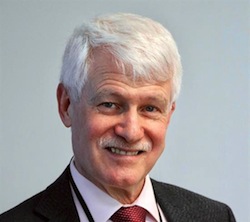
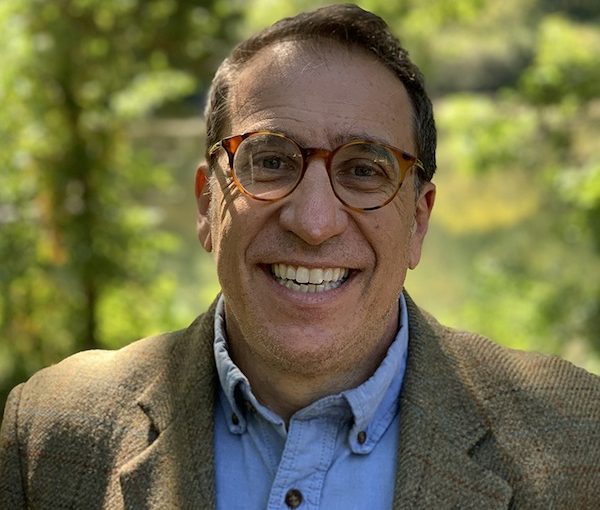
photo - Matt Seaton
Matt Seaton (photo from BRCAinBC)

BRCAinBC is a group of individuals concerned about the effect of the BRCA genes on the Jewish community in British Columbia. The project was born out of the realization that many members of the Jewish community are not aware of the risks of carrying the BRCA genes and the risk of genetically linked cancers – BRCA 1 and 2 is the code for variant mutations of two genes known to increase the lifetime risk of several serious cancers in both women and men.

Your Jewish Genes: A Virtual Learning Event will feature speakers from across North America, including Amy Byer-Shainman, aka “the BRCA Responder,” and author of Resurrection Lily: The BRCA Gene, Hereditary Cancer and Lifesaving Whispers from the Grandmother I Never Knew; Matt Seaton, peer navigator with FORCE (Facing Our Risk of Cancer Empowered); as well as members of the B.C. Cancer Agency’s Hereditary Cancer Program and High Risk Clinic, including Dr. Rona Cheifetz, surgical oncologist, and Allison Mindlin, genetic counselor.

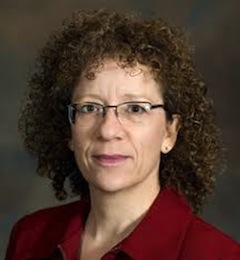
photo - Dr. Rona Cheifetz
Dr. Rona Cheifetz (photo from BRCAinBC)

For more information about BRCA genes and BRCAinBC, visit brcainbc.ca. To register for the Your Jewish Genes event, go to yourjewishgeneswebinar.eventbrite.ca. Tickets are by $1, $18 or $36 donation towards the BRCAinBC bursary program, which supports access to genetic testing for Jewish people in British Columbia. No one will be turned away for lack of funds.

Dogs aiding recovery

Sheba is a trained physiotherapy dog. One of the patients he’s helping at Sheba Medical Centre is Nathaniel Felber, who suffered a head injury in a terror attack in December 2018. (photo from IMP)

Nathaniel Felber is an Israel Defence Forces soldier who suffered a critical head injury in a terror attack in December 2018. He has been slowly recovering, against all odds. After being in a coma for several months, he was moved to Sheba Medical Centre, where he’s been receiving intensive rehabilitation. After a brief setback following brain surgery last May, Felber has made remarkable progress, and a lot of the credit goes to Sheba – not only the hospital but its namesake, a trained physiotherapy dog.

“The dog relates to Nathaniel in a nonjudgmental way, happily accepting the food that Nathaniel offers or any other attention,” said Judi Felber, who has been at her son’s side almost constantly since the attack that upended their lives.

Prof. Israel Dudkiewicz, who heads Sheba’s orthopedic rehabilitation program, has noted a marked improvement in compliance, strength and endurance in patients like Felber, when performing physical therapy exercises with the dog.

“The dog takes attention away from the pain and difficulty of the exercise, enabling the patient to try to do more and to do it better,” explained Dudkiewicz. “I’ve watched patients who ordinarily wouldn’t be able to stand for just two or three minutes, but, when they pet the dog, they can be standing for 30 minutes and more without even realizing it.”

Felber builds strength and balance in his legs by standing and petting Sheba. He also throws a ball for the dog to retrieve, a game that repeatedly flexes his elbow, but without the tedium of the standard physio exercises for the same purpose. When brushing Sheba, Felber must exert enough pressure to run the brush through the dog’s fur, but not too much that would cause him pain.

The Felbers made aliyah from Silver Spring, Md., about 14 years ago, settling in Ra’anana with their three children and a dog. “Nathaniel loved our dog, and I think that interacting with Sheba the dog is very healing for him,” said his mother.

Dudkiewicz is delighted with Felber’s positive response to Sheba, as well as the responses of patients working with therapy dogs in general.

“We have seen dramatic improvement in patients performing physical therapy with dogs from both a physical and emotional perspective,” he said. “We aim to incorporate this as another treatment tool, such as hydrotherapy and other nonconventional therapies, for patients who can benefit from it.”

At just seven months old, Sheba is still a puppy, but his performance thus far points to a successful future. Dogs used in physical therapy must undergo a yearlong, rigorous training period. The staff must likewise be trained how to integrate the dog into their rehab programs. In the course of training, the dogs are tested periodically to see that they’re up to scratch. Dudkiewicz explained that different dogs are trained for different types of patients and their abilities. The cost of each dog, including training, is more than $30,000, meaning that its implementation in the department must be limited; however, Dudkiewicz said the results certainly justify the financial outlay.

“Neurorehabilitation is slower than anything else I’ve ever experienced,” said Judi Felber. “Nathaniel is not walking, or talking, or eating even independently – yet. But I try to focus on the positive: he’s responding to people, to us, his family. He’ll turn his head and give us his hand. He can nod yes and no and show us the number of fingers that we ask. We’ve still got a long way to go, but I’m hopeful.”

– Courtesy International Marketing and Promotion (IMP)

Parenting in pandemic

The Rohr Jewish Learning Institute (JLI) has recently published Parenting in a Pandemic: A Guide for the Perplexed. Part of Project L’Chaim, a new Vancouver-wide youth mental health initiative in memory of Steven Diamond, the 36-page booklet is filled with insights and practical tools from 14 mental health experts to help parents and educators support their teens through the current crisis.

New York-based Rabbi Zalman Abraham runs the marketing and strategic planning for JLI. “We are the largest Jewish adult education network in the world, operating in over 2,000 locations,” said Abraham, who has been working in this role for the past 11 years or so.

Prior to joining JLI, Abraham authored courses and books, was an editor at askmoses.com and served in various teaching capacities. He was born in Brooklyn, grew up in South Africa, and did his schooling in the United States and Israel.

“My father is very active in dealing with the opioid crisis in South Africa,” Abraham told the Independent in a phone interview. “He’s known as the ‘addicts rabbi.’ There were times when I was growing up where there were up to six or seven addicts living in our house, because there was no better alternative then…. My father was involved with hundreds and hundreds of addicts, and overseeing their rehabilitation. He ran a halfway house, so I have a little bit of a background in that area.”

Abraham’s study of Chassidic philosophy deals a lot with Torah hanefesh, which can be loosely translated as psychology. The rabbi explained that this “is how Judaism informs us about our emotional and mental state and character, which is very relevant to addressing some of the very real mental health challenges our society is experiencing today.”

JLI has been offering courses for about 20 years, said the rabbi. “Over the past 10 years or so, many of our courses have focused on continuing education for professionals. We started with the legal profession, with courses in ethics and comparative talmudic and civil American and Canadian law. These were accredited by various bar associations of states [and provinces] across North America, including … the Law Society of British Columbia – they accredit for official continuing education credits for lawyers and attorneys…. We then began offering continuing medical education for medical professionals. Over the past few years, our most successful courses have been for mental health professionals, accredited by the American Psychological Association for psychiatrists, psychologists, therapists, social workers and the like.

image - Parenting in a Pandemic book cover - full“This is an area where Jewish wisdom informs the professional world and answers a real need. The challenge with mental illness, chemical imbalances aside, is often a result of a build-up of crisis, where a person has one crisis and another … their experiences compound, [they] have trouble envisioning a future, finding hope.… They have trouble with self-esteem, with feeling confident about life, and with finding meaning and purpose in life. These are all areas that Jewish wisdom addresses in a real way, giving people a framework within which they can find meaning and purpose.”

JLI’s international program is called My Life is Worth Living. In the Metro Vancouver area, they run the program called Project L’Chaim (“To Life”), a suicide prevention project sponsored by the Diamond Foundation in memory of Gordon and Leslie Diamond’s son Steven, whose Hebrew name was Chayim.

“We use the already existing infrastructure to educate those on the frontlines who are interfacing with teens and youth – training them to become more professionally equipped to be able to support the emotional needs of the teens in their care,” explained Abraham.

“From 2007-2017 in the U.S., there’s been a 56% rise in teen suicide. This is despite all the efforts and energies being invested in this area. This is an issue that’s getting worse and isn’t yet contained – this is in the general (not Jewish-specific) population.… There’s definitely a greater need for mental health support now than there ever was before.

“And, especially now, with COVID-19, all of this is being exacerbated. To put things into perspective, only about 10% of those who need mental health treatment get it. Even then, it’s with an average delay of 10 years between the onset of symptoms and the first treatment, according to the National Institute of Mental Health.

“Stigma is a big enemy to mental health treatment. No one wants to be labeled with a mental health diagnosis and carry that around with them for life. That stigma gets in the way of people getting the help they need.”

JLI’s approach is not clinical, but is supported by a clinical advisory board that includes Thomas Joiner, author of Why People Die by Suicide and other books on understanding why people commit suicide; Jonathan Singer, president of the American Association of Suicidology; University of British Columbia suicide expert David Klonsky; director of suicide prevention for New York State Dr. Sigrid Pechenik; Madeline Gould from Columbia University; and Jill Friedman from the American Foundation for Suicide Prevention.

“We provide professional training to those teen-interfacing adults; training that takes many forms,” said Abraham. “They learn to identify warning signs to the risk, to create a safety plan and to intervene when necessary. They learn what resources are available and what to do in various scenarios. They’re trained to be first responders. And they can isolate and help teens in the most critical situations.

“We also engage teens in group discussions, about underlying issues that are conversations for everyone – about self-esteem, hope, finding purpose and meaning in life, coping mechanisms to deal with challenges, and so on. These are conversations had outside of the mental health framework, so as to avoid stigma.”

In the Vancouver area, JLI has connected with many Jewish organizations and doctors’ offices.

“Our goal is to put it in the hands of every parent in the Greater Vancouver area,” said Abraham, who is a father himself. “It’s a compilation of 14 articles from leading youth mental health professionals, mostly from the Jewish world … to provide support to parents, so they can support their teens during these difficult times.

“The booklet gives insight to what’s going on for teens in the mental health realm and provides a lot of practical tools. The most frequently mentioned idea in the booklet is that famous line from the safety announcement on airplanes – putting on your oxygen mask first, and then helping others. People need self-care first.

“Youth, particularly teens, are social beings needing social interaction to thrive. Many don’t have this right now due to COVID-19 restrictions. Also, youth need clarity, something they can depend on … so parents need to know how to create an open channel of communication for teens to feel safe to discuss their feelings.

“The number one hope is that parents will become more aware of what their teens are going through…. Lastly and most importantly, is that they gain some tool/ideas to help them support their teens through this.”

Visit myjli.com/index.html?task=parenting for more information or to order the booklet.

“This is just the first step of many that will be coming out,” said Abraham. “We’ve already run multiple professional trainings and we hope to do many more. This is a beginning of a big, multi-year project.”


Rebeca Kuropatwa is a Winnipeg freelance writer.

Blessings in bad times

While it may not be divine intervention that brought us technologies like the communications platform Zoom, it is undeniable that 21st-century tech has made this bizarre, scary and tragic time a little less isolating.

Much has been written and said about the tragedy of this pandemic. The loss of life worldwide is devastating and heart-rending. Families and friends have been kept apart at the best of times. At the worst of times, however, when hugs and human touch are needed most, this is especially cruel. Saying final goodbyes by telephone or on a little screen is unbearably painful.

In the meantime, though, something has happened that probably few of us anticipated when this pandemic hit us full force in mid-March. We have seen people at their best, coming together to help those who need it, checking in on neighbours and family who are isolated, taking steps that are uncomfortable for us in the short-term because it is in our collective best interests in the long-term. What could have been a time exemplified by fear and anxiety, selfishness, isolation and retrenchment has been, in so many cases, including in our synagogues and so many other community organizations, a time of unparalleled flexibility, creativity and devotion to what really matters.

We cannot overestimate the power of a comparatively simple technology like Zoom. Presumably intended as a business tool, it has exploded into our pandemic world as perhaps the new century’s version of what old long-distance advertisements promised – it’s the next best thing to being there.

Nothing can replace a hug or even just the proximity of our loved ones. But imagine the alternative of going through these past few months without small miracles like technology that lets us see the faces of our friends. Human nature tends to take for granted whatever we receive almost as soon as we’ve got it in hand. But the future we marveled at in the 1960s while watching fanciful cartoons like The Jetsons is reality today. Not the flying cars (yet) but the wall-mounted video phones are better: we hold them in our hands or sit them on our laps.

The medium is the message, said the great Canadian theorist Marshall McLuhan. In future, people will look back and ponder how the technologies that united us in this time of isolation changed us and the way we communicate. In the meantime, we can already see that technology has led to even more engagement with learning, socializing and spiritual exploration than happened in-person before we had heard of COVID. And, while so many warn that we are on the verge of being “Zoomed out,” a recent poll contradicts this idea, finding that Canadians overwhelmingly love the freedom to connect to everywhere from anywhere. For Vancouverites, especially younger ones who are forced to move some distance from their parents due to housing prices, Zoom and similar tools can permit virtual visits without hours of time-wasting (and environmentally deleterious) travel. An hour-long business meeting that might have required 45 minutes of commuting and parking time starts and ends at the dining room table, freeing up hours per week for children, partners, housework, leisure, hobbies or sleep.

As we now prepare to celebrate the High Holidays in ways that our ancestors could never have imagined, we will depend on these technologies to deliver an approximation of normalcy. It won’t be normal, of course. But it’s normal for now. And that is a blessing.

Community milestones … JFS chosen for challenge, Krajden appointed OBC, Micner ordained

Following a North American call for submissions and an exhaustive selection process, Jewish Family Services (JFS) in Vancouver has been chosen by the Network of Jewish Human Service Agencies for participation in Year Two of the NJHSA Jewish Poverty Challenge, an offering of the network’s Centre for Innovation and Research. The goal of the program is to help NJHSA member agencies better analyze the marketplace, launch and manage solutions, and implement sustainable measures for success to address the many dynamics associated with responding to Jewish poverty.

NJHSA has partnered with Start Co., a venture development consultancy firm based in Memphis, Tenn., with an expertise in launching startup, entrepreneurial initiatives and engaging municipalities, corporations and nonprofits in poverty reduction responses. The team at Start Co. will provide expert consultation assistance as JFS rethinks and redesigns products and services, adjusting assumptions and organization models. Throughout, special attention will be paid to the impact of COVID-19 on service delivery methods.

“We are so honoured to have been selected to participate in this challenge,” said Tanja Demajo, JFS chief executive officer, in a press release. “The demand for our services has increased during COVID-19 and we have had to pivot quickly. Although we have adapted, we are experiencing growing pains. This opportunity through the NJHSA and with Start Co. is timely in helping us address our pain points in an innovative way so we can be more efficient and can operate at a pace our clients are demanding during this crisis.”

Reuben Rotman, president and chief executive officer of the network, added, “The COVID-19 pandemic has even further heightened the critical need for innovative solutions to the challenges of Jewish poverty. With newly vulnerable clients reaching out for assistance in unprecedented frequency, the agencies are challenged to identify new ways of working and new efforts to achieve sustainable solutions for those in need.”

For more than 80 years, JFS has delivered a continuum of social services to individuals and families of all ages and in all stages of life in the Greater Vancouver area; its pillars of support include food security, counseling and mental health, care management, financial aid and home support.

The Network of Jewish Human Service Agencies is an international membership association of more than 140 nonprofit human service agencies in the United States, Canada and Israel. Its members provide a full range of human services for the Jewish community and beyond, including healthcare, career, employment and mental health services, as well as programs for youth, families and seniors, Holocaust survivors, immigrants and refugees, persons with disabilities and caregivers.

***

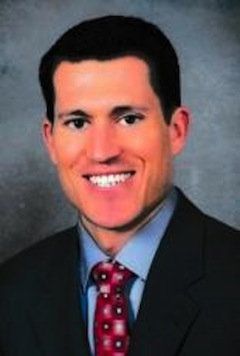
photo - Dr. Mel Krajden
Dr. Mel Krajden (photo from bccdc.ca)

Dr. Mel Krajden is among those who will be appointed to the Order of British Columbia this year. The announcement of the 13 new appointments was made on BC Day, but the investiture ceremony will be postponed due to COVID-19 restrictions and held for recipients and invited guests at Government House in Victoria in 2021.

Krajden is medical director of the BC Centre for Disease Control (BCCDC) Public Health Laboratory and has made significant contributions to fields of research, including hepatitis, HIV, HPV and, most recently, COVID-19.

With the emergence of COVID-19, British Columbia and Canada needed urgent access to rapid, validated tests for the virus. Under his leadership at BCCDC, and relying heavily on his expertise, Krajden and his team were able to rapidly develop an assay for the province to commence testing in January 2020, weeks before other jurisdictions. Access to this test was an essential element in the management and control of the outbreak and the safety of British Columbians.

Krajden created the world-leading B.C. Hepatitis Testers Cohort, which integrates de-identified data on 2.4 million individuals tested for, or diagnosed with, hepatitis B, C, HIV and TB infections, linked to their corresponding healthcare administrative data since 1990, to create longitudinal medical histories. This cohort has produced influential pieces of evidence that shaped clinical and public health guidelines and policy in Canada and globally. He was instrumental in the development and continued progress of the Canadian Institutes of Health Research-funded Canadian Network on Hepatitis C, a multidisciplinary group committed to developing a national strategy for hepatitis C elimination.

Krajden was one of the key personnel in the STOP HIV initiative in British Columbia. This public health endeavour saw the implementation of acute HIV testing, allowing diagnosis during the most infectious period of the disease, resulting in timely interventions and communication to partners to reduce transmission. This undertaking helped lead to the lowest HIV incidence on a provincial scale in decades.

Krajden also played a pivotal role in global public policy changes in human papillomavirus (HPV) vaccine dosing regimen and the associated reduction of financial access barriers to care. Similarly, his work with respect to assessing the utility of HPV testing versus traditional Pap smears is expected to contribute to guidelines that will benefit women worldwide.

In his educational capacity, Krajden has the reputation of being a wonderful teacher and valued mentor, training researchers, health professionals and students at all levels. He is known for his willingness to provide input and advice despite numerous other commitments, contributing to the success of others. His dedication further extends into the clinical realm, where he always has patient interests at heart and never hesitates to devote his own time to make a difference in client outcomes.

In appointing Krajden to the Order of British Columbia, it is recognized that, over many decades, he has demonstrated exceptional innovation, leadership and sustained contributions to the province, country and the world. He is a highly respected visionary, scientist and educator who has inspired countless researchers and health professionals with his clinical excellence, dedication and generosity of spirit.

***

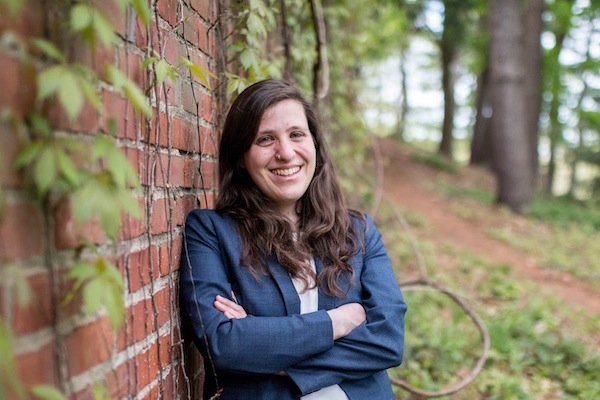
Rabbi Mimi Micner
Rabbi Mimi Micner

Tamara Micner, Rembrandt Koppelaar, Karen and Jack Micner and Dr. Talie Lewis are extremely proud to announce the ordination of Mimi Micner to the rabbinate. The virtual ceremony took place June 7 from Hebrew College in Boston. Mimi and Talie live in Watertown, a half-hour drive from Mimi’s new position, rab- bi at Temple Beth Torah in Holliston, Mass.

Mimi is the granddaughter of Kela (z’l) and Lito (z’l) Guincher, who are kvelling on the Richter scale above. She is also the granddaughter of Chaim (z’l) and Susie Micner, who are surely enormously proud as well.

Mazel tov, Rabbi Mimi! Bist 120!


The world needs us to change

Nigel Savage, president and chief executive officer of Hazon, is one of the keynote speakers for Jewish Federation of Greater Vancouver’s annual campaign opening on Sept. 8. (photo from JFGV)

Nigel Savage, president and chief executive officer of Hazon, is looking forward to addressing the Vancouver Jewish community Sept. 8 as one of the keynote speakers for Jewish Federation of Greater Vancouver’s annual campaign opening. “The pandemic is a reminder of why we have and why we need central institutions like federations for the Jewish community,” he said.

“Hazon is working to turn the Jewish community outwards, address environmental sustainability and to use that process to strengthen Jewish life,” explained Savage in an interview with the Independent. “I think of the Vancouver Jewish community as one made of people who choose to live in the Pacific Northwest and have a sensibility of caring for the world and its natural resources, so I want to sketch out what may be possible for all of us in the long term.”

Savage was a professional fund manager in London, England, where he worked for NM Rothschild and was co-head of UK equities at Govett. After nine years in the financial world, he opted to take a sabbatical year and study at Pardes in Jerusalem. “I had an amazing time and stayed on in Israel as I tried to figure out what I wanted to do with my life,” he recalled.

A friend invited him to join a hike from the Mediterranean Sea to the Sea of Galilee, and Savage, who described himself as “a chubby, nerdy, intellectual English kid who grew up in Manchester and never really set foot outdoors,” agreed. He loved the hike and, as he began doing more physical activities outdoors, recognized it as a great way to bring Jewish tradition to life and connect with others. “We didn’t enter Jewish history in a synagogue or JCC. We entered it in relationship to the land of Israel, with a relationship to food, land, climate, language. That’s what the Torah is a record of,” he said.

Savage’s time in Israel was the impetus for the creation of what is today one of the largest faith-based environmental organizations in the United States. Hazon’s goal is to strengthen Jewish life and contribute to a more environmentally sustainable world. It calls itself the “Jewish lab for sustainability” and strives to effect change through immersive experiences and by inspiring individuals and communities to commit to change – particularly with respect to food systems.

Hazon is focused on Jewish outdoor, food, farming and environmental education (JOFFE) and, since its inception in 2000, has been dedicated to helping establish and inspire change. “In the Bay Area, there’s Urban Adama and Wilderness Torah, and, in north San Diego, there’s Coastal Roots Farm. In Boulder, there’s the Milk and Honey Farm and, in Toronto, we have Shoresh,” he said.

“In each place, people are doing slightly different programs with similar goals,” Savage explained. “Those goals are to reconnect the Jewish community to land and food, to reconnect people to Jewish tradition, to reconnect people to each other and to use that process to strengthen Jewish life and create the kind of world we believe in.”

Savage’s list of accolades suggests that he is achieving his goal at Hazon. In 2015, he was awarded an honourary doctorate by the Jewish Theological Seminary and he’s been named a member of the Forward 50, the annual list of the 50 most influential Jewish people in the United States, on two occasions.

He noted that September 2022 is the start of a new seven-year cycle in Jewish life. “Imagine if the Vancouver Jewish community began to envision Jewish life in Vancouver over the next seven years. If we wanted the Vancouver Jewish community to be on the cutting edge of Jewish communities around the world around issues of sustainability by 2029, what would that look like?”

Savage suggested that every Jewish institution in the city could begin a process to establish a coherent food plan over the next seven years. It might include policies regarding use of plastic bottles, whether to serve meat and soda, carbon neutrality goals for community buildings, and other actions in relation to food and land use.

“At Hazon, we want to treat these questions as real questions and involve people in the Jewish community, from teenagers to rabbis. We want to start a real conversation which draws on Jewish tradition, the best of what’s happening in Vancouver and Canada, and use that process so that, by 2029, the Vancouver Jewish community has integrated food polices in all its institutions that reflect our values.”

Hazon’s goal is to invite communities to unpack questions like these and to act as a resource on matters of sustainability and Jewish efforts to promote it.

“If we think about the nature of obesity, diabetes and heart disease, these are chronic illnesses,” Savage noted. “The world needs us to slowly and steadily change how we’re living so that all these people can live sustainably on this planet. Right now, we have a 10- or 15-year window to change the trajectory of Jewish civilization. We can’t complete this task by ourselves, but neither are we free to desist from it.”

Savage will be joined at the Federation campaign launch by fellow keynote speaker Sarah Hurwitz, author of Here All Along: Finding Meaning, Spirituality and a Deeper Connection to Life – in Judaism (After Finally Choosing to Look There) and former speech writer for the Obamas. To register for the event, which starts at 5 p.m., go to jewishvancouver.com/faco2020.

Lauren Kramer, an award-winning writer and editor, lives in Richmond. To read her work online, visit laurenkramer.net.

Historic Israel-UAE accord?

Hosannas of historical significance followed the announcement that Israel and the United Arab Emirates have normalized relations with each other. The truth is, we don’t really know what this means for the long-term. History is best judged in hindsight.

In some ways, the mutual recognition is not a massive surprise. Israel has long had semi-secret good relations with some of the Gulf states. But, in the name of solidarity with Palestinians, the Arab states kept official relations off the table. It is a sign now that fear of Iran, rather than solidarity with Palestinians, is increasingly the priority guiding diplomatic decision-making in the region.

New York Times columnist Thomas Friedman made it sound like the accord is the greatest thing to hit the Middle East since hummus. Calling it a “geopolitical earthquake,” Friedman suggested this was the third most important event for the region after President Anwar Sadat visiting Jerusalem and Yasser Arafat shaking Yitzhak Rabin’s hand on the White House lawn. But Friedman’s choice of those two examples may exactly undermine his case that this is quite so tectonic.

Perhaps more than anywhere else in the world, history in the Middle East does not have a consistently forward-moving trajectory. Relations between Israel and its neighbours have often been one step forward and two steps back. The anti-Zionist culture that permeates much of the Middle East and North Africa is not necessarily something that can be overcome simply by a recognition by top government officials on either side. Egypt’s peacemaking with Israel in the late 1970s can be seen as the most direct cause of the assassination of Sadat in 1981. When some extremists saw Jordan’s King Abdullah I as too soft on the Zionists, he was assassinated at the entrance of the Al-Aqsa Mosque in Jerusalem by a Palestinian, in 1951. Extremism is not limited to the Arab side – Rabin was killed 25 years ago by an Israeli extremist opposed to concessions with the Palestinians.

Extremism could derail this progress, as well. Some voices in the Arab world are already warning of dire consequences for Arab figures working with Israelis. Even if, as we desperately hope, there is not retaliatory violence, and even if rumours that other Arab countries are ready to follow the UAE’s lead are true, it may be premature to see this one step as a guarantee of rainbows and doves.

When Israel and Egypt signed the Camp David Accords and adopted a position of mutual recognition, it was perceived to be a future-changing moment. It certainly appeared that way at the time. However, relations with Egypt – then the unchallenged political, military and cultural superpower of the Arab world and the birthplace of pan-Arabism – never became chummy. What Israel has received in practical terms in the subsequent 40-plus years is mostly a cold peace. Similarly, after Israel’s parallel agreement with Jordan. There are mutual benefits and a state of comparatively benign adjacency but these relationships are hardly the stuff of great friendship.

Still, the Gulf states are different. They have not been involved in any conflagration with Israel. Their emergence as high-tech and financial powers in recent decades puts them on footing with Israel among the Middle East’s forward-looking economies.

Meanwhile, as part of the deal, Israeli Prime Minister Binyamin Netanyahu has called off his annexation plan in part of the West Bank, though it was hard to see a way forward for the ill-advised initiative. It’s possible that Netanyahu’s annexation scheme was like U.S. President Donald Trump’s Mexican border wall – red meat to their respective far-right constituents but a promise that was never going to be kept. It may not have been a jagged pill for Israelis to swallow.

And, speaking of Trump, as he often does, the U.S. president is crowing that he (via his advisor/son-in-law Jared Kushner) is responsible for this great unfolding. It seems undeniable that the U.S. administration played a role. Just 70-some-odd days out from one of the most important elections of our lifetimes, the agreement seems timed to bolster the image of the president as a statesman and appeal to Jewish and evangelical voters. However, the relationships between these actors are not entirely transparent and there are likely many moving pieces – and many lucrative business deals – to which we are not privy. Much of the excited coverage of the agreement fails to recognize the larger geopolitics in the region and how this agreement may best serve those currently in power.

Palestinian leaders are outraged by a deal that reduces their leverage in the region, and Israel and its supporters should be wary of unilateralism if there is any hope of keeping a two-state solution alive. That said, whatever the future holds for Israel’s relationships with the UAE and other Arab states, this is a time for cautious hope. While the Palestinian leadership and some of their ostensible allies, like Turkey and Hezbollah, are upset by the accord, it’s possible that they are among those who should be most enthusiastic.

Denormalization, the once-nearly-unanimous assertion by Arab states that Israel shouldn’t exist – and, in their official diplomatic worldview, doesn’t exist – was intended to harm Israel. But Israel’s economy continues humming along, even as the pandemic makes the outlook more uncertain. The biggest losers of denormalization have been neighbouring Arab people and states – most especially the Palestinian people – who are effectively quarantined from the economic engine of the region. The Israeli-UAE agreement could be a good thing for all people in the area, whether they recognize it right now or not. However, we shouldn’t let our excitement for a détente get in the way of other critical interests: a two-state solution and electing governments in the United States and Israel that are oriented to coexistence and fair play.

Israel and UAE accord

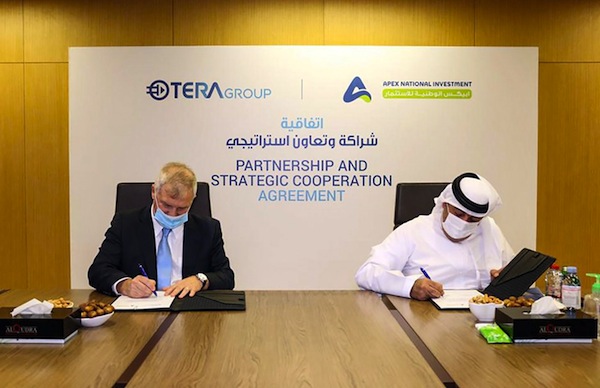
TeraGroup chair and chief executive officer Oren Sadiv, left, signs a research deal with Khalifa Yousef Khouri, chair of APEX National Investment, in Abu Dhabi. (photo from WAM Emirates News Agency via Israel21c)

Overcoming the COVID-19 pandemic could be just one of many positive results of Israel and the United Arab Emirates establishing full diplomatic relations on Aug. 13, 2020. The historic pact is expected to trigger numerous joint projects in health, economics, agriculture, water technology, telecommunications, security, culture, tourism and other fields.

“Today, we usher in a new era of peace between Israel and the Arab world,” said Israeli Prime Minister Binyamin Netanyahu in announcing the U.S.-brokered Abraham Accord with Abu Dhabi Crown Prince Mohammed bin Zayed al-Nahyan (“MBZ”).

Even before the accord, on July 3, Rafael Advanced Defence Systems and Israel Aerospace Industries of Israel signed agreements with Abu Dhabi’s Group 42 concerning research and development collaborations for solutions to SARS-CoV-2, the virus that causes COVID-19. On Aug. 15, UAE company APEX National Investment signed a strategic commercial agreement with Israel’s TeraGroup to develop SARS-CoV-2 research. And, on Aug. 16, in the culture arena, Israeli singer Omer Adam announced that the UAE royal family invited him to perform a private concert.

Netanyahu said the two technologically advanced countries will open mutual embassies and direct flights, among other bilateral agreements.

“This is the greatest advancement toward peace between Israel and the Arab world in the last 26 years, marking the third formal peace between Israel and an Arab nation, after Egypt (1979) and Jordan (1994),” he said.

One big difference is that Israel and the UAE – a federation of seven states including Dubai and Abu Dhabi – do not share a border and have never warred with one another. Under-the-radar business and security ties have been building over the past 20 years, and diplomatic ties more recently.

In 2015, Ministry of Foreign Affairs Director General Dore Gold opened a diplomatic mission in Abu Dhabi connected to the International Renewable Energy Agency. In 2018, Israel’s communications minister attended a telecommunications conference in Dubai; in 2019, Israel’s foreign minister spoke at a United Nations environmental conference in Abu Dhabi.

Israel’s culture and sports minister came to the Abu Dhabi Grand Slam judo competition in October 2018, where, for the first time, the UAE permitted Israeli competitors to wear their national flag on their uniforms, and played the Israeli national anthem on the winners’ podium.

The new agreement puts an official stamp of approval on this ongoing relationship and allows it to expand in full daylight.

* * *

The development of coronavirus vaccines, therapeutics and testing will “absolutely” figure prominently in Israeli-UAE deals following the Abraham Accord, said Jon Medved, chief executive officer of Jerusalem-based OurCrowd.

Medved has been traveling to the UAE for years, building contacts between Israeli and Gulf entrepreneurs, investors and experts.

“They’ve got world-class hospitals and there is huge interest in working with Israel on healthcare technology, telemedicine and digital health,” he told Israel21c.

Medved spoke in Abu Dhabi last December at the SkyBridge Alternatives (SALT) investment conference. He was the first Israeli investor to appear on a public stage in the UAE.

“I wasn’t sure they would let me speak openly about Israel, but, on the contrary, they wanted me to talk about Israel’s ecosystem,” said Medved. “You could tell we are in historic times. I was amazed how open they are to us and how aware they are of what is going on in our country.”

Medved reiterated that the UAE has long done business quietly with Israel but now will become a bigger trade partner and a bridge to other Gulf-region markets for Israel.

“For most of us, the Arab world has been more or less an afterthought and that’s about to change,” he said. “We will sell them enormous amounts of health gear and ag-tech, education-tech and cybersecurity,” he predicted. “For the startup community, the agreement will open up a source of tremendous new investment from the best investors in the world. [The Emiratis] are not only deep-pocketed but incredibly skilled, experienced and sharp.”

However, he added, “The real challenge for us is how we can really make this a win-win by trying to understand what they want. My sense is they don’t want to be passive investors. They want to build joint ventures, engage in technology transfer, build startups, do business and create jobs and long-term value and partnership.”

* * *

The Abraham Accord is “a huge diplomatic achievement for Netanyahu” and a “brave leadership act of Bin Zayed,” said Yoel Guzansky, senior research fellow at the Institute for National Security Studies and co-author of Fraternal Enemies: Israel and the Gulf Monarchies (Oxford University Press, 2020).

Guzansky, who coordinated Israeli policy on Iran and the Gulf states under four national security advisers and three prime ministers, said in a press call on Aug. 13 that “the announcement was historic and dramatic, but not 100% surprising for those who have been talking behind the scenes with Emiratis.”

“Relations between Israel and some of the Gulf States, especially the UAE, [are] the worst-kept secret in the Middle East,” Guzansky said. “It was almost ordinary for Israelis to visit the Gulf representing industries from diamonds to agriculture to desalination to security. Relations evolved, especially in the past five years, in several dimensions – security intelligence, economic/commercial, cultural and religious dialogue – pushed and led by Bin Zayed.”

Guzansky believes the deal could catalyze other Arab countries in the Gulf and North Africa. Indeed, Netanyahu said he expects to “soon see more Arab countries join our region’s expanding circle of peace.”

Bahrain released a statement lauding the landmark Abraham Accord, while an anonymous Saudi Arabian source told Israel’s Globes business newspaper that “the Arab world has a great deal to gain from Israel.”

The Israeli Ministry of Foreign Affairs has confirmed the start of phone service with the UAE and stated that the peace treaty “will benefit the entire region, helping secure a brighter and more prosperous future for all.”

Israel21c is a nonprofit educational foundation with a mission to focus media and public attention on the 21st-century Israel that exists beyond the conflict. For more, or to donate, visit israel21c.org.

Making yoga more accessible

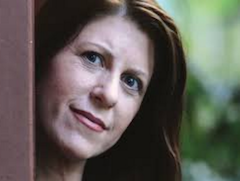
For Miriam Leo-Gindin, founder of the Yoga Buggy, COVID-19 has meant more opportunities to bring her passion for yoga to Vancouver youth – free of charge.

Leo-Gindin, 41, a former school teacher who has taught yoga in various capacities, including at Vancouver Talmud Torah, founded her Vancouver-based nonprofit organization in 2017. Until recently, she was offering free Zoom yoga classes to kids, but, thanks to sponsorship from the Canadian Red Cross, she’s been able to offer physically distanced classes at McSpadden and Woodland parks to local children and their families.

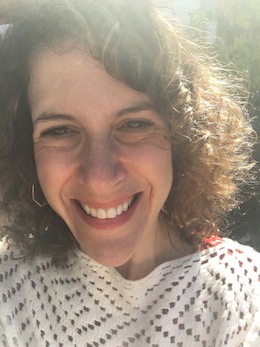
photo - Miriam Leo-Gindin
Miriam Leo-Gindin (photo courtesy)

“I’ve been doing yoga since I was 19 and it helped me get through some of my own health issues,” she told the Independent. “I founded Yoga Buggy to bring yoga to all kids and families, including those who are underserved, have financial difficulties or don’t have access for other reasons.”

The “buggy” part of Yoga Buggy refers to its mobile nature. Leo-Gindin’s classes are portable, so she is able to bring them to before- and after-school programs and to parks, so that families don’t have to travel far to participate. In addition to the Red Cross, her organization also has received funding from the B.C. Recreation and Parks Association.

Pre-pandemic, Leo-Gindin was doing around 25 classes per week all over the city, in Vancouver schools, YMCAs and neighbourhood homes, while also planning expansion into Burnaby, Richmond and Coquitlam. When COVID-19 began, she launched Community Zoom Yoga, offering two sessions a week for 12 weeks. The classes had a variety of themes, from community kindness to staying healthy, and were geared at children ages 5 through 12. There were also classes for preschoolers and teens.

“Yoga is really fun and kids enjoy it,” she reflected. “It brings out their creativity, helps build their attention span, makes them feel more confident, and can play a supportive role in dealing with anxiety, depression and behavioural issues.”

The website notes, “Yoga Buggy’s trauma-aware practitioners strive to offer as welcoming a space as possible. Choice in how to participate is always at the forefront of our classes and events. If there are any sensory, learning or additional supports that could be of benefit to any of the participants, please let us know so that we can offer as hospitable a space as possible. This information is kept private and confidential.”

Yoga Buggy has 15 active teachers and will continue its work through the fall. Leo-Gindin hopes to develop a yoga teacher training program and to start a YouTube channel to increase her reach even further with kids yoga classes. For more information, visit yogabuggy.com.

Lauren Kramer, an award-winning writer and editor, lives in Richmond. To read her work online, visit laurenkramer.net.

***

Note: This article has been updated to make clear that, while Miriam Leo-Gindin taught yoga at Vancouver Talmud Torah, she was not on staff at the school.

Inspiring students’ research

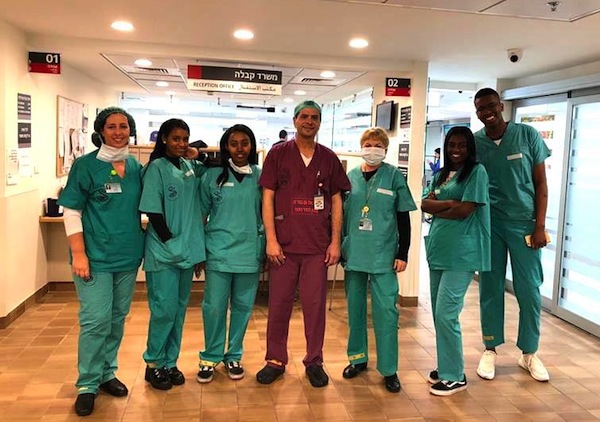
Students and staff of the recent Arrow Project on a tour of Sheba. In the centre is Prof. Eldad Katorza. Student Yair Jalmar is at the far right. (photo from IMP)

Sheba Medical Centre, Israel’s national hospital, enjoys a reputation for medical innovation, but many are unaware that it is also at the forefront of societal integration among various minority groups in Israel. In the past several years, Sheba has integrated hundreds of new Ethiopian olim (immigrants) into the hospital workforce, going as far as providing them with free classes to help them navigate Israeli bureaucracy and improve their language skills.

Recently, Prof. Eldad Katorza, senior physician at Sheba and director of the Arrow Project, decided to give youth from the Ethiopian community a head start by incorporating them into his pilot program.

The Arrow Project (Chetz in Hebrew, the initials of chokrim tze’irim, meaning “young researchers”) is an apprenticeship program for medical students, designed to pave their way into the world of research. Established in 2006, the initiative matches selected students with experienced researchers who serve as their mentors. During once- or twice-weekly meetings, the student-mentor teams work through every stage of medical research, from formulating the initial question, to collecting and analyzing data, to presenting the results at medical conferences.

This year, for the first time, each research duo also included a third tier: high school students from the Ethiopian community.

Katorza believes in the importance of encouraging students to pursue research, noting that, in med school, they do not receive sufficient exposure to research thinking or methodology.

“I believe that research makes a doctor more knowledgeable, more curious, more creative,” he said. “A doctor who engages in research is a much better doctor.”

Employing this premise, Katorza is planning to open several slots for nursing school students in the coming year’s program. “Nursing is also a field that stands to benefit greatly from adding researching to its ranks; it will raise the bar of nursing in Israel,” he said.

In the early stages of planning the pilot program for the Ethiopian high school students, it became evident to Katorza just how crucial, timely – and challenging – his initiative was. “I asked my son, then in 11th grade, to look around his own school in Givatayim for students from the Ethiopian community who might be suitable for the program,” said Katorza. “As it turned out, there wasn’t a single Ethiopian student in his school, nor in any of the good schools in the area.”

The reason can be traced to the socioeconomic realities in Israel today. Ethiopian Israelis have long experienced prejudice and being treated as second-class citizens. By and large, members of the Ethiopian community tend to dwell together in poorer neighbourhoods, where community services, schools included, are more limited. These conditions put Ethiopian teens at a disadvantage from the outset and, due to economic necessity, the youth are pushed to join the workforce at an early age, further perpetuating a cycle of poverty.

“Almost four decades have passed since the first wave of Ethiopian Aliyah,” said Katorza, “yet, judging from their rate of participation in academia, their level of affluence and other markers of social mobility, it appears that the government has failed to take the necessary steps to help them bridge the gaps and facilitate their successful absorption into mainstream Israeli society.”

Anxious to change this negative trend, Katorza decided to include outstanding students from the Ethiopian community in the Arrow Project. However, it wasn’t simple to locate high school students from the Ethiopian sector who met the criteria for participation in the program: high marks in the sciences, high motivation and interest, and living near enough to the Sheba campus to be able to easily attend the weekly meetings. Ultimately, Katorza was aided by an organization called Fidel (“Alphabet” in Amharic), which promotes the education and social integration of Ethiopian-Israeli youth. The Fidel staff welcomed this opportunity to incorporate Ethiopian students in Sheba’s research-mentoring platform, and provided 10 candidates, from which the top five were chosen.

According to Katorza, the pilot program was a resounding success and will be repeated in the coming year. “We found that, once they are freed from the limitations of their environment, the students manifested amazing capabilities,” he said. “We endeavoured to help build their self-confidence, empower them and teach them that they can do anything they put their mind to.”

Throughout the year, in addition to their full participation in research, the Ethiopian high schoolers were also exposed to the clinical activity at the hospital. “At the beginning of the year, the students didn’t have any specific plans for the future,” Katorza said. “Now, they are now seriously considering a medical career.”

One of those is Yair Jalmar, 17, from Beer Yaakov, who participated in a research project with pediatric cardiologist Dr. Shai Tejman. “This project helped me develop my interest in medicine and learn more about the advanced technologies and devices, as well as the various departments in the medical field,” he said.

In the 14 years since the project’s inception, the pool of participants, which in the beginning included only students from Tel Aviv University Sackler School of Medicine, has expanded to foreign exchange students from New York and London, as well as medical students from Ariel University, Bar-Ilan and others. Thus far, former participants in the Arrow Project have gone on to publish their findings in respected medical journals, and several have joined the team at Sheba.

– Courtesy International Marketing and Promotion (IMP)