Searching for a COVID cure

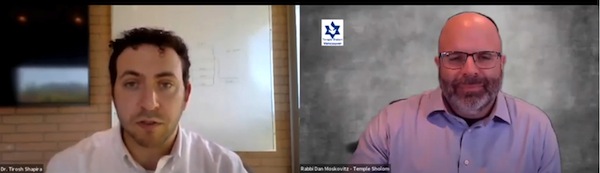
University of British Columbia’s Dr. Tirosh Shapira, left, spoke at a June 18 Temple Sholom-hosted webinar emceed by Rabbi Dan Moskovitz. (screenshot)

“COVID-19 or SARS-CoV-2 has a different type of genetic material than we have. It is an excellent saboteur … and can mutate easily. Thus, if we develop a drug against it, we will likely, over time, begin to see some resistance,” University of British Columbia microbiologist Tirosh Shapira told a Zoom audience in a June 18 webinar.

“In my research,” he said, “instead of looking for one drug, I am looking for four. I am trying to create a cocktail similar to what is applied with treating HIV. We are looking for drug combinations.”

There is an added level of complexity involved in seeking such combinations, he noted, as certain drugs can negate the effects of others.

Shapira is among a select group of Canadian scientists hunting for a cure to COVID-19. He earned his PhD from Australia’s University of Queensland, where he specialized in molecular toxicology for global food security. Before devoting his efforts to COVID-19, his research at UBC led to a novel treatment against tuberculosis and the development of methods to improve drug discovery.

To the web audience hosted by Temple Sholom, Shapira spoke on the topic of drug development in British Columbia, particularly as it pertains to the new coronavirus. He also provided an overview of modern drug discovery and a look at the advanced facility for virology research at UBC.

“Viruses are a large array of different agents,” explained Shapira, “each with unique characteristics, and depend on their hosts in order to replicate and create more copies of themselves … they vary greatly. However, some share similar properties.”

Knowing, for example, the similarities of the common cold and SARS, scientists can gain a better understanding of how the biology of COVID-19 might play out. This type of application led to the discovery of the effectiveness of the drug Remdesivir against the MERS virus, for instance.

Citing the history of combating viruses through treatments, Shapira showed a graph of the downward trend of infections from tuberculosis, starting in the late 19th century. He used this to elucidate the factors needed beyond drugs to control an epidemic, such as economics, sanitation and education.

“On a global scale, sanitation and containment are extremely important for an immediate response to an immediate threat,” he said. “Understanding SARS-CoV-2 is based on understanding similar viruses. The best way to defeat new viruses is through social adjustments.”

Shapira distinguished between the classical and modern approach to drug discovery. The classical approach, he said, is to look under a microscope and examine what is there, while the modern approach considers all possible compounds and is less concerned about the biology.

According to Shapira, the modern approach essentially throws everything at a problem. This, in turn, reduces the research bias on the part of the scientist, has fewer developmental pitfalls and is more “statistically robust,” thereby making it more likely for discoveries to pass clinical trials.

Biology, he hastened to add, is still important – the quality of the test model will determine the quality of the outcome. “Good, sound biology brings good, sound compounds that are good pharmaceuticals,” he said.

When considering how to target a virus, Shapira told the online group that a researcher will look at known antivirals, U.S. Food and Drug Administration-approved drugs, drugs in clinical trials and natural products, the source of most new antibiotics and antivirals.

Drug development is a complex, multi-stage process which has greatly advanced in the past 20 years, he said. In the United States, for example, it begins with pre-clinical trials in labs and with animal testing. Next come clinical trials focusing on safety and efficacy, before moving to randomized testing. Afterwards, there are FDA trials and ultimately production.

UBC’s FINDER (Facility for Infectious Diseases and Epidemic Research), where Shapira conducts his research, has an automated workstation and screening microscopes that handle the large workload of sorting through tens of thousands of compounds without introducing human error.

Due to restricted access to the highly infectious coronavirus, research in Canada can only be performed at a limited number of contamination-free facilities, which also include the University of Toronto and the National Microbiology Laboratory in Winnipeg.

In their studies, UBC’s researchers use lab-grown organs in a dish and a live virus, explained Shapira. FINDER has previous experience with this model from the outbreak of the Zika virus. At FINDER, the UBC team screens the thousands of compounds with collaborators around the world.

Shapira, the only microbiologist conducting research on the COVID-19 virus in British Columbia, estimated that there are 200 biologists and another 2,000 people working on various studies, including in economic areas, related to COVID-19 in Canada.

“SARS-CoV-2, despite being a present threat, will pass,” said Shapira. “But other infectious diseases will emerge in this age of easy travel. Preparedness is key. We will gradually reopen as we are better able to monitor the spread of the virus. We will find a treatment.”

Sam Margolis has written for the Globe and Mail, the National Post, UPI and MSNBC.
Studying the “love hormone”

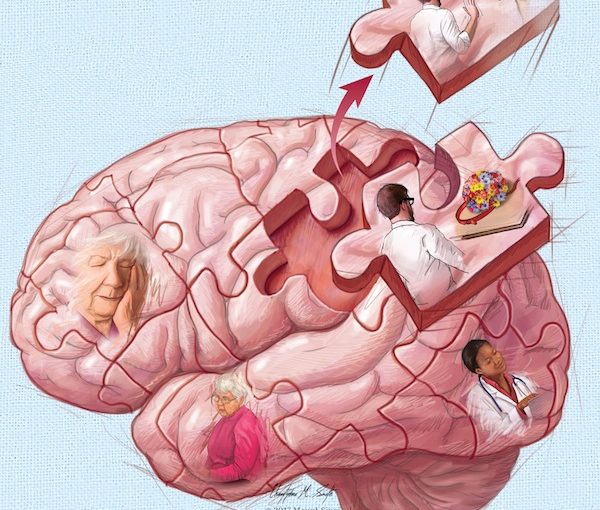
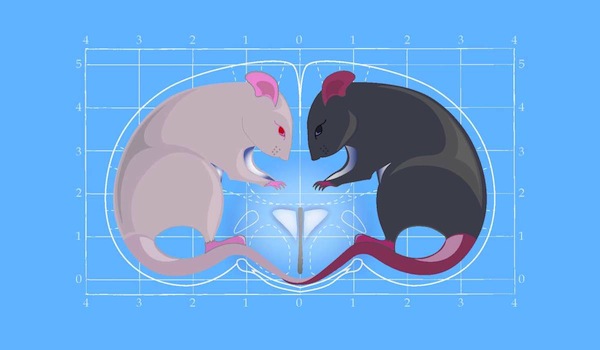
Oxytocin, a peptide produced in the brain, may bring hearts together – or it can help induce aggression. (image from Weizmann Institute)

During the pandemic lockdown, as couples have been forced to spend days and weeks in each other’s company, some have found their love renewed while others are on their way to divorce court. Oxytocin, a peptide produced in the brain, is complicated in that way: a neuromodulator, it may bring hearts together or it can help induce aggression. This conclusion arises from research led by Weizmann Institute of Science researchers in which mice living in semi-natural conditions had their oxytocin-producing brain cells manipulated in a precise manner. The findings, which were published in Neuron, could shed new light on efforts to use oxytocin to treat a variety of psychiatric conditions, from social anxiety and autism to schizophrenia.

Much of what we know about the actions of neuromodulators like oxytocin comes from behavioural studies of lab animals in standard lab conditions. These conditions are strictly controlled and artificial, in part so that researchers can limit the number of variables affecting behaviour. But a number of recent studies suggest that the actions of a mouse in a semi-natural environment can teach us much more about natural behaviour, especially when we mean to apply those findings to humans.

Prof. Alon Chen’s lab group in the institute’s neurobiology department have created an experimental setup that enables them to observe mice in something approaching their natural living conditions – an environment enriched with stimuli they can explore – and their activity is monitored day and night with cameras and analyzed computationally. The present study, which has been ongoing for the past eight years, was led by research students Sergey Anpilov and Noa Eren, and staff scientist Dr. Yair Shemesh in Chen’s lab group.

The innovation in this experiment was to incorporate optogenetics – a method that enables researchers to turn specific neurons in the brain on or off using light. To create an optogenetic setup that would enable the team to study mice that were behaving naturally, the group developed a compact, lightweight, wireless device with which the scientists could activate nerve cells by remote control. With the help of optogenetics expert Prof. Ofer Yizhar of the same department, the group introduced a protein previously developed by Yizhar into the oxytocin-producing brain cells in the mice. When light from the wireless device touched those neurons, they became more sensitized to input from the other brain cells in their network.

“Our first goal,” said Anpilov, “was to reach that ‘sweet spot’ of experimental setups in which we track behaviour in a natural environment, without relinquishing the ability to ask pointed scientific questions about brain functions.”

Shemesh added that “the classical experimental setup is not only lacking in stimuli, the measurements tend to span mere minutes, while we had the capacity to track social dynamics in a group over the course of days.”

Delving into the role of oxytocin was sort of a test drive for the experimental system. It had been believed that this hormone mediates pro-social behaviour. But findings have been conflicting, and some have proposed another hypothesis, termed “social salience,” stating that oxytocin might be involved in amplifying the perception of diverse social cues, which could then result in pro-social or antagonistic behaviours, depending on such factors as individual character and the environment.

To test the social salience hypothesis, the team used mice in which they could gently activate the oxytocin-producing cells in the hypothalamus, placing them first in the enriched, semi-natural lab environments. To compare, they repeated the experiment with mice placed in the standard, sterile lab setups.

In the semi-natural environment, the mice at first displayed heightened interest in one another, but this was soon accompanied by a rise in aggressive behaviour. In contrast, increasing oxytocin production in the mice in classical lab conditions resulted in reduced aggression.

“In an all-male, natural social setting, we would expect to see belligerent behaviour as they compete for territory or food,” said Anpilov. “That is, the social conditions are conducive to competition and aggression. In the standard lab setup, a different social situation leads to a different effect for the oxytocin.”

If the “love hormone” is more likely a “social hormone,” what does that mean for its pharmaceutical applications?

“Oxytocin is involved, as previous experiments have shown, in such social behaviours as making eye contact or feelings of closeness,” said Eren, “but our work shows it does not improve sociability across the board. Its effects depend on both context and personality.”

This implies that, if oxytocin is to be used therapeutically, a much more nuanced view is needed in research: “If we want to understand the complexities of behaviour, we need to study behaviour in a complex environment. Only then can we begin to translate our findings to human behaviour,” she said.

Participating in this research were scientists at the Max Planck Institute for Psychiatry in Munich, including research students Asaf Benjamin and Stoyo Karamihalev, staff scientist Dr. Julien Dine and postdoctoral fellow Dr. Oren Forkosh of the Chen lab; Prof. Shlomo Wagner and postdoctoral fellow Dr. Hala Harony-Nicolas of Haifa University; Prof. Inga Neumann and research student Vinicius Oliveira of Regensburg University, Germany; and electrical engineer Avi Dagan.

Responding to COVID

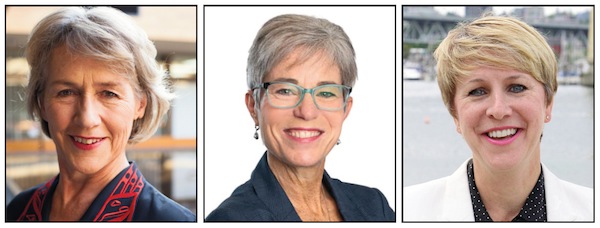
Left to right: MP Joyce Murray, MLA Selina Robinson and Vancouver Councilor Sarah Kirby-Yung spoke at a June 3 webinar hosted by the Canadian Jewish Political Affairs Committee. (photos from the internet)

“Intense” was the word used by speakers from all levels of government to describe their experiences during the pandemic emergency.

In a June 3 webinar on Zoom, federal and provincial cabinet ministers and a Vancouver city councilor addressed COVID-19: What’s the New Normal? The event was hosted by the Canadian Jewish Political Affairs Committee.

Joyce Murray, member of Parliament for Vancouver-Quadra, is Canada’s minister of digital government, a role that took on sudden significance when even Parliament began operating virtually and almost all federal civil servants are being asked to work from home.

“It’s been an incredibly intense time,” she said. “I never thought I would work harder than I do as a minister in Ottawa, but I would say these last few months have been much more intense than I expected.”

A million Canadians were able to apply for the Canada Emergency Response Benefit (CERB) on the first day, which Murray said illustrates the scope and speed of the government’s electronic mobilization.

Responding to a question from an audience member, she acknowledged that there may be some inequities in the program – some people are earning more not working than a neighbour might earn on the job – but the decision was made to ramp up immediately, knowing that anomalies were likely.

The federal government has not decided when to reopen the U.S. border, Murray said. The current, extended closure ends June 21.

“Our primary focus is the safety of Canadians,” she said. “We’ll be taking the advice of public health officials and thinking about all of the different ramifications and make a decision when the time comes.”

The discussion was moderated by James Moore, a former Conservative MP, who pressed Murray on the unanticipated federal expenditures resulting from the pandemic.

“Fortunately, Canada entered this in a very strong fiscal position compared with most of its G-20 partners,” she responded. “So we were ready and able to respond and there is now approximately $150 billion in direct support to Canadians that has been put on the table. That makes it one of the most ambitious response plans in the world. But our view is that we had fiscal firepower, it was right to use it and it will help our economy emerge more quickly and more strongly when the pandemic allows us to do that safely. Our focus right now is on helping Canadians and getting that right.… We will return to a strong fiscal position when it’s time.”

Selina Robinson, British Columbia’s minister of municipal affairs and housing, noted that the provincial government stepped up with $5 billion in emergency funding.

“It would be very, very hard coming out of this if we had people who were evicted from their homes and couldn’t put food on the table,” said Robinson, who is MLA for Coquitlam-Maillardville. “I think everybody agrees that we needed to invest in people, so that they can continue to feed their families.”

Provincial Health Officer Dr. Bonnie Henry has warned that no pandemic in history has not had a second wave. Robinson said British Columbia and other jurisdictions are ready for that potential.

“I think we’re far better prepared for any future waves, given the experience we’ve had over the last few months,” she said.

Murray lamented the sharp rise in anti-Asian hate crimes, while Moore warned that U.S. President Donald Trump “is going to run for reelection against China, and not against Joe Biden” – he fears the repercussions for Asian communities in North America as a result.

Robinson said the Jewish community is uniquely placed to be allies to those affected by this phenomenon, as well as to racialized individuals during the parallel upheavals around race, police violence and Black Lives Matter.

“I’m really proud to be part of the Jewish community and knowing that our history as a Jewish community has historically stood up for these values, to make sure that there is space for everyone and for standing up when we see injustice,” she said. “We will continue to do that and I urge everybody who is participating to make sure that you use your voice however and wherever you can.”

Sarah Kirby-Yung, a Vancouver city councilor, also spoke from a personal perspective, noting that her immediate family is of Asian descent.

“I’m incredibly distressed when I hear from members of the Asian community, seniors and vulnerable people particularly, who are afraid to leave their home or go for groceries or are changing their pattern because of who they are,” she said.

Vancouver’s budget has taken a swift kick during the pandemic, but Kirby-Yung rejected the rumour that the city is approaching bankruptcy.

“We are looking at about a $150 to $200 million projected revenue gap for Vancouver through the end of 2020,” she said. “Vancouver is not going bankrupt. We are in reasonable shape, but it doesn’t mean that we don’t have to be very thoughtful about our spending in our decisions.”

Doctors talk about COVID

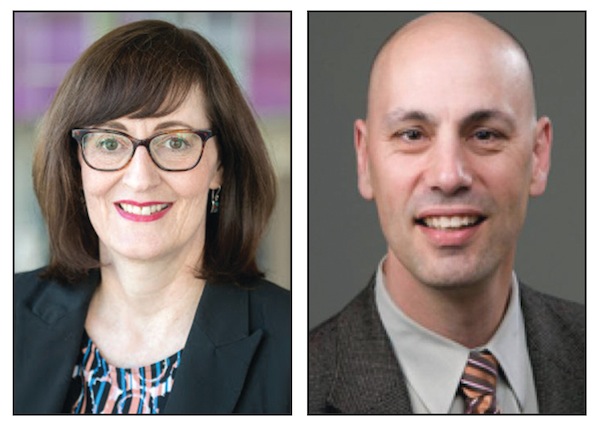
Dr. Patty Daly and Dr. Eric Grafstein were the featured speakers of Temple Sholom’s May 1 Let’s Talk About It webinar. (photos from Temple Sholom)

Temple Sholom began the first of a series of four (possibly five) webinars, called Let’s Talk About It, on May 1 with a public health forum that featured guest speakers Dr. Patty Daly, Vancouver Coastal Health’s chief medical officer, and Dr. Eric Grafstein, the regional head of emergency at VCH and Providence Health Care.

Together, the doctors provided a report from the medical frontlines in Vancouver, as the city responds to the COVID-19 pandemic. They later addressed several concerns raised by members of the community.

Grafstein offered reassuring remarks for those who may be apprehensive about visiting emergency departments. “Emergency departments are a safe place to go during a pandemic,” he said. “If you have things like chest pains or symptoms that you think may be a stroke, then you should be coming to the emergency department.”

Emergency visits declined sharply after a state of emergency was declared in British Columbia on March 18, dropping by half compared to last year, suggesting that people might be holding off from visiting the hospital, he said.

“When people come to a hospital with suspect cases, they are segregated. People who do not have COVID are not put at risk,” Grafstein said. As of the webinar date, about two people per 1,000 who had come to an emergency department in VCH had tested positive for COVID-19, he said.

Physical distancing in the emergency department is done through placing COVID patients in a different area than other patients. The risk of infection is further reduced by fewer people coming to EDs and creating more space in the hospital, he said.

Grafstein said the supply of personal protective equipment for medical workers is secure.

Though the first case of COVID-19 in British Columbia was identified on Jan. 15, the spread of the virus to the region came in early March, likely the result of traffic between British Columbia and the state of Washington, the first area in the United States to experience an outbreak. The number of reported cases in VCH peaked in mid-March and there has since been a decline.

Vancouver’s numbers have compared favourably to those of Toronto and Montreal, and the vast majority of cases here have been mild, said the doctors. The population most at risk is the elderly. Many of the deaths in the region have occurred at long-term-care facilities.

“We’ve done a very good job of flattening the curve – not only in our region but across B.C.,” Daly said. “Our modeling suggests that we can think about lifting some of the measures we have in place.”

Indeed, the province announced its Restart Plan last week. Outpatient services and elective surgeries are to be among the first medical activities to be resumed. An increase in the number of outdoor spaces that the public can access is also planned.

Some daycares – for the children of essential workers – have already reopened, and it is hoped that students will return to schools before the end of the academic year. Bars, restaurants and personal service businesses, such as hairdressers, could potentially reopen in the coming weeks as well, as long as measures, similar to those in grocery stores, are in place.

Universities may return to classes in the fall, though many classes will remain virtual.

There have been few cases of COVID-19 in the region among those under the age of 18, and day camps for children might take place this summer, said Daly.

Gatherings for groups of 50 or more people, such as weddings, funerals and religious services, will be among the last restrictions to be lifted.

“It will be done slowly and in a way that doesn’t lead to a dramatic increase in cases,” Daly said.

“The ultimate solution is a vaccine,” she said.

Neither doctor could predict when a vaccine would be ready, though some trials appear promising. Both doctors reinforced the messages that officials everywhere have been giving for months: stay home if you are sick, cough or sneeze into your elbow, don’t touch your face and wash your hands frequently.

“Anyone with the classic symptoms for COVID – fever, shortness of breath, cough, loss of sense of smell, nausea, diarrhea – should be tested,” Grafstein stressed.

Calling 811 will provide a person with the nearest testing facility. Every positive result is followed up and people who may have had close contact with that person are reached and advised to stay home for 14 days.

VCH covers a population of 1.25 million people, encompassing not just Vancouver but Richmond, the North Shore, the Sunshine Coast and some rural communities, such as Powell River. As of May 8, there had been 866 reported cases of COVID-19 within the VCH region; of those, 78 patients have died and 583 have recovered and discontinued isolation.

“As we open things up, we are doing everything we can to prevent a second wave. We need to also continue to help the most vulnerable,” Daly concluded.

Convened by Temple Sholom’s Rabbi Dan Moskovitz, the webinar was co-sponsored by the Jewish Federation of Greater Vancouver and was attended by more than 200 people. A video recording of the event can be found on Temple Sholom’s website and on YouTube.

Other talks in the Temple Sholom series have been discussions on financial planning and on effective parenting; a session on estate planning is scheduled for May 20.

Sam Margolis has written for the Globe and Mail, the National Post, UPI and MSNBC.
Rewriting memory not sci-fi

(printed with permission from ©Mount Sinai Health System)

To alleviate trauma victims’ suffering, specialists are working to reduce the emotion attached to painful memories. A leader in this field is Israeli-born scientist Daniela Schiller, who has been living in New York for the last 10 years, working as director of the Laboratory of Effective Neuroscience at Mount Sinai School of Medicine.

“I’m interested in emotions in general, because emotions can limit our freedom,” said Schiller, giving fear as an example. “It’s something that is very limiting. It’s like a dictator is taking over our brain and controlling our emotions, thoughts, decisions and behaviour.”

According to Schiller, we have the ability to change the emotions we experience, including when it comes to memories of trauma. “We have much more flexibility,” she said. “It’s a dynamic process and we can engage in that process.

“We used to think of this as a one-time process – memory creation – wherein you have them forever. In the ’60s, there was a hint that maybe it’s not a one-time process and that, actually, when you retrieve a memory, it might return to an unstable state, something similar to a newly formed memory. Then, it has to be stored again. It was termed ‘reconsolidation,’ because you repeat that process of storage.”

Schiller explained that returning a memory to an unstable state is a built-in mechanism that allows people to mix in new data about an event that happened. This built-in sensibility allows for better predictions in the future – it’s a survival system.

With the reconsolidation of memory becoming better understood, scientists are trying to find ways to use the process in real-life scenarios with trauma victims, including people suffering post-traumatic stress disorder. However, since the process also can be used to manipulate memory in a negative way, there are ethical questions that need to be addressed. At the recent Harvey Weinstein trial, for example, expert psychologist Elizabeth Loftus was called on behalf of the defence to explain how memory can change over time.

“You can easily influence eyewitness testimony when you do an investigation, by the way you ask questions and shake people’s memories,” explained Schiller. “You can plant information, and they will generally believe that this is what they remember.”

Loftus pointed to the fragility of memory, including the neurological basis to that effect, said Schiller. And, in her testimony, Loftus shared that the presence of mind-altering chemicals, like drugs and alcohol, can affect how memory is stored.

The research Schiller is conducting is geared to finding ways to lessen the emotional volume involved. “We want them to understand what happened, but the memories have to be manageable emotionally,” she said. “And the emotional advantage you had in your past or in your childhood, the emotions wear out, they become less and less emotional. Memory changes and, if it doesn’t, that means it’s a problem.”

Schiller speculated that many of the treatments that already exist capture only part of the process. For example, treatment with a therapist could be toward memory activation – meaning, you would be going into your traumatic memory. While you were in that memory, your therapist would work with you to change the emotional tone of it.

“In animals,” said Schiller, “we know the cellular processes that indicate memory is now moving and that it has been mobilized into a stable state where things are now happening and, now, you can either block it with a drug or with behaviour. We have very accurate measurements. But, with humans, we don’t know. We don’t know still what it means if the memory is actively stable in the brain. We speculate that, if you express it and you show emotions, it’s probably unstable. And then, you’d move forward and either get the drug or do behavioural therapy of some sort.

“For example, image extinction, wherein you think about the event and re-script it in a certain way, so it gives you the possibility to rewrite it – there are many different methods. There can be indirect methods that generate interference, like doing something else or using a blocker drug. These are all methods that can reactivate the memory.”

Although research on humans has shown some promise, Schiller said much more research is needed before any treatments can be developed. “We are still looking for the exact way to manipulate it to some degree, especially to tailor it to each individual,” she said.

What Schiller finds promising is that it’s a natural process – one that people practise every day, unconsciously. With that in mind, we should be able to find ways to do it consciously, by thinking about particular memories we want to rewrite and incorporate new information, she said. “Align yourself to reactivate it and try to incorporate it into the present. Again, this is not scientific advice on how to do it – this is what the science sees, the direction you can take.”

In studying the brain patterns of sleeping subjects who have experienced trauma, scientists have pinpointed where the subject’s memory was processing the parts of the trauma that induced emotion, causing bodily changes.

“They are unconscious to some extent, until they reach the conscious level and you have feelings and interpretations,” said Schiller. “That’s a whole different level and whole different process in the brain. So, we do need to look at these various levels, and then we need to adjust our therapy to these levels.

“I think it has deep meaning and I think it’s still within the scientific domain, but it will get interesting when these insights get more and more into the social realm and public awareness … because people tend to think of their memories as accurate, especially their emotional memories. I hope that the more we understand and the more science progresses, the more people will learn about it. And, the more it will change and give us flexibility, freedom, and more tools for change.”

Rebeca Kuropatwa is a Winnipeg freelance writer.

Clearing the decks

In every grouping of humans, there is a leadership structure. That’s the way it works for humans. That’s the way it works for animals, too, when they organize in groups.

Generally, for animals, it’s a combination of smarts and strength that wins the day, with physical strength often being an important part of the equation. The same must have been true for humans in our primitive days, and still is to an extent. In some periods of human history, there were those who were able to establish dynasties, where successive generations achieved leadership by right of birth, sometimes sanctioned by what was called “divine right.” The deity was called in to account for the continuing rule by a family in tribal or national context.

In more recent times, leadership has often been gifted to those who exhibited merit, rather than pure might. Those who were successful at their life tasks were called upon to serve in leadership roles to the benefit of those for whom they took responsibility. Therefore, many in leadership positions are more advanced in age, except in the most competitive arenas.

Well, guess what? There is suddenly a new selector in town! Coronavirus!

Some people are forecasting that we will see as much as three-quarters of the world’s population infected by COVID-19. Try as we might, and even as we may be successful in flattening the curve, most of us will eventually have to face the test of living through an infection by the virus. If we can find a vaccine, that will alleviate the losses. But, for the next year-and-a-half, at least, many of us will have to face the test. If our healthcare systems can sustain themselves under the onslaught, again, the losses will be fewer. If not, the choices will favour the younger and those more likely to survive. What this all means is that those who are older, those who are more likely to be among those in leadership, will be more likely to be among the fallen. Fate has taken a hand in our succession planning.

I am among the somewhat longer in the tooth, facing my 86th birthday. It is apparent that, in the current environment, this epistle may turn out to be my eulogy. Not many in my situation have the opportunity to deliver this kind of message ahead of time.

I have had meaningful work and the satisfaction of making, in my own mind, a worthwhile contribution to the lives of others, of my fellows. I feel my parents would have been proud of me. I had the joy of fathering children who have turned out to be good human beings. I have had the joy of finding and living with the love of my life. Flawed as I am, I am content. I am among the fortunate in this world. I am not abandoning the race but I am prepared for whatever the future holds. I wish the same for all my fellows.

This event we are living through is a feature of any life on any planet in our cosmos. A meteor struck our globe millennia ago, causing a global winter, which doomed the dinosaurs and permitted a mammalian ascendancy. Homo sapiens has prospered. We have survived plagues and influenzas. We have conquered many communicable diseases. We have managed to increase our food production capabilities so we did not starve when our numbers on this planet increased so much that our wise men believed we were doomed. We have continued to consume that arable land for our structures at a rapid pace and yet survive.

We are facing a crisis in the way we pollute our air and our waters, one we have yet to come to terms with. Rising temperatures on our globe may yet reach a point of no return. The pandemic we are facing, as other life forms on our planet seek their place in the sun, may turn out to be the least of the problems we will have to cope with.

In the meantime, this pandemic is clearing the decks of those in the age range I share. I don’t know about you, but it has captured my full attention – I can feel the target on my back. Keep your physical distance, please!

Max Roytenberg is a Vancouver-based poet, writer and blogger. His book Hero in My Own Eyes: Tripping a Life Fantastic is available from Amazon and other online booksellers.

Security, magic in gardening

While temporarily closed to the public, West Coast Seeds is still getting seeds to gardeners via garden centres, grocery stores and the mail. (photo from West Coast Seeds)

The pandemic and its associated social and economic impacts have focused attention on food security, as well as the therapeutic benefits of gardening in times of turmoil.

This is part of the message from a local company specializing in organic seeds. West Coast Seeds, a Delta-based company that was founded in 1983 and bought by Craig Diamond a half-dozen years ago, has a mission to “encourage sustainable, organic growing practices through knowledge and support … eating locally produced food whenever possible, sharing garden wisdom, and teaching people how to grow from seed.”

photo - Aaron Saks is West Coast Seeds’ director of finance
Aaron Saks is West Coast Seeds’ director of finance. (photo from West Coast Seeds)

Aaron Saks, the company’s director of finance and son-in-law of Diamond, said getting back to basics, like growing your own food, seems to be one of the responses to the social isolation associated with the COVID-19 pandemic.

“We’ve seen a big push toward food security,” said Saks. “Both ensuring that you know where your food is coming from and getting healthy produce when it might not be readily available other places.”

While so many things are off limits – public parks, basketball courts, beaches – those with backyards can still get in the soil and be in touch with Mother Nature, said Saks.

West Coast Seeds is a pioneer in organic and non-genetically-modified agriculture. Since the Diamond family took over the company, they have refurbished a heritage barn in a rural part of Ladner to be their headquarters, where they have their warehouse and a retail operation, which is temporarily closed to the public. The products are also distributed wholesale to garden centres and grocery stores and they do a large mail order business, which has been ideally suited to adapting to the new reality of the pandemic.

The Diamonds are a fourth-generation British Columbia-based family, notes the West Coast Seeds website: “Since Craig’s grandfather, Jack Diamond, came to Canada in 1927 as a young man and purchased his first business in 1940, the Diamonds have been engaged as leaders in business. They continue to follow the principles of community and philanthropy set by Jack, and further exemplified by his son, Charles. The values of West Coast Seeds resonate deeply with the Diamond family and they are committed to uphold this tradition.”

The values of repairing the world that underpin the Diamond family ethos and the West Coast Seeds mission, Saks said, are being demonstrated globally right now as individuals step up to help their neighbours in this challenging period.

“I think everybody has seen the propensity of society to want to give back at this time,” he said. “One of the pillars of our company is actually tikkun olam.”

The company donates seeds for class projects, school gardens, community education and nonprofit organizations.

The company is balancing the safety of warehouse employees with the need to get seeds to the public, said Saks, expressing gratitude to the staff team for distancing, while still getting product to customers.

“We’re thrilled that they’re able to get seeds, that they’re able to grow, that they can support their local garden centre, support growing their own food and be able to get healthier foods, live healthier lifestyles, as a result of gardening. That’s what we’re trying to do. We’re trying to give back wherever we can and create joyful moments,” he said.

When times are tough, said Saks, something comparatively simple like putting a seed in the ground can help people through.

“That mystical thing about gardening,” he said. “Every time it germinates, it’s just a crazy thing, like magic.”

For more information, visit westcoastseeds.com.

Choose to be and to do good

As Jews, we’re acutely aware of our core Jewish values: help others, perform mitzvot, respect human dignity and life, love your neighbour as yourself, act morally, save lives, repair the world. But do we actually do those things? As we’ve heard before, it’s the duty of every single person to leave the world better than he or she found it.

During this unprecedented time, when the world is reeling from the COVID-19 pandemic, now, more than ever we need to remind ourselves of Jewish morals and ethics. And be better Jews.

Exceptional times typically bring out both the worst and the best in people. I’m choosing to focus on the best, though. For instance, folks around the world going outside at a set time every day to make noise and show their gratitude for frontline workers – and not just the doctors, nurses and caregivers, but also grocery store cashiers, letter carriers, pharmacists, delivery people, tradespeople, chefs and taxi drivers. Anyone and everyone who puts themselves in harm’s way each day, to keep us safe, fed and healthy.

If we don’t, as a society, learn the value of showing gratitude and generosity in desperate times, we become a society without a soul. If we think only of ourselves, we become lacking in conscience and void of morality.

What I know for certain is this: if a Jew needs something, another Jew should always step up and help out. It’s what we are supposed do. It’s what we’ve always done, most of the time. It might even be embedded in our DNA. In fact, we’re commanded to do it. Here are some tips for being a better Jew during COVID-19 (and always):

  • Take care of yourself so that you can take care of others. This may sound trite and over-used, but it’s true: your health is everything. I have suffered a long and serious illness and it’s shown me that nothing is more important than having your health. Unless it’s faith.
  • Be an active participant in life – this is not just a long lunch break. There is more to life than Netflix and reading (says the retired librarian). There are meaningful things you can be doing with all your spare time now. Think about where you can be of service, and whom you can help.
  • Practise random acts of kindness, compassion and loving care for your fellow human being – remember the Golden Rule. It can be something as simple as thanking a healthcare worker or letter carrier you see walking on the street. It doesn’t take much to show someone that they’re needed and appreciated.
  • Practise generosity – share, don’t hoard. Surprise a family member or friend with a meal or small gift that might just make their day. It can be something as simple as an extra few rolls of toilet paper or a container of disinfectant wipes (COVID-19 gold). Something that lets them know you’re willing and happy to share. Just remember physical distancing! A friend of mine recently brought me some extra face masks she had on hand (again, coronavirus gold).
  • Offer to do errands (grocery shopping, picking up a prescription, walking a dog, etc.) for family, friends or acquaintances in need. Be someone’s hero. People won’t always be comfortable asking for help, so be proactive and offer, if you can.
  • Cultivate faith (emunah) and trust (bitachon) in G-d, that everything will be OK. Life is easier when you have a higher power on your side and understand that there are many things you can’t control.
  • Check in regularly with single friends and seniors, in particular. Isolation can be devastating, especially when it’s ongoing. Even if you can just wave to a friend or family member through a window, that might just be their only human connection all day (or all week). It costs nothing and it’s priceless. Small gestures can have big impacts. Help people feel part of their community.
  • Show gratitude every day, because there is always something for which to be grateful. Whether it’s big (your good health) or small (cherry blossoms on the trees), appreciate the abundance in your life. It’s everywhere you look. Just keep your eyes open. And get out there at 7 p.m. every day and clap your hands or bang your pots and pans, to show your thanks to all the frontline workers who turn up for us every single day to make our lives easier. We are one big family – show the love!
  • Keep in mind the social and economic impacts the COVID-19 pandemic is having on everyone. Be sensitive to the situations of those less fortunate than yours. If you can, offer financial help, food or any other kind of assistance when you see the need.
  • Volunteer your time delivering food or supplies to others if you’re healthy and able. Contact and get involved with your local synagogue, Jewish Family Services, the Kehila Society or any other organization, Jewish or non-Jewish, working to alleviate the many needs right now.
  • Stay positive – for yourself and others. Positivity is the best medicine during this stressful time.
  • Be your best self. Let your innate goodness shine through. Remember we each have a tiny piece of divine soul within us.
  • Do mitzvot – tip the scales for good.
  • Give tzedakah. You don’t have to be a millionaire to make a difference in someone’s life. Every little bit helps.
  • Study a bit of Torah or other spiritual texts, if you’re so inclined.
  • Recite Psalms, if you’re so inclined. (I have a copy that includes English commentary, and this makes it so much more meaningful when I read them. It started out slowly for me, but now I find huge comfort in reading Psalms. Why not give it a try?)
  • Participate in some online classes or listen to speakers via Zoom video presentations. There’s a lot of inspiration and new perspectives to be gleaned, and goodness knows we could all use some of that right now.
  • Keep busy by finding purpose in your life. This is so important, especially right now, when there is so little to distract us from the devastation of COVID-19. Try to look for the good in every situation – it will serve you well. I’ve been on both sides of that wall and believe me when I say that staying positive will make your life much easier.

Here are some simple rules to live by (unknown source): help others without being asked; help people who cannot help you; help without the expectation of return; help many people; do the right thing the right way.

Remember that, every second of every day, we make choices. Choose to be good and do good. You can’t go wrong with that.

Shelley Civkin is a happily retired librarian and communications officer. For 17 years, she wrote a weekly book review column for the Richmond Review. She’s currently a freelance writer and volunteer.


Dealing with anxieties

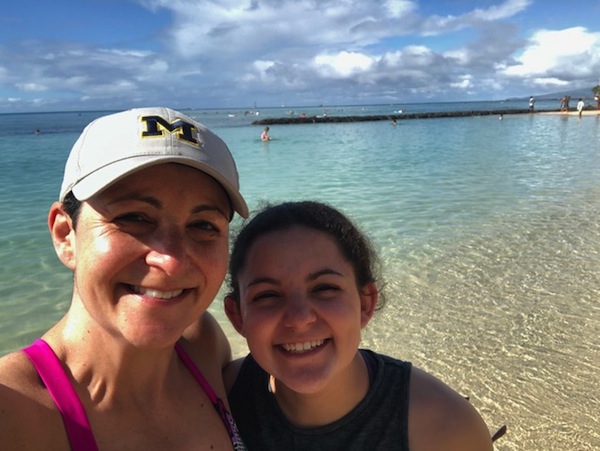
Deborah Grayson Riegel, left, and Sophie Riegel co-wrote the book Overcoming Overthinking. Sophie also authored Don’t Tell Me to Relax! (photo from Riegels)

Many people experience one or more kinds of anxiety disorder, yet fewer than half seek professional help, often because of the perceived stigma of having such a condition, according to Deborah Grayson Riegel and Sophie Riegel.

Both Deborah and her daughter Sophie, 19, have more than one diagnosed anxiety disorder – Deborah has three and Sophie, four. Initially, as Deborah and husband Michael were helping Sophie with her anxiety, they didn’t tell her about Deborah’s. But that silence has ended.

Today, Deborah is a speaker, executive coach, instructor and writer who works part-time in the Jewish community in Manhattan. The bulk of her work is within the corporate community, helping people navigate difficult conversations.

“As Sophie and I were putting our book together, I realized how much of my work is about helping people manage the anxiety associated with getting up and speaking in front of other people, or giving feedback or having hard conversations,” Deborah told the Independent.

Most recently, Deborah was invited to work with Duke Corporate Education, which she was excited about, with Sophie having just started as a freshman at Duke.

“I think Sophie feels really strongly about letting parents know that, if you’re withholding or not exploring medication because of a stigma, because of a fear of dependency, because of anything, you may be costing your kid time,” said Deborah. “Sophie had said in a different interview, where questions came up about what we as parents wish we’d done differently … Sophie’s answer was that she wished we’d explored medication sooner.”

According to Sophie, seeking professional help is important, as the combination of both counseling and medication worked best for both her and her mother, as it does for many others.

image - Don’t Tell Me to Relax! book coverShortly after a traumatic experience at the age of 13, Sophie began working on her first book, Don’t Tell Me to Relax!: One Teen’s Journey to Survive Anxiety and How You Can Too, which she completed in five years. “I started writing it because I was being severely bullied due to some of my obsessive compulsive tendencies,” said Sophie. “I talked to my therapist and we realized the only way to have people stop bullying me was to educate them. So, I ended up giving a 20-minute presentation in seventh grade about my experience living with OCD [obsessive compulsive disorder] and anxiety, and the girls who had bullied me ended up coming up and apologizing to me. I realized that, if I could have that kind of impact in 20 minutes, imagine what kind of impact I could have if I wrote an entire book that I could share with everyone.”

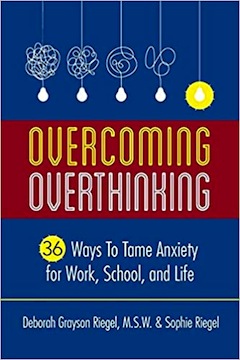
Once Sophie’s book came out, she and her mom decided to co-author one together. Called Overcoming Overthinking: 36 Ways to Tame Anxiety for Work, School and Life, it came out last year.

“When Sophie would be out speaking about the strategies that she uses to navigate anxiety, she heard herself saying, ‘one thing I learned from my mom is … and another thing I learned from my mom is’ … and, I hadn’t realized I was saying or doing these things,” said Deborah. “But Sophie was picking up some strategies I’ve used for myself. So, I said that there are clearly a lot of strategies we’re both using, and maybe we could put them in a book.

“Secondly, I had gotten a call from an organization that had thought that Sophie’s book was something we wrote together. They said, ‘Oh, you wrote this book together … we’d love for you to come and speak.’ And I said, ‘Well, we haven’t written a book together, but we will by October!’ So, we just said, ‘All right, now we’ve told somebody we’re going to write a book … now we have to go write it.’ So, we had a little bit of artificial, external pressure, but it worked well for us.”

In her first book, Sophie shares her journey with anxiety disorder and offers advice to parents, teens and educators; she also debunks anxiety myths and provides a list of resources.

In Overcoming Overthinking the mother-daughter duo offers self-help tips and tools, and focuses on strategies and advice, with about a quarter of the book being from a personal perspective.

One of the stories Sophie shares in the second book is about bribing her therapist to convince her parents that getting a dog would be worthwhile and helpful for her. “We ended up getting a dog, but the interesting part of the story is that my mom is absolutely terrified of dogs … or was … we went from having no dog to having this 80-pound pitbull,” said Sophie.

“And it’s a sign of how much a parent will do to make sure their child is OK … that they will go above and beyond and do anything they need to do. Because, at that point, right before getting a dog and before things started getting a little better for me, my parents thought I’d never be able to graduate high school … that I’d have to be institutionalized, those kinds of things. With this dog, Nash, who’s my best friend, I was able to learn new strategies to handle the anxiety … and learned how much my parents really loved me, and what they were willing to do so I was able to live a healthier lifestyle.”

Both books have been well-received, with parent readers sharing messages such as, “My teen is going through this exact same thing and, because they read your book, they’re starting to know how to talk about it … and I know how to talk to them about it, so you’ve really opened up the lines of communication between us.”

Deborah said, “I got one message from a parent who originally thought their kid was having a heart attack, but then realized from what they had read in Sophie’s book that it was actually a panic attack. It kept them from having to bring him to the ER, because they realized it wasn’t a heart attack. So, they were able to help at home thanks to Sophie’s book.”

Both Deborah and Sophie strongly encourage people to seek professional help when in need. Their book is not a substitute for psychological intervention, they stressed. Deborah added, “We strongly recommend getting that kind of support, whether it’s cognitive behavioural therapy, which has worked for both of us, [or other approaches.]”

image - Overcoming Overthinking book coverOvercoming Overthinking has 36 chapters, which is intentionally double chai (18), symbolizing the saving of the two authors’ lives. The book is divided into three sections.

“The first one is about strategies to change your thinking, to help you change your perspective and mindset, and as a tool for coping with anxiety,” said Deborah. “The second one is about creating new strategies, some concrete things you can do to help you work with anxiety that we think are a little bit out of the box … not what one might call a typical strategy. And the third part is to connect with others about the idea of not isolating yourself and the importance of reaching out, even if that means outing yourself that you’re struggling with something. Most people are uncomfortable being vulnerable. So, we give 12 strategies in that section about how to not do this alone.”

Sophie added, “Also, we go into how it’s good to change your perspective about what connecting with others means. It can mean connecting with a rescue dog, connecting with professionals, connecting with friends and connecting with your parents.”

“I have catastrophic thinking,” said Deborah. “That’s one of the ways my OCD and anxiety show up. Catastrophic thinking has two key elements…. It’s overestimating unlikely probabilities and overestimating devastating consequences. And so, in the morning, we’d put our kids on the school bus and I’d articulate that this is probably the last time we’d ever see them again. Or somebody would get sick and I’d say they’re probably going to die. Or Michael would not answer his phone when I called, and I’d assume he’s dead on the highway. At a certain point, I came to realize that not everybody thinks like this … and that it’s not healthy to think like this … or healthy in a relationship to articulate things that the person cannot help in any way.”

Deborah said she ended up going to speak with a psychologist and getting medication. “That medication has taken my catastrophic thinking from 98% down to two percent,” she said. “Sophie was valedictorian of her class and she got into Duke … her first choice. Sophie is an all-American athlete and has won anti-bullying awards. She has written two books and struggles with four significant anxiety disorders.

“I’m somebody who has a successful career, a healthy marriage and two great children. I travel all over the world for my work. And I struggle with three diagnosed anxiety disorders.

“So, one of the important points is that you can have AD, you can have mental illness, while you can also be happy, healthy and successful. And that feels like a very important message to share,” said Deborah.

For more information about the Riegels’ books, visit donttellmetorelaxbook.com and overcomingoverthinking.com.

Rebeca Kuropatwa is a Winnipeg freelance writer.

Shalev’s latest not her best

In an interview with the Jewish Independent in 2014, after her book The Remains of Love came out in English, Israeli writer Zeruya Shalev said that, until that novel, she had been avoiding writing directly about what she called “the Israeli reality.” She said at the time: “And yet, still I am wrestling with the dominance of this reality, and try not to let it take over my books – it’s enough that it controls my life.”

Shalev’s latest novel to be translated into English is all about the Israel reality, but not in the engaging and provocative way that The Remains of Love was (see jewishindependent.ca/zeruya-shalev-opens-jewish-book-fest). Concisely called Pain, Shalev’s story about a Jerusalem woman suffering post-traumatic stress syndrome, which flares up on the 10-year anniversary of when she was seriously injured in a terrorist attack, is anything but concise. Translated ably by Sondra Silverston, the book needed a better editor, as Shalev gets lost in the physical and emotional suffering of her protagonist Iris, who is not portrayed likeably.

image - Pain book coverDespite being the respected principal of a successful school, despite being married to a perhaps dull but well-meaning husband (who could well be distant because of his wife’s indifference to him) and despite raising two competent and kind but vulnerable children, one of whom desperately needs her help, Iris cannot let go of a lost love from her teenage years. When, by chance, at a clinic, she meets Eitan, the man who left her so abruptly so long ago – he is now a doctor who specializes in the treatment of pain – Iris goes headlong into the fantasy of what her life could have been with him, despite all indications that he’s a selfish and emotionally stunted ass. She considers leaving everything tangible and good that she has built for herself for a life that never was.

There are some astute observations in this novel – about trauma and how it affects not only the person injured but those who love them, about the harmful effects of living in the past, about forgiveness, about the fickle nature of life, and more – but it gets lost in Iris’s nearly interminable self-pity and self-delusion. Pain is not Shalev’s best work.