We’re all in this together

Does it seem like people are behaving more kindly this week? Maybe it’s the sunshine. But maybe it’s the realization, amid all the alarming news and concerns over the spread of coronavirus, that we are all, truly, in this together.

We live in particular times that may be defined – especially as exemplified by some political leaders and their followers – as uncharitable, xenophobic, chauvinistic, mean-spirited and self-interested. These attitudes have been demonstrated, among other ways, in the attitudes of many people toward migrants from other places. These ideas trickle down to the way we treat one another – in traffic, in online interactions, in schools and workplaces, in voting – behaving in ways that take into consideration only (or mostly) our own well-being at the expense of the well-being of others. There are magnificent exceptions, of course, everyday acts of kindness and gestures of humanity great and small. But our age, it can probably be agreed, includes a lot of pettiness, intolerance and plain old snark.

Our parents or grandparents understood the meaning and necessity of sacrifice for the greater good. The communal effort during the Second World War, on the home front and among those serving, was a generationally defining undertaking. While wars, sadly, have continued, in our corner of the world, the burden has fallen on an increasingly smaller number of people – those families with members in the service. But, for at least a generation of North Americans, we have not been called upon for an unavoidable collective sacrifice for the greater good. Again, this is not to say that many people are not sacrificing for the greater good – individuals are devoting themselves to causes greater than themselves, including climate change, but they are doing so by choice. They may be driven by desperation, fear, environmental justice or other motivations, certainly, but, ultimately, it is voluntary.

Then along comes a virus with apparently incalculable potential to cause illness and death and we realize that we are not so separate after all. While they have resisted on issues like climate change, governments worldwide have stepped up (some of them more slowly and irresponsibly than others) and taken seriously the science that predicts grave consequences if we do not take urgent actions now. And individuals, in the first days of what will be an unprecedented period of unknown duration, appear surprisingly amenable to following government-issued restrictions on behaviour for the hope of long-term health, not only for themselves but for those who are more vulnerable due to age or underlying health conditions.

There is nothing good about a global pandemic. But good things happen when people act in unity to advance collective well-being. Individuals and groups have responded with astonishing immediacy when called upon to act. Places of public meeting, including restaurants and cafés, have faced the painful but unavoidable truth that they have to temporarily change their service model. This will have untold economic and social impacts as staff are displaced, with concentric circles as these workers lose purchasing power and these realities ripple through the economy, already suffering multiple unknowns and slowdowns.

In our community, synagogues and communal organizations have adopted stringent and unprecedented measures, many canceling live services and opting for alternative venues like online learning.

We witness the immediacy of these factors’ economic ripples. As our community cancels public events, advertisements are understandably pulled from our newspaper. As a result, we have made the choice to cancel an additional issue next month, and not publish for two weeks, April 10 and 17, rather than the scheduled one-week hiatus. We will have a healthy Passover issue on April 3 and we urge you to support our work and celebrate the holiday by considering advertising or inserting a greeting message in that issue or in the ones resuming April 24 and after.

In the meantime, as we come together to confront this very serious challenge, we are reminded, as Temple Sholom’s Rabbi Dan Moskovitz writes in this week’s issue writes in this week’s issue, we do not do so as Canadians or Chinese or Italians or Israelis. We are people living in different places who face the same pathogens and the same reality.

In Jewish tradition, the value of pikuach nefesh, of saving a life, overrides almost every other consideration. Among other things, this suggests that we should view our current situation through a slightly altered lens. While all of us should be doing everything we are advised to avoid getting the virus, we should be doing so not only, perhaps not primarily, for our own health, but in order to prevent us transmitting it to another person. For many of us who are younger or do not have underlying health concerns, COVID-19 could be a very unpleasant inconvenience. For others we know and love, it could be far more serious.

The top advice we have received is to wash hands with soap frequently and thoroughly, and also to stay home to avoid physical contact as much as possible. Some people are suggesting we treat these days like Shabbat. Spend time with family. Read books. Take a walk. Engage in passive activities. Turn off electronics for a time to avoid the noise of the world which, at this time, is particularly loud.

And be kind to one another. If you know of a senior or other person whose health could be endangered by going out, do their shopping. See what else they might need. Call your family and friends. Set up a virtual dinner party or a play date for your kids. Since you’re not spending money on restaurants and theatre, consider donating to charity and arts organizations.

This is all good advice. But we suspect, given some unscientific observations of kindness and communal care in the last few days, that most of us already know what to do.

For more information and latest updates from Canada’s public health authorities: canada.ca/en/public-health/services/diseases/coronavirus-disease-covid-19.html.
Voice thoughts, feelings

Yesterday, I cried in my car. You shouldn’t worry – I was parked at the time. I share this not for sympathy or even empathy. I share this because these are harrowing times, we all feel the tremendous weight of worry:

For ourselves, if we are relatively young, we know the vast majority of cases are mild to moderate, but some aren’t.

For our aged parents, if we still have them.

If we are older, we worry, as the danger increases with age, though, interesting to me, I have found among many of our elders a rationalism and calm that, if I wasn’t freaking out so much worrying about them, I would take comfort in.

For some, the worry is compounded, as they are beyond our reach in other cities or countries.

For our children, as normalcy evaporates. I told my children the other night, as we canceled plans for our son’s birthday party at the movies, that they will tell their own children how they survived the pandemic of 2020. And they will. The vast, vast majority of all of us, even the aged, will survive this. But we will be forever changed by it – I hope for the better.

For our city and country, as it attempts to “flatten the curve.” I long for the days when that phrase was most often rendered in my head as I looked in the mirror at my belly or hips.

I’d say that I worry for our world, as this pandemic is truly global, but the sweep of this virus is so vast that I can’t wrap my head around the whole world experiencing this crisis all at once.

If ever we needed a reminder that there are no true borders, that what happens here effects people over there and vice versa, this is an example.

Refugee crises. Climate change. Economic disparity. And, now, a pandemic. We are all connected.

There are no Chinese COVID-19 victims, or Italian or Israeli or Iranian or American or Canadian – there are just people living in different parts of the world all with the same fears, uncertainty, worries and prayers for healing. Just people, just human beings – there is nothing so different about any of us – except perhaps age, which is only a matter of time – that protects any of us more than the rest of us.

That’s why I cried in my car, and I share it with you because I learned from that cathartic cry that it is OK to be scared, it’s OK to cry. Not because I did it, and I don’t want to be the only one crying in my car, where the kids can’t see me, but because I felt a lot better after – and you might, too.

There was a cartoon that was being passed around on the internet, I guess we call that a meme. It was of a couple looking at their computer and the caption was, as the man turned to his wife over his shoulder, “That’s odd: My Facebook friends who were constitutional scholars just a month ago are now infectious disease experts….”

I thought it was funny.

I know very little about the science of all of this, though I am trying to keep up. British Columbia’s Dr. Bonnie Henry and Dr. Patty Daly and their teams are incredible in their competence and expertise, but I know almost nothing about science that is helpful here. But I do know a little bit about prayer.

What I would like to offer, what I think might be of help, is the power of prayer. Not to change God, not to change the course of this virus. Though this is a natural evil, I do not think it is punishment from God or within God’s control. My faith doesn’t work like that.

I want to suggest and teach for a moment the power of prayer not to change God, but to change each of us.

Sarah Hurwitz writes in her book Here All Along about the power of prayer. She describes a form of Chassid prayer called hitbodedut. The word, which sounds a bit like the last name of one of the former Democratic presidential candidates, refers to a practice of self-secluded Jewish meditation popularized by Rebbe Nachman of Breslov (1772-1810).

The practice, as he taught, is an unstructured, spontaneous and individualized form of prayer and meditation through which each individual establishes a close, personal relationship with God through a free-flowing monologue. Where some people go out into the woods and make a primal scream, Jews, at least Jews who are students of this practice, go out into the woods and kvetch.

Not only kvetch, but thank and question and plead and wonder and acknowledge. You unload your thoughts and angst without stopping to think or formulate them. You just talk to God. It’s a stream-of-consciousness practice that takes some practise, but, like the cry in my car, it can be incredibly cathartic and remarkably revealing of your inner thoughts and feelings.

It’s not unlike the famous Jewish folk story of the young uneducated shepherd who comes to the synagogue to pray. Not knowing the prayers of the established liturgy, he sits in the back row and sings the alphabet over and over again. (Maybe he was also washing his hands?) The men of the synagogue confront him: “Why do you disturb our prayers with your gibberish?”

The boy explains, “I don’t know the prayer. But I wish to thank God for my sheep and the stream, for the warmth of the sun and the silver moon that keeps me company when I sleep. I am singing the alphabet and surely God can put the letters in the correct order to make the prayers.”

In this worrying and frightening time, give voice, actual voice, to your thoughts and feelings, your fears and your anxieties. Not to change God, not to stop the virus, but to change yourself. To give you insight and courage, and patience and perspective, and confidence and hope, and calm and gratitude. In doing so, you might just find your prayers, not those in the siddur (prayerbook) but the prayers that are deep in your soul. Go out into the woods – they tell us the virus is not as communicable outside – and talk to God.

Rabbi Abraham Joshua Heschel taught: “Those who honestly search, those who yearn and fail, we did not presume to judge. Let them pray to be able to pray and, if they do not succeed, if they have no tears to shed, let them yearn for tears, let them try to discover their heart and let them take strength from the certainty that this, too, is a high form of prayer.”

Talk to God, cry to God, be silent with God, it’s all prayer, and it all helps. I know it is helping me; I pray that it will help you.

Rabbi Dan Moskovitz is senior rabbi at Temple Sholom and author of The Men’s Seder (MRJ Publishing). He is also chair of the Reform Rabbis of Canada. His writing and perspective on Judaism appear in major print and digital media internationally.

Jewish microbe hunters

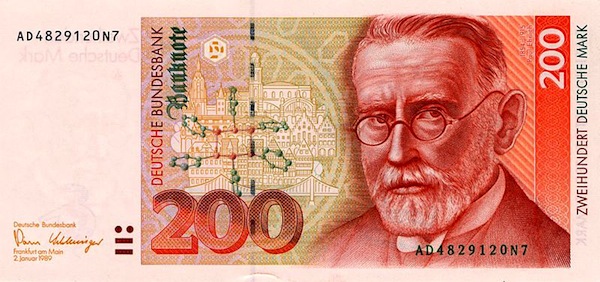
During the Nazi regime, all references to the great physician-chemist Paul Ehrlich were suppressed. In the 1990s, he was featured on the German 200-mark bill. (photo from the internet)

In the 17th century, the Netherlands was a country of great tolerance, having welcomed the Jews driven out of Spain and Portugal, including renowned physicians. Not coincidentally, this was the Dutch Golden Age, a time of breathtaking advances in the arts and sciences. It was there that the first microscopes were invented. To the eyes of Antoni van Leeuwenhoek in the town of Delft in the 1670s were revealed a veritable zoo of subvisible microorganisms previously inconceivable to even the most fevered imagination.

Throughout the 18th century and well into the 19th, there was speculation among medical men about the possible relation of microorganisms to disease. Certain varieties of these tiny beings seemed to appear in the organs or blood of patients with certain diseases. But there were endless questions: Could these creatures, so primitive, come into being by themselves (“spontaneous generation”)? Were they the cause of disease or were they the product of the diseased body? Could a pathogenic microbe of one disease transform into that of another disease? In diseases known to be infectious, were microorganisms the culprits, transmitted from a diseased body to a healthy one, there to germinate?

A breakthrough heralding the Heroic Age of the “microbe hunters” came in 1840 with the publication of Pathological Researches by the Bavarian medical doctor Jacob Henle, a descendant of rabbis. Using technologically advanced microscopes and deductive analysis of case histories, Henle declared to the medical world: “Contagion is matter endowed with individual life which reproduces itself in the manner of animals and plants, which can multiply by assimilating organic material and can exist parasitically on the sick body.”

A year later, the Polish-German Jew Dr. Robert Remak published the first of his observations that cells – of any living organism, including microbes – can arise only by division of parent cells. Thus, Remak helped put to rest the concept of “spontaneous generation.”

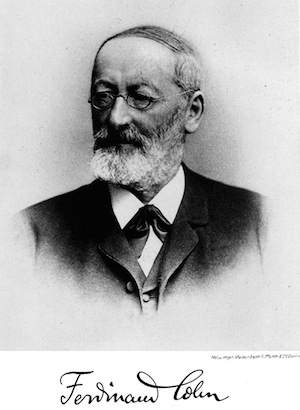
photo - Microbe hunter Ferdinand Cohn in the front piece of one of his books
Microbe hunter Ferdinand Cohn in the front piece of one of his books. (photo from the internet)

Humankind’s war against transmittable diseases accelerated dramatically in the second half of the 19th century. In the German city of Breslau (today Wroclaw, Poland) the botanist-microscopist Dr. Ferdinand Cohn published his Bacteria, the Smallest Living Organisms in 1872. As the undisputed master of the classification of subvisible life, Cohn elucidated that, while a microorganism of one disease may undergo various transformations, it remained the microorganism of that specific disease and not of another.

Robert Koch, a student of Henle and a protégé of Cohn, of Protestant background, discovered the tuberculosis bacterium and elucidated the mysterious life cycle of the anthrax bacillus.

Such dramatic advances led to the discovery of links in the chain by which the various pathogenic microorganisms are transmitted, and then to measures to break those links: cholera by drinking water contaminated by sewage, sleeping sickness by the tsetse fly, childbed fever by the contaminated hands of doctors and midwives, malaria (literally “bad air” in Italian) by mosquitoes.

To such defensive measures were added an arsenal of aggressive weapons. In Berlin in the 1890s, the Jewish doctor Paul Ehrlich was instrumental in developing serums. The watery part of the blood (after coagulation) of an animal that has fought off a toxin-producing disease such as diphtheria contains powerful antitoxins that can be injected into a diphtheria patient. A brilliant and imaginative chemist, Ehrlich pioneered techniques for selectively staining specific microorganisms to distinguish them under the microscope. This principle inspired him to develop the world’s first chemotherapeutic agent – the arsenical compound Salvarsan, known popularly as the “magic bullet,” which homed in on and destroyed the spirochetes of syphilis. (Ehrlich’s coreligionist Albert Wassermann developed the blood test for the disease.)

A general optimism prevailed as the new century dawned that humankind would soon be free of all serious infectious disease. But there was a missing piece in the puzzle.

It had been known since ancient times that people who survived a given disease were wholly or partially immune from an attack by the same disease. In 1798, the English physician Edward Jenner showed that deliberate inoculation with the pustules of relatively benign cowpox (vaccination, from the Latin vacca, cow) protected the person from attack from the far more virulent and deadly smallpox.

Among the great triumphs in the war against transmissible disease was the development of a new kind of vaccination by the French chemist Louis Pasteur, a devout Catholic. Pasteur showed how inoculating a patient with killed or attenuated (weakened by drying or other techniques) pathogens such as rabies activated the natural immune system against a subsequent all-out attack by the fully virulent disease.

But here was the rub. Unlike the microorganisms of tuberculosis, cholera, diphtheria, syphilis and so many other diseases, no one had ever seen the agents of smallpox and rabies. Pasteur speculated that they were microorganisms beyond the range of the most powerful microscopes.

Around the turn of the 20th century, the Dutch microbiologist Martinus Beijerinck showed how the fluid of an infected plant, after being strained through the finest filter, was able to infect healthy plants. This was an important breakthrough, but Beijerinck erred in assuming the culprit wasn’t composed of solid matter. He called it virus, Latin for poison.

That no one had seen a virus made the fight more difficult. Between 1918 and 1920, as the Spanish flu claimed more lives than all the battlefields of the Great War in the preceding four years, the medical profession mistakenly attributed it to an opportunistic bacterium, visible under the microscope.

The limit of what could be seen was dramatically pushed back with the invention of the electron microscope in the early 1930s, by which viruses, hundreds of times smaller than bacteria, were exposed to the light of day. It appeared that Pasteur was right after all in postulating that the agent of rabies was a microorganism.

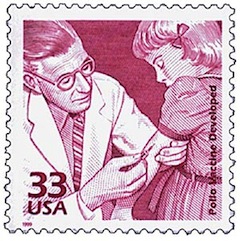
image - One of several U.S. postage stamps commemorating the polio vaccines of Jonas Salk and Albert Sabin
One of several U.S. postage stamps commemorating the polio vaccines of Jonas Salk and Albert Sabin. (image from the internet)

But not quite. Research later in the century showed that viruses – unlike living entities (organisms) – can’t multiply or reproduce on their own. Viruses turned out to be packets of genetic material – DNA or RNA – that penetrate, commandeer and destroy living cells in order to multiply.

Poliomyelitis, the dread crippler caused by an enterovirus, was checked in the 1950s (and is now virtually eradicated worldwide) thanks to two vaccines developed independently by the American Jewish medical doctors Jonas Salk and Albert Sabin. (The virus was cultured using the foreskins of circumcised babies.)

AIDS, hepatitis, SARS, Ebola and now corona – new virulent viruses keep emerging. And the weapons to fight them – vaccines, tests, serums, pharmacological “magic bullets” – are in the enduring spirit of the great Jewish microbe hunters.

Dr. Frank Heynick is the author of Jews and Medicine: An Epic Saga (KTAV Publishing House, 2002, still in print). There are some 500 publications of his in the United States and Europe, ranging from academic to popular-scientific, many on the history of medicine and allied fields, including the crucial Jewish role. He lives in New York and has taught the history of medicine at New York University.

A tribute to my father

Was it really 17 years ago that my sweet, beloved father, Sidney Civkin, passed away? The long row of empty Yahrzeit candles in my closet confirms it. The date was March 13, 2003. Dad was 86 years old. It was indisputably the saddest day of my life.

If you have a good one, you’ll know that there is something unique about a father-daughter relationship. There are secrets and bonds that no mother-daughter relationship can come close to. Don’t ask me why, I just know it’s true.

It’s no secret that my sister Linda and I spent more time with our father in the last three years of his life than we had up until that point – and he was always a very present, involved father. He’d been suffering with end-stage renal failure and was on dialysis for those last few years. And we were his primary caregivers, since our mother was not well by that point.

Our dad often said that, ironically, those were the best years of his life – precisely because he got to spend so much time with Linda and me. He loved to just hang out with us. Whether we were sharing a meal, having a coffee at Granville Island, or sitting in the den shmoozing, he was all in. Flattering to think that he loved our company above everything else.

There was no one who didn’t have an opinion about our father. Some knew him as argumentative, loud and assertive. Others remember him as compassionate, caring and erudite. I knew him as all of those things, and loved him more for it. He was my secret-keeper, my biggest fan, my adoring, supportive father. If anyone has ever loved me unconditionally, it was him.

Dad adored his work (he was an ear, nose and throat surgeon); devoured books; loved to golf; loved to cook; and took great enjoyment in playing bridge with his buddies. But, most of all, he loved his family. And he had a quirky, magnificent sense of humour. He was playful, outspoken and hardworking. And he adored off-colour jokes.

Dad was born in Winnipeg (“the Old Country”) in 1916, served in the Canadian Army as a medical officer, then moved to Vancouver in 1949, determined to escape the brutal prairie winters. He set up his medical practice in New Westminster and, even though we lived in Vancouver, he continued to make the commute for the next 37-odd years. He loved the small-town feel of New Westminster, his working-class patients and his colleagues. He’d found his place as a well-respected doctor who spent his life helping others.

I’ll never forget the night Dad passed on. My life shattered, not just momentarily, but for a few years. I was 47 years old, single, and I’d just lost my best friend. I know that sounds odd, but our relationship was everything to me. I grieved as though I’d invented the concept. I felt like no one’s heart could be broken quite like mine. It wasn’t just an emotional pain. It was intensely physical for me. In the blink of an eye (it wasn’t really, because he had been sick for three years, but death never seems inevitable, even in the very second before it happens), my world splintered into a billion pieces. I was inconsolable.

My grief consumed me, at home and at work. The mere thought of my father set me to tears. It was like a floodgate had not merely opened, but exploded. Seventeen years later, I still think of my father regularly, but the tears are no longer a daily occurrence. Yet, I still can’t believe he’s no longer here with us, physically. He certainly is in spirit. They say that, when the soul leaves the body, it can still connect with loved ones, except it’s in a spiritual way. And we have lots of that. Naturally, I miss the physicality of giving my dad a hug and kiss. I miss looking at his smiling face. But we still connect mightily and often. I can feel his presence in my dreams and, when I see or hear particular things, I just know it’s my dad sending me a message. I know he’s always checking in on me, looking out for how I’m doing.

Grief is a funny thing. It ebbs and flows. It intrudes at the most inopportune times, and announces its presence with a deafening blast. It creeps into your consciousness when you least expect it, and always takes its sweet time getting comfortable. Grief never gets an invitation – it always just crashes the party. Grief never gets easier; it just gets different. The edges blur, the points soften, but the tangible sense of loss never goes away. Seventeen years later, at age 64, I still feel like an orphan.

There is much truth to the adage by Maya Angelou: “People will forget what you said, people will forget what you did, but people will never forget how you made them feel.” My father always made me feel loved and supported. His pride in me was a source of great comfort. Naturally, there were times when he said or did things that angered or upset me, but they never eclipsed his unconditional love for me. I have always been sure of that.

If I had to distil my dad’s legacy into a nutshell, it would be this: be kind to people and help them when you can. Give graciously of your heart, and always try to do the right thing. It’s a tall order. But I’m up for the challenge. Thank you, Dad, for everything.

Shelley Civkin is a happily retired librarian and communications officer. For 17 years, she wrote a weekly book review column for the Richmond Review. She’s currently a freelance writer and volunteer, including with Chabad Richmond.


Be sure to wash your hands

Before bed each night, our kids practise their reading, both in Hebrew and in English. We have a routine where I knit and sit next to a kid, listening to him reading his Hebrew Grade 3 stories, and their dad does English with the other kid. Then we switch. Recently, I’ve heard two separate easy-reader versions of the story about Hillel and the mitzvah of cleanliness.

For those of you who might not be up on Grade 3 curriculum, Hillel was a great teacher of Torah. One day, he is rushing off and his students ask him, “Where are you going?” He answers, “To do a mitzvah!” And they say, “What is the mitzvah?” And he says, “Cleaning is a mitzvah!” as he heads to the bathhouse.

In one story, it points out that Hillel was also trying to show that, in general, keeping clean is important. We should clean our fruits and vegetables before eating, clean our bodies, clean our houses, etc. This is obviously a useful lesson for kids. It’s good to know that Hillel taught us to keep clean. (I’ll need to mention this next time I’m asking everyone to tidy up their toys and things!)

Even in the Torah, there are multiple reminders to wash. While this isn’t news for Jews, frequent washing isn’t every culture’s practice. During outbreaks of the Black Death in Europe, Jewish communities were often spared because of their insistence on cleanliness, while those around them were dirty and, therefore, more prone to catching this illness. This meant most Jews avoided the plague (Black Death), which was transmitted by rats and fleas. Unfortunately, this also led to situations in which the Jewish community was blamed for the illness, because why weren’t the Jews getting sick, when everyone else was? Through the lens of history, we know why – they washed and, therefore, had fewer fleas and rats around.

In the Torah portion Ki Tisa (Exodus 30:11-34:35), G-d tells Moses to construct a fancy washstand for Aaron and his sons in the Tent of Meeting. Essentially, being clean is part of doing holy work.

The weird thing about all this isn’t that our tradition spends a lot of time on how to properly wash and keep clean and, therefore, be ready for holy work. The weird thing is how often we forget to wash despite this information.

The outbreak of COVID-19 (the coronavirus) is a firm reminder of what we can do, every day, to stay well. We can wash our hands, with soap, with some frequency. You can recite the alphabet or the aleph-bet to be sure you’ve washed long enough. Washing well is not some mystical religious ritual. It’s essential to our health and well-being.

We can also practise social distancing, another tradition straight out of the Torah. Lepers had to stay outside the camp for several days, for example. This is not new information, folks! It was old news by the time the rabbis were creating our oral tradition, what became the Talmud.

The advice around a virus outbreak changes every day, so I cannot predict what officials will know or say when this article is published. However, disease outbreaks aren’t new. We’ve been wrestling with how to deal with them for as long as the Jewish people has been around. Considering things like skin diseases and leprosy as part of this, then, as mentioned, there’s information about how to deal with that going to the Torah.

One parallel that I can’t skip is – remember the golden calf? When Moses was getting the Ten Commandments, there was a mad rush to collect valuables and build the golden calf as a way to reassure the scared and frustrated Israelites. But it didn’t turn out so well. Acquiring wealth or idols didn’t help us avoid scary or frustrating things. We can’t know the future and alas, no amount of gold – or toilet paper – can keep us healthy.

The gold calf story reminds me of the reports of preppers, who are madly hoarding hand sanitizer, toilet paper, masks and other essentials. They are afraid, of course, but this illogical amount of acquisition causes shortages. It also gouges others by trying to resell these items at high prices. Of course, medical professionals haven’t advised anyone to do this hoarding – and Moses didn’t tell anyone to build a golden calf either.

We have to rely on the best medical advice we can get and do practical, everyday things to stay safe, like washing and social distancing.

I hope everybody stays healthy, but it would be wrong of me not to do my part in encouraging that. So? In the words of another famous character in our household, Ernie from Sesame Street, “Now everybody wash! Everybody – wash your hands!”

Some things just don’t change.

Joanne Seiff has written regularly for CBC Manitoba and various Jewish publications. She is the author of three books, including From the Outside In: Jewish Post Columns 2015-2016, a collection of essays available for digital download or as a paperback from Amazon. Check her out on Instagram @yrnspinner or at joanneseiff.blogspot.com.

Balabusta does nothing

(photo from pexels.com)

Lest you think this Accidental Balabusta has been slacking off, let me set the record straight. I’ve been sick since the middle of November and haven’t had the koach to do anything, including writing or cooking. No need for the gory details; suffice it to say that it’s worn me down to a nub.

It’s been a struggle to find the silver lining in all this, and months of illness has taken its toll both physically and emotionally. There were days I couldn’t see the end in sight, and felt like my life had no purpose – a soul-destroying way to feel. There was no energy to do what I love: volunteering, attending Torah classes, meeting with friends.

In the absence of meaningful activities, my mind became a slave to anxiety and rumination, and the negativity spilled over into my various relationships. Let’s face it, no one likes a chronic complainer. Desperate to snap out of that funk, I didn’t have the mental or physical energy to attempt it.

Fast forward. I’m almost fully recovered. So, which came first – recovery or a sense of optimism?

Since regaining the bulk of my energy and well-being, I can now look at that period of suffering and negativity with a more balanced perspective. Which answers the aforementioned question – recovery came first. Which stands to reason, as it’s nearly impossible to feel positive in the midst of ongoing poor health. At least for regular folk.

A short video I watched while I was sick, by Goldie Plotkin, called Inner Strength – Courage and Faith for Life’s Challenges, was pretty inspirational, albeit vague. It emphasized the importance of “seeing the blessings in the challenges,” and learning how to use these challenges as “springboards for good.” Having overcome and embraced her own personal life challenges, Plotkin views adversity and struggle as “impetuses to grow and learn” from, and resiliency as an integral character trait. What puzzles me is this: How exactly do people “access” these blessings while they’re in the throes of illness? Or can we? Maybe it’s only after the fact that we can perceive the blessings.

The question remains: Is there a way to cope more effectively while we’re in the eye of the storm?

It got me thinking. What do Jews of great faith do when faced with illness and suffering? They think positively. Since they trust that G-d does everything for the good, they have faith that something positive will come from every experience. “Tracht gut vet zein gut” – “Think good and it will be good.” A life-affirming attitude, for sure. And one that probably takes a lifetime to cultivate. Unless you happen to be a Chassid. And still.

As my health improves, and the negativity lifts, I’m reminded of a joke from a book called There Must be a Pony, where a boy wakes up on Christmas morning and finds a pile of horse manure under the tree, instead of gifts. Possessing an extraordinarily optimistic outlook, the boy immediately starts shoveling the manure, exclaiming enthusiastically, “With all this manure, there must be a pony somewhere!”

If only faith and trust in G-d were that easy.

During the latter part of my recovery, when I actually had the energy to get dressed, I promised myself that I would do something every day to get out of my head: go for a walk, listen to a Jewish-themed podcast, read something inspiring. Anything to distract my mind from its endless loop of pessimistic storylines.

I started reading a book called Positivity Bias: Practical Wisdom for Positive Living. It gave me some practical tools to help stop my cycle of negativity. One such tool is the concept of “cognitive restructuring” or “reframing,” which was integral to me turning the corner. It’s a technique that helps people view situations from a different perspective and, when a person’s perspective changes, their thinking and behaviour often change as well. It helps one challenge the veracity of negative, often inaccurate, perspectives, and reframe their thinking. Based on cognitive behavioural therapy, the long and short of it is this – if you want to feel better, change your mind.

The essence of the book is simple yet profound. Since our thoughts and words influence how we feel and behave, each of us has the power to reshape our lives. Mindfulness and consciousness are huge parts of this process. If our thoughts are not helping us or moving us forward, then we need to change how we think. The catch is that it’s difficult to do and it’s an ongoing challenge.

An article I read recently – “Ten Hacks for Mental Control that Every Human Being Should Know” by Tzvi Freeman – was also helpful. It talks about negative thoughts and how to counteract them in a healthy way. (Read: from a Chassidic perspective.) Naturally, most of the references are to religious thought and practice. According to Freeman, the challenge is not just stopping ourselves from having negative thoughts, but finding wholesome thoughts and actions to replace the negative ones.

Relaxation techniques, like breathing meditation, and distractions such as paying attention to external stimuli, work well, too. Basically, getting outside your own head. While both approaches work, I personally think replacing unhealthy thoughts with healthy ones is the better alternative, since it not only redirects your mind, but also retrains it in a significant, consequential way.

If I’ve learned anything from this experience, it’s that cultivating positivity requires superhuman vigilance and self-control. It demands that we learn to regulate, train and discipline ourselves in how we behave, how we speak and, most importantly, how we allow ourselves to think. And it’s key to living a more intentional, meaningful, happy life.

Am I walking the walk? All I can say is I’m trying. Day by day. Moment by moment. Every one of us is a flawed human being, but each of us has the potential to make our life better, more purposeful. My advice is to use whatever works for you. Just remember that there’s something to learn from everybody.

If all that fails … try prayer. I’m a huge fan. Surrendering to something greater than oneself isn’t a sign of weakness; it’s a sign of strength and faith. And it’s just a thought, but maybe don’t ask G-d to heal you. Maybe, instead, ask G-d to give you the emotional and physical strength and courage to heal yourself. Just saying.

Shelley Civkin aka the Accidental Balabusta, is a happily retired librarian and communications officer. For 17 years, she wrote a weekly book review column for the Richmond Review. She’s currently a freelance writer and volunteer.

Supporting gender diversity

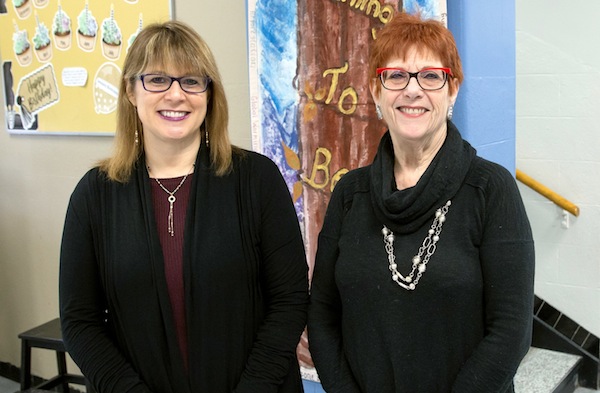
Ara Morris, principal of Brock Corydon School, left, and Naomi Finkelstein, co-founder of Parents Family Friends of Transgender Individuals. (photo from Morris and Finkelstein)

The Winnipeg School Division recently assembled a panel to discuss ways to best support trans and gender diverse children and youth, especially in school settings.

Ara Morris, principal of Brock Corydon School, was invited to sit on the Jan. 22 panel, which took place at Prince Charles Education Resource Centre. “Our school has been very active in talking about gender,” said Morris. “We’ve been making changes to our school as a result of having children in our school who are transgender. We want all of our students, all of our families, to feel included, important, and as equal members of our community and so, to do that, sometimes we have to reflect on the different ways that we are speaking, the different language that we are using.

“We know that many times children identify themselves in all different ways,” she said. “We want to be respectful of that. We have had a lot of professional development for our teachers and that has included programs from the Rainbow Resource Centre,” which offers support, counseling and educational programs for LGBTQ2S+ individuals and allies.

Brock Corydon has invited the parent of a transgender student to speak with school staff, and teachers have led sessions among themselves, as well as having had other teachers come to share how they work on being inclusive in the classroom.

“Our school division has a policy and it was updated in June 2018 for diversity and equity,” said Morris. “With all the research that our school division has been doing, I’d be surprised if other school divisions weren’t doing the same.”

Morris has received many phone calls from other principals asking for suggestions, and she works with parents to identify any needs, such as the need for a gender-neutral bathroom, which the school now has.

Even though full-time staff has been educated on the topic, part-time or causal staff also need to be informed about the proper way for teachers to speak at the school, including the use of gender-neutral language.

Naomi Finkelstein, a retired teacher and the mother of a trans child, was also on the event panel. Finkelstein was dealing with the situation 13 years ago and recalled having tried to find proper supports, which were lacking. She started a support group with another parent, called Parents Family Friends of Transgender Individuals (PFFOTI).

“I had a daughter and, when she was about 20 and a half, she came out and shared that she was transgender,” said Finkelstein. “I knew that this was something I was going to have to get support for, so I went to the Rainbow Resource Centre.”

PFFOTI started out with the two founding members and is now providing support to 170 parents. “Of course, that many do not come to all the meetings and, really, what happens is people kind of grandfather out. Their children are older now, they’ve made their transitions … maybe some have had surgery and they don’t feel the need to attend anymore. We’re always getting new people,” said Finkelstein.

“Our group is specifically for parents,” she continued, “because there are some parents who have just found out and they need the support. And there are always Kleenex boxes on the table. For some parents, it is a real shock.

“I was shocked, too, but I did my crying at home in the shower, which was really very good. There was something, I don’t know why, it was almost like being in a womb, feeling protected in there…. We want the parents to be able to share their fears and concerns; you can’t do that if a child is there.”

Over the years, Finkelstein has developed a list of do’s and don’ts for parents who suspect that their child might be trans.

The do’s list includes respecting your child’s identity and following your child’s lead and listening to them about what trans is all about. Each child is different and there’s no right way to be trans. As Finkelstein pointed out, “some go on hormones, some don’t, and some just dress in what they consider the gender’s clothing.”

The list encourages parents and others to learn about the difference between sex and gender – gender is a social construction, whereas sex is biological.

PFFOTI advises parents to start by helping and educating themselves so they can better help their child. “This involves reading and coming to support groups,” said Finkelstein. “And parents need to take into account if there are other siblings. There can be issues for the other siblings, and they need to be educated, too.”

If the children are minors, parents need to take the lead in setting up doctors’ appointments, buying appropriate clothing, getting haircuts, etc.

“Truly, the key to success is offering the kids your unconditional support,” said Finkelstein. “One of the support groups online, their motto was, ‘Fake it until you make it.’ But, we also talk about what parents need to do within the school system and that they need to advocate for their children. Although the human rights law says that they have rights, not all school divisions are on board. Winnipeg [School Division] 1 is totally on board and they have a process. We need parents to take part in the process and get the school to take part in the process.

“And a critical thing is bathroom talk,” she said. “You have to talk to your child before you go to the administration, so you’re both on the same page as to what the child wants to do. Some schools now have non-gender-specific bathrooms, which is great. I wish every school would have one.

“And then they have to talk to the administration about what their rights are. They should know those rights before they go in.”

Setting up a safe person at the school, with the help of administration, who the child can go to, someone who affirms their identity, if they are having problems, is also important, as is talking about the school’s anti-bullying policy and how that is handled.

“Past the age of 12 and up, you’re also dealing with all these hormones that rage through the child’s body,” said Finkelstein. “So, some kids are going to have to get on blockers to prevent their periods and their breasts from developing, and stuff like that.”

Parents and others must understand that a child’s identification as trans is not likely a passing phase. Although some children identify as trans and later change their mind, that is uncommon. So, do your best to avoid calling your child by their previous name, said Finkelstein.

Parents “really have to make an effort not to misgender,” she said. “Misgendering kind of denies their existence as a person, and that’s a big negative. But, as a parent, if you screw up, you just apologize. I think kids are very understanding about that. As long as you don’t deliberately misgender a child, they are open to the fact that, you’ve had them for 13, or 18, or 20 years, and, yeah, that other name is going to come out. It takes you awhile to reformat.”

Another PFFOTI recommendation is to never out your child – let them do it when they are ready.

“Statistics have proven that, [even] with children who are trans who get support from their parents and their family … four percent commit suicide,” said Finkelstein. “The statistics are much higher – about 45% – for those who do not get support. This past summer, we lost four kids (three in Winnipeg and one who had moved to Vancouver).”

Finkelstein regularly checks in with her son to talk about his mental health and to assure him she accepts him as he is.

Rebeca Kuropatwa is a Winnipeg freelance writer.

Landscape better health

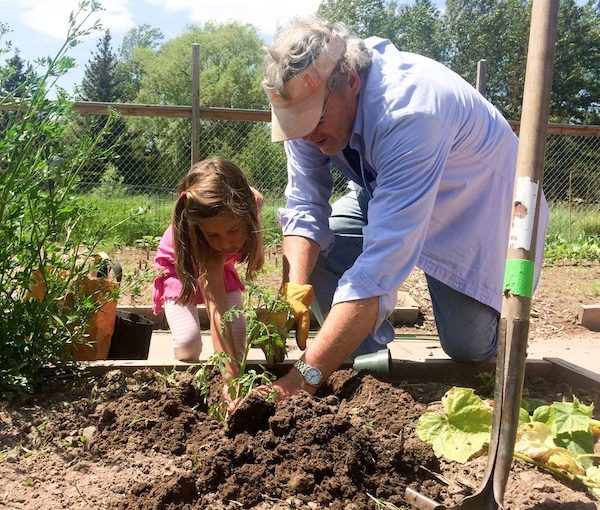
People who spend time gardening, doing yard work and have direct contact with soil feel more relaxed and happier. (photo by Brad Greenlee)

It’s natural to long for spring when it’s cold outside. But there’s a good reason why you may pine for green. Living landscapes are an important part of the outdoor lifestyle that North Americans enjoy, but the benefits go beyond the barbeque and backyard baseball. Green spaces are necessary for our health.

“The advantages of grass and landscaping surpass the usual physical benefits that result from outdoor activity,” said Kris Kiser, president and chief executive officer of the Outdoor Power Equipment Institute (OEPI). “Numerous studies have found that people who spend more time outside or are exposed to living landscapes are happier, healthier and smarter.”

Researchers have studied the impact of nature on human well-being for years, but recent studies have found a more direct correlation between human health, particularly related to stress, and the importance of people’s access to nature and managed landscapes.

Getting dirty is actually good for you. Soil is the new Prozac, according to Dr. Christopher Lowry, a neuroscientist at the University of Bristol in England. Mycobacterium vaccae in soil mirrors the effect on neurons the pharmaceutical provides. The bacterium stimulates serotonin production, which explains why people who spend time gardening, doing yard work and have direct contact with soil feel more relaxed and happier.

Children who are raised on farms, in a “dirtier” environment than an urban setting, not only have a stronger immune system but are also better able to manage social stress, according to the National Academy of Sciences.

photo - Studies have shown that people who spend more time outside or are exposed to living landscapes are happier, healthier and smarter
Studies have shown that people who spend more time outside or are exposed to living landscapes are happier, healthier and smarter. (photo from pxhere.com)

Living near living landscapes can improve your mental health.

Researchers in England found that people moving to greener areas experienced an immediate improvement in mental health that was sustained for at least three years after they moved. The study also showed that people relocating to a more developed area suffered a drop in mental health.

Greening of vacant urban areas in Philadelphia reduced feelings of depression by 41.5% and reduced poor mental health by 62.8% for those living near the vacant lots, according to one study.

According to Dutch researchers, people who live within a half mile of green space – such as parks, public gardens and greenways – were found to have a lower incidence of 15 diseases, including depression, anxiety, heart disease, diabetes, asthma and migraines.

A 2015 study found that people living in areas with more trees had a boost in heart and metabolic health. Other studies show that tasks conducted under the calming influence of nature are performed better and with greater accuracy, yielding a higher quality result. Spending time in gardens, for instance, can improve memory performance and attention span by 20%.

Living landscapes can also make you smarter. Children gain attention and working memory benefits when they are exposed to greenery, says a study led by Payam Dadvand of the Centre for Research in Environmental Epidemiology in Barcelona. In addition, exposure to natural settings may be widely effective in reducing attention deficit/hyperactivity disorder symptoms in children.

Research has shown for adults, as well, that being around plants helps them concentrate better at home and at work. Charlie Hall, Ellison Chair in International Floriculture at Texas A&M, believes that spending time in gardens can improve attention span and memory performance by as much as 20%.

A National Institutes of Health study found that adults demonstrate significant cognitive gains after going on a nature walk. In addition, a Stanford University study found that walking in nature, rather than a concrete-oriented, urban environment, resulted in decreased anxiety, rumination and negative affect, and produced cognitive benefits, such as increased working memory performance.

Living landscapes also can help you heal faster. Multiple studies have discovered that plants in hospital recovery rooms or views of esthetically pleasing gardens help patients heal up to one day faster than those who are in more sterile or austere environments. Physicians are now prescribing time outdoors for some patients, according to recent reports, and Park Rx America is a nonprofit with a mission to encourage physicians to prescribe doses of nature.

All of these benefits reinforce the importance of maintaining our yards, parks and other community green spaces. Trees, shrubs, grass and flowering plants are integral to human health. Not only do they provide a place for people and pets to play, they directly contribute to our mental and physical well-being.

Healing powers of song

Seattle-based Iraqis in Pajamas, left to right: Sean Sebastian, Loolwa Khazzoom and Robbie Morsehead. (photo from Iraqis in Pajamas)

How do you take the wisdom of surviving and turn it into beautiful things?” asked Loolwa Khazzoom, front woman for Seattle-based punk rock group Iraqis in Pajamas, during an interview with the Independent recently.

One cannot easily classify Khazzoom, a cancer survivor, in a succinct journalistic fashion. Aside from being a musician, she is a writer, an activist, a polyglot and a journalist. Raised in California to an American mother and an Iraqi father, she was heavily involved in the Jewish feminist movement of the 1990s and the founder of the Jewish Multicultural Project, which provided resources about diversity to Jewish groups.

As with her stage presence, she transmits a raw, infectious energy in conversation, ever more so as Iraqis in Pajamas started this month by releasing a new single.

“Life brings with it an endless number of challenges. Negative experiences can be turned into art,” Khazzoom reflected.

“I was diagnosed with cancer in 2010,” she said. “I rejected the conventional option of surgery – despite a doctor proclaiming that I would die without it. ‘You can’t think your way out of cancer,’ he said, to which I replied, ‘You don’t know what I can do.’”

After the diagnosis, Khazzoom researched natural approaches to healing, and radically altered her diet – pulling everything out of her cupboards and moving to an all-organic and vegan diet. Through these and subsequent diet and lifestyle changes, she said she was able to stop the growth of the nodules, which remained stable for the next five years. The nodules began shrinking when she returned to music – her lost passion.

Formed in 2015, Iraqis in Pajamas combines ancient Iraqi Jewish prayers with its own original style of punk rock sung in English, Hebrew and Judeo-Arabic. The band’s songs examine a wide number of social issues – domestic violence, racism, mental illness, family caregiving, national exile – and cancer.

The band received a grant to produce the song “Cancer Is My Engine,” which was released March 1. “Cancer Is My Engine” combines an ancient Iraqi Jewish prayer with original punk rock, sung in Hebrew and English – challenging conventional medical approaches to cancer and putting forth the concept of music as medicine.

The song was produced by Bard Rock Studio, an independent Northwest music producer, and funded by the Lloyd Symington Foundation, which supports people living with and healing from cancer.

According to Khazzoom, singing has the ability not only to uplift but to heal. “This shift in consciousness is why, after hearing a particular song, our mood may change abruptly, or we suddenly may feel transported back in time. Singing bypasses our mental process, both awakening and soothing us at the core, without effort. Among other benefits, we are able to access, release and heal from the experience of trauma, without having to recount and risk getting triggered by painful memories,” she said.

Iraqis in Pajamas, which also includes drummer Robbie Morsehead and guitarist Sean Sebastian, got its name from a reputation Iraqi expatriates in the Israeli city of Ramat Gan had for putting on their pajamas when they had arrived home and the work of the day was completed.

The band is currently developing its next project: a debut double album. One CD will be an original a cappella version of 10 Iraqi Jewish prayers, which the band incorporates into its songs, along with a story about each prayer and why they chose it, while the second CD will be the 10 songs with those prayers woven through them. The project is sponsored by Allied Arts Foundation in Seattle and, in February, the band launched a fundraising campaign to develop, produce and promote the album: secure.givelively.org/donate/allied-arts-foundation-seattle/iraqis-in-pajamas.

Khazzoom’s first book, Consequence: Beyond Resisting Rape (2002), is a look at sexual harassment in everyday life. In 2003, she edited The Flying Camel: Essays on Identity by Women of North African and Middle Eastern Jewish Heritage, an anthology of the writings of Mizrahi Jewish women. Her writing has also appeared in the Forward, Tikkun and Lilith, as well as the Jewish Independent and other Jewish publications; she has written several times about Israeli hip-hop for Rolling Stone.

Iraqis in Pajamas hopes to find venues in Vancouver and on Vancouver Island in the coming year. For more information about Khazzoom and the band, and to listen to their music, visit loolwa.com. To purchase their music, go to iraqisinpajamas.bandcamp.com.

Sam Margolis has written for the Globe and Mail, the National Post, UPI and MSNBC.

Increased cancer risks

Libby Znaimer was the keynote speaker of the inaugural BRCAinBC event One in 40: From Awareness to Empowerment. (photo from zoomerradio.ca)

An estimated 200 people gathered at Congregation Beth Israel last month for One in 40: From Awareness to Empowerment, the inaugural event of a project to increase knowledge of the cancer risks connected to the BRCA1 and BRCA2 gene mutations.

The Jan. 8 event title is based on the fact that, for people with Ashkenazi Jewish heritage, there is a one-in-40 risk of carrying the BRCA genes, which increase the risk of genetically linked cancers. This rate is 10 times that of the general population. Elizabeth Wurzel, author of the bestselling memoir Prozac Nation, who passed away in January from breast cancer and was found to carry the gene mutation, called BRCA “the curse of the Ashkenazi Jews.”

One in 40 was organized by BRCAinBC, a provincial group spearheaded by members of the family – wife Jane and daughter Catriona – of Geoff Remocker, who died of aggressive prostate cancer. BRCAinBC’s objectives are to increase awareness among community members and health professionals, educate community members about genetic testing options and reduce the fear and stigma that can surround genetic testing. (See jewishindependent.ca/brcainbcs-inaugural-event.)

Toronto-based broadcaster Libby Znaimer, the keynote speaker, led the audience through her story. In January 2009, after enduring a six-and-a-half hour operation, the only possible cure for pancreatic cancer, she didn’t consider the odds of survival that favourable. Pancreatic cancer is the only form of cancer for which the survival rate is in the single digits, said Znaimer in her talk.

She not only has survived pancreatic cancer, but breast cancer, which was also BRCA-related.

Znaimer has made a film about her experience, Cancer Saved My Life. “It’s more than just a catchy title to get eyeballs on my documentary. It’s true. And I am living proof that, when it comes to the BRCA mutations, there is good news, in addition to the bad news,” she said in her remarks to the audience, which she shared with the Independent.

When Znaimer found out she had breast cancer in 2006, she was not surprised. Because of her family history, she knew that she was at a greater risk. However, she said, she did not think breast cancer would kill her.

“I remember being at a boozy dinner just a few days after being told I had cancer. I was very lucky that a former neighbour of mine was visiting,” she said. “She was working in the States as the head of breast radiology at one of the famous Mayo clinics and, based only on what she knew about my family history, she pointed her finger at me and said, ‘Sweetheart, you have bad genes and, if I were you, I’d bite the bullet and have both my breasts and my ovaries removed … as quickly as possible.’”

Znaimer cited a study in Toronto in which Jewish women were tested for the mutation regardless of family history. Fifty percent of those who tested positive would not have qualified for testing because of their family history. Results from similar studies in the United Kingdom and Israel produced similar outcomes.

“And, having one of those mutations doesn’t just mean you’re at an exponentially higher risk of getting those cancers once,” she warned. “You are also more likely to contract a second cancer, not a recurrence – a completely new other cancer.

“It is especially gratifying for me that my case has helped others and to be here to talk about the importance of getting tested,” she said. “It is the dawn of a new decade. My second decade as a survivor since Cancer Saved My Life.”

The Jan. 8 educational evening also included panelists Dr. Rona Cheifetz, medical lead of the Hereditary High Risk Clinic, B.C. Cancer Agency; Dr. Intan Shrader, co-medical director, BCCA Hereditary Cancer Program; Len Gross, president of the Prostate Cancer Foundation of British Columbia; and Tovah Carr, a BRCA carrier.

BRCAinBC arose from the realization that many in the Jewish community are not aware of the risks of carrying the BRCA genes. They hope to support improvements in access to genetic testing throughout the province for members of the Jewish community, and to protect BRCA carriers from the potentially negative consequences of positive carrier status; in obtaining insurance, for example. For more information, visit BRCAinBC.ca.

Sam Margolis has written for the Globe and Mail, the National Post, UPI and MSNBC.