During the nine days before Tisha b’Av, a day of fasting and mourning, it is customary to refrain from eating meat – but not fish. Here are some fish salad options for that week – and the rest of the summer – as well as some sauces that are great for both fish and vegetables. This year, Tisha b’Av starts the night of July 17.
CUCUMBER AND FISH SALAD (I adapted this recipe from Food & Wine. It makes four to eight servings.)
2 large cucumbers 1 1/4 pounds skinned fresh cod, haddock or sea bass fillet 1 chopped scallion small bunch chopped dill salt & pepper to taste 5 tbsp milk 4 tbsp mayonnaise 2 tbsp sour cream or plain yogurt 4 black or green olives & cucumber ribbons
Peel one cucumber and dice in a bowl. With a vegetable peeler, remove six long strips from second cucumber, then dice and add to bowl. Sprinkle with salt then drain on paper towels.
Place fish in a frying pan with scallion, some of the dill, salt and pepper and milk. Poach until fish begins to flake. Remove and let cool.
Wash and drain cucumber and dry. In another bowl, mix mayonnaise with sour cream or yogurt. Stir in cucumber and fish. Garnish with olives and cucumber ribbons.
CLASSIC CEVICHE (I adapted this recipe from Food & Wine. It makes eight servings.)
1 pound fresh, skinless snapper, bass, halibut or other fish fillet, cut in half-inch pieces 1 1/2 cups fresh lime juice 1 medium white onion, chopped into half-inch pieces 2 medium-large tomatoes chopped into half-inch pieces 1/3 cup chopped cilantro 1/3 cup chopped pitted green olives 1 to 2 tbsp olive oil salt to taste 3 tbsp fresh orange juice 1 large or 2 small peeled, pitted, diced avocados tortilla chips for serving
Combine fish, lime juice and onion in a glass or stainless steel bowl. Add more lime juice to cover fish and allow it to float freely. Cover and refrigerate four hours until a piece of fish, when broken open, no longer looks raw.
In a large bowl, mix together tomatoes, cilantro, olives and olive oil. Stir in fish and salt. Add orange juice, cover and refrigerate if not serving immediately. Before serving, stir in avocados. Serve with tortilla chips or crackers.
HORSERADISH WHIPPED CREAM SAUCE
1 tsp prepared mustard 6 tbsp horseradish 1 tsp salt 1/8 tsp pepper 1 cup whipped heavy cream
Combine mustard, horseradish, salt and pepper. Let stand 15 minutes.
Fold in whipped cream.
PIQUANT HERB SAUCE
1/2 cup dry white wine 1/2 cup parsley sprigs 1/4 cup white vinegar 1 small quartered onion 2 large garlic cloves 2 1/2 tsp dried crushed tarragon 1/4 tsp dried crushed chervil pepper to taste 1 cup mayonnaise
Place white wine, parsley, white vinegar, onion, garlic, tarragon, chervil and pepper in blender cover and blend until uniform.
In a saucepan, stir over medium heat until reduced to 1/3 cup.
Strain, return to saucepan, stir in mayonnaise. Heat until warm. Garnish with chopped parsley.
CHIMICHURRI
1/2 cup olive oil 1/2 cup chopped parsley 2 tbsp chopped cilantro 2 tbsp fresh lemon juice 2 large minced garlic cloves 1 tsp crushed red pepper 1 tsp red wine vinegar 1/2 tsp sweet smoked paprika 1/2 tsp dried oregano 1/4 tsp kosher salt
Mix all ingredients in a blender.
DILL CREAM SAUCE
1/4 cup dry white wine 2 dill sprigs 2 medium minced shallots 1 cup unsalted pareve chicken soup 1 1/4 cups whipping cream salt & pepper to taste 2 tbsp snipped fresh dill
Combine wine, dill sprigs and shallots in saucepan and bring to a boil.
Add pareve chicken soup and cook to reduce to two tablespoons.
Stir in cream, salt and pepper. Bring to a boil. Cook until thick, about seven minutes. Before dishing out, stir in dill and serve hot.
Sybil Kaplanis a journalist, lecturer, book reviewer and food writer in Jerusalem. She created and leads the weekly English-language Shuk Walks in Machane Yehuda, she has compiled and edited nine kosher cookbooks.
The sandwich as we know it was created in England in 1762 by John Montagu, the fourth Earl of Sandwich, a British statesman and gambler. He asked for a serving of roast beef to be placed between two slices of bread so he could eat with his hands and not have to get up from the table when he was playing cards or gambling. Here are some sandwiches good for your table – or a picnic.
1 15-ounce can chickpeas 1 tbsp lemon juice 1/4 cup chopped onions 1 minced garlic clove 2 tsp vegetable oil 1/4 cup tahini 1/2 cup toasted sesame seeds 8 pieces pita shredded lettuce sliced olives chopped tomatoes chopped dill pickles
Drain chickpeas and reserve three tablespoons of liquid.
Place chickpeas, liquid and lemon juice in a blender or food processor and blend until pureed.
Heat oil in a frying pan and sauté onion and garlic until tender.
Combine pureed chickpeas, onion-garlic mixture, tahini and sesame seeds in a bowl.
Split pita and fill with chickpea mixture. Add any of the accompaniments: lettuce, olives, tomatoes and/or pickles.
TUNA SANDWICH (makes two cups)
6 tbsp cream cheese 1 cup sour cream 7/8 cup flaked tuna 2 tbsp finely chopped onions or scallions 2 tsp horseradish 1 tsp Worcestershire sauce
Beat cream cheese and sour cream in a bowl until fluffy.
Add tuna, onion, horseradish and Worcestershire sauce and blend.
Let stand in refrigerator at least two hours. Remove and spread on bread or rolls.
GAZPACHO SANDWICHES (makes eight servings)
8 round hard rolls butter or margarine 4 medium or 6 small thinly sliced tomatoes 2 thinly sliced cucumbers 4 tbsp minced green peppers 2 tbsp minced onions oil-and-vinegar dressing
Cut tops from rolls and remove some bread from the tops and bottoms, leaving a thin shell. Spread sides of rolls with butter or margarine.
Put tops and bottoms together, wrap airtight and refrigerate.
In a bowl, combine tomatoes, cucumber, green peppers and onion. Add enough dressing to moisten well and toss. Cover and refrigerate at least one hour.
Fill roll bottom with gazpacho mixture, replace tops and cut in half. Serve at once.
* * *
Many people think of potato salad as a good accompaniment for summer picnics, but they can also be used as a meat or poultry accompaniment at the dinner table, as well. In Europe, often, potato salad is served warm with vinegar and oil and herbs as a dressing, while Americans add mayonnaise. Here are a few of my favourites.
CREAMY POTATO SALAD WITH LEMON AND FRESH HERBS (This recipe is adapted from one in Bon Appetit magazine. It makes four servings.)
1 1/2 pounds baby red potatoes 1 1/2 tbsp rice vinegar
salt & pepper 3/8 cup mayonnaise 1 to 2 green onions, thinly sliced half a celery rib, cut into 1.5-inch slices 1 tsp dry parsley 1 tsp dry basil 1 tbsp chopped fresh dill 3/4 tsp grated lemon peel
Drain cooked potatoes and let stand 20 minutes.
Cut potatoes in small pieces and place in a bowl. Toss with vinegar, salt and pepper.
Add mayonnaise, onion, celery, parsley, basil, dill and lemon peel and toss. Cover and chill until ready to serve.
DIJONNAISE POTATO SALAD (makes three cups)
1/2 cup light mayonnaise 2 tbsp Dijon mustard 2 tbsp cider vinegar 1 tbsp fresh or 1/2 tsp dry dill or parsley salt & pepper to taste 1 pound cooked, cubed red potatoes 1/2 cup minced celery 1/4 cup minced green onions
In a bowl, combine mayonnaise, Dijon mustard, vinegar, dill or parsley, salt and pepper.
Add potatoes, celery and onions. Cover and chill until serving.
NIÇOISE POTATO SALAD (The original Niçoise salad came from Nice, France, in the 19th century; it had tomatoes, anchovies and olive oil. In a 1903 French cookbook, artichokes, red pepper, black olives and a vinaigrette were added. Over the years, tuna, hard-boiled eggs and green beans also have been added. This recipe makes four servings.)
1 1/2 pounds cooked and drained red potatoes 1/4 pound cooked green beans in one-inch pieces 2 ribs cut celery 1 sliced red pepper 1/2 sliced red onion (optional) 1 1/2 tbsp Dijon mustard 1 6.5-ounce drained can tuna packed in olive oil 10 pitted, sliced black olives 8 halved cherry tomatoes 3 cut up hard-boiled eggs minced tarragon or chives
dressing 1/2 cup olive oil 1/4 cup lemon juice 2 tbsp red wine vinegar 3 rinsed & dried anchovies 3 tbsp minced fresh or 1 1/2 tsp dry tarragon salt and pepper to taste
Combine olive oil, lemon juice, wine vinegar, anchovies, tarragon, salt and pepper in food processor or blender and mix until smooth.
Place potatoes in bowl, add dressing and toss.
Add green beans, celery, red pepper, red onion, Dijon, tuna, tomatoes, eggs, tarragon and chives. Toss gently and serve!
Sybil Kaplanis a journalist, lecturer, book reviewer and food writer in Jerusalem. She created and leads the weekly English-language Shuk Walks in Machane Yehuda, she has compiled and edited nine kosher cookbooks.
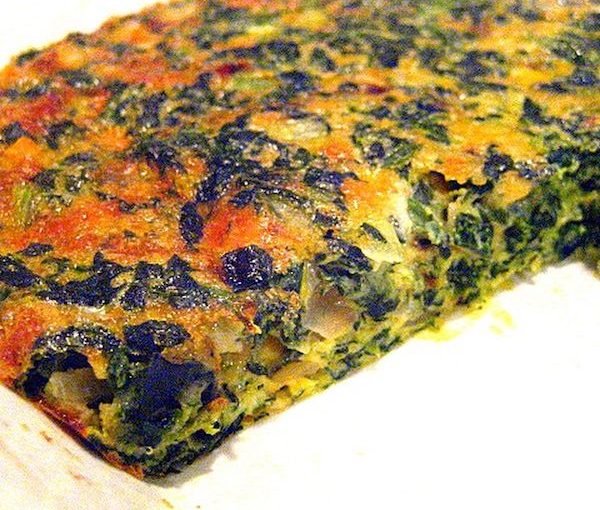
With spinach cheese pie, there likely won’t be leftovers. (photo from Shelley Civkin)
What’s chock-a-block full of healthy vitamins and minerals, packed with fibre and gives you humongous muscles, if Popeye, the muscle-bound, pipe-smoking sailor is to be believed? You got it – spinach! According to the internet (and who doesn’t believe everything there), the comic strip hero Popeye helped increase American consumption of the once-much-maligned spinach by around 30%. All because of his eating habits. Popeye’s famous line – “I’m strong to the finish ’cause I eats me spinach” – while grammatically heinous, does have a whiff of truth to it. Apparently, spinach, which contains lots of iron, can boost muscle strength. So, listen to pumped-up Popeye and eat your spinach! You might even want to try it with a little Olive Oyl.
Personally, I don’t see what all the fuss and resistance is about. It’s such a versatile vegetable – you can sauté it, make a salad out of it, use it in lasagna, mix it together with orzo, feta and sundried tomatoes. The sky’s the limit. Spinach is the quintessential blank canvas, but adds the health factor and colour element that every bona fide foodie seeks.
One of my favourite ways to use spinach is in a dish that can serve as a main or a side. Even spinach haters adore my famous spinach cheese pie. The recipe is straightforward, relatively healthy (unless you’re lactose intolerant or fat-phobic) and never fails to elicit endless oohs and aahs. For those people who can’t tolerate milk products, you can always substitute soy cheese and lactose-free milk. You can barely tell the difference. You can thank me later.
SPINACH CHEESE PIE
2 tbsp butter 3 eggs 3/4 cup flour 1 cup milk 2 10-ounce packages frozen spinach (cooked) 1 tsp salt 1 tsp baking powder 1 lb Monterrey Jack cheese, grated
Preheat oven to 325ºF. Melt butter in a 9-by-13-inch glass pan. Make sure the melted butter coats the bottom and sides of the pan.
Cook and drain spinach. Be sure to squeeze out all the water, then chop it finely in a food processor.
In a large bowl, beat the eggs. Add dry ingredients (flour, salt, baking powder) and milk, alternately. Mix well by hand.
Add grated cheese and spinach, and mix well by hand. Pour into the prepared pan.
Bake for 35 to 40 minutes, until slightly brown on top. Cool at least 30 minutes, then cut into squares and serve. I’m usually too hungry and skip this last step of waiting. Cooling it down, however, does make it easier to cut. And, well, patience is a virtue.
This spinach pie freezes really well and reheats perfectly in the microwave, but, believe me, there usually isn’t anything left to freeze or reheat. On one or two occasions, I’ve been known to eat it cold, right out of the fridge. Late at night. With a certain clandestine aura about me. Right … busted.
While your family – or, in non-COVID times, your guests … remember what those are? – relaxes before dinner, waiting with bated breath for your spinach cheese pie, you can serve them my popular olive dip. Caveat: I don’t have a particular recipe for it and I don’t use specific measurements – I just taste it as I go along. For someone who’s a hardcore Type A personality, this is highly unusual behaviour. But, somehow, I’m able to operate on simple faith when it comes to this. Truth to tell, it’s pretty hard to screw up.
Another caveat: even in non-COVID times, or inside your COVID bubble, be sure not to breathe on strangers or prospective love interests after eating this dip, because the garlic is flavour-forward. Depending on your love/tolerance for garlic, add as little or as much as you want. I start with one clove, but I’ve been known to up the ante for a large batch. This olive dip is decidedly non-dietetic, unfriendly for hypertensives and verboten for those watching their cholesterol. Otherwise, it’s the perfect pre-dinner dip. It makes a great tapas dish, and plays well with other Middle Eastern appies like hummus and baba ghanoush.
In the spirit of full disclosure, I never met an olive I didn’t like. My recipe calls for the plebian green olives stuffed with pimento, but, if you’re a risk-taker, you could try using other kinds. Just be sure not to use ones with an overpowering flavour. The mayonnaise in my recipe tends to smooth out the flavour and make it less sharp, so consider that when choosing your olives.
I never get sick of this recipe and it’s one of those dips you just can’t get enough of. It’s cheap and easy. Pre-COVID, I used to serve this a lot to friends, who would stuff themselves on the dip, then wonder why they were too full to eat dinner. Of course, the pita I serve with it makes it a much more filling appie. People will think you went to all sorts of trouble making it, so, if you want to maintain your kitchen cred, pretend that it’s an old family recipe and politely decline when they ask you to share it. Or … be a sport and let the world know what a lazy cook you really are.
OLIVE DIP
green olives with pimento (also called Manzanilla olives) mayonnaise fresh garlic a squeeze of lemon juice (optional)
Throw all the ingredients into a food processor and blend away! It’s a dish best served cold (as is revenge), but really any temperature will do.
Pita or pita chips are a filling way to stretch this appetizer, but it also works nicely with crackers or thick potato chips. If you want to zhuzh it up a notch, add a couple of black Moroccan olives to it. And make lots of it because, mark my words, it’ll go fast. I’ve been caught dipping my toast into it for breakfast more than once. And, yes, I’m aware that garlic breakfast breath is not overly appealing, but I always floss and brush extra exuberantly after doing this. And, I usually do it when no one’s around. But be sure to turn off the nanny cam first.
Shelley Civkin, aka the Accidental Balabusta, is a happily retired librarian and communications officer. For 17 years, she wrote a weekly book review column for the Richmond Review. She’s currently a freelance writer and volunteer.
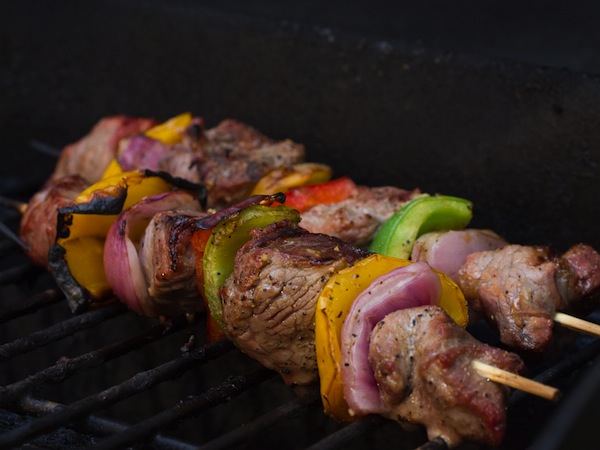
Grilled skewers make great Lag b’Omer fare. (photo from pixabay.com)
Lag b’Omer, which this year starts on the eve of April 29, is not mentioned in the Torah. The holiday isn’t mentioned anywhere, actually, until the 13th century, and no particular foods are associated with it.
The Torah does command us to begin counting the Omer on the second night of Passover. Omer, which means sheaf, was a measure of grain from the new barley harvest cutting, brought to the Temple on the 16th of Nissan. Fifty days later is Shavuot. Thus, the counting of the Omer provides a bridge between the Israelites being freed and receiving the laws. The seven-week period is a period of mourning, when observant Jews do not shave or get haircuts and when there are no marriages or public festivities.
The respite is Lag b’Omer. Lag is a combination of the Hebrew letters lamed, which stands for the number 30, and gimmel, which stands for the number three. The 33rd day of counting the Omer commemorates the time when students of the second century’s Rabbi Akiva, who supported Bar Kochba’s rebellion against the Romans, were struck with a plague. On this day, it stopped.
Most Jewish holidays feature different symbolic foods. In Joan Nathan’s Jewish Holiday Cookbook, Lag b’Omer barely gets a mention, as “a time for picnicking” – she suggests roast chicken, eggplant salad, German potato salad, Moroccan carrot salad, fresh fruit and cookies. Of all my many Jewish and Israeli cookbooks, the only one that devotes an entire chapter to Lag b’Omer food is A Taste of Tradition by Ruth Sirkis. She says the bonfires mark the beginning of the outdoor cooking season and recommends pickle dip, tehina, mini relish trays, mixed grill (kebab and shashlik), pita, baked potatoes, baked corn, fruit and lemonade.
Here are three tips for grilling on a skewer: flat or square skewers will keep the food from revolving; if you spray the grill before cooking, foods will not stick; and partially cook vegetables before threading on a skewer, so foods cook in the same amount of time.
And here are a few recipes.
MEAT AND POTATOES SHASHLIK (6 servings)
2 pounds cubed beef 1/3 cup balsamic vinegar 1/4 cup olive oil 1 tbsp Dijon mustard 1 tbsp Worcestershire sauce 2 tbsp soy sauce 1 tbsp cilantro or parsley 12 small red or white potatoes 2 small onions, quartered
In a plastic bag, combine balsamic vinegar, oil, mustard, Worcestershire sauce, soy sauce and meat. Close and let marinate two hours or, if refrigerated, up to eight hours.
Place potatoes in a saucepan and cover with water. Bring to a boil, reduce heat and cook for 15 minutes. Drain and place in a bowl.
Pour some marinade into the bowl of potatoes and toss.
Thread six skewers, alternating meat cube, potato, meat cube, onion quarter, meat cube, potato, meat cube. Thread the remaining potatoes and onions on extra skewers.
Grill skewers three inches from the heat for five minutes on each side (for medium rare), more for well-cooked, basting with marinade before turning.
LAMB KEBAB (6 servings)
1/2 cup olive oil 2 tbsp red wine vinegar 1 tbsp minced garlic 1 1/2 tsp Dijon mustard 3 pounds cubed lamb 2 red bell peppers 2 green peppers 2 quartered onions 12 mushrooms 1/2 cup chopped cilantro
Place olive oil, vinegar, garlic, mustard and lamb in a plastic bag, close, shake and set aside.
Core and seed peppers, cut into one-by-two-inch pieces. Add to marinade along with mushrooms. Place in refrigerator at least four hours.
Place onion quarters on a plate and brush with some of the marinade. Thread meat on skewers, alternating with vegetables and allowing three pieces of lamb per skewer. Grill three inches from the heat for five minutes per side for medium rare, brushing with marinade when turning.
GRILLED VEGETABLES (8 servings)
1/4 cup olive oil 1/4 cup red wine vinegar 1 tbsp minced garlic 2 tsp Dijon mustard 1/2 tsp basil or oregano or Italian seasoning 2 quartered red onions 1 red (or yellow) pepper cut in 1.5-inch strips 1 green pepper cut in 1.5-inch strips 4 halved plum tomatoes or 8 cherry tomatoes 4 squash cut in half-inch pieces 1 eggplant cut in half-inch pieces
In a plastic bag, combine olive oil, wine vinegar, garlic, mustard and spices. Add vegetables, close bag, toss and let marinate at least three hours.
Using one skewer for each vegetable, thread onto skewers allowing half an inch between each. Grill three inches from the heat source for three to five minutes, carefully turning. Place marinade in a bowl. Slide vegetables off skewers into marinade and toss.
Sybil Kaplanis a journalist, lecturer, book reviewer and food writer in Jerusalem. She created and leads the weekly English-language Shuk Walks in Machane Yehuda, she has compiled and edited nine kosher cookbooks, and is the author of Witness to History: Ten Years as a Woman Journalist in Israel.
Sweet Potato Wedges with Avocado Drizzle, as made by Miriam Pascal, author of More Real Life Kosher Cooking. (photo by Miriam Pascal)
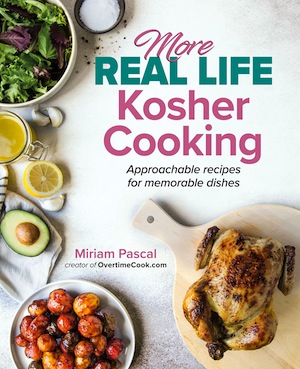
Many people have probably never heard of Miriam Pascal. I was one of them, but now am happily a fan. She describes herself as a 20-something Jewish gal from New York, a self-taught cook. She founded overtimecook.com, a popular kosher recipe blog, and More Real Life Kosher Cooking: Approachable Recipes for Memorable Dishes (Art Scroll, 2019) is her third cookbook.
More Real Life Kosher Cooking has many positive aspects – an introductory remark for each recipe; ingredients in the left column and numbered directions on the right; and a full-page, full-colour photograph for each recipe, including photographs of four dishes before each of the 10 chapters. In the introduction, Pascal recalls memories connected to various recipes and says her goal is to make the recipes in this cookbook “approachable and doable,” as the book’s subtitle states. She wants to help her readers “create delicious food and special moments.”
More Real Life Kosher Cooking book cover
There are some 200 photographs and 139 recipes in this cookbook, plus directions for 22 sauces and dressings, which can be used with other creations. Chapters are Breakfasts and Breads, Appetizers and Snacks, Salads and Spreads, Soups and Stews, Meat and Poultry, Dairy and Meatless, Vegetables and Sides, Desserts and Drinks, Baked Goods and Pastries, and Sauces and Staples. Among the recipes are Puff Pastry Breakfast Pizza, Crispy Onion Strings, Meaty Root Vegetable Soup, Caramelized Onion and Cheese Manicotti, Two-Ingredient Chocolate Mousse and No-Bake S’mores Cheesecake.
Of the 139 basic recipes, 46 are listed in the Pesach guide at the end. Here are four from the book.
SWEET POTATO WEDGES WITH AVOCADO DRIZZLE (pareve, makes six servings)
3 sweet potatoes 3 tbsp oil 1 tsp kosher salt 1/4 tsp black pepper * * * 1 avocado 1/2 cup mayonnaise 1/2 tsp kosher salt 1 tsp garlic powder 2 tsp lemon juice
Preheat oven to 425°F. Line two baking sheets with parchment paper; set aside.
Peel sweet potatoes and cut into wedges. Place into a large bowl; add oil, salt and pepper. Toss to coat.
Place wedges in a single layer on prepared baking sheet. Bake for about 50 minutes, until the outsides are starting to brown.
Meanwhile, prepare the avocado drizzle. Place peeled and pitted avocado into a bowl; mash until smooth. Add remaining ingredients; stir to combine.
Remove roasted sweet potato from oven; allow to cool slightly. Just before serving, drizzle avocado mixture over wedges.
The avocado drizzle can be prepared two to three days ahead. Due to the acid in the recipe, it should not turn brown. Sweet potato wedges are best fresh, but can be prepared a day or two ahead and served at room temperature.
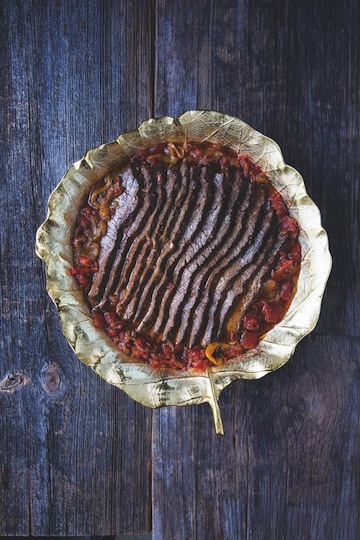
MATBUCHA BRISKET (meat, makes six to eight servings)
1 (about 3 lb) second cut brisket (see Note) kosher salt, for sprinkling black pepper, for sprinkling 3 tbsp oil 2 onions, sliced 2 tsp kosher salt, divided 3 bell peppers, sliced, preferably different colours 2 plum tomatoes, diced 5 cloves garlic, minced 1/2 jalapeño pepper, minced 2 tsp cumin 1 tsp chili powder 1 (28-ounce) can diced tomatoes
Miriam Pascal’s Matbucha Brisket. (photo by Miriam Pascal)
Preheat oven to 325°F.
Sprinkle salt and pepper over both sides of roast. Heat a large, deep frying pan over high heat. Add roast; sear for two to three minutes per side, until browned on the outside. Transfer to a roasting pan; set aside.
Turn heat under the frying pan to medium; add oil, onions and one teaspoon salt. Cook for about five minutes, until softened
Add peppers, tomatoes, garlic, jalapeño and remaining teaspoon salt. Cook for eight to 10 minutes, until softened.
Raise heat to high. Add cumin, chili powder and diced tomatoes with their liquid. Cook until mixture starts to bubble around the edges. Pour vegetable mixture over the meat.
Cover roasting pan tightly; bake for 40-50 minutes per pound, until meat is soft and tender.
Note: Instead of a brisket, you can use any other cut of meat that does well when cooked low and slow.
The meat freezes well in the sauce, wrapped and airtight. Reheat, covered, until warmed through.
ROASTED VEGETABLE SOUP (pareve, makes six to eight servings)
2 large zucchini, diced 3 medium yellow squash, diced 2 red bell peppers, diced 2 onions, diced 1 lb frozen cauliflower florets, defrosted 1/4 cup oil 1 tbsp kosher salt 1/2 tsp black pepper * * * 4 cups vegetable broth about 6 cups water 2 bay leaves 1 tbsp kosher salt
Preheat oven to 400°F. Line two baking sheets with parchment paper.
Place vegetables, oil, salt and pepper into a bowl. Toss to combine. Divide between prepared baking sheets. Roast for 50-60 minutes, until vegetables are starting to brown.
Place roasted vegetables, along with any juices, into a large soup pot. Add soup ingredients; bring to a boil.
Simmer for about one hour. Discard bay leaves. Using an immersion blender, blend soup well, for about three minutes, until fully smooth. Adjust salt and pepper to taste.
This soup can be prepared ahead of time, and frozen in an airtight container.
Sybil Kaplanis a journalist, lecturer, book reviewer and food writer in Jerusalem. She created and leads weekly English-language Shuk Walks in Machane Yehuda, she has compiled and edited nine kosher cookbooks, and is working on a 10th. She also writes restaurant features for janglo.net.
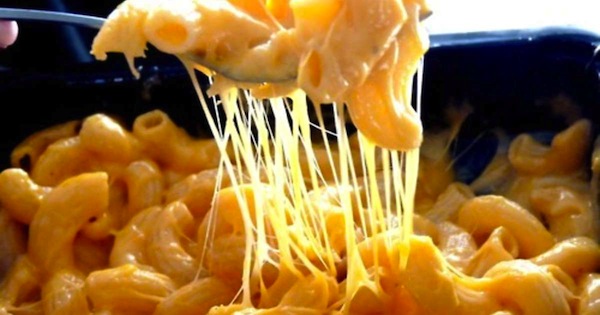
While pasta and cheese casseroles are recorded as early as the 14th-century, the first modern recipe appeared in an English cookbook in 1770. The story is also told that President Thomas Jefferson and his chef brought the recipe to the United States from Europe in the 1790s, although it does not appear in a U.S. cookbook until 1824, with the unkosher boxed Kraft version appearing in 1937. British immigrants brought the recipe to Canada in 1845. The quintessential comfort food, here are a few of my favourite versions of mac and cheese.
MY BEST MACARONI AND CHEESE (I adapted this recipe from The Joy of Cooking, making it without breadcrumbs on top.)
4 cups macaroni 2 eggs 1 cup grated cheddar cheese 2/3 cup milk 1/4 cup margarine paprika to taste
Preheat oven to 350ºF. Grease a casserole.
Cook macaroni in boiled water for about 10 minutes and drain.
Add eggs, cheese, milk and margarine. Pour into greased casserole.
Melt margarine in a saucepan. Stir in flour to make a roux. Add pareve chicken soup, milk and nutmeg. Cook until thick.
Place one-third macaroni in a greased casserole. Sprinkle with one-third of cheese and one-third of sauce.
Make two more layers of macaroni, cheese and sauce. Bake for 20-25 minutes.
STOVETOP MACARONI AND CHEESE (This recipe is by California chef and restaurant owner Grace Parisi, in Food and Wine.)
1 tbsp unsalted butter 1 finely chopped onion 1 1/2 tsp tomato paste 1/2 tsp thyme 2 cups half-and-half salt and pepper to taste 3 cups elbow macaroni 1/4 cup shredded kosher Gruyere cheese 1/4 cup shredded kosher white cheddar cheese 1/4 cup shredded kosher Fontina cheese 1/4 cup grated kosher Parmesan cheese 2 tbsp Panko breadcrumbs
Boil water in a pot.
In a stovetop, ovenproof frying pan, melt butter and cook onion five minutes. Add tomato paste and thyme and cook one minute.
Add half-and-half and two cups hot water, reduce heat to a simmer. Add salt and pepper and macaroni and cook eight minutes.
Stir in a quarter cup boiling water, Gruyere, cheddar and Fontina cheeses. Cover and let stand two minutes, until cheeses are melted.
In a bowl, combine Parmesan cheese and Panko. Sprinkle over pasta. Place under broiler and broil two minutes or until golden.
Sybil Kaplanis a journalist, lecturer, book reviewer and food writer in Jerusalem. She created and leads the weekly English-language Shuk Walks in Machane Yehuda, she has compiled and edited nine kosher cookbooks, and is the author of Witness to History: Ten Years as a Woman Journalist in Israel.
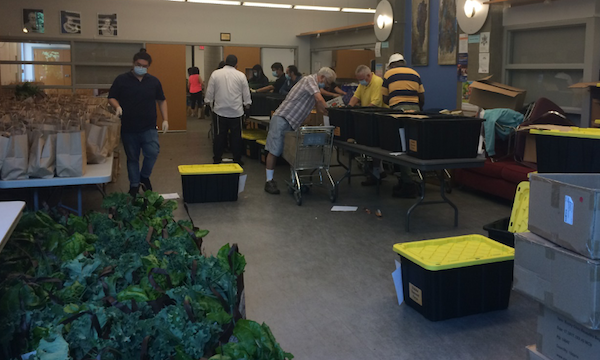
The Vancouver Jewish Food Bank is now distributing more than 10,000 kilograms of food every month. (photo from BI and JFS)
According to the Community Food Centres Canada report Beyond Hunger: The Hidden Impacts of Food Insecurity in Canada, “Even before COVID-19, nearly 4.5 million Canadians struggled to put good food on the table for themselves and their families. In the first two months of the pandemic, that number grew by 39%, affecting one in seven people.”
Demand on the Vancouver Jewish Food Bank has almost doubled since the start of COVID-19. The organization is now distributing more than 10,000 kilograms of food every month; supporting seniors, families and individuals. While some of us have been impacted by food scarcity during COVID-19, those most in need live in a state of constant worry about where their next meal will come from.
The 1996 World Food Summit defined food security as: “when all people, at all times, have physical and economic access to sufficient, safe and nutritious food to meet their dietary needs and food preferences for an active and healthy life.” To this end, Jewish Family Services and Congregation Beth Israel are hosting More Than a Bag of Food on Jan. 28, bringing organizations and people together for a Tu b’Shevat program on food security in our community and beyond.
Vancouver Talmud Torah and Richmond Jewish Day School students are raising awareness about the food bank and reaching out to recipients. King David High School is hosting a cooking demonstration with Hilit Nurick and Rabbi Stephen Berger at 4 p.m. on Jan. 28, which will feature local ingredients and discuss the need for healthy food for everyone. Hillel BC is running an online quiz, with prizes, and a deep dive into information around food security.
At 7:30 p.m. on the 28th, there will be a Zoom panel including Dr. Tammara Soma, assistant professor, School of Resource and Environmental Management, Simon Fraser University; Dr. Eleanor Boyle, educator and author; Krystine McInnes, director and chief executive officer of Grown Here Farms; Mara Shnay, chair of the JFS client advisory committee; and Cindy McMillan, director of programs and community partnerships at JFS. Lawyer Bernard Pinsky will moderate the discussion.
“This is an important conversation,” said McInnes. “The stakes are very high. The pandemic has thrown into sharp relief just how vulnerable we are, given the way our society is organized. ”
Food systems produce and deliver based on historic demand. With the advent of COVID-19, the system has been stretched, leading to empty grocery shelves and desperate food banks. International supply chains are no longer reliable, with Russia and Vietnam limiting the sale of wheat and rice outside of their countries. Canadian food production plants have been hard hit by pandemic outbreaks and the lack of international workers. This is particularly problematic when food production is concentrated at large facilities; for example, two plants in Alberta provide 70% of Canadian beef.
“We are going to talk about initiatives from local to global,” said Boyle, “and panelists will let audience members know about some of the creative approaches to food security that are being taken at the Jewish Food Bank, as well as what’s going on around the world to try to shift agriculture and diets toward being better for climate and public health.”
As if the pandemic weren’t enough, I’m supposed to think of something tantalizing and healthy to cook every night? Right. Roger that. My motto is: go with the tried and true. Or, given the times we’re in: go with the tired and true. Translation: something my mom used to make in the 1960s and ’70s. Something delicious but notoriously unhealthy.
Let’s face it, back then, the general public didn’t know bupkas about heart-healthy diets, Keto or low cholesterol. Not even doctors’ families. Nobody measured their BMI (body mass index) at the gym, because no one went to the gym. No one had their goal weight etched in their brain. It was a kinder, gentler time. Albeit with lots more spontaneous and fatal heart attacks and strokes. But still.
Back to the task at hand. It was a dark and stormy afternoon. I was tired. Really tired. Of cooking. But we have to eat. So, I did what any self-respecting accidental balabusta would do: I pulled out my mother’s old National Council of Jewish Women Cookbook. It’s a miracle that it isn’t falling apart after all these decades doing yeoman service. As I was searching for something simple and doable within 30 minutes, I happened upon a dog-eared page. One my mother had probably marked for good reason. Which is ironic, since the standing joke in my family was this – as soon as my mom cooked anything that my dad loved, she never made it again. We’ve speculated on the rationale for years. Was it intentional? Happenstance? Payback for something? Maybe it had to do with the electric can opener my dad gave mom for her birthday one year; or was it their anniversary?
The dog-eared recipe, thankfully, was – drum roll, please – Meatloaf. Yes, Virginia, you heard correctly, Meatloaf. I capitalize it because, well, it deserves the recognition. There is no problem in this world that can’t be solved by a good meatloaf. (Alright, maybe athlete’s foot and world wars, but, otherwise….)
In sync with the majority of the recipes in that cookbook, it called for an envelope of onion soup mix, undoubtedly a staple in those days. Chip dip – sour cream and onion soup mix. Spinach delight – onion soup mix. Apricot chicken – onion soup mix. Being a culinary rebel (ha!), I decided to go rogue and omit the onion soup mix. I had to draw my own line in the sand. And I swapped Panko for breadcrumbs. This recipe makes a moist, dream-of-a-1960s dinner. Once again, you’re welcome. You may be excused from the table.
MEATLOAF
2 lbs ground beef (extra lean) 1 1/2 cup soft breadcrumbs (or Panko) 2 eggs 1/2 to 3/4 cup water 1/3 cup ketchup (or, as they called it in the ’60s, catsup)
Preheat the oven to 350°F. In a large bowl, combine all the ingredients and place the mix into a greased loaf pan. (I covered the top with more ketchup – I know, very radical). Bake for approximately one hour.
It doesn’t get much easier than this. Seriously. Both Harvey and I kept cutting little pieces off, to even out the end. We were insatiable! We easily ate half of this two-pound loaf in one sitting, and polished off the rest the next day in sandwiches. What can I say? We’re dyed-in-the-wool carnivores.
To switch it up a little, and marry old school to multicultural, I also made Greek lemon potatoes. While I could eat meat and potatoes every night of the week, I don’t. And don’t go getting all judgy on me, either – there was broccoli in attendance.
The Greek lemon potatoes were a new thing for me (the making part), and I only made the Greek kind because I had a bunch of fresh rosemary leftover from baking focaccia the day before. (It was delicious!) Plus, we had a truckload of lemons in the fridge getting overripe from neglect (scurvy in our future?). I have to say, the potatoes were simple and simply delicious. Again, Harvey declared them “guest-worthy.”
2.5 lbs potatoes (about 4 large russets) 1 1/2 cups chicken broth 1/2 cup olive oil 1/3 cup fresh lemon juice 5 cloves garlic, minced (I used 4) 2 tsp salt (I used 1 tsp) dash of pepper 1 tbsp dried oregano (I used 2 tbsp fresh rosemary instead)
Preheat oven to 400°F. Peel the potatoes and cut into semi-thick wedges. Place in a roasting pan with all the other ingredients; toss well. Roast covered with foil for 40 minutes. Remove foil and turn the potatoes. Roast for another 25 to 30 minutes until the liquid is mostly absorbed by the potatoes. If you like your potatoes a bit crispy, leave them in for another five minutes or so.
They end up super-moist, soft, lemony and fabulous. Oh yeah, and garlicky. Harvey said they were even better than the ones at Apollonia, our favourite Greek restaurant. It was hard to refrain from eating the whole darn batch, but we showed the teensiest bit of restraint. After all, we wanted some left over for the next day. They’re like potato candy, if you will. Except better.
Sometimes, the most obvious recipes are the best. I often consult that Council cookbook. Who better to advise on such Jewish delicacies as honey-glazed cocktail franks, deviled tongue canapes and fruited rice salad? I rest my case.
There’s no question that the NCJW of Canada does many admirable things to enhance the community through education, social action, furthering human welfare and more. Far be it from me to make it sound like all they did was produce a cookbook. But, thank you, NCJWC for having done so – the meatloaf alone is worth the price of admission. And, of course, kol hakavod for all the great work you do.
Shelley Civkin, aka the Accidental Balabusta, is a happily retired librarian and communications officer. For 17 years, she wrote a weekly book review column for the Richmond Review. She’s currently a freelance writer and volunteer.

The holiday of Chamisha Asar b’Shevat or Tu b’Shevat is not mentioned in the Torah but makes its first appearance in the Talmud, where it is called Rosh Hashanah l’Ilan (New Year of the Tree).
Jewish literature of the sixth to 11th centuries identifies Tu b’Shevat as the day on which the fate of the trees and fruit is decided. The holiday gets its name from when it occurs. “Tu” is an acronym for the Hebrew letter tet, which in the Hebrew system of counting is nine, and the letter vav, which is six, thus adding up to 15, the day on which the holiday falls in the month of Shevat.
The date was chosen when the rabbinic schools of Hillel and Shammai (from the time of the Second Temple) argued about the dates. Hillel said it fell on the 15th of Shevat; Shammai said it began on the first. Hillel’s opinion prevailed because it was thought that, by the later date, the winter rains in Israel were almost over.
Tu b’Shevat links Jews to the land of Eretz Yisrael. In the time of the Second Temple, on the 15th of Shevat, Jewish farmers would estimate their obligatory tithes for tax collectors, as well as other contributions that Jewish law required. In effect, Tu b’Shevat was the beginning of the new fiscal year.
Part of the celebration is a seder with certain foods.
In her book The Jewish Holiday Cookbook, Gloria Kaufer Greene mentions that the drinking of four cups of wine at the seder symbolizes the changing of seasons. She suggests that the first cup is chilled, dry, white wine, to symbolize winter. The second cup of wine is pale, perhaps a rosé, and signifies spring and the early thaw. The third cup of wine is deeply coloured, like a dark rose, and represents the late spring and the blossoming trees. The fourth cup of wine is rich and red and stands for the fertility of summer.
In between drinking, one eats fruit in order of “ascending spirituality.” After the first cup of wine, one eats fruit with inedible coverings, like almonds, avocado, banana or melon, to represent the body covering the soul. After the second cup, one eats fruit with pits, such as plum, prune, date, apricot, olive or carob, to symbolize the heart being protected. After the third cup of wine, one eats fruit that can be eaten in its entirety, such as berry, apple, pear or fig, because they are closest to the pure spiritual creation.
In Encyclopedia of Jewish Food, the late Rabbi Gil Marks lists different ethnic dishes for the holiday, including borleves, Hungarian wine soup; salata latsheen, Moroccan orange salad; dimlama, Bulgarian vegetable and fruit stew; savo, Bukharian baked rice and fruit; gersht un shveml, Ashkenazi barley with mushrooms, fruit strudels and fruit kugels; and schnitzelkloese, German fried dumplings with fruit. Food customs associated with Tu b’Shevat are fruits and nuts connected to Eretz Yisrael, such as the seven species mentioned in Deuteronomy 8:7-8 – barley, wheat, figs, dates, grapes, olives and pomegranates.
Here are a couple of my fruit recipes. The first is one that a friend gave me about 40 years ago.
CREAMY FRUIT SALAD 6-8 servings
2-3 cut up apples 1-2 peeled, cut-up oranges 2-3 cut-up bananas 1/4 cup coconut 1/4 cup chopped nuts 3/8 cup sour cream or 3/4 cup lemon yogurt 1 1/2 tbsp sugar or whipped cream 1/8 cup orange juice 3/8 cup vanilla yogurt raisins (optional)
Combine apples, orange and bananas in a bowl. Add coconut and nuts. Combine sour cream or lemon yogurt, sugar or whipped cream, orange juice and vanilla yogurt. Pour over fruit and refrigerate.
I have altered this recipe at times and use pareve whipping cream to make it pareve, leaving out the sour cream/yogurt.
HOT SPICED FRUIT 4 servings
6 peaches, pears or apricots, halved 1/2 cup red wine 2 tbsp sugar dash cloves 1/8 tsp cinnamon dash cardamom 3/4 tsp grated orange peel
Combine wine, sugar, cloves, cinnamon, cardamom and orange peel in a saucepan. Add fruit and cook 15-20 minutes. Drain and reserve liquid. Chill fruit. Serve with vanilla ice cream. Spoon sauce on top.
Sybil Kaplan is a journalist, lecturer, book reviewer and food writer in Jerusalem. She created and leads the weekly English-language Shuk Walks in Machane Yehuda, she has compiled and edited nine kosher cookbooks, and is the author of Witness to History: Ten Years as a Woman Journalist in Israel.
These loaded sweet potatoes were satisfyingly filling. (photo by Ingrid Weisenbach)
In a word: yum. I tried out four recipes in The Tahini Table: Go Beyond Hummus with 100 Recipes for Every Meal by Amy Zitelman with Andrew Schloss. All were delicious. All worth making. I will definitely bring more tahini into my life, but not every day, as the meals are somewhat complicated to make; at least they were for me.
Published by Surrey Books, an imprint of Agate Publishing, the cookbook is gorgeous. The colour photos by Jillian Guyette and the overall look and layout make The Tahini Table as much eye-candy as cooking guide. The first chapter is all about tahini – what it is, how to use and store it, with a foray into hummus and halvah and ingredients one should have close at hand, such as avocados, various oils, garlic and onion, yogurt, different vinegars, date syrup, etc. There is a relatively helpful instruction on how to mince garlic and a section on herbs and spices. Each recipe is labeled with the diets with which it is aligned; vegan or gluten-free or Paleo, for example.
There are six chapters, covering sauces, dips, breakfasts, lunch-type food and sides, main courses and, finally, desserts. While Zitelman promises easy and quick recipes – and perhaps they are if you do as recommended and stock up on the sauces, dressings and dips – I was starting from scratch. The two mains – the benedict and the sweet potatoes – each took almost two hours to make. Only once I started did I see, for example, that one of the benny recipe ingredients was pickled red onion, carrot or radish … go to page 127. So, off to make that before I could proceed. Oh, and don’t be fooled, as I was, by the directions for the pickles – for the benedict, you only need to make pickled onions, so adjust accordingly, unless you’re also wanting to have the carrots and radishes for other purposes. (In the end, I was happy to have made all three, but I was quite hangry while making them.)
Zitelman, who is a co-founder with her sisters of Soom Foods, writes in the introduction, “we founded Soom Foods with a vision that tahini would be a staple pantry item in the American market simply because it is a delicious, nutritious and versatile ingredient. Although this ambition was somewhat far-fetched at the time, tahini is increasingly recognized as a superfood that is rich in omega-6 fatty acids, protein and calcium.” More reason, if I needed it, to experiment further with the recipes in The Tahini Table. Here are the ones I’ve kitchen-tested so far, sans Zitelman’s informative and delightful preambles or suggestions, because of space limitations.
The Tahini Benedict was very tasty. (photo by Ingrid Weisenbach)
TAHINI BENEDICT (serves two)
sauce 2 large egg yolks 1 tbsp freshly squeezed lemon juice 1⁄4 cup premium tahini paste 1⁄2 garlic clove, chopped 1⁄4-1⁄2 tsp sea salt 2-3 tbsp boiling water
eggs 1 tomato, cut into 4 rounds 3 tsp extra virgin olive oil, divided fine sea salt and freshly ground black pepper, to taste 1⁄2 tsp ground cumin 1 tbsp white vinegar 4 large eggs
assembly 2 English muffins, split and toasted 1⁄2 cup pickled red onion, carrot or radish (see below)
To make the sauce: Fill a blender with very hot tap water to warm up the container. Wait five minutes, then drain. Add the egg yolks, lemon juice, tahini, garlic, salt and two tablespoons boiling water. Blend on medium speed until just combined, about 30 seconds. If the sauce is too thick, add the remaining one tablespoon of boiling water and blend to combine. Set aside.
To make the eggs: Turn on the broiler to high and position the broiler rack as close to the heating element as it will go.
Coat the tomato rounds with two teaspoons of the oil and set on a broiler pan. Season with salt and pepper and sprinkle on the cumin. Broil until the surface is speckled but the tomato is still firm, about three minutes.
Meanwhile, fill a 10- to 12-inch skillet with water and bring to a boil over medium heat. Add the vinegar.
Crack each egg into a separate cup or ramekin. Gently slip each egg from its cup into the water. Turn the heat to medium-low so that the water in the pan barely simmers.
Poach the eggs until the whites are set and the yolks remain creamy, about two minutes.
To assemble: Put an English muffin on each plate. Top each half with a broiled tomato. Use a slotted spatula to remove each egg from the water, wait a few seconds to let any extra water drain back into the pan, then place it on the tomato. Top each with sauce and a little pile of pickled red onion. Serve immediately.
QUICK PICKLES (makes about three cups)
6 carrots, peeled and julienned 1 red onion, peeled and very thinly sliced 12 red summer radishes, trimmed and thinly sliced 1 1⁄2 cups apple cider vinegar 1 1⁄2 cups water 6 tbsp honey 1 tbsp fine sea salt 1⁄2 tsp crushed red pepper
Put each of the cut veggies in their own pint container.
In a small saucepan, combine the vinegar, water, honey, salt and crushed red pepper and bring to a boil over medium-high heat. Pour a third of the pickling mixture over each of the veggies. Let cool for about 30 minutes before serving.
Store in closed containers in the refrigerator for up to two weeks.
LOADED TAHINI SWEET POTATOES (serves four)
1 leek, trimmed, halved lengthwise, thinly sliced (white and pale green parts) 1 (15-ounce) can chickpeas, rinsed and drained 2 tbsp extra-virgin olive oil, divided 1 garlic clove, minced with coarse sea salt 1 tsp ground coriander 1⁄2 tsp ground cumin 1⁄2 tsp smoked paprika pinch ground cinnamon fine sea salt and freshly ground black pepper, to taste 4 medium sweet potatoes, halved lengthwise 1 bunch lacinato kale, coarsely chopped 1 cup orange-rosemary tahini sauce (see below) 12 cherry tomatoes, quartered 1⁄4 cup chopped fresh flat-leaf parsley hot sauce, to taste
Turn the oven to 400ºF.
Toss the leek and chickpeas with one tablespoon of the olive oil on a rimmed sheet pan. Add the garlic, coriander, cumin, paprika, cinnamon, salt and pepper and toss to coat everything evenly. Push the leek and chickpea mixture to the edges of the sheet pan.
Rub the cut surfaces of the sweet potatoes with the remaining one tablespoon of olive oil and season with salt and pepper. Put the sweet potatoes, cut-side down, in the centre of the sheet pan. Bake until the potatoes are fork-tender, about 45 minutes.
While the potatoes are baking, boil the kale in a good amount of salted water until tender, about 10 minutes.
When the potatoes are tender, put two halves on each plate and flatten them with the back of a large fork. Transfer the kale to the sheet pan and toss with the chickpeas and leeks. Drizzle some of the tahini sauce over the potatoes and pile the veggies on top. Top with more tahini sauce and the tomatoes, parsley and hot sauce.
ORANGE-ROSEMARY TAHINI SAUCE (makes about 2 cups)
1 tbsp extra-virgin olive oil 2 tbsp finely chopped fresh rosemary leaves 2 garlic cloves, minced with coarse sea salt grated zest and juice of 1 orange (about 1⁄3 cup) 2 tbsp freshly squeezed lemon juice 1 cup premium tahini paste 1 tsp ground cumin 3⁄4 cup ice-cold water
Heat the olive oil in a small skillet over medium heat just until warm, less than a minute. Stir in the rosemary, remove from the heat and give it 10 minutes or so to cool down and get flavourful.
Meanwhile, combine the garlic, orange juice and lemon juice in a medium bowl. Let it sit for one to two minutes. Whisk the orange zest, tahini and cumin into the garlic mixture until just combined. Don’t worry if it gets thick and grainy. Whisk in the water, a quarter cup at a time, until the sauce is smooth and creamy. It should be the consistency of a creamy salad dressing, like ranch.
Stir the cooled rosemary oil into the tahini.
Store in a closed container in the refrigerator for up to three days.
TEHINA REGINA COOKIES (makes about 40 cookies)
1⁄2 cup premium tahini paste 1 cup granulated sugar 3 large eggs 1 1⁄2 tsp vanilla extract 1⁄8 tsp almond extract [optional, I’d say, as I could barely taste it] 2 1⁄4 cups all-purpose flour 2 1⁄2 tsp baking powder 1⁄2 tsp fine sea salt 1⁄4 tsp ground cardamom 1 cup white sesame seeds
Tehina Regina Cookies – a few never made it to the cooling rack. (photo by Cynthia Ramsay)
Mix the tahini and sugar in a large bowl until well combined. Beat in the eggs, vanilla and almond extract until the mixture is smooth.
Mix the flour, baking powder, salt and cardamom in a medium bowl, then stir the flour mixture into the batter just until there are no visible dry spots. The dough will be very stiff. Wrap it in plastic and refrigerate for at least one hour or as long as 24 hours.
Set two oven racks near the centre of the oven. Turn the oven to 350ºF. Line two sheet pans with parchment paper or silicone baking mats.
Put the sesame seeds in wide bowl. Scoop the dough with a one-tablespoon measure and arrange as mounds on a big sheet of aluminum foil, plastic wrap or parchment. Wet your hands and roll the mounds into egg-shaped ovals. As each one is made, coat all over with sesame seeds and place on the prepared pans, about one inch apart. You will probably get 13 to 14 cookies per pan.
Bake until golden brown, about 10 minutes. Cool the cookies for two minutes on the pans, then transfer them to wire racks to cool completely. When the pans are at room temperature again, form the remaining batter into cookies and bake in the same way.
Store in a closed container at room temperature for up to two weeks.