Skip to content
  • Home
  • Subscribe / donate
  • Events calendar
  • News
    • Local
    • National
    • Israel
    • World
    • עניין בחדשות
      A roundup of news in Canada and further afield, in Hebrew.
  • Opinion
    • From the JI
    • Op-Ed
  • Arts & Culture
    • Performing Arts
    • Music
    • Books
    • Visual Arts
    • TV & Film
  • Life
    • Celebrating the Holidays
    • Travel
    • The Daily Snooze
      Cartoons by Jacob Samuel
    • Mystery Photo
      Help the JI and JMABC fill in the gaps in our archives.
  • Community Links
    • Organizations, Etc.
    • Other News Sources & Blogs
    • Business Directory
  • FAQ
  • JI Chai Celebration
  • JI@88! video

Recent Posts

  • Sharing her testimony
  • Fall fight takes leap forward
  • The balancing of rights
  • Multiple Tony n’ Tina roles
  • Stories of trauma, resilience
  • Celebrate our culture
  • A responsibility to help
  • What wellness means at JCC
  • Together in mourning
  • Downhill after Trump?
  • Birth control even easier now
  • Eco-Sisters mentorship
  • Unexpected discoveries
  • Study’s results hopeful
  • Bad behaviour affects us all
  • Thankful for the police
  • UBC needs a wake-up call
  • Recalling a shining star
  • Sleep well …
  • BGU fosters startup culture
  • Photography and glass
  • Is it the end of an era?
  • Taking life a step at a time
  • Nakba exhibit biased
  • Film festival starts next week
  • Musical with heart and soul
  • Rabbi marks 13 years
  • Keeper of VTT’s history
  • Gala fêtes Infeld’s 20th
  • Building JWest together
  • Challah Mom comes to Vancouver
  • What to do about media bias
  • Education offers hope
  • Remembrance – a moral act
  • What makes us human
  • המלחמות של נתניהו וטראמפ

Archives

Follow @JewishIndie
image - The CJN - Visit Us Banner - 300x600 - 101625

Tag: business

Mortgage industry’s future

Mortgage industry’s future

(photo by Nick Youngson / Alpha Stock Images)

The next decade is going to see an evolution in how Canadians obtain mortgages. These shifts will transform the experience for both the mortgage professional and, more importantly, the borrower. Here’s where things are now and what I foresee.

The mortgage industry

A borrower can go to three sources to get their mortgage: account managers at banks, mortgage specialists at banks and mortgage brokers. (I use “bank” as a catchall for financial institutions, including credit unions and trust companies. Financial planners are not included because they represent such a small slice of the pie and refer files to mortgage specialists.)

Employees, particularly account managers, are a bank’s frontline team for mortgages. These salaried employees get incentives if they hit sales targets, but they are, by definition, jacks-of-all-trades. They help with a client’s routine banking needs, open investment accounts, provide general advice and also write mortgages.

Because mortgages are complex, account managers are encouraged (and often required) to send their mortgage applications to a mortgage specialist. This is good policy, because it is best to have an expert eye review something as significant as an average family’s most significant investment and the average bank’s bread-and-butter. Also, because there have rightly been many – one expert told me there was a total of 168 – new rules since the 2008 financial crisis, it has become increasingly difficult to “dabble” in mortgages.

Given these developments, a consumer would be wise to trust the most important financial transaction in their life to a professional who has expertise in a single field, rather than a generalist who is doing mortgages off the side of their desk.

Of course, every bank employs a network of mortgage specialists, with each bank investing varying amounts of resources into training. Still, a mortgage specialist is just that: a bank employee who specializes in mortgages.

Most banks’ mortgage specialists are commission-based and can make a good living from their work. But remember: bank specialists work for the bank, not for you. (They also don’t require a licence or any accreditation to write up your mortgage application.)

Mortgage brokers are independent professionals whose unique responsibility is finding the ideal financial solution for each client, not whatever rate or product their bank is pushing on any given day.

A mortgage broker is a professional who has successfully completed an educational process, passed an exam and undergone comprehensive assessments, including biannual criminal background checks. Additionally, continuing education is required to ensure that mortgage brokers remain informed of the latest developments in this ever-changing industry. Mortgage professionals at the banks, however well-intentioned or however closely they follow the business pages, have no such requirements.

It is commonly said that a mortgage broker “shops around” for the best rate. This is partly true, but there’s more. Brokers know the rates and conditions of every lender. What we do with that information is tailor each client’s need with rate and product choices, allowing them, with their mortgage broker’s guidance, to make the most informed, appropriate decision for what best suits them.

For example, a broker might recommend a more flexible mortgage product with a slightly higher-than-base rate versus a lower rate with restrictions. This is crucial because, again, everyone’s case is unique. Circumstances change. Relocation is sometimes unavoidable.

Even better: for most mortgages, a mortgage broker’s service is provided at no cost to the borrower. Brokers earn their keep from the lender that finances the borrower’s mortgage.

Where is industry headed?

Account managers at banks will continue to write mortgage applications because this remains an efficient use of the bank’s resources. The banks have been building increasingly sophisticated mortgage application platforms for their mortgage specialists and account managers to use. These easy-to-use apps are straightforward and allow their employees to quickly and efficiently pull together all of the necessary information to verify credit data and employment, assess risk and review the property, all at the click of a few buttons.

The banks built these systems so that employees with less expertise (and lower salaries) can replicate or reduce the work of more highly trained professional staff. And, since mortgage specialists are largely commission-based, it seems to me that banks will increasingly depend on salaried individuals who read from their computer screen while dealing with mortgage-seekers.

The obvious issue with an account manager reading off a screen is that, at any point in time where real advice is required, the bank employee will not have the training or experience to provide it.

There is, of course, still currently a place for bank specialists. The best of them can and do give the best service possible to their clients.

My prediction is that the mortgage specialist role will be curtailed until only a few high producers remain. Banks will probably continue to make it easier for mortgage specialists to do their jobs, allowing them to take on more files and the best will grow and the worst will drop off.

Don’t misunderstand me. There is a place for technology, obviously, in the process. In fact, mortgage brokers, by necessity, are entrepreneurial

and resourceful, and have created economies of scale, processing documentation and applications more efficiently than ever. For instance, my team and I have automated the process of 70-plus internal steps per client throughout the mortgage process, streamlining everything for ourselves so that our clients can benefit from the most comprehensive and individualized experience we can offer. This involved a lot of time up-front, but it means that our clients receive the service they want, tailor-fit to their specific needs.

My prediction for mortgage brokers is that there will be a culling of the herd, just like with mortgage specialists. A broker, and any consultant in this day and age, needs to innovate and use the newest technologies to stay relevant in the eyes of borrowers. Not just that, the brokers themselves need to know each lender’s products and how to get files approved.

Superb knowledge, a fast and efficient process, and amazing customer service will become the bare minimum in the future, and the specialists and brokers who “dabble” or aren’t 100% committed to improving their craft will get left in the dust.

Eitan Pinsky is principal of Pinsky Mortgages, a Vancouver-based mortgage broker.
Format ImagePosted on October 11, 2019October 11, 2019Author Eitan PinskyCategories LocalTags banking, business, finance, housing, mortgages
The future requires chutzpah

The future requires chutzpah

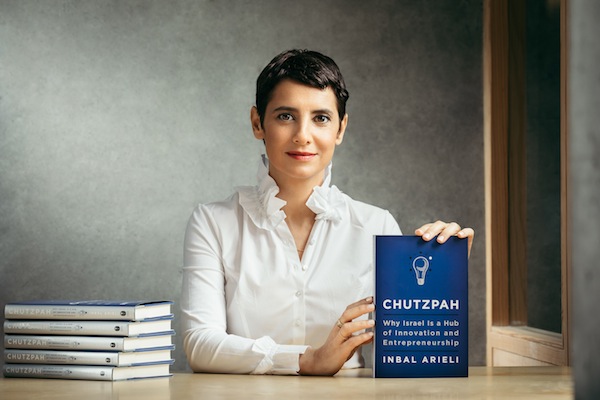
Inbal Arieli recently published the book Chutzpah: Why Israel is a Hub of Innovation and Entrepreneurship. (photo by Micha Loubaton)

Inbal Arieli has always been fascinated by what motivates and drives people, as well as what blocks their paths. “Throughout my career, which was mainly as a business executive, I always kept an eye on the human factor,” Arieli told the Independent. “And so, the businesses I started were somehow all related to that.”

Arieli, who is also a lawyer, is the owner and co-chief executive officer of Israeli start-up accelerator Synthesis. The company provides leadership assessment, as well as business training and development, in Israel, Canada and the United States.

“It is about the effect of the most critical skills that I think anyone should have today,” said Arieli about her recently published book Chutzpah: Why Israel is a Hub of Innovation and Entrepreneurship. “These are, according to the World Economic Forum, the skills which are required in the future, for anyone, regardless of your profession or future position. These are basic life skills – of critical thinking, decision-making, taking on initiative, etc., etc. There’s a long list of soft skills. The book is about these skills.

“What’s still interesting to me is, when looking at these skills, thinking about the future – the future of my kids, the future of the entrepreneurs here in Israel, the future of the job market in the world – about how can one practise these skills.

“The book shows the journey of a typical Israeli child from a very young age, as young as 3 or 4, until after military [age], young adult.”

In Chutzpah, Arieli shows how, in the five stages of childhood – infancy, childhood, adolescence, military service and then the big trip after the military – Israeli culture and society have produced principles, a framework and settings to foster these skills.

The book is not about Israel in and of itself. It is designed to help readers develop their own set of skills using the Israeli experience as an analogy.

Chutzpah (audacity), an ingrained trait, is very much nurtured in Israeli kids from a young age, said Arieli.

“From a very young age, chutzpah comes into play everywhere and anywhere,” she said. “Most of those skills, Israeli education and mindset … I think of them like muscles we all possess … only here, in Israel, we have access to the best gyms to practise these muscles.

“When you play at the playground, at age 3 or 4, the fact that you stand for your own opinion and find your own way of using the slide – an example I give in the book – that, in a sense, is a little bit of chutzpah. You don’t necessarily follow guidelines or practices. You bring your own personality [into your decisions and actions] at a very, very young age. So, it starts then, and then it fills up as we grow up here.”

Arieli sees Israeli society as being very open to giving freedom to everyone’s chutzpah – encouraging kids to exercise their chutzpah muscle, to be risk-takers, to stand out from the crowd, encouraging individualism along with a strong sense of collectivism. “Definitely, the framework that exists here, the environment, so many social structures are helping the muscles to remain developed and strong,” she said.

Chutzpah can be viewed as either negative or positive, and can be used in a positive or negative way. In Hebrew, one can differentiate between the two, depending on where the accent is placed. Arieli does not think it is important to differentiate between the two concepts of chutzpah. Rather, she contends that, just like any other muscle, the use of it needs to be calculated.

“Chutzpah is not a button you can press on or off,” she said. “It’s a mindset. In the context of innovation or entrepreneurship, I think it’s a very positive thing. And so are the other skills, ideas or principles spoken about in the book. I think it’s all a matter of finding the right balance between using them or not using them, and when to use them. What’s right for certain stages is less relevant for other stages.

“More than anything, I think it’s the combination of having these skills along with other skills is what’s optimal. But, I also think it’s very challenging to create an innovative society or an innovative team or group of people without allowing them to have a little bit of chutzpah.”

According to Arieli, just teaching kids how to work in today’s job market is a recipe for failure, as we have little knowledge of what work will even look like in their generation. The one and only thing we know for sure is that the future job market is uncertain. As such, the only way to prepare children is to equip them with the ability to be highly innovative and creative thinkers, capable of taking on initiatives by shaking things up and changing things.

“I wish for my kids that they will have as much chutzpah as possible when thinking about their future,” said Arieli. “They’ll have to reinvent themselves during their career several times and I want them to be proactive in that.”

Another trait Arieli talks about in Chutzpah is balagan (mess or chaos).

“Anyone who has visited Israel knows what I’m talking about – be it traffic, on the playground, in restaurants – everything is really chaotic here,” said Arieli. “But, that chaos, balagan, propels us toward new order, allowing us to rise every time from that balagan.”

Another factor Arieli discusses in her book is teamwork and “how Israeli society, while sometimes divided, at its core, has a galvanizing mechanism rooted in survival, through our culture … what we endured as a people and our mandatory army service … all of which unite us like no other nation on earth.”

For more information about Arieli or her book, visit inbalarieli.com.

Rebeca Kuropatwa is a Winnipeg freelance writer.

Format ImagePosted on October 11, 2019October 11, 2019Author Rebeca KuropatwaCategories BooksTags business, Chutzpah!, entrepreneurship, Inbal Arieli, Israel
הרפר : לעשות עסקים בישראל

הרפר : לעשות עסקים בישראל

תל אביב (Eurovan)

ראש ממשלת קנדה לשעבר מנסה לעשות עסקים בישראל – חלק ג’

מכל הלקוחות והפעילויות שאני מעורב בהן, אולי אין דבר טוב יותר מאשר שילוב כמה תחומי עניין שהיו לי. קודם כל הקרבה של הממשלה שלנו לישראל בזמן כהונתי, שנית העניין שלנו בטכנולוגיה וחדשנות – השקענו זמן רב בקידום תוכניות קנדיות ובנוסף, בתחום המסחר חלק מהמשימה שלי בתפקיד הייתה להרחיב את רשת המסחר של קנדה. כך מציין ראש ממשלת קנדה לשעבר, סטיבן הרפר, שביקר בישראל לאחרונה. הוא רואיין לעיתון “גלובס”. כשנכנסתי לתפקיד היו לקנדה רק חמישה הסכמי סחר, אחד מהם עם ישראל, וכשעזבתי את התפקיד כבר היו לנו חמישים ואחד הסכמים. אבל גם ההסכם עם ישראל היה מיושן וכלל רק מגוון צר של סחורות, ולכן עדכנו את ההסכם הזה.

אחד הדברים שהטרידו אותי במהלך הכהונה היה שזרם הסחר, השירותים וההשקעות בין קנדה וישראל עדיין קטן. זאת למרות המאפיינים של הכלכלה הישראלית ובפרט ההובלה הטכנולוגית שלה, ולמרות המאפיינים של הכלכלה הקנדית והעובדה ששתיהן מתקדמות ובשתיהן יש קהילה יהודית גדולה והסכמי סחר. לכן עדכנו את ההסכם למודרני יותר כדי לסייע לתקן את זה. אבל כמובן שגם חיפשנו הזדמנויות כדי להגדיל באמת את הסחר והפעילות העסקית בינינו ובמיוחד לנצל את ההתקדמות של ישראל בתחום הטכנולוגי.

אני רוצה לראות טכנולוגיה ישראלית מגיעה לקנדה ואני רוצה שקנדים ינצלו את הזדמנויות הרווח בתחום הזה. גם בישראל רוצים למצוא הזדמנויות לגדול ולהיכנס לשווקים חדשים בצפון אמריקה. דרך אגב אני חייב לציין שבזמן כהונתי עודדתי שיתוף פעולה צבאי מוגבר עם ישראל – מן הסתם מטעמים של מדיניות חוץ – אבל הדבר בנה הרבה מהגשרים הללו. שיתופי הפעולה היו יותר בצד המודיעיני, וכמובן צוותים שהחליפו ביניהם מידע ושיטות עבודה.

התוצאה הכי טובה שיכולה להיות לכל הדברים האלה היא מערכת שווקים גלובלית שבאמת משולבים זה בזה, והפריה הדדית ברחבי העולם. אם נשאיר בצד את הדמויות הספציפיות, את המדיניות ואת הממשלות, המציאות היא שזהו אזור שבו סביר שיקרה תהליך שברמה מסוימת תהיה התפצלות לשניים.

אנחנו מדברים על התחום הביטחוני, שהוא אינטרס של העולם הסיני והעולם האמריקאי, אבל אנחנו חברות חופשיות ודמוקרטיות ואנחנו יודעים עד כמה הציבור מודאג מעניינים של הפרת פרטיות ושימוש לרעה בדאטה. אפילו בהקשר של הטכנולוגיות המסחריות הקיימות – סין היא מדינת מעקב, וזה לא שהיא לא מציעה מוצרים מסחריים – אבל כל מהלך ההצטיידות של מגזר הטכנולוגיה שלה הוא לכיוון מעקב, במסגרת האינטרס של ביטחון המדינה.

לכן יש בעצם שני מודלים. אנחנו לומדים מהצבא ומהמודיעין ומהיכולות של ביטחון לאומי, ומבצעים התאמה למטרות תאגידיות מסחריות. אלה מטרות הגנתיות באופן טהור, יש להדגיש, אף פעם לא התקפיות, לחלוטין במסגרת החוק ובמסגרת מה שאנו מחשיבים הגנה נורמלית של הפרטיות. אלה שני מודלים שונים וקשה מאוד לשלב ביניהם. אנחנו רוצים לוודא שכל דבר שמפותח ייעשה במסגרת של חברה דמוקרטית וחופשית ובמסגרת של שימוש מסחרי. זה האינטרס של חברות דמוקרטיות וחופשיות כמו קנדה וכמו ישראל.

הרפר ושות’ היא חברה קטנה אך בעלת פעילות גלובלית. אנו עושים עסקים בעולם ואנו עושים עסקים גם בסין, אך אנו עושים זאת בזהירות. זה חשוב שיהיו קשרים כלכליים ומסחריים עם סין, זה טוב לעולם בטווח הארוך. אז אמנם מדובר על קשרים עסקיים, אך כאלה שנעשים למטרות שעולות בקנה אחד עם האינטרס הלאומי הרחב.

Format ImagePosted on October 10, 2019July 2, 2020Author Roni RachmaniCategories עניין בחדשותTags business, Israel, Stephen Harper, ישראל, סטיבן הרפר, עסקים
עידן השיבוש

עידן השיבוש

ראש ממשלת קנדה לשעבר סטיבן הרפר, 2011. (flickr.com)

ראש ממשלת קנדה לשעבר מנסה לעשות עסקים בישראל – חלק ב’

ראש ממשלת קנדה לשעבר סטיבן הרפר מציע לתת מענה לזרמים שהעלו את טראמפ לשלטון – חוסר הביטחון התעסוקתי והחשש מהגירה – כך שכדי לזכות בבחירות, המפלגה הרפובליקנית לא תהיה תלויה במועמדותו של כוכב טלוויזיה מגלומן. הרפר שביקר לאחרונה בישראל רואיין לעיתון “גלובס”.

הספר שכתבתי לאחרונה הוא בדיוק על כך. אנו חיים בתקופה שנקראת עידן השיבוש. בין אם זה שיבוש טכנולוגי כפי שאנו עושים כאן בקרן ובין אם זה שיבוש פוליטי רחב יותר או שינוי של ערכים חברתיים, ויש הרבה ממה להיות מודאגים, אבל אני מאמין גדול שאנו חיים בזמנים הכי טובים בהיסטוריה ואנו חיים בקנדה ובישראל שהם שניים מהמקומות שהכי טוב לחיות בהם. ועדיין אני חושב שיש כל סיבה להאמין שלמרות הלחצים, הסכנות והסיכונים לילדים שלנו, להם יהיו הרבה יותר אפשרויות וחיים הרבה יותר טובים מאשר שלנו – שהם כבר חיים טובים למדי.

היכן זה נוגע לטכנולוגיה? הרבה אנשים לא יודעים זאת אך לפני זמן רב מאוד הייתי מתכנת. החינוך הפורמלי שלי היה ככלכלן אבל לימדתי את עצמי תכנות. אחד הנושאים שעולים בשיחות על טכנולוגיה זה כל התחזיות על הדברים הנוראים שעלולים לקרות, כולל מיליונים שיאבדו את מקומות עבודתם. ביליתי זמן רב בלימוד ההיסטוריה של הכלכלה והמחשבה הכלכלית. משחר קיומה של המערכת הקפיטליסטית בסוף המאה השמונה עשרה, בכל דור ודור, כמה מהמוחות הטובים ביותר חזו שהגל הבא של הטכנולוגיה יהרוס את האנושות ויגרום לכולם לאבד את עבודתם. דרך אגב, את אחת התחזיות הללו השמיע ג’ון מיינארד קיינס, שסבר בתחילה שהמיתון הוא תוצאה של שינוי טכנולוגי, ואני יכול להמשיך עם הרשימה הזאת. כולם באיזשהו שלב טענו כך.

ההוכחה האנקדוטלית שלי לכל אותם אנשים שמודאגים מאיבוד מקומות העבודה – הביטו על כל תחומי הכלכלה, על כל המקומות בעולם שבהם החדשנות הטכנולוגית נמצאת בחזית – אלה המקומות שבהם מקומות עבודה חדשים נוצרים, ובאופן כמעט בלתי נמנע בכל המקומות הללו נוצר מחסור עצום בעובדים. היכן שאין חדשנות או שקיימת התנגדות לחדשנות – יש אבטלה עצומה. כל האפשרויות שעומדות בפנינו, גם בתחום העבודה אבל גם בתחום איכות החיים, כולן ניצבות לצד החדשנות הטכנולוגית. שם טמון העתיד – לא רק של המסחר אלא גם של הכוחות הדיפלומטיים והצבאיים.

עם זאת, האם קיים תסריט שבו הטכנולוגיה יכולה לגלוש למקומות לא רצויים? בהחלט. אבל אין סיבה שהדבר יקרה בהכרח. אין סיבה שלא להאמין שאם ננהג אפילו חצי בהגיון, אזי לא רק שהגל הבא של הטכנולוגיה יהפוך את חיינו לטובים יותר – אלא שהוא גם ייצור מיליוני מקומות עבודה חדשים שלא היו קיימים קודם לכן. אגב, וורן באפט אמר שזה שטכנולוגיה מצליחה מסחרית, לא אומר שמישהו מרוויח ממנה הרבה כסף. לכן הסיבה שחברתי לאנשים החכמים הללו מהקרן שהיא לא רק שאנחנו רוצים לרכוב על הטרנד, אלא שמשקיעים גם יוכלו לשים כסף בבנק.

הרפר מסביר איך זה משתלב עם עסקיו האחרים: אחרי שעזבתי את הפרלמנט לפני כשלוש שנים, אני וקבוצה מהסגל שלי ניסינו לחשוב מה יהיה הצעד הבא ואילו דברים נרצה לעשות. הייתי בר מזל שרבים מהבכירים שליוו אותי הצטרפו אליי במיזם הזה. מה שהחלטנו שאנו רוצים לעשות זה לשלב את הניסיון שלנו ואת רשת הקשרים הגלובלית כדי לסייע ללקוחות – לאו דווקא קנדיים – למצוא מיזמים רווחיים.

Format ImagePosted on October 2, 2019September 26, 2019Author Roni RachmaniCategories עניין בחדשותTags business, Israel, Stephen Harper, ישראל, סטיבן הרפר, עסקים
Saving audio memories

Saving audio memories

Stan Shear has been on countless stages with figures Benjy, Jasper and his original puppet, Danny, now retired at the Vent Haven Museum in Fort Mitchell, Ky. (photo from Stan Shear)

To walk into Stan Shear’s studio at his Oakridge home is to take both a step back and a step forward in time. A portrait of a penny-farthing hangs on the wall, old manuscripts and books line the shelves, yet in among the memorabilia is the technology he believes will connect the past with the future.

Shear is launching My Audio Memories (myaudiomemories.com), a project in which he takes recordings – some made in his studio, others that may have been passed down within a family – and combines them into a high-quality MP3 file on a USB stick.

His service is directed at private individuals and, because it is based in his home, he can create recordings at a cost far below those of commercial services.

The process is straightforward but requires a seasoned hand to deal with the production side, which, with decades of musical and engineering experience behind him, Shear offers.

First, you would go to his studio with stories you would like to record, along with any other audio files or recordings you might already have. These are then mixed together with various inputs and accompaniments – i.e., music and other sound effects – to capture the perfect backing for the end result. Finally comes the mastering, the stage that distinguishes a professional from an amateur recording.

“I can bring a recording to the highest level with the resources and experience I have to create a unique sound that will bring out all the hidden qualities of a person’s talents and make them come alive,” said Shear.

The cost of an individual project will vary depending on the amount of production involved.

The man behind the sound

Born in Pretoria, South Africa, Shear was a well-known pianist in his younger days. He appeared on SABC (South Africa’s national radio) on several occasions and, at the age of 19, performed the Beethoven C minor Concerto with the Johannesburg Symphony Orchestra. Playing in concert halls around the country during his youth, he later became a licentiate in music.

At the same time, he studied electrical engineering at the University of Johannesburg, earning his master’s and doctor’s degrees, and specialized in information systems, working mainly on hospital communications systems. He would later teach information systems at the University of Cape Town until his retirement.

Shear, who came to Vancouver in 2004, remains a versatile entertainer and keeps a busy schedule. He plays a number of other musical instruments – guitar, harmonica, piano accordion and ukulele – and has had an active career as a singer, performing in solo concerts and singing with choirs.

In 1976, while still in South Africa, he became fascinated with ventriloquism after discovering a book at the library. Since then, he has been on countless stages, including the International Puppet Festival in Israel, with figures Benjy, Jasper and his original puppet, Danny, now retired at the Vent Haven Museum in Fort Mitchell, Ky. (See stanshear.com.)

He also has been officiating as a chazzan for 40 years, both in South Africa and Canada.

Together with his wife Karon, he is a practitioner of auditory integration training (AIT), a method for improving listening and cognitive skills. Their processes are used to help overcome learning disabilities and improve foreign language skills.

Shear has woven his own story into his new project. He divides his account into three periods, starting with his early, formative years, devoted to growing up, schooling and other events that shaped his life. This is followed by his post-secondary education and early career, and includes extracts from concerts and broadcasts.

The third stage comprises Shear’s mid-career to the present, a “mature” but nonetheless very fruitful time, with musical performances, ventriloquist shows and the My Audio Memories project, as well as his positive views on the future, as he sees it, in his senior years.

“I am following this up with a separate project of my memories of my parents, including recordings that I’m fortunate to have of my mom and dad and members of their families talking, singing and playing the piano,” said Shear. “My mom’s family were very musical and I’m lucky to have these recordings made on an early tape recorder by my dad, and transcripts of my dad’s memoirs, which he wrote.”

Sam Margolis has written for the Globe and Mail, the National Post, UPI and MSNBC.

Format ImagePosted on September 20, 2019September 17, 2019Author Sam MargolisCategories LocalTags business, history, memory, Stan Shear, ventriloquist
לעשות עסקים בישראל

לעשות עסקים בישראל

סטיבן הרפר (wikimedia)

ראש ממשלת קנדה לשעבר מנסה לעשות עסקים בישראל – חלק א’

יש לנו סינון די פשוט. כל מי שעובד איתי, עבד איתי שנים ארוכות בממשלה בצורה כזו או אחרת. אני חושב שהייתי ידוע גם בקרב תומכיי וגם בקרב מתנגדיי, בתור מי שהייתה לו אג’נדה ברורה וסט מוגדר של ערכים פוליטיים, לטוב ולרע. המבחן הפשוט שבו אנו משתמשים בכל מה שאנו עושים הוא האם זהו סוג העסקים שאני בתור ראש ממשלה הייתי רוצה להיות קשור אליהם ושהייתי מוכן להתייצב ולצאת בהצהרה רשמית לגביו, שהייתי רוצה להיות מקושר אליו ושהייתי רוצה לראות שהוא קורה. אם הוא לא כזה – בלי קשר אם הוא רע או לא חוקי או וואטאבר – אז זה לא סוג העסקים שנחפש.

כך הגדיר ראש ממשלת קנדה לשעבר סטיבן הרפר (בן השישים) את גבולות הגזרה המוסריים שלו בעשיית עסקים, בין היתר עם גופים סיניים, בראיון לעיתון “גלובס” שנערך בעת ביקורו האחרון בישראל.

הרפר כיהן שלוש קדנציות רצופות כראש ממשלה ימני שמרני, מאלפיים ושש ועד שהודח בבחירות האחרונות על ידי ראש הממשלה הליברלי הנוכחי, ג’סטין טרודו. הרפר הוא נוצרי אוונגליסט שנחשב תומך נלהב של ישראל וביקר בה כמה וכמה פעמים. בביקור האחרון כרה”מ נשא נאום במליאת הכנסת שבו אמר בין השאר את המילים הנחרצות: זו מסורת קנדית לעמוד לצד מה שעקרוני וצודק ללא קשר למה נוח או פופולרי. עמידה לצד ישראל היא למעלה מצו המוסר, היא גם בעלת חשיבות אסטרטגית וגם עניין של האינטרסים ארוכי-הטווח שלנו. עבור אומות רבות עדיין קל יותר לראות בישראל שעיר לעזאזל מאשר לחקות את הצלחתה.

לאחר התבוסה בבחירות הקים הרפר את את הרפר ושות’ – חברת ייעוץ שמעמידה לרשות לקוחותיה את רשת הקשרים שלו.

החברה מסייעת לתאגידים שפועלים בסביבה בעלת סיכון פוליטי או גיאו־פוליטי, בנגישות לשווקים ופיתוח קשרי ממשל. עם זאת, כמו ראשי ממשלה ונשיאים אחרים הוא מוסיף להיות מעורב בפוליטקה הבינ”ל. הרפר עומד בראש ארגון “האיחוד הדמוקרטי הבינלאומי” – ארגון גג של מפלגות מרכז-ימין, המקביל לאינטרנציונל הסוציאליסטי, מהצד הימני-שמרני, ומסייע למפלגות שמרניות אחיות להיבחר בארצותיהן. מזה כשנה כולל הארגון גם את מפלגת הליכוד מישראל.

בראיון דיבר על הצורך של יזמים צעירים ביד מכוונת. זה לא הדבר היחיד שאנו בהרפר ושות’ עושים אבל רבים מלקוחותינו הן קרנות השקעה, חלקן בתחום הטכנולוגיה, והסיפור פה בישראל שונה. מבלי להעליב, רוב הזמן אתה פוגש בניעשרים ושלושים חכמים וכו’, אבל אתה יודע – יש להם עוד הרבה מה ללמוד בחיים. זו חלק מהסיבה שהם מעסיקים אותנו. הם זקוקים לפרספקטיבה הרחבה. אך לעומת זאת, במקרה שלנו, כשאנו מתעסקים עם ישראלים מנוסים יוצאי מערכת הביטחון הם בשלים ומקצועיים, ואנחנו עובדים איתם כדי להפיק הזדמנויות עסקיות, אז זה בהחלט תחום מרתק.

עניין שמוסיף הרפר לגלות בפוליטיקה העולמית לאחר פרישתו קיבל ביטוי משמעותי גם עם פרסומו של הספר שכתב בשם “כאן ועכשיו: פוליטיקה ומנהיגות בעידן השיבוש” – משחק מילים באנגלית אותו ניתן לקרוא גם כ”ימין כאן וימין עכשיו”. הספר מנתח את הסיבות לעליית הפופוליזם ובראשן בחירותו של נשיא ארה”ב, דונלד טראמפ והברקזיט בבריטניה. את הספר, שאותו הרפר עצמו מתאר כמדריך למדינאות שמרנית בעידן הפופוליסטי, תיאר השבועון הקנדי “מקלינז” כמעין מתכון לשיפוץ המצע הרפובליקני בארה”ב, שבו הוא מתרה בהנהגה הרפובליקנית למצוא דרכים לשמור את הקולות המתנדנדים שהעלו את טראמפ.

Format ImagePosted on September 18, 2019September 17, 2019Author Roni RachmaniCategories עניין בחדשותTags business, Israel, Stephen Harper, ישראל, סטיבן הרפר, עסקים
The courageous beach queen

The courageous beach queen

Lea Gottlieb at work. (photo from Lea Gottlieb Archive via Design Museum Holon)

Summertime … bathing suit season. As a child, I fondly remember our family trips to Israel. Among all the memories is the treat of a scrumptious falafel before we went off to the Gottex bathing suit factory, where my mother indulged my two sisters and me with the colours and styles from Lea Gottlieb’s latest swimwear collection.

Born Lenke Lea Roth on Sept. 17, 1918, in Sajószentpéter, Hungary, Gottlieb was raised in poverty. Before the Second World War, she worked as a bookkeeper in a company that produced raincoats. There, she fell in love with Armin Gottlieb, the owner’s son; the two married and started a family.

During the Holocaust, Gottlieb’s husband was imprisoned in a labour camp. Gottlieb and their young daughters, Miriam and Judith, went into hiding and were saved by a family who sheltered them in a pit behind their home beneath trees and flowers.

After the war, the family reunited and tried to rebuild what they had established in the past, moving to Czechoslovakia to start anew. However, staying in Europe, with its continuing antisemitism proved impossible for the Gottliebs and, in 1949, they moved to Israel.

They landed in the country with pretty much nothing but the clothes on their backs and Gottlieb’s gold wedding band. Turning this item into cash, as well as borrowing some money, she purchased a sewing machine and enough fabric to start making raincoats. It didn’t take long for Gottlieb to understand that a line of raincoats in a place that has mostly sunshine would not make for a fruitful future – rather, bathing suits would prove a more promising venture. Merging her name, Gottlieb, with the word textile, Gottex came into being.

Gottlieb’s Hungarian cultural roots remained evident. She maintained her distinct accent and served Hungarian cuisine in her showrooms. She celebrated her survival by incorporating flower motifs into her signature designs, and, with her choice of colours, she expressed her love of her new home, Israel – aqua for the Mediterranean, yellow for the dessert, pink for Jerusalem stone and greens, the Galilee. From swimwear came a line of trousers, caftans and tunics, as Gottlieb wanted her creations to be worn at the beach or by the poolside, for a drink at the bar and on the dance floor.

photo - Gottex Israeli fashion house, Tel Aviv, 1961
Gottex Israeli fashion house, Tel Aviv, 1961. (photo from wiki commons)

During the peak of Gottlieb’s career, her work was admired by many leading ladies. Elizabeth Taylor, Princess Grace, Nancy Kissinger and Brooke Shields were among her many fans. A friendship formed with one special client, the late Princess Diana, who was given private showings in Buckingham Palace each season.

Gottlieb and her daughter Judith were the design team, based in Israel, while her husband oversaw the financial side and daughter Miriam ran the showroom in New York. Together, the family built a global fashion house and Gottex became the top swimsuit line in the United States, with the most sought-after models walking in their shows and being featured on the cover pages of international fashion magazines.

Gottlieb’s achievements included numerous fashion awards, earned both in Israel and elsewhere. A highlight of her career occurred at Yad Vashem, the World Holocaust Remembrance Centre, in Israel. There, Gottlieb was part of an honourary exhibition, called My Homeland, which acknowledged Holocaust survivors’ essential role in contributing to Israel through cultural, economic and national security development.

In 1995, the loss of Gottlieb’s husband, the financial pillar of the company, was a devastating blow. She was forced to sell Gottex in 1997. As part of the sale, she had to sign a non-compete agreement, which prohibited her from designing for eight years. And more loss was to come. In her daughter Judith’s final days of battling cancer, in 2003, she apparently implored her mother to continue with her passion of design and start again. But, even when the company did come up for sale, Gottlieb couldn’t afford to buy it back. “I lost the two most important things in my life, my daughter Judith and my life’s work,” said Gottlieb after her daughter’s death.

But, at 85 years old, Gottlieb managed to reinvent her career. With the support of a design team, she launched a new line of swimwear under her own label, Lea Gottlieb. The industry had become much more competitive since she created Gottex and, relatively soon after she had restarted, Gottlieb closed production and retired.

Gottlieb passed away in 2012, at the age of 94. She left behind a legacy in her beloved homeland, as well as in the eyes of veteran and aspiring designers around the world.

Ariella Stein is a mother, wife and fashion maven. A Vancouverite, she has lived in both Turkey and Israel for the past 25 years.

Format ImagePosted on July 19, 2019July 18, 2019Author Ariella SteinCategories IsraelTags business, fashion, Gottex, Lea Gottlieb, women
Making change her business

Making change her business

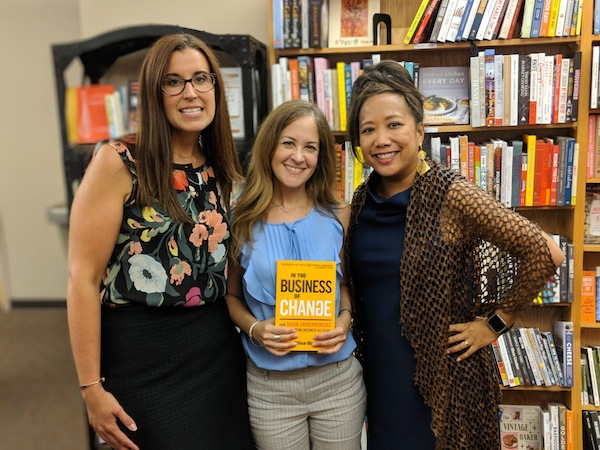
Elisa Birnbaum, centre, with Laura Zumdahl of Bright Endeavors, left, and Maria Kim of Cara Chicago. (photo from Elisa Birnbaum)

Toronto-based Elisa Birnbaum, editor-in-chief of SEE Change magazine, aims to inspire and give hope in many ways. Her book In the Business of Change: How Social Entrepreneurs are Disrupting Business (New Society Publishers, 2018) is but one of those ways.

“I’m a lawyer by training, but was always a writer on the side, enjoying writing and storytelling,” said Birnbaum, who was born and raised in Montreal in an Orthodox Jewish family. “I decided to try writing out for a little bit and to go back to law after. That was 15 years ago. I never went back to it.

“I was writing a lot about the nonprofit and charitable sector in Canada, as well as in the U.S., and I was also writing a lot about business, a strong interest of mine, too. I noticed how there was a melding of the two – how a lot of challenges in the nonprofit and charitable sector … how they could be helped through business and through business savvy…. So, when I saw what social enterprise was all about and how it was using business to solve social challenges, I realized the importance of that. I became really intrigued and interested. It was an area that, I thought, ‘Hey, this is something I really want to explore further.’”

Birnbaum started pitching stories about social enterprises to any editor who would listen. While some of her work went out via mainstream media, Birnbaum felt more was needed, so she co-founded SEE Change, which is devoted to telling the stories of social and environmental enterprises.

“I thought they symbolized a new way at looking at business,” she told the Independent. “I really felt this was the future, with how we work with business and how communities can tackle social challenges through business, and these types of savvy-ness and skills.”

After years of publishing the magazine, Birnbaum wanted to put together a book of such stories, both to delve more deeply into the phenomenon and, hopefully, to inspire and teach readers how to take on the task of starting a social enterprise.

“A lot of times, I’d get some young people or even older people who were interested in social entrepreneurship themselves, and they’d like advice and tips, and were constantly looking for more information from anyone who’d done it before,” she said. “So, I thought, I could also provide lessons learned, tips, advice and resources … so, a bit of storytelling, as well as a resource for those who are starting up or looking to start their own.”

As far as the response to the book so far, Birnbaum said she has been asked by schools and organizations to speak about the topic. “There were people who had never heard about it before and are now really inspired by the storytelling, which is great,” she said. “There are other people…. I was at a couple of universities recently, and some students there said they picked up the book and were now interested in starting their own social enterprise.”

According to Birnbaum, a very broad definition of a social enterprise is a business, whether nonprofit or for-profit, that has a social or environmental mission at its core, as opposed to a business that has profitability and sustainability at its core. The unique aspect of social entrepreneurship, she said, is that it approaches business in a new way.

In her book, Birnbaum makes a point of highlighting a large array of social enterprises from around the world, including a few in British Columbia. For example, Saul Brown’s Saul Good Gift Co. (itsaulgood.com) creates gift boxes filled with locally made artisan food that people can give their loved ones across Canada, and Reena Lazar’s Willow (willoweol.com) helps with end-of-life planning.

photo - Fresh Roots offers students experiential learning opportunities.
Fresh Roots offers students experiential learning opportunities. (photo from Fresh Roots)

Marc Schutzbank, director of Fresh Roots (freshroots.ca), grew up in the United States and moved to Vancouver to finish his education at the University of British Columbia 10 years ago on a Fulbright scholarship, looking at the economic viability of urban farming. This line of study led him to an organization called Plant to Plate, in Pittsburgh, Penn., where he attended University of Pittsburgh.

“As part of my research, I was looking at urban farms in Vancouver – if they were growing, how much food they grow, who they’re sharing it with,” Schutzbank told the Independent. “I have a finance degree, so I was looking at if they were making any money. As I was doing that, there were a couple of people who were doing work in the social space. So the goal wasn’t to grow and sell food; the goal was to share it or to reduce barriers to employment. And so, as I was getting to know them, Fresh Roots was moving from backyards into school grounds.”

One particular backyard caught Schutzbank’s attention. He wanted to know how much food was being grown in such a small space. He discovered, to his amazement, that this one backyard could feed three families. As they expanded to eight backyards, they could feed 35 families.

One of those backyards was adjacent to an inner-city elementary school with a rundown garden plot. The school invited Fresh Roots to develop the plot. As they did, the students, teachers and parents became increasingly interested. The teachers began using the garden as part of their curriculum, as a place to build learning capacity.

“It turns out that, when kids are outside growing food, their academic confidence increases,” said Schutzbank. “They are able to find some success, and this is often in places with kids that are having a hard time finding success inside the classroom [in straight rows]…. Learning like that doesn’t work for everyone.”

photo - Marc Schutzbank, director of Fresh Roots
Marc Schutzbank, director of Fresh Roots. (photo from Fresh Roots)

Another benefit of this was that bullying decreased at the school, as kids had a positive physical outlet. As well, Schutzbank found that, as the saying goes, “If you grow it, you eat it.”

Other schools picked up on what was happening and asked Fresh Roots to do the same at their schools. Fresh Roots is now at four high schools and one elementary school.

Fresh Roots also started a salad bar program for students – twice a week, all of the students get to eat the produce from the garden.

“In Canada, we are the only G7 nation that doesn’t have a federal meal program,” explained Schutzbank. “It’s a bit crazy that Canada doesn’t have that. All those kids without lunches are hungry, regardless of how much food is at home. It’s really critical for learning, to have food…. So, at Fresh Roots, our vision is good food for all – so everybody has access to healthy land, food and community.”

In addition to the food they grow, Fresh Roots supports and encourages teachers to have classes outside in the garden. “They need to touch, taste and feel,” said Schutzbank of the students. “Those are really critical parts of our senses and a really important way of learning.”

As well, Fresh Roots provides employment – especially in the summer – for youth who are struggling.

Schutzbank said you can’t grow food without eating and sharing it, so Fresh Roots’ philosophy is “around sharing all the food back through the programs and everything we are doing.”

Rebeca Kuropatwa is a Winnipeg freelance writer.

Format ImagePosted on April 12, 2019April 10, 2019Author Rebeca KuropatwaCategories Books, WorldTags business, Elisa Birnbaum, Fresh Roots, Marc Schutzbank, social enterprise, tikkun olam
Strategies for LinkedIn

Strategies for LinkedIn

Organizer Debbie Rootman, left, and guest speaker Janice Porter at Temple Sholom Sisterhood’s networking event Feb. 28. (photo by Baila Lazarus)

If you’re a decision-maker in business, and especially if you’re a small-business owner or entrepreneur or are looking for a job, LinkedIn should be one of the main tools in your arsenal.

That was the message from LinkedIn trainer Janice Porter, who spoke at a business networking event sponsored by Temple Sholom Sisterhood on Feb. 28.

“LinkedIn is about relationships,” Porter told the group. “It starts with having a fully optimized profile that will have more people see it. But it’s about building connections. Even a good profile won’t be seen if you don’t have any connections.”

Porter said the first step, however, is to determine if the platform is right for you.

“It’s not for everybody,” she said. “If you’re looking for a job, you should be on LinkedIn. But, if you’re in business, if you’re promoting something, you have to know whether your target audience is on LinkedIn.”

LinkedIn, a professional networking platform, was launched in 2003. It has 590 million members in 200 countries. Users create profiles and then reach out to other users to connect online and possibly take the business relationship into the “real” world. Such relationships can lead to direct sales, referral partners, strategic alliances and, if you’re on the job hunt, interviews.

At the Temple Sholom event, Porter outlined five steps that would help users get the most out of the social media platform.

  1. Have an authentic profile. Having a well-done, completed profile allows a user to be seen as an authority. As well, Porter pointed out, if you have a strong LinkedIn profile, it will come up high on Google search results. Be sure to include a good photo. People are 14 times more likely to look at profiles that have a photo.
  2. Create an optimized headline. This is the first line people see when they are searching. The headline should include a benefit positioning statement – what you do and what the result is. For example, Porter’s headline says, “LinkedIn trainer, relationship marketing specialist, networking coach, increasing qualified leads online & nurturing them into sales offline.”

“Most people just say ‘my job at my company,’ which focuses on the company rather than the person,” Porter explained. “Usually people search for the type of job that you do, so putting your company name in is wasting space. So rather than say, ‘Mortgage broker at …,’ say ‘Mortgage broker with specialty in.…”

  1. Be visible. Having a profile is not enough, said Porter. Users need to be active by writing and sharing new content, and commenting on other members’ posts. “The more you engage with other people, the more people will want to connect with you,” she said.
  2. Be personal. When reaching out to connect with other members, customize the connection request. Put in a sentence explaining why you are reaching out to this person.
  3. Make new connections. Porter recommends that users connect with five new people daily.

When asked if it’s worth it to buy a premium account on LinkedIn, Porter suggested starting with a free account because there are enough people you can connect to without the upgrade. However, if you really need to connect directly with certain C-suite employees or you feel a need to follow up on everyone who has looked at your profile, a premium account would make that easier. A third level – Sales Navigator – is particularly useful for those whose focus is selling products or services.

You can try the paid versions on a 30-day free trial, but Porter cautioned that, if you’re not interested in continuing, cancel the trial early. After 30 days, you get a bill for a year, not a month, she said.

Karalee Greer, an independent market partner with Monat Global, attended the event because she wants to be more active on LinkedIn. “Having a more complete and updated professional profile will help people find me on the site,” she said. “Also, by being regularly active and connecting with my target market potential, Linkedin will help me find people more suited for me to build relationships with. I feel my time will be better spent on this platform.”

Mortgage planner Deborah Burnstein said she attended the event not just for the guest speaker but for the networking opportunities. She was already familiar with LinkedIn before attending the event. “Now it’s about finding content to post,” she said.

Baila Lazarus is a Vancouver-based writer and principal media strategist at bailalazarus.com.

Format ImagePosted on March 22, 2019March 20, 2019Author Baila LazarusCategories LocalTags business, Janice Porter, LinkedIn, networking, Sisterhood, Temple Sholom
Playfulness and style

Playfulness and style

Ralph Lauren in 1978. (photo by Edgar de Evia)

Born 79 years ago, in New York, to Frieda and Frank Lifshitz, immigrants from Belarus, Ralph Lifshitz, better known as Ralph Lauren, has become a universal household name.

The youngest of four siblings clothed in hand-me-downs, the fashion legend never imagined becoming a designer – he did, however, yearn to be the next Joe di Maggio or Cary Grant. His favourite pastimes were sports, listening to the radio, watching TV and movies. And it is from these influences that his dream to design clothing came.

At 16, Lifshitz switched to the name Lauren after experiencing years of ridicule. At the same time, he embraced and embellished his own sense of style, buying oversized and rugged clothing from the army surplus store because he liked how they made him feel, and had an aspect of originality. His preference for military-style clothing predated his draft to the American army, in which he served two years. It was in the army that his respect for the uniform further developed and he incorporated the style into many of his subsequent designs.

In the years that followed, Lauren began working by day for a buying company while studying at night. It was during this period that he had the idea of making ties from scraps, and making and selling his unconventional ties turned into a profitable side business.

While working for men’s fashion house Brooks Brothers, Lauren tried to get them to sell his ties, but to no avail. Moving on to work for tie manufacturer Beau Brummell, an upscale men’s brand, Lauren’s potential started to be realized, as he acquired a “drawer” in their showroom of the Empire State Building to sell his flamboyant ties. In 1967, Lauren started the label Polo, the name reflecting his love of sports, and his creations’ international and sophisticated vibe. Lauren sewed on each label, together with his new bride, Ricky. He also made all the deliveries himself, to the likes of Neiman Marcus and Bloomingdales. During the first year, Polo made $500,000. The young Jewish boy from the Bronx’s design career was on its way.

By 1968, Lauren was making his own suits, which were, once again, offbeat; not what his colleagues were wearing. Lauren believes that fashion is all about playfulness, expressing one’s individuality and not conforming to one look. He has held this belief through his many years in the industry, and it has no doubt provided the foundation of what he has built into a multibillion-dollar empire.

photo - Maartje Verhoef walking the Ralph Lauren spring-summer 2015 fashion show
Maartje Verhoef walking the Ralph Lauren spring-summer 2015 fashion show. (photo by Christopher Macsurak)

Lauren’s classic innovations include making women feel that wearing a tuxedo was sexier than a gown; turning tailored men’s shirts unisex; and transforming American folk art (patchwork) into fashionable sweaters, coats and dresses, borrowing from cowboys’ attire the rich colour of turquoise, fringed jackets and boots.

Lauren’s talents did not end at the design table. He used the platform of advertising unconventionally, working with real people, not models, in ads that covered multiple pages to tell a story through his clothing’s many different looks and fabrics. This creative approach was developed in part with photographer Bruce Weber.

Lauren has outfitted Wimbledon players, won the Coty Award for both women and men’s wear, opened the first freestanding store in Europe by an American designer, and established a home collection. Other highlights include being the costume designer for Woody Allen and Diane Keaton in the Oscar-winning movie Annie Hall, and creating a men’s and women’s fragrance in 1978 that is still emblematic. Upon receiving a lifetime achievement award in 1992, presented to him by actor Audrey Hepburn, he said, “I don’t design clothes, I design dreams.”

Ricky, Lauren’s wife of more than five decades, is one of his muses. Her elegant and natural style has been a continuous inspiration for him and it is her sense of self that he tried to emulate in his clothing designs. Together, the couple built the Ralph Lauren brand not only as a fashion domain but as a family business, operated with their two sons and daughter.

In addition to his material and creative successes are Lauren’s contributions to philanthropic causes. Among them, Lauren and cancer surgeon Dr. Harold P. Freeman founded the Ralph Lauren Centre for Cancer Care in Harlem, N.Y., in 2000, with the resources of the Polo Ralph Lauren Foundation and the Memorial Sloan Kettering Cancer Centre. The residence, care and support facility’s mission is “to fight health disparities in the community … [and] become a beacon for quality, dignity and accessibility in cancer care.”

Ariella Stein is a mother, wife and fashion maven. A Vancouverite, she has lived in both Turkey and Israel for the past 25 years.

Format ImagePosted on November 30, 2018November 30, 2018Author Ariella SteinCategories WorldTags business, clothing, fashion, history, Ralph Lauren

Posts pagination

Previous page Page 1 … Page 4 Page 5 Page 6 Page 7 Next page
Proudly powered by WordPress