
For more cartoons, visit thedailysnooze.com.

Holiday treats for your pets
Chanukah-themed pet gifts can be found aplenty on the internet. Some examples? A bowtie for your dog, cat or ferret from moderntribe.com.

Pets are integral members of the family and there are many options to include your furry companion in Chanukah’s gift-giving celebration. Though most local pet stores will carry plush toys, chew bones and a variety of other treats for your pet, there are some truly cute and creative clothing and toys that are available via the internet – and which, if ordered soon, should make it in time for the holiday.
Moderntribe.com, a U.S. site, has a good selection of Chanukah-themed collars and leashes for your pet as well as plush toys including catnip-stuffed dreidels and gelt. For your cat and smaller dog, there are also Chanukah-themed bow ties and other clothing. Or perhaps a book titled How to Raise a Jewish Dog could be enjoyed by the whole family? The site has a section dedicated to such items.

Etsy.ca has both a Canadian and U.S. site and, in a similar way to eBay, allows vendors to post a variety of products for sale. What makes this site different is that most of the products are globally sourced and handcrafted by individual vendors. There is a great selection of Chanukah toys and gifts for your pet, especially on the U.S. site, though some of the vendors may not ship to Canada, so check that out first. A search of “Chanukah pets” on the site should bring up something your pet will enjoy. Etsy has a good selection of pet toys, T-shirts, hats and bandanas – including a dreidel-patterned harness outfit and double-sided bandanas that are also appropriate for your ferret!
Amazon.ca and Petsmart.ca are also good sites to browse because they both have shipping from Canada; but when using their search program make sure that you try a variety of spellings for the word Chanukah.
While it is a lot of fun to include our pets in the gift-giving tradition during Chanukah, it is also important to remember that the most important gift you can give your pet during this busy holiday season is your time. Time to exercise him or her, time to just show you return the love they give you every day of their lives.

It is also a time to be aware of the dangers that your pet may encounter at this time of year. Chocolate gelt can easily become accessible to dogs – and chocolate is very toxic for animals. Also, the temptation to treat your pet with the delicious food we humans indulge in at Chanukah can make them very sick. Latkes, with their onion component, can cause damage to red blood cells and the sugar and fat found in traditional doughnuts can cause digestive disorders in your pet. So, make sure your children know and show your love in other ways, perhaps with a stuffed singing dreidel, which can be found at multipet.com. It will be a hit with both dogs and kids, though after a few spins, you might be thankful that Chanukah, and the dreidel’s use, only comes once a year.
Leanne Jacobsen is a writer and longtime dog owner, as well as the director of sales at the Jewish Independent.

הזדהו עם הקורבנות פיגועי הטרור שפקדו את פריז
אזרחים של ונקובר הגיעו לבניין בו ממוקמת הקונסוליה הצרפתית ברחוב פנדר בדאון טאון, עמדו דקת דומיה בכניסה, הניחו זרים ותמונות של פריז, והדליקו נרות נשמה. (צילום: Roni Rachmani)
קנדיים מזדהים עם קורבנות פיגועי הטרור הקשים שתקפו את פריז
אזרחים רבים של קנדה הביעו זעם וכעס והזדהו עם הקורבנות פיגועי הטרור הקשים שפקדו את פריז, ביום שישי האחרון. יש שהגיבו באמצעי המדיה השונים ואילו אחרים שפקדו מוסדות צרפתיים או כאלה שמזוהים עם צרפת, ועמדו דקת דומיה לידם לזכר הקורבנות שניספו בפיגועים.
אזרחים של ונקובר הגיעו לבניין בו ממוקמת הקונסוליה הצרפתית ברחוב פנדר בדאון טאון, עמדו דקת דומיה בכניסה, הניחו זרים ותמונות של פריז, והדליקו נרות נשמה. פעילויות דומות התקיימו בכל רחבי קנדה. מבני ציבור רבים הדליקו נורות בצבעי הדגל הצרפתי ודגלי קנדה הורדו לחצי התורן.
רמת הכוננות הבטחונית בקנדה הוגברה והמשטרה הפדרלית (האר.סי.אם.פי) פועלת בשיתוף עם סוכנויות הביון והריגול הקנדיות, וסוכנויות משטרה אחרות, למניעת אפשרות של פיגועי טרור מקומיים. עם זאת בשלב זה לא התקבל שום מידע ממשי על אפשרות של פיגועי טרור בקנדה.
במקביל הוגבר הלחץ על ראש הממשלה החדש מטעם הליברלים, ג’סטין טרודו, לחזור בו מהחלטתו להפסיק ולהפציץ מטרות של דאע”ש בסוריה ועיראק. כידוע טרודו הודיע חד משמעית בקמפיין הבחירות שלו שאם יבחר לראשות הממשלה, הוא יחזיר את מטוסי חיל האוויר הקנדי הביתה, והצבא יתמקד רק באימון כוחות צבאיים מקומיים שנלחמים בדאע”ש. טרודו עוד הודיע שהממשלה תגביר את העזרה ההומנטרית למדינות ואזרחים שסובלים מהלוחמה במזרח התיכון.
אליפות העולם בכדורגל לנשים שהתקיימה בקנדה: הנבחרת נכשלה אך הקופה התעשרה
נבחרת הנשים הלאומית של קנדה בכדורגל נחלה כשלון צורב באליפות העולם המונדיאל, שנערכה בחודשים יוני ויולי בקיץ. עתה מברר כי מהבחינה הכספית המונדיאל הכניס לקופתה של קנדה סכום שיא של 493.6 מיליון דולר. הסכום כולל גם את המונדיאל לנשים על גיל 20 שנערך בחודש אוגטס אשתקד באדמונטון, טורונטו מונטריאול ומונקטון. ההכנסות משני הטורנירים היו גבוהות בשיעור של 46 אחוז המתחזיות המוקדמות שפורסמו בחודש פברואר אשתקד. הנתונים מתפרסמים על ידי ההתחדות לכדורגל של קנדה שנעזרה בחברת המחקר ‘סטים פרו’.
משחקי המונדיאל לנשים שהתקיימו בשש ערים: ונקובר, אדמונטון, ויניפג, אוטווה, מונטריאול ומונקטון. מספר הצופים בששת האצטדיונים הגיע לשיא מבחינת אליפות הנשים ועמד על 1,353,506. הצלחתה של נבחרת ארצות הברית בטורניר שבו היא זכתה, הביאה כמאה אלף אוהדים אמריקנים שחצו את הגבול לקנדה, לצפות במשחקים. אין ספק האמריקנים היוו את אחד הגורמים המשמעותיים בהכנסות הגבוהות של המונדיאל. גם אחוזי הצפייה במחשקים בטלוויזיה והשימוש במדיה החברתית בעת הטורניר שברו שיאים.
אורבנקורפ מטורונטו פרסמה טיוטת תשקיף להנפקת אג“ח בתקופה הקרובה
חברת אורבנקורפ (בבעלות אלן ססקין) הפעילה בתחום הנדל”ן בטורונטו פרסמה בימים אלה טיוטת תשקיף להנפקה ראשונה לציבור של אגרות חוב. ההנפקה תתקיים בתקופה בשבועות הקרובים והחברה מקווה לקבל דירוג מקומי.
ססקין פועל בתחום הנדל”ן במשך יותר משלושים וחמש שנים וחברתו אורבנקורפ פעולת בתחום הנדל”ן בטורנטו יותר מעשרים וארבע שנים. החברה נחשבת לאחת הבולטות בעיר, היא פועלת בעיקר במרכז טורונטו ועוסקת בפיתוח, שיווק פרוייקטים למגורים, בהשכרה של נכסים מניבים וכן בייזום והפעלה של מערכות גיאותרמיות בפרוייקטים שהיא בנתה. אורבנקורפ בנתה עד היום לפחות חמשת אלפים וחמש מאות דירות מגורים, והיא פעילה כיום בשנים עשר פרוייקטים שונים. בין השנים 2012 ו-2014 הרווח הנקי המצרפי של החברה עמד על כשלושים וארבעה מיליון דולר. אורבנקורפ צופה כי בין השנים 2016 ו-2018 יגיעו הכנסותיה לכשלוש מאות ותשעים מליון דולר, והרווח המצרפי הגולמי צפוי להגיע לכשבעים מיליון דולר.
Consuls save thousands of lives
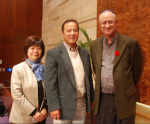
Consul General of Japan Seiji Okada, centre, Yasuko Okada and Dr. George Bluman. (photo from Vancouver Holocaust Education Centre)
There are Vancouverites who owe their lives to the wartime actions of the then-obscure Japanese diplomat Chiune Sugihara. The mid-level official, vice-consul in Lithuania for the imperial government of Japan, disobeying explicit and repeated orders, in 1940 issued Japanese transit visas to Jewish refugees fleeing the advancing Nazi onslaught.
Two of the people who received the visas were Nathan and Susan Bluman. Their son, Dr. George Bluman, delivered the keynote address Sunday at the 33rd annual Kristallnacht commemoration event, presented by the Vancouver Holocaust Education Centre in partnership with Congregation Beth Israel.
Bluman recounted the story of Sugihara’s life and the motivations for his actions, then addressed the magnitude of those events on his own family.
“There are thousands of stories like my parents’,” said Bluman, noting that this one family’s story is barely a footnote in the Sugihara narrative, but it means “the entire world for me and my family.”
Bluman, professor emeritus of mathematics at the University of British Columbia, said his parents were two of about 2,100 people who received life-giving visas from the Japanese consular official. Approximately another 600 individuals were aided by being included in the visas of others, mostly their parents, and perhaps 25% more were helped in their survival by forged versions of Sugihara visas.
Bluman explained that, after Germany invaded Poland and divvied the country up with the Soviet Union, many Jews fled to the Soviet-occupied portion. Unable to flee to the west, and having been denied entry by most Western countries, Jews were effectively trapped.
Nathan Bluman and his fiancée Susan lived in Warsaw, which was occupied by the Nazis. Nathan fled to the Soviet-occupied east and prevailed upon Susan to join him, which she did, though her father forbade them from marrying without his permission.
“She would never again see any of her parents or siblings,” Bluman said.
While Germany had occupied the Netherlands, Dutch embassies and consulates worldwide remained loyal to the Dutch government-in-exile, located in London. Jan Zwartendijk, the Dutch consul in Lithuania, began issuing visas to Curaçao, the Dutch colony in the Caribbean. Jewish refugees, including many Polish Jews like Nathan and Susan Bluman, made their way to Lithuania in hopes of obtaining a ticket to safety.
When the Soviet Union occupied Lithuania in 1940, all foreign embassies and consulates were ordered closed. In the short window available, the Dutch consul, with the support of his superiors in the government-in-exile, issued visas for Jewish refugees to enter Curaçao.
However, while Polish and Lithuanian Jewish refugees were free to travel in the Soviet Union, they could not go further without a visa to another country. That made a Japanese transit visa priceless.
While there is no evidence that Zwartendijk and Sugihara ever met, it was their combined actions that are credited with saving thousands of lives. While Zwartendijk acted with the authority of his superiors, Sugihara ignored explicit orders not to issue transit visas, an act of extraordinary disobedience for a mid-level Japanese bureaucrat and an action that not only put his job on the line, but threatened the lives of himself and his family.
Sugihara handwrote the visas day and night, issuing the equivalent of an average month’s worth of visas every day in the weeks before the consulate was forcibly closed by the Soviets.
The combination of a Dutch visa to Curaçao and a transit visa for Japan allowed refugees to make the arduous journey on the Trans-Siberian Railway to Vladivostok, board a ship to a Japanese port, take a train to Kobe and, in various ways, survive the war. In many cases, the refugees became stateless people, interned first in Japan and then in Japanese-occupied Shanghai.
Bluman’s parents managed to get on one of the last two ships heading to North America before the Japanese attack on Pearl Harbor launched Japan and the United States into a state of war and made passage impossible.
The Bluman family’s fate was influenced by one of those fortunate flukes that occurs in history. While in Japan, Nathan Bluman ran into an old professor from school in Warsaw, who told him that a ship, the Hei Maru, was to leave for Vancouver the next day. Bluman raced to the Canadian consulate to request one of the 25 visas being offered to skilled workers and it was granted. There were no provisions for spouses but Susan Bluman, using some sort of extraordinary persuasive power, managed to get the Canadian official to include her on her husband’s visa and they boarded the ship the same day, arriving in Vancouver on July 9, 1941.
That single transit visa was responsible for 17 lives, including Nathan and Susan Bluman, their children and grandchildren and three great-grandchildren born this year.
George Bluman estimates that, in all, 30,000 people worldwide owe their lives to Sugihara. Yet, it was not until 1968, when a survivor contacted him, that Sugihara began to understand the magnitude of what he had done during the war. In 1985, he was named by Yad Vashem as one of the Righteous Among the Nations.
Sugihara died in 1986, as did Nathan Bluman. But the Bluman and Sugihara families have had a long association and friendship that remains strong today to the third generation.
The event Sunday night at Beth Israel began with a solemn candlelight procession of local survivors of the Holocaust.
The annual event commemorates Kristallnacht, the “Night of Broken Glass,” a government-initiated pogrom across Germany and Austria on the night of Nov. 9-10, 1938. Hundreds of synagogues were burned, Jewish-owned businesses were destroyed, nearly 100 Jews were killed and 30,000 were sent to concentration camps.
Prof. Chris Friedrichs, a member of the commemoration’s organizing committee, noted that the Holocaust ended 70 years ago with the Allied defeat of the Nazi regime. But when did it begin? Kristallnacht is often cited as the moment when the increasingly repressive policies of the Hitler dictatorship turned into the violence that would culminate in the “Final Solution.”
But Friedrichs said that the Holocaust was not so much a direct result of events of that fateful night.
“It is what did not happen in the days that followed,” he said. After a day or two of headlines worldwide, said Friedrichs, there was nothing more. The world’s reaction, or lack of it, was the signal the Nazis needed to be assured that their policies of eliminating those “deemed unworthy of life” would meet with no resistance from the world community.
Referring to the procession of candle-bearing survivors that had just preceded him, Friedrichs said, “a candle may not seem very heavy to you.” But each of the survivors who mounted the bimah, said Friedrichs, belonged to a family, many of whom were almost completely destroyed, and the candles represent not just their families or hundreds or thousands of people, but millions.
Vancouver City Councillor
Andrea Reimer, deputy mayor of the city, broke down in tears while reading the mayor’s proclamation after telling the audience how the history of the Holocaust tests for faith in humanity.
Beth Israel’s Rabbi Jonathan Infeld thanked Bluman and expressed gratitude that Bluman is a member of his congregation.
“You are a key component of maintaining the history of the Holocaust in our community,” Infeld said.
Arthur Guttman, cantor emeritus of Temple Sholom, chanted El Moleh Rachamim, the memorial prayer for the martyrs. Ed Lewin, president of the Vancouver Holocaust Education Centre, introduced the survivors. Gary Miller, president of Beth Israel, introduced Reimer. Bluman was introduced by Prof. Richard Menkis, a member of the Kristallnacht commemoration organizing committee.

It’s all about people
William Samples and Christine McBeath in People, now at Jericho Arts Centre until Nov. 29. (photo by Adam Henderson)
Character actors are like wine – they only get better with age. Nowhere is this more evident than in the United Players production of English playwright Alan Bennett’s satirical farce People, currently playing at Jericho Arts Centre. Directed by Jewish community member Adam Henderson, it’s cheeky fun served up English style.
Two sisters, Dorothy (Christine McBeath), an aging former model, and June (Kate Robbins), an archdeacon of the local church, have to deal with the decay of their 500-year-old Yorkshire ancestral home, Stacpoole Manor. Dorothy, who lives in the home with her companion Iris (Nancy Amelia Bell), wants to sell off the contents to a London auction house, while June wants to endow the house and its grounds to the National Trust.
The trust is an English charitable institution that preserves and maintains historic homes for the benefit of the “people.” But that means lots of tourists invading the home with their questions and cameras, and Dorothy is a recluse who basically doesn’t like people. By chance, one of her old flames, Mr. Theodore (William Samples), happens upon the manor, and he offers a third option to the sisterly impasse – renting out the home for a porn film shoot. This could get interesting.
The play opens with a glimpse of a porn actor caught in flagrante delicto. Cut to the suave London auctioneer Bevan (Brian Hinson) and then the smarmy National Trust evaluator Mr. Lumsden (Matt Loop) as they traipse through the house eyeing the contents for their respective purposes, each man trying to convince his patron sister of the strength of his option. The audience is introduced to valuable papers, artifacts and a collection of chamberpots famous for their users: George Bernard Shaw, Rudyard Kipling and T.S. Eliot, to name a few (with the original contents still intact).
In the meantime, Dorothy, unbeknown to June, opts to let Mr. Theodore and his company into the home to make their film.
The action really picks up in the second act, with the stage transformed into a periodesque bedroom shoot of the porn film Reach for the Thigh (tastefully done, no nudity please, we’re British). Colin (Kevin Hatch) as the male actor and Brit (Charlotte Wright) as his female counterpart (who knits between takes) are hilarious in their four-poster bed passionate romp.
Of course, during the shoot, the bishop (Hamish Cameron) makes an appearance with June to check out the home – luckily, he was having trouble with his new specs and could not really see what was going on. If you haven’t had your fix of double entendres for the night, these scenes ought to satisfy you.
The crew – cameraman Les (Peter Robbins), wardrobe mistress Louise (Demi Pedersen), fashionista grip Bruce (Eric Keogh) and assistant director Nigel (Sidartha Murjani) – rounds out the cast with small, albeit memorable, roles.
McBeath and Samples are superb, and Bell really brings out Iris’ dotty character. Collectively, the actors – many of whom are ex-pat Brits so the accents are authentic – make it all work. The fact that at least half of the cast is over 65 adds to the reality of the production.
The set morphs from decrepitude and decay into sophistication and grace. Kudos to Marcus Stusek for this work and to Marci Jade Herron for her costume designs, from shabby chic for the Stacpoole women (mink coats and sneakers) to edgy togs for the film actors. Charming song and dance routines and nostalgic music from the 1960s (think “Downtown” and Petula Clark) complete the mix.
In the media release, Henderson notes, “We really don’t treat age with much respect, and it’s a youth-obsessed culture. This play goes a long way in dealing with those issues.”
So, you can take the opportunity for deep consideration of contemporary issues or you can just sit back and enjoy a good laugh. Your choice.
For tickets and more information, visit unitedplayers.com or call the box office at 604-224-8007, ext. 2. People runs through to Nov. 29.
Tova Kornfeld is a Vancouver freelance writer and lawyer.
Better access to education
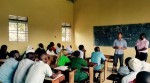
Aaron Friedland at Semei Kakungulu High School in Uganda. Friedland has written the book The Walking School Bus, both as a first reader but also as a means to generate funds for students to access education. To get it published, he has started an Indiegogo campaign. (photo from Aaron Friedland)
During high school and elementary, “it was too easy for me to miss school,” said Aaron Friedland, currently a master’s in economics student at the University of British Columbia. In other parts of the world, children walk great distances to attain an education.
“Five years ago, I wrote a children’s book called The Walking School Bus,” Friedland told the Independent. It was “written with the realization that students in North America really take access to education for granted.”
It was on a trip to Uganda and South Africa, he said, when he really began to understand “the distances students had to walk to obtain an education and it was startling.”
Data from the Uganda National Household Survey Report 2009/2010 indicate that 5.5% of children aged 6-12 do not attend school because it is too far away, and the average high school-aged student must walk a distance of 5.1 kilometres to the nearest government school, more than 10 kilometres every day.
“I wanted the book to serve a purpose and the purpose was twofold. I wanted it to raise awareness … that students have to walk,” Friedland said about The Walking School Bus. “But I also wanted it to be a means to generate funds for students to access education and so, in that case, I’d say the school bus itself is metaphoric and it represents access to education.
“I submitted my manuscript to a publishing house just under a year ago and it was well received, so we started moving forward. But, in order to really have a book come to fruition, it costs quite a bit of money.”
On Nov. 9, Friedland started an Indiegogo campaign to raise $15,000 to cover the costs of publication, “everything surrounding the book,” which includes editors who specialize in children’s books and the illustrations. The campaign runs for 60 days.
The Walking School Bus has the capacity to “act as a first reader and, while it does have a picture book component, I’d also like it to serve as a coffee table book and a symbol for interfaith collaboration,” said Friedland.
Friedland’s concern about and involvement in interfaith work began in 2010, when J.J. Keki, a member of the Ugandan Abayudaya Jewish community and founder of the Delicious Peace fair-trade coffee cooperative, was invited to King David High School. Many students, including Friedland, “formed a pretty special bond with him.”
A bond that continued for Friedland. “When I was in first year [university] – while all my friends were going to Mexico and hilarious holidays – I went to Uganda with my family,” he said. “It was an amazing experience for us. We benefited so much more than the ‘recipient’ community. I recognized quite quickly that our aid had been negligible, but what it did for me was it provided me with a clear trajectory, which guided me for my four years at McGill.… At McGill, I started working with the Abayudaya community in Uganda, specifically with Delicious Peace…. What most amazed me – and my rationale for getting involved – was that they employed an interfaith collaboration model in which they united these previously disparate communities, the Muslim, Christian and Jewish communities, and formed one solid frontier in which they collaborated. In collaborating, there were a variety of positive spillover effects … you see higher levels of economic prosperity in that region on Nabagoya Hill than you do in comparable areas, you see how there is much more religious tolerance.”
About his experience in Uganda, Friedland, who has worked with UN Watch, said, “I have only seen the us-against-them mentality, and this is one of the first times I have ever seen this collaboration.”
About his most recent trip to Uganda, Friedland said, “Essentially, I have been working with three schools there as well as King David over here, kind of empowering their educational sector in the interfaith forum. And the three interfaith schools I’ve been working with are the three I’m the most motivated to help provide school buses.”
While interviewing students in Uganda, he said, “One of the girls that really stood out to me was a girl named Miriam, a lovely Jewish girl from [Semei Kakungulu] high school, an 18-year-old. She was telling me that, when she walks to school, she walks six kilometres in either direction. And, in extreme rainfall events, which is pretty much all of the rainy season, she will cross a river to school and, when she goes back, the river is often flooded and she cannot cross back, so that night she’ll spend at a friend’s.”
Friedland added, “When I think about the struggle that our counterparts make to go to school and we do not – we don’t have that drive. That is something I’d like to impress on people in North America. I’m not saying you have to feel bad, just appreciate your access and your ease in getting an education and take it seriously.”
The website thewalkingschoolbus.com was created by Friedland to support the book and bus project, and sales of T-shirts and various other merchandise go towards his efforts to increase access to education. He said, “I think, as a Jew in Vancouver, in a more liberalized society, that this is the model that we should be going for … we should be supporting interfaith.”
Friedland has most recently worked with a team to connect King David’s Marketing 12 class with the entrepreneurship class at Semei Kakungulu. About his master’s degree, he said he will likely be writing his thesis on “the positive economic spillover effects from interfaith collaboration and employing interfaith collaboration, as an economic development growth model in other places, particularly Israel.”
Zach Sagorin is a Vancouver freelance writer.
Spreading pain, not peace
A member of Israel’s Knesset spoke at a Kristallnacht commemoration event this week and equated Israel’s actions to the events of Nov. 9-10, 1938.
Hanin Zoabi, an Arab-Israeli member of the Knesset, spoke at a Kristallnacht “memorial” in Amsterdam that was organized by a group known for its antipathy to Israel and its sympathies for Hamas. It appears the event was not meant to sincerely mark the solemn anniversary but rather, as is so often a tactic among the most extreme anti-Israel hate groups, to rub salt in the wounds of Jewish history.
“Kristallnacht didn’t suddenly fall from the sky, come out of nowhere,” Zoabi said Sunday. “It was the result of a development over time. We can see a similar development happening in Israel over the last several years.”
She acknowledged that, during Kristallnacht, thousands of businesses and hundreds of synagogues were attacked and destroyed.
“Perhaps the majority of Germans did not approve, but they kept quiet,” she said. “When in Israel two churches and tens of mosques are burned; and hundreds of Israeli supporters of Beitar shout ‘death to the Arabs’ after each soccer match; when a family is burned to death; when a 15-year-old boy is burned to death, the majority keeps quiet, although they are perhaps shocked.”
Of course, Zoabi is wrong. When these tragic and despicable incidents have happened, they have been condemned from the highest offices, by the most respected voices and across the political spectrum of Israeli society. When the far more frequent incitements to kill Jews occur, and when terrorists stab or drive over Israelis, these acts are lauded by Palestinian political and religious leaders and are cause for celebration among Palestinian civilians. That’s a big difference.
Zoabi is a member of the Arab Israeli party Balad, which calls for a binational state between the Jordan River and the Mediterranean – in other words, the effective end of the world’s only Jewish-majority nation. She is an elected official in the parliament of a country she does not believe should exist. Fine. That’s a fact of democracy. We have such a phenomenon in our own federal parliament.
Zoabi is not only a citizen of a democratic state, but one who was democratically elected by other citizens to represent them in the Knesset, which, in itself, goes some distance in undermining her hyperbolic claims.
Zoabi, because she is a citizen of a free country, has the right to say what she wants, short of the sort of incitement banned by law in every democratic society. (Although she has crossed that line, with minimal repercussions, in calls for “popular resistance” and justifying the kidnapping of three Israeli teens last year who were later found murdered.)
How ironic that a person in her position could invoke such vicious, ahistorical imagery and do it at a time and place that should call for the barest sense of human compassion and decency – and get away with it. Because, despite a few outraged comments from politicians and media, she will get away with it. There will be no legal or parliamentary repercussions for her words. She is a free person – one of the freest and most powerful Arab individuals in the Middle East, when you come down to it. Were her political agenda to be realized and the land in which she lives to come under the governance of Hamas or Fatah or any other political entity currently on the scene or even on the horizon, and she were to use her words to attack her country in this manner, the outcome would almost certainly be far more grievous for her.
Beyond this individual case, though, this kind of language is a treasured tactic of the anti-Israel movement. Clearly it is a strategy of the Amsterdam group that invited her to speak and we have seen it even on campuses and at rallies here in Vancouver: anything that can be done to cause pain to Jewish people is not only acceptable, it is a legitimate tactic.
Whether it is literally a knife in the neck of a Jew in Jerusalem or the inhuman exploitation of Jewish history against the Jewish people themselves in Amsterdam or the exploitation of Holocaust imagery and language against the state of Israel at rallies worldwide, including here in Vancouver, there is a streak in the anti-Israel movement that is more concerned with inflicting pain than finding solutions.
Kohelet and Kristallnacht
“Vanity of vanities. All is vanity.” The day of remembrance for Kristallnacht was this week. Looking at what’s happening in Israel and globally, I’m reminded of the Preacher. By the Preacher, I mean Kohelet, traditionally thought to be King Solomon, whose writings in the Tanakh are known in English as Ecclesiastes. The first line, in Hebrew, reads: “Havel havalim. Hakol Havel.”
Everything is havel, which, better than vanity, is translated “vaporous, breathlike, fleeting.” Everything is vapor. Like Abel, whose Hebrew name is Havel, and whose life was like vapor, blown apart by Cain. Like what we thought we had gained in Israel, once upon a time: a state of our own that had mostly won the world’s respect and affirmation through blood, sweat and tears. A refuge. We thought we had pushed back the red sea of ancient, irrational hatred. The world had, to an amazing degree, recognized our right to a homeland in our homeland. The horrors of the Holocaust were understood and widely contemplated.
Yet, in the past months, much of what has happened has the character of a bad dream. The New York Times writes that the Temple Mount may not have been where the Jewish Temple was after all (later retracted under pressure). The United Nations declares ancient Jewish holy sites to be under the rightful control of a future Palestinian state, even as Palestinian Arab terrorists torch Jewish holy sites. In Europe, organizers of a Kristallnacht commemoration declare their plans to turn it into a commemoration of the Palestinian suffering for which Israel bears responsibility.
And the stabbings. The Palestinian leadership put the word out that Jews planned to change the “status quo” on the Temple Mount, where Al-Aqsa Mosque also stands. Currently, only Muslims have free access to the site, with everyone else having very limited or no access to this sacred space, revered by Jews especially but also Christians and Baha’is. “Changing the status quo,” according to Palestinian fears, would entail increasing access for non-Muslims (at least) or tearing down al-Aqsa and replacing it with a synagogue (at most). Israel has no intention of either: not of expanding access (although surely that would be a step forward for human rights and decency were that to happen) and certainly not of razing Islam’s third holiest site. Yet the claim enflames the Palestinian street, as it did at the start of the 2000 Intifada. Mothers begin celebrating the deaths of their children who died to “defend Al-Aqsa,” even giving out candy on TV. A Palestinian Arab mother names her newborn baby “Knife of Jerusalem” after the attacks. Mahmoud Abbas, who Western media falsely portray as a moderate, calls for the shedding of Jewish blood and declares that the “filthy feet” of Jews will not besmirch Al-Aqsa.
Mainstream Israel wants to negotiate an independent state for Palestinian Arabs yet a majority of Palestinian Arabs believes Israel wants to take their land and evict them. Tellingly, this is in fact what the Palestinian Arab leadership wants – to take back all Israeli land and eliminate Israeli Jews, as the Hamas charter and popular Palestinian songs, media and school textbooks demonstrate. In a classic psychological move, the Palestinian Arab imagination projects onto Israel its own desires: what is within is used to interpret what is without. This narrative has spread beyond the borders of Israel and the disputed territories to capture the imaginations of people all around the world. So, our refuge has begun to feel, increasingly, like a new ghetto, where we can be once again easily separated out and demonized.
Havel havalim. Hakol havel.
After experiencing years of checkpoints, poverty, “collateral damage,” the Gaza wars and more, it is certainly understandable that Palestinian Arabs feel sorrow and rage. It is even understandable that they hate the Israeli government. But to blame Israel and all Jews for their suffering, and not the racist, Israel-negating, violence-inciting, kleptocratic Palestinian leadership?
Israeli self-defence is viewed as aggression; the most enlightened state in the Middle East is slandered as an “apartheid state”; Zionism is viewed as racism by people whose denial of Zionism is in fact rooted in racism. Havel havalim.
Where do we look for something solid to hang on to? The opinions of the world, the justice of its courts and institutions, are failing us. And we ourselves are not immune to being blown apart by this hurricane wind on the inside and losing anything worth fighting for. In Israel, Jewish mobs have formed to attack “enemies” internal and external. Hatred and anger against the Palestinian Arabs grows. We are in danger of forgetting their humanity and their pain. We are in danger of losing our ability to think rationally, to think long term. We cannot and will not find security in the courts of the world. We must make our own reality, one that reflects what we know to be true. And we must hold to that reality with strength and with love. That is what we are already doing in our best moments:
- A Jewish restaurant gives a 50% discount to Jews and Arabs who eat together.
- There are peace rallies in Tel Aviv and Jerusalem.
- Israelis find a variety of ways to laugh through what is happening and share them online.
- Doctors in Israeli hospitals treat Palestinian terrorists alongside their victims.
We know that Israelis want peace, and that Jewish values in no way mandate injustice or aggression towards Palestinians or anyone else. We must make our own peace and our own future, through clinging to our own highest values like a rudder in the storm. And, as we find a way to a just divorce with the Palestinian Arabs, as Amos Oz so rightly said we need to do, both for their sake and for our own, we must at no time forget the humanity of each Palestinian Arab. We must not demonize them, must not forget that every Palestinian Arab is made in the image of God. Our own spiritual tradition, the beating heart of our highest values, mandates that we do not return hatred for hatred. At no time may we forget to fear the loss of our own humanity under the impact of their knife blades and bombs and stones. That is the way to commemorate Kristallnacht.
Matthew Gindin is a writer, lecturer and holistic therapist. As well as teaching holistic medicine, Gindin regularly lectures on topics in Jewish and world spirituality, and has a particular passion for making ancient wisdom traditions relevant in the modern world. His work has been featured on Elephant Journal, the Zen Site and Wisdom Pills, and he blogs at Talis in Wonderland (mgindin.wordpress.com) and Voices (hashkata.com).
Survivors’ immense impact
Holocaust survivors who came to Canada after the Second World War remade this country’s Jewish community.
Before survivors arrived in numbers, beginning in 1947, Canada’s Jewish community had a few poorly resourced social service agencies. The demands created by thousands of new arrivals – many with significant emotional and physical challenges – spurred the growth of Jewish communal organizations across the country. In turn, those survivors have had an impact on the community in the successive seven decades that is incalculable. The impact of the Holocaust – and the arrival of its survivors – is perhaps the defining factor in the development of Canada’s Jewish community.
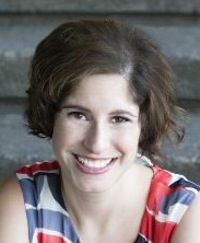
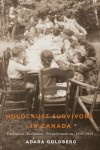
“The Holocaust is a watershed moment and the scale of this watershed resettlement was unprecedented,” said Adara Goldberg, a Vancouverite and author of Holocaust Survivors in Canada: Exclusion, Inclusion, Transformation, 1947–1955. “Many of the agencies across Canada only came to be as a result of the Holocaust. Jewish Immigrant Aid Services [JIAS] did exist, but this was a small organization that only dealt with small numbers up to this point. Having some 35,000 people come in, in less than a 10-year span, really trampled the organizations.”
Survivors who moved to the United States joined a vibrant Jewish community already in progress, while those who came to Canada found a Jewish community with little infrastructure. What exists of the Jewish community and its social service agencies today was built, in large part, for the survivors and, subsequently, by them.
To an extent, there was an unwillingness among Canada’s existing Jewish community to address the Holocaust experiences of the newcomers – those who did not experience the Holocaust may have been afraid of opening wounds or been unwilling to hear the horrors others experienced. There was also a history in Canada of immigrants getting off the boats and throwing themselves instantly into building a new life, leaving the past behind.
Still, Goldberg said, there was a recognition by people like the head of JIAS that these immigrants had some very particular needs.
“The problem was availability,” she said. “This is uncharted territory. Social workers themselves and the Canadian Jewish community were only learning with the survivors about how to treat victims of trauma … the idea of post-traumatic stress didn’t really exist.”
Getting the newcomers integrated was not only a matter of meeting social needs, she added.
“There is also a legal element to that,” Goldberg said. “The fact is, refugees who came to Canada under the auspices of either the Canadian Jewish Congress, or who received support from JIAS or who had relatives sponsor them, were liabilities. If they didn’t find work, if they didn’t have a home, if they became dependent, they risked deportation. They risked becoming a drain on the existing Jewish community, which was already really reaching its max in terms of what they could do.”
A symbol of success is that very few fell through the cracks, although many of the case studies in the book indicate that some survivors were miserable in their assigned living conditions or workplaces.
There was a realization after the war, as the magnitude of what would come to be called the Holocaust dawned, that Canada had failed the imperiled Jews of Europe in the 1930s, when there was still time.
“After the war, relationships changed and there was significant international pressure on Canada to help do its part in relieving the postwar refugee crisis of Jewish and also non-Jewish displaced persons,” Goldberg said. “On the one hand, we can say this was a humanitarian gesture.… There’s also a practical element that we can’t overlook in that Canada stood to gain something from allowing in the Holocaust survivor refugees. There was a need for skilled laborers and this is how most survivors did come in, they came in for skilled labor posts, so Canada benefited.”
The equation of immigration and Canada’s need for labor is underscored by the fact that there was no ministry of immigration at the time – until 1950, Canada’s immigration policy was administered by the ministry of mines and resources. The influx of Jewish and non-Jewish refugees postwar familiarized the Canadian government and public to the concept of receiving refugees on humanitarian grounds. The first major instance of this reconsideration came in 1956 after the Soviet Union crushed the democratic uprising in Hungary. Canada admitted 37,000 refugees in the course of a year.
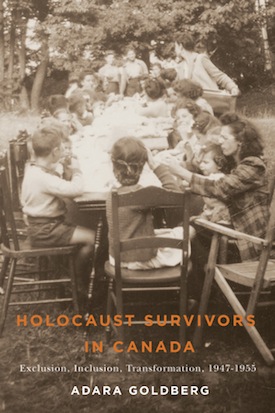 Goldberg’s book begins with a refresher on Canada’s abominable record in the prewar period. Chapters then take on topics such as the unique requirements of young orphaned refugees; the double-edged sword of interned “enemy aliens” – Jews from enemy states, mostly Germany and Austria, whose nationality, in the eyes of Britain and its Canadian dominion, trumped their status as endangered victims of Nazism; the various programs under which refugees were admitted to Canada and how established Jewish communities, especially their women’s organizations, cared for refugees’ personal needs; the creation of social clubs and synagogues by and for survivors; the development of an ultra-Orthodox and Chassidic community here; and “transmigrants,” those who came to Canada after a sojourn elsewhere, often in Israel. She has included the stories of survivors who didn’t want to be found; those whose experiences in Europe led them to hide their Jewishness and their past as they began a new life in Canada. It is a monumental work.
A Toronto native, Goldberg wrote the book in fulfilment of her PhD at Clark University in Massachusetts and, while there are differences between the dissertation and the book, which was published in September by University of Manitoba Press, the book avoids the academic jargon that can exclude ordinary readers.
“As a social history that was created with the research that I did both in archives as well as through interviews and other sources, it was written with a wide readership in mind,” she said.
Goldberg eschews statistics in favor of personal case studies both from in-person interviews and records of social service agencies from decades past. The result is an introduction to hundreds of individuals and their stories, as well as a testament to the resilience of the survivors and the history of a small Jewish community rising – not always flawlessly – to the challenge of welcoming tens of thousands of co-religionists who had suffered unspeakable horrors.
The dissertation took about three years to complete and, after Goldberg moved to Vancouver, where she worked for three years as education director at the Vancouver Holocaust Education Centre, she took the opportunity to do additional research that incorporates more local content. The book is enriched by her background as a trained social worker, which underpins a deep analysis of the successes and failures of social service agencies in those early years.
Refugees are the top global news story today and Goldberg sees lessons for the present in her book.
“It’s a very different crisis,” she said. “I think what we can do is, without trying to compare individual experiences, to remember the risk of nativist attitudes and what happened when Canada had very discriminatory, restrictive immigration policies 75 years ago. Canada accepted the fewest number of Jewish refugees of any country in the Western world … Canada had an opportunity at that time to distinguish itself, to take a very restrictive policy and widen the gates. They could have done this and they elected not to. What we can do now is reflect on the result of this inaction. History does not need to repeat itself. Canada can distinguish itself as a world humanitarian leader.
“Similarly,” she continued, “Holocaust survivors have contributed to all aspects of Canadian society. I imagine that so, too, do other refugees to Canada and so will other waves that come in the future. There is so much that we can gain.”
The Vancouver launch of Adara Goldberg’s book takes place on Nov. 25, 5:30 p.m., at the Vancouver Holocaust Education Centre, as part of the Cherie Smith JCC Jewish Book Festival. Admission is free.

Life-changing lecture
Avrum Nadigel (photo from Avrum Nadigel)
Not only is there no quick fix to making a relationship work, but there’s no quick fix for absorbing the main points of Avrum Nadigel’s Learning to Commit: The Best Time to Work on Your Marriage is When You’re Single. Its lessons can’t be summed up in a few bullet points – you’re going to have to read it.
That being said, Nadigel will have to make the audience at the Cherie Smith JCC Jewish Book Festival “fall in love with” his book in less than 180 seconds. He’s part of the event A Literary Quickie, which takes place on Nov. 22, 10 a.m., at the Jewish Community Centre of Greater Vancouver. The brunch event lineup includes authors Richa Dwor, A.D. Gentle, Rosa Harris, Revital Shiri-Horowitz, Paula Hurwitz, June Hutton, Evelyn H. Lazare, Olga Medvedeva-Nathoo and Marina Sonkina. Admission is by donation.
Nadigel has been a therapist for more than 15 years. He received his master’s of social work from McGill University in Montreal in 1997, and did post-graduate training with the Western Pennsylvania Family Centre, which teaches Bowen family systems theory. He also received supervision via Skype from author and family therapist Dr. David Freeman (who died in 2010). In Learning to Commit, Nadigel doesn’t just offer theories, but advice gained from personal and professional experience. Advice that changed his life, and he’s hoping it’ll help others.
Though Nadigel only lived in Vancouver for about six years, from 1999 to 2005, it was here that he first encountered Freeman, who was speaking at a singles event at the J. His words had a profound impact on Nadigel.
“For all I thought I knew about relationships (I was a practising therapist at that time), Freeman debunked many of my own assumptions, for example, that poor communication is the cause of relationship problems,” writes Nadigel. “He introduced novel ideas about romantic love, providing subtle warnings that the very things that cause a young lover’s heart to flutter can, down the road, be the catalyst of dissatisfaction and divorce. He encouraged us to focus on our own interests, because the more interesting we are to ourselves, the more we have to bring to the table in our relationships.”
Nadigel had come out west, lured by the Rocky Mountains. “From that moment on,” he said, “I knew I had to live near mountains, but also in close proximity to a Jewish community. Vancouver was an easy choice.”
He told the Independent, “It was a total ‘head west young man’ move. I was 30 years old. I sold everything I owned, loaded all of my guitars, some clothes and CDs (remember those?) and headed west. No job, no family, no relationship and only one friend in B.C.
“For money, I worked as a child protection worker, and then as an addiction therapist and family therapist…. Most importantly, I took courses at Emily Carr, composed music for films and learned how to mountain bike.”
He also came here to meet a local Jewish woman but, he said, “true to [his] commitment-phobic self,” he “couldn’t find anyone in Vancouver (or Victoria, Seattle or Calgary) to settle down with.” Eventually, on frumster.com, he met the woman who would become his wife, Dr. Aliza Israel – from Richmond. At the time, she was living and studying in Toronto. “Anyway, we dated long-distance (perfect for a commitment-phobe), and then I agreed to move wherever her residency would be. She was accepted into the Toronto psychiatry program, and the rest is history.”
The two were married in June 2007 at the J here because that’s where Nadigel first heard Freeman, which led to his rethinking about marriage and other things. “The JCC in Vancouver holds a very special place in my heart,” he said.
And so still does Freeman, one of the people to whom Learning to Commit is dedicated, “for providing me with a lighthouse; a way to navigate the rocky seas of my relationships.”
At least one of the ideas in the book seems counterintuitive – the admonition to not compromise.
“Too many relationship books/ speakers assume that compromise is the key to a successful relationship, and so our culture embraces this opinion – and that’s all it really is. And good people use this to avoid growing … discomfort, fear, etc.,” explained Nadigel. “Compromise is no virtue if it’s the first thing you reach for to avoid difficult discussions or situations. Now, more mature people are able to compromise without feeling like they’re betraying their values/principles, because they’re clear on what they stand for, and what they won’t put up with. They won’t compromise on big-ticket items, and will be willing to face the sting/consequence of staying true to their principles.”
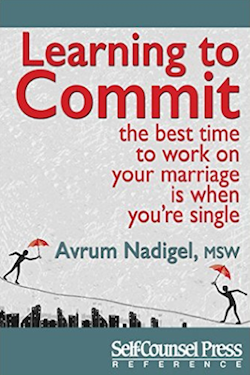 In Learning to Commit, Nadigel writes, “According to Dr. Murray Bowen, togetherness and individuality are two opposing forces that we are all born with. We spend the rest of our lives trying to reconcile their often-contradictory impulses.” A well-differentiated person – someone who is confident of their values and principles, and doesn’t change their opinion or action “just to defuse tension” is able to balance those opposing forces.
“Differentiation is not selfishness,” stressed Nadigel. “It is not about a focus on my needs, damn everyone else. It’s about living a life guided by well-thought-out principles, some of which will address who I want to be/act/think with my partner, children, parents, colleagues, friends, etc. It’s about balancing feelings with good, clear thinking. Actually, one could say that immature, high-feeling-centric people are so fragile that the mere thought of considering another person’s point of view is crushing, whereas higher differentiated people can choose to be guided by their partner’s best interest. But the key here is choice!”
The lessons in Nadigel’s book are relevant for all relationships – in fact, he writes, “one of the main tenets of family systems theory [is]: ‘You will only succeed in future relationships in ways you have already succeeded with your parents, siblings and/or extended families.” They are also useful in dealing with controversy or difficult issues, in developing the ability to hear what you need to hear, even though you may not want to hear it.
To remain open, he explained, “you need two things – curiosity and (if possible) playfulness. These things are very hard to come by in high-tense situations, i.e. acrimonious marriage, Middle East discussions, anything involving high emotions mixed with perceived/real threats. Which is why I believe, as a blogger recently noted while discussing my book: ‘Doing some self-examination and exploration … while we are single might be the best marital therapy we’ll ever have.’ Curiosity and playfulness is much more likely when we’re single, or dating, than when mired in the marital muck of resentment, etc…. I think the best that one can do – in any area – is to share your thoughts as clearly as possible, and without any expectation that people are going to support your thinking or applaud your efforts. When you think about the qualities of great leaders/leadership, these attributes apply.”
For the full book festival schedule, visit jewishbookfestival.ca.