Skip to content
  • Home
  • Subscribe / donate
  • Events calendar
  • News
    • Local
    • National
    • Israel
    • World
    • עניין בחדשות
      A roundup of news in Canada and further afield, in Hebrew.
  • Opinion
    • From the JI
    • Op-Ed
  • Arts & Culture
    • Performing Arts
    • Music
    • Books
    • Visual Arts
    • TV & Film
  • Life
    • Celebrating the Holidays
    • Travel
    • The Daily Snooze
      Cartoons by Jacob Samuel
    • Mystery Photo
      Help the JI and JMABC fill in the gaps in our archives.
  • Community Links
    • Organizations, Etc.
    • Other News Sources & Blogs
    • Business Directory
  • FAQ
  • JI Chai Celebration
  • JI@88! video

Recent Posts

  • Sharing her testimony
  • Fall fight takes leap forward
  • The balancing of rights
  • Multiple Tony n’ Tina roles
  • Stories of trauma, resilience
  • Celebrate our culture
  • A responsibility to help
  • What wellness means at JCC
  • Together in mourning
  • Downhill after Trump?
  • Birth control even easier now
  • Eco-Sisters mentorship
  • Unexpected discoveries
  • Study’s results hopeful
  • Bad behaviour affects us all
  • Thankful for the police
  • UBC needs a wake-up call
  • Recalling a shining star
  • Sleep well …
  • BGU fosters startup culture
  • Photography and glass
  • Is it the end of an era?
  • Taking life a step at a time
  • Nakba exhibit biased
  • Film festival starts next week
  • Musical with heart and soul
  • Rabbi marks 13 years
  • Keeper of VTT’s history
  • Gala fêtes Infeld’s 20th
  • Building JWest together
  • Challah Mom comes to Vancouver
  • What to do about media bias
  • Education offers hope
  • Remembrance – a moral act
  • What makes us human
  • המלחמות של נתניהו וטראמפ

Archives

Follow @JewishIndie
image - The CJN - Visit Us Banner - 300x600 - 101625

Pelman participates in Word

Pelman participates in Word

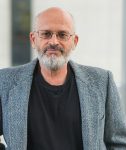
Barbara Pelman (photo from Word Vancouver)

Among the writers being featured at this year’s Word Vancouver, which runs Sept. 26-30, is Victoria-based poet Barbara Pelman.

Pelman’s latest collection, narrow bridge (Ronsdale Press, 2017), is her third book of poetry. Its title comes from Rabbi Nachman of Breslov’s famous advice (at least in Jewish circles): “All the world is a narrow bridge – the important thing is not to be afraid at all.” Other than in one poem, however, called “Öresund,” where she tells herself, “I will not fear,” Pelman doesn’t come across in her writing as fearful.

“I’m delighted that I don’t come across as fearful,” Pelman told the Independent, “as I am full of fear, and certainly before each visit to my family in Sweden, I imagined everything that could go wrong and how incompetent I am. And was amazed that I survived intact.

“Generally, I tend to be a worrier (‘a misuse of the imagination’) but fight this negativity all the time. The tension, which I hope comes across, is between a general optimism and belief that, ‘in the long run’ … things sort themselves out. So, I tend to take on things that might terrify me, like art classes or solo trips to Berlin or train rides through Europe, and sign up, so there’s no going back. Not, however, bungee jumping or skydiving.

“When I have to deal with adversity – a separation and divorce, primarily – I talk and I write,” she said. “Both are clarifying agents. The poems in this book put forward a lot of my difficulty in being in the present, without wishing to be elsewhere. As in the first poem, ‘Gentle Reader’ – the desire to desire only what you have, and not what is somewhere else.”

On the family front, at least, Pelman’s journeys have become shorter since the book was published. Her daughter, who had been living in Sweden for three years, moved to Vancouver this summer, meaning that Pelman’s grandson is also now that much closer. He features in more than one poem – “Still Life with a Small Boy” is especially poignant. In it, he and his bubby, Pelman, are out having a hot chocolate and croissant. “Heads together, bending into each other. / They are a world. Outside, the world breaks. / She cannot read the news while she is with him, / tries to be calm, listen while he tells her / his new red bike helmet makes him safe.”

The collection is divided into three sections and includes some poems that Pelman has published before. Her previous books of poetry are One Stone (Ekstasis Editions, 2005) and Borrowed Rooms (Ronsdale Press, 2008), and she also has produced a chapbook, Aubade Amalfi: The Marcello Poems (Rubicon Press, 2016).

“This book had three iterations, each time being sent back by the publisher with suggestions – too much of Marcello and the adorable grandson, for example,” she said of the decision-making process for what would make it into narrow bridge. “So, I rejigged the poems, took out a lot of them, put in more recent ones, and relied on Russell [Thorburn] to put them in order. He sees an organic pattern of the poems, sometimes based on image or theme. I trust his choices, only changed a few.”

The poems in narrow bridge include many with Jewish themes.

“Most of my childhood centred around the synagogue, not in a hugely observant fashion, but, as my father was choir leader at the Beth Israel, I often went to services with him,” Pelman said about the place of Judaism and Jewish culture in guiding her work or approach to life. “Now, as a member of Congregation Emanu-El [in Victoria] and ‘den mother’ for the Calling All Artists project, I am interested and involved in learning Hebrew, chanting Haftorah, and generally intrigued by the culture and traditions of an ancient people.

“Moreover, and this is what I think is really wonderful, poetry and study of Torah have many similarities. Hebrew is a language that I think is embedded in metaphor, and studying Torah is the kind of layering analysis that I am used to in studying poetry. Layer upon layer of meaning and ambiguity. Rabbi Harry Brechner considers art as ‘mishnah’: another way to interpret, to find meaning that is relevant to us personally and globally.”

In narrow bridge, Pelman explores kabbalistic ideas, her own family history and relationships, as well as biblical ones (the poem “Isaac” is powerfully evocative). In at least two poems, she explores the concept of “thisness” – notably in the poem of that name, where, she writes, “Happiness, fed from detail: the thisness of things, / resting in the eye of the beetle, the creak of the board / she leans against, the cold air pricking her ears.” And several poems have to do with the spaces or pauses between, for example, a heartbeat or a pendulum’s swing; those moments that happen all the time but that we rarely acknowledge or even notice.

Aging features prominently, as well. And, while some poems are wistful – such as “Suitcase in the Closet,” where recollections of past travel suffice – others are almost calls to arms. “A woman over seventy should open her travel account, / run her fingers over the globe, and choose / She should trade her sensible shoes for sandals, / her Gucci bag for backpack, her datebook for weather reports,” begins the poem “Go,” a favourite in this collection, though this reader is still a couple of decades shy of 70.

As for how her style or subject matter has changed since her first collection, Pelman said, “I have continued to work with various poets in workshops and retreats, and continue to learn a great deal from poet friends and reading. I think my poems have become shorter, a bit more compressed. I am aware of the musicality of the poem – the cadence, the pacing, the rhythm. But the struggles are still there: how to get started, how to edit, how to know when a poem is done. I have a huge file on my computer, called ‘Working On.’

“And my subject matter has changed as my life has changed,” she said. “The first book dealt with the divorce and finding a new identity; the second book included the death of my father; this book is about travel, and daughters, and grandsons, and the new life of retirement. About balance. But there are still hummingbirds in the hawthorn tree. Jasmine and tulips. Old lovers and mothers.”

Pelman is at Word Vancouver on Sept. 30, 1:20 p.m., in the Suspension Bridge tent at Library Square Conference Centre, one of three poets participating in “Another Taste of Poetry.” She also joins two other poets in Ronsdale’s Fall Poetry Showcase at Dunbar Public Library on Nov. 7, 6:30 p.m.

For more about Word Vancouver – where Jewish community members Mark Winston and Claire Sicherman will also share their work, at 1:20 p.m. and 2:30 p.m., respectively on Sept. 30 in the Alma VanDusen Room at Library Square – visit wordvancouver.ca. The interim manager of the festival this year is community member Bonnie Nish.

Format ImagePosted on September 21, 2018September 20, 2018Author Cynthia RamsayCategories BooksTags Barbara Pelman, books, Judaism, poetry, Victoria, Word Vancouver
Films portray hardships

Films portray hardships

Mélanie Thierry delivers a strong performance as Marguerite Duras in Memoir of War. (photo from VIFF)

The Vancouver International Film Festival starts next week. Among the myriad offerings are many films that might be of particular interest to the Jewish community. Here, we review four: In My Room, Memoir of War, The Reports on Sarah and Saleem and Working Woman.

Not to be confused with In My Room (Germany), about a man who wakes up one day to find that everyone else in the world has apparently disappeared, which is also playing at VIFF, In My Room (Israel) introduces viewers to six teens who are, in my view – and likely that of anyone over 40 – way too eager to share on social media. In an effort to become marginally famous, perhaps, or, at best, to find or give support to others, they expose their insecurities, their challenges and changes, and more. Both compelling and hard to watch at times, one thing the documentary makes very clear – growing up these days isn’t easy.

In My Room is part of VIFF’s Impact stream, nine films that the festival considers “uncompromising” and “insightful discussions that spark action and change the way we see the world.” Among the awards being offered in this category is the VIFF Impact Award, a $5,000 prize presented by Leonard Schein to one of the stream’s documentaries. In My Room certainly shines an uncompromising light on the personal information that is being shared on the internet by kids, the publicizing of which may come back to haunt them.

While a large part of me cringes at the teens’ apparent lack of boundaries or concern for their safety, they are also incredibly brave (or maybe just incredibly ignorant of the possible consequences). I hope that only a small percentage of young people are going through what they are, which ranges from heartbreak over an ended relationship, to pregnancy to not being comfortable in the gender they were born, to an eating disorder.

In My Room is in English and Hebrew (with English subtitles). It is rated PG for coarse and sexual language, and screens Sept. 29 and Oct. 1.

* * *

Memoir of War (France/Belgium) sees its Canadian première at VIFF. A little on the slow side pacing-wise, it is a seemingly realistic portrayal of what it might have been like living in Paris during its occupation by the Nazis. It is based on Marguerite Duras’s wartime memoir La Douleur (Pain).

The film takes place in 1944. Duras’s husband, Robert, part of the resistance, has been captured by the Nazis and she is so desperate to find out what has happened to him, and to possibly free him, that she dangles the hope of a relationship as bait to get information from a man named Rabier, an open Gestapo collaborator. Rabier not only desires Duras, but, even more, entry into her literary world.

When the Allies’ impending victory becomes apparent, Rabier flees. As liberation takes hold and survivors begin to return, but not Richard, Duras becomes ill, feverish, and reality and dreams blur.

The acting is superb, in particular Mélanie Thierry as Duras, and director Emmanuel Finkiel and cinematographer Alexis Kavyrchine deftly capture her moments of fear, exhaustion and confusion symbolically in a powerful use of imagery and visual effects, which dialogue alone could not have communicated.

Memoir of War is in French with English subtitles. It screens Oct. 6 and 8.

* * *

Though inspired by true events, The Reports on Sarah and Saleem is a little hard to believe. Not the reaction of a husband to his wife’s infidelity. Not the fact that an Israeli or a Palestinian would have an affair with the supposed enemy. But that a nice, educated and industrious woman would risk her marriage and business to be with such a grumpy, pushy and uninspiring man.

Sarah, an Israeli wife, mother and café owner, is having an affair with married, soon-to-be-a-father Saleem, a Palestinian deliveryman for a bakery, and then for his relative’s unsavoury friends. The appeal of great sex is understandable but the scenes in the back of the delivery van don’t succeed in making it seem life-riskingly great.

Despite the cognitive dissonance, the pace and tensions build up, and the second half of the film, which features less driving around and some gun-toting drama, is quite engaging. When things go south, will Sarah tell the truth, and risk losing everything she holds dear, or stay quiet, and let her lover go to prison for a crime he didn’t commit?

The Reports on Sarah and Saleem is in Arabic, Hebrew and English, with English subtitles. It screens Oct. 7 and 11.

* * *

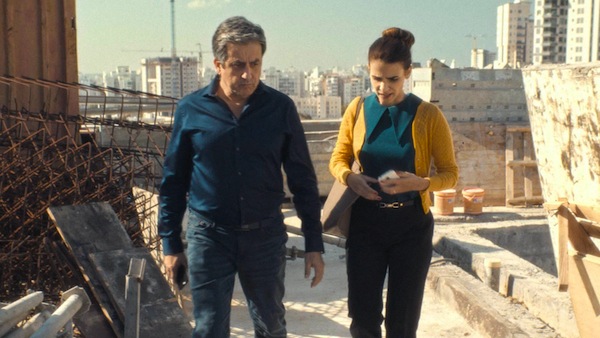
photo - In Working Woman, it initially seems that Benny (Menashe Noy) genuinely wants to help Orna (Liron Ben Shlush) succeed
In Working Woman, it initially seems that Benny (Menashe Noy) genuinely wants to help Orna (Liron Ben Shlush) succeed. (photo from VIFF)

I can’t even look at the stills of actor Menashe Noy, who plays Benny in Working Woman, without feeling disgusted, so well did he play the lecherous boss of Orna (Liron Ben Shlush), a smart, married, mother-of-three, who Benny hires as his assistant.

At first, Benny is the good guy, the man who sees great potential in the inexperienced Orna. Her former commander in the army, he hires her at his development firm, and Orna excels as a salesperson. This is part of what attracts Benny to her – her intelligence and natural ability. But he can’t control his desire and he tries to take what he wants. Orna must figure out how to extricate herself from the untenable situation without ruining her career opportunities.

For some reason, I was expecting a dramatic thriller, where Orna exacts some horrible but deserving punishment on her harasser, but Working Woman is less dramatic than that. Orna uses her brains to get what she needs to move on, both workwise and psychologically. While it would have been refreshing if the character of Orna’s husband had been written as one more sympathetic to her plight, the film is probably more realistic as it is.

Working Woman screens Oct. 8 and 10.

* * *

Some of the other films that are of special interest to the Jewish community include The Oslo Diaries, presented by the Israeli Consulate General, Toronto and Western Canada, with the Jewish Independent as media partner, which screens Sept. 28 and 29, and Oct. 12 (jewishindependent.ca/oslo-diaries-peace-possible); Animal Behaviour Oct. 1 and 8 (jewishindependent.ca/animated-therapy-session); and The Washing Society Oct. 4 and 6 (jewishindependent.ca/bringing-the-invisible-to-light). For the full VIFF schedule, visit viff.org.

Format ImagePosted on September 21, 2018September 20, 2018Author Cynthia RamsayCategories TV & FilmTags Vancouver International Film Festival, VIFF
Curious Incident stellar

Curious Incident stellar

Ghazal Azarbad, as Siobhan, a special-ed teacher, and Daniel Doheny, as Christopher, who has Asperger’s, often work in tandem in The Curious Incident of the Dog in the Night-Time. (photo by David Cooper)

Left, right, left, right. Follow the red line. Left, right, left, right. Through the tunnel. Up the stairs. Left, right, left, right. Take the A-Levels, get an A star, become a mathematical genius. Left, right, left, right….

Such are the thought processes of Christopher Boone, a 15-year-old with Asperger syndrome, who is the central character in The Curious Incident of the Dog in the Night-Time.

Asperger’s is a developmental disorder on the autism spectrum characterized by repetitive, single-minded actions, inappropriate social interaction and highly focused interests. In Christopher’s case, those interests involve solving a mystery about a neighbour’s dog that was killed with a pitchfork; writing a story about how he solves the crime; and doing his A-Levels math exams because he wants to be a mathematical genius.

The story he writes becomes a play within the play performed by the staff at the special school he attends. The audience is taken on this journey by his special-education teacher reading from the text he wrote; by Christopher narrating events in the robotic fashion that is often symptomatic of Asperger’s; and by the actual events interwoven through the show in present-day and flashbacks.

The pace is frenetic, even mind-numbing at times, and works as a metaphor for Christopher’s view of the world – where things we take for granted don’t make sense to him and he has to create his own processes and order for self-protection.

Christopher can describe and explain a black hole to the smallest scientific detail, but cannot understand that he shouldn’t call his classmates “stupid.”

He can quote statistics at random – “You are most likely to be killed by a family member on Christmas day” – but doesn’t like yellow food.

Similar to the character in the TV program The Good Doctor, an autistic surgeon with savant syndrome, Christopher is a genius in his realm of specialty – mathematics – but must do things his way, which is constantly putting him at odds with the rest of world.

Protecting him from this outside harm is his father, with whom he lives in Swindon, England. As patient as his father tries to be, the challenge of dealing with Christopher’s proclivity to be single-minded, as exhibited in his investigation of the dog’s death, drives his father to rage, eventually leading to a physical altercation in which Christopher is hit. Nonetheless, Christopher cannot let go of this obsession. “Sometimes, you have to ignore what people tell you to do,” he says, which is characteristic of someone with Asperger’s.

One day, Christopher finds out that his father has lied to him about what happened to his mother. Up until this point, his father was one of the few people Christopher could trust, even to just touch him or hold him. When this trust is broken, Christopher sets out on what, for him, is a terrifying and difficult journey.

In one of the more dazzling, complicated and mezmerizing scenes of the play, Christopher must make his way through the complexity of the train stations, dancing in and around the other travelers, while avoiding touching them, and then figuring out the timing of how one actually steps onto the train car from the platform, which he’s never done.

He eventually finds what he’s looking for, but the result is not what had hoped for. He ends up returning to Swindon to take his A-Level maths, in an effort to get an A-star rating, and to try and rebuild the relationship with his father.

While local rising star Daniel Doheny is stellar in this challenging performance, and Todd Thomson is compelling as the tormented father, what really makes the play brilliant is the creative team. The direction, movement, blocking, timing, set design and lighting are remarkable. Jewish community member Itai Erdal was the lighting designer of the production. And particular mention must go to a simple but highly effective prop that lifts and drops part of the stage, turning it into a train platform for one scene, then lowering it to form the seat on the train in another.

As a caution, the actors bring everything to bear in this performance, so be prepared for very loud yelling, moaning and frenetic action – often by multiple actors at once, as the chorus works to amplify Christopher’s feelings and racing mind – as well as some swearing. A “relaxed” special performance runs Sept. 30 that includes lower sound levels, lights and projections that are more subdued, and a relaxation station in the lobby equipped with a live feed so audience members can take a break from being inside the theatre without missing what’s happening on stage.

Though this play can be troublesome, chaotic and even exhausting to watch, it is one of my favourites of the past year and I highly recommend it.

The Curious Incident runs until Oct. 7 at the Stanley Industrial Alliance Stage (artsclub.com).

Baila Lazarus is a Vancouver-based writer and principal media strategist at bailalazarus.com.

Format ImagePosted on September 21, 2018September 21, 2018Author Baila LazarusCategories Performing ArtsTags Arts Club, Asperger, theatre
Menkis awarded, Sundberg hired

Menkis awarded, Sundberg hired

Prof. Richard Menkis (courtesy)

The University of British Columbia’s Prof. Richard Menkis has received two honours recently: the 2018 Louis Rosenberg Canadian Jewish Studies Distinguished Service Award and the 2018 Switzer-Cooperstock Prize for the best essay in Western Canadian Jewish history.

The Association for Canadian Jewish Studies established the Rosenberg Award in 2001 to recognize the significant contribution by an individual, institution or group to Canadian Jewish studies. In announcing Menkis as this year’s honouree, the association noted his “long and very distinguished career as a strong advocate for and practitioner of the scholarship and teaching of Canadian Jewish studies.”

Menkis won this year’s Switzer-Cooperstock Prize for the essay “Two Travelers and Two Canadian Jewish Wests,” which emphasizes the multiple expressions of interwar Jewish life in the Canadian west, and studies how two rabbis – Chief Rabbi J.H. Hertz and Rabbi Y. Horowitz – traveled through the region to promote their different visions. Hertz offered a modern acculturated Anglo-orthodoxy, while Horowitz promoted a traditionalist orientation shaped by Chassidism.

The Switzer-Cooperstock Prize, donated by members of the Switzer family to honour their parents and grandparents, is awarded biennially by the Jewish Heritage Centre of Western Canada. Past winners of the prize are Theodore Friedgut (Hebrew University), Lynne Marks (University of Victoria), Chana Thau (Winnipeg independent scholar), David Koffman (York University) and Esyllt Jones (University of Manitoba).

Menkis received his PhD from Brandeis University in 1988 and for many years held a position in the department of classical, Near Eastern and religious studies with a cross appointment to the department of history at UBC. He is currently associate professor of medieval and modern Jewish history in the history department at UBC. In addition to the surveys of medieval and modern Jewish history, he has taught advanced undergraduate courses on the Holocaust; Canadian Jewish history; fascism and antifascism; the historiography of genocide; and Jewish identity and the graphic novel. He continues to supervise both MA and PhD student theses at UBC and has served on PhD committees at other institutions.

Menkis has published widely on the cultural and religious history of Canadian Jewry. His articles have appeared in American Jewish History, American Jewish Archives, Canadian Ethnic Studies, Canadian Jewish Studies and in a number of edited volumes. Menkis was co-author, with Harold Troper, of More Than Just Games: Canada and the 1936 Olympics (University of Toronto Press, 2015), a seminal work in the field that presents an investigation of the responses and reactions of both Jewish and non-Jewish Canadian athletes and their communities to participation in the games. He is continuing the research for a publication, begun with Gerald Tulchinsky (z”l), on an aspect of the Canadian Jewish garment industry.

Appointments

Tikva Housing has hired Alice Sundberg as director of operations and housing development. Sundberg has more than 30 years of nonprofit housing experience, including housing development, organizational and project management, and sector leadership. Most recently, she was involved with the development of the Co:Here Housing Community and the creation of Home Front, a collaborative initiative to make homelessness in Metro Vancouver rare, brief and one-time. Her knowledge of and contacts with both provincial and federal levels of government will assist Tikva Housing greatly as the organization moves forward with current and new project developments.

Sundberg is excited to be joining Tikva Housing and is already busy with the upcoming opening of the Ben and Esther Dayson Residences in Vancouver’s Fraser district. For information about Tikva’s upcoming projects, you can reach her at [email protected], or housing administrator Anat Gogo, at [email protected].

Format ImagePosted on September 21, 2018September 20, 2018Author Community members/organizationsCategories LocalTags Alice Sundberg, history, Richard Menkis, Tikva Housing, UBC
Barbecue for JSA volunteers

Barbecue for JSA volunteers

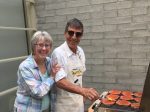
Jewish Seniors Alliance board member Pam Ottem, who is chair of JSA’s peer support program, with Baruch Azeroual at the JSA volunteer barbecue. (photo from JSA)

On Aug. 22, Jewish Seniors Alliance held its now-annual barbecue for peer support services volunteers, in appreciation of their work with seniors. This year’s celebration, attended by about 50 people, was a joyous affair, with food and musical entertainment, and speeches from volunteers.

Most of the attendees at the barbecue were volunteers or staff of the peer support services program, and a number of JSA board members also joined in the festivities. The food for the meal was contributed by the volunteers.

Charles Leibovitch, JSA peer support coordinator, and Grace Hann, JSA peer support volunteer trainer and supervisor, spoke and welcomed everyone before introducing JSA president Ken Levitt, who thanked everyone for their hard work and mentioned some of the issues for which JSA is advocating, such as a universal pharmacare program.

After Levitt spoke, Leibovitch called on Serge Haber, president emeritus and founder of JSA, to say a few words. Haber spoke about the needs of seniors and how JSA is trying to advocate for and fill some of those needs.

Hann explained about a crowdshare in which some of the volunteers had participated – a listening program that takes place every second Monday, 5-6 p.m., on Bute Street at Davie. Hann also thanked everyone who helped set up the event, including JSA coordinator Liz Azeroual and Azeroual’s husband, Baruch, who did the barbecuing.

The musical trio of Dave and Julie Ivaz and their son, Harrison, provided a wide-ranging performance. They played guitar and sang many songs familiar to the audience.

For more information on JSA, its peer support services, the listening and other programs, visit jsalliance.org.

Shanie Levin, MSW, worked for many years in the field of child welfare. During that time, she was active in the union. As well, she participated in amateur dramatics. She has served on the board of the Jewish Federation of Greater Vancouver and is presently on the executive of JSA and a member of the editorial committee.

Format ImagePosted on September 21, 2018September 20, 2018Author Shanie LevinCategories LocalTags JSA, seniors, volunteering

Feast for mind and soul

Smack in the middle of the Days of Awe, hundreds of members of our community came together for an inspiring, entertaining and occasionally emotional evening celebrating unity and inclusion.

The opening event of the 2018 Jewish Federation of Greater Vancouver annual campaign Sunday night once again took the form of FEDtalks, four presentations from individuals with starkly divergent life experiences.

Zoya Schvartzman, whose career now is devoted to improving the lives of individual Jews in Europe and revivifying once nearly obliterated Jewish communities there through her work with the Joint Distribution Committee, talked about how a comparatively simple gesture by the Vancouver Jewish community, when she and her single mother lived here several years back, was a testament to paying it forward. By providing a family in need with a small hand up, probably nobody involved at the time imagined that a kind word and a bag of groceries, including a jar of chocolate spread, would inspire a young woman to positively change the lives of some of the most marginalized Jews in the contemporary world.

Arik Zeevi, an Israeli judo Olympian, talked about the importance of setting goals that seem to exceed our grasp as a means of self-improvement and collective advancement.

Pamela Schuller, a disability activist and stand-up comedian, spoke of how Tourette syndrome went from being her defining characteristic to becoming an integral, appreciated and complementary component of her complex identity. Her endearing and humorous presentation encouraged everyone to look at perceived disabilities as unanticipated gifts.

Rabbi Irwin Kula, in an intellectually packed tour de force, spoke of Judaism’s ability to transform itself, saying that the first Jews of Vancouver would not recognize the Judaism of today and that our descendants a century hence will not recognize our Judaism – and that this is a sign of constructive adaptivity.

The four speakers offered very different perspectives, which, together, reminded all of us at the Vancouver Playhouse that unity and diversity are complementary and not exclusive.

Everyone in the audience certainly left with a lot think about. However, standouts as we reflected afterwards included the idea that, while Judaism treasures tradition, its millennia of continuity is due at least in part to a willingness to break existing paradigms and make room for new ways of being and thinking, as well as fresh voices, being inclusive of multiple identities and ensuring that successive generations are welcomed and included even – perhaps especially – when they challenge the way things have always been done.

Also underlying much of the evening was the concept that our actions have powerful ripple effects that we cannot forecast. Small actions – teaching judo to a 7-year-old, standing up for a classmate with a disability, reaching out to members of the community in their times of need – can lead to life-altering consequences.

Underscoring these messages were words from leaders of our local Federation and campaign, including Federation board chair Karen James, past chair Stephen Gaerber, women’s philanthropy chair Megan Laskin, chair of this year’s campaign Jonathon Leipsic, and Federation chief executive officer Ezra Shanken, all of whom, in particular ways, reminded attendees of the obligation and privilege of participating in a collective movement that changes lives in British Columbia, Israel and around the world.

Leipsic singled out members of his generation, pleading that they maintain and expand upon the institutions and infrastructure that previous generations built for us. He made special note of Charles Diamond, whose funeral had taken place earlier that day. Diamond’s parents were among our community’s pioneers and the Diamond family, through generations, have been role models of the involvement needed for a community to thrive.

In these days of introspection, teshuvah and transcendence, FEDtalks proved a perfect opportunity to come together, reflect, celebrate, think big and rededicate ourselves to making positive contributions individually and collectively.

Posted on September 21, 2018September 20, 2018Author The Editorial BoardCategories From the JITags annual campaign, FEDtalks, Jewish Federation, philanthropy

Striving and building more

I wanted to share an interesting issue I stumbled into while reading online. It was in a Jewish discussion group. The short version (without violating anyone’s privacy) was that one person would be having surgery in the days before Yom Kippur. She was struggling with the concept that she couldn’t fast, as she had to be eating and drinking frequently, in small amounts, after the surgery.

It took me a while to figure this post out. This was bigger than the observance of a specific commandment. This was a person who was having a weight-loss procedure. Her issues around food were likely larger than fasting on Yom Kippur. The people in the discussion group emphasized how important the surgery was to her long-term health. (Nobody embarrassed her by asking difficult questions.) Meanwhile, another person in the group was having shoulder surgery. She worried about how she would hold a prayer book. This seemed easier to solve, as it was a physical and not a psychological issue. Suggestions flew across the web: a music stand, a lectern, a friend who could help, etc.

As a kid, growing up in the Reform movement, there was a great emphasis put on fasting on Yom Kippur. Fasting was a sign that you were really invested in the holiness of the day. Yet, this wasn’t something done on other fast days, or even in terms of other mitzvot (commandments). My family was involved in the Jewish community every day, but, on Yom Kippur, I remember seeing people at our congregation putting a big energy into fasting that I hardly saw at other times of the year.

When I was in university and when I met my husband, I was introduced to people with many other ways of observing Jewish tradition (or not). His family is everything from secular to Lubavitch, with every variation in between. He pointed out that, if you’re sick, a rabbi would tell you not to fast. He pointed out that, in his extended family, there were people who fasted but did not attend synagogue, and those who attended synagogue daily, but couldn’t fast for health reasons. He reminded me that this isn’t clear-cut, even if it initially looks that way.

When we learn about Judaism, often as kids before bar or bat mitzvah age, we’re presented with a lot of information in binaries. It’s black and white, but that is also the way most grade school children absorb any new information, not just Jewish content. As we age, we learn that, in fact, the world is often more complex. It’s often multiple variations of grey (never mind chartreuse) instead.

Health issues, child rearing, our work lives – these all affect how we observe holidays. There is no universal measuring stick that indicates how this works, either. Things change over our lives, and having kids or an illness can affect our observances. Some people fast easily, and others build sukkot (temporary hut dwellings) without a fuss. Others cannot fast without serious issues, and I’d bet there are plenty of people in the Jewish community who hesitate, for one reason or another, to erect a sukkah on their own.

The thing that hopefully does remain constant, for everyone, is the emphasis on striving to be better people in the year to come. Wherever you are, in your Jewish practice, or in the way you treat others, or in your business dealings, you can probably grow and improve. We can choose to make change in our lives.

There are, of course, people out there who are Jewish but don’t think about mitzvot, attend any synagogue or fast. However, some of these same people may pride themselves in being ethical in their business, in how they treat others, or in how they treat animals. They may not even realize that these, too, are Jewish values.

There are also so many ways in which these are particular Jewish concerns that link us to other faith communities. One of the pillars of Islam is jihad and, no, it’s not all about holy war. For faithful Muslims, this concept is about striving – striving to be a better student, family member or worker, to be more religious or spiritual, and onwards. Christians often speak about love, but also it must be put into action. It’s work to make compassionate acts towards others a priority, no matter your religion.

Whatever your community, you can offer others a supportive presence that helps them become the people they aim to be. It’s in a community, whether it’s physical or an online discussion group, that we can unwrap our concerns and get help in solving obstacles that keep us from doing what we’d hoped in life (Jewishly, or otherwise).

I love Sukkot and am looking forward to spending time in the sukkah outdoors. However, it’s also a time to welcome people in as guests – and to build that supportive space. You may not build a sukkah or wave a lulav and etrog, but you can be a builder. Begin by supporting others as they strive towards being their best selves. It starts with a smile, a welcoming invitation or a positive response. Happy 5779! May it be everything that you hope to become!

Joanne Seiff writes regularly for CBC Manitoba and various Jewish publications. She is the author of three books, including From the Outside In: Jewish Post Columns 2015-2016, a collection of essays available for digital download or as a paperback from Amazon. See more about her at joanneseiff.blogspot.com.

Posted on September 21, 2018September 20, 2018Author Joanne SeiffCategories Op-EdTags Judaism, Rosh Hashanah, spirituality, Sukkot, Yom Kippur
Mystery photo … Sept. 21/18

Mystery photo … Sept. 21/18

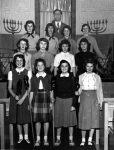
Congregation Beth Israel, circa 1955. (photo from JWB fonds, JMABC L.09737)

If you know someone in this photo, please help the JI fill the gaps of its predecessor’s (the Jewish Western Bulletin’s) collection at the Jewish Museum and Archives of B.C. by contacting [email protected] or 604-257-5199. To find out who has been identified in the photos, visit jewishmuseum.ca/blog.

Format ImagePosted on September 21, 2018September 20, 2018Author JI and JMABCCategories Mystery PhotoTags archives, Beth Israel, history, Jewish museum
Is God’s very good world OK?

Is God’s very good world OK?

(photo from jpl.nasa.gov)

Rosh Hashanah commemorates God’s creation of the world. During the 10 days from Rosh Hashanah to Yom Kippur, we evaluate our deeds and do teshuvah (repentance) for cases where we have missed the mark. And, during Sukkot, we leave our houses and live in temporary shelters to commemorate our ancestors’ journey in the wilderness. Hence, these weeks provide an excellent time to consider the state of the planet’s environment and what we might do to make sure that the world is on a sustainable path.

When God created the world, He was able to say, “It is tov meod,” very good. (Genesis 1:31) Everything was in harmony as God had planned, the waters were clean, and the air was pure. But what must God think about the world today?

What must God think when so many species of plants and animals He created are becoming extinct at such an alarming rate in tropical rain forests and other threatened habitats; when the abundant fertile soil He provided is being depleted and eroded; when the climatic conditions He designed to meet our needs are threatened by climate change?

An ancient rabbinic teaching is all-too-relevant today: “In the hour when the Holy one, blessed be He, created the first human being [Adam], He took him and let him pass before all the trees of the Garden of Eden and said to him: ‘See my works, how fine and excellent they are! All that I have created, for you have I created them. Think upon this and do not corrupt and destroy My world. For, if you destroy it, there is no one to set it right after you.’” (Midrash Ecclesiastes Rabbah 7:28)

Today’s environmental threats bring to mind the biblical 10 plagues. When we consider the threats to our land, water and air from pesticides and other chemical pollutants, resource scarcities, acid rain, deforestation, desertification, threats to our climate, etc., we can easily enumerate more than 10 modern “plagues.” The Egyptians were subjected to one plague at a time, while our modern plagues threaten us simultaneously. And the Israelites in Goshen were spared most of the biblical plagues, while everyone on earth is imperiled by the modern plagues.

Instead of an ancient pharaoh’s heart being hardened, our hearts today seem to have been hardened by the greed, materialism and waste that are at the root of current environmental threats. While God provided the biblical plagues to free the Israelites, today we must apply God’s teachings in order to save ourselves and our planet.

There seem to be almost daily reports about record heat waves, severe droughts and wildfires, the melting of glaciers and polar ice caps, an increase in the number and severity of hurricanes and other storms, and other effects of climate change. All of the above, and much more, is related to a temperature increase in the past century of a little more than one degree Celsius, so it is frightening that climate experts project a temperature increase of three to six degrees Celsius in the next 100 years. Some leading climate experts have stated that global warming may reach a tipping point and spin out of control within a decade, with disastrous consequences, unless major changes soon occur.

All countries, including Israel, are affected by climate change. Israel is already suffering from one of the worst droughts in its history, with below average rainfall in each of the past five years, and the Kinneret, a major water source, at dangerously low levels.

Israeli climate experts are concerned that, with additional climate threats, there will be a rise in temperature causing many severe heat waves; a significant increase in the Mediterranean Sea level, which would threaten the narrow coastal strip of land that contains most of Israel’s population and infrastructure; and a significant decrease in rainfall, estimated at 20%-30%, which would disrupt agricultural production and worsen the chronic water scarcity problem in Israel and the region. Making matters worse, much of that rainfall would come in severe storms that would cause major flooding.

Fortunately, there are many Jewish teachings that can be applied to shift the earth to a sustainable path. Briefly, these include our mandate to be shomrei adama (guardians of the earth), based on the admonition that we should “work the earth and guard it” (Genesis 2:15); the prohibition of bal tashchit, that we should not waste or unnecessarily destroy anything of value (Deuteronomy 20:19-20); the teaching that, “The earth is the Lord’s and the fullness thereof” (Psalms 24:1), and that the assigned role of the Jewish people is to enhance the world as “partners of God in the work of creation” (Shabbat 10a); and the ecological lessons related to the Shabbat, sabbatical and jubilee cycles.

As coworkers with God, charged with the task of being a light unto the nations and accomplishing tikkun olam (repair of the earth), it is essential that Jews take an active role in applying our eternal, sacred values in struggles to reduce climate change, pollution and the waste of natural resources. Jews must work with others for significant changes in society’s economic and production systems, values and lifestyles. The fate of humanity and God’s precious earth are at stake and, if we fail to act properly and in time, there may be “no one after us to set it right.”

Richard H. Schwartz, PhD, is professor emeritus, College of Staten Island, president emeritus of Jewish Veg and president of Society of Ethical and Religious Vegetarians. He is the author of several books, including Judaism and Vegetarianism and Who Stole My Religion? Revitalizing Judaism and Applying Jewish Values to Help Heal Our Imperiled Planet, and more than 250 articles at jewishveg.org/schwartz. He was associate producer of the documentary A Sacred Duty: Applying Jewish Values to Help Heal the World.

Format ImagePosted on September 21, 2018September 20, 2018Author Richard H. SchwartzCategories Op-EdTags climate change, environment, Judaism, tikkun olam
New rhino born

New rhino born

photo - baby rhino
(photo from Ashernet)

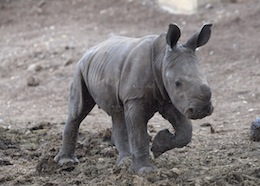
Tanda, 25, with her as-yet-unnamed calf at Ramat Gan Safari Park. (photo from Ashernet)

Tanda’s new offspring – her fifth – weighed 50 kilograms at birth. The baby rhino’s horn will begin to grow in the coming weeks, but, in its first year, the horn will remain small and round. Due to poaching in other areas of the world – for the rhinos’ horns – several species of rhino have become endangered. In one case, the northern white rhino has been almost completely wiped out, with only five animals left in captivity. The safari park tries to encourage breeding programs, particularly of endangered species, and has seen some success.

Format ImagePosted on September 21, 2018September 20, 2018Author Edgar AsherCategories IsraelTags endangered species, environment, Ramat Gan Safari Park

Posts pagination

Previous page Page 1 … Page 361 Page 362 Page 363 … Page 667 Next page
Proudly powered by WordPress