Skip to content
  • Home
  • Subscribe / donate
  • Events calendar
  • News
    • Local
    • National
    • Israel
    • World
    • עניין בחדשות
      A roundup of news in Canada and further afield, in Hebrew.
  • Opinion
    • From the JI
    • Op-Ed
  • Arts & Culture
    • Performing Arts
    • Music
    • Books
    • Visual Arts
    • TV & Film
  • Life
    • Celebrating the Holidays
    • Travel
    • The Daily Snooze
      Cartoons by Jacob Samuel
    • Mystery Photo
      Help the JI and JMABC fill in the gaps in our archives.
  • Community Links
    • Organizations, Etc.
    • Other News Sources & Blogs
    • Business Directory
  • FAQ
  • JI Chai Celebration
  • JI@88! video

Recent Posts

  • Story of Israel’s north
  • Sheltering in train stations
  • Teach critical thinking
  • Learning to bridge divides
  • Supporting Iranian community
  • Art dismantles systems
  • Beth Tikvah celebrates 50th
  • What is Jewish music?
  • Celebrate joy of music
  • Women share experiences 
  • Raising funds for Survivors
  • Call for digital literacy
  • The hidden hand of hate
  • Tarot as spiritual ritual
  • Students create fancy meal
  • Encouraging young voices
  • Rose’s Angels delivers
  • Living life to its fullest
  • Drawing on his roots
  • Panama City welcoming
  • Pesach cleaning
  • On the wings of griffon vultures
  • Vast recipe & story collection
  • A word, please …
  • מארק קרני לא ממתין לטראמפ
  • On war and antisemitism
  • Jews shine in Canucks colours
  • Moment of opportunity
  • Shooting response
  • BC budget fails seniors
  • Ritual is what makes life holy
  • Dogs help war veterans live again
  • Remain vital and outspoken
  • An urgent play to see
  • Pop-up exhibit popular
  • An invite to join JWest

Archives

Follow @JewishIndie
image - The CJN - Visit Us Banner - 300x600 - 101625

Both personal & cosmic

Both personal & cosmic

Eric Goldstein and Jenny Judge are different in their backgrounds and creative philosophies, in their media and techniques, but they have two characteristics in common: their images are abstract, and strings drive their artistic perceptions. (photo by Jenny Judge)

A string is a simple, utilitarian object. Usually, it connects things, but rarely is it associated with beauty. However, String Theory, the current two-artist exhibition at the Zack Gallery, definitely brings beauty to gallery patrons.

The artists participating in the show – Jenny Judge and Eric Goldstein – are different in their backgrounds and creative philosophies, in their media and techniques, but they have two characteristics in common: their images are abstract, and strings drive their artistic perceptions.

Judge has been an installation artist for decades.

“I received a BFA in sculpture and printmaking in 1983 and completed an MFA in sculpture in 1991,” she told the Independent. “I often integrate a variety of craft-based material and processes in my installations, and I have exhibited them in Canada and abroad, but I have never exhibited my drawings before this show. I’ve been drawing for a long time, but my drawings were never the focus of my art. They were for clearing my head, as was my writing, which is also essential to my practice. Both helped me understand my own concepts better. I guess it is time for my drawings to be in the foreground of a show.”

photo - Jenny Judge
Jenny Judge (photo by Mads Colvin)

Like her installations, Judge’s drawings have depth, displaying multiple layers of texture and meaning.

“The heart of these drawings is transition, the two different sides coming together, connected by lines or strings,” she explained. “Light versus dark. Old age versus youth. Northern hemisphere versus southern. Sky versus water. My family lives in Canada and New Zealand, and I’m often traveling from there to here and back. My drawings help me to make sense of these transitions.”

All her pieces in the show are a wash of muted paint in the background overlaid by a network of strings and nodes in faintly contrasting colours. The web of strings and their junctions is complex and delicate, the lines gossamer-thin, reflecting the artist’s contemplation of belonging to the emotional and physical landscape of both Canada and New Zealand. 

“My drawing are like landscapes,” she said. “There is even a horizon line in most of them, the line where two different worlds meet, the areas of constant shifting and negotiations. But there is much more to the story I want to tell. That’s why I paint in the abstract style. A simple landscape is just that – a landscape, a forest or a mountain. But an abstract picture always leaves room for interpretation. Everyone can come up with their own story.”  

Like her images, Judge’s titles are also open to interpretation: “Crossing,” “Striations,” “Pass Through,” for example.

“They underscore my feelings of not always knowing where I am in time and space, of always seeking connections,” she said.     

Inspired by the concepts of meeting points, of confluence and repetition, Judge also sees parallels between her compositions and knitting.

“I learned to knit from my mother when I was 10. I remember sitting with her as we talked, knitted and counted stitches. I still enjoy knitting. When you knit, you have one string of yarn and you repeat the same pattern over and over again. And, suddenly, you have something else: a scarf or a sweater. That’s what I do when I draw. I repeat endless variations of the same pattern until something meaningful emerges,” she said.  

Another link between her drawings and her knitting is the tool she employs. She draws with a bamboo skewer (very like a knitting needle), dipped in acrylic ink. “It is a very domestic item,” she said. “But it has a sharp point, sharper than any brush. It allows me to draw very thin lines. I build those webs of lines over one another, rows and layers, until I’m satisfied with the result. Sometimes, it takes several layers until the whole starts making sense. Of course, it takes a long time to draw all the lines I visualize for even one painting.”

Perhaps the length of time it takes her to create her pieces contributes to the fact that she doesn’t take commissions. “I tried,” she said. “But I didn’t like the clients’ constant demands. I don’t create art for the money.”     

Goldstein, however, does take commissions and he relishes seeing his pieces in people’s homes.

“I create mixed media collages,” he said. “I use coloured fibres, gold foil, glass, paint, plaster.”

While Judge’s web-like pictures imply multiple dimensions, Goldstein’s fibre string collages tend to one-directional geometries, either horizontal or vertical, their colour patterns cheerful and dazzlingly bright. The gold foil and the glass fragments provide even more pizzazz to his deceptively simple compositions. “I build my canvasses like an architect builds a building,” he said. 

Goldstein came to the visual art from the movie industry. Over the past three decades, he has been the director of photography for more than 75 film projects, from Hollywood features to documentaries. Creating gorgeous, highly decorative fibre collages for the last 15 years has provided him with a different outlet for his artistic vision. 

“I’m inspired by nature, by the West Coast landscape,” he said. “Not as it appears on the surface. Instead, I want to capture how it feels to experience it – often chaotic, often incomprehensible. I try to convey feelings. As a mixed-media artist, I delve into the intricate, visual storytelling of people and the world around us.”  

The pieces Goldstein presents in this show have rather mundane titles, in contrast to the elaborate poetry of the images themselves. “I call my paintings ‘Poetic narratives with kinetic energy,’” he said. 

One of the paintings, “View of the Bay,” is a symphony of blue, where glass tiles twinkle among the strings like windows on the far shore. “No Curtains Needed,” on the other hand, is a subtler image, hinting at an open window and a playful light. The artist offers a short description for every canvas, and this one reads: “The absence of curtains allows for unfiltered light to dance freely upon the walls. It creates a sense of freedom and awe. Reminding us to let go of our barriers, both physical and cerebral, so we can.” 

One of his most notable pieces in the exhibit – the white and blue “What Remains” – feels like a scream of the artist’s soul.

“The colours are the deconstructed Israeli flag,” he said. And his description of the image reads like a part of a poem: “This is my way of bearing witness to the horror unfolding in Israel and Gaza. It expresses my profound sense of conflict and loss of a meaningful identity. This piece isn’t about right or wrong or even resolution; it’s about holding space for complexity, for grief and empathy, and hope that something sacred remains.”  

Goldstein exhibits a lot, and his works are in demand. “Next month, I’ll have a show at the Queen Elizabeth Theatre,” he said. “I’ll have 12 paintings there.”

Judge and Goldstein didn’t know each other before Sarah Dobbs, the gallery curator, decided that their works were complementary. “Together,” she said, “Judge and Goldstein show that both our lives and the universe are shaped by invisible threads – of memory, matter and meaning. String Theory is … about the poetic links between the personal and the cosmic, reminding us that everything is connected.” Both artists agree.  

String Theory is at the Zack Gallery until Sept. 22. To learn more, check the artists’ websites: ericgoldsteinart.com and jennyjudge.com. 

Olga Livshin is a Vancouver freelance writer. She can be reached at [email protected].

Format ImagePosted on September 12, 2025September 11, 2025Author Olga LivshinCategories Visual ArtsTags artwork, drawing, Eric Goldstein, exhibits, Jenny Judge, mixed media, painting, Sarah Dobbs, sketching, string theory, Zack Gallery

Hope for a good year

We begin the cycle of a new year in the coming days. We are all reflecting on our lives, our actions and our place in the world at this time of year. Perhaps, in the past two years, we are doing this more than ever before, even without the catalyst of the month of Elul or the impending holy days as motivation.

One of the things many of us are certainly pondering is how we move through life, and whether we approach the world with the balance tilted towards wonder and hope or towards cynicism and pessimism. These choices are challenging no matter where or under what conditions you live. For Jews in Israel and the diaspora right now, they are especially poignant.

A strength of Jewish life and practice is the capacity to hold sadness and joy in the same moments – life is rarely all one or the other. We mourn that there are still people being held hostage, the deaths in Israel and Gaza and in other conflicts, loved ones facing illness and confronting mortality, natural disasters, climate change, creeping 

authoritarianism in many countries, and all the big and small sadnesses of being human, but these are, above all, a part of being alive. In Judaism, it is a mitzvah to choose life through our actions and choices. This commandment appears in a Torah portion we read prior to Rosh Hashanah, reminding us that we can choose hope over despair, that we can choose a different reality.  

This duality will be on full display in the coming days as we move through the holy days, including navigating the joys and now sorrows of Simchat Torah, which will forever be equated in our memories with the atrocities of 10/7. 

Along with holding joy and sadness in the same moment is holding more than one truth, that being strong is being able to experience things that sadden or madden us and not permit their presence to destroy what happiness or equanimity we have.

Pirkei Avot asks and answers: “Who is mighty? One who conquers his impulse.” 

If our impulse is to be angry, vengeful, depressed or miserable, we might conclude that we have no control over these responses. We do. It’s not easy, but it is within our capability.

Without minimizing the challenges, neither should we dwell on them exclusively.

In the context of Jewish history, victory of a sort in our era comes from being physically safe, with the opportunity to live a contented, meaningful life.

As you hopefully gather as a community in prayer spaces and around holiday tables in the coming days, may you find a greater sense of ease in the balancing of the sweet and the sorrowful, and may you grant yourself and those you love the consent to live well, with hope for a truly good year. 

Posted on September 12, 2025September 11, 2025Author The Editorial BoardCategories From the JITags global politics, holidays, Judaism, lifestyle, Oct. 7, Rosh Hashanah, Simchat Torah
Problematic work in exhibit

Problematic work in exhibit

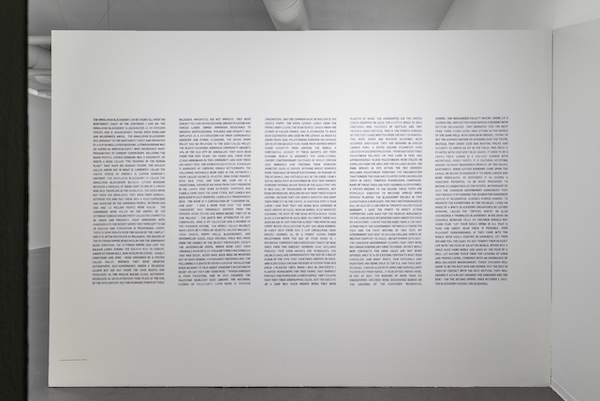
“Delible (poppy, watermelon, wheat, walnut, blackberry)” is on display at the Art Gallery of Greater Victoria until Oct. 26, as part of the Architectures of Protection exhibition. (photo by Toni Hafkenscheid, courtesy Susan Hobbs Gallery)

Beth Stuart’s “Delible (poppy, watermelon, wheat, walnut, blackberry)” is part of the Architectures of Protection exhibition, which opened at the Art Gallery of Greater Victoria (AGGV) on May 24 and ends Oct. 26.

In each of the five “Delible” pieces, a black ledge has replicas of food items on top of it and a length of black mesh suspended below. Stuart used plaster, iron oxide pigment, dyed silk, steel and Sumi ink to create the works. The replicas are casts of halved walnuts, pizza crusts, poppy hulls, blackberries and watermelon seeds. According to the artist, each original mold was made from the source itself, except for the watermelon seeds, which were cast from clay originals.

On a wall leading to the five pieces, there is a several-square-foot textual display featuring more than 1,600 words, written entirely in capital letters, with the thoughts seeming to randomly jump from one topic to another; there are no paragraphs, but the words cover five columns. The text, an integral element of the overall artwork, was hand-stenciled by Stuart and relates to the physical pieces. 

photo - Beth Stuart’s “Delible (poppy, watermelon, wheat, walnut, blackberry)” installation comprises a wall of text and five structures
Beth Stuart’s “Delible (poppy, watermelon, wheat, walnut, blackberry)” installation comprises a wall of text and five structures. (photo by Mike Andrew McLean, courtesy Art Gallery of Greater Victoria)

The text begins with mention of the Himalayan blackberry, an invasive species in British Columbia, and then moves to Luther Burbank, an American botanist, horticulturist and eugenicist, before discussing the Armenian Genocide (1915-16) and Canada’s residential schools.

In the middle portion of the textual display, Stuart describes what she sees as the plight of Gazans and the attitudes of certain Israelis.

“AS I WRITE, THERE HAS BEEN NO AID OF ANY KIND FOR ALMOST TWO MONTHS AND EVERY WATER DESALINATION PLANT HAS BEEN BOMBED,” Stuart writes. “IN EARLY 2024 THERE WAS A CLIP CIRCULATING FROM ISRAELI CHANNEL 14, OF A PUNDIT SAYING EVERY PALESTINIAN OVER THE AGE OF FOUR YEARS IS A POTENTIAL TERRORIST AND A NECESSARY TARGET OF WAR. SINCE THEN TWO KNESSET MEMBERS HAVE DECLARED PUBLICLY THAT EVEN INFANTS ARE TERRORISTS. THE DELIBLES BAGS ARE APPROXIMATELY THE SIZE OF A BAG OF FLOUR OF THE TYPE THAT SOMETIMES ARRIVES IN GAZA, AND ALSO COULD CONTAIN THE BODY OF A FOUR-YEAR-OLD CHILD.”

Stuart then talks about tree-planting, which she apparently did in university, then writes: “THIS IS THE FOURTH VERSION OF THIS TEXT I HAVE WRITTEN OVER THE PAST 20 MONTHS. THIS WEEK THERE ARE MASSIVE WILDFIRES NEAR OCCUPIED JERUSALEM. THEY ARE BURNING IN AYALON CANADA PARK, A SEVEN SQUARE KILOMETER PARK LOCATED IN OCCUPIED PALESTINE. THERE HAD BEEN THREE PALESTINIAN VILLAGES ON THIS LAND IN 1948. AND APPROXIMATELY 10,000 PALESTINIANS WERE KILLED OR EXPELLED FROM THE AREA AND THE VILLAGES RAZED.”

She talks more about “THE ORGANIZATION THAT FUNDED THE PARK” without naming it and then raises the issue of the Canadian government’s involvement with Israel and, specifically, its military.

“BETWEEN OCTOBER 7TH 2023 AND THE FIRST WRITING OF THIS TEXT, MY GOVERNMENT HAD SENT 30 MILLION DOLLARS WORTH OF MILITARY SUPPORT TO ISRAEL,” she writes. “ON SEPTEMBER 10TH 2024 THE CANADIAN GOVERNMENT CLAIMED THAT THEY WERE NO LONGER SENDING ANY ARMS TO ISRAEL. IN FACT, WHILE CONTRACTS FOR ARMS SALES ARE NOT BEING OFFERED, ONLY 12% OF EXISTING CONTRACTS HAVE BEEN CANCELLED, AND MANY PARTS, RAW MATERIALS AND MUNITIONS ARE BEING SOLD TO THE U.S. AND THEN SENT TO ISRAEL. CANADA ALSO BUYS ARMS AND SURVEILLANCE TECHNOLOGY FROM ISRAEL.”

The text moves into Stuart’s comments on residential schools before she concludes with the sentence: “FOR THE SECOND SPRING SINCE OCTOBER 7, 2023 THE BLACKBERRY HEDGES ARE BLOOMING.”

To at least one member of the Victoria Jewish community, Stuart’s work is an example of “artfully coded antisemitism – all the more reprehensible for its coyness.”

“In itself, ‘Delibles’ are very beautiful, evocative works,” Maurice Yacowar, a professor emeritus (English and film studies) of the University of Calgary, wrote in a letter to the art gallery that was also sent to the Independent.

“What renders the work problematic is the full-wall text – in spectral grey – that accompanies the sculptures,” Yacowar said. 

He said,“As a whole, the work contrasts the self-renewal of nature’s produce with humans’ murderousness. Unfortunately, the art is undermined by the artist’s ignorance and prejudice in its Palestinian references.”

He said Stuart misrepresents Israel and its media by choosing to reference a news outlet “that even in Israel is considered extremist.” And, he argues,“She omits the Oct. 7 context. A Hamas spokesman flatly stated, ‘There are no civilians in Israel’ – ie., only targets in war.”

Stuart’s exhibit does not include the word “Hamas.”

In a statement to the Independent, the AGGV said:

“The gallery is aware that some members of the community disagree with the subject matter of a current work of art on display. We are always interested to hear how the public, and our members, respond to our exhibitions. We also embrace learning, new ideas and critical perspectives.

“At the AGGV, we respect the artists and curators who work with us to create exceptional exhibitions. As an arts institution, our role is to amplify artists’ voices and create space for conversation and learning. We encourage an exchange of ideas that results in meaningful dialogue and understanding through art.”

The Architectures of Protection exhibition, in the synopsis posted by the AGGV, is supposed to reflect “on ideas and modes of protection and refuge – with regards to oneself, to community, knowledge, culture, identity and land. What are these spaces and practices? What is protection for some and not for others? 

Together, in the wake of the COVID-19 pandemic and in the current global social and political climate, the artworks in Architectures of Protection direct critical attention towards systems and structures that shape and impact everyday and sacred environments and encounters, alongside individual and collective relationships with the land.”

The exhibit also features the artwork of Dana Claxton, Jessica Karuhanga, Emilio Rojas and France Trépanier. 

Sam Margolis has written for the Globe and Mail, the National Post, UPI and MSNBC.

Format ImagePosted on September 12, 2025September 11, 2025Author Sam MargolisCategories Visual ArtsTags AGGV, antisemitism, Art Gallery of Greater Victoria, artwork, Beth Stuart, Canada, First Nations, Gaza, genocide, global politics, Israel, sculpture
VIFF’s mixed offerings

VIFF’s mixed offerings

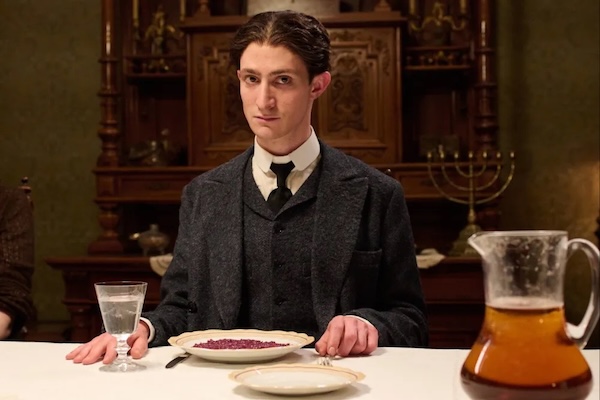
Franz stars newcomer Idan Weiss. (photo from lene Film Production)

As it does every year, the 2025 Vancouver International Film Festival, which runs Oct. 2-12, has offerings of particular interest to the Jewish community. Below are the synopses (less some of the hyperbole) from the festival’s website of the three films featuring Jewish content, as well as the three films about Israel, all of which are from Palestine and other countries – there are no films from Israel in this year’s festival. The Jewish Independent, which has been a media partner of the festival for more than 20 years, has chosen to sponsor Franz.

Franz

You don’t need to have read Kafka to know what “Kafkaesque” means – the idea that the world is a nightmare, a sick joke at your expense, continues to resonate a century after the writer died. Franz Kafka’s “uneasy dreams” have inspired filmmakers like Orson Welles, David Lynch, Michael Haneke, Terry Gilliam and Roman Polanski, to name a few, and now director Agnieszka Holland has delivered a biopic that’s Kafkaesque and then some.

Holland blends scenes from Kafka’s life as a German Jew in Austro-Hungarian Prague with dramatizations of his short stories and – at the film’s most surreal – documentary footage of Kafka’s present-day tourist economy (“Who will join me for a Kafka burger?”). Franz (2025) is densely layered but lively, starring newcomer Idan Weiss, whose tragicomic presence suggests a persecuted clown somewhere between Charlie Chaplin and Adrien Brodie.

Franz is in German and Czech with English subtitles, and runs 127 minutes. It screens Oct. 7, 8:45 p.m., at Vancouver Playhouse, and Oct. 11, 3:30 p.m., at Granville Island Stage. (18+)

Orphan

photo - Bojtorján Barabás in Orphan
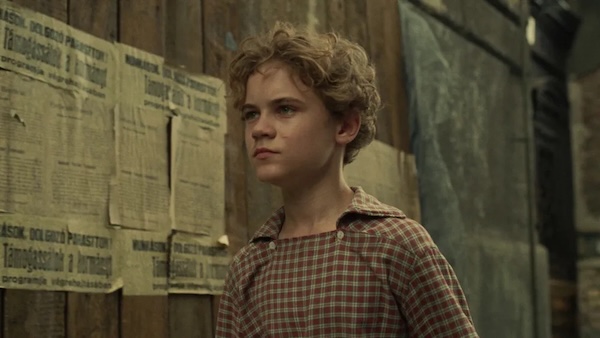
Bojtorján Barabás in Orphan. (photo from Pioneer Pictures/Good Chaos)

Orphan (2025) is set in communist Hungary in the late 1950s. Conceived during the war and brought up by his mother, Andor (Bojtorján Barabás) is convinced his father will return one day. Instead, another man emerges to stake his claim to both mother and child. Berend (Grégory Gadebois) is a butcher and a gentile and, even worse, a divorcee. Appalled, Andor is determined to save his mother from this brute.

The latest film from Son of Saul director László Nemes builds Andor’s world from the inside out, through the child’s troubled eyes. This personal vision grants us access to the wider history unfolding on the edge of the frame, which Andor barely comprehends: the fallout from the Holocaust, the crushing grip of the communist state. 

Orphan is in Hungarian with English subtitles, and runs 132 minutes. It screens Oct. 2, 8:45 p.m., at Fifth Avenue Cinema (19+) and Oct. 4, 6:30 p.m., at International Village 9. (18+)

Cover-Up

photo - Cover-Up is about journalist Seymour Hersh
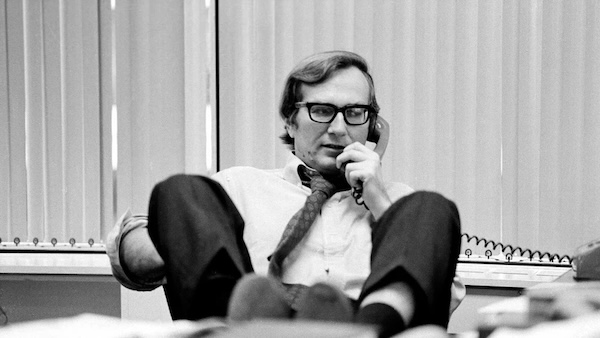
Cover-Up is about journalist Seymour Hersh. (photo by Praxis Films)

Cover-Up (2025) pulls viewers into the uncompromising ethos of journalist Seymour Hersh. From exposing the My Lai massacre to unraveling CIA abuses and Abu Ghraib atrocities, Hersh has spent decades dragging concealed histories into the light – often at great personal and political cost. In this portrait, Oscar-winning filmmaker Laura Poitras (Citizenfour) and Emmy-winning Frontline producer Mark Obenhaus trace Hersh’s process. “I barely trust you guys,” Hersh quips, establishing a candid and often thorny dynamic between subject and directors.

Cover-Up is a meditation on source protection, moral clarity and the imperative to report when it’s needed most. Its story bridges past and present: Hersh is still reporting, now turning his gaze toward Gaza.

Cover-Up has a content warning for graphic violence. It screens at Fifth Avenue Oct. 11, 5:45 p.m. (19+), and at International Village 10 on Oct. 12, 3:45 p.m. (18+) 

Divine Intervention

Palestinian Elia Suleiman is at the height of his powers with this series of deadpan, interconnected, absurdist vignettes about Palestinian life on either side of an Israeli military checkpoint. Mutely following the travails of two lovers – one who lives in Nazareth, the other in Ramallah – as they navigate the wall between them, Divine Intervention (2002) is surreal, satirical and biting in its political criticism. It’s both sad in its vision of the world but also warm in its humour.

All but forgotten from the mainstream filmgoing consciousness, Jacques Tati’s innovations with form and tone have been repurposed by filmmakers as varied as Roy Andersson, Aki Kaurismäki, Ulrich Seidl and, perhaps most of all, Wes Anderson. But Suleiman’s method of feeding the Tati-esque through the prism of Palestinian experience creates something completely new that walks a line between melancholy and absurdity. And what an amazing soundtrack!

Divine Intervention is in English, Arabic and Hebrew with English subtitles, and runs 92 minutes. It screens Oct. 6, 8:45 p.m., at VIFF Cinema, and Oct. 12, 3:45 p.m., at the Cinematheque. (18+)

Palestine 36

Set during the 1936 Palestinian uprising against British colonial rule, this historical drama follows an ensemble of characters. Yusuf (Karim Daoud Anaya), a peasant, straddles two worlds – the city of Jerusalem and his farming village. Denied fair wages, a Jaffa port dockworker (Saled Bakri) joins the rebel movement. Elsewhere, a widowed mother (Yafa Bakri) stashes away an heirloom gun in hopes of defending her family from the British military’s raids.

Shot on location and interspersed with archival footage, the film boasts an international cast, including Hiam Abbas, Jeremy Irons and Liam Cunningham. Palestine 36 (2025) is the third feature from writer-director Annemarie Jacir to be selected as the Palestinian entry for best international feature at the Academy Awards.

Palestine 36 is in Arabic and English with English subtitles, and has a running time of 118 minutes. The film is at Fifth Avenue Oct. 9, 9 p.m., and Oct. 10, 11:45 a.m. (19+)

With Hasan in Gaza

Three unearthed MiniDV tapes from 2001 offer a time capsule of life in Gaza before devastation. What begins as a search for a former prison mate leads to a road trip from the north to the south of Gaza, accompanied by Hasan, a local guide whose fate remains unknown. As the camera moves through Gaza’s streets and landscapes, it captures fleeting moments of everyday life: vendors, schoolchildren, shopkeepers, relatives and strangers, all going about their days in a place that, today, has been forever altered.

In With Hasan in Gaza (2025), Palestinian filmmaker Kamal Aljafari transforms forgotten footage into a time capsule. What was once ordinary is now precious, even endangered. “It is a film about the catastrophe and the poetry that resists,” Aljafari writes.

With Hasan in Gaza is in Arabic with English subtitles, and runs 106 minutes. It screens Oct. 10, 3:30 p.m., at VIFF Cinema and Oct. 12, 6:30 p.m., at International Village 8. (18+) 

– from viff.org

Format ImagePosted on September 12, 2025September 11, 2025Author from viff.orgCategories TV & FilmTags fiction, film, Israel, movies, Palestine, Vancouver International Film Festival, VIFF

Writers fest starts soon

image - Among Ghosts book coverhe 38th annual Vancouver Writers Festival takes place on Granville Island Oct. 20-26. Among the 130-plus local and international authors at 87 events are several members of the Jewish community. A glance through the lineup finds, in order of appearance, Rachel Hartman, Marsha Lederman, Guy Gavriel Kay, Katherine Ashenburg, Jill Yonit Goldberg, Eve Lazarus, Sam Wiebe and Jerry Wasserman. There are, no doubt, others.

Hartman, author of the bestseller Seraphina, comes to the festival with Among Ghosts, which has a found-family theme set in a vibrant fantasy world. She participates with other writers in Paranormal Activity: Ghost Stories for YA (grades 8-12) on Oct. 21, 1 p.m., at Granville Island Stage ($12).

image - October 7th book coverLederman talks with Linden MacIntyre about his latest work of nonfiction, An Accidental Villain, on Oct. 21, 6 p.m., at the NEST ($27), and she is in conversation with Elamin Abdelmahmoud on Oct. 22, 5:30 p.m., at the Revue Stage ($27), about her own new book, October 7th: Searching for the Humanitarian Middle. October 7th is a collection of Lederman’s columns for the Globe and Mail, which have been a real-time archive capturing a period of deep division and trauma.

image - Written on the Dark book coverKay, the internationally bestselling author of Tigana, All the Seas of the World and A Brightness Long Ago, talks about his latest fantasy novel, Written on the Dark, which is set in a magical version of medieval France, replete with ambitious royals, assassins and invading armies. He also talks about his overall body of work with moderator Robert J. Wiersema on Oct. 24, 8 p.m., at the Revue Stage ($27).

image - Margaret’s New Look book coverAshenburg, author of Margaret’s New Look, published her first fiction book at the age of 72. She will join two other writers in the session called Wisdom, Age & Beauty, which takes place Oct. 25, 5 p.m., at Waterfront Theatre ($27). She also participates with several other writers in the Afternoon Tea on Oct. 26, 3:30 p.m., at Performance Works ($50), which includes high tea delicacies, including a signature glass of sherry.

image - After We Drowned book coverThe Soundtrack of Life panel, on Oct. 25, 8 p.m., at the Revue Stage ($27), includes Jill Yonit Goldberg with her book After We Drowned, a haunting coming-of-age story with a fierce feminist subplot set in 1984 to the music of Tina Turner, Madonna and Stevie Nicks.

image - Beneath Dark Waters book coverOn Oct. 26, 10:30 a.m., at Performance Works ($40), Lazarus joins six other authors of nonfiction in an event described as TED Talk meets café social, with a morning snack included. Lazarus explores a forgotten tragedy in Beneath Dark Waters, an account of the 1914 sinking of the Empress of Ireland.

The Crime Scene on Oct. 26, 7 p.m., at Waterfront Theatre ($27) is moderated by Jerry Wasserman and the authors featured include Sam Wiebe, whose The Last Exile finds PI Dave Wakeland at the centre of gang warfare on the streets of Vancouver.image - The Last Exile book cover

In addition to Lederman’s October 7th, there are a couple of other Israel-related books included in the program, the first directly, the second only tangentially.

Palestinian-Canadian author Saeed Teebi is one of the writers joining Blood in the Pen: Stories, Crises, Repair and the Writer on Oct. 21, 8:30 p.m., at Granville Island Stage ($27), and he will be in conversation with Adel Iskandar on Oct. 22, 8:30 p.m., at Waterfront Theatre ($27). Teebi is also one of the writers featured in A Doctor, a Lawyer and a Journalist Walk into a Literary Festival, on Oct. 23, 8:30 p.m., at Waterfront Theatre ($27). He describes his memoir You Will Not Kill Our Imagination as exploring “what it means to be a Palestinian in this moment, the effects of the genocide on Palestinian art and imagination, and that to even claim a belonging to the land from a country thousands of miles away is an act of subversion.”

Queer Stories on the Map on Oct. 23, 8 p.m., at Revue Stage ($27) includes Ziyad Saadi, whose reimagining of Mrs. Dalloway, Three Parties, follows a Palestinian refugee who plans to come out to his entire family at his birthday dinner party.

For more information about festival events and to purchase tickets, visit writersfest.bc.ca. 

– from Vancouver Writers Festival program

Posted on September 12, 2025September 11, 2025Author from Vancouver Writers Festival programCategories BooksTags Israel, Oct. 7, Palestine, Vancouver Writers Festival
Genocide claims examined

Genocide claims examined

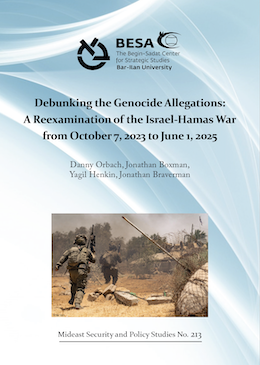
The authors of Debunking the Genocide Allegations: A Reexamination of the Israel-Hamas War from October 7, 2023 to June 1, 2025 sought to do two things in their research: assess the factual basis of war crime and genocide allegations, and examine how information is gathered and transmitted in conflict zones. Among the claims examined is whether enough aid was getting into Gaza from Israel. (IDF Spokesperson via besacenter.org)

A new study conducted by a team of researchers critically examines accusations that Israel committed crimes against humanity, such as planned starvation, deliberate massacres and even “genocide,” during the Israel-Gaza War, between Oct. 7, 2023, and June 1, 2025. Using a blend of quantitative-statistical analysis, forensic documentation, primary sources and comparative military history, the study aims to distinguish propaganda from fact and highlight systemic failures in major international information bodies. Its authors emphasize that their objective is not legal or moral exoneration, but a factual analysis of the methodologies and evidence behind genocide claims.

Research for the 311-page study – Debunking the Genocide Allegations: A Reexamination of the Israel-Hamas War from October 7, 2023 to June 1, 2025 – was led by Prof. Danny Orbach, a military historian from the department of history at the Hebrew University of Jerusalem, in collaboration with Dr. Jonathan Boxman, an expert in quantitative research; Dr. Yagil Henkin, a military historian at the Shalem Centre and the Jerusalem Institute for Strategy and Security; and attorney Jonathan Braverman, a member of the Israeli bar and a lawyer for International Humanitarian Law. It is published by the Begin-Sadat Centre for Strategic Studies at Bar-Ilan University in collaboration with the aforementioned institutions.

The researchers sought to do two things: assess the factual basis of war crime and genocide allegations, and examine how information is gathered and transmitted in conflict zones, particularly in regions ruled by oppressive regimes and/or populated by closed societies with a strong “resistance” ethos. Special emphasis was placed on cross-referencing Israeli, Palestinian and international sources, while actively avoiding ideological bias and preconceived assumptions. The authors highlight that subordinating factual analysis to advocacy narratives can undermine public policy and distort ethical and legal discourse.

image - Debunking the Genocide Allegation report coverThe study’s key findings are:

No basis for starvation claims prior to March 2025

• More food entered Gaza during the war than before Oct. 7, 2023. The claim that 500 aid trucks are required daily stems from a misrepresentation by United Nations bodies, one that was left unchallenged and unchecked. Prewar UN records cite an average of 73 food trucks per day in 2022. During the fighting (until Jan. 17, 2025), the Coordination of Government Activities in the Territories (COGAT) recorded an average of 101 food trucks daily whereas retroactively corrected but still incomplete UN Relief and Works Agency for Palestine Refugees (UNRWA) data indicated 83 food trucks per day. Food that entered the Gaza Strip during the ceasefire should have sufficed until late July 2025, according to World Food Programme projections, even absent any aid following the resumption in the fighting. It is hard to explain this gap without considering extensive looting by Hamas, for which the study’s authors provide ample evidence.

• Although UNRWA initially reported a 70% drop in aid after May 2024 and the Rafah operation, it later retroactively corrected these reports. This correction was effectively unannounced and hence the supposed aid drop continues to be cited broadly.

• Contrary to the claim that 44% of Gaza’s food comes from local agriculture, the study finds this number was baseless even before the Hamas takeover. It is likely that, even in 2005, Gazan agriculture accounted for no more than 12% of Gazan caloric consumption and the number is almost certainly much lower today. The study further finds that even if every ton of crops produced in Gaza in 2011 (the last year in which an analysis was published) was substituted, the number of trucks entering Gaza per capita throughout the war would still be 58% higher per capita than it was in 2011.

• Notwithstanding the above, the authors strongly criticize the decision to stop aid to Gaza between March and May 2025.

No evidence of a systematic civilian targeting policy

While isolated incidents may point to negligence or localized misconduct and suspicion of individual war crimes, no evidence was found of overarching directives aimed at harming civilians. The authors did, however, try to map the patterns of Israel Defence Forces misconduct and possible crimes, and examine which crimes were probably more prevalent and which ones were relatively absent from this conflict.

Data manipulation by Hamas

The Gaza Health Ministry, per Hamas directives, categorizes all deaths as civilian. This manipulation has significantly skewed international reporting. Indications have been found for the inclusion of age-related natural deaths, particularly of women, in the ministry of health’s lists and exclusion of combat-aged men.

IDF’s exceptional precautionary measures

The IDF has implemented unprecedented steps, such as early warnings, precision targeting and mission aborts to avoid civilian harm. These actions, while costly to the IDF, have reduced non-combatant casualties.

Evacuation zones were significantly safer

According to partial data, less than 4% of deaths occurred in Mawasi and the central camps – areas marked as evacuation zones by the IDF – undermining claims of deliberate attacks on safe areas. The failure of the UN to cooperate with the establishment of such zones resulted in considerable loss of civilian life.

Systematic failures in UN and NGO reporting

Numerous claims were based on circular citation, opaque assessments and unannounced retroactive corrections. For instance, UNRWA’s truck count discrepancies were corrected without sufficient publicity. Updated UN data confirms Israel’s consistent assertion of increased aid after May 2024.

A precedent for this kind of flawed reporting can be found in the aftermath of the 2009 Gaza War. Former UN jurist Richard Goldstone, who led the United Nations Fact-Finding Mission on the Gaza Conflict, later expressed regret over some of the report’s conclusions. In a 2011 Washington Post op-ed, he wrote: “If I had known then what I know now, the Goldstone Report would have been a different document.” 

The suffering of civilians in Gaza is both tragic and undeniable. However, this research calls on the international community to ensure that humanitarian discourse remains anchored in verifiable facts. Without accurate data, advocacy loses credibility – and future atrocities may be overlooked due to inflated or politicized claims.

While the suffering of civilians in Gaza is indisputable, the authors caution against humanitarian advocacy narratives built on unverified or manipulated data. Their study does not aim to exonerate or diminish the suffering experienced, but rather to protect the integrity of academic discourse and, by implication, humanitarian and public discourse. When advocacy eclipses accuracy, policy decisions become distorted and genuine accountability is compromised, the authors warn. They urge the international community to uphold higher evidentiary standards in conflict reporting – regardless of the actors involved.

Broader methodological analysis

This study is not unique to the Israel-Gaza conflict. Similar patterns of humanitarian data distortion were identified in Iraq under sanctions, raising broader questions about the methodologies employed in closed or authoritarian environments.

The study also examined other conflict zones, such as Iraq in the 1990s. During that period, it was widely claimed – based on Iraqi government data and a UN Food and Agriculture Organization survey – that hundreds of thousands of children died due to sanctions. The survey reported a rise in infant mortality from 40.7 to 198.2 per 1,000 children. These findings were later revealed to be fabricated by Iraqi authorities. Even when the researcher who conducted the survey acknowledged being misled, the correction failed to impact the wider humanitarian discourse.

Likewise, inflated assessments of violent and nonviolent Iraqi deaths during the Iraq War were widely disseminated and accepted during the conflict – only being laid to rest definitively in 2023.

“Humanitarian bias”

The authors introduce the term “humanitarian bias” to describe a tendency among aid organizations to accept alarming claims from stakeholders in order to mobilize urgent action. In this context, factual corrections are often met with hostility or ignored altogether – undermining accuracy in humanitarian reporting. Even when myths are disproven, corrections are rarely incorporated into public or academic understanding.

The study proposes a new methodological framework for analyzing violent conflicts – one that prioritizes cross-referencing multiple sources, systematic scrutiny and transparency, and resistance to political and media-driven narratives.

The authors emphasize that credible allegations of war crimes demand serious legal and ethical investigation – not only due to their consequences but also in adherence to international law, Israeli law and moral standards.

Orbach warns: “If every severe urban war were defined as genocide, it would ultimately dilute the legal and moral power of the term. ‘Genocide’ would become an empty political slogan, rather than a tool to prevent atrocities.”

This study builds on that call for greater evidentiary caution, particularly in war zones governed by authoritarian regimes.

Debunking the Genocide Allegations can be downloaded at besacenter.org. Following the publication of the Hebrew edition on July 4, 2025, there was extensive feedback from readers, critics, experts and commentators. In some cases,  there was valid criticism that warranted corrections and revisions. Consequently, the English edition is not a mere translation of the Hebrew version but a thoroughly revised, corrected and updated work. 

– Courtesy Hebrew University of Jerusalem

Format ImagePosted on September 12, 2025September 11, 2025Author Hebrew University of JerusalemCategories Israel, WorldTags Bar-Ilan University, Begin-Sadat Centre for Strategic Studies, countering disinformation, Debunking the Genocide Allegations, food aid, genocide, global politics, Hebrew University of Jerusalem, humanitarian bias, International Humanitarian Law., Iraq War, Israel-Hamas war, research, Shalem Centre, war
Support for a hostage deal

Support for a hostage deal

(image from Israel Democracy Institute)

The August 2025 Israeli Voice Index, conducted by the Viterbi Centre for Public Opinion and Policy Research at the Israel Democracy Institute (IDI), asked whether Israel should agree to a deal that would include the release of all Israeli hostages, the cessation of hostilities and the complete withdrawal of the Israel Defence Forces from Gaza. Sixty-two percent of Jewish Israelis and 81% of Arab Israelis support such a deal.

Looking at political orientation among Jews, a large majority on the left (92%) and centre (77%) support such a deal, while the right is more divided, with slightly more in favour (47%) than opposed (44%). A breakdown by vote in the 2022 elections reveals a majority of supporters for this deal among voters for all opposition parties and all coalition parties, except for Religious Zionism voters.

chart - Think that Israel should agree to a deal that includes the release of all the Israeli hostages, the cessation of hostilities and the complete withdrawal of the IDF from the Gaza Strip (total sample, by vote in the 2022 Knesset elections; %) Military operations in Gaza

A plurality of Jewish Israelis (49%) support the decision to expand military operations in Gaza while the overwhelming majority of Arab Israelis (81.5%) oppose the decision.

“There is a substantial share of Israelis who support a hostage deal that involves a full withdrawal from Gaza while also saying they support the expansion of fighting in Gaza,” said IDI’s Prof. Tamar Hermann. “This is due to the context-specific nature of each question – many Israelis prioritize bringing the hostages home even at a great cost, but if a deal cannot be struck, they support the expansion of operations in Gaza.”

Jewish settlement in Gaza

Similar to IDI’s polling from November 2024, last month, 53% of Jewish Israelis and 86.5% of Arab Israelis oppose Jewish settlement in the Gaza Strip. Most on the left (93%) and centre (77%) oppose settlement while most on the right (61%) support it. Rates of support increase in tandem with levels of religiosity, with the highest rate of support among Haredim (75%) and lowest among secular Israelis (21%).

The release of hostages

More than half of the Israeli public (53%) think that their leadership is not making every effort to secure the release of the hostages (Jews, 51.5%; Arabs, 63%). A breakdown by political orientation (Jews) shows that, on the right, as in the past, 63% think that the leadership is indeed doing everything it can. By contrast, this view is held by 28.5% in the centre and 6% on the left.

chart - Think or are certain that Israel’s leadership is making every effort to secure the release of the hostages (%)Control of Gaza after war

Similar to past measurements, a plurality of Jewish Israelis (44%) believe a multinational force should control Gaza after the war, as does 22% of Arab Israelis. Twenty-three percent of Arab Israelis believe the Palestinian Authority should control Gaza.

chart - In your opinion, who should control the Gaza Strip after the end of the war? (%)The burden of fighting

A plurality of Jewish (34%) and Arab (37%) Israelis assess that Israeli society can only bear the burden of fighting for another few months. A decreasing share of Jews think Israelis can bear the burden for as long as it takes, down from 39.5% in March 2024 to 28% today.

chart - Support the cabinet’s decision to expand military operations in the Gaza Strip and take and hold territory there, by assessment of Israeli society’s ability to bear the burden of continued fighting (total sample; %)National mood

In this latest survey, IDI found no major changes in the levels of optimism about the future, excepting a slight improvement (2% in the total sample) in the share of optimists about the future of the economy. There was a small decline in optimism about the future of security (3%), though this is within the margin of error and thus should not be taken as evidence of a new trend. As in previous surveys, in three of the four indicators (security, democracy and economy), the share of optimists is larger among Jews than among Arabs. Overall, in all four indicators and among both Jews and Arabs, less than half the public are optimistic.

The Abraham Accords

Five years after signing the Abraham Accords, 46% of Jewish Israelis say the accords met their expectations, down from 64% in 2021, one year after signing them. Among Arab Israelis, 41% say the accords met their expectations, similar to 43% in 2021, and a substantial share of Arabs (28%) say they don’t know.

Survey methodology

The survey was conducted via the internet and by telephone (to include groups that are under-represented on the internet) Aug. 24-28, 2025, with 600 men and women interviewed in Hebrew and 150 in Arabic, constituting a nationally representative sample of the adult population in Israel aged 18 and over. The maximum sampling error was ±3.58% at a confidence level of 95%. Field work was carried out by Shiluv I2R. More of the report and the full data file can be found at en.idi.org.il/articles/61601. 

– Courtesy Israel Democracy Institute

Format ImagePosted on September 12, 2025September 11, 2025Author Israel Democracy InstituteCategories IsraelTags Gaza, Israel, Israel-Hamas war, polls, public opinion, surveys
BCers are living on the edge

BCers are living on the edge

Every area of Southwest British Columbia is exposed to some form of natural hazard, warns Nicky Hastings, a physical scientist with the Geological Survey of Canada at Natural Resources Canada, who spoke at Har El’s seniors lunch earlier this month. (photo by meggomyeggo / flickr)

Those who attended Nicky Hastings’ talk at Congregation Har El earlier this month came away with a renewed awareness of the many natural hazards we’re exposed to by living in British Columbia. 

Hastings, a physical scientist with the Geological Survey of Canada at Natural Resources Canada, specializes in coastal science and disaster risk reduction. Her Sept. 3 talk at the synagogue’s regular seniors’ lunch was titled Living on the Edge: Geology, Natural Hazards and Risk in Southwest British Columbia.

photo - Nicky Hastings
Nicky Hastings (photo from Nicky Hastings)

Hastings explained that we’re located on the cusp of the Pacific Rim of Fire, an area prone to earthquakes and volcanoes. But we’re also exposed to flooding in the deltas and floodplains, snow avalanches, wildfires and their smoke, storm surges, sea-level rise and the effects of climate change. This means that every area of the region is exposed to some form of natural hazard.  

“We know these hazards are here, and things need to be done to address them – and some of that mitigation is happening,” said Hastings. Drive the Sea-to-Sky Highway and you’ll see rock bolts attached to stabilize the slopes and reduce the risk of rockslides, she said. Lions Bay has a spill channel and catchment basin to catch the debris flows caused by intense periods of rain. 

Modeling by the Geological Survey of Canada is being done to predict what earthquake ruptures might look like, and who might be impacted.

“We looked at two tsunamis that already occurred, to see how sea level might change if similar events were to recur, and our modeling did not show those big, 20-metre waves we saw in the Indonesia tsunami,” she said. “It’s more the west coast of Vancouver Island that will likely be impacted.”

While those of us who live in Delta and Richmond might feel comforted by the 600-plus kilometres of dykes that protect the shorelines, that infrastructure can give a false sense of security, Hastings said. “Dykes are engineered structures that need to be maintained and updated. They can breach,” she said. The 2021 floods, for example, caused $2.7 billion of damage and claimed the lives of 6,000 animals. 

Hastings encourages everyone to participate in the annual Great ShakeOut Earthquake Drills to prepare for earthquakes, which will be held on Oct. 16, at 10:16 a.m. 

“Sign up online at shakeoutbc.ca and practise this drill so it becomes second nature,” she said. “In an earthquake, you have seconds to minutes to act to protect yourself, and you need an emergency readiness kit so you can take care of yourself for 72 hours.”

image - Scientist Nicky Hastings recommends that everyone sign up for the annual Great ShakeOut Earthquake Drills, which takes place Oct. 16
Scientist Nicky Hastings recommends that everyone sign up for the annual Great ShakeOut Earthquake Drills, which takes place Oct. 16.

A new early warning system for earthquakes will send out alerts that can give businesses time to shut down elevators, and cities time to stop hospital operations, open fire station doors and stop trains, she said. 

Other monitoring programs and mapping are being done on volcanoes like Mount Baker and Mount Garibaldi. While the last major eruption was in the 1800s, Hastings warned that volcanoes can cause big landslides and volcanic ash can damage aircraft, collapse roofs, cause lung damage and injure animals and plants.

“The seismic monitoring we’re doing creates more awareness – it gives us a chance to mitigate and know how to plan and prepare,” she said. 

Hastings’ main takeaway was the need for Southwest BC residents to live with awareness. She lamented that, even with the warnings in place and the research her organization continues to do, communities are still building infrastructure in harm’s way, such as floodplains. Sustainable development in British Columbia, she said, requires striking a balance between growth and an ongoing awareness of the dynamic, hazard-prone landscape we call home. 

Lauren Kramer, an award-winning writer and editor, lives in Richmond.

Format ImagePosted on September 12, 2025September 11, 2025Author Lauren KramerCategories LocalTags British Columbia, Congregation Har El, earthquakes, environment, floods, Great ShakeOut Earthquake Drill, mitigation, natural disasters, Nicky Hastings, risk
An activist by necessity

An activist by necessity

Dr. Ted Rosenberg speaks with an audience member at the Medical Outcomes of Emerging Antisemitism event held at Beth Israel Sept. 4. (photo by Pat Johnson)

Dr. Ted Rosenberg never imagined he’d become an activist but, after the anti-Zionism and antisemitism he witnessed at the University of British Columbia faculty of medicine after Oct. 7, 2023, he couldn’t keep silent. 

The 30-year practitioner, who resides in Victoria, addressed a group at Congregation Beth Israel on Sept. 4.

Rosenberg resigned from his post as clinical assistant professor at UBC’s faculty of medicine in January 2024, after repeated attempts to get the school to address antisemitism were essentially ignored. Since Oct. 7, he has written blogs, testified about the antisemitism before the House of Commons and, most recently, self-published the book Ayekha, Where Are You?

After Oct. 7, Rosenberg said he noticed that Jewish doctors weren’t regarded the same way they had been. Before that day, he’d experienced the odd antisemitic comment from patients. After it, he knew that a torrent of hatred towards Jews was coming, and that he needed the language to deal with it.

His activism began after 225 UBC medical students signed the petition “A Call for Action on Gaza,” which called for a ceasefire, condemned Israel as “a settler-colonial state,” 

accused Israel of “collective punishment through indiscriminate bombing of civilians” and claimed that “Palestinian people have been continually abused, traumatized and killed by the settler state of Israel and its Western allies for over 75 years.”

In response, Rosenberg wrote to UBC president Benoit-Antoine Bacon, dean of the faculty of medicine Dermot Kelleher and other university officials.

“I assumed they didn’t understand these complex issues,” he said. “I explained to them that antisemitism leads to dehumanization, and I suggested we work together to meet with the students, talk about the petition and about antisemitism.”

Rosenberg described the dean’s response as a “boilerplate letter.”

“He said I could file a complaint through the university’s DEI [diversity, equity and inclusion] program – which has nothing about Jews or antisemitism,” Rosenberg noted.

Demoralization set in as further incidents in the faculty failed to garner any action from the university. 

Some 284 physicians wrote to the dean, describing the dangerous environment at UBC for Jewish students, faculty and patients. They received no response. Then, a professor Rosenberg worked with posted a picture of Jesus in the rubble of Gaza on social media. Rosenberg made the decision to resign.

“I’d been begging these leaders to stand up and speak about this, to model respectful dialogue, and no one was saying anything,” he said. “I realized the faculty of medicine had adopted hardwired ideological positions, and I felt I had to opt out and make a public statement about it.”

After his resignation, Rosenberg received a call from a retired dean, who admitted, in tears, how badly he’d felt about his colleague’s treatment. “He said the senior administration at UBC had silenced him and others, tying their hands. He spoke of how people were intimidated to speak out even when they shared my views, because they feared they’d be marginalized. He was looking for absolution.”

In May 2025, Rosenberg received a call from Member of Parliament Anthony Housefather, requesting he testify in Parliament the following week about the antisemitism he’d experienced. Rosenberg felt an enormous responsibility to get his testimony right. “In my work as a physician, I look after old people. I’m not a genocidal maniac,” he said. “But that’s what my students are thinking about me.”

While antisemitism has not subsided, Rosenberg is optimistic that truth and sanity will ultimately prevail. In his work with Doctors Against Racism and Antisemitism, he’s been writing letters to different medical departments, but, for the most part, those letters have been dismissed.

“I think there’s a systemic bias in the Western world against Israel and Zionism and a lingering bias against Judaism,” he said. “The title of my book, Ayekha, is a question to the world: where the hell are you? People need to wake up and look at the truth.” 

Rosenberg noted that one requirement of entrance into medical school at UBC right now is a demonstration of your social justice activism.

“The epitome of evil in the social justice narrative is settler-colonialism, and the worst settler-colonialism is Zionism,” he noted of the school’s view. 

“This means Jews are not going to get into medical school. I’ve had Jewish medical students email me to say they changed their names to non-Jewish names, just to get in. This is real, and BDS [boycott, divestment and sanctions] is happening. We need to speak out against it and be aware that DEI does not include us as Jews.” 

Lauren Kramer, an award-winning writer and editor, lives in Richmond.

Format ImagePosted on September 12, 2025September 11, 2025Author Lauren KramerCategories LocalTags antisemitism, Ayekha, books, medicine, Ted Rosenberg, University of British Columbia
Seniors are being left behind

Seniors are being left behind

Investing in home care is not just compassionate, it’s economically sound, argues Jeff Moss, executive director of Jewish Seniors Alliance of British Columbia. (photo from yahhomecare.com)

Let’s stop pretending our seniors are a priority. The proof is out there to show they aren’t. Despite all the platitudes from politicians about “valuing elders” and “aging with dignity,” the truth is glaring. Successive British Columbia governments have been abandoning their commitment to seniors and punting the issue down the road for 30 years or more. We have long known of the coming bubble in seniors that might risk the Canada Pension Plan. How can we not have planned for the needs of seniors’ care and support when we all knew this crisis was coming? The cost to us all is financial, moral and systemic.

The crisis is no longer looming, it’s here. Right now, more than 3,000 seniors are languishing on waitlists for long-term care (LTC) beds. By 2040, that shortfall is projected to balloon to 30,000 beds. The government’s response? Studies and painfully slow progress. Since 2020, only 380 of the promised 3,300 new LTC beds have been built. This is critical, with ramifications we experience today.

The Jewish Seniors Alliance of British Columbia is actively lobbying the provincial government to make changes that would increase access to home support immediately. JSABC’s seniors-led committee has created short videos sent to politicians to further raise awareness of the issue. Using the videos as a platform, JSABC has met with more than 20 MLAs from across the political spectrum, including Minister of Health Josie Osborne and Parliamentary Secretary for Seniors’ Services and Long-Term Care Susie Chant. Meetings with the Conservative critics for health and seniors have also been successful.

These meetings have not amounted to change. Yet.

While the Ministry of Health is reviewing bed planning to ensure “value for public investment,” seniors are dying in hospital hallways and are also trapped in expensive alternate level of care (ALC) beds with nowhere to go. And seniors are dying at home, too, lonely, isolated and lacking the support they need. This is not a system that’s strained, it’s a system collapsing under the weight of political inertia. Well-meaning as they are, our elected officials are paralyzed by changing economics and the hope the systemic hurdles will just go away. 

It doesn’t take a policy expert to understand the math. Building LTC beds at $1 million each is unsustainable. The Office of the Seniors Advocate estimates it would take $17 billion over the next decade to catch up. This massive number reflects how far we’ve fallen behind – not because it’s an impossible investment, but because successive governments have delayed, deferred and deflected. Action needed to be taken at least 15 years ago, not five years in the future.

Our seniors are left behind facing a decision between paying for rent, food or home support – having all three is a luxury many can’t afford. But there is a solution staring us in the face: radically expand free home support services.

Most seniors want to age in their own homes. By providing essential services – housekeeping, meal preparation, personal care – free of charge, we can drastically reduce demand on LTC and hospital beds. This isn’t a pipe dream: Ontario and Alberta already provide an hour of daily home support to seniors at no cost.

In British Columbia, a senior earning $30,000 a year could be forced to pay up to one-third of their income just to receive basic home support. It’s a shameful policy that penalizes seniors for wanting to live independently and it crowds our LTC homes with people that can be better served at home. Moving to LTC is a personal choice that many families and individuals need to make, but it should not be a forced choice to save money because the cost of care at home is too high.

Investing in home care is not just compassionate, it’s economically sound. Home support reduces hospital readmissions, prevents premature institutionalization and frees up desperately needed acute care beds. British Columbia has the highest rate of overpopulation of LTC beds by those who could be cared for at home with just a couple of hours of care daily. Yet, every year, reports from the Seniors Advocate highlight the same issues and, every year, the gap between need and availability widens. We advocate that family doctors be able to prescribe home support for seniors to reduce the burden on our overworked social workers.

The Ministry of Health boasts of past “recommendations adopted” and new federal-provincial funding agreements, but where is the action plan? Where are the benchmarks, timelines and deliverables? Families are being forced to shoulder caregiving burdens they are ill-equipped for, quitting jobs, exhausting savings and compromising their own health because the government has downloaded its responsibilities onto them. The toll on family caregivers is an immense burden not accounted for in traditional studies.

The impact of these failures on family caregivers is felt cross-culturally, impacting families as they try to support aging loved ones. Family support leading to burnout is felt equally among the Jewish population as it is across multiple faith and cultural backgrounds.

The failure to invest in home support and community-based care isn’t a policy debate – it’s a moral failure. If we continue down this path, we will soon see wards filled with seniors waiting to die, while the promised LTC beds are perpetually “under review.” The backlog will grow, hospitals will become gridlocked, and the human cost will be immeasurable.

Additional study is meaningless when there is no sense of urgency, no detailed plan and no political will to make the bold decisions needed now. The ministry’s token investments – $354 million over three years and a $733 million federal agreement – are a drop in the ocean compared to what’s needed. Without a clear commitment and path to expanding home support now, every new bed built will still leave us desperately behind.

We cannot allow this crisis to deepen for another 15 years while seniors suffer as political collateral. The government must:

1. Immediately make home support services free and universally accessible.

2. Develop a transparent LTC expansion plan with real timelines beyond 2030.

3. Set measurable wait-time reduction targets for LTC placement.

4. Increase community-based respite and adult day programs to relieve families.

5. Provide public accountability with regular progress reports and public data.

British Columbians need better. Seniors deserve better. If we don’t act now, the future will be one of overcrowded hospitals, overwhelmed families and government scrambling to explain why it didn’t act sooner.

The time for reports is over. It’s time for action. 

Jeff Moss is executive director of Jewish Seniors Alliance of British Columbia.

Format ImagePosted on September 12, 2025September 11, 2025Author Jeff MossCategories Op-EdTags funding, healthcare system, home care, Jewish Seniors Alliance, JSABC, long-term care, seniors

Posts pagination

Previous page Page 1 … Page 23 Page 24 Page 25 … Page 662 Next page
Proudly powered by WordPress