Skip to content
  • Home
  • Subscribe / donate
  • Events calendar
  • News
    • Local
    • National
    • Israel
    • World
    • עניין בחדשות
      A roundup of news in Canada and further afield, in Hebrew.
  • Opinion
    • From the JI
    • Op-Ed
  • Arts & Culture
    • Performing Arts
    • Music
    • Books
    • Visual Arts
    • TV & Film
  • Life
    • Celebrating the Holidays
    • Travel
    • The Daily Snooze
      Cartoons by Jacob Samuel
    • Mystery Photo
      Help the JI and JMABC fill in the gaps in our archives.
  • Community Links
    • Organizations, Etc.
    • Other News Sources & Blogs
    • Business Directory
  • FAQ
  • JI Chai Celebration
  • JI@88! video

Recent Posts

  • Sharing her testimony
  • Fall fight takes leap forward
  • The balancing of rights
  • Multiple Tony n’ Tina roles
  • Stories of trauma, resilience
  • Celebrate our culture
  • A responsibility to help
  • What wellness means at JCC
  • Together in mourning
  • Downhill after Trump?
  • Birth control even easier now
  • Eco-Sisters mentorship
  • Unexpected discoveries
  • Study’s results hopeful
  • Bad behaviour affects us all
  • Thankful for the police
  • UBC needs a wake-up call
  • Recalling a shining star
  • Sleep well …
  • BGU fosters startup culture
  • Photography and glass
  • Is it the end of an era?
  • Taking life a step at a time
  • Nakba exhibit biased
  • Film festival starts next week
  • Musical with heart and soul
  • Rabbi marks 13 years
  • Keeper of VTT’s history
  • Gala fêtes Infeld’s 20th
  • Building JWest together
  • Challah Mom comes to Vancouver
  • What to do about media bias
  • Education offers hope
  • Remembrance – a moral act
  • What makes us human
  • המלחמות של נתניהו וטראמפ

Archives

Follow @JewishIndie
image - The CJN - Visit Us Banner - 300x600 - 101625

CANCELED – See The Runner at PuSh

CANCELED – See The Runner at PuSh

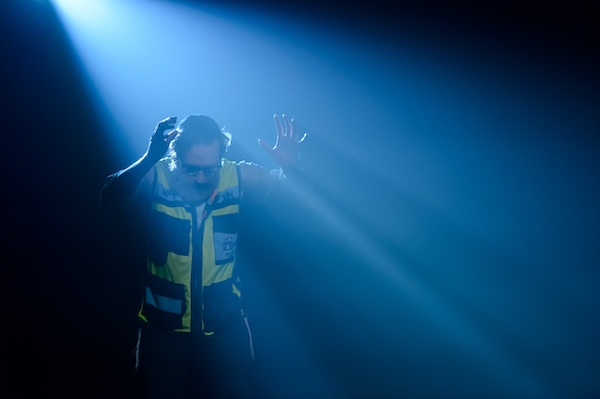
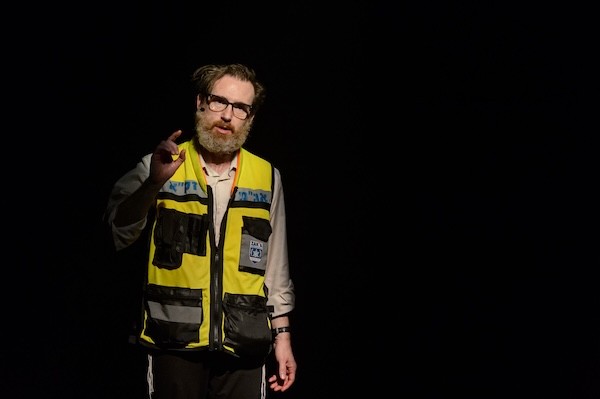
Christopher Morris as Jacob in The Runner, which is at Fei and Milton Wong Experimental Theatre Jan. 24-26. (photo by Dylan Hewlett)

Since this article was published, PuSh has canceled the production. For the statement, click here.

Among the offerings of this year’s PuSh International Performing Arts Festival is Christopher Morris’s The Runner, which runs Jan. 24-26 at Fei and Milton Wong Experimental Theatre.

The one-man play is dedicated to Jakoff Mueller, a ZAKA member in Israel who died in 2018. The main character is Jacob, an Orthodox Jew with the Israeli volunteer emergency response organization. In one of the emergencies depicted, Jacob helps an injured Arab woman before he tends to a soldier, and his choice has significant repercussions. The actor in the role – in Vancouver, it will be Morris – performs the whole 60 minutes of the play while walking/running on a treadmill.

The Jewish Independent interviewed Morris by email before the playwright stepped back from doing media after a scheduled Victoria run of the play was canceled due to pressure from protesters, who objected to the story being told “from an exclusively Israeli perspective.”

JI: Can you share more about your relationship with Jakoff Mueller, how you came to meet him, to be invited into his home, and how he contributed to writing of The Runner?

CM: I first met Jakoff in 2009 at a small get-together in the house I was staying at in Jerusalem. This was during my first research trip to Israel to write this play. The owner of the house was a friend of Jakoff and she thought it would be interesting for me to speak with him, seeing as I was doing research about ZAKA. Jakoff was an incredibly thoughtful man with a great sense of humour, and we hit it off. He invited me to come and visit him where he lived in northern Israel and I did, over many occasions during the research trips I made to Israel. Though no event or fact from Jakoff’s life is represented in the play, his compassion for valuing all human life and his spirit of questioning is in the play. The world was a better place with him in it.

JI: When did you start writing The Runner and when and where did it première?

CM: My curiosity with ZAKA began when I was a teenager in Markham, Ont., in the 1990s. I heard a media interview about the work ZAKA did and it really struck me. I kept thinking that ZAKA’s work would be an interesting premise for a play but didn’t know how to do it. So, in 2009, I made my first trip to Israel to begin researching the play. I spent nine years (on and off) writing it and it premièred at Theatre Passe Muraille in Toronto in 2018.   

JI: You’ll be playing the role of Jacob, but I see in much of the material Gord Rand as the actor. Are you stepping in for him, does the role rotate, is he no longer part of the production?

CM: Yes, I’ll be playing the role of Jacob in Vancouver. The show had critical success when it premièred in Toronto, winning three Dora Mavor Moore Awards (best script, best production and best direction for the late Daniel Brooks). We were receiving a lot of interest to tour the show, so we rehearsed in multiples of every role in the production (actor, stage managers, director, designers) in the event that one person from the original team may not be available. Daniel Brooks rehearsed me into the role so I could play it when Gord wasn’t available. Over the years, I’ve played it on and off a few times and am really looking forward to performing the role in Vancouver.

JI: You’ve written a one-pager offering guidance for venues presenting The Runner. Is there anything you’d add to that, given the Israel-Hamas war? Not only because tensions are higher, but, for example, there are direct parallels in the description of victims in the mass grave in Ukraine [where ZAKA members, including Jacob, travel in the play] and what happened to Israelis on Oct. 7, which could be triggering.

CM: It’s always been important when presenting The Runner in collaboration with theatres to give some social context when the show is being presented. I am always available to the staff at the theatre to offer any specific insight about the play in the context it’s being presented in. PuSh and I have been in constant contact about how to support the play and the audiences who will see it in January.  

JI: When were the PuSh shows booked and, if there have there been other productions mounted since Oct. 7, what has reaction been overall?

CM: We’ve been discussing doing this show with PuSh for over a year and it was officially booked last May. We completed a run of the show from Nov. 2nd to the 19th, 2023, at the Thousand Islands Playhouse in Gananoque, Ont., and the reaction to the show was extremely positive. A few hours ago, it was publicly announced that the Belfry Theatre will not be presenting The Runner in March.

I support the conversations taking place in response to The Runner right now, I always think it’s important to discuss things. It’s hard to know how audiences will experience any play right now, let alone one set in Israel, like The Runner. But the power of this production, and why so many people have connected with it since it premièred in 2018, is that it’s a nuanced and thoughtful conversation about the preciousness of human life.

JI: Are you a member of the Jewish community? Either way, why did you choose to write a play about terrorism from the perspective of an Orthodox Jewish man?

CM: I’m not a member of the Jewish community. I was brought up Catholic but regard myself as an ex-Catholic (since the age of 13). I wrote a play about medical triage in the perspective of an Orthodox Jewish man because I wanted to write a play about ZAKA.

JI: I’m struck by what I interpret, perhaps mistakenly, as calls for humanity/morality only from Jews/Israelis, not from terrorists or people who see terrorism as a valid form of resistance. In the thinly veiled Gilad Shalit reference, for example, Jacob bemoans the un-Jewishness of Israel keeping the remains of dead terrorists in case of an exchange but he doesn’t seem to question the morality or humanity of the terrorists. Similarly, the only ones who seem to be called to account for killing in this play are Jews – presumably an Israeli shot the Arab woman in the back, an Israeli shooting an Arab protester leads to an Israeli boy being killed, a Jewish Israeli accidentally shoots another Jew when trying to shoot a terrorist, and another gunshot by a Jew, after a vehicular terrorist attack, has fatal consequences for a Jew.

CM: Because it’s a one-person show, Jacob’s view is a singular perspective, and I wrote about the unique situations he would be facing as a ZAKA member. Jacob is dismayed by all the violence that surrounds him and, throughout the play, he advocates for seeing all human life as equal. As a disempowered, isolated person, with limited interactions to people outside of his community, I believe Jacob feels his best bet to effect change is by addressing those around him.

JI:  While ZAKA prioritizes victims over terrorists, other Israeli medical professionals are supposed to triage patients. In the play, an ambulance takes the Arab girl away and obviously keeps her alive. Why does no Jew in the play support Jacob or show him kindness?

CM: It is true that Israeli medical professionals give care to patients, like the ambulance described in the show that takes the Palestinian teenager away and a hospital which no doubt helped her with her wounds. When writing the complex character of Jacob, it was important to include examples in the play of how hard it was for him to connect to other people before he offers medical care to the teenager. This was important to create a complex human being and an interesting dramatic context. Jacob’s mother supports him and shows him kindness. As does the Palestinian teenager when he arrives unexpectedly at her door, and the Palestinian man who saves him by helping Jacob get to his car.

JI: There is a line in the play that has been highlighted by reviewers as powerful, and that’s [Jacob’s brother] Ari’s dictate about why he’s a settler on the land – “because it’s mine!” Again, this doesn’t come up in your play, but is relevant: the chant for Palestine to be free from the river to the sea. What hope do you see, or does Jacob see, if you’d rather – can one get off “the treadmill” alive?

CM: Though my play is set in Israel, I feel I lack the experience or expertise to offer a fully informed answer to the complexities of the overall conflict. But the biggest hope for me in the play and the only statement about life I feel I wrote (as opposed to the numerous questions I ask in the play) is Jacob’s description of how the Palestinian teenager treated him with kindness:

Her hand on my shoulder.
Are you alright.
That’s all that matters.
Kindness.
An act of kindness.

This is my offering for the complex world we live in. 

To read my op-ed on the Belfry Theatre’s cancelation of The Runner, click here. To read other statements on the cancelation, including from Morris, click here.

For tickets to the PuSh Festival, which includes BLOT, co-created by Vanessa Goodman, and Pli, co-presented by Chutzpah! Festival, go to pushfestival.ca.

Format ImagePosted on January 12, 2024January 12, 2024Author Cynthia RamsayCategories Performing ArtsTags Belfry Theatre, Christopher Morris, Israel, PuSh Festival, terrorism, The Runner
CANCELED Play should not be canceled

CANCELED Play should not be canceled

Christopher Morris as Jacob in The Runner. (photo by Dylan Hewlett)

Since this article was published, PuSh has canceled the production. For the statement, click here.

The Belfry Theatre in Victoria has removed Christopher Morris’s play The Runner from its 2024 lineup. I can see why it did so – the threats of violence are real, and scary. But it was the wrong decision.

“The Belfry Theatre presents contemporary work, with ideas that often generate dialogue. That is why, a year ago, we decided to bring the much-acclaimed play, The Runner, to Victoria. However, we believe that presenting The Runner at this particular time does not ensure the well-being of all segments of our community,” reads the Jan. 2 statement.

Last month, a petition was started to remove the one-man play about an Israeli rescue worker whose life is forever changed after he helps an Arab woman, who may have stabbed an Israeli soldier to death, before attending to the soldier. A counter-petition was started by members of the Jewish community to keep The Runner at the theatre. At press time, the protest petition had more than 1,400 signatures, while the counter-petition had more than 2,400.

The Belfry Theatre invited people to come and discuss any issues surrounding the play. That Dec. 22 meeting dissolved into chaos, overtaken by protesters with bullhorns and anti-Israel signs. The Belfry building was subsequently vandalized with multiple stickers that said “trash” and anti-Israel sentiments, topped off with a red-spray-painted “Free Palestine.”

The threat of more violence – implied by the aggressiveness of the protesters at the December meeting and the defacement of the theatre’s building – was probably a main reason for the Belfry canceling the show. It seems that the protesters have successfully bullied the theatre into changing its programming. Instead of contributing to a safe space in which ideas could be presented, considered, discussed, perhaps agreed upon, perhaps not, the protesters have created an atmosphere of fear. They have put other creatives on notice – unless you reflect only what we believe, we will shut you down.

By succumbing to the pressure, the Belfry has perhaps protected its staff and its building – the importance of which cannot be understated – but a dangerous precedent has been set. On the larger world stage, we have seen how screaming down other viewpoints, vandalism and worse violence, misrepresentation and misinformation, can win the day. The success of such tactics in Victoria is another reminder, if we needed one, of how easily freedoms can be removed. How easily voices can be silenced.

Accuracy and context matter, and the petition includes neither.

The petition describes The Runner as “a story of Israeli settlers in a dehumanizing exercise of whether Palestinian and Arab life is of value.” Its writers “demand[ed]” the Belfry “remove The Runner from [its] 2024 lineup,” claiming that it “features the violent and racist rhetoric of Zionism from an exclusively Israeli perspective.” They cite two unattributed, non-contextualized sentences from the script that ostensibly support their position.

The play is not about Israeli settlers, it does not celebrate Israeli settlers or militant Zionism. Jacob – a volunteer from Jerusalem with ZAKA (Israel’s nongovernmental rescue and recovery organization) – is the main character, the hero, the one the audience is rooting for, along perhaps with the Arab woman he helps save.

The quote chosen by the petitioners is spoken by Ari, Jacob’s brother, who is portrayed as a rabid settler nationalist. He is a jerk, and an awful brother. People like Ari do exist, but one of the points of the play seems to be that he is not the model human, that his views are not what people should think.

The petitioners have one aspect of the play almost correct: it does focus on Israeli perspectives (plural), as the main character is Israeli, and so are his mother and brother, and his colleagues. And I will admit that I had trouble with this aspect of the play, too. I felt that The Runner only asked questions about Israelis’ morality, that it disparaged Jews’ claims to the land, that it depicted every Israeli character other than Jacob harshly. While terrorism is shown, the terrorist characters aren’t held to any account, in my view, and there are no moral demands made of them.

I am proud that the petition to keep The Runner in the Belfry’s lineup was initiated by members of the Jewish community. I believe in Israel’s right to exist and to defend itself, at the same time as I believe in the right of people to criticize, question and protest. In a democratic country, I don’t see the need to attack people or destroy property to voice an opinion, especially not about the arts. It is no wonder there are multiple conflicts taking place around the world – even in Canada, where we enjoy multiple freedoms and are relatively rich in resources, we find it challenging to be open, civil and respectful of diversity.

If The Runner had encouraged violence or discrimination, I might have signed a petition against it, too, and even joined a rally, but I hope that I would have chosen to critique it instead, to share my point of view instead of trying to silence Morris’s. I certainly would not have chosen to threaten or commit violence against people or property.

Several aspects of The Runner bother me, but I think it is an excellent piece of work because it has taken up more of my brain space than almost any other play, movie or performance that I’ve seen or book or article I’ve read. It has made me angry, thoughtful, sad, and I continue to contemplate my various reactions. It has literally kept me up at night. In this respect, Morris has done his job extremely well. People should see this play. I sincerely hope the bullies will not succeed in silencing the PuSh Festival’s presentation of it as well. 

For my interview with Christopher Morris, click here. To read statements about the Belfry Theatre’s decision to remove The Runner from its lineup, click here. For more on the Victoria situation, see thecjn.ca/news/runner-play-victoria. 

Format ImagePosted on January 12, 2024January 12, 2024Author Cynthia RamsayCategories Op-EdTags antisemitism, Belfry Theatre, freedom of expression, Israel, The Runner

CANCELED Statements on The Runner

The Jewish Independent received the following statements regarding the play The Runner after the Belfry Theatre in Victoria canceled the scheduled March performances of the play, which is set to run as part of the PuSh Festival in Vancouver Jan. 24-26.

Since this article was published, PuSh has canceled the production. For the statement, click here.

Christopher Morris, artistic director of Human Cargo and playwright of The Runner:

As a playwright who values the role of theatre as a platform to explore ideas about the complexities of life, I was disappointed to learn that the Belfry removed The Runner from its programming. I also empathize with the challenging situation they were facing. I am saddened that people in Victoria – especially those with very divergent views and those traumatized by the atrocities in Israel and Gaza – will be denied the opportunity to come together in a theatre to explore their common humanity, share their grief and perhaps discover a flicker of solace and hope. 

Since it premièred in 2018, my play The Runner has been seen by audiences in six cities, received numerous awards and unanimous critical acclaim. I am humbled that theatre companies have produced this play, which is a nuanced and thoughtful conversation about the preciousness of human life. Their endorsement tells me that they also see its effectiveness in creating a dialogue with their audience.  

I am deeply traumatized and saddened by humankind’s capacity to wage war. As a Canadian, I want our politicians to do all they can to make the violence in Gaza and Israel stop. I hope theatre companies and playwrights do all they can to give audiences the opportunity for dialogue and to build bridges between our silos. I believe The Runner is an excellent opportunity for those things to happen. And Vancouver audiences will get the chance to experience this production in a few weeks, at the upcoming PuSh Festival.

***

Gabrielle Martin, director of programming, and Keltie Forsyth, director of operations, PuSh Festival:

The PuSh Festival recognizes the pain of those watching or connected to the conflict in Gaza and Israel and the feelings of hurt and helplessness, knowing our experiences here in Vancouver are nothing like those who are suffering direct violence or who have lost homes, friends and family members.

We understand the objections to our programming of The Runner as a part of that shared hurt. When we see death, particularly civilian death, on this scale, we feel the injustice and the inhumanity at work, and we want to do something about it. Here in Canada, far from the conflict, it’s easy to feel helpless, to feel like contacting politicians, rallying or protesting isn’t enough. At PuSh, what we do is present live art, and sometimes we share the feeling that what we do isn’t sufficient. 

Art reflects the world and the times in which we live. At its best, it’s an essential cultural force that builds empathy and understanding. Our aim is that PuSh brings us together and inspires us to have complex conversations; to challenge ourselves and each other not only to think differently, but to feel differently. The festival experience is greater than the sum of its parts and defined in how each piece sits in conversation with the other. These pieces share a sense of cultural urgency and, together, welcome generative friction through plurality as a cultural strategy. 

The Runner is situated within a program that explores our shared humanity in ways that transform the political into the personal, intimate and domestic. This play, by Canadian playwright Christopher Morris, is a story about triage that’s set in Israel. It is not funded by the Israeli government, and Christopher has no direct ties to any country in the region. The play unpacks one character’s dilemma between humanist impulse and socially imposed morals, as he advocates for seeing all human life as equal. In its commitment to examining the polarizing tensions and conflicting ideologies at work within its Israeli protagonist, it exposes painful racism behind the dehumanizing sentiments encountered by the character. Christopher shares: “I lack the experience, or expertise, to speak on or write a play about the extremely complicated conflict that’s happening right now in that part of the world. And what I’ve been offering since 2018 is a play, from my Canadian perspective, that explores the complexities, and limitations, of empathy and kindness.” Ultimately, he frames The Runner as “an offer for discussion.”

We believe this work offers one voice in a diversity of perspectives that diverge in specifics of identity and experience, but that all advocate for empathy and compassion. Dear Laila, playing parallel to The Runner, offers an autobiographical perspective on the forced displacement of Palestinians through one family’s experience of war and exile. Basel Zaraa, the artist behind the project, is a Palestinian refugee who grew up in Yarmouk refugee camp in Damascus, Syria. Dear Laila features a miniature model of his destroyed family home in Yarmouk camp, and three stories that represent the three generations who lived in the house. Intimate and interactive, the experience invites each audience member to connect with this story of “[a] family, like many families of our communities, who are stuck in a loop of losses.” Basel further frames it as “a way for me to face and express and understand the trauma that we live with.”

These two works form part of the wider 2024 festival ecology, and each plays an integral role to a balance that has been curated with care. In the face of violence and atrocity, presenting live art can feel small. We hope that, collectively, the performances and multimedia experiences of this year’s festival offer opportunities for self-reflection, better understanding others’ experiences, and dialogue – actions that, in our view, can sometimes offer building blocks for meaningful political change.

***

The Jewish Federation of Victoria and Vancouver Island is disappointed by the decision of the Belfry Theatre to cancel its production of the acclaimed play The Runner. 

It is regrettable that the Belfry Theatre felt the need to cancel an artistic production, for the first time in its 46 years of existence, because it featured an Israeli Jewish man. 

It is regrettable and disheartening that, when the Belfry Theatre attempted to have an open dialogue, it was vandalized and threatened by a “pro-Palestinian” mob, which ultimately led to a very quick decision without any meaningful consultation. The Belfry’s stated reasons for this decision were: “we believe that presenting The Runner at this particular time does not ensure the well-being of all segments of our community … this is not the time for a play which may further tensions among our community.” This decision does not reflect the wishes of the community as expressed in competing petitions: 1,400 against showing the play vs. 2,400 wanting the play to proceed.  

We fear this decision will lead to other cultural events being canceled, as other venues may also give in to mob mentality and bullying. This is not what we expect from our cultural institutions, nor our community. It is not too late for the Belfry Theatre to reconsider their actions, as we hope they will. 

The decision does not bode well for artistic and cultural expression in Victoria and Vancouver Island. It matters to stand up for what is right. 

To read the Jewish Independent’s interview with playwright Christopher Morris, click here. To read the Independent’s op-ed on the Belfry Theatre’s choice to cancel its March run of The Runner, click here.

Posted on January 12, 2024January 12, 2024Author Community members/organizationsCategories Op-Ed, Performing ArtsTags Christopher Morris, Gabrielle Martin, Jewish Federation of Victoria and Vancouver Island, Keltie Forsyth, PuSh Festival, The Runner
Prof: “no choice but to resign”

Prof: “no choice but to resign”

Dr. Ted Rosenberg (photo from BC College of Family Physicians)

Ted Rosenberg has stepped down from his post as a clinical assistant professor at the University of British Columbia’s faculty of medicine, citing an unsafe environment, following his repeated attempts to have the school do more to address antisemitism.

In a Jan. 1 letter to UBC, the award-winning geriatrician, who has taught at the medical school for more than 20 years – prior to that, he had a position at the University of Manitoba – wrote that because the faculty has failed to address concerns, he had “no choice but to resign.”

A tense atmosphere developed following the Oct. 7 Hamas attacks when a petition titled “A Call for Action on Gaza” first appeared at the faculty of medicine and was signed by more than 225 of its students. The petition went beyond calling for a ceasefire in Gaza. Rather, it condemned Israel as “a settler colonial state,” accused it of “collective punishment through indiscriminate bombing of civilians” and claimed that “Palestinian people have been continually abused, traumatized and killed by the settler state of Israel and its Western allies for over 75 years.”

In a Nov. 29 letter to UBC president Benoit-0Antoine Bacon, medicine faculty dean Dermot Kelleher and other top officials at the university, Rosenberg wrote, “This petition and other similar statements on campus, as well as the inaction by UBC, makes me wonder if antisemitism has become systemic in this institution.”

While praising UBC’s efforts to redress discrimination and promote diversity and inclusion, he asked, “Why do these efforts for diversity and inclusion come to an abrupt halt when it involves ‘including and protecting’ Jewish/Zionist students and faculty?” According to Rosenberg, the petition not only made him feel unsafe but also traumatized a medical student “who was left distressed, anxious and sleepless after reading it, and enduring the hostile reactions of colleagues and faculty.”

A Dec. 21 letter, co-signed with 283 other physicians – both Jewish and non-Jewish – stressed the growing polarization at the medical school due to events in the Middle East.

“This is resulting in hate speech, student intimidation and the feelings of many students and teachers that they are working in a toxic environment. Several of us have expressed concerns to you in writing and are waiting for specific responses,” the letter read.

The letter also called into question the validity of the anti-Israel petition, emphasizing that it contained several inaccuracies, caused deep divisions within the medical student community, and was one-sided and unrelated to medical care.

In requesting a response from university leadership to take action to protect the integrity of the medical school and the safety of medical students and staff, the letter urged that those who signed the petition “be made aware of the significance of their choice of contentious language.”

Additionally, the letter called on the offices of equity, diversity and inclusion (at both the university and the medical school) to receive sensitivity training regarding Jewish issues and antisemitism, encouraged the university to adopt the International Holocaust Remembrance Alliance definition of antisemitism, and asked the university to form a clear policy on the boundaries of free speech, “having zero tolerance for any speech that crosses the boundary to antisemitic or hate speech or language used to incite violence, either openly or covertly.”

Both letters received responses from Dean Kelleher of the medical school. Rosenberg, however deemed them inadequate. In the resignation letter, he said they “did not address any of our specific concerns re: the medical student’s petition, antisemitism within the faculty, or concerns that politicization and polarization of the Middle East conflict are creating a toxic work environment.

“I checked the recommended links to your and the president’s statements on respect and compassion…. Two words are conspicuously absent from all these documents: 1. Jew(ish) and 2. Antisemitism.”

Rosenberg added that he searched the websites for the offices of equity, diversity and inclusion at the university and the medical school for “antisemitism” and did not find the word included among the several anti’s that were mentioned.

In his most recent letter, Rosenberg said he lamented the deaths of innocent civilians on both sides, but denounced the “oversimplistic ahistorical demonizing narratives and rhetoric” taking place.

Rosenberg also expressed the hope “that the faculty of medicine and UBC will recognize this serious threat of antisemitism/Jew-hatred and the dangers of politicization and polarization of the faculty and student body.”

In his concluding remarks, he advised the school to consult with the physicians who collectively wrote the school leadership in December. “They can work with you to constructively, collaboratively and proactively rectify this situation and ultimately help restore respect, compassion, empathy and trust among colleagues and students,” he said.

Rosenberg told the CJN that he is aware of other faculty members who have considered resigning because of the present atmosphere at the medical school. Since his letter, he also has heard from people at the faculty who are prepared to do more to recognize antisemitism – and to do something about it when it appears at the school.

In response to a request for comment about Rosenberg’s resignation, a spokesperson for UBC wrote, “The faculty of medicine and the University of British Columbia have been very clear that antisemitism, or discrimination of any kind, is completely unacceptable. We are committed to creating a safe and respectful environment for all of our community members and will continue to take steps to do so.

“In response to concerns raised by faculty and learners, the faculty of medicine is also working expediently to develop educational opportunities for inclusive learning and respectful dialogue within the faculty in areas that directly reflect our stated values, including how we address issues such as discrimination, harassment and hate speech,” they added.

Rosenberg, a Victoria-based physician who makes house calls, is an advocate for keeping the elderly in their homes for as long as possible. His company, Home Team Medical Services, aims to improve quality of life and increase independence for older people and their families. The company provides home-based health care for people 75 to 105 with physiotherapists, rehabilitation aides and care coordinators, in addition to a team of nurses and physicians.

In 2016, Rosenberg received the BC College of Family Physicians Award of Exceptional Contribution in Family Medicine. 

Sam Margolis has written for the Globe and Mail, the National Post, UPI and MSNBC. This article was originally published at thecjn.ca.

Format ImagePosted on January 12, 2024January 11, 2024Author Sam MargolisCategories LocalTags antisemitism, medical school, Ted Rosenberg, UBC, University of British Columbia
Celebration of courage

Celebration of courage

A still from the documentary Passage to Sweden, which will screen as part of the annual Raoul Wallenberg Day for Civil Courage event on Jan. 21.

This year’s annual Raoul Wallenberg Day for Civil Courage gathering, on Sunday, Jan. 21, held at Congregation Beth Israel, will explore and honour civil courage in Scandinavia during the Second World War.

Just over 80 years ago, in late 1943, Danes, Norwegians and Swedes had to confront moral choices, when Denmark and Norway dealt with military occupation by Nazi Germany. Many people defied Nazi policies that threatened the human rights and lives of their fellow citizens and residents.

In Denmark, thousands of Christian Danes risked their own lives, cooperating in the dramatic, swift and secret rescue operation. The Jews, who faced deportation and certain death at the hands of the Nazis, were ferried to safety in neutral Sweden. Their homes and properties were safeguarded until their return after the war. Sweden welcomed and aided the Danish Jews, risking its own status as a neutral nation. 

In Norway, the site of significant armed attacks by Nazi Germany, hundreds of Norwegian police officers refused the orders of Nazi occupiers, a collective action that led to their imprisonment at Stutthof concentration camp in Nazi-controlled Poland. There, the Norwegian police maintained their solidarity as they acted to reduce the suffering of their fellow prisoners, including many Jews, such as the late Jennie Lifschitz, who settled in Vancouver in the early 1950s.

Finland and the Baltic nations (Estonia, Latvia and Lithuania) were also engulfed in the war, victims of the Soviet Union’s military occupation and, in the case of the Baltics, annexation and mass civilian deportations. 

While Nordic peoples, like most Europeans, were not completely free of hostility toward Jews and other minorities, they offer a good example of civil courage, based on the belief that Jewish citizens and residents were their equals.

This year, at the local Wallenberg Day event, Vancouver Holocaust educator Norman Gladstone will speak about the remarkable rescue of Denmark’s Jewish population. Local researcher and author Tore Jørgensen will speak about the hundreds of Norwegian policemen, including his father, who refused to collaborate with the Nazi occupiers. Historian Gene Homel will introduce the Wallenberg-Sugihara Civil Courage Society and the City of Vancouver proclamation of Wallenberg Day.

As well, the documentary Passage to Sweden will be screened. The film covers the wartime courage of Scandinavians, including Sweden’s Raoul Wallenberg, who acted courageously to protect civilians in Hungary, and was taken into custody by the Soviet army. His fate is unknown to this day. 

The 19th annual Wallenberg Day on Jan. 21 at Congregation Beth Israel will be held at 1:30 p.m. Admission is free and donations will be gratefully accepted.

For more about the Wallenberg-Sugihara Civil Courage Society, which organizes the annual event, visit wsccs.ca. 

– Courtesy Wallenberg-Sugihara Civil Courage Society

Format ImagePosted on January 12, 2024January 11, 2024Author Wallenberg-Sugihara Civil Courage SocietyCategories LocalTags courage, Denmark, hero, history, Holocaust, Sweden, Wallenberg Day, Wallenberg-Sugihara Civil Courage Society

Peer support’s long history

The Jewish Seniors Alliance of Greater Vancouver has invited Honoré France, a scholar on aging and expert on peer support, to speak via Zoom on Jan. 22. He will discuss the topic Discovering the Essential Importance of Seniors Supporting Seniors.

France, a professor emeritus in the department of educational psychology and leadership studies at the University of Victoria, will focus on the senior peer support training he developed. The training has been used by JSA for several years to help new volunteers learn how best to connect and liaise with isolated, lonely seniors in the community.

Among the topics France will cover are the early history of seniors peer support, strategies for self-care, information about memory, the value of exercise and the development of a healing presence.

Earlier this month, France shared some of his presentation with the Independent, including a peek at the origins of peer support during the beginning of psychiatry in the late 1700s – through French physician Philippe Pinel and hospital superintendent Jean-Baptiste Pussin. 

The talk will then move to more modern examples of senior peer support, including Indigenous approaches, and the development of group homes and inclusive treatment.

According to France, peer support is successful when various factors are in place, including effective approaches in helping aging populations and the promotion of the concept of self-help and independence among older people. 

Additionally, for peer support to be beneficial, people need to want to help themselves, there needs to be a reserve of talented older people who want to be helpful and, should someone have a problem or concern, there must be a willingness to seek out peers. 

After addressing various aging myths, such as the belief that dementia is inevitable, France will examine ways to stay mentally, physically and spiritually fit. He will explore nature as medicine, practices of letting go and cleansing, positivity (finding purpose and meaning), and mind-body activities like yoga, meditation, art and helping others.

France said he hopes that, by the end of the session, participants will “understand the developmental stage of aging and the central concept from Viktor Frankl about meaning and the crucial role it plays in healthy aging, and to follow their dreams as they age in the same way they did earlier in life.”

Frankl, an Austrian psychiatrist and Holocaust survivor, believed finding meaning in life to be the central human motivational force.

“Aging is natural and part of living,” said France, and people “can be in control physically, mentally, psychologically and spiritually. Aging is what you make of it and learning is a medicine and keeps you mentally fit.”

France emphasized that, no matter what a person’s condition in life is, they can live fully, consistent with their physical and psychological level. 

His talk will look at ways people can train themselves “to listen to others and to be like Frankl – optimistic, resilient, and always ‘moving.’ And, finally, [how to] develop a healing presence, as well as how to empathize at a deep level by bringing ‘light’ into the world to those in need.”

He added, “I will also provide some strategies for dealing with stress that I use. There will be a question period at the end, and Grace Hann will speak about the volunteer program at the Jewish Seniors Alliance along with one or two volunteers,” France said.

Hann is JSA’s senior peer support services trainer and supervisor.

Aside from his role at UVic, France is an artist, writer, therapist and consultant in the field of mental health. He has worked at the Shanghai University of Traditional Chinese Medicine, Addis Ababa University and the University of Massachusetts, where he graduated with a doctorate in counseling.

His academic interests include diversity, group processes and creative arts therapy. His current research involves reconciliation and residential schools, cross-cultural issues, creative arts, spirituality and eco-psychology (an intellectual movement to understand the relationship between humans and nature).

France has written several books and more than 75 academic articles on counseling issues and practices. Further, he has presented more than 80 scholarly book chapters around the world. He is currently re-writing and updating a 1989 publication on senior peer counseling, titled Senior Peer Support/Counselling Handbook: An Interactive Guide, which is set for publication this year.

On a personal level, he keeps active through gardening, playing squash and pickle ball, carving, building furniture and participating in strategic games, such as Go and chess. Currently, he is finishing up a novel based on his experiences hiking the West Coast Trail, his life teaching and backpacking around the world.

France’s talk is part of the JSA Snider Foundation Empowerment Series and the South Vancouver Seniors Network is a co-sponsor of the event. The Zoom starts at 11 a.m. The link to join it will be distributed through JSA’s email newsletter. Those interested in attending can also email [email protected] for the link. 

Sam Margolis has written for the Globe and Mail, the National Post, UPI and MSNBC.

Posted on January 12, 2024January 11, 2024Author Sam MargolisCategories LocalTags aging, health, Honoré France, Jewish Seniors Alliance, JSA, lifestyle, mental health, peer support

Pinsky pens family memoir

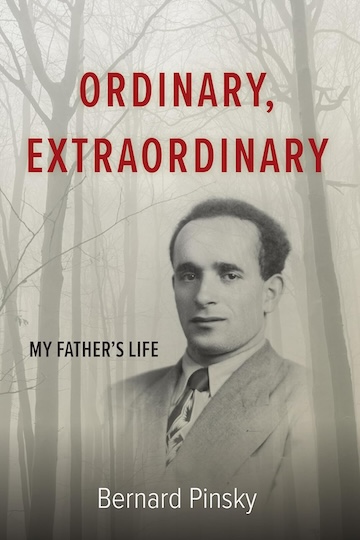
In his ambiguously titled book Ordinary, Extraordinary: My Father’s Life, Vancouver lawyer and community leader Bernard Pinsky shares the biography of Rubin Pinsky. As the pages turn, the reader realizes that ordinariness and extraordinariness really do describe the tale of a life that veers from historically monumental to surprisingly, and gratefully, commonplace. 

image - Ordinary, Extraordinary book coverAt 1 p.m., Jan. 28, Pinsky will officially launch the book, in honour of International Holocaust Remembrance Day, at a prologue event to the Cherie Smith JCC Jewish Book Festival. He will present in conversation with Marsha Lederman.

Pinsky’s book is based on videotaped testimonies that his father, Rubin, gave in 1983 and 1990 to the Vancouver Holocaust Education Centre (which is co-presenting the Jan. 28 event), as well as family memories and what is clearly intensive research.

Rubin was born (probably) in 1924, about 100 kilometres north of Pinsk in what is now Belarus but was then Poland. Pinsky sets the stage beautifully, evoking shtetl life, where the smallest of the children slept atop the bakery oven in the tiny home after his father, Baruch, had baked challah and cakes during the day to eke out a meagre living.

After the German occupation, the Nazis quickly identified the men in the Jewish community who had leadership qualities and said they were needed for an important mission in a nearby area. They were marched just out of earshot and mass murdered. In a later selection, Baruch, his wife Henya and 10-year-old Rachel were marched off and never seen again.

Rubin and his sister Chasia were deemed useful for forced labour and spared the executions. Older brother Herzl had earlier been conscripted into the Red Army.

Every survivor narrative includes a series of unimaginable interventions, coincidences and happenstances, often made possible by acts of incredible daring by the survivor. Through a series of audacious escapades – they weighed off what appeared to be likelihood of certain death with the faint hope of survival – Rubin, Chasia and a few others escaped a selection process and fled to the forest. They lived off berries, roots, tree bark and what small game they could capture. In one instance, Rubin slew a timber wolf in a competition for the same rabbit. 

The group connected with a diffuse but apparently well-organized network of Jewish and other partisan fighters. Despite the challenges of mere survival, Rubin and Chasia participated in anti-Nazi actions that included cutting telephone lines, destroying railway tracks and undermining the establishment of Nazi garrisons.

Typhus swept through the Jews in the forest. In the winter of 1943/44, Rubin was delirious with fever and expected to die. In one of the terrible choices people were forced to make in such situations, the partisan cadre decided to leave him behind to save the group. Chasia refused to go. The two siblings hid in a ditch and, to the best of her ability, she nursed him back to comparative health.

Each of these unlikely survival stories makes one wonder how many similar stories did not have the relatively happy ending Rubin’s did, how many survivor testimonies or second generation narratives were never written because the fever did not break, or the hero did not take a risk on a faint hope, or any of a million chance escapes or saving miracles did not occur in time.

In July 1944, the forest in which Rubin and Chasia had hid, fought and barely survived was liberated by the Soviet army. Concentration and death camps were repurposed into displaced persons camps after the war and Rubin and Chasia were in Bergen-Belsen. Chasia left and searched for three weeks, eventually finding Herzl and bringing him with her to Bergen-Belsen, where the three surviving members of the family were reunited.

Zionists tried to recruit them to go to Palestine, but Rubin knew that would be a continuation of the conflict, uncertainty and fighting he wanted to put behind him. 

“Rubin therefore made up his mind,” writes Pinsky. “He needed a skill or trade in demand in America. He and Herzl made a pact. They would study together, each in a different trade, and go together to the New World. They would help each other and never be separated again.”

The story of how Rubin and Herzl (in the New World, he would be known as Harry) were able to migrate to Canada is another example of chutzpah – an hilarious drama of subterfuge – that has to be read to be believed. Chasia, whose marriage in the DP camp did not last, joined them soon after.

Rubin married Jenny Moser in 1951 and they would have three children: the author, Bernard, his older sister Helen and younger brother Max – all now mainstays of the Vancouver Jewish community. Rubin’s life in Canada was that of a hardscrabble entrepreneur – and not without its seemingly miraculous near-misses and fortunate endings.

As an appendix, Pinsky shares writings from a 2012 family roots trip back to Gzetl, where a dedicated teacher is keeping alive the memory of Gzetl’s Jews.

Pinsky’s memoir is indeed a story both extraordinary and ordinary, of what human resilience can summon in a world turned upside-down – and how the strength developed in unimaginable adversity can carry a survivor through challenges when life becomes, in comparison, ordinary. 

Register for the event at jccgv.com/jewish-book-festival/events.

Format ImagePosted on January 12, 2024January 11, 2024Author Pat JohnsonCategories BooksTags Bernard Pinsky, family, history, Holocaust, Jewish Book Festival, memoir, survivors
Ventanas return to city

Ventanas return to city

Tamar Ilana & Ventanas play at the Rothstein Theatre Feb. 3. (photo by Ali Wasti)

The Chutzpah! Festival and Caravan World Rhythms co-present Tamar Ilana & Ventanas on Feb. 3, 8 p.m., at the Rothstein Theatre.  Founded in 2011, Ventanas interweaves flamenco, Sephardi and Balkan music and dance. They have released three albums and have toured extensively throughout North America. They have been nominated for four Canadian Folk Music Awards.

The six-piece Toronto-based music ensemble is fronted by vocalist and dancer Tamar Ilana. They perform in more than 20 languages, including Ladino, Spanish, Bulgarian, Macedonian, Hebrew, French, Romani and Arabic, drawing inspiration from worldwide themes such as migration and the questioning of one’s identity.

Ilana is a powerful and versatile Canadian singer and flamenco dancer of mixed descent, renowned for her ability to sing in multiple languages and collaborate with various artistic communities from around the world. Her childhood was spent gathering songs from small villages on the edge of the Mediterranean and dancing flamenco. (For more, see jewishindependent.ca/ventanas-come-to-b-c and jewishindependent.ca/ventanas-to-play-at-folk-fest.)

Ventanas’ band members are from across the globe and, together, in true Canadian fashion, they and Ilana intertwine their musical cultures to create an all-encompassing world of their own in which they lead audiences down the less-traveled paths of the Mediterranean, mixing in contemporary interpretations of ancient ballads, original compositions and new choreographies, inviting audiences of all backgrounds into their music.

For tickets to Tamar Ilana & Ventanas ($40 regular, $34 senior/student), visit chutzpahfestival.com or call 604-257-5145. 

– Courtesy Chutzpah! Festival

Format ImagePosted on January 12, 2024January 11, 2024Author Chutzpah! FestivalCategories MusicTags Caravan World Rhythms, Chutzpah! Festival, Tamar Ilana, Ventanas, world music
What is life’s purpose?

What is life’s purpose?

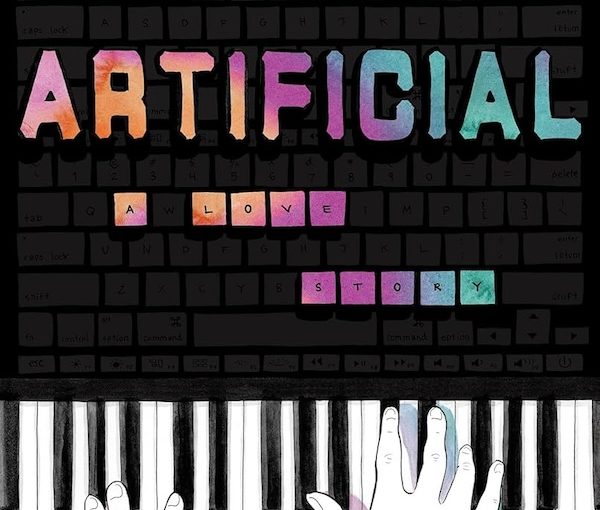
In her graphic memoir, Artificial: A Love Story, Amy Kurzweil tackles many existential questions, framed around her father’s quest to resurrect his father using artificial intelligence. Kurzweil participates in the Cherie Smith JCC Jewish Book Festival Feb. 12.

The purpose of life, of art, what it means to be human, to love and be loved, the value of relationships, our mortality. In a very personal story, cartoonist and writer Amy Kurzweil explores not just universal questions but the biggest of questions in her new book, Artificial: A Love Story.

Kurzweil participates in the Cherie Smith JCC Jewish Book Festival Feb. 12 in two separate sessions: one about the choice of the comic form to tell a story, the other titled Art & Artificial Intelligence.

In Artificial, readers are invited into another part of Kurzweil’s world. Her debut graphic memoir, Flying Couch, was also family-focused, centring around her maternal grandmother’s story. As she writes on her website, “At 13 years old, Bubbe (as I call her) escaped the Warsaw Ghetto alone, by disguising herself as a gentile. My mother taught me: our memories and our families shape who we become. What does it mean to be part of a family, and how does each generation bear the imprint of the past, its traumas and its gifts? Flying Couch is my answer to these questions, the documentation of my quest for identity and understanding.”

image - Artificial: A Love Story, by Amy Kurzweil, page 21
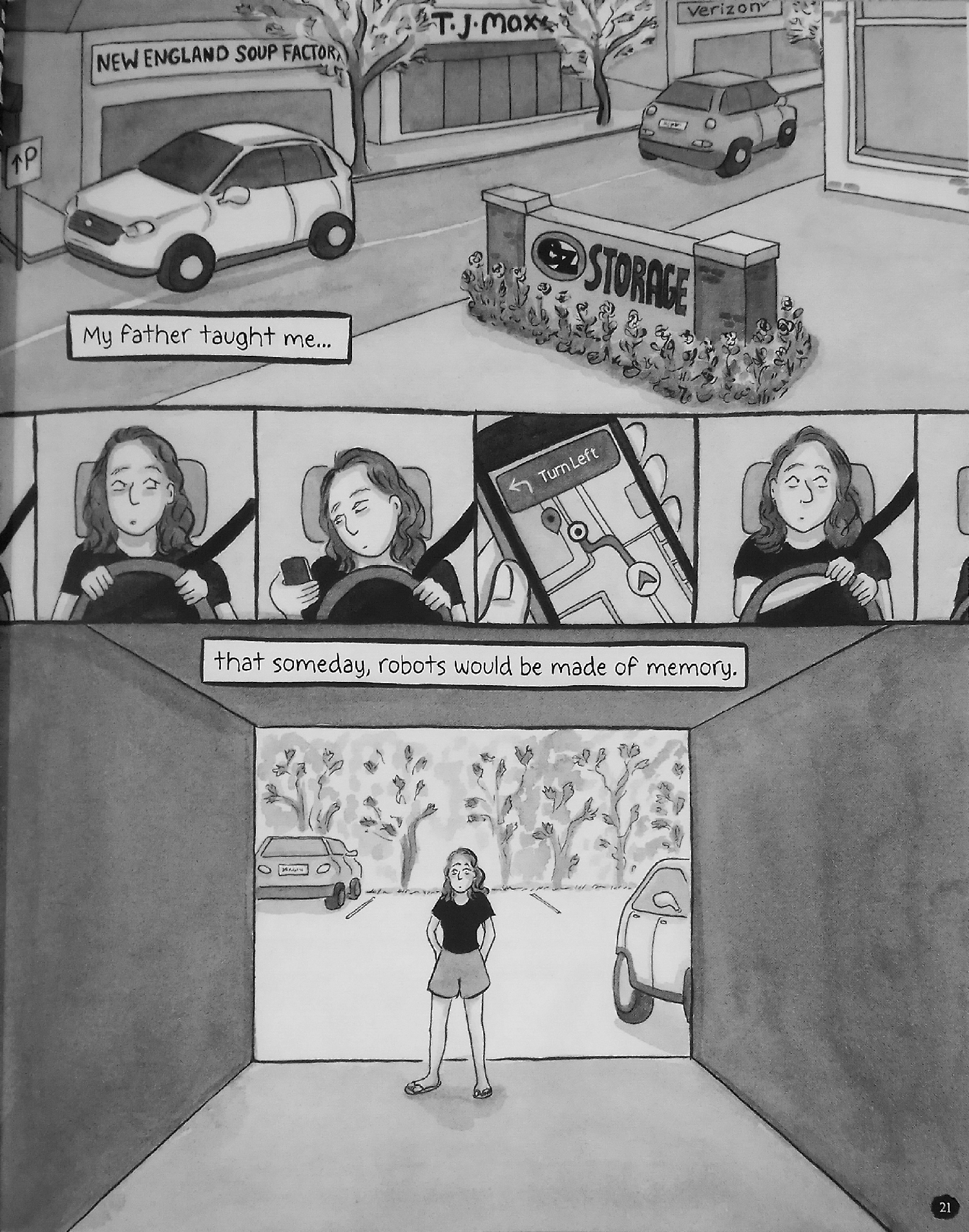
Artificial: A Love Story, by Amy Kurzweil, page 21.

Kurzweil continues to grapple with these questions in Artificial, this time from the paternal side. Her father, Ray, an inventor and futurist, is building an AI tool that will allow him, basically, to resurrect his father, who died of a heart attack in 1970, at the age of 57. Ray has saved letters, articles, music and other material relating to his father, Frederic, a pianist and conductor, who fled Austria in 1938, a month before Kristallnacht, to the United States, saved by a chance encounter. Amy is helping her father sort through boxes upon boxes of material and computerize the information. She even chats with “her grandfather,” as the AI program is being developed.

“My father taught me … that, someday, robots would be made of memory,” writes Kurzweil. Of course, the creation of a Fredbot has functional, ethical, emotional and other challenges, and Kurzweil – in words and images – presents them with sensitivity, intelligence and creativity. Each page of Artificial is attention-grabbing and the level of detail on some pages is remarkable. Kurzweil meticulously re-creates correspondence, typed and handwritten, newspaper articles and other documents, emails and texts, but she also captures, for example, the doubt on her father’s face during a conversation and the concern she has for her partner when he’s undergoing some medical tests. Readers learn about the people asking the questions, not just the questions themselves.

As for the answers? There are multiple ones. Of her father’s project, his quest to conquer mortality using technology, Kurzweil writes that her father’s definition of infinity is, “Computers become so small and dense that they become intelligence itself. Humans who do not grow up or grow old and seal our stories. Our stories wake up and keep writing themselves. This future sounds like liberation from the sadness of a story’s end. But it also sounds terrifying.”

That Kurzweil isn’t completely convinced of the merits of her father’s project, even though she loves him dearly and is helping him try and accomplish it, makes Artificial a satisfyingly complex and relatable story. It is a love story on many levels, and one well worth reading. 

The Cherie Smith JCC Jewish Book Festival runs Feb. 10-15. For the program guide and to purchase event tickets, visit jccgv.com/jewish-book-festival.

Format ImagePosted on January 12, 2024January 11, 2024Author Cynthia RamsayCategories BooksTags AI, Amy Kurzweil, artificial intelligence, creativity, Frederic Kurzweil, graphic memoir, identity, Jewish Book Festival, Ray Kurzweil

Gertrude Stein and Alice B. Toklas “visit” the Jericho Arts Centre

photo - Kelsi James as Alice, left, and Tanja Dixon-Warren as Gertrude in Gertrude & Alice
Kelsi James as Alice, left, and Tanja Dixon-Warren as Gertrude in Gertrude & Alice, by Anna Chatterton, Evalyn Parry & Karin Randoja. (photo by Nancy Caldwell)

Gertrude Stein and Alice B. Toklas “visit” the Jericho Arts Centre to tell of their 40-year relationship, of friendships with iconic artists, of Alice’s overwhelming devotion to Gertrude’s genius and how, as two Jewish lesbians, they survived in Paris in the Second World War. They want to find out how their lives are – or are not – remembered.

Lois Anderson directs the United Players production at Jericho Arts Centre Jan. 19-Feb. 11. For tickets, visit unitedplayers.com/gertrude-alice.

– Courtesy Jericho Arts Centre

Format ImagePosted on January 12, 2024January 11, 2024Author Jericho Arts CentreCategories Performing ArtsTags Alice B. Toklas, Gertrude Stein, history, Holocaust, LGBTQ+

Posts pagination

Previous page Page 1 … Page 103 Page 104 Page 105 … Page 667 Next page
Proudly powered by WordPress