Skip to content

  • Home
  • Subscribe / donate
  • Events calendar
  • News
    • Local
    • National
    • Israel
    • World
    • עניין בחדשות
      A roundup of news in Canada and further afield, in Hebrew.
  • Opinion
    • From the JI
    • Op-Ed
  • Arts & Culture
    • Performing Arts
    • Music
    • Books
    • Visual Arts
    • TV & Film
  • Life
    • Celebrating the Holidays
    • Travel
    • The Daily Snooze
      Cartoons by Jacob Samuel
    • Mystery Photo
      Help the JI and JMABC fill in the gaps in our archives.
  • Community Links
    • Organizations, Etc.
    • Other News Sources & Blogs
    • Business Directory
  • FAQ
  • JI Chai Celebration
  • JI@88! video
image - Weizmann Canada Physics Tournament 2025
image - The CJN - Visit Us Banner - 300x600 - 101625

Recent Posts

  • היהירות היא אחד האויבים הגדולים ביותר של ישראל
  • Vrba monument is unveiled
  • Music to build bridges
  • A better future possible
  • Anne Frank exhibit on now
  • Human rights in sport
  • Telling the story of an icon
  • Crawl bigger than ever
  • JCC Maccabi in Toronto
  • A way to meet fellow Jews
  • Time to include
  • Add Jewish joy to the mix
  • Reminder of humanity’s light
  • From the archives … editorials
  • Year-round holiday recipes
  • מדוע עזבתי את ישראל ואינני חושב לחזור ארצה
  • OJC hosts Oct. 7 memorial
  • A journey beyond self
  • Antisemitism a problem
  • Young man is missed
  • Orr action sparks complaint
  • Prison sentence for hate
  • Etgar Keret comes to Vancouver
  • New fall lecture series
  • Series explores music
  • Doc on Zapiro screens Nov. 6
  • Joy of shared existence
  • Community milestones … October 2025
  • MAID vs Jewish values
  • Cheshvan a great month, too
  • Bull, bear or bubble?
  • From the archives … a coin, etc.
  • מדוע האנטישמיות הולכת וגואה בעולם
  • New bio gives Vrba his due
  • Joy brighter than ever
  • When approaches differ

Archives

Follow @JewishIndie

Tag: Denmark

Reminder of humanity’s light

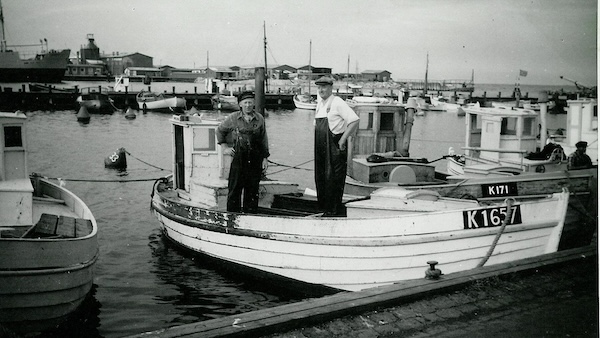
The passage across the Øresund, the body of water that separates the Danish peninsula from Sweden, is, at its narrowest, about the same distance as Horseshoe Bay to Bowen Island. But the waters can be treacherous – especially when it’s 1943 and the waters are swarming with Gestapo Kriegsmarine boats. Yet, for two weeks at the beginning of October 1943, 7,000 Danish Jews – about 95% of Danish Jewry (including the wonderful Victor Borge) – were safely transported across the Øresund in small fishing boats to the “sacred soil” of neutral Sweden.

In his new book, A Light in the Northern Sea: Denmark’s Incredible Rescue of Their Jewish Citizens During WWII, Tim Brady, author of the popular story of the Dutch Resistance Three Ordinary Girls, uses his excellent narrative skills to outline in detail how Danish Jews were warned about Nazi deportation plans, how they escaped and how they were treated when they arrived in Sweden. 

image - A Light in the Northern Sea book coverBrady has described himself as a storyteller, rather than as a professional historian, but he has done his research and he tells this story in great detail. As he did with Three Ordinary Girls, Brady brings history alive with the telling of stories through the eyes of participants, rather than simply cold facts. The eyes here are, for the most part, those of the remarkable Dutch resistance fighter Jurgen Kieler, whose recently published memoirs (encouraged by Elie Wiesel) would not have been available to earlier rescue historians.

Readers might be surprised that the “light in the northern sea” of the title refers to welcoming Sweden, not, as you might expect, given the book’s subtitle, Denmark. But, as Brady is quick to point out, the Swedish “light” was not always bright – before, and early in the war, Sweden had demanded that Germany mark the passports of Jewish emigrés with a “J” so they could be more easily refused, and Sweden refused potential Jewish immigrants who were not financially independent. 

However, as Brady notes, largely due to the enormously influential intercession of the great Danish Nobelist Niels Bohr (a dedicated Nazi-hater) with the Swedish government, Sweden’s position regarding the Jewish immigrants changed radically by October 1943, when it decided to admit all 7,200 Jews fleeing the recently occupying Nazis in Denmark. 

Swedes almost universally opened their homes to the Danish Jews. The refugees were also made to feel comfortable in churches, community centres, hotels and schools, as welfare agencies constructed camps, provided clothing and household items, and helped them find employment. Also, as Brady notes, during the post-rescue months of the Danish resistance, Sweden provided a 25 million kroner (about $70 million in today’s dollars) credit to help Denmark train and organize the Danish Brigade revolutionary group. 

Interestingly, the “rescue of Denmark’s Jewish citizens” referred to in the book’s subtitle has a double reference for Brady. On the one hand, there is the escape across the Øresund. But there is a second “rescue” described in the ending chapters of the book. These chapters deal with the 1943-45 undertakings of the Danish resistance, including detailed accounts of both their successful and non-successful sabotage activities. However, most of these Danish fighters were ultimately captured, and Brady carefully narrates their terrible experiences in German concentration camps. But, once again, the Danish Jews were “rescued.” Thanks to a coordinated effort of the Swedish Red Cross and the Danish government, most of the Danish concentration camp prisoners were returned to Denmark in the remarkable “White Bus Rescue” that was made possible in March 1945 by negotiations instigated between the Swedish diplomat Folke Bernadotte and Heinrich Himmler, which Brady describes at the end of his book. 

When put into historical perspective, as Brady is careful to do, the rescue of 95% of Danish Jewry, while utterly unique in Europe, was not completely surprising. At no time had Danish Jews been required to wear a yellow star. Moreover, King Christian X, while greeting his Danish subjects, would never salute the occupying Nazis, and would habitually visit Denmark’s Great Synagogue on Rosh Hashanah. (King Christian, in contradiction to popular myth, never wore the yellow star – but he would later be placed under house arrest.) As well, Jews lived comfortably in Copenhagen; for 100 years, they had enjoyed full human rights and become very active in arts, politics and philanthropy. For these reasons, as Brady explains, and also because the Danish population was, in his words, “peculiarly democratic,” Germany hesitated to “twist the arms of Denmark regarding its Jewish problem” (no less was Denmark anxious to “poke the Third Reich bear,” as Brady puts it).

But how did the Danish Jews know about the Nazis’ plans to deport them? To answer this question, Brady emphasizes the courageous actions of Nazi diplomat Georg Duckwitz, whom history should celebrate as a kind of Raoul Wallenberg- or Oskar Schindler-type figure. With his life on the line, Duckwitz tipped off Danish authorities when, in September 1943, the Nazis decided to solve the Danish “Jewish problem” in the way history shows they “solved” other problems. Duckwitz also, after tipping off Danish authorities, courageously traveled to Stockholm to tell Sweden’s prime minister about the impending roundup of Danish Jews.

As a result of Duckwitz’s actions, Danes were warned in time of the impending roundup and, when the Gestapo came calling, there was no one home. Almost all (except the very ill and disabled who did end up deported) were in neighbours’ homes or schools, churches, hospitals or safe houses, preparing for their trip to Sweden. 

Once the fishing boats were assembled, the flight to Sweden began in earnest. The boats were usually crammed; children and babies were usually sedated; and the passage was often rough, as high winds would often raise waves four to six metres high. 

As an aside, in 1989, the annual Holocaust Symposium at the University of British Columbia arranged by the Vancouver Holocaust Education Centre focused on the Danish rescue. The speakers were a Danish Jewish woman who was rescued and a Danish fisherman who was among the rescuers. In the Q&A portion of their presentation, the fisherman admitted that he and the other rescuers charged as much as 1,000 kroner ($5,000 in today’s Canadian money) per “Jewish ticket.” Brady notes this, but finds it “understandable,” since the fishermen’s livelihood was at stake in crossing the Gestapo-infested Øresund.

All in all, the Danish rescue, as Brady presents it, is truly a remarkable story – and a welcome reminder that, even in the roughest seas and at the darkest times, the basic light of humanity can shine brightly. 

Graham Forst, PhD, taught literature and philosophy at Capilano University until his retirement and now teaches in the continuing education department at Simon Fraser University. From 1975 to 2010, he co-chaired the symposium committee of the Vancouver Holocaust Education Centre.
Posted on November 7, 2025November 6, 2025Author Graham ForstCategories BooksTags A Light in the Northern Sea, Denmark, Georg Duckwitz, history, Holocaust, Sweden, Tim Brady
Celebration of courage

Celebration of courage

A still from the documentary Passage to Sweden, which will screen as part of the annual Raoul Wallenberg Day for Civil Courage event on Jan. 21.

This year’s annual Raoul Wallenberg Day for Civil Courage gathering, on Sunday, Jan. 21, held at Congregation Beth Israel, will explore and honour civil courage in Scandinavia during the Second World War.

Just over 80 years ago, in late 1943, Danes, Norwegians and Swedes had to confront moral choices, when Denmark and Norway dealt with military occupation by Nazi Germany. Many people defied Nazi policies that threatened the human rights and lives of their fellow citizens and residents.

In Denmark, thousands of Christian Danes risked their own lives, cooperating in the dramatic, swift and secret rescue operation. The Jews, who faced deportation and certain death at the hands of the Nazis, were ferried to safety in neutral Sweden. Their homes and properties were safeguarded until their return after the war. Sweden welcomed and aided the Danish Jews, risking its own status as a neutral nation. 

In Norway, the site of significant armed attacks by Nazi Germany, hundreds of Norwegian police officers refused the orders of Nazi occupiers, a collective action that led to their imprisonment at Stutthof concentration camp in Nazi-controlled Poland. There, the Norwegian police maintained their solidarity as they acted to reduce the suffering of their fellow prisoners, including many Jews, such as the late Jennie Lifschitz, who settled in Vancouver in the early 1950s.

Finland and the Baltic nations (Estonia, Latvia and Lithuania) were also engulfed in the war, victims of the Soviet Union’s military occupation and, in the case of the Baltics, annexation and mass civilian deportations. 

While Nordic peoples, like most Europeans, were not completely free of hostility toward Jews and other minorities, they offer a good example of civil courage, based on the belief that Jewish citizens and residents were their equals.

This year, at the local Wallenberg Day event, Vancouver Holocaust educator Norman Gladstone will speak about the remarkable rescue of Denmark’s Jewish population. Local researcher and author Tore Jørgensen will speak about the hundreds of Norwegian policemen, including his father, who refused to collaborate with the Nazi occupiers. Historian Gene Homel will introduce the Wallenberg-Sugihara Civil Courage Society and the City of Vancouver proclamation of Wallenberg Day.

As well, the documentary Passage to Sweden will be screened. The film covers the wartime courage of Scandinavians, including Sweden’s Raoul Wallenberg, who acted courageously to protect civilians in Hungary, and was taken into custody by the Soviet army. His fate is unknown to this day. 

The 19th annual Wallenberg Day on Jan. 21 at Congregation Beth Israel will be held at 1:30 p.m. Admission is free and donations will be gratefully accepted.

For more about the Wallenberg-Sugihara Civil Courage Society, which organizes the annual event, visit wsccs.ca. 

– Courtesy Wallenberg-Sugihara Civil Courage Society

Format ImagePosted on January 12, 2024January 11, 2024Author Wallenberg-Sugihara Civil Courage SocietyCategories LocalTags courage, Denmark, hero, history, Holocaust, Sweden, Wallenberg Day, Wallenberg-Sugihara Civil Courage Society
Danish rescue at 80

Danish rescue at 80

At the Nov. 9 Kristallnacht commemorative event, left to right: Dr. Janus Møller Jensen, Nina Krieger, Prof. Chris Friedrichs and Abby Wener Herlin. (photo by Rhonda Dent)

The rescue of Danish Jews during the Holocaust – an operation that mobilized almost the entire strata of Denmark’s population – is one of the bright lights in the history of that dark era. That extraordinary event, which took place 80 years ago last month, is one of the reasons Denmark had one of the highest survival rates of any country during the Shoah. Even this uplifting story, though, has its “shadows,” according to an expert who spoke in Vancouver Nov. 9.

Dr. Janus Møller Jensen, an historian and director of the Danish Jewish Museum, was the keynote speaker at the annual community-wide Kristallnacht Commemoration, presented by the Vancouver Holocaust Education Centre and held at Beth Israel Synagogue.

Denmark has an unusual history in the context of Nazi occupation. After the Nazis invaded the country with minimal opposition, in April 1940, politicians and the king, Christian X, surrendered, but managed to negotiate terms that allowed the Danish democratic system of government to continue in a so-called “peace occupation.” Importantly, one of the Danish demands was that no Dane be singled out according to their race or faith, said Møller Jensen.

This status quo fell apart in 1943, after a series of strikes and uprisings around the country. Amid the Nazi crackdown came rumours at the end of September that an action against Danish Jews was imminent. At the same time, word spread that Sweden was prepared to accept Danish Jews as refugees. A mobilization of fishing boats began – as did the Nazi mobilization – in early October. Up and down the coast of Denmark, small and larger boats carried their cargo of Jewish Danes across the straight to neutral Sweden. In all, an estimated 7,220 Jews and 686 non-Jewish spouses were transported. Of all Danish Jews, 472 were captured by the Nazis and transported to Theresienstadt, in present-day Chechia, a waystation to the extermination camps. Of these, all but 53 survived the war, in part because the Danish government persuaded the Nazis to allow food and medicine packages to be delivered to the Danish inmates.

Another stunning reality was that, when the Danish Jews who survived – estimates of survival range from 95% to 99% – returned to Denmark, almost all found their homes and possessions intact – a stark difference from what Jews elsewhere in Europe discovered if they returned to their places or origin.

Not all of Danish history is so bright for Jews, said Møller Jensen. A long history of Catholic and Lutheran theological antisemitism permeates Denmark, and immigration policies before the Second World War prevented many Jews from elsewhere from reaching refuge.

“We have letters of refusal in our collection, of people who we know later died in the camps,” said Møller Jensen.

In addition, Danish companies and agricultural producers provided materials to the German war effort, although this was required of all occupied countries, he noted.

Not all rescuers acted on altruistic motives, either, Møller Jensen added. Some fishers took money to transport Danish Jews, but he also noted that, while hindsight suggests the Nazi occupiers turned something of a blind eye to the rescue operation, those involved at the time did not know this and would likely have assumed they were risking their lives.

photo - BC Premier David Eby spoke at the Kristallnacht event
BC Premier David Eby spoke at the Kristallnacht event. (photo by Rhonda Dent)

In addition to the hands-on rescue, Danish society rose up against the Nazis’ action. “Organizations from the entire strata of society – doctors, professors, students, lawyers, industries, working unions – protested,” he said. “The Danish church promulgated a so-called ‘Shepherd’s Letter’ to be read aloud in all of the churches in Denmark the following Sunday, stating that this was an unchristian act, that all people were the same in the eyes of God and that this was wrong and the congregation should assist and protect their fellow human beings…. One of the priests remembered, having read the letter aloud, that the entire congregation spontaneously rose to its feet and shouted ‘Yes!’”

Beth Israel’s Rabbi Jonathan Infeld thanked Møller Jensen and reflected on his words.

“The Danish people,” he said, “did exactly the opposite of what happened in Poland. When the Jews came back to Poland, they were murdered and their property was stolen, and when the Jews came back to Denmark, dinner was waiting for them on their tables. That is righteousness.”

BC Premier David Eby spoke at the Kristallnacht event, saying he wanted to provide assurances that all parties in the Legislature are committed to ensuring that the Jewish community in British Columbia is protected from antisemitism and feels safe. He acknowledged the proximate anniversaries of Kristallnacht and Remembrance Day, and noted that his government had just announced that Holocaust education will become mandatory in the BC school system.

“The thing about remembering is you can’t remember something you’ve never learned, you can’t remember something you were never taught,” Eby told the audience. “I’m proud to stand with you, to support your community, to stand against antisemitism, to stand against Islamophobia, to stand against all forms of hate, for British Columbia to be a beacon of hope in the world of what is possible at a time when those who want to promote division and hate seem to be on the rise just about everywhere. We have lots to be proud of in this province and part of what I’m incredibly proud of is the strength of our Jewish community here and I’m very honoured to be with you here this evening.”

Before the keynote address, Prof. Chris Friedrichs, emeritus professor of history at the University of British Columbia, contextualized Kristallnacht and called the Danish rescue “the most spectacular episode of rescue in the entire history of the Shoah.”

The Kristallnacht gathering was presented in conjunction with Congregation Beth Israel and funded by the Jewish Federation of Greater Vancouver, with support from the Robert and Marilyn Krell Endowment Fund of the VHEC. Møller Jensen’s visit was facilitated by Norman Gladstone and Birgit Westergaard.

Corinne Zimmerman, president of the board of the VHEC, introduced a procession of Holocaust survivors, who carried memorial candles. Nina Krieger, executive director of the VHEC, opened the event and read greetings from Prime Minister Justin Trudeau. Cantor Yaacov Orzech recited El Moleh Rachamim. Councilor Sarah Kirby-Yung read a proclamation from the City of Vancouver. Taleeb Noormohamad, member of Parliament for Vancouver Granville, sent video-recorded greetings from Ottawa. BC cabinet ministers Selina Robinson and George Heyman were in attendance, as was Michael Lee, member of the Legislative Assembly for Vancouver-Langara.

The event drew a record crowd, according to organizers, of 420 in-person attendees and an additional 120 watching via livestream, including groups at the Louis Brier Home and Hospital and the Weinberg Residence.

Format ImagePosted on November 24, 2023November 23, 2023Author Pat JohnsonCategories LocalTags Denmark, history, Holocaust, Janus Møller, Kristallnacht, Vancouver Holocaust Education Centre, VHEC

Concerns over Europe

The attack on a Copenhagen synagogue – and the public reaction to it – has been illuminating. It also raises echoes from Danish and Jewish history, in ways that are not encouraging.

Of all the many incidents during the Holocaust when non-Jews acted righteously, one of the most notable and successful was the evacuation of Denmark’s Jews in 1943. The Danish resistance, aided by throngs of ordinary Danes, mobilized a flotilla of fishing boats to convey Danish Jews to Sweden, thus saving 99 percent of Denmark’s Jewish population at a time when other Jewish communities in Europe were being annihilated.

This extraordinary example of dangerous sacrifice in defence of Jewish people and basic humanity has rightly given the Danish people a special place in the narrative of opposition to Nazism. The narrative, at times, has gotten out of hand, as with the debunked story that the Danish monarch, King Christian X, himself donned a yellow star as an act of solidarity when the Jews of his country were ordered to affix the signifying marker to their clothing. In fact, Denmark’s Jews were among the few in occupied Europe not required to wear the yellow star. This story may not have been true, but the underlying message of Danish solidarity with the Jewish people against the Final Solution is undeniable.

It might have been expected, therefore, that Denmark would live up to its reputation in the aftermath of the recent terror attacks that wounded five police officers and killed two civilians – Finn Norgaard, a 55-year-old filmmaker who was attending a free speech symposium that was the gunman’s first target, and Dan Uzan, a 37-year-old congregant serving as security at the city’s Grand Synagogue.

In a heartening show, 30,000 Danes gathered on Feb. 16 for a vigil to commemorate the two terror victims. The current monarch, Queen Margarethe II, expressed condolences and restated her country’s commitment to the values “that Denmark is based on.”

However, a number of concerning responses cast a shadow over the fine words and deeds of these Danes.

Prime Minister Helle Thorning-Schmidt called the murders a “cynical act of terror,” but then offered this ponderous and contradictory observation: “We don’t know the motive for the attacks but we know that there are forces that want to harm Denmark, that want to crush our freedom of expression, our belief in liberty. We are not facing a fight between Islam and the West, it is not a fight between Muslims and non-Muslims.”

The motive for the attack could hardly have been clearer. First, attempt mass murder at an event explicitly dedicated to free expression then, for good measure, head over to a synagogue to kill some Jews. The actions of the perpetrator betray the motives in the most obvious manner imaginable. It is baffling that the prime minister should have chosen to cast question on the motive. And while it is widely held that the actions of violent radical extremists do not represent a universal trait of Islam, it still rings odd to hear the leader of a country in such a situation tack on a declaration about what the incident is not, while offering no specifics about what is at the root of the attack.

Far more disturbing was the veneration given to the perpetrator. The funeral for Omar Abdel Hamid El-Hussein, who police say was responsible for both attacks and who police shot and killed, was attended by an estimated 500 people. One organizer said the turnout was a sign of support for the family of the gunman, not an endorsement of his actions, but the crowd of hundreds at the funeral of a murderer of this sort is not a good sign.

Moreover, flowers were left at the scene of El-Hussein’s death, as is the mania these days anytime a tragedy strikes. These were later removed – by masked men chanting who said their actions were based on the fact that Muslims (like Jews) do not mark the passing of people with flowers.

These weird and disheartening reactions stand in contrast with the uplifting story of the moment – the “circle of peace” that took place last weekend in Oslo, Norway, in which 1,000 Norwegian Muslims and their allies encircled a synagogue in an act of solidarity and protection.

Similarly, the involvement of a Muslim figure with a history of antisemitic rhetoric drew some criticism, though organizers pointed to his participation as a sign of progress and that change is possible even among radical extremists and fundamentalists, and those who espouse hate.

Posted on February 27, 2015February 26, 2015Author The Editorial BoardCategories From the JITags antisemitism, Denmark, Helle Thorning-Schmidt, Queen Margarethe II, terrorism
Proudly powered by WordPress